S T U D Y P R O T O C O L
Open Access
Feasibility of omega-3 fatty acid supplementation
as an adjunct therapy for people with chronic
obstructive pulmonary disease: study protocol for
a randomized controlled trial
Ashley S Fulton
1, Alison M Hill
1, Marie T Williams
1,4, Peter RC Howe
1,2, Peter A Frith
3, Lisa G Wood
2,
Manohar L Garg
2and Alison M Coates
1*Abstract
Background:There is evidence to support the use of supplementation with long-chain omega-3 polyunsaturated fatty acids (LCn-3PUFA) from oily fish or fish oil for the treatment of various inflammatory diseases such as
rheumatoid arthritis. Chronic obstructive pulmonary disease (COPD) is a progressive, terminal disease characterized by persistent airflow limitation, lung and systemic inflammation. To date, one randomized controlled trial has been published that assessed the efficacy of LCn-3PUFA in people with this condition. The aim of this article is to discuss the feasibility of conducting a trial to evaluate fish oil supplementation as adjunct therapy in people with COPD. Methods/Design:A 16-week parallel, double-blind, randomized, placebo-controlled dietary supplementation trial will be evaluated. Forty participants meeting spirometric and clinical criteria for COPD will be recruited from metropolitan Adelaide, South Australia. Participants will be randomized by minimization, based on a score derived from the modified Medical Research Council Scale for breathlessness, to receive 6 g/day of fish oil (approximately 3.6 g/day of LCn-3PUFA), or placebo (6 g/day of corn oil) capsules. Feasibility outcomes (recruitment, retention, supplement adherence, and time lost to exacerbation) and scientific outcomes (effect size and estimates of variance for inflammatory biomarkers, incorporation of LCn-3PUFA into erythrocytes, small airways function, dyspnea and functional exercise capacity) will be assessed pre- and post-intervention. Key feasibility criteria include recruitment of 40 participants in 52 weeks, 75% participant retention rate, 2% increase in the proportion of long-chain omega-3 fatty acids in erythrocytes, and a positive moderate effect size in at least three efficacy measures.
Discussion:There are a number of challenges in designing supplementation intervention studies with this population. These include the lack of prior data from which to select appropriate primary outcomes or to estimate effect sizes, and the feasibility of continuous supplementation in a population characterized by multiple
comorbidities and a high likelihood of exacerbations, potentially requiring hospitalization or change in medication. Upon completion of this protocol, feasibility outcomes will guide the direction of future multicentre dietary interventions in this population.
Trial registration:Australia and New Zealand Clinical Trials Register (ANZCTR): ACTRN12612000158864.
* Correspondence:[email protected]
1Nutritional Physiology Research Centre, Sansom Institute for Health
Research, School of Health Sciences, University of South Australia, City East Campus, Frome Road, Adelaide, South Australia 5000, Australia Full list of author information is available at the end of the article
Background
Chronic obstructive pulmonary disease (COPD) is a pro-gressive lung disease characterized by irreversible airway obstruction and systemic inflammation [1]. In 2008, COPD was the fourth leading cause of death worldwide [2], and is predicted to be the third leading cause of death by 2030 [3]. Airway obstruction is caused by inflammation of the bronchi leading to increased mucus secretion (chronic bronchitis) and destruction of lung parenchyma leading to distal airway dynamic compres-sion (emphysema). Air flow is further limited by structural changes that occur as a result of chronic inflammation [1]. The clinical signs and symptoms of COPD include dyspnea, productive cough, wheeze, fatigue, reduced exercise toler-ance and repeated respiratory infections. Exacerbations (acute worsening of symptoms leading to a change in medi-cation or management) caused by infection, change of sea-son and air pollution, commonly occur in people with COPD and contribute to the overall severity of the disease [1]. The perception of breathing discomfort known as dys-pnea, is one of the most common life impairing symptoms of COPD [4]. Dyspnea restricts and reduces physical activ-ity in people with COPD, which over time leads to a more sedentary lifestyle, reduces cardiorespiratory fitness and quality of life [4].
In people with COPD, both airway and systemic in-flammation occur. It is unclear whether systemic inflam-mation is pathological or results from an overflow of inflammatory mediators from the lung [5]. Nonetheless, the systemic inflammation associated with COPD can impair skeletal muscle function and mass, cardiovascular function, skeletal integrity and mental health, and there-fore increase the risk of diseases such as osteoporosis, cardiovascular disease, diabetes and depression [5-8]. Dietary interventions which have been shown to be beneficial in the treatment of inflammatory diseases such as rheumatoid arthritis and cardiovascular disease, such as supplementation with long-chain omega-3 polyunsat-urated fatty acids (LCn-3PUFA), might also be beneficial for people with COPD.
Polyunsaturated fatty acids (omega-3 and omega-6) are essential fatty acids that must be consumed in the diet as the human body is unable to synthesize them. They can be further desaturated and chain elongated to form LCn-3PUFA or LCn-6PUFA, respectively. The major LCn-3PUFAs, docosahexaenoic acid (DHA) and eicosapentaenoic acid (EPA), can also be sourced directly from consumption of fish, while the major long-chain omega-6 fatty acid (LCn-6PUFA), arachidonic acid (AA), can also be sourced through the consumption of meat, dairy and eggs [9]. Both LCn-3PUFA and LCn-6PUFA are essential for functions in multiple systems in the body, but are particularly important in the inflammatory response. The metabolism of omega-3 and omega-6 fatty
acids have different effects in the body: EPA produces less potent inflammatory eicosanoids than AA; EPA, DHA and AA differ in their roles as mediators of inflam-mation resolution [10]. Increased consumption of EPA and DHA results in proportional increases of these fatty acids in inflammatory cells at the expense of AA [11].
The production of inflammatory mediators is also influenced by LCn-3PUFA at a cellular level through changes in gene transcription. An important gene tran-scription factor in the inflammatory response is nuclear factor kappa beta (NF-κB), which must be activated before it can translocate into the nucleus to commence gene transcription [10,12]. It is suggested that DHA and EPA are able to inhibit the activation of NF-κB, thereby redu-cing the transcription of a number of inflammatory cyto-kines and chemocyto-kines [10].
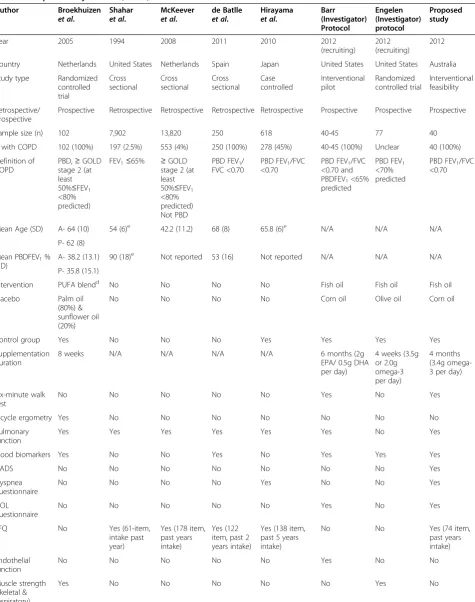
A preliminary review of the literature was conducted in March 2013. Major databases with a health focus (for ex-ample, Medline, Embase, Cochrane Library) and English language clinical trial registries (for example, Clinical Trials. gov) were searched for studies that investigated the intake of polyunsaturated fatty acids (PUFAs) in human adults with COPD. Conference abstracts were excluded. This search identified five published studies and three study pro-tocols (one of which is the proposed study); details of these studies can be found in Table 1. An additional published study was identified although the study has been retracted due to falsified data and was therefore excluded [13].
{Broekhuizen et al. [14] investigated the effects of PUFAs on the outcome of pulmonary rehabilitation (ex-ercise capacity and reversal of muscle wasting). This study compared the effects of eight weeks of pulmonary rehabilitation combined with a total daily PUFA dose of 3.4 g/day (400 mg stearidonic acid, 760 mg gamma-linolenic acid, 1,200 mg alpha-gamma-linolenic acid (ALA), 700 mg EPA and 340 mg DHA) versus a placebo (palm and sunflower oils) in 102 people with COPD. All other in-cluded published studies [15-18] investigated associa-tions between omega-3 intake and COPD prevalence or inflammation in different populations.
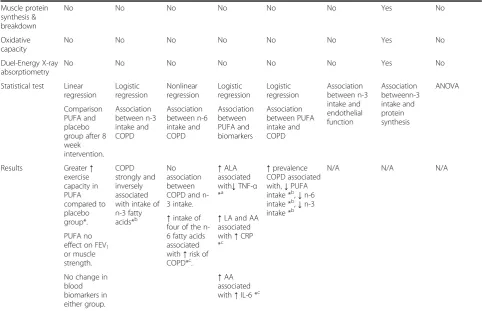
Overall the results of the five studies varied. Broekhuizen
et al. [14] reported an increase in maximum load (incre-mental maximal test) and an increase in duration (fixed load submaximal) bicycle ergometry tests for both groups; however the increase in the PUFA group was significantly greater than the placebo group. PUFA supplementation had no effect on muscle strength or FEV1 and neither
PUFA supplementation nor pulmonary rehabilitation af-fected biomarkers of inflammation [14]. McKeever et al. [17] reported no significant association between LCn-3PUFA and COPD. Both Shaharet al. [18] and Hirayama
et al. [16] reported inverse associations between
LCn-3PUFA intake and the prevalence of COPD, while de Batlle
LCn-Table 1 Summary of published studies and proposed trials of omega-3 fatty acid supplementation in chronic obstructive pulmonary disease (COPD)
Author Broekhuizen
et al.
Shahar
et al.
McKeever
et al.
de Batlle
et al.
Hirayama
et al.
Barr (Investigator) Protocol
Engelen (Investigator) protocol
Proposed study
Year 2005 1994 2008 2011 2010 2012
(recruiting)
2012 (recruiting)
2012
Country Netherlands United States Netherlands Spain Japan United States United States Australia
Study type Randomized
controlled trial
Cross sectional
Cross sectional
Cross sectional
Case controlled
Interventional pilot
Randomized controlled trial
Interventional feasibility
Retrospective/ prospective
Prospective Retrospective Retrospective Retrospective Retrospective Prospective Prospective Prospective
Sample size (n) 102 7,902 13,820 250 618 40-45 77 40
n with COPD 102 (100%) 197 (2.5%) 553 (4%) 250 (100%) 278 (45%) 40-45 (100%) Unclear 40 (100%)
Definition of COPD
PBD,≥GOLD stage 2 (at least 50%≤FEV1
<80% predicted)
FEV1≤65% ≥GOLD
stage 2 (at least 50%≤FEV1
<80% predicted) Not PBD
PBD FEV1/
FVC <0.70
PBD FEV1/FVC
<0.70
PBD FEV1/FVC
<0.70 and PBDFEV1<65%
predicted
PBD FEV1
<70% predicted
PBD FEV1/FVC
<0.70
Mean Age (SD) A- 64 (10) 54 (6)e 42.2 (11.2) 68 (8) 65.8 (6)e N/A N/A N/A
P- 62 (8)
Mean PBDFEV1%
(SD)
A- 38.2 (13.1) 90 (18)e Not reported 53 (16) Not reported N/A N/A N/A
P- 35.8 (15.1)
Intervention PUFA blendd No No No No Fish oil Fish oil Fish oil
Placebo Palm oil
(80%) & sunflower oil (20%)
No No No No Corn oil Olive oil Corn oil
Control group Yes No No No Yes Yes Yes Yes
Supplementation duration
8 weeks N/A N/A N/A N/A 6 months (2g
EPA/ 0.5g DHA per day)
4 weeks (3.5g or 2.0g omega-3 per day)
4 months (3.4g omega-3 per day)
Six-minute walk test
No No No No No Yes No Yes
Bicycle ergometry Yes No No No No No No No
Pulmonary function
Yes Yes Yes Yes Yes Yes No Yes
Blood biomarkers Yes No No Yes No Yes Yes Yes
HADS No No No No No No No Yes
Dyspnea questionnaire
No No No No Yes No No Yes
QOL questionnaire
No No No No No Yes No Yes
FFQ No Yes (61-item,
intake past year)
Yes (178 item, past years intake)
Yes (122 item, past 2 years intake)
Yes (138 item, past 5 years intake)
No No Yes (74 item,
past years intake)
Endothelial function
No No No No No Yes No No
Muscle strength (skeletal & respiratory)
[image:3.595.62.538.108.711.2]3PUFA intake and concentrations of inflammatory markers. In studies that reported an association between intake of omega-3 or omega-6 fatty acids and COPD, the strength of the associations was predominantly small (odds ratio 1.5 to 3.5 [19]).
Excluding the current protocol, the search of the clin-ical trials registries identified two randomized controlled trials currently underway (University of Columbia [20] and Texas A&M University [21]). The University of Columbia study is a pilot randomized controlled trial with a lower dose of LCn-3PUFA (2.5 g/day DHA + EPA) than the proposed study, but for a longer supplementation period. The Texas A&M University randomized controlled trial has a similar dose to the proposed study (3.5 g/day DHA + EPA) but for a shorter supplementation period (8 weeks). There are similarities between the three studies (for example, outcomes and omega-3 dose) although the pri-mary focus of the three proposed studies differs, with Columbia University focusing on endothelial function,
Texas A&M focusing on muscle repair and damage, while the proposed study focuses on feasibility for a larger RCT.
[image:4.595.56.539.113.424.2]In theory, LCn-3PUFA from fish oil may improve efficacy of current treatments for COPD by reducing inflammation. Given the paucity of data for fish oil supplementation trials in people with COPD, there are currently no data to guide study design decisions such as appropriate outcome measures (including the pri-mary outcome), likely effect sizes or sample size determination. COPD is a complex condition where comorbidities and exacerbations are to be expected, both of which may confound the effect of, or adher-ence to supplementation. In addition, slow recruitment and high dropout rates have been reported in interven-tion trials for people with COPD [22-24]. The driver for this proposed research is the hypothesis that LCn-3PUFA supplementation as an adjunct therapy will improve health outcomes in people with COPD. How-ever before this hypothesis can be tested, it is
Table 1 Summary of published studies and proposed trials of omega-3 fatty acid supplementation in chronic
obstructive pulmonary disease (COPD)(Continued)
Muscle protein synthesis & breakdown
No No No No No No Yes No
Oxidative capacity
No No No No No No Yes No
Duel-Energy X-ray absorptiometry
No No No No No No Yes No
Statistical test Linear regression Logistic regression Nonlinear regression Logistic regression Logistic regression Association between n-3 intake and endothelial function Association betweenn-3 intake and protein synthesis ANOVA Comparison PUFA and placebo group after 8 week intervention. Association between n-3 intake and COPD Association between n-6 intake and COPD Association between PUFA and biomarkers Association between PUFA intake and COPD
Results Greater↑
exercise capacity in PUFA compared to placebo group*. COPD strongly and inversely associated with intake of n-3 fatty acids*b
No association between COPD and n-3 intake.
↑ALA associated with↓TNF-α *a
↑prevalence COPD associated with,↓PUFA intake *b,↓n-6
intake *b,↓n-3 intake *b
N/A N/A N/A
↑intake of four of the n-6 fatty acids associated with↑risk of COPD*c.
↑LA and AA associated with↑CRP *c
PUFA no effect on FEV1
or muscle strength.
No change in blood biomarkers in either group.
↑AA associated with↑IL-6 *c
A, active; ALA, alpha linoleic acid; ANOVA, analysis of variance; AA, arachidonic acid; CRP, C-reactive Protein; FFQ, food frequency questionnaire; HADS, Hospital anxiety and depression scale; LA, linoleic acid; n-3, omega-3 fatty acid; P, placebo; PBD, Post bronchodilator; PUFA, Polyunsaturated fatty acid; QOL, quality of life; 6MWD, six-minute walk distance.
*Statistically significantP<0.05a
odds ratio˂1,b
odds ratio≥1.0,c
odds ratio≥1.5. PUFA refers to both omega-3 and omega-6 fatty acid intake.
d
PUFA blend consists of 400 mg stearidonic acid, 760 mg gamma-linolenic acid, 1200 mg alpha-linolenic acid, 700 mg eicosapentaenoic acid and 340 mg docosahexaenoic acid.
e
important to establish the feasibility of the study protocol and justification for continuing to a larger study.
While the terms ‘pilot study’and ‘feasibility study’are often used interchangeably in the literature, Arainet al. [25] explains the distinction between the two. A feasibil-ity study seeks to determine if the study is possible, with the available resources and in the current circumstances. A pilot study is used to determine the efficiency of the study protocol as a whole. Thabane et al. [26] and van Teijlingen et al. [27] recommend undertaking a feasibil-ity study in order to determine recruitment rates, esti-mate variability of outcomes to assist with sample size calculations or to obtain data to support a funding application.
Given the lack of pre-existing data on which to inform primary outcome and sample size estimates and the known complexities of undertaking intervention studies in people with COPD, this study aims to determine the feasibility of undertaking a randomized controlled study of daily LCn-3PUFA supplementation in people with COPD. The objectives of this study are to determine feasibility within two domains including process (for example, recruitment and retention rates) and scientific (for example, estimate of effect size and variance in outcomes).
Methods/Design
Study design
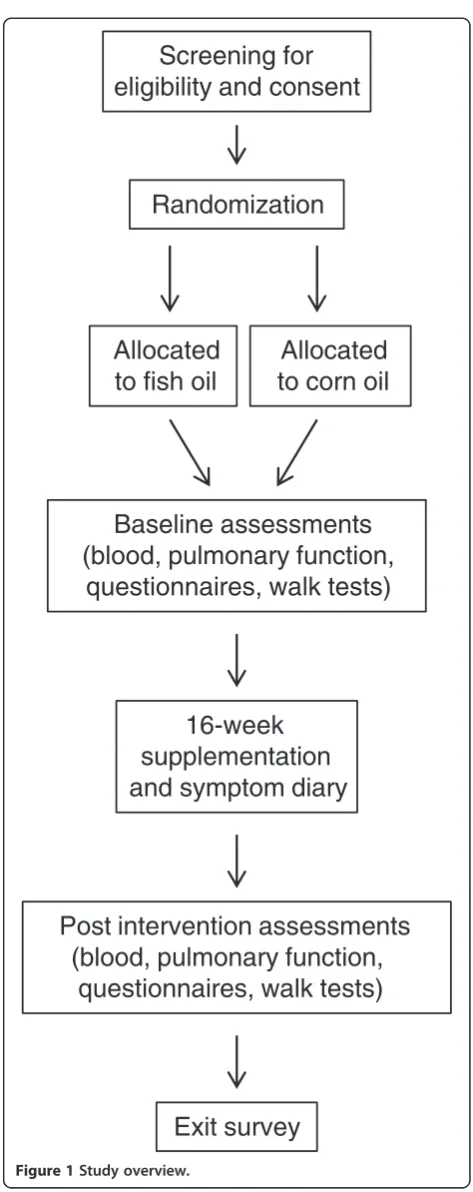
A 16-week parallel, double-blind, randomized, placebo-controlled dietary supplementation trial will be conducted in the Respiratory Medicine department at the Repatriation General Hospital (RGH), Adelaide, South Australia in col-laboration with the Nutritional Physiology Research Centre (NPRC), University of South Australia, Adelaide, South Australia and the Clinical Nutrition Research Centre, University of Newcastle, Callaghan, NSW. Participants will attend the RGH on two occasions (pre- and post-intervention) for a series of tests including pulmonary function, venepuncture, well-being questionnaires and functional exercise capacity (see Figure 1).
Participants
Participants will be recruited from the respiratory clinical trials database (which contains >500 people who have previously indicated their willingness to be contacted for future studies) at the RGH. To be eligible for inclusion, participants are required to be adults (≥18 years of age), have a clinical and spirometric diagnosis of COPD (FEV1/
FVC <0.7) based on GOLD criteria [1], and stable medica-tion for 28 days prior to screening. Participants will be excluded from the study if they habitually consume LCn-3PUFA supplements, have unstable or very severe COPD (FEV1<30% predicted) [1], have a diagnosis ofα-antitrypsin
Screening for
eligibility and consent
Baseline assessments
(blood, pulmonary function,
questionnaires, walk tests)
Allocated
to fish oil
Randomization
16-week
supplementation
and symptom diary
Post intervention assessments
(blood, pulmonary function,
questionnaires, walk tests)
Exit survey
[image:5.595.303.540.83.674.2]Allocated
to corn oil
deficiency, are a current smoker, are cachexic (uninten-tional weight loss of >5% within 12 months [28] or have a body mass index (BMI)≤18.5 kg/m2), are morbidly obese (BMI≥40 kg/m2), are experiencing unstable comorbidities (for example, right heart failure, sleep disorders), have used systemic steroids or antibiotic medication within 28 days prior to enrolment, are diagnosed with respiratory condi-tions not related to airflow limitation (for example, pul-monary fibrosis), have unstable medication use (change in medication or use in the 6 months prior to enrolment), have participated in a comprehensive pulmonary rehabilita-tion program in the previous 2 years or are intending to undertake this type of rehabilitation program in the 6 months following study enrolment. Written informed con-sent will be obtained from all participants.
Ethics and Trial registration
Ethics approval for this study was granted by the Human Research Ethics Committee of the University of South Australia (project number: 0000026302) and Southern Adelaide Clinical Human Research Ethics Committee (project number: 208.12). The trial was registered on the Australia and New Zealand Clinical Trials registry (ANZCTR) on the 3rd of February 2012 (ANZCTR Number: 12612000158864).
Sample Size
As this is a feasibility study designed to determine prag-matic aspects of methodology, formal sample size calcu-lations are not appropriate [26,29]. The target sample size for the feasibility study is 40 participants. The target sample is to allow sufficient precision to enable sample size calculations for subsequent studies. Browne [30] suggests that a minimum of 30 participants is required to achieve sufficient precision, a recommendation sup-ported by Lancaster et al. [31]. The target sample of 40 enrolled participants will allow completion of 30 sub-jects, allowing for a 25% participant dropout rate. A key feasibility criterion is the ability to recruit a target sam-ple of 40 participants within 52 weeks.
Randomization
Subjects will be randomly allocated by minimization [32,33], based on modified Medical Research Council (mMRC) scale for breathlessness scores, to either the fish oil group or the placebo group. The prognostic fac-tor that will be considered in the minimization model will be mMRC score (0, 1, 2, 3 or 4).
Dietary intervention
Participants will be required to take six 1 g capsules or-ally per day for 16 weeks. The fish oil group will con-sume capsules containing EPAX 6000 TG/N omega-3 concentrate (EPAX, Oslo, Norway). Each capsule
contains 600 mg of omega-3 fatty acids, which is speci-fied to contain 200 mg of DHA and 300 mg of EPA. It should be noted that while the recommended upper limit of LCn-3PUFA is 3 g/day [34], a number of studies have used higher doses (3.4 g/day to 6.6 g/day) without any reported side effects [35,36]. The placebo group will receive capsules that are identical in appearance containing corn oil (predominantly comprised of lino-leic, oleic and palmitic acids) (EPAX, Oslo, Norway). All capsules are flavored to mask the taste and odor. Partici-pants will continue their usual medical treatment throughout the supplementation period. Self-reported medication and supplement use will be collected pre-and post-intervention.
Blinding
Capsules will be prepackaged into opaque containers and labeled as A or B with the investigator details and supplementation instructions. A staff member of the NPRC external to the project will determine the computer-generated randomization schedule. Capsules will be securely stored and will be dispensed in opaque containers by the clinical trials pharmacist at the RGH, thus ensuring blinding of both the participants and investigators.
Anthropometry
Height will be measured to the nearest 0.5 cm using a wall-mounted stadiometer (Seca 240, Seca, Hamburg, Germany) and mass will be measured to nearest 0.1 kg using a calibrated digital precision scale (Wedderburn DS-520, Weddernburn, Australia) at both assessment visits. BMI will be calculated from these data as mass (kg) /height (m)2.
Dietary intake
Total energy, macronutrient consumption, and micronu-trient consumption will be estimated at baseline using a 74-item food frequency questionnaire from the Cancer Council of Victoria, Australia [37]. The food frequency questionnaire has been validated [38] for use in human dietary intervention trials. The food frequency question-naire will be repeated post-intervention to determine whether there were any changes in diet throughout the supplementation period.
Comorbid status
the best method for quantifying comorbid status; there-fore, the suitability of both indices will be assessed.
Feasibility outcomes and criteria
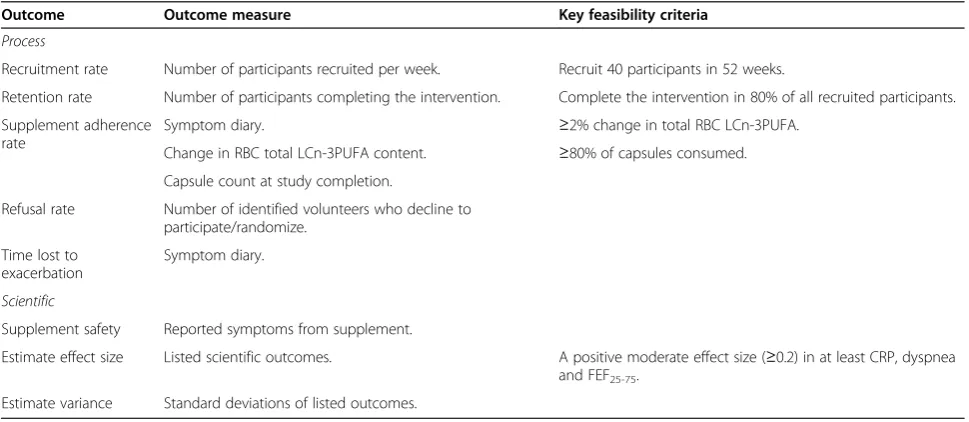
Within the four domains of feasibility (process, re-sources, management and scientific) there are specified outcomes in the process and resource domains that will be assessed throughout the study against feasibility criteria (see Table 2).
Process outcome measures
A number of process outcomes will be assessed through-out the study including participant recruitment and retention, supplement adherence, time lost to exacerba-tion and participant experiences and perspectives about participating in the study. Participant recruitment and retention will be assessed descriptively by recruitment and refusal rates, while retention will be determined by the number of enrolled participants who complete the study protocol.
Supplement adherence will be assessed in three ways. Firstly, by determining changes from baseline to post-intervention in the LCn-3PUFA content of erythrocytes, as the LCn-3PUFAs are incorporated into erythrocyte membranes in a dose-dependent and time-dependent manner [41]. Secondly, a symptom diary will be used to document self-reported supplementation consumption including whether the capsules were consumed each day, how many capsules were consumed and whether any side effects were experienced such as eructation or heartburn. Thirdly, participants will be asked to return
all unused capsules at the completion of the study and the remaining capsules will be counted.
The time lost to exacerbation (change in usual symptoms potentially leading to a change in medication, change in usual activities or unscheduled visit to a doctor) will be de-termined using a symptom diary in the format of one month per page. The diary enables the assessment of ex-acerbation frequency and severity during the supplementa-tion period. The number of exacerbasupplementa-tion days will be counted from the diary, while an exacerbation severity score will be calculated using methods adapted from those described by Effing et al. [42]. Data collected from the symptom diary will be used to determine the frequency of exacerbation, whether periods of exacerbation impact upon supplement consumption and whether periods of exacerba-tion have a confounding effect on supplementaexacerba-tion or study outcomes. This information will be used to determine whether exacerbations during the supplementation period should be an exclusion criterion in a subsequent study.
[image:7.595.56.541.507.718.2]Participant experience and perspectives will be gath-ered using a structured telephone interview on exit from the study. The structured interview will have four main sections including: 1) the assessments (for example, opinions about the test battery, use of the symptom diary); 2) the supplement (for example, adherence, symptoms and which arm of the trial they believed they were on, any adverse effects experienced); 3) the trial visits and the trial itself (for example, length of the visits, best and worst things about participating in the trial, participation in future trials); and 4) the participants (for example, behavioral changes during trial and life
Table 2 Feasibility outcomes and key feasibility criteria
Outcome Outcome measure Key feasibility criteria
Process
Recruitment rate Number of participants recruited per week. Recruit 40 participants in 52 weeks.
Retention rate Number of participants completing the intervention. Complete the intervention in 80% of all recruited participants.
Supplement adherence rate
Symptom diary. ≥2% change in total RBC LCn-3PUFA.
Change in RBC total LCn-3PUFA content. ≥80% of capsules consumed.
Capsule count at study completion.
Refusal rate Number of identified volunteers who decline to participate/randomize.
Time lost to exacerbation
Symptom diary.
Scientific
Supplement safety Reported symptoms from supplement.
Estimate effect size Listed scientific outcomes. A positive moderate effect size (≥0.2) in at least CRP, dyspnea and FEF25-75.
Estimate variance Standard deviations of listed outcomes.
CRP, C-reactive protein; FEF25-75, forced expiratory flow between 25 and 75% of forced vital capacity ; L Cn-3PUFA, long chain omega-3 polyunsaturated fatty acid;
events external to the trial which could impact on trial outcomes).
Scientific outcome measures
A number of scientific outcomes have been included in order to determine which are the most appropriate for use in a subsequent study. Scientific outcomes have been selected which reflect stages in the theoretical mechan-ism cascade from cellular (for example, inflammatory biomarkers) to patient-centered (dyspnea, exercise cap-acity, quality of life) outcomes. Figure 2 presents the proposed cascade between LCn-3PUFA supplementation and the outcome measures.
6MWD, six minute walk distance; CRQ, chronic respiratory questionnaire; FEF25-75, forced expiratory
flow between 25 and 75% of forced vital capacity; HADS, hospital anxiety and depression scale; IOS, impulse oscillometry; PUFA, polyunsaturated fatty acid
Blood biomarkers
Venous blood samples will be obtained after a 10 to 12-hour overnight fast by venepuncture (EDTA-containing tubes) and will be centrifuged within two hours of sam-pling. Plasma will be removed and erythrocytes will be washed with saline. Aliquots of plasma and erythrocytes will be stored at −80°C until analysis. Relative propor-tions of individual fatty acids in erythrocyte phospho-lipids will be assessed using a method adapted from previously established methods [43-45] and described in detail by Milteet al. [46]. In this process fatty acids will be extracted and transmethylated and the methyl esters will be separated and quantified using a Shimadzu 2010
gas chromatograph (Shimadzu, Milan, Italy). Fatty acid methyl esters will be identified by comparing retention times to those of authentic lipid standards (GLC-463, Nu-Chek Prep Inc. Elysian, MN, USA). Inflammatory biomarkers including tumor necrosis factor (TNF-α), interleukin-1 beta (IL-1β) and interleukin-6 (IL-6) and the anti-inflammatory biomarker interleukin-10 (IL-10) will be analyzed in duplicate using multiplex Luminex analyzer (Luminex B.V., Oosterhout, The Netherlands) assays. Intra- and inter-assay coefficients of variation (CV) are 5 to 14% and 4 to 18%, respectively. High sen-sitivity C-reactive protein will be measured using an au-tomated spectrophotometric analyzer (Konelab, Model 20xTi; Thermo Electron, Waltham, MA, USA); the CV for this determination is 2.3%.
Pulmonary function
Lung function tests will follow standardized American Thoracic Society/ European Respiratory Society taskforce guidelines [47] to determine forced expiratory volume in 1 second (FEV1), forced vital capacity (FVC), inspiratory
cap-acity (IC) and vital capcap-acity (VC), which enables the diag-nosis and severity classification of COPD. Small airways function will be assessed using two methods: forced expira-tory flow will be measured at various time points (FEF25-75,
FEF25, FEF50, FEF75) [47] and impulse oscillometry will be
used to determine respiratory impedance through the appli-cation of small pressure oscillations at the mouth during normal breathing [48]. Single-breath determination of car-bon monoxide (CO) uptake will be used to determine the gas transfer efficiency of the lung tissue as the diffusing cap-acity of carbon monoxide (DL, CO) [49], which is reduced
inflammatory biomarkers
small airways function
(IOS and FEF25-75)
work of breathing
dyspnea
functional exercise capacity
(6MWD)
Omega-3 PUFA supplementation
erythrocyte
omega-3 content
exacerbations
(frequency and severity)
well being
[image:8.595.58.535.521.713.2](HADS and CRQ)
in the presence of emphysema and some other conditions. Lung volumes will be determined using body plethysmog-raphy [50].
Dyspnea
The sensation of dyspnea is currently considered to have three domains (sensory quality, intensity and unpleasant-ness). The Dyspnoea-12 questionnaire will be used to assess the sensory quality of breathlessness. Visual analogue scales (10 cm horizontal line anchored on the left as affected) will be used to quantify unpleasantness (not un-pleasant to worst unun-pleasantness imaginable) and intensity (no breathlessness to the worst possible breathlessness) of dyspnea. Assessments of dyspnea will be conducted at rest (average sensation over the past two weeks) and immedi-ately after the six-minute walk test (breathlessness induced by exercise). The mMRC score will be used to assess dys-pnea related functional impairment, with a scoring system of 0 to 4 (where 4 represents severe breathlessness related impairment). The mMRC scale is widely used in people with COPD and is a reliable (intraclass correlation = 0.82) [51] tool with acceptable concurrent validity (r= 0.70) [52].
Functional exercise capacity
The six-minute walk test will be used to determine change in functional exercise capacity (six-minute walk distance). Participants walk on a hard flat surface as far as they can in six minutes (one lap up and back = 40m), stopping for breaks if required. The test will be conducted twice with the maximum walk distance used for analysis. The six-minute walk test is a reliable (CV = 8%, intra-class correlation coefficient = 0.93) measure when conducted under standardized conditions [53,54] and is commonly used as an indicator of functional exercise capacity in the COPD population [55-57] as well as other chronic diseases such as cardiovascular disease [58].
Well-being
The Hospital Anxiety and Depression Scale (HADS), a widely used reliable validated tool [59] will be used to assess symptoms of depression and anxiety [60]. The HADS has been used previously in the COPD popula-tion with good reliability (Cronbach’sα = 0.86 (part A) and 0.87 (part B)) [61]. The chronic respiratory ques-tionnaire (CRQ) is a self-administered respiratory spe-cific quality of life questionnaire with good reliability [62] and validity [63]. The questionnaire assesses four domains including dyspnea, fatigue, emotional function and mastery [62].
Data analysis
SPSS version 17 for WINDOWS [International Busi-ness Machines Corporation (IBM), New York, USA] will be used for analyses. Data will be cleaned,
checking for errors or missing values. Continuous data will be checked for normality of distribution and non-normally distributed data will be transformed where possible. Scatter plots will be used to determine nature/shape of relationships before applying linear regression.
The primary focus of this study is feasibility, which will be analyzed using descriptive statistics and fre-quency tables. The key feasibility outcomes are:
1. Recruit 40 participants in 52 weeks;
2. Complete the intervention in 75% of all recruited participants;
3. ≥2% change in total erythrocyte LCn-3PUFA and
≥80% of capsules consumed (estimated from
remaining capsules);
4. A positive moderate effect size (≥0.2) in at least
three scientific outcome measures (between active and placebo groups).
Analysis of variance (ANOVA) with repeated measures will be used to estimate the effect size of LCn-3PUFA versus placebo supplementation on the scientific out-come measures (six-minute walk, pulmonary function tests, questionnaire scores, blood biomarkers of inflam-mation and symptoms (for example, high sensitivity C-reactive protein, dyspnea and impulse oscillometry)). Progressive Bonferroni corrections will be used to cor-rect for the effects of multiple outcomes. Comorbid sta-tus and severity of exacerbations will be assessed as potential confounders using multiple regression analysis.
Assessment administration
Discussion
People with COPD have an accumulation of inflamma-tory cells in the respirainflamma-tory tissue that causes damage to the lungs [64]. This is further compounded by the effects of systemic inflammation such as reduced muscle func-tion and skeletal integrity, which are often associated with comorbidities such as cardiovascular disease and osteoporosis [5-7]. The anti-inflammatory properties of LCn-3PUFA have been beneficial in other inflammatory diseases with recent systematic reviews in rheumatoid arthritis and cardiovascular disease concluding that the benefits of LCn-3PUFA are modest but clinically relevant [65,66]. In people with rheumatoid arthritis all included studies showed some clinical benefit with LCn-3PUFA supplementation [66], while in cardiovascular disease those supplemented with LCn-3PUFA had a 10% reduction in the number of cardiovascular events [65]. Given the impact of lung and systemic inflammation, dietary supplementation with LCn-3PUFA may be beneficial for people with COPD.
The current evidence for benefits of LCn-3PUFA in people with COPD is limited; there has been one RCT, although not exclusively using LCn-3PUFA. The major-ity of studies focus on the association between self-reported intakes of LCn-3PUFA and prevalence of COPD (Table 1). Most of these studies used spirometry to diagnose COPD; however, the definition of COPD (Global initiative for chronic obstructive pulmonary disease (GOLD) stage [1]) or spirometric criterion varied between studies. Shaharet al. [18] and McKeever et al. [17] did not use post-bronchodilator spirometry in the diagnosis of COPD, and therefore irreversible airflow limitation (a requirement of COPD) could not be confirmed.
The RCT conducted by Broekhuizenet al. [14] did not test effects of LCn-3PUFA specifically; it was combined with other PUFAs. Hence it is unclear whether LCn-3PUFA alone was responsible for the observed changes in outcomes or whether these changes were attributable to the combinations of nutrients. The dose of LCn-3PUFA (EPA and DHA) used in the Brekhuizen et al. [14] study was approximately 1 g/day for eight weeks. It is suggested by Calder [67] that a minimum dose of 2 g/ day is required to elicit the anti-inflammatory properties of omega-3 fatty acids (DHA + EPA). This study com-bined supplementation with pulmonary rehabilitation, the beneficial effects of which are well documented in people with COPD [68]. Broekhuizenet al. [14] suggests that the increases in exercise capacity could be a result of increased fatty acid availability and oxidative capacity which could be related to changes in muscle fiber type through exercise. Pulmonary rehabilitation may have fa-cilitated the reported effects of PUFAs in COPD; how-ever the effects of PUFA supplementation alone on
health outcomes in people with COPD are still unknown and warrant investigation.
The proposed study aims to determine not only the feasibility of the study protocol but also which outcomes might be appropriate to include in a larger trial. In order to achieve these aims, a number of outcomes have been included, ranging from cellular, such as blood bio-markers of inflammation, to patient centered measures, such as dyspnea and exercise capacity. While there are likely to be changes in cellular outcomes such as inflam-matory biomarkers, it is possible that a corresponding change in clinically relevant outcomes such as dyspnea may not be achieved. This is likely to influence uptake of LCn-3PUFA supplementation by people with COPD and health care practitioners as a worthwhile addition to current best practice.
Studies in fish oil supplementation have previously shown good adherence with the supplementation proto-col [41]. Adherence in people with COPD is likely to be similar to that shown in previous studies; however, exac-erbations are common in this population and depending on the severity, may lead to changes in medication and hospitalization during the supplementation period. Dur-ing these periods of time supplementation adherence may be affected. A number of other factors may also influence adherence, such as comorbidities (notably anx-iety and depression) and multiple medications associated with the COPD and/or the comorbidities. The dose and duration of supplementation in the current protocol is similar to that used in other studies of fish oil and chronic inflammatory conditions (for example, rheuma-toid arthritis). However, as suggested above, it is possible that COPD patients may find it challenging to consume their usual medications plus fish oil capsules. By provid-ing concentrated capsules containprovid-ing more (600 mg/g) of the active fatty acids and lesser of unnecessary fat, we expect improved compliance as this reduces the number of capsules required to achieve the desired dose.
Pilot and feasibility studies are often disregarded and overlooked within the literature but have the potential to provide valuable information [27]. For example, at the completion of a pilot or feasibility study, reporting the
‘challenges faced’ has the potential to assist other re-searchers in trial design [27]. Crucially the pilot or feasi-bility trial will provide information about a population that is not currently available such as ease (or difficulty) in recruitment, and it may also highlight issues with the study protocol not evident during the planning phase. These issues could be crucial to the success or failure of a large study.
The aim of this study is to determine the feasibility of the study and to provide data to guide the design of fu-ture studies in dietary supplementation studies in people with COPD.
Trial status
Not yet recruiting.
Abbreviations
AA:arachidonic acid; ALA: alpha linoleic acid; ANZCTR: Australia and New Zealand Clinical Trials Registry; BMI: body mass index; COPD: chronic obstructive pulmonary disease; CO: carbon monoxide; CRP: C-reactive protein; CRQ: chronic respiratory questionnaire; CV: coefficient of variation; DHA: docosahexaenoic acid; DL,CO: diffusing capacity of the lung to carbon monoxide; EPA: eicosapentaenoic acid; FEF: forced expiratory flow; FEV1: forced expiratory volume in 1 second; FFQ: food frequency questionnaire; FVC: forced vital capacity; GOLD: Global Initiative for Chronic Obstructive Lung Disease; HADS: Hospital Anxiety and Depression Scale; IC: inspiratory capacity; IL-1β: interleukin 1 beta; IL-10: interleukin 10; LA: linoleic acid; LCn-3PUFA: long chain omega-3 polyunsaturated fatty acid; LCn-6PUFA: long chain omega-6 polyunsaturated fatty acid; mMRC: modified Medical Research Council; NF-κB: nuclear factor kappa beta; NPRC:
Nutritional Physiology Research Centre; PBD: post bronchodilator; PUFA: polyunsaturated fatty acid; QOL: quality of life; RCT: randomized controlled trial; RGH: Repatriation General Hospital; TNF-α: tumour necrosis factor alpha; VC: vital capacity; 6MWD: 6-minute walk distance.
Competing interests
The authors declare that they have no competing interests.
Authors' contributions
AC, AH and MW conceived the idea. AH, MW, PH, AC, PF, LW, MG and AF contributed to the development of the protocol. AF, MW, PH, AC and AH drafted the manuscript. PF, LW, MG provided critical revision of the manuscript. All authors read and approved the final manuscript.
Acknowledgements
The study is supported by a University of South Australia, Division of Health Sciences grant (DRDG 2011 (round 2)). Supplement capsules were donated by EPAX, Norway. The authors thank Professor Graham Giles of the Cancer Epidemiology Centre of the Cancer Council Victoria, for permission to use the Dietary Questionnaire for Epidemiological studies (version 2), Melbourne: The Cancer Council Victoria, 1996.
Author details
1Nutritional Physiology Research Centre, Sansom Institute for Health
Research, School of Health Sciences, University of South Australia, City East Campus, Frome Road, Adelaide, South Australia 5000, Australia.
2Clinical Nutrition Research Centre, School of Biomedical Sciences &
Pharmacy, University of Newcastle, University Drive, Callaghan, New South Wales 2308, Australia.3Respiratory Medicine, Flinders University, Faculty of
Health Sciences, Repatriation General Hospital, Daws Road, Daw Park, South Australia 5041, Australia.4School of Population Health, University of South
Australia, City East Campus, Frome Road, Adelaide, South Australia 5000, Australia.
Received: 18 December 2012 Accepted: 8 April 2013 Published: 24 April 2013
References
1. Global strategy for the diagnosis, management, and prevention of chronic obstructive pulmonary disease.[http://www.goldcopd.org/]
2. The top 10 leading causes of death by broad income group.[http://www.who. int/mediacentre/factsheets/fs310/en/index.html]
3. World Health Organisation:World Health Statistics.Geneva; 2008. 4. Parshall MB, Schwartzstein RM, Adams L, Banzett RB, Manning HL, Bourbeau
J, Calverley PM, Gift AG, Harver A, Lareau SC, Mahler DA, Meek PM, O'Donnell DE:An official American Thoracic Society Statement: Update
on the mechanisms, assessment, and management of dyspnea.Am J Respir Crit Care Med2012,185:435–452.
5. Halpin DM:Systemic effects of chronic obstructive pulmonary disease. Expert Rev Respir Med2007,1:75–84.
6. Barnes PJ, Celli BR:Systemic manifestations and comorbidities of COPD. Eur Respir J2009,33:1165–1185.
7. Gan WQ, Man SFP, Senthilselvan A, Sin DD:Association between chronic obstructive pulmonary disease and systemic inflammation: a systematic review and meta-analysis.Thorax2004,59:574–580.
8. Oudijk EJ, Lammers JW, Koenderman L:Systemic inflammation in chronic obstructive pulmonary disease.Eur Respir J Suppl2003,46:5s–13s. 9. Harris KA, Hill AM, Kris-Etherton PM:Health benefits of marine-derived
omega-3 fatty acids.ACSMS Health Fit J2010,14:22.
10. Calder PC:Mechanisms of action of (n-3) fatty acids1,2.J Nutr2012,
142:592S–599S.
11. Healy D, Wallace F, Miles E, Calder P, Newsholme P:Effect of low-to -moderate amounts of dietary fish oil on neutrophil lipid composition and function.Lipids2000,35:763–768.
12. Barnes PJ, Karin M:Nuclear Factor-kB- A pivotal transcription factor in chronic inflammatory diseases.New Engl J Med1997,336:1066–1071. 13. Matsuyama W, Mitsuyama H, Watanabe M, Oonakahara K-i, Higashimoto I,
Osame M, Arimura K:Effects of omega-3 polyunsaturated fatty acids in inflammatory markers in COPD.CHEST2005,128:3817–3827. 14. Broekhuizen R, Wouters E, Creutzberg E, Weling-Scheepers C, Schols A:
Polyunsaturated fatty acids improve exercise capacity in chronic obstructive pulmonary disease.Thorax2005,60:376–382.
15. de Batlle J, Sauleda J, Balcells E, Gomez F, Mendez M, Rodriguez E, Barreiro E, Ferrer JJ, Romieu I, Gea J, Anto JM, Garcia-Aymerich J:Association between omega-3 and omega-6 fatty acid intakes and serum inflammatory markers in COPD.J Nutr Biochem2012,23:817–821. 16. Hirayama F, Lee AH, Binns CW, Hiramatsu N, Mori M, Nishimura K:Dietary
intake of isoflavones and polyunsaturated fatty acids assocaited with lung function, breathlessness and the prevalence of chronic obstructive pulmonary diesease: Possible protective effect of traditional Japanese diet.Mol Nutr Food Res2010,54:909–917.
17. McKeever TM, Lewis SA, Cassano PA, Ocke M, Burney P, Britton J, Smit HA:
The relation between dietary intake of individual fatty acids, FEV1 and respiratory disease in Dutch adults.Thorax2008,63:208–214. 18. Shahar E, Boland LL, Folsom AR, Tockman M, McGovern PG, Eckfeldt JH:
Docosahexaenoic Acid and smoking-related chronic obstructive pulmonary disease.Am J Respir Crit Care Med1999,159:1780–1785. 19. A new view of statistics: A scale of magnitudes for effect statistics.[http://
www.sportsci.org/resource/stats/]
20. Barr GR:The Chronic Obstructive Pulmonary Disease Fish Oil Pilot Trial (COD-Fish).Clinical Trials.gov.; 2008. http://clinicaltrials.gov/ct2/show/ NCT00835289?term=fish+oil+AND+COPD&rank=3.
21. Engelen M:Eicosapentaenoic Acid and Protein Modulation to induce Anabolism in Chronic Obstructive Pulmonary Disease (COPD): Aim 2.Clinical Trials.gov.; 2012. http://clinicaltrials.gov/ct2/show/NCT01624792? term=eicosapentaenoic+acid+and+protein+modulation&rank=1. 22. Fuld J, Kilduff L, Neder J, Pitsiladis Y, Lean M, Ward S, Cotton M:Creatine
supplementation during pulmonary rehabilitation in chronic obstructive pulmonary disease.Thorax2005,60:531–537.
23. Lehouck A, Mathieu C, Carremans C, Baeke F, Verhaegen J, Van Eldere J, Decallonne B, Bouillon R, Decramer M, Janssens W:High doses of vitamin D to reduce exacerbations in chronic obstructive pulmonary disease. Ann Intern Med2012,156:105–114.
24. Steiner M, Barton R, Singh S, Morgan M:Nutritional enhancement of exercise performance in chronic obstructive pulmonary disease: a randomised controlled trial.Thorax2003,58:745–751.
25. Arain M, Campbell MJ, Cooper CL, Lancaster GA:What is a pilot or feasibility study? A review of current practice and editorial policy. BMC Med Res Methodol2010,10:1–7.
26. Thabane L, Ma J, Chu R, Cheng J, Ismaila A, Rios LP, Robson R, Thabane M, Giangregorio L, Goldsmith CH:A tutorial on pilot studies: the what, why and how.BMC Med Res Methodol2010,10:1–10.
27. van Teijlingen ER, Rennie A-M, Hundley V, Graham W:The importance of conducting and reporting pilot studies: the example of the Scottish Births Survey.J Adv Nurs2001,34:289–295.
Najand A, Ponikowski P, Rossi Fanelli F, Schambelan M, Schols A, Schuster M, Thomas D, Wolfe R, Anker SD:Cachexia: a new definition.J Clin Nutr
2008,27:793–799.
29. Feasibility and Pilot studies.[http://www.netscc.ac.uk/glossary/#glos6] 30. Browne RH:On the use of a pilot sample for sample size determination.
Stat Med1995,14:1933–1940.
31. Lancaster GA, Dodd S, Williamson PR:Design and analysis of pilot studies: recommendations for good practice.J Eval Clin Pract2004,10:307–312. 32. Altman DG, Bland MJ:Treatment allocation by minimisation.Brit Med J
2005,330:843.
33. Pocock SJ, Simon R:Sequential treatment assignment with balancing for prognostic factors in the controlled clinical trial.Biometrics1975,
31:103–115.
34. Dietary guidelines for Australian adults.[http://www.nhmrc.gov.au/guidelines/ publications/n29-n30-n31-n32-n33-n34]
35. Skulas-Ray AC, Kris-Etherton PM, Harris WS, Vanden Heuvel JP, Wagner PR, West SG:Dose–response effects of omega-3 fatty acids on triglycerides, inflammation, and endothelial function in healthy persons with moderate hypertriglyceridemia.Am J Clin Nutr2011,93:243–252. 36. Su K-P, Huang S-Y, Chiu C-C, Shen WW:Omega-3 fatty acids in major
depressive disorder: A preliminary double-blind, placebo-controlled trial. Eur Neuropsychopharm2003,13:267–271.
37. Giles GG, Ireland PD:Dietary questionnaire for epidemiological studies (version 2).Melbourne: The Cancer Council Victoria; 1996.
38. Xinying PX, Noakes M, Keogh J:Can a food frequency questionnaire be used to capture dietary intake data in a 4 week clinical intervention trial?Asia Pac J Clin Nutr2004,13:318–323.
39. Charlson ME, Pompei P, Ales KL, MacKenzie CR:A new method of classifying prognostic comorbidity in longitudinal studies: development and validation.J Chron Dis1987,40:373–383.
40. Fishman PA, Goodman MJ, Hornbrook MC, Meenan RT, Bachman DJ, Rosetti MCOK:Risk adjustment using automated ambulatory pharmacy data: the RxRisk model.Med Care2003,41:84–99.
41. Milte CM, Coates AM, Buckley JD, Hill AM, Howe PRC:Dose-dependent effects of docosahexaenoic acid-rich fish oil on erythrocyte docosahexaenoic acid and blood lipid levels.Brit J Nutr2008,
99:1083–1088.
42. Effing TW, Kerstjens HAM, van der Valk PDLPM, Zielhuis GA, van der Palen J:
The (cost)-effectiveness of self-treatment of exacerbations on the severity of exacerbations in COPD patients: the COPE-II study. Thorax2009,64:956–962.
43. Bligh EG, Dyer WJ:A rapid method of total lipid extraction and purification.Can J Biochem Physiol1959,37:911–917.
44. Folch J, Lees M, Sloane Stanley GH:A simple method for the isolation and purification of total lipids from animal tissues.J Biol Chem1957,
226:497–509.
45. Lepage G, Roy CC:Direct transesterfication of all classes of lipids in a one-step reaction.J Lipid Res1986,27:114–120.
46. Milte CM, Parletta N, Buckley JD, Coates AM, Young RM, Howe PRC:
Eicosapentaenoic and docosahexaenoic acids, cognition, and behaviour in children with attention-deficit/hyperactivity disorder: A randomized controlled trial.Nutrition2012,28:670–677.
47. Miller MR, Hankinson J, Brusasco V, Burgos F, Casaburi R, Coates A, Crapo R, Enright P, van der Grinten CPM, Gustafsson P, Jensen R, Johnson DC, MacIntyre N, McKay R, Navajas D, Pederson OF, Pellegrino R, Viegi G, Wanger J:Standardisation of spirometry.Eur Respir Journal2005,
26:319–338.
48. Dubois AB, Brody AW, Lewis DH, Burgess BF Jr:Oscillation mechanics of lungs and chest in man.J Appl Phys1956,8:587–594.
49. MacIntyre N, Crapo R, Viegi G, Johnson DC, van der Grinten CPM, Brusasco V, Burgos F, Casaburi R, Coates A, Enright P, Gustafsson P, Hankinson J, Jensen R, McKay R, Miller MR, Navajas D, Pederson OF, Pellegrino R, Wanger J:Standardisation of the single-breath determination of carbon monoxide uptake in the lung.Eur Respir J2005,26:720–735. 50. Wanger J, CJ L, Coates A, Pederson OF, Brusasco V, Burgos F, Casaburi R,
Crapo R, Enright P, van der Grinten CPM, Gustafsson P, Hankinson J, Jensen R, Johnson DC, MacIntyre N, McKay R, Miller MR, Navajas D, Pellegrino R, Viegi G:Standardisation of the measurement of lung volumes.Eur Respir J
2005,26:511–522.
51. Mahler DA, Ward J, Waterman LA, McCusker C, ZuWallack R, Baird JC:
Patient-reported dyspnea in COPD reliability and association with stage of disease.CHEST2009,136:1473–1479.
52. Mahler D, Wells CK:Evaluation of clinical methods for rating dyspnea. CHEST1988,93:580–586.
53. American Thoracic Society:ATS Statement:Guidelines for the six-minute walk test.Am J Crit Care2002,166:111–117.
54. Hernandes N, Wouters EFM, Meijer K, Annegarn J, Pitta F, Spruit MA:
Reproducibility of 6-minute walking test in patients with COPD. Eur Respir J2011,38:261–267.
55. Goldstein RSGEH:Randomised controlled trial of respiratory rehabilitation.Lancet1994,344:1394.
56. Puhan M, Behnke M, Frey M, Grueter T, Brandli O, Lichtenschopf A, Guyatt G, Schunemann H:Self-administration and interviewer-administration of the German Chronic Respiratory Questionnaire: instrument development and assessment of validity and reliability in two randomised studies. Health Qual Life Outcomes2004,2:1.
57. Enfield K, Gammon S, Floyd J, Falt C, Patrie J, Platts-Mills TA, Truwit J, Shim MY:Six-minute walk distance in patients with severe end-stage COPD: Association with survival after inpatient pulmonary rehabilitation. J Cardiopulm Rehabil2011,30:195–202.
58. Beatty AL, Schiller NB, Whooley MA:Six-minute walk test as a prognostic tool in stable coronary heart disease: data from the heart and soul study. Six-minute walk test as a prognostic Tool in CHD.Arch intern Med
2012,18:1–7.
59. Spinhoven PH:A validation study of the Hospital Anxiety and Depression Scale (HADS) in different groups of Dutch subjects.Psychol Med1997,
27:363–370.
60. Zigmond AS, Snaith R:The hospital anxiety and depression scale. Acta Psychiat Scand1983,67:361–370.
61. Ng T:Depressive symptoms and COPD: Effect on mortality, hospital readmission, symptom burden, functional status and quality of life. Arch intern Med2007,167:60–67.
62. Williams J, Singh S, Sewell L, Guyatt G, Morgan M:Development of a self-reported Chronic Respiratory Questionnaire (CRQ-SR).Thorax2001,
56:954–959.
63. Schünemann H, Goldstein R, Mador M, McKim D, Stahl E, Puhan M, Griffith L, Grant B, Austin P, Collins R:A randomised trial to evaluate the self-administered standardised chronic respiratory questionnaire.Eur Respir J
2005,25:31–40.
64. Spurzem JR, Rennard SI:Pathogenesis of COPD.Semin Respir Crit Care Med
2005,26:142–153.
65. Delgado-Lista J, Perez-Martinez P, Lopez-Mirando J, Perez-Jimenez F:Long chain omega-3 fatty acids and cardiovascular disease: a systematic review.Brit J Nutr2012,107:s201–s213.
66. Miles E, Calder PC:Influence of marine n-3 polyunsaturated fatty acids on immune function and systematic review of their effects on clinical outcomes in rheumatoid arthrtis.Brit J Nutr2012,107:S171–S184. 67. Calder PC:Omega-3 polyunsaturated fatty acids and inflammatory
processes: Nutrition or pharmacology?Br J Clin Pharmacol2012,
75:645–662.
68. Lacasse Y, Goldstein RS, Lasserson J, Martin S:Pulmonary rehabilitation for chronic obstructive pulmonary disease.Cochrane Database Syst Rev2006,
18, CD003793.
doi:10.1186/1745-6215-14-107