What impact does the implementation of School-Wide Positive Behaviour Support have on teachers' perceptions of their efficacy, attribution of problem behaviour and their perceived
capacity to influence general school climate?
A thesis submitted in partial fulfilment of the requirements for the degree of Master of Education
By
Louise O'Kelly
Dip. T., B.Sp.Ed., Grad. Cert. (Emotional & Behaviour Disorders)
/ /
Hobart, Tasmania
This thesis contains no material which has been accepted for a degree or diploma by this University or any other institution, except by way of background information and duly acknowledged in the thesis, and, to the best of my knowledge and belief, it contains no material previously published or written by another person except where due acknowledgement is made in the text of the thesis.
Statement of Authority
This thesis may be made available for loan and limited copying in accordance with the Copyright Act 1968.
Statement of Ethical Conduct
The research associated with this thesis abides by the international and Australian codes on human and animal experimentation, the guidelines by the Australian Government's Office of the Gene Technology Regulator and the rulings of the Safety, Ethics and Institutional Biosafety Committees of the University.
Contents
List of Tables ... .i
Abbreviations and Terms ... ii
Abstract ... iii
Chapter 1 Background and Context ... 1
The Tasmanian School Context ... 2
1. 1995-96 Key Teacher (Behaviour Management) ... 3
2. 1996-2004 District Support Services ... 3
3. 1997-present Managing and Retaining Semor Secondary Students (MARSSS) ... 4
4. 2002-2004 Statewide Behaviour Support Team (SWBST) ... 5
5. SWPBS Pilot Project ... 7
Student Behaviour Support: The Australian Context.. ... 8
A Required Paradigm Shift ... 11
The significance of this study ... 14
Research Aim ... 15
Structure of the thesis ... 16
Chapter 2: The Literature Review ... 16
Chapter 3: The Research Methodology ... 16
Chapter 4: Results ... 17
Chapter 5: Discussion ... 17
The Appendices ... 17
Summary ... 17
Chapter 2 Literature Review ... 19
Introduction ... 19
Outline of Chapter 2 ... 21
2.1 Literature relating to student behaviour support.. ... 21
2.1.1 The influence of traditional approaches and the broader community on behaviour support practice ... 21
2.1.2 Current recommended practice in behaviour support ... 23
2.2 Literature relating to Schoolwide Positive Behaviour Support (SWPBS) ... 25
2.3 Literature relating to Research Question 1: How do teachers report their confidence in and capacity to influence student behaviour? ... 27
2.4 Literature relating to Research Question 2: How do teachers understand and attribute the causation of problem behaviour? ... 31
2.5 Literature relating to Research Question 3: How do teachers report their capacity to influence school climate? ... 32
Summary ... 34
Chapter 3 Methodology ... 36
3.1 Introduction ... 36
3.2 Selection of Research Approach ... 37
3.3 Research Method ... 39
3.4 Varied roles of the researcher ... 42
3.5 Gaining permission to conduct the research and to obtain consent of the participants ... 43
3.6 Sample ... 43
3.7 Data analysis ... 47
Analysis of the documents ... 48
Analysis of the workshop responses ... 48
Analysis of the interview data ... 49
Analysis of the SET Data ... 49
Summary ... 49
Chapter 4 Results ... 51
Introduction ... 51
4.1 Documents ... 51
4.2 Workshop Responses ... 54
4.3 Interviews ... 58
4.3.2 Responses to questions relating to attribution of problem behaviour ... 62
4.3.3 Responses in relation to capacity to influence school climate ... 64
4.3.4 Themes that traversed the interview responses ... 65
Summary ... 68
Chapter 5 Discussion and Conclusions ... 69
Introduction ... 69
5.1 The discussion related to Research Question 1 ... 70
5.1.1 Improvement in student behaviour and general school climate ... 72
5.1.2 The explicit teaching and acknowledging ofprosocial behaviour ... 73
5.1.3 The importance of whole school systems to support practice ... 74
5.1.4 The use of data to guide and evaluate practice ... 76
5 .2 The discussion in relation to Research Question 2 ... 78
5.3 The discussion in relation to Research Question 3 ... 84
5.4 Implications for policy makers and school administrators and teachers ... 85
5.5 Suggestions for further research ... 89
Suggestion 1 (Theoretical) ... 89
Suggestion 2 (Methodological) ... 90
Summary ... 90
References ... 92
Appendices ... 104
List of Appendices ... 105
Appendix A ... 106
Appendix A-contents: Sample of briefing notes ... 106
Appendix B ... 112
Item B la: Approval to conduct the study - University Ethics Committee (Human Experimentation) ... 112
Item B 1 b: Approval to conduct the study - Education Department of Tasmania ... 115
Item B2a: Letter of Invitation to Principals ... 117
Item B2b: Letter of Invitation to Teachers ... 119
Item B2c: The Information Sheet ... 121
Item B2d: Consent form for participants ... 124
Appendix C ... 126
Item Cl: Interview Schedule ... 127
Item C 2a: Transcribed Interview 1 ... 129
Item C2b: Transcribed Interview 2 ... 133
List of Tables
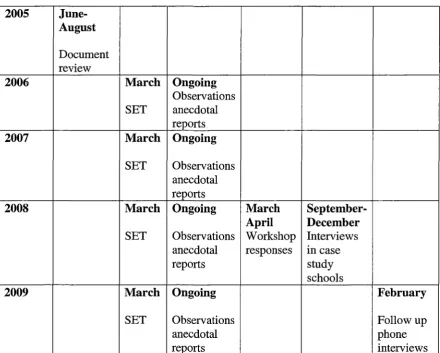
Table 3.1 Data sources and timeline 46
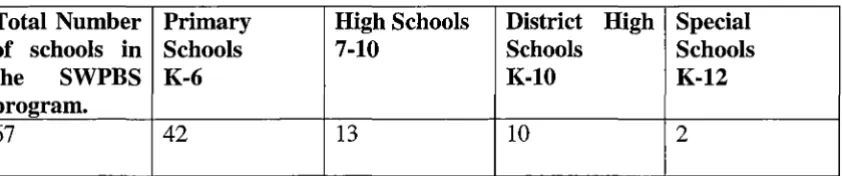
Table 3.2 Tasmanian SWPBS pilot schools 50
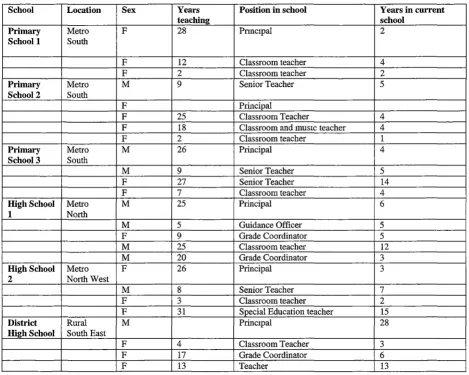
Table 3-3 Interview 51
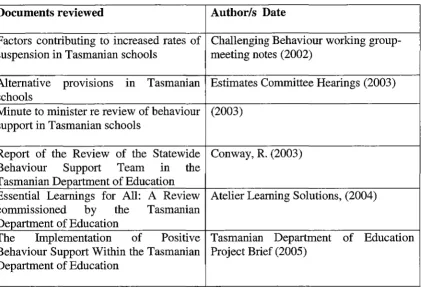
Table 3.4 Documents reviewed in the initial stages of the study 52
Table 4.1 Issues arising from the document review 58
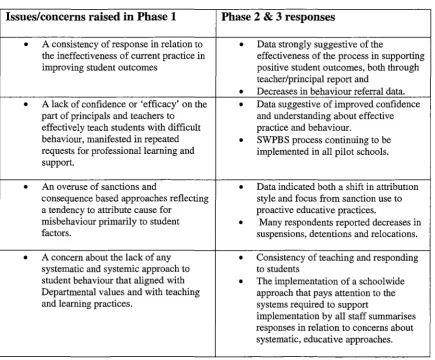
Table 4.2 Data from this study in relation to issues raised in Phase 1 60
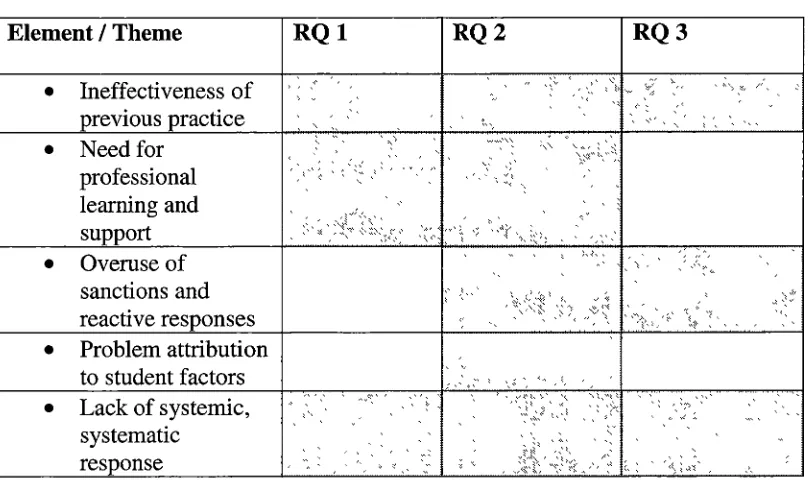
Table 4.3 Data from the workshop responses alongside themes identified in the document review 61
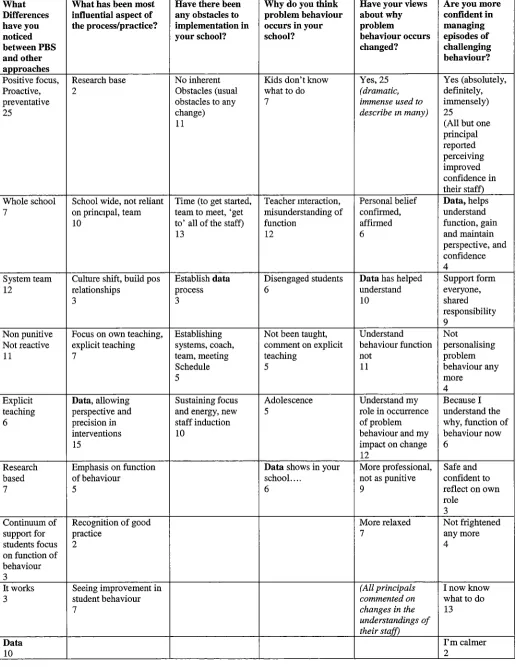
Table 4.4 Interview responses 64
Table 5-1 Themes that traversed the Research Question 76
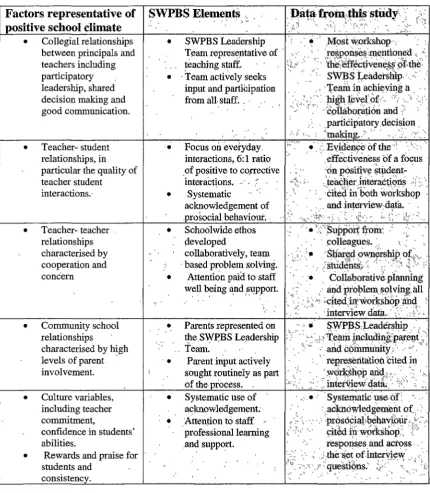
Table 5-2 Data illustrating the ways in which implementing SWPBS was perceived to assist the
DEST
DSS
FBA
MACER
OECD
OER
PEO-PBS
SET
SWBST
SWPBS
Abbreviations and Terms
Department of Education, Science and Training (Australia)
District Support Services
Functional Behaviour Assessment
Ministerial Advisory Committee for Educational Renewal (Queensland Government)
Organisation for Economic Cooperation and Development
Office of Educational Review (Tasmanian Department of Education)
Principal Education Officer-Positive Behaviour Support (Tasmanian Education Department)
School-Wide Evaluation Tool
State-wide Behaviour Support Team
Abstract
The aim of this research was to consider the capacity of a particular schoolwide system, Schoolwide Positive Behaviour Support (SWPBS) to challenge and positively influence the resilience of traditional beliefs and practices in the area of student behaviour, recognising the critical role of teacher belief and practice on student outcomes. There is a strong evidence base regarding the efficacy of the SWPBS process on such things as student outcomes and academic achievement, but little or insufficient descriptive data around teachers' experiences with the process, and those variables important in the process in relation to that experience.
The nature of the research problem required the use of a Qualitative Research Approach as the priority for the research was to gain a rich and meaningful account of the experiences of teachers and principals implementing SWPBS, with particular reference to their confidence and approach in promoting positive student behaviour and their capacity to influence general school climate. A range of qualitative data gathering methods, including observation, workshop responses and semi-structured interviews, were used to facilitate a systematic and thorough investigation of participants' perceptions and understandings over a three year period. The sample comprised 44 SWPBS Leadership Teams (260 individual respondents) in Phase 2 of the study and 19 teachers and 6 principals from 6 schools in Phase 3.
study' s multi site, multi participant, and multi method approach allowing triangulation of the data.
Strong evidence of the capacity of SWPBS to impact positively on teacher efficacy, attribution of problem behaviour and capacity to improve school climate was provided in the study; reflected in teacher and principal reports of increased confidence, altered attribution style in considering student behaviour and its causes, and of a wider repertoire of practices to both promote positive behaviour and respond to incidents of challenging behaviour. Additionally the study provided unique insights into how significant professional learning can be achieved with compelling evidence of the efficacy of the SWPBS process to facilitate that learning. In particular the finding in relation to the impact of the data component of the SWPBS process on teacher and principal learning is noteworthy and contributes to the research in this area.
Overall, the study corroborated the literature in relation to those factors considered to be important in supporting high teacher efficacy, appropriate attribution of problem behaviour and positive school climate, and extended the research into an approach that has strong capacity to translate those factors into practice.
The study has implications for policy makers when considering how to address system-wide change, school administrators who must grapple with tight professional development budgets and multiple priorities and yet bring about significant change for student learning, and for classroom teachers who consistently request assistance to develop new skills and
Chapter 1 Background and Context
Introduction
A 2004 review of the Tasmanian Department of Education's practice in relation to student support found that "approaches to (student) behaviour often rest on authority, coercion, exclusion and regulation, all of which are imposed on students" (Atelier, 2004, p.19). The issues and concerns raised in the Atelier report are not unique to Tasmania, but represent a challenge that faces schools and school systems internationally in relation to the resilience of particular practices and beliefs about problematic student behaviour, despite strong and growing evidence of their ineffectiveness. Indeed there is evidence that a reliance on punishment or sanction based approaches to school discipline, without an accompanying program of teaching and acknowledging positive behaviour, will result in a range of effects including the displacement of problems to the home or community, and a maintenance or even acceleration of the school disengagement trajectory for students at risk. (Jacob, 2005; Hemphill, Toumbourou & Catalano, 2005; Sprague & Homer, 2006; Riordan, 2006). The aim of this research was to consider the capacity of a particular school wide system to challenge and positively impact on the resilience of those traditional beliefs and practices cited above, recognising the critical role of teacher belief and practice on student outcomes.
(Tchannen-Moran, Woolfolk Hoy & Hoy, 1998; Kulinna, 2007/08). The study also
considered how teachers and principals perceived their capacity to influence school climate. Schoolwide Positive Behaviour Support, was supported by the Tasmanian Department of Education as a process that appeared to have the potential to assist schools to implement positive behaviour support approaches alongside the curriculum, acknowledging these as current and evidence based (Sugai & Homer, 2001; Sugai & Horner, 2008)), and with a values base closely aligned to its statement of Values and Purposes for Schooling
(Department of Education, Tasmania, 2000). A further incentive to support the adoption of the process was its attention to the professional development and support of teachers through its focus on systems.
The researcher's interest in undertaking this study was two fold; first, having the opportunity to be a participant observer (Yin, 1994; Bogden & Biklen, 1998) in an initiative with the potential to improve student outcomes, align teaching and learning with behaviour/ discipline practices, and improve teacher confidence and well being and, second, to ensure that the experience of participating teachers and principals was investigated and reported as a significant contribution to evolving policy and practice in this area.
The Tasmanian School Context
importance of considering best practice and evidence, and the key place of professional learning and support for teachers. What also emerged from this review was a consistency in relation to the lack of effectiveness of the initiatives in relation to their intent and outcomes, and in the factors described by reviewers and participants as being responsible for that ineffectiveness (Conway, 2003; Atelier, 2004). The following section charts these initiatives, all of which were internally or externally reviewed, albeit with varying degrees of rigour which is not surprising given the pressure on Ministers and Education Departments to
respond to the immediate and often emotive concerns of the community expressed frequently in the media (Jacob, 2005; Gardner, 2006).
1. 1995-96 Key Teacher (Behaviour Management)
This Government initiative provided one key teacher (BM) to each government secondary school. The key teacher was to be provided with intensive training to enable them to become a reference point for behaviour difficulties in their school. The initiative recognised the importance of professional learning for staff, and the preference for building local capacity to support students in their local schools. It was, however, discontinued after one year despite having some support from participating schools. Tension between initiative developers and implementers and inadequate time to properly implement are cited as two of the reasons for the lack of support for this program's continuation (Gardner, 2006).
2. 1996-2004 District Support Services
challenging behaviour differently across the districts, with considerable variation in relation to priority and practice. Whilst some districts reported having a role in professional learning, others saw their responsibility as being to provide individual student support, sometimes external to the school (Conway, 2003). District Support Services were replaced with Clusters in 2005 in response to concerns relating to the variation in practice and provision mentioned above, and to the perceived separation of services from schools as reported in the Atelier review (2004 ).
3. 1997-present Managing and Retaining Senior Secondary Students (MARSSS)
The MARS SS initiative has been in place in government secondary schools since 1997. This Government initiative was implemented with the intention of providing additional funding to schools to develop specific programs for students whose behaviour was of serious concern. The goal was to 'retain' the students in their local schools rather than suspend them. Like previous and subsequent initiatives, this was a response to media reports of worsening student behaviour and teacher bum-out. The MARSSS program was to be used for direct delivery of integrated programs, not for the establishment of 'add on' or off-site provision or for
coordination purposes, and responsibility for management of the program was given to each school principal. Again, the intent was similar to previous initiatives, that is, inclusive and proactive support for students, integration of behaviour and teaching and learning, and building local capacity.
MARSSS funding is now received as part of a school's recurrent funding and, as such, would be difficult to remove or adjust. Indeed funding to this initiative has increased since its
pedagogy, and recommended at the time that schools consider professional learning activities as a whole school to address this concern. A further review in 1999, again by OER, reported that whilst 58 percent of students in the MARSSS program had returned to regular classes, there was no significant change in absences, suspensions or retention of students to years 11 and 12. Suspension rates and retention to college remain significant priorities of the
Department of Education and current Government.
4. 2002-2004 Statewide Behaviour Support Team (SWBST)
The SWBST was established as one strategy of The Strategic Plan 2002-2003 for Students
with Challenging Behaviours. The plan was developed by a working group representative of
the range of roles within the Department of Education with responsibility for and expertise in the area of student behaviour, as part of the then Government's Learning Together Initiative,
Goal 3. The team was comprised of a team leader and one person in each of the education
districts, (this was extended to two in the largest district.) The team's role was described as being to work with local and school communities, District Support Services (DSS) and other agencies to support the implementation of evidence- based behaviour support programs and strategies in Tasmanian government schools. The intended outcomes from the work of the SWBST were described as:
• Increased system capacity to educate and support students with challenging behaviours and students at risk of developing challenging behaviour through an equitable, sustainable and system wide approach and a range of flexible intervention strategies;
• Increased levels of awareness and understanding in schools and the wider community concerning the complex and multi faceted nature of challenging behaviour and the need for a holistic response.
The SWBST was disbanded following its 2003 review by Professor Robert Conway from Newcastle University (NSW). The review, entitled 'Report of a Review of the Statewide Behaviour Support Team in the Tasmanian Department of Education', cited many reasons as to the lack of success of this initiative, and these were mostly concerned with systemic problems to do with implementation, rather than with the Programme's aims or intentions. Specifically, these were described as confusion on the part of existing services in relation to the role of the SWBST, and reluctance on the part of those services to acknowledge the SWBST's role and to work collaboratively towards its desired outcomes (p.30).
The scope of the review of the SWBST included consideration of the work of DSS, MARSSS and alternative provisions, recognising their relative contribution, and in so doing highlighted significant systemic issues requiring attention in the development of any future provision or initiative aimed at improving student support. Findings of note were; a lack of clarity
surrounding the relative roles and relationships between the DSS, MARSSS, the SWBST and schools, the lack of rigorous evaluation of each in relation to their operation and success against student outcomes and stated goals, and the presence of practices in some parts of the state that were inconsistent with policy, and not sufficiently responsive to the needs of students and teachers, particularly those in schools outside the metropolitan areas.
support staff and recommended a radical overhaul of student support services. The Atelier Report (2004), as it is widely known, prefaced its wide ranging recommendations with reference to the" .. .inclusive values base of Tasmanian public education ... " (p.81), and described the Department's future endeavours as having great potential due to its
" ... remarkable story of educational achievement." (p.81) The recommendations contained in this report were adopted in full by the then Minister for Education, providing a challenge and opportunity for the Department to consider how best to support schools to implement current, evidence based practice, aligned with teaching and learning, and inclusive in focus. It also provided an opportunity to consider and build on the lessons learned from previous
initiatives, particularly those concerned with teacher preference in relation to their own learning and support, and the need for capacity to be locally strong and available.
5. SWPBS Pilot Project
The Department of Education's response was to create the position of Principal Education Officer, Positive Behaviour Support, (PEO-PBS) to lead the systemic adoption of positive behaviour support approaches alongside the curriculum. One of the strategies employed to support the adoption was a pilot scheme to trial the SWPBS process. The SWPBS process was developed by staff at the University of Oregon (USA), and adapted for use in Australian schools by the PEO-PBS (and present researcher), and staff from Education Queensland who were supporting a similar pilot in that state. Although a small pilot (12 schools) was
proposed, expressions of interest to schools attracted 64 applications and the pilot was adjusted to cater for them all. The decision to include all schools was made in order to
acknowledge the significant interest and concern from schools in relation to their practice and outcomes in the area, despite the risk such a large sample posed in terms of possible
pilot, schools were required to attend workshops with their leadership teams (comprising teaching and non teaching staff, principal, parent and community representatives), to nominate a school or cluster based coach, and to participate in regular data collection and review.
The PEO-PBS position was discontinued at the end of 2008 as part of a departmental restructure aimed at decentralisation. Despite this, the number of schools participating has grown to 46 percent of the Tasmania's Government schools (n = 230) - attesting to the broad appeal of the SWPBS process.
Student Behaviour Support: The Australian Context
The broad themes and issues referred to in Tasmania exist elsewhere in Australia. Both the Atelier (2004) and Conway (2003) reports make reference to similar concerns and initiatives as those described above in other Australian Education jurisdictions. The strength of the concern around perceived student misbehaviour was highlighted by the 2002 Ministerial Council on Education, Employment, Training and Youth Affairs' (MCEETYA) claim that behaviour problems in schools were 'ongoing, growing and of national concern' (p.3) MCEETYA established a Student Learning and Support Services Taskforce (SLSS) to provide Ministers with advice on best practice in the area of student behaviour. The taskforce commissioned Dr Terry de Jong, Edith Cowan University, Western Australia, to investigate and report on the Australian context, and to make recommendations for future policy and practice that would reflect consideration of both efficacy and alignment with international and national research. His report, entitled 'Best Practice in Addressing Student
1. Student behaviour needs to be understood from an eco-systemic perspective. 2. Student behaviour management programs and practices must embrace a health
promoting approach to creating a safe, supportive, and caring environment.
3. Student behaviour management programs and practices must embrace inclusiveness, which caters for the different potentials, needs and resources of all students.
4. Student behaviour management programs and practices should incorporate a student centred philosophy that places the student at the centre of the education process and focuses on the whole student (personal, social and academic).
5. Student behaviour is inextricably linked to the quality of the learning experience. 6. Positive relationships, particularly between student and teacher, are critical for
maximising appropriate behaviour and achieving learning outcomes, and
7. Effective student behaviour change and management is enhanced through internally based school support structures, and externally based family, education department, community and interagency partnerships. (p.5)
Also in 2003, the Australian Government Department of Education, Science and Training (DEST) released the National Safe Schools Framework, with a resource package for use by jurisdictional officers to support schools in their implementation of the framework. The principles guiding the National Safe Schools Framework included recommendations that Australian schools; "implement policies, programmes and processes to nurture a safe and supportive school", that these be "proactive and oriented towards prevention and
The policy context of each Australian jurisdiction is reflective of the principles outlined above. It would seem though, that the availability of a well articulated policy context and a knowledge base in relation to best practice is insufficient as an agent for significant change, either in practice where, " ... reactive models around explicit deficit centred behaviour management programs are the most common approaches (in Tasmania) to handling behaviour issues from all sources ... ", or on the resultant outcomes for students " ... Such deficit models of behaviour management do not appear to be working ... they tend to promulgate an authority based model of interaction ... " (Atelier, 2004, p.19). The Atelier report acknowledged this as a national dilemma reporting that "Across the nation there is a growing sense of pressure arising from children and young people whose needs do not seem to be well met within traditional approaches to educational service provision" (p.vii). The Queensland Government's MACER Report (2005), entitled Smart Schools, Smart Behaviour: Report of the Behaviour Management in Queensland Schools, supported Atelier's focus in
stating:
Behaviour and behaviour management issues in schools and the development, approval, application and review of school-based policies on behaviour management, including school disciplinary absences, remain contentious and the subject of ongoing public and political debate. The historical connotation of 'behaviour management' is that of negative behaviour and its amelioration (p.2).
The influence of emotive community views in relation to student behaviour, reported in the media and responded to by governments provides some explanation as to the resilience of those practices described by MACER, Atelier and Conway. For example, a 2008 article in Brisbane, Australia's The Courier Mail described 'sky rocketing' suspensions in that state,
A battle is brewing to contain a 26 per cent spike in students being suspended from Queensland schools over the past three years. The alarming wave of aggressive and disrespectful behaviour from southeast and north Queensland students comes as the Government pours another $28.6 million into "positive behaviour strategies" this financial year. (p.1)
The Courier Mail article reported a 'flood of messages from readers concerned about "soft" disciplinary codes, particularly the inability of teachers to use the threat of force, or simple punishments to exert control' (p.l). In response, the Queensland Opposition Government Education spokesperson pledged, if elected, to employ 50 new teachers trained in behaviour management to 'combat the problem' (p.2). The second page of the article briefly described the evidence base for SWPBS, its success in Queensland schools and an endorsement of SWPBS from Dr Fiona Bryer from Griffith University (a Brisbane tertiary institution). This information though was overshadowed by the sensational language in the article used to describe student behaviour, and by the reported responses proposed by community and government to address the issue. The Courier Mail article illustrates the pressure on principals and teachers to 'control unruly students' and represents what is perhaps the greatest challenge facing teachers and principals in their efforts to adopt contemporary behaviour support approaches, i.e., the expressed, strong appeal of traditional, punitive responses to student misbehaviour from the community.
A Required Paradigm Shift
for them to reflect on and change their practice. Cook and Radler (2006) described the shift from traditional to contemporary thinking and practice in the area of behaviour support as moving:
1. From discipline to support; that is, moving from "using discipline as control,
(i.e., establishing and controlling what students are not to do to adopting positive support to promote, model and teach valued codes of conduct (i.e., establishing, teaching and supporting what students are to do) (p.5)
2. From negative to positive; that is, moving from a 'deficit' or problem focus whereby schools "describe and explain deficits and how these can be overcome, ameliorated and corrected" (p.7), to a positive approach that attributes causation of problem behaviour to social and contextual variables as well as individual student characteristics, seeing the behaviour as an adaptive and functional response to a specific context and social environment. (p.7)
3. From reaction to prevention; that is moving from a reliance on the application of consequences following misbehaviour, to " ... teaching and promoting positive behaviour and skills to all students" (p.9)
4. From recipe to robust process; that is, moving from a search for 'silver bullets' and single solutions to the development of a preventative, schoolwide action plan that is instructional in focus and considers the systems required for sustained implementation (p.9).
The significance of the shift in thinking and practice and associated professional learning and support required to translate policy to practice in Australian schools cannot be underestimated as a factor obstructing the implementation of seemingly efficacious models or practices. In the area of behaviour it has a special significance given the frequent reports of teacher
(Gleason & Hall 1991; Merrett & Wheldall, 1993). Teachers have consistently reported unpreparedness in relation to their practice in the area of student behaviour (Mavropoulou & Padeliadu, 2009; Beaman, Wheldall & Kemp, 2007; Gulchak & Lopes, 2007), and most recently in the Organisation for Economic Cooperation and Development's (OECD) 2009
International Teacher Survey, behaviour and discipline was cited as one of the top three areas where professional learning is required (OECD, 2009). Given these reports of inadequate pre- and in-service preparation it is not surprising that studies in relation to how teachers select their practice place research validation behind practices learned from colleagues, those used by their own teachers and 'common sense' (Boardman, Arguelles., Vaughn, Tejero Hughs, & Klingner, 2005; Shaddock, Hoffman-Raap, Smith, Giorcelli, & Waddy, 2007).
A further element of complexity in relation to teacher practice was highlighted by
Gottfredson (2000), who noted that a typical school can use up to fourteen different responses to problem behaviour at any one time, and that strategies and responses are most often
implemented inconsistently or imprecisely. Morin (2001) acknowledged these findings and suggested caution in assuming that providing information about the benefits of implementing any new practice in the area of behaviour support would be sufficient to create a context in which teachers could safely consider a paradigm shift requiring adjustment of their practice. He asked, "Can we be as patient with our teachers as we are with our students?" (p.64) and proposed that any model of professional learning in the area of student behaviour consider: • Teaching efficacy, i.e., the perception that teachers have of their capacity to make a
difference in a child's education.
• Change Theory, i.e., the need for a systematic commitment to and support for the process of change.
Further to Morin's suggestion is the need to consider the systems and structures in schools that can either contribute to or obstruct change. The core principles described earlier by de Jong (2004 ), as well as the policy contexts in each Australian education jurisdiction assume a school-wide philosophy and set of practices not typically or traditionally available in schools in relation to student behaviour and support. According to Cook & Radler (2006) although long proposed, until recent years schools have struggled to agree on a common and shared approach to problem behaviour, and even more difficult has been to integrate strategies to improve behaviour with teaching and learning in the context of a school wide, positive plan. All of these elements require consideration in developing systemic and systematic responses for improved student outcomes.
The significance of this study
The SWPBS process has been developed with attention to those factors described above and as such ought to result in enhanced teacher efficacy, the development of an attribution style reflective of contextual or ecological factors, and a greater perceived capacity by teachers to contribute to the development of a positive school climate.
SWPBS, and recommended further investigation of the potential impact of implementation on teacher efficacy. de Jong's (2004) national report highlighted the need for Australian research in the area of effective practice in relation to student behaviour (p.10), critical components of which are to do with teacher efficacy and response to behaviour, and system support. This study has the potential to add to the literature in these important areas.
The complexity of this area, particularly in light of the influences on teacher practice of community, media and traditional approaches prevalent in schools, is acknowledged in this study by utilising a mixed-mode research method to gather relevant data in relation to the experience of teachers and their changing perceptions and practice over a three year period of implementing SWPBS. Investigating the variables considered by teachers to have been most influential in relation to that change will have implications for providing policy advice to senior bureaucrats and school-level authorities as they consider how to address the 'misbehaviour' issue.
Research Aim
This study examined the implementation of a process in relation to its capacity to provide the professional learning and support recommended in the literature to have a positive influence on the development of teacher efficacy and attribution of problem behaviour, and asked
What impact does the implementation of School-Wide Positive Behaviour Support have on
perceived teacher efficacy, teacher attribution and perceived capacity to influence general
To address the study' s broad aim three subsidiary questions were developed. These were:
(i) How do teachers report their confidence in and capacity to influence student behaviour?
(ii) How do teachers understand and attribute the causation of problem behaviour?
(iii) How do teachers perceive the impact of implementing SWPBS on their capacity to improve school climate?
Structure of the thesis
This thesis includes four further chapters and attachments consisting of a list of references and a set of appendices. The remainder of the thesis comprises the following:
Chapter 2: The Literature Review
A review of extant Literature that examines the importance of teacher efficacy and response to student behaviour, as well as Literature in relation to the efficacy of the SWPBS process is presented in Chapter 2. Specific consideration is given to those variables considered
important in positively impacting teacher efficacy and attribution, and the ways in which the SWPBS addresses these broad areas.
Chapter 3: The Research Methodology
Chapter 3 describes the selection of the research approach, data gathering methods and
Chapter 4: Results
The results of the study are presented in Chapter 4. In this chapter the experiences of teacher and principal participants gained through observation, workshop responses and interviews are presented in terms of similarities and variances in relation to the research questions. These were analysed and reported in terms of their capacity to inform future practice and support in the Discussion chapter.
Chapter 5: Discussion
In this chapter, discussion and suggestions indicated by the results reported in Chapter 4 are provided. Presentation of this chapter mirrors the conceptual framework and broad Research Question, and takes account of the analysed data as well as the Literature to make suggestions in relation to future practice and support.
The Appendices
The attachments complete this thesis, and include References for all of the sources cited throughout the report as well as Appendices illustrating the detail of the thesis. These are
• Ethics approvals
• Letters inviting participation in the study
• Examples of the data and data analysis illustrating the research methodology, and • Copies of the workshop and interview questions.
Summary
student outcomes and continuing calls from educators for professional learning and support in this area.
Practice selection in relation to behaviour support is influenced by the enduring, often emotive community appeal of traditional approaches, reflected in media reports and reacted to by Government in ways that do not always align with policy intent or represent
Chapter 2 Literature Review
Introduction
The focus of this thesis is the reported experience of Tasmanian teachers' and principals' implementation of SWPBS as part of a systemically supported pilot. The intention of the SWPBS pilot was to assist the adoption in schools of research validated, positive behaviour support approaches alongside the curriculum and was prompted by an external review of performance in the area of behaviour support (Atelier, 2004). The Atelier review suggested an urgent need to address the continuing concerns expressed by school and community respondents in relation to practice in this area by considering current research, and developing systematic and systemic support for reflection and change. The extent of the interest and concern about behaviour support practices in Tasmanian schools was evidenced by one third of them requesting participation in the pilot.
The specific aim of this study was to investigate the extent to which the implementation of SWPBS could be influential in relation to perceived teacher efficacy, attribution of problem behaviour and perceived capacity to influence general school climate, acknowledging the critical importance of these factors in creating environments likely to sustainably support positive student learning outcomes (Tshannen-Moran, Hoy & Hoy, 1998; Morin, 2004; Sugai
& Homer, 2008.)
Prior to assuming a structure that facilitates analysis and synthesis of the literature related to the research question, a summary of published research relating to student behaviour support and SWPBS is presented.
Several searches conducted prior to the commencement of the study provided guidance in relation to current knowledge and practice surrounding student behaviour, the SWPBS process, teacher efficacy and attribution of problem behaviour. The searches included the on-line databases Pro-Quest, Scopus, Illumina and ERIC. Department of Education (Tasmania), Australian Government and other Education Jurisdictions' policy and review documents relating to student behaviour and discipline were included in the search in order to gain a national and local contextual background for the study.
The search results pointed to a large body of international research concerning the broad areas of student behaviour, teacher efficacy, and school climate. The research reviewed for this study was consistent across cultures and settings regarding the resilience of traditional beliefs and practices, the impact of teacher efficacy, attribution and school climate on student outcomes, as well as in relation to the variables or conditions considered necessary to support contemporary beliefs and practices.
Outline of Chapter 2
In this chapter, literature related to student behaviour support and SWPBS is reviewed prior to narrowing the focus and examining the potential impact of SWPBS on perceived teacher efficacy, how problem behaviour is attributed and perceived capacity to influence school climate. Although there is some overlap or connection between the Research Questions in terms of conditions or variables important in their development, addressing each as a subsidiary question assisted analysis and reporting. Specifically, the literature related to student behaviour, SWPBS and each of the subsidiary research questions is presented in sections in Chapter 2 as follows:
2-1 Literature relating to student behaviour support 2-2 Literature relating to SWPBS
2-3 Literature relating to subsidiary Research Question 1: How do teachers report their confidence in and capacity to influence student behaviour?
2-4 Literature relating to subsidiary Research Question 2: How do teachers understand and attribute the causation of problem behaviour?
2-5 Literature relating to subsidiary Research Question 3: How do teachers report their capacity to influence school climate?
2.1 Literature relating to student behaviour support
2.1.1 The influence of traditional approaches and the broader community on behaviour support practice
The area of behaviour support remains a priority and challenge for education systems globally, and despite significant changes in practice, theoretical perspective and knowledge base, outcomes for many students remain poor (Jacob, 2005; Hemphill, Toumbourou &
(Sugai, Sprague, Homer, & Walker, 2000; Atelier, 2004; Luiselli, Putman, Handler & Feinberg, 2005). There is consensus in the literature regarding the need for there to be focus on systems and practices that are preventative and proactive, as well as an accompanying evidence base regarding the efficacy of that focus in supporting positive student outcomes (see Safran, Oswald, 2003; Sugai et al., 2000; Skiba et al., 2006; Todd et al., 1999).
A significant challenge in the universal adoption of contemporary practice is that the typical practices it seeks to replace represent a vastly different paradigm in terms of how problematic behaviour is explained and responded to (Medway, 1979; Beaman & Kemp, 2007; Ho, Dobbs
& Arnold, 2009), with traditional and more typical approaches holding an enduring appeal
for the broader community, expressed often in the media as necessary to gain and maintain control (Jacob, 2003; Beaman & Kemp, 2007).
According to Beaman & Kemp (2007) in Australia "problems of classroom order and discipline frequently stimulate public interest and debate" (p.46) with the resultant media attention often leading to political responses that are costly, but not necessarily based on accurate perceptions of need, or on research evidence (Jacob, 2005). Beaman & Kemp (2007) argued that a further concern in relation to inaccurate media reporting is its potential to " ... seriously damage education systems, demoralizing staff and students and making the teaching profession an unattractive option for a future workforce.' (p.46). Beaman & Kemp go on to suggest that it is 'perplexing' that 'so few advances have been made in the
2.1.2 Current recommended practice in behaviour support
The core principles of best practice described by de Jong (2004) and outlined in Chapter 1, suggest that the achievement of positive student behaviour outcomes relies on the adoption in schools of a preventative and proactive approach. Riordan (2006) highlights the importance of having a pedagogical rather than punitive response to student behaviour, working with parents and the broader community, and appropriately contextualising policy as key features of a preventative approach (p.239).
According to Conway (2003), research in relation to enhanced student learning and effective behaviour support entails giving attention to five key variables:
• Learning and teaching engagement by students and staff
• Educational leadership within the school (supported by leadership beyond the school) • Collaborative practices within the school and with other educational services
• Multidisciplinary approaches with services beyond education, and
• Staff professional learning to enhance learning, teaching and management (p. 17). In order to build these features to a level that will enhance students' academic and
The establishment of the conditions outlined above are also the critical, but often overlooked, first step when planning to meet the needs of those students with persistent or more severe challenging behaviour (Freeman, Eber, Anderson, Irvin, Homer, Bounds, & Dunlap, 2006; Bambara, Nonnemacher, & Kem, 2009; Nelson, Hurley, Epstein, & Buckley, 2009; Sugai, et al., 2000). For students with more challenging behaviour the recommended practice entails ensuring that schools have the capacity to provide a continuum of support that enables
function based, individualised interventions that are developed collaboratively and
implemented consistently by school personnel (Sugai et al., 2000; Nelson et al., 2000; Bryer
& Beamish, 2005; Sugai & Homer, 2008). For students with persistent or more challenging
behaviour when more traditional or reactive approaches, including exclusionary practices are used rather than those recommended, the outcomes have been detrimental to both the
individual student and to the school system. (Atelier, 2004; Jacob, 2005; Riordan, 2006).
The impact of societal influences on teacher and principal practice and morale in the area of behaviour support cannot be underestimated when considering professional learning and support models. Schools and teachers perceive intense pressure from the community to utilise punitive approaches when dealing with student misbehaviour and to deliver immediate
outcomes (Conway, 2003; Atelier, 2004; Jacob, 2005; Riordan, 2006). The external demand exists despite the evidence of the ineffectiveness of those practices to improve either student outcomes or school safety and climate (Skiba et al., 2006; Riordan, 2006). Sugai et al., (2002) make the important point that 'school administrators and their faculty face a plethora of advice on how to make schools safer but little help integrating what are often conflicting messages.' (p.94). The additional conflict between meeting the demand from the community for immediate outcomes referred to by Jacob (2005) and Beaman (2007), and illustrated in
proposed in the literature considered necessary to implement current and effective behaviour support, provide an insight into the difficulties principals and teachers face in this area of their practice.
2.2 Literature relating to Schoolwide Positive Behaviour Support (SWPBS)
A recent and influential development in school disciplinary practices and behaviour support is the growing evidence base for and interest in positive behaviour support approaches (Todd, Homer, Sugai, & Sprague, 1999; Safran & Oswald, 2003; Bryer & Beamish, 2005; Luiselli, Putman, Handler, & Feinberg, 2005; Walker, Cheney, Stage & Blum, 2005; Sailor, Zuna, Choi, Thomas, & McCart, 2006; Carr & Homer, 2007; Kincaid, Childs, Blase & Wallace, 2007). The application of positive behaviour support approaches in schools known as
SWPBS, represents the evolution or expansion of its basic tenets of prevention, skill building, environmental modification and the use of socially valid strategies and outcomes (Bambara et. al., 2009). The SWPBS process takes account of the challenges described in the previous section and provides schools and educational systems with a process to facilitate contextually sensitive implementation (Todd et al., 1999; Cook & Radler, 2006).
Cook & Radler (2006) describe SWPBS as an approach that "aims to create a positive school climate, a culture of student competence, and an open, responsive management system for school leaders, staff, students and parents" (p 3). Homer & Sugai (2005) provide a further level of detail to Cook & Radlers' definition, describing the purpose of SWPBS as being to assist schools to provide environments that prevent problems because they are:
• predictable - in that all community members know what is expected of them,
• positive - the emphasis is on modelling, teaching and acknowledging positive behaviour.
The model of implementation described by Sugai & Homer (2002) requires attention to a set of key elements that complement those described earlier by de Jong (2004) and Conway (2003), by adding a level of detail that ought to assist the translation of the best practice features described by de Jong and Conway. Sugai and Horner (2002) describe these as:
• Outcomes - behavioural and academic goals that are developed and shared by students families and educators
• Practices - the use of strategies and interventions that have sound evidence to support their use, and are consistent with the school's values base.
• Data - information is used to identify problem areas, need for intervention, and the effects of interventions, and
• Systems - supports needed to enable accurate and sustained implementation of PBS practices.
A summary of research outcomes relating to the implementation of SWPBS gathered over 15 years (Sugai & Horner, 2001), supports the notion of its potential to address the specific concerns raised by researchers and reviewers in relation to behaviour support and related student outcomes. The research findings included significant decreases in the number of behaviour or 'office discipline referrals' (i.e., 40-60% reduction), and improvements in the use by teachers of effective responses to problem behaviour. Included also were outcomes demonstrating improvements in the behavioural culture of schools achieved through
the use of research validated practices, then the effects described will endure for five to seven years (p.4).
The features of the SWPBS process as described above by these authors (Sugai & Homer, 2001; Cook & Radler, 2006) are reflective of the conditions also presented by de Jong (2004) and Conway (2003) in representing recommended practice in the area of behaviour support for Australian schools. In addition, SWPBS provides an explicit framework for schools to systematically implement those practices. The research examined confirms the positive impact of implementing SWPBS on student behaviour outcomes and school climate and is suggestive of its potential to positively impact teacher efficacy and attribution of problem behaviour (Ross & Homer 2007; Lohrmann et al., 2008). The SWPBS process also takes account of the significance of the systems and time required to support the adoption and implementation of new practices and supporting improved student outcomes (Conway, 2003; Bryer & Beamish, 2005; Cook & Radler, 2006; Sugai & Homer, 2008).
2.3 Literature relating to Research Question 1: How do teachers report their confidence in and capacity to influence student behaviour?
accomplish a specific teaching task in a particular context.' (p.233). Teacher efficacy then can be understood as comprising both teacher's beliefs about their teaching ability - including their confidence (beliefs about internal factors), as well as their beliefs about context, or the need for and availability of teaching resources (beliefs about external factors) (Carleton, Fitch
& Krockover, 2008, p.47). In relation to professional support models, the implications of this
definition are important, suggesting that there needs to be as much attention given to the context in which teaching and learning take place as there is to the currency of teacher knowledge and skills in behaviour support.
A further imperative to include consideration of teacher efficacy in this study was provided by Guskey and Passaro's (1994) assertion that teacher efficacy is the most important variable in predicting the success of any program implementation (p.628), supported by their research outcomes linking high teacher efficacy to greater preparedness by teachers to try new
methods. The evidence of the importance of teacher efficacy, not only on student
The sources of teacher efficacy described by Bandura (1986, 1997 cited in Tschannen-Moran, 1998) are important also to consider when developing teacher professional development and support models. Bandura describes these as mastery experiences, physiological and emotional states, vicarious experiences and social persuasion, with mastery experiences considered to be the most powerful (p.211 ). Guskey' s (2002) model of teacher change reflects the
importance of mastery experiences, proposing that these precede any significant shift in teacher attitude and belief (p.385). The importance of each source though cannot be
underestimated in terms of the capacity of each to enhance or decrease teacher efficacy. In relation to student misbehaviour, a high level of arousal is possible, and the potential is there for this to produce anxiety or excitement, mastery or incompetence (Tschannen-Moran et al., 1998; Morin & Battalio, 2004). The inclusion of vicarious experiences and social persuasion in professional learning models may have less impact on teacher efficacy (Bandura, 1996; Tschannen- Moran et al., 1998; Guskey, 2002) but are none-the-less potentially helpful strategies in any model of professional learning and support.
The influence of school context variables on teacher efficacy is clearly significant, with organisational structure and climate, principal leadership and collective efficacy all having received attention in the literature as factors important when considering how to support high teacher efficacy (Tschannen-Moran et al., 1998; Carleton et al., 2008; Adams & Forsyth, 2006; Tschannen-Moran, Parrish & DiPaola, 2006 ). Given that a teacher's perception of efficacy is not stable across contexts and can vary from subject to subject, or from one group of students to another, the need to consider contextual variables as well as teacher learning in attempts to support changes in teacher beliefs and practice is clear (Tschannen-Moran et al., 1998; Guskey, 2002; Tschannen-Moran, et al., 2006). Specifically, working collaboratively to address school level variables, involving teachers in decision making, coaching and
improving general school climate have all been shown to positively affect perceived teacher efficacy (Tshannen-Moran et al., 1998, p.239), and all are features of the SWPBS process lending support to its potential in this area.
One study specifically addressing the impact of implementing SWPBS on teacher efficacy was located in the search for this study, the results of which indicated a statistically
significant relationship between SWPBS implementation and perceived teacher efficacy (Ross & Homer, 2007). The study's authors recommended further research, using a greater diversity in method, to address the gap in the literature regarding teacher outcomes from implementing SWPBS. A further study (Lohrmann et al,. 2008), examined school personnel's resistance to implementing SWPBS and found teacher efficacy and belief factors to be
SWPBS and teacher efficacy, it was considered an area requiring further research, in particular in schools with experience implementing the full continuum of support that comprises SWPBS (p. 49).
2.4 Literature relating to Research Question 2: How do teachers understand and
attribute the causation of problem behaviour?
The second focus for this study related specifically to teacher attribution of problem behaviour, in the context of acknowledging the significance of attribution style on teacher beliefs and practice, (Mavropoulou & Padeliadu, 2009; Ho, 2009; Kulinna, 2008; Beaman, Wheldall & Kemp, 2007; Morin & Battalio, 2004). Morin and Battalio (2004) stated that teachers can find themselves in a" ... heightened state of subjectivity ... when they encounter misbehaviour in the classrooms, hallways and school grounds they supervise." (p. 251) and that without proper support to interpret and respond in helpful ways, can " ... form an instantaneous opinion of the causes of the incident. .. " and may be " .. .launched on a trajectory fuelled by intense subjectivity, (i.e., anger retribution.) ... " (p.252). This
description echoes a seemingly stable tendency on the part of teachers to attribute causation for problem behaviour to student rather than teacher factors (Medway, 1979; Soodak &
Podell, 1994; Brophy & Rohrkemper, 1981), even across different cultural contexts (Ho, 2009; Mavropoulou & Padeliadu, 2002). In so doing, according to Brophy & Rohrkemper (1981), teachers avoid the potential risks to their confidence, position or status inherent in attributing causation to factors within their control, which is understandable.
minimising ... (the importance of) ... mental health goals in favour of short term control or desist attempts" (p.308). The volume and consistency of the research in relation to teacher attribution and responses to problem behaviour, coupled with continued calls for greater access to both pre- and in- service training in the area highlight its significance, and suggest it as an area requiring consideration in any initiative aiming to improve student outcomes.
The proactive nature of SWPBS, with its emphasis on supporting teachers to understand behaviour in terms of function and environmental influences, has considerable potential to have a positive impact on how teachers and principals understand and respond to problem behaviour (Morin & Battalio, 2004; Morin, 2001.) Mooney et al., (2008) noted changes in teacher's perceptions of behaviour and how it is best dealt with when implementing SWPBS in their schools (p.57) lending support to the potential of the process to influence positively teacher attribution. Additionally, understanding and responding to misbehaviour in ways that are likely to be effective in contributing to positive student behaviour outcomes will likely enhance teacher efficacy (Tschannen-Moran et al., 1998; Carleton et al., 2008).
2.5 Literature relating to Research Question 3: How do teachers report their capacity to influence school climate?
The variable of school climate was included in this study because of the number of times it was raised by teachers and principals in the Tasmanian SWPBS pilot schools as having been
(p.369), there is agreement in terms of its impact or importance on a range of factors including 'cognitive and affective behavior' (p.371). Hoy & Sabos' (1998) definition of school climate (cited in Roach & Kratochwill, 2004) is illustrative of Anderson's point about empirical confidence, their definition reading; "the pervasive quality of a school environment experienced by students and staff, which affects their behaviors" (p.12).
Of particular significance to the study reported in this thesis is Anderson's statement that the research reviewed suggests 'some composite of school characteristics does create a climate
which accounts for a substantial portion of the variance in student outcomes' (p.372), and Roach and Kratochwills' (2004) assertion that any measure of the effectiveness of schoolwide behaviour interventions needs to include consideration of climate in order to gain a 'complete picture of the changes required and produced by school wide behavioral interventions' (p.11 ). Of note were the school characteristics described in Anderson's review that were seen to represent a positive school climate, and the relationship of these to features of the SWPBS process, as well as to the variables and conditions described by Conway and de Jong as necessary to support positive behaviour. Specifically,
• Relationships between principals and teachers that were collegial and included participatory leadership, shared decision making and good communication
• Teacher student relationships, in particular the quality of teacher student interactions • Teacher teacher relationships characterised by cooperation and concern
• Community-school relationships characterised by high levels of parent involvement • Culture variables, including teacher commitment, confidence in students' abilities,
rewards and praise for students and consistency (pp. 400-404)
comprise school climate (Roach & Kratchowill, 2004), including those likely to positively impact teacher efficacy and attribution of problem behaviour discussed in previous sections of this chapter.
Summary
The area of student behaviour continues to present a challenge for schools and education systems locally and internationally (Sugai et al., 2000; Skiba et al., 2003; de Jong, 2004; Atelier, 2004; Jacob, 2005; OECD, 2009), in relation to both poor student outcomes (Atelier, 2004; Hemphill, 2005; Riordan, 2006; Sprague et al., 2006), and to teacher practice and well being (Morin, 2001; Beaman & Kemp, 2007; OECD, 2009). Despite significant changes in theoretical perspective and knowledge base, practice in response to problem behaviour in schools remains predominately characterised by traditional, reactive and restrictive
approaches (Sugai et al., 2000; Atelier, 2004; Luiselli et al., 2005; Jacob, 2005; Skiba et al., 2006), which is partly explained by the enduring appeal of these approaches in the broader community, and the consequent perceived pressure from schools and systems to respond accordingly to that pressure (MACER, 2005; Jacob, 2005; Cook & Radler, 2006; Skiba et al., 2006).
Chapter 3 Methodology
This chapter describes the research approach developed for the study and the procedures used to address the stages of the process in relation to the research question. The chapter is
presented in the following nine sections: 3.1 Introduction
3.2 Selection of Research Approach 3 .3 Research Method
3.4 Varied roles of the Researcher in this study
3.5 Gaining permission to conduct the research and to obtain consent of the participants
3.6 Sample 3.7 Data Analysis 3.8 Summary
3.1 Introduction
behaviour, and lastly, how do teachers perceive the impact of implementing SWPBS on school climate.
3.2 Selection of Research Approach
The broad Qualitative Research Approach was chosen as it was best placed to allow a
systematic and thorough investigation of participants' perceptions and understandings gained through observation, document review and interview. (Mitchell & Jolley, 2007). A modified grounded theory approach was selected in light of its capacity to explain as well as desclibe (and to) " .. .implicitly give some degree of predictability, but only with regard to specific conditions." (Strauss & Corbin, 1990, p.5). The opportunity to "uncover relevant
conditions ... determine how the actors respond to changing conditions and to the consequences of their action." (p.5), was afforded through the use of this approach, and considered necessary to investigate fully the research questions with sufficient detail to inform future decision making at both school and system levels. The use of a Qualitative approach, and the case study in particular, enabled the identification of important processes and variables that warranted further investigation. As Rist (2000) suggested, the findings available through qualitative research are best placed to provide policy makers with 'equally grounded means oflearning about program impacts and outcomes' (p. 1009).
and the literature review in arriving at helpful understandings to inform future support for teachers (Burns, 1994; Lincoln & Guba, 1985). The study did not seek to determine causality, but rather a deep understanding of 'if and how' participants perceived their understanding and practice to have altered through participation in the SWPBS program, To achieve this level of detail it was important to target a bounded system that was manageable for a research study (Bassey, 1999; Merriam, 1998; Stake, 1995), but which had sufficient size and scope to learn about the views and perspectives of a sample of policy actors (Firestone, 1987). The strength of case study research in relation to this project therefore, was in its capacity to quite intensively investigate the variables, processes and interactions deserving of close attention in seeking a deep understanding in relation to the Research Question.
Reliability and validity are typically identified as potential areas of limitation in qualitative research (Burns, 2000, p.12.) Case studies are particularly vulnerable the accusation that findings are subjective and prone to researcher bias (Burns, 2000, p.473-474). Findings from this study though are not intended to be generalised to other school settings or systems,
however the information emerging from the study may contribute to a wider understanding of factors important in relation to supporting improved teacher efficacy and as a consequence, improved student outcomes.
Accordingly, the case study focussed on schools participating in the SWPBS pilot over a period of three years, and used multi data gathering elements: workshop responses, interview and document collection by a participant-observer (Merriam, 1998). The iterative style
determine changes in their perceptions over the three year period (Sturman, 1997). Some of these perceptions were brought to life through verbatim recording of their comments (Miles
& Huberman, 1994) giving insight to the 'ground level' experience of the SWPBS approach
(Rist, 2000, p.1008) not achievable through the use of quantitative methods alone. The credibility of the study was considered carefully in terms of striving for a level of
trustworthiness necessary to achieve sufficient objectivity (Lincoln & Guba, 1985) for it to be useful for future policy and practice discussions. Acknowledging that it is not possible in qualitative research to "establish reliability in the traditional sense" (Bums, 2000, p.475) the trustworthiness and credibility of the data gathered in this study were strengthened by the use of multiple sources enabling triangulation through corroborating evidence (Denzin &
Lincoln, 2000; Stake, 1995; Yin, 1994). Reliability was further supported by identifying the research steps and procedures used to inform the study, self reporting of bias and clear reporting of coding and thematic development (Bums, 2000, p.475.)
3.3 Research Method
This research is presented largely as a descriptive study, an attempt to 'describe
Table 3.1 Data sources and timeline
2005
June-August Document review
2006 March Ongoing
Observations SET anecdotal
reports
2007 March Ongoing
SET Observations anecdotal reports
2008 March Ongoing March
September-April December SET Observations Workshop Interviews
anecdotal responses mcase
reports study
schools
2009 March Ongoing February
SET Observations Follow up
anecdotal phone
reports interviews
Acting in the advantaged position of participant-observer, provided the researcher with an opportunity to relate a "slice of life" (Merriam, 1998, p.42) but also to "reveal how
free (Lincoln & Guba, 1985; Strauss & Corbin, 1998; Taylor & Bogdan, 1998), and is inevitably permeated by the researcher's values from inception to conclusion (Lincoln & Guba, 1985; Walker, 1993). Potential researcher bias was ameliorated with the use of within and cross case comparisons as well as triangulation of the data, and by seeking the input of another professional regarding the development of the interview schedule and analysis procedures thereby assisting the study' s reliability and enabling the researcher to 'go beyond initial impressions.' (Eisenhardt, 1989, p.541).
Despite the advantages of the research method adopted for the study, it was recognised that a perfectly complete study or the determination of an "ultimate truth" is not possible (Lincoln
& Guba, 2000, p.178). Objectivity in qualitative research not entailing controlling variables
(Strauss & Corbin, 1998), but rather representing as accurately as possible what respondents have to say and what they do, employing openness and a willingness to listen and "give voice" without judgement (p.43), faithfully documenting the key features of the research process (Sturman, 1997) and in so doing providing an "intimate connection with empirical reality ... " permitting, according to Eisenhardt (1989), 'the development of a testable, relevant and valid theory' (p.532).
3.4 Varied roles of the researcher
The researcher was appointed to the position of Principal Education Officer-Positive Behaviour Support (PEO-PBS) in 2005, the year preceding the SWPBS pilot, and was responsible for leading the systemic adoption of positive behaviour support approaches across the state. One strategy employed to achieve this goal was the SWPBS pilot. The researcher's role in this initiative included adapting (with interstate colleagues) the systems and training to support implementation, providing training and follow up support to school teams and coaches, and providing interim reports to departmental staff regarding the program and in relation to broader issues pertaining to student behaviour and support.
Performing these roles provided the researcher with both opportunities and challenges in relation to the study. Proximity to, and involvement with the work of all schools through each stage of their implementation afforded the researcher an opportunity to undertake a modified form of the "participation observation" procedure described by Bogdan & Biklen (1998, pp.2-3). Introducing and then working alongside school teams to implement a process they had elected to adopt also provided the researcher with an opportunity to access an
understanding of participants' actions and motives "from the inside" as described by Taylor
& Bogdan (1998, p.49)