Heidi Gordon BA (Hons)
I declare that this thesis is my own work and that, to the best of my knowledge
and belief, it does not contain material from published sources without proper
acknowledgement, nor does it contain material which has been accepted for the
award of any other higher degree or graduate diploma in any university.
pi-C(2,
f
.0. lcOLC)
Contents
Page
Acknowledgements iii
Literature Review
Abstract 1
Introduction 2
Postpartum Illnesses 2
Infanticide 7
Insanity Defence 15
Juries 17
Gender of the Juror 20
Single Episode versus Recurring Mental Illness 22 Current State of Research and Future Directions 23
References 27
Empirical Study
Abstract 36
Introduction 37
Method 47
Results 52
Discussion 68
References 86
Appendices
Appendix A: Questionnaire and Vignettes 93 Appendix B: Participation Advertisement and Information Sheet 107
Appendix C: SPSS Data Output 110
Abstract
Infanticide, the murder of a child aged between 24 hours and 12 months, dates back to Ancient Greece, where it was primarily used for population control. It still occurs in modem society, although illegally, and is often associated with the mother experiencing a postpartum illness (Laporte et al., 2003). In Tasmania, if a woman murders her child under the age of 12 months, she may plead guilty to the legislated crime of Infanticide. This offers her a lesser charge of
For the vast majority of the world's population, an idealised, stereotypical icon includes a mother holding her newborn baby — an occasion that is to be celebrated and enjoyed by the child's family. Entering motherhood can be viewed as a rite of passage and achievement. Psychologically 'healthy' women often find pregnancy a means of self-realisation or a creative act that gratifies both hers, and her partners, needs (Sadock & Sadock, 2007). The stereotypical new mother is expected to possess the intrinsic ability to love, nurture and raise her own child into adulthood (Dobson & Sales, 2000). However, due to the high rate of postpartum illnesses, one in seven mothers will struggle to meet the demands this stereotype encompasses (Beyond Blue, 2009).
The period following childbirth imposes a range of psychological, social and physical adjustments on the mother's behalf (Stanton, Lobel, Sears, & DeLuca, 2002). Despite the widespread belief that new mothers are joyous, psychologically healthy and easily adapt to the parenting role, postpartum mood• disorders are a fairly common form of maternal morbidity following the delivery of a child. Postpartum affective disorders range in both severity and duration, whilst also having a detrimental effect on the woman's life and bonding with her newborn child (Dennis & Hodnett, 2007). Spinelli (n.d.) stated that mental illness during the postpartum period, primarily affective disorders, falls into one of three categories: postpartum blues (also commonly referred to as the 'baby blues'), postpartum depression and postpartum psychosis.
Postpartum illnesses
the mother experiences feelings of elation, followed by depression. Findings from Spinelli's research suggest that almost every mother experiences
postpartum blues. The Diagnostic and Statistical Manual (DSM-IV-TR) of the American Psychiatric Association (2000) reported a 70% incidence rate of postpartum blues in new mothers and that this affective turmoil usually lasts for
10-14 days. While worsening signs should be monitored for indications of depression, even severe symptoms usually dissipate without requiring treatment or intervention. A mother experiencing postpartum blues will report symptoms including feeling overwhelmed, anxious, having difficulty sleeping, as well as feelings of elation at one instant and then crying or feeling hopeless the next. Whilst postpartum blues might be considered a minimal, or even trivial, affective disorder because of its short duration, it can impose significant stresses upon the mother, her newborn and other family members due to the emotional
rollercoaster the mother is experiencing.
It has been established that pregnancy and early parenthood are times of increased risk for developing an emotional disorder (Buist et al., 2006).
which indicated that postpartum depression usually peaks in the first few months following delivery, rather than later on.
Reported symptoms of postpartum depression include the mother experiencing conflict regarding her maternal role and/or abilities. The mother might experience persistent sadness and crying, an inability to sleep even when the baby sleeps, over-concern about the baby (including health problems, perceived deformities and perceived imminent death of the infant), anxiety and an inability to bond with the baby. In rare and more severe cases the mother may attempt, and succeed in, suicide or infanticide. The mother can be plagued by obsessions and thoughts about hurting the child, but not actually want to cause or bring about any harm.
Postpartum psychosis (sometimes referred to as puerperal psychosis) is described as a loss of contact with reality as demonstrated by hallucinations (including tactile, visual and olfactory hallucinations) and delusions (false beliefs, for example, believing one is God, or is directed by God, or some other unseen force) (Spinelli, n.d.). It is usually considered to be affective or
schizoaffective in nature and is rare, although often highly predictable, occurring at a frequency of two-to-four per 1000 deliveries in Australia and New Zealand (Barnet & Morgan, 1996). Sadock and Sadock (2007) assert that symptoms of postpartum psychosis can begin within days following delivery. However, the average time of onset is within two to three weeks, and almost always within eight weeks, of childbirth.
health and welfare. Delusions may include that the baby is dead or defective. Once psychosis occurs, and it is usually florid in nature, the mother may be a danger to herself or her newborn, depending on the content of her delusional structure and her degree of agitation (Sadock & Sadock, 2007). Postpartum depression may or may not be associated with psychosis. Further, nonpsychotic depressed mothers are less likely to be a danger to themselves or their infant (Spinelli, 2004).
Reports of postpartum psychosis and other postpartum illnesses date back for more than 2000 years. Hippocrates described it as a madness experienced by women after giving birth due to an excessive blood flow to the brain (Spinelli, 2004). However, despite its long-observed history there is yet no formal
diagnostic status of postpartum illness in the DSM-IV-TR (American Psychiatric Association, 2000). Rather, the DSM-IV-TR provides the specifier 'with
postpartum onset' which can be applied to the current, or most recent, Major Depressive, Manic or Mixed episode of Major Depressive Disorder, Bipolar I Disorder, Bipolar II Disorder or to Brief Psychotic Disorder. This specifier is only to be used if the onset of the above disorders occurs within four weeks after childbirth.
Whilst the DSM-V is currently still under review, it adopts the position that the time-frame in which the specifier, 'with postpartum onset,' may be used has been extended to the onset of an episode occurring within six months postpartum (American Psychiatric Association, 2010). Jones (American Psychiatric
this, Jones argued that for unipolar depression, the previous four week time frame is too restrictive, but that the previous time frame may be acceptable for bipolar episodes. Consequently, the ultimate solution may be too complex (providing different specifiers for each disorder), therefore suggesting the criteria be extended to episodes with onsets within two to six months of delivery. It appears that, at this stage, the American Psychiatric Association is adopting the latter timeframe in the DSM-V.
According to the DSM-IV-TR it is important to distinguish mood disorders from postpartum blues. This is due to postpartum blues having transient
symptoms and not significantly impairing an individual's functioning, compared to Mood Disorders. However, it is suggested that postpartum blues increases the risk for a Major Depressive Episode with postpartum onset. Due to this, further research should be undertaken to aid the development of effective screening measures to detect symptoms of mental illness during and after pregnancy before symptom severity increases (Buist et al., 2005; Buist et al., 2006).
The experience of childbirth results in many chemical changes that occur in a woman's body. This includes rapid fluctuations in levels of oestrogen,
progesterone and other gonadal hormones that are produced during parturition, but which drop dramatically following birth. These changes trigger central nervous system neurotransmitter alterations to aid in the birthing process (Spinelli, 2004). Spinelli stated that the results of various research studies demonstrate that gonadal steroids impact upon a person's ability to have control over their moods. Due to this, researchers have focused on exploring the cause of postpartum illnesses by examining the withdrawal effect of the gonadal
hormone levels, which have increased vastly — sometimes up to 200-fold over the course of gestation, decline promptly within 24 hours, which coincides with the delivery of the placenta. The placenta has been linked to the source of many hormones during pregnancy. The results of Bloch et al.'s (2000) research suggested a direct link to support the involvement of the reproductive hormones oestrogen and progesterone in the development of postpartum depression. This offers a biological explanation as to why childbirth is viewed as a time of increased mental disturbance.
Infanticide
Force every way will have it they must die, and since this must be so, then I, their mother, shall kill them
(Euripides; quoted by Grene & Lattimore, 1955)
The murder of one's child, also referred to as filicide, is one of the oldest and most widely used means of population control. In Ancient Greece it was an accepted practice for eugenic reasons in order to maintain a stronger Grecian society by eradicating an ill, deformed or otherwise imperfect baby or child. The main accepted practice of committing filicide included exposure whereby the newborn was abandoned by roadsides or in fields, and left to die through starvation and exposure to the elements (Riechers, 2003).
The acceptance and number of women engaging in legal infanticide (the murder of a child older than 24 hours, but less than 12 months old) persisted as late as seventeenth century France. Backhouse (1984) speculates that this
unavailability of birth control. Instances of infanticide continued to spread rapidly. It was most often engaged in by single women who were unable, mainly due to economic reasons and societal status repercussions, to look after and raise a child on their own.
During 1680-1800 in England, it is estimated that as many as 25% of killings were infanticide. In colonial America by comparison, the estimated prevalence was slightly higher at 33% during the same time period (Perlin, 2003). 'Overlaying' was a common method, involving the mother lying on the infant in order to smother the child to death (Hansen, 2004). However, in strong reaction to the widespread practice of infanticide, the Catholic Church declared that such an act was a mortal sin, and laws and severe secular penalties were introduced for its prevention (Spinelli, 2005).
The first of such laws stated that concealment of a murdered newborn was considered a capital offence. One of many available punishments included the sentence of 'sacking'. This consisted of the perpetrator being placed in a sack with a dog, a rooster and a snake, and then thrown in the river to drown (Spinelli, 2004). During the eighteenth century there was a high degree of accused women being convicted in the English courts. Francus (1997) cites that for 28 infanticide cases studied, 20 women were convicted, five were acquitted, one deferred judgment and two had unknown verdicts.
to impose the death penalty. It was common practice for the Home Secretary to advise substitution with a less severe penalty in many maternal infanticide cases (Dobson & Sales, 2000). Rowe (1991) commented that the reluctance to enforce the death penalty also persisted in early America. Many women received a lesser penalty or were acquitted of all charges. Although infanticide was regarded as a serious crime and prosecutors aggressively sought the death penalty, infanticide proved difficult to prosecute successfully.
The reluctance to convict the mother of murder may have been due to the view that for the crime of infanticide there is rarely one victim, but rather two — the child and the perpetrator. Milner (1998) stated that there is ample evidence to support the position that parents under severe and continuing stress can act impulsively and without effective cognitive thought, to either hurt or murder their children. Perlin's (2003) research suggests that the majority of women who killed their infant child were suffering from a postpartum illness.
In 1922, the English Parliament enacted legal change by introducing the Infanticide Act. This stated that any mother who killed her child and who showed evidence of mental disturbance or illness at the time of the incident should be tried and sentenced as if she had committed manslaughter and not murder. The
was enacted, with judges often drawing parallels to the erratic behaviours of female dogs after giving birth (Bartholomew & Bonnici, 1965).
As to the current legal standing of mothers in Australia, and specifically Tasmania, the Criminal Code Act 1924 (referred hereafter as The Criminal Code) provides an alternative to a murder charge. The infanticide provision states that:
'A woman who by any wilful act or omission, causes the death of her child (being a child under the age of 12 months), and who was at the time not fully recovered from the effect of giving birth to the child, and the balance of her mind being; by reason thereof, disturbed, is guilty of a crime, which is called infanticide, although the offence would, but for this section, have amounted to murder' (s165A).
The Criminal Code was amended to incorporate the Infanticide Act 1938, which gave formal recognition to the commonly held belief that a woman may have an altered and disturbed mental status for up to a year following childbirth.
Neonaticide is a term to describe the killing of a child less than 24 hours old. Lee, Li, Kwong and So (2006) state that neonaticide can be distinguished from other filicide incidences (including infanticide) by the circumstances of the killing, motive and psychosocial background of the mother-infant relationship. Further, the denial or deception of pregnancy is a common occurrence that may result in an undetected birth. The legal consequences of both neonaticide and infanticide are similar; however Lee et al. suggest that it is often difficult to conduct systematic clinical and psychosocial research on neonaticide due to the secrecy and psychological mindset of the mother.
variety of sentencing options including hospitalisation to receive treatment (Wilczynski, 1997). It is also important to note that the mother does not need to show that she was legally insane under s165A. Rather, the law assumes that the mothers' actions are an acute expression of a mental or emotional problem directly associated with childbirth or lactation (Vatz, 2002).
The Infanticide Act 1938, and other legal statutes incorporating this act across various countries including Australia, has evoked controversy particularly regarding the 'disturbed' balance of the mother's mind. It is well known that the period following childbirth imposes a range of psychological, social and physical adjustments. Among the three types of postpartum illnesses, it is said that
postpartum depression has received the greatest research attention (Stanton et al., 2002). Postpartum blues, discussed previously, is considered not to constitute a depression. The period of mood fluctuations lasts for a relatively short period of time and symptoms are usually mild in severity. Due to these factors, it is said that postpartum blues is unlikely to play a causative role in infanticide incidents (Chandra, Bhargavaraman, Raghunandan, & Shaligram, 2006).
On the other hand, postpartum depression is regarded as a clinical depression that occurs during the weeks and months following childbirth. The majority of the postpartum illness and infanticide controversy is said to revolve around postpartum depression. Whilst the findings from earlier studies claim to have demonstrated that postpartum depression was common among childbearing women, more recent research suggests postpartum depression is not qualitatively different from depression experienced during other stages of one's life. In a study conducted by Kumar and Robson (1984), they reported that there were no
matched samples of childbearing versus non-childbearing women experiencing depression. Due to research such as that conducted by Kumar and Robson, Dobson and Sales (2000) suggest that there is little convincing evidence that postpartum depression is unique and different from other forms of depression. Whilst depression can be classified as a mental illness by the DSM-IV-TR and has been shown to be present in some women who commit infanticide, d'Orban (1979) argued that depression, on its own, is not sufficient to support the
Infanticide Act 1938 position on the postpartum defence. That is; whilst 'postpartum depression' can be used to describe a type of depression a woman experiences after giving birth, it is not adequate to state that due to this the postpartum period is a time of increased mental disturbance and therefore the infanticide provision should be available as an alternative to a homicide charge.
Another reason for questioning the supposed distinctiveness of postpartum depression from other types of depression is that the risk factors for postpartum and non-postpartum depression are similar. Stanton et al. (2002) assert that the risk factors for developing postpartum depression include a history of mood disturbance (either before or during pregnancy), a poor marital relationship, low social support and stressful life events. These predictors are similar to those common in most individuals who have developed depression. While a long-held view is that hormonal changes that occur during childbirth precipitate postpartum depression (Al-Issa, 1980), there is no strong evidence for this. However, Stanton et al. acknowledge that the findings from some research do indicate that
postpartum depression. Likewise, women with postpartum depression with no previous history of a mood disorder were at an elevated risk for developing future postpartum depression, but not for non-postpartum depression.
Postpartum psychosis, on the other hand, is rare and usually results in hospitalisation due to the severity of symptoms experienced, including loss of contact with reality (Barnett & Morgan, 1996). Prabhu, Asokan and Rajeswari's (2005) findings from their research regarding prevalence and risk factors
associated with postpartum psychiatric morbidity, suggest that postpartum psychosis is a very severe form of psychiatric illness that is seen two to four weeks post-delivery. The onset is accompanied by a wide range of
psychopathological symptoms. As a result of this, the disturbances are easier to detect through investigation and anecdotes from both the mother and other family members, compared to postpartum depressive symptoms which tend to develop more insidiously in comparison (Rohde, Raic, Varchmin-Schultheib, & Mameros, 1998).
The results from reported research have provided clear scientific evidence supporting the link between childbirth and postpartum psychosis, thus supporting the Infanticide Act 1938 stance that the postpartum period is a time of increased mental disturbance. Kendell, Chalmers and Platz (1987) conducted
the first three months after childbirth. After these three months, admissions for psychosis declined, but remained at an elevated rate for two years following childbirth. This finding offers support for the position that the first postpartum year is a time of high risk for mental disturbance. However, it only appears to be applicable to psychosis or severe mental illnesses that require hospitalisation, and not for affective disorders that can usually be treated on an outpatient basis, such as depression. Further, it can be argued that the 12 month period outlined by the infanticide provision, may need to be extended in cases of postpartum psychosis or severe mental illness due to its long duration and slow response to treatment.
Laporte, Poulin, Marleau, Roy and Webanck's (2003) research findings suggest that the infanticide defence tends to be associated more often with cases involving postpartum depression rather than postpartum psychosis. This may be due to individuals arguing the insanity defence in cases of psychosis. Dobson and Sales (2000) suggest that this psychotic state can provide justification for both diminished capacity under the Infanticide provision as well as the insanity defence, noting that only one defence needs to be available to the defendant.
successful in doing this, suggesting that the Infanticide provision adopted in countries like Australia is redundant.
Eradicating the infanticide provision also removes the stigma that following childbirth all women are susceptible to mental disorders, as well as allowing jurors to decide whether the defendant was suffering from a mental illness. As it
stands, the infanticide provision has been criticized because of its preferential treatment of women and because it does not encourage jurors to engage in a case by case analysis (Osborne, 1987). That is; if a mother kills her infant who is under 12 months of age, the infanticide provision is automatically available to the defendant and jurors are not able to ascertain what other factors may have contributed to the mother's actions, including her mental state.
Insanity Defence
The insanity defence was established in the nineteenth century, following the decision of B.R v M'Naghten (1843). To establish a defence on the grounds of insanity, it must be clearly demonstrated that at the time of committing the act 'the party accused was labouring under such a defect of reason from disease of mind, as to not know the nature and quality of the act he was doing, or if he did know it, that he did not know what he was doing was wrong'. This is
incorporated in s16 of The Criminal Code. Insanity, (also known as the absence of criminal responsibility), refers to the defendant's mental state at the time the offence was committed. There may be different standards according to
wrong, only wrong according to the law. The layperson may assume that a severe mental illness automatically makes one insane, but this is not the case. Whilst a severe mental illness or mental defect can be a prerequisite, the disorder must then lead to an inability to meet the legal criteria for either competence to stand trial or criminal responsibility (Turvey, 2008).
Yannoulidis (2003) argues that the insanity defence does not have the same scope as the psychiatric conception of mental disorder. Specifically, legal
insanity may be considered an excuse for one's wrong actions and not a
diagnosis of the individual's mental status. Further, Morris (1953) argues that the defence is 'woolly, semantically confused' and 'psychologically immature nonsense' (p. 437). This suggests that the insanity defence is not fulfilling its original intended purpose.
common lay person, resulting in ludicrous verdicts as jurors struggle to understand complicated information.
Juries
No freeman shall be seized, or imprisoned, or dispossessed, or
outlawed, or in any way destroyed; nor will we condemn him, nor will we commit him to prison, excepting by lawful judgment of his peers, or by the law of the land
(Clause 39, Magna Carta 1215; Clause 29, Magna Carta 1225)
The employment of juries during trials is based on the notion that everyone has the right to be judged by their peers. This has its origins from the Magna Carta which, among other aspects, was created to guarantee justice for all (Aldous, 2001). A person who has been accused of an indictable offence (criminal offences heard before a judge and jury in the Supreme Court) is entitled to have their innocence or guilt determined by a jury of 12 people. In trials by jury, lay persons from the community are required to render a verdict by applying correct and intricate legal standards. These standards consist of
understanding impacts upon the defendant's sentence, potential freedom and, especially in countries with the death penalty, could end a defendant's life.
Judges deliver instructions to jurors in an attempt to create a legal structure to help guide jurors in their decision-making process. The specific duties of the juror and the elements of the charges against a defendant must be conveyed with
instructions to individuals who tend to have limited, or no, legal background. According to Lieberman and Sales (2000), earlier research predominantly focused on juror comprehension. Findings from reported research tended to indicate that jurors have great difficulty understanding legal instructions, with some comprehension rates falling below 65%. This suggests that jurors are 'making up' their own guidelines to aid their decision making.
Wheatman and Shaffer (2001) suggest that individuals do not attend to and are less inclined to abide by legal instructions, compared to individuals who are in a group environment and are asked to reach a group consensus on a verdict. To counteract this effect, it is suggested that the comprehensibility of jury
instructions can be improved by rewording them for clarity and brevity
troubling verdicts. Further, juror instructions add to the complexity of the judicial arena, suggesting that simplicity may result in more consistent and
reliable verdicts.
A vital aspect of the juror, as well as the judge, is to remain impartial throughout the trial in order to give a fair and unbiased verdict (Heilbronn, Latimer, Nielsen, Pagone, & Kovacs, 2002). However, personal beliefs can creep into the judicial process, affecting the decisions made. These beliefs can include attitudes towards the insanity defence and those who are mentally ill. General beliefs that the individual holds and may not even be aware of may also have an influence. Honess and Charman (2002) argue that juries are more likely to acquit if their sympathies with the defendant are easily aroused, or individual jurors may put forward strong arguments for acquittal if they hold anti-police views.
Research demonstrates that people perceive the insanity defence as a regular occurrence in the legal system, and that it is abused by defendants in order to escape criminal responsibility. In practice, the insanity defence is rarely successful with unsuccessful attempts most often receiving a longer
incarceration (Ellsworth, Bukaty, Cowan, & Thompson, 1984). When the defendant successfully pleads insanity, the individual is usually committed to a secure mental health facility. According to Turvey (2008), a successful insanity plea most often results in a much longer hospitalisation than they would have received had they pleaded guilty or been convicted at trial and been incarcerated.
validated the Insanity Defence Attitude Revised (IDA-R) scale to aid in
detection ofjuror biases in the jury selection process. This instrument arose from their findings across studies that indicate a public view that the insanity defence is an abused legal loophole that frequently allows guilty criminals to escape responsibility and punishment. Further, ordinary people overestimate the number of perpetrators who enter insanity pleas and are acquitted by reason of insanity. These negative attitudes are not only prevalent, but also tend to be inflexible. Due to this, if jurors are not adequately screened in the selection process, such attitudes and biases can creep into and affect the decision-making process resulting in unfair, including lenient or harsher, verdicts.
Gender of the juror
In regard to the insanity defence, there has been little research investigating the effect of the gender of the juror. A large proportion of available research examines and focuses on the effect of the gender of the juror in the context of rape cases. To date, a clear pattern of gender differences has not yet been identified (Badzinski & Pettus, 1994). Villemur and Hyde's (1983) research determined that there was no significant main effect for the gender of the juror in a simulated rape trial. However, they discovered that the juror's gender had more complex effects in combination with other factors, including the age of the victim: female jurors attributed more blame to the defendant when the victim was older.
mock-jurors rendered more lenient sentences for female defendants compared to male defendants. Further, the attractiveness of male defendants was associated with more lenient sentencing in burglary cases. This suggests that many aspects of the judicial arena, including the gender of the juror, can sway and influence the juror's decision rather than relying solely on the facts presented to them. However, the case of a mother killing her child may provoke a more emotional response in jurors in contrast to burglary or swindle cases. Due to the societal expectation of mothers being caring, nurturing and protective of their children, Dunn, Cowan and Downs (2006) suggested that female jurors may react more negatively in maternal infanticide cases than male jurors. This may be due to factors such as disbelief in the female juror that another woman could take such actions to end her child's life. In contrast, Hoiberg and Stires' (1973) research determined that, compared to males, female jurors are more derogatory towards rape victims. This indicates that further investigation is required before definitive conclusions can be drawn.
The above literature indicates that the gender of the juror is a somewhat 'unknown' contributor to the judicial process and the verdicts and sentences rendered in a court of law. Kaplan and Miller (1978) assert that the relationship between juror gender and proneness to convict is not simple, but can be
moderated by many other factors. Future research should focus on teasing out the effects of juror's gender further in order to aid the understanding of what factors contribute to and affect juror's decisions. Such research may also help lawyers to be of a benefit to their clients in the jury selection process.
Single episode versus recurring episodes of mental illness
As with gender ofjuror, there has been limited research on the effect in the court of law of single episode versus recurring episodes of symptoms of mental illness. The term 'transient mental illness' (which also refers to a single episode) has been coined to refer to mental illnesses whose symptoms seem to be confined to a particular place and time due to an ecological niche that permits this
(O'Neill, 1999). For example, there has been an increase of identified cases of Dissociative Identity Disorder (American Psychiatric Association, 2000), which may be due to a number of factors including general awareness in society due the spread of media attention, including dramatised portrayals in film adaptations such as The Three Faces of Eve (Johnson, 1957). Further, modem Western society creates and fosters conditions that increase stress related illnesses, including burnout, depression and anxiety (Rubino, Luksyte, Perry, & Volpone, 2009).
mental illness comes with stigma attached, with people making more negative attributions and assigning greater blameworthiness, responsibility and
controllability where those suffering mental illness are accused of crimes (Corrigan, Markowitz, Watson, Rowan, & Kubiak, 2003). Henkel's (2008) research also demonstrates the presence of mental illness stigma. In that study, participants perceived a defendant as less culpable when they had a medical disorder. However, if the defendant was experiencing anxiety problems, he or she was not excused in the same way. Jurors may also feel pressured to convict a person suffering from a mental illness due to the misconception that these individuals are 'ticking time bombs' (Appelbaum, 2004, p. 1105), so that their incarceration is seen as necessary for public safety. This may contribute to the over-representation of people with mental illness in the criminal justice system (Henderson, 2003).
In regard to the court of law, there may be little reporting of single episodes of mental illness symptoms due to verdicts being rendered on a case-by-case basis. Further, prior diagnosis of mental illness is not a prerequisite for use of the insanity defence, as jurors are directed to focus on the act in question. This may explain the limited attention single episodes of mental illness symptoms have received within the courts and their minimal effect on juror decision-making, which points to a gap or unexplored area, in the research.
Current state of research and future directions
of inherent beliefs and values, and the influence of juror attributes specifically regarding infanticide and insanity cases. Surprisingly, this lack of research still remains despite the occurrence of infanticide and filicide as reported by the media (for example: Leanne Azzopardi and Tanya Soutter (Australian Broadcasting Corporation News, 2004; 2008)). This highlights that further attention is needed to explore the possibility of juror characteristics when deliberating on infanticide cases incorporating a defendant who was suffering from a postpartum illness leading up to, and at the time of the crime.
There is a high prevalence of diagnosed postpartum illnesses in new mothers. It is estimated that many more mothers are undiagnosed and thus go untreated leaving both the mother and her child at risk of harm (Buist et al., 2006). Due to this high prevalence, it is more likely that the courts will be hearing more filicide and infanticide cases now and in the future.
However, controversy exists as to how infanticide should be treated and sentenced in a court of law. The Infanticide Act 1938 was enacted to address the reluctance of eighteenth century courts to prosecute and sentence new mothers who, due to mental illness, had killed their child less than 12 months of age. Tasmania, specifically, has adopted the position that the postpartum period is a time of increased mental disturbance for up to a year following childbirth by incorporating the Infanticide Act 1938 in section 165A of The Criminal Code.
In contrast to Australian law, American law does not adopt the infanticide provision; rather mothers who commit infanticide while suffering from a
and quality of their act, or that what they were doing was wrong. Morris (1953) and many other critics argue that it is time for the insanity defence to be updated and adopt a more psychiatric conception of mental illness, which is generally understood by the lay person. Yannoulidis (2003) has attempted to meet this challenge and redefined the insanity defence. As yet, this updated defence has not been tested to determine whether a psychological insanity defence is more adaptable and understandable than the existing traditional defence.
It has been argued that the infanticide provision is not required due to the existing insanity defence. Further, d'Orban (1979) assumes the position that postpartum depression is not sufficient to support the existence of the infanticide provision as it does not qualitatively differ from depression experienced at other times during one's life. Further, Kendell et al. (1987) argue that support for the view that the 12 month period following childbirth is a time of increased mental disturbance in the mother is applicable only to psychosis or severe mental illness that results in hospitalisation and not for affective disorders that can be treated on an outpatient basis, such as depression. Such a serious mental illness can provide justification for diminished capacity under the infanticide provision and the
providing an insanity defence that incorporates the layperson's understanding and the current clinical conception of mental illness.
There are many aspects of the judicial arena that require further
References
Ajzen, I., & Fishbein, M. (1973). Attitudinal and normative variables as predictors of specific behaviors. Journal of Personality and Social Psychology, 27, 41-57.
Aldous, J. (2001). Making and breaking the law (6th ed.). South Yarra, Australia: MacMillan Education Australia.
Al-Issa, I. (1980). The Psychopathology of Women. Englewood Cliffs, N.J: Prentice-Hall.
American Psychiatric Association. (2000). Diagnostic and Statistical Manual of Mental Disorders (4t Text Revision). Washington, DC: author. American Psychiatric Association. (2010, June 14). Proposed revision: 296.2x
Major Depressive Disorder, Single Episode. Retrieved September 11, 2010, from:
http://www.dsm5.org/ProposedRevisions/Pages/proposedrevision.aspx?ri
d=44
Appelbaum, P. S. (2004). "One madman keeping loaded guns": Misconceptions of mental illness and their legal consequences. Law and Psychiatry, 55,
1105-1106.
Australian Broadcasting Corporation News. (2004, May 26). Mother may plead guilty to infanticide. Retrieved January 30, 2009, from
http://www.abc.net.au/news/stories/2004/05/26/1116188.htm
Australian Broadcasting Corporation News. (2008, February 27). Mum gets suspended sentence for infanticide. Retrieved January 30, 2009, from
http://www.abc.net.au/news/stories/2008/02/27/2174322.htm
Backhouse, C. B. (1984). Desperate women and compassionate courts:
Infanticide in nineteenth-century Canada. The University of Toronto Law Journal, 34, 447-478.
Badzinski, D. M., & Pettus, A. B. (1994). Nonverbal involvement and sex: Effects on jury decision making. Journal of Applied Communication Research, 22, 309-321.
Barnett, B., & Morgan, M. (1996). Postpartum psychiatric disorder: Who should be admitted and to which hospital? Australian and New Zealand Journal of Psychiatry, 30, 709-714.
Bartholomew, A. A., & Bonnici, A. (1965). Infanticide: A statutory offence.
Medical Journal of Australia, 6, 1018-1021.
Becker, R. F. (2003). The evolution of insanity standards. Journal of Police and Criminal Psychology, 18, 41-45.
BeyondBlue. (2009). What is postnatal depression? Retrieved August 20, 2009 from: http://www.beyondblue.org.au/index.aspx?link id=94
Bloch, M., Schmidt, P. J., Danaceau, M., Murphy, J., Nieman, L., 8c Rubinow, D. R. (2000). Effects of gonadal steroids in women with a history of postpartum depression. American Journal of Psychiatry, 157, 924-930. Buist, A., Bilszta, J., Barnett, B., Milgrom, J., Ericksen, J., Condon, J., Hayes, B.,
& Brooks, J. (2005). Recognition and management of prenatal depression in general practice. Australian Family Physician, 34, 787-790.
Chandra, P. S., Bhargavaraman, R. P., Raghunandan, V. N., & Shaligram, D.
(2006). Delusions related to infant and their association with mother-
infant interactions in postpartum psychotic disorders. Archives of
Women's Mental Health, 9, 285-288.
Corrigan, P., Markowitz, F. E., Watson, A., Rowan, D., & Kubiak, M. A. (2003).
An attribution model of public discrimination towards persons with
mental illness. Journal of Health and Social Behavior, 44, 162-179.
Criminal Code Act 1924. Retrieved March 30, 2008 from:
http://www.thelaw.tas.gov.au/tocview/index.w3p:cond=a11;doc id=69%2
B%2B1924%2BAT%40EN%2B20100220000000;histon=;prompt=;rec=;
term=criminal%20code
D'Orban, P. T. (1979). Women who kill their children. British Journal of
Psychiatry, 134, 560-571.
Dennis, C. L., & Hodnett, E. (2007). Psychosocial and psychological
interventions for treating postpartum depression. Cochrane Database of
Systematic Reviews, 4, 1-11.
Dobson, V. & Sales, B. (2000). The science of infanticide and mental illness.
Psychology, Public Policy, and Law, 6, 1098-1112.
Duncan, P. (2010, January 18). Mother with perinatal depression wanted to kill
baby. The Sunday Tasmanian, p. 1:47.
Dunn, K. F., Cowan, G., & Downs, D. (2006). Effects of sex and race of
perpetrator and method of killing on outcome judgments in a mock
Ellsworth, P. C., Bukaty, R. M., Cowan, C. L., & Thompson, W.C. (1984). The death-qualified jury and the defense of insanity. Law and Human Behavior, 8, 81-93.
Finkel, N. J., & Handel, S. F. (1989). How jurors construe 'insanity'. Law and Human Behavior, 13, 41-59.
Fischer, G. J. (1997). Gender effects on individual verdicts and on mock jury verdicts in a simulated acquaintance rape trial. Sex Roles, 36, 491-501. Francus, M. (1997). Monstrous mothers, monstrous societies: Infanticide and the
rule of law in restoration and eighteenth-century England. Eighteenth-Century Life, 21, 133-156.
Grene, D., & Lattimore, R. A. (1959). The Complete Greek Tragedies. Chicago: University of Chicago Press.
Halverson, A. M., Hallahan, M., Hart, A. J., & Rosenthal, R. (1997). Reducing the biasing effects of judges' nonverbal behavior with simplified jury instruction. Journal of Applied Psychology, 82, 590-598.
Hansen, E. (2004). "Overlaying" in 19th-century England: Infant mortality or infanticide? Human Ecology, 7, 333-352.
Heilbronn, G. N., Latimer, P., Nielsen, J., Pagone, T., & Kovacs, D. (2002). Introducing the law (6th ed.). Australia: McPherson's Printing Group. Henderson, C. (2003). Mental illness in the community: Why individuals with
mental illness are over-represented in the criminal justice system. Mental Health Coordinating Council (Research Papers and Projects). Retrieved August 22, 2009 from
Henkel, L. A. (2008). Jurors' reactions to recanted confessions: Do the defenfant's personal and dispositional characteristics play a role?
Psychology, Crime and Law, 14, 565-578.
Hoiberg, B. C., & Stires, L. K. (1973). The effect of several types of pretrial publicity on the guilt attributions of simulated jurors. Journal of Applied Social Psychology, 3, 267-275.
Honess, T. M., & Charman, E. A. (2002). Members of the jury—guilty of incompetence? The Psychologist, 15, 72-75.
Johnson, N. (Producer & Director). (1957). The three faces of Eve [Motion picture]. [With Joanne Woodward, David Wayne, & Lee J. Cobb]. United States: Twentieth Century Fox.
Kaplan, M. F., & Miller, L. E. (1978). Effects of jurors' identification with the victim depend on likelihood of victimization. Law and Human Behavior, 2, 353-361.
Kendell, R. E., Chalmers, J. C., & Platz, C. (1987). Epidemiology of puerperal psychoses. British Journal of Psychiatry, 150, 662-673.
Kumar, R., & Robson, K. M. (1984). A prospective study of emotional disorders in childbearing women. British Journal of Psychiatry, 144, 35-47. Laney v. State. (2003). Texas Criminal Appeal, 87.
Laporte, L., Poulin, B., Marleau, J., Roy, R., & Webanck, T. (2003). Filicidal women: Jail or psychiatric ward? Canadian Journal of Psychiatry, 48,
94-98.
associated with unwanted motherhood. Hong Kong Medical Journal, 12,
61-64.
Lieberman, J. D., & Sales, B. D. (1997). What social science teaches us about the
jury instruction process. Psychology, Public Policy, and Law, 3, 1-56.
Lieberman, J. D., & Sales, B. D. (2000). Jury instructions: Past, present, and
future. Psychology, Public Policy, and Law, 6, 587-590.
Milner, L. S. (1998). A brief history of infanticide: General historical evidence.
The Society for the prevention of Infanticide. Retrieved December 1, 2008
from http://www.infanticide.org/history.htm
Morris, N. (1953). "Wrong" in the M'Naughten rules. The Modern Law Review,
16, 435-440.
O'Neill, P. (1999). Book review. Canadian Psychology, 40, 281-283.
Osborne, J. A. (1987). The crime of infanticide: Throwing out the baby with the
bathwater. Canadian Journal of Family Law, 6, 46-59.
Perlin, M. L. (2003). Symposium: From baby blues to mothers who kill:
Responses to postpartum disorders in the criminal and civil law. William
and Mary Journal of Women and the Law, 10, 1-28.
Prabhu, T. R., Asokan, T. V., Rajeswari, A. (2005). Postpartum psychiatric
illness. Journal of Obstetrician Gynaecology India, 55, 329-332.
Riechers, M. (2003). Fragments of childhood: Growing up in Ancient Greece.
Humanities, 24, 30-33.
Rohde, A., Raic, D., Varchmin-SchultheiB, K., & Marneros, A. (1998).
Infanticide: Sociobiographical background and motivational aspects.
Rowe, G. S. (1991). Infanticide, its judicial resolution, and criminal code revision in early Pennsylvania. Proceedings of the American Philosophical Society, 135, 200-232.
Rubino, C., Luksyte, A., Perry, S. J., & Volpone, S. D. (2009). How do stressors lead to burnout? The mediating role of motivation. Journal of
Occupational Health Psychology, 14, 289-304.
Sadock, B. J., & Sadock, V. A. (2007). Kaplan & Sadock's synopsis of psychiatry (10 th ed.). Philadelphia: Lippincott Williams & Wilkins. Skeem, J. L., Louden, J. E., & Evans, J. (2004). Venirepersons's attitudes
towards the insanity defense: Developing, refining, and validating a scale. Law and Human Behavior, 28, 623-648.
Spinelli, M. (n.d). Perspectives on postpartum depression and the Andrea Yates trials. Postpartum Support International. Retrieved April 1, 2008 from
http://www.postpartum.net/spinell-cbs.html
Spinelli, M. G. (2004). Maternal infanticide associated with mental illness: Prevention and the promise of saved lives. American Journal of Psychiatry, 161, 1548-1557.
Spinelli, M. G. (2005). Infanticide: Contrasting views. Archives of Women's Mental Health, 8, 15-24.
Stanton, A. L., Lobel, M., Sears, S., & DeLuca, R. S. (2002). Psychosocial aspects of selected issues in women's reproductive health: Current status and future directions. Journal of Consulting and Clinical Psychology, 70, 751-770.
Vatz, R. E. (2002). Murderous mothers: A challenge for the insanity defense: Andrea Yates' killing of her five children is the most recent case triggering a clash between psychiatrists and prosecutors. USA Today (Society for the Advancement of Education. Retrieved April 3,2008 from:
http://findarticles.com/p/articles/mi ml 272/is 2690 131/ai 94384326/
Villemur, N. K., & Hyde, J. S. (1983). Effects of sex of defense attorney, sex of juror, and age and attractiveness of the victim on mock juror decision
making in a rape case. Sex Roles, 9, 879-889.
Wheatman, S. R., & Shaffer, D. R. (2001). On finding for defendants who plead insanity: The crucial impact of dispositional instructions and opportunity to deliberate. Law and Human Behavior, 25, 167-183.
Wilczynski, A. (1997). Mad or bad? Child-killers, gender and the courts. The British Journal of Criminology, 37, 419-436.
Wuensch, K. L., Chia, R. C., Castellow, W. A., Chuang, C., & Cheng, B. (1993). Effects of physical attractiveness, sex and type of crime on mock juror decisions. Journal of Cross-Cultural Psychology, 24, 414-427.
Yannoulidis, S. T. (2003). Mental illness, rationality, and criminal responsibility: Tropes of insanity and related defences. Sydney Law Review, 25, 189- 221.
Empirical Study
Abstract
The period following childbirth imposes a range of psychological, social and physical adjustments on the mother's part (Stanton, Lobel, Sears, & DeLuca, 2002). Spinelli (n.d.) stated that mental illness during the postpartum period, primarily affective disorders, falls into three categories: postpartum blues (commonly referred to as the 'baby blues'), postpartum depression and
postpartum psychosis. These postpartum illnesses can negatively influence the woman's experience of motherhood and cause her to act in unconceivable ways than she normally would. These actions may include child abuse, neglect or even causing the child's death.
The results from Perlin's (2003) research suggest that the majority of women who kill their infant child are suffering from a postpartum illness. For women who murder their child under 12 months of age, Australian law provides an alternative to the murder charge through the Infanticide provision. Whilst this provision offers a variety of sentencing options, controversy has arisen regarding whether this provision is really needed, or whether women can successfully argue a postpartum illness using the insanity defence.
Substantial research has been conducted on examining juror biases and
attitudes when deliberating and rendering verdicts, including jurors'
comprehension of complex legal instructions. Research has provided mixed
results as to the juror's ability to deliver a reasonable verdict in line with these
instructions. It has been suggested that jurors may, and often do, rely upon their
own sense and intuition as to what they believe is fair in order to reach a decision
and render a verdict that is often inconsistent with the law (Lieberman & Sales,
1997).
Filicide is often used as an overarching term to describe the killing of a
child by its parents. It is one of the oldest, widely used means of population
control and still occurred regularly as late as the seventeenth century in France
(Backhouse, 1984). Although illegal, it still persists in some modern Asian
communities, to maintain a balance between population growth rates and
economic resources (Cornell, 1996).
Infanticide refers specifically to the murder of a child between 24 hours
and 12 months of age (Friedman & Resnick, 2007). In regard to the legal
standing of mothers who commit infanticide, the Tasmanian Criminal Code Act
1924 (referred to hereafter as The Criminal Code) provides an alternative to a
murder, or manslaughter, charge. This provision states that:
This provision was amended to incorporate the Infanticide Act 1938 (Dobson & Sales, 2000), which is considered to have given formal, legal recognition to the commonly held belief that a woman may have an altered and disturbed mental status for up to a year following childbirth (Bartholomew & Bonnici,
1965). However, being tried under s165A offers a lesser charge compared to homicide. It also allows for a variety of sentencing options, including hospitalization to receive adequate treatment and continuous follow-ups by mental health workers to ensure the mother's mental state is either improving or stabilized (Wilczynski, 1997).
Neonaticide is a term to describe the killing of a child less than 24 hours old. Lee, Li, Kwong and So (2006) state that neonaticide can be distinguished from other filicide incidences (including infanticide) by the circumstances of the killing, motive and the psychosocial background of the mother-infant
relationship. Further, the denial or deception of pregnancy is a common
occurrence that may result in an undetected birth. The legal consequences of both neonaticide and infanticide are similar; however Lee et al. suggest that it is often difficult to conduct systematic clinical and psychosocial research on neonaticide due to the secrecy and psychological mindset of the mother.
to determine whether the woman in question is or is not fully recovered from the effects of childbirth (Osborne, 1987).
Mental illness during the postpartum period falls into three categories (Spinelli, n.d). Postpartum blues is not considered a depression, but rather a period of mood fluctuations that occur in up to 70% of new mothers (American Psychiatric Association, 2000). It usually lasts for a period of 10-14 days and is unlikely to play a major causative role in infanticide. Postpartum depression affects 10-20% of all childbearing women and is a clinical depression occurring during the weeks and months following childbirth. There is little evidence that postpartum depression differs qualitatively from depression that occurs at other times during one's lifespan (Kumar & Robson, 1984). While, postpartum depression is certainly a form of mental illness that has been shown to be present in a portion of women who commit infanticide, research on postpartum
depression does not appear to support the English legal position that the postpartum period is a time of increased mental disturbance as stated by the infanticide provision (Dobson & Sales, 2000). In contrast, postpartum psychosis is relatively rare, but debilitating, usually requiring hospitalization for treatment. It is characterized by a loss of contact with reality as demonstrated by
hallucinations and delusions. Dobson and Sales (2000) assert that this psychotic state can both provide justification for diminished capacity under the infanticide provision and for the insanity defence.
In the United States, unlike Australia, there is no legal infanticide
provision. A mother who commits the act of infanticide is prosecuted in the same manner as any other homicide. The insanity defence is available for the
the changes (hormonal and other) that occur due to childbirth. Women have been successful in using the insanity defence to escape criminal responsibility and imprisonment, suggesting that the infanticide provision may be redundant. By eradicating the infanticide provision, it removes the stigma that following childbirth all women are susceptible to mental disorders and allows jurors the opportunity to deliberate as to whether the defendant in question was suffering from a mental illness at the time the act was committed.
The insanity defence was established in the nineteenth century, following the landmark decision of B.R v M'Naghten (1843). To ascertain a defence on the grounds of insanity, the perpetrator must clearly establish that at the time of committing the act (appearing in s16 of The Criminal Code):
The party accused was laboring under such a defect of reason from disease of the mind, as to not know the nature and quality of the act he was doing; or if he did know it, that he did not know what he was doing was wrong'
Yannoulidis (2003) argues that the insanity defence does not encapsulate the same scope as the psychiatric conception of mental disorder. Specifically, legal insanity can be considered an excuse for one's wrong actions and not a diagnosis of the individuals' mental status. Further, Morris (1953) asserts that the insanity defence is 'woolly, semantically confused' and 'psychologically
immature nonsense' (p. 437). This defence becomes confusing, especially for jurors, and fails to incorporate the current psychological understanding of
'insanity' or rather, mental illness.
attempts to update and alter the insanity defence have met with little success. Despite this, one can still argue that a newer, revised defence is critical in view of the following two infanticide cases from America. In 2004, Deanna Laney was found Not Guilty by Reason of Insanity for the murder of her two children. The jurors based their decision on the premise that she did not know that her act was
wrong because 'God' directed her actions. In contrast, in 2005 Andrea Yates was found guilty of the murder of her five children. This verdict was reached on the basis that she knew that her actions were wrong because she was directed by 'Satan' to instigate the murder of her children. This suggests that legal insanity was based upon the content of the psychotic hallucinations, rather than an understanding of whether the defendants considered their actions were wrong at the time offences (Spinelli, 2005). Alternatively, the law may be perceived as confusing to the common lay person, resulting in ludicrous verdicts as they struggle to understand complicated information.
Research demonstrates that people incorrectly perceive the insanity defence as occurring frequently in the legal system, and are of the belief that the insanity defence is abused by defendants as a means to escape criminal
the insanity defence, as measured by the IDA-R, were less likely to agree that the perpetrator was legally insane at the time the offence was committed compared to individuals who did not have a negative attitude.
In trials by jury, lay persons from the community are required to reach a verdict by applying correct and complex legal standards. Due to this complex information, jurors may often rely on their own sense of what is fair to reach their decision. This often results in the jurors rendering a verdict that is inconsistent with the law (Lieberman & Sales, 1997). Wheatman and Shaffer (2001) suggest that, compared to a group situation, individuals do not attend to and are less inclined to abide by legal instructions. To counteract this, it is suggested that the comprehensibility ofjury instructions can be improved by rewording them for clarity and brevity (Halverson, Hallahan, Hart, & Rosenthal,
1997). Finkel and Handel (1989) asked mock jurors to decide insanity cases without providing any instructions. They determined that these jurors made discriminations among cases, and their constructs of insanity were relevant, flexible and more complex than the legal constructs of insanity. This research suggested that the legal test does not adequately capture the essence of insanity as understood by the lay person. The study reported here attempts to reformulate the existing insanity defence, incorporating a psychological approach to mental illness, based on a revised defence put forward previously by Yannoulidis (2003). It also attempted to compare the effects of providing the legal insanity test, either without further instruction or with a step-by-step process to determine insanity.
juries tend to be predominately female, for example in Yates v Texas, the jury consisted of 8 women and 4 men. Due to the perceived loving and nurturing mother stereotypes, Dunn, Cowan and Downs, (2006) propose that female jurors may react more negatively towards a mother killing her child, compared to male jurors. The findings reported in published literature tend to indicate that the
gender of the juror is a somewhat 'unknown' contributor to the judicial process. Kaplan and Miller (1978) assert that the relationship between juror gender and proneness to convict is not simple, but can be moderated by many other factors. Future research should focus on teasing out the effects of jurors' gender in order to aid the understanding of what affects juror's decision making.
As with gender of juror, there has been limited research on the effect of a single episode versus recurring episodes involving symptoms of mental illness. The term 'transient mental illness'(also referring to a single episode) has been coined to refer to mental illnesses whose symptoms seem to be confined to a particular place and time due to an ecological niche that permits this (O'Neill,
1999). For example, there has been an increase of identified cases of Dissociative Identity Disorder (American Psychiatric Association, 2000), which may be due to a number of factors including general awareness in society from media attention, including dramatised film portrayals such as The Three Faces of Eve (Johnson, 1957). Further, modem Western society creates and fosters conditions that increase stress related illnesses, including burnout, depression and anxiety (Rubino, Luksyte, Perry, & Volpone, 2009).
attributions and assigning greater blameworthiness, responsibility and
controllability where those suffering from a mental illness are accused of crimes (Corrigan, Markowitz, Watson, Rowan, & Kubiak, 2003). Jurors may also feel pressured to convict a person suffering from a mental illness due to the
misconception that these individuals are 'ticking time bombs' (Appelbaum, 2004, p. 1105), so that their incarceration is seen as necessary for public safety. This in turn, may contribute to the over-representation of people with mental illness in the criminal justice system (Henderson, 2003). This line of argument may suggest that individuals with a history of mental illness are more likely to be successfully prosecuted, compared to individuals experiencing their first
symptoms of a mental illness (Corrigan et al., 2003). In regard to the court of law, there may be little reporting of single episodes of mental illness symptoms due to verdicts being rendered on a case-by-case basis. Further, prior diagnosis of mental illness is not a prerequisite for use of the insanity defence, as jurors are directed to focus on the act in question. This may explain the limited research attention that transient mental illness symptoms have received within the courts and their effect on juror decision-making.
The aim of the present study was to build upon the emerging literature investigating the insanity defence and the infanticide provision, including the effects of individual juror attributes. Specifically, this study used vignettes to examine mock jurors' judgments of responsibility in regard to mothers who commit infanticide. In addition, the study investigated the impact of providing a brief summary of judges' instructions of the legal precedents that took the mock juror through a step-by-step process (brief legal instructions) in order to reach a
attributes: gender of the juror, jurors' attitudes regarding the insanity defence, social desirability and jurors' confidence in their verdict.
In relation to the insanity defence, two types of insanity defences were utilized. These included the traditional M'Naghten rules as incorporated in s16 of The Criminal Code, and the restructured, psychologically-based definition of insanity developed by Yannoulidis (2003). This reconstructed insanity defence was under empirical investigation for the first time, and it was not known if the reformulated defence would be preferred to the traditional insanity defence. As a result, it would have been possible to hypothesise that the frequencies of participants rendering verdicts that accepted a reformulated insanity defence would be similar to those rendering verdicts that accepted a traditional insanity defence. On the other hand, it could be argued that participants would report higher confidence when using the psychology-related insanity defence in conjunction with legal instructions in the form of a step-by-step analysis of the provided law. In regard to the infanticide provision, mock jurors may indicate greater confidence in their verdict when using this provision on the basis that it adequately encapsulates the current position of the mother in terms of not recovering from the full effects of birth.
postpartum psychosis will be perceived more as meeting the criteria for the infanticide provision and insanity defence, compared to mothers experiencing postpartum depression. Further, mothers with a history of either depression or psychosis, as opposed to a single episode or occurrence of a postpartum mood disorder, will be more likely to receive an insanity or infanticide verdict (as opposed to a Murder verdict), due to their past mental health history.
In regard to juror attributes, it was hypothesized that mock-jurors' attitudes towards the insanity defence would predict their verdict (Skeem et al., 2005). That is, jurors demonstrating strong attitudes against the insanity defence would be more likely to render a Murder verdict than jurors who do not hold this opposing attitude. It was hypothesized that the gender of the juror would
influence verdicts, but two alternate lines of prediction could apply, namely that female mock jurors would react more negatively towards the vignettes compared to male mock jurors, or conversely that female jurors would sympathise more than males with the defendant, understanding better the turmoil associated with childbirth.
Method
Participants
Participants ranged in age from 17 to 62 years (Mean Age = 23.65 years, SD= 8.29). The mean age of female participants was 23.53 years (SD = 8.17), while the mean age for the male participants was 24.02years (SD = 8.71). There was no significant difference between the mean ages of male and female
participants F (1, 432) = .265, p = .61. There were no exclusion criteria to participate in the study.
Materials
Two self-report questionnaires were used, the Insanity Defence Attitudes-Revised Scale (IDA-R; Skeem, Louden, & Evans, 2004) and the Social
Desirability Scale (M-C SDS; Crowne & Marlowe, 1960). In addition to these scales, systematically varied vignettes were used, coupled with the presence or absence of judicial instructions. A post-questionnaire scale was administered to assess the participants' belief as to whether postpartum illnesses (depression and psychosis) are legitimate illnesses.
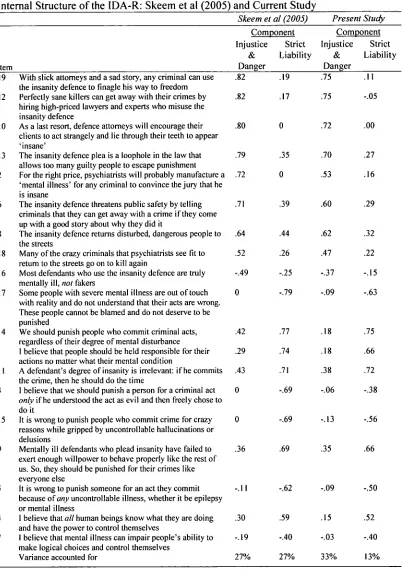
The IDA-R is a self-report 19-item questionnaire used to assess an individual's attitude toward the insanity defence. The IDA-R incorporates two dimensions. The first dimension, consisting of 9 items, is Strict Liability. This refers to the extent to which prospective jurors believe that mental illness reduces an individual's capacity for rational decision-making and control, and that
By constructing the IDA-R, Skeem et al.'s (2004) aim was to design and develop an understanding of core dimensions of contemporary attitudes towards the insanity defence, and to validate a measure of these dimensions. This was to improve the precision of future research on jurors' decisional processes in insanity cases and to aid legal professionals in identifying impartial jurors at voir dire. The development and validation process included choosing items that were representative of pre-existing insanity attitude measures (Hans, 1986; Roberts, Golding, & Fincham, 1987). Their results indicate adequate psychometric properties (Strict Liability, a = .68; Injustice and Danger, a = .88), particularly given that these were short (9-10 item) scales. In regard to convergent and divergent validity, Skeem et al. compared the !DA-R to other legal attitudes scales and found moderate to strong correlations with similar scales
The IDA-R was also deemed to be strongly predictive of mock juror s' insanity case judgments (Skeem & Golding, 2001). Predictive utility generalises across geographic jurisdictions and manipulation of case facts. However, the IDA-R has not been used in any published research since it was developed, and as a result has not been used as a research instrument in a non-American population.
Crowne and Marlowe (1960) found the internal consistency of the 33 items to be .88, and the test-retest correlation was .89. Other researchers have also examined the psychometric properties of the M-C SDS, with results indicating that the internal consistency of this scale is adequate. Nordholm (1974) generated a coefficient of .73, Crino, Svoboda, Rubenfeld, and White (1983) generated coefficients that ranged from .70 - .77, Tanaka-Matsumi and Kameoka (1986) generated a coefficient of .79, and Holden and Fekken (1989) generated a coefficient of .78.
Vignettes were developed and provided as 'cases' for mock jurors to make a verdict judgment and record their responses to the case provided. These vignettes contained the same core information, namely a mother smothering her infant, but differed in regard to mental status (postpartum depression or
postpartum psychosis) and mental health history (either no history (single episode) or a previous history (recurring)). The cases were largely adapted from
Yates v Texas (2005) and through reports in published research. All participants were provided with the same vignettes, however half of the participants received step-by-step instructions that were aimed to take them through the law provided. Each vignette contained a different legal test (infanticide, legal insanity, or the reformulated psychological insanity defence).
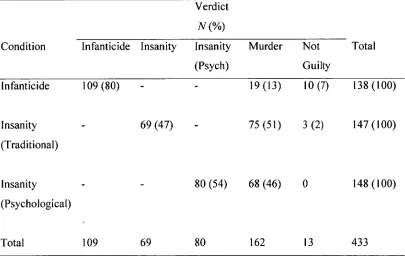
Participants were asked to render a verdict (Guilty of Murder, Not Guilty or a verdict relevant to the legal test provided). Participants were then able to rate their level of confidence in their verdict using a 10-point Likert scale, with a rating of 1 = not confident, 5 = Neutral and 10 = extremely confident. A post-experimental questionnaire was also administered. This consisted of five
and the victim, as well as their level of knowledge about postpartum illness and whether they considered postpartum depression and postpartum psychosis to be a legitimate illness. Each question was rated on a 10-point Likert-format scale. The vignettes and scales can be viewed in Appendix A.
Procedure
Participants responded to research advertisements by email. Upon
registering their interest participants were provided with a questionnaire package, either by email or provided with directions to a place in the UTAS School of Psychology department, where questionnaire packages could be collected. The questionnaire package included an information sheet (see Appendix B), and completion of the questionnaires was taken as consent to participate.
Participants were asked to complete the questionnaires independently and were not required to record any identifying information other than age, gender and how many children they had in their household (see Appendix A). They were asked to return the completed questionnaires either by email or by leaving them in a secure box located in the School of Psychology office to maintain
confidentiality. A total of three questionnaires were returned by email (and upon receipt the questionnaire was printed and the original email deleted to maintain confidentiality). The remaining questionnaires were returned by posting them in the above secured box.
Design