Gestures, Verbs, and the Motor
Cortex: A TMS Study
Bradley J. Mertens, MPsych (Clin.)
School of Medicine (Psychology) University of Tasmania
April 2014
i
This thesis contains no material which has been accepted for a degree or diploma by the University or any other institution, except by way of background information duly acknowledged in the thesis, and to the best of my knowledge and belief no material previously published or written by another person except where due acknowledgement is made in the text of the thesis, nor does the thesis contain any material that infringes copyright.
The research associated with this thesis abides by the international and Australian codes on human and animal experimentation, the guidelines by the Australian Government's Office of the Gene Technology Regulator and the rulings of the Safety, Ethics and Institutional Biosafety Committees of the University.
This thesis may be made available for loan and limited copying and communication in accordance with the Copyright Act 1968.
... ...
ii
Acknowledgements
Firstly I would like to thank my primary supervisor Dr Mike Garry. Without Mike's support, advice, thoughtful input, and practical assistance, this project would never have come to fruition. I'd like to thank Dr Nenagh Kemp for our conversations, as well as her support, advice, and keen eye for detail. A thank you also goes to Dr Frances Martin and Assoc. Prof. Spencer Kelly for their advice during the planning stages of this project. I'd like to thank the team in the motor lab for their help over the past few years, particularly the assistance of Dr Hakuei Fujiyama and Dr Mark Hinder, Emily Goss, and Paola Reissig. Special thanks goes to Rohan Puri for his MATLAB wizardry.
Thank you to Mum, Dad, Chris, and Simon. Family is awesome. Thank you to Caitlin. Your love, care, patience, and cooking have certainly seen me through the more challenging phases of this project. Thank you all so very much.
iii Abstract
Willems and Hagoort (2007) outline a number of links between language and the motor cortex. Previous researchers report the motor cortex is engaged when processing specific linguistic information such as action words, and even manual communication (e.g., gesture). Using behavioural measures, transcranial magnetic stimulation (TMS), and electroencephalographic (EEG) data, the three empirical studies reported examine the role of the motor cortex in processing both action words and gestural information.
iv
processing for action words compared to non-action words, and it was concluded that these findings deviate from previous reports due to methodological differences.
Study Two examined the role of the motor cortex in gestural processing using a particular repetitive TMS (rTMS) protocol known as continuous theta-burst stimulation (cTBS) which has been shown to temporarily reduce motor cortex excitability (inhibition). It was anticipated that if the motor cortex is involved in gestural processing, inhibiting motor cortex function would impair processing and increase RT to gestural stimuli. cTBS was administered over the hand-area of the left motor cortex in ten participants. Participants then viewed five test stimuli words that were presented multiple times in different modalities: text, speech, gesture, and speech and gesture combined. Contrary to the hypothesis, no difference in RT between cTBS and control was found for any modality. These findings are interpreted in light of recent reports that motor cortex inhibition may not lead to behavioural change, despite being detectable in physiological excitability measures.
v
greater negativity in N400 amplitude to both stimuli types. No specific impacts on N400 amplitude to speech-gesture stimuli were found, however cTBS did have some effect on N400 latency. These results are interpreted in light of the understanding of the motor cortex as part of a network of brain areas that may be involved in cognitive processing, and the non-focal impacts of cTBS.
vi Table of Contents
Title ... Page
Acknowledgements ... ii
Abstract ... iii
List of Tables and Figures ... ix
List of Appendices ... xi
Chapter 1: Introduction ... 1
Chapter 2: Mirror Neurons... 5
History of Mirror Neurons ... 5
Experimental Evidence for a Mirror Neuron System ... 8
Mirror Neurons Beyond Action Imitation ... 12
Mirror Neurons and Language ... 17
Speech ... 17
Motor-Related Language ... 20
Chapter 3: Evolution of Language ... 26
Language within the Cortex ... 27
Broca's Area ... 27
Wernicke's Area ... 30
Gestural Origins of Language ... 32
Speech: The Alternative Approach ... 44
Chapter 4: Gesture ... 50
Gesture, Speech, and Cognition ... 51
Childhood Development of Gesture ... 60
Neural Correlates of the Interplay between Speech and Gesture ... 62
Chapter 5: Transcranial Magnetic Stimulation ... 75
Single-Pulse TMS ... 77
Repetitive TMS (rTMS) ... 80
Applications of rTMS in Research and Clinical Treatment ... 87
Neural Compensation and Non-focal TMS Effects ... 92
Chapter 6: Study One ... 98
Introduction ... 98
vii
Method ... 113
Participants ... 113
Apparatus ... 114
Word Lists ... 114
Stimulus Presentation ... 116
TMS and EMG Recording Apparatus ... 117
Procedure... 118
Design ... 121
Data Analysis ... 121
Results ... 123
Behavioural Data ... 123
Electrophysiological Data ... 128
Discussion ... 129
Chapter 7: Study Two ... 138
Introduction ... 138
Aims and Hypotheses ... 147
Method ... 148
Participants ... 148
Apparatus ... 148
Stimulus ... 148
Stimulus Presentation ... 150
TMS and EMG Recording Apparatus ... 151
Procedure... 152
TMS Procedure ... 153
Testing Session Procedure ... 155
Design ... 156
Results ... 156
Discussion ... 158
Chapter 8: Study Three ... 163
Introduction ... 163
Aims and Hypotheses ... 174
Method ... 177
viii
Apparatus ... 178
Gesture Task ... 178
Sentence Task ... 182
TMS and EMG Recording Apparatus ... 184
EEG Recording and Stimulus Presentation Apparatus ... 185
Procedure... 185
TMS Procedure ... 186
EEG Procedure ... 189
Testing Procedure ... 190
Design ... 191
Data Analysis ... 191
Results ... 193
Behavioural Data ... 193
ERP Data ... 194
N400 Peak Amplitude ... 199
N400 Peak Latency ... 204
Discussion ... 211
Chapter 9: General Discussion ... 226
Empirical Study One ... 226
Empirical Study Two ... 229
Empirical Study Three ... 231
Conclusions ... 234
ix
List of Tables and Figures
Table/Figure Title... Page Table 6.1. Study One: Mean Characteristics of Stimulus
Word-Lists Including K-F Written Frequency ... 115 Table 6.2. Study One: Mean RT for TMS and Control Groups for
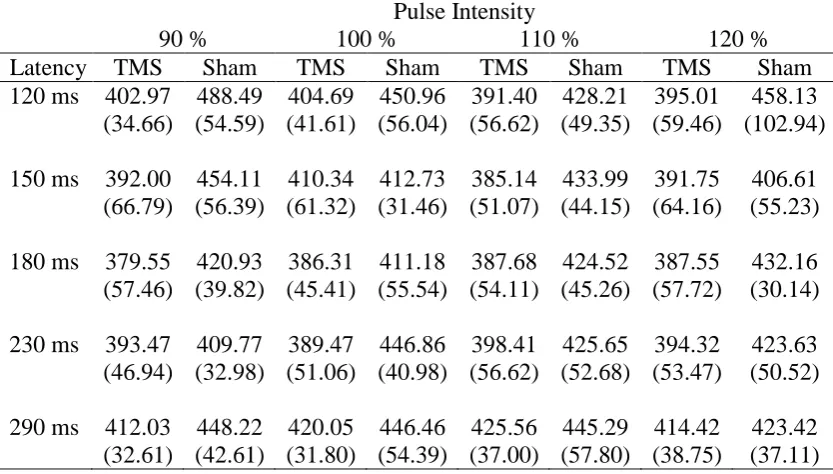
Static Words for Latency and Intensity Conditions ... 123 Table 6.3. Study One: Mean RT for TMS and Control Groups for
Action Words for Latency and Intensity Conditions ... 124 Table 6.4. Study One: Log Transformed Mean MEP amplitudes
for Each Level of Word Type, Latency, and Intensity
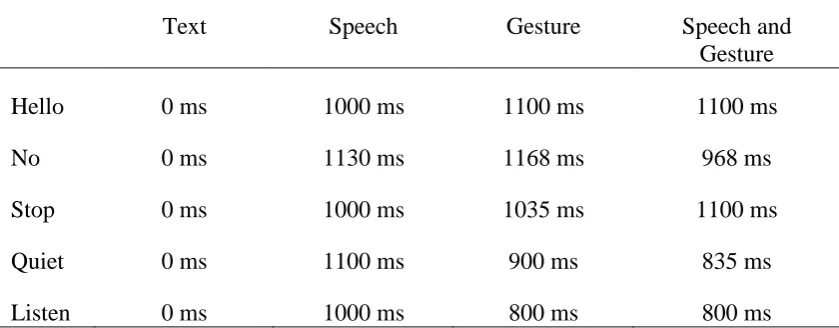
Conditions ... 128 Table 7.1. Study Two: Onset of Stimulus for Words in Each
Modality Following the Fixation Cross... 150 Table 7.2. Study Two: Means and Standard Deviations for RT in
Each Presentation Modality ... 157 Table 8.1. Study Three: Stimulus Word and Gesture Pairings ... 181 Table 8.2. Study Three: Sample Sentences with Alternate
Terminal Words. ... 182 Table 8.3. Study Three: Means and Standard Deviations for RT
for Gesture and Sentence Tasks for Each Level of TMS
and Congruency ... 193 Table 8.4. Study Three: N400 Peak Amplitude Means and
Standard Deviations for cTBS Condition ... 200 Table 8.5. Study Three: N400 Peak Amplitude Means and
Standard Deviations for Control Condition ... 200 Table 8.6. Study Three: F statistic, p-value, Degrees of Freedom,
and Effect Size for Average N400 Peak Amplitude
ANOVA ... 201 Table 8.7. Study Three: N400 Peak Latency Means and Standard
Deviations for cTBS Condition ... 205 Table 8.8. Study Three: N400 Peak Latency Means and Standard
Deviations for Control Condition ... 205 Table 8.9. Study Three: F statistic, p-value, Degrees of Freedom,
and Effect Size for Average N400 Peak Latency
x
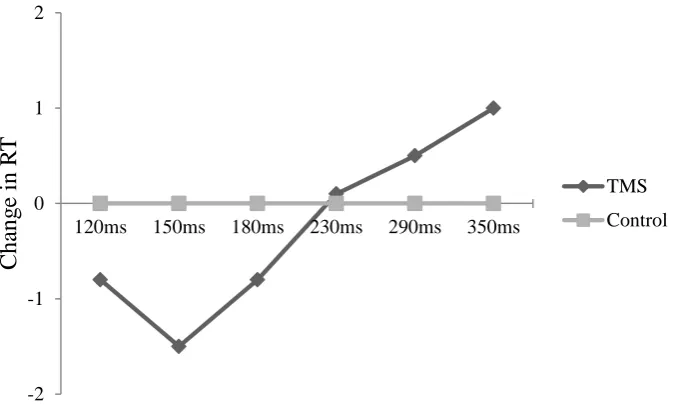
Figure 6.1. Study One: Hypothesised latency effect. ... 112
Figure 6.2. Study One: Hypothesised intensity effect ... 112
Figure 6.3. Study One: Grouping of word-types. ... 116
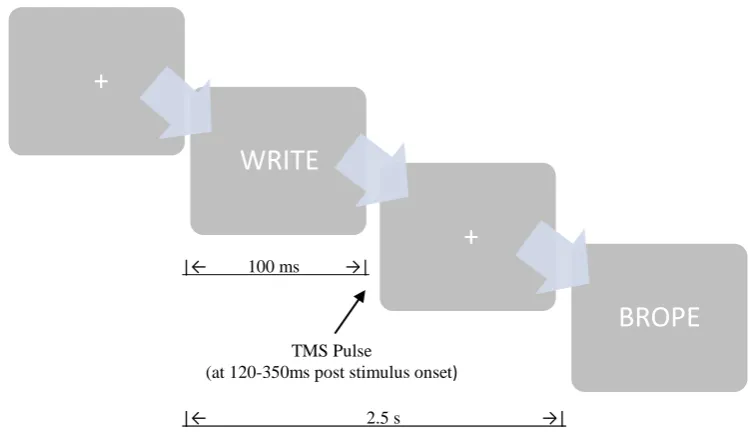
Figure 6.4. Study One: Word presentation sequence. ... 117
Figure 6.5. Study One: RT data showing quadratic trend for latency ... 125
Figure 6.6. Study One: RT data for latency with separate lines for sham and TMS groups... 126
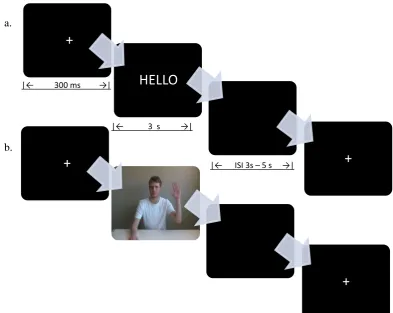
Figure 7.1 a and b.Study Two: Stimuli presentation sequence ... 151
Figure 7.2. Study Two: Average excitability changes for cTBS responder sample ... 154
Figure 8.1. Study Three: Sample ERP showing N400 component adapted from Kelly et al. (2004). ... 169
Figure 8.2. Study Three: Sample frames from gesture clips ... 179
Figure 8.3. Study Three: Gesture clip presentation sequence ... 180
Figure 8.4. Study Three: Sentence presentation sequence ... 184
Figure 8.5. Study Three: Average excitability changes for cTBS responder sample ... 188
Figure 8.6. Study Three: ERP grand averages for gesture task ... 195
Figure 8.7. Study Three: ERP grand averages for sentence task ... 196
Figure 8.8. Study Three: Right and left hemisphere average ERP waveform for gesture task ... 198
Figure 8.9. Study Three: Right and left hemisphere average ERP waveform for sentence task ... 199
Figure 8.10. Study Three: Interaction between TMS condition and congruency: N400 Amplitude ... 203
Figure 8.11. Study Three: Interaction between TMS condition and coronal location: N400 Amplitude ... 204
Figure 8.12. Study Three: Interaction between task and congruency: N400 Latency ... 208
Figure 8.13. Study Three: Interaction between task and sagittal location: N400 Latency ... 209
Figure 8.14. Study Three: cTBS data for interaction between TMS condition, task, and coronal location: N400 Latency ... 210
xi
List of Appendices
Appendix Title
A Study One: Information Sheet and Consent Form B Study Two: Information Sheet and Consent Form C Study Three: Information Sheet and Consent Form D Medical History Questionnaire
E Study One: Word Stimuli List F Study Three: Sentence Stimuli
Chapter 1: Introduction
This thesis begins with an overview of the literature connecting language and action. The theoretical framework for why language and action may be connected is rooted in the notion of embodied cognition, or the relationship between human thoughts and the actions of the body. From a neuroscientific point of view, the relationship
between thought and action can be partially accounted for by an understanding of the mirror neuron system and how it functions to connect cognition with action. Mirror neurons are thought to be a subset of cortical neurons which assist with the
understanding of goal-directed actions (Rizzolatti & Fabbri-Destro, 2007). Therefore, Chapter Two of this thesis contains a review of the mirror neuron literature, including their initial discovery in monkeys and the subsequent investigations into the existence of a similar mirror neuron system in the human motor cortical system. This chapter also provides some insights into how the
existence of a mirror neuron system may provide a connection between language and the motor cortex, specifically relating to impact that language has on the function of cortical motor systems.
If it is accurate that humans and monkeys share a comparable mirror neuron system, an understanding of the evolutionary connection between understanding and action is also beneficial. One such connection can be seen in the gestural theory of the evolution of language (Arbib, 2002; Corballis, 2002). Chapter Three examines the notion that the origins of language lies in communicative manual hand gestures rather than vocal calls, and how a functioning mirror neuron system may have allowed early ancestors to intimate meaning from action. Focussing on the
occurred for language to have emerged as well as the possible evolutionary trajectory that language took so that arbitrary meaning could be applied to abstract hand
movements.
With the development of spoken and written communication, manual hand movements are no longer the primary mode of communication, save situations where it is necessary (e.g., sign language). Despite this, the vestigial remains of manual communication can still be seen in the everyday use of hand gestures that
accompany speech. Chapter Four provides an overview of the literature on gesture. Specifically, this chapter reviews conceptual understandings of the purpose of gesture and its role in communication, as well as empirical evidence for the cortical representation of gesture, and how gesture may change the way the spoken
communication is processed.
In many studies examining motor cortex function (e.g., Daskalakis et al., 2006; Rothwell, 1997; Wasserman, 2002), researchers report the use of a non-invasive cortical stimulation technique known as transcranial magnetic stimulation (TMS). Chapter Five provides an overview of the technical aspects of various TMS techniques, including both single-pulse and repetitive TMS (rTMS). This chapter also provides an overview of how TMS has been used to study motor cortex activity and how changes in the motor cortex may impact an individual's cognitive processes. This chapter also examines the use of TMS in language studies, and how previous authors have gained insight into cortical linguistic functions through the application of TMS.
an empirical study that investigates the impact of single-pulse TMS over the hand area of the motor cortex on processing action-related language. The impacts of TMS on motor-language have been previously investigated and it has been reported that a TMS pulse delivered over the hand area of the motor cortex at a specific intensity and latency following the presentation of hand-related action word can lead to faster reaction time (RT) to those words (Pulvermüller et al., 2005). The study outlined in this chapter further tests this effect by manipulating pulse intensity and latency and investigating the effects of TMS on RT to hand action words compared to non-action words. The results are presented and interpreted within the framework of the single-pulse TMS literature.
As identified in the literature review chapters, another link between language and action is provided in the form of gestural communication. Based on the notion that gestures are observable actions that carry meaning, they would theoretically activate mirror systems, and previous empirical researchers have reported that when processing gestural information, increased activity is observed throughout the cortical motor systems, including the primary motor cortex (Skipper,
Goldin-Meadow, Nusbaum, & Small, 2007). Chapter Seven presents an empirical study that investigates the involvement of the motor cortex in gestural processing. After
applying continuous theta-burst stimulation (cTBS) over the motor cortex to create a 'virtual lesion' (temporary reduction in cortical excitability), participants were
required to identify a selection of words presented in four different modalities: text, speech, gesture, combined speech and gesture. RT data with and without the
application of cTBS are examined and the results are discussed.
with understanding the underlying neural processes. Sections of recorded EEG data, known as event-related potentials (ERPs) can be sampled as unique waveforms that are time-locked to the presentation of a specific stimulus. The N400 is a distinct negative going peak in the ERP waveform that has been found to be modulated when an individual attempts to integrate mismatching semantic information. Chapter Eight details an empirical study that examines changes in the N400 component in
participants who are presented with gestural information that is incongruent with speech information. This study also adopts the 'virtual-lesion' approach to inhibit motor cortex excitability. In turn, this allows for the observation of changes in the N400 component which may be attributed to cTBS over the motor cortex. Results from behavioural and electrophysiological recordings are reported, and an
interpretation of these findings is provided.
The final chapter of this thesis provides an overview of the results of all three empirical studies and despite the methodological differences between these studies reported, this chapter offers an interpretation of how these results fit within
theoretical frameworks and the existing literature. This chapter also provides
Chapter 2: Mirror Neurons
The aim of this chapter is to provide an overview of the literature related to the current understanding of the mirror neuron system. This chapter covers information regarding the initial discovery of mirror neurons in the F5 cortical area in the brains of monkeys, and the neuroimaging evidence that indicates the existence of a similar system in the human brain. Additionally, this chapter offers greater insight into the functional role of the mirror neuron system and how it relates to cortical systems responsible for manual action as well as the production and comprehension of language.
It is now recognised that mirror neurons do not function by themselves but operate as part of a larger extensive network involving other cortical structures including the superior temporal sulcus (STS) and the inferior parietal lobule (Rizzolatti, Fogassi, & Gallese, 2001). Corballis (2010) suggests that the
homologous areas of the human brain are also involved in this action-understanding network. For example, human brain imaging studies have demonstrated that the superior temporal cortex (homologous to STS) is thought to be involved in decoding complex social signals from an observed action (Puce & Perrett, 2003).
History of Mirror Neurons
object (e.g., a hand grasping an apple) and were not triggered by observation of the object or experimenter alone. Gallese et al. also report that the hand and mouth actions were the most effective at eliciting responses, and the actions that were observed to be the most represented amongst the activating mirror neurons were actions of grasping, manipulating, and placing. It was concluded that mirror neurons form a system which matches the observation and execution of motor actions. Gallese et al. further found that despite there being activity throughout the mirror neuron system during action observation, there are groups of mirror neurons that are activated by the observation of one action only (such as grasping, or manipulating an object) and then reduce or stop activity when the action is completed. Gallese et al. provide an example in which they recorded neural activity in a set of mirror neurons in response to the observation of a grasping motion. Following the completion of the grasp motion, many of these neurons reduce in activity and then if the object is manipulated, neural activity increases in a notably distinct set of mirror neurons. Initially, researchers reported that action imitation was the primary role of the mirror neuron system, as research on the human brain indicated that these systems were activated as part of an observation and imitation sequence (Corballis, 2010). More recently, many researchers tend to agree that mirror neurons do not serve a simple imitation role in monkeys, but that they actually operate as a part of a system of action understanding. This means that while mirror neurons assist the monkey (or human) to understand the actions performed by others by mapping observed behaviour to actions that it can perform itself, it does not mediate the actual performance of the motor patterns required for imitation (Corballis, 2010).
observation and execution of motor actions, and instead is thought to have a role in
understanding action. In one study it was tested whether mirror neurons would respond to an action merely based on the sound alone (Kohler et al., 2002). Mirror neuron activity was initially recorded while monkeys observed a motor act such as breaking a peanut shell or ripping paper. Remarkably, many of these same neurons also triggered when the monkeys heard only the sounds of these actions, leading the researchers to surmise that some mirror neurons are both aurally and visually triggered.
observation system, and that they actually underpin a cortical system of action understanding (Rizzolatti & Fabri-Destro, 2007).
Experimental Evidence for a Mirror Neuron System
Since their initial discovery, many researchers have sought to better understand the nature and function of mirror neurons, and how they connect and interact with surrounding cortical structures. A selection of these papers is reviewed in this section.
the observer are mapped on his/her motor system and actions that do not belong to this repertoire appear to be processed solely on their visual properties.
Further evidence is provided by Muthukumaraswamy and Johnson (2004) who examined the changes in EEG recordings taken from the area of scalp over the sensorimotor cortex. At rest, the sensorimotor cortex produces a regular EEG pattern of approximately 8 to 13Hz known as the rolandic mu rhythm (Muthukumaraswamy & Johnson, 2004). Previous studies have shown that the mu rhythm is diminished or extinguished when the motor cortex is activated during the execution of movement and also desynchronises when subjects are observing but not executing movement (Cochin, Barthelemy, Roux, & Martineau, 1999). Muthukumaraswamy and Johnson further report that a lower amplitude desynchronised mu rhythm was recorded across the sensorimotor cortex when participants observed a goal-directed hand action (grasping an object), but not when observing a simple non-interactive hand
extension. It is suggested that the changes in mu rhythm may reflect processes that are occurring in the mirror neuron system which incorporates cortical areas
surrounding the rolandic fissure. The finding that changes in mu rhythm were
detected when subjects performed a goal oriented movement also supports the notion that the mirror neuron system is not a system for merely observing actions, but may actually be a system which facilitates understanding of action.
like someone was preparing to eat or drink, or had just finished. In the "action" condition, participants saw a performer reach and grasp a mug or a plate, however there was no food or drink so the action was context-free. In the final "intention" condition, the action is embedded in context and the video-clip showed the
performer picking up the mug or plate with the intention of consuming food or drink or cleaning up the used crockery (depending on the state of the cup or plate). The basic assumption was that the context provided by this initial image would assist the viewer to determine whether the cup would be picked up in such a way as to be consumed, or picked up to be washed. These context-embedded actions were compared against action-only clips, and context-only clips. Iacoboni et al. report different patterns of activation in suspected mirror neuron areas that are unique to the context-embedded action clips, and were not seen in the other conditions. More specifically, increased activity was seen in the posterior part of the inferior frontal gyrus and the adjacent area of the ventral premotor cortex. The authors concluded that premotor mirror neuron areas previously thought to only be involved in action recognition are also involved in understanding the intent of others' actions (Iacoboni et al., 2005; Rizzolatti & Fabbri-Destro, 2007).
A series of positron emission tomography (PET) studies have provided evidence to support the cerebral location of the mirror neuron system. A PET study by Grafton, Arbib, Fadiga, and Rizzolatti (1996) and a related PET study conducted by Rizzolatti et al. (1996) shared a condition in which participants observed the experimenter grasping an object. When compared with a control condition (inanimate object observation), it is reported in both studies that during the
inferior parietal cortex (Brodmann's area 40), the rostral part of the supplementary motor area, and the right dorsal premotor cortex. Grafton et al. and Rizzolatti et al. proposed that these areas may form part of a circuit for the recognition of hand-object interactions.
environmentally realistic), rather than rotated-image action observation. Results such as these provide supporting evidence for the existence of a mirror system in humans (Fadiga, Craighero, & Olivier, 2005).
Further evidence supporting the existence of a mirror neuron system in humans is reported in another TMS study conducted Gangitano, Mottaghy and Pascual-Leone (2004). In that study, participants observed a video-clip that showed a normal reach and grasp motion, or an anomalous reach and grasp motion that began the same at the normal motion but also included a delayed grasp opening motion or unexpected early grasp closure. Using MEP recordings from different time points throughout the video-clip, Gangitano and colleagues were able to map a profile of cortical excitability to the kinematic profile action in the video-clip. It was reported that observation of the anomalous movements either did not evoke any modulation of cortical excitability or evoked a profile similar to that of the common grasp and reach movement. The authors conclude that not only does this provide evidence for a neural system which develops motor plans based on observation (the mirror neuron system), but that this motor plan is developed at the beginning of an observed movement and tends to proceed to completion despite changes to visual cues.
Mirror Neurons Beyond Action Imitation
The evidence presented so far indicates that the mirror neuron system is primarily involved in the understanding (and 'covert rehearsal') of action, allowing monkeys and humans to imitate and comprehend the actions of others. However, throughout the last decade, researchers have credited mirror neurons with
involvement in an array of cognitive functions beyond that of simple action
neurons in language is a rapidly expanding field of research and is one of the fundamental theoretical bases for this thesis, therefore it shall be more adequately explored later in this chapter, and this section shall focus on other suggested roles of mirror neurons.
Some researchers (e.g., Gallese & Goldman, 1998; Oberman et al., 2005) suggest that the mirror neuron system plays a crucial role in an individual's ability to develop a fully-functioning theory of mind allowing them to see the world from another person's point of view and accurately empathise with others. From a purely theoretical basis, if mirror neurons allowed not only observation of action, but also assisted the observer to understand the action, then the observer may be able to estimate the goals or intention of others based on their actions. Gallese and Goldman suggest that if the observer can draw insight into the purpose and motivations for the action of another, this provides a basis for the development of a theory of mind.
Through their research into Autism Spectrum Disorders (ASD) Oberman et al. (2005) provide some empirical evidence to support the role of the mirror neurons system in the development of theory of mind and empathy. ASD are a range of disorders largely characterised by deficits in language, imitation (facial expressions and movement), theory of mind and empathy, as well as an array of behavioural and communicative deficits and sensory sensitivities (Sadock, 2007). An EEG study conducted by Oberman et al. reported that the mirror neuron systems is not functioning correctly in individuals with ASD. Specifically, Oberman et al.
system (Cochin et al. 1998; Muthukumaraswamy & Johnson, 2004). Oberman et al. required participants to watch a video of a moving hand, a bouncing ball, or white noise, or required them to move their own hand. The researchers recorded a suppression of the mu rhythm in control participants when they moved their own hand and observed a video of a hand moving. This mu suppression was not observed in the ASD participants leading the researchers to conclude that the mirror neuron system (which would usually be engaged by this task) is dysfunctional in those with ASD.
In another study investigating mu rhythm attenuation in an ASD sample, Bernier, Dawson, Webb and Murias (2007) recorded EEG data when ASD and control participants were required to observe an action, perform an action, and imitate another performing an action. Similar to Oberman et al. (2005), Bernier et al. reported the mu rhythm of ASD subjects was less attenuated in the observation condition compared to controls, however unlike Oberman et al., Bernier et al. found both groups demonstrated a significant attenuation of the mu rhythm when executing an action. Furthermore, Bernier et al. also found that in the ASD group low levels of attenuation were positively correlated with behavioural measures of performance in the imitation task. The researchers therefore infer that a more responsive mu rhythm (indicative of a functioning mirror neuron system) is directly related to an
individual's ability to imitate an action (Bernier et al., 2007). In a follow-up article, Oberman and Ramachandran (2007) provide an in-depth evaluation of the
(Oberman & Ramachandran, 2007, p. 322). While these studies do not provide incontrovertible evidence of the existence of a human mirror neuron system, the conclusions proposed by these authors do provide some insight into the potential role that the mirror neuron system may have in enhancing an individual's ability to
interact with their environment.
Gallese and Lakoff (2005) discuss the role of the mirror neuron system in the broader scientific and philosophical understanding of how thoughts are processed by the brain. Specifically, Gallese and Lakoff outlined the notion of embodied thought, or embodied cognition. That is, there is a common neural substrate responsible for both imagining and performing an action. Gallese and Lakoff propose that the sensory and motor systems of the brain do not operate in a modular fashion, with some cortical areas independently dealing in conveyance/processing of abstract concepts (thoughts) while other cortical areas are responsible for moving limbs to interact with the environment. Instead, the sensory-motor system is thought to be multimodal, an adaptation or "neural exploitation" (p. 456) that allows this network to perform more advanced functions than those of its individual parts. Gallese and Lakoff highlight the mirror neuron system as the fundamental link between
associated motor and sensory functions, allowing this system in human cognition to engage in more advanced functions such as language.
Lakoff express that this is not limited to action concepts, but to all concrete concepts. They give an example of a chair and how we are able to observe a chair, imagine observing a chair, and also imagine what it would be like to feel or sit in that chair. While it could be argued that the engagement of the sensory-motor system may be reasonably salient in this chair example, it is less clear how the sensory-motor system is involved with some other concrete concepts (e.g., a 'comet'), which have a much less distinguishable link with the human body and the way it interacts with the concrete object being conceptualised.
A more reserved proposal for the role of the mirror neuron system in language processing is outlined by Fischer and Zwaan (2008), who specify that the notion of 'embodied language' largely only applies to language that is related to action. Fischer and Zwaan cite a number studies that show merely hearing language about an action can disturb the execution of subsequent motor movements. For example, Glenberg and Kaschak (2002) asked participants to move their hand from a central button to one of two buttons that were positioned either closer to, or further from their body based on sensibility judgment of a presented sentence. An example sentence is "close the drawer", a description of an action that is usually executed by moving the hand away from the body. Glenberg and Kaschak measured the amount of time it took participants to make a decision and release the centre button.
an interaction between language and motor systems, and that motor related language is embodied by engagement motor systems, rather than just existing as an abstract concept. More insights into the interactions between mirror neurons and language are provided below.
Mirror Neurons and Language
Speech
As mentioned previously, mirror neurons were initially discovered in the F5 area of the monkey frontal cortex. This area is homologous to the region of the human brain known as Broca’s area, which is an area of the brain heavily involved in language production and some language comprehension tasks. More precisely
Broca’s area can be divided into Brodman’s areas 44 and 45. Area 45 is activated by both spoken and signed language output (Horowitz et al., 2003), whereas Area 44 (the true analogue of F5) is activated by non-linguistic motor functions including complex hand movements, and sensorimotor learning and integration (Binkofski & Buccino, 2004). It is not only language production areas of the cortex that appear to be linked with mirror neuron networks. As mentioned above, the role of STS, which is involved in the action understanding network in monkeys is homologous to
Wernicke’s area in the human brain – an area responsible for a vast array of complex language comprehension tasks such as the identification of phonetic information in a speech stream (Boatman, 2004; Scott, Blank, Rosen & Wise, 2000).
visually to an individual. This is largely due to most researchers demonstrating mirror neuron activity occurs primarily in response to the observation of an action. However, as mentioned above, some researchers have found that the mirror neuron system also responds to the sounds of actions. Kohler et al. (2002) gave an example of this when they observed mirror neuron activity in a monkey cortex in response to the sound of tearing paper.
When understanding this aural activation of mirror neurons, it is important to review some of the literature surrounding the motor theory of speech perception (Liberman & Mattingly, 1985), or the updated theory of articulatory phonology (Browman & Goldstein, 1995). The basic premise of articulatory phonology is that speech is perceived, at least partially, as a series of oral muscle movements or
'gestures'. In other words, each of the familiar vocal sounds that humans perceive can be understood as a series of gestures made by articulatory organs in the mouth and throat; the lips, the velum, the larynx, and the blade, body and root of the tongue (Corballis, 2010; Goldstein, Byrd, & Saltzman, 2006). Although it is clear that the ability to understand speech goes beyond simple aural sound processing, Gentilucci and Corballis (2006) point out that we can perceive speech at up to 10 to 15
phonemes (smallest unit of meaning sound) per second, a rate at which we are unable to effectively process simple sound units such as tones or noises. Gentilucci and Corballis go on to suggest that the complexities of speech perception give rise to the possibility that articulatory phonology can account for at least part of our speech recognition ability. Hickok (2009) argues against the motor theory of speech
Broca's aphasia often have lesions throughout the surrounding area of the brain including the lateral front lobe, the motor cortex, and the anterior insula, and that lesions like this effectively damage the entire left hemisphere mirror system. Hickok reasons that if the motor theory of speech perception were true, Broca's aphasics would be unable to comprehend language, however Hickok may be overlooking the other non-lesioned parts of the brain (such as Wernicke's area) which also process aural speech information (Boatman, 2004).
Although the notions of articulatory phonology or motor speech perception cannot be unequivocally attributed to the operation of mirror neurons, there is empirical evidence to support the notion that speech processing involves areas of the motor cortex and that some 'covert rehearsal' of the motor programs needed for speech production occur when perceiving speech. In one study, Wilson, Saygin, Sereno and Iacoboni (2004) collected fMRI data from participants while requiring them to produce or listen to a selection of monosyllabic speech sounds. As expected there was bilateral fMRI activity in the speech production areas of the motor cortex when participants produced the sounds. Interestingly, there was also bilateral activity recorded in the ventral premotor cortex that largely overlapped with the speech production area. Activity in these areas may be indicative of speech production motor systems operating during speech perception (Wilson et al., 2004). In a related fMRI study, participants listened to both speech sounds that were native to their language as well as non-native speech sounds (Wilson & Iacoboni, 2006). Compared to native speech sounds, non-native speech sounds are those that do not usually occur in the native language. An example of this would be the phoneme /l/ (as in
cortex when listening to non-native speech sounds, which they attribute to the notion that the motor system can only simulate known phonemes, and perceiving an
unknown phoneme engages the motor system in repeated attempts to find a matching model (Wilson & Iacoboni, 2006). Regardless of the validity of the explanation for the increase in activity, the more salient observation is that the motor regions of the brain are sensitive to the familiarity of the perceived speech sounds, providing more evidence that the motor system plays an active role in speech perception.
To investigate the effect of a virtual lesion over the premotor cortex, Meister, Wilson, Deblieck, Wu, and Iacoboni (2007) used rTMS to temporarily impair the function of the left premotor cortex while participants were required to perform a simple speech sound discrimination task, a colour discrimination task, or a tone discrimination task. The researchers reported that rTMS over the motor cortex impaired accuracy on the speech discrimination task significantly more than that of the other two tasks, implying that the premotor cortex processes information specific to the perception of speech sounds. While not suggesting that the motor system is critical to speech perception, studies such as those by Wilson et al. (2004), Wilson and Iacoboni (2006), and Meister et al. demonstrate that it certainly plays a role. Furthermore, the results of these studies concur with mirror neuron theory in that they suggest that motor patterns - in this case the configuration of lips, tongue, etc. that produce speech - are rehearsed within the motor cortical areas when listening to speech, an extension of the findings of Kohler et al (2002) .
Motor-Related Language
may have a greater role in processing words that are related to actions. In other words, there is evidence to suggest that mirror neurons are involved in linguistic tasks with a motor component, rather than simply motor tasks with a linguistic component.
A number of fMRI studies conducted over the past decade have yielded results demonstrating that the premotor and motor cortices are involved in
processing action-related language. Hauk, Johnsrude and Pulvermüller (2004) found that there were overlapping activation patterns within the motor cortex when
participants read simple action verbs (such as pick or kick), similar to when they actually performed the action with the associated effector, in this case as the hand or foot. The authors cite this as evidence that there are similar cortical areas activated by the two different tasks, which concurs with the notion that they are part of a system that involves both action and language components. Aziz-Zadeh, Wilson, Rizzolatti and Iacoboni (2006) conducted an fMRI study in which participants read phrases that described actions of different effectors (i.e., hand, foot, or mouth), or observed someone performing these actions. They observed an increase in cortical activity in effector-specific areas of the left premotor cortex when observing actions or listening to action phrases that involve that effector (Aziz-Zadeh et al., 2006). Aziz-Zadeh et al. interpret these findings as evidence that it is the semantic
component of the motor language that determines the recruitment of specific areas of mirror neurons within the premotor cortex.
ball"), or sentences with abstract content "I appreciate sincerity". The fMRI results showed that Broca's area was the only cortical region active across all action
conditions compared to baseline. Tettamanti et al. also found that there were activity increases at many sites including the inferior parietal lobule, intraparietal sulcus, posterior middle temporal gyrus, as well as sections of the premotor cortex
responsible for the motor patterns the action sentence was related to. It is important to note that the activation of motor systems by action-related words is not limited to action verbs and may also extend to action-related nouns (such as ballerina or screwdriver). In a PET study, Vigliocco et al. (2006) found that there was an increase in motor cortex activity when comparing action words (both verbs and nouns) to sensory words (also both verbs and nouns).
In contrast to the observational nature of fMRI or PET studies, Pulvermüller et al. (2005) used TMS to investigate the impact of stimulating motor cortex activity while processing action words. In this study, participants were to respond to a series of action words that were either hand actions (e.g., pick) or leg actions (e.g., kick) while undergoing TMS of the hand or leg area of the left motor cortex. In the study, as TMS had a facilitatory effect on the targeted region of the motor cortex,
Pulvermüller at al. found that when TMS was applied to the hand area of the motor cortex participants responded faster to hand action words than leg action words, and TMS to the leg area of the motor cortex facilitated faster reaction times to leg action words. Similar to the conclusions of the authors of the above fMRI studies
describing an action overlap with those that perform the related action, akin to earlier research which demonstrated that observation of action also stimulates associated motor circuits as well as Broca's area (Grafton et al. 1996: Rizzolatti et al. 1996). Therefore, these studies also provide sound evidence for the incorporation of linguistic stimulation as an activator of the mirror neuron system.
While the above studies draw their inferences from cortical activity (either in the form of fMRI or TMS-induced changes in EMG), Zwaan and Taylor (2006) designed a series of experiments which examined the behavioural impact of language on motor performance (see also Taylor & Zwaan, 2008). Citing mirror neuron research as the primary basis for their study, Zwaan and Taylor use the term "motor resonance" to describe the neural activity seen in the motor cortex and surrounding areas when observing someone else performing an action. In the first study, participants performed a manual rotation task (turning a knob with their hands) while observing a stimulus that was either rotating in a congruent or incongruent direction. Faster reaction times were recorded when observing the congruent stimulus, which the researchers interpreted as visual information leading to stimulation of the mirror neurons and ultimately facilitation of motor cortex function. Furthermore, they also found that reaction times were faster when participants heard congruent audio descriptions of the task ("screw"/"unscrew"), which Zwaan and Taylor interpret as a possible linguistic activation of mirror neuron circuitry which creates 'motor resonance' in a similar fashion to the observation of action.
that participants' reading speed slowed when rotating the knob in a direction
incongruent to that of the stimulus sentence. Furthermore, they found that the impact on reading speed persisted when the adverb at the end of the sentence was related to the motor action (e.g., opening the bottle 'slowly' or 'quickly') as opposed to the relating to the protagonist (e.g., 'happily' or 'eagerly'). They also report that it is the incongruent verb specifically (and its associated adverb) which impacts speed of reading, as the reading speed of the other words in the sentence was not affected by the performance of a simultaneous motor action (i.e., knob rotation). Taylor and Zwaan conclude that this is evidence of the impact of language on motor cortex activity, and results from both of these behavioural studies (Zwaan & Taylor, 2006, and Taylor & Zwaan 2008) may be taken to indicate that 'motor resonance' is not just limited to the impact of action observation on language perception or action
performance, but may reflect a bidirectional influence between language perception and action performance.
As has been demonstrated earlier in this chapter, mirror neurons have been attributed with involvement in a number of cortical networks and cognitive abilities, and the argument for mirror neuron involvement in speech perception via
these findings is that processing action-related language activates the mirror neuron system which incorporates areas such as the motor and premotor cortices, and sufficient manipulation of any component of this system will impact
Chapter 3: Evolution of Language
"I once tried to explain the gestural theory of language to a prominent linguist, who dismissed it with an eloquent wave of his hand."
- Corballis, 2002, p.100
Advances in understanding the mirror neuron system provides evidence of the link between meaning conveyed through language and the parts of the brain responsible for action (such as the motor-cortex) (e.g., Pulvermüller et al., 2005; Zwaan & Taylor, 2006). When examining how the mirror neuron system is linked with language, it is fundamentally important to understand why this link between language and action exists. Tied in with observations of hemispheric linguistic specialisation and the prevalence of right-hand dominance (explored in more detail below), the gestural theory for the evolution of language goes some way to explain the evolutionary function of the mirror neuron system and the links between language and action. It is tempting to assume that because speech is the primary mode of modern human communication, then this was always the case (e.g., Hauser, Chomsky & Fitch, 2002), however opponents to the speech-initiated theory of the evolution of language believe that modern language began in the form of gestural communication rather than speech (Corballis, 2002).
6000 years, theorising on the linguistic skills of early hominids needs to be seen as an "hypothesis that is based on, but in no sense implied by, a variety of evidence" (Arbib, 2002, p.27). The literature abounds with controversy on whether language first evolved as speech or gesture. In fact, Fitch (2000) indicates that the historical controversy surrounding the evolution of language was so fierce that in 1886, discussion of the topic was banned by the Linguistic Society of Paris. As this thesis focuses on the relationship between action and language, this chapter is by no means designed to resolve this controversy, nor to present equally-weighted cases from both sides. Instead, this chapter provides a review of the work of two primary proponents of the gestural theory of language and the evidence used to support their claims, while providing a brief overview of speech-initiated evolutionary language theories.
Language within the Cortex
Before examining the literature on how humans gained linguistic ability, it is important to review the current scientific understanding of how language is
processed in the brain. For most people, the majority of language is processed within the left hemisphere of the cerebral cortex. Two specific cortical regions, Broca's and Wernicke's areas and the inter-connecting pathways are attributed with a range of linguistic tasks which can broadly be classified as language production and language comprehension.
Broca's Area
pars opercularis and pars triangularis in this region (or Brodmann's areas 44 and 45) (Dronkers, Plaisant, Iba-Zizen & Cabanis, 2007). Named after Paul Broca who in 1861 observed that patients with damage to this part of the brain experienced expressive language disorders (e.g., aphasia), this cortical area is traditionally thought to be the primary section of the cerebrum responsible for language production. Although modern imaging of the preserved brains of Broca's original patients shows that the lesions extend beyond this area (Dronkers et al., 2007), the acceptance of the role of Broca's area in language production still persists. Broca's area is responsible for the formation of language and appropriate motor pattern that would be used to communicate language. While Broca's area does not directly communicate with the muscles used for speech, it does project motor information bilaterally to the motor cortex, which is positioned on the posterior end of the frontal lobe along the Rolandic fissure. The motor cortex then executes the motor pattern provided by Broca's area by activating neurons responsible for muscle groups that control speech (such as the tongue, lips, jaw, cheeks, larynx, and diaphragm) (Rosenzweig, Breedlove, & Leiman, 2002).
Some authors, such as Indefrey and Levelt (2004) suggest that the traditional view of Broca’s area is outdated, and that it is an oversimplification to see this area as the sole centre for language production. Although it is accepted that Broca’s area has a primary role in language production, there is evidence indicating that it is also involved in aspects of receptive language processing. Citing evidence from fMRI and TMS studies, Skipper et al. (2007) suggest that Broca’s area is highly involved in phonetic processing as well as processing semantic content of linguistic
control the complex movement of speech efforts (tongue, lips, larynx, etc.) during speech. The involvement of Broca’s area in phonetic processing is thought to be to due to the engagement of these neurons during the observation of others speaking (Skipper et al., 2007).
Although there is no doubt that Broca's area is highly involved in language production, it is likely that there is a larger network of cortical areas responsible for specific language production functions. In a meta-analytic review, Indefrey and Levelt (2004) summarise the current literature on the cortical regions linked with language production. The authors identify a number of different areas involved in word production including four right-hemispheric regions (the mid superior temporal gyrus (STG), the supplementary motor area (SMA), and medial and lateral
cerebellum) and 11 left-hemispheric regions (posterior inferior frontal gyrus, ventral precentral gyrus, SMA, mid and posterior superior and middle temporal gyri,
posterior temporal fusiform gyrus, anterior insula, thalamus, and medial cerebellum). Indefrey and Levelt (2004) also offer details of the specific language
the central nervous motor systems (bilateral ventral motor and sensory regions, right dorsal motor region, right supplementary motor area, left and medial right
cerebellum, bilateral thalami, and right midbrain) as well as an additional five regions (right posterior inferior frontal gyrus, left orbital gyrus, bilateral posterior lingual gyri, and the right posterior medial temporal fusiform gyrus) (Indefrey & Levelt, 2004).
While it is acknowledged that the production of fluent sensible speech requires linguistic knowledge and inputs from additional cortical regions, Broca's area still has a central role in the production of speech, and through incorporating other regions of the brain (specifically motor cortices), the human brain is able to organise an array of intricate muscle groups in order to transform the lexical representation of a word into a fluent utterance.
Wernicke's Area
Wernicke's area is the cortical region traditionally believed to be responsible for the majority of language comprehension tasks (Rosenzweig et al., 2002).Like Broca's area, Wernicke’s area was named following the discovery that damage to this distinct cortical region can cause to language comprehension. Carle Wernicke, a German neurologist and psychiatrist discovered that damage to the posterior third of the left STG (now known as Wernicke's area), led to the development of a receptive language disorder (Wernicke’s aphasia). During aural language processing,
specialised cortical regions. The majority of language information is projected across the Sylvian fissure (the prominent divide along the superior section of the temporal lobe) and through the arcuate fasciculus. Linguistic information may also be projected to the cortical regions surrounding these primary areas (i.e., Wernicke's area and the STG) to higher-order association areas in the parietal lobes (Rosenzweig et al., 2002).
Authors such as Boatman (2004) have further investigated the role of cortical regions involved in language comprehension, and suggest that attributing the many intricacies of language comprehension and perception to such generalised areas of the brain is insufficient. Boatman outlines a number of specific areas of the STG and the surrounding areas, and their involvement in language perception. Acoustic-phonetic processing, the discrimination of speech sounds based on Acoustic-phonetic features (e.g., differentiating the phonemes in speech sounds /br/ and /ba/), is one of the earliest stages of speech perception and Boatman reports that specific neuronal clusters in the middle posterior region of the STG are activated during this stage of processing. For these sounds into to be joined words, these basic phonetic
Gestural Origins of Language
In the opening sentence of his article on the evolution of language, Hewes (1976) states "one of the most plausible glottogonic models assumes that the initial form of language was gestural, in the sense that the propositional, predicative, or reporting functions were based on gestural signs, with vocal sounds serving much as they do for nonhuman mammals, for the communication of social affect"(p.482). Hewes notes that the 'modern' view of the gestural theory of language aligns with the notion that gesture offers language a "line of least biological resistance, such that the initial appearance and early development did not require new anatomical structures or behaviour patterns previously impossible" (p. 482). Of course, since Hewes authored that paper, the scientific understanding of the cortical networks responsible for language and gesture has greatly advanced (e.g., Holle, Gunter, Rüschemeyer, Hennenlotter, & Iacoboni, 2008; Hubbard, Wilson, Callan, & Dapretto, 2009), allowing the development of more comprehensive theories on the gestural origins of language.
A modern, and widely published proponent of the gestural theory of the evolution of language is Michael Corballis (2002, 2003, 2004, 2009a, 2009b, 2010). Much of Corballis' work focuses on reviewing the evolutionary changes that
occurred in the lead-up to the emergence of language and gestural communication. Corballis (2009) indicates that one such evolutionary advance that split modern day chimpanzees from hominids was bipedalism. Through standing upright, bipedal adaptation allowed ancestors of modern humans increased use of their forelimbs and hands for an array of tasks not as easily performed by their forebears (such as
bipedalism, rather that bipedalism created the opportunity for the hands to be used in the production of gestural communication. However, Corballis also notes that
manual gestures would not have developed into a true syntactic language until approximately four million years later with the emergence of the genus Homo
(Corballis, 2002).
When examining theoretical accounts of the evolution of language, it's important to be aware of the lack of direct empirical evidence. Corballis (2002) himself admits that whether language is "vocal or gestural, (it) leaves little trace in the archaeological record" (p.83). While this implies that many of the theoretical underpinnings are somewhat conjectural, to support the gestural theory on the evolution of language Corballis looks to corroborating evidence from modern day primates and the fossil record which imply adaptive changes in brain and body architecture that allowed for the evolution of language. The evolutionary trajectory from early primates to Homo sapiens contains a number of important changes which set the neural foundations for language development. These include increases in brain volume (while maintaining a proportionately smaller body size compared to Neanderthals), and reduction in gestation length (leading to increased infant brain development while exposed to the environment) (Corballis, 2002).
Although this may be considered evidence that the brain had evolved to a stage where it was possible for language to emerge, it does not specifically point to the initial emergence of gestural or verbal communication. Corballis (2003)
of Homo habilis) articulate speech would certainly have been impossible. Additionally, although the evolution of vocal apparatus in the mouth and throat allowed for more refinement of vocal calls, the physiological changes needed for
articulate speech occurred more recently in human evolution (Lieberman, 1984), as did changes in cortical organisation required to support intentional control of vocalisation (particularly the development of Broca’s area) (Corballis, 2002).
Language is arguably one of the most defining features of being human. The ability to communicate information and ideas between individuals provides an great evolutionary advantage, as it allows specific communication about information regarding predatory threats, resource location and availability, as well as the
conveyance of information across intergenerational boundaries. Due to the selective evolutionary advantage presented by language and its complex syntactical structure, Corballis (2002) reasons that the roots of language likely predate the emergence of physical structures required for refined verbal articulation. Instead, Corballis believes that the emergence of language over the past 2 million years would have largely taken the form of manual hand movements and that human ancestors would have used gestures to communicate rather than speech. In addition to the fact that other modern-day primates are better equipped to make fine voluntary hand movements than intentional vocal sounds (Corballis, 2002; Enard et al., 2002), Corballis believes that gestures provide a distinct advantage to hunting parties. Using gestures while hunting allows a more silent approach to prey and is logical
coordinate stalking prey, however they revert to silent gesturing when within visual range to close-in on the prey (Lee,1979 as cited in Corballis, 2002).
But why the switch to speech? Burling (2007) points out that lack of
explanation for a switch from gestural communication to speech is "one nearly fatal flaw" for the gestural origins of language (p.123). Burling asserts that the
circumstances required for the transition are unaccounted for, and that "once a visible language was established...a new and initially clumsy vocal language would have offered poor competition for an established system of gestures" (p.123). Corballis (2009b) argues that the move from manual gestures to speech is not actually that great a distance if one considers speech as initiating from a series of orofacial gestures (articulated by co-ordinated movement of the lips, velum, larynx, and tongue) accompanied by an acoustic signal to assist with disambiguation of the message. Corballis therefore surmises that “if this theory is correct, the perception of speech might therefore be considered a natural function of the mirror system”
(2009b, p.24). Speech also offers many other advantages not available when gesturing. As bipedalism freed the hands for more adaptive reaching and carrying tasks (as well as gesture), speech frees the hands from communication so they may be used for concurrent tasks, such as the use of tools (an evolutionary trait which is thought to have emerged approximately 2.6 million years ago [Semaw et al., 2003]). Gestures are also entirely constrained by visual limitations placed on the individuals communicating, in other words, gestures becomes an ineffective communication medium when the individual is obscured, far away, or most importantly, when it is dark.
Genetic research is also valuable in understanding the evolutionary
been implicated as being involved in speech ability as there is evidence that a mutation of this gene in a family in the UK has impacted their vocal articulation (Watkins, Dronkers & Vargha-Khadem, 2002) and Broca’s area function during covert verb production (Liégeois et al., 2003). Beyond humans, FOXP2 has been found to play a role in song imitation in songbirds (Haesler et al., 2007 as cited in Corballis, 2009b) and synaptic plasticity and motor learning in mice (Grozner et al. 2008 as cited in Corballis, 2009b). Emergence of human lineage-specific changes in the FOXP2 gene are estimated to have occurred approximately 200,000 years ago (Enard et al., 2002), which Corballis argues is within reasonable temporal proximity to the emergence of Homo sapiens approximately 170,000 years ago.
Christiansen and Kirby (2003) review a number of conditions crucial to the evolution of language, that do not necessarily align specifically with speech or gestural theories. Christiansen and Kirby suggest that for language to exist in its current form, humans must have had to possess fundamental attributes central to effective communication aside from the cultural need for communication.
Specifically, these attributes may have included the ability to use symbols and attach arbitrary speech or gesture 'symbols' to a vast and ever-expanding array of specific entities; the ability to use joint-attention (follow eye-gaze) to ensure communication focuses on a mutually understood target; the ability to imitate language actions (whether they be speech sounds or hand movements); as well as cognitive
As demonstrated above, there are a number of evolutionary and
anthropological changes that needed to have occurred in order for language to have evolved in human ancestors, and while Christiansen and Kirby (2003) provide an overview of the cognitive changes that must have occurred over the course of millions of years of evolution, other authors such as Arbib (2002) provide more detailed hypotheses of the neural changes that must have occurred in order to give rise to language. Arbib theorises that the evolutionary roots of language lie in the mimicry of action, particularly the mimicry of hand movements such as grasping and pointing. He suggests that rather than the human brain evolving ‘pre-equipped with language’, pressures of natural selection directed the evolution of the brain in such a way that it became ‘language-ready’. Thus, the brain evolved mechanisms that offered the capacity to use language, so that early humans could advance their communication when the social/cultural need arose.
Arbib (2002) hypothesises seven steps for the evolution of language. 1. Grasping,
2. A mirror system for grasping,
3. A simple imitation system for grasping, 4. A complex imitation system for grasping, 5. A manual based communication system,
6. Speech (production and perception of vocal gestures), and 7. Language.
According to Arbib, the first critical stage to the development of language was the evolution of the cortical areas responsible for grasping behaviour.
Specifically, Arbib identifies the F5 and anterior intra-parietal sulcus as being critical parts of a cortical circuit that utilised the visual properties of an object and allowed early primates to calculate appropriate grasping behaviour. The subsequent
transference of motor information from F5 to the primary motor cortex and other cortical areas, then allows accurate execution of grasping movement based on continuing visual/motor information. In modern day monkeys, F5 neurons can be classified into different categories based on the neuronal activity seen when the monkey carries out different actions (see Arbib, 2002, for a review). Interestingly, these neurons are activated by a broad action directed toward a goal and not activated by the individual motor movements that make up each complete action. Most commonly, these groups can be approximated into: ‘grasping-with-the-hand-and-mouth’ neurons, ‘grasping-with-the-hand’ neurons, ‘holding’ neurons,
of language evolution, the successful execution of grasping movements is a complex process involving other central nervous system components, additional cortical areas (including the basal ganglia, anterior intra-parietal sulcus, and supplementary motor area), and the limbs.
In stage two, Arbib (2002) proposes the development of mirror neurons within the F5 (or an ancestral homologue thereof) provided an observation/action matching system for grasping movements. In monkeys, F5 mirror neurons have been shown to be activated by object-directed action, that is, actions which involve a biological effector (such as a hand) interacting (or moving to interact) with an object (Gallese et al., 1996). Importantly, mirror neurons are only activated when the observed action is object-directed, as observing non-object directed hand-movements, or observing an object independent of action, will not evoke a response from mirror neurons. For example, to activate mirror neurons, a monkey has to see a hand grasping or moving with the intent to grasp an object. Furthermore, not all F5 neurons can be classed as mirror neurons, the difference being that while other F5 neurons may fire when executing action, only mirror neurons will also fire when observing action (Arbib, 2002). Extending the research to the human brain leads to the conclusion that unlike monkeys, the human equivalent of mirror neurons can also be activated by actions that carry no inherent meaning. The human homologue for the monkey F5 is
approximated to be Broca’s area (in the left hemisphere) (Rizzolatti & Arbib, 1998). PET studies have revealed that when human participants observed grasping
is reasonable to propose that a similar cortical area also existed in a common ancestor.
Stages three and four include the development of the neural architecture that allowed human ancestors the ability to imitate both simple and complex action sequences. Arbib (2002) argues that stages three and four bridge the gap between a monkey-based mirror neuron system responsible for matching of action
observation/execution information and the evolution of a ‘language ready’ brain. For this to occur, the mirror neuron system needed to evolve beyond observation of simple grasping actions, and needed to adapt to allow the mimicry of compound action sequences. Arbib suggests that while a mirror neuron system adapted to cope with simple action sequences was likely present in ancestors common to both
monkeys and humans, the evolution of a mirror neuron system capable of processing
the extensive observation, correction, and trial and error, needed to master this vital skill is evidence of the long and laborious way they learn to use tools through
imitation. By contrast, humans are able to learn more complex motor sequences with much less effort. Arbib states that humans can link individual simple functional units within a sequence in order to successfully execute a more complex sequence.
Through practice, previously ‘complex’ motor sequences become simpler to execute, allowing the incorporation of novel actions that extend the motor sequence (Arbib, 2002). Following the evolution of a system that allowed the sequencing of complex actions, Arbib argues the brain could finally be considered ‘language-ready’, and although no actual ‘language’ had emerged, the neural networks (including the mirror neuron system) were now in place that allowed human ancestors to view, understand and replicate hand actions.
Following the evolution of a mirror neuron system that allows learning of complex action sequences, Arbib (2002) proposes the fifth stage of language evolution is the utilisation of this system in the establishment of a manual-based communication. Arbib outlines five hypothetical sub-stages that may have occurred in the development of manual-language.
1. Practical goal-directed actions toward an object. 2. Imitation of those actions.
3. Miming those actions in the absence of the goal object.
4. Development of abstract gestures based on earlier object-directed actions. Arbib suggests that this would occur when the communicative capacity of pantomiming was exhausted.