Exploring Reasons for Declining and Withdrawing
from Non-invasive Ventilation among Motor Neurone
Disease Patients: An Interpretative Phenomenological
Analysis
Thesis submitted in accordance with the requirements of
the Liverpool Hope University
for the degree of Master of Philosophy
by Hikari Ando
2
Acknowledgements
I would like to dedicate this thesis to my family, who made it possible for me to study in the UK. Their unreserved love and instruction based on their Christian faith have always encouraged me and helped me to get to where I am now. It has been especially appreciated when I was going through a difficult time.
I would also like to thank the Motor Neurone Disease Association for their sponsorship which enabled me to complete this study.
Thanks also to Dr. Robert Angus, Professor Carolyn Young, Dr. Bizwajit Chakrabarti, and Dr. Everard Thornton, who provided this opportunity for me to be involved in their research project.
I would also like to give special thanks to my supervisors Dr. Carl Williams and Dr. Rosanna Cousins for their time and advice.
Special thanks must be reserved for Dr. Robert Angus who kindly offered to help with checking my English despite his busy daily routine. I also would like to thank him for mentoring me with patience and believing in my ability to complete this work which has helped me to think positively and keep trying.
3
Abstract
Objectives: The aim of this study was to understand why some individuals with motor neurone disease (MND) withdraw from non-invasive ventilation (NIV), which has been acknowledged to be an effective treatment for this incurable disease. This study was conducted in response to the unexpectedly high rate of declining and withdrawing from NIV treatment discovered by a bigger study which had been conducted at the Walton Centre for Neurology and Neurosurgery (WCNN) and University Hospital Aintree (UHA).
Methods: A qualitative approach using a semi-structured interview was conducted with ten individuals (male=8) who declined or withdrew from NIV treatment. The age of the participants was between 64 and 79 (mean age=68). Seven participants had multiple interviews and the interviews used for analysis were chosen for the richness of the data in terms of reasons for their decision making regarding NIV. A
phenomenological approach using interpretative phenomenological analysis (IPA) was employed to explore their accounts of their experiences.
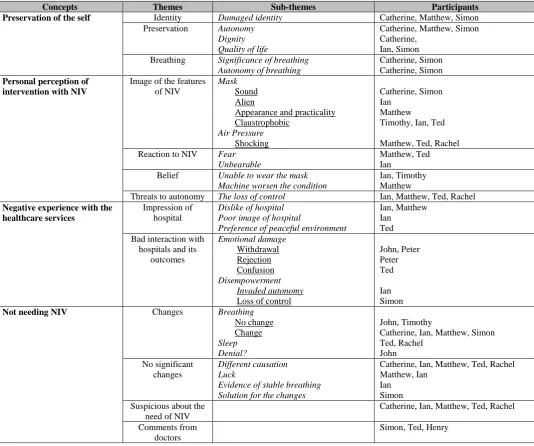
Findings: Four overarching themes were identified as a result of analysis: preservation of the self, personal perception of intervention with NIV, negative experience with the healthcare services, and not needing NIV. The analysis indicates that changes brought about by the illness could have a negative impact on their perception of themselves, consequently affecting their decision over NIV use. It was also found that NIV may generate fear, which was often observed to form a negative belief about it, leading to a rejection of NIV due to a sense of the loss of control over the machine. A poor impression of the healthcare service was perceived to have impact on participants‟ willingness to engage with the hospital in consideration of NIV establishment. The data also shows that individuals‟ understanding of their condition influences their perception regarding their need of NIV. Even though these four themes were found to explain different aspects of non-engagement with NIV, further analysis identified the fundamental issue underlying these concepts: perception of self.
4
Contents
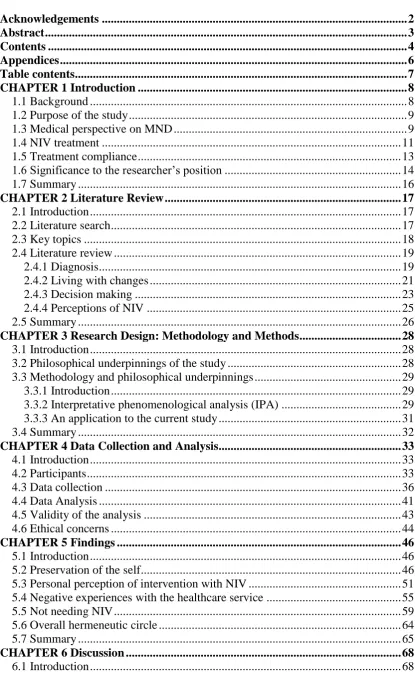
Acknowledgements ... 2
Abstract ... 3
Contents ... 4
[image:4.595.90.506.88.773.2]Appendices ... 6
Table contents ... 7
CHAPTER 1 Introduction ... 8
1.1 Background ... 8
1.2 Purpose of the study ... 9
1.3 Medical perspective on MND ... 9
1.4 NIV treatment ... 11
1.5 Treatment compliance ... 13
1.6 Significance to the researcher‟s position ... 14
1.7 Summary ... 16
CHAPTER 2 Literature Review ... 17
2.1 Introduction ... 17
2.2 Literature search ... 17
2.3 Key topics ... 18
2.4 Literature review ... 19
2.4.1 Diagnosis ... 19
2.4.2 Living with changes ... 21
2.4.3 Decision making ... 23
2.4.4 Perceptions of NIV ... 25
2.5 Summary ... 26
CHAPTER 3 Research Design: Methodology and Methods ... 28
3.1 Introduction ... 28
3.2 Philosophical underpinnings of the study ... 28
3.3 Methodology and philosophical underpinnings ... 29
3.3.1 Introduction ... 29
3.3.2 Interpretative phenomenological analysis (IPA) ... 29
3.3.3 An application to the current study ... 31
3.4 Summary ... 32
CHAPTER 4 Data Collection and Analysis ... 33
4.1 Introduction ... 33
4.2 Participants ... 33
4.3 Data collection ... 36
4.4 Data Analysis ... 41
4.5 Validity of the analysis ... 43
4.6 Ethical concerns ... 44
CHAPTER 5 Findings ... 46
5.1 Introduction ... 46
5.2 Preservation of the self ... 46
5.3 Personal perception of intervention with NIV ... 51
5.4 Negative experiences with the healthcare service ... 55
5.5 Not needing NIV ... 59
5.6 Overall hermeneutic circle ... 64
5.7 Summary ... 65
CHAPTER 6 Discussion ... 68
5
6.2 The pattern: the influence of the self in NIV declining and withdrawal ... 68
6.3 Preservation of the self ... 69
6.4 Personal perception of intervention with NIV ... 70
6.5 Negative experience with the healthcare services, ... 71
6.6 Not needing NIV ... 73
6.7 Limitations and strengths of the study ... 74
6.8 Summary ... 75
CHAPTER 7 Conclusion ... 76
7.1 Introduction ... 76
7.2 Implications and recommendations for practice ... 76
7.3 Recommendations for further research ... 78
7.4 Concluding reflexive notes ... 79
7.5 Concluding comments ... 79
6
Appendices
Appendix 1: Pictures of masks for NIV Appendix 2: Participant consent form Appendix 3: Participant information sheet Appendix 4: Interview schedule
7
Table contents
Table 1: Four Different Presentations of MND and their Characteristics ... 11 Table 2: Key Terms and Their Summary ... 19 Table 3: Factors Related to the Participants ... 37 Table 4: Relation with Their Carer and Other Relevant Factors at the Time of
8
CHAPTER 1
Introduction
1.1 Background
This study was designed as part of a bigger project being undertaken at the Walton Centre for Neurology and Neurosurgery (WCNN) and University Hospital Aintree (UHA). The main project was concerned with the experience of non-invasive
ventilation (NIV) use among motor neurone disease (MND) patients, their caregivers, and professional carers. The study was designed as a longitudinal study where patients and their carers were followed up every three months for up to three years from the time of referral until the research was terminated or their death. The main focus of the study was to find out how patients‟ perception of NIV changes over time as the illness progressed. It was also thought that their caregivers may see their own opinion of the ventilation change as their involvement with the patient and their care may become more demanding as the illness progresses and the patient tends to use the ventilation more in the later stage of the illness; which may consequently affect their lives. The professional carers were included in the study to understand their experience of looking after MND patients with NIV and if this experience altered how they perceive NIV treatment.
9
1.2 Purpose of the study
Thirty percent of participants in a bigger study who were offered NIV treatment declined or withdrew. This research was conducted to find out underlying reasons for withdrawal from NIV treatment which is offered to patients with MND. Therefore, the purpose of this study was to understand a patient‟s experience and decision
making processes around an offer of NIV as part of treatment of MND. It was thought that the study would give insight into the fundamental concerns patients have which affects their decision regarding the use of NIV. The findings of the study will
hopefully help professional carers to understand the event from the patient‟s point of view.
1.3 Medical perspective on MND
Motor neurone disease (MND) is an incurable rare neurodegenerative illness affecting upper and lower motor neurones. There are two types of MND, familial and sporadic MND; there is a significantly higher incidence of sporadic cases (Mitchell and Borasio, 2007). Although the clinical representation of the type is not distinguishable between the two (Phukan and Hardiman, 2009), an earlier onset has been found in familial MND (Moore et al., 2008).
The aetiology of MND remains unknown with a few exceptions of genetic factors found in familial MND (Al Chalabi and Leigh, 2000; Hadano et al., 2001). In contrast to familial MND, the finding of genetic factors in sporadic MND remains inconsistent. Apart from genetic factors, some environmental factors, certain
occupations, and physical factors have been reported to be risk factors (e.g. smoking or military service) yet again without consistency (Mitchell and Borasio, 2007). While an epidemiological survey, comparing the incidence rate over time, reports a recent increase in incidence, Beghi and their colleagues (2006) attribute this increase to a better diagnostic assessment of the disease. Generally, the incidence of MND is known to range from 0.6 to 2.6 per 100,000 populations (Chancellor and Warlow, 1992; Cronin et al., 2007) and there is an approximate population of 5000 cases in the UK at any time (Moore et al., 2008). The incidence of the illness is positively
10
incidence among females has been reported and Beghi et al.(2006) argue that this may be caused by the change in the lifestyles of women levelling the environmental factor risk with that of men‟s.
The onset of the illness varies depending on the pattern of involvement of the upper motor neurones (UMN) or lower motor neurones (LMN) and is divided into four different categories: lower limb onset, upper limb onset, bulbar onset, and
respiratory onset (McDermott and Shaw, 2008). In terms of lower limb onset, patients may experience difficulty in walking or unsteadiness, foot drop, and heaviness or stiffness in legs (Hankey and Wadlaw, 2008; Moore et al., 2008). Upper limb onset is often seen in the loss of fine hand movements, weakness in the hands and/or the arms, muscle wasting especially in the hands, or fasciculations seen particularly in the large proximal limb muscles (Hankey and Wadlaw, 2008; McDermott and Shaw, 2008). Patients with bulbar onset usually display dysarthria (difficulty in articulation of speech) or dysphonia (difficulty in speaking). Dysphagia, difficulty in swallowing, is often accompanied by dysarthria and more pronounced with liquids than solids (Moore et al., 2008). Respiratory onset is the least common onset, involving orthopnoea and nocturnal hypoventilation resulting in hypercapnia, which causes headaches, and there is associated hypersomnolence, fatigue and other features (Moore et al., 2007; Phukan and Hardiman, 2009). Also, a fronto-temporal dementia occasionally complicates the motor lesions (Phukan and Hardiman, 2009).
11
[image:11.595.58.546.135.453.2]more positive outcome in the current patient group. more investigation of this issue is needed.
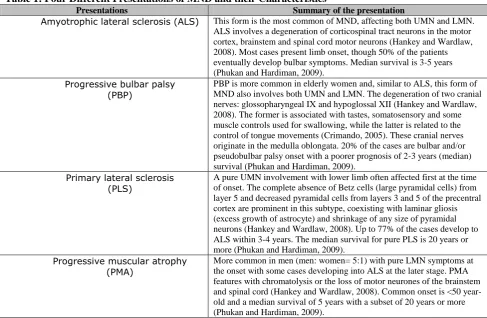
Table 1: Four Different Presentations of MND and their Characteristics
Presentations Summary of the presentation
Amyotrophic lateral sclerosis (ALS) This form is the most common of MND, affecting both UMN and LMN. ALS involves a degeneration of corticospinal tract neurons in the motor cortex, brainstem and spinal cord motor neurons (Hankey and Wardlaw, 2008). Most cases present limb onset, though 50% of the patients eventually develop bulbar symptoms. Median survival is 3-5 years (Phukan and Hardiman, 2009).
Progressive bulbar palsy (PBP)
PBP is more common in elderly women and, similar to ALS, this form of MND also involves both UMN and LMN. The degeneration of two cranial nerves: glossopharyngeal IX and hypoglossal XII (Hankey and Wardlaw, 2008). The former is associated with tastes, somatosensory and some muscle controls used for swallowing, while the latter is related to the control of tongue movements (Crimando, 2005). These cranial nerves originate in the medulla oblongata. 20% of the cases are bulbar and/or pseudobulbar palsy onset with a poorer prognosis of 2-3 years (median) survival (Phukan and Hardiman, 2009).
Primary lateral sclerosis (PLS)
A pure UMN involvement with lower limb often affected first at the time of onset. The complete absence of Betz cells (large pyramidal cells) from layer 5 and decreased pyramidal cells from layers 3 and 5 of the precentral cortex are prominent in this subtype, coexisting with laminar gliosis (excess growth of astrocyte) and shrinkage of any size of pyramidal neurons (Hankey and Wardlaw, 2008). Up to 77% of the cases develop to ALS within 3-4 years. The median survival for pure PLS is 20 years or more (Phukan and Hardiman, 2009).
Progressive muscular atrophy (PMA)
More common in men (men: women= 5:1) with pure LMN symptoms at the onset with some cases developing into ALS at the later stage. PMA features with chromatolysis or the loss of motor neurones of the brainstem and spinal cord (Hankey and Wardlaw, 2008). Common onset is <50 year-old and a median survival of 5 years with a subset of 20 years or more (Phukan and Hardiman, 2009).
1.4 NIV treatment
12
2003; Bourke et al., 2006), which exceeds the benefit gained by Riluzole, the sole approved disease modifying drug, of 2-3 months (McDermott and Shaw, 2008). The importance of NIV to the MND patient is such that it was the subject of the National Institute for Health and Clinical Excellence‟s (NICE) technology appraisal, which was reported in July 2010.
NIV (see Appendix 1 for pictures of available masks) is offered to patients once they display the sign of hypoventilation, which is usually monitored by
assessments of spirometry which measures forced vital capacity (FVC). As a standard guideline, the American Academy of Neurology (AAN) recommended NIV
intervention once the predicted value of FVC drops below 50 % (Miller et al., 1999). However, more recent studies report that earlier NIV intervention benefits MND patients further. For instance, Lechtzin et al. (2007) found that the median survival time from diagnosis was 329 days longer for patients who were established with NIV when the predicted value of FVC was higher than 65%. As suggested by Miller et al., (2009), this increased benefit observed in patients who started NIV earlier than recommended by AAN is likely to be reflecting the insensitive nature of FVC
measurement. Indeed, FVC% was found to be poorly correlated with early respiratory symptom (Jackson et al., 2001). In comparison with FVC, nocturnal pulse oximeter enables the clinician to detect respiratory muscle weakness (Chetta et al., 2007) at an early stage by measuring the value of nocturnal oxygen saturation which is predicted by inspiratory muscle weakness. In their study, Jackson et al. (2001) argue that overnight oxygen saturation measured by nocturnal pulse oximeter is the most
sensitive measurement to detect pulmonary insufficiency: the cumulative minute spent <90% of overnight oxygen saturation was the most sensitive indicator of pulmonary insufficiency, whereas the mean rate of FVC% for those desaturated patients was still 77%. In view of these findings, NICE guidance suggests a combination of
assessments, such as with oxygen saturation, rather than using FVC as a sole assessment for pulmonary functioning. The sensitivity to respiratory insufficiency enables healthcare professionals to detect the need of NIV sooner which subsequently improves compliance with NIV (Pinto et al., 2003). After the establishment of NIV, its use for a minimum of 4 hours has been reported to be crucial to beneficial
13
NIV is widely recognised to improve patients‟ quality of life (Bourke et al., 2006; Sundling, 2009) and is thus widely recommended as a standard treatment (Andrews, 2009; Phukan and Hardiman, 2009). However, this „quality of life‟ is a generalised concept and measured quantitatively thus falling short of reflecting a detailed idiographic account, especially of those categorised as „abnormal‟. Furthermore, the meaning of the concept of „quality of life‟ may be questioned as there is no consensus on its definition (Lipsman et al., 2007). Previous studies have reported the benefit of NIV, yet these quantitative measures do not fully reflect the idiographic experience or patient's experience of encounter with NIV, which are the main concerns of this study. As seen in the development of the NICE guidance (2010), there has been a significant lobby to ensure NIV is available to patients and a growing expectation that it is offered, but there is little investigation into the experience of patients as they consider using this intervention.
1.5 Treatment compliance
Generally, previous studies on NIV have mainly focused on benefits of the treatment and these benefits were often measured by a mean of comparison between NIV users and non-users (Lo Coco et al., 2006; Mustfa et al., 2006; Silvak et al., 2001). While these studies acknowledge that NIV is not always tolerated or accepted, little attention has been paid to exploring the factors leading up to the decision to use NIV, thus, any reason for withdrawal from the treatment remains unknown.
Non-compliance to treatments is not limited to NIV use in MND patients On the contrary, it is widely acknowledged in other illnesses. Many studies have
attempted to understand determinants which lead to such an outcome with the majority of studies looking into reasons for compliance of drug treatments. In their review, Vermeire et al. (2001) identify different types of non-compliance, some intentional and some unintentional, in relation to medication treatment. According to their review, there is generally 30-50% of non-compliance regardless of diagnosis, prognosis or setting, and they report that this non-compliance may occur at a different stage of the illness. With regard to determinant factors for non-compliance, Vermeire
14
together with other less salient factors, such as no perceived symptom of illness or fear of adverse effects of the treatment. Similarly, Ross and their colleagues (2004) observed treatment beliefs to be influential in determining compliance among
individuals with hypertension. Furthermore, they argue for a connection between their perception of treatment and beliefs about their ability to control their symptoms: poorer compliance was perceived in individuals with low self-belief in their ability to control their condition. It was also reported that the compliant individuals perceived the treatment as a cure rather than a way to control symptoms which indicates that individuals differentiate „cure‟ from „control‟ (Ross et al., 2004), suggesting that their treatment compliance is affected by the perceived curability of the illness.
These previous studies indicate the complexity of treatment compliance and for this reason, some prefer to replace a term „compliance‟ with „adherence‟ to imply patients with more autonomy and independence who have their unique characteristics and are able to both identify and pursue their own goal (Lutfey and Wishner, 1999). Based on this understanding that individual‟s independent evaluation of the situation affects their compliance/adherence to treatments, it may be suggested that their preference of treatment can be used as an indicator of their response to the treatment and this can be observed in longitudinal studies which followed the preference and a trajectory of care. For instance, Albert and his colleagues (2009) found MND patients who did not favour tracheostomy also ceased to take medications towards the end of their life. Likewise, Albert et al. (1999) found that the baseline preference of
treatments predicted not only the trajectory of their treatment, but also an earlier intervention with the treatments. These studies thus suggest a positive influence of their preference on their actual treatment and presumably compliance/adherence. Therefore, as the term „adherence‟ implies, individuals‟ perception appears to be vital in how they may respond to treatments.
1.6 Significance to the researcher’s position
15
determinants when patients consider accepting and the use of NIV. In order to investigate the reasons for non-adherence, however, separate assessment and evaluation of each case is crucial, since the “lived experience” of each individual varies, affecting the trajectory of the decision-making process.
As will be explained in the following chapter, an interpretative
phenomenological analysis (IPA) would enable me to investigate the reason for NIV withdrawal in a manner that allowed each individual case to be examined carefully and in depth to capture the individual and personal factors, while also allowing me to examine the overarching concerns common to different individuals. Important aspects of IPA are interpretation and phenomenology. It is a method used in order to
understand how people make sense of their experience. Hence, interpretation of the account is inevitable, whereby my previous knowledge and experience interweaves with the participants‟ accounts. Although it was not possible to totally omit my preconceptions, an attempt to bracket them out was made as with reflection I became aware of them so that my interpretation was as faithful as possible to the given accounts. It is also essential that readers are aware of my position so that my interpretation can be evaluated by them. Therefore, I describe my position before I move onto the next chapters.
Although my aim was to understand why people withdraw from NIV
treatment, which implies plausible negative aspects related to the treatment, I was also aware that I valued the benefits which NIV can contribute to patients‟ lives especially in terms of improvements in energy levels for daily activities and the survival outlook. My views were based on my witnessing other MND patients who have positive
experiences with NIV and knowledge of respiratory functioning of how NIV can improve the adverse event brought about by MND. Also, it is arguable that my own experience of trying NIV without any adverse feeling towards the machine affected my initial perception of the treatment. Therefore, it may be said that I failed to
16
All considered, the use of IPA in this particular setting would enable me to understand the participants whose experiences are different from these who hold positive views on NIV. The approach would allow me to address individuality while giving me an opportunity to also extend it to more general claims.
1.7 Summary
Medically, NIV is acknowledged to be one of the most beneficial treatments for individuals with MND, whose condition continually deteriorates over time.
17
CHAPTER 2
Literature Review
2.1 Introduction
There have been a good number of qualitative studies conducted within health psychology to understand what it is like to live with illnesses and how this differs between people. Qualitative methodology allows researchers to study the complex health related issues by looking at the links between physical changes, cognition, and a verbal presentation of the status (Smith, 1996). These studies enable us to gain
insight into the impact of, for instance, diagnosis (Dickson et al., 2008; Hubbard et al., 2010; Irvine et al., 2009; King et al., 2009; Smith and Osborn, 2007; Snelgrove and Liossi, 2009), life with illness (Brown and Addington-Hall, 2008; Hubbard et al., 2010; King et al., 2009; Knight et al., 2003; Smith and Osborn, 2007), and inner changes caused by illness (Dickson et al., 2008; Hubbard et al., 2010; Smith and Osborn, 2007; Snelgrove and Liossi, 2009). These studies inform us that illness can cause a dramatic change not only biologically, but also psychologically.
For this study of non-invasive ventilation in MND we were interested in individuals and their experiences. A literature review on qualitative studies was undertaken. Topics such as experience of illness and decision making were searched for together with breathlessness, which is a particular symptom leading to the offer of NIV; this was suggested by the collaborating healthcare professionals. This chapter outlines the literature review conducted and key terms relevant to my research questions are presented.
2.2 Literature search
Important aspects claimed by Smith et al. (2009) in respect to literature reviews
18
potential preconceptions are „bracketed off‟ (Smith et al., 200). Keeping this in mind, the literature search was carried out and key terms were identified.
Relevant literature was identified by searching computerised databases including EBSCOhost, reference lists of searched articles, and Google scholar search engine. The terms used to identify articles were „phenomenology‟, „interpretative‟, „qualitative‟ and „interviews‟ for previous qualitative studies, while „lived experience‟, „illness‟ and „coping‟ were used to understand the impact of an illness. The terms „decision making‟, „treatment‟ and „preference‟ were searched to explore how decisions are made following a diagnosis and „ventilator‟ and „breathlessness‟ were looked for to examine if there is any other element involved in decision making for a respiratory complication. „Motor neurone disease‟ and „amyotrophic lateral sclerosis (this term is synonymously used in some countries for MND)‟ were also searched to understand general aspects of the illness.
I only included papers which employed qualitative methods most of which used phenomenological approaches. One systematic review paper on qualitative studies was also included to confirm the generality of findings rather than to use it as its own account. Papers were excluded if their focus was on children, experience of caregivers, or retrospective accounts by caregivers on patients, unless there were relevant accounts of adult patients.
2.3 Key topics
The literature indicates and confirms that biological well-being affects psychological well-being. Individual perception and the degree of their awareness and acceptance of the changes brought about by illnesses then determine how people respond to the changes and their choice of available treatments. Additional aspects uniquely associated with NIV treatment were also recognised from the previous research.
19
Table 2: Key Terms and Their Summary
Terms Summary
1. Diagnosis Internal reactions to the diagnosis 2. Living with changes Coping and adaptation
3. Decision making Preference of care
4. Perceptions of NIV Evaluation of relief and burden
2.4 Literature review
2.4.1 Diagnosis
There have been a good number of qualitative studies done to explore the impact of diagnosis and how changes are experienced by individuals. The previous studies argue that an experience of physical change is not a straightforward process, but rather a dynamic one: it affects people‟s self perception, emotional feeling, and their sense of mortality. In addition, the previous studies also indicate that these changes are experienced within a context of social interaction. Contribution from qualitative studies in this area has provided insight into individual experience of receiving a diagnosis.
20
changed identity has been reported to be a major challenge to coping and it was indeed expressed by one patient with lower back pain that this was harder to cope with than the physical change (Smith and Osborn, 2007). In addition, the sense of the loss of control and independence have been linked with the emotional outcomes, such as anger and embarrassment (Dickson et al., 2008). It should also be noted that the previous studies also observed that not every ill individual finds the biological change threatening to their identity, some see it as a more simple physical and psychological disruption (Dickson et al., 2008; Hubbard et al., 2010; King et al., 2009).
The loss associated with the illness and the negative emotional reactions, such as sadness and despair, following the diagnosis have also been acknowledged among individuals with MND (Foley, et al., 2007; Hugel et al., 2006; King et al., 2009). A study of newly diagnosed patients (3-6 months) showed that they experienced frustration and the loss of control which were generated as a result of physical deterioration, which in turn affected their self-esteem and self-confidence (Hugel et al., 2006). They also indicated the complexity of the issue of control: patients
generally appreciated the daily help they received from other people, yet the help was sometimes seen to violate their control due to their dependency. Because of the loss of independence and control of the body, the notion of „normality‟, which implies their previous standard of life, may be abandoned. Nonetheless, patients may attempt to stay as normal as possible in abnormality: called „dynamic normality‟ by Brown (2003).
In addition to these recognised reactions to the changes brought about by illness, additional concerns may be discussed in terms of MND as a terminal illness. In consideration of this aspect, it seems reasonable to consider that other people with different fatal illnesses, such as certain types of cancer, have similar concerns when faced with their diagnosis. In this aspect, a concern over mortality expressed by people with cancer may be noted (Hubbard et al., 2010). This concern seems to be expressed by manifesting their feeling of a total negation of their existence following the diagnosis. Similarly, MND patients also expressed the existential threat and fear of death, which is accelerated by the loss of control as a result of physical
21
Another common phenomenon identified to take place after diagnosis was an appraisal of the situation by a comparison with previous self or others in order to make sense of the situation (Harman and Clare, 2006; Knight et al., 2003; Williams et al., 2004). While comparison with the previous self may highlight the patient‟s ever-changing situation which for some means futureless (Knight et al., 2003), comparison with others whom they consider to be in a worse situation may benefit individuals by providing them with a sense of positive aspects to their situation (Williams et al., 2004). As seen in the latter case, the impact of the social interaction appears to be prominent in how an individual perceives themselves with the illness (Dickson et al., 2008; Hubbard et al., 2010; Snelgrove and Liossi, 2009), triggering self-appraisal and seeking reinforcement from other people (Snelgrove and Liossi, 2009). The
significance of the social aspects was also observed in individuals with MND, where public image was found to be important in order to maintain self-esteem while physical impairment creates fear of public humiliation (King et al., 2009). These findings seem to suggest that what is perceived to be self is greatly affected by others‟ perception of the person, or rather a mere belief held by the individual of what other people think of them despite the reality of it. Therefore, it may be argued that self-esteem is founded in the context of social interaction where the standard for the individual performance is assessed by individual‟s expectation regarding themselves, which is manifested in the social settings. A re-evaluation of their idea of the self may occur after an impairment of the body and this is often seen to be carried out by means of a comparison.
The loss of control of the body may affect an individual‟s sense of self because of the restriction and inevitable need of help from others. Both identity and self-esteem have often been recognised to become susceptible as a result of the illness. Although there is an inner discrepancy between their expectation of the self and the reality, social interaction appears to have a great impact on how their expectation is formed. In addition to these complexities; trajectory of mind and the sense of existential threat may be added with regard to MND because of the nature of the illness.
2.4.2 Living with changes
22
been found. This section addresses what determines people‟s adaptation style and how they reflect individual‟s perception of the illness. I will also discuss whether there is any better coping strategy among the many that exist.
Previous studies report that how individuals cope with subsequent changes due to illnesses, including MND, varies according to their perception of the illness and the degree of acceptance of the changes. For instance, Brown and Addington-Hall (2008) distinguish four different types of coping strategies: sustaining, enduring, preserving and fracturing. The first type illustrates individuals with a positive attitude and with their main focus on symptom control and survival, while the second category describes passive people who quietly suffer and await their departure. The
„preserving‟ type actively does something to fight against the illness to get the sense of control over the illness, whereas „fracturing‟ types display avoidant acceptance and denial of both reality and outlook on life because of their fear and the loss. As
illustrated by these different types argued by Brown and Addington-Hall (2008), acceptance and individuals‟ perception of circumstances are evident in how their coping strategy is constructed. Furthermore, an issue with control, often generated as a result of illness, appears to have an impact on how individuals may be able to adapt to the changes: either an individual sees the illness to be controlling them or the individuals are seen to be in charge of the situation. These adaptation differences then seem to reflect people‟s adaptation to their identity change, which has also been reported to exhibit some different forms: some individuals have been found to be struggling between their previous identity and the new identity (Hubbard et al., 2010; Smith and Osborn, 2007), others were found to have been resigned to their new identity and passively accepted it (Smith and Osborn, 2007), or some acknowledge changes as disruptions yet perceive no change in their identity (Hubbard et al., 2010).
23
patients, a passive style with denial, often to protect their self-esteem, creates a pessimistic view on life (King et al., 2009). However, as King and her colleagues (2009) observed, one‟s coping style is not static and may differ from time to time with some individuals swinging between the two.
Lastly, another influential factor for active coping style may be suggested: hope. According to Brown and Addington-Hall (2008), hope underpins the positive attitude towards the illness and this hope is usually interpreted as the hope for better symptom management and survival. Congruent with their findings, the significance of hope was shared with physiotherapists (Soundy et al., 2010). They argue that hope is important for motivation and the absence of it could lead to „falling short of potential‟. Even though the hope for recovery is unrealistic for individuals with MND, an
existential hope is relevant and maybe suggested (Soundy et al., 2010).
Acceptance of changes, perception of circumstances, and the sense of control have all been observed to be influential in how people adapt to the changes following illness. Some take a passive form of coping strategy while others take an active form, depending on individuals‟ understanding of the situation. Also, it should be
remembered that the coping style varies over time thus there also exists an internal dynamic. In addition it appears some forms of coping strategies are superior to others in their positive effect in terms of empowerment.
2.4.3 Decision making
When an individual becomes ill, it is likely that they need to make a decision
regarding preference of care, including life sustaining treatment. Gauthier and Swigart (2003) observed the decision making in terminally ill patients (i.e. 9 patients with cancer and 1 with congestive heart failure) and found three determinants in the decision making process: realisation of terminality, accommodating living, and
24
For example, Reid et al. (2008) found that cancer patients viewed opioid treatment as the last straw and were resistant to have it until the symptoms became too severe to endure. This attitude towards opioids may be interpreted as a wrestle
between the acceptance of death and physical deterioration (realisation of
terminality): an attempt to deny mortality by not taking opioid which is identified as a manifestation of the terminal phase. This denial of the reality was observed to
negatively affect decision-making by the dismissing of treatments (Johnson and Nelson, 2008). An impact of accommodating living can be perceived when patients express their fear of becoming a burden to others therefore welcoming death,
sometimes even in the form of euthanasia (Chapple et al., 2006; Johnson and Nelson, 2008): resigning from life instead of adapting to changes. It may then be further argued that the process of accommodating living includes adaptation of others, or perceived capability of another‟s adaptation. Lastly, the finding of the importance of the purpose in life as a motivation for life (Chapple et al., 2006) can be explained by interaction of all three concepts. It can be argued that the future without a particular aim, or simply a lack of hope for the future in the face of awareness of physical changes, is evaluated as pointless. Such an attitude towards the future is presumably affected by their reluctance to adapt to changes. Even though these arguments support the importance of awareness, an awareness of the condition in MND may be difficult to some extent because of its difficult deliverance of accurate diagnosis and therefore prognosis (Hughes et al., 2005) which is likely to create a sense of uncertainty about the future, delaying acceptance and adaptation to the changes and thus affecting their decision making.
In addition to these criteria proposed by Gauthier and Swigart (2003), the sense of control and perceived quality of life have been recognised to be other
25
2007) and impaired cognitive function was the popular reason for a withdrawal from additional treatments in purpose of shortening lives (Lipsman et al., 2007).
Hence, applying these findings of attitude towards treatments with terminally ill patients, it can be proposed that the decision regarding NIV use among MND individuals is likely to be dependent on their perception and evaluation of worthwhile-ness of their existence while there is also a consideration of the physical deterioration and its psychological consequences. It is postulated that the decision making process is a complex procedure involving individuals‟ evaluation of their physical condition, acceptance and adaptation to the changes, and their sense of control and quality of life.
2.4.4 Perceptions of NIV
There have been several studies conducted to explore the experience of NIV and these studies generally agree that there is both a burden and a relief associated with the use of NIV. These experiences of NIV then influence decision making regarding NIV use, and as may be expected, this process involves inner complexities just like it does with any other treatment decision-making as discussed.
Some of the reported negative experiences of NIV are the feeling of: being in a vacuum cleaner bag, being exposed to air pollution, and following the rhythm of NIV rather than the machine following the individual‟s breathing pattern (Lindahl et al., 2005). Among the negative aspects of NIV, one prominent feature is recognised to be the mask (Lindahl et al., 2003; Torheim and Gjengedal, 2009). It has been
expressed that the mask sometimes intensifies anxiety by giving the sense of being trapped in it. This sensation negatively affects breathing which in turn causes the sense of losing control over the situation, inducing panic and irrational behaviour (Torheim and Gjengedal, 2009). In addition, the foreign nature of the mask, which creates a sense of otherness, was mentioned (Lindahl et al., 2003; Torheim and Gjengedal, 2009), indicating the escalated threat to their identity initially generated as a result of the illness. Generally, however, it is perceived that the burden of NIV is primarily a result of the psychological disturbance generated by the implications of their need for a breathing assistance device and the fear of being dependent on it: existential and independence threats (Lemoignan and Ells, 2010; Lindahl et al., 2005; Lindahl et al., 2006).
26
acceptance of NIV, and the belief in their need. With regard to perception, NIV was seen as a way to relieve symptoms, yet with this there was a concern also noted regarding the possibility of it triggering further deterioration. (Lemoignan and Ells, 2010). Also, studies show that adaptation to and acceptance of NIV is crucial; that this is a gradual process and this acceptance needs to be confirmed by the evidence of effectiveness (Lemoignan and Ells, 2010; Torheim and Gjengedal, 2009). Although individuals may need affirmation from healthcare professionals that NIV is necessary (Torheim and Gjengedal, 2009), or they may seek an opinion from significant others as their presence is essential in the patient‟s remaining time (Lemoignan and Ells, 2010), reflecting the significance of the social interaction. However it is ultimately the patients who evaluate if the burden associated with NIV outweighs the relief it may offer. Hence, the importance of the sense of control in decision making, discussed in the previous paragraph, is also apparent in relation to NIV (Lemoignan and Ells, 2010; Torheim and Gjengedal, 2009): an assessment of the need to use NIV and a subsequent act of decision as a way of controlling the situation.
Issues relating to the sense of control, identity, mortality and independence have been identified to be induced by the experience of NIV. Therefore, it may be argued that the experience of NIV is an extension of the experience of the illness, reflecting the individual‟s reaction to the changes. The decision of whether to use NIV seems to be based on these experiences and an evaluation of their life with NIV.
2.5 Summary
As discussed, illness causes dramatic changes not only physically, but also
psychologically. It was observed that the loss of independence and the loss of control over the body following the illness affect the sense of self and self-esteem. Self-esteem was also perceived to be influenced by self-expectation in the context of social interaction. These changes are perceived differently by each individual and their understanding of the situation, sense of control, and the degree of acceptance of the changes have been observed to determine how people react and cope with the
situation. The adaptation style is in turn found to influence decision-making, including the decision of whether to proceed with treatment. It has been reported that the
27
pertinent in the case of NIV use. It may also be argued that some reported experiences of NIV among MND patients are a manifestation of people‟s reaction to the illness itself because of the implication of use of the machine and what it manifests, which is the fatality of the illness. The previous studies highlight the importance of
28
CHAPTER 3
Research Design: Methodology and Methods
3.1 Introduction
This chapter deals with the epistemology of the study and the particular method chosen for the study, reflecting my philosophical position. Theoretical perspectives together with the ontology underlying the methodology are also discussed here.
3.2 Philosophical underpinnings of the study
The worldview, or paradigm, is a viewpoint by which actions are determined (Guba, 1990). In other words, the worldview directs researchers in their strategy (i.e.
inductive/deductive), design of the study (i.e. qualitative or quantitative), and methods employed for research (e.g. ethnography, experimental research or phenomenological research). Among major worldviews such as postpositivism and pragmatism, the research presented here employs a constructivist worldview. Constructivism holds an assumption that people attempt to make sense of their world as they experience their world (Creswell, 2009). Furthermore, Creswell (2009) argues that this „subjective meaning‟ of the experience varies between individuals and is also constructed by historical and social factors. Therefore, inquirers seek to understand the subjective meaning of the experience which is interwoven with the context of individuals. As is apparent then, the nature of constructivism also includes the worldview of
interpretivism (Creswell and Clark, 2007). Interpretivism seeks to capture the
meaning of concepts which are shared, either consciously or unconsciously, by people in a particular culture or time to explain their belief or actions (Lin, 1998). The term „verstehen‟ is used to describe the reflexive observation of interpretivism (Scott, 2003). Scott (2002) explains the term by using the example of a person being in a foreign country and coming across a native joke. The person may not understand the joke fully, yet enough to understand why the native people find it funny.
29
preconception, but it was instead intended to reflect participants‟ experiences interpreted by my understanding of their world. In order to achieve this, IPA was employed where phenomenological and hermeneutic perspectives were maintained. The characteristic of this particular method harmonises with my worldview. In order to be faithful to this approach, then, my task was to „bracket off‟ my preconception that NIV is a beneficial treatment, pursuing an understanding of the participants‟ experiences from their accounts. Even though total bracketing off is not possible as discussed in Chapter 1, an attempt to make known my position and the thread of my interpretation was made in the hope that this would help readers to assess my interpretation and subsequently the reported accounts of the participants.
3.3 Methodology and philosophical underpinnings
3.3.1 Introduction
Smith and his colleagues argue (2009) that IPA embraces three philosophical perspectives which are phenomenology, hermeneutics and idiography. The idea of phenomenology is derived from the argument that it is important to understand the essence of phenomena by going back to the subjects themselves. An interpretation is also crucial in IPA, because of the process involved in understanding the phenomena which are experienced by others. The last concept, „ideography‟ is concerned with individuality, uniqueness, and real experience of particularity, while nomothetic is concerned with generality and invariability. In the next paragraphs, contributions of each perspective to IPA are discussed and these components are then related to my research question.
3.3.2 Interpretative phenomenological analysis (IPA)
The approaches of IPA are constructed using phenomenology, hermeneutics and idiography – the readers are advised to read Interpretative Phenomenological Analysis: Theory, Method and Research written by Smith et al. (2009) for the full explanation of IPA. IPA is interested in understanding human experience, which is studied rigorously via individual cases.
For IPA, phenomenology is concerned with the lived experience of the
30
acknowledged. The different theoretical accounts of phenomenology are seen to formulate the holistic account of phenomenology in IPA rather than any particular one serving as the core concept of it (Smith et al., 2009). The claim of going back to the thing itself made by Husserl (1927) is understood as the call for going back to the experience of the individual (cited by Smith et al., 2009): an experience of something of significance to the person and their attempt to make sense of the experience. IPA attempts to understand the lived experience and its meaning to the individual who is the holder of the experience. By understating the meaning „impressed‟ by the
individual, it may be possible that the existential aspect of psychology is discovered, as it reflects our essence in our entity and this idea is undoubtedly influenced by Heidegger (1962).
In order to understand the phenomena, IPA claims that an interpretation, or hermeneutics, of the individual accounts is crucial. This interpretation is not only carried out by researchers/interpreters, but also by participants themselves when they attempt to make sense of their experience, thus it is a dual interpretation. This dual interpretation or „double hermeneutic‟, is a process of researcher/interpreters trying to make sense of both the individuals and their experience through their understanding and explanation of the experience. In addition, Smith et al. (2009) argues that IPA involves two levels of hermeneutics: hermeneutics of empathy and questioning. The former indicates its interest in understating subjective experience of the phenomena, that is to say, being in their shoes, whereas the latter implies its interest is in analytic examination of the experience. Although the hermeneutics of questioning provide different degrees of interpretation, its interpretation must always be generated from an interpretation of the account, therefore reflective practice is emphasised. Smith et al., (2009) describe this close relationship between phenomenology and hermeneutics to be the crucial role in IPA: „without phenomenology, there would be nothing to interpret; without the hermeneutics, the phenomenon would not be seen‟.
An idiographic approach is highly valued in IPA for its accessing of details and sensitivity to the lived experience of particular phenomena which is perceived to be significant to individuals. Moreover, this commitment to idiography with detailed analysis has been identified as the way to provide an understanding of complex
31
for differences and similarities. In the last stage, the trends of meaning of the particular experience are identified. In this respect, it has been argued that in a good piece of IPA, accounts should provide readers with the variation of accounts within the general themes detected.
Hence, IPA is concerned with an understanding of lived experience of individuals who present their experience for interpretation. Together with gradual realisation of preconception of the phenomena, interpreters rigorously examine individual cases which subsequently provide a set of general themes, yet with variation and the uniqueness of each case. Also, the theory underlying IPA indicates that there is a universally shared human experience and this may be accessed through an investigation into a particular lived experience in a particular context.
3.3.3 An application to the current study
As discussed in the previous chapter, it was believed that an individual‟s perception, acceptance, and understanding of situations affect people‟s decision making.
Therefore, it was proposed that an understanding of the experience of NIV would reflect the underlying reasons for NIV withdrawal.
In the current study, it was believed to be essential to engage with a phenomenological approach by going back to the participants themselves who
actually experienced the events of being ill and being offered NIV. These experiences occurred in the context of interpersonal settings, where the presence of others would generate, or manifest, the individual‟s perception of the phenomena. Therefore, Husserl‟s (1927) argument of going back to „the things themselves‟ (cited by Smith et
al., 2009) was valued as well as the importance of interaction with others claimed by Sartre (1948). Also the participant‟s account was thought to reflect the unique perception generated from their interaction with the world, reflecting the claim made by Merleau-Ponty (1962).
In consideration of Merleau-Ponty‟s (1962) argument that our experience only belongs to the person thus total comprehension is not achievable, it was assumed that total understanding of the experience of the participants was unlikely. In addition, the participants‟ accounts were expected in a measure to be incomprehensive, as
32
experience may be accessed. Therefore, an understanding of the experience based on the shared accounts, as well as what is not shared, by the participants was thought to provide an interpretation which was close to the original. The hermeneutic circle part-whole and single-sum were also practiced for diverse interpretations. In addition, a hermeneutic of a questioning approach was undertaken in order to gain different levels of interpretation. The cautions from these scholars with regard to the former preconception were noted and an effort to become aware of them and consequently bracket them out was made as they could bias the interpretations.
Based on the concerns relating to idiography, the findings of each individual case were reviewed and common factors were identified, while every effort was made to preserve idiographic uniqueness. Hence, this study aimed to understand the
potential reason for the decision in each case, while attempting to identify the shared views among the participants, which may also reflect the science of human being.
3.4 Summary
In this chapter, the philosophical underpinning of the research, by which the
33
CHAPTER 4
Data Collection and Analysis
4.1 Introduction
The main study employed both qualitative and quantitative methods. With regard to the qualitative phase, semi-structured interviews were conducted and the data was analysed by using IPA. In terms of the quantitative phase, various scales were selected and questionnaires were designed separately for patients and their caregivers. The scales used for patients were ALS Assessment Quationnaire-40 (Jenkinson et al., 1999), ALS-Functional Rating Scale (Cedarbaum et al., 1999), MND Dyspnoea Rating Scale (Dougan et al., 2000), Beck Depression Inventory (Beck et al., 1996), Beck Hopelessness Scale (Beck et al., 1974), hospital Anxiety and Depression Scale (Zigmond and Snaith, 1983), and Epworth Sleepiness Scale (Johns, 1991). The questionnaire for caregivers, both lay and professional, included: NEO Personality Inventory (assessed only at the initial session) (Costa and McCrae, 1985),
Dispositional Resilience Scale (only assessed at the initial session) (Bartone et al., 1989), Caregiving Distress Scale (Cousins et al., 2002), Sense of Competence Questionnaire (Vernooij-Dassen et al., 1996), and the short version of Zarit Burden Interview (Bédard et al., 2001). Furthermore, records of patients respiratory
functioning were assessed by using spirometry, mouth pressure test, sniff nasal pressure, and nocturnal pulse oximeter, which is to measure arterial blood gas level. Arterial blood gases were also recorded at the baseline and interaction data with NIV was also obtained for those who had been established with NIV.
4.2 Participants
34
All the patients and their lay caregivers were asked about their interest in participating in the study once they were referred to UHA from WCNN for respiratory assessment and consideration of NIV establishment. The study was first mentioned to the patients by neurologist or respiratory physicians and followed up by the research assistants with more information for the patients. Consent (see Appendix 2) was obtained once patients agreed to take part. With regards to the recruitment of
professional carers, only carers actually on treatment with NIV were recruited. Some of the names of professional carers were given by patients, while some others were identified with the help of the MND Association, which supports MND patients and their caregivers. The identified professional carers were contacted by phone call by the research assistants and asked about their interest in participation. No different procedure was used in the recruitment for the 11 chosen participants included in this study.
This thesis presents the 11 patients who decided that NIV was not for them thus this group was purposively chosen from the bigger cohort. The purposive
35
Because of the different central focus of the main study and the difficult nature of distinguishing the potential sample in this uncommon neurological disease, further recruitment did not take place. Nevertheless, the aim of IPA is to recognise general experience of the particular and this type of study often includes only a small group (Brocki and Wearden, 2006). Accordingly this study also follows the norm.
Once patients showed signs of hypoventilation, their condition and the reasons for their need of NIV were explained to them by respiratory doctors at the NIV clinic. Generally, patients were then introduced to a physiotherapist who physically showed them different types of mask available to use NIV. Any question raised by patients during clinic was answered by either doctors or physiotherapists and patients were provided with their contact numbers for further queries. Out of 11 patients who were approached by the researcher and agreed to take part in the study, one patient was excluded from the analysis as the interview did not include underlying reasons for the withdrawal. The field note just after the interview reads:
The patient and her husband made it very clear at the beginning that they wouldn‟t want to talk about the illness. But apart from that they were happy to take part in the study. The carer seemed to be very careful with how the patient feels and he said he would not want to discuss anything to upset his wife, which was understandable. Because of that, it was difficult to ask them about diagnosis and information seeking. It turned out that her diagnosis was this January so I could see that she is deteriorating quite rapidly [9 months after the diagnosis]. The patient did not answer many questions in the questionnaire either and they were on hopelessness and emotional feeling (possibly burden as well). They only expressed their positive expectation for a NIV trial.
36
period after their diagnosis and during which patients were being assessed by
respiratory clinicians for NIV need. Their names are all anonymous for the purpose of confidentiality.
Table 4 provides data on the disability stage of each patient measured by the respiratory functioning test (FEV1 and FVC) and nocturnal pulse oximeter. The relationship with their main lay carer is also presented together in the table with scores on hospital anxiety and depression Scale (HADS) (Zigmond and Snaith, 1983), 40-item amyotrophic lateral sclearosis assessment questionnaire (ALASQ-40)
(Jenkinson et al., 1999), and amyotrophic lateral sclerosis functional rating scale (ALSFRS) (Cedarbaum et al., 1999) – these quantitative data were gathered for the main study. Demographic data such as their previous occupation or year spent in education were not included as criterion in the main study and are thus not accessible.
4.3 Data collection
Semi-structured interviews were carried out. Interviews were conducted at the participant‟s home or hospital, depending on their preference. The length of
37
37
3
[image:37.842.70.762.126.254.2]7
Table 3: Factors Related to the Participants
*post-interview not available
[image:37.842.82.792.330.457.2]** see 4.4 Data Analysis for the choice of interviews *** at the time of interview
Table 4: Relation with Their Carer and Other Relevant Factors at the Time of NIV Referral
Anonymised Name
Relation of Lay Carer to the
patient
Onset Bulbar at
the time of trial
HADS-A HADS-D ALSAQ-40
Emotion ALSAFRS Total FEV1 (predicted%) FVC (predicted%) FEV/FVC % Oximetry (>90%)
Catherine Offspring Limb Yes 4 6 27 24 0.46 (33%) 0.48 (28%) 95.8 (80.9) 3:06 hrs Henry Offspring Limb Yes 3 10 14 30 1.6 (63%) 2.37 (69%) 67.5 (74.3) 0:43 hrs Ian Partner/spouse Limb No 3 3 18 40 1.24 (39%) 2.21 (54%) 56.1 (77.2) 2:00 hrs
John Partner/spouse Bulbar Yes 12 9 19 18 N/A N/A N/A 6:01 hrs
Matthew Partner/spouse Bulbar Yes 5 9 17 24 N/A N/A N/A 9:37 hrs
Peter Partner/spouse Limb Yes 4 11 25 21 0.98 (40%) 1.2 (38%) 81.7 (77.2) N/A Rachel Partner/spouse Limb No 2 8 12 26 1.81 (58%) 2.17 (62%) 83.4 (88.6) 1:30 hrs Simon Partner/spouse Bulbar Yes 5 4 21 33 2.6 (97%) 3.29 (94%) 79 (81.5) 0:14 hrs Ted Partner/spouse Limb No 2 7 4 25 4.08 (120%) 4.82 (111%) 84.6 (78.2) 0:02 hrs
Timothy Partner/spouse Limb Yes 13 8 32 11 N/A N/A N/A N/A
HADS-A: hospital anxiety scale, HADS-D: hospital depression scale, ALSAQ-40 Emotion: Sub-total of emotional scale from ALS Assessment Questionnaire-40, ALSFRS: ALS-functional rating scale, FEV1, FVC and FEV/FVC %: spirometry, Oximetry: nocturnal pulse oximeter
Anonymised name Age Date of
diagnosis Time before trial (month) NIV trial Total number of interviews Interviews Used for analysis**
Time between the diagnosis and the first
interview (month)
Months after diagnosis***
Was the interview conducted by the other researcher?
Catherine* 64 31/03/08 14 Yes 1 1 (pre trial) 12 12 Yes
Henry 77 01/10/09 1 Yes 2 1 (post trial) 1 3 No
Ian 71 18/06/07 27 Yes 8 2 (1pre and 1post trial) 11 25, 28 Yes - pre trial
John* 58 20/02/06 - No 2 2 (pre trial) 24 24, 28 Yes
Matthew 79 05/10/07 17 Yes 3 1 (1post trial) 9 17 Yes
Peter* 72 19/06/06 - No 1 1 (pre trial) 20 20 Yes
Rachel 40 27/11/09 1 Yes 2 1 (post trial) <1 4 No
Simon* 71 19/05/08 16 Yes 2 2 (pre trial) 10 10, 15 Yes - one pre-trial
Ted 71 12/05/00 118 Yes 3 1 (post trial) 113 120 No
38
condition on the scheduled day. Some of the interviews analysed and presented in this thesis were conducted by the other researcher, which is indicated in Table 3.
All ten participants had a pre-trial interview, whereas post-trial interviews were only available for 5 patients since three declined the NIV trial or they passed away (n=2) before they had a post-trial interview. In post-trial interviews, possible reasons for withdrawal from the NIV were sought by asking about their experience of NIV. An interview schedule (Appendix 4) for the main study had already been
established by 1 neurologist, 2 respiratory physicians and 1 psychologist prior to my involvement and this was used as a prompt. A few examples of the questions from the list are: “What were your thoughts when you were told that you had MND?” as a question regarding their diagnosis, and “What did you think when you were shown and started on the ventilator?” with regard to their experience with NIV. All the participants were encouraged to speak freely about their concerns and thoughts regardless of concept or any desire to be polite. Field notes were also entered from each interview, noting unrecorded information such as conversations before or after the interview. This approach of recording field notes is highly recognised in
ethnography, where field notes may be the sole accessible data (Palmer, 2010). In the same aspect, field notes were used in the current research as the only data for John, who declined the formal interview, yet remained keen to participate in the study, and only as supplementary data for the other participants, including the patient who was excluded from the analysis. Two ways of taking notes were employed: observational notes and theoretical notes (Palmer, 2010). The former records descriptive and factual events, while the latter includes the researcher‟s thoughts and impressions. Although both approaches were used, it was mainly the observational notes which were used for the analysis of John‟s interviews in consideration of phenomenology and
39
group of people on NIV treatment, including John and those who have communication difficulties which are now discussed.
Interviews were normally conducted verbally. However, some strategies were employed to mitigate communication difficulties with patients who had dysarthria (unclear speech articulation). Sometimes this simply involved allowing them more time to deliver speech and extra careful listening while they spoke. Confirmation of what they had said was sometimes sought to ensure that they were correctly understood. Hand writing was also employed if verbal communication was unavailable or too much of a struggle for the patient, yet even hand writing was found to be unobtainable with Peter and Timothy, whose limb muscles had deteriorated and who were unable to write. In such cases, closed questioning and simple questions were employed so that only gestures or short answers were required. An example of this technique is extracted from the interview with Timothy (the extract is later used in the analysis):
I: Did you consider what benefits the ventilator might give you when you made the decision?
P: [Nods head] Spells: M-A I: M - The mask?
P:[Nods head]
I: You just thought about the mask? P: [Nods head]
I: And was it specifically the claustrophobia with the mask? P:[Nods head]
I: That was the only thing that really mattered to you at that time? P: [Nods head]
*I=interviewer, P=patient
40
phenomenology, hermeneurtics and idiography. While closed questions still enable researchers to engage with phenomenology and idiograhy, they appear to provide little space for hermeneutics. Nevertheless, it may be argued that rechecking and gaining confirmation from the individuals are seen to stand in the realm of double hermeneutics. For instance, from the extract above, it may be argued that the term “claustrophobia” was introduced by the interviewer and thus possibly leading, yet the participant‟s agreement indicates that the interviewer‟s interpretation is accurate, which was that the mask had negative associations. Like the use of field notes, this approach was seen to be vital in order to include as many individuals as possible who were experiencing the phenomenon. The patients who needed these communication strategies were Peter, Simon and Timothy.
All of the interviews were audio recorded except interviews with John who declined to have formal interviews, so only field notes were available for him. These field notes were entered by another researcher who conducted the interviews with the patient. Therefore, a particularly stringent approach to interpretation of the notes was employed and any accounts in the notes that it was difficult to be categoric about were omitted from the analysis. An example of such issues with regard to notes being discounted is seen in an extract from an interview with John. In this account, even though the notes observe John apparently avoiding thoughts of the future was recorded elsewhere and thus likely, the degree of reassurance needed is not clear. Therefore, a possible interpretation of John‟s anxiety or pressure created by an interaction with researcher was not noted.
He indicated that he wasn‟t thinking about the ventilator for now or the future – indeed he seemed to suggest that he didn‟t really want to think about the future at all. He seemed upset at the subject and needed some reassurance that it was ok not to think about it if he didn‟t want to and that he only had to talk about things if he wanted to.
41
displayed dysarthria, requiring repeated checks for accuracy. In spite of this painstaking effort, some parts remained inaudible and were indicated in brackets. These communication difficulties need to be addressed and reflected in the
consideration of its impact on the phenomenological approach: limited access to the experience of the person. Nevertheless, it was believed that each participant was able to share the underlying reason for the withdrawal, even from the accessible accounts or parts of accounts, sometimes indeed these were excessively well expressed.
4.4 Data Analysis
The decision as to which transcripts to use was based on the richness of the data, which was sometimes affected by participant‟s poor speech. The interviews just before or after the trial were usually used for the analysis (see Table 2 for transcripts used) which seemed to provide their views on NIV most relevantly and to reveal any plausible reasons for their decisions.
The data analysis began from the time of data collection where participants‟ accounts of the experience were listened to carefully in order to minimise my preconception and to understand their experience through their perceptions which were only directly available to me. Therefore, an aspect of the hermeneutics was sought during this phase of the study. During this stage of data collecting, it was also essential to build a good rapport with the participants so that they would feel
comfortable to freely talk about their perceptions.
After the data collection, the steps for analysis introduced by Smith et al. (2009) were modelled. The first stage of analysis is concerned with the familiarisation with the data achieved by means of listening to and re-reading of the interviews so that the nuance of the accounts was not lost. This process was especially identified to be crucial with the data collected by another researcher, thus more repeated readings to become familiar with the data were involved with these transcripts. After the first stage, the right-hand margin of the transcript was used for detailed and comprehensive initial annotation. Initial notes were made for effective understanding by three
different levels of analysis: descriptive, linguistic, and conceptual comments. The descriptive comments are the most basic level of understanding, recording