Declaration
I hereby declare that this thesis is my own original work and that it contains no material previously published or written by another person, except where due acknowledgement is made in the text.
Acknowledgements
I would like to express my deepest gratitude and appreciation to everyone who supported me in various ways throughout my period of stay and study in Canberra and The Australian National University. I owe gratitude to my supervisory panel, Dr Greg Shailer, Dr Royston Gustavson, and Dr Janet Lee (advisor) for their guidance, support, encouragement and the friendship. To Dr. Greg Shailer, I thank him for introducing me to the concept of property rights and the continued guidance that helped find my way.
I wish to express my gratitude to the Government of Botswana through the University of Botswana for the opportunity to study and the financial support towards it.
I am grateful for the helpful comments and suggestions I received from the participants of the January 2009 Southern African Finance Association conference in Cape Town, South Africa.
Abstract
This thesis examines how property rights regimes impede participation in stock markets, emphasising institutional transformation processes, property rights ownership culture, and quality of institutions.
The adopted theoretical framework incorporates property rights effects into the overall institutional structure of the society and the economy. This institutional structure comprises the political order that defines and protects property rights; property rights institutions that are laws, regulations and contracts; and cultural value systems that regulate behaviour and influence choices in the society (Feder and Feeny 1991:136). In doing so, it is argued that the popular view in the comparative markets and governance literature regarding the influence of property rights institutions on the development of capital markets does not adequately address the peculiarities and complexities characterising institutional developments in SADC countries.
This thesis argues that the institutional environment in which SADC stock markets operate has been shaped by the development of property rights, and that differences in development processes reflect differences in colonial policies. These policies differed among territories depending on the nature of colonial political power and the extent of the settler private property ownership. Colonial powers imposed property rights regimes underpinned by a strong private ownership culture that were inherently in conflict with the pre-existing traditional value systems underpinned by a strong communal ownership culture. This conflict persisted because the conflicting rights of settlers and indigenous communities coexisted during the colonial period.
stock market outcomes, and in turn participation in the domestic stock markets, varies among countries according to the type and the extent of imperial government policy and the extent of the settlers‘ economic activities.
The economic and stock market outcomes in SADC countries vary according to the nature of the dominant ownership culture underpinning the ownership and utilisation of economic assets, and to a certain extent the quality of the institutions. The quality of the institutions varies according to the nature and the extent of colonial institutional conflicts.
The extent of the settler influence on the nature of the emergent institutions depended on the degree of their political autonomy and their number, which were critical for them to transform traditional institutions.
In countries where settlers established and institutionalised a Western tradition of property rights, settlers greatly influenced the nature of post-independence property rights regimes. These countries tend to have more robust private sector participation in the economy and better-developed industrial sectors, and consequently relatively higher levels of participation in their stock markets.
In countries where settlers established a Western tradition of private property rights but had neither political autonomy nor the numbers to impose their preferences, and the conflicting settlers‘ and indigenous communities‘ rights were protected by the imperial government, conflict dominates the nature of institutions. In addition, these countries have relatively high communal ownership. The economic outcome of the relatively fairly developed industrial structure, inherited when a country gained independence from the colonial power, is generally declining. Stock markets in these countries are mostly small and stagnant because of low levels of participation.
the same outcome: stock markets are mostly small and stagnant because of low levels of participation.
Contents
Declaration……….…..i
Acknowledgements ………. ..ii
Abstract………..…iii
Contents………. vi
List of figures ……….…..xii
List of tables……….xiii
Abbreviations ………...xv
CHAPTER 1 INTRODUCTION ... 1
1.1 Stock market participation and property rights ... 3
1.1.1 Participation in stock markets ... 3
1.1.2 Property rights definitions ... 4
1.1.3 The role of institutions in stock market participation ... 4
1.2 Research questions and contributions of the study ... 7
1.2.1 Previous research and initiatives limitations ... 8
1.2.2 The scope of capital market development literature ... 10
1.3 The background of SADC stock markets... 11
1.4 Developing a theoretical framework ... 14
1.4.1 Finance theory of stock markets ... 15
1.4.2 Property rights literature ... 16
1.4.3 Institutional path dependence theory ... 17
1.5 Method ... 17
1.7 Limitations ... 19
CHAPTER 2 THE SOUTHERN AFRICAN DEVELOPMENT COMMUNITY INSTITUTIONAL SETTING ... 21
2.1 Introduction ... 21
2.2 Characteristic features of SADC economies ... 22
2.3 The SADC aims and objectives ... 25
2.4 The SADC stock market development initiatives. ... 27
2.4.1 SADC strategies for stock market development ... 27
2.4.2 The role of international organisations ... 29
2.5 Establishment of stock markets ... 31
2.6 Stock market development. ... 34
2.7 Conclusion ... 37
CHAPTER 3 THEORETICAL FRAMEWORK ... 38
3.1 Introduction ... 38
3.2 Property rights, concepts and definitions ... 44
3.2.1 The concept of property rights ... 44
3.2.1.1 The role of property rights ... 45
3.2.2 Ownership of property rights ... 46
3.2.2.1 Communal ownership rights ... 47
3.2.2.2 Private ownership right ... 49
3.2.2.3 Usufructs rights ... 49
3.2.2.4 State ownership rights ... 50
3.3 Components of the institutional structure of the society ... 51
3.3.1 The role of the state ... 52
3.3.2 Property rights institutions ... 53
3.3.3.1 The features of the firm ... 54
3.3.4 The stock market ... 56
3.3.4.1 The requisites for establishing a stock market ... 57
3.3.4.2 The role of the stock market... 58
3.3.4.3 Characteristic features of the stock market ... 59
3.3.5 The role of culture ... 60
3.4 The development of property rights ... 61
3.4.1 Property rights development model ... 63
3.5 Historical path dependence ... 69
3.6 Description of variables ... 69
3.7 Conclusion ... 74
CHAPTER 4 THE BANTU RIGHTS INSTITUTIONAL STRUCTURE ... 76
4.1 Introduction ... 76
4.2 Bantu property rights and cultural value systems ... 77
4.2.1 The Bantu economic sharing methods. ... 82
4.2.2 Traditional practices in modern economies ... 84
4.2.3 The nature of the Bantu property rights institutions ... 86
4.2.3.1 The traditional assembly system ... 87
4.2.3.2 The influence of the traditions on the corporations ... 90
4.3 Property rights structures ... 92
4.3.1 The land tenure system ... 92
4.4 Conclusion ... 96
CHAPTER 5 PROPERTY RIGHTS EVOLUTIONARY PROCESSES ... 98
5.1 Introduction ... 98
5.2 The nature and effects of colonial policies ... 100
5.2.1.1 The effect of the mission in Malawi ... 103
5.2.2 European settlers: objectives, strategies and their effects. ... 104
5.2.2.1 Settlers in British South African protectorates ... 108
5.2.2.2 Settlers in British Central African protectorates ... 111
5.2.2.3 The case of Tanzania ... 113
5.2.2.4 Belgian Congo and Portugal: Angola and Mozambique... 114
5.2.3 Colonial policies and state formations ... 115
5.2.3.1 Characteristic features of settler states ... 116
5.2.3.2 Characteristic features of trustee states ... 117
5.2.3.3 Characteristic features of exploitative states ... 118
5.2.3.4 Characteristic features of extractive states ... 120
5.2.4 The effects of colonial policies on cultural values. ... 120
5.2.4.1 The legal system ... 124
5.3 The concept of democracy ... 125
5.3.1 Transition to democracy and the effects ... 127
5.3.2 Property rights protection ... 132
5.4 Institutional transformation processes and the effects ... 136
5.6 Conclusion ... 139
CHAPTER 6 ECONOMIC CAPACITY AND BUSINESS ENVIRONMENT ... 141
6.1 Introduction ... 141
6.2 Data sources and description ... 142
6.3 Description of the economic capacity ... 142
6.3.1 Size of the economy ... 143
6.3.2 Savings capacity ... 146
6.3.3 Industrial capacity. ... 149
6.3.4 Private sector support ... 154
6.4 Business environment: firm perspective ... 155
6.4.3 Size of domestic companies ... 159
6.5 Cultural disposition and the colonial legacy ... 159
6.5.1 The settler states (South Africa and Zimbabwe) ... 160
6.5.2 The trustee states (Botswana; Swaziland) ... 161
6.5.2.1 Economic dependence ... 163
6.5.3 The exploitative states (Malawi, Tanzania and Zambia) ... 167
6.5.4 The extractive states ... 169
6.5.6 Special cases: Mauritius and Namibia ... 170
6.5.6.1 Mauritius ... 171
6.5.6.2 Namibia ... 172
6.4 Conclusion ... 173
CHAPTER 7 PROPERTY RIGHTS AND STOCK MARKET PARTICIPATION .... ... 175
7.1 Introduction ... 175
7.2 Stock market participation ... 176
7.2.1 Data sources and description of participation indicators ... 176
7.2.2 Listing criteria ... 178
7.2.3 Trading activities ... 180
7.2.4 The demand for and supply of shares ... 181
7.2.5 The effect of ownership structures on participation ... 184
7.3 Stock market promotions ... 186
7.4 Development of property rights and stock market outcomes... 187
The settler states stock markets (South Africa and Zimbabwe) ... 189
7.4.1 Trustee states stock markets (Botswana and Swaziland) ... 192
7.4.1.1 Institutional and development path effects ... 194
Exploitative states stock markets (Malawi, Tanzania, Zambia) ... 196
7.4.3.1 Institutional and development path effects ... 197
7.4.2 Special cases (Mauritius and Namibia) ... 198
7.5.1 Description of variables ... 204
7.5.2 Correlations between measures of the same factor ... 205
7.5.2.1 Influence of colonial property rights traditions ... 205
7.5.2.2 Quality of institutions ... 206
7.5.2.3 Stock market participation indicators... 207
7.5.3 Correlations between key variables ... 209
7.5.3.1 European Settlers ... 213
7.5.3.2 Property rights security ... 214
7.5.2.3 Size of the economy ... 215
7.5.2.4 GINI coefficient ... 216
7.6 Conclusion ... 217
CHAPTER 8 SUMMARY AND CONCLUSIONS ... 220
8.1 Summary of main findings ... 220
8.2 Implications of the thesis findings ... 223
8.2.1 The effects of the development of property rights processes ... 224
8.2.2 Property rights ownership traditions ... 225
8.2.3 Stock market motivations and participation ... 228
8.3 Contribution to literature ... 228
8.4 Limitations ... 230
8.5 Further research ... 231
Figure 1.1: African countries with stock markets ... 13
Figure 3.1: Interaction of the components of the institutional structure ... 68
Figure 3.2: Property rights development model ... 68
Figure 4.1: Traditional consultative forum: symbolises BTA board of directors ... 91
Figure 4.2: Traditional consultative forum: symbolise BTA management meetings ... 91
Figure 5.1: Colonial policy institutional structures ... 116
Figure 5.2: Property rights development path ... 138
Figure 6.1: Botswana commercial banks loan structure as at December 2006 ... 165
Table 2.1: General features of SADC countries... 24
Table 2.2: Reasons for establishing stock markets – SADC ... 33
Table 2.3: The number of listed companies ... 36
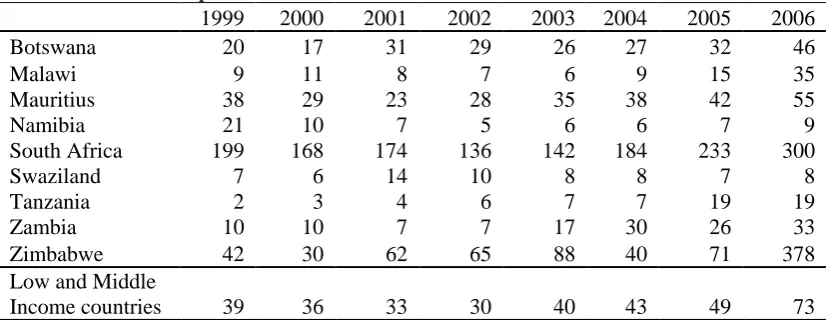
Table 2.4: Market capitalisation ratio ... 36
Table 2.5: Turnover ratio ... 37
Table 3.1: Definition of key variables ... 71
Table 4.1: Bantu communities in SADC countries 78
Table 4.2: Land tenure system in SADC countries ... 96
Table 5.1: Religious beliefs in SADC Countries (percentage of the population) ... 103
Table 5.2: European settlers in SADC countries ... 107
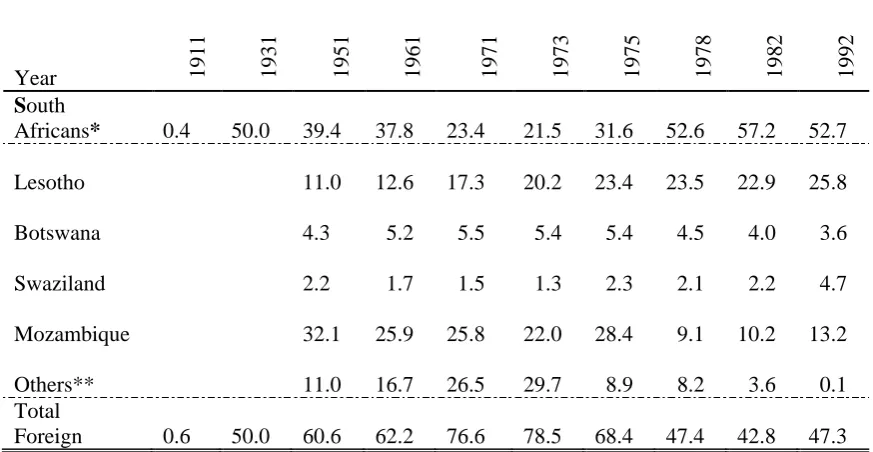
Table 5.3: Sources of labour for South Africa ... 108
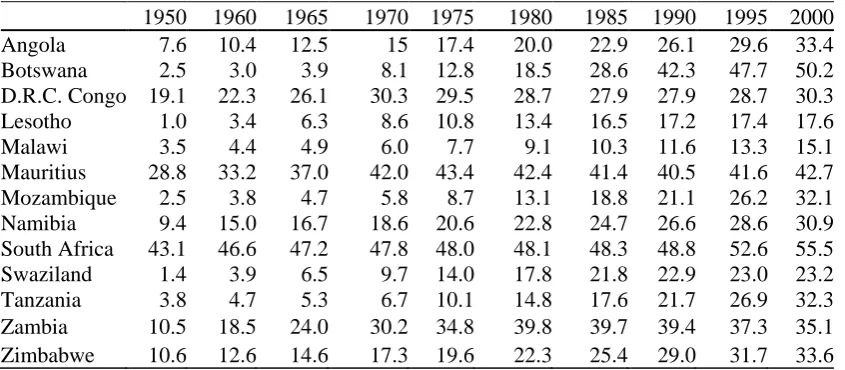
Table 5.4: Urbanisation rate ... 123
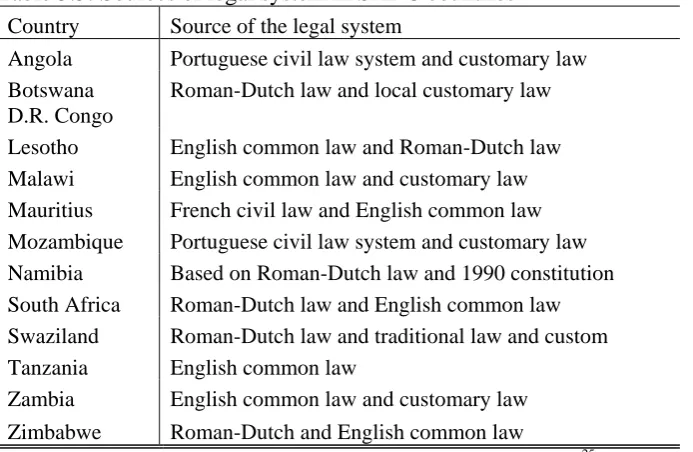
Table 5.5: Sources of legal system in SADC countries ... 125
Table 5.6: Political regime transitions ... 128
Table 5.7: Political freedom indices... 131
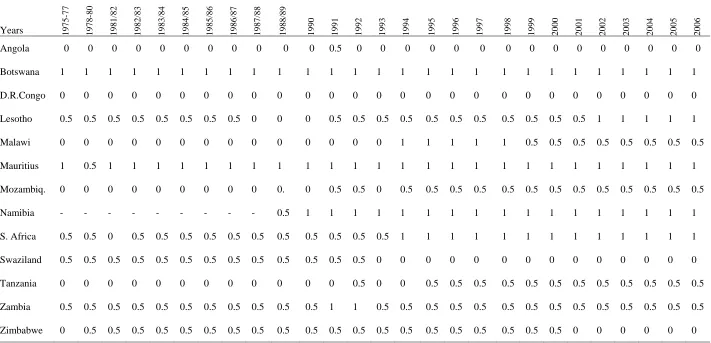
Table 5.8: Property rights protection indices ... 133
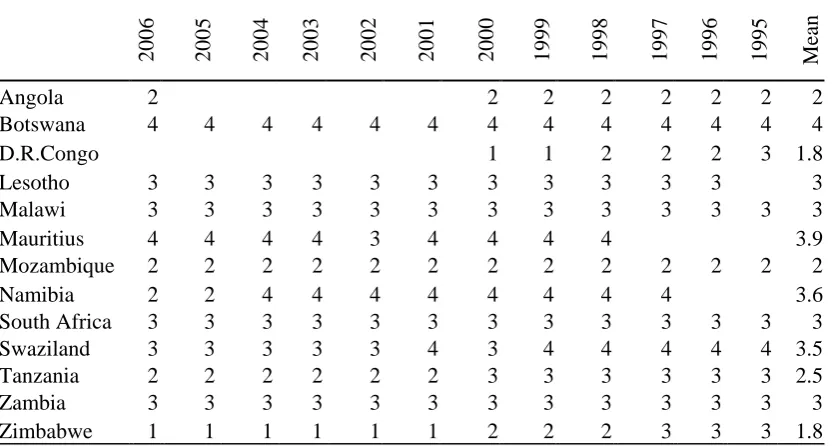
Table 5.9: Transparency International Corruption Perceptions Index 2006 ... 135
Table 6.1: [panel A] Average GDP and population (1997-2006) ... 145
Table 6.1: [panel B] Country size ranking based on GDP and population for 2007 .... 146
Table 6.2: Gross domestic saving per capita (US$) ... 148
Table 6.3: Income distribution ... 149
Table 6.4: Contribution to GDP per sector ... 153
Table 6.5: [panel A] Manufacturing value added ... 154
Table 6.5: [panel B] Manufacturing value added per capita (USD) ... 154
Table 6.6: Credit to private sector ... 155
Table 6.7: South African companies doing business in SADC countries ... 156
Table 6.8: Business environment ... 157
Table 6.9: SADC trade flow ... 166
Table 7.1: Listing criteria: minimum requirements ... 180
Table 7.2 [panel A]: Traded shares- volume (mn) ... 181
Table 7.2 [panel B]: Traded shares- volume (mn), per listed company ... 181
Table 7.3: Total assets of institutional investors (percentage of GDP) ... 183
Table 7.5: Controlling shareholding ... 186
Table 7.6: African stock market performance ranking ... 192
Table 7.7: Rank correlations among the colonial influence (private ownership) variables ... 206
Table 7.8: Rank correlations among quality of institutions variables ... 207
Table 7.9: Rank correlations among the capital demand and supply variables ... 208
Table 7.10: Rank correlations among stock market development variables ... 208
Table 7.11: Rank correlations among the demand and supply of capital, and stock development market variables... 209
Table 7.12: Rank correlation among stock market participation related variables ... 211
Abbreviations
ADB African Development Bank
ASEA African Securities Exchanges Association BDC Botswana Development Corporation BSAC British South Africa Company
BTA Botswana Telecommunications Authority CCBG Committee of Central Bank Governors
CIA Central Intelligence Agency
COSSE Committee of SADC Stock Exchanges
CPI Corruption Perception Index
D.R.C Democratic Republic of Congo
GDP Gross Domestic Product
GNP Gross National Product
ICRG International Country Risk Guide
IFC International Financial Corporation
IFI International Financial Institutions
IMF International Monetary Fund
IPO Initial Public Offerings
MVA Manufacturing Value Added
RISDP Regional Indicative Strategic Development Plan SADC Southern African Development Community
SADCC Southern African Development Coordination Conference UNCTAD United Nations Conference on Trade and Development UNIDO United Nations Industrial Development Organisation UNDP United Nations Development Programme
WIDER World Institute for Development Economics Research
Chapter 1 Introduction
Until substantially more research is done on this subject, the reasons why stock market development in sub-Saharan Africa has lagged behind developments in other parts of the world must remain shrouded in mystery (UNITAR 2000:6).
The purpose of the thesis is to explain the low levels of stock market participation in developing countries of the Southern African Development community (SADC) focusing on local participation.
In general, participation in the stock market involves local and non-domestic participants. However, this thesis focuses on local participation. The contention here is that, in developing countries such as SADC where the environment may not be that conducive for foreign investors, local participation is an important indicator of the efficacy of the domestic stock market. Thus, the formation of the domestic stock market is to enable local companies to raise funds to finance domestic projects, which in turn promote economic growth.
Aggregate participation in stock markets is a function of: (1) demand for and supply of capital in relation to business opportunities; and (2) the demand for and supply of shares by investors in the secondary market. In this thesis, I argue that these factors, and thus the levels of stock market participation, are consequences of the devolved institutional environments in the developing countries. In particular, I argue that the primary influential elements in the institutional environment are the nature of the prevalent property rights regime and the related degree of industrialisation. Specific features of the property rights regimes that are of concern in thesis are: (1) the nature or type of ownership rights attached to an economic resource; (2) the protections and enforcement of property rights; (3) the development of property rights.
Demsetz 1973). The view of the economic literature is that, the degree of efficiency in utilisation of economic resources, which is influenced by the nature of property rights attached to a resource, determines aggregate levels of production activities and the industrial development. Aggregate levels of industrial development facilitate the demand for capital and in turn participation in the stock market (Pontecorvo 1958:561). That is, the levels of industrial development in a country are likely to vary with the nature of property rights regimes, while participation in the stock market is likely to vary with the nature of property rights regimes and the aggregate levels of industrial development in a country.
It is an acceptable tenet in the comparative markets and governance literature that property rights institutions shape the institutional environment in which stock markets operate, which in turn determine the level of economic and stock market outcomes, and consequently participation in stock markets. This literature emphasises the protection of investors against expropriation by insiders and large shareholders as reflected in quality of laws and their enforcements. It is argued in this literature that property rights institutions are important, not only for the development of capital markets (La Porta et al. 1997; 1998; 2000; 2008), but also in facilitating the role of the firm in the allocating economic resources (Johnson et al. 2002; Claessens and Laeven 2003). In the context of this literature, participation in the stock market is likely to vary with the quality of property rights institutions or the extent of investor protection and economic outcomes, in particular, the development of the capital markets.
arrangements, which refers to the property rights, property rights institutions, and economic organisations, which includes corporations and stock markets; and (3) the cultural values (Feder and Feeny 1991).
1.1 Stock market participation and property rights
Understanding the effect of property rights regimes on participation in stock markets requires clear definitions of the relevant concepts, and how the process works. In the following sections, 1.1.1 explains the concept of participation in stock markets. Section 1.1.2 property rights definitions, and in section 1.1.3, the theory linking institutions and the development of capital markets, which forms the basis or the starting point for the framework used in this study, are discussed.
1.1.1 Participation in stock markets
Participation in stock markets involves entrepreneurs and investors exchanging property rights. Entrepreneurs participate in stock markets by exchanging equitable interests in companies‘ aggregate projects for financial capital needed to finance projects and company growth. Investors participate directly through the primary share market, in which they finance entrepreneurial initiatives through the stock market in exchange for shares in companies, and through the secondary share market in which they trade issued shares with other investors. The main incentive for entrepreneurial participation is the need for financial capital. Investors are motivated by expected returns on their investments. Although the secondary market for shares constitutes most of stock market transactions, ultimately, it is the availability of business prospects that determines the degree of participation in a stock market. The demand for long-term capital is conditional on availability of business prospects (Pardy 1992).
the development of their markets, including developing domestic stock markets. Singh and Weisse (1998:608) find that stock markets in the developing economies of Asia and Latin America flourished because of the flow of foreign capital.
1.1.2 Property rights definitions
Property rights refer to the ownership and the nature of rights attached to property rather than the physical property itself. It is not the same as physical asset. Rather, it is more about the ownership type (Reed 2004:459). The ownership of property creates a right to control the economic asset. Because of the multiplicity of rights attached to property (Alchian and Demsetz 1973:17; Getzler 1996:654), multiple ownership of property is likely, in which case the control right is proportional to the right owned. Control rights give the right to use the property, which includes selling, exchanging, exploiting, possession, and to benefit from the return on property within the social framework. The utilisation of property is possible because of tradability and transferability of the rights attached to property owned. In a market, the incentive to exchange property is not the physical item but the value of the rights attached to it (Demsetz 1967:347).
Elements of a property rights regime are nature and role. Property rights institutions of a society are the laws, customs, traditions, and conversions that govern the behaviour in the society (Demsetz 1967:347; Joirema 2001:2; Saleh 2004:9). Property rights and property rights institutions are understood only within the context of the society (Reed 2004:498). They are part of the institutional structure of the society (Feder and Feeny 1991). Functions and purposes of property rights evolve or are developed to enhance efficiency in the use of scarce resources (Demsetz 1967). Property rights institutions evolve mainly to meet the needs of the society in regulating behaviour. As argued by Joirema (2001:2), to the extent that property rights institutions govern the behaviour in the society, they should therefore influence their economic decisions.
1.1.3 The role of institutions in stock market participation
of reduced control.1 Investors‘ decisions reflect their views of expected returns against risk, including the risk of expropriation by insiders or dominant shareholders. This is reflected in the argument by La Porta et al. (2000:4) ―when outside investors finance firms, they face a risk, and sometimes near certainty, that the returns on their investments will never materialise because the controlling shareholders or managers expropriate them‖.
Private contracting for shareholders and creditors at the company level is complex and costly, thus, market forces on their own are not necessarily sufficient or efficient. Therefore, statutory provisions that offer and enforce investor protections may increase market efficiency (La Porta et al. 2008:310). While overregulation can be harmful (Modigliani and Perotti 1997:519), it is generally accepted that adequate protection and enforcement of the rights of shareholders and creditors is important to motivate them to finance firms and for the development of capital markets (Modigliani and Perotti 1997:519; La Porta et al. 1997; 1998; 2002:1147). This view is supported by some evidence of correlation between investor protection and development of capital markets (Modigliani and Perotti 1997; La Porta et al. 1997; 1998).
The legal protection of investors is seen as desirable not only for investors, but also for entrepreneurs to exchange their property rights. While investors may be concerned about their returns and appropriate interests, entrepreneurs may be concerned about the loss of control of the company. In other words, there is a trade-off between the demand for financial capital and control of the firm. Where investor protection is weak, entrepreneurs may prefer to keep control of their firm (La Porta et al. 2000:13) in fear of being expropriated themselves in the event they lose control of the firm (La Porta et al. 1999:473).
With regard to the channel through which property rights institutions influence development and participation in stock markets, La Porta et al. (1997; 1998; 2000; 2008) propose colonialism as the main mode through which the legal system spread. Central to this theory, is the concept of legal origin of the laws and regulations, which La Porta et al. (1997; 1998; 2008) and others argue accounts for the disparities in
1
quality of property rights institutions and consequently economic outcomes around the world. They argue that the origin of commercial laws underpinning contractual relationships partly explains why the development and participation in stock markets around the world differs. According to this theory, legal origins influence the law and regulations shaping institutions and the enforcement; this in turn influences a variety of economic outcomes, including stock markets development and participation in stock markets.
In line with this perspective, studies in the law and finance area find strong association between legal origin and regulations with various factors critical for economic productivity and growth. Critical factors include the rule of law (Acemoglu et al. 2001), financial development (La Porta et al. 1997; 1998; Beck et al. 2003a; 2003b), the regulation of entry (Djankov et al. 2002), labour markets (Botero et al. 2004), and the ownership dispersion of the firms (La Porta et al. 2000).
It is argued that common law compared to civil law encourages better participation in stock markets because it better protects investors. This, in turn, encourages capital market development, better access to finance, and lower ownership concentration (La Porta et al. 2008:298). Factors contributing to the variations between the legal traditions are, mainly, the historical background and development, the predominant and characteristic mode of thought in legal matters, especially distinct institutions, the kind of legal sources it acknowledges and the way it handles them and its ideology (Zweigert and Kötz 1998:68). The importance of the historical development of institutions is expressed by Zweigert and Kötz (1998:68): ―…it is self-evident that historical development is one of the factors, which determine the style of modern legal systems.‖
This is reflected in statements such as:
following the transplantation of some basic infrastructure such as the legal codes, legal principles and ideologies, and elements of the organisation of the judiciary, the national laws of various countries changed, evolved, and adapted to local circumstances‖ (La Porta et al. 2008:288).
… The reason for persistence is that the beliefs and ideologies become incorporated in the legal rules, institutions, and education and, as such, are transmitted from one generation to the next. It is this incorporation of beliefs and ideologies into the legal and political infrastructure that enables the legal origins to have such persistent consequences for rules, regulations, and economic outcomes (La Porta et al. 2008:308).
This view, as discussed later in the chapter, does not necessarily reflect the institutional development path for SADC countries.
1.2 Research questions and contributions of the study
The concern in this thesis is the low participation levels in SADC stock markets. The study addresses this concern by answering the following two questions:
To what extent does participation in SADC stock markets relate to the purpose for
establishing a stock market in each country? Although it is acceptable in the contemporary developing countries that stock markets are established by different institutions for various reasons, historically, a stock market emerged as economic organisation on demand to address growing need for capital by entrepreneurs willing to exchange property rights (Meeker 1922). Stock market develops alongside other organisations it is organised to serve (Pontecorvo 1958:561). This implies that it is not only the extent of demand for and supply for capital but also the demand for the organisation, the stock market, which matters for participation. Therefore, the focus of this question is on motivation for establishment of stock markets in SADC countries, how stock markets are established, and the extent to which these concur with the levels of participation for each country. The issue considered here is, does it matter how and why a stock market is established?
To what extent does participation in SADC stock markets vary in relation to
focus is on the effects of: the method or ownership culture underpinning the allocation and utilisation of an economic resource; property rights security and enforcements, to which the quality of institutions is an important factor; and the development processes of property rights regimes on participation in stock markets.
While it is generally agreed that stock markets, particularly the post-independence ones have stagnated, studies have neglected the effects of property rights regimes on participation. The scope of the comparative markets and governance literature is limited with regard the development and participation in developing stock markets such as SADC countries. This thesis proposes a framework that incorporates the complexities and peculiarities of the institutional environment in which stock markets in developing countries operate in. The study provides the understanding of effects of the prevailing property regimes, their development processes and the related degrees of industrial development on participation in the stock market, which has not been fully addressed with regards to SADC countries.
1.2.1 Previous research and initiatives limitations
Studies in SADC stock markets and SADC initiative referred to later in this chapter, have neglected the importance of institutional effects in development of regional stock markets. In addition to law and finance theory, the importance of institutions for participation in SADC stock markets is further underscored by studies linking poor economic performance in sub-Saharan Africa to weak institutions, in particular, political governance (Ndulu and O‘Connell 1999; Robinson and Parsons 2006).
The SADC initiative for development of stock markets in the region focuses mainly on promoting demand for the equity market. It ignores the supply channel that is equally critical for participation in stock markets. Consistent with this approach, low liquidity is a major impediment because it increases the risk for investors who will find it difficult to exit an illiquid market.2 SADC attributes this lack of liquidity to the limited number of participants in stock markets.
2
This thesis argues that low liquidity and low participation in stock markets are interdependent outcomes, and indicate incongruence in the institutional environment with regard to development of stock markets. By focusing largely on low liquidity as the main impediment, SADC is more likely to be addressing a spiral and cyclical effect, which has entrapped the stock markets through low liquidity, rather than the cause. In this regard, this study contributes by investigating how institutional environment in SADC countries explains the level of participation in stock markets and examining the levels of demand for and supply of capital and the demand for and supply of equity.
Generally, studies on SADC stock markets are sparse. Jefferis (1995:674) focus on the Botswana Stock Market and conclude that while the stock market has to some extent channelled long-term savings towards financing companies, none was invested in the manufacturing sector. Jefferis (1995:672) report that lack of financing of the manufacturing sector through the stock market was partly because many manufacturing firms in Botswana are too small to list on the stock market. However, Jefferis (1995) do not explain why the manufacturing sector in Botswana has remained small. This thesis contributes by explaining why manufacturing industries in SADC countries tend to be small and how that affects participation in stock markets.
Marone (2003) examine the general features of the Zambian Stock Market and conclude that it has ―little, if any, contribution to the Zambian economy‖ (Marone 2003:25). The Marone (2003) study highlights low liquidity as the main constraint for participation in the Zambian stock market. Marone (2003) attribute this to low demand and supply of shares, which is a consequence of low number of companies listing, low shares offered to the public by listed companies, and low savings in Zambia. Similarly, Marone (2003) did not explain why there are only few listings of companies on the Zambian stock exchange. This thesis fills gap by examining the institutional environment in each SADC country and explaining how it contributes towards features described by Marone (2003).
numerous business opportunities. Under these conditions, if their rights are protected, investors would offer better terms to entrepreneurs allowing them to access external sources for financial capital. As explained earlier, this view of the law and finance theory is inconsistent with the economic environment in SADC countries.
Other studies focus on the effects of property rights security (Knack and Keefer 1995; Leblang 1996; Acemoglu 2001), political democracy and stability (Feng 1997; Leblang 1996) on investment and consequently economic growth. Others (Johnson et al. 2002; Claessens and Laeven 2003) examine the extent to which private property protection enhances the role of the firm in allocating economic resources. With the exception of Saleh (2004), who briefly discusses the role of cultural norms in promoting economic effectiveness of legal systems, the political and economic literatures have not adequately examined the influence of cultural values on stock markets development and consequently participation. This study makes a significant contribution in this regard by examining the effects of the ownership culture underlying economic organisations and the utilisation of resources on economic and stock market outcomes, and consequently participation in stock market.
1.2.2 The scope of capital market development literature
not adapt as La Porta et al. (2008) assert. In others, colonial institutional conflict persists, which further indicate that traditional institutions did not necessarily adapt to new attributes of the new political order.
Against this background, the general assumption of harmony between the components of the institutional structure is unlikely to be consistent with the different development paths for SADC countries. As Feder and Feeny (1991) suggest, in developing economies, the components of social institutions lack congruence and are prone to conflicts. This is more likely where the developing country is subject to external pressures. In that case, institutions are unlikely to emerge or develop in harmony with the underlying traditional values of the society. The political order is likely to impose institutional arrangements that are incongruent with the cultural values of the society. Unless transplanted institutions are assimilated as part of the institutional structure of the society and the economy or traditional institutions are effectively alienated, institutional conflicts are inevitable. It is argued here that, where institutional conflicts abound, the extent of these conflicts, rather than the attributes of transplanted institutions may largely determine economic outcomes. Institutional conflicts create uncertainties that deter long term investment, innovation and productive use of economic resources essential to enhance economic output and participation in stock markets.
This thesis addresses these concerns with regard to SADC countries by developing a property rights framework that helps to explain the effects of the nature of local institutions and institutional development processes on participation in domestic stock markets. The framework captures the omissions referred to earlier with regard to the law and finance capital development framework, and reflects the peculiarities of complexities of the institutional environment in SADC countries.
1.3 The background of SADC stock markets
markets as part of the financial development and economic adjustment programmes in developing countries including sub-Saharan Africa (Demirguc-Kunt and Levine 1993:1; He and Pardy 1993:1). Financial assistance to developing countries by these international financial institutions under the economic adjustment programmes is often conditional on the establishment of stock markets (He and Pardy 1993:1). However, while in other developing economies of Asia and Latin America stock markets flourishes (Singh and Weisse 1998) in SADC countries they have stagnated. Despite the wide endorsement of stock markets, participation in the regional stock markets particularly those established since the beginning of the 1980s remain relatively low.
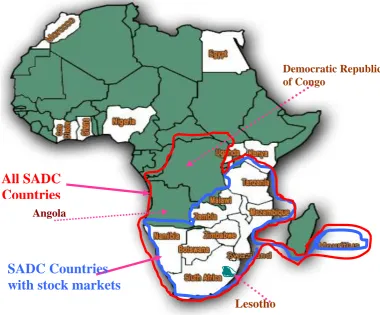
Currently, there are 17 stock markets in 53 Africa countries, 10 of which are in SADC countries. Figure 1.1, indicates the locations of stock markets within the African continent. SADC region as shown in Figure 1.1 has the highest concentration of stock markets than other regions in Africa.3
SADC has 14 member countries. Madagascar was only admitted into membership in August 2005, after the commencement of this study. The 13 member countries considered in this study are: Angola, Botswana, Democratic Republic of Congo, Lesotho, Malawi, Mauritius, Mozambique, Namibia, South Africa, Swaziland, Tanzania, Zambia and Zimbabwe.
Although SADC stock markets are relatively small, there are two exceptions, namely South Africa and Zimbabwe. Unlike in other SADC countries where stock markets were established by the governments after a country‘s independence, in South Africa and Zimbabwe, they were established by European settlers following the discovery of minerals. It is argued here that these origins, rather than their ages are more likely to account for the degree of disparity between the pre-independence stock markets of South Africa and Zimbabwe and other SADC countries. Even then, the age could not have sustained the Zimbabwean stock market (as discussed in Chapter 7), against the economic and political crisis facing the country.
3
Angola was reported to be in the process of launching its stock market during the third quarter of 2008. This will leave only Democratic Republic of Congo and Lesotho without stock markets:
Figure 1.1: African countries with stock markets
There is a general consensus with regard to the fact that SADC stock markets, in particular, the post-colonial ones, are not only relatively small but also lack liquidity and have low participation. The Standard and Poor‘s emerging markets classification confirms these attributes of SADC stock markets and their disparities in size. The classification divides developing stock markets into two categories, the emerging markets and frontier markets based on market capitalisation and liquidity constraints. South Africa and Zimbabwe are the only regional stock markets included in the main category of the emerging markets. Botswana, Mauritius and Namibia are in the frontier markets grouping, which is a category of the emerging markets for the relatively small and illiquid stock markets. Other SADC stock markets were not classified, presumably because of the extremely small size. 4
4
http://www2.standardandpoors.com/spf/pdf/index/brochure_EMDB.pdf accessed on 20/08/08
All SADC
Countries
SADC Countries
with stock markets
Lesotho
Democratic Republic of Congo
The regional body, SADC, concede through its strategic document (Regional Indicative Strategic Development Plan), that regional stock markets are small in size, lack liquidity and have low participation. As an attempt to address these shortcomings, SADC has incorporated the development of stock markets in the overall regional integration strategy, mainly to improve their attractiveness to both, local and international investors. The main emphasis for the SADC initiative is to improve liquidity, which is seen as the critical constraint for participation in regional stock markets. The strategy is to keep the national stock markets autonomous, while establishing an integrated real-time network of national stock markets and harmonising policies, legal and regulatory framework. 5
1.4 Developing a theoretical framework
In order to explain the effects of the local prevailing property rights regimes on participation in the stock market it is necessary to consider their nature, role and implications within the context of the institutional structure of the economy and the society and to understand how these factors relate participation in domestic stock markets. Based on the definition by Feder and Feeny (1991:136), the institutional structure of the society and the economy comprises of: (1) political order, which define the choices and protect property rights; (2) institutional arrangements, which includes property rights per se, property rights institutions and economic organisations, such firms and stock markets that facilitates property rights contracts; and (3) cultural values, which influence the behaviour and choices in the society. Each of these categories relies on a set of cognitive rules, codified laws and systems, which inform and constrain behaviour and thus influence individual choices.
Feder and Feeny‘s (1991) categories of institutional structure are useful for the purposes of this study because they facilitate the examination of the influence of each component of the institutional structure on participation in the stock market. The approach elucidates the significance of cultural values, which is often neglected under the presumption that institutional and economic problems can be understood by reference to economics alone.
5
It is also argued in this thesis, that because of the peculiarity of nature of the institutional environment in SADC countries, it is essential to view the nature of the prevailing institutions in their local context in each country. This requires an understanding of how the prevailing property rights regimes developed, and the implications of the past development processes for participation in the domestic stock market.
To achieve these factors, the thesis incorporates theoretical elements regarding property rights, stock market development and institutional path dependence to construct a theoretical framework in which the nature of the prevailing property rights regimes, their development processes and the related industrial development explain participation in the stock market. The roles of each of the three theoretical elementary aspects underpinning the framework are outlined below.
1.4.1 Finance theory of stock markets
The significance of finance theory of stock markets is that it explains the role of and incentives for establishing a stock market. Identifying the incentives behind the formation of stock markets will provide an insight into the low participation phenomenon in SADC stock markets. For example, does it matter for participation whether the establishment of the stock market was driven by demand for capital or not? Finance theory explains how and why investors and entrepreneurs participate in stock markets including conditions for their participation in stock markets.
1.4.2 Property rights literature
Property rights literature defines the nature of incentives underpinning the type of ownership rights attached to an economic resource, and nature and levels of property rights security and enforcement of rights. These factors enhance production activities and industrial development that facilitates the demand for capital and in turn participation in the stock market. Notwithstanding these views, ultimately, the extent to which property rights incentives enhance participation in stock market depends largely on the availability of business prospects.
The economic property rights literature suggests that the nature of property rights, in particular whether property is alienated or communally owned, matters. This proposition derives from the notion that the incentive for individuals to expend the effort, invest the capital and increase production is more likely where property is alienated and individualised. In the context of property rights theory, communal ownership is an inefficient institutional arrangement. The holders of communal property rights lack the incentives to pursue efficient outcomes because of their inability to capture the reward of their efforts. Instead, the tendency is for the holder to overexploit the economic resource (Demsetz 1967; Alchian and Demsetz 1973).
The other aspect of property rights literature relates to the quality of institutions, which determines the levels of property security and the enforcement of property rights. In general, the quality of institutions determines the degree of certainty in the institutional environment and consequently, the incentives for long-term savings and investment. Property security builds on similar principles underpinning the capital markets development theory identified in section 1.1.3. The argument being that the extent to which the government protects and enforces private property rights determines the incentives for entrepreneurs to exert effort and invest long-term to enhance productive activities, and for investors to provide long-term capital. Enhanced productive activities increase the demand for capital, motivating the listing of companies in the stock markets. Long-term savings facilitates the supply of capital to finance projects and company growth through the primary share market, and the trading of shares in the secondary market.
1.4.3 Institutional path dependence theory
The analysis of the institutional path dependence analysis facilitates the linking of the current institutions to the historical events that influenced them (North 1990:98; Mwangi 2006:158). It is expected that identifying the nature of any institutional development path dependence will illuminate the prevailing institutional functions, operations and the nature of incentives. Zysman (1994:246) suggests the features and outcomes of institutions are more likely to be understood from their history.
1.5 Method
The main research method in this thesis is a qualitative, historical approach. It is largely dictated by the nature of the research question and objectives of the study, which require explaining the effects of changes. The strength of the historical approach lies on its ability to not only to narrate the past but also to explain how the past influenced the current and future institutional outcomes (Crewell 1998:17; Smith and Lux 1993).
participation in stock markets should improve the validity of the results. The use of multiple sources also helps to mitigate the general scarcity of data with regard to SADC stock markets.
Secondary data sources used in the thesis are largely published works including reports by the colonial administrators, reference books and research and reports describing institutional settings, interrelationships, cultural attributes, land tenure systems and institutional factors. Secondary sources are also used to identify the institutional development path for each country, tracing the development of property rights institutions from pre-colonial through to the current contemporary independent states, in which stock markets proliferated.
Archival data used in this study is mostly generated by individual countries and includes economic statistics such as economic output and size of the population. However, it was not possible to obtain this data from the individual countries and it was mostly obtained from the websites of the African Development Bank, United Nations and the SADC. Data pertaining to the quality of property rights institutions is mostly in the form indices prepared by international organisations such as Freedom House, Transparency International and Heritage Foundation.
Stock market data is largely sourced from individual stock exchanges. In cases where the data from the stock exchanges and company reports was not adequate or accessible, as in the case of Zimbabwe and to some extent Malawi, it is obtained from the African Securities Exchanges Association (ASEA) yearbook 2006 and the United Nations Development Programme‘s African Stock Markets handbook 2003.
The archival data is used mainly as indicators of the contemporary nature of institutions and institutional outcomes. The analysis links the institutional outcome in a particular country with the historical events identified from secondary sources that influenced them.
marked the institutional development path dependence and the subsequent institutional outcomes, such as the nature of property rights institutions.
The non-parametric Spearman correlation coefficients are used to examine relationships between some institutional environment proxies and the economic and stock market outcomes, mainly to complement the qualitative analysis findings.
1.6 Organisation of the thesis
Chapter 2 describes the SADC and discusses its policies in relation to the development of stock markets in member countries. Chapter 3 identifies the basic elements of the framework of the thesis that is further developed in Chapters 4 and 5.
To explain the effects of the institutional development process on the current institutional outcomes, it is important to understand the past and the transition from the past to the current state of institutions. This is detailed in Chapters 4 and 5. Chapter 4 describe the pre-colonial traditional institutions, highlighting the persisting cultural values and norms, while Chapter 5 details the transformation processes and the subsequent outcomes.
The empirical analysis in Chapters 6 and 7 integrates the theoretical perspectives defined in chapter 3 and the institutional development path dependence to evaluate the capacity of a country to sustain a viable stock market (Chapter 6) and explain participation in stock markets (Chapter 7). Lastly, Chapter 8 presents the summary and conclusions, and highlight future research direction, and recommendations.
1.7 Limitations
The complexity of the institutional development paths in SADC countries that shaped the institutional environment and influenced the economic and stock market outcomes cannot be fully explained within the scope of a single study.
factors not considered in this thesis. Nonetheless, it is unlikely that the strong linkage between a country‘s colonial experience and their institutional outcome in this thesis is fully attributable to any omitted factors.
Chapter 2 The Southern African
Development Community Institutional
Setting
2.1 Introduction
This chapter describes the Southern African Development Community (SADC) institutional setting, objectives and strategies and examine its role with regard to the development of stock markets in member countries. Of particular interest is the nature and extent to which SADC policies promote formations and development of stock markets and their implications for participation in the stock markets. To facilitate a better understanding of the nature and role of stock markets in SADC countries, this chapter also examines the nature and extent of influence of other organisations, in particular the international financial institutions in the establishments and development of stock markets in SADC countries.
The purpose of this thesis is to explain low participation in SADC stock markets. This chapter facilitates this by describing the levels of participation in each country.
2.2 Characteristic features of SADC economies
This section briefly highlights the characteristic features of SADC countries for better understanding of SADC as an organisation. Their implications for economic outcomes and participation in stock markets in particular, form part of the analysis in the remaining chapters. Detailed historical background of SADC counties is discussed in Chapter 5.
SADC countries, with exception of Mauritius are predominantly Bantu communities. The Bantu speaking communities are spread over a large part of sub-Saharan Africa.6 Despite their ethnic diversity, Bantu communities had similar social, economic and political structures (Schapera 1937; Guthrie 1962; Phillipson 1976; Ehret 2001). Their colonial experiences however, varied. Colonial power and policies differed among territories, even those under the same colonial power (Tredgold 1934:396). The postcolonial political structures also varied widely, including ―monarchies, white oligarchies, capitalist, traditional democracies, single party systems and socialist regimes‖ (Coleman 1994:86).
Table 2.1 describes SADC countries with respect to independence and size. Prior to 1960, all SADC countries were under a colonial power. Table 2.1 indicates the last colonial power in a territory, with Britain dominating. Tanzania, Namibia and Mauritius had colonial successions. Tanzania was a German colony from 1880 to 1919. Britain took over the territory in 1919 until independence in 1961. South Africa undertook the administration of Namibia in 1915, taking over from Germany (1894-1915) and occupied the territory until independence in 1990. South Africa was itself under the British rule at the time. The settlers in South Africa were granted political autonomy by Britain in 1910 and continued to rule until the inclusive multiracial elections in 1994. Mauritius was first occupied by Portuguese sailors until they abandoned it in 1710, then the French occupied it from 1715 to 1810, before coming under British rule, from 1810 to 1968. South Africa was ruled by the European settlers from 1910. In 1923, Britain gave the European settlers a partial political authority over Zimbabwe. They had legislative power through the local parliament, but the right to
6
govern the political rights of the indigenous communities remained with Britain (Baxter and Hodgens 1957:444). Zimbabwe achieved political independence from Britain in 1980.
Table 2.1: General features of SADC countries
Country
Colonial power Independence year SADC
membership
Population
(m) (year)
GDP
US$m (2004)
Angola Portugal 1975 1980 14.0 (2005) 20 272
Botswana Britain 1966 1980 1.8 (2005) 8 441
D.R. Congo Belgium 1960 1997 59.7 (2005) 6 395
Lesotho Britain 1966 1980 2.4 (2005) 1 373
Malawi Britain 1964 1980 12.0 (2005) 2 078
Mauritius Britain 1968 1995 1.2 (2005) 6 317
Mozambique Portugal 1975 1980 19.4 (2002) 6 380
Namibia South Africa 1990 1990 1.8 (2003) 5 346
South Africa Britain 1994 1994 47.4 (2005) 212 777
Swaziland Britain 1968 1980 1.1 (2004) 2 307
Tanzania Britain 1961 1980 35.3 (2004) 10 851
Zambia Britain 1964 1980 11.1 (2005) 5 315
Zimbabwe Britain 1980 1980 11.9 (2004) 4 546
Sources: Population is from the Southern Africa Development Community (SADC) website7; GDP is from United Nations Conference on Trade and Development (UNCTAD) handbook of statistics for 20058.
7
2.3 The SADC aims and objectives
The aim here is to describe the object of study, the SADC, and place its policies, objectives and strategies in the context of the subject matter of the study, highlighting the likely implications. This thesis argues that the colonial history of the SADC countries has shaped their institutional environment and largely contributes to the institutional disparities, including participation in stock markets. The SADC itself is a consequence of colonialism. Its formation was premised on countering the effects of colonialism. Cooperation among SADC countries preceded the formal organisation. Initially, the regional corporation was directed towards coordinating efforts, resources and strategies towards political liberation of Southern Africa. The organisation commenced in 1980 when governments of Angola, Botswana, Lesotho, Malawi, Mozambique, Swaziland, Tanzania, Zambia and Zimbabwe formed the SADC predecessor, the Southern African Development Coordination Conference (SADCC). The then apartheid South Africa and Namibia, which was annexed by South Africa, were excluded and only admitted after independence; Namibia in 1990 and South Africa in 1994.
The aim of the original SADCC member states was to reduce their economic dependence on the then apartheid South Africa. They intended ―to forge links; to create genuine and equitable regional integration; to mobilise resources for implementing national and interstate policies; and to take concerted action to secure international cooperation within the framework of a strategy of economic liberation‖.9
SADCC was transformed into a development community, the SADC, through a treaty by heads of states and governments in Windhoek, Namibia on 17 August 1992. By then, the political landscape in the region had changed, rendering the motivation for the formation of SADCC less relevant. Namibia had attained political independence from South Africa in 1990. In South Africa, the unbanning of political parties in 1990 had brought hope for a transition towards a representative government and increased prospects of an encompassing regional cooperation. Further, negotiations between warring political parties in Angola and Mozambique posed positive signs towards
9
SADC Regional Indicative Strategic Development Plan (RISDP):
ending the post-independence internal conflicts and civil wars. Within the continent, the SADC had to adjust to position itself as one of the regional economic blocks. The transformation of SADCC was also a response to what member states observed as a global trend and the need to create the environment conducive for firm growth:
Countries in different regions of the globe were organising themselves into closer economic and political entities. This movement towards stronger regional blocs was expected to transform the world, both economically and politically, as firms within the economic blocs would benefit from economies of scale provided by large markets, to become competitive both internally and internationally. For firms in Southern Africa not to remain behind, it became imperative for a large regional market to be established so that they too could benefit from economies of scale.10
Consequently, the role of the organisation changed from coordination of development projects to a much broader and complex mandate to:
Promote deeper economic cooperation and integration to help address many of the factors that make it difficult to sustain economic growth and socio economic development, such as continued dependence on exports of few primary commodities. It had become an urgent necessity for SADC governments to urgently transform and restructure their economies. The small size of their individual markets, the inadequate socio-economic infrastructure and high per capita cost of providing this infrastructure as well as their low income base made it difficult for them individually to attain or maintain the necessary investments for their sustainable developments.11
In principle, SADC policies advocates for political democracy and governance, the rule of law, respect for human rights, good economic and corporate governance, and corruption control among the member states to achieve economic growth. 5
SADC Member states are committed to promote common political values, systems and other shared values, which are transmitted through institutions that are democratic, legitimate, and effective. In line with this, SADC firmly acknowledges that economic growth and development will not be realised in conditions of political intolerance, the absence of the rule of law, corruption, civil strife and war.12
However, in practice SADC policies do not necessarily enforce the ideals it advocates. For instances, there are no punitive sanctions to curb the poor political governance and undemocratic regimes from flourishing. Promulgation of goals on its own without adequate enforcement is unlikely to motivate individuals to exert the effort and invest long-term, which is important to enhance productive actives and industrial development that promote economic growth.
10
SADC website: http://www.sadcreview.com/sadc/frsadc.htm accessed on 15/10/2006.
11
In the remaining chapters, this thesis examines the extent to which SADC policies, aims and objectives are reflected in the nature of institutions, the levels of industrial development and stock markets participation.
2.4 The SADC stock market development initiatives.
This section considers the role of the regional body, SADC and the international financial institutions in the establishment of domestic stock markets. The objective is to determine the extent to which the policies of these organisations might have influenced the establishment of stock markets in SADC countries and how that helps to explain low participation in stock markets.
2.4.1 SADC strategies for stock market development
SADC promotes regional integration as the main strategy to overcome the small size of its national markets and as a way to enhance economic growth and development. It is argued that an enlarged and harmonised regional market will enhance competitiveness and motivates investment in the region. The national stock markets are among the institutions earmarked for integration. To facilitate the integration of stock markets the Committee of SADC Stock Exchanges (COSSE) created in January 1997, serve as a subcommittee of the SADC Committee of Central Bank Governors (CCBG), which is responsible for the financial and monetary integration. COSSE is to fast-track the development of capital markets in the region, to harmonise the legal and regulatory instruments, while improving practices and broader participation in the equity markets.13
13
SADC Regional Indicative Strategic Development Plan (RISDP):
Through the integration strategy, SADC seeks to:
Achieve development and economic growth, alleviate poverty, enhance the standard and quality of life of the people of Southern Africa and support the socially disadvantaged through regional integration; evolve common political values, systems and institutions; promote and defend peace and security; promote self-sustainable development on the basis of collective self-reliance, and interdependence of the member states; achieve complementarity between national and regional strategies and programmes; promote and maximise productive employment and utilisation of resources of the region; achieve sustainable utilisation of natural resources and effective protection of the environment; strengthen and consolidate the long standing historical, social and cultural affinities and links among the people of the region (SADC Treaty Article 5).14
SADC policies on the development of stock markets emphasise improving the infrastructure and regulatory framework, skills-sharing, dual-listing and cross-border investment within the SADC to accelerate development of a regional capital market. The target was for COSSE to develop and implement programmes and strategies to increase participation by the broader population in the equity markets by 2008. The domestic governments are to play a significant role by encouraging a wider participation in the national stock markets. 7 It is the contention in this thesis that participation needs to be assessed at the local level before other development strategies can be usefully considered.
SADC member countries have recently been reviewing their regulatory frameworks to align the domestic facilities with the higher standards required by the international community. For example, Botswana introduced a revised Companies Act in 2007, which emphasises high corporate governance standards and makes it easier and simple to form a company. Swaziland produced new listing rules in 2005, while in same year Zambia launched the corporate governance code. Mauritius has also reviewed their corporate statutes. Irving (2005:29) observes that Zambian stock exchange is one of the most technologically advanced exchanges in the SADC region. The Namibian stock exchange adopted the South African stock exchange electronic trading system in November 1998. Although it might be early to assess the effect of the restructuring of the market infrastructure, this thesis argues that the regulatory framework addresses the risks but not the capacity to participate, which is likely to be the main impediments in SADC countries.
14