connectivity between language and
default mode regions in autism
The Harvard community has made this
article openly available. Please share how
this access benefits you. Your story matters
Citation
Nielsen, Jared A, Brandon A Zielinski, P Thomas Fletcher, Andrew
L Alexander, Nicholas Lange, Erin D Bigler, Janet E Lainhart, and
Jeffrey S Anderson. 2014. “Abnormal lateralization of functional
connectivity between language and default mode regions in autism.”
Molecular Autism 5 (1): 8. doi:10.1186/2040-2392-5-8. http://
dx.doi.org/10.1186/2040-2392-5-8.
Published Version
doi:10.1186/2040-2392-5-8
Citable link
http://nrs.harvard.edu/urn-3:HUL.InstRepos:11879853
Terms of Use
This article was downloaded from Harvard University’s DASH
repository, and is made available under the terms and conditions
applicable to Other Posted Material, as set forth at
http://
R E S E A R C H
Open Access
Abnormal lateralization of functional connectivity
between language and default mode regions in
autism
Jared A Nielsen
1,2, Brandon A Zielinski
3, P Thomas Fletcher
4, Andrew L Alexander
5,6, Nicholas Lange
7,8,
Erin D Bigler
9,10, Janet E Lainhart
5and Jeffrey S Anderson
1,10,11,12*Abstract
Background:Lateralization of brain structure and function occurs in typical development, and abnormal
lateralization is present in various neuropsychiatric disorders. Autism is characterized by a lack of left lateralization in structure and function of regions involved in language, such as Broca and Wernicke areas.
Methods:Using functional connectivity magnetic resonance imaging from a large publicly available sample (n = 964), we tested whether abnormal functional lateralization in autism exists preferentially in language regions or in a more diffuse pattern across networks of lateralized brain regions.
Results:The autism group exhibited significantly reduced left lateralization in a few connections involving
language regions and regions from the default mode network, but results were not significant throughout left- and right-lateralized networks. There is a trend that suggests the lack of left lateralization in a connection involving Wernicke area and the posterior cingulate cortex associates with more severe autism.
Conclusions:Abnormal language lateralization in autism may be due to abnormal language development rather than to a deficit in hemispheric specialization of the entire brain.
Keywords:brain lateralization, brain asymmetry, autism, autism spectrum disorder, language, functional magnetic resonance imaging, functional connectivity
Background
Brain lateralization occurs during typical development [1]. Many reports exist of lateralized brain function underlying cognitive and behavioral processes, such as memory [2] and emotional processing [3]; however, the two most common reports of lateralized brain function are in relation to language and visuospatial processing [4-6]. Most typically developing individuals have signifi-cant left lateralization in language regions [7] and right lateralization in attentional regions [4].
Two recent reports describe how lateralized brain func-tion segregates into two broad networks - a right- and left-lateralized network - in typical development [8,9]. The
left-lateralized network appears to participate more in intrahemispheric connections, while the right-lateralized network participates in connections between hubs of the network and brain regions in both hemispheres [9]. In one report, the broad networks include 20 lateralization hubs, nine in the left-lateralized network and 11 in the right-lateralized network. The left-right-lateralized network includes core language regions (Broca and Wernicke areas) and re-gions of the default mode network (posterior cingulate cortex, medial prefrontal cortex, and lateral temporal par-ietal junction, among other areas) [8]. The right-lateralized network includes regions from three networks associated with attention to external stimuli: the dorsal and ventral attention networks and the frontoparietal executive network.
Atypical lateralization in brain structure and function is associated with neuropsychiatric conditions and deve-lopmental disorders such as autism, schizophrenia, and * Correspondence:[email protected]
1
Interdepartmental Program in Neuroscience, University of Utah, 20 North 1900 East, Salt Lake City, UT 84132, USA
10
The Brain Institute of Utah, University of Utah, 36 South Wasatch Drive, Salt Lake City, UT 84112, USA
Full list of author information is available at the end of the article
specific language impairment [10-16]. More specifically, autism is associated with reduced left lateralization or re-versed lateralization of brain structure and function in core language regions and the white matter tracts that connect them. Abnormal brain lateralization in autism has been measured by multiple techniques, including mag-netic resonance imaging (MRI) [10,17,18], functional MRI [11,19,20], diffusion imaging [14,15,21], positron emission tomography [22-24], and electroencephalography [25-27]. It has been reported throughout the lifespan in infancy and childhood [20,24-29], adolescence [20], and adulthood [22,23]. Lateralization of brain function correlates with language ability in individuals with autism [25].
In contrast with reports of abnormal lateralization re-stricted to language-related regions, autism is more gener-ally characterized by connectivity abnormalities across many large-scale brain networks. Abnormal connectivity observations in autism have been made using both func-tional and structural connectivity analyses [30,31]. Long-range connections between distributed connections are underconnected in autism [32], although reports of over-connectivity also exist [33]. The abnormal connections are found in default mode, motor, social, language, face pro-cessing, and salience networks, among others [30,34-48]. These core findings have been confirmed in a multisite dataset with over 1,000 subjects [49,50]. These studies suggest the pathophysiology of autism includes wide-spread deficits across structural and functional networks, rather than deficits confined to a single brain region.
The majority of reports on brain lateralization in aut-ism focus on abnormal lateralization in language-related regions. It is unclear whether this is because language is typically associated with lateralized brain function and language impairment is a core feature of autism, or be-cause abnormal lateralization in autism is truly most pro-nounced in language-related regions. To answer this question, Cardinale and colleagues (2013) characterized whether functional lateralization abnormalities in autism existed outside of language-specific regions. They found diffuse differences across many different functional net-works [51]. These widespread differences in functional lateralization existed in a small sample of children and adolescents (n = 20 for both groups), using independent component analysis to identify the functional networks. In light of Cardinale and colleagues’ findings and the widespread connectivity differences in autism, we hy-pothesized that lateralization abnormalities would be present across multiple networks.
In the present study, we investigated the 20
lateralization hubs that form the two lateralized networks reported previously [8], using a multisite dataset with over 1,000 participants. We studied whether the lateralization of brain function differs between autism and typical de-velopment in a diffuse, network-wide manner or within
isolated language-related brain regions. We also investi-gated whether lateralization of brain function correlates with clinical severity, age, and handedness.
Methods
Subject sample
The Autism Brain Imaging Data Exchange (ABIDE) con-sists of 1112 datasets comprised of 539 autism and 573 typically developing individuals [49]. Each dataset con-sists of one or more resting functional MRI acquisitions and a volumetric magnetization-prepared rapid acquisi-tion with gradient echo (MPRAGE) image. All data are fully anonymized in accordance with Health Insurance Portability and Accountability Act (HIPAA) guidelines, with analyses performed in accordance with pre-approved procedures by the University of Utah Institu-tional Review Board. All images were obtained with in-formed consent according to procedures established by human subjects research boards at each participating in-stitution. Details of acquisition, informed consent, and site-specific protocols are available at http://fcon_1000. projects.nitrc.org/indi/abide/.
subjects. Fifth, we included subjects diagnosed with autism and excluded subjects diagnosed with Asperger Syndrome or Pervasive Developmental Disorder-Not Otherwise Spe-cified (PDD-NOS). Finally, we matched the groups based on verbal intelligence quotient (IQ). In order to do so, we included subjects with autism who had a verbal IQ be-tween 80 and 130 and typically developing subjects who had a verbal IQ between 70 and 120.
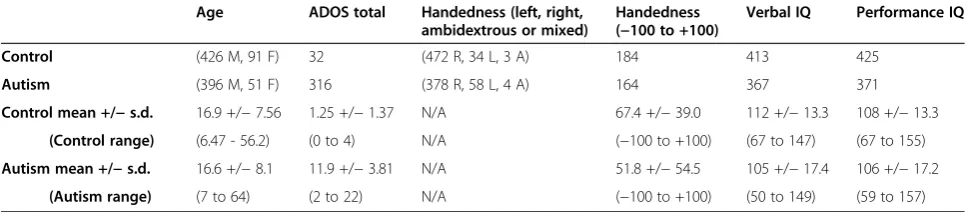
Each site followed different criteria for diagnosing pa-tients with autism or ascertaining typical development; however, the majority of the sites used the Autism Diag-nostic Observation Schedule [52] and Autism DiagDiag-nostic Interview-Revised [53]. Specific diagnostic criteria for each site can be found at fcon_1000.projects.nitrc.org/ indi/abide/index.html. Subject demographics for individ-uals satisfying inclusion criteria are shown in Table 2. Six different testing batteries were used to calculate
verbal IQ and performance IQ, respectively. Specific IQ testing batteries and other behavioral measures for each site can be found at fcon_1000.projects.nitrc.org/indi/ abide/index.html. In the case that no categorical meas-ure of handedness (that is, right-handed, left-handed, or ambidextrous) was reported but a quantitative measure (that is, -100 to +100 with −100 representing strongly left-handed and +100 representing strongly right-handed) was reported, positive values from the quantita-tive measure were converted to right-handed, negaquantita-tive values to left-handed, and a value of zero to ambidex-trous. Fifteen subjects lacked both a quantitative and categorical measurement of handedness.
BOLD preprocessing
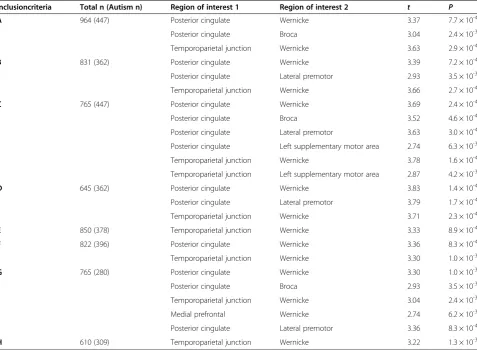
[image:4.595.60.538.100.450.2]Preprocessing was performed in MATLAB (Mathworks, Natick, MA, USA) using SPM8 (Wellcome Trust, London, Table 1 Group differences in lateralization for various subject inclusion criteria
Inclusioncriteria Total n (Autism n) Region of interest 1 Region of interest 2 t P
A 964 (447) Posterior cingulate Wernicke 3.37 7.7 × 10⁻⁴
Posterior cingulate Broca 3.04 2.4 × 10⁻³
Temporoparietal junction Wernicke 3.63 2.9 × 10⁻⁴
B 831 (362) Posterior cingulate Wernicke 3.39 7.2 × 10⁻⁴
Posterior cingulate Lateral premotor 2.93 3.5 × 10⁻³
Temporoparietal junction Wernicke 3.66 2.7 × 10⁻⁴
C 765 (447) Posterior cingulate Wernicke 3.69 2.4 × 10⁻⁴
Posterior cingulate Broca 3.52 4.6 × 10⁻⁴
Posterior cingulate Lateral premotor 3.63 3.0 × 10⁻⁴
Posterior cingulate Left supplementary motor area 2.74 6.3 × 10⁻³
Temporoparietal junction Wernicke 3.78 1.6 × 10⁻⁴
Temporoparietal junction Left supplementary motor area 2.87 4.2 × 10⁻³
D 645 (362) Posterior cingulate Wernicke 3.83 1.4 × 10⁻⁴
Posterior cingulate Lateral premotor 3.79 1.7 × 10⁻⁴
Temporoparietal junction Wernicke 3.71 2.3 × 10⁻⁴
E 850 (378) Temporoparietal junction Wernicke 3.33 8.9 × 10⁻⁴
F 822 (396) Posterior cingulate Wernicke 3.36 8.3 × 10⁻⁴
Temporoparietal junction Wernicke 3.30 1.0 × 10⁻³
G 765 (280) Posterior cingulate Wernicke 3.30 1.0 × 10⁻³
Posterior cingulate Broca 2.93 3.5 × 10⁻³
Temporoparietal junction Wernicke 3.04 2.4 × 10⁻³
Medial prefrontal Wernicke 2.74 6.2 × 10⁻³
Posterior cingulate Lateral premotor 3.36 8.3 × 10⁻⁴
H 610 (309) Temporoparietal junction Wernicke 3.22 1.3 × 10⁻³
A: Met all preprocessing criteria (described in Methods section) and part of site with >20 subjects. B: Criteria A + subject has >50% resting state BOLD volumes after motion scrubbing.
C: Criteria A + subject not included in 1000 Functional Connectomes or ADHD200 datasets. D: Criteria A + B + C.
E: Criteria A + right-handed subjects only. F: Criteria A + male subjects only.
UK) software. The following sequence of preprocessing steps was performed:
1) Slice timing correction
2) Realign and reslice correction of motion for each volume relative to initial volume
3) Co-registration of BOLD images to MPRAGE anatomic sequence
4) Normalization of MPRAGE to MNI template brain, with normalization transformation also being applied to co-registered BOLD images
5) Segmentation of gray matter, white matter (WM), and cerebrospinal fluid (CSF) components of MPRAGE image (thorough clean)
6) Extraction of mean time courses from the restriction masks applied to BOLD images from regions of interest (ROIs) consisting of:
a. CSF segmented mask with bounding box−35 < x < 35, -60 < y < 30, 0 < z < 30
b. White matter segmented mask overlapping with 10 mm radii spheres centered at
x =−27, y =−7, z = 30, x = 27, y =−7, z = 30 c. Mask of scalp and facial soft tissues [54] 7) Voxelwise bandpass filter (0.001 to 0.1 Hz) and
linear detrend, performed concurrently with step 8. 8) Voxelwise regression using glmfit.m (MATLAB
Statistics Toolbox, Mathworks, Natick, MA, USA) software of CSF, WM, Soft tissue, and 6 motion parameters from realignment step from time series of each voxel of BOLD images
9) Motion scrubbing [55] of first, framewise displacement, and second, the root mean squared change in BOLD signal from volume to volume (DVARS) with removal of volumes before and after a root-mean-square displacement of >0.2 for either parameter and concatenation of remaining volumes. The subjects with autism move more in the scanner compared to the typically developing subjects both before (autism motion = 0.15 +/−0.14 mm; typically
developing motion = 0.11 +/−0.08 mm;
t(962) = 5.68,P= 1.8 × 10⁻⁸) and after scrubbing (autism motion = 0.08 +/−0.02 mm; typically developing motion = 0.07 +/−0.02 mm;
t(962) = 5.56,P= 3.5 × 10⁻⁸). The group with autism retained 73.8 +/−25.8% of the BOLD volumes after scrubbing, whereas the typically developing group retained 82.3 +/−22.1%. However, we do not believe the differences in motion affect the overall results because we compared one hemisphere’s connectivity with the other hemisphere’s connectivity within a single subject before comparing across groups. Unless motion alters connectivity differently across hemispheres, the functional lateralization metric should not be affected.
10) No spatial smoothing was performed to avoid contaminating the signal near the midsagittal plane. The global mean signal and gray matter time courses were not regressed from voxelwise data [54,56-58].
Region of interest analysis
From preprocessed BOLD images for each subject, mean time course was extracted from 7,266 gray matter ROIs. These ROIs form a lattice covering the grey.nii image (SPM8) from z =−35 to z = 70 at 5-mm resolution, with MNI coordinates of centroids previously reported [34]. The ROIs averaged 4.9 +/−1.3 standard deviation voxels in size for 3 mm isotropic voxels. A 7,266 × 7,266 matrix of Fisher-transformed Pearson correlation coefficients was obtained for each subject from the ROI time courses representing an association matrix of functional con-nectivity in each subject between all pairs of ROIs. Each pair of ROIs is termed a ‘connection’ for the present analysis.
Functional lateralization metric
[image:5.595.56.539.101.207.2]Functional correlation was obtained as the Fisher-transformed Pearson correlation coefficient between each Table 2 Subjects included from the ABIDE sample with demographic information
Age ADOS total Handedness (left, right, ambidextrous or mixed)
Handedness (−100 to +100)
Verbal IQ Performance IQ
Control (426 M, 91 F) 32 (472 R, 34 L, 3 A) 184 413 425
Autism (396 M, 51 F) 316 (378 R, 58 L, 4 A) 164 367 371
Control mean +/−s.d. 16.9 +/−7.56 1.25 +/−1.37 N/A 67.4 +/−39.0 112 +/−13.3 108 +/−13.3
(Control range) (6.47 - 56.2) (0 to 4) N/A (−100 to +100) (67 to 147) (67 to 155)
Autism mean +/−s.d. 16.6 +/−8.1 11.9 +/−3.81 N/A 51.8 +/−54.5 105 +/−17.4 106 +/−17.2
(Autism range) (7 to 64) (2 to 22) N/A (−100 to +100) (50 to 149) (59 to 157)
A, Ambidextrous
ADOS, Autism Diagnostic Observation Schedule IQ, Intelligence quotient
L, Left R, Right
pair of the 7,266 ROIs within the same hemisphere. We only analyzed connections within a single hemisphere and the opposite hemisphere homologues because of ambigu-ity of ‘lateralization’ of a cross-hemisphere connection. Preprocessed images were inverted across the midsagittal plane, and analogous Fisher-transformed correlation coef-ficients were obtained between each pair of the same ROIs
on the flipped images. Functional lateralization index was defined as the difference (unflipped - flipped) between Fisher-transformed correlation coefficients.
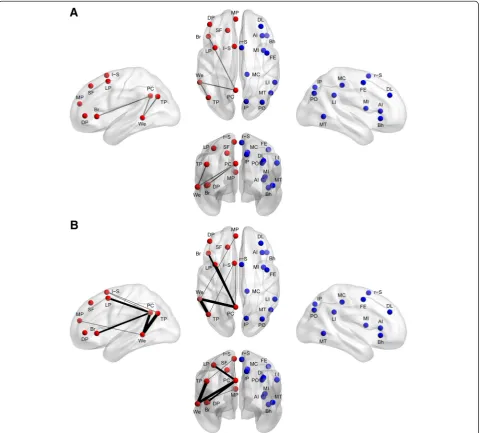
[image:6.595.59.547.191.624.2]In a previous study of typical development, 20 cortical regions were identified as lateralization hubs, or brain re-gions involved in the most functionally lateralized con-nections (Figure 1) [8]. The 20 lateralization hubs were a
subset of 7,266 ROIs described above and comprised 9 left-hemispheric regions and 11 right-hemispheric regions. All analyses in the present study focused on connections between the 20 lateralization hubs. MNI coordinates of the 20 lateralization hubs and detailed information on the methods for identifying the lateralization hubs have been previously reported [8]. In order to determine the signal quality for the 20 lateralization hubs, the signal-to-noise ratio (SNR) was calculated by averaging the BOLD signal intensity across the entire resting state scan (using the slice-timing corrected, motion corrected, and normalized images in step 4 from the ‘BOLD preprocessing’section above) for each hub separately and then dividing by the signal’s standard deviation. The mean SNR for the 20 lateralization hubs across the 964 subjects is moderate to high and ranges between 72 and 110 (similar to SNR re-ported by Yeo and colleagues [59]).
Statistical analyses
[image:7.595.59.292.89.609.2]All statistical analyses were performed in MATLAB using MATLAB’s statistical toolbox. Each lateralization hub’s pattern of lateralization with other hubs in the ip-silateral hemisphere of the cerebral cortex was deter-mined separately for the typically developing group and the autism group by performing one-sample t-tests on the functional connections involving the cortical hub as the seed and the other ipsilateral hubs (Figure 2). We corrected for multiple comparisons using acceptable false discovery rate ofq<0.05. In the case where connec-tions involved contralateral hubs (that is, a connection involving both a left-lateralized hub and a right-lateralized hub), the right-right-lateralized hub was flipped across the midsagittal plane and the test of lateralization was made as if both hubs were in the left hemisphere. This was done to allow for feasible interpretations on lateralization between the left-hemispheric and right-hemispheric hubs. To test for group differences in lateralization of intrinsic connectivity, two-samplet-tests
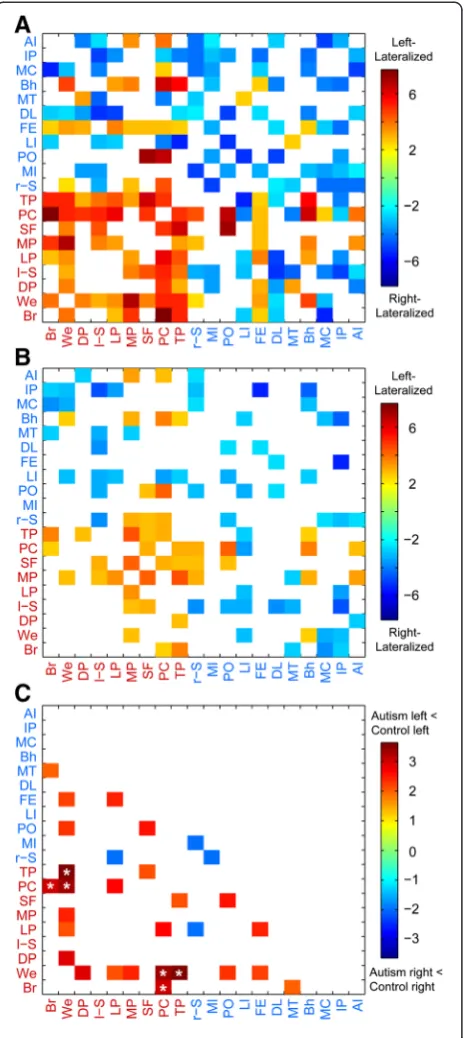
Figure 2Group lateralization patterns.The lateralization patterns of the connections involving the 20 lateralized hubs displayed in the typically developing group(A), autism group(B), and group differences(C). The colored connections (that is, squares of the plot) represent a group difference ofP<0.05 and colored connections with asterisk represent a group difference that survives multiple comparisons correction using a false discovery rate ofq<0.05. Abbreviations: AI, anterior insula; Bh, Broca homologue; Br, Broca area; DL, dorsolateral prefrontal cortex; DP, inferior dorsolateral prefrontal cortex; FE, frontal eye fields; IP, superior medial
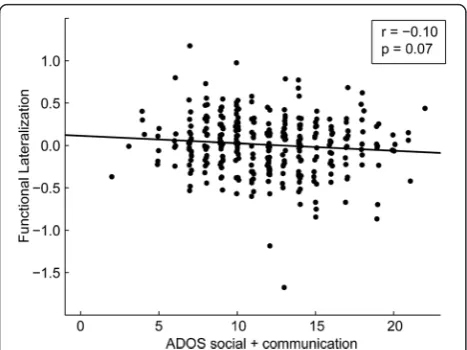
were applied on the set of ipsilateral connections involv-ing the 20 lateralization hubs (36 left-lateralized connec-tions and 55 right-lateralized connecconnec-tions; Figures 1 and 2). We again corrected for multiple comparisons using acceptable false discovery rate ofq <0.05. We also used different inclusion criteria for the subjects when testing group differences in lateralization of the 91 lateralized connections (Table 1). To test for differences in the degree of lateralization, we first found each subject’s aver-age functional lateralization for the following three groups of connections: 1) 15 left-lateralized connections involving language regions (that is, Broca and/or Wernicke area), 2) 21 left-lateralized connections not involving language re-gions (that is, the other seven left-lateralized hubs), and 3) 55 right-lateralized connections. Then, we used paired-sample t-tests for the two groups separately comparing the mean functional lateralization for the three groups of connections. To test for the effect of clinical severity, age, and quantitative handedness, Pearson correlation coeffi-cients (or Spearman rank correlation coefficoeffi-cients for age and handedness due to non-normality in residuals) were calculated across all participants for the three connections with abnormal lateralization when comparing the typically developing group to the autism group (Figure 3).
Results
We investigated the lateralization patterns among the lateralization hubs of the left- and right-lateralized net-works in typical development and autism, and then com-pared the lateralization patterns of the two groups. In the typically developing group, strong lateralization
existed between the hubs of the left- and right-lateralized networks, respectively (Figure 2A). The hubs in the right hemisphere are part of right-lateralized con-nections that form a right-lateralized network. The hubs in the left hemisphere are part of left-lateralized connec-tions that form a left-lateralized network. In the autism group, lateralization between the hubs also existed, al-though not as strongly as in the typically developing group (Figure 2B). When comparing the two groups, the majority of the differences existed in connections involv-ing specific left-lateralized hubs (Figure 1 and Figure 2C). Only three of the connections survived multiple compar-isons correction using a false discovery rate of q <0.05. The three connections were in the left-lateralized net-work: the Wernicke area to the posterior cingulate cor-tex; the Wernicke area to the temporoparietal junction; and the Broca area to the posterior cingulate cortex. All three either lacked left lateralization or had greatly di-minished left lateralization in the autism group com-pared to the typically developing group (Wernicke-posterior cingulate: t(961) = 3.36, P= 0.0008; Wernicke-temporoparietal: t(962) = 3.30, P= 0.001; Broca-posterior cingulate:t(960) = 3.04,P= 0.002).
We also repeated the analyses that identified the group differences in lateralized functional connections, using seven additional inclusion criteria to determine which subjects would be included in the analysis (Table 1). The connections that were most consistently abnormal in the autism group involved the Wernicke area and the pos-terior cingulate cortex (abnormal in criteria A to D, F, and G of Table 1) and the connection involving Wer-nicke area and temporoparietal junction (abnormal in criteria A to H of Table 1). Five other connections were abnormal in at least one of the seven inclusion criteria analyses, all involving core language regions and default mode regions in the left-lateralized network (Figure 1B).
[image:8.595.57.291.480.655.2]Next, we compared the degree of lateralization for three groups of connections (that is, left-lateralized con-nections involving language regions, left-lateralized connections not involving language regions, and right-lateralized connections) in typical development and aut-ism separately. In typical development, the left-lateralized connections (both connections involving language re-gions and connections not involving language rere-gions) were more left-lateralized than the right-lateralized con-nections were right-lateralized (Language: t(514) = 3.97, P =0.00008; Non-language:t(514) = 2.77, P =0.006). The left-lateralized connections involving language regions were slightly more left-lateralized than the left-lateralized connections not involving language regions, although the difference was not significant (t(514) = 1.84,P =0.07). In contrast, the autism group’s left-lateralized connections not involving language regions were more left-lateralized than the left-lateralized connections involving language
regions (t(440) = 2.90,P =0.004). Also, the left-lateralized connections involving language regions were as left-lateralized as the right-left-lateralized connections were right lateralized (t(440) = 0.39, P =0.70); whereas, the left-lateralized connections not involving language regions were more left-lateralized than the right-lateralized con-nections were right-lateralized (t(440) = 3.35,P =0.0009).
Finally, we investigated the relationship between lateralization in the three abnormal connections and autism severity, age, and handedness. We observed a trend toward less left lateralization in the connection be-tween Wernicke area and the posterior cingulate cortex with increased autism severity (r(314) =−0.10, P =0.07; Figure 3). If control subjects are included for whom ADOS scores were available, these results are more sig-nificant (r(346) =−0.13, P =0.017). No significant rela-tionships between lateralization and age or lateralization and handedness were found in either group.
Discussion
In this study, we tested brain lateralization in autism using functional connectivity MRI and found that abnor-mal lateralization of functional connectivity during rest in autism is most pronounced in specific left-lateralized connections that involve language regions (that is, Broca area and Wernicke area) and regions of the default mode network (that is, temporoparietal junction and posterior cingulate cortex), rather than diffusely affecting either the left- or right-lateralized functional networks. We also replicated previous results in the typically developing group that two interconnected lateralized networks exist in the brain, one in the left hemisphere, and one in the right hemisphere, with the left-lateralized network involving language and default mode regions, and the right-lateralized network involving brain attentional regions [8].
Cardinale and colleagues found that abnormal
lateralization in autism existed across many intrinsic net-works, including primary sensory and higher-level associ-ation networks [51]. We, too, found either a lack of left lateralization or greater right lateralization in the autism group; however, the regions or networks involved in ab-normal lateralization differed. Rather than finding abnor-malities throughout a number of networks as Cardinale and colleagues did, we only found significant differences after multiple comparison corrections in a handful of connections involving language regions and regions of the default mode network. Cardinale and colleagues did find lateralization in the default mode network in some of their supplemental analyses; however, they did not dir-ectly test lateralization between language regions and de-fault mode regions.
The inconsistent results may reflect differences in the sample age, sample size, number of data acquisition
sites, and/or data analysis methods. In Cardinale et al., aggregate network measures were studied that pooled information across many ROI’s, whereas the present study used a more spatially localized approach tailored to study individual ‘connections’ between discrete brain regions. It is possible that subtle or subthreshold differ-ences in lateralization in regions of the brain distinct from core language hubs, when pooled across entire func-tional networks, yield significant lateralization differences that may not survive rigorous statistical testing when evaluating small discrete ROI’s. In fact, we find this likely given the results of Figure 2, in which many more connec-tions, including some that are not associated with language regions, exhibit decreased lateralization with P<0.05. Virtually all of these show decreased lateralization in autism. Given the consistent direction of the effect, it seems probable that when pooled together, these connec-tions may result in more widespread network differences in lateralization. Nevertheless, our results suggest the ef-fect is much stronger in core language and default mode regions and our approach allows a more spatially localized assessment of effect size.
Neither our study nor the Cardinaleet al. study found a relationship between abnormal lateralization of intrinsic networks and social or communication impairments that survived multiple comparisons [51]. This corresponds with variable relationships found between abnormal brain lateralization and functional connectivity in general. In in-dividuals with autism, reduced functional connectivity within the default mode network relates to more social and communication impairments [34,41,45-47]; however, other studies found no relationship between activation patterns or abnormal lateralization and autism severity or language ability [9,19].
The abnormal lateralization of connections involving regions of the default mode network and core language regions may represent an overall lack of specialization in brain regions that process language and social stimuli. Regions of the default mode network are involved in tasks that require language (for example, internal narra-tive and autobiographical memory) and theory of mind or understanding of another’s mental state [60-62]. The temporoparietal junction and posterior cingulate cortex participate in the same component as core language re-gions during a language task [63]. The temporoparietal junction participates in both semantic tasks and deacti-vates during cognitively taxing tasks (that is, has default mode characteristics) [64]. The posterior cingulate cor-tex is more active in congruent and coherent language
compared to incongruent or incoherent language
relationship with other brain regions (for example, as we found with the connection between Broca area and pos-terior cingulate cortex) [67]. Together these observations suggest the abnormal lateralization between core lan-guage regions and default mode regions could account for some of the communication and social deficits expe-rienced by individuals with autism. This possibility is also supported by findings that abnormal lateralization in language regions are correlated with decreased func-tion on standardized testing [9].
Reports of abnormal functional lateralization in spe-cific language impairment correspond with previous re-ports in autism and the present study. Individuals with specific language impairment have less left-lateralized activation in Broca and Wernicke areas during speech tasks [16,68]. Individuals with developmental dyslexia also have less lateralization across the left hemisphere, as assessed by functional transcranial Doppler ultra-sound [69]. One study of note, however, found some-what different results [9]. It compared individuals with a history of specific language impairment but lacked a current diagnosis, individuals with a current diagnosis of specific language impairment, individuals with autism, and typically developing individuals. Over 80% of the in-dividuals with a current diagnosis of specific language impairment showed right lateralization or bilateral acti-vation during a language task, whereas over 90% of the individuals from the other three groups showed left lateralization. From this study, it appears abnormal lateralization is even more specific to individuals with a current diagnosis of specific language impairment.
The observation that abnormal functional lateralization in autism is most pronounced in connections between core language regions constrains hypotheses of develop-mental pathophysiology in autism. Our analysis suggests that abnormal language lateralization in autism may be due to abnormal language development rather than a def-icit in hemispheric specialization of the entire brain, and would be more consistent with a search for mechanisms involving brain substrates for language acquisition rather than earlier potential mechanisms where hemispheric asymmetries emerge. This constraint is also supported by multimodal observations from DTI, functional MRI, struc-tural MRI, and electrophysiologic studies that have all identified specific deficits in language-related lateralization but not differences in lateralization in other cognitive subsystems.
While the large sample size of the ABIDE dataset can be a tremendous advantage for improving statistical power and external generalizability of the results, it can also be a liability. The individual sites differ in many important data acquisition variables including inclusion criteria, demo-graphics, pulse sequence, scanner type, and length of scan. Most of the included scans were very short, less than 10
minutes duration per subject. It is possible that the hetero-geneity of the dataset may limit sensitivity for detecting small changes, and that in a more homogenous data sam-ple, additional differences in lateralization would be found. An additional limitation is that we did not attempt a dis-covery of all lateralization differences in an attempt to control the multiple comparison problem that would arise, but instead looked for lateralization differences only be-tween a set of 20 regions that were previously identified as being hubs of lateralized networks in a control population (different from the control subjects used here). It is pos-sible that systematic differences in lateralization are present in brain regions that are not necessarily hubs of lateralization networks in the brain, and which we could not detect. It is also possible that control and autism groups differ in precise spatial coordinates of some lateralization hubs, which we would not be able to detect.
Conclusions
Brain lateralization occurs in typical development and is abnormal in autism. As has been shown in multiple re-ports, left lateralization of core language regions in autism is diminished. In addition to core language regions, we have shown that the synchronization between core lan-guage regions and default mode regions lacks left-sided lateralization in autism. Also, there is a trend toward ab-normal lateralization correlating with more severe com-munication and social deficits. These abnormalities represent differences that persist from childhood through-out adulthood, in at least a subgroup of individuals with autism, and suggest a lack of specialization.
Abbreviations
ABIDE:Autism Brain Imaging Data Exchange; ADOS: Autism Diagnostic Observation Schedule; BOLD: blood-oxygen-level dependent;
CSF: cerebrospinal fluid; DTI: diffusion tensor imaging; DVARS: root mean squared change in BOLD signal from volume to volume; HIPAA: Health Insurance Portability and Accountability Act; IQ: intelligence quotient; MNI: Montreal Neurological Institute; MPRAGE: magnetization-prepared rapid acquisition with gradient echo; MRI: magnetic resonance imaging; PDD-NOS: pervasive developmental disorder-not otherwise specified; ROI: region of interest; SNR: signal-to-noise ratio; WM: white matter.
Competing interests
The authors declare that they have no competing interests.
Authors’contributions
Acknowledgements
The analysis described was supported by NIH grant numbers K08MH092697 (JSA), R01MH084795 (JEL, PTF, NL), R01MH080826 (JEL, ALA, NL, EDB), T32DC008553 (JAN), the Flamm Family Foundation (JSA), the Morrell Family Foundation (JSA). The content is solely the responsibility of the authors and does not necessarily represent the official views of the National Institute of Mental Health or the National Institutes of Health. Funding sources for the ABIDE dataset are listed at fcon_1000.projects.nitrcc.org/indi/abide. We thank Alyson Froehlich, Molly Prigge, Jason Cooperrider, Anna Cariello, and Celeste Knowles for their contributions to this project. We also sincerely thank the children, adolescents, and adults with autism, the individuals with typical development, and all the families who participated in this study. Finally, we would like to thank the anonymous reviewers whose thoughtful comments and questions greatly improved the manuscript.
Author details
1Interdepartmental Program in Neuroscience, University of Utah, 20 North
1900 East, Salt Lake City, UT 84132, USA.2Department of Psychiatry, University of Utah, 501 Chipeta Way, Salt Lake City, UT 84108, USA.
3
Department of Pediatrics and Neurology, University of Utah and Primary Children’s Medical Center, 295 Chipeta Way, Salt Lake City, UT 84108, USA.
4
School of Computing and Scientific Computing and Imaging Institute, University of Utah, 72 Central Campus Dr, Salt Lake City, UT 84112, USA.
5
Department of Psychiatry, and Waisman Laboratory for Brain Imaging and Behavior, University of Wisconsin, 1500 Highland Avenue, Madison, WI 53705, USA.6Department of Medical Physics, University of Wisconsin, 1111 Highland Avenue, Madison, WI 53705, USA.7Department of Psychiatry and Biostatistics,
Harvard University, 401 Park Drive, Boston, MA 02215, USA.8Neurostatistics Laboratory, McLean Hospital, 115 Mill Street, Belmont, MA 02478, USA.
9
Department of Psychology and Neuroscience Center, Brigham Young University, 1001 Kimball Tower, Provo, UT 84602, USA.10The Brain Institute of
Utah, University of Utah, 36 South Wasatch Drive, Salt Lake City, UT 84112, USA.11Department of Bioengineering, University of Utah, 20 S. 2030 E., Salt
Lake City, UT 84112, USA.12Department of Radiology, 1A71 School of Medicine, University of Utah, Salt Lake City, UT 84132, USA.
Received: 3 September 2013 Accepted: 13 January 2014 Published: 6 February 2014
References
1. Toga AW, Thompson PM:Mapping brain asymmetry.Nat Rev Neurosci 2003,4:37–48.
2. Saling MM:Verbal memory in mesial temporal lobe epilepsy: beyond material specificity.Brain2009,132(Pt 3):570–582.
3. Davidson RJ:Cerebral asymmetry, emotion and affective style. InBrain Asymmetry.Edited by Davidson RJ, Hugdahl K. Cambridge, MA: MIT Press; 1995:361–387.
4. Corbetta M, Shulman GL:Spatial neglect and attention networks.
Annu Rev Neurosci2011,34:569–599.
5. Mesulam MM:Large-scale neurocognitive networks and distributed processing for attention, language, and memory.Ann Neurol1990, 28:597–613.
6. Bishop DV:Cerebral asymmetry and language development: cause, correlate, or consequence?Science2013,340:1230531.
7. Knecht S, Drager B, Deppe M, Bobe L, Lohmann H, Floel A, Ringelstein EB, Henningsen H:Handedness and hemispheric language dominance in healthy humans.Brain2000,123(Pt 12):2512–2518.
8. Nielsen JA, Zielinski BA, Ferguson MA, Lainhart JE, Anderson JS:n evaluation of the left-brain vs. right-brain hypothesis with resting state functional connectivity magnetic resonance imaging.PLoS One2013, 8(8):e71275.
9. Whitehouse AJ, Bishop DV:Cerebral dominance for language function in adults with specific language impairment or autism.Brain2008, 131(Pt 12):3193–3200.
10. Herbert MR, Harris GJ, Adrien KT, Ziegler DA, Makris N, Kennedy DN, Lange NT, Chabris CF, Bakardjiev A, Hodgson J, Takeoka M, Tager-Flusberg H, Caviness VS Jr:Abnormal asymmetry in language association cortex in autism.Ann Neurol2002,52:588–596.
11. Kleinhans NM, Muller RA, Cohen DN, Courchesne E:Atypical functional lateralization of language in autism spectrum disorders.Brain Res2008, 1221:115–125.
12. Oertel-Knochel V, Linden DE:Cerebral asymmetry in schizophrenia.
Neuroscientist2011,17:456–467.
13. Chance SA, Casanova MF, Switala AE, Crow TJ:Auditory cortex asymmetry, altered minicolumn spacing and absence of ageing effects in schizophrenia.Brain2008,131(Pt 12):3178–3192.
14. Lange N, Dubray MB, Lee JE, Froimowitz MP, Froehlich A, Adluru N, Wright B, Ravichandran C, Fletcher PT, Bigler ED, Alexander AL, Lainhart JE:Atypical diffusion tensor hemispheric asymmetry in autism.Autism Res2010, 3:350–358.
15. Fletcher PT, Whitaker RT, Tao R, DuBray MB, Froehlich A, Ravichandran C, Alexander AL, Bigler ED, Lange N, Lainhart JE:Microstructural connectivity of the arcuate fasciculus in adolescents with high-functioning autism.
Neuroimage2010,51:1117–1125.
16. de Guibert C, Maumet C, Jannin P, Ferre JC, Treguier C, Barillot C, Le Rumeur E, Allaire C, Biraben A:Abnormal functional lateralization and activity of language brain areas in typical specific language impairment (developmental dysphasia).Brain2011,134(Pt 10):3044–3058.
17. Herbert MR, Ziegler DA, Deutsch CK, O'Brien LM, Kennedy DN, Filipek PA, Bakardjiev AI, Hodgson J, Takeoka M, Makris N, Caviness VS Jr:Brain asymmetries in autism and developmental language disorder: a nested whole-brain analysis.Brain2005,128(Pt 1):213–226.
18. De Fosse L, Hodge SM, Makris N, Kennedy DN, Caviness VS Jr, McGrath L, Steele S, Ziegler DA, Herbert MR, Frazier JA, Tager-Flusberg H, Harris GJ: Language-association cortex asymmetry in autism and specific language impairment.Ann Neurol2004,56:757–766.
19. Knaus TA, Silver AM, Lindgren KA, Hadjikhani N, Tager-Flusberg H:fMRI activation during a language task in adolescents with ASD.J Int Neuropsychol Soc2008,14:967–979.
20. Anderson JS, Lange N, Froehlich A, DuBray M, Druzgal T, Froimowitz M, Alexander A, Bigler E, Lainhart J:Decreased left posterior insular activity during auditory langauge in autism.AJNR Am J Neuroradiol2010, 31:131–139.
21. Lo YC, Soong WT, Gau SS, Wu YY, Lai MC, Yeh FC, Chiang WY, Kuo LW, Jaw FS, Tseng WY:The loss of asymmetry and reduced interhemispheric connectivity in adolescents with autism: a study using diffusion spectrum imaging tractography.Psychiatry Res2011,192:60–66. 22. Muller RA, Behen ME, Rothermel RD, Chugani DC, Muzik O, Mangner TJ,
Chugani HT:Brain mapping of language and auditory perception in high-functioning autistic adults: a PET study.J Autism Dev Disord1999, 29:19–31.
23. Boddaert N, Belin P, Chabane N, Poline JB, Barthelemy C, Mouren-Simeoni MC, Brunelle F, Samson Y, Zilbovicius M:Perception of complex sounds: abnormal pattern of cortical activation in autism.Am J Psychiatry2003, 160:2057–2060.
24. Boddaert N, Chabane N, Belin P, Bourgeois M, Royer V, Barthelemy C, Mouren-Simeoni MC, Philippe A, Brunelle F, Samson Y, Zilbovicius M: Perception of complex sounds in autism: abnormal auditory cortical processing in children.Am J Psychiatry2004,161:2117–2120. 25. Dawson G, Finley C, Phillips S, Galpert L:Hemispheric specialization and
the language abilities of autistic children.Child Dev1986,57:1440–1453. 26. Dawson G, Finley C, Phillips S, Lewy A:A comparison of hemispheric
asymmetries in speech-related brain potentials of autistic and dysphasic children.Brain Lang1989,37:26–41.
27. Seery AM, Vogel-Farley V, Tager-Flusberg H, Nelson CA:Atypical
lateralization of ERP response to native and non-native speech in infants at risk for autism spectrum disorder.Dev Cogn Neurosci2013,5:10–24. 28. Redcay E, Courchesne E:Deviant functional magnetic resonance imaging
patterns of brain activity to speech in 2-3-year-old children with autism spectrum disorder.Biol Psychiatry2008,64:589–598.
29. Eyler LT, Pierce K, Courchesne E:A failure of left temporal cortex to specialize for language is an early emerging and fundamental property of autism.Brain2012,135(Pt 3):949–960.
30. Travers BG, Adluru N, Ennis C, Tromp do PM, Destiche D, Doran S, Bigler ED, Lange N, Lainhart JE, Alexander AL:Diffusion tensor imaging in autism spectrum disorder: a review.Autism Res2012,5:289–313.
31. Anderson JS:Functional Connectivity MRI in Autism. InImaging the Brain in Autism.New York: Springer; 2013:325–347.
32. Anderson JS, Patel VB, Preedy VR, Martin CR:Cortical underconnectivity hypothesis in autism: evidence from functional connectivity MRI. InComprehensive Guide to Autism.New York: Springer;
33. Muller RA, Shih P, Keehn B, Deyoe JR, Leyden KM, Shukla DK: Underconnected, but how? A survey of functional connectivity MRI studies in autism spectrum disorders.Cereb Cortex2011,21:2233–2243. 34. Anderson JS, Nielsen JA, Froehlich AL, DuBray MB, Druzgal TJ, Cariello AN,
Cooperrider JR, Zielinski BA, Ravichandran C, Fletcher PT, Alexander AL, Bigler ED, Lange N, Lainhart JE:Functional connectivity magnetic resonance imaging classification of autism.Brain2011, 134(Pt 12):3742–3754.
35. Uddin LQ, Supekar K, Lynch CJ, Khouzam A, Phillips J, Feinstein C, Ryali S, Menon V:Salience network-based classification and prediction of symptom severity in children with autism.JAMA Psychiatry2013, 70:869–879.
36. Mostofsky SH, Powell SK, Simmonds DJ, Goldberg MC, Caffo B, Pekar JJ: Decreased connectivity and cerebellar activity in autism during motor task performance.Brain2009,132(Pt 9):2413–2425.
37. Just MA, Cherkassky VL, Keller TA, Minshew NJ:Cortical activation and synchronization during sentence comprehension in high-functioning autism: evidence of underconnectivity.Brain2004,127(Pt 8):1811–1821. 38. Kleinhans NM, Muller RA, Cohen DN, Courchesne E:Abnormal functional
connectivity in autism spectrum disorders during face processing.
Brain2008,131(Pt 4):1000–1012.
39. Catani M, Jones DK, Daly E, Embiricos N, Deeley Q, Pugliese L, Curran S, Robertson D, Murphy DG:Altered cerebellar feedback projections in Asperger syndrome.Neuroimage2008,41:1184–1191.
40. Cheng Y, Chou KH, Chen IY, Fan YT, Decety J, Lin CP:Atypical
development of white matter microstructure in adolescents with autism spectrum disorders.Neuroimage2010,50:873–882.
41. Assaf M, Jagannathan K, Calhoun VD, Miller L, Stevens MC, Sahl R, O'Boyle JG, Schultz RT, Pearlson GD:Abnormal functional connectivity of default mode sub-networks in autism spectrum disorder patients.Neuroimage 2010,53:247–256.
42. Kennedy DP, Courchesne E:Functional abnormalities of the default network during self- and other-reflection in autism.Soc Cogn Affect Neurosci2008,3:177–190.
43. Kennedy DP, Courchesne E:The intrinsic functional organization of the brain is altered in autism.Neuroimage2008,39:1877–1885.
44. Kennedy DP, Redcay E, Courchesne E:Failing to deactivate: resting functional abnormalities in autism.Proc Natl Acad Sci U S A2006, 103:8275–8280.
45. Monk CS, Peltier SJ, Wiggins JL, Weng SJ, Carrasco M, Risi S, Lord C: Abnormalities of intrinsic functional connectivity in autism spectrum disorders.Neuroimage2009,47:764–772.
46. Weng SJ, Wiggins JL, Peltier SJ, Carrasco M, Risi S, Lord C, Monk CS: Alterations of resting state functional connectivity in the default network in adolescents with autism spectrum disorders.Brain Res2010, 1313:202–214.
47. Gotts SJ, Simmons WK, Milbury LA, Wallace GL, Cox RW, Martin A: Fractionation of social brain circuits in autism spectrum disorders.Brain 2012,135(Pt 9):2711–2725.
48. Zielinski BA, Anderson JS, Froehlich AL, Prigge MB, Nielsen JA, Cooperrider JR, Cariello AN, Fletcher PT, Alexander AL, Lange N:scMRI reveals large-scale brain network abnormalities in autism.PLoS One2012, 7:e49172.
49. DiMartino A, Yan CG, Li Q, Denio E, Castellanos FX, Alaerts K, Anderson JS, Assaf M, Bookheimer SY, Dapretto M, Deen B, Delmonte S, Dinstein I, Ertl-Wagner B, Fair DA, Gallagher L, Kennedy DP, Keown CL, Keysers C, Lainhart JE, Lord C, Luna B, Menon V, Minshew NJ, Monk CS, Mueller S, Muller RA, Nebel MB, Nigg JT, O'Hearn K,et al:The autism brain imaging data exchange: towards large-scale evaluation of the intrinsic brain architecture in autism.Mol Psychiatry2013. doi:10.1038/mp.2013.78. 50. Nielsen JA, Zielinski BA, Fletcher PT, Alexander AL, Lange N, Bigler ED,
Lainhart JE, Anderson JS:Multisite functional ocnnectivity MRI classification of autism: ABIDE results.Front Hum Neurosci2013,7:599. 51. Cardinale RC, Shih P, Fishman I, Ford LM, Muller RA:Pervasive rightward
asymmetry shifts of functional networks in autism spectrum disorder.
JAMA Psychiatry2013,70:975–982.
52. Lord C, Risi S, Lambrecht L, Cook EH Jr, Leventhal BL, DiLavore PC, Pickles A, Rutter M:The autism diagnostic observation schedule-generic: a standard measure of social and communication deficits associated with the spectrum of autism.J Autism Dev Disord2000,30:205–223.
53. Lord C, Rutter M, Le Couteur A:Autism Diagnostic Interview-Revised: a revised version of a diagnostic interview for caregivers of individuals with possible pervasive developmental disorders.J Autism Dev Disord 1994,24:659–685.
54. Anderson JS, Druzgal TJ, Lopez-Larson M, Jeong EK, Desai K, Yurgelun-Todd D:Network anticorrelations, global regression, and phase-shifted soft tissue correction.Hum Brain Mapp2011,32:919–934.
55. Power JD, Barnes KA, Snyder AZ, Schlaggar BL, Petersen SE:Spurious but systematic correlations in functional connectivity MRI networks arise from subject motion.Neuroimage2012,59:2142–2154.
56. Saad ZS, Gotts SJ, Murphy K, Chen G, Jo HJ, Martin A, Cox RW:Trouble at rest: how correlation patterns and group differences become distorted after global signal regression.Brain Connect2012,2:25–32.
57. Gotts SJ, Saad ZS, Jo HJ, Wallace GL, Cox RW, Martin A:The perils of global signal regression for group comparisons: a case study of Autism Spectrum Disorders.Front Hum Neurosci2013,7:356.
58. Murphy K, Birn RM, Handwerker DA, Jones TB, Bandettini PA:The impact of global signal regression on resting state correlations: are anti-correlated networks introduced?Neuroimage2009,44:893–905.
59. Yeo BT, Krienen FM, Sepulcre J, Sabuncu MR, Lashkari D, Hollinshead M, Roffman JL, Smoller JW, Zollei L, Polimeni JR, Fischl B, Liu H, Buckner RL: The organization of the human cerebral cortex estimated by intrinsic functional connectivity.J Neurophysiol2011,106:1125–1165.
60. Buckner RL, Andrews-Hanna JR, Schacter DL:The brain’s default network: anatomy, function, and relevance to disease.Ann N Y Acad Sci2008, 1124:1–38.
61. Gusnard DA, Akbudak E, Shulman GL, Raichle ME:Medial prefrontal cortex and self-referential mental activity: relation to a default mode of brain function.Proc Natl Acad Sci U S A2001,98:4259–4264.
62. Saxe R, Kanwisher N:People thinking about thinking people. The role of the temporo-parietal junction in“theory of mind”.Neuroimage2003, 19:1835–1842.
63. Geranmayeh F, Brownsett SL, Leech R, Beckmann CF, Woodhead Z, Wise RJ: The contribution of the inferior parietal cortex to spoken language production.Brain Lang2012,121:47–57.
64. Seghier ML, Fagan E, Price CJ:Functional subdivisions in the left angular gyrus where the semantic system meets and diverges from the default network.J Neurosci2010,30:16809–16817.
65. Tesink CM, Petersson KM, van Berkum JJ, van den Brink D, Buitelaar JK, Hagoort P:Unification of speaker and meaning in language comprehension: an FMRI study.J Cogn Neurosci2009,21:2085–2099. 66. Ferstl EC, Neumann J, Bogler C, von Cramon DY:The extended language
network: a meta-analysis of neuroimaging studies on text comprehension.Hum Brain Mapp2008,29:581–593.
67. Tesink CM, Buitelaar JK, Petersson KM, van der Gaag RJ, Kan CC, Tendolkar I, Hagoort P:Neural correlates of pragmatic language comprehension in autism spectrum disorders.Brain2009,132(Pt 7):1941–1952.
68. Badcock NA, Bishop DV, Hardiman MJ, Barry JG, Watkins KE:Co-localisation of abnormal brain structure and function in specific language impairment.Brain Lang2012,120:310–320.
69. Illingworth S, Bishop DV:Atypical cerebral lateralisation in adults with compensated developmental dyslexia demonstrated using functional transcranial Doppler ultrasound.Brain Lang2009,111:61–65.
doi:10.1186/2040-2392-5-8
Cite this article as:Nielsenet al.:Abnormal lateralization of functional connectivity between language and default mode regions in autism.