R E S E A R C H A R T I C L E
Open Access
Validation of reference genes for expression
analysis by quantitative real-time PCR in
Leptinotarsa decemlineata
(Say)
Xiao-Qin Shi
1†, Wen-Chao Guo
2†, Pin-Jun Wan
1, Li-Tao Zhou
1, Xiang-Liang Ren
1, Tursun Ahmat
2, Kai-Yun Fu
1and Guo-Qing Li
1*Abstract
Background:L. decemlineatais an exotic invasive insect pest, and invaded in Xinjiang Uygur autonomous region in China in the 1990s from Kazakhstan. It is a notorious defoliator of potato throughout most of the northern Xinjiang in current, and often causes extremely large yield losses of potato.
Results:The expression stability of nineL. decemlineatahouse-keeping genes (Actin,ACT1andACT2; ADP-ribosylation factor,ARF1andARF4;TATA box binding protein,TBP1andTBP2;ribosomal protein RP4andRP18; translation elongation factor 1αEF1α) was evaluated by quantitative real-time polymerase chain reaction (qRT-PCR) in seven developmental stages, three larval tissues and two insecticide treatments. The results were analyzed using three software programs: geNorm, NormFinder and BestKeeper. Although there was no consistent ranking observed among the house-keeping genes across the samples, the overall analysis revealed thatRP18, RP4, ARF1, andARF4 were the four most stable house-keeping genes. In contrast,ACT1andACT2, two of the most widely used reference genes, had the least stability. Our results suggest that the combined use of the four most stably expressed genes may produce optimal normalization for qRT-PCR.
Conclusions:The expression stability of the house-keeping genes varies among different developing stages, in different tissues and under different experimental conditions. Our results will enable a more accurate and reliable normalization of qRT-PCR data inL. decemlineata.
Keywords:L. decemlineata, Quantitative real-time PCR, Reference gene, Normalization
Background
The Colorado potato beetle, Leptinotarsa decemlineata (Say), is an exotic invasive insect pest. It invaded in Xinjiang Uygur autonomous region in China in the 1990s from Kazakhstan. It is a notorious defoliator of potato throughout most of the northern Xinjiang in current, and often causes extremely large yield losses of potato [1-5].L. decemlineata has a complicated and di-verse life cycle. Moreover, the beetle has developed resistance to many classes of insecticides, among them
are organophosphates, carbamates, pyrethroids and neonicotinoids [6,7].
Understanding the molecular regulation mechanisms that underlie these ecological and physiological adapta-tions inL. decemlineatamay provide insights into com-plex regulatory networks, and may help to develop intriguing targets for the control of this pest. Using the next generation sequencing method, we have obtained a transcriptomic database. Deciphering gene expression profiles and validation of mRNA levels for target genes via quantitative real-time polymerase chain reaction (qRT-PCR) have been crucial to on-going studies. For normalizing qRT-PCR results, the mRNA levels of the target genes need to normalize to internal control house-keeping genes (HKGs) [8-10].
* Correspondence:[email protected]
†Equal contributors
1Education Ministry Key Laboratory of Integrated Management of Crop
Diseases and Pests, College of Plant Protection, Nanjing Agricultural University, Nanjing 210095, China
Full list of author information is available at the end of the article
However, increasing evidence has suggested that HKGs varies among different insect species, in different tissue samples and under different experimental conditions [11-27]. In coleopteran species Agrilus planipennis, for example, translation elongation factor 1α (EF1α) was the most stable gene, whereas glyceraldehyde-3-phosphate dehydrogenase (GAPDH) and actin (ACT) showed least stability among six candidate HKGs for all the samples [12]. In another coleopteran speciesTribolium castaneum, the most stable ones were ribosomal protein genes,RPS3, RPS18, andRPL13a, whereasβ-actin,α-tubulin, andRPS6 were not stable [20]. Moreover, choosing unsuitable endogenous control genes resulted in low precision or misleading results [28]. Therefore, HKGs should be vali-dated to assure expression stability before using them as endogenous control genes in qRT-PCR.
In L. decemlineata, the expression stability of three HKGs, β-actin, RP4 and RP18, was evaluated. RP4 was the most stable among samples and was used as re-ference gene [29]. According to Vandesompele et al. (2002), however, at least two endogenous control genes are recommended. In the present paper, therefore, we se-lected 9 HKGs (Actin,ACT1andACT2;ADP-ribosylation factor, ARF1 andARF4; TATA box binding protein,TBP1 and TBP2; ribosomal protein RP4 and RP18; translation elongation factor 1α EF1α) from the transcriptome and validated the stability of their expression. We have iden-tified several suitable reference genes for gene expres-sion studies.
Methods
Insect collection and rearing
Post-diapause L. decemlineata adults were collected from potato field in spring at Urumqi city (43.82 N, 87.61E), Xinjiang Uygur autonomous region in China. Insects were routinely reared in an insectary at 28 ± 1°C under a 14 h:10 h light–dark photoperiod and 50-60% relative humidity using fresh potato foliage as food. The adults deposited their eggs in batches of about 30 on the underside of potato leaves. After approximately 7 days, the eggs hatched into reddish-brown larvae. Larvae progressed through four distinct instars, with the ave-rage periods of the 1st-, 2nd-, 3rd-, and 4th-instar stages of 2.5, 2.5, 3.0 and 5.0 days, respectively. Upon reaching full size, the 4thinstars spent an additional 4–7 days as a non-feeding prepupae. The prepupae then dropped to the soil and burrowed to a depth of 3–5 cm to pupate. The pupae emerged in roughly 10 days. Both the male and female adults spent an average of 7 days to become sexually mature.
Total RNA extraction and cDNA synthesis
L. decemlineata samples of developing eggs, 1st-, 2nd-, 3rd- and 4th-instar larvae, pupae (5 days after burrowing
to soil), sexually mature adults (10 days after emergence) were collected from laboratory-rearing individuals. Moreover, the 4th-instar larvae were dissected to obtain midgut, fat body and cuticle. Furthermore, the 4th-instar larvae feeding on foliage immersed 0.09 mg/L chloran-traniliprole [1] and 0.12 mg/L spinosad [2] represented insecticide treatments. The samples were frozen with liquid nitrogen and homogenized in a tissue grinder. Then, total RNAs were extracted with TRIzol reagent (Invitrogen Co., USA) according to the manufacturer’s specifications, and were treated for 30 min at 37°C with RNase free DNase I (Ambion, Austin, TX) to eliminate traces of chromosomal DNA. The integrity of RNA was checked on a 1.5% agarose gel and visualized by ethi-dium bromide staining. The purity and amount of the total RNA samples were determined by NanoDrop ND-1000 spectrophotometer (Nanodrop Technologies, Rockland, DE, USA). First strand cDNA was synthesized from 1μg total RNA using M-MLV reverse transcriptase (Takara Bio, Dalian, China) and Oligo (dT18) as the an-chor primer. The reaction mixtures were incubated at 70°C for 10 min followed by 42°C for 1 h and 70°C for 15 min. The cDNA samples were used as templates for polymerase chain reaction (PCR).
Selection and authentication of candidate HKGs
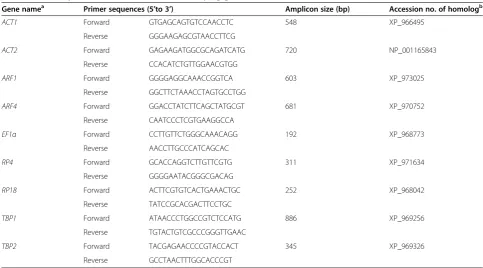
To search for HKG sequences from L. decemlineata transcriptome data, a reciprocal BLAST hits approach was used. The HKGs from other insect species in GenBank were downloaded from NCBI (http://www. ncbi.nlm.nih.gov/), queried individually toL. decemlineata transcriptome using the TBLASTN program with a per-missive E-value cutoff of 10-3 to get the hits. And then, each of the queried hits was compared back against non-redundant database of NCBI by the BLASTX program (E-value <10-3) to determine whether the original se-quence was one of the hits. The selected HKG sese-quences were listed in Table 1.
obtained after the sequence analysis were submitted to GenBank database (Accession No. KC190026- KC190034).
Quantitative real-time PCR (qRT-PCR)
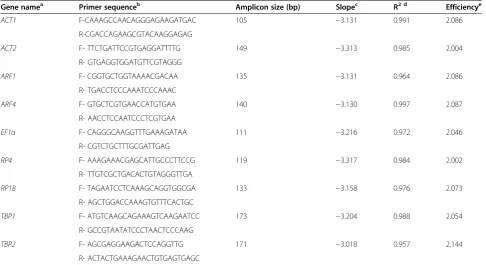
The qRT-PCR primers were designed using Beacon Designer 7 (Premier Biosoft International, Palo Alto, Calif., USA), and were given in Table 2. The qRT-PCR reactions were performed using SYBR Premix Ex Taq (Perfect Real Time) (Takara Co., Otsu, Japan) and ABI Real-Time 7300 PCR system (Applied Biosystems) according to the manufacturer’s protocol. The reaction mixture consisted of 2 μL of cDNA template (corres-ponding to 0.9 ng of the starting amount of RNA), 10μL of SYBR Premix Ex Taq (Takara), 1μL of forward primer (10 μM), 1μL of reverse primer (10μM), 0.4μL of Rox Reference Dye (50×) in a final reaction volume of 20μL. A reverse transcription negative control (without reverse transcriptase) and a non-template negative control were included for each primer set to confirm the absence of genomic DNA and to check for primer-dimer or contam-ination in the reactions, respectively. The qRT-PCR protocol included an initial step of 95°C for 30 sec, followed by 40 cycles of 95°C for 5 sec and then annealed at 60°C for 31 sec, followed by one cycle of 95°C for 15 sec, 60°C for 60 sec, and 95°C for 15 sec. PCR amplicons were subjected to melting curve analysis. The specificity of the qRT-PCR reactions was monitored with melting curve, analyzing by SDS software (version 1.4)
and gel electrophoresis. Amplification efficiencies were determined by a 10-fold dilution series of template. All experiments were repeated in triplicate.
Data processing
The raw Ct values were obtained using the SDS software of ABI 7300 (version 1.4). The algorithms including geNorm [8], BestKeeper [30] and NormFinder [9] were used to analyze the stability of selected HKGs, strictly following the manuals of the algorithms.
Results
Selection of candidate housekeeping genes
According to the published results, nine HKGs were se-lected. They were given names as ACT1, ACT2, ARF1, ARF4,EF-1α,RP4,RP18,TBP1andTBP2, corresponding to homologous genes in the T. castaneum genome (Table 1). The sequence correctness of the nine HKGs was proven by RT-PCR and the obtained sequences were submitted to GenBank database.
[image:3.595.55.539.98.366.2]The products from qRT–PCR were also confirmed by bi-direction sequencing. Primer specificities for qRT-PCR were verified by melting curve analysis. All pri-mer pairs amplified a single PCR product with the expected sizes, showed a slope less than −3.0, and exhibited effi-ciency values ranging from 2.0–2.1 by a 10-fold dilution series of template (Table 2). These data indicate that Table 1 A list of primers of 9 candidate house-keeping genes for RT-PCR
Gene namea Primer sequences (5’to 3’) Amplicon size (bp) Accession no. of homologb
ACT1 Forward GTGAGCAGTGTCCAACCTC 548 XP_966495
Reverse GGGAAGAGCGTAACCTTCG
ACT2 Forward GAGAAGATGGCGCAGATCATG 720 NP_001165843
Reverse CCACATCTGTTGGAACGTGG
ARF1 Forward GGGGAGGCAAACCGGTCA 603 XP_973025
Reverse GGCTTCTAAACCTAGTGCCTGG
ARF4 Forward GGACCTATCTTCAGCTATGCGT 681 XP_970752
Reverse CAATCCCTCGTGAAGGCCA
EF1α Forward CCTTGTTCTGGGCAAACAGG 192 XP_968773
Reverse AACCTTGCCCATCAGCAC
RP4 Forward GCACCAGGTCTTGTTCGTG 311 XP_971634
Reverse GGGGAATACGGGCGACAG
RP18 Forward ACTTCGTGTCACTGAAACTGC 252 XP_968042
Reverse TATCCGCACGACTTCCTGC
TBP1 Forward ATAACCCTGGCCGTCTCCATG 886 XP_969256
Reverse TGTACTGTCGCCCGGGTTGAAC
TBP2 Forward TACGAGAACCCCGTACCACT 345 XP_969326
Reverse GCCTAACTTTGGCACCCGT
amplification efficiencies of primers reach the standard re-quirements of conventional qRT-PCR.
Expression levels of the candidate reference genes The temporal expression patterns of mRNAs encoding the nine candidate HKGs were analyzed by qRT-PCR. All of the nine genes were expressed in seven develop-mental stages, and among three larval tissues, indicated by the presence of a single amplicon of the expected size on an agarose gel (data not shown).
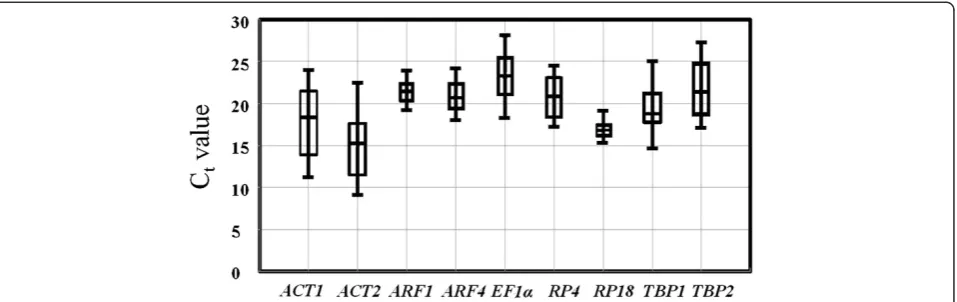
Putting all the data with the same HKG at all tested samples together, the raw expression levels varied dra-matically. According to the variations of Ct values,RP18 showed the smallest gene expression variation (below ten cycles), followed by ARF1, ARF4 and RP4, whereas ACT2 and ACT1 had the highest expression variation (Figure 1). Thus, determining HKGs as reference genes requires careful confirmation of expression stability.
geNorm analysis
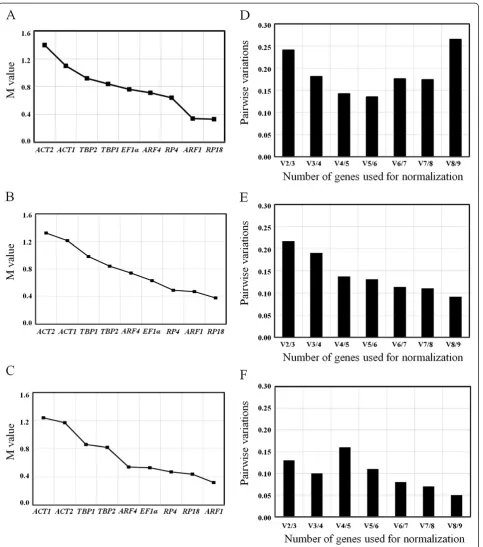
The geNorm defines two parameters to quantify the gene stability: M (the average expression stability) and V (the pairwise variation). The gene with the lowest M value is considered to have the most stable expression, while the one with the highest M value has the least stable expression. The V value should be below the de-fault cut-off value of 0.15.
For developmental stages, RP18 and ARF1 were the best reference genes, with M-values below 0.5. RP4, ARF4, EF1α, TBP1 and TBP2 followed, that showed M-values between 0.5 and 1.0. ACT1 and ACT2 were the least stably expressed genes, with the M-values more than 1.0 (Figure 2A). The V2/3 and V3/4 values (the pairwise variation when the number of normalization factors is increased from two to three and from three to four) were above 0.15, whereas the V4/5 value was below 0.15 (Figure 2D). For different tissues, the stabilities of selected HKGs were RP18>ARF1>RP4>EF1α>ARF4> TBP1>TBP2>ACT1>ACT2 (Figure 2B). The V2/3 and V3/4 values were above 0.15, whereas the V4/5, V5/6, V6/7, V7/8 and V8/9 values were below 0.15 (Figure 2E). For different treatments, the stabilities of selected HKGs were ARF1>RP18>RP4>EF1α>ARF4>TBP2>TBP1>ACT2 >ACT1(Figure 2C). The V2/3, V3/4, V5/6, V6/7, V7/8 and V8/9 values were below 0.15, whereas the V4/5 value was above 0.15 (Figure 2F).
[image:4.595.56.543.100.365.2]In summary, geNorm analysis indicates that the com-bined use of the four most stably expressed genes (ARF1, RP18, RP4 andARF4) produces optimal norma-lization for qRT-PCR among different developing stages or tissues. Moreover, combining two most stable genes ARF1 and RP18 is sufficient to normalize the target genes among different treatments within the 4th-instar stage.
Table 2 Primers of 9 candidate house-keeping genes used in qRT-PCR
Gene namea Primer sequenceb Amplicon size (bp) Slopec R2 d Efficiencye
ACT1 F-CAAAGCCAACAGGGAGAAGATGAC 105 −3.131 0.991 2.086
R-CGACCAGAAGCGTACAAGGAGAG
ACT2 F- TTCTGATTCCGTGAGGATTTTG 149 −3.313 0.985 2.004
R- GTGAGGTGGATGTTCGTAGGG
ARF1 F- CGGTGCTGGTAAAACGACAA 135 −3.131 0.964 2.086
R- TGACCTCCCAAATCCCAAAC
ARF4 F- GTGCTCGTGAACCATGTGAA 140 −3.130 0.997 2.087
R- AACCTCCAATCCCTCGTGAA
EF1α F- CAGGGCAAGGTTTGAAAGATAA 111 −3.216 0.972 2.046
R- CGTCTGCTTTGCGATTGAG
RP4 F- AAAGAAACGAGCATTGCCCTTCCG 119 −3.317 0.984 2.002
R- TTGTCGCTGACACTGTAGGGTTGA
RP18 F- TAGAATCCTCAAAGCAGGTGGCGA 133 −3.158 0.976 2.073
R- AGCTGGACCAAAGTGTTTCACTGC
TBP1 F- ATGTCAAGCAGAAAGTCAAGAATCC 173 −3.204 0.988 2.054
R- GCCGTAATATCCCTAACTCCCAAG
TBP2 F- AGCGAGGAAGACTCCAGGTTG 171 −3.018 0.957 2.144
R- ACTACTGAAAGAACTGTGAGTGAGC
NormFinder analysis
NormFinder is designed to calculate stability using the combined estimation of intra- and inter-group expres-sion variations of the analyzed genes. According to the NormFinder, the genes that are more stably expressed are indicated by lower average expression stability values.
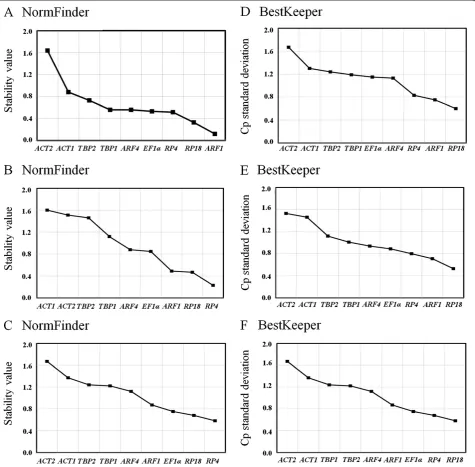
For developmental stages, the most stable genes were ARF1andRP18, the most unstable genes wereACT1and ACT2 (Figure 3A). For different tissues, the stabilities of selected HKGs wereRP4>RP18>ARF1>EF1α>ARF4> TBP1>TBP2>ACT2>ACT1(Figure 3B). Among the se-lected HKGs for different treatment, the four most stable genes were RP4, RP18, EF1α and ARF1. And again, the least stable genes were ACT2 and ACT1 (Figure 3C). Thus, the NormFinder results validate the findings of the geNorm algorithm, andARF1,RP18,RP4,EF1αandARF4 are among the best combination of HKGs.
BestKeeper analysis
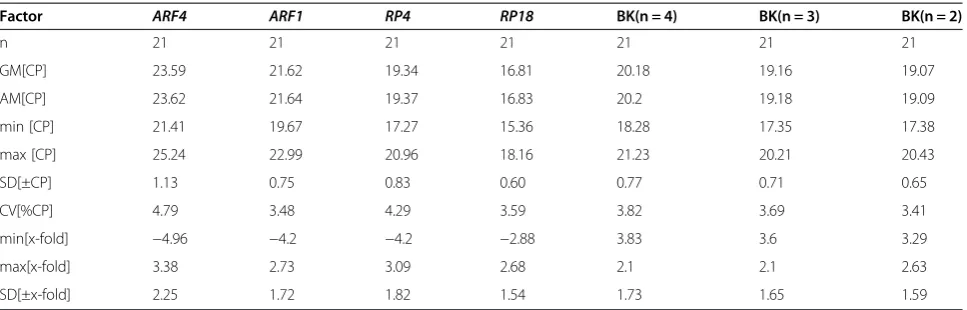
According to the BestKeeper analysis, the stabilities of selected HKGs were RP18>ARF1>RP4>ARF4>EF1α> TBP1>TBP2>ACT1>ACT2 in developmental stages (Figure 3D). The weighted index BestKeeper calculated for the nine candidates showed an SD of CP = ±0.98 cycles. The SD (±CP) value was higher for EF1α,TBP1,TBP2, ACT1 and ACT2. This constituted a reason to exclude these genes from the BestKeeper index calculation, be-cause they were not reliable reference genes in this setting. After the exclusion ofEF1α,TBP1,TBP2,ACT1andACT2 from the index, its variation decreased (SD = ±0.77 cycles). After further exclusion ofARF4andRP4subsequently, the variation SD was ±0.71 and ±0.65 cycles, respectively (Table 3).
For different tissues, RP18, ARF1 and RP4 were the most stable because they showed SD values lower than
1. EF1α, ARF4,TBP1 and TBP2 had SD values around 1.2. AndACT1and ACT2were the most unstable genes (Figure 3E). Among the selected HKGs for different treatment, the four most stable genes were RP4, RP18, EF1α and ARF1 due to their SD values lower than 1. And again, the least stable genes wereACT2andACT1, with their SD values more than 1.2 (Figure 3F).
In summary, BestKeeper analysis validates the findings of the geNorm and NormFinder algorithms.
Discussion
Detection and quantification of transcript abundance in different conditions are important tasks in molecular biology. qRT-PCR is an exceptional and trustworthy technique even for low abundant mRNA transcripts [31]. However, the variations of qRT-PCR will be un-avoidably introduced during RNA preparation, cDNA synthesis, and PCR process. The use of HKGs as refer-ence genes to normalize gene expression is a strategy to minimize the variations of qRT-PCR. A good reference gene should meet three criteria. Firstly, its amplification efficiency is similar to the target genes. Secondly, it is expressed at moderate level. Lastly, its expression is stable in all test samples [11]. Unfortunately, almost all HKGs are regulated by other‘regulators’, no gene is con-stitutively expressed in all cell types and under all ex-perimental conditions [32]. Therefore, HKGs should be validated before using them as reference genes.
[image:5.595.61.540.89.240.2]Evaluation of the expression stability of HKGs requires mathematical methods. Many algorithms such as geNorm [8], NormFinder [9], BestKeeper [30],ΔCt approach [33], and stability index [34] have been developed. Among them geNorm, BestKeeper and NormFinder are the most common statistical algorithms. Moreover, the three algo-rithms are easy to use and freely available for download [28,30,35-38]. geNorm and NormFinder use different
mathematical methods to estimate the expression stability. The results of two algorithms can be used for cross vali-dation [8,9]. Thus, we used geNorm, NormFinder and BestKeeper to identify suitable reference genes for gene expression studies in the present paper.
Ribosomal proteins are involved in translation and protein synthesis. In this study, we found that ribosomal protein RP4 andRP18were among the most stable refe-rence genes in L. decemlineata. Consistent with our results, ribosomal proteins are reported to be the best re-ference genes in many insects [22,26]. InL. decemlineata,
[image:7.595.61.537.90.557.2]RP4 was the most stable among three HKGs, and was used as control gene [29]. In other coleopterans, RPS3, RPS18, and RPL13a were suitable reference genes in T. castaneum [20], and RPL7 was the most stable in A. planipennis [12]. In lepidopterans, RP49 had the greatest stability in different tissues ofChilo suppressalis, Bombyx mori and Spodoptera exigua [11]. In dipteran Drosophila melanogaster, L32 was the most stable across three different treatments (i.e. injury, heat-shock stress and diets) [15]. In hemipterans, L26, RPS18, RPL18 and RPS9were suitable reference genes in Rhodnius prolixus
[13],Delphacodes kuscheli[16],Cimex lectularius[17] and Aphis glycines[14], respectively.
ADP-ribosylation factors (ARFs) are ubiquitous in eu-karyotic cells. ARFs are soluble, or associate with mem-branes due to their N-terminus myristoylation. They function as regulators of vesicular traffic and actin remo-deling [39]. Previous results revealed thatARFwas one of the most stable HKGs in plants such as wheat, barley, rye and citrus [40-42]. In the present paper, we provided the first line of evidence thatARF1 andARF4 are also stably expressed in animal species such asL. decemlineata.
[image:8.595.57.541.99.254.2]EF1αencodes a protein that is involved in protein syn-thesis. It is widely used as reference gene in gene expres-sion studies in plants and animals, including insects [12,21,23]. Our data showed thatEF1αexhibited moderate stability across the samples assayed inL. decemlineata. In contrast, EF1α was the most appropriate reference gene in another coleopteran A. planipennis [12], in dipteran D. melanogaster [15], in hemipteran A. glycines [14], in orthopteran Schistocerca gregaria [23] and Chortoicetes terminifera [18], and in hymenopteran Bombus terrestris andBombus lucorum[22]. Meanwhile,E2Fwas the most stable gene in different tissues of lepidopteranB. mori, S. exiguaandC. suppressalis[11].
The TATA-binding protein (TBP) is a general transcrip-tion factor that binds specifically to a DNA sequence called the TATA box. Our data showed that TBP1 and TBP2were among the least stable across the samples in L. decemlineata. In contrast, TBP showed high stability across the samples assayed inA. glycines[14].
Actins play key roles in cell motility and cytoskeleton maintenance. Therefore, they are assumed to be constitu-tively expressed and widely used as reference genes. Actin was among the most stable in collembolanFolsomia can-dida and Orchesella cincta [24], orthopteran S. gregaria
[23], hemipteranR. prolixus[13] and D. kuscheli[16], si-phonapteran Lepeophtheirus salmonis [43], dipteran D. melanogaster [15] and hymenopteranApis mellifera [26]. However, actin genes have been challenged for their sui-tability as the internal controls [44]. In lepidopteran in-sects, actin A1 was the most stable inPlutella xylostella and C. suppressalis, but it was the least stable inB. mori and S. exigua across different developmental stages [11]. In the present paper, we foundACT1andACT2were the most unstable genes, irrespective of the software programs used. Similarly,ACTshowed least stability among the can-didate reference genes analyzed inA. planipennis[12].
Conclusion
In summary, our work presented a number of stable HKGs that are suitable to be used as the reference genes inL. decemlineata. This will enable a more accurate and reliable normalization of qRT-PCR data. Moreover, these validated reference genes could also serve as the basis for selection of candidate internal controls in any given insect species.
Abbreviations
PCR:Polymerase chain reaction; RT-PCR: Reverse transcriptase PCR; qRT-PCR: Quantitative real-time PCR; cDNA: Complementary DNA; HKG: House keeping gene; ACT: Actin; ARF: ADP-ribosylation factor; TBP: TATA box binding protein; RP: Ribosomal protein; EF: Translation elongation factor; SD: Standard deviation.
Competing interests
The authors declare that they have no competing interests.
Authors’contributions
XQS and WCG performed all the experimental procedures, data analysis, and was the primary author of the manuscript. PJW, LTZ and XLR assisted in manuscript revising and provided helpful discussions. TA and KYF maintained the insects. GQL wrote the manuscript, conceived and supervised the research. All authors read and approved the final manuscript.
Table 3 Expression stability of four HKGs in different developing stages evaluated by BestKeeper software programs
Factor ARF4 ARF1 RP4 RP18 BK(n = 4) BK(n = 3) BK(n = 2)
n 21 21 21 21 21 21 21
GM[CP] 23.59 21.62 19.34 16.81 20.18 19.16 19.07
AM[CP] 23.62 21.64 19.37 16.83 20.2 19.18 19.09
min [CP] 21.41 19.67 17.27 15.36 18.28 17.35 17.38
max [CP] 25.24 22.99 20.96 18.16 21.23 20.21 20.43
SD[±CP] 1.13 0.75 0.83 0.60 0.77 0.71 0.65
CV[%CP] 4.79 3.48 4.29 3.59 3.82 3.69 3.41
min[x-fold] −4.96 −4.2 −4.2 −2.88 3.83 3.6 3.29
max[x-fold] 3.38 2.73 3.09 2.68 2.1 2.1 2.63
SD[±x-fold] 2.25 1.72 1.82 1.54 1.73 1.65 1.59
Acknowledgments
This research was supported by the National Natural Sciences Foundation of China (31272047) and a special project with public benefit in agriculture (201103026). We are very grateful to Mr. Jiang He, Mrs. Wei-Hua Jiang, Mr. Zhi-Tian Wang, Mrs. Man-Hui Xiong, Mr. Wei-Ping Lu, and Mrs. Ping Liu for help in insect rearing and collection. We would like to thank other field entomologists and technicians at Urumqi city in northern Xinjiang Uygur autonomous region in China for technical and other assistance. We wish to thank Drs Z. Han, F. Li and S. Dong of our laboratory for useful discussions during the course of this research.
Author details
1Education Ministry Key Laboratory of Integrated Management of Crop
Diseases and Pests, College of Plant Protection, Nanjing Agricultural University, Nanjing 210095, China.2Department of Plant Protection, Xinjiang Academy of Agricultural Sciences, Urumqi 830091, China.
Received: 29 November 2012 Accepted: 7 March 2013 Published: 13 March 2013
References
1. Jiang W-H, Lu W-P, Guo W-C, Xia Z-H, Fu W-J, Li G-Q:Chlorantraniliprole susceptibility inLeptinotarsa decemlineatain the north Xinjiang Uygur autonomous region in China.J Econ Entomol2012,105(2):549–554. 2. Lu W-P, Shi X-Q, Guo W-C, Jiang W-H, Xia Z-H, Fu W-J, Li G-Q:
Susceptibilities ofLeptinotarsa decemlineata(Say) in the north xinjiang Uygur autonomous region in China to two biopesticides and three conventional insecticides.J Agr Urban Entomol2011,27:61–73. 3. Shi X-Q, Xiong M-H, Jiang W-H, Wang Z-T, Guo W-C, Xia Z-H, Fu W-J, Li G-Q:
Efficacy of endosulfan and fipronil and joint toxic action of endosulfan mixtures againstLeptinotarsa decemlineata(Say).J Pest Sci2012,85:519–526. 4. Jiang W-H, Guo W-C, Lu W-P, Shi X-Q, Xiong M-H, Li G-Q:Target site
insensitivity mutations in the AChE and LdVssc1 confer resistance 3 to pyrethroids and carbamates inLeptinotarsa decemlineatain northern 4 Xinjiang Uygur autonomous region.Pestic Biochem Phys2011,100:74–81. 5. Jiang W-H, Wang Z-T, Xiong M-H, Lu W-P, Liu P, Guo W-C, Li G-Q:
Insecticide resistance status of Colorado potato beetle (Coleoptera: Chrysomelidae) adults in northern Xinjiang Uygur autonomous region.
J Econ Entomol2010,103(4):1365–1371.
6. Alyokhin A:Colorado potato beetle management on potatoes: Current challenges and future prospects.Fruit, Vegetable and Cereal Science and Biotechnology2009,3:10–19.
7. Alyokhin A, Baker M, Mota-Sanchez D, Dively G, Grafius E:Colorado potato beetle resistance to insecticides.Am J Potato Res2008,85:395–413. 8. Vandesompele J, De Preter K, Pattyn F, Poppe B, Van Roy N, De Paepe A,
Speleman F:Accurate normalization of real-time quantitative RT-PCR data by geometric averaging of multiple internal control genes.Gen Biol
2002,3:RESEARCH0034.
9. Andersen CL, Jensen JL, Orntoft TF:Normalization of real-time quantitative reverse transcription-PCR data:a model-based variance estimation approach to identify genes suited for normalization, applied to bladder and colon cancer data sets.Cancer Res2004,64:5245–5250. 10. Walker NJ:A technique whose time has come.Science2002,296:557–559. 11. Teng X, Zhang Z, He G, Yang L, Li F:Validation of reference genes for
quantitative expression analysis by real-time RT-PCR in four lepidopteran insects.J Insect Sci2012,12:60.
12. Rajarapu SP, Mamidala P, Mittapalli O:Validation of reference genes for gene expression studies in the emerald ash borer (Agrilus planipennis).
Insect Sci2012,19(1):41–46.
13. Paim RM, Pereira MH, Di Ponzio R, Rodrigues JO, Guarneri AA, Gontijo NF, Araújo RN:Validation of reference genes for expression analysis in the salivary gland and the intestine ofRhodnius prolixus(Hemiptera, Reduviidae) under different experimental conditions by quantitative real-time PCR.BMC Res Notes2012,5(1):128.
14. Bansal R, Mamidala P, Mian MAR, Mittapalli O, Michel AP:Validation of reference genes for gene expression studies inAphis glycines
(Hemiptera: Aphididae).J Econ Entomol2012,105(4):1432–1438. 15. Ponton F, Chapuis MP, Pernice M, Sword GA, Simpson SJ:Evaluation of
potential reference genes for reverse transcription-qPCR studies of physiological responses inDrosophila melanogaster.J Insect Physiol2011, 57(6):840–850.
16. Maroniche G, Sagadín M, Mongelli V, Truol G, del Vas M:Reference gene selection for gene expression studies using RT-qPCR in virus-infected planthoppers.Virol J2011,8(1):308.
17. Mamidala P, Rajarapu SP, Jones SC, Mittapalli O:Identification and validation of reference genes for quantitative real-time polymerase chain reaction inCimex lectularius.J Med Entomol2011,48(4):947–951. 18. Chapuis MP, Tohidi-Esfahani D, Dodgson T, Blondin L, Ponton F, Cullen D,
Simpson SJ, Sword GA:Assessment and validation of a suite of reverse transcription-quantitative PCR reference genes for analyses of density-dependent behavioural plasticity in the Australian plague locust.BMC Mol Biol2011,12(1):7.
19. Shen GM, Jiang HB, Wang XN, Wang JJ:Evaluation of endogenous references for gene expression profiling in different tissues of the oriental fruit flyBactrocera dorsalis(Diptera: Tephritidae).BMC Mol Biol
2010,11(1):76.
20. Lord JC, Hartzer K, Toutges M, Oppert B:Evaluation of quantitative PCR reference genes for gene expression studies inTribolium castaneum
after fungal challenge.J Microbiol Meth2010,80(2):219–221. 21. Jiang H, Liu Y, Tang P, Zhou A, Wang J:Validation of endogenous
reference genes for insecticide-induced and developmental expression profiling ofLiposcelis bostsrychophila(Psocoptera: Liposcelididae).Mol Biol Rep2010,37:1019–1029.
22. Horňáková D, Matoušková P, Kindl J, Valterová I, Pichová I:Selection of reference genes for real-time polymerase chain reaction analysis in tissues fromBombus terrestrisandBombus lucorumof different ages.
Anal Biochem2010,397(1):118–120.
23. Van Hiel MB, Van Wielendaele P, Temmerman L, Van Soest S, Vuerinckx K, Huybrechts R, Broeck JV, Simonet G:Identification and validation of housekeeping genes in brains of the desert locustSchistocerca gregaria
under different developmental conditions.BMC Mol Biol2009,10(1):56. 24. de Boer M, de Boer T, Marien J, Timmermans M, Nota B, van Straalen N,
Ellers J, Roelofs D:Reference genes for QRT-PCR tested under various stress conditions inFolsomia candidaandOrchesella cincta(Insecta, Collembola).BMC Mol Biol2009,10:54.
25. Wang GH, Xia QY, Cheng DJ, Duan J, Zhao P, Chen J, Zhu L:Reference genes identified in the silkwormBombyx moriduring metamorphism based on oligonucleotide microarray and confirmed by qRT-PCR.Insect Sci2008,15:405–413.
26. Scharlaken B, de Graaf DC, Goossens K, Brunain M, Peelman LJ, Jacobs FJ: Reference gene selection for insect expression studies using quantitative real-time PCR: the head of the honeybee,Apis mellifera, after a bacterial challenge.J Insect Sci2008,8:33.
27. Lourenço AP, Mackert A, Cristino AS, Simões ZLP:Validation of reference genes for gene expression studies in the honey bee,Apis mellifera, by quantitative real-time RT-PCR.Apidologie2008,39(3):372–385. 28. Jian B, Liu B, Bi Y, Hou W, Wu C, Han T:Validation of internal control for
gene expression study in soybean by quantitative real-time PCR.BMC Mol Biol2008,9:59.
29. Zhu F, Xu J, Palli R, Ferguson J, Palli SR:Ingested RNA interference for managing the populations of the Colorado potato beetle,Leptinotarsa decemlineata.Pest Manag Sci2011,67:175–182.
30. Pfaffl MW, Tichopad A, Prgomet C, Neuvians TP:Determination of stable housekeeping genes, differentially regulated target genes and sample integrity: BestKeeper-Excel based tool using pair-wise correlations.
Biotechnol Lett2004,26:509–515.
31. Bustin SA:Quantification of mRNA using real-time reverse transcription PCR (RT-PCR): trends and problems.J Mol Endocrinol2002,29:23–39. 32. Bustin SA:Absolute quantification of mRNA using real-time reverse transcription polymerase chain reaction assays.J Mol Endocrinol2000, 25:169–193.
33. Silver N, Best S, Jiang J, Thein SL:Selection of housekeeping genes for gene expression studies in human reticulocytes using real-time PCR.
BMC Mol Biol2006,7:33.
34. Brunner AM, Yakovlev IA, Strauss SH:Validating internal controls for quantitative plant gene expression studies.BMC Plant Biol2004,4:14. 35. Jain M, Nijhawan A, Tyagi AK, Khurana JP:Validation of housekeeping
genes as internal control for studying gene expression in rice by quantitative real-time PCR.Biochem Bioph Res Co2006,345:646–651. 36. Exposito-Rodriguez M, Borges AA, Borges-Perez A, Perez JA:Selection of
37. Gutierrez L, Mauriat M, Guenin S, Pelloux J, Lefebvre JF, Louvet R, Rusterucci C, Moritz T, Guerineau F, Bellini C,et al:The lack of a systematic validation of reference genes: a serious pitfall undervalued in reverse transcription-polymerase chain reaction (RT-PCR) analysis in plants.Plant Biotechnol J
2008,6:609–618.
38. Oelkers K, Goffard N, Weiller GF, Gresshoff PM, Mathesius U, Frickey T: Bioinformatic analysis of the CLE signaling peptide family.BMC Plant Biol
2008,8:1.
39. Randazzo PA, Nie Z, Miura K, Hsu VW:Molecular aspects of the cellular activities of ADP-ribosylation factors.Sci STKE2000. http://www.stke.org/ cgi/content/full/OC_sigtrans;2000/59/re1.
40. Paolacci AR, Tanzarella OA, Porceddu E, Ciaffi M:Identification and validation of reference genes for quantitative RT-PCR normalization in wheat.BMC Mol Biol2009,10(1):11.
41. Giménez MJ, Pistón F, Atienza SG:Identification of suitable reference genes for normalization of qPCR data in comparative transcriptomics analyses in the Triticeae.Planta2011,233(1):163–173.
42. Carvalho K, de Campos M, Pereira L, Vieira L:Reference gene selection for real-time quantitative polymerase chain reaction normalization in
“Swingle”citrumelo under drought stress.Anal Biochem2010, 402(2):197–199.
43. Frost P, Nilsen F:Validation of reference genes for transcription profiling in the salmon louseLepeophtheirus salmonis, by quantitative real-time PCR.Vet Parasitol2003,118:169–174.
44. Selvey S, Thompson EW, Matthaei K, LR A, Irving MG, Griffiths LR:Beta-actin-an unsuitable internal control for RT-PCR.Mol Cell Probe2001,15:307–311.
doi:10.1186/1756-0500-6-93
Cite this article as:Shiet al.:Validation of reference genes for expression analysis by quantitative real-time PCR inLeptinotarsa decemlineata(Say).BMC Research Notes20136:93.
Submit your next manuscript to BioMed Central and take full advantage of:
• Convenient online submission
• Thorough peer review
• No space constraints or color figure charges
• Immediate publication on acceptance
• Inclusion in PubMed, CAS, Scopus and Google Scholar
• Research which is freely available for redistribution