Ethiopia
by
Seyum Tekeher Getenet
BEd, MA, MSc
Submitted in fulfilment of the requirements for the Degree of
Doctor of Philosophy
University of Tasmania
Declaration of Originality
This thesis contains no material, which has been accepted, for a degree or diploma by a University or any other institution, except by way of background information and duly acknowledged in the thesis. To the best of my knowledge and belief, it contains no material previously published or written by another person except where due acknowledgement is made in the text of the thesis.
Seyum Tekeher Getenet
Authority of Access
This thesis may be made available for loan and limited copying in accordance with the copyright Act 1968.
Statement of Co-Authorship
The following people and institutions contributed to the publication of work undertaken as part of this thesis:
Paper 1 Seyum Getenet (80%), Kim Beswick (20%) University of Tasmania
Getenet, S., & Beswick, K. (2015). Linking research and practice: Educational design research. In S. Fan, & J. Wells (Eds). What is next in educational research? Rotterdam: Sense Publishers. [Submitted for publication].
Details of the Authors’ roles:
Seyum Getenet contributed to the idea, its formalisation and development. Kim Beswick assisted with the refinement and presentation.
Paper 2 Seyum Getenet (80%), Kim Beswick (15%), Rosemary Callingham (5%) University of Tasmania
Getenet, S., Beswick, K., & Callingham, R. (2015). Conceptualising technology integrated mathematics teaching: The STAMP knowledge framework. Proceedings of the 39th Conference of the International Group for the Psychology of Mathematics Education and the 37th
Conference of the North American Chapter of the Psychology of Mathematics Education, 13-18 July, Hobart, Australia, pp. 321-328, ISBN 978-1-86295-829-6.
Details of the Authors’ roles:
Seyum Getenet contributed to the idea, its formalisation and development. Kim Beswick assisted with the refinement and presentation.
Paper 3 Seyum Getenet (80%), Kim Beswick (20%) University of Tasmania
Getenet, S., & Beswick, K. (2014). Using ICT in teaching a specific mathematics concept: Graphs of logarithmic functions. In Liljedahl, P., Nicol, C., Oesterle, S., & Allan, D. (Eds.),
Proceedings of the 38th Conference of the International Group for the Psychology of Mathematics Education and the 36th Conference of the North American Chapter of the
Psychology of Mathematics Education, 15-20 July, Vancouver, Canada, pp. 153-160. ISBN 978-0-86491-363-0 (2014).
Details of the Authors’ roles:
Seyum Getenet contributed to the idea, its formalisation and development. Kim Beswick assisted with the refinement and presentation.
Paper 4 Seyum Getenet (75%), Kim Beswick (25%) University of Tasmania
Getenet, S., & Beswick, K. (2013). Measuring mathematics teacher educators' knowledge of technology integrated teaching: Instrumental development, Mathematics Education. In V. Steinle, L. Ball & C. Bardini (Eds.) Yesterday, Today and Tomorrow. Proceedings of the 36th Annual Conference of the Mathematics Education Research Group of Australasia, 7-11 July 2013, Melbourne, Victoria, pp. 354-361.
Details of the Authors’ roles:
We the undersigned agree with the above stated, “proportion of work undertaken” for each of the above published (or submitted) peer-reviewed manuscripts contributing to this thesis: Signed:
(Professor Kim Beswick) (Associate Professor Karen Swabey)
Supervisor Head of School
Faculty of Education Faculty of Education
University of Tasmania University of Tasmania
Statement of Ethical Conduct
Abstract
This study documented the design, development and refinement of a professional
development program, which improved teacher educators’ knowledge, to facilitate their effective use of technology in teaching mathematics. The study was conducted in two Ethiopian Colleges of Teacher Education. It involved 16 mathematics teacher educators, four Information
Communication Technology coordinators, and 247 elementary pre-service mathematics teachers. The study was undertaken across three phases. The first phase comprised a contextual and problem analysis and development of a conceptual framework based on a literature review that provided the basis to design the first professional development program prototype. The second phase involved setting out design guidelines and optimising the professional development program prototype through two cycles of design, formative refinement and revision. The last phase of the study was an evaluation of the extent to which the professional development program that took place over 5 months had met its objectives. The study used a mixed methods approach, which involved the collection of both quantitative and qualitative data informed by an educational design research methodology. Data were collected using questionnaires, observation checklists, semi-structured interviews, focus group discussions and professional learning
workshops.
The designed professional development program was characterised by its focus on the pedagogical use of technology, provision of exemplar material, the use of available and web-based technologies, the formation of teams, support from Information Communication
Technology (ICT) coordinators, and an emphasis on informality in the professional development arrangements. The results in the third phase of the study showed that the professional
development program contributed to increased use of technology by the mathematics teacher educators and their pre-service teachers. The teacher educators’ perceived knowledge of how to use and integrate technology teaching practices in their teaching of mathematics was improved and this was associated with positive changes in their effective technology integrated
Dedication
Acknowledgment
First, I would like to express my sincere thanks to the University of Tasmania, Faculty of Education for giving me a scholarship to undertake this PhD program.
This thesis would not have been possible without the guidance and the help of several individuals who in one way or another contributed their valuable assistance in the preparation and completion of this study. I am heartily thankful to my supervisors, Professor Kim Beswick, Associate Professor Rosemary Callingham and Dr. Tracey Muir, whose encouragement,
supervision and support from the preliminary to the concluding level enabled me to develop an understanding of the subject. Their intellectual skills, comments, advice, commitments and close supervision including introducing me in conferences were quite remarkable towards successful completion of my study. My supervisors were also champions in making sure that my social life is going well.
I would like to extend my heartfelt gratitude to participants of this study who generously co-operated with me in providing all the necessary information in each step of the study.
I am highly indebted to Diane Nailon, and Allison Trimble for their tireless efforts to ensure that my life at the University of Tasmania was as smooth as possible. I also thank my PhD study colleagues for their support in many ways.
I offer my regards and blessings to all of those who supported me in any respect during the completion of this thesis.
Contents
Declaration of Originality ... i
Authority of Access ... ii
Statement of Co-Authorship ... iii
Statement of Ethical Conduct ... vi
Abstract ... vii
Dedication ... ix
Acknowledgment ... x
List of Tables ... xvi
List of Figures ... xix
Definition of Terms ... xx
List of Acronyms ... xxi
List of Appendices………..xxii
Chapter 1 Introduction ... 1
1.1.The Researcher’s Note ... 1
1.2.Research Background ... 2
1.3.Objective and the Research Questions of the Study... 5
1.4.Significance of the Study ... 8
1.5.Research Methodology ... 9
1.6.Ethical Considerations ... 9
1.7.Structure of the Thesis ... 10
1.8.Chapter Summary ... 11
Chapter 2 Context ... 12
2.1.The Education System in Ethiopia ... 12
2.2.Quality of Mathematics Education in Ethiopia ... 17
2.3.Teacher Education Institutions ... 19
2.4.ICT Policies and their Use in Teaching... 20
2.4.1.ICT policies ... 20
2.5.Professional Development ... 25
2.6.Chapter Summary ... 26
Chapter 3 Literature Review ... 27
3.1.Technology in Teaching Mathematics ... 28
3.2.Knowledge for Effective Mathematics Teaching ... 30
3.2.1.Pedagogical and subject content knowledge in mathematics ... 30
3.2.2.Technology knowledge in teaching ... 38
3.3.Conceptualising Technology Integrated Mathematics Teaching ... 43
3.3.1.Specialised Mathematics Knowledge ... 47
3.3.2.Specialised Pedagogical Knowledge ... 47
3.3.3.Specialised Pedagogical Mathematics Knowledge ... 48
3.3.4.Specialised Technological Mathematics Knowledge ... 48
3.3.5.Specialised Technological Pedagogical Knowledge ... 49
3.3.6.Specialised Technological and Mathematics Pedagogical Knowledge ... 49
3.4.Barriers to the Use of Technology in Teaching ... 54
3.5.PD in the Use of Technology ... 57
3.5.1.Characteristics of effective professional development programs ... 58
3.5.2.Context analysis and the design of professional development ... 61
3.6.A Synthesis of the Literature Reviewed ... 63
3.6.1.Teacher educators ... 64
3.6.2.Knowledge requirements in teaching with technology ... 64
3.6.3.PD program strategies ... 65
3.6.4.Context ... 66
3.7.Chapter Summary ... 67
Chapter 4 Methodology ... 70
4.1.Research Objective and Questions ... 70
4.2.Research Approach... 71
4.2.1.The role of the researcher ... 77
4.3.1.Research site ... 79
4.3.2.Participant recruitment and sampling ... 80
4.4.Research instruments ... 83
4.4.1.Quantitative data: Questionnaires and an observation checklist ... 83
4.4.2.Qualitative data ... 86
4.4.3.Summary of data collection ... 88
4.5.Instrument Development ... 90
4.5.1.Questionnaires and an observation checklist ... 91
4.5.2.Interview and focus group discussion questions ... 96
4.6.Data Analysis ... 99
4.6.1.Quantitative data analysis ... 100
4.6.2.Qualitative data analysis ... 103
4.7.Chapter Summary ... 105
Chapter 5 Results ... 106
5.1.Context Analysis for the Design of a PD Program ... 106
5.1.1.Teacher educators’ and pre-service teachers’ context.. ... 107
5.1.2.Analysis of the learning context.. ... 130
5.2.Design, Pre-implementation Refinement and Improvement of the PD Program………. ... 140
5.2.1. PD program design guidelines and implications for the PD program…….142
5.2.2.Appraisal of PD program design guidelines: Design of prototype II ... 146
5.2.3.Additional guidelines suggested by teacher educators ... 154
5.3.Impact Evaluation of the Revised PD Program... 159
5.3.1.Teacher educators’ STAMPK after participating in the PD program ... 159
5.3.2.Teacher educators’ use of technology ... 167
5.3.3.Pre-service teacher use of technology.. ... 171
5.3.4.Classroom contexts: Teacher educators’ technology integrated lessons ... 174
5.3.6.Effectiveness of the PD program ... 194
5.4. Chapter Summary ... 197
Chapter 6 Discussion ... 199
6.1.Competencies of Teacher Educators to Integrate Technology in Teaching ... 199
6.1.1.The teacher educators’ perceived STAMPK ... 200
6.1.2.The teacher educators’ technology integrated mathematics teaching practices.. ... 205
6.2.Factors Influencing Teacher Educators’ Technology Integrated Teaching ... 210
6.2.1.The teacher educator factors.. ... 211
6.2.2.The college level factors ... 213
6.3.Characteristics of a PD Program to Support Technology Integrated Teaching Practices ….. ... 215
6.4.Pre-Service Teachers’ and Teacher Educators’ Perceptions about Technology Integrated Lessons after the PD Program ... 218
6.5.Chapter Summary ... 219
Chapter 7 Conclusions and Implications of the Study ... 220
7.1.Recapping the Research Questions and Approach ... 220
7.2.Conclusions ... 222
7.2.1.Teacher educators’ competencies to use technology in their teaching before the PD program... 222
7.2.2.Factors influencing teacher educators’ integration of technology in teaching.. ... 223
7.2.3.Interventions that supported teacher educators to use technology in their mathematics teaching... 225
7.2.4.Teacher educators’ competencies to use technology in their mathematics teaching after the PD program ... 226
7.3.Implications of the Study ... 227
7.3.1.Implications for policy and practices.. ... 228
List of Tables
Table 3. 1.The Knowledge Quartet ... 32
Table 3. 2. Knowledge Requirements to Use Technology in Teaching ... 39
Table 3. 3. Description of TPACK FrameworkError! Bookmark not defined..42
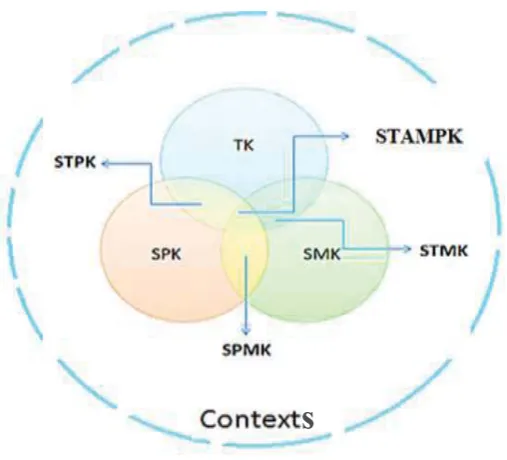
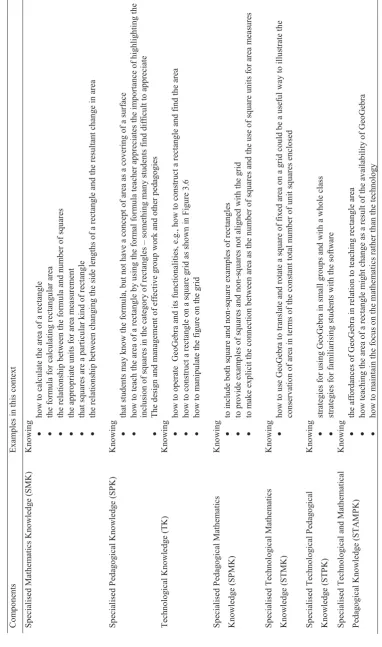
Table 3. 4. Examples of SPK, SMK, TK, SMPK, STMK, STPK, and STMAPK ... 51
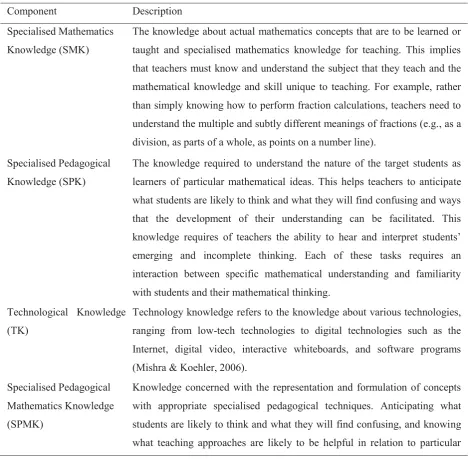
Table 3. 5. The Knowledge Required in Teaching Mathematics Using Technology (STAMPK). ... 52
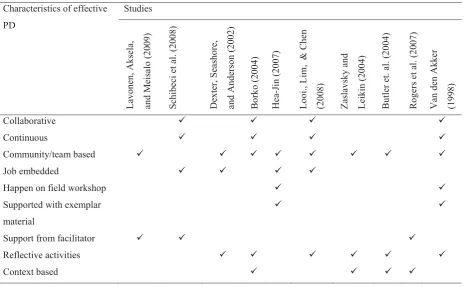
Table 3. 6. Characteristics of Effective PD Programs ... 59
Table 3. 7. Context Analysis Aspects and Guiding Issues ... 62
Table 4. 1. Themes Used for Context Analysis in this Study ... 75
Table 4. 2. Participants in the Study ... 82
Table 4. 3. Summary of Participants, Activity, Data Collection, Instrument Phase of Study and Appendix ... 88
Table 4. 4. Examples of STAMPK Construct Items ... 93
Table 4. 5. Modification of items for the Technological Knowledge (TK) construct of TPACK 94 Table 4. 6. Examples of Item of the Observation Checklist on Each STAMPK Construct ... 96
Table 4. 7. Examples of Interview Questions before the PD Program ... 98
Table 4. 8. Examples of Focus Group Discussion Questions ... 99
Table 4. 9. Phases of Thematic Analysis ... 104
Table 5. 1. Gender and Age Range of Teacher Educators ... 108
Table 5. 2. The Teacher Educators’ Teaching Experiences ... 109
Table 5. 3. The Contribution of Technology to Learning as Rated by Teacher Educators ... 109
Table 5. 4. Teacher Educators’ TPSA ... 111
Table 5. 5. Teacher Educators’ TK before Participating in the PD Program ... 112
Table 5. 6. Teacher Educators’ SMK before Participating in the PD Program ... 113
Table 5. 7. Teacher Educators’ SPK before Participating in the PD Program ... 114
Table 5. 8. Teacher Educators’ SPMK before Participating in the PD Program ... 115
Table 5. 9. Teacher Educators’ STMK before Participating in the PD Program ... 116
Table 5. 11. Teacher Educators’ STAMPK before Participating in the PD Program ... 118
Table 5. 12. Summary of Teacher Educators’ STAMPK ... 118
Table 5. 13. Teacher Educators’ Technology Integrated Teaching Practices as Audited Using an Observation Checklist before Participating in the PD Program ... 121
Table 5. 14. STAMPK Results as Rated Using the Observation Checklist ... 125
Table 5. 15. PD Program Foci Attended by Teacher Educators ... 126
Table 5. 16. Pre-Service Teachers’ Age Range, Gender and Teaching Experiences ... 126
Table 5. 17. Importance of Technology in Learning Rated by Pre-Service Teachers ... 127
Table 5. 18. Pre-Service Teachers’ TPSA ... 129
Table 5. 19. Factors that hinder the Use of Technologies in Teaching. ... 131
Table 5. 20. Factors Influencing Pre-Service Teachers Learning with Technology. ... 133
Table 5. 21. PD Programs Teacher Educators would like to Attend ... 134
Table 5. 22. Availability and Frequency of Use of Some Selected Technologies as Perceived by Teacher Educators ... 136
Table 5. 23. Accessibility and Frequency of Use of Web Based Learning Resources Perceived by Teacher Educators ... 137
Table 5. 24. Availability and Use of Technologies Perceived by Pre-Service Teachers ... 138
Table 5. 25. Accessibility and Frequency of Use of Selected Learning Resources Perceived by Pre-Service Teachers ... 139
Table 5. 26. Importance of Technologies in Teaching by the Department ... 140
Table 5. 27. Major Findings and Design Guidelines Implications ... 144
Table 5. 28. Kind of PD Program Preferred by Teacher Educators ... 147
Table 5. 29. Teacher Educators’ Perceived Knowledge in Technology and its Interplay with Content and Pedagogy ... 148
Table 5. 30. Practical Considerations in the Exemplar Material ... 149
Table 5. 31. Teacher Educators’ Reflection on the Exemplar Materials ... 150
Table 5. 32. A Schedule to Support Teacher Educators by ICT Coordinators ... 157
Table 5. 33. Teacher Educators’ TK after Participating in the PD Program ... 160
Table 5. 35. Teacher Educators’ SPK after Participating in the PD Program ... 162
Table 5. 36. Teacher Educators’ SPMK after Participating in the PD Program ... 163
Table 5. 37. Teacher Educators’ STMK after Participating in the PD Program ... 164
Table 5. 38. Teacher Educators’ STPK after Participating in the PD Program ... 165
Table 5. 39. Teacher Educators’ STAMPK after Participating in the PD Program ... 166
Table 5. 40. Teacher Educators’ STAMPK before and after Participating in the PD Program . 167 Table 5. 41. Frequency of Use of ICT in Teaching before and after Participating in the PD Program By Teacher Educators ... 168
Table 5. 42. Teacher Educators’ Frequency of Use of Learning Technologies before and after Participating in the PD Program ... 170
Table 5. 43. Frequency of Use of Technologies by Pre-Service Teachers before and after Teacher Educators Participated in the PD Program ... 172
Table 5. 44. Pre-Service Teachers’ Frequency of Use of Learning Resources before and after their Teacher Educators Participated in the PD Program ... 173
Table 5. 45. Teacher Educators’ STAMPK before and after Teacher Educators Participated in the PD Program Audited Using an Observation Checklist ... 174
Table 5. 46. Teacher Educators’ Lessons Taught Using Technology before and after Participating in the PD Program ... 176
Table 5. 47. The Teacher Educator’s STAMPK as Observed in the Classroom ... 183
Table 5. 48. Case 1: The Teacher Educator’s Lesson as Observed before and after Participating in the PD Program ... 184
Table 5. 49. Area of Selected Regular Polygons Inscribed in a Circle Using GeoGebra ... 187
Table 5. 50. Lesson Evaluation Using Observation Checklist... 190
Table 5. 51. Reasons why Teacher Educators Liked and Disliked Technology Integrated Lessons ... 192
List of Figures
Figure 1. 1. The link between the research questions and phases of the research……… 7
Figure 2. 1. Map of Ethiopia………. 13
Figure 2. 2. Management of education in Ethiopia………14
Figure 2. 3. Structure of the education system in Ethiopia………... 16
Figure 3.1. Domains of mathematical knowledge for teaching……… 34
Figure 3.2. Scenario to illustrate Ball et al. (2008) knowledge categories………... 35
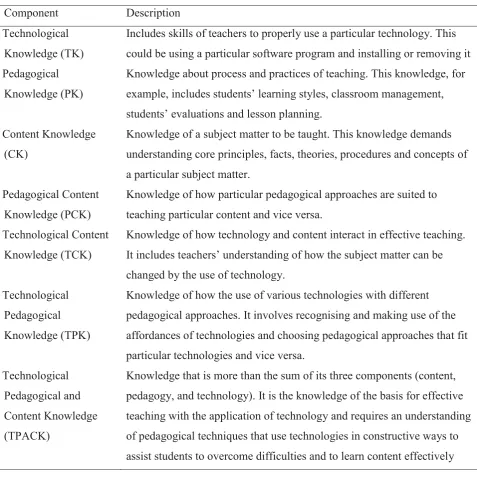
Figure 3. 3. Technological Pedagogical Content Knowledge framework……… 41
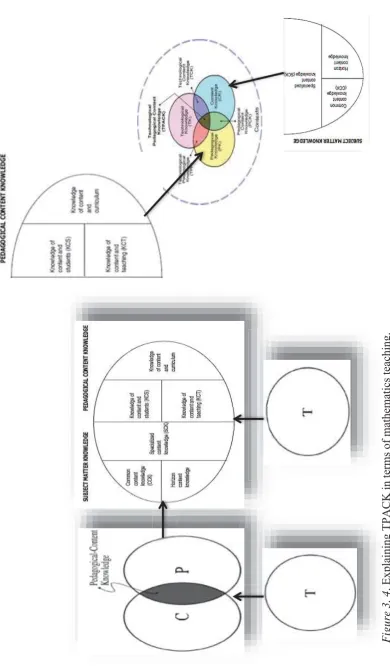
Figure 3. 4. Explaining TPACK in terms of mathematics teaching………. 45
Figure 3. 5. The knowledge required in teaching mathematics with technology………. 46
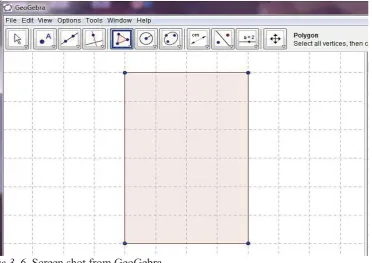
Figure 3. 6. Screen shot from GeoGebra……….. 50
Figure 3. 7. Design process of the PD program prototype……… 67
Figure 4. 1. The researcher role in the study... 78
Figure 4. 2. Process of developing an instrument to measure mathematics teacher educators’ STAMPK ... 92
Figure 4. 3. Analysis procedure for questionnaire data for a single subscale. ... 101
Figure 4. 4. Analysis procedure for observation data for a single subscale. ... 102
Figure 5. 1. Graph of a decreasing and an increasing function. ... 124
Figure 5. 2. Formative evaluation process of the PD program. ... 158
Figure 5. 3. Questions explored using Microsoft Mathematics. ... 179
Figure 5. 4. T-chart and graph of f (x) =ܔܗܠ ... 180
Figure 5. 5 . Graphs of some logarithmic functions created in the Microsoft Mathematics. ... 181
Figure 5. 6. Questions explored using GeoGebra. ... 187
Definition of Terms
Term Definition used in the study
Pre-service Teachers Prospective teachers of primary school (Ages 7 -14) mathematics
Teacher Educators Teachers of pre-service mathematics teachers
Mathematics Education The practice of teaching and learning mathematics
Information Communication Technology (ICT)
Refers to digital technologies such as computers, laptops, radio, televisions, mobile phones, software programs, etc. Technologies In this thesis technology is taken to refer to
ICT as defined above
Professional Development Nurturing of learning communities within which teacher educators try new ideas, reflect on outcomes, and co-construct knowledge about teaching and learning. College of Teacher Education Institutions that prepare pre-service teachers
List of Acronyms
Colleges of Teacher Education CTEs
Common Content Knowledge CCK
Content Knowledge CK
Educational Design Research EDR
Ethiopian Central Statistical Agency CSA
General Education Quality Assurance and Examination Agency GEQAEA
Higher Diploma Program HDP
Horizon Content Knowledge HCK
Information Communication Technology ICT
Knowledge of Content and Curriculum KCC
Knowledge of Content and Students KCS
Knowledge of Content and Teaching KCT
Mathematical Knowledge for Teaching MKT
Ministry of Education MOE
National Agency for Examination NAE
National Learning Assessment NLA
Pedagogical Content Knowledge PCK
Pedagogical Knowledge PK
Professional Development PD
Southern Africa Consortium for Monitoring Educational Quality SACMEQ
Specialised Content Knowledge SCK
Specialised Pedagogical Knowledge SPK Specialised Pedagogical Mathematics Knowledge SPMK Specialised Technological and Mathematical Pedagogical Knowledge STAMPK Specialised Technological Mathematics Knowledge STMK Specialised Technological Pedagogical Knowledge STPK
Statistical Package for Social Science SPSS
Technical Vocational Education and Training Colleges TVETCs
Technological Content Knowledge TCK
Technological Knowledge TK
Technological Pedagogical Content Knowledge TPACK
Technological Pedagogical Knowledge TPK
Technology Proficiency Self Assessment TPSA
Transitional Government of Ethiopia TGE
List of Appendices
Chapter 1 Introduction
This chapter introduces the overall design of the study. It also introduces the research background of this study, which includes the use of technology in teaching, particularly mathematics teaching and the knowledge required to integrate technology in teaching. The chapter further presents the research questions together with the overall objective of the study. The significance of the study is also outlined in this chapter. The research methodology is introduced, including data collection methods and tools for data analysis along with ethical considerations and an overview of the structure of the thesis. This chapter begins by introducing how the current study was initiated.
1.1.The Researcher’s Note
research as part of the study in Educational Science and Technology on the topic “use of technology in teaching in Ethiopian schools.” Conducting this study at Ethiopian school level unlocked an opportunity to approach the issue in different ways. Most previous studies involved primary and secondary school teachers; however, little attention was given to the teacher
educators who prepared secondary and primary school teachers. Particularly, because technology is a recent innovation and not mature in most developing countries’ schools, including those in Ethiopia, the researcher decided to study the issue at CTEs from teacher educators’ perspectives and practice. The researcher believed that doing research at a teacher education institution amounted to beginning to solve from its roots the problem of ineffective and insufficient use of technology in Ethiopian schools.
After reviewing relevant literature on the use of technology by mathematics teacher
educators with a view to designing a context based PD program, significant gaps were found that could be explored. At the beginning of 2012, the PhD journey was started with the thesis topic “Enhancing Mathematics Teacher Educators' Technological Pedagogical Content Knowledge through Collaborative Professional Development: Ethiopia.”
1.2. Research Background
Technologies have been in use for many years for the purpose of classroom instruction. Note that the term ‘technology’ is used in this thesis, unless ‘Information Communication Technology (ICT)’ is used by those authors of studies cited. Studies have shown that the use of technology as a learning tool, within meaningful learning contexts can lead to significant
2008; Voogt, 2008). As a result, university, college and school teachers are integrating technology into teaching to achieve higher learning outcomes. Using various technologies, in teaching mathematics can enhance teachers’ instruction and students’ active engagement.
According to Chee, Horani, and Daniel (2005), ICT based learning environments in mathematics education provide opportunities for active learning, enable students to perform at higher
cognitive levels, support constructive learning, and promote scientific inquiry and conceptual change. As a result, integrating technology in mathematics learning is receiving global attention.
The government of Ethiopia has tried to take advantage of technology to increase the quality of education. To facilitate the integration of technology tools into teaching, the government has formulated a number of technology implementation initiatives in education. Hare (2007) indicated that these initiatives focus on deploying educational technologies within the universities, colleges, schools, and research institutions as a way to widen access to
education, for supporting teaching, and to facilitate the delivery of improved quality of education at all levels. In spite of the government’s encouragement in its policy documents for teachers at all levels to use ICT (Ministry of Education [MOE], 1994), teachers in higher education seldom integrate the available technologies in their teaching (e.g., Hare, 2007). Similarly, mathematics teacher educators in the Colleges of Teacher Education (CTEs) tend not to use technology in their teaching. This situation implies that the pre-service teachers, who have not seen its use in teaching, are likely to be less prepared to use technology in their own teaching.
A variety of factors is most likely responsible for this. A number of literature reviews have focused on difficulties of integrating technology into teaching and have cited the lack of
technological knowledge (e.g., Chai, Koh, & Tsai, 2010; Donnelly, McGarr, & O’Reilly, 2011). Unwin (2005) indicated that computer laboratories in educational institutions across Africa are underutilised. Whilst there are some notable exceptions to this generalisation, computer laboratories in schools and higher educational institutions stand idle for much of the time (Unwin, 2005). As more classrooms become technology rich environments, it is less likely that teachers will perceive the lack of technological resources as a barrier to effective technology integration. Nevertheless, increased access to ICT resources does not guarantee increased rates of effective integration of ICT (Etmer, 2005; Hew & Brush, 2007). The other major barrier to effective technology integration is teachers’ knowledge of technology and pedagogy. This is essentially the idea of Pedagogical Content Knowledge coined by Shulman (1986) and extended into the domain of teaching with technology by Mishra and Koehler (2006) where it is termed Technological Pedagogical Content Knowledge (TPACK). TPACK is likely to take the place of lack of technology resources as the main determinant of the extent to which ICT is integrated into teaching (Niess, 2011) because teaching with technology requires its development.
program strategies to support teachers’ effort to integrate technology in their teaching. Most encourage a PD program with characteristics of collaborative engagement, incorporating practices, relevant to the classroom and school context and practically tested in the classroom (e.g., Borko, 2004; Hea-Jin, 2007; Rogers et al., 2007; Zaslavsky & Leikin, 2004). Grossman (1990), and Putnam and Borko (1997) all regarded PD programs as a tool for the growth of teachers’ content, pedagogical knowledge, and skills to enhance learning.
1.3. Objective and the Research Questions of the Study
This study documented the design, development and refinement of a job embedded PD program that supported mathematics teacher educators to integrate technology into teaching in two CTE in Ethiopia. It examined the current practices of mathematics teacher educators’ technology integrated teaching practices and their pre-service teachers’ views of technology integrated teaching. It also investigated the factors influencing teacher educators’ practices of technology integrated teaching. The study used a mixed method research approach whereby the data were collected using questionnaires, an observation checklist, interviews and focus group discussions (including workshops).The following research questions focussed the overall objective of the study:
1. What competencies do teacher educators currently have in relation to integrating technology into the teaching of mathematics education?
identified before the PD program was designed, using a questionnaire, interviews and observation sessions.
2. What are the factors that influence teacher educators’ integration of technology into teaching?
Identification of hindering and facilitating factors in teacher educators’ technology integrated teaching practice was the focus of Research Question 2. This step supported the design of a PD program, by taking into account the factors influencing teacher educators’
technology integrated teaching that were identified using questionnaires, focus group discussion, and interview.
3. How might an intervention support the development of teacher educators’ skill in relation to integrating technology into teaching?
This research question related to characteristics of an intervention in the form of a PD program that fits with the particular contexts and positively influences teacher educators’
technology integrated teaching practices. This research question was addressed using a review of existing literature, a contextual analysis, and questionnaires and interviews with teacher
educators, pre-service teachers, and ICT coordinators.
4. What competencies can teacher educators demonstrate in relation to integrating technology into teaching after participating in a PD program?
identified after teacher educators’ participated in a PD program identified in Research Question 3.
These research questions were addressed across the three phases of the study, namely: Phase 1: context analysis, Phase 2: design and improvement of a PD program and Phase 3: assessment and evaluation of the impacts of the PD program. The relationship between research questions and the phases of the study is shown in Figure 1.1.
Figure 1. 1. The link between the research questions and phases of the research.
As shown in Figure 1.1, the research questions were formulated to address the context of the research site (including participants’ competencies with the use of technology in teaching and relevant features of the CTEs contexts). The analysis of the context informed the design and development of a PD program that supported teacher educators to integrate technology in their teaching. Finally, an assessment and evaluation were needed to understand the impact of the PD program on teacher educators’ practice in relation to integrating technology in their teaching. In looking for an approach that addressed these activities systematically, Educational Design Research (EDR) was considered appropriate. EDR involves inquiry focused on understanding
• Context analysis
Research Questions 1 and 2
• PD program design, refinement
Research Question 3
• Impact
assessment and evaluation
Research Question 4
Phase 2 Phase 3
the responses that a program generates (McKenney & Reeves, 2012). EDR supports the rigorous analysis of a learning problem leading to quite specific ideas for a PD program relevant to the research site (Walker, 2006). McKenney and Reeves (2012) also indicated that EDR can be conducted for creating a PD program and to solve context based problems in practice.
1.4. Significance of the Study
mathematics specific version of the TPACK framework called Specialised Technological and Mathematics Pedagogical Knowledge (STAMPK). In this new framework, the study showed how a particular conception of the knowledge required teaching mathematics could be integrated with the TPACK framework as the basis for understanding technology integrated mathematics teaching. Moreover, the study encourages other professionals in the field to carry out further studies on this same issue and other related topics, for example, the use of technology in other subject areas of teacher education. The potential educational benefits identified in the study and implications made are transferable to other similar CTEs, which intend to provide future PD programs in this area.
1.5. Research Methodology
The study used a mixed method approach, which involved both quantitative and qualitative data collection methods. Moreover, the study used an EDR approach, particularly EDR through intervention described by McKenney and Reeves (2012) in which the inquiry is focused on understanding the responses that a specific PD program process give use to.
1.6. Ethical Considerations
treatment of participants; and the ethics of responsibility to the society. These issues were kept in mind by the researcher throughout the data collection, analysis, and interpretation of results.
In each aspect of the study process, the researcher ensured that all participants were involved based on their full consent. Written consent was obtained from all participants (teacher educators, pre-service teachers and ICT coordinators) who participated in one or more of the activities, which includes questionnaires, interviews, focus group discussions (including workshops), and classroom observations.
Feedback to participating teacher educators and ICT coordinators was provided in different forms and on various occasions throughout the study. An evaluation workshop was conducted to evaluate the overall process and the impact of the PD program. This included gathering teacher educators’ reflection and feedback. Teacher educators and ICT coordinators were encouraged to reflect on the overall activities of the PD program process as an opportunity to learn from each other and obtain feedback on their technology integrated teaching practices and PD program participation to inform future improvements. In addition, the summary of the draft report was forwarded to the teacher educators and ICT coordinators as part of the feedback for participants; this was an opportunity for them to receive feedback on their technology integrated mathematics teaching practices.
1.7. Structure of the Thesis
context of the Ethiopian education system, CTEs, and use of technologies in teaching in that context. The literature related to the study is reviewed in Chapter 3. In that chapter, the gaps are identified and ways in which the current study addressed them are described. Chapter 4 describes the method and the procedures used in the study. Chapter 5 reports the results of the study in three main sections. The first of these discusses the results of analysis of context aimed at informing the design of context based PD program guidelines (Section 5.1). Section 5.2 of Chapter 5 reports on the outcomes of the improvement and evaluation process of the PD program. Evaluation of the final PD program is the focus of the third section, Section 5.3. The results reported in Chapter 5 are discussed in Chapter 6, and Chapter 7 presents the conclusions and outlines the main implications of the study.
1.8. Chapter Summary
This chapter has introduced the study and the structure of the thesis. The objective and questions of the study were introduced, followed by the significance of this study. Based on the theoretical consideration of the research, the methodology used in the study was introduced which is underpinned by mixed method approach through an EDR approach. Lastly, this chapter has introduced the ethical considerations and the structure of the thesis.
Chapter 2 Context
The previous chapter provided an overview of the study, including the background its objectives and the research questions that guided the study, as well as its significance. The chapter also provided an overview of the research methodology used in the study. In later sections, Chapter 1 described ethical considerations, structure and overall design of the study. This chapter describes the context in which the study was conducted. The chapter comprises six sections. Section 2.1 describes the educational system in Ethiopia; Section 2.2 describes the quality of mathematics education in the Ethiopian context, Section 2.3 explains teacher education systems in Ethiopia, and Section 2.4 describes trends in the practice of technology use in
teaching and technology policy status in Ethiopia. Finally, trends in Professional Development (PD) programs related to teacher education in Ethiopia are described in Section 2.5 followed by a summary of the chapter in Section 2.6.
2.1.The Education System in Ethiopia
Ethiopia is an Eastern African country located in the horn of Africa just West of Somalia as shown in Figure 2.1. It covers an area of 1.25 million square kilometres and has a population of 86,613,986 of which 43,715,971 are males and 42,898,015 are females as reported by
Figure 2. 1. Map of Ethiopia (Source: http://i.infoplease.com/images/methiop.gif).
In Ethiopia, education is considered the main vehicle to transform the country’s economic growth. As a result, the Ethiopian government gives due emphasis to the education system (Ministry of Education [MOE], 2010, Ministry of Finance and Economic Development, 2010). Many scholars welcomed the issue of the present Education and Training Policy in 1994 because it addressed equity, efficiency, quality, and access to education. In this policy, the country’s education was envisioned as characterised by democracy, professionalism, effectiveness,
efficiency, coordination, and decentralisation. The national Education and Training Policy which accompanied the framework launched the first 5 year Education Sector Development Program in 1997 as part of a 20 year education sector plan (Kassaye, 2005). The education policy provides guidelines about the structure of the school system and other aspects of the education system.
Accordingly, each of these has its bureau of education responsible for the administration and management of the education system in that jurisdiction. Within each of these exists a network management structure involving subdivisions called zonal educational departments and woreda education offices. The latter is the smallest educational authority responsible for primary and secondary schools in its territory. Theoretically, each of the national regional state education bureaus is both administratively and financially responsible for education in its region, but with a substantial subsidy from the federal government for general education and the Technical
Vocational Education and Training Colleges (TVETCs) as well as for Colleges of Teacher Education (CTEs) that operate in their respective states. Universities are, however, the mandate of the federal MOE. Each regional government manages TVETCs and CTEs. Figure 2.2
indicates the management structure of education institutions in Ethiopia.
Figure 2. 2. Management of education in Ethiopia.
As indicated in Figure 2.2, the Federal government has direct responsibility for universities while the respective regional education bureaus manage the other education sectors.
Ministry of Education
Regional Education
Bureaus
Primary
Schools SchoolsHigh
Higher education preparatory
schools
CTEs TVETCs
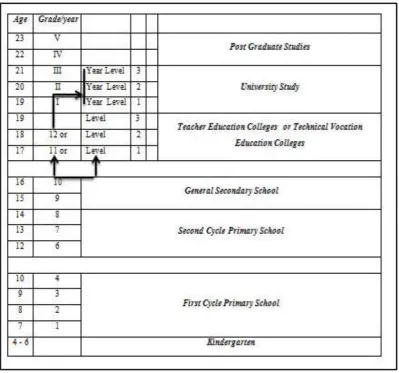
The Ethiopian education system encompasses formal and non-formal education. Non-formal education covers primary education provided to adults who have dropped out and returned for schooling, or late beginners. The formal education program is divided into kindergarten, general, TVET and tertiary education programs (MOE, 1994).
In Ethiopian schools, education is divided into an 8+4 structure: 8 years of primary education divided into two cycles, each having 4 years duration, and 4 years of secondary education divided into another two cycles, each having 2 or 3 years duration. In total, there are 10 years of general education consisting of 8 years of primary education and 2 years of general secondary education (Grades 9 and10). This is followed by 2 years of TVETC, CTE or a university preparatory program (the second cycle of secondary education (Grades 11 and 12) which prepares students for continuing to higher education. Primary education comprises Grades 1 through 4 of basic education and the second cycle of Grades 5 through 8 general primary education (MOE, 1994). Student progression from primary school level to the next and subsequent levels is based on a system of national examinations at Grades 8, 10 and 12. The summary of the structure of the education system is shown in Figure 2.3.
Possible specialisations include mathematics, physics, biology or chemistry. Children are entitled to free education up to Grade 10, after which a tuition fee is applied. The tuition fee system at Grades 11 and 12, however, is not yet established and hence it is free.
Figure 2. 3. Structure of the education system in Ethiopia.
2.2. Quality of Mathematics Education in Ethiopia
Although mathematics is of paramount importance in the modern scientific and technological world, assessment results indicate that many countries in Africa, including Ethiopia are experiencing a decline in students’ participation and performance in mathematics (e.g., Southern Africa Consortium for Monitoring Educational Quality [SACMEQ], 2011; National Agency for Examination [NAE], 2010). In most developing countries, students are performing lower in mathematics compared with other subjects (Murimba, 2005) as indicated in results of standardised measures (i.e., SACMEQ) which are used in some African contexts to assess students’ performance in mathematics and other subjects. These studies have indicated that the quality of mathematics in Africa is of serious concern. Both primary and secondary level mathematics education is weak in most African countries as reported by the General Education Quality Assurance and Examination Agency (GEQAEA) and NAE of Ethiopia (GEQAEA, 2008; Murimba, 2005; NAE, 2010). In 2009, 15 Southern African countries participated in the third study for monitoring educational quality conducted by the third SACMEQ. A random sample of 3416 Grade 6 learners from 169 Southern African public schools was tested in reading (literacy) and mathematics (numeracy). The result indicated that the learners performed poorly in mathematics (SACMEQ, 2011). Ethiopia was, however, not included in these studies.
and 8, ages 10 and 14) of primary education since 2000. For secondary schools (Grades 10 and 12, ages 16 and 18 years), the first NLA was carried out in 2010.
The first NLA of students’ achievement in Ethiopia was carried out in 2000 at the end of the first (Grade 4) and second (Grade 8) cycles of a primary school on a sample basis in four subjects including mathematics. The second NLA was carried 4 years later in 2004. The third NLA for Grade 4 and Grade 8 students was then undertaken in 2008 by General Education Quality Assurance and Examination Agency [GEQAEA] (2008). The mean score for Grade 4 students in mathematics was 43.7% in 2008 which is less than the minimum requirement of 50% pass mark from one grade to the next level (MOE, 1994). The MOE assumes an equivalent standard (50%) of test results for NLA and grade progression from test to test. The standard was kept consistent across iterations of the test by item test analysis in order to look at the nature of the items and pick items for future use (NAE, 2010).
The NLA for Grades 10 and 12 students was conducted in 2009. The main purpose of the study was to determine what secondary students knew upon completion of General Secondary Education (Grade 10) and the University preparatory program (Grade 12) in light of the
minimum learning competencies set by the MOE for both grades. The percentages of students in Grade 10 who scored 50% (the standard that the ministry set as a pass mark and designated proficient) or more in mathematics was only 14.7% (NAE, 2010).
The results indicated that students were performing below the standard set at both primary and secondary levels in mathematics. These results were unsatisfactory and showed that
MOE of Ethiopia, for quality education, teachers need to be supported and become familiar with necessary knowledge and pedagogies that can help to diagnose and intervene at the individual student level. There is a need for schools and teachers to be supported through PD programs to extend their use of effective pedagogical techniques to support students’ learning and
performance (Belihu, 2010; Dufera, 2006). Mathematics teachers are expected to have the necessary content and pedagogical knowledge for effective teaching in the classroom. As a result, efforts have been invested in PD programs for teachers aimed at equipping them with the necessary competencies and skills to make them effective in the classroom. Studies have
indicated that teachers’ competence demands knowledge and skills related to both content and pedagogical knowledge (e.g., Hsieh et al., 2011; Park, Jang, Chen, & Jung, 2011; Schmidt et al., 2008; Tatto & Senk, 2011). These types of knowledge for teaching are discussed in detail in Chapter 3, Section 3.3. The use of technology at all educational levels in teaching is also cited by the MOE (2008) as a means to increase the quality of education.
2.3.Teacher Education Institutions
There are 32 CTEs in Ethiopia responsible for awarding diplomas to primary school teachers. CTEs are classified under the higher education subsector. They provide classes in regular, evening and summer programs. There are more than 20 different departments or streams in most CTEs. Some of the departments include English, Local language, History, Geography, Chemistry, Biology, Physics, and Mathematics (MOE, 2012b). These departments prepare specialist primary school level teachers in their respective fields.
In most cases, CTE in Ethiopia is regarded as the least attractive higher education level program than universities. Consequently, and similar to most other East African countries, teacher education programs attract students who cannot be admitted to medicine, engineering, and other more attractive options (Ottevanger, van den Akker, & de Feiter, 2007). The coverage of content is similar to that in most eastern African countries. Subject content coverage at both CTEs and universities receives great emphasis. At CTEs, it is the same content as Grades 11 and 12 and moves quickly toward more advanced university level topics with little attention paid to conceptual gaps in the pre-service teachers’ understanding of primary school context. In addition, the concept of pedagogical content knowledge is emphasised at CTEs. CTE students have a practice period in primary schools for prospective primary school teachers. Two large CTEs establishments were the sites for this study.
2.4. ICT Policies and their Use in Teaching
transforming Ethiopia’s predominantly subsistence agriculture economy and society into an information and knowledge based economy and society, effectively integrated into the global economy.
Recognising the key role of technology in the socioeconomic development of the country, the Government has taken measures to address major technology challenges, which include poor infrastructure, an inadequately skilled workforce, and high telecommunication costs. It aims to enhance the growth of the ICT industry by, among other things, encouraging investment in the ICT sector with a focus on infrastructure and human resources development (Adam, 2010; Dzidonu, 2011).
In various policy documents, the MOE of Ethiopia describes and emphasises the use of technology to expand students’ modes and breadth of learning. For example, under the
professional standards for teachers, it is stated teachers must have the knowledge to meet diverse learning needs of students through consistent application of a wide range of effective teaching strategies and the use of technology to foster both independent and collaborative learning (MOE, 2012c). Another policy document called Content and Pedagogical Standards for Mathematics Teachers states that teachers are required to have the skill to integrate current technology as appropriate for instruction (MOE, 2012a). Further, this document demands that mathematics teachers use technology for topic specific applications with statements such as “uses
The government have been implementing a number of programs with the assistance of the United Nations Development Program. It has developed an ICT for Development policy as a framework for the facilitating Ethiopia’s ICT led socioeconomic development. Among the objectives of the policy is the promotion of ICT in education at all levels of the education system.
2.4.2.Technology use in teaching. Technologies are being increasingly used in education, even in the most challenging environments in developing countries. The systematic use of technology for learning purposes, however, is still low in developing countries. Students learn basic computer skills and some principles of computer operation, but a lack of equipment limits the practical experience for students and many well trained ICT teachers leave teaching for business and industry jobs (Ottevanger et al., 2007).
Consistent with its policies, the government of Ethiopia has made considerable investment in technology infrastructure, especially at the secondary school and tertiary levels. Currently, 71.6% of secondary schools are equipped with plasma televisions and 26.1% of secondary schools have access to internet services (MOE, 2010).
The government continues the expansion of technology use in education in order to improve the quality of teaching and learning, but for quality improvement to occur, it is necessary to go beyond the provision of more technology infrastructure. Strategies under the Education Sector Development Program cover three main areas aimed at improving the linkage between technology and quality. Firstly, it is the intention to develop and implement a
programs have been prepared in response to ICT national curriculum. The plasma television program is a live, nationally broadcast "plasma" television mode of instruction broadcasted over Internet protocol networks to wide plasma television screens installed in each classroom, via a satellite receiving device named Plasma Display Panels. A second area of challenge is the
preparation of teachers to use technology in their teaching. Efforts continue to reinforce the skills of teachers to use technology efficiently. Thirdly, measures have been taken to expand the access of schools to technology infrastructure to allow more students and teachers to benefit from more widely available global information sources. The effort to increase the use technology in
teaching is reflected in the national and school levels.
skills to use ICT in teaching (MOE, 1994). ICT training is a compulsory course for the primary school teachers. The training approach involves initially teaching basic ICT principles and preliminary practical skills such as switching on and shutting down the computer, word processing, and using Microsoft Encarta (Bass, 2007). The focus of the training is on learning how to use technology tools rather than using technology to enhance learning. In essence, there is a minimal focus on the interconnectedness of technology, pedagogy, and content for effective use of technology in teaching.
At school level, there is an increase in technology access in most urban schools, although no guarantee on using technology for teaching can be derived from the mere presence of ICT in schools (ten Brummelhuis, & Kuiper, 2008). Teachers are encouraged to use technology tools such as computer-based tutorials, drill, and practices programs, simulations, and games, as well as communication tools, and other technology tools to assist classrooms, laboratories, and libraries thereby improving the overall quality of education. Teachers continue to use technology, however, for low level formal academic tasks rather than as a learning tool to support students’ active learning (Hare, 2007; Gebremariam, 2004).
2.5. Professional Development
Recognising the importance of PD programs to the quality of education, the Ethiopian MOE included academic and PD programs in its higher education reform plan (World Bank, 2003). Many PD programs for teacher educators at CTEs are, however, associated with the implementation of curriculum reforms or with efforts to improve practice in schools. For example, the Higher Diploma Program (HDP) is designed to prepare teacher educators in line with promoting a student centred teaching approach and the overall professional growth of teachers. The HDP comprises on the job PD program for one academic year targeting teacher educators’ competence in learning and teaching methods, assessment methods, and key elements of the roles required of teacher educators’ for effective teaching. These include reflection,
collaborative work, planning, and coping with change. The successful completion of the one year HDP is becoming a prerequisite for receiving a teaching license without which it will be
impossible to join or stay in the teacher education profession in the future as indicated in the Teacher Education System Overhaul handbook (MOE, 2003).
2.6. Chapter Summary
The primary intention of this chapter was to inform the reader’s understanding of the context of Ethiopia and its education system. In summary, the quality of students’ performance in mathematics in Ethiopian schools is inadequate at both primary and secondary school levels. The government of Ethiopia continues the expansion of technology use in education in order to improve the poor quality of teaching and learning. In the analysis, it became evident that the government of Ethiopia has set ambitious ICT policies and made a considerable effort to
encourage teachers at all levels to use technology in their teaching. There is no clear information or strategy for teachers, however, to acquire the knowledge required to integrate technology in their teaching.
The following chapter, Chapter 3 will examine the theoretical perspectives from the literature in relation to technology integrated teaching in mathematics. The chapter will
specifically explore theories on technology use in teaching and knowledge required from teacher educators to use technology effectively in teaching and the characteristics of PD programs in the use of technology in teaching mathematics. The chapter will also provide the theoretical
Chapter 3 Literature Review
The previous chapter provided an overview of the context of the study. It described the education system in Ethiopia and the quality of mathematics education in that country. It also provided an overview of the teacher education, Information Communication Technology (ICT) policies, technology use in teaching, and Professional Development (PD) program trends for teachers in Ethiopia. This chapter reviews the literature related to the study. It describes gaps in existing knowledge of technology integrated mathematics teaching and explores the
3.1. Technology in Teaching Mathematics
Studies have shown that the use of ICT as a learning tool, within meaningful learning contexts can lead to significant positive educational and pedagogical outcomes in the schools and bring major benefits to both learners and teachers (e.g., Ayub, Mokhtar, Luan, & Tarmizi, 2010; Su, 2008; ten Brummelhuis & Kuiper, 2008; Voogt, 2008). These findings have motivated university, college and school teachers to integrate technology into teaching to achieve better learning outcomes. ICT can support constructivist pedagogy, as students use technology to explore and reach an understanding of concepts (e.g., Bu & Haciomeroglu, 2010; Chee, Horani, & Daniel, 2005; ten Brummelhuis & Kuiper, 2008). Particularly, for teaching mathematics, there are multiple ICTs, which can enhance teachers’ instruction and students’ active engagement and learning opportunities. Chee et al. (2005) stated that ICT based learning environments in
Familiar applications such as spreadsheet applications that have been available since the early 1980s can have powerful uses. They are electronic tables in which one can enter a formula that efficiently performs calculations on a number or a series of numbers. Spreadsheets can enable students to ask and answer "What if . . . ?" questions with many numbers rather than a single value (Julie & Douglas, 1998). Clayton and Sankar (2009) found serendipitously that using spreadsheets to teach statistics influenced students’ attitudes toward the subject. Their use to teach statistics can allow students to develop transferable spreadsheet skills while also building their confidence in such skills as data entry and manipulation, writing formulae, using absolute and relative cell references, using array formulae, and accessing to build in functions (Michael & Van Auken, 1998). Furthermore, spreadsheets can serve as functional machines for exploring what happens when a variable changes. As students experiment with different input values in a spreadsheet, they can see relationships unfold visually and efficiently. Such flexible software can encourage students to try out possibilities and discover patterns in their results (Clayton & Sankar, 2009; Michael & Van Auken, 1998). There are also mathematics specific software packages such as dynamic geometry software and graphic packages, which can facilitate mathematics teaching (Johnston-Wilder & Johnston-Wilder, 2004).
teaching demands specific skills of teachers that can be enhanced through different PD programs (Peeraer & Van Petegem, 2010).
3.2. Knowledge for Effective Mathematics Teaching
The effectiveness of teachers is influenced by their initial teacher education in preparing them for their future careers (Hsieh et al., 2011; van Dijk & Kattmann, 2007). The content, pedagogy and approaches taught in courses taken by future teachers should be consistent with the needs of teaching in schools (Hsieh et al., 2011; van Dijk & Kattmann, 2007). There is consensus that teachers need to be competent in pedagogy and content in order to be effective teachers (e.g., Ball, Thames, & Phelps, 2008; Hill, Schilling, & Ball, 2004; Loughran, Mulhall, & Berry, 2008). In recent years, technology integration into teaching has been recognised as a further requirement fostering students’ learning. Studies have reported that ICT has the potential to enhance teaching and learning through enriching the curriculum, improving delivery,
extending methods of presenting information, offering new opportunities through technological techniques, and allowing teachers to manage and reduce their administrative workloads (e.g., Fuglestad, 2009; Ingram, 2007). Integrating technology in new student centred learning
approaches in teaching requires conceptualising teachers’ knowledge in organised ways. These types of knowledge required for teaching are discussed in the following two sections.
1980s. One of the pioneers of work on knowledge for teachers was Shulman (1986) who
introduced the term Pedagogical Content Knowledge (PCK) as a basic requirement for teachers. According to Shulman (1987, p. 8) PCK represents “the blending of content and pedagogy into an understanding of how particular topics, problems, or issues are organised, represented, and adapted to the diverse interests and abilities of learners, and presented for instruction”.
Subsequently, Shulman’s idea of PCK has been applied in different subject areas. For example, Phelps and Schilling (2004) used PCK in language teaching to develop survey measures of the content knowledge of teachers needed to teach elementary reading. In physics teaching, Halim and Meerah (2002) used PCK to explain teachers' pedagogical content knowledge (PCK) of selected physics concepts with its generic characteristics.
In relation to mathematics, researchers such as Ball and colleagues (e.g., Ball, Thames, & Phelps, 2008) and Park and colleagues (e.g., Park et al., 2011; Park & Oliver, 2008) have established PCK as essential to the effectiveness of mathematics teachers. Some, such as Ball et al. (2008) have, however, argued that referring to PCK in mathematics teaching in its generic form can be seen as limiting the importance of understanding mathematics subject matter in teaching and teachers’ knowledge about the subject that is required by effective mathematics teachers. They further argued the distinction of PCK in specific subjects of study can make an important contribution to understanding the qualities and resources needed for effective teaching (Ball & Forzani, 2009; Ball et al., 2008; Hill et al., 2004). Mathematics teacher educators have developed a variety of conceptualisations of the knowledge needed to teach mathematics.
quartet was derived from constant comparison across 24 videotaped lessons of elementary pre-service teachers towards the end of their initial teacher education. The knowledge quartet comprised four broad dimensions, through which the mathematics related knowledge of these teachers could be observed in practice. These dimensions and their definitions (Rowland, Turner, Thwaites & Huckstep, 2009) are summerised in Table 3.1.
Table 3. 1
The Knowledge Quartet (Rowland et al., 2009, p. 29) Knowledge categories Description
Foundation Adherence to textbook, Awareness of purpose, Concentration on procedures, Identifying errors, Overt subject knowledge, Theoretical underpinning, Use of terminology
Transformation Choice of examples, Choice of representation, Demonstration Connection Anticipation of complexity, Decisions about sequencing, Making
connections between procedures, Making connections between concepts, Recognition of conceptual appropriateness
Contingency Deviation from agenda, Responding to children’s ideas, Use of opportunities
Chick, Baker, Pham, and Cheng (2006) developed a PCK framework considering facets of knowledge contributing to teachers’ decision making. The categories they identified were
Clearly PCK - those aspects of teaching which are most clearly a blend of content and pedagogy; Content Knowledge in a pedagogical context which describes those aspects of knowledge drawn most directly from content; and Pedagogical Knowledge in a content context comprising
knowledge which has been drawn most directly from pedagogy. In each category, they identified finer categories with examples of teacher practice that evidenced the use of specific knowledge types. For example, the pedagogical knowledge in a content context category includes setting goals for learning specific or general mathematics, getting and maintaining students’ focus and classroom techniques for describing classroom practices. They indicated that these
characteristics are evident, for example, when a teacher is able to describe a goal for students’ learning directly related to specific or general mathematics content, discuss strategies for engaging students and discuss generic classroom practices respectively.
Ball et al. (2008) developed a model to show the correspondence between their map of the domain of content knowledge for teaching mathematics and two of Shulman’s (1986) initial categories: subject matter knowledge and pedagogical content knowledge as shown in Figure 3.1. Ball et al. (2008) suggested that Shulman’s Content Knowledge comprises three kinds of knowledge Common Content Knowledge (CCK), Specialised Content Knowledge (SCK), and Horizon Content Knowledge (HCK) and that Pedagogical Content Knowledge comprises Knowledge of Content and Students (KCS); Knowledge of Content and Teaching (KCT) and Knowledge of Content and Curriculum (KCC).
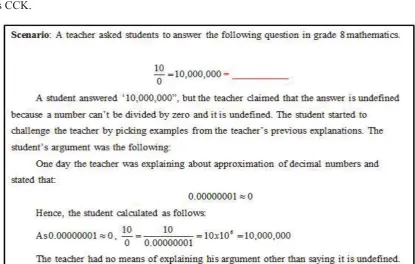
Figure 3.1. Domains of mathematical knowledge for teaching (Ball et al., 2008, p. 403). An illustration of what these categories look like in practice will now be discussed in relation to the following scenario shown in Figure 3.2.
context demanded an explanation. The knowledge the teacher demonstrated in Ball et al.’s terms is CCK.
Figure 3.2. Scenario to illustrate Ball et al. (2008) knowledge categories.
Secondly, although the teacher was teaching the concept of approximating decimal numbers, he was not aware of different interpretationsof the approximate numbers and division by zero that students need to distinguish explicitly. In this regard, teaching requiresknowledge beyond that being taught to students. Forinstance, it requires understanding different
interpretationsof the approximations and the meaning of division by zero that students need to understand. It involves the use of mathematicalknowledge that might be taught directly to students so that they can develop an understanding. People who are not mathematics teachers do not require this knowledge. Ball et al. (2008) called it SCK.
aboutstudents and their mathematical thinking, and development in the context of learning mathematics. This knowledge is called KCS (Ball et al., 2008; Hill et al., 2005).
Fourth, the teacher showed no evidence of being able to evaluate the instructional advantagesand disadvantages of representations used to teachapproximation and division by zero through identifying what different methods andprocedures afford teaching. This demands knowing about teaching and knowingabout mathematics. According to Ball et al. (2008), the knowledge teachers require to designinstructional approaches for particular mathematics content is called KCT.
Close study of teachers’ knowledge specific to particular mathematics content is helpful for the following reasons. Firstly, it can help in studying the relationships between teachers’ content knowledge and their students’ achievement. For example, it would be useful to ascertain whether there are aspects of teachers’ content knowledge that predict student achievement, more than others do (e.g., SCK). This could direct and help teacher education systems to provide appropriate PD for teachers (Capraro, Capraro, Parker, Kulm, & Raulerson, 2005). Secondly, it could be useful to study whether and how different approaches to teacher development have different effects on particular aspects of teachers’ pedagogical content knowledge (Abell, Rogers, Hanuscin, Lee, & Gagnon, 2009) administered in the particular field of study (e.g. Mathematics). Thirdly, the categories of content knowledge for teaching might inform the design of support materials for teachers and teacher education and clarify what is required in a
The teacher knowledge frameworks discussed show teachers’ knowledge of mathematics alone is insufficient to support their attempts to teach the subject for understanding. An
important distinction is that made by Ball and colleagues (Ball et al., 2008) between general mathematical knowledge and mathematical knowledge that is specifically useful in teaching mathematics. It is important that the identification of elements of the knowledge required by teachers can lead to action in order to promote student understanding and prepare future
mathematics teachers more efficiently. Furthermore, Ball et al. emphasised that the mathematical knowledge needed for teaching mathematics is different from the mathematical knowledge typically taught in university mathematics classes.
The knowledge required for teaching school mathematics has implications for teacher education colleges and teacher educators. Understanding PCK in particular has been recognised as helpful for mathematics educators in devising PD programs for teachers (Ball et al., 2008). According to a number of studies (e.g., Ball & Forzani, 2009; Hill et al., 2005; Hill et al., 2004), mathematics teachers’ PD programs can be guided by understanding future teachers’ PCK. A clear and explicit understanding of the categories of knowledge for teaching can inform the design of support materials for teachers, preparation of teachers, and design of PD program (Ball et al., 2008; Grossman et al., 2009). This means that teacher educators should draw attention to the connection between knowledge of mathematics and knowledge of mathematics teaching. There is consensus that teachers of mathematics need to be educated about both from