0022-538X/91/062929-07$02.00/0
Copyright© 1991,American Society forMicrobiology
Expression of the
Herpes
Simplex Virus
1 otTransinducing
Factor
(VP16) Does Not Induce Reactivation of
Latent
Virus
or
Prevent
the
Establishment of
Latency
in Mice
AMY E. SEARS,' VEIJOHUKKANEN,2 MARK A. LABOW,3t ARNOLD J. LEVINE,3
AND BERNARD ROIZMANl*
TheMarjorie B. Kovler Viral Oncology Laboratories, University of Chicago, Chicago, Illinois 606371;
Department of Virology, University of Turku, Turku, Finland2; and Department of Molecular Biology, Princeton University, Princeton, New Jersey 085443
Received4October 1990/Accepted4March 1991
Afeatureofthecascade regulation of herpes simplex virus 1 geneexpression in productive infection is that
the first genes to be expressed, the a genes, are transactivated by a structural component of the virion
designated as the a transinducing factor (aTIF). In this study, we have tested the hypothesis that latent
infectionofsensory neuronsresults from the failure of aTIF,ategumentprotein, tobe transportedfrom the nerveendingstothenucleusofthesensory neuron.Twoviruseswereconstructed.Thefirstrecombinantvirus
(R6003) containedasecondcopyofthe aTIFgeneplacedunderthecontrolofametallothioneinpromoter. The
second recombinant virus (R6004) isidentical to R6003except for the presence ofa stopcodon inserted at aminoacid70 of the second aTIFgene.The metaliothioneinpromoterinsertedintotheviralgenome wasshown tobeexpressed, and aTIF mRNAwasdetectedby in situ hybridization of sections of trigeminal ganglia of mice
infected withR6003, both untreated and those given cadmium injections. In all experiments, therewereno
significant differencesintherecoveryoflatentvirusfrommiceinfected withR6003orR6004, whether injected
withcadmium ornot. Cadmium administration atthe time ofinfection and at intervals thereafter did not
preclude establishment oflatency. In another series of experiments, transgenic mice expressing the
metal-lothionein-driven aTIFdidnotdifferfromnontransgenicsiblingswithrespecttotheincidence of latent virus
in trigeminal ganglia. Weconclude thatthe absence ofaTIF cannotaloneaccountfor theestablishment of
latency.
Theexperimentsdescribed in this report test a hypothesis
described earlier (33): that herpes simplex virus (HSV)
latencyresultsfrom the absence of avitalviral
transactivat-ing factor.
InHSV-1-infected cells,viral gene expression isregulated
inacascadefashion (14, 15). The expression ofagenes,the
firstsetof genes to be expressed, is transactivatedby a viral
structuralprotein (3, 32). The transactivator has been
des-ignatedasthe a transinducingfactor (otTIF)according to its
function (30) or VP16 according to the nomenclature
as-signedtovirion proteins(36), and itispresentin 500to1,000
copiespervirionin thestructuredesignatedasthe tegument
located between the envelope and the capsid (13). Upon
entry ofthe virus into the cell, the capsid migrates to the
nuclear pore and the DNA is released into the nucleus,
whereitcircularizes(2, 31). Acis-actingsite found upstream
of all a gene promoters (20, 24) is bound by a hostprotein
designated
variously
asaHi,
OTF-1, Oct-1,orNF-III (9, 21,27, 28). aTIF binds to the
Oct-i-DNA
complex (21, 22).Experiments showing thataTIF transactivated aviral gene
resident in thehostgenomeunder conditions ofinfectionin
which the viral DNA was not released from the capsid
indicated that aTIFmakes its way to the nucleus
indepen-dently of the viral DNA (3). As noted previously (33), the
puzzling features of theregulation of HSV gene expression
are (i) the use ofa transactivator rather than of enhancer
*Correspondingauthor.
tPresent address: Department of Molecular Genetics, Hoff-mann-LaRoche, Inc.,Nutley, NJ 07110.
elementsforexpressionof agenes, (ii)thephysical
separa-tion of the DNA and transactivator in different
compart-ments of thevirion, and (iii) the use of a cellular
transacti-vator, i.e., Oct-1, as the linker between aTIF and its
cis-acting site.
HSV can establish latency in sensory neurons both in
humans and in experimental animal systems. In neurons
harboring latent virus, the only viral transcript detected to
date (the latency-associated transcript [LAT]) accumulates
in nuclei (37) and has notbeen shown to encode a protein.
Mutants which do not produce the LATare not defective
with respecttotheestablishment oflatency(17).Attemptsto
identify the gene(s) required for the establishment of the
latent state have not been successful. While reactivation
from the latentstaterequirescompetencetomultiply (6, 16,
18),virtuallyanydeletionmutantadministeredtothemouse atappropriatesites and inappropriateamounts canestablish
latency(18, 23, 26,34,38).These resultsseemtonegatethe
hypothesis that latency requires the expression ofa viral
gene. Inasmuch as neuronal cells in culture are permissive
for lytic infection by HSV, and latent virus can be
reacti-vated from sensory neurons in vivo, the latently infected
sensory neuron mustbe viewedas onlytransiently
nonper-missive.
Onehypothesisthatcouldexplainthenonpermissiveness
of the neuronal cells in situ is that replication cannot take
place because the agenes are nottransactivated (33). For
example,thedistance which separatestheplasmamembrane
ofacell ina mucousmembranefrom itsnucleus,the site of
activation ofa genesby aTIF,is measured in micrometers.
The distance between the peripheral endings ofa sensory
2929
on November 10, 2019 by guest
http://jvi.asm.org/
2930 SEARS ET AL.
neuron ennervating a mucous membrane and the neuronal
nucleus is measured in centimeters. It is conceivable that
latency results from a failureofcxTIFtobetransported to the
neuronal nucleus. To test this hypothesis, we constructed
twoviruses. The first viruscontainsasecondcopyof oLTIF
placed under a metallothionein I I) promoter
(MT-aTIF). The second virus is identical to the first except that
we inserted a stop codon into the MT-oxTIF gene after
sequences encoding the first 70aminoacids.
Although we haveshown that in sensoryneuronsinfected
with recombinant viruses the MT-I promoter is functional
and that the oaTIFgene is expressed, we have detected no
evidence that oxTIF terminates or precludes the
establish-ment of latency. Similarly, we find that transgenic mice
expressingthe same MT-oxTIF gene are notresistantto the
establishment of latency afterinoculation of HSV-1.
MATERIALS AND METHODS
Cells. Vero and rabbit skincells were obtained from the
American Type Culture Collection. The 143TK- cellswere
agift of C. Croce. HAT medium has been described
else-where (5).
Viruses. HSV-1 strain F is the prototype HSV-1 strain
used in this laboratory. HSV-1(F)A305 was derived from
HSV-1(F) and lacks theBglII-SacI fragment of the
thymi-dine kinase (tk) gene; its construction has been described
elsewhere (32). R314 was derived from HSV-1(F) by
inser-tion of the 1.8-kbpBamHIZfragment into theBglII
restric-tion endonuclease site ofthe BamHI Q fragment encoding
the tk gene. The BamHI Z fragment was inserted in an
orientation such that the o4 gene promoter, containing all
upstream sequences from approximately -1800 to +33, is
juxtaposed to and drives the expression of the tk gene
containingall sequences downstream from +51 (32).
Infections ofmice. Five-week-old maleBALB/cAnNmice
(Charles River) were infected in both eyes under sodium pentobarbital anesthesia. The corneaswere scarified with a
30-gauge hypodermic needle, and the virus was placed on
the eye in 10 ,ulof medium 199V(mixture 199 supplemented
with 1%newborn calf serum).
Cadmium sulfateinjections. CdSO4 wasinjected
subcuta-neouslyinto footpads as a 2-mg/ml solution in sterile saline.
Each mousereceived 100
jig
in50jl.
Thisdoseof cadmiumhas been demonstrated to cause induction of the MT-I
promoterin vivo (29).
Assaysofinfectious and latent virus in ganglia. Mice were
sacrificed under sodium pentobarbital anesthesia, and
trigeminal ganglia were removed and placed in 1 ml of
DME-5medium (Dulbecco's modified Eagle's supplemented
with 5% newborn calf serum, 125 U of penicillin per ml,
0.125 mg of streptomycin sulfate per ml, and 25 U of
mycostatin per ml). In assays for latent virus, the ganglia
wereincubated in this medium for 5 days in 5%CO2at37°C,
homogenized, and plated on Vero cell monolayers (one
25-cm2
culture perganglion). After1h at 37°C to allow virus toattachto cells, the homogenate was removed and the cells
wereincubated at 37°C in 5 ml of DME-5 medium. Cultures
were observed daily for at least 6 days and were scored as
positive if any plaques developed during that period. For
infectiousvirus assays, ganglia were homogenized within2h
ofremoval from theanimals and plated on Vero cell
mono-layersin the same manner as those assayed for latent virus. Cultures were observed daily for at least 6 days.
Assays of infectious virus in eyes. Eyes were bathed in 10
,ll
of sterile saline solution(0.15 MNaCl),which was removed
from the eye and immediately added to 1 ml of DME-5
medium. The medium plus saline was plated on Vero cell
monolayers as described above and observed daily for at
least 6days forplaqueformation.
RNA probes for in situ hybridizations. The 35S-labeled
RNA probes were prepared from linearized plasmid
tem-plates by transcription with the SP6 or T7 polymerase,
provided with the labeling kit (SP6/T7 RNA labeling kit;
Boehringer, Mannheim, Germany). The labeled nucleotide
was
[35S]UTP
(1,000 Ci/mmol; Amersham, Amersham,UnitedKingdom).The radiolabeled RNAprobeswere
puri-fiedby phenolextraction, chromatography through
Quick-SpinG-50 columns (Boehringer), and ethanol precipitation.
Thesizes of the transcriptswere determinedby
electropho-resis on formaldehyde-agarose gels. The probe used to
detect cxTIF mRNA was transcribed by SP6 polymerase
from a plasmid containing the cKTIF gene in the pGEM3Z
(Promega) vector (pRB3623; Fig. 1, line 6), linearized by
MIuI. The productof the transcriptionwas 625 nucleotides
longwith 475-nucleotide complementarity to aTIF mRNA. The negative control was an RNAtranscribed in the
oppo-site direction from thesameplasmidlinearizedatthevector
HindIII site, homologous to otTIF mRNA. The probe for
LATwas a2-kb RNAtranscribed fromaplasmid containing the HpaI-BamHI fragment ofthejunction region (Fig. 1), linearized at the SalI site ofthe fragment and containing
RNAsequencesfrom the entirefragment, complementaryto
LAT.The probes werefreeze-dried before solubilizationin hybridization buffer.
In situ hybridization. Sections of paraffin-embedded
trigeminal gangliawere cut at5-,um thicknessand mounted on organosiliconized slides (25). The sections were
pre-treated asdescribed by Gordon etal. (10). After
deparaffi-nation, the sections were treated with 0.2 N HCl and
proteinase K (1
jig/ml;
15 minat37°C) andacetylated. Priorto hybridization, the sections were subjected to
prehybrid-ization at 45°C for 2 to 4 h. The prehybridization solution
consisted of50%formamide,2x SSC (SSCis 0.15MNaCl
plus 0.015 M sodium citrate), 1x Denhardt's solution, and
300
jig
of denatured salmon sperm DNA per ml. Theprobesweresolubilized inhybridization solution ataconcentration
of 0.5
jig/ml.
The hybridization solution contained 50%formamide, 10%dextransulfate,0.3 MNaCl,5mMTris(pH
7.4), 1 mM EDTA, 0.02% Ficoll, 0.02%
polyvinylpyrroli-done, 1 mg of bovine serum albumin perml, 5 mM
dithio-threitol, and 0.5 mg ofmouse brain nucleic acids per ml.
Twenty microliters ofprobe solution was applied to each
section, and the sections were hybridized for 18 h at 45°C
undera sealed cap ina humidified incubator.
Afterhybridization with RNAprobes, the sections were
digestedwith RNase A (60
jig/ml)
and RNaseT1 (10 U/ml)for 40 minat37°C,washedfor 72 h ina2-litervolume of45%
formamide-2x SSC-10mMTris(pH
7.4)-i
mMEDTA withonebufferchange, subjected to autoradiographyfor 7 days
using NTB-3 emulsion (Eastman Kodak), developed, and
stained withhematoxylin-eosin.
RESULTS
To assesstheroleof atTIF in latent infection, viruses were
constructed whichexpressed either a fully functional
oaTIF
geneor atranslationally truncated nonfunctional
oxTIF
geneunder the control ofa host promoter expressed in sensory
neurons. These genes were present in the viral genome in
additiontothe natural aTIFgenespecified by HSV-1. Mice
wereinfected with therecombinant viruses, and the effects
J. VIROL.
on November 10, 2019 by guest
http://jvi.asm.org/
ItamHI Q a s.r
I
AIi : :-.-o
BamHI F C I
.i
.0 . - IiX,L.sa _ '
s A SM ApSs x
s I ApS
I %
Spellinker
MIT-aTIF ON
pMT
MT-TaTIF
0-_
El _ I
pa4 I_I
4 BH .
BautHI Z
--I
- '
-w
II4Ea K'E -.-H '.'Ma F
i ' MT-aTIF(R6003)
L MT-TaTIF(R6004) 1S
FIG. 1. Sequencearrangementsandgenomiclocationsof viruses andplasmids used. Line 1, genomicarrangement ofHSV-1(F). Open boxes indicate the locationsof the terminal and internalinvertedrepeatsequences. Line2, expansionof the BamHIQ fragmentandthe L-S
junction region. Locations of the tkgenemRNA and theLATareshown above the line. Theheavyline indicates the portionof LATthat
accumulates inlatently infected nuclei (7). Line3,expansions ofthe BamHI F and Zfragments. The location of the a4genepromoter(pa4) is indicatedby thearrowunder theexpansion of BamHI-Z. Line 4, expansion oftheregionof BamHI-F that encodes the aTIFgene. Line
5, location of the aTIF mRNA. Line 6,sequencesincluded inpRB3623.Line7,construction of the MT-aTIFgene.The MT-Ipromoter(pMT) from -147 to +57 was fused to the aTIF gene from a Sall site 7 bp upstream of the second ATG to a Sall site downstream of the
polyadenylation site. Line8,insertion ofSpeI linker, containingstop codons in all sixopenreading frames,into theunique ApaIsite ofthe MT-aTIFgene,creating theMT-TaTIFgene.Line9,insertion of the MT-aTIForMT-TaTIFgeneintotheKpnIsite ofpRB314, constructing pRB3870 (MT-aTIF-aTK) or pRB3885 (MT-TaTIF-aTK). Both plasmids contain the aTIFgenes inserted in the same orientation. The location of the MT-Ipromoter(pMT)ineachcaseis indicatedbythearrow. Line10,insertionof BamHI-Z into theuniqueBg(llsite in the tkgeneinBamHI-QofpRB103,creatingachimerica4-regulatedtkgeneinpRB314.Thelocation of the a4promoter (pa4)is indicatedby thearrow.Line11, the BamHI Q fragmentinserted into the BamHI site ofpBR322. Line12, genomic arrangementofHSV-1(F). Openboxes
indicate the locations of theterminaland internal inverted repeatsequences. Line13, expansionof thesequencearrangementof the MT-aTIF
orMT-TaTIF insertion in the viralgenome. Line14, location of the MT-aTIFgene inrecombinant virus R6003. Line 15, location of the
MT-TaTIFgeneinrecombinantvirus R6004. Restrictionenzymes: A, AsuII; Ap, ApaI; B, BamHI; Bg,BglII; E, EcoRI; H,Hindlll;Hp, HpaI; K, KpnI; M,MluI; S,Sall; Sc,Sacl;X,XhoI.
2931
SC P P~S S SC
a aA II u a
BamHI Z
.
BE KS
4 p64
*r TIF.RNA
A M X
2
3
4
5
6
7
8 I pRB3623
pMTVI
MTuTIF MT-TTIF
pRB3870 pRB388S
9
pRB314 10
11
12
13
14 r-,--%
on November 10, 2019 by guest
http://jvi.asm.org/
[image:3.612.134.477.52.577.2]2932 SEARS ET AL.
ofexpression ofotTIFduring theestablishment and
mainte-nanceoflatent infections were determined.
Construction of MT-aTIFgenes. Thepromoterchosen for these studies was that of the mouse MT-I gene. This pro-moter is expressed in a wide range of tissues, and its
transcription is induced by heavy metals, including cadmium
(4, 8). TheSacI-to-BglII restriction enzymefragmentof the
MT-I promoter(-147to +57),whichincludes thesequences
required forheavy metalinduction (4), wasfusedtoaDNA
fragment containingtheaTIFgenefrom7bpupstreamof the
second ATG (amino acid 12) and including the remaining
coding and 3' transcribed nontranslated sequences (Fig. 1,
line8). This MT-acTIF chimeric genehas been showntobe
functional in the induction of HSV cx genes in transient
expression assays(22a). This constructwasalsotested and
found tobe functional in transgenic mice in that the cx-TIF
transgenecould activate expression ofancxO-regulated
chlor-amphenicol acetyltransferase transgeneuponinduction with
cadmium (22b). Ageneencodingatruncated, nonfunctional MT-otTIFprotein(MT-TotTIF) was constructedby inserting
a14-bp double-stranded oligonucleotide containingan SpeI
restriction endonuclease site and stop codons in all six
reading frames into the MT-otTIF gene at the unique ApaI
site at amino acid 70 (Fig. 1, line9). Iftranslation ofaTIF
weretoinitiate internally, the resulting protein would lackat
least the first 75 amino acids (30). Deletion analyses (31a) have shown that proteins lacking amino acids 6 to 63 are
greatlyreduced in transactivating activity.
Construction ofrecombinant viruses. We havepreviously shown(35) that the recombinant virus R314,constructed by insertionof theot4promoterand othersequences contained in theBamHI Zfragment of HSV-1 intothe BglII site of the tkgene, is capable of establishing latent infections in mice
and can be reproducibly reactivated from approximately
50% of thetrigeminal gangliaofinfected mice. Tominimize
the possibility that changes in the abilities of the viruses
tested in these studies to establish latency were due to
genomic disruptions, we inserted the MT-otTIF and
MT-ToxTIF genes into the BamHI Z fragment at the KpnI
restriction endonuclease site which isattheopposite end of
the fragmentfrom the (x4promoterin pRB314 (Fig. 1, line
11). The DNA fragments containing the MT-aTIF-otTK or
MT-TotTIF-otTK construct were recombined into the virus by cotransfection of intact HSV-1(F)zA305 DNA with the
plasmid sequences containing MT-otTIF-oxTK (pRB3870) or
MT-TocTIF-otTK (pRB3885; Fig. 1, line10). Theprogenyof
the transfection were then plated on 143TK- cells in HAT medium to enrich for TK+ progeny. Viruses were plaque
purified in 143TK- cells under HAT medium and then in
Vero cell monolayercultures and were tested for the
pres-enceof theinsertionsby Southern blotanalysis oftheDNA.
The plaque-purified, verified, MT-otTIF and MT-TotTIF
vi-ruses selected for these studieswere designated R6003 and
R6004, respectively (Fig. 1, lines16 and 17).
Evidence that the MT-oTIF gene is expressed in sensory neurons. Two series of experiments were done to test the
capacity of the MT-I promoter used in this study to be
expressed in sensory neurons. In the first, the MT-I
pro-moter(-147to +67)wasfusedtothe Escherichia coli lacZ gene, andthe chimericMT-lacZgene wasinsertedinto the
gene specifying the viral glycoprotein E.
P-Galactosidase
activity was detected in sections of trigeminal ganglia of
micelatently infectedwith the recombinant virus(la). In a
more extensive study, mice were infected with R6003 and
transcription ofthe MT-otTIF gene was assayed by in situ
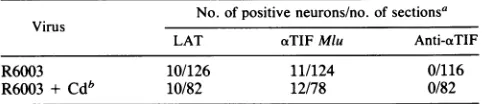
[image:4.612.319.560.89.141.2]hybridization.Micewereinfectedinbotheyesandeithernot
TABLE 1. ExpressionofoaTIFand LAT by R6003
No. ofpositiveneurons/no. ofsections' Virus
LAT aTIFMlu Anti-aTIF
R6003 10/126 11/124 0/116
R6003 + Cdb 10/82 12/78 0/82
aNumbers of sectionstested are the combined results oftwo separate
hybridizationexperiments.Atotal of 8to14sections of each of 20 trigeminal ganglia (R6003)or 14trigeminalganglia (R6003 + Cd)werehybridized with
eachprobe.
b Micewereinjected withCdSO4(2mg/ml in saline,subcutaneously in the footpad) 15, 17, 19, and 45days after infection. Gangliawereremoved 18 h
after the lastCdSO4 injection.
treated or injected with CdSO4at 15, 17, and 19 days after
infection. At 21 days postinfection, trigeminal ganglia were
harvestedfrom five untreated and fivecadmium-treatedmice
and assayed for the presence of latent virus. Virus was
recovered from 20 and 40%of thegangliaof untreated and
cadmium-treated mice, respectively. The remaining mice
were thengiven one moreinjection ofCdSO445 days after
infection, and the trigeminal ganglia were harvested 18 h
after cadmiumtreatmentand fixedimmediately. Sections of
gangliawereprocessed andhybridized with probes
comple-mentary to the LAT (Fig. 1, line 2) or to otTIF sequences
either complementaryto orhomologous to the otTIF mRNA
(Fig. 1, line 6) as described in Materials and Methods.
Ganglioniccellscharacteristic ofneuronsandshowing
auto-radiographic grains were readily detected with LAT and
cxTIF probes (Table 1;Fig. 2)but not with aprobe
homolo-gous to the cxTIF mRNA (Table 1). Table 1 shows the
number of neurons scoring positive by hybridization with
each probe. Nearly identical ratios ofneurons per section
hybridizing to probes for LAT and for otTIF mRNA were
observed, both in untreated and in cadmium-treated mice.
All or mostof the latentlyinfectedneurons, asdistinguished
byexpression ofLAT, weretherefore expressingthe otTIF
mRNAfrom the MT-I promoterduring latent infection.
aTIFcannotreactivate latent virus.Todeterminewhether
induction ofexpressionof the MT-aTIF gene would lead to
lyticinfection which would result in ablation of latent virus
in trigeminal ganglia, mice were infected in both eyes with
R6003 or R6004and injected with CdSO4 5, 10, 15, 20, 25,
and 30daysafter infection (Table2,experiment 1) or 9,13,
17, 21, 27, 31, and 34 days after infection (Table 2,
experi-ment2).Ineachexperiment, control groups of mice infected
with either virus were left untreated. No mortality was
observed in mice infected with either virus in this or any
other experiment. Trigeminal ganglia were harvested 35
(experiment 1) or37 (experiment2) daysafter infection and
assayed for the presence of latent virus. No significant
reduction was seenin thepercentage of ganglia from which
virus could be recovered when R6003 was compared with
R6004 or when R6003 after cadmium treatment was
com-paredwith R6003 withnotreatment. Further, therewereno
differences in theamountof viruswhich could be recovered
from theganglia of each group of mice (data not shown). All
virusesisolatedfrom mice in these experiments were used to
infectVerocell culturesfor isolation of viral DNA.
Restric-tion enzymedigests and Southernblot analyses revealed no
deletions orrearrangementsof the inserted genes (data not
shown).
In the second series of experiments, we assessed the
capacity of otTIF to reactivate virus after induction by
cadmium injection. In these experiments, reactivation was
J. VIROL.
on November 10, 2019 by guest
http://jvi.asm.org/
FIG. 2. Photomicrographs of sections oftrigeminal ganglia hybridized in situ toaprobe specific for aTIFmRNA(600-bpAsuII-MluI transcript complementarytootTIF mRNA; seeFig. 1).
assessed by assaying tears and trigeminal ganglia for the
presence of infectious virus after cadmium treatment. In
vivo reactivation of HSV in mice byavariety of methods has
beenreported (11). In the firstexperiment, 10 micepervirus
were infected in both eyes with R6003 or R6004 and were
given a single injection of CdSO4 18 days after infectionto
induce expression of the MT-I promoter. Eyeswere bathed
in 10 of saline every day for 8 days after the cadmium
treatment, and the saline wash wasplatedon Verocells. In
nocase was infectious virus detected.
Inthe secondexperiment, 50 miceperviruswereinfected
inbotheyeswith R6003orR6004 and givenasingle injection
ofCdSO4 20 days after infection. Trigeminal gangliawere
harvested from 10 mice perday at 19 days after infection
(before cadmium administration) and at21, 22, 23, and 24
days after infection (1, 2, 3, and 4 days after cadmium
treatment, respectively) and were assayed for thepresence
ofinfectious virus. No virus could be detected inanyof the
ganglia.
Establishment oflatencyinthepresenceofaLTIF. The lack
ofreactivation of latent virus in theexperiments described
above could conceivably have been due to some factor
present during the maintenance phase of latency which
prevents reactivation and lytic infection after latency has been established but which is not present in appreciable
amounts during the establishment oflatency. This would
apply inparticular to any viral gene product which would
have to be synthesized after the viral genome reaches the
TABLE 2. Maintenance oflatency after expression of aTIF
Expt Virus Inoculum(107 CdSO4administrationb %Latencyc
PFU/eye)a
1 R6003 1 None 40(8/20)
R6003 1 5, 10, 15, 20, 25,30 40(8/20)
R6004 1 None 10(2/20)
R6004 1 5, 10, 15, 20, 25,30 35(7/20)
2 R6003 5 None 35(7/20)
R6003 5 9, 13, 17, 21, 27, 31,34 43(17/40)
R6004 1 None 20(4/20)
R6004 1 9,13, 17, 21, 27, 31, 34 23(9/40)
a Micewereinfectedinboth eyesfollowingcornealscarification.
bCdSO4wasinjected subcutaneously (100,ug permousein 50 ,ul ofsaline)
onthedays postinfectionindicated.
c Number oftrigeminal gangliafrom which latent virus could berecovered/
total number oftrigeminal gangliaof infected mice (giveninparentheses), expressedas apercentage.Gangliawereharvested 35(experiment 1)or37
(experiment 2) days postinfection.
neuronal nucleus. Todetermine whetherexpressionofaTIF
at the time of infection or during the earliest stages of
infection could preclude the establishment of latency, two
experiments weredone.
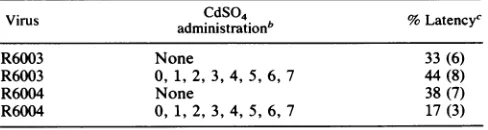
Inthefirst experiment(Table 3),mice were infected by the
eye route with either R6003 or R6004. One group was
injected daily with CdSO4 (0 to 7 days after infection) to
induce expression ofthe MT-oaTIFand MT-ToTIF genesas
soon astheviralgenomesarrivedatthe neuronalnucleiand
for several days afterward, while controls remained
un-treated. Trigeminal ganglia were harvested 12 days after
infection and assayed for the presence of latent virus. No
significant differenceswere seen inthe percentages of
gan-glia fromwhich virus could be recovered between any of the
fourgroups of mice(Table 3).
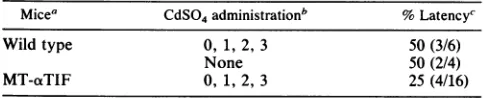
In thesecondexperiment, transgenic micethatcontained
the same MT-aTIFchimericgene usedto construct
recom-binant virus R6003 were infected withthe wild-type virus,
HSV-1(F). These mice have previously been tested and showntoproduce functionalaTIFprotein (22b).
Nontrans-genic siblings ofthe transgenic mice were also infected as
controls. All of the transgenic mice and one group ofthe
nontransgenic siblings weretreatedwithCdSO4atthetime
of infection and daily for 3 days after infection to induce
expression ofthe MT-aTIF gene during the establishment phaseoflatency.Trigeminal gangliawereharvested 28days after infectionand assayed forthe presenceoflatent virus.
Virus was recovered from all three groups of mice in
approximately the same amount (Table 4); given the small
numbers of miceused,nosignificant differenceswere seenin
theabilityof thewild-typevirustoestablishlatentinfections
in thetransgenic ornontransgenic animals.
TABLE 3. Establishment oflatency in the presenceofaTIFa
Virus CdSO4 % Latency'
administration'
R6003 None 33(6)
R6003 0, 1,2, 3, 4, 5, 6,7 44(8)
R6004 None 38(7)
R6004 0, 1,2, 3, 4, 5, 6,7 17(3)
aMice were infected in both eyes (107PFUpereye) following comeal
scarification.
bCdSO4wasinjectedsubcutaneously (100,ug permousein 50
pI
ofsaline) onthedayspostinfection (dpi)indicated.INumberoftrigeminal gangliafrom which latent virus could berecovered (giveninparentheses)/18 trigeminal gangliafrom infectedmice,expressedas
apercentage.Gangliawereharvested12daysafter infection.
on November 10, 2019 by guest
http://jvi.asm.org/
[image:5.612.46.304.571.670.2] [image:5.612.322.566.606.671.2]2934 SEARS ET AL.
TABLE 4. Establishment of latency in transgenicmice expressingaTIF
Micea CdSO4administrationb % Latency'
Wild type 0, 1, 2, 3 50 (3/6)
None 50(2/4)
MT-oxTIF 0, 1,2,3 25(4/16)
a All mice were infected in both eyes with106PFUofHSV-1(F) per eye. Wild-type mice were nontransgenic siblings of the MT-aTIF transgenic mice.
bCdSO4wasinjectedsubcutaneously (100pLgpermousein50,llofsaline)
onthedayspostinfection indicated.
CNumber of trigeminal ganglia from which latent virus could be recovered/ total number oftrigeminal ganglia of infected mice(given in parentheses), expressed as a percentage. Ganglia were harvested28days afterinfection.
These dataindicatethatexpressionof the aTIFatthetime
ofinfection and during the early stages of infection is not
sufficienttoabrogate theestablishmentoflatencyby means ofalytic infection.
DISCUSSION
Most people become infected with HSV-1 or HSV-2 by
the contact of wet or mucous membranes of susceptible
individualswith membranes ofindividualswithlesions
con-taining virus. These lesions could be the result of first infection but are more likely to be the consequences of
reactivation of latent virus. In the latter event, reactivated
virusin sensory ganglia is transported toasiteatornearthe
portalofentryof thevirus.Thereactivatedvirus istherefore
a majorsource ofdissemination ofinfection, andby
exten-sionthelatent virus isthereservoir fromwhich the virusis drawn to maintain itselfin the human population. Because
latency isanimportantcomponentoftheabilityof the virus tosurviveinthe human
population,
wecould expect that theprocesses which regulate theexpression of its genes would
enable theestablishment of latency beforeviral gene
expres-sioncommitted the cell toalyticinfection,thatis, beforethe
expression ofo genes. Iflatencywerethe resultofafailure
of axTIF to be transported along with the capsid to the
nucleusofthe sensory neuron, it wouldexplain manyof the
unique features of the activation of ot gene expression.
Specifically,
itwould explainwhycx genes utilize atransac-tivator rather than an enhancer element built into their
promoterdomains and why
oxTIF
ispackagedinassociationwitha structureclosely bound to thevirionenvelope rather
than to the viral DNA.
The results presented in this report do not support the
hypothesis that latency results solely from the absence of
axTIF. Thus, we have not been able to (i) terminate latency
by supplyingcxTIF intransfromanendogenousgenelinked
withahost promoter andembeddedin theviralgenome, (ii)
precludeestablishment oflatency by the same virus, or(iii)
preclude the establishment of latency in transgenic mice
expressingaTIF. While these results exclude the absence of otTIF as the sole requirement for the establishment of the latent state, they do not exclude the possibility that a lack of aTIFplaysan auxilaryrolein the process ofestablishment
of latentinfection.
Several possibilities remain. First, it has been reported
(12)thattranscripts oftheOct-I genecannotbe detected by
in situhybridizationin sensoryganglia. However, that study
also demonstrated an absence of Oct-1 mRNA in several
regions of the central nervous system which are permissive
forlytic infection by HSV, leavingopenthepossibilityeither
that the in situ probes used in that study could not detect
smallamounts of
Oct-i
or that other host factors fulfill thesame function.
Preliminary
studies(15a)
indicate that cellscontaining
Oct-1transcripts
are present in trigeminalgan-glia,
and studies onthe role of Oct-1 in the maintenance ofthe latent state are in progress (32a). It is
conceivable,
however,
that thehostfactors necessary for transactivationofotgenes
by
caTIFmaynotbe present infunctional form insensory neurons at all times. Viral replication during the
acute phase of infection in the ganglia immediately after
inoculationcould be
explained
byaveryfewneuronswhichexpress functional host factors and in which caTIF has
diffusedto theneuronal nuclei.
Second,
sensory neuronsmayproduce
arepressor whichinhibits a gene transcription and transactivation by caTIF.
Evidence has been presented that at least one neural
cell-derived cell line contains a protein that bound the same
sequences boundbyOct-1 andrepressed transcription bya
gene promoters
(19).
That cellline,
however, was derivedfrom atumor of central nervous system origin (1), leaving
the relevance of thosefindingstolatencyinsensoryneurons
in question inasmuch as the virus grows readily in central nervous system tissue.
Finally,
spontaneousreactivation isasporadicevent;only
one or a few neurons appear to be reactivated at any one
time. This may beanindication that several differentevents
must all take place within a single neuron in order for
reactivation of the virus to occur. These events could
include theinactivationofarepressor,activation ofahostor
viral transactivator, or replication of the viral DNA. The
experimentsdescribed in this studyemphasize thenecessity
for studies of host cell functions as wellasthose expressed
by
the virus.ACKNOWLEDGMENTS
We thank Lindsay Smith for expert technical assistance. The studies done at the University of Chicago were aided by Public Health Service grants from the National Cancer Institute (CA47451) and the National Institute for Allergy and Infectious Diseases(AI124009andAI1588).
REFERENCES
1. Augusti-Tocco, G., and G. Sato. 1969. Establishment of func-tionalclonal linesofneuronsfrommouseneuroblastomas. Proc. Natl. Acad. Sci. USA 64:311-315.
la.Baines, J., and B. Roizman. Unpublisheddata.
2. Batterson, W., D. Furlong, and B. Roizman. 1983. Molecular genetics of herpes simplex virus. VIII. Further characterization ofa ts mutant defective in release of viral DNA and in other stages ofviral reproductive cycle. J. Virol. 45:397-407. 3. Batterson, W., and B. Roizman. 1983. Characterization of the
herpes simplex virion-associated factor responsible for the induction of cx genes. J. Virol. 46:371-377.
4. Brinster, R. L., H. Y. Chen, R. Warren, A. Sarthy, and R. D. Palmiter. 1982. Regulationofmetallothionein-thymidine kinase fusion plasmids injected into mouse eggs. Nature (London) 296:39-42.
5. Campione-Piccardo, J., W. E. Rawls, and S. Bachetti. 1979. Selective assays forherpes simplex viruses expressing thymi-dine kinase. J. Virol. 31:281-287.
6. Coen, D. M., M. Kosz-Vnenchak, J. G. Jacobson, D. A. Leib, C. L. Bogard, P. A. Schaffer, K. L. Tyler, and D. M. Knipe. 1989. Thymidine kinase negative herpes simplex virus mutants establish latency in mousetrigeminal ganglia but do not reacti-vate. Proc. NatI. Acad. Sci. USA86:4736-4740.
7. Dobson, A. T., F.Sederati, G. Devi-Rao, W. M. Flanagan, M. J. Farrell, J. G. Stevens, E. K. Wagner, and L. T. Feldman. 1989. Identification of the latency-associated transcript promoter by expression of rabbit beta-globin mRNA in sensory nerveganglia latently infected with a recombinant herpes simplex virus. J. J.VIROL.
on November 10, 2019 by guest
http://jvi.asm.org/
Virol. 63:3844-3851.
8. Durnam, D. M., and R. D. Palmiter. 1981. Transcriptional regulationofthe mouse metallothionein-I gene by heavy metals. J. Biol. Chem. 256:5712-5716.
9. Gerster, T., and R. G. Roeder. 1988. A herpesvirus trans-activatingproteininteracts with transcriptionfactorOTF-1 and other cellular proteins. Proc. Natl. Acad. Sci. USA 85:6247-6351.
10. Gordon, Y. J., B. Johnson, E. Romanowski, and T. Araullo-Cruz. 1988. RNA complementary to theherpes simplex virus type 1ICP0gene demonstrated in neurons of human trigeminal ganglia.J. Virol. 62:1832-1835.
11. Harbour, D. A., T. J. Hill, and W. A. Blyth. 1983. Recurrent herpes simplex in the mouse: inflammation in the skin and activation ofvirus in the gangliafollowing peripheral stimula-tion. J.Gen. Virol. 64:1491-1498.
12. He,X., M. N. Treacy, D. M. Simmons, H. A. Ingraham, L. W. Swanson, and M. G. Rosenfeld. 1989. Expression of a large family of POU-domain regulatory genes in mammalian brain development. Nature(London)340:35-42.
13. Heine, J. W., R. W. Honess, E. Cassai, and B. Roizman. 1974. Proteins specified by herpes simplex virus. XII. The virion polypeptides oftype 1strains. J. Virol. 14:640-651.
14. Honess, R. W., and B. Roizman. 1974. Regulation ofherpesvirus macromolecularsynthesis. I. Cascade regulation of the synthe-sis of threegroupsof viral proteins. J.Virol. 14:8-19. 15. Honess, R. W., and B. Roizman. 1975.Regulation of herpesvirus
macromolecular synthesis: sequential transitionofpolypeptide synthesis requires functional viral polypeptides. Proc. Natl. Acad. Sci. USA72:1276-1280.
15a.Hukkanen,V. Unpublished data.
16. Jacobson, J. G., D. A. Leib, D. J. Goldstein, C. L. Bogard, P. A. Schaffer,S. K.Weller, and D. M. Coen. 1989. Aherpes simplex virusribonucleotide reductase deletion mutantisdefective for productive infection and reactivatable latent infections of mice andfor replication inmousecells.Virology 173:276-283. 17. Javier, R. T., J. G.Stevens,V. B.Dissette,and E. K.Wagner.
1988. A herpes simplex virus transcript abundant in latently infectedneurons isdispensable for establishment of the latent state. Virology 166:254-257.
18. Katz, J. P., E. T. Bodin, and D. M. Coen. 1990. Quantitative polymerase chain reaction analysis of herpes simplex virus DNA inganglia of mice infected withreplication-incompetent mutants. J.Virol.64:4288-4295.
19. Kemp, L. M., C. L. Dent, and D. S. Latchman. 1990. Octamer motif mediates transcriptional repression of HSV immediate-earlygenes andoctamer-containing cellularpromoters in
neu-ronal cells. Neuron 4:215-222.
20. Kristie, T. M., and B. Roizman. 1984. Separation ofsequences
definingbasalexpression from thoseconferringagene
recogni-tion withintheregulatory domains ofherpes simplex virus1 a genes. Proc.Natl.Acad. Sci. USA 81:4065-4069.
21. Kristie, T. M., and B. Roizman.1987.Hostcellproteins bindto
the cis-acting site required for virion-mediated induction of herpes simplex virus 1 a genes. Proc. Natl. Acad. Sci. USA 84:71-75.
22. Kristie, T. M., and B. Roizman. 1988.Differentiationand DNA
contact points of the host proteins bindingat the cis site for virion-mediatedinduction ofa genes ofherpes simplex virus1. J.Virol.62:1145-1157.
22a.Kristie,T. M., and B. Roizman.Unpublished data.
22b.Labow, M.,A. E.Sears,B.Roizman,and A.J.Levine. Unpub-lished data.
23. Leib, D. A., D. M. Coen, C. L. Bogard, K. A. Hicks, D. M. Knipe,and P. A.Schaffer. 1989.Immediate-earlygenemutants
define different steps in the establishment and reactivation of herpes simplexviruslatency. J.Virol. 63:759-768.
24. Mackem,S., and B. Roizman. 1982.Structural sequences of the a gene4, 0,and 27promoter-regulatory sequences which confer
a regulation on chimeric thymidine kinase genes. J. Virol. 44:939-949.
25. Maples, J. A. 1985. A methodfor thecovalent attachment of cells toglass slides for use inimmunohistochemicalassays.Am. J. Clin.Pathol. 83:356-363.
26. Meignier, B., R. Longnecker, P. Mavromara-Nazos, A. Sears, and B.Roizman. 1987. Virulence of and establishment oflatency by genetically engineered mutants of herpes simplex virus 1. Virology162:251-254.
27. O'Hare, P., and C. R. Goding. 1988. Herpes simplex virus regulatory elements and the immunoglobulin octamer domain bindacommonfactor and are both targets for virion transacti-vation.Cell52:435-445.
28. O'Neill, E. A., C. Fletcher, C. R. Burrow, N. Heintz, R. G. Roeder, and T. G. Kelly. 1988. Transcription factor OTF-1 is functionally identical to the DNA replication factor NF-III. Science241:1210-1213.
29. Palmiter, R. D., H. Y. Chen, and R. L. Brinster. 1982. Differ-ential regulation of metallothionein-thymidine kinase fusion genesintransgenic mice and theiroffspring. Cell 29:701-710. 30. Pellett, P. E., J. L. C. McKnight, F. J. Jenkins, and B.Roizman.
1985. Nucleotidesequence andpredictedamino acidsequence of a protein encoded in a small herpes simplex virus DNA fragment capable oftrans-inducing a genes.Proc. Natl. Acad. Sci. USA 82:5870-5874.
31. Poffenberger, K. L., and B. Roizman. 1985. A noninverting genome of a viableherpessimplex virus 1: presence of head-to-tail linkages in packagedgenomes andrequirements for circu-larization after infection. J. Virol.53:587-595.
31a.Poon,A., and B. Roizman. Unpublisheddata.
32. Post, L. E., S.Mackem,and B.Roizman.1981. Theregulationof agenes ofherpes simplex virus: expression of chimeric genes produced by the fusion ofthymidine kinase with a gene pro-moters. Cell 24:555-565.
32a.Purves, F., and B. Roizman. Unpublisheddata.
33. Roizman, B., and A. E. Sears. 1987. An inquiry into the mechanisms ofherpes simplex virus latency. Annu. Rev. Mi-crobiol.41:543-571.
34. Sears,A. E., I. W. Hailiburton, B.Meignier, S. Silver, andB. Roizman. 1985.Herpessimplex virusmutantdeleted inthe a22 gene: growth andgeneexpression in permissiveandrestrictive cells andestablishment oflatency in mice.J.Virol.55:338-346. 35. Sears,A.E., B.Meignier,andB. Roizman.1985. Establishment of latency in mice by herpes simplex virus 1 recombinants carrying insertions affecting the regulation of the thymidine kinase gene. J. Virol. 55:410-416.
36. Spear,P.G.,and B. Roizman. 1972. Proteinsspecified byherpes simplex virus. V. Purification and structural proteins of the herpesvirion.J. Virol. 9:431-439.
37. Stevens, J. G.,E. K.Wagner,G. B.Devi-Rao,M. L.Cook,and L. T. Feldman. 1987. RNAcomplementaryto aherpesvirus a
gene mRNA isprominentinlatentlyinfectedneurons.Science 235:1056-1059.
38. Weber, P. C., M. Levine, and J. C. Glorioso. 1987. Rapid identification of nonessentialgenesofherpessimplexvirustype
1byTnS mutagenesis.Science 236:576-579.