Copyright © 1998, American Society for Microbiology. All Rights Reserved.
The Second-Site Mutation in the Herpes Simplex Virus Recombinants
Lacking the
g
1
34.5 Genes Precludes Shutoff of Protein Synthesis
by Blocking the Phosphorylation of eIF-2
a
KEVIN A. CASSADY,1MARTIN GROSS,2ANDBERNARD ROIZMAN1*
The Marjorie B. Kovler Viral Oncology Laboratories1and Department of
Pathology,2The University of Chicago, Chicago, Illinois 60637
Received 23 March 1998/Accepted 21 May 1998
In cells infected with the herpes simplex virus 1 (HSV-1) recombinant R3616 lacking both copies of the
g134.5 gene, the double-stranded protein kinase R (PKR) is activated, eIF-2ais phosphorylated, and protein
synthesis is shut off. Although PKR is also activated in cells infected with the wild-type virus, the product of theg134.5 gene, infected-cell protein 34.5 (ICP34.5), binds protein phosphatase 1aand redirects it to
dephos-phorylate eIF-2a, thus enabling sustained protein synthesis. Serial passage in human cells of a mutant lacking theg134.5 gene yields second-site, compensatory mutants lacking various domains of thea47 gene situated
next to the US11 gene (I. Mohr and Y. Gluzman, EMBO J. 15:4759–4766, 1996). We report the construction of
two recombinant viruses: R5103, lacking theg134.5, US8, -9, -10, and -11, anda47 (US12) genes; and R5104,
derived from R5103 and carrying a chimeric DNA fragment containing the US10 gene and the promoter of the
a47 gene fused to the coding domain of the US11 gene. R5104 exhibited a protein synthesis profile similar to
that of wild-type virus, whereas protein synthesis was shut off in cells infected with R5103 virus. Studies on the wild-type parent and mutant viruses showed the following: (i) PKR was activated in cells infected with parent or mutant virus but not in mock-infected cells, consistent with earlier studies; (ii) lysates of R3616, R5103, and R5104 virus-infected cells lacked the phosphatase activity specific for eIF-2a characteristic of wild-type virus-infected cells; and (iii) lysates of R3616 and R5103, which lacked the second-site compensatory mutation, contained an activity which phosphorylated eIF-2ain vitro, whereas lysates of mock-infected cells or cells infected with HSV-1(F) or R5104 did not phosphorylate eIF-2a. We conclude that in contrast to wild-type virus-infected cells, which preclude the shutoff of protein synthesis by causing rapid dephosphorylation of eIF-2a, in cells infected withg134.52virus carrying the compensatory mutation, eIF-2ais not phosphorylated.
The activity made apparent by the second-site mutation may represent a more ancient mechanism evolved to preclude the shutoff of protein synthesis.
Cells infected with a variety of viruses synthesize comple-mentary RNA either because RNA viruses require a RNA template for the synthesis of complementary strands or be-cause of overlapping transcription of genes encoded on both strands of DNA viruses. The consequence of annealing of complementary RNAs is activation of a double-stranded RNA-dependent protein kinase R (PKR), phosphorylation of thea
subunit of the translation initiation factor 2 (eIF-2a), and total shutoff of protein synthesis. Viruses have evolved a variety of mechanisms to block the shutoff of protein synthesis. These mechanisms include degradation of PKR (poliovirus), proteins which block the binding of double-stranded RNA to PKR (influenza virus NS1 protein), production of short double-stranded RNA that binds but fails to activate PKR (adenovirus VaIRNA), and proteins which block the phosphorylation of eIF-2a (vaccinia virus K3L) (2, 3, 8, 16, 19, 21, 23). Herpes simplex viruses 1 and 2 (HSV-1 and HSV-2) are especially vulnerable to the shutoff of protein synthesis inasmuch as viral genes are located on both strands of the DNA and signals at the end of transcriptional units are not entirely effective in terminating transcription. Earlier studies have shown that fully half of the HSV-1 genome is represented in double-stranded RNA prepared by self-annealing of RNA extracted from
in-fected cells. The melting temperature of the RNA was consis-tent with duplexes containing few mismatches and therefore not due to double-stranded stems arising from secondary struc-tures of mRNA (15, 17). HSV evolved a gene,g134.5, whose product, infected-cell protein 34.5 (ICP34.5), precludes the shutoff of protein synthesis by activated PKR (5–7). Theg134.5 gene maps in the inverted repeat sequences ab and b9a9 flank-ing the unique long (UL) sequence (Fig. 1) and therefore is present in two copies per genome (1, 4, 27, 29). Unlike the gene products of other viruses, ICP34.5 blocks the shutoff of protein synthesis by interacting with protein phosphatase 1 and redirecting its activity to dephosphorylate eIF-2a(14). In cells infected with wild-type virus or the genetically engineered virus from which theg134.5 genes had been deleted, PKR is acti-vated, eIF-2ais phosphorylated, and protein synthesis is shut off in cells infected with theg134.52virus (7).
Mohr and Gluzman (24) reported that serial passage of
g134.52virus in human cells yielded a series of mutants capa-ble of sustained protein synthesis. The compensatory mutation was mapped to a domain located at the junction between the unique short (US) sequence and the inverted repeat sequence
ca flanking it (Fig. 1). Thus, all of the characterized mutants
contained a deletion between the US11 gene and the inverted repeat sequence. Analyses of one second-site compensatory mutation revealed that the deletion brought thea47 promoter 59 to the coding sequence of the US11 gene, converting the latter to an early gene (13).
In this report, we show that insertion of a DNA fragment
* Corresponding author. Mailing address: The Marjorie B. Kovler Viral Oncology Laboratories, The University of Chicago, 910 E. 58th St., Chicago IL 60637. Phone: (773) 702-1898. Fax: (773) 702-1631. E-mail: [email protected].
7005
on November 9, 2019 by guest
http://jvi.asm.org/
carrying the US10 gene and the US11 gene driven by thea47 promoter into the genome of a virus (R5103) lackingg134.5, US8, US9, US10, US11, and US12 (a47) genes yielded a recom-binant virus (R5104) which exhibited the capacity for sustained protein synthesis similar to that of the wild-type parent virus. We also report that PKR was activated by R5103, the parent virus by R5104, the virus whose capacity for sustained protein synthesis was restored, and by R3616, the virus lacking the
g134.5 genes. Whereas cells infected with wild-type parent
virus exhibited activated phosphatase activity specific for eIF-2a, the cells infected with R5103 or R5104 lacked this activity. Finally, lysates of cells infected with R5103 but not with R5104 phosphorylated eIF-2a in vitro. The key conclusion is that although PKR is activated, the second-site compensatory gene created or activated in R5104 blocks the phosphorylation of eIF-2aby the activated PKR.
Relevant to this report are the function and distribution of theg134.5 gene among the members of herpesvirus fam-ily. Theg134.5 gene encodes two functions. The first, map-ping throughout the coding domain of the gene, enables the replication and spread of the virus in the central nervous sys-tem (4). The second, mapping in the carboxyl-terminal do-main, enables the interaction of ICP34.5 with protein phos-phatase 1a and precludes the premature termination of protein synthesis described above (5, 6, 12, 14). The carboxyl-terminal domain of ICP34.5 is homologous to the correspond-ing domain of a conserved mammalian protein known as GADD34, an acronym for growth arrest and DNA damage (12, 30). GADD proteins are expressed during differentiation, serum deprivation, or repair of damaged DNA. The sequence encoding the carboxyl-terminal domain of the murine homolog of GADD34 can substitute for the corresponding g134.5 in blocking the premature shutoff of protein synthesis, but the recombinants carrying the chimeric gene are avirulent (12).
The g134.5 gene is encoded by HSV-1, HSV-2, and the simian B virus but has not been found in other herpesvirus genomes (6). Since it is expected that all herpesviruses have evolved mechanism to preclude shutoff of protein synthesis by activated PKR, it could be expected that viruses lacking the
g134.5 gene have evolved alternative mechanisms to deal with this host response to infection. Our interest in the second-site compensatory mutation first reported by Mohr and Gluzman (24) stems from the possibility that GADD34 performs a sim-ilar function in uninfected cells under conditions of stress, i.e., that in the course of its evolution HSV acquired the carboxyl-terminal domain of GADD34 but retained in a modified form a more ancient mechanism for precluding shutoff of protein synthesis that is perhaps more widespread among the members of the herpesvirus family.
MATERIALS AND METHODS
Plasmids. Standard methods (22) were used for all plasmid constructions described here. The HSV DNA in plasmid pRB4999 consisted of a BamHI Q fragment carrying in the BglII restriction endonuclease site a chimeric gene consisting of the promoter of thea47 gene juxtaposed to the US11 gene and the
adjacent US10 gene (Fig. 1, line 14). This was constructed as follows. In the first
step, plasmid pRB421, encoding the coding domains of US11, US10, anda47
within the 3.2-kb EcoRI-SalI fragment, was digested with BstEII and NruI, deleting the 720-bpa47 coding domain and the US11 promoter (26a). The new
plasmid, pRB4028, contains the US10 gene and thea47 promoter juxtaposed to
the US11 coding sequence. Next, a plasmid encoding the BamHI Q fragment,
pRB3982, containing an XbaI-KpnI polylinker inserted between the BglII and
SacI sites of UL23, was digested with the restriction endonuclease BglII. The
2.5-kb EcoRI-SalI fragment of pRB4028 and the BglII-digested pRB3982 were blunt ended with Klenow enzyme and then ligated. In plasmid pRB849, the
Escherichia coli lacZ gene replaced theg134.5 open reading frame (ORF)
con-tained in the BstEII-StuI fragment of BamHI S (Fig. 1, line 10) (6a). Plasmid pRB4974, containing the 1.8-kb NcoI fragment encoding theg134.5 coding
se-quence, was reported elsewhere (18).
Cells and viruses.The Vero, HeLa, and SK-N-SH cell lines were obtained from the American Type Culture Collection. The 143 thymidine kinase-minus (143TK2) and the rabbit skin cells were originally obtained from Carlo Croce
and J. McClaren, respectively. The cell lines were propagated in Dulbecco modified Eagle medium supplemented with 5% newborn calf serum (Vero and rabbit skin cells), 10% (SK-N-SH cells), or 5% (HeLa cells) fetal bovine serum, and 100mg of bromodeoxyuridine per ml (143TK2cells). HSV-1(F) is the
prototype strain used in this laboratory (9). The recombinant virus R3616, described elsewhere (4) in detail, lacks 1,000 bp in the domain of both copies of the HSV-1(F)g134.5 gene.
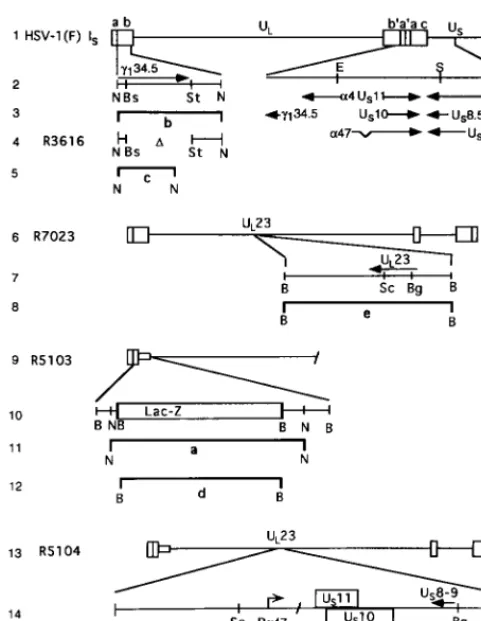
[image:2.612.51.292.68.379.2]The recombinant virus R7023 (Fig. 1, line 6), described elsewhere (20), lacks
FIG. 1. Schematic representation of the DNA sequence arrangements of the wild-type and recombinant viruses used in this study. Line 1, schematic repre-sentation of the wild-type HSV-1 genome. The genome consists of two covalently linked components, L and S, each consisting of unique sequences (ULand US) flanked by inverted repeats. The arrangement shown is the ISisoform in which the S component is inverted relative to the prototypic orientation of the L component. The inverted repeat sequences designated ab and b9a9flanking the ULsequence are 9 kb in size, whereas the repeat sequences ac and c9a9flanking the USsequence are each 6.3 kb in size. Line 2, expansion of specific domains of the genome showing gene arrangements within the expanded region. Line 4, schematic representation of one of twog134.5 coding domains in recombinant R3616 in which the sequences between the BstEII and StuI restriction endonu-clease sites had been deleted. Line 6, representation of a portion of the genome of the recombinant R7023 shown in the ISarrangement. Line 7, schematic representation of the wild-type UL23 gene encoding thymidine kinase and key restriction endonuclease sites present in R7023. The domain encoding the genes US8 through US12 as well as the reiterated sequences a9and ac and the portion of the b9sequence encoding one of the copies of theg134.5, ORF O, and ORF P genes are absent. R7023 was the parent of R5103 schematically represented in line 9. In R5103, the coding domain between the BstEII and StuI restriction sites in the remaining copy of theg134.5 gene was replaced with the E. coli lacZ gene represented in line 10. Line 13, schematic representation of the recombinant virus R5104 constructed by homologous recombination between plasmid pRB4999 and R5103 DNA. In the resulting recombinant, R5104 (line 14), the UL23 gene was disrupted by the insertion of US10 and US11 driven by thea47 promoter. Lines 3, 5, 8, 11, 12, and 15 represent the predicted bands produced by restriction endonuclease digestion of viral DNAs and are shown as reference for the bands shown in Fig. 2. Abbreviations: B, BamHI; N, NcoI; Bs, BstEII; St,
StuI; Sc, SacI; Bg, BglII.
on November 9, 2019 by guest
http://jvi.asm.org/
the genes US8 through US12 (a47), contains single copies of theg134.5 ORF O,
ORF P,a4, anda0 genes, and maintains the remainder of the S component frozen in an inverted orientation (ISand ISL) (20). Recombinant virus R5103
(Fig. 1, line 9) was isolated from among the progeny of cotransfection of rabbit skin cells with intact R7023 DNA plasmid pRB849 on the basis of expression of b-galactosidase (25). In the recombinant R5103, the gene encodingb -galactosi-dase replaced the remaining copy of theg134.5 gene. This virus therefore lacks
the native US8 through US12,g134.5, ORF P, and ORF O genes. The
recom-binant R5104 (Fig. 1, line 13) was isolated from the progeny of transfection of 143TK2cells maintained in medium containing bromodeoxyuridine and
trans-fected with intact R5103 DNA and pRB4999 by selection against thymidine kinase. R5104 therefore lacks the native US8 through US12, UL23, UL24,g134.5,
ORF P, and ORF O genes. The insert restored the US10 gene as well as the US11
gene fused to thea47 promoter and included the 39186 nucleotides of the US9
gene.
Analyses of viral DNA.Digestion of viral DNAs with appropriate enzymes, electrophoretic separation in agarose gels, transfer to Zeta Probe membranes by capillary transfer, and hybridization using radiolabeled DNA probes were done as previously described (12, 28).
Determination of eIF-2akinase and phosphatase activities.Generation of cytoplasmic (S10) fractions from HeLa cells 7 h after infection and measure-ments of phosphatase activity were done as described elsewhere (7, 12). Briefly, eIF-2a-specific phosphatase activity of infected-cell lysates was measured by incubating radiolabeled eIF-2 [1.0 pmol, 1.0 pmol eIF-2(a32P), and 0.7 pmol
eIF-2(b32P) at 0.6 Ci/mmol] with 6ml of infected-cell S10 fractions supplemented
with 4.5ml of TKM buffer (10 mM Tris-HCl [pH 7.5], 20 mM KCl, 2.25 mM MgCl2) and 1.0 mM ATP in a final volume of 12.5ml at 34°C. Aliquots (6ml)
were removed at 60 and 150 s for all recombinant viruses and at 20 and 60 s after incubation for HSV-1(F), denatured in sodium dodecyl sulfate (SDS), and elec-trophoretically separated on a 7% denaturing polyacrylamide gel that was stained, dried, and autoradiographed. The eIF-2aband was cut from each gel lane, and its Cerenkov radioactivity was measured.
To determine eIF-2akinase activity of infected-cell lysates, the equivalent of 0.2ml of each lysate was incubated with 5 pmol of purified eIF-2 and 0.04 mM [g-32P]ATP (25 Ci/mmol) in 10ml of TKM buffer for 1 min at 34°C. Reactions
were terminated and electrophoretically separated on a 7% denaturing poly-acrylamide gel (11). Following electrophoretic separation, the gel was silver stained, dried, and autoradiographed as described above and elsewhere (14).
In vivo kinase assay and in vivo protein synthesis.Replicate 25-cm2flask
cultures of HeLa cells were exposed to 1 ml of medium 199V (medium 199 supplemented with 1% calf serum) containing 10 PFU of recombinant gE2
viruses (R7023, R5103, and R5104) per cell and then incubated at 13 h after infection first in Eagle minimal essential medium lacking phosphate and 1 h later in the same medium but supplemented with 200mCi of [32P]orthophosphate
(carrier free; New England Nuclear). At 18 h after infection, the cells were rinsed once with phosphate-buffered saline lacking Ca and Mg (PBS-A) and then transferred in ice-cold PBS-A to an Eppendorf tube, pelleted by centrifugation at 4°C, and lysed in 100ml of radioimmunoprecipitation assay buffer (PBS-A containing 0.1% SDS, 0.5% deoxycholate, 1% Nonidet P-40, and 2 mM sodium benzamidine) (7, 26). The lysates were shaken for 30 min at 4°C with 25ml of protein A conjugated to Sepharose beads and centrifuged, and the supernatant fluids were reacted at 4°C with 1.5mg of rabbit polyclonal anti-PKR immuno-globulin (K-17; Santa Cruz Research) for 3.5 h. The immunoprecipitate mixture was then incubated with protein A-Sepharose for 1 h, centrifuged, and washed three times with cold radioimmunoprecipitation assay buffer. Samples were re-suspended in disruption buffer (50 mM Tris-HCl [pH 7.0], 2% SDS, 700 mM b-mercaptoethanol, 2.75% sucrose), boiled for 3 min, electrophoretically sepa-rated on 0.1% SDS-containing 10% (vol/vol) polyacrylamide gels cross-linked with N,N9-diallyltartardiamide (DATD), electrically transferred to a nitrocellu-lose sheet, and exposed to Kodak XAR5 film at270°C.
In vivo protein synthesis.Protein labeling experiments were done as previ-ously described (5, 26). Briefly, infected SK-N-SH cells in 25-cm2flasks were
incubated for 30 min at 13.5 h after infection in medium 199V lacking methio-nine and then in 1 ml of the same medium supplemented with 50mCi of [35S]methionine. After 1 h of labeling, the cells were rinsed twice with PBS-A and
then scraped in 1 ml of ice-cold PBS-A, pelleted, solubilized in disruption buffer, boiled, electrophoretically separated on a 12% (vol/vol) polyacrylamide gel cross-linked with DATD, electrically transferred to a nitrocellulose sheet, and subjected to autoradiography.
RESULTS
Genotypes of the recombinants derived for this study.The DNA sequence arrangements of recombinant viruses R7023 and R3616 were described elsewhere and are shown schemat-ically in Fig. 1 (4, 5, 20). R3617, the parent of R3616, lacks a 500-nucleotide stretch in the sequence of the tk gene (4, 5). The recombinant virus R5103 was constructed by homologous recombination and contained the E. coli lacZ gene in place of the remaining copy of theg134.5 gene (25). Hybridization of
electrophoretically separated, immobilized, NcoI-digested viral DNA with a nick-translated probe from plasmid pRB4974 revealed that the 1.8-kb NcoI fragment present in HSV-1(F) and R7023 DNA (Fig. 2A, band B) shifted to 4.0 kb in R5103 and R5104 viral DNAs carrying the lacZ gene (Fig. 2A, band A). The evidence that the lacZ gene was responsible for the altered electrophoretic mobility of the BamHI S fragment in R5103 and R5104 is shown in Fig. 2B. Specifically, the 389-bp
lac operon sequence present in plasmid pGEM 3Zf(1) hybrid-ized with the 3.2-kb BamHI fragment (Fig. 2B, band D) in R5103 and R5104 but failed to hybridize with any fragments derived from wild-type, R7023, or R3616 virus.
[image:3.612.311.542.69.254.2]The recombinant virus R5104 was constructed by transfec-tion of intact R5103 DNA and a DNA fragment containing the native US10 gene and the ORF of US11 fused to the a47 promoter inserted into the BglII site of the BamHI Q frag-ment. Consequently, hybridization of electrophoretically sep-arated BamHI-digested viral DNA with a radioactive probe prepared from plasmid pRB3982 detected a 3.58-kb BamHI Q fragment (Fig. 1, line 8; Fig. 2C, band E) in wild-type, R7023, R3616, and R5103 viruses, whereas in R5104 the probe hy-bridized with 3.43- and 2.18-kb fragments (Fig. 2C, bands F and G). In addition, the 389-bp lac operon sequence from the
FIG. 2. Autoradiographic images of electrophoretically separated digests of viral DNAs hybridized with specific probes. (A) Electrophoretically separated
NcoI digests hybridized with32P-labeled nick-translated probe of the wild-type NcoI fragment encoding theg134.5 gene cloned as pRB4974. Both wild-type
HSV-1(F) and recombinant virus R7023 contained the wild-typeg134.5 gene and
the radioactive probe hybridized with a 1.8-kb NcoI fragment (band B); in recombinant virus R3616, the NcoI fragment (band C) was approximately 800 bp smaller since it lacked the sequence between the BstEII and StuI sites encoding theg134.5 gene. In recombinant viruses R5103 and R5104, the 1-kb g134.5
sequence between BstEII and StuI was replaced by the 3.2-kb E. coli lacZ gene, yielding a 4-kb DNA fragment (band A). (B) Electrophoretically separated
BamHI digests probed with the labeled pGEM 3Zf(1) vector containing ap-proximately 400 bp of the lacZ sequence. The lacZ sequences in recombinant viruses R5103 and R5104 formed single 3.2-kb bands (band D). The probe failed to hybridize with digests of HSV-1(F), R7023, or R3616 DNA. (C) Autoradio-gram of the electrophoretically separated fragments shown in panel B but stripped and hybridized with labeled plasmid pRB3982 carrying the BamHI Q DNA fragment in a pUC-9 vector. The probe hybridized with wild-type 3.58-kb
BamHI Q fragments (band E) in digests of HSV-1(F), R7023, R3616, or R5103
consistent with the expected size of the wild-type BamHI Q fragment and with an additional band (band D) in digests of recombinants R5103 and R5104 corre-sponding to the hybridization of the lacZ sequence in the probe with the gene inserted in place of theg134.5 gene. In lane 5, two R5104 bands of 3.4 kb (band
F) and 2.1 kb (band G) hybridized with the BamHI Q fragment. The insertion of thea47-US11 chimeric gene into BglII site of the BamHI Q fragment introduced
an additional BamHI site from the US11 gene as shown schematically in Fig. 1,
line 15.
on November 9, 2019 by guest
http://jvi.asm.org/
vector hybridized with the 3.2-kb lacZ fragment in the DNA of viruses R5103 and R5104 (Fig. 2C, band D), as shown in Fig. 2B.
The ability to synthesize proteins late in infection was re-stored in ag134.52recombinant by the insertion of a DNA
fragment containing US10 and of the US11 gene driven by the
a47 promoter.The objective of this series of experiments was to characterize the phenotypes of the recombinant viruses gen-erated for these studies and described in detail in Materials and Methods. Replicate cultures of HeLa cells were mock infected or exposed to 10 PFU of HSV-1(F), R7023, R3616, R3617, R5103, or R5104. The cultures were labeled with [35S] methionine at 13.5 h after infection for 1 h and processed for autoradiography as described in Materials and Methods. The results (Fig. 3) were as follows.
(i) The level of protein synthesis in cells infected with HSV-1(F) (Fig. 3, lane 2) could not be differentiated from that of cells infected with R7023 or R5104 (lane 3 or 7, respectively). In contrast, there was a significant decrease in the accumula-tion of labeled proteins in cells infected with R3616, R3617, and R5103 (lanes 4 to 6, respectively). Each of the latter three recombinants lacks theg134.5 gene.
(ii) Restoration of protein synthesis was readily apparent in cells infected with the recombinant virus R5104 (Fig. 3, lane 7). The higher accumulation of labeled proteins was not due to the absence of the tk gene since this gene was also absent in R3617 (lane 5). We may conclude therefore that the restoration of protein synthesis seen in cells infected with R5104 was due to the insertion of a DNA fragment containing the US10 gene under its own promoter and the US11 gene driven by thea47 promoter. The phenotype of R5104 resembles that of the se-rially passagedg134.52virus of Mohr and Gluzman reported elsewhere (24).
PKR phosphorylation status at late time points after infec-tion. The purpose of this series of experiments was twofold. First, earlier studies led to the conclusion that in infected cells
PKR was activated irrespective of the presence or absence of a functionalg134.5 gene, and therefore the factors which deter-mined whether protein synthesis was shut off acted subsequent to the activation of PKR (7). It was of interest, therefore, to verify that PKR was also activated in cells infected with R5103 and R5104, since both lack theg134.5 gene but exhibit very different protein synthesis profiles. Second, earlier studies were based on precipitation of PKR from lysates of mock-infected or infected cells labeled in vitro by the addition of labeled ATP (7, 13). It was of interest to determine whether PKR was labeled in the infected cell.
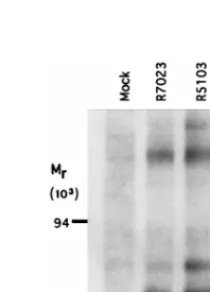
In this experiment, HeLa cells mock infected or infected with R7023, R5103, or R5104 were labeled with [32 P]ortho-phosphate and lysed, and the PKR was precipitated with the anti-PKR rabbit polyclonal antibody. The precipitate was elec-trophoretically separated on a polyacrylamide gel and sub-jected to autoradiography as described in Materials and Meth-ods. The recombinant R7023 served as the parent virus and represents the phenotype of the wild-type virus since the ac-cumulation of labeled proteins late in infection could not be differentiated from that of the wild-type parent HSV-1(F). The results (Fig. 4) indicate the presence of several labeled protein bands brought down by the anti-PKR antibody from lysates of infected cells. These include PKR (apparent Mr of approxi-mately 67,000), two labeled bands estimated to have apparent
Mrs of 75,000 and 200,000, and a less intense, broad band with an apparent Mrof approximately 90,000. The studies described here extend the results reported earlier (7, 13) in that PKR was labeled not only in vitro but also in vivo. These results rein-force the conclusion that PKR is activated in all infected cells irrespective of the level of protein synthesis in these cells.
The eIF-2a-specific phosphatase activity in cells infected with R5104 cannot be differentiated from that of other viruses lacking theg134.5 gene.In light of the evidence presented here
that PKR was activated but protein synthesis was not shut off in cells infected with R5104, the question arose as to whether eIF-2ais selectively dephosphorylated in a fashion similar to that shown to occur in wild-type-infected cells. In this series of experiments, purified eIF-2 phosphorylated in vitro was
re-FIG. 3. Autoradiographic image of electrophoretically separated [35
S]methi-onine-labeled proteins prepared from lysates of SK-N-SH cells mock infected or virus infected. Replicate cultures of SK-N-SH cells were mock infected or in-fected with 10 PFU of HSV-1(F), R7023, R3616, R3617, R5103, or R5104. At 13.5 h after infection the medium was replaced with medium 199V lacking methionine but supplemented with 50mCi of [35S]methionine (specific activity,
[image:4.612.105.232.72.247.2].1,000 Ci/mmol; Amersham) for 1 h. After labeling, the infected cells were rinsed, harvested, solubilized in an SDS-containing buffer, and electrophoreti-cally separated on a denaturing 12% polyacrylamide gel cross-linked with DATD. The electrophoretically separated proteins were transferred to a nitro-cellulose sheet and subjected to autoradiography.
FIG. 4. Autoradiographic image of PKR electrophoretically separated from immune complexes derived from labeled infected HeLa cells. Replicate HeLa cell cultures were mock infected or infected with R7023, R5103, or R5104 as described in Materials and Methods. At 18 h after infection, the cells were harvested and lysed, and immune precipitates obtained with the PKR anti-body (K-17; Santa Cruz Research) were electrophoretically separated on a 12% polyacrylamide gel, transferred to a nitrocellulose sheet, and subjected to auto-radiography. The positions of the Mr-200,000, -90,000, and -67,000 proteins
determined from the molecular weight markers (Pharmacia) are indicated on the left. The heavily labeled bands with an apparent Mrof 67,000 were identified as
PKR (7).
on November 9, 2019 by guest
http://jvi.asm.org/
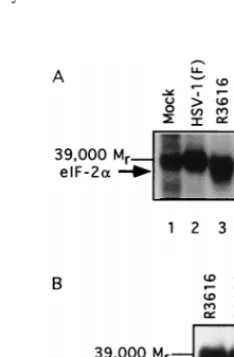
[image:4.612.376.481.488.634.2]acted with the S10 fraction prepared from lysates of mock-infected cells, cells mock-infected with HSV-1(F), or cells mock-infected with recombinant virus R3616, R5103, or R5104. The results were consistent with the previously reported results that the lysates of cells infected with HSV-1(F) contain a potent phos-phatase activity which rapidly dephosphorylates theasubunit of eIF-2 but has no effect on thebsubunit or the adventitious
Mr-39,000 protein (Fig. 5A, lanes 5 to 7) and that this activity is absent in cells infected with R3616 (lanes 3, 4, and 7) or in mock-infected cells (lanes 1, 2, and 7). The new and significant result is that this activity was also absent in cells infected with R5104. As shown in Fig. 5A, lanes 7 to 11, the rates of de-phosphorylation of eIF-2a by lysates of cells infected with
[image:5.612.52.287.67.479.2]R5103 and R5104 cannot be differentiated from those ob-tained with lysates of cells infected with R3616. Theasubunit of eIF-2 migrates closely to the Mr-39,000 phosphoprotein present in the purified eIF-2 fraction. Earlier studies have shown that this protein is unrelated to the eIF-2 and plays no role in protein synthesis (10). Attempts to improve the sepa-ration of the Mr-39,000 protein from eIF-2a for autoradio-graphic analyses have been unsuccessful (10). In additional experiments, purified eIF-2 was electrophoretically separated after reaction with infected-cell lysates and the eIF-2aprotein band, and its radioactivity was measured. The results shown in Fig. 5B indicate that only the wild-type-infected lysate rapidly dephosphorylated eIF-2a.
The significant conclusion is that the compensatory muta-tion which arises in mutants lacking theg134.5 genes enables continuous protein synthesis by a mechanism different from that observed in wild-type-infected cells. Cells infected with wild-type virus contain an activity which is capable of dephos-phorylating eIF-2a, whereas in cells infected with second-site mutants of viruses lacking the g134.5 gene, this activity was absent. Since protein synthesis continued, it could be predicted that in these cells eIF-2awas not phosphorylated even though PKR was activated.
eIF-2ais not phosphorylated in cells infected with R5104 recombinant virus. The experiments described above sug-gested that even though PKR was activated, eIF-2a was not phosphorylated in cells infected with the R5104 recombinant virus. To test this hypothesis, we analyzed the ability of lysates of mock- or virus-infected cells to phosphorylate eIF-2ain the presence of [g32P]ATP. The results (Fig. 6) show the following: (i) the Mr-39,000 protein was labeled to approximately the same level by all of the lysates tested, and (ii) theasubunit was labeled by lysates of cells infected with R3616 and R5103 but not by the HSV-1(F)- or R5104-infected cell lysates.
Whereas the failure of eIF-2a to be labeled by HSV-1(F) could be attributed to the highly efficient phosphatase activity mobilized by ICP34.5 and directed to eIF-2a, as shown in Fig.
FIG. 5. Dephosphorylation of eIF-2a by lysates of mock-infected and in-fected cells. (A) Autoradiographic image of purified, in vitro-labeled eIF-2a reacted with lysates of mock-infected cells or cells infected with wild-type or recombinant viruses for time intervals shown and then electrophoretically sep-arated in a denaturing gel. The reaction was terminated by mixing with buffer containing SDS; the reaction times are indicated above the image. The arrow identifies theasubunit of eIF-2 and the Mr-39,000 protein which copurifies with
eIF-2. The slowly migrating unlabeled band represents thebsubunit of eIF-2. (B) Radioactivity contained in individual bands as a function of time of exposure to infected cell lysates.
FIG. 6. (A) Autoradiographic image of electrophoretically separated puri-fied eIF-2 samples after reaction in the presence of [g32P]ATP with S10 fractions
from cells mock-infected or infected with HSV-1(F), R7023, R3616, R5103, or R5104. The arrows indicate the position of thea subunit of eIF-2 and the
Mr-39,000 protein unrelated to eIF-2. (B) Autoradiographic image of
electro-phoretically separated proteins contained in the eIF-2 kinase reactions carried out as described above. The samples were electrophoretically separated and run on a longer gel to increase the separation of the Mr-39,000 phosphoprotein from
eIF-2a. The arrows indicate the position of theasubunit of eIF-2 and the unrelated Mr-39,000 phosphoprotein present in the purified eIF-2 samples.
on November 9, 2019 by guest
http://jvi.asm.org/
[image:5.612.369.486.463.642.2]5A, lanes 5 and 6, no such phosphatase activity was present in lysates of cells infected with R5104. We conclude from these analyses that the second-site mutation resulted in a block in the phosphorylation of eIF-2a, enabling protein synthesis to con-tinue even in the absence of theg134.5 gene product.
DISCUSSION
The double-stranded RNA-activated PKR pathway is an important mechanism by which cells can respond to infectious agents to restrict their multiplication and thereby reduce their ability to spread throughout the body. Viruses, in turn, have evolved numerous strategies for subverting this host response to infection. HSV strains are no exception. Earlier studies have shown that PKR is activated in cells infected with wild-type and mutant HSV-1, but that eIF-2ais phosphorylated concomitant with total shutoff of protein synthesis in cells infected with mutants lacking both copies of theg134.5 gene (7). Subsequent studies have shown thatg134.5 protein binds to protein phos-phatase 1aand redirects its activity to dephosphorylate eIF-2a
(14). The domain of theg134.5 protein which binds protein phosphatase 1ais highly homologous to and in fact replaceable by the corresponding domain of the GADD34 gene (5, 12). In this respect, wild-type HSV-1 differs from other viruses in that its main armamentarium to counter host response to infection was to capture a fragment of a cellular gene to dephosphory-late eIF-2arather than to evolve mechanisms to prevent the activation of PKR or the phosphorylation of eIF-2a.
The study described in this report stemmed from two con-siderations. First, the g134.5 gene is not highly conserved among herpesviruses, yet all herpesviruses could be expected to trigger the activation of PKR and, in turn, evolve mecha-nisms to preclude the shutoff of protein synthesis by the acti-vated kinase (6). In principle, herpesviruses must have evolved alternative mechanisms for blocking this response to infection. Second, Mohr and Gluzman reported that serial passage of
g134.52virus in cell culture resulted in the selection of mutants which did not induce the shutoff of protein synthesis charac-teristic of theg134.52viruses (24). Analyses of the mutants derived by Mohr and Gluzman led to two key observations. Thus, they reported that a characteristic of the compensatory mutants is a variable-size deletion encompassing all or most of the coding domain of thea47 gene. This deletion brought the promoter of thea47 gene in juxtaposition to the US11 coding domain, resulting in a change in the kinetics of expression of US11 from that of a g2 gene to a gene expressed early in infection (24). Moreover, subsequent studies have shown that PKR is activated in cells infected with these compensatory mutants (13). This result suggested that HSV-1 encodes a secondary, cryptic mechanism to block the shutoff of protein synthesis by the activated PKR and that this mechanism was activated by the compensatory mutation discovered by Mohr and Gluzman (24).
In this report, we showed the following.
(i) We have unambiguously localized the secondary, com-pensatory mutation of Mohr and Gluzman (24) by showing that protein synthesis is shut off in cells infected with the R5103 mutant lacking theg134.5, US11, anda47 genes but not in cells infected with a mutant carrying an insertion containing as its key element the native US10 gene and the US11 gene driven by thea47 promoter. We should stress that extensive serial pas-sages of R5103 mutant in human SK-N-SH cells failed to yield second-site mutants capable of sustained protein synthesis in infected cells (6a).
(ii) We have demonstrated that in cells infected with the R5104 mutant, in which protein synthesis was restored, the
level of phosphatase activity specific for eIF-2a was signifi-cantly lower than that present in cells infected with wild-type virus. The significance of this finding stems from the consider-ation that since there was no increase in phosphatase activity yet protein synthesis was unaffected even though PKR was phosphorylated, it could be expected that the activated PKR did not phosphorylate eIF-2a. This was in fact the case. The conclusion to be drawn from the study described in this report is that the secondary mutation leading to sustained protein synthesis results in the expression of a factor which precludes the phosphorylation of eIF-2a.
Two issues confront us. First, although we have not excluded the expression of hitherto silent ORFs or subtle changes in the US10 gene, the only novel factor immediately apparent in cells infected with the mutant of Mohr and Gluzman (24) derived by serial passage or reconstructed in the study reported here is the expression of US11 as an early gene. It is conceivable that US11 made early blocks PKR from phosphorylating eIF-2a. We should note, however, that US11 is an abundant tegument pro-tein brought into cells early in infection and one which would be available to block the phosphorylation of eIF-2aif this were one of its functions. The role of US11 protein remains unre-solved.
The second issue that confronts us is why in the course of its evolution HSV abandoned the process revealed by the second-site mutations in favor of theg134.5 protein. If US11 protein plays a role in precluding the phosphorylation of eIF-2a, it is conceivable, for example, that in its original composition, US11 was less efficient than the modern version of theg134.5 protein, that after the acquisition of the g134.5 gene the US11 gene evolved additional functions, and that expression of US11 late in the replicative cycle confers maximal benefits to the repli-cation of HSV-1. At least some of the issues raised here are amenable to future investigation.
As noted in the introduction, many diverse families of vi-ruses are subject to repression by activated PKR and in turn have evolved mechanisms to alleviate the repression. It is a reflection of the importance of this host response that viruses have evolved diverse mechanisms for dealing with this host response. In some instances, as in the case of vaccinia virus, this host response is blocked by the products of two genes acting by different pathways (3, 8). In the case of HSV-1, while a second and entirely different mechanism appears to exist, it is effective only secondary to mutation. Inasmuch as a mutation rendered this mechanism for abating the host response cryptic but did not fully eliminate it, our results suggest that the evo-lution of theg134.5 gene may be a relatively recent phenom-enon.
ACKNOWLEDGMENTS
We thank Alice P. W. Poon for careful reading of the manuscript and Suzanne Hessefort and Annette Olin for technical assistance.
This study was aided by Public Health Service grants from the National Cancer Institute (CA47451) to B.R. and the National Heart, Lung, and Blood Institute (HL30121) to M.G. Grant support was also provided to K.A.C. by the Pediatric Scientist Development Program of the National Institute of Child Health and Human Development ad-ministered by the Association of Medical School Pediatric Department Chairmen Inc.
REFERENCES
1. Ackermann, M., J. Chou, M. Sarmiento, R. A. Lerner, and B. Roizman. 1986. Identification by antibody to a synthetic peptide of protein specified by a diploid gene located in the terminal repeats of the L component of herpes simplex virus genome. J. Virol. 58:843–850.
2. Black, T. L., G. N. Barber, and M. G. Katze. 1993. Degradation of the interferon-induced 68,000-Mrprotein kinase by poliovirus requires RNA. J.
Virol. 67:791–800.
on November 9, 2019 by guest
http://jvi.asm.org/
3. Carroll, K., O. Elroy-Stein, B. Moss, and R. Jagus. 1993. Recombinant vaccinia virus K3L gene product prevents activation of double-stranded RNA-dependent, initiation factor 2a-specific protein kinase. J. Biol. Chem. 268:12837–12842.
3a.Cassady, K., and B. Roizman. Unpublished results.
4. Chou, J., E. R. Kern, R. J. Whitley, and B. Roizman. 1990. Mapping of herpes simplex virus-1 neurovirulence tog134.5, a gene nonessential for
growth in cell culture. Science 250:1262–1266.
5. Chou, J., and B. Roizman. 1992. Theg134.5 gene of herpes simplex virus 1
precludes neuroblastoma cells from triggering the total shutoff of protein synthesis characteristic of programmed cell death in neuronal cells. Proc. Natl. Acad. Sci. USA 89:3266–3270.
6. Chou, J., and B. Roizman. 1994. Herpes simplex virus 1g134.5 gene function,
which blocks the host response to infection maps in the homologous domain of the genes expressed during growth arrest and DNA damage. Proc. Natl. Acad. Sci. USA 91:5247–5251.
6a.Chou, J., and B. Roizman. Unpublished results.
7. Chou, J., J.-J. Chen, M. Gross, and B. Roizman. 1995. Association of a Mr 90,000 phosphoprotein with protein kinase PKR in cells exhibiting enhanced phosphorylation of translation initiation factor eIF-2aand premature shutoff of protein synthesis after infection withg134.52mutants of herpes simplex
virus 1. Proc. Natl. Acad. Sci. USA 92:10516–10520.
8. Davies, M. V., H. W. Chang, B. L. Jacobs, and R. J. Kaufman. 1993. The E3L and K3L vaccinia virus gene products stimulate translation through inhibi-tion of the double-stranded RNA-dependent protein kinase by different mechanisms. J. Virol. 67:1688–1692.
9. Ejercito, P. M., E. D. Kieff, and B. Roizman. 1968. Characterization of herpes simplex virus strains differing in their effect on social behavior of cells. J. Gen. Virol. 2:357–364.
10. Gross, M., and D. A. Kaplansky. 1980. Identification of a Mr539,000 phosphoprotein in highly purified preparations of rabbit reticulocyte eIF-2 that is distinct from the Mr535,000 subunit phosphorylated by the hemin-controlled translational repressor. J. Biol. Chem. 255:6270–6375. 11. Gross, M., and D. A. Kaplansky. 1983. Differential effect of Mn21on the
hemin-controlled translational repressor and the double-stranded RNA-ac-tivated inhibitor. Biochim. Biophys. Acta 740:255–263.
12. He, B., J. Chou, D. A. Lieberman, B. Hoffman, and B. Roizman. 1996. The carboxy terminus of murine MyD116 gene substitutes for the corresponding domain of theg134.5 gene of herpes simplex virus to preclude the premature
shutoff of total protein synthesis in infected human cells. J. Virol. 70:84–90. 13. He, B., J. Chou, R. Brandimarti, I. Mohr, Y. Gluzman, and B. Roizman. 1997. Suppression of the phenotype ofg134.52herpes simplex virus 1: failure
of activated RNA-dependent protein kinase to shut off protein synthesis is associated with a deletion in the domain of thea47 gene. J. Virol. 71:6049– 6054.
14. He, B., M. Gross, and M. Roizman. 1997. Theg134.5 protein of herpes
simplex virus 1 complexes with protein phosphatase 1ato dephosphorylate theasubunit of eukaryotic translation initiation factor 2 and preclude the shutoff of protein synthesis by double-stranded RNA-activated protein ki-nase. Proc. Natl. Acad. Sci. USA 94:843–848.
15. Jacquemont, B., and B. Roizman. 1975. RNA synthesis in cells infected with herpes simplex virus. X. Properties of viral symmetrical transcripts and double-stranded RNA prepared from them. J. Virol. 15:707–713. 16. Katze, M. 1995. Regulation of interferon-induced PKR: can viruses cope?
Trends Microbiol. 3:75–78.
17. Kozak, M., and B. Roizman. 1975. RNA synthesis in cells infected with herpes simplex virus. IX. Evidence for accumulation of abundant symmet-rical transcripts in nuclei. J. Virol. 15:36–40.
18. Lagunoff, M., G. Randall, and B. Roizman. 1996. Phenotypic properties of herpes simplex virus 1 containing a derepressed open reading frame P gene. J. Virol. 70:1810–1817.
19. Lee, T. G., N. Tang, S. Thompson, J. Miller, and M. G. Katze. 1994. The 58,000-dalton cellular inhibitor of the interferon-inducible double-stranded RNA-activated protein kinase (PKR) is a member of the tetratricopeptide repeat. Mol. Cell. Biol. 14:2331–2342.
20. Longnecker, R., and B. Roizman. 1986. Generation of an inverting herpes simplex virus 1 mutant lacking the L-S junction a sequences, an origin of DNA synthesis and several genes including those specifying glycoprotein E and thea47 gene. J. Virol. 65:583–591.
21. Lu, Y., M. Wambach, M. G. Katze, and R. M. Krug. 1995. Binding of the influenza virus NS1 protein to the protein kinase that phosphorylates the eIF-2 translation initiation factor. Virology 214:222–228.
22. Maniatis, T., E. F. Fritsch, and J. Sambrook. 1982. Molecular cloning: a laboratory manual. Cold Spring Harbor Laboratory, Cold Spring Harbor, N.Y.
23. Mathews, M. B., and T. Schenk. 1991. Adenovirus virus-associated RNA and translation control. J. Virol. 65:5657–5662.
24. Mohr, I., and Y. Gluzman. 1996. A herpesvirus genetic element which affects translation in the absence of viral GADD34 function. EMBO J. 15:4759– 4766.
25. Post, L. E., and B. Roizman. 1981. A generalized technique for deletion of specific genes in large genomes:agenea22 of herpes simplex virus 1 is not essential for growth. Cell 25:227–232.
26. Purves, F. C., D. Spector, and B. Roizman. 1992. UL34, the target of the
herpes simplex virus US3 protein kinase is a membrane protein which in its
unphosphorylated state associates with novel phosphoproteins. J. Virol. 66: 4295–4303.
26a.Roller, R., and B. Roizman. Unpublished results.
27. Sheldrick, P., and N. Berthelot. 1975. Inverted repetitions in the chromo-some of herpes simplex virus. Cold Spring Harbor Symp. Quant. Biol. 39: 667–678.
28. Southern, E. M. 1975. Detection of specific sequences among DNA frag-ments separated by gel electrophoresis. J. Mol. Biol. 98:503–517. 29. Wadsworth, S., R. J. Jacob, and B. Roizman. 1975. Anatomy of herpes
simplex virus DNA. II. Size composition, and arrangement of inverted ter-minal repetitions. J. Virol. 15:1487–1497.
30. Zhan, Q., K. A. Lord, I. Alamo, Jr., M. C. Hollander, F. Carrier, D. Ron, K. W. Kohn, B. Hoffman, D. A. Liebermann, and A. J. Fornace, Jr.1994. The
gadd and MyD genes define a novel set of mammalian genes encoding acidic
proteins that synergistically suppress growth. Mol. Cell. Biol. 14:2361–2371.