Integrative Cancer Therapies 2016, Vol. 15(2) 190 –196 © The Author(s) 2015 Reprints and permissions: sagepub.com/journalsPermissions.nav DOI: 10.1177/1534735415600068 ict.sagepub.com
Case Study
Introduction
Brain cancer is a devastating and highly debilitating form of cancer. In 2014, there were an estimated 23 000 new cases of brain and nervous system cancers in the United States alone.1 This number is fairly low compared to the incidence of breast or prostate cancer but is particularly challenging because of the poor prognosis for brain tumors; approxi-mate 5-year survival rates are less than 30%,2 and there is a mean survival time of approximately 15 months for glioblastoma, the most common malignant brain tumor.3 Moreover, brain cancer is one of very few tumor sites that have not seen a decline in mortality over the past 20 years.4
The impact of brain cancer and its associated treatments often results in impaired physical capabilities, mild or major cognitive dysfunction, and compromised psychological well-being.5,6 Therefore, adjuvant and supportive care that facilitates an improved quality of life and reduces these adverse effects should be considered for brain cancer sur-vivors (we use the term survivor in accordance with the
definition by National Coalition for Cancer Survivorship as someone who has been diagnosed with cancer and is still alive, regardless of the stage of their disease or the treat-ment that they are receiving).7 A large body of evidence has emerged to support the prescription of exercise as a thera-peutic and supportive form of care for cancer survivors. Indeed, the American College of Sports Medicine (ACSM) and the American Cancer Society (ACS) are among the many international organizations that have specific exercise guidelines for cancer survivors.8,9 These guidelines were,
1University of Calgary, AB, Canada
2Edith Cowan University, Perth, WA, Australia 3Capital Medical University, Beijing, PRC 4St John of God Hospital, Subiaco, WA, Australia
Corresponding Author:
Gregory T. Levin, Cumming School of Medicine, Department of Oncology, University of Calgary, Holy Cross Site, 2202 2nd St, S W Calgary, AB T2S 3C1, Canada.
Email: [email protected]
Exercise Improves Physical Function and
Mental Health of Brain Cancer Survivors:
Two Exploratory Case Studies
Gregory T. Levin, PhD
1,2, Kenneth M. Greenwood, PhD, DPsych
2,3,
Favil Singh, PhD
2, Daphne Tsoi, MBBS, MSc, FRACP
4, and
Robert U. Newton, PhD
2Abstract
Background. Malignant brain tumors are unpredictable and incurable, with 5-year survival rates less than 30%. The poor prognosis combined with intensive treatment necessitates the inclusion of complementary and supportive therapies that optimize quality of life and reduce treatment-related declines in health. Exercise therapy has been shown to be beneficial in other cancer populations, but no evidence is available for brain cancer survivors. Therefore, we report results from 2 preliminary cases. Methods. Two female patients diagnosed with glioblastoma multiforme and oligodendroglioma participated in a structured and supervised 12-week exercise program. The program consisted of two 1-hour resistance and aerobic exercise sessions per week and additional self-managed aerobic sessions. Outcome measures of strength, cardiovascular fitness, and several psychological indicators (depression, anxiety, and quality of life) were recorded at baseline, after 6 weeks and at the conclusion of the intervention. Results. Exercise was well tolerated; both participants completed all 24 sessions and the home-based component with no adverse effects. Objective outcome measures displayed positive responses relating to reduced morbidity. Similar positive responses were found for psychological outcomes. Scores on the Hospital Anxiety and Depression Scale showed clinically meaningful improvements in depression and total distress. Conclusion. These findings provide initial evidence that, despite the difficulties associated with brain cancer treatment and survivorship, exercise may be safe and beneficial and should be considered in the overall management of patients with brain cancer.
Keywords
however, compiled from research outcomes comprising breast, prostate, colon, hematological, and gynecological cancers. Therefore, the potential beneficial impact of exercise for brain cancer survivors remains unknown. Nonetheless, previous research has pointed toward a rela-tionship between exercise engagement and survival time in recurrent glioma patients.10 Additionally, Cormie et al11 recently presented a theoretical perspective of the potential impacts of including exercise as a form of supportive care for neuro-oncology survivors.
Therefore, this report aims to contribute to empirical evidence by describing the outcomes of 2 distinct case studies of brain cancer survivors who undertook a 12-week structured and supervised exercise program by highlight-ing clinically important outcomes, includhighlight-ing the ability to tolerate and adhere to the exercise program.
Methods
Participants
Two case studies have been drawn from a larger feasibility trial that aimed to examine exercise for the management of depression in depressed cancer survivors.12 These were the only 2 brain cancer survivors within the trial who met inclusion criteria for participation: (1) able to understand written English; (2) able to walk 400 m unassisted; (3) family physician consent confirming no musculoskeletal, cardio-vascular, or neurological limitations; and (4) elevated depressive symptoms at baseline. This case study exami-nation is unique because the 2 participants were diagnosed with different brain tumors and were at various stages within their cancer care continuum. Participant A (58 years old, 163 cm, 66.4 kg, 62 months postdiagnosis) was first diagnosed with low-grade glioma in the right frontal lobe in 2007, which was treated with surgical resection. She under-went repeat resection in 2012 for recurrent disease followed by radiotherapy. Her disease at this time transformed to grade III anaplastic oligodendroglioma. On commence-ment of the exercise program, her medications included thyroxine, lamotrigine, sertraline, calcium, and latanoprost. Participant A was 288 months postdiagnosis for clinical depression and had a history of pharmacotherapy and psy-chotherapy, including current antidepressant medication. Participant B (61 years old, 164 cm, 59.4 kg, 5 months postdiagnosis) was diagnosed with right frontal lobe glioblastoma multiforme in December 2012. She received standard treatment consisting of surgical excision followed by concurrent radiotherapy with temozolomide chemo-therapy. She developed progressive disease despite these treatments. She was receiving intravenous bevacizumab fortnightly when she entered the exercise trial. Her other medications included levetiracetam, dexamethasone, omeprazole, vitamin D, and temazepam. Participant B had
not been clinically diagnosed with depression but presented with severe symptomatology according to the Hospital Anxiety and Depression Scale (HADS; see Table 1). Neither participant had any other diagnosed illness or chronic disease. Both were female, married, and educated to a bachelor’s degree level. Both participants were supportive of the research and provided written informed consent.
Exercise Intervention
A 12-week exercise intervention, performed twice weekly, was supervised by an accredited exercise physiologist. Each supervised exercise session consisted of 20 minutes of moderate to vigorous aerobic exercise (eg, treadmill, cycling ergometer, rowing ergometer) and 40 minutes of resistance training. The resistance training targeted all the major upper- and lower-body muscle groups, using the following 9 exercises: chest press, leg press, lateral pull-down, knee extension, knee flexion, seated row, lateral shoulder raises, step up, and bicep curls. The load of external resistance was established in the first 2 weeks and subse-quently increased to ensure that the participants always performed at a specified intensity. In the first 2 weeks, participants performed 2 sets of 12 repetitions (2 × 12), followed by 3 × 10 for 4 weeks, 3 × 8 for 3 weeks, and 4 × 6 for the final 3 weeks. The 2 supervised exercise sessions were supplemented with additional home-based aerobic exercise. Participants were encouraged to accumulate a total of 150 minutes of aerobic exercise, not including their 2 resistance training sessions, to meet recommended physical activity guidelines of 150 min/wk.8 A home-based activity log was provided at baseline and monitored regularly.
Outcome Measures
Objective physical and physiological measures, along with subjective patient-reported outcomes (PROs), were recorded at baseline, after 6 weeks, and again after comple-tion of the 12-week program. All measures were collected in a single 90-minute session at the university health and wellness institute. All measures were taken in the same order at each testing session.
Physical and Physiological Measures
measure of aerobic capacity.14,15 Performance was assessed by measuring the time taken to complete this task.
Muscle strength and body composition. Maximal concen-tric muscle strength was assessed for the upper (chest press) and lower (leg press) body using the 1 repetition maximum (1-RM) method.16 Participants performed a graded warm-up consisting of one set of 6 repetitions at a light weight, fol-lowed by a second set of 3 lifts at a heavier weight. Thereafter, single lift sets were performed until reaching the 1-RM; the weight that could be lifted only once with correct form and technique.14 All 1-RMs were determined within 5 attempts. Changes in total body lean muscle and fat mass composition and percentage body fat were assessed using dual energy X-ray absorptiometry (DXA, Hologic Discovery A, Waltham, MA).
Patient-Reported Outcomes. Several well-validated question-naires examined psychosocial outcomes. Measures included quality of life, depression, anxiety, total distress, satisfaction with life, cancer-specific self-efficacy, and sleep quality.
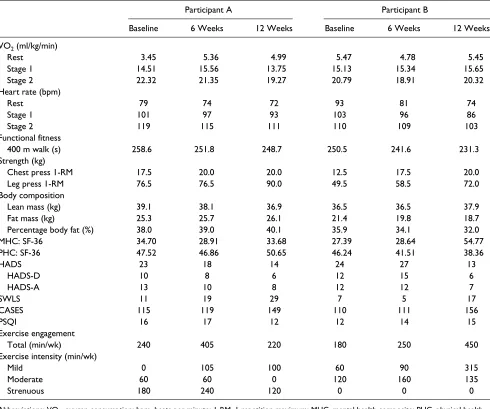
[image:3.603.50.540.81.490.2]Quality of life was recorded using the Short Form-36 v2 (SF-36),17 which comprises 8 subscales of the SF-36, and the 2 composite scores of physical (PHC) and mental (MHC) health are reported. These composite scores are pre-sented for comparison to the normalized mean T score of 50 and a standard deviation of 10.18 Depression (HADS-D), anxiety (HADS-A), and total distress were all recorded using the HADS.19 Although the HADS is a single 14-question scale, the use of the individual subscales to assess anxiety and depression independently is well supported.20 Satisfaction with life was measured using the brief 5 questions of the Table 1. Outcome Measures Reported for Each Assessment Point for Both Participants.
Participant A Participant B
Baseline 6 Weeks 12 Weeks Baseline 6 Weeks 12 Weeks VO2 (ml/kg/min)
Rest 3.45 5.36 4.99 5.47 4.78 5.45
Stage 1 14.51 15.56 13.75 15.13 15.34 15.65
Stage 2 22.32 21.35 19.27 20.79 18.91 20.32
Heart rate (bpm)
Rest 79 74 72 93 81 74
Stage 1 101 97 93 103 96 86
Stage 2 119 115 111 110 109 103
Functional fitness
400 m walk (s) 258.6 251.8 248.7 250.5 241.6 231.3
Strength (kg)
Chest press 1-RM 17.5 20.0 20.0 12.5 17.5 20.0
Leg press 1-RM 76.5 76.5 90.0 49.5 58.5 72.0
Body composition
Lean mass (kg) 39.1 38.1 36.9 36.5 36.5 37.9
Fat mass (kg) 25.3 25.7 26.1 21.4 19.8 18.7
Percentage body fat (%) 38.0 39.0 40.1 35.9 34.1 32.0
MHC: SF-36 34.70 28.91 33.68 27.39 28.64 54.77
PHC: SF-36 47.52 46.86 50.65 46.24 41.51 38.36
HADS 23 18 14 24 27 13
HADS-D 10 8 6 12 15 6
HADS-A 13 10 8 12 12 7
SWLS 11 19 29 7 5 17
CASES 115 119 149 110 111 156
PSQI 16 17 12 12 14 15
Exercise engagement
Total (min/wk) 240 405 220 180 250 450
Exercise intensity (min/wk)
Mild 0 105 100 60 90 315
Moderate 60 60 0 120 160 135
Strenuous 180 240 120 0 0 0
Satisfaction With Life Scale (SWLS).21 The ability to manage living with cancer was measured using the Lewis Cancer Self-Efficacy Scale (CASES).22,23 This question-naire comprises 17 items (eg, “I am able to manage what is being asked of me despite the cancer”) that are scored on an 11-point Likert scale ranging from 0 (not at all confident) to 10 (very confident). In accordance with the authors’ instruc-tions, participants were asked to rate their level of confi-dence to manage or cope with cancer-related problems for that particular day. Higher scores represent increased self-efficacy. Finally, the Pittsburgh Sleep Quality Index (PSQI), which measures sleep outcomes over the previous 1-month period was used to assess changes in sleep quality.24
Physical Activity and Exercise Adherence. A modified version of the Godin Leisure Time Exercise Questionnaire was used to determine physical activity levels.25 This questionnaire asks participants to record how often they performed exercise in the previous week and to categorize the intensity of each session as mild, moderate, or strenuous. Two modifications were made to the original questionnaire to accurately quan-tify exercise activity. First, the minimum time requirement was lowered from 15 to 10 minutes, which is more in line with current exercise guidelines suggested by the ACSM.26 Second, the average duration of each session was reported. These changes allowed for the determination of whether an individual was meeting international physical activity guidelines for cancer survivors.8 Exercise adherence was measured by comparing the total number of sessions attended with the number scheduled over the 12 weeks.
Results
Objective assessments showed improvements in physical health indicators in both participants; however, the patterns of improvement were not always similar (Table 1). Both participants showed an improvement in cardiovascular effi-ciency demonstrated by the comparatively lower HR at each stage across time and a reduction in time to complete the 400-m walk test. However, they displayed variable oxygen consumption responses. Maximal strength, summed as the total of the upper- and lower-body exercise tests, increased by 17% and 48%, regardless of the variable body composi-tion responses. Subjective PROs also varied between the 2 participants. However, over the entire 12-week program, there was a consistent improvement for all mental health outcomes. Both participants showed clinically meaningful reductions in depression, anxiety, and total distress, reducing symptomatology below cutoff scores used to represent clinical caseness.27 This change occurred with concomitant increases in satisfaction with life (SWLS) and cancer coping self-efficacy (CASES). Little change was noted for sleep quality, and both participants consistently reported scores above 5, which is used to indicate sleep disturbance.24
It is important to note that no adverse events occurred throughout the intervention. Both participants demonstrated 100% adherence, attending all 24 scheduled sessions. Furthermore, participant A completed an additional 35 home-based aerobic sessions, 16 in the first 6 weeks and 19 in the following 6 weeks. Participant B completed an addi-tional 44 sessions over the 12 weeks, 22 in each 6-week period. Both participants were highly active at baseline, but still managed to increase their exercise engagement for the first 6 weeks; thereafter, participant A declined below base-line levels, whereas participant B continued to increase, more than doubling her total physical activity minutes compared with baseline levels.
Discussion
The aim of this report was to examine whether a 12-week structured and supervised exercise program was beneficial and of clinical benefit within a supportive care framework for cancer survivors with brain tumors. Two unique partici-pants, who presented with common tumors and at vastly different stages of prognoses, participated in a similar exer-cise program, individualized only by intensity but not by exercise selection. The results achieved by both participants present initial evidence indicating that physical and mental health is enhanced after commencing a supervised, struc-tured, and professionally led exercise program.
occurred when decrements in cardiorespiratory fitness and muscle strength may otherwise have been expected. Notably, the continued engagement in moderate to vigorous exercise may have the potential not only to decrease morbidity, but also decrease mortality. Previous research by Ruden et al10 illustrated that engaging in regular higher-intensity exercise was associated with increased survival for survivors of recurrent brain cancer. However, the cur-rent trial was not designed with survival as an end point.
Current evidence suggests that screening and treating depression in patients with brain cancer should be a primary concern for comprehensive care.34 Distress has been classi-fied as the sixth vital sign, and best-practice cancer care should attend to the emotional and psychosocial needs of each patient.35 Previous reports indicate that approximately 50% of neurological cancer survivors suffer with elevated distress.36 The 2 participants were included within the larger trial particularly because they were distressed; nonetheless, in this regard, they are likely very representative of the clinical population. The 2 participants both had clinically meaningful reductions in depression and total distress, measured using the HADS,27,34 after the 12-week exercise intervention. These outcomes are in line with evidence that exercise reduces depression in depressed individuals37 as well as comorbid depression in people with cardiovascular disease38 and are unlikely to be attributed to any response from medications because these were consistent before and during the intervention period.
There was also a large and clinically meaningful categor-ical shift in satisfaction with life. The scale allows a range of 5 to 35. Categorical scoring zones have been provided by the authors, with each 5-point block (eg, 5-9, 21-25) represent-ing an increased level of satisfaction with life21; a score of 20 is classified as the neutral threshold value for this scale.39 At baseline, both participants scored on the lower end of the scale (11 and 7), but by the conclusion of the exercise intervention, participant A increased 3 categorical levels, exceeded the neutral threshold, and fell within the “high” category. Participant B increased 2 categorical levels from “extremely dissatisfied” to “slightly below average” and was just 1 point short of reaching the neutral threshold.
Interestingly, the improvements in objective physical assessments as well as the improved mental health mea-sures occurred independently of self-rated physical health (PHC from the SF-36), which remained relatively stable for participant A and declined considerably for participant B. Specifically, for participant A, this may have been partly a result of overtraining because she reported increased fatigue. Therefore, after 6 weeks participant A was advised by the exercise physiologist to reduce her total exercise load. The decline in PHC SF-36 score for participant B may be explained by the ongoing pharmacotherapy, which caused unexpected adverse events such as nosebleeds because of blood thinning. This suggests that a general
measure of health-related quality of life may not be an appropriate or clinically meaningful PRO to assess the effectiveness of an exercise program in neuro-oncology patients, who can have rapidly changing subjective opin-ions of their health status based on compromised immune systems and increased risk of illness or negative prognostic feedback from treating clinicians.
This exercise program was supported by the treating oncologist of both participants as well as their respective family physicians. This process of approval by clinicians should be considered as best practice to ensure that there are no contraindications to exercise. While recuperating from cancer treatment, the introduction or continuation of physi-cal activity to enhance recovery, reduce toxicity, increase physical function, and improve health-related quality of life has been recommended by the ACSM8 and further endorsed by the ACS.9 The findings reported above, along with new and emerging evidence, suggests that exercise is safe and beneficial for even the most complex cancer cases, includ-ing patients with bone metastases40 and those with poor prognoses, including pancreatic cancer patients.41
In summary, the outcomes from this report are intended to build a level of evidence regarding the benefits of exer-cise for cancer survivors with brain tumors. However, both participants were active at baseline, which may limit the generalizability of these findings. Moreover, the duration of the intervention was relatively short. Nonetheless, for these particular survivors, there were some important and clini-cally relevant outcomes. If exercise is to be included as standard care, it is essential to build on these results and determine whether patients with brain cancer continue to improve over longer periods of time and whether they are able to maintain the adherence levels seen in this study. These 2 cases illustrate that, in some cases, exercise is a beneficial form of supportive care, improving compro-mised mental health and enhancing physical capacity for brain cancer survivors, regardless of whether they are in palliative care or have exceeded the median expectations for survival. However, more evidence, including larger clinical and controlled trials, is required before these results can be broadly translated into clinical practice for all brain cancer survivors.
Declaration of Conflicting Interests
The author(s) declared no potential conflicts of interest with respect to the research, authorship, and/or publication of this article.
Funding
The author(s) received no financial support for the research, authorship, and/or publication of this article.
References
1. Siegel R, Ma J, Zou Z, Jemal A. Cancer statistics, 2014.
2. Deorah S, Lynch CF, Sibenaller ZA, Ryken TC. Trends in brain cancer incidence and survival in the United States: Surveillance, Epidemiology, and End Results Program, 1973
to 2001. Neurosurg Focus. 2006;20:E1.
3. Kamiya-Matsuoka C, Gilbert MR. Treating recurrent
glio-blastoma: an update. CNS Oncol. 2015;4:91-104.
4. Australian Institute of Health and Welfare & Australasian
Association of Cancer Registries. Cancer in Australia: An
Overview, 2012. Canberra, Australia: AIHW. Cancer Series no. 74. Cat. no. CAN 70.
5. Budrukkar A, Jalali R, Dutta D, et al. Prospective assess-ment of quality of life in adult patients with primary brain
tumors in routine neurooncology practice. J Neurooncol.
2009;95:413-419.
6. Sterckx W, Coolbrandt A, Dierckx de Casterle B, et al. The impact of a high-grade glioma on everyday life: a systematic
review from the patient’s and caregiver’s perspective. Eur J
Oncol Nurs. 2013;17:107-117.
7. Clark EJ, Stovall EL, Leigh S, Siu AL, Austin DK, Rowland JH. Imperatives for Quality Cancer Care: Access, Advocacy, Action, and Accountability. Silver Spring, MD: National Coalition for Cancer Survivorship; 1996.
8. Schmitz KH, Courneya KS, Matthews C, et al. American College of Sports Medicine roundtable on exercise
guide-lines for cancer survivors. Med Sci Sports Exerc. 2010;42:
1409-1426.
9. Rock CL, Doyle C, Demark-Wahnefried W, et al. Nutrition
and physical activity guidelines for cancer survivors. CA
Cancer J Clin. 2012;62:243-274.
10. Ruden E, Reardon DA, Coan AD, et al. Exercise behavior, functional capacity, and survival in adults with malignant
recurrent glioma. J Clin Oncol. 2011;29:2918-2923.
11. Cormie P, Nowak AK, Chambers SK, Galvao DA, Newton
RU. The potential role of exercise in neuro-oncology. Front
Oncol. 2015;5:85.
12. Levin GT. Role of Physical Exercise in Reducing Depression
and Improving Mental Health in Cancer Survivors [PhD
thesis]. Perth, Australia: Edith Cowan University; 2007. http://ro.ecu.edu.au/theses/1414/.
13. Wall BA, Galvao DA, Fatehee N, et al. Maximal exercise testing of men with prostate cancer being treated with
andro-gen deprivation therapy. Med Sci Sports Exerc. 2014;46:
2210-2215.
14. Galvao DA, Taaffe DR, Spry N, Joseph D, Newton RU. Combined resistance and aerobic exercise program reverses muscle loss in men undergoing androgen suppression therapy for prostate cancer without bone metastases: a randomized
controlled trial. J Clin Oncol. 2010;28:340-347.
15. Simonsick EM, Fan E, Fleg JL. Estimating cardiorespira-tory fitness in well-functioning older adults: treadmill
vali-dation of the long distance corridor walk. J Am Geriatr Soc.
2006;54:127-132.
16. Baechle TR, Earle RW. Essentials of Strength Training
and Conditioning: National Strength and Conditioning Association. Champaign, IL: Human Kinetics; 2000.
17. Ware JE, Kosinski M, Dewey JE. How to Score Version 2
of the SF-36 Health Survey. Lincoln, RI: QualityMetric Inc; 2002.
18. Maruish ME, Turner-Bowker DM. A Guide to the Development
of Certified Modes of Short Form Survey Administration. Lincoln, RI: QualityMetric Inc; 2009.
19. Zigmond AS, Snaith RP. The Hospital Anxiety and Depression
Scale. Acta Psychiatr Scand. 1983;67:361-370.
20. Annunziata MA, Muzzatti B, Altoe G. Defining Hospital Anxiety and Depression Scale (HADS) structure by confir-matory factor analysis: a contribution to validation for
onco-logical settings. Ann Oncol. 2011;22:2330-2333.
21. Diener E, Emmons RA, Larsen RJ, Griffin S. The Satisfaction
With Life Scale. J Pers Assess. 1985;49:71-75.
22. Kershaw TS, Mood DW, Newth G, et al. Longitudinal anal-ysis of a model to predict quality of life in prostate cancer
patients and their spouses. Ann Behav Med. 2008;36:117-128.
23. Northouse LL, Mood DW, Montie JE, et al. Living with pros-tate cancer: patients’ and spouses’ psychosocial status and
quality of life. J Clin Oncol. 2007;25:4171-4177.
24. Buysse DJ, Reynolds CF III, Monk TH, Berman SR, Kupfer DJ. The Pittsburgh Sleep Quality Index: a new
instru-ment for psychiatric practice and research. Psychiatry Res.
1989;28:193-213.
25. Godin G, Shephard RJ. A simple method to assess
exer-cise behavior in the community. Can J Appl Sport Sci.
1985;10:141-146.
26. Garber CE, Blissmer B, Deschenes MR, et al. American College of Sports Medicine position stand: quantity and qual-ity of exercise for developing and maintaining cardiorespira-tory, musculoskeletal, and neuromotor fitness in apparently
healthy adults: guidance for prescribing exercise. Med Sci
Sports Exerc. 2011;43:1334-1359.
27. Bjelland I, Dahl AA, Haug TT, Neckelmann D. The valid-ity of the Hospital Anxiety and Depression Scale: an updated
literature review. J Psychosom Res. 2002;52:69-77.
28. Haskell WL, Lee IM, Pate RR, et al; American College of Sports Medicine, American Heart Association. Physical activity and public health: updated recommendation for adults from the American College of Sports Medicine and
the American Heart Association. Circulation. 2007;116:
1081-1093.
29. Demark-Wahnefried W, Winer EP, Rimer BK. Why women gain weight with adjuvant chemotherapy for breast cancer.
J Clin Oncol. 1993;11:1418-1429.
30. Greene D, Nail LM, Fieler VK, Dudgeon D, Jones LS. A comparison of patient-reported side effects among three
chemotherapy regimens for breast cancer. Cancer Pract.
1994;2:57-62.
31. Kennecke H, Berry S, Wong R, et al. Pre-operative bevaci-zumab, capecitabine, oxaliplatin and radiation among patients with locally advanced or low rectal cancer: a phase II trial.
Eur J Cancer. 2012;48:37-45.
32. Bezwada HP, Granick MS, Long CD, Moore JH Jr, Lackman RL, Weiss AJ. Soft-tissue complications of intra-arterial
chemotherapy for extremity sarcomas. Ann Plast Surg.
1998;40:382-387.
33. Labiner DM, Ettinger AB, Fakhoury TA, et al. Effects of lamotrigine compared with levetiracetam on anger, hostility,
and total mood in patients with partial epilepsy. Epilepsia.
34. Pranckeviciene A, Bunevicius A. Depression screening in
patients with brain tumors: a review. CNS Oncol. 2015;4:71-78.
35. Bultz BD, Carlson LE. Emotional distress: the sixth vital sign:
future directions in cancer care. Psychooncology. 2006;15:
93-95.
36. Zabora J, BrintzenhofeSzoc K, Curbow B, Hooker C, Piantadosi S. The prevalence of psychological distress by
cancer site. Psychooncology. 2001;10:19-28.
37. Rimer J, Dwan K, Lawlor DA, et al. Exercise for depression.
Cochrane Database Syst Rev. 2012;(7):CD004366.
38. Blumenthal JA. New frontiers in cardiovascular behav-ioral medicine: comparative effectiveness of exercise and
medication in treating depression. Cleve Clin J Med. 2011;
78s1:s35-s43.
39. Pavot W, Diener E. Review of the Satisfaction With Life
Scale. Psychol Assess. 1993;5:164-172.
40. Cormie P, Galvao DA, Spry N, Joseph D, Taaffe DR, Newton RU. Functional benefits are sustained after a program of supervised resistance exercise in cancer patients with bone
metastases: longitudinal results of a pilot study. Support Care
Cancer. 2104;22:1537-1548.
41. Cormie P, Spry N, Jasas K, et al. Exercise as medicine in
the management of pancreatic cancer: a case study. Med Sci