ROADSAFETY MEASURES AMONG MIDDLE
SCHOOL CHILDREN IN SELECTED SCHOOL
AT KANYAKUMARI DISTRICT
A DISSERTATION SUBMITTED TO THE TAMILNADU DR.M.G.R. MEDICAL UNIVERSITY CHENNAI, IN
PARTIAL FULFILMENT FOR THE DEGREE OF MASTER OF SCIENCE IN NURSING
ROADSAFETY MEASURES AMONG MIDDLE SCHOOL CHILDREN IN SELECTED SCHOOL
AT KANYAKUMARI DISTRICT.
---
ROADSAFETY MEASURES AMONG MIDDLE SCHOOL CHILDREN IN SELECTED SCHOOL
AT KANYAKUMARI DISTRICT.
APPROVED BY DISSERTATION COMMITTEE ON : 23.12.2014
PRINCIPAL:
Prof. Mrs. Santhi Letha, M.Sc(N), M.A, Ph.D (N)
Principal
Sree Mookambika College of Nursing, Kulasekharam ………
RESEARCH GUIDE:
Mrs. Dali Christabel, M.Sc., (N)
HOD cum Guide, Department of Child Health Nursing,
Sree Mookambika College of Nursing, Kulasekharam ………
MEDICAL EXPERT :
Dr. Devi Kala, M.D. DCH
Professor, Department of Pediatrics
Sree Mookambika Medical College Hospital,
Kulasekharam ……….
A DISSERTATION SUBMITTED TO THE TAMILNADU DR.M.G.R. MEDICAL UNIVERSITY CHENNAI, IN
PARTIAL FULFILMENT FOR THE DEGREE OF MASTER OF SCIENCE IN NURSING
This is to certify that the dissertation entitled “A Study to assess the effectiveness of child to child programme on Road Safety measures among middle school children in selected school at Kanyakumari District” is a bonafide research work done by Mrs. Agin Navis Mary, II year M.Sc (N), Sree Mookambika College of Nursing, Kulasekharam under the guidance of Mrs. Dali Christabel, M.Sc., (N), HOD of Child Health Nursing, in partial fulfillment of the requirements for the Degree of Master of Science in Nursing under Tamil Nadu Dr. M.G.R Medical University.
Principal
This is to certify that the dissertation entitled “A Study to assess the effectiveness of child to child programme on Road Safety measures among middle school children in selected school at Kanyakumari District” is the outcome of the original research work under taken by me under the guidance of
Mrs. Dali Christabel, M.Sc., (N), HOD of Child Health Nursing, Sree Mookambika College of Nursing, Kulasekharam. I also declare that the material of this has not formed anyway the basis for the awarded of any degree or diploma in this university or any universities.
Place : Kulasekharam Date : 10.02.2016
This is to certify that the dissertation entitled “A Study to assess the effectiveness of child to child programme on Road Safety measures among middle school children in selected school at Kanyakumari District” is the outcome of the original research work under taken by me under the guidance of
Mrs. Dali Christabel, M.Sc., (N), HOD of Child Health Nursing, Sree Mookambika College of Nursing, Kulasekharam. I also declare that the material of this has not formed anyway the basis for the awarded of any degree or diploma in this university or any universities.
Place : Kulasekharam Date : 10.02.2016
Mrs. Dali Christabel, M.Sc., (N),
HOD of Child Health Nursing, Sree Mookambika College of Nursing,
Chapter No Content Page No
I INTRODUCTION Need for the study Statement of the problem Objectives
Hypotheses
Operational Definitions Assumptions
Delimitations of the study Conceptual framework
1 – 16 9 12 12 12 13 14 15 16 II REVIEW OF LITERATURE
Studies related to accidents among adolescents Studies related to knowledge and practice on road safety Studies related to road traffic injuries
Studies related to prevention of Road Traffic accident Studies related to child to child approach
Chapter No Content Page No
Population Sample
Criteria for sample selection Data collection Tool
Description of the tool Testing of the tool Validity
Reliability Pilot study
Data collection procedure Plan for data analysis
29 29 30 30 30 32 32 32 32 33 33 IV DATA ANALYSIS AND INTERPRETATION 35-55
V RESULT AND DISCUSSION 56-59
It is my pleasure and pride to record my solitude and thanks to those who have contributed to the successful completion of this endeavor.
First and foremost I deeply thank ‘’Lord Almighty’’ for his grace and blessings through the entire course of study which strengthened and sustained me throughout this endeavor.
My sincere thanks and appreciation to Dr.Velayudhan Nair, MS, Chairman and Dr. RemaV.Nair, MD, DGO, Director, Sree Mookambika Institute of Medical Sciences, for providing facilities and encouragement for the study.
I owe my deepest sense of gratitude to Mrs. Santhi Letha,MSc (N), M.A, Ph.D(N), Principal, SreeMookambika College of Nursing, Kulasekharam, for her excellent guidance, encouragement, valuable advice and constant support from the initial to final level enabled me to develop an understanding of the subject, as well as to carry out the study on time.
I express my heartful thanks to Dr.T.C. Suguna,MSc(N), M.A(Socio), Ph.D,
Sree Mookambika College of Nursing, our Class Coordinator for rendering valuable guidance, suggestions and directions to complete this study.
I wish to place my sincere thanks to Mrs. Dali Christabel, M.Sc (N), HOD of Child Health Nursing for her encouragement, valuable opinions, timely suggestions and constant support to complete the study successfully.
I acknowledge with immense sincerity to my research guide
meticulous guidance, valuable opinions, timely suggestions and limitless support which laid a strong foundation in moulding this research study successfully.
I express my gratitude to Mrs. Suja Renjini, M.Sc (N) Assistant Professor, Mrs.P.Shanthi, M.Sc (N) Lecturer, Ms. Soumya S.P, M.Sc (N) Lecturer, and other staff of the Department of Child Health Nursing for their valuable guidance and support.
I also thank all the faculty members of Sree Mookambika College of Nursing for their motivation, encouragement and immense support throughout the dissertation work.
I am grateful to Prof. Kumar,B.Sc, MA, MPS, Biostatistician for guiding me to complete the statistical analysis carefully.
I acknowledge my professional gratitude to Dr. Devi Kala, MD, DCH, Dept. of Pediatrics Medicine, Sree Mookambika Institute of Medical Sciences, for his valuable suggestions and guidance.
I am indebted to my beloved Colleagues for their direct and indirect support, concern and help to make this attempt an interesting one.
My heartfelt thanks to the Library staff of Sree Mookambika College of Nursing for their support.
My special thanks to the school authorities and all the Teachers and children
who helped me to bring this project in printed form.
I extend all my deep felt thanks to my beloved family members for their prayers, sacrifice and encouragement which strengthened me to overcome all the storms through the entire course of study.
Table No Titles Page No
1 Frequency And Percentage Distribution of Samples According To The Demographic Variables
36
2. Frequency And Percentage Distribution Of Samples According To Knowledge Level.
50
3. Effectiveness Of Child to Child Programme Regarding Road Safety Measures Among Group II Middle School Children.
52
4. Association Between Knowledge And Selected Demographic Variables.
Figure No
Titles Page
No
1 Conceptual Framework Based On J.W. Kenny’s Open System Model. 16 2. Schematic Representation Of Research Design 33 3. Percentage Distribution Of Samples According To Age 39 4. Percentage Distribution Of Samples According To Sex 40
5 Percentage Distribution Of Samples According To Educational Status Of Child
41
6 Percentage Distribution Of Samples According To Educational Status Of Mother
42
7 Percentage Distribution Of Samples According To Educational Status Of Father
43
8 Percentage Distribution Of Samples According To Occupation Status Of Mother
44
9 Percentage Distribution Of Samples According To Occupational Status Of Father
45
10 Percentage Distribution Of Samples According To Family Income 46 11 Percentage Distribution Of samples According To Types of Family 47 12 Percentage Distribution Of Samples According To Source Of
Information
48
13 Percentage Distribution Of Samples According To Living Area 49 14 Frequency and percentage distribution of samples according to
knowledge level
51
List of Appendices
B Letter seeking Expert Opinion for Tool validity ii C Letter for the conduction of the study iii D List of Experts for Tool validations iv E Data collection Tool – English and Tamil
Section A – Demographic variable Section B - Structured Questionnaire
vi
F Evaluation Tool Check List xx
Road Traffic Accident is one of the major preventable public health problems and is on the rise which can be attributed to increase in the number of vehicles and life style changes and risky attitudes. Injuries to RTA as one of the prime causes to the global burden of diseases. The over all objective of the study was to assess the effectiveness of child to child programme on road safety measures by comparing the pre and post test knowledge scores. The study was carried out among 30 middle school children studying 6th and 7th standard samples were selected based on purposive sampling technique, designed as pre-experimental design with one group pre test and post test design. structured questionnaire to collect the data , analyzed by descriptive and inferential statistics. The analysis revealed that there was a significant improvement in the mean knowledge pretest score was11.4 and post test score was18.4 child to child programme improved the knowledge .The T value found to be 2 at P<0.05 level of significance that showed there was a significant improvement in the knowledge levels. study shows that child to child programme has resulted in significant improvement in the knowledge, development of positive attitudes and healthy practices among study group students. Therefore special and continuous health education of school children, like child to child programme in their formative years improves their knowledge and helps to develop positive attitude and healthy practices, which will eventually help to reduces road traffic accident and diseases like diarrhoea, malnutrition etc, not only amongst the children but also amongst their family members.
CHAPTER - I
Introduction
“SAFETY ISN’T JUST A SLOGAN IT’S A WAY OF LIFE”
- Road Safety Week (2015)
“NO SAFETY KNOW PAIN , KNOW SAFETY NO PAIN”
“Is better to lose one minute in life. Than to lose life in a minute, safety of children is the foremost priority of every parent”
As children grow and their world extends beyond the home and out into local roads, they are exposed to hazards and risks, Despite the fact that children use roads as pedestrians, cyclist, motorcyclists and vehicle passengers, the road environment is rarely development with consideration for their needs.
Today’s children are tomorrow’s citizens and healthy children are wealth of nation. children below 15 years of age make 40% of the total population of India. Children not only constitute large group but they are also vulnerable group or “special risk group” due to lack of health care, nutrition, immunization etc. Half of those dying on the world’s roads are vulnerable road users pedestrians, cyclist and motorcyclist (Park .k).
tremendously in their levels of maturity, Middle school students are interested in absolutely everything for half an hour.
An accident is an event, independent of human will caused by an outside force acting rapidly and resulting in physical or mental injury. Accidents currently form the third leading causes of morbidity and mortality in the developing and developed countries (World Health Organization).
As per WHO, unintentional injuries are a leading cause of death among children. the unintentional injuries comprises of accidents such as falls, collisions, heat related injuries, burns and scald, poisoning and ingestion accidents, cuts and abrasion and drowning. This challenges the children’s morbidity and mortality .According to WHO report of 2008, the leading cause of childhood injury and death is road accidents which kill 2,60,000, drowning 1,75,000, burns 96,000, falls 47,000 occurs a year globally and injured around were 10 million. Road traffic injuries alone ranked as the number one cause of disease burden among children between 5&14 years (Mishra.B.et.al.).
people suffer non – fatal injuries, with many incurring a disability as a result of their injury (WHO-UNICEF).
Road traffic accidents are the common cause of death in school children. India has the highest proportion of deaths due to road traffic accidents in South Asia. According to RTA is the third most important cause of deaths for 5 to 29 yrs old (WHO, global health estimates 2014) .
India’s killer roads account for more deaths than any other single cause, from terrorism to natural deaths, Every day about 250 people die in road accident or an astonishing 1, 40, 590 each year. It is estimated that road accident cause an estimated loss of 1% of the country’s gross domestic product. Every hour 13 people die due to road accidents. Every 10th person who dies due to road accidents is an Indian. In Last year 139, 671 people lost their lives on India’s roads – 382 deaths every day. In India’s daily death toll due to road accidents is more than four times the annual death toll from terrorism (India spend.com oct19,2015).
A pedestrian struck by a car driving at 37 km/hr has an average risk of death of 10% according to a study sponsored by American Academy Association foundation or US association dedicated to road safety, this increase exponentially with vehicle speed and rises to 90% for higher speeds.
Overloading of vehicles, particularly trucks, makes them hard to control, especially when they need to brake. However, it is common practice on Indian highway, similarly driving with protruding loads for instance steel roads protruding out of trucks is also a common sight on Indian roads, these two causes accounted for 36,543 deaths in 2014 (Peden.m.et.al.,).
In India, Madhya Pradesh and Bihar account for almost a quarter of all deaths due to drink and driving. Among smaller states, Haryana and uttarakhand have tolls ways higher than many larger states. Traffic police in major cities like Mumbai and Delhi have been conducting sustained campaigns against drink driving in response to high profile cases. Two wheelers account for the largest share of vehicles on Indian roads. So, it is not a surprise that, they also account for the largest number of fatalities. According to WHO statement, In 2014, 30% of all road deaths were of riders / passengers on two wheelers, while bicyclist accounted for 3% and pedestrians for 9% wearing a helmet can reduce the risk of severe injury by 72% and the risk of death by 39% (Road Traffic Injury Prevention-training manual).
In district statistical hand book of Kanyakumari in 2014, reported that, the total number of accidents in 1556 and 1484 persons are injured and 82 persons are killed due to Road accidents. Motor vehicle acts, administration policy (2014 – 2015) based, detected the cases of over speed (1294 cases), drunken driving (834 cases) over load of children in educational institution bus (1, 865 cases).
As per WHO, injuries due to RTAs was the sixth most important reason for mortality in India leading to hospitalization, disabilities and socio – economic losses. Economic losses, In developing countries, a loss of about 100 billion / year occurs because of RTAS. As a result of RTAS the affected families have to put up with the cost of extended medical care, bear the loss of wage earner, take additional care of the disabled which ultimately leads them to poverty. In India, the gross domestic product loss due to Road traffic accident was 3.5% in the year 2014 - 2015.
In as U.S. study showed, One Hundred and Thirty Seven (137) Patient attending hospital following road traffic accidents were contracted regarding pain in the neck between 1 and 2 years later. 62% stated that they had suffered pain in the neck, 22% still felt occasional pain 1 year after the accident and 5 had continuous pain at 1 year.
NCRB reported that, traffic accidents in the country have marginally increased by 1.8% during 2015 compared to 2014. In 2014, 4, 81,805 traffic accidents resulted in injuries to 4, 81,739 persons and 1, 69,107 deaths. A state of Uttar Pradesh followed by Maharashtra and Tamil Nadu have reported maximum fatalities in traffic accidents in the country, these 3states accounted for 1.22%, 11.0% and 10.1% of total deaths in traffic accidents (NCRB-2015).
Life is a precious gift by God and it should be handled with care. Nursing profession is one of the main professions responsible to care the life of people by providing preventive, curative, primitive, restorative and rehabilitative care. Safety begins at home. Right from the birth, human beings develop a sense of safety to protect themselves from the environment. Safety is not only necessary for the individual but also for the society on the whole. Road traffic safety means to safety drive on road to ensure that there is no harm or the driver of vehicle do not cause any harm to any other vehicle moving near by it. In other words we can say that road traffic safety means to reduce accident causes on road for proper driving.
part in road accident. If it is a contributory factor in 95% of accidents installation of safety skills in children can provide life long benefits to the society (The Health Site).
School teachers should inculcate traffic safety among students and enforces traffic rules within the school premise. Road safety education involves teaching children to be safe road uses. India adopted national health policy for children in August 1974 and recognized children as the “Nation’s supremely important asset”. David Morley and his colleagues in London who identified the child power for spreading the health messages (Indian journal of community medicine-2006).
The Child-to-Child Approach refers to a style of child empowerment where children are active participants in their own development and the development of other children. This approach is based on the belief that children, from whatever circumstances, are capable of helping them. The approach assumes that children will gain more from their development if they are active participants in the development process rather than passive recipients. Child-to-Child Approach aim to empower children with skills, knowledge and attitude to enhance not only themselves but to give them the ability to reach out to other children. Children who have acquired the appropriate skills, knowledge and attitude through various training programs are then able to share those assets with other children, in a variety of venues and using a variety of mediums. Children who are able to effectively share their skills with other children generally are good leaders, role models and facilitators (Bahay Tuluyan).
as well as benefiting from. The concept of child to child programme that had evolved from the recognition for the role those older children can play in caring for their younger siblings.
Road safety is a collective effort of the government and people, while the government administration must leave no stone unturned in ensuring proper condition of the roads and enforcing strict adherence to traffic rules, responsible driving and the right attitude of people with respect to traffic rules in perhaps is first step on the long road to 100% safety on the roads. Decade of Action for road safety 2011 – 2020, Road traffic injuries are a processing global health and development concern. Death due to RTAS have risen by approximately two fifth between the years 2005 – 2014 in India. Presently on the Indian road there is one death every six minutes , which predicted to risk to one death every 3minutes by 2020 (Medindia.net.).
Need and significance of the study
Children less than 12 years have a limited ability to cope with traffic and are disproportionately represented in deaths involving pedestrians. It has been estimated that one million deaths and 15 million road side accidents occur on roads world wide every year, it was estimated that occur 75% of road side accidents occur in developing countries, which involves 65% pedestrians and 35% of school children. The number of recorded road deaths in India – 1,40,000 annually is the higher in the world. In addition as estimated 2.2 million people are seriously injured on road.
A total of 4,81,874 traffic accidents were reported in 53 cities during 2014, In 4,81,874 traffic accidents caused injuries to 4,72,523 persons and 1,17,416 deaths.
In that Tamilnadu (67,250 cases) followed by Maharasthra (44,382 cases), Karnataka (43,694 cases), Madhya Pradesh (39,698 cases), and Kerala (35,872 cases) have reported the maximum number of road accidents accounting for 14.9%, 9.8%, 9.7%, 8.8%, and 8% respectively of such accidents in the country.
The percentage share of deaths in traffic accidents due to “Road Accidents” was reported was 83.7% (1,41,526 deaths) out of the total RTAS, the proportion of fatal ones have increased from 18.1% to 24.4% from the year 2000 to 2011 also the casualties have increased by 1.3% in the year 2014 compared to 2013.
Most of road accidents were due to over speeding accounting for 36.8% total accidents, which caused 48,654 deaths and 1,81,582 persons injured. Dangerous / careless driving or overtaking caused 1,37,808 road accidents which rendered 48, 127 deaths and 1,38,533 persons injured during 2014, Besides 3.2% of road accidents were due to poor weather conditions.
Road accidents in Tamilnadu, state of South India are among the highest in India. In 2014, the state recorded 67,250 cases, in that Chennai city, the rate is 3.6% (3960 cases), the children below 14 years of age group is 97 male and 35 female children. In rural areas 54.7% and 45.3% of road accidents were reported (2,46,768 cases) and urban areas (2,04,130 cases) respectively during 2014. (16.5% in rural areas and 16.4% urban areas).
previous year, this means, at least 43 people die in accidents every day. According to Tamilnadu state crime records bureau, 917 of the accidents were because of the drivers fault. Pedestrians were found responsible for, 1,747 accidents. Mechanical defect caused by 112 cases, while bad roads were blamed for 472 cases. Bad weather caused by 63 accidents. A majority of the deaths (22,168) happened an national highway in the state, followed by state highways (20,920 cases) district roads (15,020 cases) and village roads (7,765 cases).
In March 2010, the United Nations General Assembly tool steps to address their enormous global problem by proclaiming the decade of action for road safety 2011 – 2020. The goal of the decade is “To stabilize and then reduce the forecast level of Road Traffic faculties around the world by 2020”
A study conducted by Priyanka mahawar (2013) on road safety awareness and practice among school children. Showed that 40% of children lacked correct knowledge of traffic rules. Bicycle, motorcycle / scooter and car were driven mostly by 62%, 18.5% and 1.7% of school children respectively. Some children 13.3%. started driving under the age of 10 years. More half of the students informed that they were caught for not wearing helmets and not having valid documents. The chances of Road side Accidents (RSA) can be averted to a large extent if school children, are made aware of road safety measures. Road safety education is considered essential to teach children to interact with traffic safety.
spreading health messages. Prof. Hugh Hawes states that “children have vitally important part to play in the health of the community, not merely by kept healthy by adults but in passing on health messages to then to younger brothers and sisters and by jointly co-operating to become a positive force of health”. Helath education to school children in their formative age is the most effective method for protection and promotion of their health.
Leena K.C. et al., (2014) conducted a study to assess the effectiveness of child to child approach to health education on prevention of worm infestation among primary school children in Mangalore. A study was carried out among 100 primary school children were selected by cluster sampling technique ,quasi experimental research design used to evaluate the study, Structured knowledge questionnaire methods was used for collecting the data. A study findings showed that, mean difference in the knowledge scores of children significant in traditional health education group (t=5.61, P<0.05), child to child group (t=6.42, P<0.05). Study concluded that, through proper training of peers and motivation, the child to child approach to health education improves the knowledge level of children on common issue concerning children is an effective way.
measures and can help in reducing child mortality and morbidity rates to some extent. Hence, we need to conduct the study on effectiveness of child to child programme on road safety measures.
Statement of the problem
A study to assess the effectiveness of child to child programme on road safety measures among middle school children in a selected school at Kanyakumari District.
Objectives of the study
¾ To assess the knowledge of group II middle school children regarding road safety measures before and after child to child programme .
¾ To determine the effectiveness of child to child programme regarding Road Safety measures among Group II middle school children.
¾ To find the association between the knowledge of group II middle school children with selected demographic variables such as age, sex, education status of mother and father; occupation of mother and father, types of family, living area and source of information.
Hypothesis
H1 : There is a significant improvement in the level of knowledge of Group II children regarding road safety measures.
Operational definition
Effectiveness
In this study, effectiveness refers to the desired changes occur regarding road safety measures among group II middle school children after the child to child programme .It’s measured by structured questionnaire.
Child to child programme
In this study there are two phases :
Phase I : Group I middle school children belongings to 8th std, age group of 13 yrs, 20 students were selected according to their academic performance, interest in participating group activities as reported by their teacher. Health teaching was given by the investigator to group I children regarding road safety measures for one hour and then selected only six students based on higher test score.
Phase II : In these group I children, disseminated information about road safety measures to their Group II children (30 members) age group of 11-12 yrs belongings to 6th and 7th standard. In phase II, one selected group I child, spreads the information on road safety measures to five group II children for one hour duration.
Road safety measures :
Middle school children :
In this study, middle school children refers to the male and female children belonging to the age group of 11-12 yrs studying 6th and 7th standard.
Delimitation :
x Study is limited only at one school.
x Age is limited to 11-12 years
x Duration is only one month.
Assumptions:
x The middle school children can understand the concept and need of road safety measures.
x The middle school children safeguard themselves and guide the younger children to prevent road traffic injury.
x The child to child approach may create awareness on road safety measures among middle school children.
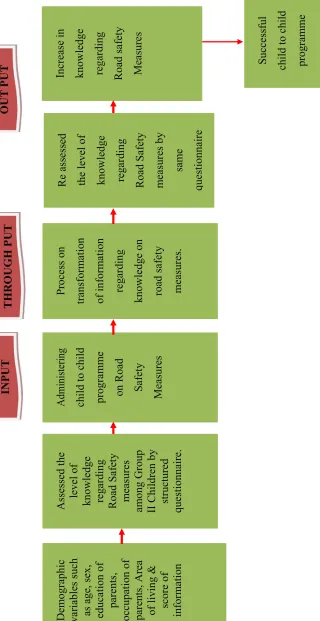
Conceptual framework
Conceptual framework is a global idea about a concept in relation to a specific discipline. It is a usual diagram by which the research explains the specific areas of interest.
exchange of matter, energy and information provides input for the system. The system transforms the input to the process is known as throughput. The energy of information is given off into the environment as output. When output is reformed into the system as input, the process is known as feedback.
Input:
In this study , Input consists of information, material or energy that enters the system. Input is child to child programme.
Throughput:
In this study throughput refers to process after the input absorbed by the system in a way useful absorbed by the system in a way useful to the system. This transformation is called throughput. Throughput was the transformation process which is obtained by delivery of child to child programme.
Output :
In this study output refers to the level of knowledge improved through child to child programme.
Dem ogr aphic va ri ables such
as age, sex, educat
ion of parents , occupat ion of parents , Area
of living & sc
o
re of
inform
ation
Administering ch
ild to child
progr
am
m
e
on Road Safety Measures
Process on transform ation of inform ation re garding
knowledge on road safety measures
.
Incr
ease in
knowledge regarding Road safety Me
as
ures
Succe
ssful
ch
ild to child
program me Re a ss ess ed
the level of knowledge reg
ard
ing
Road Safety measures by
[image:31.612.126.446.118.739.2]sam e q uestionnaire Assessed the level of knowledge reg ard ing Road Safe ty me as u re s am ong G roup II C h ildren by structured questionnaire. Figure 1 . Conce p tual F r ame work bas
ed on Modifi
CHAPTER - II
Review Of Literature
Review of literature is an exhaustive and systematic examination reviewed in depth so, as broaden the understanding of the selected problem. This chapter attempts to presents a broad review of the study conducted the methodology adopted and conclusion drawn by earlier investigations. It helps to study the problem in depth.
1. Studies related to accidents among adolescents
2. Studies related to knowledge and practice on road safety
3. Studies related to road traffic injuries.
4. Studies related to prevention of Road Traffic Accident.
5. Studies related to child to child approach.
Literature related to accidents among adolescents :
good awareness towards Road traffic sign compared to girls. Students have permanent driving license (19.5%) do not have license (68.03%) use of safety measures using driving was very less 19.75% and not followed the traffic rules by 66.32% students. Prevalence of accident among adolescence driver was more boys (68.4%) compared to girls (31.56%). This study concluded that, maximum adolescents were aware about green and red colour signals, but awareness towards the yellow signals was less amongst boys and girls. RTA are totally avoidable in a sense that it is only needs to create a sense among people regarding road safety and its benefits in their own interests.
Thomas D. Marcotte et al (2012) conducted a self report longitudinal study about high risk driving behaviours among 16-18 years age group of adolescent were recruited from school districts / communities in university of California, san Digo human Research Protection programme and history of recent binge drinking. Sample of 21 ABD and 17 CON data collected depend on education, age, race, gender, years of driving, recent driving. A study finding showed that ABD more frequently violated GDL breaking the laws a median of 60 time 9 times for CON over half of ABD youth reported spearing running yellow lights, and dangerous passing compared to one in five CON. Fifteen participants (39.5%) reported crashes in which they were the driver. Both participants had a serious crash. ABD had a higher rate. Study concluded that GDL is effective in lowering teen crash rates, binge drinking teen may thus require additional intervention to ensure GDL compliance.
was selected as a sample and cluster sampling technique was used, semi- open ended self administered questionnaire method used for collecting the data duration of one year. a study finding showed that, more than half ie 52.4% reported not always wearing a seat belt, about 72.1% of two wheelers reported not always and 23.3% reported never wearing helmet and nearly 20% students ride vehicle with drink and driving. Road hazards behaviour found to be significantly more in males and lower age group. 77.5% of the respondents were at risk as far as behaviours related to safety on roads are concerned. Study concluded that, evoke earnest response from the government, Policy makers and all personnel concerned with adolescent welfare on how best to reduce the extent of this preventable problems.
Literature Related to knowledge and practice on Road Safety :
L. Lalitha D. et al (2015) conducted a cross sectional study to assess knowledge, attitude and practice of road safety measures among college students in Vishakapattinam city, a study was carried out among 150 college students, was selected as a sample and convenient sampling technique was used. Structured questionnaire method was used by collecting the data, duration is 3 months. A study finding showed that, about 67% of females had knowledge about speed limit compared to 30% of males, this difference was statistically significant (P=0.01). More than 90% of the students strongly agreed that mobile phones should not used in driving 76.7% of students drive a vehicle, only 52.17% among them wear helmet while driving, the study concluded that, continuous efforts are required to increase awareness on road safety measures.
Taranga Reang, Amar Tripura (2014) conducted a cross – sectional study to assess the knowledge and practice on road safety measures among under graduate medical students in Govinda Ballabhpant hospital. A study was carried out among 310 medical students in AGMC campus was selected as a sample and convenient sampling technique was used Structured questionnaire method used for collecting the data and duration is 3months. A study finding showed that, majority (65%) know that consumption of alcohol while driving was dangerous, talking while driving distract the driver, cautions drive near school, seat belt to be worn be everyone in the car, males had significantly (P=0.035) better knowledge compared to females, the study concluded that continuous effort should be on the increase road safety measures through IEC activities to reduce the morbidity and mortality regarding RTA.
out among 159 school going children age group of 16-18 years was selected as a sample and simple random sampling technique was used, structured questionnaire method was used for collecting the data. A study findings showed that among the sample 21.4% of knows to slow down vehicle near a zebra crossing, 23.3% knew the use of low beam of light in night. 89.3% of sample know the use of helmet for protection. 72.3% knows the use of mobile phone is prohibited while driving. 35.2% knows the indication of yellow traffic signal. This study concluded that, continuous reinforcement and education remainding them of traffic rules can bring about the positive change in them and motivated them for strictly sticking to norms of traffic.
Humayun mirya (2012) conducted a cross – sectional study to assess the knowledge, attitude and practice regarding road safety among peri – urban school children in Lahore, a study was carried out among 100 children in classes 4 to 10 were selected as a sample, simple random sampling technique was used. Structured questionnaire method was used for collecting the data, duration is 2 months. A study findings showed that, awareness was 85% high about increased chance of accidents by not use of helmets and 92% using mobile and the knowledge level of the children regarding traffic signal lights (94%), not to horn (79%) Zebra crossing (95%) and pedestrian prohibited (75%). the study concluded that, Good knowledge about road safety did not translate into prudent traffic practices by students.
Studies Related to Road Traffic Injury :
April 2011 to Dec 2011 constituted the study population and study findings showed that, only full coverage helmets effective in preventing head injury. 48% sustained severe head injuries compared to 23.7% of unhelmeted persons, proper chinstrap helmet 2.6% suffered critical injuries 14% non strapped, 19% drunken driving, 6% of a 2 and 4 wheeler vehicular occupants. Study concluded that, a ready supply of afforadable helmets of appropriate quality and strict legislation for safety constraints in the need of the hour for road safety.
Dong X et. al (2011) conducted a study to assess the effect of road safety knowledge and risk behaviours on road traffic injuries. A study was carried out among 3,747 children from 6 primary schools and six middle schools in Guangzhou, stratified cluster sampling technique, 14 item road safety knowledge index method and 25 item road safety behaviour index methods was used for collecting the data, study finding showed that, high propotion of injuries was found more in boys (46% of all injuries) . Motor vehicle related injuires had highest hospitalization and worse psychological impact than bicycle (or) pedestrian injuries. Study concluded that, better road safety knowledge and the avoidance of walking or cycling related risk behaviours are protective factor for road traffic injuries.
proportion of unintentional injures noted among children of young mothes, Over active child, children belonging to extend or joint families, pre – school children and male child, and the need to identify the different types of unintentional injuires and the risk factors of childhood injuries which require hospitalization.
Literature Related to prevention of RTA :
V.J.Bini Paul.V.Hemavathy (2015) conducted a quasi experimental study to evaluate the effectiveness on prevention of RTA among school going children .study was carried out 100 school going children between the age group of 10-12yrs selected by simple random-lottery method, one group pre test and post test research design used to evaluate the study, Structured questionnaire method was used for collecting data, and duration is one month. Data analysed using descriptive and inferential statistics, the study finding showed that in pre test out of 100 sample(83%) had inadequate knowledge on road traffic rules and regulation and(17%)had modearately adequate knowledge, after intervention children (99%) had adequate knowledge and (1%)had moderate knowledge on RTA.
statistically significant (P<0.001). The study concluded that, the structured teaching programme was effective in improving knowledge and attitude of adolescents on prevention of road traffic accidents.
Iuer RQ. et al. (2014) conducted a study on effectiveness of road motorcycle coaching program reduce crashes in novice motorcycle riders. Study carried out systematic review of randomized control trials, between may 2010 and October 2012, newly licensed provisional riders were recruited in Victoria, Australia selected as sample and data collected for telephone interview before randomization to intervention or control groups duration is 3 to 12 months, a study findings showed that 89% follow up for 3 months and 88% at 12 months. 60% of the intervention group completed the program. Intention to treat analyses conducted 2014 indicated no effect on crash risk at 3months. (adjusted or 0.90%, 95%, Cl:0.65 -1.27) or 12 months (adjusted or 1.00, 95% Cl:0.78-1.29) riders in the intervention group reported increased riding exposure, speeding behaviour and riding conference, study concluded that, road, motorcycle rider coaching program reduced the risk of crash and found an increase in crash related injuries.
an impact on the adolescents knowledge and practice regarding prevention of RTA .the study concluded that adolescents are more prone to get into road traffic accidents
Studies Related to Child to Child Approach :
Anns Nija.G and A. Reena evency (2015) conducted a study to compare the effectiveness of researcher to child and child to child approach regarding knowledge on child abuse among adolescent girls in selected school, kanyakumari district. A study was carried out among 60 adolescent girls of 9th standard in St.JohnVianneys Girls Hr.Sec.School, Palliyadi were selected as a sample, Simple random sampling technique was used, quasi experimental research design used to evaluate the study .Knowledge assessment questionnaire method was used for collecting the data, duration is one month data analysed using descriptive and inferential statistics. A study findings showed that child to child approach is more effective than researcher to child approach to increase the level of knowledge on child abuse. The paired ‘t’ value of study group I was 11.88*,the study group II was 12.06*,which was significant at p<0.001.Study concluded that more importance to be given for child to child approach to increase the level of knowledge on health aspects.
concluded that, through proper training of peers and motivation, the child to child approach to health education improves the knowledge level of children on common issue concerning children is an effective way.
B. Muneeswari (2014) conducted a study to assess the effectiveness of planned health teaching programme using child to child approach on knowledge of selected first aid measures among school children in selected school at Dharapuram in Tamilnadu a study was carried out among 200 school going children age group of 12 – 13 yrs selected as sample, simple random sampling techniques, quasi experimental design used to evaluate the study, Structured questionnaire methods was used for collecting data, a study finding showed that, knowledge regarding first aid measures 70% had inadequate knowledge. Significant association was found between knowledge score of school children with academic performance. Mean value of pre and post test were 10.26 and 21.25, study concluded that about 68.5% of students gained to adequate knowledge after teaching programme using child to child approach.
Rekha sonavene.et.al.,(2012) conducted a study to evaluate the impact of health education n improving the knowledge of children regarding ear health and to compare the effect of child to child approach for health education with the adult to child approach, study was carried out , 212 students of 6th&7th standard ,government aided school in Bangalore were selected as sample, and random sampling technique was used to divided into two groups. Structured closed ended questionnaire method was used or collecting the data ,paired test used as statistical analysis, study finding showed that, over all pre test mean score 4.9+1.2 increased significantly after health education to mean post test score of 6.8+1.8(p<0.001).mean post test score of child to child group raised to 7.01+1.85 and adult to child group raised to 6.76+1.83.The study concluded that, children are as effective as adult the of knowledge to other children and can be effective change agents in ear health
CHAPTER - III
Methodology
Introduction
Methodology is designed to develop, validate, implement and to evaluate the research tools and techniques. Methodology requires a sound specific and exhaustive literature review to identify the theories and underlying concept.
This chapter includes research approach, research design, variables, settings, population, sampling technique, sample selection criteria, data collection tool, pilot study, data collection procedure and plan for data analysis.
Research Approach :
Quantitative research approach was selected for this study.
Research design :
The research design adapted in this study was one group pre - test post -test pre-experimental design.
O1 x O2
O1 - Assess the pre test knowledge of group II children
X - Intervention (Child to Child programme regarding Road safety measures.)
Variables :
Independent variables : Child to Child programme
Dependent variable : Road safety measures
Demographic variables : Age, Sex, Educational status of the child, Parent’s education, parent’s occupation, family’s income, type of family, living area and source of information.
Setting :
The setting of the study was Govt High School Kesavapuram at Thiruvattar, Kanyakumari District.
Population :
Target Population :
The target population was school children from Government High school, Kesavapuram.
Accessible population :
The accessible population was 30 school children at the age group of 11 – 12 years.
Sample size :
Sampling technique :
Purposive sampling technique was used for the selection of sample.
Criteria for sample selection :
Inclusion Criteria :
- Children between the age group of 11-12 years.
- Children who know English and Tamil .
- Children who are willing to participate in the study
- Children both male and female.
Exclusion Criteria:
- Children who were absent on the day of data collection.
- Mentally retarded children.
Data collection Tool :
Data collection tool used for this study was,
- Demographic variables
- Structured Knowledge Questionnaire
Description of the Tool :
Tool consist of 2 sections.
1. Age
2. Sex
3.Child Educational Status
4. Education of Father
5. Education of Mother
6. Occupation of Father
7. Occupation of Mother
8.Family Income
9.Type of family
10. Source of information
11. Living area
Section B – consists of 25 structured knowledge questionnaire regarding road safety measures.
Each right answer carries 1 marks and wrong answer carries zero marks. No negative marks for wrong answer.
Scoring :
Knowledge is classified according to percentage of score.
Moderately adequate knowledge - 51 – 75%
Inadequate knowledge - <50%
Validity :
After preparing the tool, the content were validated by five experts in the field of Child Health Nursing and one expert from the department of Pediatrics Medicine.
Reliability :
Reliability is tested by test re- test method. Reliability was calculated by spearman’s rank co-relation test and the reliability was r=0.85, Hence the tool was reliable.
Pilot Study :
In order to find out the feasibility and practicability of study, a pilot study was conducted in Govt. Middle school at Marthandam by the investigator. After getting permission from the school head master, pilot study was conducted for a period of seven days. structured knowledge questionnaire was used for data collection. pilot study revealed that the study was feasible and the tool was appropriate for the study.
Data collection procedure:
by investigator for an hour and only six students to be selected based on higher test score to disseminate information to group II children .
The investigator has been selected the group II the age group of 11-12 years by purposive sampling technique, 30 samples were selected. First assessed the knowledge of road safety measures by structured questionnaire. After that Child to Child session was conducted. In that session, the group I children (each one) disseminate the information regarding road safety measures through A.V. Aids (flash cards, booklet, leaflet, power point) to group II children (5 members) for three days. Totally 6 sessions were carried out during the data collection period (18 days). Finally post test was conducted by the same structured questionnaire regarding road safety measures. Pre test and post test are compared and analyzed.
Plan for data analysis:
The data analysis was done by using inferential and descriptive statistics such as percentage, mean, t-test and Chi square test.
Sl.no Data analysis Methods Remarks
01.
02.
Descriptive statistics
Inferential statistics
x Mean
x Standard deviation
x T-test(paired)
x Chi square test
Describe Demographic Variable.
To find out positive square root of mean of standard deviation
To find the significant difference between two means.
Appr oach Quantitative Approach Design Pre exp eri m ental
one group pre test, post test
design
Governm
ent
High School, Kesavapuram
, Thiruvattar. Middle sc hool ch ild re n in th e age group of 11-12 years 30 s am p les se lected by
purposive sam
p lin g technique Str uctured questionnaire reg ard ing ro ad safety
Child to ch
ild Pr ogr am m e Structured ques tionnaire reg ard ing ro safe Dem ogr aphic
variables stru
ct ur ed ques tionnaire Figure 2 : Schemat ic Repr es
entation of R
CHAPTER - IV
Data analysis And Interpretation
Statistical analysis is a method of rendering quantitative information meaningful and intelligible. It is intended to bring to light the findings of the study.
This chapter deals with the anlaysis and interpretation of data collected in accordance with objectives stated for the study. The data collected was analyzed by using descriptive and inferential statistics.
The anlaysis and interpretation of knowledge of middle school children regarding Road Safety Measures, Effectiveness of Child to Child Programme was made by descriptive statistics and demographic variables with knowledge of middle school children regarding road safety measures were analyzed and interpreted by Chi-square test, the level of significance was tested.
Objectives of the Study :
1. To assess the knowledge of middle school children regarding road safety measures before and after Child to Child Programme.
2. To determine the effectiveness of Child to Child Programme by comparing the pre and post test knowledge scores.
Section A :
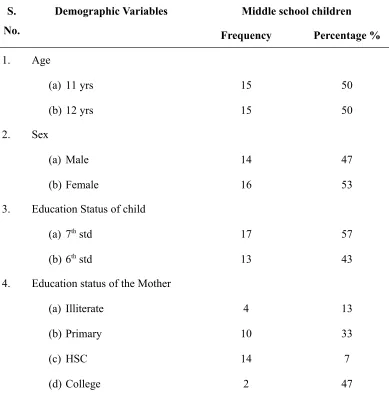
[image:51.612.126.515.256.661.2]This section deals with Distribution of sample according to their demographic variables of study subjects.
Table 1
Frequency and Percentage of sample according to demographic variables N = 30
S. No.
Demographic Variables Middle school children Frequency Percentage %
1. Age
(a) 11 yrs (b) 12 yrs
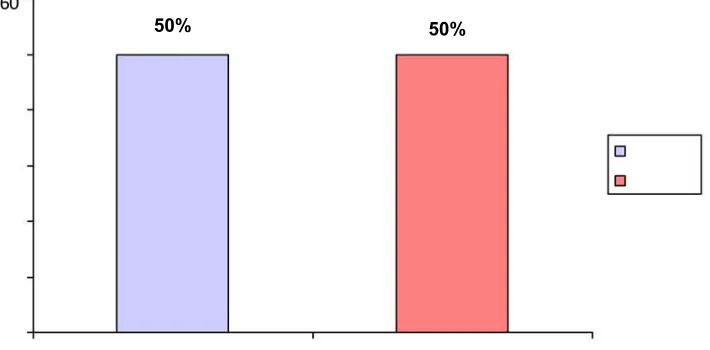
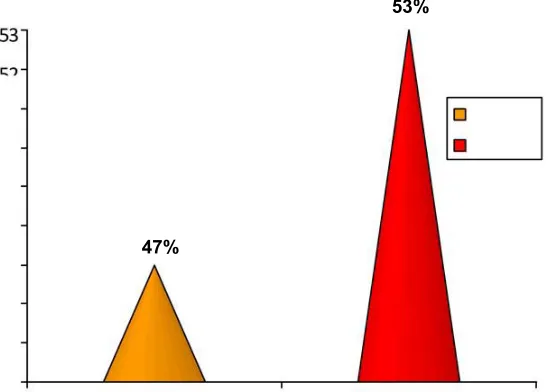
15 15 50 50 2. Sex (a) Male (b) Female 14 16 47 53 3. Education Status of child
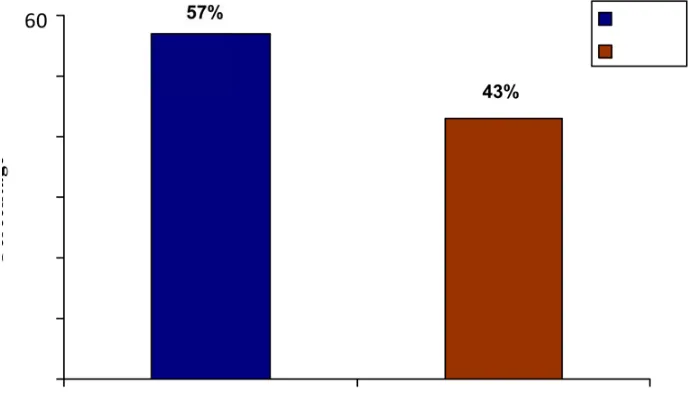
(a) 7th std (b) 6th std
17 13
57 43 4. Education status of the Mother
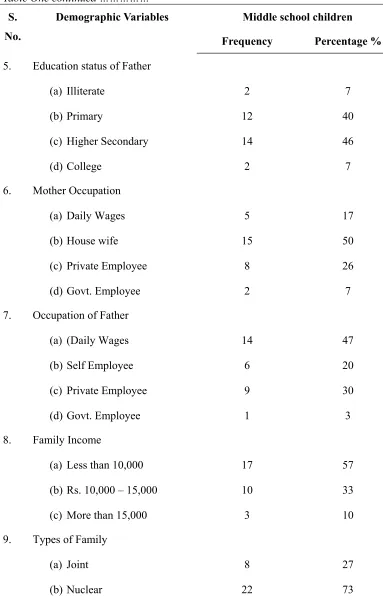
Table One continued ……… S.
No.
Demographic Variables Middle school children Frequency Percentage %
5. Education status of Father (a) Illiterate
(b) Primary
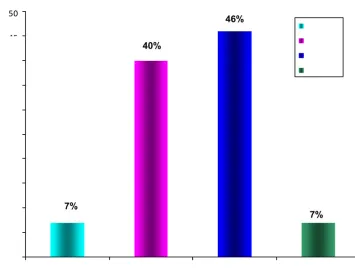
(c) Higher Secondary (d) College 2 12 14 2 7 40 46 7 6. Mother Occupation
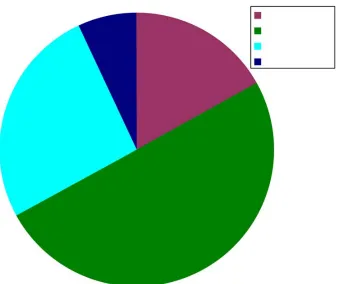
(a) Daily Wages (b) House wife (c) Private Employee (d) Govt. Employee
5 15 8 2 17 50 26 7 7. Occupation of Father
(a) (Daily Wages (b) Self Employee (c) Private Employee (d) Govt. Employee
14 6 9 1 47 20 30 3 8. Family Income
(a) Less than 10,000 (b) Rs. 10,000 – 15,000 (c) More than 15,000
17 10 3 57 33 10 9. Types of Family
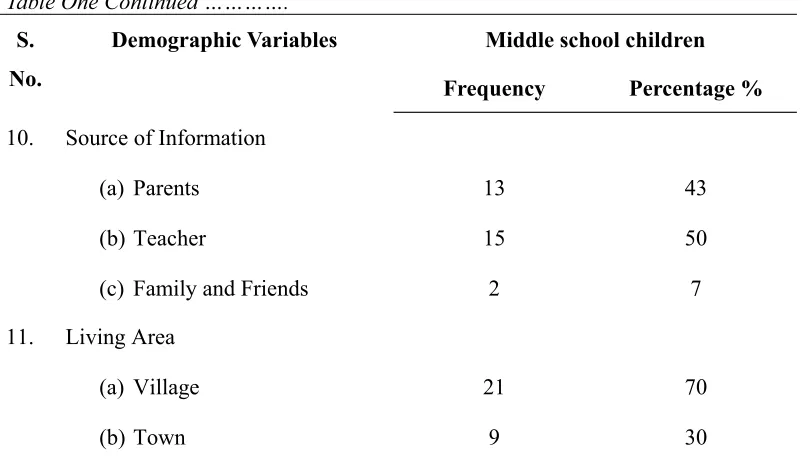
Table One Continued …………. S.
No.
Demographic Variables Middle school children Frequency Percentage %
10. Source of Information (a) Parents (b) Teacher
(c) Family and Friends
13 15 2 43 50 7 11. Living Area
(a) Village (b) Town 21 9 70 30
Figure 3 : Bar Diagram Represents Distribution Of Samples According To The
Age
Figure 4 : Cone Diagram Represents Distribution Of Samples According to the
Sex
47%
Figure 5 : Bar Diagram Represents Distribution Of Samples According To The
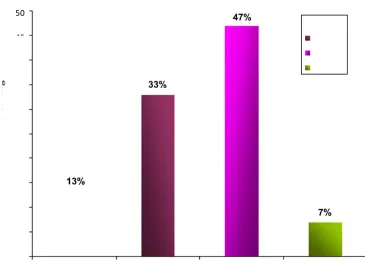
Educational Status of the Mother
Figure 6: Bar Diagram Represents Distribution Of Samples According To The
Educational Status of Father
Figure 7 : Bar Diagram Represents Distribution Of Samples According To The
Figure 8 : Pie Diagram Represents Distribution Of Samples According To
Figure 9 : Bar Diagram Represents Distribution Of Samples According To
Figure 10 : Cone Diagram Represents Distribution Of Samples According To
Family Income
57%
33%
Figure 11 : Pie Diagram Represents Distribution Of Samples According To
Figure 12 : Bar Diagram Represents Distribution Of Samples According To
Source Of Information
43%
50%
Figure 13 : Cone Diagram Represents Distribution Of Samples According To
Area Of Living
Section B :
[image:65.612.122.526.243.426.2]This section deals with effectiveness of child to child programme regarding road safety measures.
Table 2
Frequency and percentage distribution according to knowledge level N=30
Knowledge Score Pre Test Post Test
Frequency Percentage Frequency Percentage Adequate Knowledge
(76-100) - - 17 57%
Moderately Adequate
knowledge (51-75) 9 30% 13 43%
Inadequate knowledge
(<50%) 21 70% -
Figure 14 : Frequency And Percentage Distribution Of Samples According To
Knowledge Level.
0% 70%
43%
30% 57%
Section C :
This section deals with the distribution of mean and standard deviation of effectiveness of child to child programme regarding Road safety measures among Group II middle school children.
Table 3
Effectiveness of child to child programme regarding road safety measures among middle school children.
Category Pre test Post test df ‘t’ value Table value
Mean SD Mean SD
Knowledge
Level 11.4 2.6 18.4 2.4 29 23 2.05
‘t’ value = 23; level of significance = <0.05. The above table depicts that the effectiveness of child to child programme regarding road safety measures among middle school children. The mean score was increased after child to child programme from 11.4 to 18.4 and the standard deviation was 2.6 and 2.4 respectively. The above table reveals that the calculated value is higher than that of the table value (Table value =2.00) with df 29 and 0.05 level of significance (P<0.05).
Section D :
This section deals with association between the level of knowledge and selected demographic variables such as age, sex, education of parents, occupation of parents, living area, types of family and source of information.
Table 4
Association between knowledge and selected demographic variables. N= 30
S. No.
Demographic Variables Frequency F 2 df Table value 1 Age
(a) 11 yrs (b) 12 yrs
15 15
1.2 1 3.841
2 Sex
(a) Male (b) Female
14 16
1.8 1 3.841
3 Education of Mother (a) Primary
(b) Higher Secondary (c) Degree (d) Illiterate 10 14 2 4
Table Four continued ………..
S. No.
Demographic Variables Frequency
F 2 df Table value 4 Education of Father
(a) Primary
(b) Higher Secondary (c) Degree (e) Illiterate 12 14 2 2
0.005 3 7.815
5 Occupation of Father (a) Daily Wages (b) Self Employee (c) Private Employee (d) Govt. Employee
5 6 9 1
0.04 3 7.815
6 Occupation of Mother (a) Daily Wages (b) House wife (c) Private Employee (d) Govt. Employee
5 15
8 2
3.7 3 7.815
7 Family Income
(a) Less than 10,000 (b) Rs. 10,000 – 15,000 (c) More than 15,000
17 10 3
4.8 2 5.99
8 Types of Family (a) Joint (b) Nuclear
8 22
Table Four continued …………
S. No.
Demographic Variables Frequency
F 2 df Table value 9 Source of Information
(a) Parents (b) Teacher
(c) Family and Friends
13 15 2
0.47 2 5.99
10 Living Area (a) Village (b) Town
21 9
2.0 1 3.841
CHAPTER - V
Result and Discussion
This chapter gives a brief account of the present study including result and discussion compared with some of the relevant studies done in different settings.
The present study was undertaken to assess the effectiveness of child to child programme on middle school children regarding road safety measures in selected school at Kanyakumari District. The study was conducted in Government High school at Kesavapuram in Kanyakumari District. The pretest was conducted using structured questionnaire. After the child to child programme, the knowledge level of children was assessed by using same questionnaire. The result and discussion of the study was based on the findings obtained from the statistical analysis. Mean score was used to assess the pre and post test level of knowledge. Paired ‘t’ test was used to test the significant difference between the pre and post test score. Chi -square was used to find out the association between the selected demographic variables with the level of knowledge on road safety measures among middle school children.
Objectives of the Study :
x To assess the knowledge of Group II middle school children regarding road safety measures before and after child to child programme.
x To find the association between the knowledge of group II middle school children, regarding road safety measures with selected demographic variables such as age, sex, educational status of mother and father, occupation of mother and father, ,types of family, living area and source of information.
Distribution of the study subjects based on demographic variable
Table1. Show the distribution of subjects according to the demographic variables. In this study 50% participants were 11 yrs of age and 50% were 12 yrs of age and 50% were 12 yrs of age and 47% were males and 53% were females. Regarding educational status of father 40% completed their primary education 47% higher secondary 7% Degree holders and 6%. Illiterate . Among education of mother 33% completed primary education, 13% were not educated, 47% higher secondary and 7% degree holders. Regarding occupation of father 47% Daily wages, 20% self employees 30% private employees and 3% were Government Employees. In the aspect of occupation of mother 17% daily wages, 50% house wives, 26% private employees, and 7% were Government employees. Among monthly Income of the families, 47% less than Rs. 10,000/- 33% have ranging from Rs. 10,000 – 15,000, 10% have more than Rs. 15,000. Regarding types of families 27% joint families 73% Nuclear families. In case of source of information 43% received information from parents, 50% from teacher, 7% from friends and media. Among the area of living 70% were village, 30% were Town.
Distribution of the Samples according to their level of knowledge :
knowledge, 43% had moderately adequate knowledge. The findings showed that knowledge score was increased after the child to child programme.
To evaluate the effectiveness of child to child program of road safety measures :
Table 3. shows that the knowledge towards the road safety measures was improved from pre test to post test as mean improvement of 11.4 to 18.4. The improvement was highly significant P<0.05.
The research findings were congruent with D. Souza Renita Priya, N. Renuka (2013) done a study to assess the effectiveness of child to child programme on road safety education among school children at Bangalore, a study was carried out among 60 students, Purposive sampling technique was used, Semi – Structured Questionnaire methods was used for collecting data, a study finding showed that, the over all mean percentage knowledge score in the pre test was 45% and 79.69% in the post test. This study concluded that, child to child programme was significantly effective in improving the knowledge scores of school children regarding road safety.
To determine the association between the level of knowledge of road safety measures among middle school children and their selected demographic variables such as age, sex, education of parents, occupation of parents, living area, type of family and source of information.
In this study the investigator found that, there as no significant association between the level of knowledge with demographic variables regarding road safety measures among middle school children.
– urban school children in Lahore, a study was carried out among 100 children in classes 4 to 10 were selected as a sample, simple random sampling technique was used. Structured questionnaire method was used for collecting the data, duration is 2 months. A study findings showed that, awareness was 85% high about increased chance of accidents by not use of helmets and 92% using mobile and the knowledge level of the children regarding traffic signal lights (94%), not to horn (79%) Zebra crossing (95%) and pedestrian prohibited (75%). the study concluded that, Good knowledge about road safety did not translate into prudent traffic practices by students.
Summarizing up of All the Research findings :
H1 : There is significant increase in the level of knowledge of middle school children after child to child programme.
CHAPTER - VI
Summary, Conclusion, Nursing implication, Limitations And
Recommendations
This chapter deal with the summary of the study and conclusion drawn from the study. It also explains the limitation of the study for different areas like nursing education, nursing practice, nursing administration and nursing research.
Summary:
The study was undertaken to assess the knowledge of middle school children regarding road safety measures in Government High School, Kesavapuram, Thiruvattar.
In the present study one group pre- test pro –test pre experimental design was used conceptual framework was used or the study was J.W.Kenny’s open system model.
Objectives of the study:
¾ To assess the knowledge of group II middle school children regarding road safety measures before and after child to child programme.
¾ To determine the effectiveness of child to child programme regarding road safety measures among Group II middle school children.
mother and father, occupation of father and mother, family income, living area, types of family and source of information.
Hypotheses:
x The research hypothesis (H1) there is significant increase in the level of knowledge of middle school children after the child to child programme regarding road safety measures.
x The research hypothesis (H0),there is no significant association between pretest knowledge score with selected demographic variables such as age, sex, education of mother and father, occupation of mother& father ,family income, types of family, source of information.
The tool for the study had 2 parts
The first part of the tool consists of demographic variables. The second part of the tool consists of Structural Questionnaire regarding road safety measures. The researcher selected the subjects by purposive sampling technique. The population of the study was 30 middle school children in Govt. high school, Kesavapuram, the period of the study was one month. The collected data were analyzed based on descriptive and inferential statistics according to the above said objectives. The pilot study proved that the tool and design were appropriate.
The major findings were noted as follows:
2.03 at P<0.05 level of significance. That showed there was a significant improvement in the knowledge level
Conclusion:
The study reveals that the level of knowledge on road safety measures has improved after child to child programme at 0.05 level of significance. knowledge on road safety measures will help the middle school children to get more idea regarding traffic rules and regulation, prevention of road traffic accidents and road safety measures. Based on the findings the study concludes that child to child programme will gain the knowledge on road safety measures among middle school children.
Nursing Implications:
The findings of the study reveal the implication on nursing education, nursing practice, nursing administration and nursing research.
Nursing Education:
Pedestrian safety education can be given to the all nursing personal health education to the child’s parents and children regarding road safety measures.
The nursing students can utilize child to child approach to give health education in the schools, hospitals and community.
Nursing practice:
x Teach road safety measures to the child and parents those who are getting treatment from the hospital.
x Nurses can use various technologies to capture the attention of the school children while providing health teaching on road safety.
Nursing Administrator:
The nurse administrator can encourage the nurses to provide health teaching on road safety measures by using audio visual aids, which helps to improve the level of knowledge of children.
Nursing Research:
The findings of the study motivate the nurse researches to conduct, many studies related child to child programme with other health education topics like nutritious diet, personal hygiene among middle school children.
Recommendations:
x A similar study can be conducted with different age groups of children.
x A study can be conducted with larger samples.
x A study can be conducted to compare the effect of adult to child programme on road safety measures.
x Child to Child approach can also be evaluated by other methods like role play, puppet show, etc.
Limitations:
The study is limited to:
x 30 samples.
x One school only
x Middle school children 11-12 years
Bibliography
Books:
1.