Volume 2010, Article ID 368423,12pages doi:10.1155/2010/368423
Research Article
On Optimizing Gateway Placement for Throughput in
Wireless Mesh Networks
Ping Zhou,
1Xudong Wang,
2B. S. Manoj,
3and Ramesh Rao
31QCT Modem Technology Systems, Qualcomm, Inc., San Diego, CA 92121, USA 2UM-SJTU Joint Institute, Shanghai Jiao Tong University, Shanghai 200240, China
3Department of Electrical and Computer Engineering, University of California, San Diego, La Jolla, CA 92093, USA
Correspondence should be addressed to Xudong Wang,[email protected]
Received 4 November 2009; Accepted 24 February 2010
Academic Editor: Xinbing Wang
Copyright © 2010 Ping Zhou et al. This is an open access article distributed under the Creative Commons Attribution License, which permits unrestricted use, distribution, and reproduction in any medium, provided the original work is properly cited.
An innovative gateway placement scheme is proposed for wireless mesh networks (WMNs) in this paper. It determines the location of a gateway based on a new performance metric called multihop traffic-flow weight (MTW). The MTW computation takes into account many factors that impact the throughput of WMNs, that is, the number of mesh routers, the number of mesh clients, the number of gateways, traffic demand from mesh clients, locations of gateways, and possible interference among gateways. Thus, the proposed gateway placement scheme provides a framework of significantly improving throughput of WMNs through proper placement of gateways. To evaluate the performance of the new gateway placement scheme, a nonasymptotic throughput of WMNs is derived by considering TDMA scheduling. The derivations also provide a guideline for designing scheduling schemes of WMNs. Numeric results show that the proposed gateway placement scheme constantly outperforms other schemes by a large margin.
1. Introduction
A wireless mesh network (WMN) consists of mesh routers and mesh clients. Mesh routers form an infrastructure network, called mesh backbone, to support the network access of mesh clients. They are powerful devices without constraints of energy, computing power, and memory and are usually distributed in a static and deterministic manner. WMNs offer all the advantages of ad hoc wireless networks plus many extra benefits from the infrastructure architecture. Wireless mesh backbone can be rapidly deployed with mini-mal cost and provides a robust, efficient, reliable, and flexible system that supports the network access for mesh clients. Mesh backbone can also provide mesh clients with various services and resources through their gateway and bridging functions. With infrastructure support, the complexity of communication protocols in mesh clients can be reduced significantly. All these advantages reinforce WMNs as a promising wireless technology for numerous applications, for example, broadband home networking, community and enterprise networking, public Internet access, and so on.
Figure 1presents an example of a WMN in today’s digital world.
Many research problems still remain open in WMNs [1]. Among them, gateway placement is one of the most challenging but problem. There are some analogous research results in wired or cellular networks. For example, a number of studies have been carried out to place web proxies or server replicas to optimize clients’ performance [2–4]. Another example is the base station placement problem in cellular networks [5–7]. However, when wireless links replace wired links and multi-hop communications replace single-hop communications, a more comprehensive traf-fic modeling scheme is required to solve the backbone nodes placement problem in multi-hop wireless networks. More recently, Bejerano [8] studied gateway placement in multi-hop wireless networks where network nodes were partitioned into minimal number of disjoint clusters that satisfied throughput and delay constraints. Various gateway or backbone nodes placement algorithms were proposed for WMNs [9–12]. However, all the above investigation has been focused on network connectivity of WMNs by deploying the minimum number of backbone nodes.
Internet
Internet accessing gateway
Internet accessing gateway Mesh router / gateway
Mesh clients
Figure1: A typical WMN.
customers. Unlike all the above research work, in this paper, given a certain number of gateways, we aim to develop a gateway placement algorithm to significantly enhance throughput performance of WMNs. A very similar problem was addressed in [13], but in that study gateway locations are either prefixed or searched on a preselected grid in a brutal-force way. Moreover, uneven distributed traffic demand has not been studied. In our paper, optimal gateway locations can be quickly chosen by an intelligent algorithm, which applies for all the traffic distribution scenarios.
To develop a throughput-oriented gateway placement algorithm, we first derive a new performance metric called multi-hop traffic-flow weight (MTW) to take into account major factors that impact throughput of WMNs. Such factors include the number of mesh routers, mesh clients, and gateways as well as traffic demands from mesh clients, locations of gateways, and interference among gateways. Based on MTW, an iterative algorithm is proposed to determine the best location of a gateway. Each time a gateway is chosen to colocate with the mesh router that has the highest MTW.
To evaluate the performance of the MTW-based gate-way placement scheme, a throughput computation model needs to be derived. However, throughput analysis of wireless networks is an extremely challenging research topic. Throughput capacity of multi-hop wireless networks has been studied in other papers. Gupta and Kumar [14, 15] derived the per-node throughput capacity for static ad hoc networks. The throughput capacity of mobile ad hoc networks was analyzed by Grossglauser and Tse [16]. The capacity of hybrid ad hoc networks was investigated in [17–
19]. All such results of throughput analysis cannot be applied to WMNs, because the network architecture of WMNs is much different from either conventional ad hoc networks
or hybrid ad hoc networks. The work of asymptotic analysis on the capacity of WMNs has been initiated in [20] where asymptotic throughput results are obtained by assuming that the size of the network goes to infinity. Since real networks always have limited size, these asymptotic results provide very limited information for practical network design. Thus, in this paper a nonasymptotic analytical model is derived to calculate the throughput of WMNs. TDMA scheduling is assumed to coordinate packet transmissions in mesh clients, mesh routers, and gateways.
Numerical results based on the throughput computation model show that the new gateway placement algorithm greatly enhances the throughput performance of WMNs. Comparison study is also carried out in this paper to compare the proposed scheme with other schemes such as random placement, regular placement, and busiest router placement. Results illustrate that our proposed gateway placement algorithm outperforms all these schemes by a large margin.
The rest of this paper is organized as follows. InSection 2, a typical WMN model is described and two throughput metrics for gateway placement are formulized. The new gateway placement algorithm is proposed inSection 3, while the throughput computation model needed by this algorithm is derived in Section 4. The numeric results are obtained in Section 5 to evaluate the performance of the proposed algorithm. This paper is concluded inSection 6.
2. System Model and Problem Formulation
2.1. Network Topology. A typical WMN model for Internet accessing is proposed as follows and is illustrated inFigure 2.
Nc mesh clients are assumed to be distributed on a square R = [0,l]2. R is partitioned evenly into (l/ls)2 small cells Rsj =[0,ls]2(j =1· · ·(l/ls)2), and a mesh router is placed in the center of each cell. LetNrdenote the number of mesh routers, thenNr =(l/ls)2. In what follows, we will limit the case of interests to that where 1 < Nr ≤ Nc, that is, there are more than one mesh routers and the number of mesh routers is smaller than that of mesh clients. Mesh routers constitute a wireless mesh backbone providing a wireless infrastructure for mesh clients. In each cell, mesh clients are connected to the mesh router like a star topology; that is, no direct communication is available among mesh clients, and the mesh router works as a hub for mesh clients. Such a WMN is referred as an infrastructure WMN in [1], which is expected to be very popular in future WMN applications. Among all the mesh routers, there areNg routers wired to Internet, working as gateways. It is obvious that 1≤Ng ≤Nr; that is, the number of gateways cannot exceed the number of mesh routers. We chose the square grid topologies mainly because the recent studies on the deployment issues [21] have shown that square grid topologies are more realistic in delivering the desired network performance.
Mesh router with gateway function Mesh router without gateway function Mesh client
l ls
Figure 2: Network topology of an infrastructure WMN with gateways.
data source nor data destination; they only route and forward data for mesh clients. All traffic is assumed to go through gateways. Each mesh router is associated with its nearest gateway such that it relays packets to or from it. Assuming that the shortest path routing is applied, the nearest gateway of a mesh router is defined as the gateway that the mesh router can access to by the minimal number of hops. In the situation that a mesh router has more than one nearest gateways, the router will load its traffic to all its nearest gateways by round robin. A mesh client is said to be associated with a gateway if its connected router is associated with the gateway. Hence, traffic load of a mesh client will also be shared by all its potentially associated gateways.
In this paper the following definitions of communica-tions will be frequently used.
(i)Local communications: it is referred as the communi-cations between a mesh router and a mesh client.
(ii)Backbone communications: it is referred as the communications between two mesh routers, which includes the communications between a gateway and a mesh router.
(iii)Downlink communications: it is referred as the com-munications from a gateway to a mesh client, in which a data packet is first relayed among mesh routers in backbone communications and is then sent by a mesh router to one of its connected mesh clients.
(iv)Uplink communications: it is referred as the commu-nications from a mesh client to a gateway, in which a data packet is sent in the exact reverse direction as described in downlink communications.
2.2. Transmission Model. To help elaborate the new gateway placement scheme and its throughput computation, a trans-mission model is specified as follows.
Each mesh router is equipped with two radio interfaces: one transmitting atW1bits/s for backbone communications
and the other transmitting at W2bits/s for local commu-nications. Each mesh client transmits atW2bits/s in local communications. We assume thatW1andW2are orthogonal so that local communications do not interfere with backbone communications. It should be noted the two radio interfaces of a mesh router can be two physical radio interfaces or two virtual radio interfaces. In the later case, only one physical radio interface is needed for a mesh router and switching channels in time slots for backbone or local communications achieves two virtual interfaces.
Moreover, mesh routers can receive packets from only one sender at a time. The same constraint is imposed on mesh clients. Transmission and reception can occur in either time-division duplex (TDD) or frequency division duplex (FDD), depending on how the physical and MAC layers are implemented.
In either local communications or backbone communi-cations, simultaneous transmissions are coordinated by the Protocol Model as defined in [14]; that is, if a transmission from nodeSitoSjis successful, then the following conditions must be satisfied: (1)|Si −Sj| ≤ ri; (2) for every other transmitting nodeSk,|Sk−Sj| ≥(1 +Δ)rk, whereriandrk correspond, respectively, to the transmission range of node
SiandSkandΔis a fixed positive constant that represents a guard zone in the Protocol Model.
2.3. Throughput. In order to evaluate the performance of gateway placement algorithms, the aggregate throughput and the worst-case per-client throughput need to be derived. In this subsection, two problems of throughput maximization are formulized, which leads to the definitions of two throughput metrics. The actual framework of computing the nonasymptotic value of these throughput metrics will be provided inSection 4.
Problem 1. Optimal gateway placement for maximizing aggre-gate throughput of WMNs, that is, in the above WMN model, givenNc,Nr,Ng,W1,W2and specific clients’ distribution, routers’ distribution, transmission, scheduling and routing protocols,Ng gateways are chosen amongNr mesh routers such that
Nc
i=1
THi,Ng
(1)
is maximized, where TH(i,Ng) denotes the per-client throughput of the ith mesh client when Ng gateways are deployed.
Problem 2. Optimal gateway placement for maximizing the worst-case per-client throughput in the WMN, that is, in the above WMN model, givenNc,Nr,Ng,W1,W2and specific clients’ distribution, routers’ distribution, transmission, and scheduling and routing protocols, Ng gateways are chosen amongNrmesh routers such that
Nc
min i=1 TH
i,Ng
(2)
3. Multihop Traffic-Flow Weight
Gateway Placement
Adding new gateways can increase throughput in backbone communications by effectively reducing the average number of hops each packet needs to access to gateways and reducing the traffic load on existing gateways. However, the above benefits can dramatically diminish due to inappropriate gateway placement, since new gateways will also result in more interference to existing gateways. Therefore, the best gateway placement algorithm should not only relieve traffic load in the network but also introduce minimal interference. In general a gateway placement scheme must be adaptive to the deployed number of gateways. A relative small number of deployed gateways mean a large number of hops that a packet needs to traverse to gateways, which results in huge traffic load. Therefore, geometry-balanced placement algo-rithms, for example, regular placement, may achieve fairly good results since they can effectively reduce the average number of hops. In the opposite case, when a relatively large number of gateways are planned for deployment, placing the gateways in the areas with the most traffic load may be simply the best solution.
In this section, an innovative gateway placement algo-rithm is proposed. It holds all the above-mentioned benefits. In the algorithm, a traffic-flow weight, denoted by MTW(j), is calculated iteratively on the mesh routerRj,j =1· · ·N
r. Each time a new gateway will be placed on the router with the highest weight. The weight computation is adaptive to the following factors: (1) the number of mesh routers and the number of gateways, that is,NrandNg; (2) traffic demands from mesh clients; (3) the location of existing gateways in the network; and (4) the interference from existing gateways. How factors (1) to (3) are captured in MTW will be discussed inSection 3.1, and the relationship between factor (4) and MTW will be discussed in Section 3.2. The MTW-based gateway placement algorithm will be explained while the MTW is derived in Sections3.1and3.2.
3.1. Adaptive Multihop Traffic-Flow Weight. In the first step of the algorithm, a variable calledgateway radius, denoted by
Rg, is decided.Rgis the number of hops from a gateway to its farthest mesh router. In this paper, (1) is used to estimateRg:
Rg=round
The rationale of this estimation can be explained as follows. Considering that a square is divided equally byNrcells and Ng cells, respectively, then drawing a horizontal line across the square will statistically meetNrcells and
Ngcells. For eachNg-cell, the line will cross
Nr/
Ng Nr-cells. Therefore, if a gateway is placed in the center of each Ng-cell and a mesh router is placed in the center of each Nr-cell, we can estimate that a gateway needsNr/2
Ng hops to reach its farthest mesh router. It should be noted that (1) only provides an estimation, which may not be always precise for every combination ofNrandNg.
159 202 215 210 162
261 201
222
212
160 206 212 202 275 217
Figure3: An example of multi-hop traffic-flow weight.
In the second step, local traffic demand on each mesh router, denoted by D(j), j = 1· · ·Nr, is calculated. Since D(j) is actually the traffic demand from all the mesh clients connected to Rj and all mesh clients are assumed to be equivalent in our WMN model, D(j) can be represented by the number of mesh clients connected toRj.Figure 3(a) shows an example of D(j) when 200 mesh clients are uniformly distributed and 25 mesh routers are placed on a 5-by-5 regular grid.
With MTW(j), the first gateway will be placed on the router with the highest weight. An example in Figure 3
shows howD(j) andRg are combined to determine gateway placement according to MTW. In this example, there is only one gateway to be deployed, soNg = 1. From (3), we have Rg =3. Therefore, based onD(j) inFigure 3(a), the MTW is calculated as shown inFigure 3(b). Therefore, the gateway will be placed in the center mesh router of the WMN that has the highest MTW weight.
1
2 3
4 5
6 7
(a)
(1) (2)
(3) (4)
1
2 3
4 5
6 7
(b)
0.625
0.375 0.25
0.25 0. 25
0.25 0.375
(c)
Time slot number 1: 136 Time slot number 2: 27 Time slot number 3: 14 Time slot number 4: 156 Time slot number 5: 27 Time slot number 6: 14 Time slot number 7: 136 Time slot number 8: 25
(d)
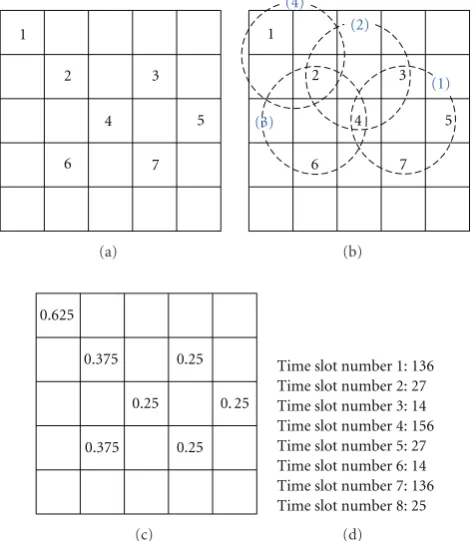
Figure4: Obtaining the optimal sharing efficiecy on gateways.
3.2. Sharing Efficiency of Gateways. Two gateways interfere with each other if they are within the distance of IntD
-hops. IntD is defined as Interfering Distance of gateways. Interfering gateways have to share the same wireless channel in the backbone communications. An algorithm is developed in this subsection to derive the sharing efficiency of gateways. The algorithm holds the two distinct features: (1) full fairness among gateways will be guaranteed; (2) under the condition of (1), the efficiency for each gateway will be maximized.
In the first step, the table ofnonoverlapping interfering groupsis constructed as follows: (1) each interfering group appears as a single row in the table and contains a set of gateways, any two of which interfere with each other; (2) the group with more gateways always has a smaller row number, that is, it appears earlier in the table; (3) a group appearing later must have at least one gateway that is not included by all the previous groups. For example, seven gateways deployed on a 5-by-5 mesh backbone grid are shown inFigure 4(a). When IntD=2, the corresponding table of nonoverlapping interfering groups is illustrated inFigure 4(b)and listed in
Table 1.
In the second step, each gateway is assigned a percentage value according to the following procedure. (1) Initially all gateways are assigned with a value of 100%. (2) The table of non-overlapping interfering groups is searched from the top row to the last row at a pace of one row per step. (3) In each step, all gateways in a specific row are split into 2 groups by a threshold value of (1/the number of gateways in the row). The first group contains the gateways with a larger value than the threshold and the second group contains the rest of the
gateways in this row. (4) All gateways in the first group will then be reassigned a new percentage value calculated as
1−sum of all the percentage value in the second group the number of the gateways in the first group ,
(5)
if the new one is smaller than its current value. (5) The procedures of (3) and (4) are repeated until the end. In the example shown in Figure 4 and Table 1, gateways 3, 4, 5, and 7 are reassigned a percentage value of 25% in the computation of the first row; gateway 2 is reassigned a percentage value of 50% in the computation of the second row; gateways 2 and 6 are reassigned a percentage value of 37.5% in the computation of the third row; gateway 1 is reassigned a percentage value of 62.5% in the computation of the fifth row. The final results are shown inFigure 4(c).
The final percentage value assigned to each gateway in the above algorithm is defined as the optimal sharing efficiency, denoted byGeff(k),k = 1· · ·Ng, because, firstly, it guar-antees a full fairness among all the gateways, and secondly it always guarantees the existence of a traffic scheduling scheme for all the gateways, since in each interfering group, the sum of the sharing efficiency is always equal or smaller than 100%. In the scheduling scheme, time slots in backbone communications are assigned to all gateways such that successful simultaneous transmissions can be always carried out in each time slot. Each gateway can be guaranteed to have a number of time slots, which is equal to the total number of time slots multiplying the sharing efficiency.Figure 4(d)
shows a TDMA scheduling scheme for the above example. By taking into account the interference of gateways via the sharing efficiency, a new gateway can be placed into the network with the following procedures: (1) from previous steps in Section 3.1, choosing the router with the highest weight as a potential location for gateway placement; (2) reconstructing the table of non-overlapping interfering groups by adding the potential location into the consideration; (3) computing the sharing efficiency for the potential gateway location; (4) readjusting the highest weight by multiplying the sharing efficiency, that is, MTW(j) =
MTW(j)×Geff(j); and (5) if the new weight is still larger than the second highest weight, then place the gateway in the location. otherwise, repeat the above steps from (1) to (5) until obtaining the location.
4. Traffic Scheduling for
Throughput Computation
In this section, a TDMA scheme is applied for traffic scheduling. One key benefit of using TDMA is that it guarantees collision free transmissions. In fact, various TDMA scheduling schemes are actually used in a few wide area wireless mesh network testbeds and network standards such as WiMAX. Based on TDMA scheduling, we provide a framework of non-asymptotic throughput derivation for WMNs.
Table1: Optimal sharing efficiency calculation.
Row no. Non-overlapping interfering group Sharing efficiency
1 2 3 4 5 6 7
100% 100% 100% 100% 100% 100% 100%
(1) 3 4 5 7 100% 100% 25% 25% 25% 100% 25%
(2) 2 3 4 100% 50% 25% 25% 25% 100% 25%
(3) 2 4 6 100% 37.5% 25% 25% 25% 37.5% 25%
(4) 1 2 62.5% 37.5% 25% 25% 25% 37.5% 25%
backbone communications, and all mesh routers and mesh clients contend for capacity W2 in local communications. Therefore, the throughput of theith mesh client when Ng gateways are deployed, denoted by TH(i,Ng), is generally constrained by both W1 and W2. Since W1 and W2 are orthogonal, TH(i,Ng) can be obtained by computing the throughput constrained by W1 and the throughput con-strained byW2separately, that is,
THi,Ng
=minTHW1
i,Ng
, THW2(i)
, i=1· · ·Nc. (6)
Here THW1(i,Ng) is defined as the throughput of the ith mesh client in backbone communications when there are
Ng gateways in the WMN and THW2(i) is defined as the throughput of theith mesh client in local communications. Note that THW2(i) is independent ofNg in the WMN model. (2) indicates that a feasible per-client throughput can be achieved by taking the smaller one of THW1(i,Ng) and THW2(i).
Since W1 and W2 should be split for uplink and
downlink communications, respectively, it is assumed that
c1W1andc2W2are assigned to downlink communications, and (1–c1)W1and (1–c2)W2are assigned to uplink commu-nications, wherec1andc2are some constants between 0 and
1. Generally, throughput of a mesh client should be obtained as the sum of uplink throughput and downlink throughput. Choosing the value of c1 and c2 requires knowledge on actual applications running on clients, which is beyond the objectives of this paper. It is assumed in the following of this paper that downlink traffic is dominant in the WMN. Therefore, most ofW1andW2will be assigned to downlink communications and throughput is decided by downlink throughput, which is constrained byc1W1 andc2W2. This is not an uncommon case in today’s applications of WMNs, for instance, in the application of Internet access. We shall note that the methodology proposed in this section can actually be used to obtain throughput of WMNs when both uplink traffic and downlink traffic are present. However, with the above simplified model, we can focus on the illustration of the key ideas without being distracted by trivial discussions.
4.1. Throughput in Backbone Communications. Time slots in backbone communications are first assigned to gateways
so that no gateways interfere with each other. The TDMA scheduling scheme on gateways is assumed to satisfy the following two conditions: (1) time slots are assigned to each gateway with full fairness; (2) under the condition of (1), each gateway should have as much as possible time slots for successful transmissions. InSection 3.2, an algorithm to obtain the optimal sharing efficiency on all the gateways, denoted byGeff(k),k = 1· · ·Ng, is provided and a traffic scheduling scheme satisfying the above two conditions is also constructed. In the scheme, the kth gateway can be guaranteed to have a number of time slots, which is equal to the total number of all time slots timesGeff(k). Hence, the kth gateway is guaranteed to have an aggregate throughput of
Geff(k)×c1W1in backbone communications. By the TDMA scheme, interfering gateways share the same wireless channel while noninterfering gateways can transmit simultaneously.
In the next step, time slots of a gateway will be further split into small time slots to have the following two proper-ties: (1) each mesh client associated with the specific gateway should have separate small time slots for “interference free” transmissions; (2) each of such mesh clients should achieve a common throughput in backbone communications, that is, THW1(i1,Ng) = THW1(i2,Ng), if mesh clientsi1 andi2 are associated with the same gateway. It is assumed that a mesh router Rj has N
C(j)-connected mesh clients and it locatedNhop(j) hops away from its associated gateway. The second property requires thatRjbe assignedN
C(j)×Nhop(j) small time slots if there are no simultaneous transmissions along the way from the gateway toRj.Figure 5. shows that simultaneous transmissions can be scheduled, ifRj is more than SRD-hops away from its gateway. SRD is defined asSlot Reuse Distance, for instance, SRD=3 inFigure 5. Therefore, the actual time slot that anRj-connected mesh client needs to meet the second property, denoted by Nhop (j), has the
following relationship withNhop(j):
Nhop
j=Nhopj, ifNhopj<SRD;
Nhop j=SRD, ifNhopj≥SRD. (7)
With the first property all mesh clients associated with a specific gateway require total l(NC(l)×Nhop (l)) small
Gateway
Rj
1 2
3
1 2
3
Figure5: A TDMA scheduling scheme in backbone communica-tions with SRD=3.
following per-client throughput for all its associated mesh clients in backbone communications:
THg(k)= Geff
(k)×c1W1
l=all associated routers with thekth gateway
NC(l)×Nhop (l)
. (8)
With the consideration that a mesh router may have more than one potentially associated gateways and it will use all these gateways by round robin for fairness, the mesh router will assign all its time slots equally to its associated gateways. Therefore, the per-client throughput on thekth gateway can be modified to
THg(k)=
Geff(k)×c1W1
l=all associated routers with thekth gateway
NC(l)×Nhop (l)÷Ng(l) ,
(9)
whereNg(l) denotes the number of the associated gateways with the mesh routerRl.
Assuming that theith mesh client is connected with the mesh routerRj, finally, the per-client throughput of theith mesh client in backbone communications is the averaged throughput over all its associated gateways:
THW1
i,Ng
=
k=all the associated gateways with the mesh routerRj
THg(k)
Ng
j . (10)
An example is illustrated in Figure 6 for the throughput computation in backbone communications. In the example, there are 5 mesh routers, 2 of which are also gateways, denoted by G1 and G2. It is assumed that both gateways
have 50% sharing efficiency and all the mesh routers have 10 mesh clients. In the model, the mesh routersR1andR3
are associated withG1andG2, respectively;R2is associated
with bothG1andG2and it uses both the gateways by round
robin. Thus, we have
NC(1)=NC(2)=NC(3)=10,
Nhop (1)=Nhop (2)=Nhop (3)=1,
Ng(1)=Ng(3)=1, Ng(2)=2.
(11)
R1 G1 R2 G2 R3
Figure6: An example of traffic scheduling in backbone communi-cations.
By (9), we obtain
THg(1)=THg(2)=0.5c1W1
15 =
c1W1
30 . (12)
Finally, by (10), we obtain that each of the 30 mesh clients associated with R1, R2, and R3, respectively, can achieve
throughout of c1W1/30 bp sin the backbone communica-tions.
The TDMA traffic scheduling scheme actually guarantees the full fairness among mesh clients for each gateway. Note that farther mesh clients from gateways are reserved more time slots for transmission so that their throughput is not throttled by closer ones.
The per-client throughput in backbone communications will be compared with the per-client throughput in local communications to decide the per-client throughput in the WMN. Note that if a mesh client is connected directly to a gateway, its throughput is decided only by the per-client throughput in local communications.
4.2. Throughput in Local Communications. Separate time slots are first assigned to different mesh routers so that simultaneous transmissions can only be carried out in cells that have enough distance in between; that is, simultaneous transmissions can only exist in cells that are (√CRF−1) cells apart, where CRF is defined asCell Reuse Factor. Hence, in downlink communications, each mesh router can only have one slot every CRF time-slots, as depicted inFigure 7, here CRF=4.
The above slot is further split into separate small-slots. Being assigned a different small-slot, each mesh client is guaranteed to obtain successful reception from its associated mesh router. Therefore,
THW2(i)= c2W2 CRF×Nc
j, i=1· · ·Nc. (13)
1 2
Figure7: A TDMA scheduling scheme in local communications with CRF=4.
4.3. Feasible Throughput in WMN. Combining (6)–(13), a feasible non-asymptotic throughput of theith mesh client in the WMN can be obtained as follows:
THi,Ng
k=all the associated gateways with the mesh routerRj
× Geff(k)×c1W1
l=all associated routers with thekth gateway
and hereith mesh client is assumed to be connected with the mesh routerRj. It is important to note that this non-asymptotic throughput estimation is more realistic than the asymptotic throughput that is estimated when the number of nodes approaches infinity.
When all mesh routers are chosen as gateways, that is, Ng = Nr, throughput of the ith mesh client is only constrained by local communications, that is, TH(i,Nr) = THW2(i). Therefore, an upper bound is obtained for the aggregate throughput:
Figure8: An example of uneven nodes’ distribution.
whereu(j)=1, ifRjhas at least one connected client;u(j)= 0, ifRjhas no connected client. And an upper bound is also obtained for the worst-case per-client throughput:
min
The above upper bounds are independent of Ng. Actu-ally they are the maximal values that Nc
i=1TH(i,Ng) and miniTH(i,Ng) can achieve for any number of gateways.
It should be noted that the throughput computation method is applicable to any gateway placement algorithm; that is, as long as a gateway placement is given, the results derived in this section can be used to calculate the throughput of WMNs.
5. Numeric Results and Discussion
Using the framework of throughput computation derived inSection 4, throughput of this WMN is studied. In all the experiments we assumeNc=200,Nr=36, andl=1000 m; that is, there are 200 mesh clients distributed in a square region of 1000 m×1000 m; the square is split evenly into 36 small square cells and a mesh router is placed in the center of each cell. In addition, we assume CRF=4, SRD=3, and IntD=2.
Comparison study is conducted between the proposed algorithm (MTWP) and the other three gateway placement algorithms.
(i)Random Placement(RDP):Ng gateways choose their placement location randomly on Nrmesh routers.
(ii)Busiest Router Placement(BRP):Ng gateways choose their placement location on the Nr mesh routers with the highest traffic demand defined byD(j), j=
16
The number of gateways Upper bound
Figure9: The aggregate throughput by changing the number of gateways with different channel capacity of mesh routers.
10
The number of gateways Upper bound
Figure 10: The comparison of the aggregate throughput with uniformly distributed mesh clients.
(iii)Regular Placement(RGP): as many as possible gate-ways are placed based on regular patterns and the rest of them choose their placement location on the same number of mesh routers with the highest traffic demand defined byD(j), j =1· · ·Nr.Table 2gives an example of RGP on a 6-by-6 regular grid.
Given a certain placement algorithm, a number of gate-ways will be placed on the top of the best-fit mesh routers. For each algorithm, per-client throughput is calculated based
10
The number of gateways Upper bound
Figure11: The comparison of the worst-case per-client throughput with uniformly distributed mesh clients.
on (14). Then the aggregate throughput and the worst-case per-client throughput are obtained as described in
Section 2.3. The upper bounds of the above two throughputs are calculated based on (15) and (16), respectively. Since mesh clients in all cases follow a random distribution, the results in all plots are obtained as an average over 200 iterations.
In the first case, we study the relationship between channel capacity of mesh routers and the number of gateways. We assume that all mesh clients are uniformly distributed and each of them can transmit at 10 Mbps in downlink communications, that is,c2W2 = 10 Mbps. The aggregate throughput of the WMN versus the number of gateways is shown in Figure 9, where gateways are placed by the proposed MTWP algorithm and the channel capacity of mesh routers varies from 10 Mbps to 25 Mbps with an increment of 5 Mbps. Our results confirm the fact that the number of gateways can be dramatically reduced by using more powerful mesh routers in the backbone; for example, 6 gateways with mesh router transmitting at 25 Mbps can achieve much better throughput perfor-mance than 15 gateways with mesh router transmitting at 10 Mbps.
In the second case, as shown in Figures 10 and11, we compare throughput performance of four gateway place-ment algorithms in the WMN. We assume that all mesh clients are uniformly distributed and each mesh client and mesh router can transmit at 10 Mbps and 20 Mbps,
Table2: An example for RGP on a 6-by-6 regular grid.
Ng Gateway placement
1 Choose the busiest router from the location of (3,3), (3,4), (4,3), and (4,4) 2∼4 Choose theNgbusiest routers from the location of (2,2), (2,5), (5,2), and (5,5)
5∼7 Choose the first 4 gateways at the location of (2,2), (2,5), (5,2), and (5,5) and choose the rest on the other routers with the highest traffic demand
8
36 routers are split into 4 groups. In each group, any two routers are at least 2-hops away, for example, (1,1), (1,3), (1,5), (3,2), (3,4), (3,6), (5,1), (5,3), and (5,5) are in one group. Choose the first gateway on the busiest router and choose the rest 7 gateways on the next 7 busiest routers in the same group with the first one
≥9
36 routers are split into 4 groups as above. Choose the first gateway on the busiest router, then choose the next 8 gateways on the other routers in the same group with the first one, and choose the rest on the other routers with the highest traffic demand
16
The number of gateways Upper bound
Figure 12: The comparison of the aggregate throughput with unevenly distributed mesh clients.
can effectively reduce the average distance between a gateway and its associated mesh routers.
In the third case, as shown in Figures 12 and 13, we compare throughput performance of four gateway place-ment algorithms when mesh clients are distributed unevenly in the network, as depicted inFigure 8. Note that in each of the nine regions in Figure 8, nodes are still uniformly distributed; however, nodes density is very different among the nine regions. In this case, MTWP algorithm outperforms the other three algorithms in every single case. Here we double the channel capacity of mesh clients assuming that mesh clients and mesh routers can both transmit at 20 Mbps. Otherwise, improvements by gateway placement algorithms may not be observed since very low throughput of local communications becomes the major constraint for throughput performance of the whole WMN, which results from very high node density in some regions.
In both the second and third cases, as shown in Figures 10–13, the MTWP algorithm has the biggest
16
The number of gateways Upper bound
Figure13: The comparison of the worst-case per-client throughput with unevenly distributed mesh clients.
improvement in throughput when the number of gateways is chosen from five to eight. An explanation is given as follows: with more than four gateways in a 6-by-6 grid backbone network, gateways start to interfere with each other. Comparing with the other three algorithms, MTWP algorithm has a unique mechanism to mitigate such interference among gateways. Thus, countering interference among gateways is very critical for a gateway placement algorithm.
10
The number of gateways MTWP
Figure 14: The comparison of the aggregate throughput per gateway with uniformly distributed mesh clients.
16
The number of gateways MTWP
Figure 15: The comparison of the aggregate throughput per gateway with unevenly distributed mesh clients.
achieves the highest aggregate throughput. For unevenly-distributed mesh clients, results of throughput per gateway versus the number of gateways are shown inFigure 15. Again the MTWP algorithm is the most cost-effective.
6. Conclusion
The problem of gateway placement in WMNs for enhanc-ing throughput was investigated in this paper. A gateway placement algorithm was firstly proposed based on multi-hop traffic weight. A non-asymptotic analytical model was
also derived to determine the achieved throughput by a gateway placement algorithm. Based on such a model, the performance of the proposed gateway placement algorithm was evaluated. Numerical results illustrated the proposed algorithm achieved much better performance than other schemes. It was also proved to be a cost-effective solution.
It should be noted that the MTWP algorithm proposed in this paper did not consider the cross-optimization between gateway placement and throughput of WMNs. Thus, the throughput achieved by MTWP is not necessarily optimal and can be lower than the maximum throughput. Optimizing gateway placement together with throughput maximization is our next research goal.
References
[1] I. F. Akyildiz, X. Wang, and W. Wang, “Wireless mesh networks: a survey,”Computer Networks, vol. 47, no. 4, pp. 445–487, 2005.
[2] S. Jamin, C. Jin, A. R. Kurc, D. Raz, and Y. Shavitt, “Con-strained mirror placement on the Internet,” in Proceedings of the Annual Joint Conference of the IEEE Computer and Communications Societies (INFOCOM ’01), vol. 1, pp. 31–40, 2001.
[3] B. Li, M. J. Golin, G. F. Italiano, X. Deng, and K. Sohraby, “On the optimal placement of web proxies in the Internet,” in Pro-ceedings of the IEEE Conference on Computer Communications (INFOCOM ’99), vol. 3, pp. 1282–1290, 1999.
[4] L. Qiu, V. N. Padmanabhan, and G. M. Voelker, “On the placement of Web server replicas,” inProceedings of the Annual Joint Conference of the IEEE Computer and Communications Societies (INFOCOM ’01), vol. 3, pp. 1587–1596, 2001. [5] S. V. Hanly, “Algorithm for combined cell-site selection and
power control to maximize cellular spread spectrum capacity,” IEEE Journal on Selected Areas in Communications, vol. 13, no. 7, pp. 1332–1340, 1995.
[6] R. Mathar and T. Niessen, “Optimum positioning of base stations for cellular radio networks,”Wireless Networks, vol. 6, no. 6, pp. 421–428, 2000.
[7] K. Tutschku, “Demand-based radio network planning of cellular mobile communication systems,” in Proceedings of IEEE Conference on Computer Communications (INFOCOM ’98), vol. 3, pp. 1054–1061, 1998.
[8] Y. Bejerano, “Efficient integration of multi-hop wireless and wired networks with QoS constraints,” inProceedings of the 8th Annual International Conference on Mobile Computing and Networking (MOBICOM ’02), September 2002.
[9] A. Srinivas, G. Zussman, and E. Modiano, “Mobile backbone networks—construction and maintenance,” inProceedings of the International Symposium on Mobile Ad Hoc Networking and Computing (MobiHoc ’06), pp. 166–177, 2006.
[10] A. So and B. Liang, “Minimum cost configuration of relay and channel infrastructure in heterogeneous wireless mesh networks,” inProceedings of the International IFIP-TC6 Net-working Conference, pp. 275–286, 2007.
[11] J. Wang, B. Xie, K. Cai, and D. P. Agrawal, “Efficient mesh router placement in wireless mesh networks,” inProceedings of IEEE International Conference on Mobile Adhoc and Sensor Systems (MASS ’07), 2007.
of IEEE International Conference on Mobile Adhoc and Sensor Systems (MASS ’07), 2007.
[13] F. Li, Y. Wang, and X.-Y. Li, “Gateway placement for through-put optimization in wireless mesh networks,” inProceedings of IEEE International Conference on Communications (ICC ’07), pp. 4955–4960, 2007.
[14] P. Gupta and P. R. Kumar, “The capacity of wireless networks,” IEEE Transactions on Information Theory, vol. 46, no. 2, pp. 388–404, 2000.
[15] P. Gupta and P. R. Kumar, “Internets in the sky: the capacity of three dimensional wireless networks,”Communications in Information and Systems, vol. 1, no. 1, pp. 33–49, 2001. [16] M. Grossglauser and D. Tse, “Mobility increases the capacity
of ad-hoc wireless networks,” in Proceedings of the Annual Joint Conference of the IEEE Computer and Communications Societies (INFOCOM ’01), vol. 3, pp. 1360–1369, 2001. [17] B. Liu, Z. Liu, and D. Towsley, “On the capacity of hybrid
wireless networks,” in Proceedings of the 22nd Annual Joint Conference of the IEEE Computer and Communications Soci-eties (INFOCOM ’03), vol. 2, pp. 1543–1552, 2003.
[18] U. C. Kozat and L. Tassiulas, “Throughput capacity of random ad hoc networks with infrastructure support,” inProceedings of the Annual International Conference on Mobile Computing and Networking (MOBICOM ’03), pp. 55–65, 2003.
[19] A. Zemlianov and G. De Veciana, “Capacity of ad hoc wireless networks with infrastructure support,”IEEE Journal on Selected Areas in Communications, vol. 23, no. 3, pp. 657– 667, 2005.
[20] P. Zhou, X. Wang, and R. Rao, “Asymptotic capacity of infrastructure wireless mesh networks,”IEEE Transactions on Mobile Computing, vol. 7, no. 8, pp. 1011–1024, 2008. [21] J. Robinson and E. W. Knightly, “A performance study of