Development of Thermally Efficient
Fibre Based Eco-Friendly Bricks
R.Ajay 1, A.Aravind Raj 2 , S.Arwin 3 ,B.Dharan 4 , B.Shanmugavalli 5
U.G. Student, Department of Civil Engineering, Sethu Institute of Technology, Kariapatti, Tamil Nadu, India1 U.G. Student, Department of Civil Engineering, Sethu Institute of Technology, Kariapatti, Tamil Nadu, India2 U.G. Student, Department of Civil Engineering, Sethu Institute of Technology, Kariapatti, Tamil Nadu, India3 U.G. Student, Department of Civil Engineering, Sethu Institute of Technology, Kariapatti, Tamil Nadu, India4
Asst. Professor (S.G), Department of Civil Engineering, Sethu Institute of Technology, Kariapatti, Tamil Nadu, India5
ABSTRACT: Construction industry relies heavily on conventional materials such as cement, granite and sand for the production of concrete. Although the serious problem which people are suffering is temperature exceeding due to hot climate mainly in the equilateral areas in order to reduce the room temperaturein such areas an attempt has been made that coconut fibre had been added to resist temperature. So we developed thermally efficient bricks.
.
KEYWORDS:Coconut fibre, Fly Ash bricks, Manufacturing operations, Thermally efficient. I. INTRODUCTION
Coconut fibre is one of the agricultural wastes that have been produced extensively. Coconut fibre is used in the development of ecological products, probably due to its characteristics as an organic solid waste . Coconut fibre also has shown potential in the production of various products in the world for several years. Furthermore, about billions of coconuts are harvested annually in the world and only 15% of the waste fibres are use as materials in manufacturing purpose . Therefore, most of the waste will be disposed in the landfill or will be burned as an easy way to reduce the waste. Open burning will release the smoke and dust that eventually will be carried by the winds thus causing air pollution and affect human health.
In Malaysia, the large area of plantation of coconut is 147 thousand hectare. Coconut fibre is an extracted from the outer shell of the coconut fruit. Coconut plantations in Malaysia produces a large amount of waste without any utilization but are often dumped as agricultural wastes. Day by day, many coconut fibres were produced in an uncontrolled manner and that will cause to environmental pollutions. Currently, two methods have been done such as disposed to landfill and combustion process to the coconut fibre. There are numerous disadvantages to both methods.
Overall, landfill is the least desirable alternative for disposing of waste although sometimes it is necessary. However, increases amount of coconut fibre in landfills will cause problem for disposed space.
Meanwhile, utilization of coconut fibre in brick can be said is an essential ingredient in a building material. Coconut fibre are commonly use in material production because of the advantages has be found such as the resistant to fungi and rot, provide excellent insulation against temperature and sound, tough and durable, not easy to combustible and resilient. Moreover, coconut fibres are also one of the substances that can be commercialized, recycled, can be used in the brick making process in order to reduce the rate of solid waste and improve the quality of the environment.
Recently, many researchers are interested to carry out an investigation of potential solid waste material that could be recycled in clay bricks. Many researchers have been done by using different types of agricultural waste such as sawdust, rice husk, palm oil waste, vegetable matter , rice husk and bagasse and pineapple leaves into building material. These materials are found to be a sustainable and environment-friendly raw material in construction .Therefore, due to this successful utilization this study investigated the potential of incorporating the coconut fibre into brick.
.
II
.
M
ATERIALSThe materials used in this project are river sand, cement, coconut coir and conventional bricks and required quantity of water.
A. Brick
A brick is the building material used for masonry construction purposes. First class bricks are used here for the construction of walls.
B. Cement
Cement is a binder, used for the masonry structures. Ordinary Portland cement 53 grade is used as the binder material in the wall construction. Specific gravity of the cement is found to be 3.15.
C. Sand
River sand of specific gravity 2.7 is used in the cement mortar for construction purpose.
D. Water
Ordinary clean portable water is used for mixing process. Water is added as peer the requirement during mixing of mortar.
E. Coconut coir
Brown coconut coir, which is a well known natural fiber extracted from the husk of coconut. The coir fiber is relatively water proof, here it is used as the insulation material. It provides excellent insulation against temperature and sound. Coconut fibre is extracted from the outer shell of the coconut. There are two types of coconut fibre such as
Brown fiber and White fiber. The fiber used here is brown fiber.
III
.
C
ONSTRUCTION OF WALLS\.
A. Cement mortar
B.Brick Manufacturing
Bricks is a composite material that consists essential building components they are
Cement
Fly ash
Quarry dust
Granite dust
Gypsum
Coconut fibre
C. Construction work
The place was selected, at where the construction of structure with wall is to be done. Then the place is cleaned and levelled to proceed with process.
IV. EXPERIMENTAL RESULTS
Temperatures were measured on the built cavity wall insulated with coir fiber and solid wall to determine and compare the results regarding its temperature.Temperature is measured by wall thermometer which is capable to absorb the heat and gives the values in Degree Celsius and Fahrenheit
.
I. TEMPERATURES WERE TAKEN AT TIME FROM 8A.M AND 12P.M FOR A WEEK.
DAYS TIME (8.00AM-12.00PM)
TEMPERATURE
1 8.00 25.5 2 11.45 28 3 9.10 25.5 4 10.30 27 5 11.15 27.5 6 9.55 27 7 12.00 31
II.
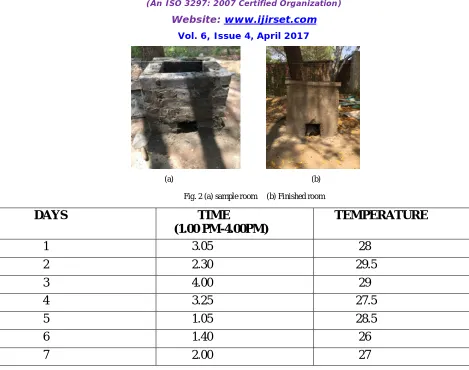
Fig. 2 (a) sample room (b) Finished room
TABLE. 2 TEMPERATURE WERE TAKENAT THE TIME FROM 1.00 PM TO 4.00 PM FOR ONE WEEK III.CONCLUSION
The thermal performances of using coconut coir as thermal insulation have been investigated
Coconut coir can be used as a thermal insulating material for the solar air collector considered the outlet air temperature can be maintained in the range of 35.1-44.0oC.
However, coconut coir is recommended to be used as
It is natural waste, which is non-hazardous.
In economical point of view, coconut coir is cheaper compared to other expensive thermal insulating materials such as glass-wools or rock-wools
REFERENCES
1. Madhukeshwara, N.; and Prakash, E.S. (2012). An investigation on the performance characteristics of solar flat plate collector with different selective surface coatings. International Journal of Energy and Environment,3, 99-108.
2. Malaysian Meteorological Department – Current, Malaysian Meteorological Department. Retrieved January 1, 2014, from
http://www.met.gov.my/. Effect of using Coconut Fibre and Polypropylene for Thermal Insulation 49
Journal of Engineering Science and Technology Special Issue 7 1/2015
3. Struckmann, F. (2008). Analysis of a flat-plate solar collector. Project Report 2008 MVK160, Heat and Mass Transport, Sweden, 1-4.
4. Saurav, S.; and Sahu, M.M. (2013). Heat transfer and thermal efficiency of solar air heater having artificial roughness: a review. International Journal ofRenewable Energy Research, 3, 498-508.
5. Chauhan, M.K.; and Chaudhary, V.S. (2012). Performance evaluation of roughened solar air heater having M-shaped as roughness geometry on
DAYS
TIME
(1.00 PM-4.00PM)
TEMPERATURE
1
3.05
28
2
2.30
29.5
3
4.00
29
4
3.25
27.5
5
1.05
28.5
6
1.40
26
7
2.00
27
6. Hematian, A.; Ajabshirchi, Y.; and Bakhtiari, A.A. (2012). Experimental analysis of flat plate solar collector efficiency. Indian Journal of Science andTechnology, 5, 3183-3187.
7. Dukhan, N.; and Chen, C. (2012). Metal-foam enhanced PCM storage system: the cylinder-in-cylinder geometry. ASHRAE Transactions, 118, 293-300.
8. Gonzalez, S.; Larsen, S.F.; and Hernandez, A. 2012. Thermal evaluation andmodeling of a double-pass solar collector for air heating. Proceeding, 28th PLEA Conference, Peru, 1-5.
9. Andoh, H.Y.; Gbaha, P.; Koffi, P.M.E.; Touré, S.; and Ado, G. (2002). Experimental study on the comparative thermal performance of a solar collector using coconut coir over the glass-wool thermal insulation for water heating system. Journal of Applied Sciences, 7,3187-3197.
10. Thomas, U.; and Ganiron, J. (2013). Investigation on the use of coconut coir polypropylene as thermal Insulator. International Journal of AdvancedScience and Technology, 59,13-26.
11. Choi, Y.S.; and Kim, D.L. (2012) Thermal property of insulation materials for HTS power cable. AIP Conference Proceedings, Spokane, Washington, USA, 1305-1312.