ABSTRACT
POPE, JEFFREY TAYLOR. Non-conditioning factors affecting enzyme thermostability during feed processing (Under the direction of Dr. Adam C. Fahrenholz and Dr. Jesse Grimes).
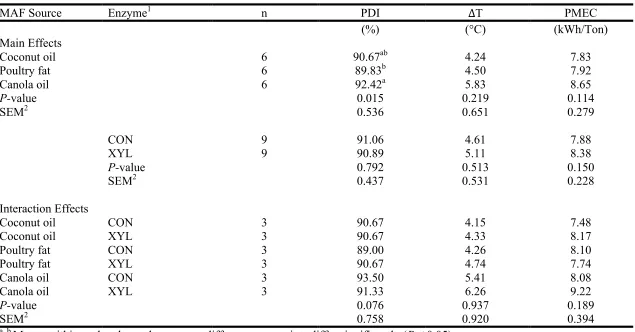
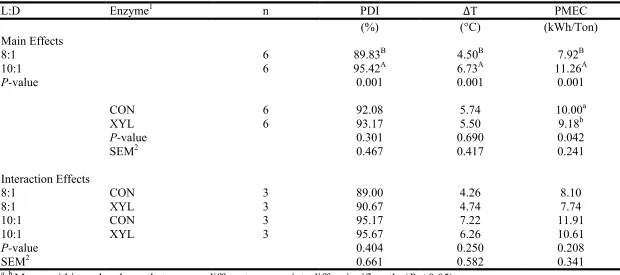
A series of experiments were conducted to determine the impact of non-conditioning factors utilized to improve physical feed quality on nutritional feed quality, with enzymes being a marker of nutritional status. The first experiment examined the effect of the level of mixer-added fat (MAF; 1, 3, or 5%), the source of fat (coconut oil, poultry fat, or canola oil), and pellet mill die length-to-diameter ratio (LD; 8:1 or 10:1) on mixer-added xylanase thermostability when diets were conditioned and pelleted at 82°C in one-way arrangements. The samples collected included unconditioned mash (UCM), conditioned mash (CM), and pellets (P). The parameters monitored included the change in temperature between hot pellets and conditioned mash (DT), pellet durability index (PDI), and pellet mill energy consumption (PMEC).
The recovery of xylanase in P relative to CM (P:CM) was greatest in diets pelleted with 5% MAF when compared to 1 and 3% MAF. The recovery of xylanase in P:CM was greatest in diets pelleted with coconut oil and poultry fat when compared to canola oil. The recovery of xylanase in P:CM and P relative to UCM (P:UCM) was greatest in diets pelleted through an L:D 8:1 pellet mill die when compared to an L:D 10:1 pellet mill die. A negative correlation was observed between the all the parameters monitored and xylanase activity in P:UCM and P:CM.
CTs included 80, 86, and 92°C. The samples collected and parameters monitored were the same as described in the first experiment. As the mash CT increased from 80 to 92°C, phytase recovery in CM relative to UCM (CM:UCM) decreased from 104.4 to 81.9%. However, phytase recovery in P:CM decreased from 76.4 to 6.3% at the same temperatures, which indicated that the pellet mill die was denaturing greater amounts of phytase when compared with the conditioning chamber.
A third experiment was conducted to determine the effect of pellet mill throughput (PMT) and mash CT on phytase and xylanase thermostability in a factorial arrangement. The PMTs utilized included 227, 454, 908, and 1816 kg/hr and the mash CTs utilized included 75 and 86°C. The samples collected and parameters monitored were the same as those described in the first two experiments. The recovery of phytase in P:UCM was subjected to an
interaction between PMT and mash CT. When feeds were pelleted at 86°C with a PMT of 227 kg/hr, only 13.5% of the phytase was recovered when compared to 92.0% at 75°C. When the PMT increased to 1816 kg/hr at 86°C, the recovery of phytase in P:UCM was statistically similar to diets pelleted at 75°C at all the PMT.
Non-conditioning Factors Affecting Enzyme Thermostability during Feed Processing
by
Jeffrey Taylor Pope
A dissertation submitted to the Graduate Faculty of North Carolina State University
in partial fulfillment of the requirements for the degree of
Doctor of Philosophy
Animal Science and Poultry Science
Raleigh, North Carolina 2019
APPROVED BY:
___________________________ ___________________________ Dr. Adam C. Fahrenholz Dr. Jesse L. Grimes
Committee Co-chair Committee Co-chair
DEDICATION
BIOGRAPHY
Jeffrey Taylor (J.T.) Pope was born on March 30th, 1991 to Nancy Jo Richards and Jeffrey Boyd Pope in Chapel Hill, NC. He grew up in Hillsborough and Mebane, NC. He graduated from Orange Senior High School in Hillsborough, NC in 2009 and attended Pfeiffer University on a baseball scholarship, but transferred to NC State in 2011 to focus on academics. J.T. worked as an undergraduate research assistant at the NC State feed mill and Chicken Education Unit during his undergraduate studies and graduated summa cum laude with his Bachelor of Science from NC State in May of 2014. After briefly attending
ACKNOWLEDGMENTS
I would like to thank Dr. Adam Fahrenholz for his guidance, patience, and
willingness to forward opportunities to me during my tenure as his graduate student at NC State. I have become a better researcher, scientists, and critical thinker because of my time spent under Dr. Fahrenholz due to his mentoring approach and willingness to allow his graduate students to expand upon internal and external learning experiences. I will be forever grateful for my time spent working with Dr. Fahrenholz.
I would also like to extend gratitude towards the late Dr. John Brake. Dr. Brake was an advocate for all of his students and ensured we were prepared to deal with problems as young researchers, but also as professionals. The lessons taught will be forever ingrained in his students and will continue to impact the poultry industry in a positive manner for future generations. I would also like to thank Dr. Charles Stark for serving on this committee, but also for allowing me to work with him as an undergraduate. Sincere gratitude is also extended to Dr. Jesse Grimes for serving on this committee and for providing poultry and upland hunting insight. I would also like to thank Dr. Peter Ferket for serving on the committee, the many graduate level courses he taught, and for ensuring graduate students within the department were aware of professional opportunities. Additionally, I would like to thank Dr. Greg Cope for taking time out of his busy schedule to serve as the Graduate School Representative.
interpretation necessary for the completion of this degree. I would also like to thank Eric Brigman, Carol Wu, and Zack Young for their assistance during trials. I would like to extend gratitude to Dr. Rasha Qudsieh for being an excellent lab manager that held the group
together and ensured we had the materials and knowledge necessary for our laboratory endeavors.
The NC State Feed Mill Education Unit also deserves much praise for their assistance during my trials. Shawn Bradshaw was my manager as an undergraduate student, a colleague as a graduate student, and a friend during my tenure at NC State that always ensured I had the opportunity and tools necessary to be successful. Margaret Harper, Corey Wishon, and Sam Brown were great friends and colleagues that made my experience at NC State very enjoyable. Each of the feed mill employees dedicated countless hours during my trials; it takes a village. I would also like to thank Carl Whisenant, a previous manager of the NC State feed mill, for demonstrating a great work ethic and teaching many life lessons. I wish everyone of the NC State Feed Mill family the best of luck in their future endeavors and look forward continuing to interact with them.
The NC State Chicken Educational Unit also deserves thanks and recognition for their hard work and cooperation during my trials. I would like to thank Ryan Patterson for his willingness to cooperate and take late night phone calls to help me during my trials, and for being a friend. Ivan Garcia, Maddie Bell, and Lori Cooke were also crucial to farm
operations and I am thankful for their efforts and advice along the way.
TABLE OF CONTENTS
LIST OF TABLES ... ix
LIST OF FIGURES ... xii
Literature Review ...1
Overview of Broiler Industry ...1
Feed Pelleting ...2
Factors Affecting Pelleting and Physical Feed Quality ...5
Enzymes ...13
Feed Pelleting and Enzyme Thermostability ...26
Heat, Pressure, and Enzymes during Feed Pelleting ...31
References and Notes ...35
Chapter I: The effect of the level of mixer-added fat, fat source, and pellet mill die L:D on parameters monitored during pelleting and xylanase thermostability ...47
Summary ...48
Description of Problem ...48
Materials and Methods ...51
Results and Discussions ...56
Conclusions and Applications ...59
References and Notes ...61
Chapter II: The effect of the level of mixer-added water and mash conditioning temperature on parameters monitored during pelleting and phytase and xylanase thermostability ...78
Summary ...79
Description of Problem ...80
Materials and Methods ...81
Results and Discussions ...84
Conclusions and Applications ...89
References and Notes ...91
Chapter III: The effect of pellet mill throughput and mash conditioning temperature on parameters monitored during pelleting and phytase and xylanase thermostability ...105
Summary ...106
Description of Problem ...107
Materials and Methods ...108
Results and Discussions ...110
Conclusions and Applications ...114
References and Notes ...115
Chapter IV: The effect of fat application site and pellet mill die L:D on phytase thermostability and subsequent broiler growth and bone characteristics ...126
Summary ...127
Description of Problem ...128
Materials and Methods ...131
Results and Discussions ...135
LIST OF TABLES
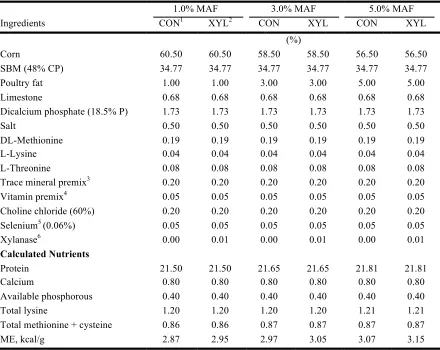
Table I-1 Composition of broiler grower diets differing in percentage mixer-added fat (MAF) and xylanase (XYL) inclusion in Experiment 1 ... 65 Table I-2 Composition of broiler grower diets differing in source of mixer-added fat
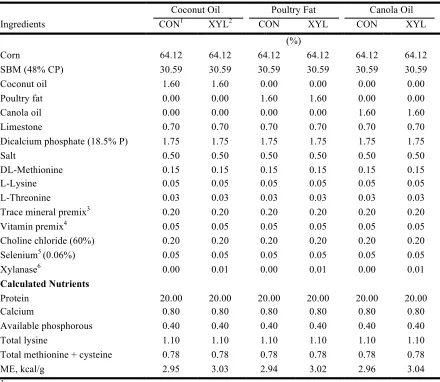
and xylanase (XYL) inclusion in Experiment 2 ...66 Table I-3 Composition of broiler grower diets differing in xylanase (XYL) inclusion to
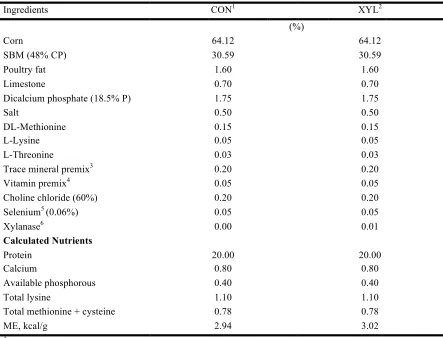
be pelleted through pellet mill dies with different length-to-diameter ratios in Experiment 3 ...67 Table I-4 Main and interaction effects of percentage mixer-added fat (MAF) and
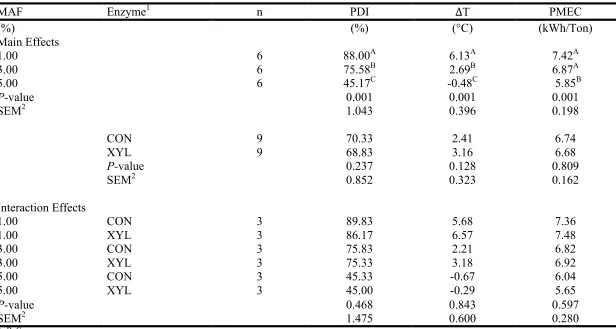
enzyme inclusion on pellet durability (PDI) as determined by the Holmen method for 30 s of testing, difference in temperature between hot pellets and conditioned mash (∆T), and pellet mill energy consumption (PMEC) in
Experiment 1 ...68 Table I-5 Main and interaction effects of mixer-added fat (MAF) source and enzyme
inclusion on pellet durability (PDI) as determined by the Holmen method for 30 s of testing, difference in temperature between hot pellets and conditioned mash (∆T), and pellet mill energy consumption (PMEC) in Experiment 2 ...69 Table I-6 Main and interaction effects of pellet mill die length-to-diameter ratio (L:D)
and enzyme inclusion on pellet durability (PDI) as determined by the Holmen method for 30 s of testing, difference in temperature between hot pellets and conditioned mash (∆T), and pellet mill energy consumption (PMEC) in
Experiment 3. ...70 Table I-7 Effect of percentage mixer-added fat (MAF) on the relative activity of
xylanase in conditioned mash compared to unconditioned mash (CM:UCM), pellets compared to conditioned mash (P:CM), and pellets compared to
unconditioned mash (P:UCM) in Experiment 1 ...71 Table I-8 Effect of mixer-added fat (MAF) source on the relative activity of xylanase in
conditioned mash compared to unconditioned mash (CM:UCM), pellets compared to conditioned mash (P:CM), and pellets compared to
unconditioned mash (P:UCM) in Experiment 2 ...72 Table I-9 Effect of pellet mill die length-to-diameter ratio (L:D) on the relative activity
of xylanase in conditioned mash compared to unconditioned mash (CM:UCM), pellets compared to conditioned mash (P:CM), and pellets
Table II-2 Effect of mash conditioning temperature (CT) and level of mixer-added water (MAW) on moisture content1 of unconditioned mash (UCM), hot conditioned mash (HCM), cooled conditioned mash (CCM) and pellets (P). ...95 Table II-3 Effect of mash conditioning temperature (CT) and level of mixer-added water
(MAW) on pellet durability index (PDI) as determined by the Holmen method for 30 s of testing, pellet mill energy consumption (PMEC), and the change in temperature between hot pellets and conditioned mash (DT) ...96 Table II-4 Effect of mash conditioning temperature (CT) and level of mixer-added water
(MAW) on the relative activity of phytase and xylanase in conditioned mash compared to unconditioned mash (CM:UCM), pellets compared to
conditioned mash (P:CM), and pellets compared to unconditioned mash
(P:UCM) ...97 Table III-1 Ingredient composition of broiler starter diets containing phytase and
xylanase ...119 Table III-2 Main effects of mash conditioning temperature (CT) and pellet mill
throughput (PMT) on pellet durability index (PDI) as determined by the Holmen method for 30 s of testing and the change in temperature between hot pellets and conditioned mash (DT) ...120 Table III-3 Interaction effects of mash conditioning temperature (CT) and pellet mill
throughput (PMT) on pellet durability index (PDI) as determined by the Holmen method for 30 s of testing and the change in temperature between hot pellets and conditioned mash (DT) ...121 Table III-4 Main effects of mash conditioning temperature (CT) and pellet mill
throughput (PMT) on the relative activity of phytase and xylanase in conditioned mash compared to unconditioned mash (CM:UCM), pellets compared to conditioned mash (P:CM), and pellets compared to
unconditioned mash (P:UCM) ...122 Table III-5 Interaction effects of mash conditioning temperature (CT) and pellet mill
throughput (PMT) on the relative activity of phytase and xylanase in conditioned mash compared to unconditioned mash (CM:UCM), pellets compared to conditioned mash (P:CM), and pellets compared to
Table IV-2 Main and interaction effects of fat application site (FAS) and pellet mill die length-to-diameter ratio (L:D) on pellet durability index (PDI) as determined by the Holmen method for 30 s of testing and the change in temperature between hot pellets and conditioned mash (DT) in negative control diets
amended with phytase. ...147 Table IV-3 Main and interaction effects of fat application site (FAS) and pellet mill die
length-to-diameter ratio (L:D) on the absolute phytase recovery in
unconditioned mash (UCM), conditioned mash (CM), and crumbles (C) and the relative phytase recovery in CM compared to UCM, C compared to CM, and C compared to UCM in negative control diets amended with phytase1 ...148 Table IV-4 Effect of fat application site (FAS) and pellet mill die length-to-diameter ratio
(L:D) on feed intake when negative control diets were amended with phytase (NC + PHY) compared to negative control (NC) and positive control (PC)
formulations ...149 Table IV-5 Effect of fat application site (FAS) and pellet mill die length-to-diameter ratio
(L:D) on body weight (BW) when negative control diets were amended with phytase (NC + PHY) compared to negative control (NC) and positive control (PC) formulations ...150 Table IV-6 Effect of fat application site (FAS) and pellet mill die length-to-diameter ratio
(L:D) on feed conversion ratio (FCR) when negative control diets were amended with phytase (NC + PHY) compared to negative control (NC) and positive control (PC) formulations. ...151 Table IV-7 Effect of fat application site (FAS) and pellet mill die length-to-diameter ratio
(L:D) on tibia bone breaking strength (BBS) and tibia bone ash when negative control diets were amended with phytase (NC + PHY) compared to negative control (NC) and positive control (PC) formulations ...152
LIST OF FIGURES
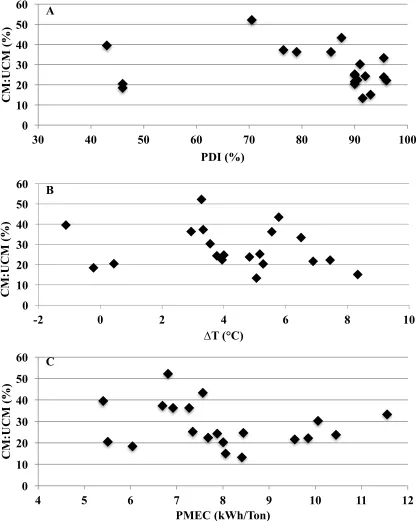
Figure I-1 Xylanase activity in conditioned mash relative to unconditioned mash (CM:UCM) vs. A) pellet durability index (PDI) (P=0.235; R2=0.08), B) change in temperature between hot pellets and conditioned mash (∆T) (P=0.211; R2=0.08), and C) pellet mill energy consumption
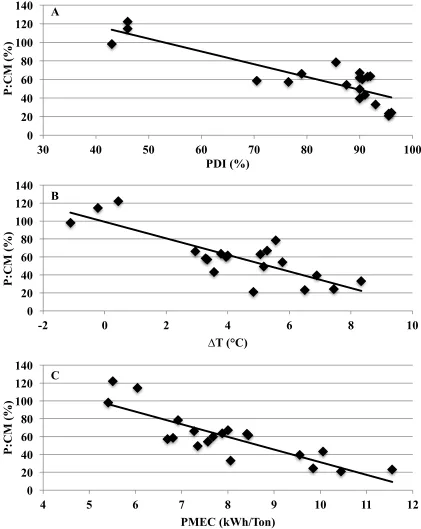
(PMEC) (P=0.289; R2=0.06). ...74 Figure I-2 Xylanase activity in pellets relative to conditioned mash (P:CM)
vs. A) pellet durability index (PDI) (P=0.001; R2=0.73; y=172.7-1.4*PDI), B) change in temperature between hot pellets and
conditioned mash (∆T) (P=0.001, R2=0.67; y=99.1-5.1*∆T), and
C) pellet mill energy consumption (PMEC) (P=0.001; R2=0.71;
y=173.1-14.2*PMEC). ...75 Figure I-3 Xylanase activity in pellets relative to unconditioned mash (P:UCM)
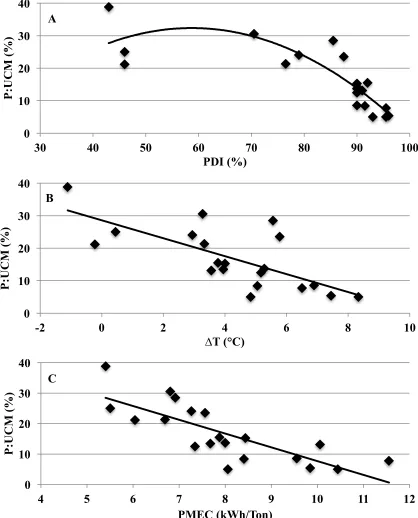
vs. A) pellet durability index (PDI) (P=0.001; R2=0.77; y=94.3-0.8*PDI-0.01*PDI2), B) change in temperature between hot pellets and
conditioned mash (∆T) (P=0.001; R2=0.59; y=30.1-1.7*∆T), and C) pellet mill energy consumption (PMEC) (P=0.001; R2=0.64;
y=55.2-4.8*PMEC). ...76 Figure I-4 Predicted xylanase activity in conditioned mash relative to unconditioned
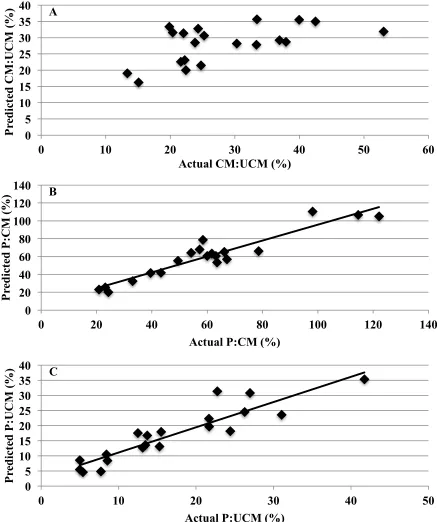
mash (CM:UCM), pellets relative to conditioned mash (P:CM), and pellets relative to unconditioned mash (P:UCM) vs. A) actual CM:UCM (P=0.563; R2=0.33), B) actual P:CM (P=0.001; R2=0.89), and
C) actual P:UCM (P=0.001; R2=0.84), respectively. ...77 Figure II-1 Phytase activity in conditioned mash relative to
unconditioned mash (CM:UCM) vs. A) pellet durability index
(PDI) (P=0.419; R2=0.03), B) change in temperature between hot pellets and conditioned mash (∆T) (P=0.001; R2=0.43; y=74+5.8*∆T), and
C) pellet mill energy consumption (PMEC) (P=0.754; R2=0.00). ...98 Figure II-2 Phytase activity in pellets relative to unconditioned mash (P:UCM) vs.
A) pellet durability index (PDI) (P=0.001; R2=0.70; y=670-7.2*PDI), B) change in temperature between hot pellets and conditioned mash (∆T) (P=0.001; R2=0.41; y=3.6+9.4*∆T), and C) pellet mill energy consumption (PMEC) (P=0.002; R2=0.34; y=176.9-14.8*PMEC) ...99 Figure II-3 Phytase activity in pellets relative to unconditioned mash (P:UCM)
vs. A) hot conditioned mash moisture (P=0.026; R2=0.19;
Figure II-4 Xylanase activity in conditioned mash relative to unconditioned mash (CM:UCM) vs. A) pellet durability index (PDI) (P=0.492; R2=0.02), B) change in temperature between hot pellets and conditioned mash (∆T) (P=0.763; R2=0.00), and C) pellet mill energy consumption (PMEC)
(P=0.558; R2=0.01) ...101 Figure II-5 Xylanase activity in pellets relative to unconditioned mash (P:UCM) vs. A)
pellet durability index (PDI) (P=0.403; R2=0.03), B) change in temperature between hot pellets and conditioned mash (∆T) (P=0.278; R2=0.05), and C) pellet mill energy consumption (PMEC) (P=0.277; R2=0.05) ...102 Figure II-6 Xylanase activity in pellets relative to unconditioned mash (P:UCM) vs.
A) hot conditioned mash moisture (P=0.514; R2=0.02) and B) cooled pellet moisture (P=0.593; R2=0.01) ...103 Figure II-7 Actual phytase (A) or xylanase (B) activity in pellets relative to unconditioned
mash (P:UCM) vs. A) predicted phytase activity in P:UCM
(P=0.001; R2=0.95; y=825.8+6.5*mixer-added water-4.4*conditioning temperature-4.1*pellet durability index-3.8*change in temperature between hot pellets and conditioned mash-4.4*pellet mill
energy consumption) and B) predicted xylanase activity in P:UCM
(P=0.162; R2=0.40) ...104 Figure III-1 Phytase activity in pellets relative to unconditioned mash (P:UCM) vs.
A) pellet durability index (PDI) (P=0.001; R2=0.56; y=410.0-3.8*PDI) and B) change in temperature between hot pellets and conditioned mash (∆T)
(P=0.001; R2=0.63; y=30.7+11.8*∆T) ...124 Figure III-2 Phytase activity in pellets relative to unconditioned mash (P:UCM) vs.
pellet durability index (PDI) of diets pelleted at
A) 75°C (P=0.100; R2=0.27) and B) 86°C (P=0.001; R2=0.96;
LITERATURE REVIEW
OVERVIEW OF BROILER INDUSTRY
Broiler production was a global industry with several participating partners that shared a common goal regardless of the region; produce a protein product to improve animal protein accessibility and affordability while maintaining company profitability. As more nations entered the industrialized or developing classification, the demand for animal based proteins increased. According to the Food and Agricultural Organization of the United Nations [1], there was a strong positive correlation between income and animal protein consumption. As nations became more urbanized and developed the infrastructure to trade in perishable goods, their ability to distribute and supply animal based proteins improved.
Broiler meat production had increased at an unprecedented rate since the 1960s, with more recent projections indicating that annual meat production will need to increase from 218 million tonnes in 1997 to 376 million tonnes by 2030 [1]. Broiler production will likely be part of the solution for increased global demand for meat products due to the absence of restrictions for consumption based on religion and overall efficiency of production.
Independent broiler growers purchased chicks and feed from their suppliers of choice, and thus generated a different set of demands for companies supplying chicks and feed when compared to vertically integrated models.
Regardless of the model of broiler production, feeding was essential for the efficient production of broilers. Global feed production surpassed one billion tonnes in 2017 [2] and projections for an increase in global meat demand indicated that feed production would continue to grow. Since feed costs represented nearly 70% of the live production costs associated with rearing broilers [3] it was imperative that the global resources of grains and feedstuffs be adequately utilized to improve production efficiencies, supply the world with high value protein products, and maintain the profitability of the industry so that further growth may ensue.
FEED PELLETING
feed that was adequate for broiler consumption. The pelleting process was energy intensive and accounted for greater than 40% of the energy expended to transform raw materials into an edible ration [5].
Feeding pellets to broilers had become common practice due to several advantages afforded on a physical and nutritional basis when compared to feeds that were not pelleted, commonly referred to as mash feed. From a physical perspective, pellets when compared to mash exhibited improved flow properties, greater bulk density, and a fixed composition [4]. It was imperative that finished feed flowed better than raw materials so that bridging would not occur within bins or feeders to ensure that feed was always accessible to broilers. Furthermore, improving the flowability of feed improved conveying properties and allowed for quicker and more uniform distribution of feed throughout broiler rearing houses equipped with automated feeding systems. Increasing the bulk density of feed allowed for the transport of a greater tonnage of feed per a fixed volume and also improved the nutrient density
associated with a given volume of feed. Ensuring that the feed remained in a fixed
composition prevented segregation of materials, reduced selective feeding, and minimized dust to ensure that the intended formulation of ingredients and nutrients were available to each animal offered the ration.
Jensen and colleagues [6] reported that the physical properties of pelleted feed when compared to mash feed influenced poultry behavior. The experiment was conducted by feeding Broad Breasted Bronze poults and New Hampshire chicks mash or pelleted feed. The researchers observed that poults offered mash feed dedicated 18.8% of the day for feed consumption, while those offered pelleted feed dedicated 2.2% of their day for feed
day when compared to 4.7% of the day for those offered pelleted feed. Within a commercial broiler facility, the reduction in feeding duration was also likely associated with improved feeder pan accessibility. Additionally, these data indicated that offering pellets to poultry when compared to mash would allow for poultry to rest for greater amounts of time, thus reducing the energy expended for feeding.
McKinney and Teeter [7] later reported on the nutritional benefit associated with the physical properties of pelleted feed. The researchers conducted two experiments to determine the impact of feed form on broiler growth. Experiment 1 consisted of feeding broilers four rations that differed in caloric density with energy and protein being fixed in a constant ratio. The data collected, which included BW, feed intake, and FCR adjusted for mortality were used to generate mathematical models to explain the relationship between dietary energy and the parameters measured. Experiment 2 consisted of feeding broilers identical rations with different pellet qualities and a mash diet that served as a negative control to determine the association between pellet quality and caloric density, with pellet quality being defined as the ratio of pellets to pellet fines in the feeder pan. The pellet qualities fed included 20, 40, 60, 80, and 100% and the pellet qualities were achieved by screening a pelleted diet and then blending fines back into the diet at the appropriate ratio of pellets-to-fines for each treatment. The broilers were fed the different pellet quality treatments from 38 to 45 d of age and then BW, feed intake, and FCR were recorded and input as terms to the model generated in experiment 1 to determine the effect of pellet quality on caloric density.
The researchers determined that there was a positive correlation between pellet quality and resting frequency, which impacted the effective caloric value of the diets.
energy density. The greatest improvement in energy density was observed when pellet quality was improved from 60 to 70%, which represented 33 kcal/kg. The increase in the effective caloric value of the diets resulted in improved FCR for broilers fed diets with greater pellet qualities. Additionally, numerous other reports [8-10] concluded that improved pellet quality was associated with an improved FCR, likely as a result of the effective energy afforded due to improved feed form. Although the McKinney and Teeter [7] report
definitively described the impact of pellet quality on broiler growth and efficiency, feed processing methods utilized to achieve different levels of pellet quality may differentially impact nutrient availability, which were failed to be determined in the report. However, these data definitively defined the nutritional benefit of improved pellet quality and influenced feed manufacturers to constantly strive for better pellet qualities so that broilers would be most efficient with the input raw materials. The broiler live performance efficiencies afforded by offering broilers pellets led to more than 80% of monogastric rations being pelleted in the United States [11].
FACTORS AFFECTING PELLETING AND PHYSICAL FEED QUALITY The factors determined to influence pellet quality included feed formulation, mash conditioning, pellet mill die specifications, dietary ingredient particle size, and pellet cooling [11]. Ferket and Stark [12] later determined that pellet mill throughput, or pellet production rate, should also be considered as a factor that impacted pellet quality. These factors may be manipulated in various manners based on pellet quality objectives for various species, the model of animal production, and the region in which the animals would be reared.
methods to test pellet durability: the KSU tumble box method [13] and the New Holmen Pellet Tester (NHPT) method. The tumble box method relied upon mechanical agitation of the pellets by rotating a cubical testing chamber for 10 mins and may be modified by adding objects into the testing chamber, such as hex nuts. The NHPT relied upon pneumatic
agitation of the pellets by forcing a stream of air through a pyramidal testing chamber for a period of 30, 60, 90, or 120 s. For both testing methods, pellets must be screened prior to entering the testing chamber. Fahrenholz [14] determined that the linear correlation between the standard tumble box method and the NHPT method was highly significant with an
R2=0.93, which indicated that both methods would predict differences in pellet durability in a similar manner, although the obtained raw values may differ based on testing method.
The resulting parameter of testing, PDI, was used as an indicator of the ability of pellets to withstand abrasion and fragmentation, but did not directly relate to pellet quality. Since pellet quality, or the ratio of pellets-to-fines in the feeder pan [7], was the parameter directly related to broiler live performance, PDI testing should have been implemented to monitor changes in physical feed quality as affected by the aforementioned factors, but not to directly estimate the impact of physical feed quality on animal growth performance.
Feed Formulation
Feed formulation was determined to be the most influential factor affecting pellet quality [16]. When diets were formulated to achieve improved pellet quality, dietary fats must be considered. The addition of fats or oils in a compound feed prior to pelleting had typically resulted in decreased pellet quality, pellet hardness, and pellet durability [14, 17-20]. Pope et al. [20] pelleted diets with 0.5 or 4.0% mixer-added fat (MAF) and determined that the additional fat present during pelleting reduced PDI by 33 percentage-points when the modified tumble box method was utilized. Added fats, especially those that contributed to dietary fat composition that were not bound within the matrix of cell walls, impeded the binding of water solubilized starches, proteins, and fibers through hydrophobic effects that prevented the inherent binding properties of those nutrients [21]. However, added dietary fats markedly influenced other parameters of the pelleting process.
Some formulations, depending on energy content and pricing of raw materials, forced fat into diets at rates that would be unsuitable for proper ingredient binding. While the
lubricating properties of fat improved pellet mill throughput [22, 23] and thus the efficiency of pellet mill operations, a balance between the level of fat and desired pellet quality must be considered. One solution for providing dietary fat quantities in excess of those that optimized particle binding had been through applying dietary fats subsequent to pelleting so that pellet quality could be maintained in high fat rations. The use of post-pellet liquid application (PPLA) systems had become more common so that proper levels of dietary energy could be achieved without adversely affecting pellet quality and durability.
increased the viscosity of diets and upon pressing resulted in reduced feed porosity and improved pellet hardness [24]. In diets with relatively low levels of dietary fiber, such as corn-soy based rations, including a viscous grain, such as wheat, has been considered a solution to improve pellet quality and durability due to the inherent binding properties of wheat fibers. Fahrenholz [25] demonstrated that adding wheat middlings to diets from 0 to 45% improved pellet durability of swine diets. Insoluble fibers, or those that did not hydrate upon exposure to moisture, may have improved pellet binding by entangling particles, but their resiliency to compress may have reduced the contact of the fibers with other particles. One such insoluble fiber used to improve pellet quality was lignin in the form of calcium lignosulfonate [26, 27]. Pope [27] demonstrated that diets amended with 0.5% calcium lignosulfonate improved PDI by 22.5 percentage-points in rations containing 3.0% MAF when compared to diets that were not supplemented with calcium lignosulfonate. Calcium lignosulfonate had been demonstrated to improve physical feed quality, likely via improved hydrogen bonding on the surface of particles, in a myriad of pelleting conditions that were understood to negatively impact pellet quality, such as high fat rations and low conditioning temperatures [27].
pelleting scenarios [29]. Protein was also determined to be a potential binding agent in broiler feeds [24]. Raw proteins remained primarily in their native quaternary or tertiary structures, while the denaturing of proteins was described as the breakdown of the more complex protein structures into their linear or lower levels of amino acid organization. Wood et al. [30] determined that dietary protein and starch impacted physical feed quality. When raw starch was replaced with pregelatinized starch from 0 to 40%, researchers noted that PDI was improved by ~30 percentage-points in the presence of denatured proteins. Additionally, the inclusion of raw protein when compared to denatured protein improved PDI by ~65 percentage-points in diets containing raw starch.
Mash Conditioning
Mash conditioning parameters were determined to be the second most influential factor in determining physical feed quality [16]. Mash feed was noted to be conditioned upon exposure to heat and moisture for some duration of time to facilitate particle binding and compaction [31]. The mash conditioning parameters subjected to manipulation during feed pelleting included the mash conditioning temperature, pressure of steam, duration of
residence within the conditioning chamber, and the level of moisture added via steam, water, or inherent in feedstuffs [31].
and water associated with steam addition likely induced physicochemical changes that positively affected the binding capacities of starches and proteins [31]. The pressure of steam entering the conditioning chamber was also investigated, but the results were largely
inconclusive with no differences in PDI or pellet quality being observed when steam was applied at 552 or 138 kPa [33].
The residence time of feed within the conditioning chamber was manipulated by conditioner paddle pitch, conditioner shaft rotation speed, and conditioner length [35]. Briggs et al. [15] conditioned feed with conditioner paddles in a standard or parallel pitch and
demonstrated that parallel paddle pitch configurations improved conditioner retention time, which resulted in a 5 PDI point improvement when compared to standard paddle pitch configurations. Prolonged exposure of ingredients to heat and moisture likely further
plasticized the ingredients via greater moisture penetration and heat transfer when compared to short term exposure to heat and moisture, which improved their binding characteristics and thus the physical quality of finished feed [36].
facilitate the full binding potential of ingredients. However, water added via steam was considered superior to conditioning with water alone since heat was also necessary to modify the physicochemical properties of nutrients to induce particle adhesion [31].
Particle Size
The particle size of ingredients was considered to be the third most influential factor in determining pellet quality [16]. Grains were typically ground prior to mixing and pelleting to improve mastication characteristics and increase the surface area available to digestive secretions [39]. Although particle size was assumed to have an impact on pellet quality, reports had been inconclusive as to exactly how particle size influenced binding
characteristics and durability. Some reports indicated that a larger particle size was
detrimental to pellet durability, such as when grain was ground through a 6-mm screen when compared to a 3-mm screen [40], while others concluded that relatively larger particles of grain had no impact on pellet durability [41] or even improved pellet durability [42]. Pope [27] demonstrated that pelleting diets with an average particle size of 472, 576, and 691 µm did not impact pellet durability when utilizing both the tumble box and NHPT methods. As reports concerning poultry live performance had indicated that providing dietary structure, such as through the inclusion of coarse particles of grain, was beneficial to gastrointestinal tract development and nutrient digestibility [39, 43], poultry feed manufactures had been encouraged to increase the particle size of ground ingredients. Though grain particle size, as it related to pellet quality, had long been a subject of debate for feed manufacturers,
Pellet Mill Die and Throughput
The pellet mill die was considered to be the fourth most influential factor in
determining pellet quality [16]. Pellet mill throughput, which was invariably associated with pellet mill die specifications, was also determined to be a consideration when achieving improved physical feed quality was desired [12]. Pellet mill die specifications were typically described by the effective thickness of the die relative to the diameter of the pellet mill die hole. These two measurements were typically expressed in a ratio of pellet mill die hole length-to-diameter (L:D). The aforementioned pellet mill die specifications determined the duration of feed retention within the pellet mill die, and thus influenced pellet durability and physical feed quality.
As pellet mill die L:D increased, PDI and pellet quality increased [31]. Stark and Ferket [12] held the pellet mill die hole diameter constant at 4.4 mm and increased the effective thickness of the pellet mill die from 29 to 35 and 44 mm and demonstrated that pellet durability improved from 32 to 35 and 60%, respectively. This most likely occurred because the raw materials encountered a greater amount of friction and shear within the pellet mill die, increasing compaction and reducing elasticity, which likely made the feed more malleable and improved adhesion [44]. Additionally, the pellets were retained within the pellet mill die for a greater duration, which increased the backpressure of the die and reduced the porosity of the pellets upon exiting the pellet mill die [31]. Stark and Ferket [12] also reported that as throughput increased, pellet durability decreased. Holding the pellet mill die dimensions constant, the researchers pelleted diets at 500, 1000, and 1500 kg/hr and
die L:D and its relationship to pellet durability and quality should be considered relative to throughput since both of the specifications altered feed residence time within the pellet mill die. Pellet mill die L:D and throughput were some of the least commonly investigated factors known to impact physical feed quality.
Pellet Cooling
Pellet cooling was considered the least influential factor in determining pellet quality [16]. After exiting the pellet mill die, the moisture of pellets often exceeded 16% and the temperature of pellets often exceeded 80°C, which necessitated an additional process during pelleting to remove heat and moisture from pellets prior to feeding [45]. Pellet coolers operated by drawing ambient air through a bed of pellets. The ambient air cooled the pellets at the air inlet and the heated air then removed moisture from the pellets proximal to the pellet mill die. The adjustable operational parameters of coolers included air volume, velocity, and bed depth, or residence time within the cooler [31]. The improper drying and cooling of pellets may have resulted in poor pellet quality [45]. If pellets were cooled and dried with excessive air velocity, cracks at the surface of the pellet may have been induced and poor pellet quality may have ensued. Retaining pellets in a cooler for a longer duration would likely result in greater moisture and heat loss, but may not have been an option depending on pellet production rate [31].
ENZYMES
feed industry primarily relied upon hydrolases, which catalyzed the hydrolytic cleavage of specific covalent bonds [46]. Enzyme products utilized in poultry feeds were defined as “a processed, standardized enzyme-containing material which has been produced with the intention of being sold for use in animal feed and feed ingredients” by the Association of American Feed Control Officials [47]. Since several entities were involved with the
manufacture and distribution of enzyme products for use in poultry feeds, enzymatic activity was standardized and defined as “the catalytic activity required to convert a given amount of assay substrate to a given amount of product per unit time under the standard conditions set forth in the assay procedure” [47]. Enzyme assays, which were used to quantify enzymatic activity, were implemented in the feed industry to address whether adequate distribution of the enzyme product throughout feed was achieved and to determine whether it could withstand the rigors of pelleting to ensure that the product would catalyze substrate to provide the intended benefits associated with feeding the enzyme [48].
The efficacious use of enzymes required that the moisture content, temperature, pH, and enzyme and substrate concentration be optimized to realize the full potential of enzymes [49]. Enzymes required an aqueous environment to ensure free interaction with substrate and to promote catalytic activity. While candidate enzymes needed to withstand the rigors of feed pelleting, in which temperatures often exceeded 80°C [49], their activity needed to be
optimized at the body temperature of the animal being fed, or ~41°C for broilers [50].
concentration so that the interaction between them was optimized without over supplying the enzyme, which was costly, or incompletely hydrolyzing the substrate, which may have had negative consequences for nutrient delivery and broiler health.
Types of Enzymes, Their Benefits, and Modes of Action
The classification of enzymes approved for use in poultry feeds in the United States that were commercially implemented included carbohydrases, proteases, and phosphatases, which catalyzed the hydrolysis of carbohydrates, proteins, and phytate, respectively [47]. The most commonly used enzymes had been phytases and non-starch polysaccharide degrading carbohydrases (NSPase) [51]. In general, enzymes had been utilized in poultry feeds to augment the digestion of nutrients for which the bird produced endogenous enzymes, to digest and release nutrients for which the bird did not produce enzymes, and to destroy or overcome anti-nutritional factors (ANF) that negatively affected the digestion or absorption of other nutrients [49].
determined to shift the gut microflora towards microbial species associated with improved gut health [49]. (5) Enzymes reduced the environmental footprint of poultry production by capturing more value from raw materials and thus reduced their inclusion in rations and reduced the amount of total excreta and nitrogen and phosphorous excretion into the environment [49]. In integrated broiler production systems, the use of enzymes was rapidly implemented when raw material prices, especially corn and phosphates, increased which made the use of enzymes inevitable to remain competitive with regards to feed prices, and thus the overall profitability of broiler producers. Enzymes effectively improved the global accessibility to meat products through reduction in feed costs while making the broiler industry more sustainable through the use of less raw materials and reduced environmental outputs.
formulation, or when there was not otherwise a reduction in dietary energy attributed to the enzyme inclusion.
Enzymes also presented sharp diminishing returns [55]. As the concentration of the enzyme in the diet increased, or as the digestibility of the diet increased, the effectiveness of the enzyme per unit inclusion decreased [57]. Therefore, it was imperative that enzyme and substrate concentration be properly matched to ensure that the enzyme was able to deliver the nutrients for which it was credited in formulation programs [58]. Ravindran [49] also
commented that enzymes were most efficacious in young chicks in which physical
limitations to feed intake and immature endogenous enzyme systems afforded the greatest opportunity for enzymes to enhance digestibility.
Phytase
Phytic acid (myo-inositol 1,2,3,4,5,6-hexakis dihydrogen phosphate; IP6) was the primary form of phosphorous storage in plants and contained six phosphate molecules [59]. The average poultry diet contained 10 g/kg of IP6 [60], most of which was indigestible with innate enzyme secretions. Phytase was the enzyme necessary to cleave phosphates from IP6 [61], and despite some endogenous phosphatase secretions [55], phytase presented
nutritionists with an opportunity to improve the utilization of phosphorous within feedstuffs as opposed to relying completely on mined rock phosphates to meet the phosphorous
phytase was first reported in the 1960s, although the commercial implementation of phytase occurred in the 1990s to mitigate environmental phosphorous pollution [59].
In addition to containing indigestible phosphorous, phytic acid was also considered an ANF [48, 55, 59] due to its polyanionic characteristics which allowed it to chelate positively charged molecules. Phytic acid was demonstrated to reduce the absorption of nutrients other than phosphorous, such as the divalent cations calcium, magnesium, and zinc, in addition to starch and amino acids. Phytic acid chelated these nutrients, making them unavailable to the broiler and thus requiring over-formulated rations to meet the nutrient requirements of the broiler. Thus, phytase manufacturers recommended the assignment of matrix credits for energy, protein, and certain trace minerals, in addition to phosphorous, to capture the full value of phytase. These matrix credits for nutrients other than phosphorous, or the benefits associated with feeding phytase unrelated to the release of phosphorous, were termed the ‘extra-phosphoric’ effects related to destroying the ANF component of phytate [55]. Additionally, phytase may have provided a nutrient sparing effect associated with
endogenous losses of mucins, intestinal cells, and pancreatic secretions [55]. Phytase offered an economical solution to reduce the levels of phosphate, energy, and amino acids in rations that would have otherwise been supplied by raw materials.
Phytases were expressed in several source organisms, including Aspergillus niger, Pentophora lycii, Schizosaccharomyces pombe and Escherichia coli [48]. There were several classifications of catalytic mechanisms for phytases, but the majority of phytases belonged to a family of histidine acid phosphatases [48]. One of the primary classifications of
Aspergillus sp., cleaved the phosphate moiety at the 3-carbon positon of the IP6 ring and
functioned optimally at pH 3 [55]. The 6-phytase family of phytases, derived from E. coli and P. lycii, cleaved the phosphate moiety at the 6-carbon position of the IP6 ring and functioned most effectively between pH 4-5 [55]. Phytases cleaved phosphate moieties in a stepwise manner from IP6 to its lower esters. Most of the phytase activity in vivo was
characterized in the anterior portions of the poultry gastrointestinal tract, which included the crop, proventriculus, and gizzard, due to the favorable pH and lack of endogenous proteolytic enzymes in the small intestines [62].
The in vitro mechanisms of phytase were studied extensively and were considered to be well characterized. However, the in vivo mechanisms were not as well defined and Bedford et al. [63] noted that all the consequences of phytase application had yet to be identified. Despite this incomplete knowledge of phytase action in vivo, several reports identified the benefits associated with feeding phytase.
0.220, 0.236, and 0.244% NPP, respectively. These data, as well as other reports [62], demonstrated the phosphorous sparing effect of phytase attributed to phosphate release from phytate through in vivo assays.
Cowieson et al. [65] conducted a systematic review of publications between 1996 and 2016 that investigated the impact of phytase on amino acid digestibility in broilers. The meta-analysis included 24 reports that represented a total of 745 individual observations for amino acid digestibility that spanned several formulation conditions, which included the use of corn, soy, wheat, corn DDGS, sorghum, and rice bran. The researchers determined the amino acid digestibility with and without phytase, which included six commercially available phytases, to determine the average increase in amino acid digestibility associated with
feeding phytase. The report indicated that amino acid digestibility increased, on average, by 4.1% with values ranging from a 1.3% increase in methionine digestibility to a 7.2% increase for cysteine. A negative correlation between feed phytate concentration and amino acid digestibility was determined to exist for control diets that did not receive phytase. Therefore, the improved amino acid digestibility associated with feeding phytase was related to the disappearance of phytate as an ANF. These data supported the ‘extra-phosphoric’ effect for amino acid digestibility associated with phytate destruction as evidenced from feeding phytase.
Ravindran et al. [66] investigated the impact of phytase on apparent metabolizable energy (AME) in broilers. The control diet was considered adequate in NPP and phytase was added at 125, 250, 375, 500, 750, and 1000 units/kg. There was a significant positive
digestibility to sparing amino acids, which contributed to dietary energy, in addition to improved starch digestibility since phytate was determined to chelate starch through direct phosphate bonds or indirectly through chelating the proteins associated with starch [66]. Additionally, phytate was described as a potent inhibitor of amylase which may have also negatively impacted starch digestibility [66]. Another theory for the effect of phytase on energy digestibility was related to the chelation of minerals by phytate [67]. Lipid utilization was determined to be constrained through the formation of insoluble phytate-metallic soaps, which reduced energy digestibility in broilers [67]. Since phytase was a known chelator of minerals [59], Ravindran et al. [67] proposed that phytase may have reduced the degree of soap formation in the gastrointestinal tract, and thus improved the energy digestibility of rations. The ‘extra-phosphoric’ effect of feeding phytase was determined to extend beyond improved amino acid digestibility to include energy digestibility as well, both of which were associated with the reduction of phytate as an ANF. The benefits of feeding phytase with respect to nutrient digestibility eventuated in improved body weight (BW) gain and feed conversion in broilers as evidenced through other reports [17, 68].
Carbohydrase
The primary NSPases utilized in broiler rations have been xylanase and b-glucanase which hydrolyzed arabinoxylans and b-glucans contained in fibrous feedstuffs, respectively [47, 69]. Several other carbohydrases had also been utilized, such as hemicellulase, alpha-galactosidase, and amylase, but often to a lesser extent [69]. The primary role of
and the resulting viscous nature of the digesta when feeding grains such as barley, rye, and wheat [52].
The benefits associated with feeding carbohydrases, specifically NSPases, were increased feeding value of raw materials, reduced variation in nutrient quality, and reduced incidence of wet litter [52]. The observed benefits associated with feeding NSPases were realized through increased rates of digestion, increased feed passage rates, augmented endogenous secretions, and controlled microbial populations [52, 63, 69-71]. The soluble arabinoxylans and b-glucans were identified as the ANF components of fiber through isolation and re-feeding trials, which resulted in the same complications associated with feeding the intact grains [72, 73].
The primary mechanism by which NSPs exerted their anti-nutritional effects was through reduced rates of digestion [52]. The NSPs solubilized to form a viscous gel in the digesta, which impeded the diffusion of enzymes and substrate throughout the aqueous digesta and effectively reduced digestion rates [48, 74]. The high molecular weight
parameters, rather than a specific action exerted by the anti-nutritional polymers associated with fiber.
Feed passage rate was determined to be reduced when birds were fed rations that contained viscous grains [76]. When gut passage rate was reduced there was a significant decrease in feed intake which negatively affected and limited nutrient assimilation [71]. Additionally, when gut passage rate was reduced the flushing effect of digesta moving down the gastrointestinal tract was reduced which allowed bacteria to migrate towards anterior portions of the gastrointestinal tract. Some of these bacteria produced bile acid degrading enzymes [71, 77], which negatively impacted lipid digestion and ultimately led to fat soluble vitamin deficiencies [71]. Enzyme supplementation, as well as antibiotic supplementation, alleviated the poor AME values and rachitogenic effects associated with feeding viscous grains which indicated that the hydrolysis of NSPs improved the flushing effect of feed passage and thus reduced microbial loads in the anterior portions of the gastrointestinal tract [69].
Bedford [78] postulated that the effects of NSPases on microbial populations may be of more interest than the effects exerted directly on the cell wall of grains. While in vitro data confirmed that NSPases would open cell walls to allow endogenous enzymes better access to nutrients, it took up to 48 hrs to degrade cell walls. Thus, Bedford [78] proposed that
Kiarie et al. [79] fed broilers wheat or corn based rations that were devoid of or supplemented with xylanase. At 21 d, birds were harvested to determine the impact of xylanase on fat, crude protein, and gross energy digestibility. The researchers reported that fat, crude protein, and gross energy digestibility of the diets was improved through xylanase supplementation, regardless of the source of grain. Additionally, birds supplemented with xylanase were reported to exhibit greater concentrations of acetic acid in the ceca in addition to reduced jejunal digesta viscosity, regardless of the grain type. Bedford and Campbell [80] fed broilers rations containing barley with or without b-glucanase and measured the apparent ileal digestibility of amino acids at three and six weeks of age. The researchers reported that amino acid digestibility was improved by a minimum of 10% at three weeks of age and while amino acid digestibility was still improved at six weeks of age, it was improved to a lesser extent. These data exemplified the ability of NSPases to improve endogenous enzyme access to nutrients, which improved the overall digestibility of rations that contained NSPs.
Protease
Several researchers reported improved live performance parameters when a protease was fed [82-84]. The clearest benefit from feeding protease was an observed improvement in FCR, which indicated that the protease was sparing or extracting nutrients beyond the
endogenous capacities of the broilers. Peek et al. [84] reported that broilers challenged with Eimeria spp. benefited from dietary protease supplementation as apparent through improved BW gain, although there were no differences in coccidial lesions or oocyst shedding.
Additionally, reports that demonstrated the beneficial effects of feeding protease on FCR or BW gain failed to elucidate the exact mechanism of nutrient sparing. None of the reports indicated improved protein or energy digestibility [82, 84]. However, the inability to determine the cause of improved FCR may have been related to overall amino acid digestibility.
FEED PELLETING AND ENZYME THERMOSTABILITY
One of the primary concerns for enzyme use was their ability to withstand the rigors of feed pelleting. Proteins, especially those that were to remain functional after feed
processing, were subjected to denaturation upon exposure to the heat, moisture, and pressure associated with the conditioning and pressing of feeds [24]. Feed enzyme efficacy was typically determined through in vivo assessments of live performance parameters in addition to enzyme specific parameters such as tibia/toe bone ash for phytase or digesta viscosity for NSPases. Additionally, in vitro assays were routinely performed to quantify enzyme
concentrations in feed to ensure that the enzyme survived pelleting. Enzyme Thermostability Issues
Spring et al. [32] pelleted barley-wheat-soy rations which contained cellulase, pentosonase (xylanase), bacterial amylase, and fungal amylase at 60, 70, 80, 90, and 100°C through an experimental pellet mill with a pellet diameter of 2.5 mm. The authors reported that all the enzymes were thermostable to 80°C and the bacterial amylase remained
thermostable to 90°C. The authors also determined that increased pelleting temperatures resulted in greater feed viscosity, although digesta viscosity was not directly measured.
parameters ensued. However, the temperature of pelleting was determined to be more influential on the denaturation of b-glucanase when compared to conditioning time.
Carbohydrases were not the only enzymes that exhibited thermostability issues. Wilkinson et al. [87] pelleted diets containing two different types of phytase, which exhibited different thermostabilities, at 75, 80, 85, or 90°C. For both enzymes, a negative linear effect of pelleting temperature on phytase denaturation was observed as evidenced through in vitro testing in feed. However, tibia bone ash was not affected by pelleting temperature. This may have indicated that in vitro testing of phytase activity was not directly related to in vivo phytase action. Conversely, in vitro feed assays may be pertinent to predicting phytase activity in vivo, but the authors may not have reduced the dietary NPP levels to an extent that broilers would have benefited from greater concentrations of phytase in finished feed.
Loop et al. [68] tested nine variants of E. coli derived phytases for thermostability and subsequent broiler performance and tibia bone ash and breaking strength to 21 d of age. The diets were conditioned for 10 s at 71, 77, and 82°C prior to pelleting through a 38 x 4.4 mm pellet mill die. Although the variant manipulations were not described in the report and the feed manufacturing was not replicated, all the phytases were recovered in excess of 60% after pelleting, with the majority of the variants being recovered in excess of 80%. Despite the consistent recoveries, tibia bone ash and breaking strength varied between phytase variants, which indicated that phytase activity within the gastrointestinal tract was dependent upon more factors than thermostability during pelleting, such as pH and resistance to
Feed manufacturers had continuously increased their conditioning temperatures for various reasons, and often operated their conditioners at temperatures known to denature enzymes [51]. Increased pelleting temperatures were associated with improved feed hygiene, as means to control Salmonella and Campylobacter, in addition to improved starch
digestibility and physical feed properties, such as decreased fines and improved pellet hardness and durability [51]. However, increased conditioning temperatures were associated with decreased enzyme recoveries, which was problematic for manufacturers that relied upon enzymes to deliver nutrients to broilers.
Enzyme Deactivation and Resolutions
Enzyme denaturation was typically investigated through analytical techniques that determined both changes in physical properties as well as enzyme-substrate kinetics to determine residual enzyme activity subsequent to chemical or thermal denaturation [88-90]. Fluorescence and circular dichroism (CD) spectroscopy were common methods utilized to detect conformational changes in enzyme structure [89]. Enzyme activity was frequently quantified through the incubation of enzymes with substrate in specified buffers at a
specified pH, temperature, and duration, and then substrate hydrolysis was quantified through absorbance at a wavelength specific for the enzyme product [89]. Experiments conducted utilizing such techniques provided insight into the unfolding of enzymes and the resulting activities after denaturation.
methods previously mentioned. Additionally, the enzymes were exposed to temperatures of 37, 40, 45, 50, 55, 60, 65, 70, 80, and 90°C in a buffered solution with phytic acid for 15 mins and then the reactions were stopped utilizing trichloroacetic acid before quantification of liberated phosphate molecules utilizing a spectrophotometer. The enzymes were also pelleted after conditioning at 75 and 85°C to determine their ability to withstand pelleting.
The authors detected conformational changes in the arrangement of a-helices and b-sheets of phytases derived from A. fumigatus and A. niger via CD between 50 and 70°C, while the A. niger pH 2.5 acid phosphatase was not structurally altered until 80°C, which indicated a greater thermostability. Upon exposure to lower temperatures, the A. fumigatus and A. niger phytases were able to refold into their native conformation, both of which were monomeric proteins. However, upon deactivation of the phytase derived from A. niger pH 2.5 acid phosphatase above 80°C, the phytase was not able to refold into its native
confirmation. The A. niger pH 2.5 acid phosphatase was an oligomeric protein and the authors suggested that upon conformational change the tetramer was not able to reorganize into its native state. The A. niger pH 2.5 acid phosphatase was considered to be more
their ability to reassemble to their active structures [88, 90]. One pertinent stressor that enzymes experienced during feed pelleting that was often withheld from laboratory testing was pressure. Many reports on enzyme thermostability via in vitro analytics and
conformational changes stressed enzymes to heat, but rarely to pressure, which may also exacerbate enzyme denaturation [31].
Enzyme thermostability issues were resolved through various mechanisms. These mechanisms included (1) screening for more thermotolerant organisms to express phytase, (2) genetic manipulation of organisms expressing phytase via site-directed mutagenesis of specific amino acid sequences to enhance thermostability, (3) coating enzymes to protect them from heat, and (4) applying the enzymes to pellets subsequent to pellet manufacture [48, 51, 91]. Screening for thermotolerant organisms to express feed enzymes was the most common method to improve enzyme thermostability before genetic manipulation techniques were refined [48, 92]. The challenge with screening for new organisms to express feed enzymes was typically related to their output of the desired enzyme on a commercial scale in quantities desirable for inclusion in animal feeds [48]. Genetic mutation of organisms
expressing the desired enzymes was performed via gene site saturation mutagenesis, a high throughput method, that rapidly detected regions related to enzymatic performance [93]. When coupled with a heat step, gene site saturation mutagenesis was considered an efficient way to improve enzyme performance while maintaining or improving thermostability. Coating enzymes, most often with a peptidoglycan or carbohydrate-lipid complex, was believed to be an alternative to screening and genetic manipulation to improve
the ability to solubilize to interact with substrate within the gastrointestinal tract [48].
Slominski [61] reported no substantial differences in phytase recoveries when granulated and powdered forms were compared in commercial testing, which indicated that more research was necessary to determine the value of coating technologies. The PPLA of enzymes was the simplest method to prevent enzyme denaturation, but the equipment necessary to apply enzymes via PPLA and the inaccuracies encountered when metering minute volumes of liquid made mixer-added enzymes more manageable for the manufacture of commercial feeds [51, 68]. Regardless of the methods utilized to improve enzyme thermostability, it was necessary to advance in vitro discoveries into practically applied enzymes that could
withstand the rigors of pelleting and solubilize in the gastrointestinal tract to perform its intended hydrolysis.
HEAT, PRESSURE, AND ENZYMES DURING FEED PELLETING
and nutritionists manipulated and monitored several processes during feed pelleting that may have influenced the exposure of a mixer-added enzyme to heat and pressure.
Pope et al. [20] demonstrated one of these effects when rations were pelleted with 0.5 or 4.0% mixer-added fat (MAF). The authors measured frictional heat transfer as feed
transitioned from the conditioning chamber through the pellet mill die (DT) as well as the amount of energy required to pellet a given mass of feed (PMEC) in addition to PDI. The researchers determined that diets pelleted with 0.5% MAF resulted in a 74% increase in DT from 5.83 to 10.17°C and a 42% increase in PMEC from 8.66 to 12.34 kWh/T when compared to diets pelleted with 4.0% MAF, which was an indicator of pellet mill die backpressure [31]. The increased level of fat acted as a lubricant which decreased friction and backpressure within the pellet mill die [24], which resulted in decreased transfer of heat, energy required to press the feed, and PDI.
report of Gehring et al. [17] failed to determine whether frictional heat or pressure was correlated with enzyme recovery.
The level of MAF was not the only factor known to impact frictional heat, pressure, and pellet durability and quality during the manufacture of pellets. The pellet mill die was also considered to play a role in frictional heat and pressure imposed on feed during the manufacture of pellets [31]. As the L:D of a pellet mill die increased, the feed would be expected to be exposed to more shear pressure, and thus greater amounts of frictional heat may have been generated. Additionally, as the die hole wall lengthened, the surface area for feed contact increased which resulted in greater friction and pressure within the die. The lengthened contact time between feed and the pellet mill die hole wall relaxed elastic
components of feed, which influenced physical feed quality in a positive manner, but was not investigated with respect to nutritional feed quality. Feed was retained within the pellet mill die for various durations based on the length of the die, in addition to the pellet mill die throughput. In vitro experiments determined that prolonged exposure to steam negatively impacted enzyme activity [86], but changes in formulation, pellet mill die specifications, and pellet mill throughputs that influenced the extent and duration of heat exposure were not investigated in previous work. To be efficient with raw materials, it was imperative that nutritionists and feed manufactures better understood the impact of feed pelleting on enzyme denaturation so that value extraction from raw materials was optimized without sacrificing animal wellbeing. Thus, the objectives of the body of work herein were to determine:
1. The impact of non-conditioning factors during pelleting on enzyme thermostability. 2. The impact of the conditioning chamber and pellet mill die on enzyme
3. The correlation between parameters monitored during feed pelleting and enzyme thermostability.
REFERENCES AND NOTES
1. Food and Agriculture Organization. 2018. Global and regional food consumption patterns and trends. Rome, Italy.
http://www.fao.org/docrep/005/ac911e/ac911e05.htm#TopOfPage.
2. Connolly, A. 2018. 7th annual Alltech global feed survey. Alltech, Inc., Nicholasville, KY. 3. McKinney, L. J., and K. C. Behnke. 2007. Principles of feed manufacturing: Efficient
boiler operation. Kansas State University Agricultural Experiment Station and cooperative Extension Service. Manhattan, KS.
4. Thomas, M., and A. F. B. van der Poel. 1996. Physical quality of pelleted animal feed 1. Criteria for pellet quality. Anim. Feed Sci. Tech. 61:89-112.
5. Whitehead, W. K., and W. L. Shupe. 1980. Energy use in broiler hatcheries and feed mills. Poult. Sci. 59:16-20.
6. Jensen, L. S., Merrill, L. H., Reddy, C. V., and J. McGinnis. 1962. Observations on eating patterns and rate of food passage of birds fed pelleted and unpelleted diets. Poult. Sci. 41:1414-1419.
7. McKinney, L. J. and R. G. Teeter. 2004. Predicting effective caloric value of nonnutritive facts: I. Pellet quality and II. Prediction of consequential formulation dead zones. Poult. Sci. 83:1165-1174.
9. Glover, B. G., Foltz, K. L., Holaskova, I., and J. S. Moritz. 2015. Effects of modest improvements in pellet quality and experiment pen size on broiler chicken performance. J. Appl. Poult. Res. 25:21-28.
10. Glover, B. G., Foltz, K. L., Ryan, K. J., and J. S. Moritz. 2016. Effects of feed form, environment, and caloric density on energy partitioning and subsequent broiler performance. Page 21 in Proc. 105th Poult. Sci. Assc. meeting, Orlando, FL. 11. Behnke, K. C. 2001. Factors influencing pellet quality. Feed Tech. 5:19-22.
12. Stark, C. R. and P. R. Ferket. 2011. Conditioning, Pelleting, and Cooling. North Carolina State University Extension Services.
13. ASAE. 1997. Cubes, Pellets, and Crumbles – Definitions and Methods for Determining Density, Durability, and Moisture Content. ASAE Standard S269.4 American Society of Agricultural and Biological Engineers, St. Joseph, MI.
14. Fahrenholz, A. C. 2012. Evaluating factors affecting pellet durability and energy consumption in a pilot feed mill and comparing methods for evaluating pellet durability. Ph. D. Diss. Kansas State Univ. Manhattan, KS.
15. Briggs, J. L., Maier, D. E., Watkins, B. A., and K. C. Behnke. 1999. Effect of ingredients and processing parameters on pellet quality. Poult. Sci. 78:1464-1471.
16. Behnke, K. C. 1996. Feed manufacturing technology: current issues and challenges. Anim. Feed Sci. Tech. 62:49-57.
18. Wamsley, K. G. S. and J. S. Moritz. 2013. Resolving poor pellet quality and maintaining amino acid digestibility in commercial turkey diet feed manufacture. J. Appl. Poult. Res. 22:439-446.
19. Auttawong, S. 2015. Impact of ground corn particle size and distribution on pellet quality, live performance of broilers, and proventriculus and gizzard weights. Ph. D. Diss. North Carolina State University. Raleigh, NC.
20. Pope, J. T., Brake, J. B., and A. C. Fahrenholz. 2017. Post-pellet liquid application fat disproportionately coats fines and affects mixed-sex live performance from 16-42 d of age. J. Appl. Poult. Res. 27:124-131.
21. Van Vliet, H., 1981. Pelletieren, matrizenform und zerkrllhmeln. Muhle Mischfuttertechnik. 118:117-l 19.
22. Richardson, W., and E. J. Day. 1976. Effect of varying levels of added fat in broiler diets on pellet quality. Feedstuffs. 48(20):24.
23. Walter, M. 1990. The inclusion of liquids in compound feeds. Adv. Feed Tech. 4:36-48. 24. Thomas, M., T. van Vliet, and A. F. B. van der Poel. 1998. Physical quality of pelleted
animal feed 3. Contribution of feedstuff components. Anim. Feed Sci. Tech. 70:59-78.
25. Fahrenholz, C. F. 1989. Utilization of wheat milling by-products. I. Effect of wheat mill run on finishing pig performance. II. Effect of processing on the physical