GREEN COMPUTING BASED OPTIMIZED RESOURCE UTILIZATION
IN CLOUD COMPUTING ENVIRONMENT
S. Venkatesh1 M.Senthilkumar2 1A.P (O.G), Valliammai engineering college
2
A.P (SG), Valliammai engineering college Kattankulathur, Chennai, India
ABSTRACT:In the Service availability and response time are two important quality measures in cloud’s user’s perspective. A monolithic model may suffer from intractability and poor scalability due to large number of parameters. In the User’s Request is sent to the Global Queue and then to the Resource Assigning Module via FIFO Model. Then we Assign 3 Types of System. First is HOT, in which the Servers will be handling the Jobs Currently, Second is WARM, in which the Servers are kept in Ideal State, then Finally Cold, in which Servers are Turned Off State. Initial Request is send to HOT – Servers, if those Servers are Busy then the Request is forwarded to Warm – Servers, then finally if required to Cold – Servers if both the Hot and Warm Servers are Busy. In the Process, We Develop a Cache Memory Provision, in which Requested Data is Stored in Memory Pool for a Period of Time. If same Data is requested by another user system Verifies the Data is Stored in the Memory pool, then the Data is downloaded from the Memory Pool itself and not processed by the Request Assigning Module (RAM).
K
eywords: FIFO, RAM, HOT, Cache Memory Provision.I. INTRODUCTION
DOMAIN SPECIFICATION: CLOUD COMPUTING
Cloud computing takes the technology, services, and applications that are similar to those on the Internet and turns them into a self-service utility. The use of the word “cloud” makes reference to the two essential concepts:
Abstraction: Cloud computing abstracts the details of system implementation from users and developers. Applications run on physical systems that aren't specified, data is stored in
locations that are unknown, administration of systems is outsourced to others, and access by users is ubiquitous.
Virtualization: Cloud computing virtualizes systems by pooling and sharing resources. Systems and storage can be provisioned as needed from a centralized infrastructure, costs are assessed on a metered basis, multi-tenancy is enabled, and
resources are scalable with agility.
II. SYSTEM MODEL:
Cloud computing is a computing paradigm in which different computing resources such as infrastructure, platforms, and software applications are made accessible over the Internet to remote user as services. Infrastructure-as- a-Service (IaaS) cloud providers, such as Amazon EC2 and IBM cloud, deliver, on-demand, operating system (OS) instances provisioning computational resources in the form of virtual machines (VMs) deployed in the cloud providers data center. A cloud service differs from traditional hosting in three principal aspects. First, it is provided on demand; second, it is elastic since users that use the service have as much or as little as they want at any given time (typically by the minute or the hour); and third, the service is fully managed by the provider. Due to dynamic nature of cloud environments, diversity of user requests, and time dependency of load, providing agreed quality of service (QoS) while avoiding over provisioning is a difficult task.
III.CLIENT OF THE NETWORK:
the Cloud Service Provider. Based on the User‟s request, the Cloud Service Provider will process the User requested Job and respond to them. All the User details will be stored in the Database of the Cloud Service Provider. In this Project, we will design the User Interface Frame to Communicate with the Cloud Server through Network Coding using the programming Languages like Java/ .Net. By sending the request to Cloud Server Provider, the User can access the requested data if they authenticated by the Cloud Service Provider.
IV.CLOUD SERVICE PROVIDER:
Cloud Service Provider will contain the large amount of data in their Data Storage. Also the Cloud Service provider will maintain the all the User information to authenticate the User when are login into their account. The User information will be stored in the Database of the Cloud Service Provider. Also the Cloud Server will redirect the User requested job to the Resource Assigning Module to process the User requested Job. The Request of all the Users will process by the Resource Assigning Module. To communicate with the Client and the withthe other modules of the Cloud Network, the Cloud Server will establish connection between them. For this Purpose we are going to create an User Interface Frame. Also the Cloud Service Provider will send the User Job request to the Resource Assign Module in Fist In First Out (FIFO) manner.
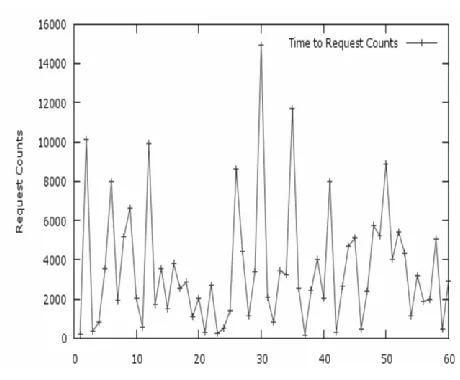
Fig 1. Cloud Service Provider
V.RESOURCE ASSIGNING MODULE (RAM):
In this Module, we will Process the User requested Job. The User requested Job will redirect to the RAM of the Cloud Server. The RAM will contain three Types of the Physical Servers. 1. HOT Server. WARM Server and COLD Server. These Physical Servers will contain „n‟ number of virtual Server to process the User requested Job. So that the Job can be efficiently processed. To communicate with the Physical Server and Virtual Server we will develop
the network coding in the Java / .Net Platforms. We have to create a separate Interface Frame of each Physical Servers and Virtual Servers. For each Physical Servers and Virtual Servers will assign an IP address through Network Connection.
VI JOB PROCESSING:
Once the RAM got the User requested Job from the Server of the Cloud Service Provider, it will first check the HOT Server, because the HOT server will handle the Current User requested Job. If the Virtual Machines of the HOT Server is busy then the Job will be transferred to WARM Server which will be idle state when they didn‟t have any Job to Process. So that the WARM Server will process the Job. But if the Virtual Server of the WARM Server is also busy, then the request will be passed to the CLOD Server. By implementing this Job Processing Scheme, we can effectively process the User Requested Job and efficiently maintains the Resources of the Cloud Server. So that we can save the Energy of the Resources when they are not process the Job.
VII.CACHE MEMORY MANAGEMENT:
immediately. If therequest Data is not in the Cache Memory, then the Server process the User requested Job by transferring it to the RAM.
Configuration Group
Peak Power
(in Watts)
Average Power (in Watts) /
Energy Consumption
(for 60 secs)
Average SLA (in %)
Type1 1948 1427 99
Type2 1704 1362 99.03
Type3 2205 1701 99.01
Type4 1948 1427 99
Type5 1756 1355 99.01
Type6 2370 2034 97.5
Table 1: RESULTS: POWER CONSUMPTION COMPARISON
VIII.ARCHITECTURE DIAGRAM:
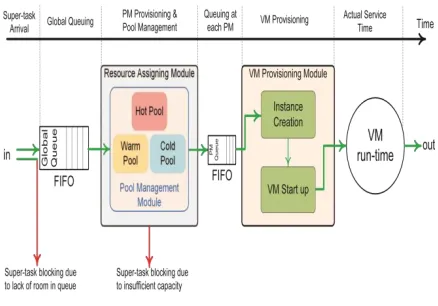
Fig 3: Architecture Diagram
IX.PROPOSED SYSTEM:
We are implementing a new model for Pool management. First the Global Queue which receives the Users requests and transfers those requests to the Resource Assigning Module which assigns Servers for processing the Users request in FIFO manner. The Servers Namely Hot, Warm and Cold. HOT in which the current users request is handled. If those servers are busy, the Users requests are transferred to Warm Servers and then to Cold Servers if and only if the Hot and Cold Server are busy. By handling this technique we can effectively handle the Users request in a Short period of time.
X.MODIFICATION:
We Develop a Cache Memory Provision, in which Requested
Data is Stored in Memory Pool for a Period of Time. If same Data is requested by another user system Verifies the Data is Stored in the Memory pool, then the Data is downloaded from the Memory Pool itself and not processed by the Request Assigning Module (RAM).
XI. RESULTS & DISCUSSION:
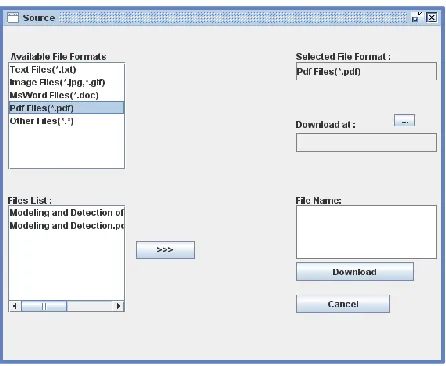
Today, computer servers need more reliability and availability. The Main issues on reliability is queue management and service providing to the user process .In our proposed system the user is allowed to access the data from the server of the cloud service provider.First,the user will create an account in the cloud environment and then can request the job from the cloud service provider.This will send the user job request to the resource assign module in FIFO manner.The following diagram shows the server allocation of the user request to the three different servers namely hot warm and cold depends upon the server busyness.
XII. SCREEN SHOTS OF SERVER ALLOCATIONS
Fig 5 WARM SERVER ALLOCATION
Fig 6 COLD SERVER ALLOCATION
XIII.CONCLUSION:
In this paper, we have developed an interacting analytical model that captures important aspects including resource assigning process, virtual machine deployment, pool management, and power consumption of nowadays cloud centres. The performance model can assist cloud providers to predict the expected servicing delay, task rejection probability, steady-state arrangement of server pools, and power consumption. We carried out extensive numerical experiments to study the effects of various parameters such as arrival rate of supertasks, task service time, virtualization degree, super task size, and pool check rate on the task rejection probability, response time, and normalized power consumption. The service most appropriate arrangement of server pools and the amount behaviour of cloud Centre for given configurations has been characterized in order to facilitate the capacity planning, SLA analysis, cloud economic analysis, and tradeoffs by cloud of providers. Using the proposed pool management
model, the required electricity power can be identified in advance for anticipated arrival process and supertask characteristics.
XIV.REFERENCES:
[1] L.M. Vaquero, L. Rodero-Merino, J. Caceres, and M. Lindner, “A Break in the Clouds: Towards a Cloud Definition,” ACM SIGCOMM Computer Comm. Rev., vol. 39, no. 1, 2009.
[2] An amazon.com Company, “Amazon Elastic Compute Cloud, Amazon EC2,”Website, http://aws.amazon.com/ec2. 2012.
[3]IBM,“IBMCloudComputing,”Website,http://www.ibm.com/ ibm/cloud/, 2012.
[4] M. Martinello, M. Kaaˆniche, and K. Kanoun, “Web Service Availability-Impact of Error Recovery and Traffic Model,” Reliability Eng. System Safety, vol. 89, no. 1, pp. 6-16, 2005.
[5] N. Sato and K.S. Trivedi, “Stochastic Modeling of Composite Web Services for Closed-Form Analysis of Their Performance and Reliability Bottlenecks,” Proc. Int‟l Conf. Service Oriented Computing (ICSOC ‟07), pp. 107-118, 2007.
[6] S. Ferretti, V. Ghini, F. Panzieri, M. Pellegrini, and E. Turrini, “QoS-Aware Clouds,” Proc. IEEE Third Int‟l Conf. Cloud Computing (CLOUD), pp. 321-328, July 2010.
[7] H. Khazaei, J. Mi_si_c, and V.B. Mi_si_c, “Performance Analysis of Cloud Computing Centers Using M=G=m=m þ r Queueing Systems,” IEEE Trans. Parallel and Distributed Systems, vol. 23, no. 5, pp. 936-943, May 2012.
[8] F. Longo, R. Ghosh, V.K. Naik, and K.S. Trivedi, “A Scalable Availability Model for Infrastructure-as-a-Service Cloud,” Proc. Int‟l Conf. Dependable Systems and Networks, pp. 335-346, 2011.
[9] L. Youseff, R. Wolski, B. Gorda, and R. Krintz, “Paravirtualization for hpc Systems,” Proc. Workshop Xen in High-Performance Cluster and Grid Computing, pp. 474-486, 2006.
[10] E. Deelman, G. Singh, M. Livny, B. Berriman, and J. Good, “The Cost of Doing Science on the Cloud: The Montage Example,” Proc. Int‟l Conf. High Performance Computing Networking Storage and Analysis (SC ‟08), pp. 1-12, Nov. 2008.
[11] M.R. Palankar, A. Iamnitchi, M. Ripeanu, and S. Garfinkel, “Amazon S3 for Science Grids: A Viable Solution?” Proc. Int‟l Workshop Dataaware Distributed Computing (DADC ‟08), pp. 55-64, 2008.
[12] E. Walker, “Benchmarking Amazon EC2 for High-Performance Scientific Computing,” LOGIN, vol. 33, no. 5, pp. 18-23, 2008.
Computing on Grids and Supercomputers (MTAGS ‟09), vol. 2, pp. 1-10, 2010.
[14] S. Saini, D. Talcott, D. Jespersen, J. Djomehri, H. Jin, and R. Biswas, “Scientific Application-Based Performance Comparison of SGI Altix 4700, IBM POWER5+, and SGI ICE 8200 Supercomputers,” Proc. ACM/IEEE Int‟l Conf. for High Performance Computing Networking Storage and Analysis (SC ‟08), pp. 1-12, 2008.
[15] S. Alam, R. Barrett, M. Bast, M.R. Fahey, J. Kuehn, C. McCurdy, J. Rogers, P. Roth, R. Sankaran, and J.S. Vetter, “Early Evaluation of IBM BlueGene,” Proc. ACM/IEEE Int‟l Conf. High Performance Computing Networking Storage and Analysis (SC‟ 08), pp. 1-12, 2008.
[16] N. Yigitbasi, A. Iosup, D. Epema, and S. Ostermann, “C-Meter: A Framework for Performance Analysis of Computing Clouds,” Proc. IEEE/ACM Ninth Int‟l Symp. Cluster Computing and the Grid (CCGRID ‟09), pp. 472-477, 2009.
[17] K. Xiong and H. Perros, “Service Performance and Analysis in Cloud Computing,” Proc. IEEE World Conf. Services, pp. 693-700, 2009.
[18] B. Yang, F. Tan, Y. Dai, and S. Guo, “Performance Evaluation of Cloud Service Considering Fault Recovery,” Proc. First Int‟l Conf. Cloud Computing (CloudCom) 2009, pp. 571-576, Dec. 2009.
[19] R. Ghosh, F. Longo, V.K. Naik, and K.S. Trivedi, “Quantifying Resiliency of IaaS Cloud,” Proc. IEEE Symp. Reliable Distributed Systems, pp. 343-347, 2010.
[20] H. Qian, D. Medhi, and K.S. Trivedi, “A Hierarchical Model to Evaluate Quality of Experience of Online Services Hosted by Cloud Computing,” Proc. IFIP/IEEE Int‟l Symp. Integrated Network Management (IM), pp. 105-112, May 2011.
[21] H. Takagi, Queueing Analysis, vol. 2: Finite Systems. North- Holland, 1993. [29] G. Grimmett and D. Stirzaker, Probability and Random Processes, third ed. Oxford Univ. Press, July 2010.
[22] D.P. Heyman and M.J. Sobel, Stochastic Models in Operations Research, vol. 1. Dover, 2004.
[23] H. Takagi, Queueing Analysis, vol. 1: Vacation and Priority Systems. North-Holland, 1991.
[24] L. Kleinrock, Queueing Systems, vol. 1: Theory. Wiley-Interscience, 1975.
[25] K.S. Trivedi, Probability and Statistics with Reliability, Queuing and Computer Science Applications, second ed. Wiley, 2001.
[26] V. Mainkar and K.S. Trivedi, “Sufficient Conditions for Existence of a Fixed Point in Stochastic Reward Net-Based Iterative Models,” IEEE Trans. Software Eng., vol. 22, no. 9, pp. 640-653, Sept. 1996.
[27] Maplesoft, Inc., “Maple 15,”website, http://www.maplesoft.com. Mar. 2011.
[28] SearchDataCenter.com, “The Data Center Purchasing Intentions Survey Report,”Special Report, http://searchdatacenter. techtarget.com, 2008.
[29] G. Somani and S. Chaudhary, “Application Performance Isola- tion in Virtualization,” Proc. IEEE Int‟l Conf. Cloud Computing (CLOUD ‟09), pp. 41-48, Sept. 2009.
[30] K. Ye, X. Jiang, D. Ye, and D. Huang, “Two Optimization Mechanisms to Improve the Isolation Property of Server Con- solidation in Virtualized Multi-Core Server,” Proc. IEEE 12th Int‟l Conf. High Performance Computing and Comm. (HPCC), pp. 281-288, Sept. 2010.
[31] S.C. Borst, “Optimal Probabilistic Allocation of Customer Types to Servers,” SIGMETRICS Performance Evaluation Rev., vol. 23, pp. 116-125, May 1995.
[32] J. Sethuraman and M.S. Squillante, “Optimal Stochastic Schedul- ing in Multiclass Parallel Queues,” SIGMETRICS Performance Evaluation Rev., vol. 27, pp. 93-102, May 1999.
[33] D. Meisner, B.T. Gold, and T.F. Wenisch, “Powernap: Eliminating Server Idle Power,” SIGPLAN Notices, vol. 44, no. 3, pp. 205-216, Mar. 2009.
[34] A. Gandhi, V. Gupta, M. Harchol-Balter, and M.A. Kozuch, “Optimality Analysis of Energy-Performance Trade-Off for Server Farm Management.
AUTHOR BIOGRAPHY
Mr S.Venkateshis currently working as an Assistant Professor in SRM Valliammai Engineering College,Department of CSE, Kattankulathur, Chennai. He received his Master‟s Degree from St Joseph‟s college of Engineering,Chennai in the year 2010 and Bachelor‟s from Jeppiaar Engineering College in the year 2008.His areas of interest includes wireless sensor networks and Software Engineering.He has a teaching experience of over 3 years and would like to focus his research in the above mentioned areas.