Available Online atwww.ijcsmc.com
International Journal of Computer Science and Mobile Computing
A Monthly Journal of Computer Science and Information Technology
ISSN 2320–088X
IJCSMC, Vol. 3, Issue. 9, September 2014, pg.722 – 727
RESEARCH ARTICLE
Reducing the Time Delay in Data
Transfer using SOGR-BGP Protocol
for Mobile Ad Hoc Network
R. Srithulasiraman
1, S. Mythili
2Assistant Professor, ECE Department, KARPAGAM College of Engineering, TamilNadu1
3rd year, ECE Department, KARPAGAM College of Engineering, TamilNadu2
Abstract: Mobile ad hoc network has been a huge challenge to develop a routing protocol that can meet different application requirements and optimize the routing path according to the change of topology. Geographic routing protocol mainly used to provide application needs but it will provide inaccurate local topology and destination position information introduces high overhead when there is no traffic. After using two self adaptive on demand geographic routing protocol to build efficient route path based on user needs. The in accurate local topology knowledge is removed by using SOGR protocol. Topology information updated with respect to time at every node. On demand routing mechanism to reduce the control overhead and adaptive parameter setting and route optimization scheme are used this protocol to provide efficient route path. But this protocol used to provide 98 percent delivery ratios and very low forwarding overhead but using the SOGR EM [Expectization Maximization] algorithm provide the maximum delivery ratios, and also reduce the control overhead and reduce the number of packet forwarding, reduce the average end to end delay and minimize the overhead with respect to node densities, maximum speed. Improve the performance like maximum reduce the delay and increase all other parameters performance using SOGR BGP protocol.
Keywords: Node densities, Delivery ratio, SOGR BGP, efficient route path, Control overhead, End to end delay
1. Introduction
maximum end to end delay from source to destination while packet are transfer and also control overhead high [1]. In our protocol SOGR EM algorithm are mainly designed to reduce the delay and control overhead and considering respect to the two factors maximum speed and node density. Improve the all the parameters performance using SOGR BGP algorithm used, it give very minimum end to end delay, and overall performance is improved compare to SOGR EM protocol.
2. Related Work
The novel efficient geographic multicast protocol (EGMP) has high packet delivery ratio and low control overhead based route. Face routing approach that routes the message in the faces of the network, the faces are recognizable and constructible and capture geometric features [2], this routing reduce the overhead [3].Various route discovery and maintenance purpose using hello messages that rely on recently proposed protocol [4].
3. Method
a) : AODV (Ad hoc on demand distance vector routing) It is a basic protocol, this protocol is used to establish a route path but this protocol provide a in accurate local topology information so lead to routing failure.
b) GPSR: (Greedy perimeter stateless routing) this protocol are used to reduce the control overhead.
c) SOGR HR: (Hybrid reactive mechanism) this scheme used to find out the next hop of a forwarding node [1]. The path find
out from the forwarding node to destination, the next hop determined by using this scheme.
d) SOGR GR: (Geographic based reactive mechanism) this protocol is avoid the collision, it mainly depend on only one hop
neighbor’s positions. The SOGR GR and HR the two protocols are mainly have the important parameter. Set there parameter get optimal performance. The above two protocols are used to forward the packet from source to destination with out collision but it will provide maximum end to end delay, and also overhead, so we are using the protocol SOGR EM (Expectization Maximization) algorithm to reduce the delay and control overhead.
e) SOGR EM: (Expectization Maximization), The Expectization maximization algorithm combined with the SOGR to get a
better performance of reduces the delay and control overhead. Using SOGR BGP Protocol will get very minimum delay during transmission and better performance.
3.1 SOGR EM Protocol steps
1) In between source and destination having the number of stages, it consists of number of nodes.
2) All the nodes find the maximum likelihood value of every stage.
3) Which node having the maximum value of every stage, that node selected and forward the packet from source to destination.
4) Finally data reach the destination.
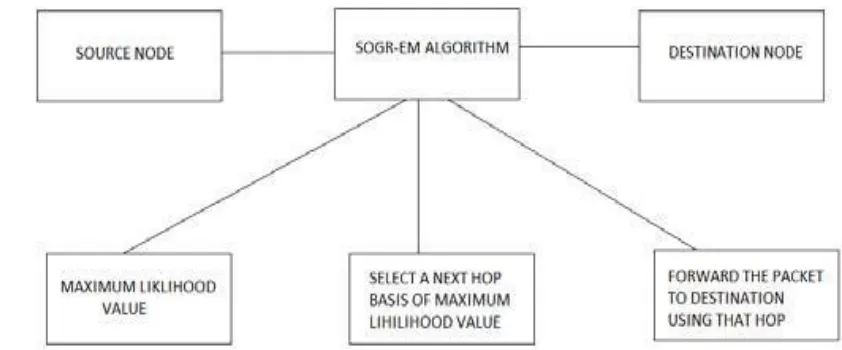
Figure 1: Block diagram of SOGR EM algorithm
Figure 1 shows the following working steps;
1. Source node and destination node in between using SOGR EM algorithm.
2. Find the maximum likelihood value of all intermediate nodes.
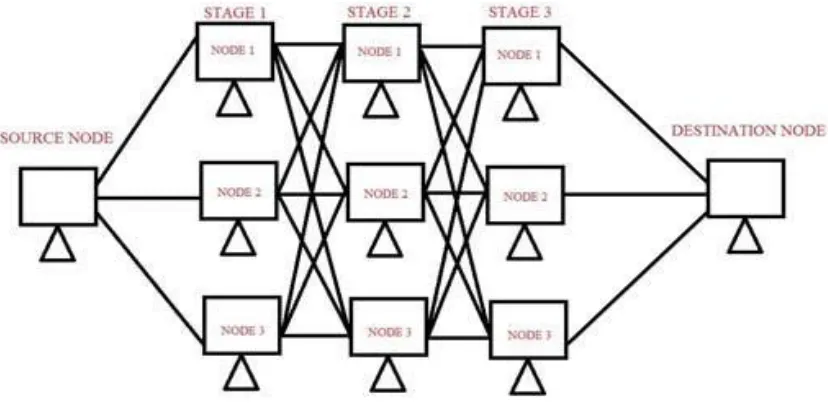
Figure 2: Multistage representation of SOGR EM algorithm
a) Consider the above figure 2, in between source node and destination node having the three stages, each stage containing
three nodes.
b) In every stage represented by stage1, stage2, stage 3, with respect to source one hop neighbor, two hop neighbor and three hop neighbor.
c) In first stage (one hop neighbor) find the maximum likelihood value of every node and which node having the maximum
value that node will be selected and forward the packet from source to corresponding one hop neighbor node.
d) Find the two hop neighbor, maximum likelihood value of all nodes, and which node having the maximum value that node
will be selected and forward the packet from one hop neighbor to two hop neighbor node.
e) The third hop neighbor find the maximum likelihood value of all node and which node having the maximum value that
node will be selected and forward the packet from two hop neighbor three hop neighbor. f) Finally the packet forward from three hop neighbor to destination.
The proposed protocol steps given below (SOGR-BGP)
3.2 SOGR BGP protocol steps
Combining SOGR BGP protocol, It provide very minimum delay compare to SOGR EM protocol. SOGR BGP protocol operation are given below
SOGR BGP adjacent, called peers, are established by manual configuration between routers to create a TCP session on port 179. A BGP speaker sends 19-byte keep-alive messages every 30 seconds to maintain their connection. Among routing protocols, BGP is unique in using TCP as its transport protocol.
When SOGR BGP runs between two peers in the same autonomous system (AS), it is referred to as Internal BGP (iBGP or Interior Border Gateway Protocol). When it runs between different autonomous systems, it is called External BGP (EBGP or Exterior Border Gateway Protocol). Routers on the boundary of one AS exchanging information with another AS are called border or edge routers or simply eBGP peers and are typically connected directly, while iBGP peers can be interconnected through other intermediate routers. Other deployment topologies are also possible, such as running eBGP peering inside a VPN tunnel, allowing two remote sites to exchange routing information in a secure and isolated manner.
The main difference between iBGP and eBGP peering is in the way routes that were received from one peer are propagated to other peers. For instance, new routes learned from an eBGP peer are typically redistributed to all other iBGP peers as well as all eBGP peers. However, if new routes were learned on an iBGP peering, then they are re-advertised only to all other eBGP peers. These route-propagation rules effectively require that all iBGP peers inside an AS are interconnected in a full mesh.
In this section, we evaluate the performance of SOGR HR, SOGR GR and SOGR EM, SOGR BGP with respect to moving speed, node densities.
4.1 Simulation Results
5.
Conclusion
In this work, we have developed the protocol, SOGR EM routing protocol that will high performance compare to existing all other protocol such as AODV, SOGR GR, SOGR HR protocols [1]. The propose protocol reduce the average end to end delay, control overhead, average number of packet forwarding, packet delivery ratio with respect to maximum speed and node density. Finally conclude that the overall performance is improved while using SOGR EM algorithm, here we mainly consider the two factor such as average end to end delay and control overhead with respect to maximum speed and node density, clearly shown that the very minimum end to end delay and control overhead using SOGR BGP protocol when compare to existing protocol SOGR EM, SOGR GR and SOGR HR, AODV. Also increase the packet delivery ratio and reduce the number of packet forwarding.
References
[1] X. Xiaojing xiang, Xin wang and Zehua Zhou, “Self Adaptive on demand geographic routing for mobile ad hoc networks” IEEE Trans. Mobile computing, vol.11, no.9, pp. 1572-1586, Sep 2012.
[2] X. Xiaojing xiang, X. Wang And Y.Yang,“Supporting Efficient and Scalable Multicasting over Mobile Ad Hoc
Networks,” IEEE Trans. Mobile Computing, vol 10, no. 4, pp. 544-559, Apr. 2011.
[3] F. Zhang, H. Li, A. Jiang, J. Chen, and P. Luo, “Face Tracing Based Geographic Routing in Non planar Wireless Networks,” Proc. IEEE INFOCOM, pp. 2243-2251, May 2007.
[4] Y.C. Tseng, S.Y. Ni, and E.Y. Shih, “Adaptive Approaches to Relieving Broadcast Storms in A Wireless Multihop Mobile Ad Hoc Network,” IEEE Trans. Computers, vol. 52, no.5, pp.545- 557, May 2003.
[5] Network Working Group 2006, Rfc 4271, Standards Track, Retrieved 8 October 2013.
Authors Profile
Srithulasiraman.R was born in 1987. He receivedthe B.E (ECE) in 2009, K.S.R College of Engg, India and he
completed M.E (Communication Systems) in 2013, in the same college. Now he is working as an Assistant professor at Karpagam College of Engineering, Coimbatore. His area of interest is wireless ad hoc network.
Mythili.S was born in 1995. She is pursuing B.E (ECE) at Karpagam College of Engineering, Coimbatore. Her