A
DVICE
R
EPORT
Student:
Patricia M.H. Sanders
Collaborators:
Kenneth J. Gustafson
Maarten J. IJzerman
Mary J. Roach
Peter H. Veltink
Organizations:
Case Western Reserve University, Cleveland, OH, USA
MetroHealth Medical System Cleveland, OH, USA
Louis Stokes Cleveland VA Medical Center, Cleveland, OH, USA
FES Center Cleveland, OH, USA
APT Center Cleveland, OH, USA
By order of:
Faculty of Management and Governance,
Department for Health Technology & Services Research
University of Twente, Enschede, NL
Disclaimer
A
BSTRACT
Lesions of the upper motor neurons, caused by injury or disease, can leave people with bladder dysfunction, which has a major negative impact on quality of life (Westgren & Levi 1998, Snoek et al. 2004). Previous studies revealed that restoration of bladder function is highly appreciated by persons with spinal cord injury (SCI) (Anderson 2004, Snoek et al. 2005). Several different neural prosthetic solutions to restore bladder function are in development, with differing characteristics such as invasiveness, effectiveness and side effects. These characteristics can influence the willingness of patients to be treated with a certain technique. However, it is not known how these factors influence individuals choices of whether to use neural prostheses or which approach to choose. An advanced appreciation of potential user preferences can assist in device design, and will increase the acceptance of users towards these techniques.
This study was designed to determine the relative importance of different neural prosthesis characteristics from persons with SCI. A survey using a choice based conjoint analysis was used to determine utility weights for individual characteristics. Chosen characteristics for this analysis were: invasiveness, effect on continence, effect on voiding, side effects, user friendliness, and costs (willingness to pay). Three levels were set for every characteristic. Surveys were completed by persons with SCI at two academic affiliated medical systems SCI outpatient and inpatient rehabilitation centers. 66 individuals with chronic SCI completed the survey.
C
ONTENTS
2.2 Function of the Lower Urinary Tract ... 12
2.3 Treatment ... 12
2.4 Neural Prostheses ... 13
2.4.1 Neural Prostheses and Bladder Dysfunction ... 13
2.4.2 Currently available... 14
3.4.7 Step 7 Population Characteristics ... 28
4. Results ... 29
5. Discussion ... 37
5.4.2 Effect on Continence and Effect on Voiding... 39
5.4.3 Side Effects ... 39
5.6.5 Impact Bladder Function on QoL ... 40
5.6.6 Knowledge of Bladder Neural Prostheses ... 41
1.1 I
NTRODUCTION
Paralysis caused by disease or injury of upper motor neurons can leave people without important functions like walking, using their hands, breathing and bladder or bowel function, and affects approximately 10,000 people per year in the USA alone (National Spinal Cord Injury Statistical Center 2008). Although ongoing medical research provides increasing knowledge about regeneration of the central nervous system (CNS), the complexity of spinal cord injury (SCI) is still only partly understood. Therefore, it does not seem realistic to presume that scientists will be able to induce regeneration of the injured neurons to a level that will cause a full recovery of lost functions in the near future (Prochazka 2001). Therefore, it is more realistic to focus on techniques to artificially restore the lost functions.
A technique that can artificially restore lost functions in persons with SCI, is functional electrical stimulation (FES). With this technique, electrodes are placed in close proximity of neurons, and by sending an electrical current through the electrode, the neuron can be activated. This technique is used in neural prostheses, in which a number of electrodes are either implanted or placed on the skin. Together, these electrodes simulate a natural neural network, thereby creating the possibility to regain lost functions. Even when no functional recovery is accomplished, researchers have suggested that neural activity is important for development and recovery of neurological circuits, thereby indicating the important function of FES in neurorehabilitation
(Herman 2002, McDonald 2002)
1.2 R
ATIONALE
Momentarily, a lot of research is performed to create neural prostheses that can restore a wide range of functions from hearing to walking or bladder function. The interest for neural prostheses that restore bladder function is partly fed by the finding of several studies that regain of bladder function is highly appreciated by persons with SCI (Anderson 2004, Snoek 2005). Additionally, studies investigating the impact on the quality of life (QoL) have revealed that bladder problems have a significant impact on the QoL (Westgren & Levi 1998, Roach 2000, Snoek 2004). However, characteristics of neural prostheses like
The main aim of this project is to assess user preferences for neural prostheses to restore bladder function. This will be investigated by performing a survey among persons with SCI. To be able to design a survey that will provide useful results, first a literature study has to be performed to assure the most appropriate survey method is chosen and to determine what sample size is sufficiently large to reveal significant differences. Then a review of the literature on bladder neural prostheses will be performed to reveal the characteristics of neural prostheses that might influence the choice of users for that technique. Moreover, the opinion of experts that have contact with SCI patients will be taken into account in designing the survey. Additionally to user preferences, the attribute costs is included to reveal the willingness to pay.
The research question for this study is:
To find an answer on this question, the following subquestions need to be answered: What are the most important characteristics that differ among neural prostheses? How can the relative preferences for these characteristics be assessed?
Which (combination of) characteristic(s) is the most important for the potential users? Do users prefer treatment with a neural prosthesis over no treatment?
The survey will be performed among persons with SCI, and data will be depersonalized before analysis to guarantee protection of the privacy of respondents. By means of the result of the analysis, an advice will be formulated that will help researchers to focus on the technique that has the largest chance to be implemented successfully.
At this moment it is not known whether persons with SCI who have impaired bladder function, have a special preference for certain characteristics of neural prostheses to restore bladder function. Therefore, it is unknown which trade-offs these people make in their ultimate choice for a certain method, and researchers can not estimate whether the technique they are developing will become a success. The hypotheses to be tested are:
H0: There is no difference in the relative weight of characteristics of neural prostheses in the ultimate choice of the user
H1: There is a difference in the relative weight of characteristics of neural prostheses in the ultimate choice of the user
When this study reveals that there are one or two characteristics that are relatively important to users, scientists can focus on designing devices with the profile that corresponds to the preferences of users.
1.4 C
ONTEXT
This study is performed for the educational program of Health Sciences, Department of Health Technology and Services Research, University of Twente, Netherlands, and will take 6 months. The aim of Health Sciences is to combine biomedical, psychosocial, organizational and societal aspects of health, disease and health care. This multidisciplinary approach facilitates the translation of clinical research to health care and vice versa, eventually improving the care for patients.
2.1 S
PINAL
C
ORD
I
NJURY
According to the National Spinal Cord Injury Statistical Center (2008), the number of persons with SCI living in the United States is estimated to be approximately 253,000, in the range of 225,000 to 296,000 persons. The main cause for SCI is motor vehicle accidents (46.9%) and most spinal cord injuries (77.8%) occur among males. The average age at injury is 38 years (National Statistical Center 2008). Non-traumatic spinal cord injuries have heterogeneous causes, and prevalence is unknown because no registries keep track of this phenomenon. However, it is estimated that the number of persons with SCI would quadruple if non-traumatic injuries were included (McDonald & Sadowsky 2002).
With traumatic SCI, primary injury is caused by traction and compression, causing fracturing and displacing bone fragments, disc material and ligaments. These particles injure both the central and peripheral nervous system. A cascade of events follows, including microheamorrhages and swelling of the spinal cord. This triggers the occurrence of secondary injury, caused by ischemia due to swelling, chemicals like glutamate released from disrupted neural membranes inducing excitotoxicity, and electrolyte shifts (McDonald & Sadowsky 2002). The exitotoxicity does not only kill neurons, but also olygodendrocytes, the nervous system main myeline producing cells (McDonald 1998).
The level and completeness of the injured neurons determines what functions are lost. An injury above the first thoracic vertebra usually results in paralysis of all four limbs and is called quadriplegia or tetraplegia. When the level of injury is located below the first thoracic spinal level, it results in impaired or lost leg movement, and is called paraplegia. The severity of injury is covered by a five-point scale, set up by the American Spinal Injury Association (ASIA). This impairment scale can be found in figure 1. The population of persons with SCI can be distributed in two groups. Paraplegics are the persons with lower extremity motor and sensibility impairment, while tretraplegics (or quadriplegics) are persons with motor and sensory impairment of all four
extremities. Figure 1.
A Complete; no sensory or motor function preserved in the sacral segments S4-S5
B Incomplete; sensory but not motor function preserved below the neurological level and extending through the sacral segment S4-S5 C Incomplete; motor function preserved below the
neurological level, most key muscles have a grade <3
D Incomplete; motor function preserved below the neurological level, most key muscles have a grade >3
E Normal motor and sensory function
Although many advances have been made in research to treat SCI, it is not yet possible to cure it because of the intricate neural systems responsible for function. However, research has long revealed that relatively small anatomical gains can produce major functional benefits. For instance, fewer than 10% of functional long-tract connections are needed to enable locomotion in cats (Blight 1983). In a large number of cases, this percentage of connections is preserved in white matter, though axons might be non-functional due to insufficient myelination (Falci 1997). However, it turns out challenging to multiply the number of oligodendrocytes after SCI (Vick 1992), and oligodendrocyte-axon interactions seem to be defect (Butt & Berry 2000). Findings like this indicate that curing SCI might be possible in the future, but many problems have to be overcome, and more research and knowledge about the mechanisms that keep the spinal cord in shape are necessary. Therefore, at present the main focus is on treating SCI, for instance by reducing (secondary) damage, and simulating lost function.
2.2 F
UNCTION OF THE
L
OWER
U
RINARY
T
RACT
The two most important functions of the lower urinary tract are the storage and voluntary expulsion of urine. This is accomplished by the synergistic action of different muscular structures; the bladder and the sphincters. The sphincter is comprised of the internal and external sphincter, which consist of smooth and striated muscle respectively and are innervated by different neuronal circuits. The bladder and sphincters are controlled by neural circuits, that are mainly located in the pontine micturition center in the brain stem and in the lumbrosacral spinal cord. This dependence of the urinary tract on central regulation is unique to visceral structures (de Groat 2006), and is the reason that a majority of the SCI population suffers from urinary tract dysfunction, which expresses itself as both disturbed storage and voiding (Rijkhoff 2004). Another unique feature of the lower urinary tract is its complexity (de Groat 2006), which makes treatment of lower urinary tract dysfunction challenging.
In the synergistic process of bladder and sphincter functioning, the bladder is mainly responsible for voiding, while the sphincters are responsible for continence. Both the bladder and the internal sphincter are innervated by inhibitory sympathetic fibers from the lumbar segments of the spinal cord and by excitatory parasympathetic fibers from sacral segments 2 to 4. The external sphincter is innervated by the somatic nervous system. When the bladder fills with urine and the pressure on the bladder wall increases, the smooth muscle of the bladder, called the detrusor, will contract reflexly and the internal sphincter relaxes. However, these reflexes can be inhibited by the brain until it is appropriate to urinate. At that moment, the reflexes to urinate are augmented and the external sphincter will relax. Once the urinary flow starts, it is facilitated by ancillary reflexes that reinforce bladder muscle contraction and sphincter relaxation (Bray 1998). SCI generally results in neurogenic detrusor overactivity and detrusor-sphincter dyssynergia (Rijkhoff 2004).
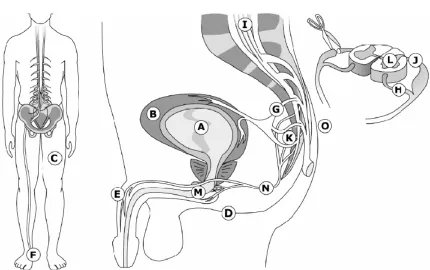
To artificially induce micturition, the detrusor should be stimulated to contract. This induces the reflex loops that cause bladder emptying, while no central control is needed to continue voiding. There are four sites where stimulation results in detrusor contraction: the bladder wall, the pelvic nerves, sacral roots and the spinal cord. Among these options, sacral root stimulation has been the most successful in activating detrusor contraction (Rijkhoff 1997, Gaunt and Prochazka 2006).
2.3 T
REATMENT
Urinary tract dysfunction can result in a number of negative clinical manifestations like renal injury, incontinence and recurrent urinary tract infections. Of these effects, renal injury has the largest negative impact, and therefore the most important aim of treating neurogenic bladders is preservation of renal function. Since elevated detrusor pressure or detrusor overactivity is the most important risk factor for renal dysfunction (Gerridzen 1992), the aim of treatment is to retain a low pressure in the bladder.
Treatment for overactive bladder first consists of pharmacological therapy using anti-muscarinic agents. Since detrusor contraction is largely regulated by muscarinic receptors, blocking these receptors causes less frequent and less forceful detrusor contractions (Rijkhoff 2004). However, pharmacological treatment often has side effects. Moreover, this treatment often has to be combined with clean intermittent catheterization, and a number of studies have revealed that catheterization has a large negative impact on the QoL (Oh 2005, Oh 2006). The study by Oh (2006) also suggests that there is a correlation between the level of independence and depression.
2.4 N
EURAL
P
ROSTHESES
A neural prosthesis is a technology that uses FES of the nervous system to restore function for individuals with neurological or sensory impairment, and consists of either external or implanted devices. By means of the electrical stimulation, the action potentials that normally cause the activation of tissues are simulated. This artificial generation of action potentials is the basis for all neural prostheses.
The first portable neural prosthesis was utilized by Liberson et al. in 1961 to provide hemiplegic patients control over their foot movement (Liberson & Holmquist 1961). Since that time, neural prostheses have been developed for a wide range of applications, like a spinal cord stimulator to treat intractable pain and motor disorders, and auditory nerve stimulator to restore hearing, a deep brain stimulator to treat tremor, a vagal stimulator to treat intractable epilepsy, and a sacral nerve stimulator to control bladder emptying, and over 230,000 have been implanted (Rijkhof 2004).
Neural prostheses are generally very similar in design and purpose. The large difference is whether electrodes are placed on the skin, under the skin or whether they are placed directly around or adjacent to the nerve with implanted leads. Neural prostheses consist of a portable power source, control unit, stimulator, lead wires, electrodes and sensors (Gonzalez 2001), and the electrodes can be placed anywhere along the nerve. A disadvantage of electrical stimulation of nerves is that the sensory fibers are also stimulated, so if sensation is preserved this can result in pain.
Although an implanted neurostimulator most closely resembles reality since it is hardly noticed to be there, most neural prostheses are transcutaneous stimulators with electrodes that are placed on the skin. This kind of neural prosthesis is especially popular because it is non-invasive and relatively cheap compared with other types of neural prostheses. However, since the electrodes are not in close proximity of a neuron, this method is less specific than when an electrode is placed around a neuron, and a relatively high current has to be used which makes it less suitable for daily use (Ragnarsson 2008).
Several studies have been performed to investigate the preferences of persons with SCI regarding restoration of function (Anderson 2004, Snoek 2004, Snoek 2005). Quite surprisingly, these studies revealed that out of a number of possible functions, restoration of bladder and bowel function was even more important than restoration of walking movement. Especially for persons with paraplegia, restoration of bladder function is of high importance.
A wide variety of neural prostheses is being developed at this moment. Methods that are used differ, and can consist of intravesicle stimulation, transcutaneous stimulation, stimulation of peripheral nerves or sacral roots and stimulation of the spinal cord (for an overview, see Gaunt & Prochazka 2006). The technique most commonly used to restore bladder dysfunction is the sacral anterior root stimulator, and implementation is often accompanied with dorsal sacral root rhizotomy. This eliminates neurogenic detrusor overactivity (NDO) and therefore results in an increased bladder capacity (Rijkhoff 2004). Stimulation of the efferent nerves by the NP produces a contraction of both the detrusor and the sphincter muscle. Voiding is possible upon intermittent stimulation, because the striated muscle of the sphincter contracts and relaxes more rapidly than the smooth muscle of the detrusor (Creasey 1993). However, the dorsal rhizotomy results in permanently lost sexual sensation, lost reflex erections and loss of self-induced defecation, which makes that a lot of individuals choose not to have this treatment.
Currently, a number of different neural prosthetic approaches are in development by various research groups and companies. The main difference between these approaches is interface location. Some research groups focus on peripheral stimulation, for instance stimulation of the pudendal nerve (Boggs 2006, Bruns
Figure 2.
Source: Gaunt & Prochazka 2006
The neural prostheses that are currently available for persons with bladder dysfunction are the Finetech-Brindley Bladder system (Finetech Medical, UK), also known as Vocare, and the InterStim Therapy (Medtronic, USA). The Vocare system (see figure 3) induces detrusor contraction by stimulating the sacral anterior nerve roots (S2-S4). Indications include ASIA level A, a suprasacral spinal cord lesion, or intact peripheral bladder innervations. This method of stimulation improves voiding, thereby overcoming the need to use catheters. However, stimulation of these nerves also induces contraction of the external urethral sphincter, which hinders complete voiding. This problem can be overcome by applying intermittent bursts of stimulation, alternated with short periods without stimulation. This pattern of stimulation will cause the detrusor to stay contracted, while the sphincter can get into a state of relaxation (Brindley
usually combined with posterior dorsal rhizotomy (S2-S5) to decrease detrusor and sphincter dyssynergia and lower the risk of autonomic dysreflexia. However, this rhizotomy is also associated with irreversible loss of reflex erection and ejaculation (Creasey 2001). Although about 70% of males using Vocare can have an erection with a different pattern of stimulation (Egon 1998), rhizotomy makes this procedure less appealing to the patients.
Another kind of neural prosthesis, the Interstim Therapy, uses neuromodulation to improve continence. This device uses low frequency stimulation to continuously contract the sphincter, thereby inhibiting detrusor contraction. Because the electrodes are placed extradurally, the procedure to implement this device is less invasive as the Vocare device. Moreover, no rhizotomy has to be performed.
3.1 I
NTRODUCTION
A number of studies revealed that persons with SCI highly prioritize restoration of bladder function (Anderson 2004, Snoek 2004, Snoek 2005). To take this observation to the next level, this study is going to investigate the relative importance of different characteristics to the SCI population in their choice of methods to restore bladder function. The emphasis will be on methods using FES, since these methods, as opposed to mechanical instruments like catheters, are able to actually restore bladder function instead of dealing with the effects.
Since it is not known to developers of neural prostheses to what level the characteristics of a device or accompanying procedure determine the choice of persons with SCI, they might ultimately develop a technique that fails to be implemented successfully, because its characteristics do not correspond to user preferences. This study can make developers aware of user preferences, so they can devise the path of development towards an optimal level.
The analysis was performed in two hospitals in Cleveland, which both have an extensive SCI patient population. These hospitals are the MetroHealth Medical Center and the Louis Stokes VA Medical Center.
3.2 C
HOICE OF
R
ESEARCH
T
OOL
To reveal the user preferences for a given method or technique, a method can be used that originated in market research, but is now widely used to valuate public goods or care plans. There are two ways to investigate user preferences: by means of exploratory or confirmatory research. Exploratory research is performed to discover and get a broader vision, while the goal of confirmatory research is resolution and narrowing of options (McQuarrie 2006, p6).
Another distinction in preferences studies is between market intelligence and research studies. Market research studies are studies bounded in space and time and linked to a specific project, whereas market intelligence is an ongoing activity not bound to a specific project (McQuarrie 2006, p7).
To make sure the most appropriate method is used to reveal user preferences regarding a bladder neural prosthesis, the decision cycle described in McQuarrie (2006, p26) is used. This decision cycle exists of four stages: scanning of the environment, generation of options, selection of an option and evaluation of success. To be able to choose the most appropriate research technique, it has to be determined in what stage of the decision cycle this study will be performed.
With the help of the decision cycle, it has been determined that the goal of this study will be to reveal the weighting of characteristics of bladder neural prostheses, thereby revealing the preferences of the SCI population for this technique. The objective of this study is therefore to rank the importance of characteristics of neural prostheses for persons with SCI regarding the restoration of bladder function, by means of which the most appealing design can be determined.
From table 2.4 in the book of McQuarrie (2006), it becomes clear that there are four possible methods to use in the 'select an option' stage of the decision cycle: secondary research, survey research, choice models and experiments. Secondary research is not an option for this study, since data regarding users preferences for the restoration of bladder function are not available. Of the remaining three options, choice models seem to be the most appropriate method to use in this study, since they are designed to generate a model of how a consumer makes a choice among various product offerings available. This tool therefore seems to be useful in achieving the research objective.
Choice modeling is a form of confirmatory research. This characteristic of choice modeling is another factor that confirms that this method can be used to achieve the research objective, since the objective of this study is to focus the design process towards the product that has the largest chance of success, and this also is the goal of confirmatory research. Because bundles of characteristics of the product are put forward to the user, a more realistic model can be determined than when the user would simply be asked to rank the characteristics, for example in a survey. Moreover, this method of choice modeling has lately gained popularity in health care research, suggesting this method is suitable to investigate user preferences in health care-related issues like restoration of bladder function (Ryan 2004, Ryan 2001).
3.3 C
HOICE
M
ODELING
From the previous section it has become clear that choice modeling is the most appropriate method to achieve the research objective of this study. The assumption made in choice modeling is that any product can be conceptualized as a bundle of characteristics (attributes) that ultimately determine the choice of a potential user to choose for that particular product or to choose an alternative. The strength of this method is that it can identify the complex procedure of making a choice. Clearly, it is difficult for people to thoroughly explain how they weigh and integrate the relative importance of various attributes. In choice modeling, it can be analyzed what consumers do in a carefully constructed situation, rather than what they say. There are several choice modeling techniques, but the common characteristic is that they all provide a model of the importance of each attribute in the decision of a (potential) user.
Three methods of choice modeling are conjoint analysis, direct weighting of attribute importance, and analytic hierarchy process (AHP) (McQuarrie 2006, Mulye 1998). In a conjoint analysis, products are presented as bundles of characteristics and the analysis decomposes the resulting judgments into estimated individual-level part worth utilities for the individual attributes (McQuarrie 2006, p155). The bundles consist of both real as well as hypothetical profiles (Gustafsson . 2001, p7). The principal value of conjoint analysis is to indicate the trend in preferences of consumers for competing products (Mulye 1998).
AHP is a technique that can be described in three steps: In the first step, the hierarchy is structured by decomposing the problem into levels of criteria, subcriteria, and options under consideration. In step two, pairwise comparisons are put forward to determine priorities. In the last step, the weights are determined by multiplying the priority of the lower-level criteria with the higher-level criteria. In this way, the alternatives can be ranked. This method has been mostly used to improve the quality of a decision by getting accurate judgments from the decision makers, by providing feedback on how consistent their decisions are (Mulye 1998). AHP can only be administered on a computer, since part of the method is to provide direct feedback to the respondent about the consistency of judgment.
Of the three methods discussed in this section, conjoint analysis is the most suitable for this study, because the aim of the study is to reveal trends in preferences for bladder neural prostheses. Moreover, direct weighting cannot be used, because potential respondents from the target group of persons with SCI might not be familiar with bladder neural prostheses. Also, AHP is not suitable for two reasons: The goal is not to provide feedback on consistency of decision making, and the questionnaire will be performed at multiple sites with an option for respondents to take the survey home, and therefore has to be in the mode of a paper and pencil survey.
3.4 C
ONJOINT
A
NALYSIS
Conjoint analysis is also known as discrete choice experiments or choice format stated preference survey. There are several possibilities to present the stimuli, including using a point scale for every individual characteristic (rating), ranking the order of combinations or let test persons choose between two combinations. The main types of conjoint techniques are:
The respondent receives cards with all different combinations of attributes. After sorting these cards, the respondent rates each card on a scale of 0-100 (Green 2001).
The respondent first rates the levels on a 0 to 100 scale, and then rates the attributes on an importance scale (Green 2001).
This method uses full product profiles, of which pairs are shown to the respondent. The respondent then has to rank the profiles (Carmone and Schaffer 1995).
This method combines the compositional technique with a method that uses combinations of attributes (Gustafsson 2001, p15). This technique asks the respondent to perform two tasks: a task using compositional technique and an evaluation of a subset of the full-profile tasks (Green
1981).
This method is viewed as a modern, computer-aided form of the two-factor method. Questions asked are adapted to the previous answers of respondents (Gustafsson 2001, p15). Each respondent first performs a self-explications task and then evaluates some combinations that consist of two to three attributes (partial product profiles), two at a time (Johnson 1987).
A study by Hartmann and Sattler (2002), investigating the use of conjoint analysis in Germany, Austria and Switzerland revealed that CBC is the most used method (47%), followed by ACA (34%) and CVA (20%). For this study, a type of conjoint analysis that uses ranking of attributes is preferred, because studies have revealed that ranking of attributes outperforms methods that use rating of attributes on the criterion of predictive validity (Mulye 1998). To simulate the situations in which people make decisions about neural prostheses to an as realistic extend as possible, and because researchers have suggested that a ranking procedure might be more reliable than the rating scale in conjoint method, a CBC will be used in this study. Because the analysis is performed at different locations and by different persons, it will be provided as a paper and pencil survey.
Devising a conjoint analysis involves seven steps. Different authors give differing interpretations to the 7-steps flow model that was first put forward by Green and Srinivasan in 1978. The 7-steps described here are a combination of the steps proposed by Gustafsson (2001) and McQuarrie (2006).
In the first step, the characteristics that influence the users choice have to be identified. Experts recommend using no more than 6 attributes for a conjoint analysis (Green and Srinivasan 1990, Hartmann and Sattler 2002). This limit is set to prevent to overload a respondent with too many questions, thereby increasing the chance that the respondent will start using simplified decision rules, resulting in a distortion of their preference profile.
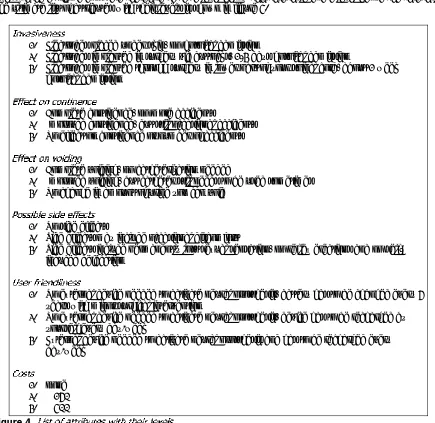
For this study, the most important characteristics of neural prostheses to the users have been determined by literature research, careful consideration with specialists in the field of SCI and rehabilitation, researchers operating in the field of neural prostheses and persons with SCI. The attributes chosen are:
Invasiveness
Invasiveness has been chosen because a surgical intervention or interface location might affect the willingness of patients to be treated. Since a positive outcome is the main determinant to be treated, effect on continence and effect on voiding have been included in the survey. These attributes have been separated, because the different treatments affect these outcomes differently. The attribute side effects has been chosen to be able to compare a treatment with rhizotomy to other treatment options. User friendliness has been chosen because the treatments differ in the level of independence the patients will have after the treatment. For instance, for some neural prostheses communication with an external device is needed to activate the neural prosthesis, while for others the patient can just push a button to activate the device. The costs attribute will function as a method to analyze willingness to pay, and has been defined as out of pocket costs, so the amount patients have to pay for the treatment additional to reimbursements from health insurance.
To keep the analysis unbiased, the number of levels for each attribute should ideally be the same, since it has been shown that when an attribute has more levels it becomes more important (Wittink 1991). Since the devices of interest only provide two levels for invasiveness stimulation of pudendal nerve or sacral roots while other attributes all have three levels, the level of subcutaneous electrodes is added to the attribute invasiveness.
The levels of costs have been determined by asking persons with SCI how much they would be willing to pay extra for treatment with a neural prosthesis, knowing that there is a prosthetic solution that will be fully covered by insurance, but has a high level of invasiveness and might not have an optimal outcome. This approach has been chosen because it is realistic that health insurance will cover a standard treatment with a neural prosthesis. The outcome of this approach was that persons were willing to pay about $250 out of pocket for a treatment that is not fully covered by health insurance. To measure the willingness to pay, the levels of the attribute costs are therefore set at a level below this threshold and a level above the threshold. The ultimate list of attributes with their levels is shown in figure 4.
1. Electrodes placed under skin, no hospital admission
2. Electrodes implanted in surgery via buttocks, 1-3 days hospital admission
3. Electrodes implanted through surgery in lower part of your spinal cord, about 1 week hospital admission
1. Complete continence, no more accidents
2. Improved continence, but still occasional accidents 3. No effect on continence or number of accidents
1. Complete voiding, no catheterization needed
2. Improved voiding, but catheter still needs to be used sometimes 3. No change in amount of urine you can void
1. No side effects
2. Side effects may include occasional discomfort
3. Side effects include permanently lost sexual sensation, no reflex erections and no self-induced defecation
1. No external device needed to activate neural prosthesis, battery has to be changed every 5 years with minor surgical intervention
2. No external device needed to activate neural prosthesis, device has to be recharged by yourself every day/week
3. External device needed to activate neural prosthesis and has to be recharged every day/week
1. none 2. $ 150 3. $ 400
The third step is to make different combinations with all attributes. To keep the number of combinations, and therefore the number of questions in the questionnaire within a reasonable range, while still ensuring efficient statistical estimation, it is possible that a reduced design needs to be used.
For this study, SSI web by Sawtooth Software is used to set up the survey. This software is especially designed to create conjoint analyses, and also has the option to create a CBC. It creates the optimal design for the survey using a fractional factorial design, so therefore it is not necessary to perform reduced design processing.
3.4.3.1 FIXED SCENARIOS
Additional to the random scenarios with hypothetical profiles created by the software, some fixed scenarios, also called holdout scenarios, are added to the random scenarios created by the survey. Fixed scenarios can be useful in conjoint analysis because:
They provide a proximal indication of validity, measured by the utilities ability to predict choices not used in their estimation
They provide a check on the scaling of utilities. If the most popular concepts are overpredicted, then the scale parameter should be reduced. If the predictions are too flat, then the scale parameter should be increased.
They permit identification and removal of inconsistent respondents
They can be used for testing specific product configurations under consideration. Much value can be added by direct measurement of these concepts
They can be used for testing the accuracy of market simulators. They aid considerably in comparing alternative models (logit, latent class, ICE, or HB) and choice simulation strategies.
If holdout concepts have been defined with differing degrees of product similarity, they can be used for tuning the appropriate correction for product similarity in Randomized First Choice modeling Three fixed scenarios (scenario #5, #10 and #15) are added to compare the preferences for three kinds of non-hypothetical neural prostheses: a sacral root stimulator combined with rhizotomy, a sacral root stimulator with an alternative for rhizotomy, and a pudendal nerve stimulator. So these scenarios will be used to test the product configurations under consideration and function as an indication of validity, thereby making the survey design more efficient.
3.4.3.2 CREATING AN EFFICIENT CBC
Other important criteria for designing an efficient CBC implemented in the software are level balance, orthogonality, minimal overlap, and utility balance (Huber & Zwerina 1996). Level balance is the requirement that the levels of an attribute occur with equal frequency. Orthogonality is satisfied when the joint occurrence of any two levels of different attributes appear in profiles with frequencies equal to the product of their marginal frequencies. However, this criterion can conflict the criterion of level balance, thereby complicating the process of setting up an efficient design, as with this study. Two characteristics of this study design made that the level balance and orthogonality became conflicting: the limited number of questions in order not to overload the subjects, and the limited use of different versions, because the survey will be provided by paper and pencil. The design of this study consists of 14 random scenarios and two versions, so a total of 28 scenarios with two profiles each. Since every attribute has 3 levels, all levels should occur exactly one-third of the cases, but with 56 profiles this is not possible.
On the other hand, according to the orthogonality criterion a certain combination of two criteria must occur in one-ninth of cases. However, the 28 scenarios of this study do not provide an exact one-ninth percentage. So neither perfect level balance nor perfect orthogonality is proceeded in this study. This goal could be reached by increasing the number of random scenarios to 18, but with the four fixed scenarios this would result in over 20 questions, which would make the survey too long. However, because both the level balance and orthogonality criterion are only off by one scenario or profile, nearly perfect level balance and orthogonality are reached with this number of questions. Additionally, Kuhfeld (1994) state that orthogonality should not be the main goal of design creation, and the more a design tends towards balance and orthogonality, the more efficient the design is.
Minimal level overlap means that the probability that an attribute level repeats itself in each choice set should be as small as possible, and should be taken into account since profiles with the same levels for different attributes do not provide much information. Utility balance means that there should be a balance in the most favorable and least favorable levels of a profile, thereby not exclusively favoring one profile over another. These four aspects mentioned in the article by Huber and Zwerina (1996) are taken into account when designing the survey using SSI web.
In step four, the method in which the stimuli are presented has to be determined, as well as the characteristics of the sample of the population that is going to be tested. It is important to make sure that the sample is sufficiently-sized and represents the whole population of interest. This will reduce the sample error.
An aspect that determines sample size is the total population of interest. According to the National Spinal Cord Injury Statistical Center (2008) 225,000 to 296,000 persons in the United States have SCI, with an average of 253,000 and an incidence of approximately 40 cases per million each year. Although this information reveals that the estimation of the number of persons with SCI is not very accurate, the fact that the population is larger than 5,000 individuals indicates that in calculating the sample it can be presumed that the population is infinite (Orme 1998).
For CBC, a rule of thumb can be used to calculate the sample size. This rule makes use of the knowledge that choices are discrete 0/1 data, and rules for computing confidence intervals for proportions are well defined. Also, there is a balance between letting a large number of respondents answer a small number of questions, and letting a small number of respondents answer a large number of questions. It has been shown that as long as enough respondents are included to represent the population adequately, doubling the number of tasks they complete is about as good as doubling the sample size in terms of reducing error (Johnson & Orme, 1996). This said, the following rule should be used to calculate the sample size, assuming the population is infinite:
Where: n= number of respondents t = number of tasks
a = number of alternatives per task (not including the 'none') c = number of analysis cells
C is equal to the largest number of levels for any attribute when only the main-effects are considered. However, when two-way interactions between variables are also investigated, c is equal to the largest product of levels of any two attributes (Orme 1998). Since this study aims at getting a first impression of the market, only the main-effects will be investigated. Therefore the calculation of sample size for this study will be:
t = 14 a = 2 c = 3
This sample size is consistent with the guideline put forward in the article by Orme (1998) that for investigational work and developing hypotheses about a market, between 30-60 respondents will do. The first sample of 20 respondents indicates that about 25% of the subjects has a dominant preference not to have a neural prosthesis, and 5% does not pass either consistency test. Since the focus of the research will be on persons that are willing to have a neural prosthesis, the sample size is increased by 30% and a safety factor of 15%, making the total sample size 79.
3.4.4.1 SAMPLINGMETHODS
There are different sampling methods, which are either classified as probability or nonprobability sampling (McQuarrie 2006, p95). In probability sampling, each test subject has a known non-zero chance of being selected, while in nonprobability sampling test subjects are selected in a non-random manner. The largest difference between these two classes of sampling methods is that the sampling error can be calculated in probability sampling, whereas the sampling error remains unknown in nonprobability sampling. In figure 5 an overview of all sampling methods can be found.
Probability samples
This is the purest form of probability sampling. Each member of the population has an equal and known chance of being selected.
This method is also called the Nth name selection technique. After calculation of the required sample size, every Nth record is selected from a list of population members.
This technique reduces sampling error. A stratum is a subset of the population that share at least one common characteristic. Relevant stratums are identified after which random sampling is used to select a sufficient number of subjects from each stratum. Often used when one or more of the stratums in the population have a low incidence relative to the other stratums
Nonprobability sampling
This method is generally used when there is an interest in an approximation of the truth, since the test subjects are chosen because that sample is convenient.
As the name implies, this method is based on judgement, for example the entire sample from one
reprisentative city.
This method is the nonprobability equivalent of stratified sampling. Stratums are identified, after which convenience or judgement sampling is used.
This special nonprobability method is used when the desired sample characteristic is rare. It relies on referrals from initial subjects to generate additional subjects. However, this method of sampling introduces bias.
The sampling error in probability sampling can be reduced by simply increasing sample size, while the sampling error in nonprobability sampling can only be reduced to a certain point (Orme 1998). Although it is generally desired to reduce the sampling error as much as possible, and therefore use probability sampling, this study aims to reveal only an approximation of user preferences. Because test subjects will be approached by physicians or nurses when they are in the hospital for an appointment, a convenience sampling method will be used.
Before participating in the survey, it has to be made sure that the patient understands the intention of the survey. The understanding of the patient will be established by means of an interview and by letting the patient fill out the example scenario, since all levels in this scenario favor the choice of the second alternative. If the interview or example indicates the subject does not understand the survey, this person does not have to fill out the survey. Another important aspect is that personal data have to be protected. Because of this, the patient has to sign an informed consent and authorization form set up according to HIPAA rules, which can be found in appendix 2 and 3.
In step five, it has to be decided what kind of rating or judgment procedure will be applied. Since it has been decided in step 4 that a CBC will be used for this study, this implies that respondents are asked to choose between a certain number of different profiles. To keep the survey comprehensive for respondents, they will be asked to make a choice between two alternatives. To maximize the information obtained with this survey, the respondents will then be asked to choose between the preferred treatment, or no treatment at all (Marshall 2007). This method is also referred to as the dual-response none method, and is an indicator for the overall preference for the product category under research (Oppewal & Timmermans 1993). The software used to create the survey also has the option to set prohibited pairs, and this function is used to create the prohibited pair no effect on continence or number of accidents and no change in the amount of urine you can void. This combination is prohibited, because it would not make sense for persons undergoing surgical procedures or paying for a procedure while there is no effect on either continence or voiding, thereby making the other scenario the most probabilistic to be chosen. This would give overrated part worth utilities to the attributes effect on continence and effect on voiding, thereby biasing the results.
Using the Sawtooth Software, two versions of the survey are created to minimize order effects. The survey contains 18 scenarios: 14 random scenarios, 3 scenarios comparing three kinds of neural prostheses that are currently available or in the design process, and 1 additional scenario to check for consistency. Additionally, some demographic questions are asked to be able to determine possible subgroups. The survey can be found in appendix 1.
After execution of the questionnaire, there are two more following steps. First, a statistical analysis has to be applied to determine utility weights for each individual attribute. This analysis will relate differences in expressed preferences of combinations of attributes back to the relative importance of a single characteristic. This analysis will also reveal nonlinear preferences, which reflect the situation in which the preference for that characteristic is greatest at its middle level.
3.4.6.1 HIERARCHICAL BAYES
Individual utility weights will be calculated using Hierarchical Bayes. The Bayesian analysis provides estimates of individual part worths using data from other respondents and the principle of conditional probability.
The dual-response none option is analyzed as an independent choice task in the Hierarchical Bayes. This indicates that first the choice task without the none-option is analyzed, followed by the same choice task with a none option. Failure to pick the none alternative in the second stage results in a redundant task. In this way, both the preference of the respondent for a certain option and the preference to actually acquire the product are revealed.
3.4.6.2 THELOGIT MODEL
The average utilities will be analyzed using the logit model, which is based on the discrete choice model. This model considers choices to be discrete, involving an either-or situation. The choice the individual ultimately makes depends on the characteristics of the choices, their relative importance, and personal preferences. There are different types of discrete choice models: the linear probability model, the probit statistical model and the logit model. The linear probability model however, has the flaw that the calculated probability is not always in the [0,1] interval. The probit statistical model and logit model both overcome this problem, and give approximately the same results. The logit model differs from the probit model only in the cumulative distribution function that is used to define choice probabilities (Griffiths 1993, p751). Of these models the logit model is somewhat easier to use because it does not involve an integral, whereas the probit statistical model does. So for this study, the logit model will be used to analyze the data obtained by the conjoint analysis.
For the logit model, the choice r p obab li y is giv n by:i t e
Where is the probability index, is utility index, is the difference in characteristics between two options, is the relative importance for each characteristic, and (.) is the cumulative distribution of a logistic random variable, given by
The average part worth utilities will be determined using the SMRT program of Sawtooth Software. This program is especially designed to analyze conjoint data, using a simulator regression model based on aggregate-level logit. This logit will allow calculation of the predicted choice probabilities for any assumed neural prosthesis. Subjects with a dominant preference not to have a neural prosthesis will be analyzed separately.
Following the analysis, the preferences for every attribute will be visualized by plotting on a scale from 0 to 1, like in the study by Marshall (2007). This will provide a graph for each attribute, in which the slope of the graph reflects the relative importance of each attribute.
The model used for the ana ysisl is based on the fo wing sump on: llo as ti
Where = the probability to choose for a neural prosthesis = Invasiveness = the part worth utility of each attribute
= Effect continence = Effect voiding = Side effects = User friendliness = Costs
3.4.6.3 INDEPENDENCE FROM IRRELEVANT ALTERNATIVES
The aggregate logit model used in this analysis is affected by Independence from Irrelevant Alternatives (IIA), also known as the Red-Bus/Blue-Bus problem. The basic idea of IIA is that the ratio of any two products shares should be independent of all other products. However, in the real world, products compete unequally with one another, and when an existing product is improved, it usually gains most from a subset of products with which it competes most directly.
The example mostly used to explain this problem is a transportation market with two products: cars and red busses, which each have a market share of 50%. Now a second bus is added, which has the color blue. The share of preference model would predict that the blue bus would take share equally from the car and red bus, so that the total bus share would become 67%. But its more reasonable to expect that the blue bus would take share mostly from the red bus, and that the total bus share would remain close to 50%.
Although a model affected by IIA does not reflect realistic situations when there is no full independency across choice sets, the logit model can give a good estimation of the part worth utilities, if the condition is met that the alternatives are independent across choice sets (Louviere & Woodworth 1983). Moreover, some degree of IIA is proven useful in market simulations, because human decisions are not always completely rational. Also, there are several market simulation methods that help deal with IIA.
Although the levels used in this analysis are thought to be independent, no previous research has been performed on this topic and therefore no proof of level independence exists. Even if a model with correction for product similarity is used, it is not known what levels are dependent. Therefore, preferably a model is used for the analysis that is immune to IIA.
3.4.6.4 MARKETSIMULATOR MODELS
The software offers 5 different models based on an aggregate logit model that can be used as a market simulator tool:
First Choice
Share of Preference
Share of Preference with Correction for Similarity Purchase Likelihood
Randomized First Choice
The model assumes that respondents choose the product with the highest overall utility, and is immune to IIA difficulties. However, this model requires individual-level utilities, and is therefore not suited to use in this study.
The model uses exponentiated product utilities, and the shares are normalized to sum to 100%. A weakness of this model however, is that it is subject to IIA. Especially with CBC under aggregate logit, the IIA problem is intensified.
The model estimates the stated purchase likelihood for specified products independently on a scale from 0 to 100. Before applying this model, the utilities have to be rescaled by means of calibration concepts. Purchase Likelihood model are only as accurate as respondents' ability to predict their own purchase likelihoods for conjoint profiles. Experience has shown that respondents on average exaggerate their own purchase likelihood.
The method combines elements of the first choice and share of preference models. The randomized first choice model adds unique random error to the part worth utilities and computes shares of choice in the same manner as the first choice method. Each respondent is then sampled many times to stabilize the share estimates. This method can be made immune to IIA.
4.1 S
URVEY
C
OMPLETION
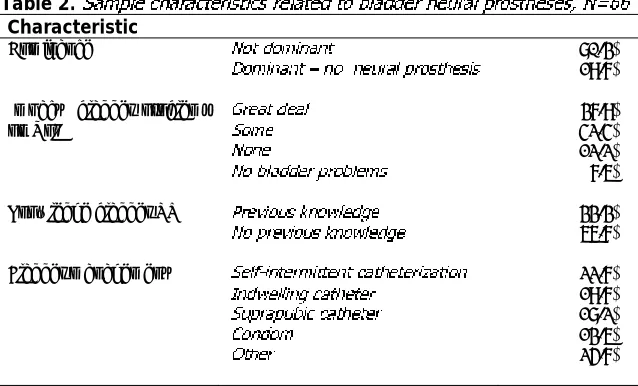
The time needed to complete the survey was about 40 minutes. Of the 90 persons asked to participate, 10% refused participation. 19 persons took the survey home, and 8 surveys (42.1%) were returned by mail. Of all filled-out surveys, 2 (2.9%) were inconsistent and 2 (2.9%) incomplete. These surveys were not used for analysis of the data. Characteristics of the sample used for data analysis are shown in table 1 and 2.
Table 2.
4.2 A
VERAGE
I
MPORTANCE
A
TTRIBUTES
Using the data of the conjoint analysis, the relative importance of each individual attribute can be determined, and described in the following equation:
In table 3 the relative importances of each individual attribute are shown for three different groups: all respondents, not-dominant respondents, and dominant respondents. The importances indicated that the order of importance of the characteristics was different for the dominant and not-dominant respondents. Since this study focuses on persons that would like to have a neural prosthesis, all other analyses are done for the not-dominant respondents. For this group of respondents, the equation would be:
As can be seen in table 3, only the attribute costs did not have a statistically significant influence on the
choice for a specific design of neural prosthesis for the persons that would like to have a neural prosthesis.
4.3 R
ELATIVE
P
REFERENCE
L
EVELS
Based on the graphs in figure 6, it seemed that side effects had a major impact on the decision process, and the effect on continence seemed to be the second most important attribute. The results will now be discussed for each attribute:
Invasiveness: People prefered not to have sacral root access, but the difference in impact between subcutaneous and pudendal nerve stimulation is less pronounced.
Effect on continence and effect on voiding: There was a linear relation in the importance for both
effect on continence and effect on voiding, and the difference between the highest and lowest level of the attribute effect on continence was larger. Also, the most positive level of effect on continence and
effect on voiding did not indicate a difference with the intermediate level of side effects.
Side effects: The attribute side effects had the largest importance of all attributes. However, respondents did not seem to distinguish between the levels no side effects and occasional discomfort.
User Friendliness: The impact of this attribute mainly was the result of the impact of having to use an external device to recharge the neural prosthesis. There was no distinction between self-recharge and battery change every 5 years.
Costs:For this attribute, the intermediate level of $150 was the least preferred. But in general it seemed that respondents did not make relevant distinctions between the levels of the costs.
4.4 P
OSSIBLE
S
UBGROUPS
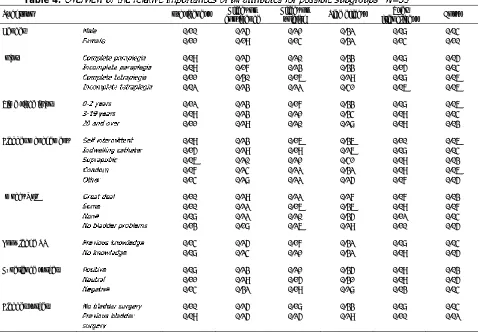
Table 4 gives an overview of the relative importance of all attributes for possible subgroups. The differences for every subgroup were:
Gender:For females, the user friendliness and costs were more important than for males.
Injury: For persons with incomplete paraplegia, the effect on voiding was more important than the effect on continence. For persons with complete tetraplegia, the effect on continence was the most important attribute. For persons with incomplete tetraplegia, side effects had a major impact on their decision for a neural prosthesis, whereas the invasiveness hardly had any impact.
Time since injury: There did not seem to be any relevant differences between the subgroups
Bladder management: For persons that use an indwelling catheter, the effect on continence was more important than the side effects. For the persons who use self-intermittent catheterization, a suprapubic catheter or a condom, the side effects generally seemed to have a larger impact than for persons that use an indwelling catheter or another bladder management method.
Impact bladder function on QoL: For the persons who stated that their bladder problems had a large influence on their QoL, the effect on continence was the most important attribute, while for the other subgroups, side effects were the most important.
Knowledge of bladder neural prostheses: There were not any relevant differences between the subgroups.
Experience surgery: The more negative the experience with surgery, the more important the attributes
effect on continence and invasiveness became, whereas the side effects became less important. For the persons that had a negative experience with surgery, the effect on continence was more important than the side effects.
Table 4.
Subgroup Invasiveness continence Effect on Effect on voiding Side effects friendliness User Costs
Gender 0.10 0.25 0.21 0.32 0.08 0.04
Bladder management 0.09 0.23 0.16 0.36 0.10 0.06
0.15 0.29 0.19 0.26 0.08 0.04
Experience surgery 0.08 0.23 0.21 0.35 0.09 0.03
0.11 0.29 0.15 0.31 0.09 0.05 willingness to pay could not be determined.
4.6 D
IRECT
C
OMPARISON
The outcome of the direct comparison was based on the choices respondents made for the fixed scenarios. Here, three existing designs for neural prostheses were compared in three choice sets, resulting in a ranking of those three designs. Of the 53 respondents 5.6% did not have a logical order in their ranking.
Table 5
Order Percentage
39.6 17.0 17.0 9.3 5.7 5.7 5.7
Table 6.
*
4.7 O
UTCOME
D
IRECT
C
OMPARISON
& V
ALIDITY
The overall outcome of the direct comparison for all respondents equaled the outcome of the conjoint analysis. According to both methods, the rhizotomy-free Vocare would be the most preferred option, followed by the pudendal nerve based afferent stimulation.
5.1 O
VERVIEW
A number of studies have revealed that restoration of bladder function would be highly appreciated by persons with SCI, but until now there have not been studies examining user preferences for bladder neural prostheses. In this study, we have investigated the relative importances of a number of attributes of bladder neural prostheses to the SCI population, being invasiveness, effect on continence, effect on voiding, side effects, user friendliness and costs. The focus of this study was on persons that want to have neural prosthesis, since that group determines clinical successfulness.
5.2 S
AMPLE VS
. N
ATIONAL
SCI P
OPULATION
According to the most recent figures of the National Spinal Cord Injury Statistical Center (2008), the sample used for this study matched the total population of persons with SCI in the sense that the largest group of respondents had incomplete tetraplegia, followed by a group of persons with complete paraplegia. Also, the largest ethnic group in both the sample and the national population is Caucasian, followed by African Americans and Hispanics, and the average age at injury of this sample was similar to that of the national population (36.6±1.6 vs. 39.5 years).
Characteristics of the sample that did not match the national SCI population were the percentage of women in the sample, which was lower than in the total population (10.6% vs. 22.2%). Since one study site was a Veterans Administration Medical Center, it was not unexpected that the study sample would include a higher percentage of males compared to the national average.
5.3 A
VERAGE
I
MPORTANCE
A
TTRIBUTES
The results of the average importances of all attributes revealed that the attribute side effects has the highest relative importance, followed by effect on continence and effect on voiding.
Of all attributes, the attribute costs was the only attribute that did not have a statistically significant impact on the choice for a neural prosthesis design. An explanation could be that the levels for costs were not set correctly. To be able to set the levels for the attribute costs, a small sample of persons with SCI were informed about the option to restore bladder function with a neural prosthesis, and then asked how much they would be willing to pay for such a device. That small sample might have been biased, or people might not have had enough information about the technique to completely realize what the benefits could be, thereby underestimating the willingness to pay.
5.4 R
ELATIVE
P
REFERENCE
L
EVELS
The fact that all attributes had a negative correlation implies that the assumed set up of the levels from most positive to most negative was as experienced by respondents.
The attribute invasiveness had a low relative importance. However, there was a higher preference for the most positive level of invasiveness than the intermediate level of the characteristic effect on continence
For the attributes effect on continence and effect on voiding, the effect on continence had a larger relative importance than the effect on voiding. This implies that persons with SCI have more problems with incontinence, than with using a catheter. That the difference between no effect on continence and
improved continence was larger than that between improved continence and complete continence
implies that respondents highly appreciate even a minor positive effect on continence. The fact that there did not seem to be a difference between complete continence or complete voiding and minor side effects, reveals that respondents are willing to put up with minor side effects, as long as the effect on bladder function is profound.
The graphs comparing the relative preferences for all levels of each attribute clearly showed that the attribute side effects had the largest difference between the most positive and most negative level, and therefore the highest relative importance. This effect seemed to be caused mainly by the side effects due to rhizotomy, while there was no relevant difference between the preferences for the levels no side effects or
occasional discomfort. This reveals that for most respondents rhizotomy is out of the question, but they are willing to put up with minor side effects. The large negative impact of the side effects due to rhizotomy implies that these side effects have a large negative impact on the clinical implementation of the Vocare device.
The relative importance of the attribute user friendliness was low, and the most positive and intermediate level were not different, which implies that respondents do not mind if they have to recharge the neural prosthesis themselves. However, the preference for the remaining level was significantly lower, indicating that respondents rather not use an external device to operate the neural prosthesis.
For the costs, the intermediate level of $150 seemed to be less beneficial than the level of $400. This is probably caused by an underestimation of the willingness to pay when the levels were set, as mentioned before. This could cause this attribute to have such a low relative importance that there is no significant difference between the levels. Because there is no difference in the levels for costs, the willingness to pay could not be determined.
5.5 D
IRECT
C
OMPARISON
5.6 S
UBGROUPS
Although the sample size used did not allow for statistical analysis on subgroups, some trends were found in the data.
For females the user friendliness and costs seemed to be more important than for males. However, since there were only six females that participated in the survey, the sample for females might be biased. Another remarkable outcome of the comparison of males and females is that, in contrast with what might be expected, the side effects are equally important for both groups. This implies that rhizotomy does not only matter to males, but also to females.
For persons with incomplete paraplegia the effect on voiding was more important than the effect on continence. For persons with complete tetraplegia the effect on continence was the most important attribute. For persons with incomplete tetraplegia the side effects had a major impact on their decision for a neural prosthesis, whereas the invasiveness hardly had any impact. Although there did not seem to be any relevant differences between persons with paraplegia and tetraplegia, there seemed to be a trend that the effect on voiding was more important to persons with an incomplete lesion than to persons with a complete lesion.
Whereas it could be expected that persons who just recently got their injury could have other preferences than persons that had their injury for a longer period of time, the outcome of this survey did not reveal distinctive differences between these two groups. However, there seemed to be an effect of the time since injury on whether persons would like to have a neural prosthesis or not (see discussion about dominance, p41).
For persons who use an indwelling catheter, the effect on continence was more important than the side effects. This could indicate that this group of persons with SCI is more troubled with their current bladder management