,
Development and economic analysis of Agro Processing
Centre in production catchment of Vidarbha region
P.A. Borkar R.P. Murumkar M.R. Rajput P.K. Rathod
Research Engineer Asstt. Research Engineer Sr. Research Asstt. Asstt. Entomologist
All India Coordinated Research Project on Post Harvest Technology, Dr. Panjabrao Deshmukh Krishi Vidyapeeth, Akola (M.S.) – 444 104
ABSTRACT
A survey was undertaken of village Kokardaand nearby villages in Vidarbha region of
Maharashtra with respect to agriculture production, population and existing processing machines
available in Kokarda. Based on survey a potential was assessed andAgro Processing Centre has
been developedvillage Kokarda, Dist. Amravati (M.S.) consisting of PKV Mini dal mill, flour
mill, PDKV Cleaner-grader and pulverizer under the technical guidance of All India Coordinated
Research Project on Post Harvest Technology, Dr. Panjabrao Deshmukh Krishi Vidyapeeth,
(Agricultural University), Akola. The entrepreneur processed 8 q food grains through cleaner
grader, 315 q pulses through dal mill, 72 q cereals (wheat, sorghum) through flour mill and 80 kg
spices through pulverizer during year 2013-14 and some part of 2014-15. The entrepreneur
earned an amount of Rs 1,32,560/- as a profit within six months beside providing employment to
three persons with an investment of Rs 99,000/- on machines.
Key words: Agriculture production, Agro Processing Centre, Entrepreneur
Introduction
Agro-Processing Centre is an establishment, where required facilities for processing,
storage, drying of cereals, pulses, oilseeds, spices, fruits and vegetables are available. Processed
and packed food products are prepared and marketed with specific brand name (Kumar and
Ilyas, 2003). Entrepreneurship is the ability to take the factors of production (land, labour and
capital) and use them to produce new goods and services (Stoner et al, 1995). The
entrepreneurship of APC may be of an individual, community, cooperative orvoluntary
organization. The APC creates additional value to a product so as to increase marketability of
surplus produce available in the village, cluster of villages or surrounding locality. The
agro-processing centers play a key role in providing post harvest infrastructure at rural level for value
addition of crop produced by farmers. It is an enterprise where the required facilities for primary
and secondary processing of agricultural produce e.g. cereals, pulses, oilseeds etc. are made
available. In it, agro-based value added products are made at village level itself which may be
sold to nearby markets. The post harvest losses may be reduced and value addition may be done
at rural / farm level itself. So, it is a mean of providing income and employment to rural people /
entrepreneurs through agro-based processing activities of various locally available agricultural
produce.
To create more employment opportunities in rural areas and to prevent wastages of raw
materials like pulses, cereals, oilseeds, fruits and vegetables, the development of agro processing
centres in production zone can play an important role for the economic growth of the state
concerned in particular and the nation in general. Post harvest processing is one of the necessary
steps in conversion, value addition and prevention of loss of agricultural produce. It is essential
operation being carried out prior to consumption of agro produce. Most of the post harvest
processing operations are performed at urban side resulting into increased cost of transportation
and storage requirement besides loss of some important by-products and post harvest losses.
Primary or secondary processing of agricultural produce at village level will help to reduce the
cost of processed material, giving additional income source to the entrepreneur.
On this basis an agro processing centre has been establishedat Kokarda, Dist. Amravati.
Material and methods
Survey
The benchmark survey of village Kokarda was conducted to see the feasibility of
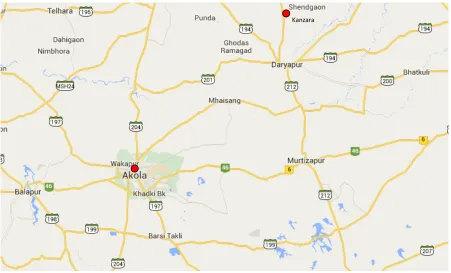
establishing Agro-Processing Centre in this village. The village Kokarda is situated at a distance
of 20 km from Anjangaon Surji and 65 km away from Akola city (Fig. 1). The village fall in
Anjangaon block of the Amravati district. The village is fully electrified. The purpose of the
survey was to assess the information regarding resources, demand for consumption, potential for
processing the produce and scope for introduction of the processing technologies for processing
the local agricultural produce into value added products. Based on the survey, the equipments,
technologies and processes were identified.
Economic analysis of processing equipments
The different economic parameters of processing machines such break even point, pay
back period and return on investment were calculated.
1. Input parameters
The following data was used for the calculation of economic parameters.
Cost of machine (Rs.); Useful life of the machine (years); Salvage value (% of cost of machine);
Interest rate per annum (%); Cost of housing or rent (Rs/month); Number of skilled workers;
Wages of skilled workers (Rs/day); Number of unskilled workers; Wages of unskilled workers
(Rs/day); Operating hours per day; Motor hp; Fuel consumption (litre/h); Fuel cost (Rs/litre);
Capacity of machine (kg/h); Operating days of machine per year; Custom rate for material
(Rs/kg); Raw material rate for material (Rs/kg); Main produce recovery (%); Main produce price
(Rs/kg); By-product recovery (%); By-product price (Rs/kg); Custom hiring (%); and Self
procurement & sale (%)
2. Calculation of
(i) Annual sales revenue
(ii) Depreciation per year
(iii) Interest per year
(iv) Housing or rent per year
(v) Maintenance per year
(vi) Annual fixed cost (Rs/year)
(vii) Wages (Rs/year)
(viii) Material cost (Rs/year)
(ix) Electricity/fuel cost
(x) Calculation for grease, lubricants, breakdown, repair etc.
(xi) Annual variable cost
(xii) Hourly variable cost
(xiii) Total annual cost
(xiv) Annual net profits
3. Output parameters
(i) Quantity handled (kg/year)
(ii) Return on investment
10. Results and Discussion
The cropwise production of Kokarda and nearby villages is shown in Table 1. Pigeonpea,
soybean, green gram, black gram, chickpea and cotton are the major crops grown. At present the
farmers use to sell the farm produce either to the commission agent or APMC or to the local
market of Anjangaon Surji.
Table 1. Cropwise production in Kokarda and nearby villages
Crops Kokard
a
Deulgao
n
Bramhanwad
a
Sayadgao
n
Bombada Lakhanwa
di
Pigeon pea (q) 700 670 460 150 500 1500
Wheat (q) 600 - - - - -
Green gram
(q)
240 180 120 54 342 294
Black gram 420 280 294 154 602 539
Chickpea 450 450 450 150 300 3000
Cotton 750 285 150 75 450 750
Soybean (q) 2660 1400 800 600 2200 4000
Crops Kotegaon Rampura Narayanpur Total
Pigeon pea (q) 700 400 400 5480
Wheat (q) - - - 600
Green gram (q) 114 180 288 1812
Black gram 539 140 308 3276
Chickpea 600 240 150 5790
Cotton 900 300 450 4110
Soybean 3000 800 2600 18060
Table 2. Population of Kokarda and nearby villages
Kokarda Deulgaon Bramhanwada Sayadgaon Bombada Lakhanwadi
3100 495 590 137 438 1158
Kotegaon Rampura Narayanpur
635 737 150
According to the crop production as shown in Table 1 and population as shown in
Table 2, the machinaries were selected for establishement of Agro Processing Centre (APC).
From the Table 1, it is clear that the major crops grown in this village are pigeon pea,
green gram during rabi season and soybean during kharif season. Demographic and geographical
details of village Kanzra of Akola district are given Table 3.
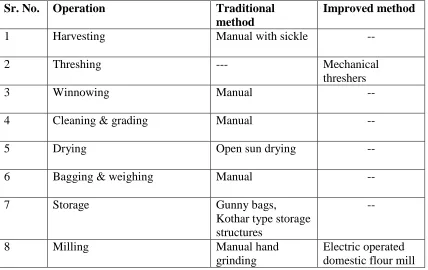
The existing farm level processing facilities in this village and in nearby villages are
stated in Table 4. The process of harvesting is manual and threshing is fully mechanized. Milling
of cereals and pulses is done by domestic level flour mill. The existing processing facilities
available in these villages were also studied (Table 5). There are three community flour mills in
village Kokarda which has the capacity to process 70 to 100 kg/h. Average utilization of the mill
is approximately 4 hours per day. After doing the survey it was observed that, the group can
fetch higher price merely by cleaning, grading and processing of pulses into dal thus enhancing
the profit. Considering the demand of spice powder, there is scope for establishment of
pulverizer for making powder of chilli and other spices. Considering the scope, machines
identified for Agro Processing Centre at Kokarda are:
Machines identified for agro-processing centre
1. Cleaner grader 2. Mini dal mill 3. Flour mill
4. Spice grinder/pulverizer 5. Weighing balance 6. Loading trolley
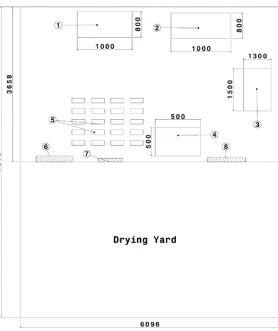
The layout of Agro Processing Centre at Kokarda is shown in Fig. 2.
Fig. 1. Location of the site of Agro Processing Centre at Kokarda Kanzara
Fig. 2. Layout of Agro Processing Centre at Kokarda
Details of equipments/machines at Agro Processing Centre at Kokarda enlisted in
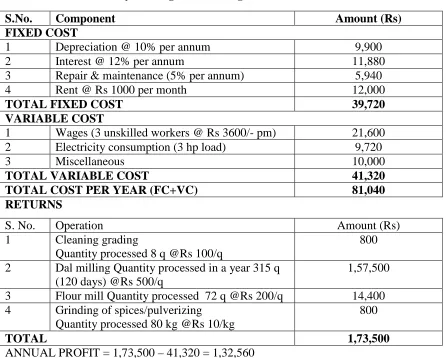
Table 6. Table 7 depicts economic analysis of Agro Processing Centre at Kokarda. The
entrepreneur processed 8 q food grains through cleaner grader, 315 q pulses (235 q pigeonpea +
80 q chickpea) through dal mill, 72 q cereals (wheat, sorghum) through flour mill and 80 kg
spices (chilli and turmeric) through pulverizeer.An economic analysis of agro-processing centre
indicate that an entrepreneur earned an amount of Rs 1,32,560/- as a profit during last year
beside providing employment to three persons with an investment of Rs 99,000/- on machines.
Table 3. Demographic and geographical details of village Kokarda of Amravati district
S.No. Particulars Name of the village
Kokarda
1 Total population
Total number of houses Total geographical area (ha) Total cultivated area (ha) Area irrigated (ha) Area unirrigated (ha)
3100 900 451.44
383.4/ (3171 ha incl. nearby villages) 30
--
2 Females 1200
3 Children below 14 years 500
4 Number of farming families 700
5 Land holding of farmers (No. of
families)
(a) Less than 1 acre (b) 1 to 5 acre (c) 5 to 10 acre (d) 10 to 15 acre (e) 15 to 20 acre (d) More than 20 acre
20 200 150 15 04 00 6 Number of landless labourers (No. of
families)
60
7 Livestock population
(a) Bullock (b) Cows (c) Buffaloes (c) Calves (d) Goat (e) Sheep (f) Pigs
(g) Poultry birds
40 100 20 50 400 - - -
8 Farm machines
(a) Cultivator (b) Seed drill (c) Thresher (d) Chaff cutter (e) Winnowing fan
(f) Sprayer (Tractor operated) (g) Tractor
(h) Trolley
Table 4. Existing farm level processing facilities in village Kokarda of Amravati district
Sr. No. Operation Traditional
method
Improved method
1 Harvesting Manual with sickle --
2 Threshing --- Mechanical
threshers
3 Winnowing Manual --
4 Cleaning & grading Manual --
5 Drying Open sun drying --
6 Bagging & weighing Manual --
7 Storage Gunny bags,
Kothar type storage structures
--
8 Milling Manual hand
grinding
Electric operated domestic flour mill
Table 5. Processing facilities available in village Kokarda
S. No. Name of the
machine
Specification No. of units
1 Domestic flour mill 14” diameter vertical type
operated by 7 HP three phase electric motor (100 kg/h)
3
Table 6. Details of equipments/machines in Agro Processing Centre at Kokarda
S.No. Machines Capacity Cost (Rs)
1 Mini dal mill 100 kg/h 30,000
2. Cleaner grader 250 kg/h 30,000
2 Spice grinder/pulverizer 50 kg/h 7,000
3 Flour mill 50 kg/h 10,000
4 Weighing balance 30 kg 5,000
5. Electric motor with fittings 3 hp 17,000
TOTAL COST 99,000
Table 7. Economic analysis of Agro Processing Centre at Kokarda
S.No. Component Amount (Rs)
FIXED COST
1 Depreciation @ 10% per annum 9,900
2 Interest @ 12% per annum 11,880
3 Repair & maintenance (5% per annum) 5,940
4 Rent @ Rs 1000 per month 12,000
TOTAL FIXED COST 39,720
VARIABLE COST
1 Wages (3 unskilled workers @ Rs 3600/- pm) 21,600
2 Electricity consumption (3 hp load) 9,720
3 Miscellaneous 10,000
TOTAL VARIABLE COST 41,320
TOTAL COST PER YEAR (FC+VC) 81,040
RETURNS
S. No. Operation Amount (Rs)
1 Cleaning grading
Quantity processed 8 q @Rs 100/q
800
2 Dal milling Quantity processed in a year 315 q (120 days) @Rs 500/q
1,57,500
3 Flour mill Quantity processed 72 q @Rs 200/q 14,400
4 Grinding of spices/pulverizing
Quantity processed 80 kg @Rs 10/kg
800
TOTAL 1,73,500
ANNUAL PROFIT = 1,73,500 – 41,320 = 1,32,560
or Rs. 11,047/- per month
Conclusion
The new Agro Processing Centre established at Kokarda is running successfully and earned a
profit of Rs. 1,32,560/- by generating an employment of 120 days in a year.Agro Processing
Centre played a vital role not only in income generation but also helped in providing the
employment to rural farmers/youths.
REFERENCES
Kumar, A. and S.M Ilyas. 2003. Agro processing centers – Powerful tool for transforming rural
technology. CPHP South Asia
Stoner, James A.F., R. Freeman, Edward and Jr D. R. Gilbert. 1995. Management, 6th Ed.
Prentice-Hall, Inc, N.J., USA.