1
Original Research.
1
Effects of high-dose large neutral amino acid supplementation on exercise, motor skill
2
and mental performance in Australian Rules Football Players
3
Nigel K. Stepto1,2, Benjamin B. Shipperd3,Graeme Hyman4, Bernie McInerney5, and
4
David B. Pyne6
5
6
Corresponding Author:
7
Dr Nigel Stepto,
8
Institute of Sport Exercise and Active Living
9
& School of Sport and Exercise Science
10
Victoria University
11
PO Box 14428
12
Melbourne,Victoria, Australia 8001
13
Tel. +61 3 9919 5416
14
Fax. +61 3 9919 4891
15
Email. [email protected]
16
17
18
1) Institute of Sport, Exercise and Active Living, Victoria University, Melbourne,
19
Victoria, Australia
20
2) School of Sport and Exercise Science , Victoria University, Victoria, Australia
21
3) School of Physiotherapy, Monash University, Victoria, Australia
22
4) Department of Psychology Monash University, Caulfield, Victoria, Australia,
23
5) Australian Proteome Analysis Facility, Macquarie University, Sydney, New South
24
Wales, Australia
25
6) Department of Physiology Australian Institute of Sport, Belconnen, ACT,
26
Australia
27
28
2 1
Abstract
2
This study investigated the effects of high dose large neutral amino acid (LNAA)
3
supplementation on attenuating fatigue-induced decrements in exercise and motor-skill
4
performance in Australian Rules Football (ARF) players. Fifteen sub-elite ARF players
5
participated in three testing sessions separated by 7 days. Players completed an initial
6
control trial involving a reactive motor skills test (RMST) and a reactive agility test
7
(RAT) completed before and after fatiguing exercise. In the subsequent experimental
8
trials the players ingested a serotonin depleting or protein control (PC) LNAA mixture 3
9
hours before testing, allocated in a double-blinded randomized crossover design. Blood
10
samples were taken at pre-supplementation, pre- and post- exercise for analysis of plasma
11
amino acid, insulin and metabolite concentrations. Effect of the LNAA was established as
12
the difference in the change in the mean RMST and RAT test scores between the
13
depleting, PC and baseline (BL) trials. Mean overall repetition time of the RAT was
14
moderately improved by 5.2±3.4% (mean±90% confidence limits; effect size [ES]
-15
0.45±0.28) after ingestion of the serotonin depleting mixture compared with the BL trial.
16
Serotonin depleting and PC supplements had a divergent effect on mean repetition time
17
after fatiguing exercise in RMST: depleting serotonin elicited a small improvement
(-18
3.0±2.7%) in motor skill performance in contrast to a small decrement (2.4±2.7%) after
19
ingestion of PC mixture when compared to the BL. High dose serotonin “depleting”
20
LNAA supplementation given 3 hours prior to intermittent high intensity exercise
21
improved reactive motor skill and agility performance in ARF players.
22
23
Keywords: team sport, fatigue, serotonin, tryptophan, cognitive function, mood states.
24
3
Introduction
1
Fatigue in teams sports typically accumulates over the course of a game, affecting the
2
amount and intensity of exercise performed, skill execution and decision making. Other
3
studies of team sports, especially football (soccer), have demonstrated that the volume of
4
high and very high intensity running is reduced as the game progresses (Mohr et al. 2003;
5
Rampinini et al. 2007; Spencer et al. 2004). High intensity exercise (including game
6
time) is associated with declines in passing skill performance in elite and junior soccer
7
players (Rampinini et al. 2008; Rampinini et al. 2009). Nutritional intervention(s) prior to
8
and during the course of a game that attenuate the negative effects of fatigue are a
9
practical and effective way of maintaining high levels of performance.
10
The causes of fatigue are complex and often involve a combination of both central and
11
peripheral factors. Peripheral fatigue relates to impairments of calcium release from the
12
sarcoplasmic reticulum, ionic homeostasis and membrane excitability, mechanisms of
13
cross-bridge cycling, and metabolic and contractile processes in skeletal muscle (Allen et
14
al. 2008; Burke and Hawley 1999; Welsh et al. 2002). Inadequate availability of fuels
15
(whether endogenous or exogenous sources) also influences peripheral fatigue (Burke
16
and Hawley 1999). However, fatigue can occur in the absence of any peripheral
17
influences (Davis and Bailey 1997) implicating a centrally-based or central nervous
18
system (CNS) mechanism. Factors leading to CNS-based fatigue include any processes
19
within the CNS that have downstream effects on muscle function such as impaired neural
20
propagation of stimuli from the brain and spinal cord (Gandevia 2001). The mechanisms
21
involved in CNS-based fatigue and the extent to which these affect exercise performance
22
are not clear.
4
The central fatigue hypothesis implicates altered levels of serotonin in the brain as the
1
cause of impaired performance (Blomstrand et al. 1988; Blomstrand et al. 1989; Young et
2
al. 1985). Serotonin is considered a key neurotransmitter causing central fatigue as
3
pharmacological enhancement of its neurotransmission can exacerbate exercise-induced
4
fatigue (Weicker and Struder 2001). Conversely, lowering brain serotonin levels delays
5
the onset of exercise-induced fatigue (Yamamoto and Newsholme 2000). Given that
6
serotonin is produced from tryptophan, nutritional strategies can be used to manipulate
7
brain serotonin levels. This effect is achieved by ingesting a mixture of large neutral
8
amino acids (LNAA), including the branched-chain amino acids (BCAA) (Nathan et al.
9
2004; Nishizawa et al. 1997). Tryptophan, and therefore serotonin depletion is achieved
10
by competitively inhibiting the LNAA transporters with a high dose of BCAA’s not
11
containing tryptophan (Pardridge 1998).
12
Studies examining the relationship between BCAA supplementation and
exercise-13
induced fatigue have produced equivocal results (for review see (Meeusen et al. 2006)),
14
possibly related to methodological differences in timing and dosages of BCAA
15
supplementation. Exercise performance is often unaltered but ratings of perceived
16
exertion, mood states or cognitive function during exercise may be improved after BCAA
17
supplementation (Blomstrand et al. 1997; Blomstrand et al. 1991; Jakeman 1998). While
18
there are limited data on BCAA effects on intermittent high-intensity exercise
19
performance (Davis et al. 1999) and mental performance of team sport athletes
20
(Blomstrand et al. 1991) most studies have focused on continuous exercise protocols (e.g.
21
cycling time to exhaustion) rather than motor-skill performance or decision making
22
characteristic of team sports.
5
The aim of this study was to investigate the effect of a high dose LNAA supplement
1
ingested three hours prior to high intensity intermittent exercise on reactive motor-skill,
2
agility and cognitive performance in Australian Rules Football players.
3
Methods
4
Participants
5
Fifteen sub-elite male Australian Rules Football (ARF) players were recruited from local
6
football clubs (Table 1). Prior to participation all players provided informed written
7
consent. Two players withdrew from the study without completing all testing procedures
8
due to injuries sustained in unrelated games, and their data were not included in any
9
analysis. The study design and procedures met the National Health and Medical Research
10
Council guidelines for research using human participants by the Australian Institute of
11
Sport Ethics Committee, the Standing Committee on Ethical Research in Humans,
12
Monash University, and the Human Research Ethics Committee of Victoria University.
13
Study Design
14
The study was conducted over five sessions in consecutive weeks, and each session was
15
conducted at the same time of day. During the first two sessions players completed
16
exercise test familiarization, anthropometric measures, and fitness testing. All players
17
completed an initial baseline trial of reactive motor skills (RMST) and agility (RAT)
18
testing where no protein supplementation was given. In the final two sessions players
19
completed a double-blind crossover (randomized and counterbalanced) trial, receiving
20
either the tryptophan “depleting” (without tryptophan) or protein control (PC; with
21
tryptophan) mixtures of LNAA to decrease or maintain brain serotonin levels
22
respectively.
6 1
Preliminary testing and Familiarization
2
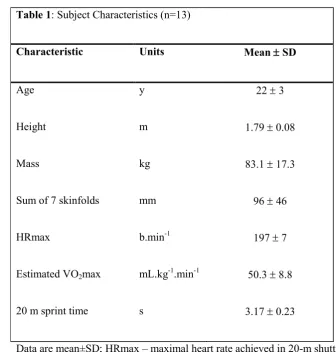
Players were measured for height, body mass and fat (sum of seven skinfolds) at least
3
two hours post-prandial and in a well-hydrated state (Table 1). The players then
4
completed two familiarization sessions on separate days of the sports-specific RMST,
5
RAT and psychological questionnaires. Session one testing was followed by the 20 m
6
multi-stage shuttle run test for estimation of HRmax and VO2max. After the second
7
session, the players completed three repetitions of the 20 m sprint test, with the fastest
8
sprint recorded as the criterion time.
9
Dietary and exercise control
10
All players maintained their normal diet in the 3 days leading up to each session and were
11
instructed to replicate this food intake before each trial. Players were also required to
12
abstain from alcohol and caffeinated products for 24 h prior to and on the day of testing.
13
Players were also asked to engage in a moderate intensity training (1h) session 24 h prior
14
to the testing sessions, allowing the players to maintain their in season training programs,
15
with further instructions to replicate this training before every testing day.
16
Baseline Trial
17
Players returned to the testing venue 7 days later approximately 3.5 h prior to the testing
18
session having not eaten for the previous 2 h. A low glycemic index (GI) high
19
carbohydrate meal was consumed 3 h prior to exercise testing. Twenty min before the
20
warm-up players completed two standard paper-based psychological tests to assess mood
21
states and cognitive function. Ten min prior to the commencement of the warm-up
7
exercise the participants consumed 600 ml of a commercial sports drink (Gatorade™
1
Fierce Berry instant mix, 8% w/v carbohydrate solution). The sports drink consumption
2
was confirmed by the experimenters. After the standardized warm-up the participants
3
then undertook the RMST and RAT, before completing 30 min of the fatiguing exercise.
4
Immediately upon completion of the exercise bout the participants were retested with the
5
RMST, RAT and psychological tests.
6
Supplementation Trials
7
Players again reported to the testing venue 3.5 h prior to the testing session, and followed
8
the same dietary and testing schedule as above. However, the PC or depleting
9
supplements were ingested immediately prior to the meal in a double-blind
10
counterbalanced cross-over design. Serial blood samples were taken, immediately before
11
the meal and protein supplementation, 3 h post supplementation, and immediately after
12
the fatiguing exercise.
13
Skills and decision testing
14
Reactive motor-skills test (RMST) was conducted using the SmartSpeed™ lightgate
15
system to assess players skills in a reactive setting. The players were instructed to
16
complete the test as quickly and as accurately as possible. The test was conducted on the
17
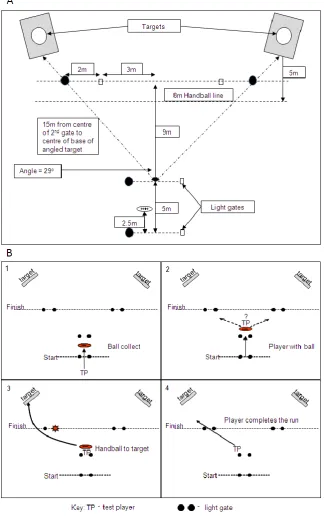
‘Y’-shaped 20 m testing area (Figure 1). The test required the player to cross the starting
18
gate, collect a stationary ball, progress past a second set of gates, causing one of the two
19
final gates to randomly give a light signal to which the player responded by handballing
20
the football to the target (scored), and then proceeding through the final gate, stopping the
21
timer (Figure 1). Each player performed 12 repetitions of this test with a 60 s recovery,
22
randomized to ensure the completion of 6 left and 6 right breaks. The test times were
8
recorded using the Smartspeed™ Software on a linked personal digital assistant.
1
The accuracy/precision of the skill (handball) performed was determined by manually
2
recording the score of each repetition achieved: 0 for missed or frame hit, 1 point for ball
3
contact on the wooden target (shaded area; Figure 1) and 2 points for the ball passing
4
through the central hole (75cm diameter) in the target for each repetition. The targets
5
were designed such that the central hole was equivalent of placing the handball level with
6
the chest of a 1.85 m tall player. As this test was designed to quantify reactive skill
7
performance, there was always the potential for players to trade speed for accuracy. To
8
account for this potential shortcoming we calculated a test performance index (TPI)
9
computed as the repetition score divided by the repetition time (score.s-1). In a pilot study
10
(n=25; Gregory, Stepto and Keating., Unpublished) using the RMST we observed
11
substantial variability in the initial repetitions (1-5) so only repetitions 6-12 were used for
12
time, score and TPI data. The typical error (or CV) for test-retest reliability for
13
repetitions 6-12 of the participants in this study was 3.7% (2.8-5.6%; 90% confidence
14
interval).
15
The Reactive Agility Test (RAT) was timed using the SmartSpeed™ lightgate system,
16
and conducted as described previously (Farrow et al. 2005). The typical error for
test-17
retest reliability for the subject’s repetition time in this study was 2.7% (2.0-4.0%).
18
Amino Acid supplements
19
In each experimental trial, players ingested one of the two protein drinks in randomized
20
order immediately prior to the pre-exercise meal 3 h prior to the exercise trials. The
21
protein mixture was provided as a suspension of the pure amino acids (either the
22
tryptophan depleting or PC) in 250 mL unsweetened orange juice plus 600 mL of water,
9
and consumed in the presence of the investigators. The individual branch chain amino
1
acid powders except tryptophan were obtained from Musashi (Nestle Nutrition, Australia)
2
and weighed and combined to form either the tryptophan and therefore serotonin
3
“depleting”(43.0 g):13.5 g leucine, 8 g isoleucine, 8.9 g valine, 5.7 g phenylalanine and
4
6.9 g tyrosine, or PC (45.3 g) mixture: 13.5 g leucine, 8 g isoleucine, 8.9 g valine, 5.7 g
5
phenylalanine, 6.9 g tyrosine and 2.3 g tryptophan (USP, Nationwide Compounding
6
Pharmacy, Caulfield Australia). These supplements are based on the amino acid mixtures
7
that lower serotonin production and alter behavior in humans (Moore et al. 2000; Nathan
8
et al. 2004; Nishizawa et al. 1997). These amino acid supplementation regimens were
9
generally well tolerated and only 5 of 13 participants reporting feelings of mild lethargy
10
and/or bloating.
11
The pre-exercise meal consisted of a low GI carbohydrate meal (a 300 g salad sandwich;
12
1054 kJ, 71% CHO, 7% fat, 14% protein). Players then rested at the venue until testing
13
began. When the players began the warm up they consumed 600 mL of a commercially
14
available sports drink (Gatorade™). The pre-exercise meal was provided to reflect a more
15
practical sport setting, but we acknowledge that the meal is likely to have influenced
16
plasma LNAA concentrations and free tryptophan: LNAA ratio (Davis et al. 1992).
17
However, we believe this effect is likely to be minimal as this feeding protocol was used
18
in all experimental and baseline trials.
19
Fatiguing exercise protocol
20
The 30 min fatiguing exercise involved a modification of the Yo-Yo intermittent
21
endurance test (Level 1; Bangsbo Sport™). The players were given a football to bounce
22
once every lap while completing the entire Yo-Yo endurance test. Players were allowed
23
to sit out of a maximum of two consecutive return runs for additional recovery (recorded
10
and subtracted for total distance of the test), but had to re-enter the test at the next shuttle.
1
The players’ heart rates were monitored and recorded using a Polar™ RS400 heart rate
2
monitor.
3
Blood sampling and analysis
4
Blood samples (4 mL each) were collected via a sterile valve and indwelling cannula
5
inserted in an antecubital vein kept patent with sterile saline (0.9%; Astra Zeneca;
6
Australia). The blood was placed in lithium heparin Vacutainers™ and centrifuged at
7
1500 g for 15 min. Each plasma sample was collected, aliquoted into separate microfuge
8
tubes for each analysis and stored at -20 °C.
9
Plasma glucose and lactate were analyzed on the YSI STAT2000 automated analyzer.
10
Plasma insulin was determined using the enzyme immunoassay (DakoCytomation U.K.
11
#K6219), where 25 µL of plasma was pippetted into duplicate wells on a 96 well plate
12
and processed according to the manufacturer’s instructions. The limit of detection was 3
13
pmol.L-1 with the intra- and inter assay variability of 7.8% and 10.4% respectively.
14
Concentrations of free amino acids tryptophan, tyrosine, phenylalanine, valine, leucine
15
and isoleucine in plasma were determined, from a modified protocol (Nathan et al. 2004)
16
using pre-column derivatization with 6-aminoquinolyl-N-hydroxysuccinimidyl carbamate
17
(AQC) and quantification by reversed phase high performance liquid chromatography
18
(RP-HPLC). All amino acids were detected by UV absorbance. Briefly, plasma samples
19
(100 µL) were diluted 1:1 with internal standard (norvaline) solution and deproteinized
20
by ultrafiltration through a membrane with a 10 kDa nominal molecular weight cut-off
21
(Microcon Ultracel YM-10, Millipore, Bedford, MA, USA). The filtrate (20 µL) was then
22
subjected to AQC derivatization and analysis on an ACQUITY Ultra Performance LC
11
(UPLC) system containing a BEH C18 1.7 µm column (Waters Corporation, Milford,
1
MA, USA) with detection at 260 nm and a flow rate of 0.7 ml/min. The limit of
2
quantitation was 0.5 µM with intra- and inter assay variability of 4.5% and 5.1%
3
respectively for tryptophan and less than 2.3% and 3.8% respectively for the other
4
LNAAs.
5
6
Psychological testing:
7
Over the duration of the study the players’ cognitive function and mood states were
8
analyzed using standard questionnaires.
9
Cognitive functioning was analyzed using the Stroop™ colour word test that required
10
participants to read as many word, colours or coloured words as possible in 45 seconds.
11
This test has been used to measure an untrained healthy individual’s ability to resist
12
cognitive interference (Blomstrand et al. 1991; Young et al. 1985). These tests were
13
administered 20 min before and immediately after exercise testing in weeks 3 to 5.
14
Change in mood was analyzed using Profile of Mood State (POMS) questionnaires. Sixty
15
five questions were used to measure different metrics of mood including fatigue, vigor,
16
confusion, depression, anger and tension. As mood is quite variable, this questionnaire is
17
designed to quantify changes that occur over time (Young et al. 1985). These
18
questionnaires were administered 20 min before and immediately after exercise testing in
19
weeks 3 to 5.
20
Statistical Analysis
12
Data are expressed as mean ± SD. All data, except POMS and Stroop scores, were log
1
transformed to reduce bias due to non-uniformity of error. All blood parameters and TPI
2
were analyzed using two way repeated measures ANOVA, where significance was shown
3
data were subjected to a Bonferoni post hoc test. A one way repeated measures ANOVA
4
with Tukey’s post hoc analysis was used to identify significant time effects. Significance
5
was accepted at P<0.05. We also used the effect size (ES) statistic with a 90%
6
confidence interval (CI) to determine the magnitude of effects and precision of estimation
7
(Batterham and Hopkins 2006; Hopkins 2000). Performance data were analyzed at the
8
post-only time point, because performing an analysis of a pre-post parallel-groups
9
controlled trial using only the post-intervention values produced estimates with better
10
precision given the degree of background noise in the dependent variables (Batterham
11
and Hopkins 2006; Hopkins 2000). In contrast we used a pre-post analysis to analyze the
12
effect of LNAA on the concentration of plasma parameters. Magnitudes of change were
13
classified as substantial when there was a ≥ 75% likelihood of the effect being equal to,
14
or greater than the smallest worthwhile change. The smallest worthwhile change in
15
performance tests and physiological measures was estimated as 0.2 x between-subject
16
standard deviation and classified as trivial (ES<0.2), small (0.2-0.6), moderate (0.6-1.2),
17
large (1.2-2.0) and very large (>2.0). Effects were reported as unclear where the ± 90%
18
confidence interval spanned both substantial positive (worthwhile) and negative
19
thresholds. Reliability of the RAT and RMST were determined as typical error expressed
20
as a coefficient of variation (Hopkins 2000).
21
Results
22
Reactive Agility and Reactive Motor Skill Test Performance
13
First, we established that our fatiguing exercise protocol substantially impaired agility
1
(RAT) and motor skill (RMST) performance (Figure 2A,C,E). The exercise protocol
2
(without any protein supplementation) induced a moderate increase (slowing) of the RAT
3
mean repetition time of 5.7±3.0% (mean ± 90% CI). Similarly, in the RMST, the mean
4
repetition was moderately increased by 6.0±3.0%. This decrement in repeat performance
5
was accompanied by significant reduction in the TPI (-16±14%; ES -0.79±0.60; P=0.03;
6
Figure 3) and a moderate (11±12%) reduction in the accuracy of the handball task.
7
8
The effect of the LNAA mixtures on performance of the RAT and RMST are shown in
9
Figure 2. Depleting serotonin moderately improved the RAT performance by -5.2±3.4%
10
(Figure 2B) compared to the baseline trial after fatiguing exercise. Similarly PC elicited a
11
small improvement in mean RAT repetition time (-2.9±4.1%; Figure 2B). The difference
12
between the depleting and PC treatments on the mean repetition performance time of the
13
RAT was trivial (Figure 2B). The two outcome measures of the RMST are presented as a
14
mean time for each repetition and a mean score for each handball in Figure 2D and 2F
15
respectively. Clearly, serotonin depleting and PC had a divergent effect on RMST mean
16
repetition time after fatiguing exercise. Depletion elicited a small improvement
(-17
3.0±2.7% ES -0.25±0.21) in contrast to the small decrement in RMST performance
18
(2.4±2.7% ES 0.20±0.21) of the PC compared to baseline trial. Serotonin depletion
19
elicited a moderate improvement in repetition performance time post exercise when
20
compared with PC (-5.3±4.3%, ES -0.43±0.33).
21
Skill performance was moderately improved after exercise independent of the
22
supplementation treatment when compared with the baseline test (7.4±9.8% and
14
8.0±9.5% for serotonin depletion and PC respectively). However, the TPI, which
1
accounted for the speed accuracy trade off, decreased with fatiguing exercise with the
2
greatest decrements in the BL and PC trials (16±14%; [ES 0.83±0.58; P=0.03] and
-3
13±12% [ES -0.65±0.54; P=0.06] respectively; Figure 3) compared to the depleting trial
4
(-5.1±14.8% [ES-0.27±0.64]). The exercise induced decrements in TPI were 11.4% and
5
7.9% greater in the BL and PC trials respectively compared to the depleting trial but the
6
magnitudes of these changes were unclear.
7
8
Fatiguing exercise protocol
9
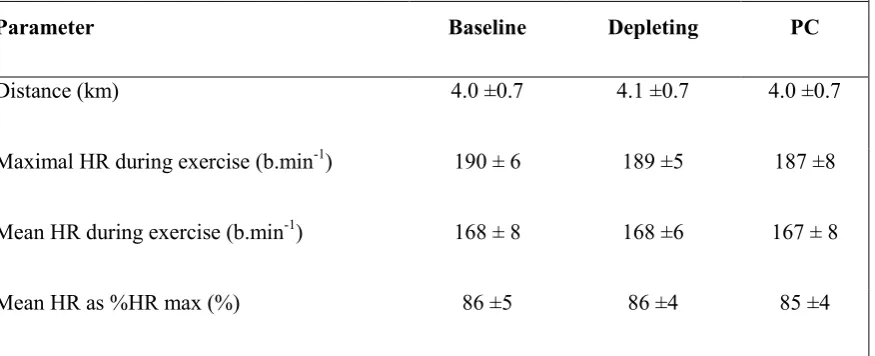
There were no substantial differences in cardiovascular responses and distance covered in
10
the fatiguing exercise protocol between the experimental and control trials. Heart-rate,
11
%HR max, and distance covered during the fatiguing exercise bout were similar between
12
the three trials (Table 2). There were trivial differences in the distance covered between
13
serotonin depletion and baseline during the fatiguing exercise protocols (Table 2).
14
Similarly, any differences in mean heart rate and %HRmax during exercise in the PC trial
15
compared to the baseline trial were trivial (Table 2).
16
Mood States and Cognitive function
17
The fatiguing exercise bout increased the total mood disturbance scores (5.6±5.4 raw
18
score [ES 0.31±0.30]; moderate effect; Table 3) and the fatigue score (3.7±1.6 raw score
19
[ES 1.48±0.64]; large effect; Table 3) at BL. During the depleting trial exercise elicited
20
larger changes in total mood disturbance (11.5±12.2 raw score [ES 0.64±0.68]) but
21
similar changes in fatigue scales (3.8±2.2 raw score [ES 1.54±0.9]) compared with BL.
22
The depleting trial elicited a small increase in the vigor score (Table 3). Similarly, the
15
effect of the exercise on increasing total mood disturbance (13.0±4.9 raw score [ES
1
0.72±0.27]) and fatigue (5.0±2.3 raw score [ES 2.0±0.93]) scores, and decreasing vigor
(-2
5.0±2.3 raw score [ES -0.63±0.29]) were moderate, large and moderate in PC
3
respectively (Table 3).
4
The effect of fatiguing exercise on the Stroop™ scores only became apparent during the
5
depletion trial where Stroop™ color/word (10.2±11.8 raw score [ES 0.64±0.74];
6
moderate effect) and color scores (18.8±19.9 raw score [ES 0.63±0.67] moderate effect)
7
improved after exercise (Table 3). When comparing the post exercise scores across the
8
three trials, depletion resulted in a moderate improvement in the hardest Stroop™ scale
9
score (Color Word score; 11±10 raw score; ES 0.5±0.5) compared to the BL trial.
10
However, this improvement in scores was unclear when comparing the depleting trial to
11
PC despite the 9±13 (ES 0.4±0.6) score difference post exercise.
12
Blood Parameters
13
Plasma glucose, insulin and lactate concentrations were altered over the time course of
14
the trials in response to supplementation and/or exercise, but there were no differences
15
between the two protein treatments. Plasma lactate concentration remained at 1.4±0.4
16
mM during the resting period but increased to 5.4±0.9 mM immediately after exercise in
17
all trials (mean±SD). Plasma glucose remained at 3.6±0.6 mM during rest and increased
18
to 4.7±1.0 mM after exercise. Plasma insulin was 60±19 pM prior to protein
19
supplementation and increased to 156±58 pM immediately prior to exercise then
20
decreased to 86±45 pM immediately post exercise.
21
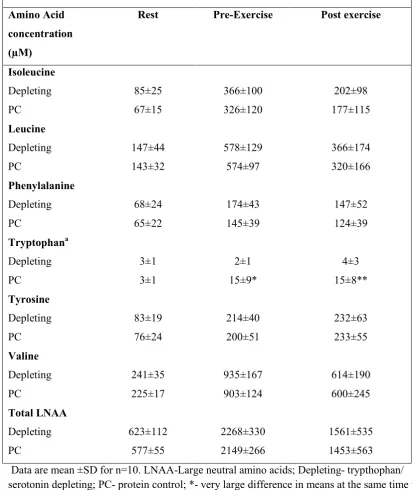
Plasma LNAA concentrations are displayed in Table 4. The LNAA concentrations
22
quantified in the plasma including isoleucine, leucine, phenylalanine, tyrosine, valine and
16
the total LNAA content were similar for the two protein trials at all time points. However,
1
the free tryptophan concentrations diverged both immediately pre- (2±1 µM vs. 15±9
2
µM) and post exercise (4±3 µM vs. 15±8 µM) reflecting the absence or presence of the
3
tryptophan in depleting and PC mixtures respectively (Table 4). As the biological
4
effectiveness of the treatments is dependent on competitive inhibition of the LNAA
5
transporter uptake of the tryptophan, the ratio of free tryptophan to total free LNAA is the
6
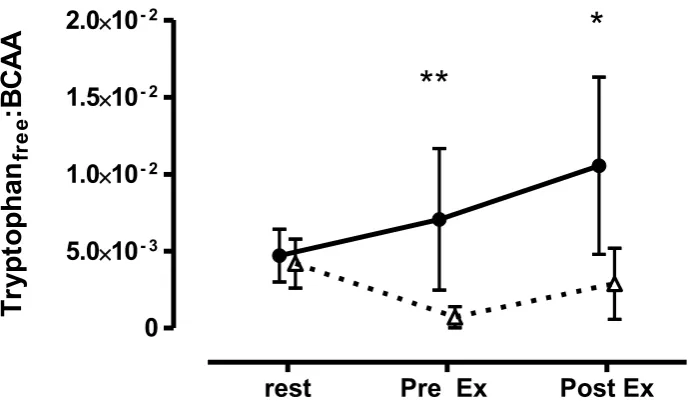
key measure (Figure 4). Clearly, the presence of tryptophan in PC resulted in a greater
7
free tryptophan: LNAA ratio, both immediately pre- and post- exercise (Figure 4). The
8
ratio changed from ~0.0045 at rest in both trials to 0.0071±0.0046 and 0.0105±0.0058 in
9
the PC treatment and 0.0007±0.0007 and 0.0029±0.0017 in the depleting treatment
10
immediately pre- and post exercise respectively. The ratio between PC and depleting
11
treatments were substantially increased from rest to pre- exercise (920±48%; large;
12
P<0.01). Subsequent changes in the ratio from pre- to post-exercise were much less
(-13
64±45%; moderate; P<0.05) in PC compared with depleting treatment. This difference
14
was evident despite the absolute post exercise ratios being 326±43% (moderate; P<0.05)
15
greater in PC vs. depleting treatments (Figure 4)
16
17
Discussion
18
In this study we demonstrate for the first time that consumption of a large quantity of
19
LNAA 3 h prior to exercise, that depletes brain tryptophan supply and therefore serotonin
20
production, delayed or reduced the impact of exercise-induced fatigue on player reactive
21
agility (by ~5%) and skill performance (by ~3% for time, ~8% on score and ~10% on
22
TPI). These findings indicate that neurotransmitters, in particular serotonin, play a role in
17
the central component of exercise fatigue and can impair skill-based sporting tasks. Novel
1
supplementation strategies with amino acids offer a practical means of enhancing
2
decision making and skill performance in team and skill-based sports.
3
The repeat effort exercise protocol elicited moderate decrements in performance of
4
reactive agility and skills tasks (time, accuracy and TPI) in Australian Rules Football
5
players in the presence of carbohydrate supplementation. Our results indicate the testing
6
protocols were effective in detecting fatigue-induced changes in reactive skill and agility
7
performance of the players. Furthermore, we established that any substantial changes in
8
exercise test performance between the three trials could be attributed to the protein
9
supplements as there were no differences in the amount or intensity of exercise performed
10
during the fatiguing exercise protocols (Table 2).
11
12
We demonstrated that high dose LNAA (which includes BCAAs) supplementation
13
attenuated the fatigue-induced decrements in performance time of RMST and RAT
14
(Figure 2&3). The attenuated loss of performance was evident after the supplementation
15
designed to deplete tryptophan and serotonin (Pardridge 1998), as was demonstrated in
16
the increased plasma LNAA concentrations and divergent free tryptophan: LNAA ratio
17
between the depleting and PC trials (Table 4 and Figure 4). This finding is in contrast to
18
most other studies using amino acid supplements, as they failed to delay the onset of
19
fatigue in timed exercise tasks (Blomstrand et al. 1997; Davis et al. 1999; Watson et al.
20
2004; Weicker and Struder 2001). The lack of amino acid influence on exercise
21
performance in these studies could be explained by differences in methodological
22
approaches to supplementation. Most exercise studies have only supplied small
23
quantities of BCAA (7-20g) compared to the 30.4g (or ~44g LNAA) used in this study.
18
Our approach is based on previous work (Moore et al. 2000; Nathan et al. 2004;
1
Nishizawa et al. 1997), but only utilizing LNAA’s that were commercially available as
2
supplements. This resulted in an LNAA mixture quantity of less than 100g but
3
containing enough LNAA to selectively deplete brain tryptophan and promote dopamine
4
production. Secondly, the timing of the BCAA supplementation with or without
5
carbohydrate was never more than 120 min prior to exercise, and may have been short
6
enough to blunt competitive inhibition of large neutral amino acid transporters and reduce
7
serotonin production (Nathan et al. 2004) . A further consideration is that all existing
8
studies have investigated BCAA effects in constant load closed loop exercise tasks
9
including cycling (Blomstrand et al. 1997; Watson et al. 2004; Weicker and Struder
10
2001) and shuttle running (Davis et al. 1999), rather than open loop high intensity
11
intermittent exercise or reactive agility and skill performance that characterizes many
12
skill and/or team sports. While the existing studies did not show enhanced time to fatigue
13
or exercise performance in either normal or stressful environments, subjects’ ratings of
14
perceived exertion were occasionally reduced during exercise tasks while consuming
15
BCAA (Blomstrand et al. 1997; Cheuvront et al. 2004).
16
17
Our study design allowed us to determine whether the fatigue-induced decrements in
18
motor skill performance had a central nervous system component related to serotonin
19
concentration. It is clear that our fatiguing protocol impaired handball performance
20
similar to skill decrements in other team sports like soccer (Rampinini et al. 2008;
21
Rampinini et al. 2009; Welsh et al. 2002) even in the presence of carbohydrate
22
supplementation. We were unable to identify a substantial difference in efficacy of the
23
protein supplements as both depleting and PC supplements appeared to attenuate
19
induced decline in accuracy during the handball task (Figure 2F). Reactive skills are often
1
performed by trading speed for accuracy, which can be accounted for by using the TPI.
2
This index detected differences in performance as the PC and BL TPI’s decline (13-16%)
3
to a similar extent in response to fatiguing exercise compared to ~6% seen in the
4
depleting trial. These data suggest that motor skill performance is affected by changes in
5
brain neurotransmitter concentrations but not necessarily serotonin. Both experimental
6
treatments, while designed to “deplete” or “maintain” the brain with serotonin, each
7
contained significant quantities of tyrosine and phenylalanine which are precursors to the
8
neurotransmitter dopamine (Nathan et al. 2004) potentially masking the effect of
9
serotonin depletion on post exercise skill performance. Further work is required to
10
partition the effects of the different neurotransmitters and neurotransmitter precursors on
11
exercise skill performance.
12
The exercise tests (RAT and RMST) reflect only discrete aspects of athlete decision
13
making, and these are likely reactive decisions/responses as opposed to complex
14
decisions made during games. We ascertained whether fatigue-induced changes in higher
15
brain centres including mood states and cognitive function were attenuated by
pre-16
exercise LNAA supplementation. Our findings and that of others (Hornery et al. 2007;
17
Rampinini et al. 2008; Rampinini et al. 2009; Royal et al. 2006; Welsh et al. 2002;
18
Winnick et al. 2005) demonstrate that cognitive function and mood state were improved
19
or impaired after fatiguing exercise respectively, and may be inversely related to free
20
tryptophan concentrations and therefore serotonin (Matrenza et al. 2004). Large
21
individual variability of responses in the two questionnaire based tests, especially with
22
mood states (Table 3) make it difficult to transfer these findings to other athletic settings.
23
However, the depleting trial caused the greatest increase in total mood disturbance scores
20
post exercise compared to the BL trial (Table 3) suggesting the players’ felt worse. The
1
significance of this change in total mood state disturbance is difficult to interpret because
2
players demonstrated similar increases in mood disturbance scores or bad feelings after
3
the PC. However, these changes in mood were aligned with the exercise test
4
performances. Specifically, in the depleting trial performance was enhanced after
5
fatiguing exercise in contrast to a decline in performance in the BL and PC trials.
6
Furthermore, our data indicates that cognitive function after fatiguing exercise, depleting
7
trial, was moderately enhanced as indicated by the greatest Stroop™ color word score
8
(Table 3). Taken together these data provide evidence that high dose LNAA supplements
9
that either “deplete” or “maintain” the brain serotonin improve cognitive abilities but
10
tended to negatively affect mood states in athletes after exercise.
11
It was important to determine the effects of the depleting and PC supplements used in this
12
study on plasma LNAA concentrations as we were unable to quantify changes in brain
13
serotonin levels in our athletes. In addition, our supplements differed from other studies
14
in exercise (Blomstrand et al. 1997; Blomstrand et al. 1991; Watson et al. 2004; Weicker
15
and Struder 2001) and psycho-pharmacology (Harrison et al. 2004; Matrenza et al. 2004;
16
Nathan et al. 2004). Moreover, quantifying changes in the free tryptophan: LNAA ratios
17
provides the best indication of the level of serotonin depletion (Nathan et al. 2004;
18
Pardridge 1998). Due to the differences in timing of blood sampling, supplement
19
ingestion and intervention it was difficult to make accurate comparisons between studies.
20
However, when our plasma LNAA concentrations and free tryptophan: LNAA ratios
21
were compared with other exercise studies our post exercise amino acid concentrations
22
and free tryptophan: LNAA ratios were equivalent to these reported data (Blomstrand et
23
al. 1991; Watson et al. 2004). Furthermore, when comparing our resting data (3 h post
21
supplement) with the cognitive function studies conducted at rest again our supplements
1
resulted in similar alterations in plasma LNAA concentrations for both the depletion and
2
PC trials (Nathan et al. 2004; Young et al. 1985). It is therefore likely that our
3
supplementation strategies influenced the uptake of tryptophan and potentially altered
4
serotonin production/synthesis in the brain.
5
While we have demonstrated an ergogenic effect of tryptophan “depleting” LNAA
6
supplementation regimen, these results need to be considered in the context of the study
7
limitations. The serotonin depleting supplement used required the players to ingest a very
8
powdery suspension, making palatability difficult. This large quantity (~44g) of amino
9
acids would also be financially prohibitive to all but the best sponsored elite athletes.
10
Finally, given the mood altering potential of these LNAA mixtures it is recommended
11
that athletes with diagnosed mood disorders like depression and bipolar disorder not
12
undertake this supplementation strategy.
13
Conclusion
14
It appears that LNAA may have central effects on sports-specific motor skills, cognitive
15
function and decision making. Specifically, the serotonin depleting amino acid mixture
16
improved some aspects of reactive motor skills performance and cognitive function when
17
players were fatigued, compared with a no supplement and the PC trial. Overall time to
18
complete the RMST for the depleting intervention protein was 5% faster than baseline,
19
after fatiguing exercise. The depleting mixture lowered the free tryptophan: LNAA ratio
20
after ingestion. Taken together, these results provide evidence of benefits for high dose
21
amino acid supplementation on performance when Australian Rules footballers are
22
fatigued. This ergogenic effect could be especially useful during conditions of fatigue
22
experienced at the end of quarters, halves and games in team sport players. However, this
1
supplementation regimen must be balanced with potential limitations, especially in
2
individuals with possible mood disorders. Further research is required to elucidate the
3
effects of tryptophan/serotonin depleting supplements of varying doses on sports-specific
4
decision making/cognitive function across a range of sports and athletic groups.
5
23
Acknowledgements:
1
We thank the participants who gave up their valuable time for the study. Our gratitude is
2
also extended to: Natasha Gregory and Andrew Robinson from Monash University; Sam
3
Schluter-Hughes, Cameron Tonkin, Ben Perry, Vicki Wyckelsma, Vanessa Leonie, Ian
4
Fairweather, Dr Rob Aughey and Dr Francois Billaut from Victoria University, Denise
5
Thomas and Christopher Warren from Macquarie University, and Prof Will Hopkins
6
(Auckland University of Technology) for their assistance with the large number of
7
technical aspects in this study. The study was funded by the Australian Institute of Sport
8
General and Collaborative Research Program. Amino acid powders, except where stated,
9
were donated by Musashi (Nestle Australia).
10
11
24
References
1
Allen, D.G., Lamb, G.D., and Westerblad, H. 2008. Skeletal muscle fatigue: cellular
2
mechanisms. Physiol Rev. 88(1): 287-332.
3
Batterham, A.M., and Hopkins, W.G. 2006. Making meaningful inferences about
4
magnitudes. Int J Sports Physiol Perform. 1: 50 - 57.
5
Blomstrand, E., Celsing, F., and Newsholme, E.A. 1988. Changes in plasma
6
concentrations of aromatic and branched-chain amino acids during sustained exercise in
7
man and their possible role in fatigue. Acta Physiol Scand. 133(1): 115-121.
8
Blomstrand, E., Hassmen, P., Ek, S., Ekblom, B., and Newsholme, E.A. 1997. Influence
9
of ingesting a solution of branched-chain amino acids on perceived exertion during
10
exercise. Acta Physiol Scand.159(1): 41-49.
11
Blomstrand, E., Hassmén, P., and Newsholme, E.A. 1991. Effect of branched-chain
12
amino acid supplementation on mental performance. Acta Physiol Scand. 143(2):
225-13
226.
14
Blomstrand, E., Perrett, D., Parry-Billings, M., and Newsholme, E.A. 1989. Effect of
15
sustained exercise on plasma amino acid concentrations and on 5-hydroxytryptamine
16
metabolism in six different brain regions in the rat. Acta Physiol Scand 136(3): 473-481.
17
Burke, L.M., and Hawley, J.A. 1999. Carbohydrate and exercise. Curr Op Clinic Nutr
18
Metab Care. 2(6): 515-520.
19
Cheuvront, S.N., Carter, R., 3rd, Kolka, M.A., Lieberman, H.R., Kellogg, M.D., and
20
Sawka, M.N. 2004. Branched-chain amino acid supplementation and human performance
21
when hypohydrated in the heat. J Appl Physiol. 97(4): 1275-1282.
22
Davis, J.M., and Bailey, S.P. 1997. Possible mechanisms of central nervous system
23
fatigue during exercise. Med Sci Sports Exerc. 29(1): 45-57.
24
Davis, J.M., Bailey, S.P., Woods, J.A., Galiano, F.J., Hamilton, M.T., and Bartoli, W.P.
25
1992. Effects of carbohydrate feedings on plasma free tryptophan and branched-chain
26
amino acids during prolonged cycling. Eur J Appl Physiol. 65(6): 513-519.
25
Davis, J.M., Welsh, R.S., Volve, K.L., and Alderson, N.A. 1999. Effects of
branched-1
chain amino acids and carbohydrates on fatigue during intermittent, high-intensity
2
running. Int J Sports Med. 20(5): 309 -314.
3
Farrow, D., Young, W., and Bruce, L. 2005. The development of a test of reactive agility
4
for netball: a new methodology. J Sci Med Sport. 8(1): 52-60.
5
Gandevia, S.C. 2001. Spinal and supraspinal factors in human muscle fatigue. Physiol
6
Rev. 81(4): 1725-1789.
7
Harrison, B.J., Olver, J.S., Norman, T.R., Burrows, G.D., Wesnes, K.A., and Nathan, P.J.
8
2004. Selective effects of acute serotonin and catecholamine depletion on memory in
9
healthy women. J Psychopharmacol. 18(1): 32-40. doi:10.1177/0269881104040225.
10
Hopkins, W.G. 2000. Reliability from consecutive pairs of trials (Excel spreadsheet). In:
11
A new view of statistics. sportsci.org: Internet Society for Sport Science,
12
sportsci.org/resource/stats/xrely.xls.
13
Hornery, D.J., Farrow, D., Mujika, I., and Young, W. 2007. Fatigue in tennis:
14
mechanisms of fatigue and the effect on performance. Sports Med. 37(3): 199 - 212.
15
Jakeman, P.M. 1998. Amino acid metabolism, branched-chain amino acid feeding and
16
brain monoamine function. Proc Nutr Soc. 57(1): 35-41.
17
Matrenza, C., Hughes, J.M., Kemp, A.H., Wesnes, K.A., Harrison, B.J., and Nathan, P.J.
18
2004. Simultaneous depletion of serotonin and catecholamines impairs sustained
19
attention in healthy female subjects without affecting learning and memory. J
20
Psychopharmacol. 18(1): 21-31.
21
Meeusen, R., Watson, P., Hasegawa, H., Roelands, B., and Piacentini, M.F. 2006. Central
22
fatigue: the serotonin hypothesis and beyond. Sports Med. 36(10): 881-909.
23
Mohr, M., Krustrup, P., and Bangsbo, J. 2003. Match performance of high-standard
24
soccer players with special reference to development of fatigue. J Sports Sci. 21(7):
519-25
528.
26
Moore, P., Landolt, H.P., Seifritz, E., Clark, C., Bhatti, T., Kelsoe, J., et al. 2000. Clinical
27
and physiological consequences of rapid tryptophan depletion. Neuropsychopharmacol.
28
23(6): 601-622.
26
Nathan, P.J., Hughes, J.M., McInerney, B., and Harrison, B.J. 2004. Simultaneous
1
depletion of tryptophan, tyrosine and phenylalanine as an experimental method to probe
2
brain monoamine function in humans. Int J Neuropsychopharmacol. 7(2): 171-176.
3
Nishizawa, S., Benkelfat, C., Young, S.N., Leyton, M., Mzengeza, S., de Montigny, C., et
4
al. 1997. Differences between males and females in rates of serotonin synthesis in human
5
brain. Proc Nat Aca Sci. 94(10): 5308-5313.
6
Pardridge, W.M. 1998. Blood-brain barrier carrier-mediated transport and brain
7
metabolism of amino acids. Neurochem Res. 23(5): 635-644.
8
Rampinini, E., Coutts, A.J., Castagna, C., Sassi, R., and Impellizzeri, F.M. 2007.
9
Variation in top level soccer match performance. Int J Sports Med. 28(12): 1018-1024.
10
Rampinini, E., Impellizzeri, F.M., Castagna, C., Azzalin, A., Ferrari Bravo, D., and
11
Wisloff, U. 2008. Effect of match-related fatigue on short-passing ability in young soccer
12
players. Med Sci Sports Exerc. 40(5): 934-942.
13
Rampinini, E., Impellizzeri, F.M., Castagna, C., Coutts, A.J., and Wisloff, U. 2009.
14
Technical performance during soccer matches of the Italian Serie A league: effect of
15
fatigue and competitive level. J Sci Med Sport. 12(1): 227-233.
16
Royal, K.A., Farrow, D., Mujika, I., Halson, S.L., Pyne, D., and B., A. 2006. The effects
17
of fatigue on decison making and shooting skill performance in water polo players J
18
Sports Sci. 24(8): 807-815.
19
Spencer, M., Lawrence, S., Rechichi, C., Bishop, D., Dawson, B., and Goodman, C.
20
2004. Time-motion analysis of elite field hockey, with special reference to
repeated-21
sprint activity. J Sports Sci. 22(9): 843-850.
22
Watson, P., Shirreffs, S.M., and Maughan, R.J. 2004. The effect of acute branched-chain
23
amino acid supplementation on prolonged exercise capacity in a warm environment. Eur
24
J Appl Physiol. 93(3): 306-314.
25
Weicker, H., and Struder, H.K. 2001. Influence of exercise on serotonergic
26
neuromodulation in the brain. Amino Acids. 20(1): 35-47.
27
Welsh, R.S., Davis, J.M., Burke, J.R., and Williams, H.G. 2002. Carbohydrates and
28
physical/mental performance during intermittent exercise to fatigue. Med Sci Sports
29
Exerc. 34(4): 723 - 731.
27
Winnick, J.J., Davis, J.M., Welsh, R.S., Carmichael, M.D., Murphy, E.A., and Blackmon,
1
J.A. 2005. Carbohydrate feedings during team sport exercise preserve physical and CNS
2
function. Med Sci Sports Exerc. 37 (2): 306 - 315.
3
Yamamoto, T., and Newsholme, E.A. 2000. Diminished central fatigue by inhibition of
4
the L-system transporter for the uptake of tryptophan. Brain Res Bull. 52(1): 35-38.
5
Young, S.N., Smith, S.E., Pihl, R.O., and Ervin, F.R. 1985. Tryptophan depletion causes
6
a rapid lowering of mood in normal males. Psychopharmacol. 87(2): 173-177.
7
8
9
28 1
Table 1: Subject Characteristics (n=13)
Characteristic Units Mean SD
Age y 22 3
Height m 1.79 0.08
Mass kg 83.1 17.3
Sum of 7 skinfolds mm 96 46
HRmax b.min-1 197 7
Estimated VO2max mL.kg-1.min-1 50.3 8.8
20 m sprint time s 3.17 0.23
Data are mean±SD; HRmax – maximal heart rate achieved in 20-m shuttle run
2
29 1
Table 2. Performance and exercise intensity measures during the fatiguing exercise protocol for
Baseline (BL), serotonin depleting (depleting) and protein control (PC) trials.
Parameter Baseline Depleting PC
Distance (km) 4.0 ±0.7 4.1 ±0.7 4.0 ±0.7
Maximal HR during exercise (b.min-1) 190 ± 6 189 ±5 187 ±8
Mean HR during exercise (b.min-1) 168 ± 8 168 ±6 167 ± 8
Mean HR as %HR max (%) 86 ±5 86 ±4 85 ±4
Data are mean ±SD for n=10 subjects for HR data and n=13 for distance covered. There were no
2
substantial differences between any variables
3
30 1
Table 3. Scores from the Stroop™ and Profile of Mood States psychological questionnaires
BL Depleting PC
Stroop™ Color Word Score
Pre -exercise Post-exercise
83±15 80±19
81±20 92±28a
75±26 82±20
Stroop™ Color Score
Pre Exercise Post Exercise
130±25 134±24
123±24 141±35 a
140±24 133±18
Stroop™ Word Score
Pre Exercise Post Exercise 119±33 120±36 108±30 119±31 121±34 116±33
POMS total Mood Disturbance Pre Exercise Post Exercise 10.6±16.8 16.5±18.6c 13.5± 20.0 24.9±29.5 a
8.4±18.5 21.4±16.9 b POMS Fatigue-Inertia
Pre Exercise Post Exercise
3.5±2.3 7.2±2.9 a
4.0±3.2 7.8±5.0 a
3.5±3.4 8.5±4.4 a POMS Vigour-Activity Pre Exercise Post Exercise 8.3±7.4 8.0±4.6 9.7±5.4 7.2±4.0c 11.8±5.2 6.8±5.2b
All data are mean scores ±SD for n=13; BL- Baseline; Depleting- tryptophan/ serotonin
2
depleting; PC- protein control, -moderate effect when means are compared to the same time
3
point compared to BL; a- large effect compared to same treatment pre-exercise; b- moderate effect
4
compared to the same treatment pre-exercise; c-small effect compared to the same treatment pre-5
exercise.
6
31 1
Table 4: Plasma amino acid concentration of selected free LNAA's before, 3h post supplementation and immediately post exercise.
Amino Acid concentration (µM)
Rest Pre-Exercise Post exercise
Isoleucine Depleting PC 85±25 67±15 366±100 326±120 202±98 177±115 Leucine Depleting PC 147±44 143±32 578±129 574±97 366±174 320±166 Phenylalanine Depleting PC 68±24 65±22 174±43 145±39 147±52 124±39 Tryptophana Depleting PC 3±1 3±1 2±1 15±9* 4±3 15±8** Tyrosine Depleting PC 83±19 76±24 214±40 200±51 232±63 233±55 Valine Depleting PC 241±35 225±17 935±167 903±124 614±190 600±245 Total LNAA Depleting PC 623±112 577±55 2268±330 2149±266 1561±535 1453±563 Data are mean ±SD for n=10. LNAA-Large neutral amino acids; Depleting- trypthophan/
2
serotonin depleting; PC- protein control; *- very large difference in means at the same time point
3
in depleting trial (P<0.05); **- large differences in means at the same time point in depleting trial
4
(P<0.01).a- free/unbound tryptophan reported, but a large amount of plasma tryptophan is bound 5
to plasma albumin but not measured in this study (Partridge 1998).
6
7
32 1
Figure 1: Schema of test area set up (A) and testing procedure (B) for the Reactive
2
Motor-Skills test (RMST). The test required the player to cross the starting gate, collect a
3
stationary ball (B panel 1), progress past a second set of gates (B panel 2), causing one of
4
the two final gates to randomly give a light signal to which the player responded by
5
handballing the football to the target (scored, B panel 3), and then proceeding through the
6
final gate, stopping the timer (B panel 4).
7
33
Figure 2: The mean repetition (6-12) time and score results of the exercise performance
1
tests conducted before and after a fatiguing exercise protocol in ARF players after taking
2
either no supplement (baseline), a serotonin depleting or protein control supplement.
3
Panel A: Change in mean total repetition time of the baseline RAT test. Panel B: mean
4
repetition time in RAT test after fatiguing exercise on the different LNAA
5
supplementation; Panel C: Change in mean total time of the baseline RMST before and
6
after exercise. Panel D: Mean total times after exercise of the RMST in all
7
supplementation groups; Panel E: Change in mean score achieved for the handball for the
8
baseline RMST before and after exercise. Panel F: Mean score achieved for the handball
9
in the RMST for all supplementation trials. Data are mean±SD for n=13; Dep-
10
tryptophan serotonin depleting; PC- protein control; BL- baseline with no protein
11
supplement;-denotes a moderate difference between means pre- and post-exercise; -
34
denotes a small difference between means; - denotes a moderate difference between
1
means.
2
3
Figure 3: The mean repetition test performance index (TPI= repetition score/ total
4
repetition time (s)) for the reactive motor skills test (RMST) conducted before and after a
5
fatiguing exercise protocol in ARF players after taking either no supplement (baseline), a
6
serotonin depleting or protein control supplement. Data are mean±SD for n=13; Dep-
7
tryptophan/serotonin depleting; PC- protein control; BL- baseline with no protein
8
supplement;*-denotes a significant difference between means (P<0.05); - denotes a
9
small difference between means.
10
35
rest Pre Ex Post Ex 0
5.010- 3
1.010- 2
1.510- 2
2.010- 2
Dep
BPC
**
*
T
ry
p
to
p
h
an
fr
e
e
:B
C
A
A
1
Figure 4: The free tryptophan: total LNAA ratio demonstrating the potential competitive
2
inhibition of the LNAA transporter at the blood brain barrier. Data are mean±SD (n=10).
3
Dep- tryptophan/serotonin depletion; PC- protein control;**-indicates a very large
4
difference between the same time points in depleting and loading trials; *-indicates a
5
moderate difference between the same time points in depleting and loading trials
6
7
8