To the Graduate Council:
I am submitting herewith a dissertation written by Sherry J. Jones entitled ―The Question of Learning Equity between Online and Onsite Undergraduate Mathematics Courses in Rural Appalachia.‖ I have examined the final electronic copy of this dissertation for form and content and recommend that it be accepted in partial fulfillment of the requirements of Doctor of
Philosophy, with a major in Education.
_Vena M. Long_____________________ Major Professor
We have read this dissertation and recommend its acceptance:
____Lynn L. Hodge _______
____Stephanie O. Robinson _____
____P. Mark Taylor____________
____Morwen Thistlethwaite_______
Accepted for the Council
_Carolyn R. Hodges__________________ Vice Provost and Dean of the Graduate School
The Question of Learning Equity between Online and Onsite Undergraduate Mathematics Courses in Rural Appalachia
A Dissertation Presented for the Doctor of Philosophy
Degree
The University of Tennessee, Knoxville
ACKNOWLEDGEMENTS
First, I would like to thank God whose strength and guidance I depend on daily and without whose guidance I would not have found the path that led to me to the pursuit of my doctoral degree and the completion of this research project. My family and friends deserve a great deal of appreciation for encouraging and supporting me along the way. Thanks to all of you!
I want to especially thank Dr. Vena Long for her help and encouragement and her work with the Appalachian Collaborative Center for Learning, Assessment, and Instruction in
Mathematics (ACCLAIM) program. I also thank committee members, Dr. Lynn Hodge, Dr. Stephanie O. Robinson, Dr. P. Mark Taylor, and Dr. Morwen Thistlethwaite, for their contributions to this project and their kindness to me.
I appreciate and thank the students who participated in this research project and Mr. George Bergeman who faithfully tried to alleviate students‘ technical difficulties. Thanks to Dr. Peter B. Barr, Dr. Kathy Butler, Dr. Marty Garrett, Mrs. Karen Lay, Mrs. Brenda McCartney, and Mrs. Amy Fiddler for their help and permissions associated with this research.
I want to acknowledge and thank the members of ACCLAIM Cohort 2 and all of our professors for helping me to grow professionally and for your friendship. I especially thank all the members of the ACCLAIM management team for the opportunities provided in the program. Everyone in the ACCLAIM family has contributed to the steps that led to this research project.
his patience and encouragement and for taking responsibility of many household tasks and cooking while I worked on my doctoral degree.
ABSTRACT
This mixed-methods study focused on equity in learning as reflected in the final grades of online and onsite students from the same mathematics course. Onsite students were defined as students who attended regular class sessions. The onsite class did not consist of the professor solely transmitting information. Onsite students were expected to work and discuss problems in the class. Online students only attended an orientation session and a final exam.
Simonson‘s Equivalency Theory (2000) served as the theoretical framework for this study as it promotes an equivalent sum of learning experiences for all students even though their learning environments and learning events may be quite different. Equity of learning between students was defined as learning that is equivalent in value and was measured by final course grades. Final course grades for all online student participants and all onsite student participants were compared statistically to see if there was a significant difference in learning. Statistical tests were also conducted on a number of subsets drawn from all participants‘ final grades in order to search for any underlying differences that might exist and to help answer whether the student need for equity in learning was being met.
TABLE OF CONTENTS
I. INTRODUCTION ... 1
Issues ... 2
Background of the Study ... 8
The Problem ... 9
Purpose of the Study ... 10
Research Questions ... 11
Need for the Study ... 11
Limitations ... 12
Delimitations ... 13
Assumptions ... 13
Definition of Terms ... 14
Theoretical Framework ... 16
Summary ... 18
Organization of the Study ... 19
II. REVIEW OF THE LITERATURE ... 20
Rural Education ... 21
Mathematics Education ... 28
Online Education ... 36
Summary of the Literature ... 45
III. METHODS AND PROCEDURES ... 48
Participants ... 49
Class Setting ... 49
Institutional Setting ... 51
Central West Virginia Setting ... 52
State Concerns and Goals ... 53
Data Collection ... 55
Equity of Access ... 60
Procedures – Question 1 ... 61
Procedures – Question 2 ... 62
Procedures – Question 3 ... 63
Procedures – Question 4 ... 66
IV. RESULTS ... 71
Participant Characteristics ... 71
Quantitative Analysis – Questions 1, 2, and 3 ... 74
Qualitative Analaysis – Question 4 ... 85
Quantitative Analysis – Question 4 ... 117
Summary ... 127
V. CONCLUSIONS ... 129
Summary of Study ... 129
Findings ... 131
Discussion and Recommendations ... 141
Conclusions ... 145
Limitations ... 145
Implications for Research ... 146
REFERENCES ... 148
APPENDICES ... 156
Appendix A: Informed Consent Statement ... 157
Appendix B: Survey Form ... 159
Appendix C: Pretest ... 163
Appendix D: Final Exam ... 166
Appendix E: Study Guide ... 173
Appendix F: Interview Questions ... 174
LIST OF TABLES
Table 3.1. Research Questions and Analysis ... 69
Table 4.1. Final Course Grade Descriptive Statistics, N =12 ... 75
Table 4.2. Final Course Grade Descriptive Statistics, n = 10 ... 81
Table 4.3. Types of Internet Connections Utilized by Students ... 88
LIST OF FIGURES
Figure 2.1. Three Related Bodies of Literature ... 20
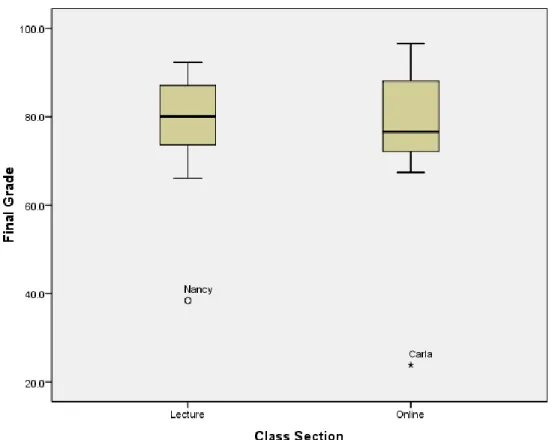
Figure 4.1. Final Course Grade Box Plots, N =12 ... 76
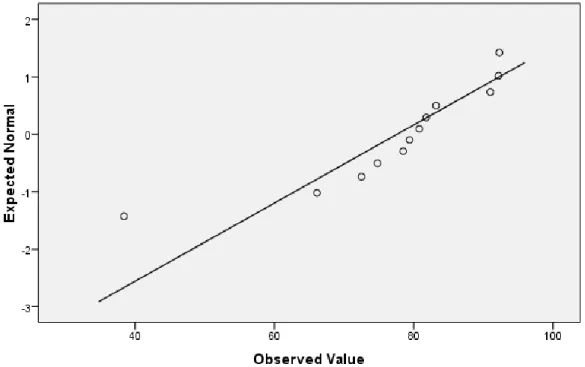
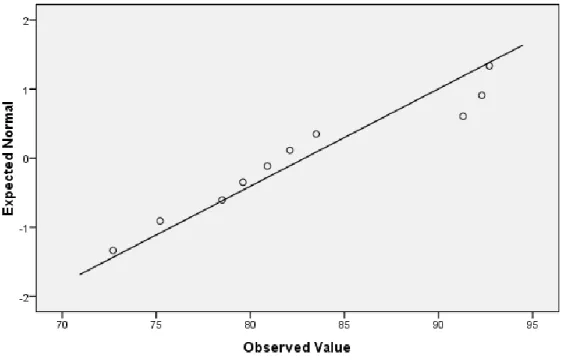
Figure 4.2. Final Course Grades – Section 1 QQ Plot, N =12 ... 78
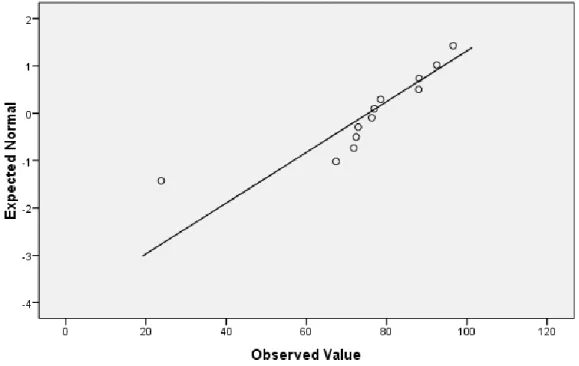
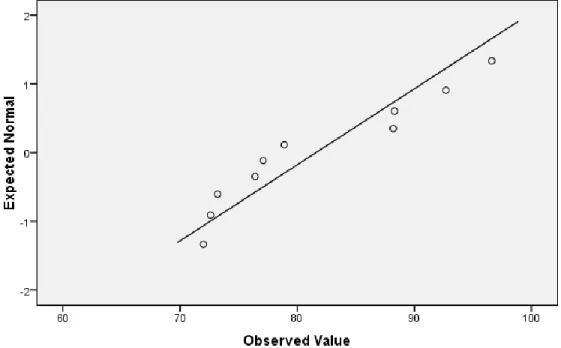
Figure 4.3. Final Course Grades – Section 2 QQ Plot, N =12 ... 79
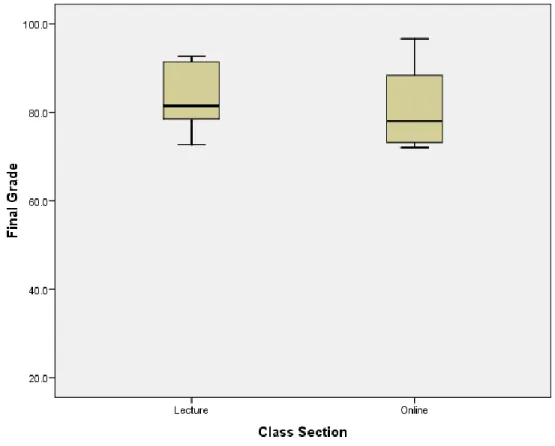
Figure 4.4. Final Course Grade Box Plots, n =10 ... 82
Figure 4.5. Final Course Grades – Section 1 QQ Plot, n =10 ... 83
Chapter I
INTRODUCTION
Online (Internet or web-based) instruction is often described as a medium of course delivery that bridges gaps in access to educational opportunities between urban/suburban and rural schools. The phenomenal growth of technology is having a significant impact on rural education around the globe. By September of 2006, English and mathematics were being taught online by 106 schools out of 138 in the province of Newfoundland and Labrador. Educational leaders are delivering courses to communities where shrinking classroom enrollments would require students to leave their communities to get an education (Canadian Broadcasting Network, 2006). In Pakistan and throughout Asia, the Internet has become increasingly available in the most remote locations. Pakistan‘s countryside students must move to the city to get an
education. If a student can financially afford to go to school in the city, there is no guarantee that there will be human resources available to cope with the number of youth who seek an education (Waldick, 2006).
Mathematics stands as the gatekeeper to higher education, which in turn, is the likely route to economic and life success (Moses & Cobb, 2001; Howley, Howley, & Huber, 2005; Lucas, 2005, Anderson, 2006). Rural students, who may face challenges of isolation from higher education by distance and other factors, must have access to college mathematics courses in order to further their education and employment opportunities. Online mathematics courses may help meet a need for access to college mathematics courses. The increase in demand for
mathematics online course offerings makes a study such as this one imperative. This study sheds light on the impact of web-based mathematics instruction through a rural Appalachian higher education institution. In particular, this study examines achievement in an online versus a traditional mathematics course and whether an online mathematics course meets rural student needs.
Issues
Resistance to Rural Distance Education
In the predominantly rural mid-western state of South Dakota, a growing teacher shortage has caused consolidation of school districts. Even with consolidation, a lack of specialist
teachers exists. A lack of specialist teachers means there must be a reduction in curriculum scope across all levels of education. South Dakota has implemented a statewide distance education project to address these problems. Distance education, however, appears to be both a part of the solution and a part of the problem for this rural state (Wheeler & Amiotte, 2005).
effect on indigenous populations, the distance education system in South Dakota has been a hotly contended issue, especially among the Native American population. These rural community members may see online distance technology as a threat to the preservation of their community (Wheeler & Amiotte, 2005).
Wheeler and Amiotte (2005) describe technology-based distance education tensions that can develop into rural resistance. One tension is in the contrast between the identity of the rural community and the identity of the global community. By its very nature, online distance
education promotes a global community. The global community tends to adopt a common identity whose common purpose is worldwide communication and trading. This common identity causes a blurring of cultural identities. A global community‘s purposes may be at odds with the purposes of a rural community where an individual identity separate from the rest of the world is valued.
Caution must be applied in generalizing about the resistance of all rural communities based on the resistance of rural communities in South Dakota to distance education technology. However, the resistance of rural communities to the destruction of strong community ties is a prominent theme in the rural schooling literature (Howley, Howley, & Huber, 2005; DeYoung, 1995). The rural schooling literature lends credibility to descriptions of rural-global tension (Wheeler & Amiotte, 2005). This study helps determine whether online mathematics learning is being embraced in rural Appalachia, at least on the part of the participants in the study.
Lack of Personal Contact
fellow students or instructors in an online learning environment (Engelbrecht & Harding, 2005b). Although any online student may feel somewhat isolated from instructors and fellow students, the feeling of isolation may be exacerbated by physical geography as well as virtual geography. Isolation by virtual geography can occur because needed infrastructure allowing fast Internet connections may be absent in rural areas.
Engelbrecht and Harding (2005a, b) conducted an informal study of cooperative learning in web-based calculus classes. These researchers maintain that cooperative learning is a way of addressing the problem of isolation as well as encouraging less dependence on the instructor and more opportunities to explore problems within the group. Verbalizing and explaining ideas to others is a crucial factor in learning mathematics online according to these authors. Such verbalization and explanation can occur in cooperative learning groups.
Importance of Classroom Community
Rovai‘s work is an attempt to study students‘ sense of community in an online learning environment and indicates that it may be possible to establish a sense of classroom community that is at least comparable to that of the traditional classroom. This is encouraging news to those schools that are trying to offer successful educational opportunities to rural students who have a strong sense of community. Listening to the voices of rural students as they relate their
experiences in online mathematics courses reveals whether the need for a sense of community is being met in web-based learning opportunities.
The Pedagogy of Online Teaching
Creating a strong sense of community in online courses is only one of several
pedagogical recommendations for successful teaching and learning. Mayes (2004) reviewed distance education literature and found that special skills are required on the part of distance education students and instructors. Instructors must design learning processes that occur
differently than in the traditional classroom. Learner characteristics and motivation to learn in an online environment will affect learning and teaching success because the ability of students to engage in self-directed learning under their own initiatives is critical for success in an online course. Instructors and students must navigate their way through obstacles that arise in utilizing technology as the medium of course delivery, which again is outside the roles of the traditional classroom.
meaningful learning experiences, however, does not guarantee student engagement in the learning process.
High dropout rates exist in many distance-learning courses. The difficulty of retaining students that the instructor may never see points to the importance and significance of effective pedagogy in teaching online learners. Mayes (2004) recommends at least a few face-to-face class meetings to help provide an orientation for students and help them adjust to their new roles as distance learners. This study reveals whether rural Appalachian students are accepting and adjusting to roles of distance learners.
Mayes (2004) cites quality distance-education benchmarks from the literature. These benchmarks include institutional technology support; guidelines for minimum standards for course development, design, and delivery; instructional materials; faculty/student interaction; feedback to students; student support; faculty support; and evaluation and assessment. Interactivity and communication between faculty and students take a different form in online learning, but their presence and frequency is just as important, if not more so, in online classes as opposed to traditional classes.
Course Content in Online Mathematics Courses
events. Overall quality of instructional materials is a key issue affecting student perceptions of online courses (Mayes, 2004).
NetMath, an online math program started at the University of Illinois at
Urbana-Champaign, offers ―visual, hands-on courses, which promote active learning‖ (Hislop, 2006, p. 1) in the following courses: Calculus I, Calculus II, Calculus III, Introduction to Linear Algebra, Differential Equations, Linear Algebra, and Probability and Statistics. NetMath uses
Calculus&Mathematica (C&M) courseware to introduce basic ideas in interactive notebooks, proctors to supervise two midterm exams and a final exam, and student mentors to answer questions. Faculty and students interact regarding weekly assignments. The interaction occurs in a lab or by e-mail, and online quizzes reinforce the material covered by the homework. Because NetMath courses are self-paced, students may enroll and begin a course at any time. Most students complete a course within 16 to 32 weeks. The NetMath website indicates that rural high school students as well as university and home schooled students have taken courses online since 1991 (Hislop, 2006).
Engelbrecht and Harding (2005a) describe three successive web-based calculus courses taught at the University of Pretoria in South Africa. Each calculus course requires a textbook, and WebCT instructions guide the student through the course on a day-by-day basis. One contact hour per week is devoted to discussion. The course material is broken down, first into themes, and then into units with study objectives, short lecture notes; and problems of the day. Students complete four hard-copy assignments and one group project that requires the use of
mathematical software such as Matlab or Maple.
Mays, & Niemiec, 2006). Monitoring student comprehension in an online environment becomes more difficult. Nonverbal behaviors cannot be observed; there is no eye contact to indicate attention or comprehension. ―The course must do many things that mimic human interaction. To the student, it must converse, engage, entertain, encourage, challenge, and sympathize‖
(Engelbrecht & Harding, 2005b, p. 257). Mayes (2004) recommends a synchronous component to an online mathematics course to address some of the difficulties in delivering mathematics content noted above. Overall, very little research exists to inform the presentation of
mathematics content and learning online.
Background of the Study
Equity in online mathematics can be discussed from at least two different perspectives: the perspective of access and the perspective of learning. Since mathematics is the gatekeeper for success in nearly any occupation, equity of access to mathematics for all students is critical. On the other hand, a student‘s access to mathematics courses offered online does not guarantee that at least an equal amount of learning occurs when compared with learning in a traditional classroom setting. However, without equity of access to mathematics learning, we cannot hope to achieve equity of mathematics learning.
For purposes of this research study, equity of learning between online and onsite students is defined as learning that is equivalent in value. The equivalency in value is measured by
fits their needs. Further, online course offerings provide access to mathematical learning that would not otherwise be available to some students.
Students who live in rural Appalachia are likely to live in remote areas that are a great distance from a college. In order to participate in traditional college learning experiences, students may have to drive over treacherous mountain roads daily or leave their homes where there are strong family and community ties. Students may have disabilities that prevent them from participating in on-campus courses. In addition to geographical and other challenges, rural Appalachian students have a great need for quality mathematical learning experiences that will help them retain and honor their attachment to their rural communities while maintaining successful occupations in a global economy.
Higher education leaders recognize the need for a better-educated workforce for the global economy. Even lower level jobs require a high degree of skill, making a better-educated workforce with specialized knowledge necessary. In the past, many rural students have had to migrate out of their community to find employment. In the current technological age, it is now possible for work to move to where people live, rather than people relocating to work. These new situations have significant implications for rural people and their educational opportunities.
The Problem
Online courses certainly have the potential to create equity of access to education for some students. Can equity of learning be created as well? Do undergraduate online students achieve at the same level as onsite class students?
exploration. It is important to hear the voices of rural students as they make choices between online and onsite courses. Does online learning reduce or enhance feelings of isolation for rural Appalachian students? Does online learning help students honor their commitment to place and prepare them for an economically viable future? Is online learning meeting the needs of
Appalachian students? Listening to the thoughts of students in rural Appalachian areas reveal unique opportunities and challenges that have not been explored in the research literature.
Purpose of the Study
One purpose of this study is to determine if there is a significant difference in
mathematics learning between students who complete a mathematics course in an onsite format and students who complete the same mathematics course in an online format. A second purpose of this study is to determine if there is a significant difference in mathematics learning between students who successfully complete a mathematics course in an onsite format and students who successfully complete the same mathematics course in an online format. Learning is measured by final grades in the course, which are largely determined by achievement on content assessments. The content assessments will be the same for both groups of students. Successful completion of the course is defined as a grade of 70% (a C) or better in the course
Research Questions
This study will address four research questions as follows:
1. Is there equity in learning between online and onsite students completing the same mathematics course?
2. Is there equity in learning between online and onsite students successfully completing the same mathematics course?
3. If there is a significant difference in online and onsite students‘ learning, as found in answering Questions 1 and/or 2, what variables may explain
these differences?
4. Are online mathematics courses successfully meeting the needs of rural Appalachian students?
Need for the Study
Online mathematics course offerings have increased rapidly over the last ten to fifteen years, and research has not been able to keep pace with the growth and variability in online mathematics course offerings. The research on online mathematics course achievement and whether online mathematics courses meet rural needs is extremely thin. This study makes a significant contribution to understanding what is happening in online mathematics courses in rural areas. The findings have implications for practice in how teachers offer mathematics courses to rural students and how rural and other higher education institutions meet the needs of their students, communities, and other stakeholders.
organizations meet the demand of the marketplace in a rapidly changing technological world while still upholding a standard of quality educational offerings. Without question, there is a need for extensive research on the learning and teaching of mathematics online.
Equity in learning for students in online mathematics and onsite courses is a worthy goal for institutions desiring quality course offerings for all their students. Documenting and
analyzing any significant differences in achievement between online and onsite mathematics students helps institutions address learning equity issues. Higher education institutions must know whether student needs are being met by online undergraduate mathematics courses. The answers to the research questions in this study contribute important information to an education institution‘s decision-making processes and efforts to offer quality learning experiences to meet student needs. The knowledge and clarity gained in the study helps the researcher, as well as other professors, change and focus the lens through which online mathematics learning is viewed.
Limitations
Conditions in this study over which the researcher has no control and that may influence the study‘s outcome include the following: a student‘s academic and social background,
Delimitations
This study is limited to students in two sections of one course taught during the Spring 2008 semester. Both sections of the course were taught by the same professor at the same college. Only participants of age 18 or older were accepted for the study. Further, the two sections of the course were purposely structured to be very similar in class requirements except for required attendance at the onsite class sessions. Onsite students were required to attend class meetings; online students were only required to attend two class sessions. Other mathematics courses may be structured differently and may have different student populations than those represented in this study.
Although great care was exercised to keep personal bias from influencing the results of this study, the findings of this study are important to the researcher. The researcher has an interest in the findings from the perspectives of a faculty member, an online course committee member, a doctoral student in the ACCLAIM program, and a person with a disability.
Assumptions
This research study rests on the following assumptions made by the researcher. 1. The final grade in the course is an accurate reflection of student achievement. 2. Each student‘s grades reflect his/her own work effort.
3. Each student made an effort to succeed in the course.
4. Each participant completed the survey accurately and honestly. 5. Each interviewee was open and honest in his/her responses.
Definitions of Terms
Equity of learning between online and onsite students is defined as learning that is equivalent in value. Any two students may not have the same combinations of learning events in their sum of learning experiences in a class. The sum of the learning experiences, however, should create learning that is equivalent in value. The equivalency in value of learning is measured by achievement of learning objectives as reflected in the final course grade.
Equity of access to mathematical learning, for purposes of this study, is implied in the flexibility of course offerings that allows students to choose the method of course delivery and learning opportunity that best fits their needs. Further, online course offerings provide access to mathematical learning that would not otherwise be available to some students due to various barriers to traditional college learning experiences. Rural students have a need for equity of access to mathematical learning. This study helps determine if that need is being met.
Online distance learning is defined for the purposes of this study as a type of distance education where high school, undergraduate, or graduate courses are offered in either a synchronous or asynchronous format or both using the Internet as the delivery medium for the bulk of the course content via the Internet. In a synchronous format, the instructors and students interact with each other simultaneously. The class meets at a specified time and comes together in a virtual setting. In an asynchronous format, the class communications do not occur at the same time. Class does not meet at an established time. Some online courses use both
synchronous and asynchronous components in their structure.
provide a nontraditional type of classroom format. Online learning is one type of distance learning.
Onsite students are defined for purposes of this study as students who are taking a course in a college classroom taught by a college professor who is present for the class meetings and conducts the class. The onsite class did not consist of the professor solely transmitting information. Onsite students were expected to work and discuss problems in the class.
The stakeholders of educational institutions include students, faculty, staff,
administration, governing boards, public and private educational organizations, state legislators, business owners and leaders, and other community organizations and members. Stakeholders benefit from the success of the efforts of the educational institution to provide quality learning opportunities. Likewise, stakeholders suffer from the demise of an educational institution
MacIver and Page, as cited in Peshkin (1978), defined community as ―an awareness of sharing a way of life as well as the common earth‖ (p. 6). The concept of community implies a sense of belonging to shared values and common goals.
Rural is defined in many different ways, perhaps the simplest being ―not urban.‖ Coding of data according to rural and nonrural areas is discussed in the methodology section of this document. National Center for Education Statistics (NCES) codes were used to classify survey-identified schools as to location (rural or nonrural) and size (NCES, 2005-2006).
inhabitants. Long bus rides and commutes are common in rural areas where schools in the same district may be 30 to 50 miles apart (Education Development Center, Inc., 2003).
A traditional student is defined as a student under 25 years of age, and a non-traditional student is defined as a student 25 years of age or older.
Appalachia is that section of the United States that stretches along the Appalachian Mountain range. It contains all of the state of West Virginia and parts of twelve other states from Mississippi to New York.
Rural student needs include: equal access to mathematics education when compared with nonrural students‘ access to mathematics education; mathematics education grounded in a sense of place that honors commitments to family and community; employment opportunities that do not require leaving the rural area; appreciation of mathematics as a key to higher education and career opportunities; engaging and relevant learning experiences that help students construct their mathematical knowledge both independently and as an active participant in a community of learners, and an equitable sum of learning experiences when compared with students who take a course via a different delivery medium.
Theoretical Framework
make experiences equal for online and face-to-face learners, Simonson (2000) recommends providing different, but equivalent-in-value learning experiences:
Equivalency is achieved through a variety of learning experiences that are tailored to the environment and situation in which students find themselves. It is likely, for example, that different students in various locations, learning at different times and rates, may require a different mix of learning experiences. Some may need a greater amount of observing, whereas others need a larger dose of doing. Thus, the goal of instructional planning is to make the sum of experiences for each learner equivalent and to select instructional technologies that store and deliver the learning experiences effectively. (p. 30)
The equivalency approach is based on core American educational values such as: the use of teachers to facilitate teaching and learning, rapport between teacher and learner, and
personalized learning (Simonson, Schlosser, & Hanson, 1999). The professor must design learning events, the sum total of which provide equal value in achieving learning outcomes. Decisions about learning events are made based on the best way to facilitate learning. A variety of learning experiences may be required to meet the needs of individual learners, but the sum of the learning experiences for a traditional classroom student should be equivalent to the sum of the learning experiences for the virtual classroom student. ―The more equivalent the learning experiences of distant learners are to those of local learners, the more equivalent will be the outcomes of the educational experiences for all learners‖ (Simonson, Schlosser, & Hanson, 1999, p. 7).
from which to choose. The implementation of equivalency theory requires the availability of many different learning events and choices.
The equivalency of online student learning and onsite student learning in this study is determined by a comparison of overall student achievement in each class, as measured by final grades. Is the sum of online student learning experiences equivalent in value to the sum of onsite student learning experiences, allowing both types of students to achieve learning outcomes?
Summary
The distance required for some rural students to travel to a higher education institution may prevent them from pursuing a college education. Other issues including family
responsibility, health and physical disabilities may also limit access to continued education. If online mathematics courses are available to rural students, opportunities for a college education may follow. Mathematics courses such as algebra and calculus are often considered
―gatekeeper‖ courses that enhance students‘ chances of furthering their education and career choices (Moses & Cobb, 2001; Howley, Howley, & Huber, 2005). Equity of mathematics learning for online students and onsite students is an important consideration for higher education institutions.
population. If a community of online learners can be established, the rural student may be encouraged to join a community that is more like the community experienced in the rural environment.
C. Howley, A. Howley, and Huber (2005) indicate that 30.3% of students, 40.9% of schools, and 63.7% of districts in the United States are located in rural areas. This study is conducted in a college where 90% of the student population is from West Virginia, a
predominantly rural Appalachian state. Understanding the experiences and achievements of rural students in online mathematics courses is crucial if higher education institutions are to meet the needs of this significant schooling population. This research study is vital to institutions whose mission is providing a quality education for its students.
Organization of the Study
Chapter II
REVIEW OF THE LITERATURE
In today‘s digital age, accelerating change has become a normal part of everyday life. Educational institutions are hard-pressed to keep pace with the tremendous depth, breadth, and rate of this change in an age where technology brings new approaches to learning never before possible. Making wise decisions regarding online instruction to students will require shifts in thinking, decision-making, and leadership. Educational organizations need to realign their course delivery with changing conditions and environments (Lemke, 2001). This view is supported by the literature that establishes the context for the research questions in this study. In this chapter, three main bodies of literature will be examined: Rural Education, Mathematics Education, and Online Education. These bodies of research may be visualized as in Figure 2.1 below.
Rural Education
Mathematics Education Online
Education
This Study
Although each body of literature is distinct in its own right, there are areas of intersection between the literatures that establish informative relationships between the bodies of work. This research study is in the common intersection of all three bodies of literature where it is informed by complete and incomplete studies of the distant and recent past. This research study is poised in a sparsely populated intersection of the three bodies of literature.
Rural Education
A rich descriptive and empirical literature exists on rural education. Highlights of this literature are presented by reviewing the work of major scholars in the field. Kannapel and DeYoung (1999) review key literature on rural education and provide an overview of the
characteristics and conditions of rural schools. These scholars briefly trace the history of the r ise of centralization and bureaucratic management of all schools that has resulted in consolidation of many rural schools and a relatively uniform model of schooling based on urban schooling
designs. As a result of consolidation and the urbanization of schools, many rural schools have lost much of their uniqueness and consequently, many of their strengths. In several cases, the academic excellence promised by consolidation did not occur. Rural education researchers call for school improvement efforts that build on the strengths of rural settings and are responsive to the needs of rural schools and communities.
Rural Characteristics
experiencing population loss, are poorer, and offer fewer opportunities for educational and occupational advancement than do urban communities‖ (Kannapel and DeYoung, 1999, p. 68). Agriculture dependent counties have lost population to outmigration of the working-age
population, leaving a higher proportion of elderly residents than metropolitan counties. Big business automation has largely replaced rural jobs in agriculture, mining, and timbering
(Howley, 1997; Theobald, 1997). Other significant trends are rural women having fewer children and working outside the home more than in the past and an increase in single-parent homes. Many rural researchers (Eller, 2001; Harmon, 2001; Howley, 1997; Theobald, 1997) remain convinced that these statistics do not capture the quality of rural life.
The economic and educational value systems of rural communities differ from urban value systems. High-paying jobs are not as important as staying close to family and friends. Rural residents often think in terms of jobs that will allow them to stay near home rather than considering jobs that may lead them away from their rural area. Sometimes, white-collar jobs are associated with a perception of oppressive anti-union corporate administrators. As a result, rural perceptions of laboring jobs in their local areas are more positive than an outsider might imagine. Generally, rural youth are less likely than their urban counterparts to take college preparatory classes and to attend college. Those students who do go on to college tend to migrate out of the rural community. Typically, few rural jobs require an advanced degree, so local occupational structures do not reward going to college (Kannapel & DeYoung, 1999).
Relationships and connections to other people hold priority. A person‘s word is a binding agreement. Layers of bureaucracy are lacking, which facilitates direct, verbal communication (Kannapel & DeYoung, 1999).
Since work can now come to the place of residence via technological advances, rural preferences of place and residence can be honored in ways that were not possible in the industry-building years. With online mathematics and other courses, rural residents have the opportunity to further their education and take advantage of highly skilled jobs, via the Internet, that now require more than a high school education.
Service of Rural Schools
In reference to the question, ―Whom do the schools serve?,‖ rural education scholars maintain that schools serve national government interests because students have been prepared to participate in the national economy. At the beginning of the twentieth century, industrialization and urbanization required people who were prepared to work in an industrialized labor force and urban careers. The factory model guided the organization of schooling and imposed efficiencies and economies-of-scale on all types of schools. Current school reforms, as a reflection of changing economic structure, are aimed at preparing students to manipulate information rather than perform repetitive, assembly-line jobs that have now been largely automated and
computerized (Kannapel & DeYoung, 1999).
should advance intellectual pursuits in their own right. The conflict over the purpose of
schooling is at the heart of rural school problems today. State and national reform leaders have a national agenda while rural scholars believe rural schools should contribute to the stability of the community and serve community interests. Symbolically, rural people want to see their culture honored in schooling.
For a school improvement effort to be successful, local stakeholders must identify with the problem being addressed and must believe the solution is working. Rural communities often do not embrace school reform because reform in the past has led to school consolidation, tax increases, and loss of local control. These factors have not been directed toward local needs and have prepared students to leave the community. School improvement efforts responsive to local needs have been more successful (Kannapel & DeYoung, 1999).
Rural scholars (Eller, 2001; Harmon, 2001; Howley, 1997; Theobald, 1997) emphasize capitalizing on strong links among the rural school, community, and place in order to improve education. Improvement efforts must include grounding in a sense of place; valuing outcomes arising from individual situations rather than predetermined results; inviting contributions from those who are usually marginalized in community development and reform; comprehensive and multi-faceted projects; and strengthening rural communities. ―Real accountability is found in community satisfaction with the schools, and in student ability to succeed after school in ways that are sustaining to themselves, the community, and society at large‖ (Kannapel & DeYoung, 1999, p. 77).
Theobald (1997) claims that the school could become an agent for strengthening community values and increasing the odds for a stronger democracy and a better future.
something to be promoted rather than destroyed. Rural schools, through concerted pedagogical and curricular attention to the dynamics that impinge on their particular place, can rekindle community allegiance and can nurture that suppressed part of us that finds fulfillment in meeting community obligations. (p. 1)
Harmon (2001) agrees that leaders of rural schools must find ways to contribute to community and economic development by finding ways to make the curriculum incorporate the strength of the community. The new version of rural education must combine education and the rural economy in a way that strengthens them both. Student and community needs should be the mission of rural education. Some of the key characteristics of rural education must be
decentralization, diversity, low bureaucracy, community engagement, and technology-enhanced. Course delivery must more closely reflect learning situations students experience throughout their lives.
Appalachia and Rural Today
Old images of Appalachian rural society as desolate and backward, shaped by urban stereotypes and elite assumptions, are still spun by urban-based journalists and scholars, but the images no longer apply (Eller, 2001). ―Old‖ Appalachia still has ties to agriculture, mining, and light manufacturing. ―New‖ Appalachia is being shaped by a new generation of professionals that see promise in a digital age to free rural areas from a resource-based economy and still allow families to remain in rural areas rather than out-migrating to urban areas to find employment (Eller, 2001; Harmon, 2001). With the advent of the Internet, improved communication technologies, and e-commerce, it is no longer necessary for rural areas to be at a market disadvantage or be as isolated as they once were.
Despite these technological advances, many areas of Appalachia are still poor in the sense that there are still a significant number of low incomes, a greater dependency on transfer payments, higher rates of unemployment, poor housing, and major health problems. Further, Appalachia has fewer people with any post secondary training. Although progress is visible in some areas, Appalachia still lags behind in many social and economic measurements (Eller, 2001). Educating both traditional and non-traditional students is very much a reality for colleges serving rural Appalachia. It is relatively common for multiple family members from two
different generations to be taking college courses at the same time.
Place-Based Education and Rural
unique life experiences, Dewey states, ―The inclination to learn from life itself and to make the conditions of life such that all will learn in the process of living is the finest product of
schooling‖ (p. 51). He maintains that ―when schools depart from the education conditions effective in the out-of-school environment, they necessarily substitute a bookish, a pseudo-intellectual spirit for a social spirit‖ (p. 38). The result of a pseudo-pseudo-intellectual spirit is a lack of motivation for learning that is not relevant to the student, and creative problem solving and thinking decreases. Schooling must encourage the unique qualities of students and provide an environment that will help them develop their native talents for the good of the community.
A current definition of place-based learning comes from the September 2005 edition of
Rural Policy Matters, a newsletter of the Rural School and Community Trust: Place-based education is learning that is rooted in what is local – the unique history, environment, culture, economy, literature, and art of a particular place. The community provides the context for learning, student work focuses on community needs and interests, and community members serve as resources and partners in every aspect of teaching and learning. This local focus has the power to engage students academically, pairing real-world relevance with intellectual rigor, while promoting genuine citizenship and preparing people to respect and live well in any community they choose. (p. 3)
Further, it is recommended that the academic work be sustained and all participants expect excellent work from one another. Schools must mirror the democratic values they seek to instill. Each student‘s participation must be needed and wanted (Rural Policy Matters, 2005).
education being a catalyst for people to leave their rural communities for urban areas, education can be a catalyst for successful rural living for those who want to live in a rural area. Salinas suggests portfolio assessments as a way of getting the community involved in education and vice versa.
Three separate portfolios reflect student learning, community impact, and contributions to sustainability of the community. Place-based teaching is often interdisciplinary and portfolios may layer math learning with learning in other disciplines. Portfolios presented to an audience beyond the school in the community can add dimensions of assessment outside the school as well as folding student work into community sustainability with real-world application. Portfolio assessment is not a substitute for other forms of assessments, but rather offers an additional source of assessment information (Gunn, 2005).
Hatfield (2003) maintains that if we are to understand the problems of educating rural people in mathematics, then we must understand the background contexts in which they live and grow up, both in historical and contemporary terms. Understanding the strengths and
weaknesses of these contexts will help address improving mathematical education for students and other stakeholders.
Mathematics Education
Howley (2003) states: ―Rural communities need an infrastructure of good mathematics knowledge, according to some observers‖ (p. 1). Mathematical knowledge is projected as the path to political and cultural power, but for rural communities it is the key to economic survival (Long, Bush, & Theobald, 2003). In 2003, Silver, editor of the Journal for Research in
mathematics in rural places. At that point in time, Silver could not identify a single article dealing explicitly with the teaching or learning of mathematics in rural settings that had been submitted to the Journal. At a time when equity, including issues of access, opportunity to learn, culture, race, and language, has moved to the mainstream of attention in mathematics, rural mathematics research is sadly lacking and rural mathematics appears to not be getting the attention that it deserves.
Mathematics and Rural
Hatfield (2003) believes a ―culture of failure‖ (p. 8) in rural school mathematics exists in the three domains of school, home, and community. He states that it appears to be socially acceptable to fail to understand or achieve in mathematics. In turn, teachers and administrators lower local standards and expectations, and they give up on many students ever learning and succeeding in high quality school mathematics. ―Paradoxically,‖ Hatfield (2003) states, ―the community as a whole may manifest attitudes that outwardly recognize the importance of learning mathematics while implicitly accepting the overall failure of local youth to strive for excellence in the subject‖ (p. 10).
Silver and Castro (2002) offer insight into a culture of failure that persists. These scholars state: ―Thus, there is a complex confluence of factors – related to social capital, risk
require any knowledge beyond algebra, people may perceive advanced mathematics as irrelevant. For these reasons, mathematics is often susceptible to avoidance behaviors. High school students in rural schools, as well as in inner city schools, are less likely than students in suburban schools to enroll in advanced mathematics courses such as advanced algebra,
geometry, trigonometry, or calculus.
Now that leaving a rural area to find employment may not be necessary due to new opportunities for work to come to home, rural students will hopefully begin to value the more advanced mathematics that is required for technologically skilled jobs. These ―new‖
circumstances for rural areas become opportunities for higher education institutions to reach rural students in need of further education.
Mathematics and Appalachia
A folknography study, conducted by Lucas and a team of undergraduate students, asked people from a small Appalachian town what they thought about mathematics in its importance in everyday life and in the education of students and their futures. A folknography allows one to study the culture of a group of people through the eyes of that same people. Folknography, invented by Lucas to focus on the ―folk,‖ gives voice to the people (Nichols, 2005).
Results of this study indicated an expression of a deep appreciation for the acquisition of mathematics skills. Lucas (2005) summarized, ―For most participants, mathematics
intelligence and success in life, shown in the following excerpts from a few Lucas (2005) interviews:
These days, you gotta make math relate, you know? You gotta get kids to see how math can make them produce and help in all that they do. ...We have to get these kids to like math and learn to use math in all they do. You tell those people at your university not to give up. People need to learn math and we have to have trained people to teach it. (p. 10)
Math is the single most important subject in the world. (p. 14)
Results also indicated that adult and senior participants made a noticeable distinction between basic math and advanced math, while these distinctions were not as clear to the young people interviewed. The participants seemed to follow an ―If you can‘t use it, don‘t bother‖ (Lucas, 2005, p.112) approach to learning mathematics. Many saw little use in the community for higher forms of math unless employment and living situations improved from their present status. Informants appeared to believe basic math was sufficient for those who stayed in the region. The results of this study confirm the complex intertwining of math avoidance behaviors, educational value systems, and attachment to place cited in the rural education literature
discussed earlier in this chapter.
would be difficult for participants to produce without some prior agreement among themselves. These voices of rural Appalachia confirm the importance of finding a way to make mathematics relate to real life and to provide place-based mathematics education that not only gives a context for learning, but also provide the opportunity to make learning relevant to the learner.
Mathematics, Place-Based Education, and Rural Education
Hatfield (2003) calls for a new kind of rural mathematics culture that would help rural citizens of all ages construct and appreciate mathematical knowledge in their lives and help mathematics professionals understand and respect the unique needs and values of rural Appalachian citizens. Achieving this cultural change would require a new type of partnership involving participants from the schools and higher education partners, homes, and
communities—educators, parents, citizens.
The current systemic reform in mathematics education, based on a constructivist approach, supports the notion of making learning relevant to students‘ lives in all contexts. In 2000, the National Council of Teachers of Mathematics (NCTM) recommended all levels of school mathematics include opportunities to learn by working on problems arising in contexts outside of mathematics. Contexts outside of mathematics would include other subject areas and disciplines as well as students‘ daily lives. All NCTM standards can be examined from the perspective of rural circumstances in the interest of designing lessons informed by the rural experience (Theobald, 2005).
learning is claimed to be effective in developing higher-level thinking, knowledge transfer, and collecting, analyzing, and synthesizing information and data from multiple sources. Authentic context brings meaning to the learning process and is critical for rural learners to reverse both out-migration of rural youth and the devaluing of rural communities. Authentic context
promotes the value of mathematics, which must be developed at high levels if communities and local regions are to survive economically.
Theobald (2005) is careful to point out that place-based education is not the only route to student engagement in mathematics. Mathematics can be appreciated for its beauty and
symmetry disconnected from its utilitarian value. Regardless of the method of engagement, the mathematics curriculum and instruction must resonate with each student.
Mathematics Reform
Silver and Castro (2002) maintain that contemporary approaches to mathematics through applied problem solving and modeling hold possibilities for combating mathematics avoidance behavior. Schoenfeld is a leading researcher of mathematics teaching and learning, particularly as it occurs in college classrooms. Schoenfeld (1992) summarizes the literature relevant to mathematical thinking and problem solving in Chapter 15 of the Handbook for Research on Mathematics Teaching and Learning. The more recent literature over the last 15 to 20 years conceives of mathematics learning as a social as well as cognitive activity and an essentially constructive activity. Mathematics is not learned best by absorption of rules, facts, and
community as being well grounded and complemented by studies of metacognition and other cognitive science areas.
Constructivism has been extended from the cognitive sphere to the social sphere as it blends with theory from the social literature. The notion of socialization, or enculturation, is centrally related as it emphasizes the importance of perspective and point of view as key aspects of knowledge. Enculturation, entering or picking up the values of a community or culture, is well grounded in the anthropology literature, but it is relatively new to the mathematics education literature. The main idea of enculturation as it relates to mathematics education is that one‘s community molds the unfolding of one‘s point of view. Having a mathematical point of view and being a member of a mathematical community are believed to be central to having
mathematical knowledge (Shoenfeld, 1992).
Enculturation implies that rural students‘ perceptions of mathematics have been influenced by their communities. This idea agrees with the rural education body of literature reviewed earlier and makes the connection to place-based education as well. Further, having mathematical knowledge depends on being a member of a mathematical community. The mathematical community could be a ―class,‖ traditional or online. Connections to establishing an online community of learners is revealed in the discussion of the body of online and distance learning literature.
In order to establish a mathematical community of learners, students must have
oral and written form. Mathematics should prepare students to become independent learners and users of mathematics. Modeling, abstraction, optimization, logical analysis, inference from data, and the use of symbols are recommended for learning experiences. Classrooms (traditional or virtual) must be communities in which mathematical sense-making is practiced in order to help students develop the same (Schoenfeld, 1992). Classroom discourse, solid classroom
interactions, and building on students‘ prior knowledge are productive features of instruction drawn from research in urban schools that should also help rural schools promote mathematical sense-making (Silver & Castro, 2002). The online literature also recommends these features of effective mathematics instruction.
It is interesting to note that in addition to contextual or place-based education, Dewey (1916) recommended constructivist approaches long before the current reform efforts. He described the importance of a variety of problem-solving methods and establishing cross-connections in different subjects and with past learning: ―It puts the student in the habitual attitude of finding points of contact and mutual bearings ....education is not an affair of ‗telling‘ and being told, but an active and constructive process‖ ( p. 38).
Current Mathematics Achievement in Rural Schools
The popular perception among urban dwellers is that all rural schools are inferior (Harman, 2001). Howley and Gunn (2003) refute the common assumptions about rural deficiency in mathematics achievement. Over the last 50 years, as farming declined as an American occupation, gaps in literacy rates and educational attainment rates between rural and nonrural areas narrowed and converged by the close of the 20th century. A mathematics
Gaps in mathematics achievement do correlate with socioeconomic status, but not with schooling locale. Surprisingly, even though rural mathematics course offerings are not as advanced as nonrural course offerings, national data sets do not show a significant difference in mathematics achievement scores.
Howley and Gunn (2003) discuss a mathematics achievement gap at the state level in 40% of states. Half of these states show a gap in favor of rural and the other half show a gap in favor of nonrural. Schooling conditions account for 70% of the rural/nonrural variations. Thus, difference in mathematics achievement as measured by tests cannot be attributed to the location where schooling takes place. College mathematics professors need not be concerned that rural students have had an inferior mathematics education as compared to nonrural students. Howley and Gunn (2003) conclude: ―Allegations of inferiority derive from cultural and ideological dominance, as well as from a long line of misinterpretations of available evidence‖ (p. 93).
Online Education
Pedagogy and Content
Online teaching and learning is a type of distance education, so examining the distance education literature, particularly as it relates to mathematics education, is helpful in establishing the context for this study. The literature reveals several pedagogical and content issues in distance education. Mayes (2004) summarizes recommendations from the literature for mathematics distance education as follows: 1) Course design should be based on the
constructivist learning theory with math modeling as the course focus. 2) Mathematical problems should reflect the real world. 3) Learning should be student-centered, interactive, and
interdisciplinary. These recommendations are similar to those endorsed by NCTM for any mathematics course taught in a traditional format.
Noteworthy findings from the review of the distance education literature relate to components and characteristics of any distance education course. Both instructors and students find themselves in new and challenging roles in the virtual classroom. Instructors must become facilitators of learning rather than relying on the traditional onsite format. Visual cues available through direct eye contact are missing in a distance education format, and, as a result, teachers must rely on other ways to get quick feedback. Frequent formative assessments for students and professional development for instructors are recommended to combat this problem. The
computer-generated representations of mathematical concepts and demonstrations of practical applications, invoke positive student attitudes (Mayes, 2004).
Jung(2001) used Transactional Distance Theory in a study of teaching and learning processes of web-based instruction (WBI). Transactional Distance Theory, which first appeared in 1972, uses the extent of pedagogical relationships of dialogue, structure, and learner autonomy to define the degree of transactional distance between teachers and learners. Empirical studies reviewed indicate that transactional distance decreases when dialogue increases. This causes structure to decrease and become more flexible. When structure increases and becomes more rigid, dialogue decreases, and transactional distance increases.
Jung (2001) discusses weaknesses in the studies she investigated:
Unfortunately, not many studies investigated pedagogical processes in WBI in a rigorous manner. That is, what was really happening in teaching and learning processes of WBI and why it happened were seldom the focus of the studies. Rather how to design effective WBI, how to encourage interaction, and what were the effects of WBI on learner satisfaction and perceived learning outcomes were the most frequently asked research questions (p. 528).
Distinct features of web-based instruction, identified in Jung‘s (2001) study include: ―student-centered learning environment,‖ ―full of multimedia resources,‖ ―expanded
interactivity,‖ and ―adaptability to different student characteristics‖ (p. 529). Researchers in Jung‘s study agreed that WBI can provide a flexible teaching and learning environment because of the technical features of the Web. The structural flexibility of WBI is linked to expandable and interactive features of its contents that can extend beyond those prepared by instructors.
there is a sense of human contact in the network. Three types of virtual communities affecting dialogue in WBI include: an academic community formed by interaction between learners and instructors or content experts; an intellectual community provided through peer interaction; and an interpersonal community developed through interpersonal encouragement and assistance (Jung, 2001).
Recommendations from the distance education literature for developing community include forming small collaborative groups that meet virtually, frequent faculty-student contacts via synchronous chat rooms and reflective e-mails, multiple support systems, threaded discussion boards, weekly projects, electronic bulletin boards, and photographs of students. Making class participation a higher percentage of the grade will also encourage interaction and development of community (Mayes, 2004).
Rovai Study of Classroom Community
students. The traditional courses consisted of approximately 70% male students and 30% female students. The courses met for one semester.
The SCCI was determined from student answers to a 40-item questionnaire that focused on determining students‘ feeling about spirit (their connections to others in the course), trust, interactions, and learning. The questionnaire was completed in the final weeks of the semester in both the traditional and online courses and used a five-point Likert scale that allowed Rovai to perform quantitative comparisons. His findings indicated no significant difference in overall sense of classroom community between the two groups of subjects. Interestingly, students in five of the seven online courses with the highest community means had a significantly higher sense of community than the group of students in the seven traditional courses. Rovai (2002) stated, ―This finding suggests that the feeling of disconnectedness and isolation that have been reported in many post-secondary e-learning courses tend to be related to individual course design and/or pedagogy rather than to the e-learning system itself‖ (p. 52).
Discriminant analysis revealed a significant overall difference in community structure between the two groups. A moderate positive relationship between classroom community and the number of messages posted by online students confirmed that interactivity was an important component of community building. The results also supported the ideas that structure tends to increase distance (decrease community) and dialogue tends to decrease distance (increase community).
Rovai claimed that the SCCI possesses high face validity in that the items on the
Considerable effort was expended to ensure that (a) the concept of classroom community was based on the general concept of community as contained in the professional literature, (b) classroom community is seen as a type of community that is applied to an educational setting, and (c) the SCCI captures all four components of classroom community. (p. 47)
The four components of classroom community in Rovai‘s study are the same as those discussed above as being measured on the questionnaire: spirit, trust, interaction, and learning.
Cronbach‘s coefficient alpha was applied to SCCI scores to determine instrument reliability. The coefficient for internal consistency was .96 for the overall SCCI score. Rovai maintained that the findings provided ―evidence that classroom community and each of its components have high to very high internal consistency and that the SCCI can reliably measure classroom community in a group of post-secondary students‖ (Rovai, 2002, p. 47).
Rovai used the causal-comparative method in this research and disclosed that no attempt was made to assign student subjects to specific kinds of courses. Therefore, it is possible that student subjects in traditional courses and online courses could differ from each other in unknown ways that would confound the results of the study. For example, if there were more sociology students in the traditional course groupings, would the results show higher community scores than a group of online mathematics students? There is a further concern about the reliability of these results. It is not known how much experience the traditional and virtual classroom teachers had in fostering a sense of classroom community. Unmatched teacher experience in the traditional classroom and the online classroom could make the results totally unreliable. This would be a difficult construct to control, but there is no indication that Rovai attempted to match the two groups in teacher experience. Instructional design in online courses may have varied significantly between the online courses and the traditional courses.
The elements of community, spirit, trust, interaction, and learning, may or may not be enough elements to compose all three types of communities identified by Jung (2001), academic,
intellectual and interpersonal. No distinction is made between types of communities experienced by online learners versus traditional learners in this study.
Certainly, this study is flawed, and it is not possible to generalize results beyond the confines of the study. However, it does serve as a preliminary attempt to study students‘ sense of community in an online learning environment and indicates that it may be possible to establish a sense of classroom community that is at least comparable to that of the traditional classroom.
Engelbrecht and Harding Study of Cooperative Learning
A concern in any web-based course is the lack of personal contact. Engelbrecht and Harding (2002) attempted to combat isolation and encourage constructivist practices by requiring cooperative learning groups in their online calculus classes. A group of three or four students was the preferred group size. The online calculus classes were large groups of 100 to 200 mostly residential students who were expected to ―meet‖ physically or online to discuss the course content and work on assignments and projects as a group. The instructors used a questionnaire to determine the strengths and weaknesses of the cooperative learning student experiences.
An interesting finding from the student questionnaires was that 28% of students preferred to work alone. These students essentially had no face-to-face contact because of geographical location, and they were permitted by the instructors to form a cooperative learning group of one. A surprisingly small group of students met in their cooperative groups via the web. Most
success in a web-based course in mathematics. Engelbrecht and Harding (2002) concluded from this informal study that cooperative learning was very important to a web-based mathematics course, but it was difficult to implement. They reported being disappointed that students did not utilize the cooperative learning groups to their full potential.
Unfortunately, the report omits many details of the study, such as the exact questions used on the questionnaire, examples of group assignments and projects, and other aspects of the structure of the calculus courses that might clarify the dynamics of the cooperative group. Although some Appalachian students and some South African students may share a common characteristic of geographical isolation, their cultures are likely very different. Cultural, as well as geographic, characteristics may have influenced the preference of some students to work alone. It is difficult to imagine that the geographically isolated student had an equivalent learning experience to others in the class who participated in a cooperative learning group consisting of more than one person.
Achievement in Online Courses
Cognitive outcomes have been difficult to ascertain, and research findings have been scant and general. Two comparison studies found no significant difference in grades between online and onsite versions of a course, but one study indicated that test scores of online students did significantly decline during the semester (Mayes, 2004).
An interesting study compared learning experiences in a classroom-based instructional method with two distance education systems. In this study, three options were available for students to take an introduction to statistics course: a web-based course, a video-based