R E S E A R C H
Open Access
Baseline characteristics of study sites and
women enrolled in a three-arm cluster
randomized controlled trial: PMTCT uptake
and retention (pure) Malawi
Monique van Lettow
1,2*, Hannock Tweya
3,4, Nora E. Rosenberg
5,6, Clement Trapence
3, Virginia Kayoyo
5,
Florence Kasende
1, Blessings Kaunda
7, Mina C. Hosseinipour
5,8, Michael Eliya
9, Fabian Cataldo
1, Salem Gugsa
3,
Sam Phiri
3,8,10and for the PURE Malawi consortium
Abstract
Background:Malawi introduced an ambitious public health program known as“Option B+”which provides all HIV-infected pregnant and breastfeeding women with lifelong combination antiretroviral therapy, regardless of WHO clinical stage or CD4 cell count. The PMTCT Uptake and REtention (PURE) study aimed at evaluating the effect of peer-support on care-seeking and retention in care.
Methods/design:PURE Malawi was a three-arm cluster randomized controlled trial that compared facility-based and community-based models of peer support to standard of care under Option B+ strategy. Each arm was expected to enroll a minimum of 360 women with a total minimum sample size of 1080 participants. 21 sites (clusters) were selected for inclusion in the study. This paper describes the site selection, recruitment, enrollment process and baseline characteristics of study sites and women enrolled in the trial.
Results:Study implementation was managed by 3 partner organizations; each responsible for 7 study sites. The trial was conducted in the South East, South West, and Central West zones of Malawi, the zones where the implementing partners operate. Study sites included 2 district hospitals, 2 mission hospitals, 2 rural hospitals, 13 health centers and 1 private clinic. Enrollment occurred from November 2013 to November 2014, over a median period of 31 weeks (range 17–51) by site. A total of 1269 HIV-infected pregnant (1094) and breastfeeding (175) women, who were eligible to initiate ART under Option B+, were enrolled. Each site reached or surpassed the minimum sample size. Comparing the number of women enrolled versus antenatal cohort reports, sites recruited a median of 90% (IQR 75–100) of eligible reported women. In the majority of sites the ratio of pregnant and lactating women enrolled in the study was similar to the ratio of reported pregnant and lactating women starting ART in the same sites. The median age of all women was 27 (IQR 22–31) years. All women have≥20 months of possible follow-up time; 96%≥2 years (24–32 months).
Conclusion:The PURE Malawi study showed that 3 implementing partner organizations could successfully recruit a complex cohort of pregnant and lactating women across 3 geographical zones in Malawi within a reasonable timeline. Trial registration:This study is registered at clinicaltrials.gov - ID Number NCT02005835. Registered 4 December, 2013.
Keywords:PMTCT, Uptake, Retention, Peer-support, Cluster randomized trial, Malawi, Feasibility
* Correspondence:[email protected]
1Dignitas International, Zomba, Malawi
2Dalla Lana School of Public Health, University of Toronto, Toronto, Canada
Full list of author information is available at the end of the article
Plain english summary
Malawi introduced a new strategy that aims at prevent-ing HIV infection from mother to child. There is no cure for HIV, but medication (antiretroviral treatment) is available to slow the progression of the virus and help prevent transmission of HIV to others. The so called
“Option B+” strategy means that all HIV-infected
preg-nant and breastfeeding women start antiretroviral treat-ment as soon as they are diagnosed. The PMTCT Uptake and REtention (PURE) study evaluated whether support provided by peers (mothers who are HIV-infected and on treatment themselves) can help to increase the number of HIV-infected pregnant and breastfeeding women to start treatment (uptake) and keep them in care and on treatment (retention). The study took place in 21 health facilities, where mothers either received no peer support (7 sites), peer support in the facility (7 sites) or peer support in the community (7 sites). This article describes how the study was suc-cessfully set up and managed by 3 organizations. Between November 2013 and November 2014, a total of 1269 HIV-infected women were included in the study in the 21 health facilities. We describe that it is possible to set up a complex study across 3 geographical zones in Malawi.
Background
In 2011, Malawi introduced an ambitious public health
strategy known as“Option B+”, providing a standardized
lifelong combination antiretroviral therapy (ART) regi-men to all HIV-infected pregnant and breastfeeding women, irrespective of their CD4 cell count or World Health Organisation (WHO) clinical stage of HIV infec-tion. This public health approach for the prevention of mother to child transmission (PMTCT) of HIV has since been adopted by several other countries in the region and was included in the updated WHO guidelines in 2013 [1]. Initial data have demonstrated that the Option B+ strategy has resulted in large increases in the number of pregnant women accessing PMTCT [2]. However, concerns have been raised about the level of attrition of women from care [3]. Although the strategy offers an at-tractive rapid ART scale-up and has the potential to pro-foundly impact maternal and infant outcomes, services supporting the implementation of Option B + have not been formally evaluated. Several issues were identified at the national level as potential threats to the successful implementation and scale up of the strategy: a) potential suboptimal uptake of ART by asymptomatic pregnant women due to low treatment literacy and stigma; b) low adherence to ART and poor follow-up of HIV exposed infants; and c) lack of psycho-social support for long term retention in this relatively asymptomatic patient population [4]. Hence, it seemed apparent that the iden-tification of interventions to support PMTCT uptake
and retention would be the first step towards improve-ment. A recently published systematic review identified 9 completed studies and 5 ongoing trials which exam-ined initiation of ART in pregnant women [5]. While the authors report several promising interventions for improving ART initiation, the quality of evidence was insufficient to support recommendations. In addition, re-sults for ART initiation in pregnant women were not inde-pendently examined, and maternal retention in PMTCT care and exposed infants care were not assessed.
Although randomized controlled trials are promoted as the highest level of evidence for the evaluation of in-terventions, the implementation of rigorous trials within the context of the public health sector are complex and therefore still uncommon [6]. PURE Malawi embraced the challenge of implementing a multi-site controlled trial within the context of public health clinics under real world conditions in Malawi. PURE Malawi was a three-arm cluster randomized controlled trial that aimed at evaluating whether facility- or community-based peer-support would enhance care-seeking and retention in
care by HIV-infected pregnant and breastfeeding
women, their HIV-exposed infants, and their male sex partners, and ultimately improve health outcomes in all three populations. The hypothesis was that enhanced support for women and their families within facilities and/or community would result in improved retention in the continuum of PMTCT care. The primary trial out-come is the proportion of women retained in care, 2 years after they initiated antiretroviral therapy under the Option B+ strategy. This paper describes the site selec-tion, recruitment, enrollment process and baseline char-acteristics of study sites and women enrolled in the trial.
Methods
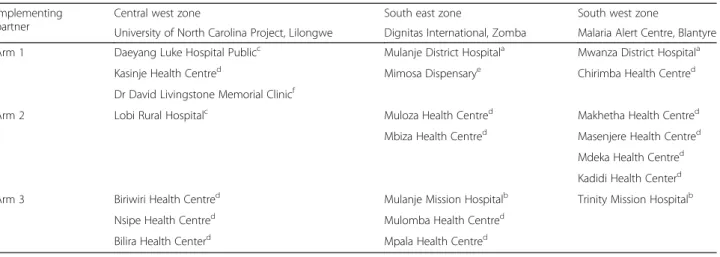
partners operate. Selection and responsibilities of all con-sortium members were described elsewhere [7].
Site selection and recruitment targets
Clusters (i.e. health facilities) were the unit of
randomization in this trial. Public health facilities in the South East, South West, and Central West health zones of Malawi, covering the central and southern geograph-ical regions of Malawi, were assessed for eligibility in the trial. Sites were eligible if they provided Option B+ services, did not have additional PMTCT interventions or research activities beyond the Malawi national stand-ard of care, and were expected to have at least 20 eligible women for Option B+ in a 6 month period. HIV care in Malawi is free and standardized in all public health facil-ities. Site assessments, selection and randomization of the sites were described elsewhere [7].
Twenty-one selected sites were stratified into 3 groups of 7, with each group having sites of comparable size and expected retention, based on Ministry of Health his-toric data. Depending on the size of the health facility, each site was expected to reach a minimum enrollment target of 20, 50, 75, or 125 pregnant or breastfeeding women eligible for the Option B+ program. Each arm was expected to enroll a minimum of 360 women with a total minimum sample size of 1080 participants. Sites could exceed this target if they finished enrollment prior to a 6 month period.
Enrolment process and index participants
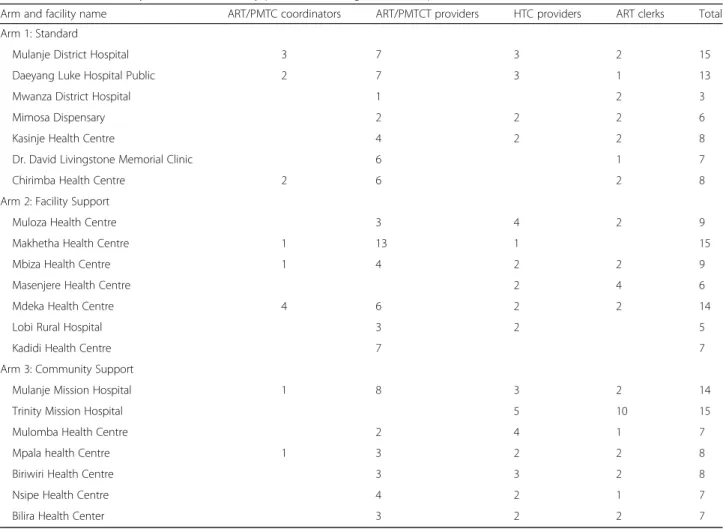
Prior to study implementation, all Ministry of Health staff working at ANC and ART departments in the se-lected sites received training in study arm specific stand-ard operating procedures, adherence to ethical standstand-ards and management of data collection tools (Good Clinical Practice). At each site, a PURE site coordinator was selected to oversee the study implementation.
All newly identified HIV positive women identified during pregnancy, delivery, or breastfeeding while seek-ing antenatal care (ANC) or initiatseek-ing ART services at the study sites were eligible for inclusion in the study. Women consented to participate and be followed in the site where they had sought ANC or ART services and were explained in which arm the site was allocated.
Based on existing PMTCT monitoring data, we antici-pated 6 months until sample size was achieved.
All participating women were assigned a unique study ID. Study ID stickers were placed in the study register,
the mother’s existing health passport and on all routine
clinic records for data extraction and tracking.
The index participants were newly confirmed HIV-infected pregnant and breastfeeding women; eligible to initiate ART under Option B+, in the 21 selected health facilities. To attain the primary trial outcome, enrolled
women were expected to be followed until the end of the study period (31st July 2016), transfer out, default, or death.
Data collection and management during recruitment period
All newly identified HIV positive women were eligible for inclusion in the study. Therefore, routinely collected health facility cohort data prepared during quarterly supervision visits [8] was used to compare the number of women enrolled in the study with the number of eli-gible women seeking care at the health facility during the recruitment period. Monthly ANC cohort data included the number of women newly registered, newly diagnosed with HIV or already known HIV-infected, and those already on ART. ART cohort data included the number of pregnant and lactating women having started ART per quarter.
Facility characteristics data, including availability of HIV Testing Services (HTS), ANC and ART services were collected by existing study personnel throughout the enrolment period.
During study enrollment, health facility staff used PURE registration and PURE enrolment forms to collect
data on mothers’ age, expected delivery date (pregnant
women) or date of birth of the child (lactating women), marital status, and whether the partner lives in the catchment area.
At the ART initiation visit, a routinely used clinical card was initiated and treatment initiation data were re-corded, including date, age and reason for initiation of ART (WHO stage or pregnant/lactating), TB and KS. The data collection and analytic methods, including a detailed analysis plan, for the final trial outcomes were described elsewhere [7].
Compensation of health facility for study specific activities
During the enrolment period, each health facility re-ceived 1000 MK (equivalent to approximately 2 USD) per correctly enrolled study participant, in addition to a median amount of 5000 MK per month (equivalent to approximately 10 USD) for correct organization and storage of clinical and study records as stipulated by the national guidelines and PURE protocols. This amount was shared among the facility staff involved in the study.
Results
additional support for training and implementation in all Arm 2 sites. Table 2 shows the number of Ministry of Health staff trained by site and cadre prior to study implementation. Enrollment initiation varied per trial site from November 2013 through January 2014. Recruitment was completed in November 2014. Median enrollment time per site was 31 weeks, ranging from 17 to 51 weeks. Table 3 describes the number of pregnant and lactating women enrolled per site and arm, in addition to the number of eligible women reported in cohort reports at ANC and ART during the recruitment period. Each site and arm reached or surpassed the minimum sample. However, a few participants (4%) were enrolled later than the desired end date of July 31st 2014, making 2 years of follow up impossible by July 31, 2016, the trial end date.
A total of 1269 women were enrolled, 1094 (86%) pregnant and 175 (14%) lactating women.
When comparing number of enrolled pregnant women per site with facility cohort data; 7 sites recruited >100% of the total reported cohort of HIV-infected pregnant women at ANC in the corresponding months. The add-itional number of pregnant women may have started ART, but not attended ANC in the specific study site.
Nine sites recruited >90%, 10 sites 60–90%, and 2 sites
40%–59% of the total reported cohort of pregnant
women at ANC in the corresponding months. When comparing the number of women enrolled versus ANC
reports, sites recruited a median of 90% (IQR 75–100) of
eligible reported women from ANC.
Following quarterly ART cohort report data; in all study sites, a total of 1934 (81%) pregnant and 454 (19%) lactating women had started ART during corre-sponding quarters. This proportion of pregnant and lactating women was comparable to our study sample.
Baseline characteristics of study sites
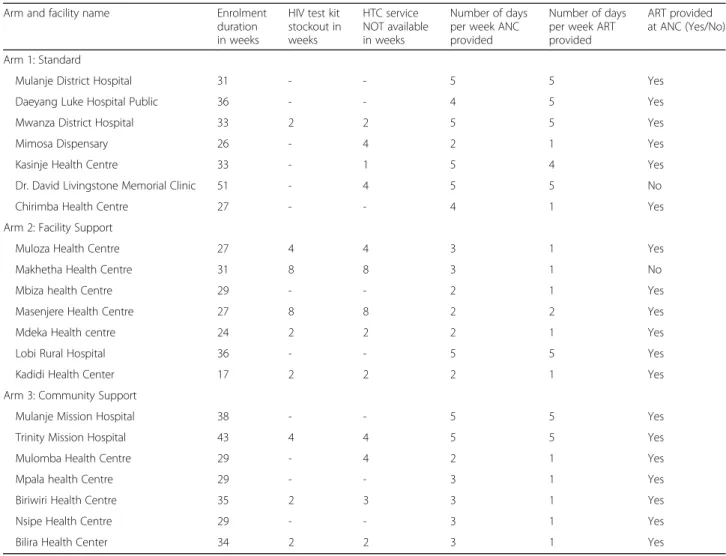
Table 4 shows the characteristic of study sites, with regards to services available during the enrolment period. During the enrolment period, 9 facilities experi-enced a median of 2 weeks of HIV test kit stock outs
(range 2–8) and 13 facilities were not able to provide
HTC for a median of 4 weeks (range 1–8) due to stock
outs or unavailability of HTC providers. The 6 largest facilities provided ANC and ART services during all week days; in all other facilities ANC and ART services
were provided at a median of 3 days (range 2–4) and
1 day (range 1–4) per week, respectively. In 19 of the 21
facilities, ART provision was available at ANC.
Baseline characteristics of women enrolled in the trial
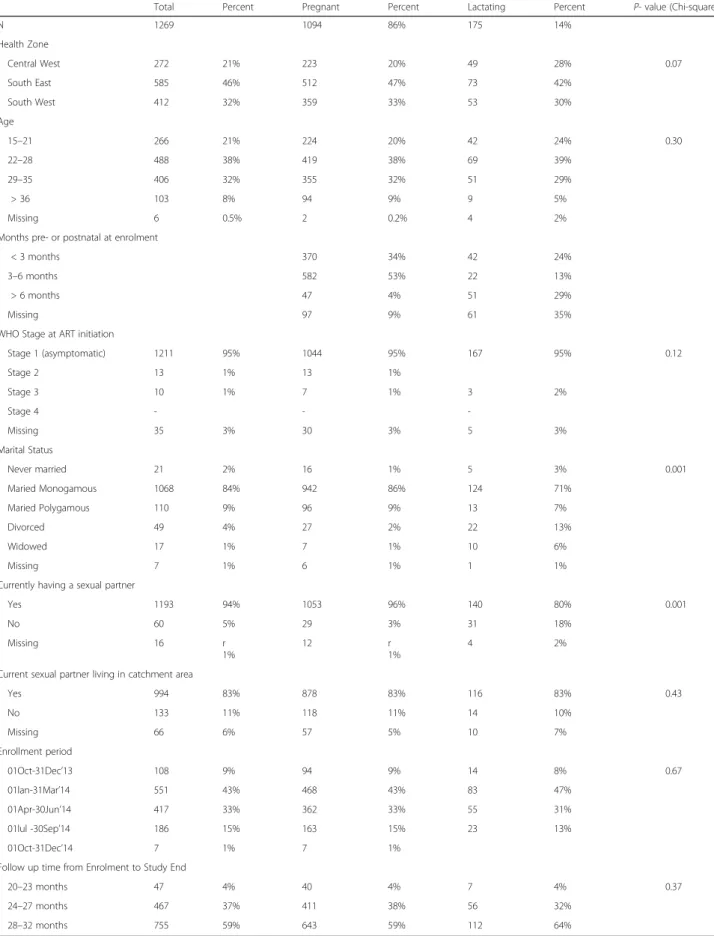
Cumulative baseline characteristics of women enrolled in the trial are shown in Table 5.
The median age of all women was 27 (IQR 22–31) years,
with no difference between those pregnant and lactating. Pregnant women were enrolled at a median of 4 months
(IQR 2–5) prenatal; breastfeeding women at a median of
5 months (IQR 1–11) postnatal. Reason for ART initiation
for all women was being pregnant or lactating (regardless of CD4 or WHO stage). Among those with WHO stage reported at ART initiation, 98% of both pregnant and lac-tating women were reported clinically asymptomatic. There was 1 documented TB case (within the last 2 years) and 1 documented KS case at ART initiation.
Proportionally more lactating women reported being divorced, widowed, or having no sexual partner than pregnant women. Among women with at least one sex-ual partner, 11% were reported not living in the same catchment area as their partner. There was no difference in recruitment by Health Zone period or the time for Table 1PURE Malawi sites by health zone, implementing partner and study arm
Implementing partner
Central west zone South east zone South west zone
University of North Carolina Project, Lilongwe Dignitas International, Zomba Malaria Alert Centre, Blantyre
Arm 1 Daeyang Luke Hospital Publicc Mulanje District Hospitala Mwanza District Hospitala
Kasinje Health Centred Mimosa Dispensarye Chirimba Health Centred
Dr David Livingstone Memorial Clinicf
Arm 2 Lobi Rural Hospitalc Muloza Health Centred Makhetha Health Centred
Mbiza Health Centred Masenjere Health Centred
Mdeka Health Centred
Kadidi Health Centerd
Arm 3 Biriwiri Health Centred Mulanje Mission Hospitalb Trinity Mission Hospitalb
Nsipe Health Centred Mulomba Health Centred
Bilira Health Centerd Mpala Health Centred
a
District Hospital
b
Mission Hospital
c
Rural Hospital
d
Health Centre
e
Dispensary
f
follow-up between pregnant and lactating women. The largest proportion of women was recruited between January and July 2014, enabling 96% of women to be
followed up for at least 2 years (24–32 months) as part
of the trial.
Discussion
This paper shows that the PURE consortium was suc-cessful in recruiting a complex cohort of pregnant and lactating women across 3 geographical zones in Malawi. Each site and trial arm reached or surpassed the minimum required sample size, and the majority of sites recruited over 90% of the reported eligible women attending ANC during the recruitment period. Although cluster designs are often avoided due to the challenges of enrolling at multiple sites within a reasonable time-line, we show that, despite the absence of remunerated study staff within study site, only few participants were enrolled later than the desired end date; allowing for 96% of the cohort to be followed for at least 2 years. We report that there were HIV test kit stock outs or un-availability of the HTC providers, which may have prolonged the enrolment period. Shortages and stock
out of commodities at health facilities is a reality in Malawi, however, national guidelines are set up to im-prove the supply management [8]. In the majority of participating sites, the ratio of pregnant and lactating women enrolled in the study was similar to the ratio of pregnant and lactating women initiated on ART in the same sites. There was no difference in age between the enrolled pregnant and lactating women. One fifth of the
women enrolled were young mothers (15–21), which is
consistent with national evaluations that describe
women in Malawi’s Option B+ program [3].
Proportion-ally more lactating women reported being divorced, widowed or having no sexual partner. As male partner support is thought to be an important determinant for
uptake and outcomes of PMTCT initiatives [9–11],
follow up of our cohort of mothers with and without partners will add to the evidence on the impact of male partner involvement approaches on PMTCT services.
According to Malawi’s demographic health survey, 14%
of Malawian women are married to a man with more than one wife. Polygamy is most common in the Northern Region [12], which may explain why we found a lower proportion of women in polygamous marriage (9%). In Table 2Number of facility staff trained in study procedures and good clinical practices
Arm and facility name ART/PMTC coordinators ART/PMTCT providers HTC providers ART clerks Total
Arm 1: Standard
Mulanje District Hospital 3 7 3 2 15
Daeyang Luke Hospital Public 2 7 3 1 13
Mwanza District Hospital 1 2 3
Mimosa Dispensary 2 2 2 6
Kasinje Health Centre 4 2 2 8
Dr. David Livingstone Memorial Clinic 6 1 7
Chirimba Health Centre 2 6 2 8
Arm 2: Facility Support
Muloza Health Centre 3 4 2 9
Makhetha Health Centre 1 13 1 15
Mbiza Health Centre 1 4 2 2 9
Masenjere Health Centre 2 4 6
Mdeka Health Centre 4 6 2 2 14
Lobi Rural Hospital 3 2 5
Kadidi Health Centre 7 7
Arm 3: Community Support
Mulanje Mission Hospital 1 8 3 2 14
Trinity Mission Hospital 5 10 15
Mulomba Health Centre 2 4 1 7
Mpala health Centre 1 3 2 2 8
Biriwiri Health Centre 3 3 2 8
Nsipe Health Centre 4 2 1 7
Table 3 PURE study enro llment per site and arm versus eligible women reported in cohort data from the same facilities PURE recruitement MoH program report cohort data Arm and facility name Target per site Total enrolled Enrollment period
Pregnant women enrolled Lactating women enrolled
MoH program report period ANC DATA (monthly) New ANC registrations HIV positives women a(not on ART) in ANC MoH program report period ART DATA (quarterly)
Pregnant women started
ART
Lactating women started
our study, 98% of pregnant and lactating women were re-ported clinically asymptomatic. This high proportion of women starting ART in the earliest stages is an indication
of the success of Malawi’s PMTCT programming.
Malawi, as the first country to implement Option B+, has the potential to be a leader in developing and docu-menting highly effective models of service delivery to pregnant and lactating women and enhance retention in lifelong care and treatment. Cluster randomized con-trolled trials are needed to determine whether promising interventions are indeed effective. However, the imple-mentation of such trials pose a substantial challenge, es-pecially across multiple regions, different facility types, and several implementing partners. Thus, the ability to select 21 comparable clinics, stratify them in a meaning-ful way, and have each enroll its target sample size is an achievement. This achievement stems from clear leader-ship, small incentives to clinical staff, and well-coordinated teams.
This paper described the processes for site selection, recruitment, and enrollment of study participants, along
with baseline characteristics of study sites and women enrolled in the trial. Follow-up of participants was com-pleted on July 31st, 2016. The final results and outcomes (per protocol) of this study are reported elsewhere [13]. Alongside this trial, a qualitative study has been imple-mented to explore experiences of patients and health care workers in relation to the implementation of Option B+ and the trial interventions [14].
Limitations
We were not able to report the precise number of women who refused to participate in the study, as this data was not collected consistently across the sites. However, compared to facility cohort data, it appears that we were able to enroll the majority of eligible women.
Conclusions
Malawi, as the first country to implement Option B+, has the potential to be a leader in developing and docu-menting highly effective models of service delivery to Table 4Facility characteristics during enrollment period
Arm and facility name Enrolment
duration in weeks
HIV test kit stockout in weeks
HTC service NOT available in weeks
Number of days per week ANC provided
Number of days per week ART provided
ART provided at ANC (Yes/No)
Arm 1: Standard
Mulanje District Hospital 31 - - 5 5 Yes
Daeyang Luke Hospital Public 36 - - 4 5 Yes
Mwanza District Hospital 33 2 2 5 5 Yes
Mimosa Dispensary 26 - 4 2 1 Yes
Kasinje Health Centre 33 - 1 5 4 Yes
Dr. David Livingstone Memorial Clinic 51 - 4 5 5 No
Chirimba Health Centre 27 - - 4 1 Yes
Arm 2: Facility Support
Muloza Health Centre 27 4 4 3 1 Yes
Makhetha Health Centre 31 8 8 3 1 No
Mbiza health Centre 29 - - 2 1 Yes
Masenjere Health Centre 27 8 8 2 2 Yes
Mdeka Health centre 24 2 2 2 1 Yes
Lobi Rural Hospital 36 - - 5 5 Yes
Kadidi Health Center 17 2 2 2 1 Yes
Arm 3: Community Support
Mulanje Mission Hospital 38 - - 5 5 Yes
Trinity Mission Hospital 43 4 4 5 5 Yes
Mulomba Health Centre 29 - 4 2 1 Yes
Mpala health Centre 29 - - 3 1 Yes
Biriwiri Health Centre 35 2 3 3 1 Yes
Nsipe Health Centre 29 - - 3 1 Yes
Table 5Cumulative Baseline characteristics of women included in the study
Total Percent Pregnant Percent Lactating Percent P- value (Chi-square)
N 1269 1094 86% 175 14%
Health Zone
Central West 272 21% 223 20% 49 28% 0.07
South East 585 46% 512 47% 73 42%
South West 412 32% 359 33% 53 30%
Age
15–21 266 21% 224 20% 42 24% 0.30
22–28 488 38% 419 38% 69 39%
29–35 406 32% 355 32% 51 29%
> 36 103 8% 94 9% 9 5%
Missing 6 0.5% 2 0.2% 4 2%
Months pre- or postnatal at enrolment
< 3 months 370 34% 42 24%
3–6 months 582 53% 22 13%
> 6 months 47 4% 51 29%
Missing 97 9% 61 35%
WHO Stage at ART initiation
Stage 1 (asymptomatic) 1211 95% 1044 95% 167 95% 0.12
Stage 2 13 1% 13 1%
Stage 3 10 1% 7 1% 3 2%
Stage 4 - -
-Missing 35 3% 30 3% 5 3%
Marital Status
Never married 21 2% 16 1% 5 3% 0.001
Maried Monogamous 1068 84% 942 86% 124 71%
Maried Polygamous 110 9% 96 9% 13 7%
Divorced 49 4% 27 2% 22 13%
Widowed 17 1% 7 1% 10 6%
Missing 7 1% 6 1% 1 1%
Currently having a sexual partner
Yes 1193 94% 1053 96% 140 80% 0.001
No 60 5% 29 3% 31 18%
Missing 16 r
1%
12 r
1%
4 2%
Current sexual partner living in catchment area
Yes 994 83% 878 83% 116 83% 0.43
No 133 11% 118 11% 14 10%
Missing 66 6% 57 5% 10 7%
Enrollment period
01Oct-31Dec’13 108 9% 94 9% 14 8% 0.67
01lan-31Mar’14 551 43% 468 43% 83 47%
01Apr-30Jun’14 417 33% 362 33% 55 31%
01lul -30Sep’14 186 15% 163 15% 23 13%
01Oct-31Dec’14 7 1% 7 1%
Follow up time from Enrolment to Study End
20–23 months 47 4% 40 4% 7 4% 0.37
24–27 months 467 37% 411 38% 56 32%
provide needed support to women and enhance reten-tion in lifelong HIV care and treatment approaches. The PURE trial is expected to play a critical role in this process. We show that a consortium of organizations was successful in recruiting a complex cohort of preg-nant and lactating women across 3 geographical zones in Malawi within a reasonable timeline.
Acknowledgements
We wish to thank the support of all members of the PURE Malawi Consortium.
PURE Malawi Consortium
Sam Phiri, Hannock Tweya, Salem Gugsa, Clement Trapence, Saulos Mhlanga (Lighthouse Trust, Lilongwe, Malawi); Frank Chimbwandira, Michael Eliya (Ministry of Health, Lilongwe, Malawi); Mina Hosseinipour, Nora E. Rosenberg, Innocent Mofolo, Virginia Kayoyo, Christopher Stanley (University of North Carolina Project, Lilongwe, Malawi); Monique van Lettow, Fabian Cataldo, Misheck Nkhata, Florence Kasende, Megan Landes, (Dignitas International, Zomba, Malawi); Don Mathanga, Atupele Kapito-Tembo, Blessings Kaunda-Khangamwa (University of Malawi, College of Medicine, Malaria Alert Centre, Blantyre, Malawi); Levison Chiwaula, Gowokani Chirwa (University of Malawi, Chancellor College, Zomba, Malawi); Erik Schouten (Management Sciences for Health, Lilongwe, Malawi); Veena Sampathkumar (Mothers2Mothers, Lilongwe, Malawi).
Funding
The study was funded by the World Health Organization through an award for theINtegrating and Scaling up PMTCT through Implementation REsearch
(INSPIRE) initiative from Global Affairs Canada and AIDS fonds that provided support for virologic and resistance assessment.
Availability of data and materials
The datasets used and analyzed during the current study available from the corresponding author on reasonable request.
Disclaimers (WHO/GAC)
The opinions expressed in this article do not necessarily reflect the views of policies of the World Health Organization, Global Affairs Canada or AIDS fonds.
Authors’contributions
MvL, HT, NER, MCH, ME, FC and SP contributed to the concept and design of the study. CT, VK, FK, and BK contributed to acquisition of data. MvL, HT and NER contributed to data analysis and/or interpretation of the data. MvL drafted the first manuscript. NER, MVH, FC, SG and SP reviewed and suggested revisions. All authors reviewed and approved the final manuscript.
Ethics approval and consent to participate
Ethical approval was granted through Malawi’s National Health Sciences Research Committee, the University of North Carolina Institutional Review Board, the University of Toronto, and the Ethics Review Committee of the World Health Organization. All women provided written informed consent. There were no protocol amendments.
Consent for publication
Not applicable.
Competing interests
The authors declare that they have no competing interests.
Publisher’s Note
Springer Nature remains neutral with regard to jurisdictional claims in published maps and institutional affiliations.
Author details
1Dignitas International, Zomba, Malawi.2Dalla Lana School of Public Health,
University of Toronto, Toronto, Canada.3Lighthouse Trust, Lilongwe, Malawi.
4The International Union against Tuberculosis and Lung Disease, Paris,
France.5University of North Carolina Project, Lilongwe, Malawi.6Department
of Epidemiology, University of North Carolina, Chapel Hill, NC, USA.
7University of Malawi, College of Medicine, Malaria Alert Centre, Blantyre,
Malawi.8Department of Medicine, University of North Carolina School of
Medicine, Chapel Hill, USA.9Department of HIV and AIDS, Ministry of Health,
Lilongwe, Malawi.10Department of Public Health, University of Malawi, College of Medicine, School of Public Health and Family Medicine, Lilongwe, Malawi.
Received: 4 May 2017 Accepted: 30 June 2017
References
1. World Health Orgnization 2012. Programmatic Update: Use of antiretroviral drugs for treating pregnant women and preventing HIV infection in infants. Available from: http://www.who.int/hiv/pub/mtct/programmatic_ update2012/en/. Accessed 7 June 2017.
2. Center for Disease Control and Prevention (CDC). Impact of an innovative approach to prevent mother-to-child transmission of HIV–Malawi, July 2011-September 2012. MMWR Morb Mortal Wkly Rep. 2013;62(8):148-51. 3. Haas A, Tenthani L, Msukwa M, Tal K, Jahn A, Gadabu O, et al. Retention in
care during the first 3 years of antiretroviral therapy for women in Malawi's option B+ programme: an observational cohort study. Lancet HIV. 2016;3(4):e175–82.
4. Schouten EJ, Jahn A, Midiani D, Makombe SD, Mnthambala A, Chirwa Z, et al. Prevention of mother-to-child transmission of HIV and the
health-related millennium development goals: time for a public health approach. Lancet. 2011;378(9787):282–4.
5. Govindasamy D, Meghij J, Negussi EK, Baggaley RC, Ford N, Kranzer K. Interventions to improve or facilitate linkage to or retention in pre-ART (HIV) care and initiation of ART in low- and middle income settings - a systematic review. J Int AIDS Soc. 2014;17:19032.
6. Hales S, Lesher-Trevino A, Ford N, Maher D, Ramsay A, Tran N. Reporting guidelines for implementation and operational research. Bull World Health Organ. 2016;94:58–64.
7. Rosenberg NE, van Lettow M, Tweya H, Kapito-Tembo A, Man Bourdon C, Cataldo F, et al. Improving PMTCT uptake and retention services through novel approaches in peer-based family-supported Care in the Clinic and Community: a three-arm cluster randomized trial (PURE Malawi). J Acquir Immune Defic Syndr. 2014;67:S114–9.
8. Ministry of Health Malawi. Clinical Management of HIV in Children and Adults 2014. Ministry of Health, Malawi. Available at: http://www.emtct-iatt. org/wp-content/uploads/2015/09/Malawi-HIV-Guidelines-2014.pdf. Accessed 7 June 2017.
9. World Health Organization (2012). Male involvement in the prevention of mother-to-child transmission of HIV. Available at: http://apps.who.int/iris/ bitstream/10665/70917/3/9789241503679_eng.pdf. Accessed 7 June 2017. 10. Manjate Cuco RM, Munguambe K, Bique Osman N, Degomme O, Temmerman M,
Sidat MM. Male partners involvement in preventionofmother-to-child HIV transmission in sub-Saharan Africa: a systematic review. Sahara J. 015(12):87–105. doi:10.1080/17290376.2015.1123643.
11. Takah NF, Kennedy ITR, Johnman C. Impact of approaches in improving male partner involvement in the prevention of mother-to-child transmission (PMTCT) of HIV on the uptake of PMTCT services in sub-Saharan Africa: a protocol of a systematic review and meta-analysis. BMJ Open. 2016;6:e012224. doi:10.1136/bmjopen-2016-012224.
12. Malawi Demographic and Health Survey 2010. Avaialble at: https://dhsprogram. com/pubs/pdf/FR247/FR247.pdf. Accessed 7 June 2017.
13. Phiri S, Tweya H, van Lettow M, Rosenberg NE, Trapence C, Kapito-Tembo A, et al. Impact of facility- and community-based peer support models on maternal uptake and retention in Malawi's option B+ HIV prevention of mother-to-child transmission program: a 3-arm cluster randomized controlled trial (PURE Malawi). J Acquir Immune Defic Syndr. 2017;75(Suppl 2):S140–8.