Getting More Performance and Efficiency
in the Application Delivery Network
SOLUTION BRIEF
Intel® Xeon® Processor E5-2600 v2 Product Family Intel® Solid-State Drives (Intel® SSD)
F5* Networks Application Delivery Controllers (ADCs) Networking and Communications
Applications running across networks encounter a wide range of performance, security, and availability challenges that can cost organizations an enormous amount in lost productivity, sales, and damage to reputations. F5* addresses these challenges with an intelligent services framework that delivers a set of extensible and programmable application delivery services on the F5 BIG-IP Application Delivery Controller (ADC) platform. The intelligent services framework is a new, more sophisticated model that replaces simple load balancers or ADCs. By providing discreet services throughout the Application Delivery Network— including mobile optimization and application access management, comprehensive DNS delivery, and L3-L7 application delivery firewall—all on one unified platform, an F5 ADC manages users from any location and on any device, applies application and security policies to all requests in both directions, and connects users to applications regardless of where the applications live. Given the strategic location of the F5 ADC, it can offload computationally intensive tasks from the application servers, which reduces the number of servers enterprises need to deploy and operate. Further lowering costs, F5 offers VIPRION* hardware utilizing a chassis and blade design powered by Intel® Xeon® processors
that deliver leading performance and multi-tenant device virtualization. By consolidating services onto a single device, enterprises can reduce operations support, improve efficiency, and save on space, power, and cooling requirements compared to running multiple dedicated ADCs for each application.
In the new world of on- and off-premises applications accessed by mobile users on a multitude of devices and virtualized data centers that have to support cloud deployments, highly-scalable, purpose-built hardware and virtual application delivery controllers are needed. These new data centers require a hybrid infrastructure with physical, high-performance ADCs in the front or edge of the network and virtual ADCs running close to the applications. F5 VIPRION ADCs can scale performance on demand by adding more blades and deploy virtualized, isolated BIG-IP guests running high-speed BIG-IP application delivery services, made possible in part by the Intel® Xeon® processor E5-2600 v2 product family and Intel® Solid-State Drives (Intel® SSD). This solution brief describes the role of virtual ADCs on the F5 VIPRION platform in evolving data centers and explains how F5 achieved impressive performance and the highest density multi-tenant solution in a small, scalable form factor.
“Optimize, accelerate, and
secure the delivery of network
applications and services.”
Hardware and virtual application delivery controllers (ADCs) from F5* Networks help ensure users can connect
to applications from anywhere in the world, regardless of device, cloud, or enterprise architecture.
2
Intelligent Application
Delivery Platform
The F5 BIG-IP platform is the foundation upon which to run a wide range of application delivery services shown in Figure 1. Deployed via software modules, these services include WAN optimization, server load balancing, web and remote access security, and application
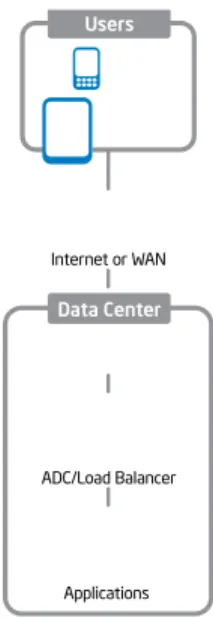
acceleration. ADCs are essential for data centers to intelligently push application services out in “on-demand fashion” and monitor the health of these applications. Typical ADCs or load balancers are often placed in the DMZ, between the firewall or router and a web application farm, as shown in Figure 2. Since BIG-IP ADCs can also provide network firewall functionality as well as layer 7 web application firewall, DNS services, and other services, F5
Server Offload to Reduce Costs
In addition to advanced application delivery services, BIG-IP ADCs have dedicated hardware to perform compute-intensive functions like SSL processing, compression, and protocol offload. These tasks require significant amounts of computing power and are generally implemented at the server level instead of within the application code. This makes them ideal functions to offload to an ADC, which is better suited to handle such tasks. In addition, the ADC can add efficiency to the connections themselves—resulting in additional savings.
• SSL Termination and Offload: SSL is
the most ubiquitous security protocol used by websites today. The protocol allows clients and servers to encrypt and decrypt the data they exchange, securing it while in transit over public networks. Testing, empirical evidence, and
conventional wisdom suggest the amount of CPU resources required for SSL
processing (without hardware acceleration) to be about 30 percent of a typical server’s resources. Therefore, offloading the SSL processing to an ADC would reduce the utilization of a web server running at 90 percent down to 60 percent.
Figure 2. Typical application delivery controller (ADC) or load balancer is placed between the firewall and the web applications.
ADC
DDoS Protection Load
Balancing
Secure Remote Access
Web Application
Security Application
Acceleration
WAN Optimization
Users
Data Center
Applications ADC/Load Balancer
Internet or WAN
Figure 1. The F5* application delivery controller (ADC) supports various services.
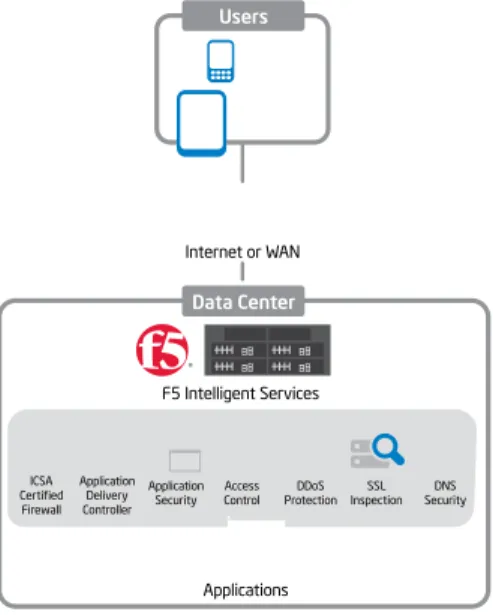
ADCs can replace the multiple point solutions, including traditional firewalls, most enterprises deploy that add latency, complexity, and unnecessary costs (see Figure 3). BIG-IP ADC platforms, utilizing the latest Intel Xeon processors, have the performance, scalability, and extensibility to deliver L4-L7 application services and integrate with virtualized and cloud environments.
• Compression Offload: Commonly employed by web servers, compression lowers network costs by reducing bandwidth utilization and improving application performance. When caching is not available, servers compressing content dynamically can consume 4 to 30 times more CPU resources than servers delivering the same content without compression. Consequently, performing compression on ADCs can free up considerable computing bandwidth on servers.
• TCP Offload: More often referred to as TCP
multiplexing, TCP offload is an optimization technique used by F5 ADCs to achieve higher utilization of TCP connections by sharing them on the back end, across users. The BIG-IP platform is designed as a full proxy architecture, meaning it implements two separate networking/TCP stacks, with one handling client-side TCP connections and the other handling server-side TCP connections, which allows server connections to be maintained between the intermediary and the servers. This enables the F5 ADC to maintain a much higher number of user connections than may actually be supported by the server infrastructure, effectively increasing the capacity of the servers.
increased server loading in both data centers, while SSL offloading and protocol optimization offloaded tasks from application servers to F5 BIG-IP platforms, all of which improved asset utilization. Moreover, F5 data compression eliminated the need for additional investments in network bandwidth.
Savings: The firm estimated $120,000
in hardware purchases were avoided following deployment of the F5 BIG-IP solution, leading to CapEx and OpEx savings. Other OpEx savings resulted from BIG-IP LTM improved management tools and increased application density such that it was not necessary to add two full time employees. The net present value (NPV) over three years was estimated to be over $406,840 (USD).
ADCs in a Virtualized Environment
Virtualized application delivery services enable organizations to be more agile, reduce costs, and seamlessly complement new data center topologies, like hybrid cloud models. In addition to virtual software versions of BIG-IP ADC services that run on all the major hypervisors on Intel® processor-based host servers, customers want the flexibility of virtual ADCs and the ability to consolidate the application delivery services onto high-performance, scalable, dedicated hardware. F5 Virtual Clustered Multiprocessing* (vCMP*) technology allows these services to be virtualized on shared F5 hardware, including VIPRION. Ensuring virtual ADCs are scalable and operate at the highest performance, F5 developed the vCMP purpose-built ADC hypervisor. It differs from most general-purpose hypervisors, which are designed to handle the broadest set of possible physical hardware configurations and guest operating system requirements. In contrast, the vCMP hypervisor is more efficient in design and operation than general-purpose hypervisors because F5 has complete control over the underlying hardware and the overlaying software.Figure 3. Using F5* ADCs, enterprises can replace their traditional firewalls and load balancers with a VIPRION ADC that supports multiple application delivery services, including ICSA certified firewall, all on one platform.
Users
Data Center
Applications F5 Intelligent Services
Application Delivery Controller ICSA Certified Firewall
Internet or WAN
Access Control Application
Security ProtectionDDoS InspectionSSL SecurityDNS
ROI Example
Lawrence Associates and Cedar Research recently studied a global, IT-centric consulting firm with more than 2,500 employees that work in 50 offices worldwide. To stay ahead of competitors, the firm increased support for mobile devices and moved to cloud-centric computing to better serve consultants, of which 70 percent either work from home or from client sites. Their consultants worldwide depend on access to knowledge assets; thus, scalable, fast, and reliable IT systems were a business imperative.
Network Traffic Active Data Center Passive Data Center Network Traffic Active Data Center Active Data Center
Figure 4. The F5* deployment increased asset utilization.
Starting Point: The legacy application
server infrastructure consisted of more than 50 physical servers hosting thousands of virtualized servers, divided into two data centers: active and passive. Assets in the passive data center were in standby mode and provided no value until the active systems went off-line.
Solution: The firm implemented F5 BIGIP
Global Traffic Manager (GTM) with DNS services to make use of the passive data center, BIG-IP Local Traffic Manager (LTM) optimization and load balancing services to increase asset utilization in both data centers, as shown in Figure 4. As their business expanded, the firm was able to provide new services without making additional investments in server hardware, network bandwidth, and IT personnel.
Benefits: The most significant savings
from the F5 deployment was enabling the firm to expand computing power without making substantial investments in infrastructure. BIG-IP LTM load balancing
4
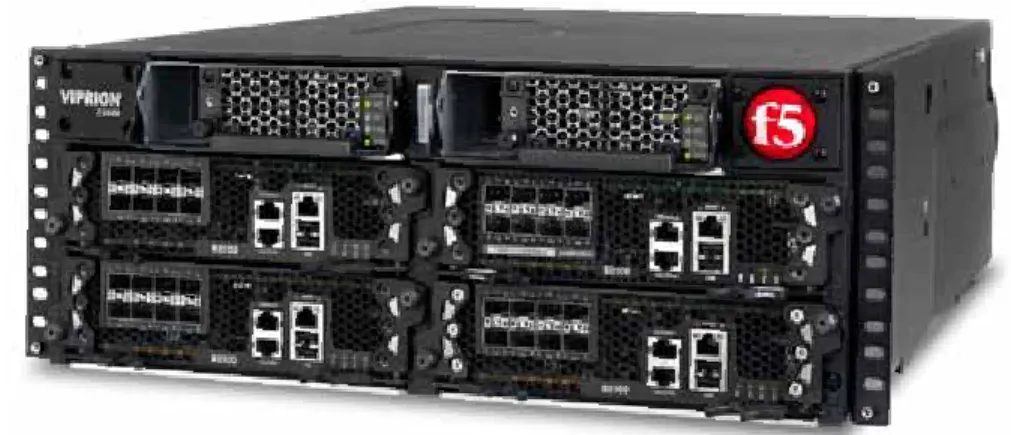
Figure 6. The VIPRION* 2400 chassis supports up to four Intel® Xeon® processor-based blades.
can be addressed by simply removing the guest and starting over. Moreover, administrators can upgrade the services on each guest without having to upgrade the services in other guests.
High-Performance, High-Density
When selecting ADCs that have multi-tenant virtualization capabilities,enterprises pay close attention to density, typically measured by the number of vADC guests per rack or average cost per vADC guest. In a virtual environment, the number of vADC guests a platform can support is usually dictated by the number of processor cores it has. Higher density systems will normally minimize the number of blades or appliances that enterprise have to purchase and maintain, thus lowering CapEx and OpEx.
Many processor cores
Delivering up to 40 processor cores, the F5 VIPRION 2400 chassis (Figure 6) supports one to four modular blades based on 10-core Intel® Xeon® processors.1 This system can run as many as 80 virtual ADC guests, each in their own virtual machine (VM), and hot-swappable blades can be added or removed without disrupting applications. With flexible allocation capability, vCMP automatically reallocates resource capacity if a new blade is added, or if an existing one fails or is removed. VIPRION with vCMP offers enterprises the most scalable, flexible, and multi-tenant dense intelligent application delivery services solution in the industry.
CPU CPU CPU CPU CPU CPU
CPU CPU CPU CPU CPU CPU HR
Finance
Web Sales
CPU CPU CPU CPU CPU CPU
CPU CPU CPU CPU CPU CPU
Run different versions of BIG-IP system
Manage maintenance
windows
Figure 5. Virtual Clustered Multiprocessing (vCMP) allows administrators to configure virtual BIG-IP ADC guests in a variety of ways.
When vCMP is deployed on the F5 VIPRION platform, administrators can configure the vCMP guests in multiple ways, as shown in Figure 5. The guests can be allocated specific number of CPU cores and memory as needed to deploy any BIG-IP application delivery service or combination of services. The guests may exist on single blades or span multiple blades. The VIPRION chassis also allows new blades to be added on the fly, and vCMP guests can be configured to automatically provision the new resources without interruption. Since vCMP is a true hypervisor, guest ADCs are completely isolated, and they can run entirely different versions of BIG-IP software. This means test and development staff can create virtual ADC (vADC) guests to validate new versions of software without any effect on existing deployments. Any problems
Fast Boot
VIPRION 2400 blades incorporate Intel Solid-State Drives (Intel SSD), which are more reliable and faster than rotating hard disk drives (HDDs) since there is no mechanical movement. In fact, virtualized environments are especially challenging for HDDs because multiple VMs may try to boot at the same time, thus sending the actuator arm in all directions in order to read different sectors on the disk. In general, booting more than four VMs at one time from an HDD can be problematic. This is not an issue with Intel SSDs, which provide consistent access times, so each VM can read data from the drive at the same rate. Since there are no moving parts, the average access latency of Intel SSDs is under 100 microseconds (μsec)2,3 or about 100 times faster than high-performance HHDs that average under 10,000 μsec. In addition to booting, F5 BIG-IP security and acceleration services running on multiple vADC guests can access Intel SSDs for faster data logging and web caching than with HDDs. Hardware-assisted virtualization Although virtualization is generally viewed as a software technology, hardware features have been added to processors to improve the performance and security
For more information about Intel solutions for communications infrastructure, visitwww.intel.com/go/commsinfrastructure.
To learn more about F5 products designed for traditional data center, cloud, and virtual environments, visit http://www.f5.com/products.
1 F5* VIPRION* 2400 blades referenced will be available by end of 2013.
2 Source: “Improving Email Application Server Performance with Intel® Solid-State Drives.” From Intel, pg 3. http://www.intel.co.uk/content/www/uk/en/it-management/improving-email-application-server-performance-with-intel-solid-state-drives.html. 3 Performance estimates are based on internal Intel analysis and are provided for informational purposes only.
4 Intel® Virtualization Technology (Intel® VT) requires a computer system with an enabled Intel® processor, BIOS, virtual machine monitor (VMM) and, for some uses, certain platform software enabled for it. Functionality, performance, or other benefits will vary depending on hardware and software configurations and may require a BIOS update. Software applications may not be compatible with all operating systems. Please check with your application vendor.
Copyright © 2013 Intel Corporation. All rights reserved. Intel, the Intel logo and Xeon are trademarks of Intel Corporation in the United States and/or other countries.
*Other names and brands may be claimed as the property of others. Printed in USA 0913/MS/SD/PDF Please Recycle 329551-001US
of virtualization. For instance, Intel has enhanced the capabilities of virtualization technology with a complementary hardware-assist technology called Intel® Virtualization Technology (Intel® VT).4 It performs various virtualization tasks in hardware, like context switching, which reduces the overhead and footprint of virtualization software and improves its performance. Intel VT also provides an IOMMU to isolate guest access to specific physical memory addresses. This technology is available for F5 to further improve guest security.