THE INFLUENCE OF SPIRITUALITY ON MEDICATION ADHERENCE AND BLOOD PRESSURE AMONG OLDER ADULTS WITH HYPERTENSION
Amica Simmons Yon
A dissertation submitted to the faculty of the University of North Carolina at Chapel Hill in partial fulfillment of the requirements for the degree of Doctor of Philosophy in the Division of Pharmaceutical Outcomes and Policy (Eshelman School of Pharmacy)
Chapel Hill 2012
Approved by:
Mary T. Roth McClurg, PharmD, MHS Morris Weinberger, PhD
iii ABSTRACT
AMICA SIMMONS YON:The Influence of Spirituality on Medication Adherence and Blood Pressure Among Older Adults With Hypertension
(Under the direction of Mary T. Roth McClurg)
Despite the effectiveness of pharmacological therapies, medication nonadherence is prevalent among older adults with chronic disease. Established correlates of adherence (e.g., access, race/ethnicity, education) do not fully explain the differences in adherence. This study examines whether spirituality contributes to older adults’ medication adherence and blood pressure, as well as the indirect pathways by which spirituality may be linked to self-reported adherence behavior, with social support and active coping as putative mediators.
A cross-sectional analysis was performed on data from surveys on spirituality, social support, active coping, and adherence behavior administered to a convenience sample of Black and White hypertensive, older adults (> 65 years) visiting senior community centers in North Carolina, along with demographic characteristics and blood pressure measurements.
Multivariate logistic and linear regressions were used to examine the relationship between spirituality and self-reported medication adherence and blood pressure,
respectively, after adjusting for the psychosocial and demographic characteristics.
Results revealed that perceived spiritual intensity and active spiritual health locus of control (SHLC) were significantly and positively associated with medication adherence. The psychosocial variables were significantly related to both perceived spirituality and
iv
beliefs were also significantly related to lower systolic and diastolic blood pressures after controlling for adherence and the psychosocial and demographic variables.
v
ACKNOWLEDGEMENTS
There are so many people to thank for helping me to reach this goal. But first, I have to thank Jesus Christ, my Lord and Savior, for granting me the privilege of glorifying Him in my pharmacy profession, my research and educational experience. I am humbled by His faithfulness and love for me. I, Amica Simmons Yon, PharmD, PhD, am nothing without Him. It is promised in God’s Word that He “who began a good work in [me] will carry it on to completion until the day of Jesus Christ” (Philippians 1:6). I speak it, believe it and know that my latter days will be even more prosperous than today—only because I reverence, glorify and have faith in Him. He will do what He said He would do. I love you, Lord!
vi
To Mommy and Daddy, and my sisters and brother—I can never put into words how you all have embraced, encouraged and kept emphasizing the Word of God to me. Because of this, I made it through. My educational success is also yours! To my church families, Church at the Park and Disciple of Grace Ministries, you have had monumental impact on my family and life—I will never let you down, as I will continue to share the gospel in whatever I do. To a host of friends—Carla White, Anne Beaubrun, Latoya Griffin, Deidre Washington, Melissa Butler, Stacie Duesetzina, to name just a few—thank you for sharing in the late nights, tears, frustrations etc. but still pushing me forward!
Finally, thank you to my husband, best friend and boyfriend for life, Pastor Raphael L. Yon. Your love, encouragement, support and smile mean the world to me. Thank you for dancing with my soul through the good and bad times, the tears, late nights and heartaches. Thank you for believing in me when I had lost all hope! Most of all, thank you for loving and taking care of our babies during all the days and nights that I was not there. And to my precious angels, Seth and Faith, your smiles, hugs, love and patience through all this makes a grown woman cry. I love you so much! Please know in your hearts that this was all for you, my handsome son and beautiful daughter, the next God-fearing, intelligent and magnificent leaders of this nation. Just remember, you can do all things through Christ who strengthens you…always put Him first! Know that Mommy loves you, but God loves you more.
vii
TABLE OF CONTENTS
CHAPTER 1: INTRODUCTION ... 1
OVERVIEW ... 1
Definition of Spirituality ... 2
SPECIFIC AIMS ... 6
CHAPTER 2: BACKGROUND AND SIGNIFICANCE ... 9
PREVALENCE OF PRESCRIPTION DRUG USE ... 9
MEDICATION ADHERENCE ... 9
Adherence in Vulnerable Populations ... 10
Adherence to Hypertension Medications ... 11
Factors Associated with Medication Nonadherence ... 12
SPIRITUALITY:IMPORTANT PERSONAL/CULTURAL BELIEFS ... 14
SPIRITUALITY,HEALTH BEHAVIORS, AND MEDICATION ADHERENCE ... 14
SPIRITUALITY AND HEALTH ... 17
Mortality ... 18
Physical and Mental Health ... 18
Cardiovascular Disease ... 19
SPIRITUALITY AND HYPERTENSION ... 20
NEGATIVE EFFECTS OF SPIRITUALITY ON HEALTH ... 21
SUMMARY ... 23
CONCEPTUAL MODEL ... 25
MECHANISMS OF SPIRITUALITY:SOCIAL SUPPORT AND ACTIVE COPING ... 26
CHAPTER 3: METHODS ... 31
viii
AIM 1METHODS (PILOT STUDY) ... 31
Description of Parent Study ... 31
Setting ... 33
Patient Eligibility and Recruitment ... 33
Description of Measures ... 38
Measures ... 38
Data Collected and Variables ... 44
AIM 1ANALYSIS ... 50
Overview ... 50
Statistical Analyses ... 51
Overview ... 53
Descriptive Data: Characteristics of Hypertensive Patients ... 53
Internal Consistency of Spiritual Measures ... 59
Logistic Regression Models ... 60
Estimated Sample Sizes ... 62
Selection of Spiritual Measure(s) for Aims 2 & 3 ... 64
Summary of Other Study Findings ... 68
Conclusion ... 71
AIMS 2&3METHODS ... 72
Overview ... 73
Study Setting ... 73
Participant Eligibility and Recruitment/Enrollment ... 75
Data Collected and Variables ... 80
AIM 2ANALYSIS ... 88
Descriptive Data and Bivariate Analysis ... 89
Logistic Regression Analysis ... 89
AIM 2A ANALYSIS:SECONDARY AIM ... 91
ix
AIM 3ANALYSIS ... 97
CHAPTER 4. RESULTS OF AIMS 2 & 3 ... 98
AIM 2RESULTS ... 98
Overview ... 98
Participant Characteristics ... 98
Adherence Characteristics ... 104
Spirituality Characteristics ... 109
AIM 2LOGISTIC REGRESSION RESULTS ... 121
Overview ... 121
Effects of Self-ranking of Spirituality on Adherence ... 121
Effects of Active Spiritual Health Locus of Control on Adherence ... 123
AIM 2A:MEDIATION ANALYSIS RESULTS ... 127
Overview ... 127
Analysis of Social Support and Active Coping as Mediators of Self-ranking of Spirituality ... 127
AIM 3RESULTS ... 132
Overview ... 132
OLS Regression Results ... 132
CHAPTER 5: DISCUSSION ... 137
SUMMARY OF FINDINGS ... 137
Spirituality and Medication Adherence (Aim 2) ... 137
Mediation Analysis: Social Support & Active Coping (Aim 2a) ... 141
Spirituality and Blood Pressure (Aim 3) ... 142
LIMITATIONS ... 143
STRENGTHS ... 146
IMPLICATIONS FOR FUTURE RESEARCH AND PRACTICE ... 148
CONCLUSION ... 150
x
APPENDIX 1.DUKE UNIVERSITY RELIGION INDEX (DUREL) USED IN AIM 1 ... 152
APPENDIX 2. SPIRITUAL HEALTH LOCUS OF CONTROL SCALE (SHLCS) ... 153
APPENDIX 3. SELF-RANKING OF SPIRITUALITY ... 155
APPENDIX 4. JOHN HENRYISM ACTIVE COPING SCALE (JHAC12)... 157
APPENDIX 5. TANGIBLE,INFORMATIONAL,EMOTIONAL SOCIAL SUPPORT SURVEY (ADAPTED TIES) ... 158
APPENDIX 6. MORISKY COMPLIANCE ASSESSMENT SCALE (4-ITEM) ... 159
APPENDIX 7.DEMOGRAPHIC QUESTIONNAIRE ... 160
APPENDIX 8. MORISKY MEDICATION ADHERENCE SCALE (MMAS8-ITEM)... 163
APPENDIX 9. VISUAL ANALOG SCALE FOR MEDICATION ADHERENCE ... 164
APPENDIX 10. TANGIBLE,INFORMATIONAL,EMOTIONAL SOCIAL SUPPORT SURVEY ... 165
APPENDIX 11. STUDY FLYER ADVERTISEMENT ... 167
APPENDIX 12. REFERRAL LIST FORM ... 168
APPENDIX 13. TELEPHONE SCRIPT USED FOR RECRUITMENT ... 169
APPENDIX 14. BLOOD PRESSURE MEASUREMENT PROTOCOL ... 172
xi
LIST OF TABLES
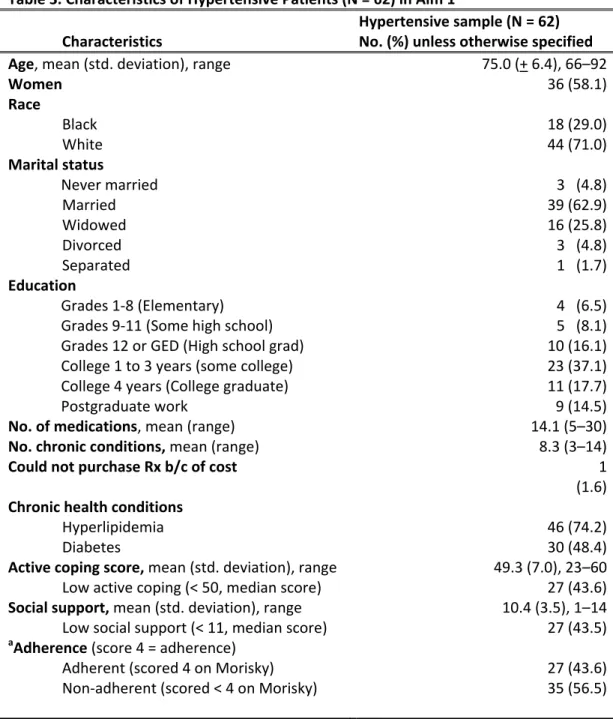
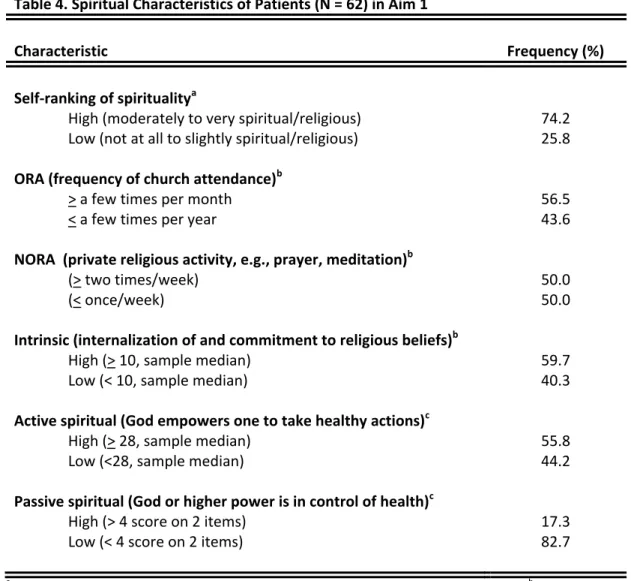
TABLE 1. OUTLINE OF MEASURES ADMINISTERED AT BASELINE ... 38 TABLE 2. VARIABLES USED IN AIM 1 ... 45 TABLE 3. CHARACTERISTICS OF HYPERTENSIVE PATIENTS (N = 62)
IN AIM 1 ... 55 TABLE 4. SPIRITUAL CHARACTERISTICS OF PATIENTS (N = 62) IN AIM 1 ... 56 TABLE 5. MEDICATION ADHERENCE (MORISKY SCORE OF 4 = ADHERENT)
BY SPIRITUAL VARIABLES AND CHARACTERISTICS OF PATIENTS
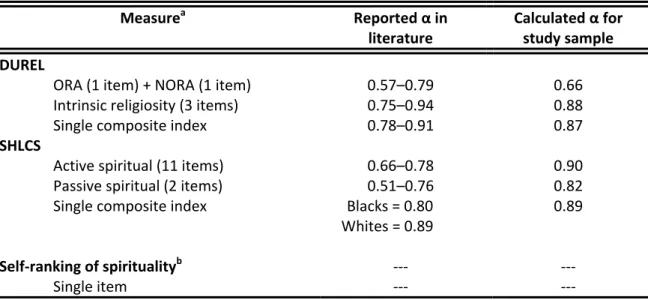
WITH HYPERTENSION (N = 62) IN AIM 1 ... 58 TABLE 6. RELIABILITY OF SPIRITUALITY MEASURES (CRONBACH’S ∂)
USED IN AIM 1 ... 60
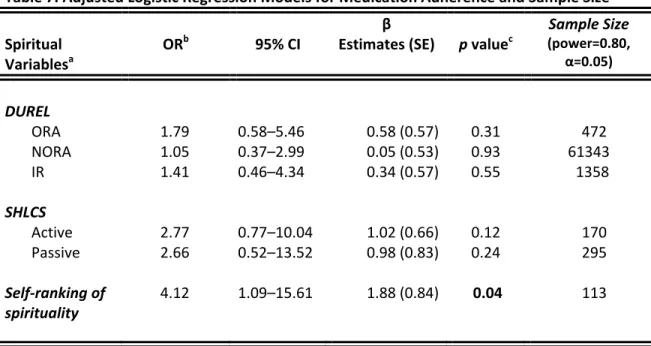
TABLE 7. ADJUSTED LOGISTIC REGRESSION MODELS FOR MEDICATION
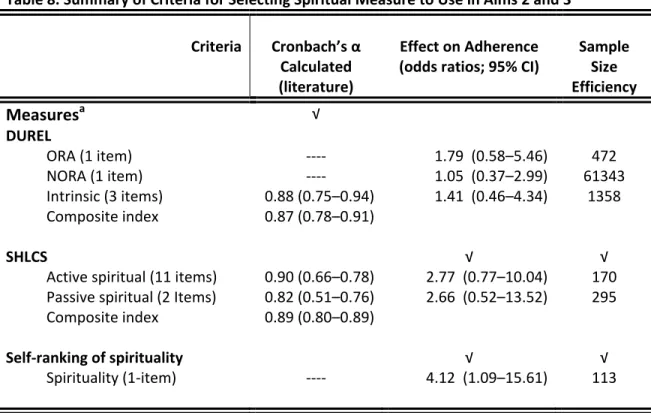
ADHERENCE AND ESTIMATED SAMPLE SIZE ... 63 TABLE 8. SUMMARY OF CRITERIA FOR SELECTING SPIRITUAL MEASURE
TO USE IN AIMS 2 AND 3 ... 64 TABLE 9. RECRUITMENT/ENROLLMENT SCHEDULE FOR THE SENIOR
CENTERS ... 78 TABLE 10. VARIABLES USED IN AIMS 2 AND 3 ... 82 TABLE 11. STANDARDIZING EQUATIONS USED IN THE SOBEL TEST FOR
PARTIAL MEDIATION ... 96 TABLE 12. PARTICIPANT CHARACTERISTICS IN TOTAL SAMPLE (N = 170) ... 102 TABLE 13. CHARACTERISTICS OF PARTICIPANTS BY RACEIN TOTAL
SAMPLE (N = 170) ... 103 TABLE 14. SELF-REPORTED MEDICATION ADHERENCE CHARACTERISTICS
BY OTHER DEMOGRAPHIC, HYPERTENSION, ACTIVE COPING,
AND SOCIAL SUPPORT CHARACTERISTICS (N = 170) ... 108 TABLE 15. SELF-RANKING OF SPIRITUALITY CHARACTERISTICS BY OTHER
DEMOGRAPHIC, HYPERTENSION, ACTIVE COPING, AND SOCIAL
SUPPORT CHARACTERISTICS (N = 170) ... 113 TABLE 16. ACTIVE SPIRITUAL HEALTH LOCUS OF CONTROL (SHLC)
xii
CHARACTERISTICS (N = 170) ... 117
TABLE 17. CORRELATION MATRIX ASSESSING RELATIONSHIPS AMONG INDEPENDENT VARIABLES PREDICTING SELF-REPORTED
MEDICATION ADHERENCE TO ANTI-HYPERTENSIVE(S) ... 119 TABLE 18. VARIANCE INFLATION FACTOR (VIF) AND TOLERANCE (1/VIF)
VALUES FOR INDEPENDENT VARIABLES USED IN REGRESSION
ANALYSES PREDICTING ADHERENCE ... 120 TABLE 19. BIVARIATE AND MULTIVARIATE EFFECTS OF SPIRITUALITY ON
SELF-REPORTED MEDICATION ADHERENCE IN HYPERTENSIVE
OLDER ADULTS (N = 170) ... 125 TABLE 20. BIVARIATE AND MULTIVARIATE EFFECTS OF ACTIVE SPIRITUAL
HEALTH LOCUS OF CONTROL (SHLC) ON SELF-REPORTED MEDICATION ADHERENCE IN HYPERTENSIVE OLDER ADULTS
(N = 70) ... 126 TABLE 21. BIVARIATE AND MULTIVARIATE EFFECTS OF SELF-RANKING OF
SPIRITUALITY ON SYSTOLIC AND DIASTOLIC BLOOD PRESSUR
IN HYPERTENSIVE OLDER ADULTS (N = 170) ... 135 TABLE 22. BIVARIATE AND MULTIVARIATE EFFECTS OF ACTIVE SPIRITUAL
HEALTH LOCUS OF CONTROL ON SYSTOLIC AND DIASTOLIC
xiii
LIST OF FIGURES
FIGURE 1. CONCEPTUAL MODEL OF SPIRITUALITY AND MEDICATION ADHERENCE FOR AFRICAN AMERICANS DIAGNOSED WITH
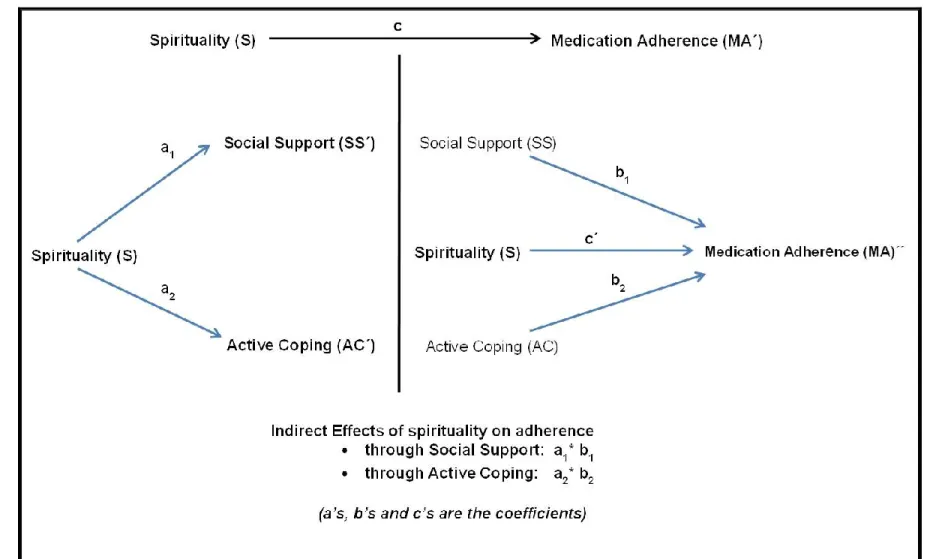
HYPERTENSION (LEWIS & OGEDEGBE, 2008) ... 29 FIGURE 2. CONCEPTUAL MODEL OF THE PRESENT STUDY ... 30 FIGURE 3. DIAGRAM OF SINGLE-STEP MULTIPLE MEDIATION MODEL ... 95 FIGURE 4. HISTOGRAM OF SELF-REPORTED MEDICATION ADHERENCE
SCORES (N = 70) ... 105 FIGURE 5. SELF-RANKING OF SPIRITUALITYCHARACTERISTICS (N = 170) ... 110 FIGURE 6. HISTOGRAM OF ACTIVE SPIRITUAL HEALTH LOCUS OF
CONTROL (SHLC) SCORES (N = 170) ... 115 FIGURE 7. INFORMAL TEST OF SOCIAL SUPPORT AND ACTIVE
xiv PREAMBLE
Despite the effectiveness of pharmacological therapies upon hypertension, medication nonadherence is prevalent among older adults, whose adherence can be influenced by numerous factors including income, health literacy, medication cost,
race/ethnicity, and regimen complexity. These established correlates of adherence do not exhaust its variance, however, and inconsistent results have been reported in the literature. Although spirituality has been associated with improved physical and mental health, and some positive lifestyle behaviors, its role in medication adherence has not been well studied. This study seeks to address this gap by determining whether spirituality, via its known associations with social support and active coping, contributes to older adults’ medication adherence and thus to lower blood pressure.
This dissertation is organized around three primary research aims, which are described in detail in Chapter 1. Chapter 2 includes a review of the literature on spirituality and adherence, other relevant literature on spirituality and health, and two recognized attributes of spirituality: social support and active coping. The conceptual model that guides this research is also described in Chapter 2. Chapter 3 details the research methods
describing the study setting, participant eligibility, the study data, measurements, and
Chapter 1 INTRODUCTION
Overview
Medication adherence is a major public health challenge. The World Health Organization (WHO) reports that adherence to long-term therapy for chronic diseases in developed countries averages about 50%.1The consequences of nonadherence include poorer health outcomes, severe adverse events (e.g., hospitalizations and death), and increased health care expenditures.1-3 These consequences are particularly evident in chronic conditions such as hypertension, diabetes, heart failure, and multiple co-morbidities in which pharmacological therapy is the foundation for optimal disease management.4-6 Nonadherence is a tremendous problem in the United States, where more than half of Americans report not taking their prescribed medications as instructed7,8 and studies have shown that poor medication adherence accounts for approximately 125,000 deaths annually (342 per day) and 28% of all emergency room visits.2,9-13
2
A review of the literature reveals several factors that may be associated with
nonadherence, including age, race/ethnicity, income, education, health literacy, access/cost, and others.9,21,22 However, these factors do not fully explain the variance in adherence and there are “relatively few consistent predictors” in the literature.21,23 Therefore, adherence research has been broadening its focus to other patient-level factors (e.g., personal and cultural beliefs about disease) that influence medication-taking behaviors.24-26
Definition of Spirituality
No agreement has been reached in the literature on the exact definition of the terms spirituality and religiosity. However, scholars from a wide range of disciplines do agree that these constructs shareoverlapping meanings; in addition, they so frequently appear
together in medical literature that they are written as a combined term (religiosity/spirituality, or R/S) .24,27,28 Spirituality is often described as the broader term—that is, as being more universal, more inclusive, and at times less offensive (because it has been less stigmatized by institutionalization).29-32 Spirituality is often equated with traditional religious practices and beliefs, although it is considered to be more encompassing and personal.29,31 It comprises feelings of connection to others and the search for meaning and purpose in life beyond the corporeal.33 Spirituality is often considered a personal phenomenon, meaning that spiritual people have, and cultivate within themselves, an intimate connection or relationship with a higher power or sacred entity.
In essence, spirituality relates to the subjective, individualized experience of transcendence. In this way it differs from religion, which isusually viewed as a societal phenomenon or institutionalized expressionand is commonly defined as an organized system of beliefs and practices that involve and determine the collective spiritual
3
vast majority of Americans are said to not distinguish between spirituality and religiosity, especially in certain regions (e.g., the Southeast).24,30 This dissociation may be due to the popular perception that spirituality is rooted in an established religious tradition or belief system; in any case, religion is one way that people experience or express spirituality.
Although spirituality is viewed more broadly and defined less strictly than religiosity, scholars tend to agree that these two constructs share very similar characteristics that involve the quest for life’s meaning and purpose, transcendence of the present and/or ordinary, connection with other people and with a Divine power, and specific values and behaviors.25,32,34,35 Because spirituality and religiosity are considered more alike than different, and with the goal of remaining consistent with the spirituality and health literature, in the present study the term spirituality will be used to connote both spiritual and religious practices and beliefs. Spirituality in the present study is defined as the personal quest for understanding ultimate questions about life and events, about meaning, and about relationship with the sacred or transcendent; these aims may or may not involve religious practices and beliefs. The term “religiosity” will be used in reference to previous research that has differentiated it from spirituality and/or has specifically used the term religiosity.
Because spiritual traditions and beliefs may affect the decisions individuals make about their health, illnesses, and treatment choices, research on spirituality and health has begun to garner more attention and researchers have become more interested in the ways that spirituality impacts health.25,34,37-43 The majority of past research on spiritual
characteristics, including religious involvement, has shown positive relationships between spirituality and health outcomes.24,29,30,34,44,45 However, the positive cast of this literature may have resulted from author or publication bias.
4
and effect; however, research also suggests that the patterns seen in these cross-sectional studies have also been observed in prospective studies and in studies that have compared secular to spiritually based interventions.40,46-52 For example, Strawbridge and colleagues found in their 28-year prospective study of more than 5000 adults that weekly religious service attendance decreased the relative risk of dying during follow-up by 36% (relative hazard = 0.64; 95% CI 0.53–0.77).46 This association between attendance and mortality remained statistically significant even after adjusting for health conditions, body mass index (BMI), social connections, and health practices (e.g., smoking, exercise, alcohol
consumption). After adjusting for similar control variables, Koenig and colleagues found similar effects on survival in a six-year study of 4000 older adults (relative hazard = 0.72; p < 0.001).53
Affirmation of the notion that spirituality positively influences health outcomes has varied. Reactions have ranged from cynical skepticism to supportive advocacy (i.e., when researchers contend that spirituality has health-promoting effects).41,54 Some researchers remain skeptical because the majority of past studies have focused on religious involvement (usually worship service attendance) to the exclusion of other factors or dimensions such as self-perceptions of spirituality, agnosticism, and spiritual well-being. For example, some studies have suggested that individuals who struggle with their faith may be at higher risk for certain emotional and physical health challenges.55-58 In addition, several of these studies were clouded or confounded by pre-existing mental health disorders (e.g., depression, PTSD) within the study populations. Doubt also stems from the fact that most studies have not been designed to test conceptual models or theory. For all of these reasons, the
5
Although there is support for the premise that spirituality positively influences health outcomes and behaviors, little research has examined the role of spirituality in medication adherence. Nonetheless, understanding the role of spirituality in medication adherence is important because it may help explain some of the positive associations that have been observed between spirituality and health. To date, there have been limited studies examining the relationship between spirituality and medication adherence in community-dwelling older adults with hypertension. Past research is mostly comprised of small qualitative studies that have only suggested or impliedthat aspects of spirituality may facilitate medication management and adherence in chronic diseases such as
hypertension.43,59-61 For example, qualitative results of a recent study that involved in-depth interviews with 21 older African American women suggested that they perceive spirituality as a positive resource that helps them adhere to their antihypertensive medication regimens.59 If spiritual beliefs do in fact affect the decisions that a significant number of older patients make about their health and behavior choices, it is critical that health care providers listen and recognize all aspects of their patients' lives.
A better understanding of these issues is likely to guide the development of interventions to improve or maintain adherence—which would ultimately improve health outcomes. In addition, understanding whether a patient’s spirituality functions as an
enhancement of or barrier to adherence may lead to care that is more patient-centered and culturally appropriate; in any case, it will foster better patient-provider communication around disease management. More-specific interventions could also be targeted to high-risk
6
active coping were assessed as possible mediators in the pathway between spirituality and self-reported adherence. This study is a cross-sectional analysis of data collected from questionnaires administered to older adults with hypertension. Its specific aims are described in more detail below.
Specific Aims
Aim 1: To assess three spiritual measures and select the measure (based on internal consistency, association with adherence and sample size efficiency) to test the hypothesis that spirituality is positively associated with medication adherence.
Aim 2: To examine the relationship between spirituality and self-reported medication adherence among community-dwelling older adults with hypertension.
Hypothesis 2:
Older adults who report high spirituality versus those who report low spirituality are more likely to report being adherent to their anti-hypertensive medication(s).
Older adults with high active spiritual health locus of control (SHLC) beliefs versus those with low active SHLC are more likely to report being adherent to their anti-hypertensive medication(s).
Aim 2a: To examine the relationships among spirituality, social support, active coping, and self-reported medication adherence in community-dwelling older adults with hypertension.
Hypothesis 2a:
Spirituality is positively associated with self-reported medication adherence, and this association is mediated through social support and active coping.
7 Hypothesis 3:
Older adults who report high spirituality will have lower systolic and diastolic blood pressures compared to older adults who report low spirituality.
Aim 1, the pilot study, involved a cross-sectional study of 62 hypertensive older adults who had already been recruited into a larger study (hereafter, the parent study). A series of questionnaires about spiritual characteristics (i.e., organized religiosity, non-organized religiosity, spiritual health locus of control beliefs, and self-reported level of spirituality) that may influence medication adherence was administered to this group. The goal of Aim 1 was to select the spiritual measure(s) to be used in Aims 2 and 3 for
hypothesis testing. Selection of one or more suitable spiritual measures to examine in relation to medication adherence included examining scale reliability; assessing the
observed effect sizes (odds ratios); and estimating sufficient sample sizes to efficiently and feasibly test associations between the spiritual variables and medication adherence. Relevance of the spiritual measure to the study population was also considered.
The next part of this project was to design and conduct a larger study (aims 2 and 3), based on the results of Aim 1. Aims 2 and 3 were to 1) test the hypothesis that high
spirituality leads to greater medication adherence among older adults with hypertension; 2) examine the relationships among spirituality, social support, active coping, and medication adherence—that is, to test whether social support and active coping mediate the
relationship between spirituality and adherence; and 3) to examine the relationship between spirituality and blood pressure.
Data for this project was derived from two main sources: questionnaires
8
Crossing Medical Center in Chapel Hill, North Carolina (Aim 1), and questionnaires
administered to a convenience sample of community-dwelling older adults with hypertension at local senior centers (aims 2 and 3) in the Research Triangle Park region of North
Chapter 2
BACKGROUND AND SIGNIFICANCE
Prevalence of Prescription Drug Use
Medications are the most common and one of the most important health care interventions to prevent disease, morbidity, and mortality.21 According to recent data from the U.S. Department of Health and Human Services (DHHS), 50% of all Americans take at least one prescription medication and 10% use five or more.62 In 2008, over $234 billion was spent in the United States for prescription drugs. Data for 2007–2008 also reveal that more than 76% of Americans age 60 and older used two or more prescription drugs in any given month and that 37% had used five or more in the preceding month.62
Medication Adherence
10
Evidence also reveals that poor adherence to medication regimens accounts for preventable worsening of disease, hospitalizations, death, and increased health care costs in the United States.3,69-79 According to a recent New England Healthcare Institute (NEHI) study, the estimated cost of nonadherence to the U.S. health care system is $290 billion annually, which translates to 13% of the nation’s total health care expenditures.78
Adherence in Vulnerable Populations
Poor adherence to prescribed therapy is a significant healthcare issue for vulnerable population groups, especially minorities and the elderly.80 Many older adults are not only diagnosed with multiple chronic conditions but also have to manage complex medication regimens prescribed by various physicians. Therefore, the consequences of medication nonadherence and/or adverse drug events can be serious or life-threatening. Nonadherence accounts for more than 10% of older adult hospital admissions,11 nearly 25% of nursing home admissions, and 20% of preventable adverse drug events among older persons in ambulatory settings,12 and results in thousands of preventable deaths annually.9 As noted by the American Society on Aging and the American Society of Consultant Pharmacists
Foundation, “…of all age groups, older persons with chronic diseases and conditions benefit the most from taking medications, and risk the most from failing to take them properly.”81
Racial differences in medication adherence have also been reported among the elderly, with Blacks tending to be less adherent.82,83 Researchers recently found that
11
(adjusted OR = 1.60; 95% CI 0.74–3.42), which may reflect differences in patients’ attitudes or lay health beliefs that, in turn, influence their medication decisions.85
Researchers have also noted that even when controlling for access barriers to medications, Blacks remain more likely to be nonadherent than Whites.66,80,82,86 For examples, racial/ethnic differences in medication adherence are reported within the
veterans’ healthcare system despite equal access and cost.87-92 This discrepancy indicates that poor adherence is more than a problem of access to services or cost of medications, which are two of the most-cited reasons for nonadherence in the literature. Findings of racial differences in medication adherence have profound implications for health disparities, especially because lower adherence often contributes to significant disparities in chronic disease outcomes.
Adherence to Hypertension Medications
Hypertension affects approximately 75 million Americans (1 of every 3).93,94 Data from the Framingham Heart Study95 suggest normotensive individuals at age 55 have a 90% lifetime risk of developing hypertension. Moreover, hypertension increases patients’ risk of heart disease and stroke (the first and third leading causes of death in the U.S.,
respectively).93,96 In 2010, researchers estimated that high blood pressure alone results in more than $76 billion nationwide in direct and indirect health care services costs.96
12
conditions, pose an excess risk to cardiovascular morbidity and mortality, a relationship that emphasizes the importance of persistent adherence in vulnerable populations.
Low antihypertensive medication adherence has been proposed as an important barrier to achieving hypertension control and reducing morbidity and mortality in older adults. Most large clinical trials, such as the Systolic Hypertension in the Elderly Program (SHEP) have reported improvements in blood pressure control and patient outcomes, in both community and ambulatory care settings, with adherence to prescribed medications.100 These and other trials have associated antihypertensive drug therapy with a 35%–45% reduction in stroke incidence, myocardial infarction reduction of 20%–25%, and heart failure reduction of more than 50%.95
As the U.S. population continues to age, the prevalence of hypertension will increase and many more people will be prescribed and required to take anti-hypertensive
medications. Persistent adherence is the cornerstone for control and for reducing morbidity and mortality. Therefore, it is crucial to understand the factors that affect adherence and to institute a variety of proactive and responsive strategies that help older adults with
hypertension to improve and maintain medication adherence.
Factors Associated with Medication Nonadherence
13
involvement with their care, disease knowledge, beliefs and attitudes about their chronic illness and treatment) may also be associated with adherence.1,14,63,102,103
Although studies associated adherence with an array of sociodemographic characteristics, links have typically been modest and findings have been
inconsistent.21,101,104,105 For example, researchers recently examined the correlates of medication adherence among older adults and found little consensus regarding the
sociodemographic and medication-related variables that are associated with adherence in this population,101 but also concluded that individual choices and beliefs regarding health and treatment may be stronger determinants.
Some researchers have suggested that nonadherence to antihypertensive medications is influenced by a complex set of factors beyond the health care system and general
sociodemographics.22,66,106-109 For example, Steiner and colleagues104 conducted a retrospective cohort study of more than 100,000 hypertensive patients in which they attempted to develop clinical prediction rules for adherence based on a combination of sociodemographic and clinical patient characteristics. Multivariate logistic models based on the study’s predictors, however, could not accurately discriminate adherent from
nonadherent individuals (C statistic indice range 0.56–0.61); as a result, these researchers concluded that health providers should not rely only upon their patients’ sociodemographic or clinical characteristics to predict which ones will be adherent.104 Overall, the numerous factors that have been shown to influence patients’ adherence to antihypertensive therapies have not fully explained variances in adherence; moreover, most of the study findings have been modest.8,101,110
14
conducted to understand the effects of personal and/or cultural beliefs on adherence behavior and to help understand different adherence rates among various groups of
hypertensive patients.26,112,115,116 Such research is warranted, given that the U.S. population is not only growing older and showing an increased prevalence of hypertension but it is also becoming more racially, ethnically, and culturally diverse.
Spirituality: Important Personal/Cultural Beliefs
Spirituality has been identified as an important personal and/or cultural belief in many communities. It is an important part of the lives of most Americans; recent surveys have estimated that more than 90% (including older adults and the medically ill) claim to believe in God or some higher power and to value such beliefs.117,118 For some, spirituality plays a prominent role and affects every aspect of life––including health.24,26,29,39,113,116,119,120 The following sections present a review of relevant literature on spirituality and health outcomes and behaviors. In addition, a conceptual framework through which to assess the general impact of spirituality on medication adherence in hypertension is presented. This literature review and conceptual framework form the basis for the generated hypotheses of the present study.
Spirituality, Health Behaviors, and Medication Adherence
Research suggests that spirituality is an important variable that can both influence and explain health behaviors.34,38,47,121-123 For example, spiritual involvement has been
associated with health-promoting behaviors such as physical activity or exercise, proper nutrition, improved communication with health providers and caregivers, lower smoking and alcohol prevalence, greater use of preventive services, and medical treatment
15
affiliation/involvement and frequency of religious service attendance have been the most frequently examined spiritual variables; however, the positive associations between these characteristics and various behaviors probably stem from the notion that religious beliefs and practices condemn risky or unhealthy actions and instead provide behavioral guidelines
that “reduce self-destructive tendencies.”38
Spiritual transcendence and well-being have also been examined in relation to
health-promoting behaviors.122,136,137 Greater physical activity, exercise adherence, better diet/nutrition regimes, and significantly improved weight loss have been shown to be successful in several faith-based behavioral interventions.138-145 Researchers suggest that community interventions at church level, where consistent support and reinforcement can be found, have a reasonable chance of influencing the health of vulnerable populations at high risk for cardiovascular disease.141
Most people with chronic diseases are required to take medications on a daily basis, which makes adherence one of the most important health behaviors. Nonetheless,
16
between spirituality and adherence is scant, however, and mostly found in the HIV literature. For prevalent chronic diseases such as diabetes and hypertension, few studies have been done; most of these have been small-scale and qualitative and have indicated only a
possible relationship between spirituality and medication adherence. Only a small number of
studies suggest that spirituality may enhance medication adherence in some patients with
chronic diseases such as diabetes and hypertension. Most of these were qualitative,
conducted in minority populations, and stemmed from church-based interventions designed
to promote healthy lifestyle behaviors. Spirituality has been suggested to possibly play a role
in medication adherence among patients diagnosed with hypertension.26,151-153 It has also been indicated that spirituality influences patients’ thoughts about hypertension, how they manage the disease, and how they follow medication recommendations.26,60,66,151
In a qualitative study of 20 hypertensive black Americans, the majority of participants were found to use their religious beliefs as protective, control, and coping mechanisms in their disease management.151 Informants attributed their hypertension to ”God’s plan,” a conclusion that enhanced their own sense of personal control because they believed that God would provide the necessary means to handle their situation (e.g., “God created doctors”, "God has the medication there for me").151 The authors of this study suggested further investigation into the relationship between spirituality and medication use and stated that whether different dimensions of spirituality are associated with different levels of
medication compliance behavior should be determined.151 In a more recent qualitative study, researchers assessed the role of spirituality in self-management practices among
17
Respondents also reported the importance of spirituality in empowering them to practice health-promoting activities.
Although evidence from other small qualitative studies also indicates that spirituality positively influences treatment preferences and how some patients therapeutically manage their chronic diseases, these have mostly been conducted in the Black population. 108,113,154-159 However, these exploratory qualitative studies (as well as the more abundant HIV literature) represent the first stages of inquiry into the links between spirituality and self-management (particularly medication adherence) in chronic illness. The relationship and potential benefits of spirituality to medication-taking behavior requires further study.
Spirituality and Health
18 Mortality
For many years, researchers have attempted to demonstrate the importance of spirituality in long life and decreased mortality rates.162,166,167 It has often been revealed that spiritual or religious involvement is inversely related to mortality. Such studies, which include both cross-sectional and large longitudinal designs,34,46,53,166,168-172 most often use the
spiritual variable of religious service attendance.162 Other variables include membership in a religious congregation, self-reported spirituality or religiosity, frequency of prayer or
meditation, spiritual well-being (particularly strong senses of meaning/purpose, inner peace, and faith)124 and living within a religious or spiritual community.34,162 Inverse relationships have been found between spirituality and mortality even after controlling for demographics, socioeconomic status, health status, and health behavior variables.34,166,170 Overall, the assessment of spiritual factors in mortality research has resulted in significant results that show a favorable effect of spirituality on survival.163
Physical and Mental Health
Research has also linked spirituality to physical and psychological well-being along with other health-related outcomes.39,40,173,174 Such connections seem to be stronger in older patients and patients with severe, terminal, or chronic illnesses.33,175 As in the spirituality and mortality research, most of these studies have used measures of religiosity or religious involvement; fewer have used other measures of spirituality. This gap has been attributed to a greater consensus by researchers about how to define and measure religious
involvement.29,34
Some psychiatric researchers claim that spirituality plays a role and is positively linked to mental health. Studies of different racial/ethnic populations, in different settings and age groups, have shown that spirituality (mostly in the form of religious involvement) is
19
Since the early 1970s, the number of empirical studies examining the relationship between
spirituality and mental health has increased dramatically; most have found significantly lower
rates of depressive symptoms and disorders, improved courses of depression, and less
anxiety among subjects who identify as spiritual or religious.34,39,127,177,178 These studies,
which have included longitudinal and randomized control trials, have revealed that a higher
baseline of spirituality or religiosity predicts fewer depression symptoms and faster
remission of symptoms at follow-up compared to control participants and recipients of
secular therapies.38,176 People with chronic and terminal illnesses have reported that their spirituality not only mitigates feelings of fear, worthlessness, and hopelessness, but also replaces such feelings with a clearer understanding of meaning and increased strength to deal with the demands of their health condition(s).164 The general conclusion of well-conducted scientific investigations into the relationship between spirituality and mental health is that higher levels of spiritual involvement and self-rated spirituality positively impact psychological well-being.34,38,176
Cardiovascular Disease
Spirituality has also been studied in patients with cardiovascular disease,121 the leading cause of death in the United States.179 Because adults with heart disease face
complex physical, psychological, and social stressors resulting from a decrease in general
well-being and loss of physical functioning,180 qualitative and quantitative research has
noted that spirituality is important to patients with a range of cardiovascular diseases and
that these individuals tend to incorporate their spirituality into their disease coping and
20
outcomes of cardiovascular patients, including adjustment to diagnosis and progression of disease.182-185
Spirituality and Hypertension
Spirituality has been shown to be important to hypertensive patients, and some patients have indicated that they use their spirituality for coping and disease
management.115 After adjusting for age, ethnicity, sex, education, functional status, BMI, and previous blood pressures, spiritual involvement has been specifically associated with lower blood pressure and hypertension.34,174,186-190 Because most of these studies have been observational, which means that causality cannot be inferred, researchers have posed explanations for their positive findings (e.g., the promotion of health-related behaviors, the healthful psychosocial effects of spiritual practice, and the beneficial psychodynamics of belief systems and faith).189,191
21
stress).192 This finding is similar to others that have linked spirituality to better lipid profiles,191,193 glucose control,194,195 and immune function.33,186,191,196,197
Negative Effects of Spirituality on Health
There is also a smaller body of literature that has related spirituality (especially religious involvement) to negative physical and mental health outcomes or found no
association between spirituality and improved physical and mental health.34,37,39,54,149,162,198,199 Such outcomes have also included negative coping behaviors and inappropriate use of health services. For example, particularly among older adults, mental health disorders often remain undetected (and, therefore, untreated) when people feel that their mental health is “unworthy of professional help.”200,201 Older adults who frame and view mental health issues as evidence of personal weakness, failure, and spiritual inadequacy also tend to have issues with access to and utilization of medical health treatment and services.200,202 Some reports indicate spiritual beliefs and practices—particularly in the context of religiosity—can negatively affect patients’ health outcomes (e.g., increased anxiety and guilt, lower self-esteem, and greater psychological distress).56,58,203-205
More germane to the focus of the present study is research that has found negative
or no associations between spirituality and blood pressure or hypertension. For example, in
a longitudinal study (Fitchett et al., 2009) of the relationship between daily spiritual
experiences (DSES; e.g., a feeling connection to God or transcendent, inner peace) and
systolic blood pressure and hypertension among 1658 Black and White middle-aged
women206 DSES neither provided protective effects on blood pressure nor was associated
with hypertensive status (OR = 0.90, 95% CI 0.42–1.93; OR = 1.03, 95% CI 0.52–2.06,
respectively). Studies of similar relationships have found negative or no associations
between spirituality and blood pressure or hypertension.127,195,207,208 Medication adherence
22
affiliation (i.e., service attendance) on blood pressure rather than any broader aspects of
spirituality. These limitations, and the inconsistent findings about blood pressure, support
the premise of the current study.
For some individuals, leading a spiritual life or maintaining a spiritual orientation can
involve interpersonal struggles and/or struggles with God or the Divine that may have
important implications for their health and overall well-being.149 Several empirical studies
have related spiritual struggles to poorer quality of health and longer hospitalizations, as well
as higher rates of mortality, psychological distress, and suicide.56-58,149,209 Pargament and
colleagues’ (2001), two-year longitudinal cohort study of 596 patients aged 55 years or older
who were receiving medical inpatient services at a hospital and VA medical center56 assessed patients’ positive religious coping and religious struggles in relation to their mortality and found that religious struggle was associated with greater risk of mortality (RR for death, 1.06; p = 0.02), particularly for patients who “wondered whether God had
abandoned” them and those who “questioned God’s love” for them (RR for death, 1.28 and 1.22, respectively). In this study, the magnitude of the effects associated with religious struggle was relatively small (from 6% to 10% increased risk of mortality) but remained significant even after controlling for demographics and physical and mental health
variables.56 In another study of medically ill hospitalized older adults, indicators of religious struggle (e.g., anger toward God, feeling punished by God) were associated with poorer health indicators including number of medical diagnoses (Std. β, 0.15; p < 0.001), ADL impairment (Std. β, 0.12; p < 0.01), and cognitive function (Std. β, -0.10; p < 0.01). Results of this study also significantly related negative religious coping methods with greater depression and lower quality of life.203
23
treatments, failure to seek medical care, and avoidance of effective preventive health measures such as immunizations and blood transfusions.34,39,210 Other people may not comply with medical recommendations because they believe that a higher power has caused their disease, or that illness in general is the result of bad behavior.211-213 Because such convictions can influence self-efficacy or willingness to adhere to chronic disease management, these findings cannot be negated in general and especially not for people who experience spiritual/religious struggles in relation to their health and behavior or who are members of faith groups that hold fatalistic views of health, life, and death. Similarly, individuals who rely on faith alone for their healing or endorse prayer as a medical substitute experience higher levels of negative outcomes for most chronic diseases.214-217
The few empirical studies that have indicated certain forms of spirituality negatively impact health have mostly focused on religiosity; been conducted on mental health,
hospitalized, and/or terminally ill patients (as opposed to community-dwelling adults); and have not provided sufficient evidence of spirituality’s relationship to medication adherence in chronic disease. This information strongly influenced the research focus, population of interest, and hypotheses of the present study; moreover, it affirms the necessity of
extending prior research into the relationship between spirituality and health as well as the importance of being mindful of potentially negative findings.
Summary
24
However, negative associations have also been found between spirituality and health, and these findings must be considered—especially in light of the possibility of publishing bias toward positive findings.
Research has clearly shown that many patients rely on a spiritual framework to guide them in making decisions, understanding their health condition(s), and increasing their self-efficacy and coping skills when dealing with chronic disease.26,34,60,158 Given the major issues with medication nonadherence in chronic illness, however, it is important for researchers and health providers to be cognizant of the role spirituality may play in medication-taking behaviors and patients’ adherence or nonadherence to prescribed therapies. As a background factor, spirituality has been largely overlooked in prior studies of medication adherence, particularly in older adults. This gap is evidenced by the dearth of research on the role of spirituality in adherence rates, although the positive associations that have been found between spirituality and health outcomes may have resulted from the greater
adherence of spiritual patients. In order to clarify these relationships in older patients with chronic diseases, it is important for clinicians and researchers to understand whichaspects of spirituality predict better medication adherence or function as barriers.
Less specifically, recognition and clarification of how spirituality influences
25
researchers design future studies to further clarify the relationship among spirituality, adherence, and chronic disease control.
Conceptual Model
The conceptual model for this doctoral project was adapted from an innovative conceptual model proposed by Lewis and Ogedegbe (2008) of possible mechanisms by which spirituality may increase medication adherence and decrease blood pressure in hypertensive African Americans (Figure 1).26 Although it focuses on spirituality qualified as uniquely African American, its developers emphasized that the influence of spirituality on adherence may also operate in other minority populations as well as Whites.26 This model is largely based on data from small qualitative studies that have suggested a positive
relationship between spirituality and medication adherence in African Americans. The model is also based upon systematic reviews of adherence research that have suggested personal beliefs about hypertension and its treatments influence how African Americans manage and follow medical recommendations.26,66,108,154-156,218,219 The model includes three dimensions of African American spirituality (faith in a transcendent force; relationships with God, others, and self; and transformation and consolation) that may work together or independently to influence medication adherence in African Americans. The first dimension, faith in a
transcendent force or higher power, provides direction and guidance for maintaining health, which in turn helps patients make positive decisions about adherence to prescribed
26
Mechanisms of Spirituality: Social Support and Active Coping
In the literature, there are several mechanisms of spirituality that may help explain its positive impacts on health and health behaviors. In particular, social support and active coping have been suggested to facilitate the importance and benefits of spirituality in health and health-promoting behaviors.26,61,79,99,167,220-222 Some researchers have found that spiritual beliefs and practices tend to improve social support and coping skills across many chronic diseases, especially in vulnerable populations.43,119,151,194,221,223,224
The link between spirituality and social support appears in studies that have significantly related measures of spirituality to larger social networks and to
tangible/instrumental and emotional support.225-228 Social support has also been shown to mediate the relationships between a number of spiritual dimensions and health outcomes (e.g., lower psychological distress, increased life satisfaction, improved quality of life,
enhanced coping, reduced levels of pain, and lower rates of mortality).169,226,229 It is generally accepted that spiritual participation, especially public spiritual involvement, can facilitate social support by providing avenues for increased social contact and development of close social bonds outside the nuclear family. Particularly in older adults, researchers have observed that spiritual/religious involvement often provides a close network of family, friends, and others with similar values and experiences who provide support in times of stress and during decision making about health.223 These support networks have been found to offer positive assistance that facilitates or promotes healthy lifestyle behaviors, protects health, and aids recovery from illness in older adults.228
27
CI, 0.35–0.76).85 Other studies have found similar associations across various health conditions,11,67,235 which suggests that the involvement of others in providing knowledge, offering reminders, and giving other types of support may help to overcome barriers to medication adherence.85
Active coping, another proposed mechanism by which spirituality positively impacts health in chronically ill people,229,236-240 refers to the strategies whereby “individuals accept and actively attempt to deal with” their illness and other stressors related to health
problems.224,240 It is generally accepted that active coping, in contrast to avoidant or
maladaptive coping, is the most adaptive response to stress; as such, it includes strategies such as problem solving, planning, and seeking emotional and tangible/instrumental
support.224 Active coping is primarily perceived as positive because it involves effectively
reframing stressful situations (e.g., health challenges) to lessen the impact of stressors.241-243 Active coping has also been associated with patient adherence to treatment across
numerous health conditions.244-247 Patients with multiple chronic conditions must balance many priorities and make daily decisions about illness management; these tasks become even more complicated for older adults who suffer from multiple health conditions that may interrupt normal routines, diminishes finances, affects psychological well-being, and even creates situations of dependency.34,43,45 In the face of such obstacles, not only do many people rely on their spiritual beliefs but they also tend to cope more effectively than those without spiritual beliefs.38,43,243,248-250
Studies have shown spiritual beliefs and practices to be significantly and positively correlated with active coping, even after controlling for health status and demographic variables.224,240,251,252A survey of 330 hospitalized medical patients aged 60 and over revealed that 90% reported using religion to cope, at least to a moderate extent,253 and that
28
them to cope.253Chronically ill patients with greater reliance on spiritual beliefs are more likely to use an active coping style in which they accept their illness and try to deal with it positively and purposefully.39,226
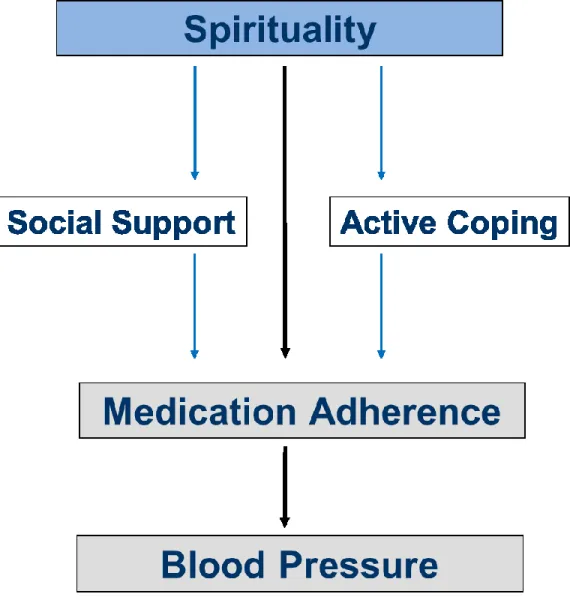
Because social support and active coping have been shown to be attributes of spirituality and also to influence health outcomes and behaviors,39,224,226 it is important to investigate whether social support and active coping are mechanisms through which spirituality influences medication adherence. For this reason, another aim of the present study is to examine whether social support and active coping mediate the relationship between spirituality and medication adherence in the target population.
Although Lewis and Ogedgbe (2008) noted that their conceptual framework is a complex paradigm that warrants additional study, its use in the present study is appropriate as a way to clarify whether aspects of spirituality positively influence adherence. Figure 2 presents an adapted version of this framework as the basic conceptual model of the present study, whose interest and primary objective was to examine characteristics of spirituality (i.e., organized and non-organized religious activity, spiritual health locus of control beliefs, and self-ranking of spirituality) and their possible relationships to medication adherence. These spiritual characteristics, which were chosen in an effort capture the dimensions of spirituality described by Lewis and Ogedegbe, include the premise that spirituality may increase patients’ social support and active coping that function as resources for
29
spirituality may be similar across races/ethnicities, both Whites and Blacks were included as subjects in the present study.
Figure 1. Conceptual Model of Spirituality and Medication Adherence for African Americans Diagnosed with Hypertension (Lewis & Ogedegbe, 2008)
30
Figure 2. Conceptual Model of the Present Study
CHAPTER 3 METHODS
Overview
The present study examined the influence of spirituality on medication adherence and blood pressure in community-dwelling White and Black older adults with hypertension in a two-phase process. The first phase (Aim 1) involved a pilot study of a sub-sample of hypertensive patients (N = 62) who were already enrolled in a larger study (i.e., the parent study). The performance of three spiritual/religious measures were examined in relation to medication adherence. Enacting the first aim involved selecting the spiritual measure(s) to be used for hypothesis testing (Aims 2 and 3). Selection of the spiritual measure(s) for the project’s second phase consisted of examining their reliability, comparing their observed effect sizes, and estimating sample sizes in order to sufficiently power the larger study. Description of the methods for each phase is presented below as follows: the results of Aim1 (the pilot study), and then the methods and results of aims 2 and 3.
Aim 1 Methods (Pilot Study)
Aim 1: To assess three spiritual measures and select the measure (based on internal consistency, association with adherence and sample size efficiency) to test the hypothesis that spirituality is positively associated with medication adherence.
Description of Parent Study
32
Study #10-0874). Aim 1 was conducted using 62 hypertensive patients selected from the 73 participants in the parent study, which was a prospective, longitudinal study of the feasibility and effectiveness of a clinical pharmacist-led medication management program in improving the quality of medication use in Black and White older adults. In the parent study, patients were seen three times (baseline, 3, and 6 months) at a community-based, academically affiliated clinic, by one of two study pharmacists. As per the parent study protocol, baseline assessment consisted of meeting with a research assistant and a subsequent interview with the assigned clinical pharmacist. During the baseline assessment visit, the research
assistant (RA) collected self-reported information on the participants’ demographics, health literacy, functional status, and medication management. Following this assessment, patients met with the study pharmacist who collected detailed information about medical history, current health status, medications, and adherence behavior and also provided medication management services.
For the purposes of the present study, three measures were added to the parent study at the baseline assessment and collected by the RA in order to explicate the
significance of spirituality and/or religiosity in the study subjects and the relationship of these qualities to subjects’ medication adherence. The additional measures were the Duke
University Religion Index (DUREL), the Spiritual Health Locus of Control Scale (SHLCS), and a one-item measure of overall self-ranking of spirituality (or spiritual intensity) which was administered along with a newly developed survey. These measures were chosen to
33
region (Southeast United States) from which the sample population was drawn experience spirituality within the context of religion or religious beliefs.
Two additional measures were added to the parent study in order to assess social support and active coping as depicted in the conceptual model (Figure 2): an adapted version of the Tangible, Informational, Emotional and Social Support (TIES) survey and the John Henry Active Coping scale (JHAC12). These were added to report the distribution of responses given by participants in the pilot study and to assess the approximate time
required to complete all the questionnaires. All five of the additional measures are presented in the appendices of this dissertation.
Setting
The setting for the pilot study was Chatham Crossing Medical Center, a community-based outpatient physician practice affiliated with the University of North Carolina at Chapel Hill and serviced by the UNC Health Care system that provides medical care to a diverse population of adults and children with chronic medical conditions and special needs. Available services, which include preventive health care, chronic health management, same-day sick care, and minor procedures, are provided by seven physicians who specialize in Internal Medicine and Pediatrics and serve on the faculty of the UNC
Department of Medicine and Pediatrics. Approximately one-third of the older adults serviced at Chatham Crossing are Medicare-eligible (> 65 years of age).
Patient Eligibility and Recruitment
34
Chatham Crossing Medical Center. Eligibility criteria for five medications or more was based upon verified evidence of older adults’ higher risk of adverse drug events, patient errors and nonadherence.254-256 Individuals with cognitive impairments (e.g., dementia or mental
function deficit) were included in the study with appropriate proxy consent. Patients were excluded if they were non-English-speaking, non-community-dwelling, children, pregnant, terminally ill, or if their primary care provider at Chatham Crossing was a resident in training in the UNC healthcare system.
Participants were recruited from referrals by primary care providers at the Chatham Crossing Medical Center (as per the enrollment protocol of the parent study). Providers at the clinic were given an overview of the parent study and a list of eligibility criteria and asked to generate a list of patients who they felt could benefit from medication therapy
management services; they also referred participants to the medication management
program based on patient need and medication complexity. Providers who generated lists of potential participants left the completed referral forms for the study team in a designated box at the clinic at the beginning of the study and at any time during enrollment that they
identified potential participants. At the end of the enrollment period of the parent study, physicians had referred 139 patients for the medication management program; of these, 73 were eligible and agreed to participate.
35
individual was considered to be unreachable. When the RA was able to contact an eligible individual by phone, s/he described the study in greater detail, confirmed eligibility criteria, and invited participation. At the time of the call, patients were at liberty to decline
participation in the study. If the patient expressed interest in participating, the RA arranged a meeting with the RA and a clinical pharmacist at the clinic for consent and baseline assessment.
Baseline Study Visit
The baseline assessment comprised meeting with the RA and then being
interviewed by the clinical pharmacist. All interviews were conducted in a designated private examination room at Chatham Crossing Medical Center.
Visit with the RA
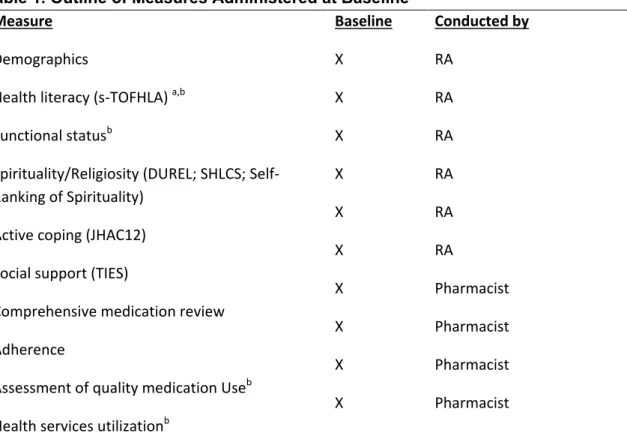
At the beginning of the initial meeting, the RA described the study and explained the informed consent document. After the individual or proxy provided written, informed consent, the RA administered a series of measures (Table 1) that included patient demographics, health literacy, functional status, spirituality, social support, and active coping.
The RA collected demographic information (e.g., age, marital status, gender, race/ethnicity, education, primary health care provider, and specialist physicians) from the patient and/or proxy using the demographic questionnaire designed for the parent study and then asked patients to complete the following self-report surveys/questionnaires:
Duke University Religion Index (DUREL)257 (Appendix 1)
Spiritual Health Locus of Control Scale (SHLCS)258 (Appendix 2)
Self-Ranking of Spirituality259 (Appendix 3)
John Henryism Active Coping Scale (JHAC12)260 (Appendix 4)
36
Prior to the administration of each survey, the RA read its instructions aloud. Then the RA stepped away (usually into the hallway outside the exam room) to allow the patient to complete each survey on his/her own or with help from his/her proxy. However, the RA did ask each patient whether he/she needed assistance with reading and completing the surveys. If the participant had visual impairment or requested assistance, the RA read each survey item aloud, solicited a response, marked the patient’s response, and then repeated it aloud to ensure that it had been documented properly. All other participants read, answered, and marked their own responses. Only 4 participants needed assistance from the RA or proxies.
Visit with the Clinical Pharmacist
Immediately after the baseline visit, each patient was interviewed by the clinical pharmacist, who collected information about income, health/disease conditions, number of medications, medication-taking behavior, and medication adherence, and entered this information onto the Baseline Comprehensive Medication Review Form that had been designed for the parent study. This transcription was preceded by a thorough review of each patient’s electronic medical record by the same pharmacist, using WebCIS. The information contained in these medical records, which included medical history, laboratory values, and other pertinent health history, helped the pharmacist to verify information given by the patients during their interviews and in and formulating her assessment of their medication use and medication-related problems.
37
(visual analog scale). However, for the purposes of the pilot study (Aim 1), the Morisky Compliance Assessment Scale was used to assess overall medication adherence. The Morisky Compliance Scale262 is a self-reported, 4-item measure of medication-taking behavior over the previous 4 weeks (Appendix 6).
The Morisky Compliance Scale was chosen over the other two measures of adherence used in the parent study after careful consideration. The clinical pharmacist’s assessment and self-reported adherence via visual analog was not judged to be ideal because both assessed adherence to each prescribed medication, which made it difficult to calculate a composite score of adherence. In the parent study, the clinical pharmacist marked whether a participant was adherent to a specific medication, based on the
38 Description of Measures
This section describes the measures that were administered and utilized for Aim 1. Table 1. Outline of Measures Administered at Baseline
Measure
Demographics
Health literacy (s-TOFHLA) a,b Functional statusb
Spirituality/Religiosity (DUREL; SHLCS; Self-Ranking of Spirituality)
Active coping (JHAC12) Social support (TIES)
Comprehensive medication review Adherence
Assessment of quality medication Useb
Health services utilizationb
Baseline X X X X X X X X X X Conducted by RA RA RA RA RA RA Pharmacist Pharmacist Pharmacist Pharmacist
a This measure was given to the proxy if the participant had a documented diagnosis of cognitive impairment
or dementia.
b
These measures were used in the parent study but not the pilot study.
Measures
Demographic Questionnaire: Age, race/ethnicity, gender, marital status and education were obtained for each patient during the baseline visit by the RA, using the parent study’s demographic questionnaire. Other patient information (e.g., number of39
Duke University Religion Index (DUREL): The Duke University Religion Index (DUREL)257 (Appendix 3) is a widely used five-item measure, divided into three subscales, that assesses organized religious activity (frequency of attending religious services), non-organized religious activity (frequency of praying, meditating, or studying religious text) and intrinsic religiosity (internalization of and commitment to religious practices and beliefs). The five single items measure organizational andnon-organizational religiosity; the three-item subscale measures intrinsic religiosity. Items in the subscales are scored on a five-to-six-point Likert-type scale. The overall scale has been shown to have high test-retest reliability (intra-class correlation = 0.91), high internal consistency (Cronbach’s α = 0.78–0.91) and high convergent validity with other measures of religiosity (r’s = 0.71–0.86); DUREL’s factor structure has been
demonstrated and confirmed in separate samples by different investigative teams.39,257