EFFECT OF THE MCHINJI SOCIAL CASH TRANSFER PILOT SCHEME ON CHILDREN’S SCHOOLING, WORK AND HEALTH OUTCOMES: A MULTILEVEL
STUDY USING EXPERIMENTAL DATA
Winnie Kavulani Luseno
A dissertation submitted to the faculty of the University of North Carolina at Chapel Hill in partial fulfillment of the requirements for the degree of Doctor of Philosophy in the Gillings
School of Global Public Health (Maternal and Child Health).
Chapel Hill 2012
Approved by:
ii © 2012
iii ABSTRACT
WINNIE KAVULANI LUSENO: Effect of the Mchinji Social Cash Transfer Pilot Scheme on Children’s Schooling, Work and Health Outcomes: A Multilevel Study using
Experimental Data
(Under the direction of Dr. Kavita Singh Ongechi)
This dissertation examines whether the Mchinji Social Cash Transfer Pilot Scheme (SCTPS), implemented in a rural district in central Malawi, improved schooling, work and health outcomes for children ages 6-17. Effects of individual level (orphan status and child’s gender) and household level factors (working-age adults and sick adults) on the outcomes are also studied. The study uses panel data collected in 2007-2008 from a randomized controlled evaluation study. This dissertation is unique in its use of multilevel methods. Also, this is the first study to report on the impact of an unconditional cash transfer program on health
outcomes for school-age children.
iv
The second paper shows that compared to children in non-beneficiary households, those in beneficiary households had lower odds of child illness and serious illness that stopped normal activities. An increase in the household number of working-age adults was associated with lower odds of child illness and health care use. An increase in the household number of sick adults increased the odds of child illness, serious illness and health care use. No
v
vi
ACKNOWLEDGEMENTS
First and foremost, I would like to thank my advisor, Dr. Kavita Singh Ongechi, for her continual support, encouragement and guidance during my doctoral coursework and dissertation process. I also wish to thank my dissertation committee members, Drs. Denise Hallfors, Carolyn Halpern, Sudhanshu Handa, Suzanne Maman and Chirayath Suchindran for their mentorship, thoughtful comments and feedback which helped to strengthen this body of work. Special acknowledgements are due to Dr. Handa for providing access to the Mchinji Social Cash Transfer Pilot Scheme evaluation data and to Dr. Suchindran for agreeing to join my dissertation committee after the proposal defense had occurred and providing valuable statistical advice.
I am also thankful to my dear friends and colleagues who have tirelessly supported and encouraged me through this process.
vii
TABLE OF CONTENTS
LIST OF TABLES ... ix
LIST OF FIGURES ...x
Chapter 1: Introduction ...1
Specific Aims ...4
Background ...8
Conceptual Framework and Methods ...12
Chapter 2: Effect of the Mchinji Social Cash Transfer Pilot Scheme on Children’s Schooling and Work Outcomes ...18
Introduction ...18
Cash Transfer Programs ...21
Individual Level Vulnerabilities ...22
Household Effects ...27
Review of Previous Estimation Methods ...28
Data ...30
Model Specification, Measures and Statistical Methods...36
Results ...40
Discussion and Study Limitations ...43
Conclusions ...48
Chapter 3: Effect of the Mchinji Social Cash Transfer Pilot Scheme on School-Age Children’s Health Outcomes ...61
viii
Methods ...64
Results ...68
Discussion ...70
Conclusion ...75
Chapter 4: Conclusion...83
Programmatic Implications ...84
Methodological Implications ...85
Study Limitations ...86
Concluding Remarks and Recommendations for Future Research ...87
APPENDIX ...89
ix
LIST OF TABLES
Table 2.1. Cash transfers by household size ...50
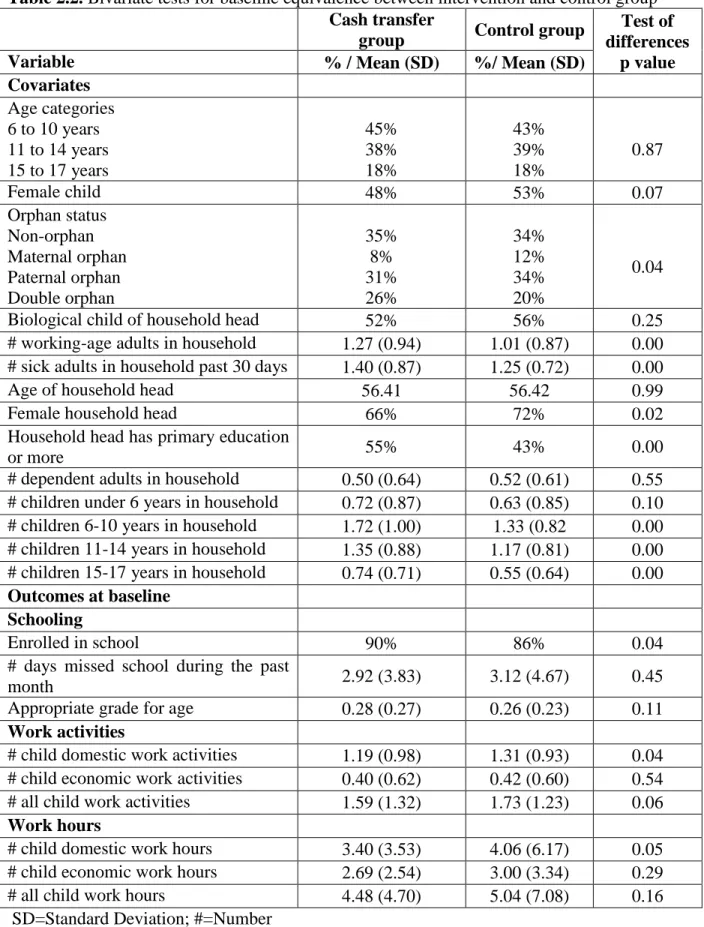
Table 2.2. Bivariate tests for baseline equivalence between intervention and control group ...51
Table 2.3. Distribution of children in households ...52
Table 2.4. Multilevel regressions for school outcomes ...53
Table 2.5. Multilevel Poisson regressions for child work activities ...55
Table 2.6. Multilevel Poisson regression for child work hours ...56
Table 3.1. Selected sample characteristics and bivariate tests for baseline equivalence between intervention and control group ...77
Table 3.2. Selected household characteristics at baseline (N=486) ...78
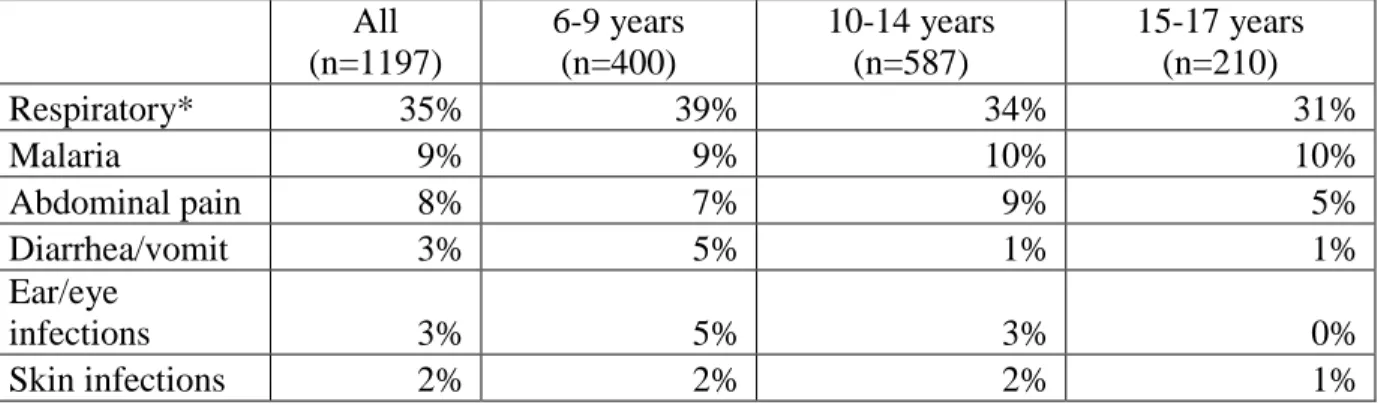
Table 3.3. Causes of illness at baseline among the study sample of 6-17 year olds in Mchinji, overall and by age group ...79
Table 3.4. Comparison of dependent variables at 1-year follow-up by intervention condition ...80
Table 3.5. Odds ratios (OR) from multilevel regressions controlling only for intervention ...80
Table 3.6. Odds ratios from multilevel regressions of children’s health outcomes, including all covariates ...81
Table A1. Child level descriptive statistics...89
Table A2. Household level descriptive statistics (N=486) ...91
x
LIST OF FIGURES
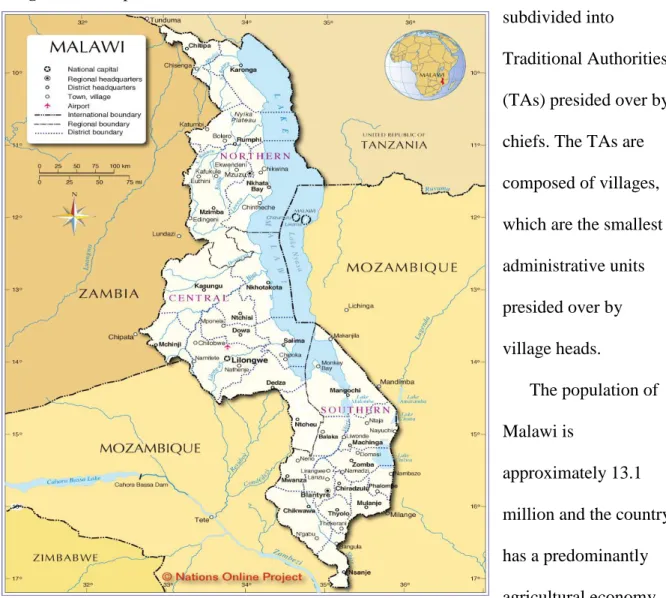
Figure 1.1. Map of Malawi ...9
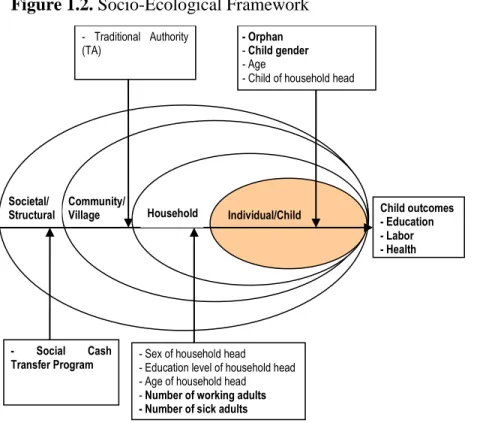
Figure 1.2. Socio-Ecological Framework ...12
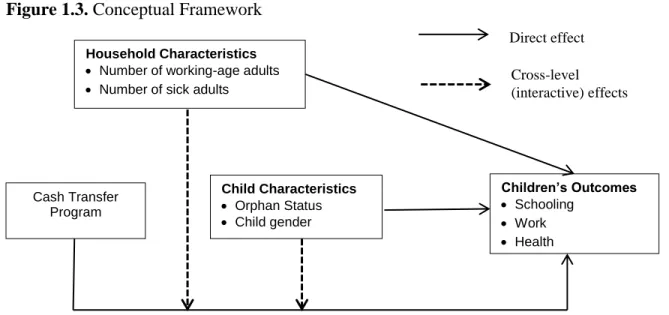
Figure 1.3. Conceptual Framework ...14
Figure 2.1. Mchinji SCTPS evaluation study timeline ...59
Figure 2.2. Participant flowchart ...60
CHAPTER 1 INTRODUCTION
Poverty is a critical obstacle to the survival and development of children (Gordon 2003). Children living in poverty often have limited access to education and health services, suffer from poor health, and are involved in work activities to assist adults who may be sick, elderly or engaged in seeking income (Gordon 2003). Cash transfers to poor households are
increasingly being used in developing countries as a key policy intervention to reduce child poverty, facilitate household investment in child education and health, and discourage child work (Barrientos and DeJong 2006; Fiszbein et al. 2009). While emerging evidence from Latin American countries indicates that conditional cash transfers significantly improve children’s outcomes (Fiszbein et al. 2009), less is known about cash transfer effects in sub-Saharan African countries where most programs are unconditional and poverty, HIV and lack of services are more widespread (Adato and Bassett 2009; Case, Hosegood and Lund 2005; Fiszbein et al. 2009; Miller, Tsoka and Reichert 2008a; Miller et al. 2010; Samson et al. 2010).
2
known about the effect of parental death on children’s health and work outcomes. Also, it is not known whether cash transfer programs are differentially effective for orphans relative to non-orphans.
Child gender is also an important individual level risk factor for children’s outcomes. Studies show a higher burden of disease and mortality rates among females in sub-Saharan Africa, especially those aged 15-19, than among males in the same age group (Gore et al. 2011; Patton et al. 2009). Studies have also found that while the probability of domestic work is higher for female children than male children in developing countries, male children are more likely to engage in economic work activities. Few studies, however, have examined gender differences in time spent on child work activities. Although recent studies show a closing of the education gender gap in many countries and in some cases the emergence of a female advantage (Chimombo 2009; Grant and Behrman 2010; Lewin 2009), there is some evidence that gender inequalities favoring boys remain in some dimensions of education. For example, while fewer girls drop out and have better school progress than boys, they have a lower likelihood of being enrolled in school. These mixed findings underscore the urgent need for continued research on gender inequity in education.
3
effects on children’s work burden as the number of able adults in a household increased (Ainsworth, Beegle and Koda 2005; Case and Ardington 2006; Evans and Miguel 2007; Nankhuni and Findeis 2004; Yamano and Jayne 2005).
This dissertation has three goals. The first goal is to determine the effect of the Mchinji Social Cash Transfer Pilot Scheme (SCTPS), an unconditional cash transfer program implemented in rural Malawi, on children’s schooling, work and health outcomes. The second goal is to obtain a more complete understanding of orphan status and child gender effects on children’s outcomes in Malawi. Third, this dissertation study examines whether and how the presence of sick and working-age adults in a household affects school-age children’s outcomes.
4 SPECIFIC AIMS
This dissertation research consists of two distinct studies with similar aims and methods but different outcomes. The first study focuses on schooling and work outcomes while the second focuses on health outcomes. The specific aims and hypotheses for the two studies are as follows:
Study 1
Aim 1.1. To examine the effect of the Mchinji SCTPS on schooling and child work outcomes
Hypothesis 1.1.a: Children in households that receive the cash transfer will be more likely to be enrolled in school, have fewer days missed from school, and be in the appropriate grade-for-age than children in households that do not receive the cash transfer.
Hypothesis 1.1.b: Children in households that receive the cash transfer will have fewer numbers of child work activities and child work hours than children in households that do not receive the cash transfer.
Aim 1.2. To examine the effect of orphan status and child gender on schooling and child work outcomes
5
Hypothesis 1.2.c: Girls will be less likely to be enrolled in school but they may or may not have a higher number of days missed from school and slower progression through school than boys.
Hypothesis 1.2.d: Girls will be more involved and spend more hours in domestic work activities, while boys will be more involved and spend more hours in economic work activities.
Aim 1.3. To examine the effect of number of household working-age and sick adults on children’s schooling and child work outcomes
Hypothesis 1.3.a: There will be a positive association between the number of working-age adults in a household and children’s enrollment in school and a negative association between the number of working-age adults and number of days missed from school.
Hypothesis 1.3.b: There will be a negative association between the number of sick adults in a household and children’s enrollment in school and a positive association between the number of sick adults in a household and number of days missed from school.
Aim 1.4. To determine if the impact of the cash transfer program on schooling and child work outcomes varies by orphan status and/or household characteristics Hypothesis 1.4.1: The effect of the cash transfer program on child outcomes will vary by orphan status such that:
6
Hypothesis 1.4.1.b: Orphans in households that receive the cash transfer will have a smaller decrease in the number of child work activities and child work hours than non-orphans in households that receive the cash transfer.
Hypothesis 1.4.2: The effect of the cash transfer program on child outcomes will vary by the number of working-age adults in the household such that:
Hypothesis 1.4.2.a: Children in households that receive the cash transfer and have more working-age adults will have a larger increase in the likelihood of school enrollment and larger decrease in the number of days missed from school than children in households that receive the cash transfer and have fewer working age adults.
Hypothesis 1.4.2.b: Children in households that receive the cash transfer and have more working-age adults will have a larger decrease in the number of child work activities and child work hours than children in households that receive the cash transfer and have fewer working age adults.
Hypothesis 1.4.3: The effect of the cash transfer program on child outcomes will vary by the number of sick adults in the household such that:
Hypothesis 1.4.3.a: Children in households that receive the cash transfer and have more sick adults will have a smaller increase in the likelihood of school enrollment and smaller
7
Hypothesis 1.4.3.b: Children in households that receive the cash transfer and have more sick adults will have a smaller decrease in the number of child work activities and child work hours than children in households that receive the cash transfer and have fewer sick adults.
Study 2
Aim 2.1. To examine the effect of the Mchinji SCTPS on children’s health outcomes Hypothesis 2.1.: Children in households that receive the cash transfer will be less likely to report illness in the past month, report illness that stopped normal activities, report missing school because of illness and/or injury; and more likely to report use of health care services for a child’s worst illness in the past year than children in households that do not receive the cash transfer.
Aim 2.2. To examine the effect of orphan status and child gender on children’s health outcomes
Hypothesis 2.2.a: Orphans will be more likely to report illness and less likely to utilize health services than non-orphans.
Aim 2.3. To examine the effect of number of household working-age and sick adults on children’s health outcomes
Hypothesis 2.3.a: There will be a negative association between the number of working-age adults in a household and the likelihood of children’s sickness and a positive association between the number of working-age adults and the likelihood of children’s utilization of health services.
8
number of sick adults in a household and the likelihood of children’s utilization of health services.
Aim 2.4. To determine if the impact of the cash transfer program on children’s health outcomes varies by orphan status and/or by household characteristics
Hypothesis 2.4.a: The effect of the cash transfer program on child outcomes will vary by orphan status such that orphans in households that receive the cash transfer will have a smaller decrease in the likelihood of being sick and smaller increase in the likelihood of health services utilization than non-orphans in households that receive the cash transfer. Hypothesis 2.4.b: The effect of the cash transfer program on child outcomes will vary by the number of working-age adults such that children in households that receive the cash transfer and have more working-age adults will have a larger decrease in the likelihood of being sick and larger increase in the likelihood of health services utilization than children in households that receive the cash transfer and have fewer working-age adults.
Hypothesis 2.4.c: The effect of the cash transfer program on child outcomes will vary by the number of sick adults in the household such that children in households that receive the cash transfer and have more sick adults will have a smaller decrease in the likelihood of being sick and smaller increase in the likelihood of health services utilization than children in
households that receive the cash transfer and have fewer sick adults.
BACKGROUND
9
Republic of Mozambique (see Figure 1.1. Map of Malawi). Malawi was under British rule from 1891 to July 1964 when it gained independence. Although the official language in Malawi is English, Chichewa – the language of the largest ethnic group, the Chewa – is most commonly spoken. Other significant ethnic groups include the Lomwe, Yao, Ngoni and Tumbuka.
Administratively, Malawi is divided into three regions with a total of 28 districts. There are 6 districts in the Northern Region, 9 in the Central Region, and 13 in the Southern
Region. Each district is subdivided into
Traditional Authorities (TAs) presided over by chiefs. The TAs are composed of villages, which are the smallest administrative units presided over by village heads.
The population of Malawi is
10
An estimated 85% of the population reside in rural areas and the share of agricultural exports is estimated at 53% of total merchandise (National Statistical Office (NSO) [Malawi] 2008). Malawi is one of the poorest countries in the world and is ranked 153 out of 169 countries in the 2010 Human Development Index (United Nations Development Fund (UNDP) 2010). In 2005, 52% of the Malawi population was classified as poor and 22% as ultra-poor (National Statistical Office (NSO) [Malawi] 2005). Life expectancy at birth is 54.6 years, the combined gross enrolment ratio in education for both girls and boys is 61.9% and mean years of
schooling among adults 25 years and older is 4.3 (National Statistical Office (NSO) [Malawi] 2005; United Nations Development Fund (UNDP) 2010). In 2010, an estimated 12.6% of children under age 18 years were orphans (National Statistical Office (NSO) [Malawi] and ICF Macro 2011). In 2007, it was estimated that out of 1,164,939 orphans, 436,503 Malawian children were orphans due to AIDS (Government of Malawi 2010). Malawi is among the worst HIV/AIDS affected countries in sub-Saharan Africa with prevalence among people aged 15 to 49 estimated at 10.6% in 2010 (National Statistical Office (NSO) [Malawi] and ICF Macro 2011).
11
Malawi poverty line was Malawi Kwacha (MK)16,165 per capita per year (US$115 per year) and the ultra-poverty line was MK 10,029 per capita per year (US$71) (National Statistical Office (NSO) [Malawi] 2005). Labor constrained households are elderly headed with no adults between ages 19-64 that are fit for work or child-headed households; have incalculable or worse than three dependency ratios; and/or contain adults that are chronically sick or disabled (Miller et al. 2008b).
The Malawi SCTS targeting criteria (i.e., ultra-poor and labor constrained households) combines several dimensions of vulnerability that have been hailed as important components of a successful child-sensitive social protection program that is AIDS sensitive rather than AIDS exclusive (Yates, Chandan and Lim Ah Ken 2010). AIDS sensitive programs
appreciate that although AIDS-affected children (e.g., AIDS orphans) living in poverty and suffering from social exclusion in high HIV-prevalence countries may face specific
vulnerabilities (e.g., HIV/AIDS-related stigma and discrimination and/or barriers to accessing health services and treatment), many of their needs due to poverty and social exclusion are shared with other vulnerable children. These programs recognize that exclusive focus on AIDS-specific child vulnerability runs the risk of excluding other vulnerable
children who are equally in need of social protection (Yates et al. 2010).
12
first transfers to recipient households in the Mchinji SCTPS were made in June 2006 and by April 2008, 2,878 households were receiving transfers on a monthly basis. As of July 2010, the SCTS had been expanded beyond Mchinji to 7 additional districts, reaching 24,051 ultra-poor households and approximately 95,000 individuals (Carolina Population Center (CPC) 2012). It is expected that by 2015 the scheme will have been implemented in all districts in the country. To date, approximately 80% of the Malawi SCTS program participants are estimated to be AIDS affected households, 80% of households include children, and among those households with children, the mean number of orphans is 1.6, well above the national average.
CONCEPTUAL FRAMEWORK AND METHODS
Theoretical Framework, Conceptual Model and Estimation
Theory. The proposed research is based on the socio-ecological framework
(Bronfenbrenner 1977; Stokols 1992), which posits that children’s outcomes are influenced not only by individual characteristics but also by the social environments or contexts in which they live (see Figure 1.2.). The framework suggests that Societal/
Structural Household Individual/Child
- Social Cash Transfer Program
- Traditional Authority (TA)
Child outcomes - Education - Labor - Health
- Sex of household head - Education level of household head - Age of household head - Number of working adults - Number of sick adults
- Orphan
- Child gender
- Age
- Child of household head
Community/ Village
13
these environments can be conceptualized as a set of nested levels of relationships from the individual, to the household, to the community, and finally to the wider society
(Bronfenbrenner 1977; Stokols 1992; Susser and Susser 1996). The more distant the level, the less influence it has on outcomes. Processes occur at each level as well as interact between levels to determine a child’s outcomes.
Conceptual Model. The conceptual model guiding this study is presented in Figure 1.3. Based on the socio-ecological framework and previous studies, three social contexts or levels are posited as potentially relevant to children’s schooling, work, and health outcomes – individual (or child), household, and structural (or societal). Due to lack of data, the proposed study cannot examine the effect of community (or village) level factors, another potentially relevant context, on children’s outcomes. All three contexts examined in this study are expected to uniquely contribute to children’s outcomes. In addition, following from the socio-ecological framework and findings from previous studies, interactive relationships are expected within the three contexts. In particular, cash transfer effects are expected to vary depending on orphan status and households characteristics. In the following section, the rationale for including each of the factors as well as the interactive relationships is reviewed.
14
receiving the cash transfer because they now had the means and were encouraged by program staff to do so.
Figure 1.3. Conceptual Framework
Children in Mchinji are reported to leave primary school in high numbers for
employment and to meet family responsibilities (Miller et al. 2010). Cash transfers were expected to reduce the number of child work activities and hours among school-age children through two possible channels. First, given increased school enrollment and regular
attendance due to the cash transfer, children would have less time to participate in work activities (Fiszbein et al. 2009). Second, households that receive the cash transfer may be less dependent on the income of their children or may be able to hire additional labor and thus may reduce child work (Fiszbein et al. 2009).
Similar to schooling outcomes, cash transfer beneficiaries were encouraged to use funds to improve nutrition and for healthcare services. However, no conditions were imposed and recipients made their own decisions about expenditure (Miller, Tsoka and Reichert 2010). It was expected that households would use some of the funds to improve their diet, which in turn would lead to sufficient energy intake, better nutrition, stronger immune systems and
Household Characteristics
Number of working-age adults
Number of sick adults
Cash Transfer Program
Child Characteristics
Orphan Status
Child gender
Children’s Outcomes
Schooling
Work
Health
Direct effect
15
ultimately better health, especially among children. It was also expected that cash transfer recipients would make more use of health services for sick children because they now had the means to do so.
Orphan status effects on children’s outcomes. Findings from previous research suggest that parental loss may lead to deficits in children’s outcomes manifested by poor schooling outcomes (e.g., school dropout, increased number of missed school days and lower grade for age). Although there is less guidance in the literature on the relationship between orphan status and child work and health outcomes, we expect orphan status will be positively associated with child work (e.g., increased number of work activities or work hours), and/or poor health outcomes (e.g., higher likelihood of ill-health and inadequate use of health services).
Gender. Findings from previous research are mixed with respect to the effect of gender on children’s outcomes in sub-Saharan Africa. However, we expect girls will be less likely to be enrolled in school but may or may not have fewer days missed from school or slower progression through school. Also, girls will be more involved in domestic work activities and boys in economic work activities.
16
member is a primary caregiver or income earner and unable to provide adequate childcare, proper nutrition and sanitation, and/or use of child healthcare services, if needed.
In contrast, the presence of working-age adults (i.e., ages 18 to 64 years) in the household may positively influence children’s outcomes in a number of ways. Working-age adults either may step in to take care of sick household members or, if sufficient resources are available, hire additional workers to meet household labor needs rather than pull school-age children from school or increase children’s work activities or hours. They may also,
especially if they are the child’s parent or close relative (e.g., an older sibling), ensure that the child is in good health and receives proper healthcare when needed.
Cross-level (interactive/modification) effects: orphan status, household characteristics, and cash transfer. If, as hypothesized earlier, orphans are discriminated against within households, live in poorer households, or have lower returns to education than non-orphans then it is expected that they will reap fewer benefits from a cash transfer than non-orphans. The conceptual model further suggests that children living in households with sick adults will benefit less from a cash transfer than those living in households with no sick adults. This is because a large proportion of the funds may be allocated to medical bills for the sick adults rather than to school expenses, reductions in child labor and/or to acute child illnesses or healthcare use for children. Finally, households with no working-age adults are expected to be poorer and thus children living in these households may benefit less from a cash transfer than those living in households with working-age adults because there may be a greater need to allocate resources to other priority needs.
17
estimating equations (GEE) approaches, including more efficient estimates of household level effects on child outcomes. Most importantly, multilevel analysis allows for
simultaneous examination of individual and household level influences on child outcomes. With multilevel analysis, households are appropriately treated as randomly sampled from a population of households. Effects of orphan status and gender on child outcomes are not estimated individually for each household as in the FE approach but are assumed to have a distribution across a population of households. Thus, estimation models estimate means and variances for the distribution of household effects allowing for inferences to specific
CHAPTER 2
EFFECT OF THE MCHINJI SOCIAL CASH TRANSFER PILOT SCHEME ON CHILDREN’S SCHOOLING AND WORK OUTCOMES
INTRODUCTION
Children living in poverty often have limited access to education and are involved in work activities to assist adults who may be sick, elderly or engaged in seeking income (Gordon 2003). Appropriate policy responses to childhood poverty and the associated adverse schooling and work outcomes are important as a human rights issue and because of the long-term consequences for affected children (e.g., fewer years of schooling, reduced capacity to learn, low future earnings) and potential inter-generational effects (e.g., poor outcomes among children with poorly educated mothers) (Adato and Bassett 2009;
Barrientos and DeJong 2006). Cash transfers to poor households are increasingly being used in developing countries as a key policy intervention to address poverty and adverse child outcomes. However, the impact of cash transfer programs on children’s schooling and work has not been conclusively established in sub-Saharan Africa. To this end, a complete
understanding is needed of other individual and household level factors that also affect children’s outcomes to facilitate precise targeting of effective programs to reach children who are most in need.
19
Malawi were randomly assigned to intervention and control conditions. Eligible households in the intervention groups received cash transfers. To be eligible to receive a cash transfer, households had to be ultra-poor1 and/or labor-constrained2. Although eligible, households in the control group did not receive cash transfers during the one year evaluation study. They did, however, receive transfers on completion of the evaluation study. Pre- and post-intervention surveys were used to collect data on children’s education, work and other outcomes as well as several household and child characteristics (Miller et al. 2008a; Miller, Tsoka and Reichert 2010). Mchinji SCTPS was designed to alleviate poverty, reduce hunger and malnutrition, and improve school enrollment for the poorest 10% of households in the district (Miller et al. 2008b). The experimental design of the evaluation study allowed for the examination of the causal impact of cash transfers to poor households on children’s
schooling and work. Although the study was not explicitly designed to examine individual child and household effects on children’s outcomes, the data were well suited and offered an opportunity to analyze these relationships in Malawi. The use of multilevel methods
facilitated these secondary analyses. Multilevel modeling accounts for clustering in data such as in our study whereby outcomes for children living in the same household were likely to be similar. Multilevel models also offer a robust and efficient approach to simultaneously test research hypotheses concerning individual and household level influences on children’s
1 In Malawi, ultra poor households live below the national ultra-poverty line, are in the lowest expenditure
quintile, consume only one meal per day and own no valuable assets (Miller et al. 2008b). In 2005, the official Malawi poverty line was Malawi Kwacha (MK) 16,165 (approximately US$115) per capita per year and the ultra-poverty line was MK 10,029 (approximately US$71) per capita per year (National Statistical Office (NSO) [Malawi] 2005).
2 Labor constrained households are elderly headed with no adults between ages 19 and 64 that are fit for work,
20
outcomes (Bingenheimer and Raudenbush 2004). This study is the first to use a multilevel estimation approach to evaluate a cash transfer program.
Our study had several important findings. First, results indicated that cash transfers improved schooling outcomes, specifically enrollment and number of days missed from school, for children in beneficiary households relative to those in non-beneficiary
households. Second, while transfers reduced time spent in economic work activities, they increased the number of and time spent in domestic work for children in beneficiary households compared to those in non-beneficiary households. Differences, however, were trivial with children in beneficiary households involved in, on average, 1.24 domestic work activities and spending 3.12 hours on domestic work activities compared to 1.17 activities and 2.84 hours among children in non-beneficiary households. Third, contrary to other research, we did not find that orphans were disadvantaged in schooling and work outcomes relative to non-orphans. Fourth, gender differences were found with girls more advantaged in education but disadvantaged in child work compared to boys. Finally, support was found for the argument that the number of working-age adults (i.e., ages 18 to 64) in a household reduces the work burden on children.
21 CASH TRANSFER PROGRAMS
Global consensus is building around cash transfers to poor households as a key child-sensitive social protection policy intervention that aims to address children’s poverty and vulnerability and improve their long-term outcomes (Adato and Bassett 2009; Barrientos and DeJong 2006; Fiszbein et al. 2009; Yates et al. 2010). Cash transfer programs have been implemented in over 30 developing countries to facilitate household investment in child education and health and discourage child work (Barrientos and DeJong 2006; Farrington and Slater 2006; Fiszbein et al. 2009). An important principle of child-sensitive social protection is that cash transfer interventions be directed at families that support children.
Cash transfer programs have had a longer history in Latin American than sub-Saharan African countries. Most programs in Latin America are conditional and require recipient households to make specific investments on their school-age children’s education and health. Evidence overwhelmingly indicates that conditional cash transfer (CCT) programs in this region have increased school enrollment rates and reduced rates of child labor among school-age children in beneficiary households (Fiszbein et al. 2009).
Because of the limited human and financial capacity to monitor CCTs, most cash transfer programs in sub-Saharan Africa have been targeted to extremely poor households or
22
and reduce drop-out rates (Adato and Bassett 2009; Case et al. 2005; Miller et al. 2008a; Samson et al. 2010). Although there is some evidence in unpublished literature that
unconditional cash transfers have a mixed effect on work among school-age children (Miller et al. 2008a), this review found no published studies examining the impact of these programs on child work outcomes among school-age children in sub-Saharan Africa.
Cash transfers can be expected to improve schooling outcomes and reduce child work among school-age children in a number of ways. Cash transfers have the potential to enable families who previously lacked financial resources, to enroll their children in school. In some unconditional cash transfer programs such as the Mchinji SCTPS, families may be
encouraged to use some of the transfer money for costs related to children’s schooling. Additionally, given increased school enrollment and regular attendance due to the cash transfer, children may have less time to participate in work activities (Fiszbein et al. 2009). It can also be anticipated that households that received the cash transfer would be less
dependent on the income of their children or more able to hire additional labor and thus child work would be reduced (Fiszbein et al. 2009).
INDIVIDUAL LEVEL VULNERABILITIES
23
Among the cross-sectional studies, Kurzinger et al. (2008) and Pagnier et al. (2008) found no statistically significant differences between orphans and non-orphans in school enrollment and school delay in Burkina Faso and Tanzania. Chuong and Operario (2012) analyzed a South Africa Demographic and Health Survey (DHS) dataset and found no significant effect of orphan status on educational delay, defined as being below the
appropriate grade-for-age. Using data for 51 countries from a variety of sources (e.g., DHS, Multiple Indicator Cluster Surveys (MICS), and Integrated Household Surveys (IHS)), 35 of which were in sub-Saharan Africa, Ainsworth and Filmer (2006) showed that the effect of orphan status on school enrollment varies substantially by country. They also found that where orphans are disadvantaged relative to non-orphans, differences may be small and not statistically significant. In many countries, household poverty had a stronger effect on children’s school enrollment than orphan status.
In contrast, Case, Paxson and Ableidinger (2004) and Campbell et al. (2010), using DHS data from 10 and 11 sub-Saharan African countries, respectively, found that orphans were significantly less likely to be enrolled in school than were non-orphans with whom they lived. Campbell et al. (2010) also found that in a third of the countries orphans were significantly less likely to complete primary schooling than non-orphans. Bicego, Rutstein, and Johnson (2003) pooled DHS data from five sub-Saharan African countries to create East and West African samples. In the East African sample they found that, while younger
24
in a lower grade for their age than non-orphans. Using data from South Africa, Parikh et al. (2007) found that paternal orphans were more likely to be behind in school than non-orphans with whom they live. No significant differences in schooling were found between
non-orphans and maternal or double non-orphans. Yamano, Shimamura and Sserunkuuma (2006) used data from Uganda and found orphan status had no significant effect on school enrollment among children aged 7-14 but double and virtual double (i.e., single orphans living away from their surviving parent) female orphans aged 15-18 were less likely to be enrolled in school compared to non-orphans in the same household. They also found that among children aged 7-14, male but not female orphans living with a surviving parent progressed through school more slowly than non-orphans in the same household. Both male and female double and virtual orphans aged 15-18 had significantly slower school progression than non-orphans. Cross-sectional studies, however, are limited in their ability to determine causal effects of orphan status or rule out alternative explanations for children’s outcomes.
25
were more than twice as large for maternal deaths than paternal deaths. Case and Ardington (2006) also found that maternal death, but not paternal death, has strong negative effects on children’s schooling in South Africa. They also found that, relative to the non-orphans with whom they lived, maternal orphans were behind in their schooling and fewer resources were spent on their education. Yamano and Jayne (2005), also using panel data from Kenya, found significant negative effects of working-age adult death on school attendance.
Based on this previous research, we hypothesized that maternal, paternal and double orphans would have poorer schooling and work outcomes than non-orphans. Paternal orphans might live in poorer households with fewer resources available to allocate to their needs (Evans and Miguel 2007; Yamano and Jayne 2005). Having lost the key gatekeeper of their welfare, maternal and double orphans may be left without a caregiver committed to ensuring that their basic needs are met (Ainsworth et al. 2005; Case and Ardington 2006; Evans and Miguel 2007). Having to make changes in their living arrangements, some orphans, particularly double orphans, may find that they are faced with discrimination in their new homes in that their new caregivers may not be willing or able to allocate resources to their education and may expect them to take on more household work. It is also possible that orphans may have fallen behind their peers in school or dropped out of school prior to parental death because they were taking care of a sick parent (Evans and Miguel 2007; Yamano and Jayne 2005). Some studies have also suggested that having witnessed the death of their parents due to HIV/AIDS or other causes as well as having lost time from school and being behind their peers, orphans may have lower returns to education than non-orphans.
26
however, have examined the association between orphanhood and child work outcomes in sub-Saharan Africa, and those that have produced inconclusive results (Guarcello et al. 2004). Our study makes a significant contribution to this gap in the literature.
Gender. While gender gaps in schooling in many developing countries, especially those in sub-Saharan Africa, largely favored boys in the 1970s and 1980s among poor households, more recent studies show a closing of the gap in many countries and in some cases the emergence of a female advantage (Grant and Behrman 2010; Lewin 2009). Despite these important improvements, there is some evidence that gender inequalities favoring boys remain in some dimensions of education. Using DHS data from 38 countries (21 of which were in sub-Saharan Africa, including Malawi), Grant and Behrman (2010) found that although girls were less likely to drop out and had better school progress than boys, they had a lower likelihood of being enrolled in school. Additionally, Chimombo (2009) reports that girls’ education in Malawi has significantly improved relative to boys since the 1990s due to a high emphasis placed on girls’ access to education by the government and donors.
However, drop out is more common for girls in higher grades than for boys. These mixed findings underscore the urgent need for continued research on gender inequity in education.
27 HOUSEHOLD EFFECTS
Most research on child vulnerability has focused on individual level risk determinants of adverse outcomes. Even though they may play a critically important role, few studies have examined whether household factors affect children’s outcomes. Among these few studies, most have focused on household wealth with mixed findings (Beegle, De Weerdt and Dercon 2006; Case and Ardington 2006; Case et al. 2004; Evans and Miguel 2007; Sharma 2006). For our study, differences in wealth were negligible because only very poor households were included in the Mchinji SCTPS evaluation study.
Using the United Nations Children’s Fund’s (UNICEF) definition of vulnerable children and results from previous research, we identified other household factors that may be
28
These findings suggest that in the absence of able adults in poor households, orphans and other vulnerable children may play an important role in caring for sick parents and/or other adults as well as performing other household and economic work (Ainsworth and Filmer 2006; Bennell 2005; Case and Ardington 2006; Evans and Miguel 2007; Weil 2010; Yamano and Jayne 2005). Because of their roles as caregivers, these children are more likely to drop-out of school, miss school days and have lower educational attainment (Bennell 2005; Edmonds 2007; Edmonds and Pavcnik 2005). This may be because financial resources have been diverted away from school-related costs (e.g., fees, uniform, textbooks and other school supplies) to medical and funeral bills. They may also have to devote more time to work activities either to earn an income to substitute lost income previously earned by a now sick adult or help with household chores. In contrast, the presence of working-age adults (i.e., ages 18 to 64 years) in the household may positively influence children’s outcomes in a number of ways. Working-age adults either may step in to take care of sick household members or, if sufficient resources are available, hire additional workers to meet household labor needs rather than pull school-age children from school or increase children’s work activities or hours. They may also serve as positive role models and provide social support for the children and thereby encourage continued school enrollment and attendance.
REVIEW OF PREVIOUS ESTIMATION METHODS
29
logistic, or ordinary least squares) with hierarchical or nested data without adequate adjustments in standard errors fail to account for dependence in the data structure, in that outcomes of children living together in the same households are likely to be correlated. In so doing, these studies (de Janvry and Sadoulet 2006; Kurzinger et al. 2008) violate a key regression assumption that residuals are independent, i.e., uncorrelated. On the other hand, studies that use standard methods with corrections for standard errors (Ainsworth et al. 2005; Schady et al. 2008; Schultz 2004; Sharma 2006; Skoufias et al. 2001) limit inferences to only overall effects of orphan status or cash transfers on child outcomes and do not allow for accurate evaluation of how effects may vary across households or the unique effect of other individual or household characteristics on outcomes. Generalized estimating equations
(GEE), or population average models, are an alternative modeling approach for clustered data that do not require introduction of random effects together with the attendant distributional assumptions (Gardiner, Luo and Roman 2009; Hubbard et al. 2010). However, GEE models are limited in that they only estimate changes in the outcome population mean due to changes in the covariates averaged over all observed groups (e.g., households or communities)
(Gardiner et al. 2009; Hubbard et al. 2010; Merlo 2003).
30
approach has a number of disadvantages. Most importantly, a household FE approach limits the scope of analysis when households are randomly sampled from the population because this approach only permits comparisons to be made between orphans and non-orphans living in the same household. Inferences cannot be generalized to similar households in the study area or geographic setting. Additionally, it is difficult and cumbersome to simultaneously examine child and household level effects or to evaluate cross-level effects on child outcomes, requiring estimation of several equations to determine effects of interest.
The use of a multilevel approach offers several improvements on the household FE approach as well as GEE, including more efficient estimates of household level effects on child outcomes. Most importantly, multilevel analysis allows for simultaneous examination of individual and household level influences on child outcomes. With multilevel analysis, households are appropriately treated as randomly sampled from a population of households. Effects of orphan status and gender on child outcomes are not estimated individually for each household as in the FE approach but are assumed to have a distribution across a population of households. Thus, estimation models estimate means and variances for the distribution of household effects allowing for inferences to specific households as well as to the population of all households as opposed to restricting inferences only to children living in the same households.
DATA
31
by the People’s Republic of Mozambique (see Figure 1.1. in Chapter 1). The population of Malawi is approximately 13.1 million and the country has a predominantly agricultural economy. An estimated 85% of the population resides in rural areas (National Statistical Office (NSO) [Malawi] 2008). Malawi is one of the poorest countries in the world and is ranked 153 out of 169 countries in the 2010 Human Development Index (United Nations Development Fund (UNDP) 2010). In 2005, 52% of the Malawi population was classified as poor and 22% as ultra-poor (National Statistical Office (NSO) [Malawi] 2005).
In 2010, an estimated 12.6% of children under age 18 years were orphans (National Statistical Office (NSO) [Malawi] and ICF Macro 2011). In 2007, it was estimated that out of 1,164,939 orphans, 436,503 Malawian children were orphans due to AIDS (Government of Malawi 2010). Malawi is among the worst HIV/AIDS affected countries in sub-Saharan Africa with prevalence among people aged 15 to 49 estimated at 10.6% in 2010 (National Statistical Office (NSO) [Malawi] and ICF Macro 2011).
Malawi’s education system is based on the 8-4-4 system, which is eight years of primary level education, four years of secondary education and four years at the tertiary level
including university, technical and teacher training colleges. Although free primary education was introduced in 1994, other school related expenses e.g., uniforms and school supplies can limit primary school enrollment and attendance. Additionally, tuition and other costs
32
The Malawi Social Cash Transfer Scheme (SCTS) began as a pilot in 2006-07 in Mchinji District, which is in the western-most part of the Central Region3 of Malawi about 100 miles from Lilongwe, the national capital city (see Figure 1.1. in Chapter 1). In 2005, 30% of households in Mchinji District were classified as ultra-poor compared to 22% of households in Malawi overall (NSO [Malawi] 2005), and the district was ranked as the 14th poorest out of 28 districts (Schubert and Huijbregts 2006). The first transfers to recipient households in the Mchinji SCTPS were made in June 2006 and by April 2008, 2,878 households were receiving transfers on a monthly basis. As of July 2010, the Malawi SCTS had been expanded beyond Mchinji to 7 additional districts, reaching 24,051 ultra-poor households and approximately 95,000 individuals (Carolina Population Center (CPC) 2012). It is expected that by 2015 the scheme will have been implemented in all districts in the country. To date, approximately 80% of Malawi SCTS program participants are estimated to be AIDS affected households, 80% of households include children, and among those households with children, the mean number of orphans is 1.6, well above the national average.
Sample selection and eligibility. Sample selection for the Mchinji SCTPS evaluation study was conducted in multiple stages. Mchinji District is divided into nine TAs which are further divided into village groups that contain multiple villages, creating clusters of about 1000 households. During the time of the evaluation study Mchinji SCTPS was operational in four out of nine TAs. Approximately 100 SCTPS eligible households per village group were identified in eight village groups. The sampling frame was a district-provided roster of all cash transfer approved households in the eight village groups, yielding approximately 819 households (Miller et al. 2008; Miller et al. 2010).
3 Administratively, Malawi is divided into three regions (Northern, Central and Southern) with a total of 28
33
Intervention. By random assignment, four village groups were assigned to receive the cash transfer (i.e., intervention condition) and four to the control group that did not receive the cash transfer until after the evaluation study (see Figures 2.1. and 2.2.). All eligible households in the village groups randomized to the intervention condition received the cash transfer on a monthly basis. Disbursements began in the month following baseline data collection (see Figure 2.1.).The amount of the cash transfer depended on household size (see Table 2.1.) and the number of school-aged children in the household. An extra $1.44 and $2.88 (US) was received for each additional primary aged and secondary aged child in the household, respectively.
Data collection procedures. The Mchinji SCTPS evaluation study was approved by the Boston University Institutional Review Board (IRB) and the Malawian National Health Research Council at the Ministry of Health. IRB approval for secondary data analysis was also obtained from the University of North Carolina at Chapel Hill. Prior to baseline data collection, research staff conducted community consultations in participating villages to inform communities of the study. Guides were then identified to lead research staff to
households but were not permitted to remain near the household during the interview (Miller et al. 2008; Miller et al. 2010). Interviews began with research staff describing the study to the participant and securing consent. Respondents were given a copy of the consent form for their records. Interviews were conducted with the household head, the person registered to receive the cash transfer, or another household member selected by the household head. Interviews lasted between 1.5 to 3 hours depending on the size of the household and the age and wellbeing of the respondent. Data collection consisted of completion of a survey
34
head. The evaluation study consisted of three rounds of panel data collection (see Figure 2.1): Round 1 was in March 2007, Round 2 in September 2007 and Round 3 in April 2008 (Miller et al. 2008; Miller et al. 2010). For our study we used data from Rounds 1 and 3.
Sample characteristics. Appendix Table A1 and Figure 2.2 show that our final sample included 1,193 children aged between 6 and 17 years with complete baseline demographic information (695 intervention and 498 control). We included these ages because the official age for entry into primary school in Malawi is 6 years and an orphan is defined as a child under 18 years with one or both parents deceased. A total of 481 children were excluded because they had inconsistent age data, were not observed at baseline, had missing key baseline covariates (gender, orphan status), or they were no adults, age 18 or older, present in the household (see Figure 2.2). A logistic regression was fit to examine missingness of baseline covariates. Baseline missingness was significantly associated with the household head’s education (Odds Ratio (OR)=0.54; p<.05) but not with child age, intervention/control status, household head’s gender or age (Data not shown).
35
At baseline, the mean school enrollment rate in the sample was 88% and 3 days were missed from school. About 98% of children in the sample were below the appropriate grade for their age (data not shown). Educational delay or slow grade progression is common in many sub-Saharan countries, especially rural areas, including in Malawi. It has been
attributed to delayed enrollment, frequent grade repetitions, irregular school attendance and dropouts (Lewin 2009; Chimombo 2009).
At baseline, children in the study were mostly involved in household or domestic work activities. About 72% performed household chores (e.g., shopping, collecting firewood, cleaning or fetching water), 32% cared for other children in the household and 20% cared for adults in the household. They were less involved in work activities outside their home
referred to here as economic work activities. The data show that 9% of children did paid or unpaid domestic service (i.e., mainly household chores) in someone else’s house, 5% were self-employed (e.g., selling things, making things for sale, doing repairs, guarding cars, hairdressing, etc.), and 27% did other family work (e.g., on a farm or in a business).
Among children who worked at baseline 3.69 hours a week were spent on domestic work activities and 2.83 hours a week on economic work activities. Overall, children spent 4.73 hours a week in child work. Our data on child work substantially differ from those reported by Nankhuni and Findeis (2004), who found that 6-14 year old Malawian children spend on average 18.3 hours per week in household domestic work and that the most common form of domestic work is child care followed by fetching water, cooking and collecting firewood.
36
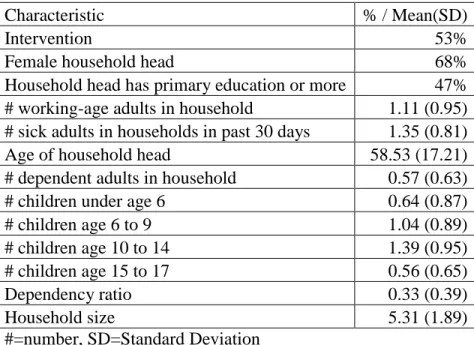
Children ages 6-17 years in the final sample were distributed between 486 households, with a mean of 2 children per household. Just over half of the households in the sample were
randomized to receive the cash transfer. Among household heads, mean age was 58 years, 68% were female and 47% had primary education or more.
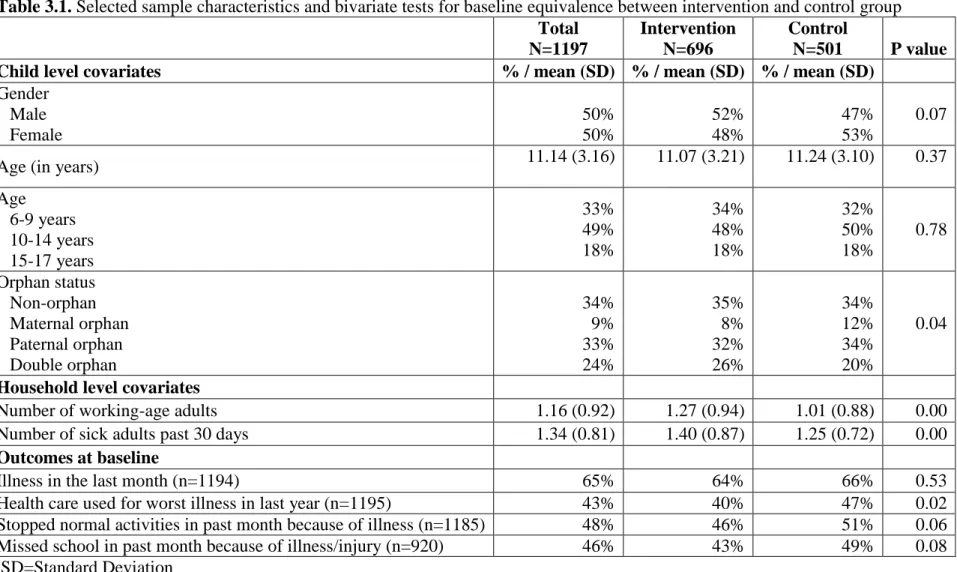
Table 2.2 and Appendix Table A3 presents summary statistics from the baseline and follow-up data used in our analyses with tests for equivalence in the assigned groups (i.e., intervention vs. control). The statistics revealed some statistically significant baseline
differences at the child level between the intervention and control groups in orphan status and type, school enrollment, number of domestic work activities and number of domestic work hours. At the household level, the data indicate differences between the assigned groups in the number of working-age adults, number of sick adults, proportion of female household heads, household heads with primary or more education, number of children ages 6-10, number of children ages 11-14 and number of children ages 15-17. These differences at the child and household levels were all significant at the 5% level.
37
group level. We were, however, unable to do this because randomization of households was based on village clusters. We estimated random-intercepts only models and the general two level model specification for the schooling and work outcomes of interest were as follows:
General level 1 model
Equation 1:
( ) ( ) ( ) ( ) ∑ ( ) ,
where is the appropriate link function for the dependent variable, i.e., logit link for the binary dependent variable, identity link function for the continuous dependent variable and log link function for the count dependent variables (see below for description of outcome measures). Mat. refers to maternal, Pat. to paternal and Dbl. to double.
General level 2 model
Equation 2a: ( ) ( ) ( ) ∑ ( )
where ( )
Equation 2b:
38
Measures. The three education outcomes of interest were (1) current school enrollment at 1-year follow-up (1=yes, 0=no), a binary variable; (2) number of days missed from school during the past month at 1-year follow-up (range 0-30), modeled as a count variable; and (3) school progression or appropriate age-for grade at 1-year follow-up calculated as (highest grade completed at 1-year follow-up)/(age – 5), a continuous variable (range 0-2.5)4.
Two categories of child work outcomes were examined. They were number of child work activities involved in during the past week and, among those who were engaged in child work in the past week, number of hours spent in work. Following Edmonds and Pavcnik (2005) and Edmonds (2008), child work activities were further divided into two groups, household or domestic work and economic activities. Domestic work included shopping, collecting firewood, cleaning or fetching water, caring for other children in the household and caring for other adults in the household. Economic activities were defined as work outside the home including paid or unpaid domestic service in someone else’s house (e.g., chores or caring for children or adults), self-employment (e.g., selling things, making things for sale, doing repairs, guarding cars, or hairdressing), and other paid or unpaid family work (e.g., on the farm, in a business or selling goods in the street). The total number of child work activities combining domestic and economic activities was also examined. Child work hours were also examined as hours spent in domestic activities, economic activities and all work activities. Child work outcomes were all modeled as count variables.
The outcomes were modeled as influenced by several child and household level factors. The key variables of interest at the child level were type of orphan (i.e., non-orphan, maternal orphan, paternal orphan and double orphan) and gender of the child, which were all measured
4 If school progression is < 1 then the child is below his/her appropriate grade-for-age and if school progression
39
at baseline. At the household level, the key variables of interest were receipt of a cash transfer (i.e., intervention), number of working-age adults measured at baseline and number of sick adults in the past 30 days measured at 1-year follow-up.
and in equations 1 and 2 were child and household level control variables, respectively. All child level control variables were measured at baseline. They included age group dummies for age 6-10 years, age 11-14 years and age 15-17 years. A dummy variable for the child’s relationship to the household head was also included (1=biological child of household head, 0=other). The models also included the relevant baseline measure of the outcome variable as a control to further isolate the effects of the variables of interest.
Household level control variables were also all measured at baseline and included age of the household head, as a continuous variable; a dummy variable for education level of the household head (1=primary education or more, 0=no schooling or preschool) and gender of household head (1=female, 0=male). Also included were five household demographic information variables: number of children under 6 years of age, number of children between ages 6 and 10, number of children between ages 11 and 14, number of children between ages 15 and 17 and number of dependent adults older than age 64
40
For the schooling outcomes, multilevel logistic regression was used to estimate current school enrollment, multilevel negative binomial regression was used to estimate number of days missed from school in the past month5, and multilevel linear regression was used to estimate appropriate age-for-grade. The work outcomes were all count variables and
multilevel Poisson regression was used for estimation. SAS 9.2 PROC GLIMMIX was used for the logistic and count regressions. For the linear regression SAS 9.2 PROC MIXED was used and an error term, , where ( ), was included in Equation 1. Convergence was obtained for all models and all variance and covariance estimates were admissible.
RESULTS
Schooling outcomes
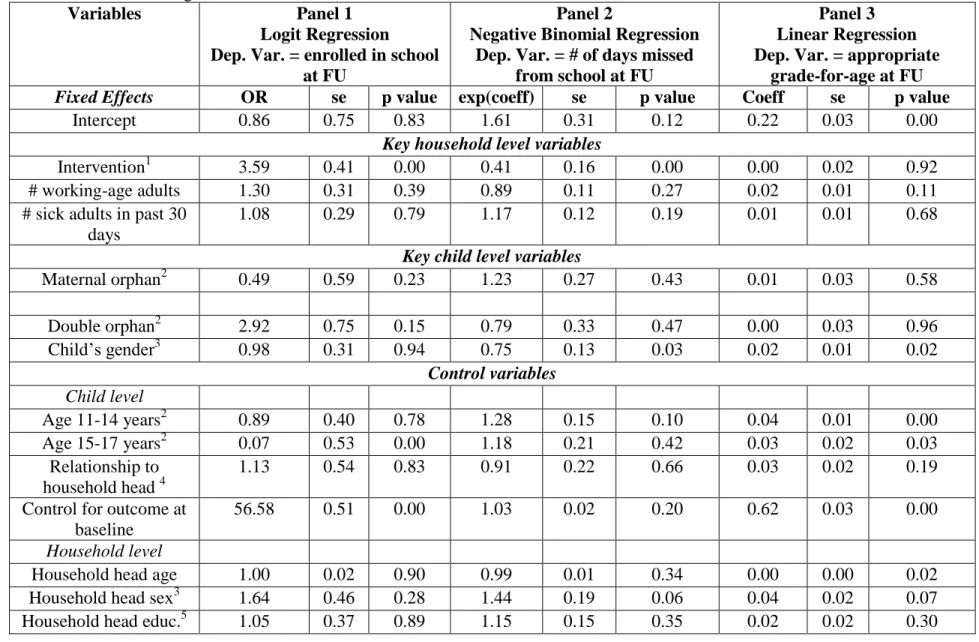
Effect of Mchinji SCTPS.Children in households that received the cash transfer had significantly greater odds of being enrolled in school at 1 year follow up (3.59; p<0.01) than those in households that did not receive the cash transfer (See Table 2.4, Panel 1). In
addition, receipt of the cash transfer significantly reduced the number of days missed from school by 0.41 (p<0.01; Table 2.4, Panel 2). That is, children in beneficiary households had 59% fewer days missed from school than those in non-beneficiary households. However, receipt of the cash transfer had no significant impact on school progression (Table 2.4, Panel 3).
Effect of orphan type. We found no evidence in our data that maternal, paternal or double orphans were disadvantaged in school enrollment or had a slower progression through school relative to non-orphans. Results also did not show significant differences in the number of
5 We used negative binomial and not Poisson because of overdispersion in the dependent variable, number of
41
days missed from school between maternal and double orphans and non-orphans. However, paternal orphans had 28% fewer days missed from school (p<0.10; Table 2.4, Panel 2) relative to non-orphans. We had similar results when we did not include the 37 children whose orphan status changed between baseline and 1-year follow-up.
Effect of child gender. While girls were just as likely as boys to be enrolled in school, they had 25% fewer days missed from school (p<0.05; Table 2.4, Panel 2) and progressed faster through school than boys (p<0.05; Table 2.4, Panel 3). We tested whether the intervention was moderated by child gender but the interaction was not statistically significant.
Effect of the number of working-age and sick adults in a household.Among other household level variables of interest, number of working-age adults and sick adults in the past 30 days had no statistically significant effect on school enrollment, number of days missed from school or school progression.
Child work outcomes
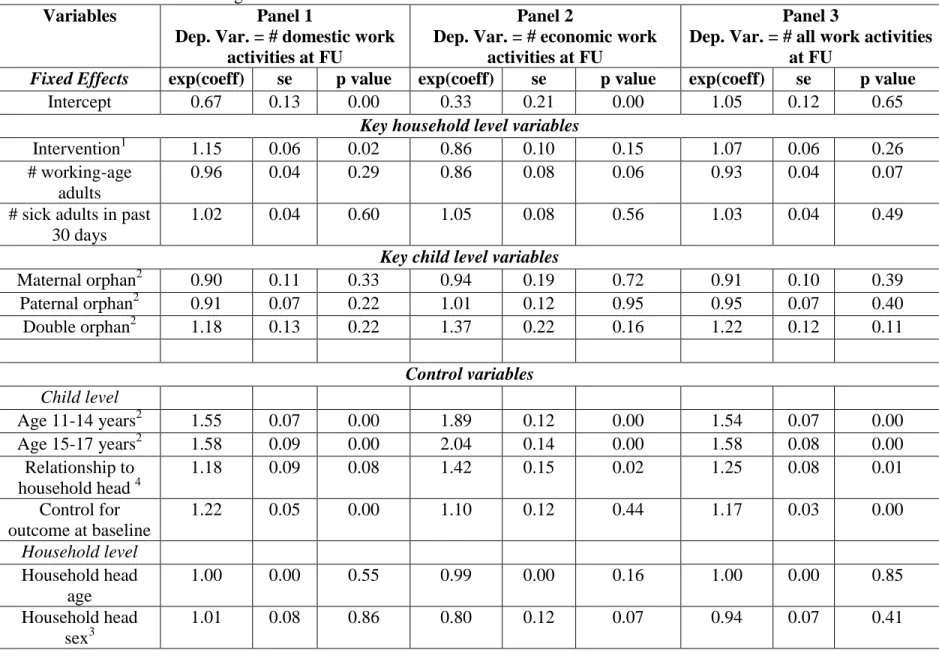
Effect of Mchinji SCTPS.Receipt of the cash transfer significantly increased the rate of children’s participation in domestic work activities (p<0.05; Table 2.5, Panel 1). That is, children in beneficiary households were involved in 15% more household chores than those in non-beneficiary households. The cash transfer program, however, did not have a
significant effect on children’s involvement in economic activities or the total number of work activities a child was involved in (Table 2.5, Panels 2 and 3).
non-42
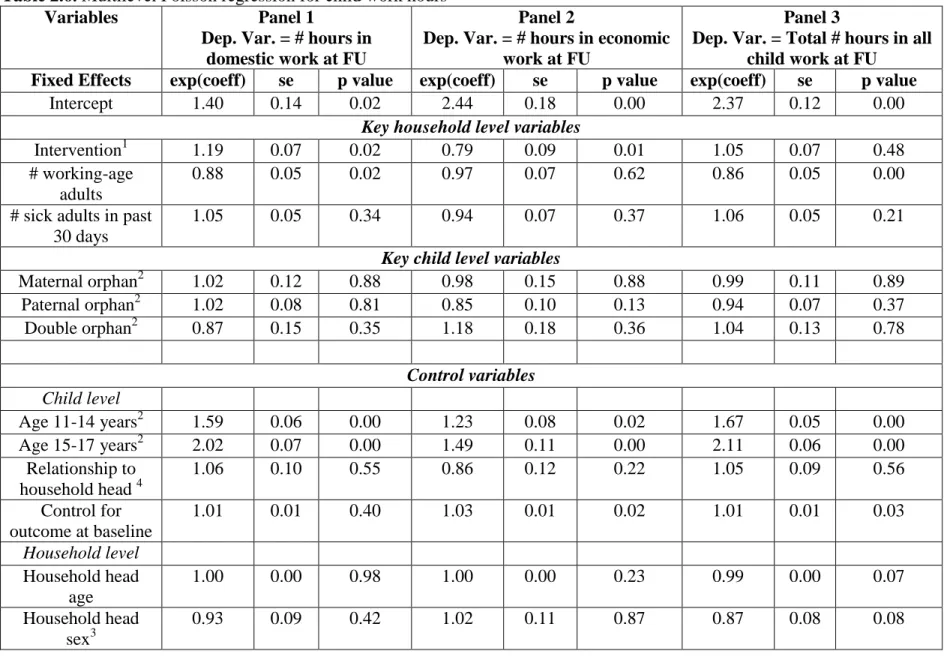
beneficiary (p<0.05; Table 2.6, Panel 1). Although the Mchinji SCTPS did not have a significant effect on the number of children’s economic work activities, the program significantly reduced the number of hours doing economic work activities. Specifically, children in beneficiary households spent 21% fewer hours doing economic activities than those in non-beneficiary households (p<0.05; Table 2.6, Panel 2). Study results indicated no significant program effect on the total number of child work hours (Table 2.6, Panel 3).
Effect of orphan type. Tables 2.5 and 2.6 show no significant effects of maternal, paternal or double orphan status on child work activities and hours compared to non-orphans. Again, there was no difference in our results when we did not include the 37 children whose orphan status changed between baseline and 1-year follow-up.
Effect of child gender. Girls were involved in 50% more domestic work activities
(p<0.01; Table 2.5, Panel 1), 16% fewer economic activities (p<0.05; Table 2.5, Panel 2) and 25% more work activities, overall, than boys (p<0.01; Table 2.5, Panel 3). Girls also spent 43% more hours on domestic work in the past week relative to boys (p<0.01; Table 2.6, Panel 1). Although girls spent 17% fewer hours doing economic activities (p<0.05; Table 2.6, Panel 2) they spent 21% more hours in child work, overall, than boys (p<0.01; Table 2.6, Panel 3). Here again we tested whether the intervention effects on domestic work and
economic were moderated by gender but none of the interactions were statistically significant.
43
that an increase of one working-age adult in a household reduced the hours a child did domestic chores by 12% (p<0.05; Table 2.6, Panel 1) and decreased by 14% the overall number of hours a child was involved in work activities (p<0.01; Table 2.6, Panel 3).
DISCUSSION AND STUDY LIMITATIONS
Our study provides evidence that increasing household income through unconditional cash transfers improves school enrollment among the poor. In the Mchinji SCTPS, households selected to receive the cash transfer were informed that a portion of the cash transfer was for child education and this was reinforced each time they collected their monthly stipend. Although there was no formal monitoring of enrollment or attendance, if it was their choice, recipients gained the financial ability to enroll children in their households in school (Miller et al. 2008a). Our results indicate that relative to non-beneficiary
households, a significant number of beneficiary households had enrolled their children in school at 1-year follow-up.
Our finding is consistent with several previous studies examining the effect of cash transfers on school enrollment among children in poor households in other settings. These studies overwhelmingly show positive effects of conditional cash transfers on school
44
In a similar vein, other studies have examined the effect of household access to and use of financial resources, specifically credit, on school enrollment. These studies suggest that credit instruments may not work in the same way as cash transfers with respect to child schooling. Indeed, studies evaluating the impact of credit programs on school enrollment in rural Malawi found access to microcredit had no effect on school enrollment (Hazarika and Sarangi 2008) and credit use decreased school enrollment for children aged 6-14 but had no effect for children aged 15-18 (Shimamura and Lastarria-Cornhiel 2010). Thus, the type of financial assistance provided to poor households may have important implications for children’s education outcomes.
Few studies, however, have examined the effect of cash transfers on school absence and school progression. Evidence from our study suggests that unconditional cash transfers may decrease absence from school among poor children. This finding is supported by a study in Jamaica that showed that conditional cash transfers increased the number of days of school attendance (Fiszbein et al. 2009). No significant program effect was observed on school progression in our study. This may be due to the short time frame, less than a year, between receipt of the cash transfer and measurement of school progression. It is possible that this was not enough time for the cash transfer program to have an impact on this dimension of education.
45
study found that unconditional cash transfers increased child involvement and hours spent in domestic work. Differences, however, were not substantial, with children in beneficiary households involved in, on average, 1.24 domestic work activities compared to 1.17 among children in non-beneficiary households (with activities in both groups ranging from 0 to 3) and spending 3.12 hours on domestic work activities compared to 2.84 hours among children in non-beneficiary households (range 1-36 hours in beneficiary household and 1-25 hours in non-beneficiary households). These results are not consistent with study findings from Latin America that show evidence of conditional cash transfers reducing child work, including domestic work (Fiszbein et al. 2009; Skoufias et al. 2001). They are, however, similar to other research from Malawi that finds household access to microcredit significantly raises the probability of child domestic work in households either owning land or operating retail sales enterprises (Hazarika and Sarangi 2008). On the other hand, cash transfers decreased the hours children spent in economic activities. This suggests that as poor households gain access to financial resources they may become less dependent on child income through economic activities as adults become more involved in agricultural and other income generating activities. However, as more adult time is allocated to activities outside the home, children may become increasingly involved in domestic work (Hazarika and Sarangi 2008).
46
from school and school progression) than boys. Putting these findings together with those on the effects of cash transfers on children’s schooling and work lends support to the notion that improvements in schooling outcomes may not result in reductions in child work because not all work activities are substitutes for schooling. Improved schooling may result in children spending less time on leisure rather than less time on certain types of work activities, e.g., domestic work (Skoufias et al. 2001). This may be especially true for girls.
Similar to Sharma (2006), maternal, paternal and double orphans did not appear to be significantly disadvantaged in education outcomes compared to non-orphans. This is an important finding in view of several recent studies that highlight adverse education outcomes due to orphan status and type among children in sub-Saharan Africa. These studies show parental death, especially maternal, leads to deficits in children’s schooling outcomes manifested by school dropout, reduced enrollment and slower progression through school (Case and Ardington 2006; Evans and Miguel 2007; Yamano et al. 2006).