USE OF PARENT REPORT IN DETECTING DEVELOPMENTAL DELAYS IN PRETERM INFANTS
Jaclyn Elizabeth Starritt
A dissertation submitted to the faculty of the University of North Carolina at Chapel Hill in partial fulfillment of the requirements for the degree of Doctor of Philosophy in the School of Education (School Psychology)
Chapel Hill 2009
Approved By:
Chair: Barbara H. Wasik, Ph.D. Reader: Rune Simeonsson, Ph.D Reader: Steve Knotek, Ph.D.
© 2009
ABSTRACT
JACLYN STARRITT: Use of parent report in detecting developmental delays in preterm infants
(Under the direction of Barbara H. Wasik, Ph.D.)
The purpose of this study was to examine the utilization of parent report in detecting developmental delays using the Parents’ Evaluation of Developmental Status (PEDS). An additional goal was to assess whether or not characteristics of preterm infants, such as birthweight, impact parental report. It was hypothesized that parents of preterm infants would be able to detect developmental delays across measures, with characteristics of preterm infants having an impact. Specifically, it was believed that with increased
gestational age and birthweight parental report would be better able to detect developmental delay, while with increased stay in the Neonatal Intensive Care Unit and increased medical fragility parents would be less likely to detect developmental delays.
A cohort of 36 parent-child dyads was recruited through the Duke University Medical
on the PEDS was compared to the presence of a developmental delay as measured by the BSID-III to determine parental reliability through the use of sensitivity and specificity. Logistic regression was used to examine the predictability of delay for individual PEDS questions as well as the influence of infant characteristics on parent response. No
ACKNOWLEDGEMENTS
TABLE OF CONTENT
LIST OF TABLES……….viii
Chapter I INTRODUCTION………...1
Statement of Purpose……….4
Research Questions………....6
II LITERATURE REVIEW………. 7
Early Intervention………. 7
Developmental Surveillance and Screening………. 8
Assessment by Parents……… 14
Parental Estimations………... .15
Parental Concerns………... 16
Parent Recall and Parent Report………. 18
Parent-Professional Congruence………. 21
Parental Assessment Instruments……….22
Special Considerations of the Preterm Population………...24
Current Study………...29
III METHODS……….33
Procedure……….37
Measures………..38
Data Analysis………...44
IV RESULTS………...47
Specificity and Sensitivity………...47
Logistic Regression………..50
Bayley Scales of Infant and Toddler Development, Third Edition Results...55
Delay on the Bayley Scales and PEDS Responses………..57
V DISCUSSION………..59
PEDS Responses………..59
Influences on Parent Responses………...64
Implications for Special Infant Care Clinics………65
Limitations………...67
Future Research………...69
Conclusion………...71
APPENDIX I………...72
APPENDIX II……….74
APPENDIX III………...78
APPENDIX IV………...79
LIST OF TABLES
Table
1. Participant Variables………35
2. Home Environment of Participants………..36
3. Accuracy of Concern for Cognitive Delay………..48
4. Accuracy of Concern for Language Delay………..48
5. Accuracy of Concern for Motor Delay………48
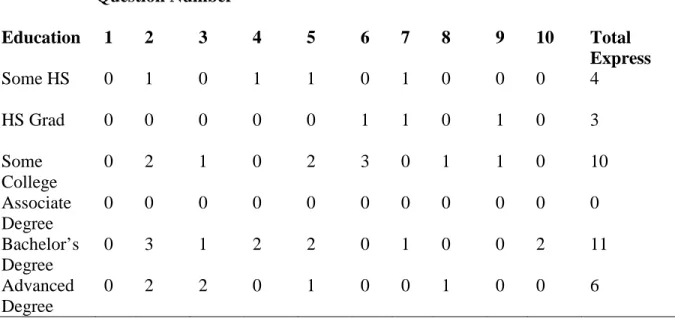
6. Maternal Education and PEDS Responses………..49
7. Response Pattern of Identified Concerns on PEDS by Question……….50
8. Predicting Cognitive Delay from Item Responses on PEDS………...51
9. Predicting Language Delay from Item Responses on PEDS………...52
10. Predicting Motor Delay from Item Responses on PEDS……….52
11. Predictive Concerns on the PEDS………54
12. Descriptive Statistics of BSID-III Administration………...56
13. Evidenced Delay by Domain………...57
14. PEDS response patterns of 19 children identified as delayed……….58
15. Summary of Gestational Age………...79
16. Summary of Length of Stay in NICU………..80
CHAPTER 1 INTRODUCTION
As many as fifty percent of children with developmental and/or emotional disabilities go unidentified until school entry (Glascoe, 1999) despite The Individuals with Disabilities Education Act (IDEA) which mandates the early identification of developmental disabilities and the implementation of appropriate intervention. One particular challenge to
identification is that physicians must refer children for suspected developmental delays to appropriate early intervention services in a timely manner (Hamilton, 2006), a task that is not easily achieved because of difficulties with early identification. A recent trend in
developmental screening that attempts to address the number of very young children who go unidentified and alleviate the burden placed on physicians is the use of information reported by parents.
While many children are at risk for developmental delays, those born prematurely, defined as prior to 37 weeks gestation, are particularly vulnerable. As the proportion of preterm infants who survive in good health increases, there continues to be a significant number with learning difficulties and behavior problems, many of which do not emerge until the preschool years (Spittle, Orton, Doyle, & Boyd, 2007; Censullo, 1994). In the long term, preterm infants are more likely than full-term infants to have neurodevelopmental
Infant health and survival are impacted by birthweight and length of gestation (Mathews & MacDorman, 2007). The number of low birthweight and preterm births has been steadily increasing since the 1980s. The rise of multiple births, often due to assistive reproductive technology, and medical management of pregnancy such as increases in caesarean section and induction prior to term, are contributing factors to this increase (Mathews & MacDorman, 2007). The majority of pregnancies last about 40 weeks, with infants being born between 37 and 42 weeks considered full term. Approximately 12.5 percent of infants (more than half a million a year) in the United States are born prematurely, a rate that has increased by 30 percent since 1981 (March of Dimes, 2007). Of these, most are born between 34 and 36 weeks (71.2 percent) and are referred to as late preterm births. Approximately 13 percent are born between 32 and 33 weeks gestation, 10 percent between 28 and 31 weeks, and about 6 percent are born at less than 28 weeks gestation (March of Dimes, 2007). Of total births, less than 1 percent of infants are born prior to 28 weeks gestation in this country, and they are at the greatest risk for complications. While infants born after 24 weeks increase their chance for survival with each week closer to full-term, they are still at risk for learning and behavioral disabilities, despite improvement in survival and treatment of medical complications (March of Dimes, 2007)
Early intervention for these young children is crucial both for those with conditions that have a definitive treatment and for those with conditions that cannot be reversed
associated with early intervention services. Recent research continues to support the critical need for early intervention (Spittle et al., 2007; McCormick, Brooks-Gunn, Buka, Goldman, Yu, Salganik et al., 2006).
Given the increasing concern about the developmental problems faced by these infants, assessment of the developmental outcomes of preterm infants is crucial for both clinical and research purposes and is a critical component to routine neonatal follow-up care (Johnson, Marlow, Wolke, Davidson, Marston, O’Hare, et al., 2004). Professionals who follow children developmentally tend to use developmental screening and developmental surveillance. Screening is defined as “a brief assessment procedure designed to identify children who should receive more intensive diagnosis or assessment” (Committee, 1994). Screening brings potential for developmental delays to the attention of professionals and helps in identifying additional risk factors associated with delay. Developmental surveillance is defined as “a longitudinal process enabling clinicians to view and address the big picture of children’s lives, including resilience and risk factors that promote or deter optimal outcomes” (Glascoe & Robertshaw, 2007).
Long-term developmental follow-up care needs increase as the survival rates of preterm infants’ increases. The best way to achieve assessments that are affordable, appropriate, and reliable is critical to successful developmental follow-up. There is still much debate surrounding which infants should be administered a full evaluation and which can be adequately served through the use of a screening instrument.
parent screeners take only a few minutes to complete, eliminate the challenge of eliciting skills directly from young children who for various reasons may not be cooperative, facilitate a broad range of decisions, and provide a family-focused, collaborative approach to the screening process (Glascoe, 1999). Several measures exist for use by parents in assessing the development of children. For the purposes of this study the Parent Evaluation of Developmental Status (PEDS) was examined.
Changes in clinical practice coupled with the increasing neonatal intensive care population ensure the continued need for outcome measures of those born preterm.
Specifically, concerns regarding emerging problems and those deficits that are more subtle in nature means longer term follow-up is critical for not only those at-risk but the preterm population as a whole (Salt & Redshaw, 2006). Developmental evaluation of the preterm infant should be conducted at regular intervals in order to ensure that those at risk are provided with early intervention services. With this need comes a financial burden;
therefore, research on the most reliable and cost-effective ways to identify all those in need is important.
Statement of Purpose
Limited resources have created a critical need for effective but economical means by which children in need of a full developmental evaluation can be identified. Driving the need is the belief that early identification is a worthwhile goal and early intervention is necessary in order to ensure the best outcome for those within a high-risk population (Skellern,
both expensive and disruptive. Such obstacles may impede follow-up and decrease the rate of identification of developmental delay.
This study sought to examine reliable methods that can be used to aid in the
identification of preterm infants in need of full developmental evaluations. In order to do so, the use of parent report in detecting developmental delay, specifically in preterm infants, was examined. The literature was examined for information pertaining to the use of parent report. A common term used throughout the literature that is an integral component to understanding the background of this study is the term accuracy. Accuracy refers to both the specificity and sensitivity of parent information; the percentage of children with problems correctly
identified and the percentage without problems correctly identified, respectively.
Another way to define the term accuracy is a parent’s ability to discern typical from atypical development. Parent concern elicited through the use of PEDS was examined. In order to determine the relevance of parent report, parental measures were examined in conjunction with their child’s scores on the Bayley Scales of Infant and Toddler
Development-Third Edition (BSID-III). The BSID-III is the most widely used standardized development assessment and is often used in special infant care clinics (Johnson & Marlow, 2006).
An additional goal of this study was to explore whether characteristics of preterm children such as gestational age, length of stay in the NICU, birthweight, and perceived medical fragility impact parental report. While research regarding parent report is abundant with regards to full-term infants, it is inadequate for those born preterm. An increased
Research Questions
The present study addresses a series of questions in regard to parent report: Question 1: Do parental concerns on the PEDS detect probable developmental
delays? Further, which concerns on the PEDS are most predictive of delay in the preterm population?
CHAPTER II LITERATURE REVIEW
Early Intervention
There are a significant number of preterm infants with learning difficulties and behavior problems, many of which do not emerge until the preschool years (Spittle, Orton, Doyle, & Boyd, 2007; Censullo, 1994). In the long term, preterm infants are more likely than full-term infants to have neurodevelopmental impairment across several domains, including cognitive, sensory, and motor impairment (Spittle et al. 2007). Several studies (McCormick et al., 2006; Censullo, 1994; Spittle et al., 2007) have shown that infants born preterm have lower IQ and achievement scores and elevated behavioral problem scores. The rate of disabilities among preterm infants has remained constant with up to 50 percent
demonstrating impairment (Spittle et al., 2007). Such impairments create a high level of expense in terms of developmental and educational services needed (Clements, Barfield, Ayadi, & Wilber, 2007). While there are many follow-up programs for preterm infants, developmental care is often limited after the first year. However, the need for early
Infants and toddlers who have a developmental delay, an established disability or, in some cases, are at risk for a delay, are eligible for early intervention services as mandated under part C of the Individuals with Disabilities Act of 1997. Early intervention determines eligibility for services through the meeting of 1 of 4 broad eligibility criteria as documented on an evaluation record. Those criteria are as follows: (1) diagnosis with a disabling physical or mental condition referenced by the ICD-9, (2) a 25 percent delay behind chronological age in 1 of 7 areas of functioning (gross motor, fine motor, cognitive, receptive language,
expressive language, social/emotional, or adaptive functioning), (3) a presence of 4 or more of 18 defined biological and environmental risk factors that are associated with delay, (4) determination by a multidisciplinary team that the child has a questionable quality of developmental skills and functioning (Clements et al., 2007).
Early intervention has many different components and services provided by an array of disciplines, including special education, physical therapy, occupational therapy, and speech therapy. Early intervention has been shown to improve cognitive and other outcomes which later translate to greater academic achievement, less grade retention and need for special education, lower drop-out rate, and higher college enrollment (Glascoe, 2000). In addition, early intervention has aided in the decreases of teen parenting, as well as lower delinquency rates and fewer arrests (McCormick, et al., 2006). The Committee on Children with Disabilities (1994) has stated that the impact of early intervention is increased through comfortable developmentally appropriate interactions between a parent and child.
Developmental Surveillance and Screening
Current detection rates of developmental delays or disorders are lower than the actual prevalence, suggesting that there are many challenges to the early identification of these children (Council on Children with Disabilities, 2006). Only 30% of children with a disability are detected prior to beginning school (Earls & Hay, 2006), partly due to lack of thorough clinical assessment (Sand, Silverstein, Glascoe, Gupta, Tonniges, & O’Connor, 2005). Having efficient and accurate means by which to identify and address these children is crucial in order to institute appropriate intervention (Committee, 2001). Assessments are typically the responsibility of the primary care physician, many of whom use developmental surveillance to identify those children in need of intervention. With the 1997 revision of IDEA, a shift occurred, pushing identification of children at an earlier age with the focus on birth to 2 years old. Detecting developmental delays at such an early age can be challenging.
Identification is often hindered by the lack of consensus among professionals or between parents and professionals as to the level of severity at which evaluation and intervention are necessary (Committee, 2001). Often pediatricians are faced with the dilemma of trying to avoid the provocation of anxiety in parents. As a result pediatricians have a tendency to identify only those children with marked delays, resulting in children who need interventions not being identified (Committee, 2001).
lack of time is often cited as one of the main reasons formalized screening is often neglected. In order to meet the recommendations of the United States Preventive Services Task Force, physicians would need to devote over 2 hours a day (Pinto-Martin, Dunkle, Earls, Filedner, & Landes, 2005). A recent study showed that roughly 20% of physicians screened more than 10% of their patients. Less than 50% of parents recall their child’s development ever being assessed (Hamilton, 2006).
In recent years, ideas about a child’s development have been broadened to include, (in conjunction with cognitive and physical development) development of social, behavioral, and emotional skills needed for future success (King & Glascoe, 2003). Disabilities in young children often present as less specific delays in the acquisition of developmental milestones in the domains of global, adaptive, speech, and motor skills (Sices et al., 2003).
Developmental surveillance consists of 5 main components including eliciting and attending to parental concerns about their child’s development, documenting and maintaining a
developmental history, making accurate observations of the child, identifying risk and protective factors, maintaining an accurate record and documenting the process and findings (Council on Children with Disabilities, 2006).
physicians report prompting parents for developmental concerns, less than 15% agreed that utilizing these concerns could be a good alternative to formal developmental screening. Many physicians do not place enough value on the information obtained from parents to make a referral.
While a history is being taken at well-child visits, questions that refer to development should be asked, including questions regarding the age at which milestones, such as walking and talking, were achieved. While attending to the possibility of a developmental delay, professionals must also keep in mind other abnormalities, such as deviations, dissociations, and regression from typical development (Council on Children with Disabilities, 2006).
As part of the process, identifying risk factors is crucial, as multiple factors may amplify each other. Risk factors that should be considered include environmental (i.e. exposure to toxins such as lead), genetic (i.e. Down Syndrome), biological (i.e.
prematurity), social (i.e. family structure), and demographic factors (i.e. minority status). More specifically, risk factors may include parents who have a limited education, the use of a parenting style dominated by commands, lack of verbal expansion on child initiated topics of conversation, parental mental health issues, single parent status, more than 3 children in the home, numerous stressful events, limited social support, minority, and low-occupational status (Glascoe, 2005). Often children with an array of risk factors are
such as state early intervention programs, local special education programs, or community programs (i.e., HeadStart; King & Glascoe, 2003).
Developmental screening is often used in conjunction with developmental surveillance as a means of targeting a specific area of concern identified during
developmental surveillance (Council on Children with Disabilities, 2006). In addition screening should be used as the means by which seemingly typically developing children are monitored. These children do not have established risk factors and no concerns have been noted by either a professional or parent. However, screening is recommended at 9, 18, and 30 months of age to ensure that any possible developmental issues are identified (Council on Children with Disabilities, 2006).
Essential components of the screening process include paying particular attention to the concerns of parents and making thoughtful inquiry regarding parental observations. Pediatricians must maintain an ongoing involvement with the family that allows them to respond appropriately to parental concerns. In addition, a collaborative relationship with parents paves the way for open communication in the event that a parent is unaware of a delay. The pediatrician is then in a position to guide that parent toward closer observation and ultimately recognition of the presence of a delay (Committee, 1994). Further,
understanding that child development is a dynamic process which renders it hard to measure is important to consider when screening a child. The various domains of functioning are connected and complex. Periodic screening is necessary to “detect emerging disabilities” (Committee, 2001, p.193) as a child ages.
intervention services. Due to their importance, developmental screening tools must undergo extensive testing themselves in order to determine their validity, reliability, and accuracy. A sensitivity of 70 to 80 percent is considered acceptable while specificity should be close to 80 percent (Hamilton, 2006). In addition, they must be standardized using a cultural, linguistic, and economically diverse population of children and families to ensure an accurate
representation of the population of intended use. While screening tools are designed with the intention of identifying children with developmental delays, each one varies in approach.
To date there is no universally accepted screening tool appropriate for all ages and all populations (Council on Children with Disabilities, 2006). While the above mentioned specificity appears to be low, a study conducted by Glascoe (2001) revealed that while false positives did not reflect disabilities, these children scored substantially lower than peers in intelligence, language, and academic achievement. It is therefore important for physicians to consider that while these children do not qualify for special education services they may benefit from other early intervention services such as Title 1 and private speech therapy.
Screening instruments fall into 1 of 2 categories, those that require the direct
elicitation of skills from a child coupled with parent report and those that rely completely on parent report. Johnson and Marlow (2006) suggest that developmental screening tools are of less use in high risk populations and, given that preterm infants will typically require
thorough assessments, use of such a tool is redundant. Further, they state that standardized developmental tests are the most appropriate given they allow for the accurate discrimination of abnormality and quantify the extent of disability. Many standardized tests of
development is assessed (Johnson & Marlow, 2006). However, these tests are expensive and time consuming, creating a need for careful selection of those in need of a full battery.
Assessment by Parents
Recent developments in screening have resulted in a push towards the use of parent report of skills and concerns. With measures that are well-constructed and proven to be reliable and valid, parental reports may provide relatively accurate assessments of a child’s ability (Johnson & Marlow, 2006). In many cases parents notice behavioral manifestations of a disability prior to diagnosis; therefore report of these behaviors is an important warning sign (Blackman & Cobb, 1989). Several studies (Glascoe, Altemeier, & MacLean, 1988; Gradel, Thompson, Sheehan, 1981; Coplan, 1982; Sexton, Miller, & Murdock, 1984) have shown that parent report is predictive of developmental delay. Added benefits include ensuring parents remain active participants in the evaluation of their children and
demonstrating respect for their expertise and knowledge of their child. As parents answer questions they are learning about development and becoming active partners in the best interests of their child (Pinto-Martin, Dunkle, et al., 2005). Parents need to be recognized for the unique knowledge they possess regarding their child’s development. Inclusion in the assessment process reinforces their role and increases a parent’s investment in the
implementation of necessary interventions (Skellern, Rogers, & O’Callaghan, 2001). Cost-benefit analysis shows that the use of parental reports was the least costly to the physician (Committee, 2001). In addition, almost 70 percent of mothers were concerned about their child’s behavior or development but only 28 percent readily shared those
services. Early involvement from the beginning of the identification process will encourage a proactive attitude in parents as well as providing a more comprehensive understanding of their child’s development (Rydz et al., 2006). Further, acknowledging parental concerns regarding their child’s development could prevent or alleviate stress that is placed on the family as a result (Blackman & Cobb, 1989).
Glascoe and MacLean (1990) found that parents have a limited knowledge regarding development of children, including the ability to recall the ages at which developmental milestones were achieved and identification of sources for learning about child development. Approximately 67 percent of parents compare their children to others as a way to determine the normalcy of their development (Glascoe & MacLean, 1990). This may account for the discrepancy between parents’ accurate appraisal of their child’s development but poor performance on tests of developmental knowledge.
Parental Estimations
Sandler, 1995). Glascoe and Dworkin (1995) state that the use of parental estimations, while promising, may not be appropriate for clinical application. Age estimations, while helpful in identifying those with developmental issues also have a modest level of specificity in
identifying children who appeared to be typical in their development and behavior. Further, there is not enough information gathered regarding specific strengths and weaknesses to make a referral (Glascoe & Sandler, 1995). In addition, the majority of studies using parental estimations had populations consisting of those at high risk for developmental delay.
Moreover, parents often required prompting and examples in order to make an estimate. There has been much disagreement regarding the impact parental education has on a parent’s ability to estimate developmental age (Glascoe & Sandler, 1995). It is therefore
recommended that parental estimations be used as a precursor to a more in-depth screening (Glascoe & Sandler, 1995).
Parental Concerns
Parent concerns, also a form of parental appraisal, are defined as “judgments about children’s current developmental/behavioral stage” (Glascoe & Dworkin, 1995, p.830). A study conducted by Glascoe et al. (1989) found that not all parental concerns are indicative of developmental problems; however, concerns presented about language, fine motor, or global functioning were the most reliable indicators of a developmental problem in a child.
and emotional issues it is often a reflection of a developmental deficit rather than a true issue with behavior (Oberklaid, Dworkin, & Levine, 1979; Glascoe, 1994). Parents often do not consider why their children are not behaving; for instance, because they have difficulty comprehending instructions, or they lack the cognitive skills to execute what they are being told. This may account for the reasoning behind behavioral and emotional concerns being indicative of developmental delay (Glascoe & Dworkin, 1995).
Eighty-three percent of children with a cognitive delay, defined as an IQ below 79, had parental concerns regarding behavior and language (Glascoe, 1994). Glascoe (1997) found that the presence of significant concerns identified 73% of children with a speech-language impairment, 71% with mental retardation, 85% with specific learning disabilities, and 77% with physical or other impairments. In a topical review, Rydz et al. (2006) found that parental concerns regarding speech and language, fine motor skills, and overall global functioning were in fact accurate predictors of developmental problems with sensitivity close to that of physician completed screeners. However, parental concerns regarding self-help, social skills, and gross motor functioning were less sensitive. Earlier studies tended to show similar results. Parents who expressed concerns in the domains of speech, fine motor or cognitive skills had a child with an 80% chance of failing developmental screening tests while parents who stated their children were typically developing had a 94% chance of passing screening (Glascoe & MacLean, 1990). Concerns are most often shared when parents are motivated by their perceptions of health problems or have concerns regarding expressive language.
1995). Thus, concerns should be regarded as evidence of a developmental issue present in the child. In addition, parents with concerns whose children appear typical in development and behavior should not be disregarded. Rather, they are reporting subtle developmental and behavioral issues which require increased observations of developmental progress (Glascoe, 1997).
There are limitations in the use of parental concerns in defining the presence of a developmental delay. Research has shown (Dulcan, Costello, Costello, Edelbrook, Brent, & Janiszewski, 1990) that a child’s age, sex, social class, race, and health status did not affect whether or not parents would consult their pediatrician regarding psychiatric concerns for their children. In addition, parental education and experience were not linked to the accuracy of parent concerns (Glascoe, MacLean, & Stone, 1991; Glascoe, Altemeier, MacLean, 1989). Glascoe (1994) did however find that the setting in which parental concerns was elicited influenced information shared. The study revealed that parental concerns resulted in
significantly more overreferrals when collected in a day care center than in a pediatric office. Further, fathers are more likely than mothers to voice concerns (Glascoe, 1995).
Parent Recall and Parent Report
There are several forms of parent information that are referred to as parental
Another area of parental descriptions is parent report which is a “depiction of current skills” (Glascoe & Dworkin, 1995, p.830). Research has shown that parental reports are reliable and valid measures. Reliability increases with the use of a recognition format rather than an identification format, as it does with questions that are detailed. Parent report has been shown to have good test-retest reliability and high levels of stability. However accuracy has often been called into question.
Parent report measures have been gaining more and more support in recent years. The Assuring Better Child Health and Development (ABCD) project was begun in North Carolina in 2000 to pilot formal developmental screening and surveillance for children receiving Early Periodic Screening Diagnosis and Treatment services in pediatric and family practices (Earls & Hay, 2006). The goals are twofold: to introduce and integrate
standardized, validated screening tools and to collaborate with local and state agencies and families to develop the best system for identifying and serving children (Pinto-Martin et al. 2005). These screenings are being performed at the 6, 12, 18 or 24, 36, 48, and 60 month visits across the state using either the Ages and Stages Questionnaire (ASQ) or the Parents Evaluation of Developmental Status (PEDS). Both tools rely on parent report to estimate their child’s development. These measures require little staff input and time and are easily fit into an appointment. Both of these instruments were selected as part of ABCD because they center on the five developmental domains key to early intervention (Earls & Shackleford, 2006).
(Rydz et al., 2006). Other factors bearing on the accuracy of parental estimates included education, number of children, admission to the NICU, and the method of obtaining information. None of these factors were shown to be associated with parental accuracy (Bortolus, Parazzini, Trevisanuti, Cirpriani, Ferrarese, & Zanardo, 2002; Pulsifer, Hoon, Palmer, Gopaian, & Capute, 1994). However, some experts have expressed concerns regarding the use of parent report. Concerns about parent report tend to center on the
problem of illiteracy, namely that parents who may be illiterate or have limited literacy might answer questions inaccurately (Rydz et al. 2006). Sensitivity rates have been shown to differ based on the education and income level of a family. The rates decline from 70-73 percent based on response of mothers from privileged families to 33-40 percent for those less educated and from lower income families (Lagerberg, 2005).
Given that most of infant development manifests itself in the home and is largely invisible to professionals, parents are in the best position to observe development
(Bornarchuk & Eaton, 2004). Parents pay particular attention to their child’s motor development, often seeing attainment of motor milestones as a measure of normal
development. As a result, parents may be able to identify small measures of developmental progress in the motor domain that might otherwise go unnoticed (Bodnarchuk & Eaton, 2004).
A common concern is parental biases which raise questions regarding the
accurate picture of a particular child’s abilities. It is possible that parents respond to subtle cues or are describing areas of concern that are not easily observed by professionals during a brief screening (Diamond, 1993). In addition to parental concerns reflecting their own observations parents often report concerns reflected by the opinions of family members with which the parent may or may not agree. Information regarding the source and intensity of parental concerns may be critical in understanding a specific concern and the relationship between the concern and the child’s developmental abilities (Diamond, 1993).
Parent-Professional Congruence
Historically, the accuracy of parental report was inferred from the level of congruence between their judgments and those of professionals (Dinnebeil & Rule, 1994). Several studies have shown that parental report leads to a somewhat higher estimate of a child’s skills than is evidenced on direct elicitation of those skills by a professional, leading to the
conclusion that parents overestimate their child’s abilities. In contrast, parents may be including emerging and inconsistent skills in their reports as well as skills that a child may not perform in unfamiliar settings. It has been suggested by other researchers that parents are not overestimating but rather professionals underestimating (Sheehan, 1988; Diamond & Squires, 1993; Glascoe & Dworkin, 1995).
pointed to the underestimation of the severity of the delay. Specifically, that parent-professional disagreement was the greatest when a child scored two or more standard
deviations below the mean. Moreover, mothers often interpret the presence of a delay as only temporary in nature (Glaun, Cole, & Reddihough, 1999).
Bortolus et al. (2002) found that parents and professionals agreed on the assessment of a child’s gross motor behavior but that their level of agreement was lower on questions regarding language development. However, parent-professional congruence is higher for speech-language development than for cognitive development (Glaun, Cole & Reddihough, 1999). In general, parent-professional congruence is highest in all domains when a child is typically developing.
When looking specifically at parent-professional congruence of preterm infant development, Kim, O’Connor, McLean, Robson, and Chance (1995) found poor agreement between parental assessment and that of the multidisciplinary team in the first year of life. In addition to the previously mentioned factors influencing parent-professional disagreement, parents of infants who had significant medical complications may not expect their infant to perform at the same level as a term infant. Lowered expectations may impact a child’s development. Research has shown (McCormick, Shapiro, & Starfield, 1982) that parental expectation about what constitutes adequate development is in fact a strong determinant of a child’s actual development. Major determinants of atypical development may reflect infant health status, such as birth weight and hospitalization (McCormick et al., 1982).
Parental Assessment Instruments
Denver Prescreening Developmental Questionnaire (PDQ) (Frankenburg, Van Doornick, Liddell, & Dick, 1976; Frankenburg, Fandal, & Thornton, 1987). It was developed in the late 70s and revised in the late 80s. In the latter edition, Frankenburg et al (1987) reported that only 16 percent of delayed children were missed and only 19 percent of those considered typical in development failed the screening, resulting in over-referrals. The PDQ is lengthy and one-third of the parents failed to complete it for this reason, making follow-up difficult. In addition it lacks validation and proof of accuracy (Wagner, Jenkins, & Smith, 2006).
In 1979, a questionnaire was developed and compared to the Gesell Developmental and Neurological Examination. At that time the questionnaire missed 2.6 percent of children with major abnormalities, 10 percent with minor abnormalities, and accurately detected 94 percent of typically developing children (Knobloch, Stevens, Malone, Ellison, Risemberg, 1979). This questionnaire was the precursor to The Ages and Stages Questionnaire (ASQ) developed by Squires, Potter, and Bricker. The ASQ is a series of 19 parent questionnaires ranging from 4 to 60 months. Each individual questionnaire has 30 questions spanning five domains: communication, fine motor, gross motor, problem solving, and personal-social. The ASQ has been found to have a high negative predictive value (98%) which enables professionals to be assured of normal developmental progression in children who do not have concerns reported on the questionnaire (Skellern, Rogers, & O’Callaghan, 2001).
The Parents’ Evaluation of Developmental Status (PEDS) (Glascoe, 1998) helps professionals elicit parental concerns. In addition it “helps focus the visit, reduces ‘oh by the way’ concerns, enhances the ‘teachable moment’, and ensures that visits are truly
collaborative” (Glascoe, 2006). Recently the PEDS: DM was developed as a brief milestone checklist. It provides information regarding progress, facilitates the prolonged monitoring of development, and is a more accurate milestone checklist. Further, it provides clear cutoffs to aid in determining atypical from typical development (Glascoe, 2006). Moreover, the PEDS: DM clarifies concerns elicited from the PEDS. Together they comply with American
Academy of Pediatric (2006) guidelines which recommend eliciting parental concerns and measuring development at each appointment as part of effective developmental screening and surveillance. The PEDS in conjunction with the PEDS: DM holds the most promise for use with the preterm population. For the purposes of this study, the PEDS was used to collect information from the parents.
Special Considerations in the Preterm Population
Given that infants born preterm are at an increased risk for developmental
Recommendations for hospitals providing neonatal care advise developmental follow-up until at least 2 years of age, corrected for prematurity, because tests administered at the age of 2 may optimize early identification of a disability (Johnson & Marlow, 2006). At this point, it is believed that loss to follow-up is minimized and disability and serious
impairments can be assessed with reliability (Salt & Redshaw, 2006). It is widely accepted that preterm infants typically do not develop according to their chronological age and the degree of prematurity weighs heavily in their development (Miller, 1993).
The AAP and others recommend that corrected age be used for developmental evaluations of infants born less than 40 weeks gestation throughout the first 2 to 3 years of life. However using corrected age in the assessment of preterm infants has been called into question. Research regarding the use of age correction is inconclusive (Kelly, 2006). Age correction may lead to a decreased anxiety in parents and decrease over-referral rates; however, concern has been expressed that using corrected age may in fact overestimate a child’s abilities thereby delaying early intervention services (Wilson & Cradock, 2004).
It is important for parents to understand that their preterm infant can not be compared to a full term infant. Children developmentally at-risk may manifest typical infant-toddler behaviors differently, making them difficult for parents to interpret (Blackman & Cobb, 1989). Nonetheless, parental involvement in assessment of developmental status of preterm infants is crucial (Bortolus, et al., 2002).
the neurodevelopmental outcome of their preterm infant. Parents were also able to discriminate between a child’s verbal and non-verbal cognitive abilities, suggesting that parents focus on specific skills and domains of development rather than a child’s overall developmental ability (Johnson, et al., 2004).
A study conducted by Prichard, Colditz, and Beller (2005) in Queensland, Australia, examined the relationship of the PEDS to professional assessment by a developmental pediatric team in the detecting of sensorineural disability (i.e. cerebral palsy) in infants born at 1250g or less. Results of the 4 year old cohort were similar to norm sampling findings of the PEDS. However, findings among the parents of children at 2 years old revealed lower sensitivity and higher false-negative rates. Additionally they found poor agreement between significant concerns on the PEDS and disability status. Prichard et al. (2005) concluded that the use of the PEDS was limited as a screening instrument for disability at the age where early intervention is typically the most useful. Glascoe (2005) responded to the study by clarifying why PEDS was developed. Namely it was created to identify those eligible for special education services and not to identify children with cerebral palsy.
expectations are eventually confirmed when they have lower expectations for their preterm infant given that they overprotect or underestimate their child, often referred to as the prematurity stereotype or prematurity prejudice (Epps, 1993; Stern & Karraker, 1992).
An adult’s biased expectations for a prematurely born infant will influence the adult’s interpretations of the infant’s behavior. Further, it may prevent mothers from accurately perceiving and responding to their child (Stern & Karraker, 1992). In fact, research has shown that some mothers continued to interact differently towards their preterm infants, despite the fact that the infants were actually both capable and competent (Stern, Karraker, Sopko, Norman, 2000).
Birthweight, gestational age, and severity of illness have been linked to a mother’s overall perceptions about her infant. The often harsh reality of suddenly having a small sick preterm infant has an impact on how that infant is perceived. In the case of those with low birthweight and preterm birth, the impact is long-lasting (Redshaw, 1997). A study
examining the prematurity stereotype found that infants labeled as preterm were perceived as less physically developed, active, competent, and sociable than infants who were labeled full term even when behavior was identical (Stern & Hildebrandt, 1984). Further, it was
suggested that parents perceive preterm infants differently than full-term regardless of actual behavior which may lead to a self-fulfilling prophecy.
viewed by his or her parents as being at greater risk for behavioral, developmental, or medical problems. This most often occurs in children whose parents expected them to die prematurely (Pearson & Boyce, 2004).
Parental perceptions of child vulnerability (PPCV) “are a category of specific cognitions that may relate to child adjustment” (Anthony, Gil, & Schanberg, 2003, p.186). As many as 64 percent of preschoolers who were born prematurely are still perceived by their mothers as vulnerable (Allen, Manuel, Legault, Naughton, Pivor, & O’Shea, 2004). Often mothers who see their children as vulnerable feel less competent in their parenting ability. In addition, they also identify their children as less developmentally competent than physicians on validated measures of development. Parents of preterm infants are often faced with the possibility of serious morbidity or mortality of their infants. Research has shown that those who perceive their children as more vulnerable tend to see their development as slow (Allen et al., 2004). The anxiety caused by the possibility of the loss of their child permanently changes the way a parent perceives and interacts with their child. Allen et al. (2004) found that there is a strong negative association between PPCV and motor
development which they claim can be reasonably attributed to the greater severity of medical illness among children with higher PPCV. In addition, they found that parental measures of a child’s adaptive development are more strongly influenced by parental perceptions than cognitive development.
Research (Estroff, Yando, Burke, & Snyder, 1994) has shown no relationship between PPCV and an objective measure of cognitive development, although mothers who believed their children to be more vulnerable identified them as less competent
effect is considered a psychological phenomenon which results when an observer’s ratings are influenced by irrelevant variables related to the family or child (i.e., body size)
(Wheateraft & Bracken, 1999). Also a factor in parental perceptions is birth order. Allen et al. (2004) found that children who were not firstborn were perceived as more vulnerable than firstborn children and offered the possible explanation that parents with healthy children at home are drawing more comparisons between that child and their preterm infant. Other studies have shown the contrary to be true or no relation between PPCV and birth order (Culley, Perrin, Chaberski, 1989).
Current Study
In summary, there is an extremely limited body of research that has examined the use of parent measures in the preterm population as a way to improve the selection process of those in need of more extensive and expensive developmental evaluations. While there is limited research regarding parent report specifically in the preterm population, significant support exists for its use in the term population. Therefore, while there are mitigating circumstances that may impact a parent’s assessment of their preterm infant’s development; overall they will be reliable reporters. Developmental follow-up is critical in the preterm population. Using parents as a source of information is essential to enable more children to be followed for longer periods of time.
provide an accurate depiction of the PEDS. This study will therefore examine if PEDS is appropriate for detecting probable delay in preterm infant follow-up programs.
The preceding literature review discussed various characteristics that may impact parent report, such as the vulnerable child syndrome and prematurity stereotype as contributing factors in the reliability of parent report. Characteristics of the infant that typically impact the prematurity stereotype and perceived child vulnerability were examined to determine their effect. Additionally, characteristics of parents (i.e., education) that may impact parent report were discussed throughout the literature review. However, the limited sample size makes inclusion of all potentially relevant variables impractical. Parent data collected was used for descriptive purposes only. Based on the available literature, research questions regarding parent report in the preterm population are presented below with
subsequent hypotheses.
Question 1: Do parental concerns on the PEDS detect probable developmental delay? Further, which concerns on the PEDS are most predictive of delay in the preterm population?
Research surrounding the use of parents in the detection of developmental delays has shown that parents are highly accurate (Johnson & Marlow, 2006; Glascoe, 1997; Earls &
Hypothesis 1a: Parent ratings on the PEDS will correlate significantly and positively with children’s scores on the BSID-III. Specifically, parent identification of significant concerns (Path A/B) will be significantly and positively correlated with delayed scores on the BSID-III.
Hypothesis 1b: Global, Social-emotional, and language concerns will be significantly and positively correlated with delayed scores on the BSID-III.
Question 2: Are characteristics of preterm children, such as gestational age, birthweight, length of stay in the NICU, and perceived medical fragility associated with parental perceptions?
It is widely accepted that preterm infants typically do not develop according to their chronological age and that their degree of prematurity weighs heavily in their development (Miller, 1993). Adults tend to have biased expectations of preterm infants which may prevent mothers from accurately perceiving and responding to their child (Stern & Karraker, 1992). Birthweight, gestational age, and severity of illness have been linked to a mother’s overall perceptions about her infant (Redshaw, 1997). Factors such as medical fragility, length of stay in the NICU, and the previously mentioned birthweight and gestational age contribute to both the prematurity stereotype and the Vulnerable Child Syndrome (Miller, 1993; Pearson & Boyce, 2004).
Hypothesis 2a: Gestational age will be significantly and positively correlated with parental perceptions.
Hypothesis 2c: Length of stay in the NICU will be significantly and negatively correlated with parental perceptions.
Hypothesis 2d: Perceived medical fragility will be significantly and negatively correlated with parental perceptions.
Hypothesis 2e: Future perceived medical fragility will be significantly and negatively correlated with parental perceptions.
CHAPTER III METHODS Participants
Participants were recruited through the Duke University Medical Center Special Infant Care Clinic (SICC). The Special Infant Care Clinic (SICC) is a multidisciplinary medical and neurodevelopmental follow-up clinic for high risk infants. Clinic patients have either graduated from the Intensive Care Nursery or are referred by a well child care provider in the community. Infants seen in the SICC range in age from birth to 36 months and come from both in and out of state.
Using Power and Precision (Biostat, 2000) a power analysis was conducted to determine the optimal sample size. After considering 30 parent-child dyads which would yield a power of .72, it was determined that a larger sample size was needed, as well as fewer variables. It was therefore determined that 35 parent-child dyads and elimination of several extraneous variables would yield a power of .80, or a probability of .20 that a Type II error will occur.
This study examined 36 parent- preterm infant (defined as born prior to 37 weeks gestation) dyads, scheduled for their 9-24 month developmental assessment. It was required that all participants spoke English as their primary language.
to the potential interference in standard administration of the Bayley Scales of Infant and Toddler Development-Third Edition (BSID-III). Information on disabilities was obtained from medical records. Infants with mild to moderate cerebral palsy and other motor
impairments such as prematurity associated central hypotonia were included except for cases in which standard administration was not possible (i.e. the inability to independently
manipulate small objects). Children with mild visual problems who wear corrective lenses and those whose hearing difficulties are mild or corrected with hearing aids were included.
It is important to note that this sample was limited to a specific subset of preterm infants. Namely, those considered most severe were not included due to the inability to adhere to standard administration guidelines on the BSID- III. Additionally, those
considered to be the healthiest preterm infants were also not included as they are not part of the SICC population from which the sample was drawn.
Subsequently, the sample used in the present study consisted of 36 families. In understanding the sample it is important to note several demographics of both the caregiver and child participants. Table 1 provides an overview of the caregiver participants,
Table 1
Participant Variables
Participant Variable N Percentage
Respondents 36
Mothers 29 80.6
Fathers 3 8.3
Grandmother 1 2.8
Adopted/Foster Parents 3 8.3
Ethnicity of Caregiver 35
White 16 44.4
Black 16 44.4
Hispanic 2 5.6
Other 1 2.8
Marital Status 36
Married 24 66.7
Single 11 30.6
Divorced 1 2.8
Father Education 30
Less High School 2 5.6
HS Grad 8 22.2
Some College 7 19.5
Bachelor’s Degree 8 22.2
Advanced Degree 5 13.9
Mother Education 34
Less High School 3 8.3
High School grad 5 13.9
Some College 11 30.6
Bachelor’s Degree 9 25
Advanced Degree 6 6.7
Table 2
Home Environment of Participants
Participant Variable N Percentage
Home Environment 35
Live w/ both biological parents 22 61.1
Biological mother 7 19.4
Other caregiver 6 16.7
Two-parent home 27 75
Single-parent home 7 19.4
Income 33
up to 10,000 6 16.7
10,001-20000 2 5.6
20001-30000 2 5.6
30001-40000 3 8.3
40001-50000 3 8.3
60001-70000 2 5.6
70001-80000 3 8.3
90001-100000 4 11.1
over 100000 8 22.2
As shown in Table 2 several families in this study are from a higher income bracket, which differs from the national trend. This is most likely reflective of the recruitment
process for this study. Participants had to show up for their child's developmental assessment in order to participate as well as be English speaking. Several families of low income
therefore ended up not being included given that many were Hispanic or did not show for their appointment.
five (69.4%) of the child participants were being evaluated for their 1 year developmental assessment (11-14 months) and 11 (30.6%) of the child participants were being evaluated for their 1.5-2 year developmental assessment (17-24 months).
Information regarding gestational age, length of stay in the NICU, and birthweight were collected from the caregivers and confirmed through medical records. There were 3 cases of discrepant information and in each case data from the medical record was recorded. Child participants were born between 23 and 36 weeks with the average gestational age being approximately 28 weeks. Length of stay in the NICU ranged from 5 days to 184 days with the average length of stay as approximately 72 days. Birthweight ranged from 560 grams to 3340 grams with the average birthweight being 1247.5 grams. Appendix IV provides a more detailed breakdown of the distribution of birthweight, gestational age, and length of stay in the NICU.
Procedure
Patients scheduled for a developmental assessment were screened sequentially for eligibility (see APPENDIX III). Initially, eligible participants received a packet in the mail a few weeks prior to their appointment, which included a letter from the director of the SICC that served as an introduction to the study and included consent forms (see APPENDIX II). Also included in the packet were the PEDS measure and a few brief informational
Eligible participants were approached in the waiting or exam room for the SICC on the day of their child’s scheduled appointment. The consent form was reviewed and if consent was obtained, the parents were provided with the PEDS and brief informational questionnaires. Parents were asked to complete the forms prior to their child being
administered the BSID-III. With this change in the method of recruitment, 100% of eligible participants approached agreed to participate. Due to the fast-paced nature of the SICC, time constraints and staffing issues limited the number of eligible participants who were
approached. However, every effort was made to approach as many eligible participants as possible.
All participants who completed their forms were entered into a drawing for one of four $25 Target gift cards.
Measures
Child Assessment: The Bayley Scales of Infant and Toddler-Third Edition (BSID-III) was used to assess the infant’s current level of functioning. The BSID-III is an individually administered test that assesses developmental functioning across several domains. It’s primary purpose is to identify children with developmental delay and to provide information valuable in early intervention planning for infants and children 1 to 42 months old (Bayley, 2005). For the purpose of this study three scales that are administered directly to the child were used: Cognitive, Language, and Motor. The BSID-III was administered by one of three people: the supervising psychologist, a psychology intern, or a supervised practicum student.
The Language scale consists of two subtests - Receptive Communication and
Expressive Communication. The 49-item Receptive Communication scale consists of items that examine receptive language development including social communication, semantics, morphology, and syntax. The 48-item Expressive Communication scale consists of items that examine expressive language developments including pre-language vocalizations, social communication, semantics, morphology, and syntax.
The Motor scale also consists of two subtests - Fine Motor Skills and Gross Motor Skills. The 66-item Fine Motor subtest consists of items that examine functional grasp and hand skills, object manipulation, and visual motor integrations, whereas the 72-item Gross Motor subtest examines skills such as head control, trunk control, locomotion, and motor planning.
All scales adhere to start points and discontinue rules based on the age of the child. In the case of this study adjusted age will be used as the basis for the start point. Adjusted age is determined by subtracting the Adjustment for Prematurity in weeks from the postnatal age in weeks. For example if a child is chronologically 12 months but was born 8 weeks prematurely then his adjusted age would be 10 months.
100 and a standard deviation of 15. In addition, developmental age equivalents are available and represent the average age in months at which a given raw score is typical.
Normative data were established through a stratified sample of 1700 children collected in the United States in 2004. The sample was stratified based on age, sex, parent education level, and geographic location. Children with specific clinical diagnoses, including prematurity, were included. Using the normative sample internal consistency was obtained. Overall average reliability coefficients range for .86 (Fine Motor) to .87 (Receptive
Communication) to .91 (Cognitive, Expressive Communication, and Gross Motor). Test-retest reliability was assessed using a sample of 197 children tested twice across the span of 2 to 15 days. Findings suggest a high degree of stability over time and a slight increase in stability across age groups most likely due to a combination of maturation and practice effect (Bayley, 2006).
Based on intercorrelation studies the BSID-III has both convergent and discriminant validity. For the overall sample all intersubtest correlations are significant (Bayley, 2006). Furthermore, validity studies comparing the BSID-III to other tests show consistency with results from the WPPSI-III, the PLS-4, and the Peabody Developmental Motor Scales-Second Edition. The Language composite and the VIQ (r=.83) showed the highest correlation between the BSID-III and the WPPSI-III.
administer, typically around an hour and a half, it is the most comprehensive tool available for assessing the development of young children.
Parents completed the PEDS as well as two brief questionnaires that elicited parent and child information. (See APPENDIX I.)
Parents Evaluation of Developmental Status (PEDS). PEDS is a 10- question instrument for children birth to 8 years old. Questions prompt the parent to consider development across the domains of global/cognitive, expressive language, receptive language, behavior,
social/emotional, school, self-help, fine motor, gross motor, and other. The respondent answers the questions with a ‘yes’, ‘no’, or ‘a little’ to signify their level of concern. There is space provided for the caregiver to provide comments on their response.
The PEDS manual provides the administrator with information on concerns of parents which tend to change with the age of the child. Further, only some are considered to be reliable predictors of an actual delay. The PEDS manual provides a chart of the concerns that correlates significantly with actual impairment at each age recommended for
developmental screening. Instructions are provided as to when a referral is needed versus developmental advice, further monitoring, or additional screening.
Concerns on the PEDS are considered significant, those most predictive of disabilities; and nonsignificant, those not predictive of disabilities. Classification of
significant versus nonsignificant concerns varies across age ranges. For the purpose of this study; 9-17 month old significant concerns include Global/Cognitive, Expressive Language, and Social-emotional. 18-24 month significant concerns include Global/Cognitive,
PEDS identifies five discrete groups based on the intersection of parents’ concerns. Path A is assigned when at least two significant concerns are present. Children in this category had 20 times the risk of disabilities and 70% met criteria for special education or had below average performance on measures of intelligence, language, or academic skills (Glascoe, 1999). Families assigned to Path A require further referral, such as a speech-language evaluation or psychological testing.
When parents indicate one significant concern they are assigned to Path B. These children were found to have eight times the risk for disabilities and 46% had disabilities or below average intellectual, language, academic skills (Glascoe, 1999). Those families on Path B require a second and different developmental screening test or a referral for additional screening.
Further, Path C is assigned when concerns are nonsignificant predictors of
developmental disabilities and associated with normal development. The majority of these concerns tend to focus on behavior and require brief advice to the parents or a referral for parent training or behavior management training.
Path D is used for parents with obvious communication barriers including lack of a shared language between the examiner and the parent. In such cases an alternative detection methods should be considered. Lastly, Path E indicates no concerns and no communication barriers, suggesting that routine monitoring is sufficient.
PEDS was standardized on a sample of 971 children across several states. Of the 971 children, 771 were also assessed using an extensive battery of multiple screening and
diagnostic instruments. Test-retest reliability showed an average of 88% agreement across test administrations. Further PEDS has high inter-rater reliability for both the categorization of concerns (95%) and for the elicitation of concerns by different examiners (88%). Inter-correlations among concerns were modest suggesting that each is a unique contributor to overall results. Moreover, a high degree of internal consistency was found (.81) (Glascoe, 1998)
PEDS was shown to be highly correlated with various diagnostic measures of development. In addition it has a high degree of discriminant validity whereby unique patterns of concerns are significant predictors of disability. It has sensitivity (the percentage of children with problems correctly detected) of 74-80 percent and specificity (the percentage of children without problems correctly detected) of 70-80 percent (Glascoe, 1998).
Data Analysis
All statistical analyses were performed using SPSS 17.0 Graduate Pack software. Descriptive statistics were generated for the sample population including information on the ethnicity of the participants and gender of the parent and child. Research questions and hypotheses are grouped below according to type of analysis.
Question 1: Do parental concerns on the PEDS detect probable developmental delay? Further, which concerns on the PEDS are most predictive of delay in the preterm population?
Hypothesis 1a: Parent ratings on the PEDS will correlate significantly and positively with children’s scores on the BSID-III. Specifically, parent identification of significant concerns (Path A/B) will be significantly and positively correlated with delayed scores on the BSID-III.
Data Analysis 1a: Specificity, sensitivity, and positive predicative value were calculated after PEDS responses and BSID-III composite scores were converted to a binary variable, either predictive concerns (Paths A/B) or non- predictive concerns (Path C, D, E) and delayed or typical development, respectively. Cognitive, language, and motor functioning were examined individually in three separate equations.
Hypothesis 1b: Global, Social-emotional, and language concerns will be significantly and positively correlated with delayed scores on the BSID-III.
dependent variable was then compared to each type of concern on the PEDS: global, expressive language, receptive language, fine motor, gross motor, behavior, social-emotional, self-help, school, and other. Responses on the PEDS were assigned to the appropriate pathway which was then compared to the binary BSID-III score for the cognitive, language, and motor domains.
Question 2: Are characteristics of preterm children, such as gestational age, birthweight, length of stay in the NICU, and perceived medical fragility associated with parental perceptions?
Hypothesis 2a: Gestational age will be significantly and positively correlated with parental perceptions.
Hypothesis 2b: Birthweight will be significantly and positively correlated with parental perceptions.
Hypothesis 2c: Length of stay in the NICU will be significantly and negatively correlated with parental perceptions.
Hypothesis 2d: Perceived medical fragility will be significantly and negatively correlated with parental perceptions.
Hypothesis 2e: Future perceived medical fragility will be significantly and negatively correlated with parental perceptions.
Hypothesis 2f: Future perceived developmental status will be significantly and negatively correlated with parental perceptions.
CHAPTER IV RESULTS Specificity and Sensitivity
As previously described, the results of the BSID-III were used to categorize children into two groups, those who met criteria for having a developmental delay (=1) and those considered typically developing (=0). This categorization was done for each of three domains, cognitive, language, and motor. The various parental concerns elicited by the PEDS were then identified as predictive or non-predictive concerns as instructed by the manual. Concerns were then coded in binary format (predictive=1, non-predictive=0). For those children younger than 17 months predictive concerns (as identified by Glascoe (1998)) included global, expressive language, other, and social-emotional. For those participants 18 months and older, predicative concerns included global, expressive language, receptive language, and other. After the significant concerns were identified, their presence or absence was intersected with the presence or absence of delays as measured by the BSID-III.
Accuracy of PEDS across domains.
Question 1: Do parental concerns on the PEDS detect probable developmental delay? Further, which concerns on the PEDS are most predictive of delay in the preterm population?