Behavioral Health is Essential To Health • Prevention Works • Treatment is Effective • People Recover
Medicaid Handbook:
Interface with
Behavioral Health Services
Module 3
3-1
Module 3: The Medicaid Behavioral Health Services Benefit
Package
Although Medicaid funding for behavioral health services is necessary in some cases, it is not sufficient for a system of care for those with mental or substance use disorders (M/SUD). To provide a system-level framework, consider the principles articulated by the Substance Abuse and Mental Health Services Administration (SAMHSA) in the Description of a Good and Modern Addictions and Mental Health Services System:
A good and modern mental health and substance use system should be designed and implemented using a set of principles that emphasizes behavioral health as an essential part of overall health in which prevention works, treatment is effective and people recover (p.2).1
This framework and its accompanying vision, principles, desired service elements, core structures, and competencies are necessary to inform any current policy discussion concerning behavioral health services, reimbursement, and infrastructure. As we begin to examine the various Medicaid services that comprise components of behavioral health programs, we must ask: What is our goal? It is not simply to pursue reimbursement. Rather, consider this Medicaid service discussion using the Good and Modern System as the scaffolding:
A vision for a good and modern mental health and addiction system is grounded in a public health model that addresses the determinants of health, system and service coordination, health promotion, prevention, screening and early intervention, treatment, resilience and recovery support to promote social integration and optimal health and productivity (p.1).”1
The Policy and Regulatory Context
The Affordable Care Act and the Mental Health Parity and Addiction Equity Act (MHPAEA) provide a number of options and opportunities that can have a dramatic and positive impact on the lives of those requiring behavioral health services. A few of the changes underway include an emphasis on behavioral health parity, requirements for behavioral health services as a component of qualified health plans offered through the Health Insurance Marketplace (also known as the Health Insurance Exchange), new home and community-based behavioral health service options, and payment reform initiatives that facilitate integrated systems of care.
The requirements related to essential health benefits included in the Affordable Care Act also provide an opportunity for greater coverage of behavioral health services. The regulations do not apply to existing Medicaid services; however, should a state choose to expand its Medicaid program, it has the option to utilize a benchmark or benchmark-equivalent plan which will be subject to the essential health benefits requirements beginning in January 2014.
prescription drugs, (7) rehabilitative and habilitative services and devices, (8) laboratory services, (9) preventive and wellness services and chronic disease management, and (10) pediatric services including oral and vision care. With the possible exception of maternity and newborn care, all other categories could provide components of behavioral health care through the Good and Modern System.
With this background in mind, we describe the behavioral health services offered under the Medicaid program and the various types of Medicaid authorities that provide the basis for components of state behavioral health programs. As described below, behavioral health services and treatments may be authorized by a state’s Medicaid State Plan and/or by waivers that the state chooses to implement.
Whether a service or treatment is authorized by a State Plan or a waiver, it is not a program of care. Rather, states implement various services or treatments under their Medicaid programs and, taken together, those services and treatments represent the state’s Medicaid-covered behavioral health services package. Inasmuch as Medicaid is a federal-state partnership, each state can determine how it will use Medicaid services to operationalize the Good and Modern System for behavioral health to serve its citizens.
Various components of Medicaid State Plans and waivers can provide the authority by which a state offers a particular behavioral health service or treatment. For example, some states offer individual, group, and family therapy under their State Plan rehab option, whereas others offer it as part of their State Plan Early and Periodic Screening, Diagnosis, and Treatment (EPSDT) benefit. Still others may offer individual, group, and family therapy as a benefit under their §1915(b) waiver. The rehab option, EPSDT, and §1915(b) waivers as vehicles for behavioral health services are discussed more thoroughly below.
One final point to help frame the context for this discussion is that most of these Medicaid components are expected to be in place for many years. They will be revised, new options that have been added will be perfected, different combinations will be explored, and the
accompanying Medicaid managed care tools will continue to mature and be refined. This module describes the foundational and more recent components.
Behavioral Health Services Provided Under a Medicaid State Plan
Federal law contemplates the provision of services rather than programs, which are typically the framework or definition used within the behavioral health field. In other words, Medicaid tends to be based on more discrete services rather than a comprehensive package of procedures or services. Section 1905(a) of the Social Security Act outlines the servicesthat state Medicaid programs must cover (i.e., mandatory services) and those it may cover (i.e., optional services) in its Medicaid State Plan. Inherent in many of these State Plan services are the Medicaid
3-3
Based on a review of many state Medicaid programs, behavioral health services are provided through a diverse set of mechanisms—even for the same service—under the State Plan. For example, one state might provide medication management as a rehabilitative (rehab) service under the rehab option (discussed below), whereas another might provide it as an outpatient service.
The following list indicates mandatory and optional State Plan services. This list comprises all State Plan services enumerated in federal law—not just behavioral health services—that a state is requiredto provide and may choose to provide under its State Plan. Based on a review of various state Medicaid plans, those followed by an asterisk (*) most commonly provide components of the behavioral health benefit package to eligible consumers. Even when behavioral health services are included as part of a managed care plan’s responsibility, its rates may be built to include these service components.
Mandatory Services
• Inpatient hospital* • Outpatient hospital* • EPSDT*
• Nursing facility • Home health • Physician*
• Rural health clinic
• Federally qualified health center (FQHC)* • Laboratory and X-ray
• Family planning • Nurse midwife
• Certified pediatric and family nurse practitioner
• Freestanding birth center (when licensed or otherwise recognized by the state) • Transportation to medical care
• Tobacco cessation and tobacco cessation counseling for pregnant women and youths younger than 21 years as part of EPSDT
Optional Services
• Prescription drugs* • Clinic*
• Physical therapy • Occupational therapy
• Speech, hearing, and language disorder therapy • Respiratory care
• Other diagnostic, screening, preventive, and rehabilitative care*(also known as the rehab option)
• Chiropractic
• Other licensed practitioners* • Private duty nursing*
• Personal care* • Hospice
• Case management*
• Services for individuals aged 65 years or older in an institution for mental diseases (IMD)*
• Intermediate care facility for the developmentally disabled • State Plan home and community-based care (under §1915(i))* • Self-directed personal assistance (under §1915(j))
• Community First Choice Option (under §1915(k)) • Tuberculosis-related care
• Inpatient psychiatric services for individuals younger than age 21* • Other Secretary-approved care2*
Behavioral Health Services Included in the State Plan
The types of services under which Medicaid-eligible beneficiaries most commonly receive diagnosis and treatment for M/SUDs under a state’s Medicaid State Plan are defined below.
The Rehab Option
The State Plan rehab optionA is one of the most important and commonly used service components of Medicaid by which states provide noninpatient services to individuals with mental and substance use disorders. In the Medicaid State Plan, the rehab option is defined as other diagnostic, screening, preventive, and rehabilitative care services.3
Under the State Plan rehab option, states may offer a wide range of recovery-oriented mental health and addiction services to individuals in the community. Treatments may include therapy, counseling, training in communication and independent living skills, recovery support and relapse prevention training, employability skills, and relationship skills. More intensive
nonhospital services, such as partial hospitalization or Assertive Community Treatment (ACT), are often covered under the rehab option rather than under outpatient services. Nearly all states offer some rehabilitative mental health services, and some states offer rehabilitative addiction services.
Coverage for rehabilitative services is authorized by §1905(a)(13) of the Social Security Act, which defines rehabilitative servicesB as:
A SAMHSA uses the term rehab option; CMS uses the term rehabilitative services. References in this
document to the rehab option and rehabilitation services option are interchangeable.
B Medicaid law makes an important distinction between rehabilitative services and habilitative services. As
3-5
Other diagnostic, screening, preventive, and rehabilitative services, including any medical or remedial services (provided in a facility, a home, or other setting) recommended by a physician or other licensed practitioner of the healing arts within the scope of their practice under state law, for the maximum reduction of physical or mental disability and restoration of an individual to the best possible functional level.4
In order for a service to be provided under this option, the service must “involve the treatment or remediation of a condition that results in an individual’s loss of functioning.”5
States can choose to apply the rehab option to behavioral health services (including M/SUD services) or provide other, more expansive access to rehabilitative services, such as physical or orthopedic rehabilitation. In 2004, 73 percent of Medicaid beneficiaries receiving rehabilitation services were individuals with mental health needs, and these beneficiaries were responsible for 79 percent of rehabilitation spending under the option (although not all of this spending paid for mental health services).6
As of 2013, all 50 states and the District of Columbia covered behavioral health services to some extent under the rehab option.7 By comparison, in 1988 only nine states used the rehab option to provide rehabilitative services for individuals with mental health service needs.7 Increased use of
the rehab option for provision of psychosocial rehabilitative services is due, in large part, to the movement toward deinstitutionalization of individuals with serious mental illness (SMI) as states seek a flexible option for providing these services in the community or home.7
States have more freedom to design and provide behavioral health services when using the rehab option than when using other State Plan options. Unlike clinic or outpatient hospital services— where treatment location is proscribed—benefits provided under the rehab option can be delivered in a variety of settings, including the consumer’s own home or another living arrangement. Another benefit of providing services under the rehab option is that the services can be performed by individuals who are not licensed under professional scope of practice laws, including paraprofessionals and peers.8
Perhaps the most valuable benefit of providing services under the rehab option is that
rehabilitative services are not limited to clinical treatment of a person’s mental and/or substance use disorder. Rather, rehabilitative services can be used to attain achievement of skills that are necessary to function in the world.9 Such services might include individual and group therapy,
crisis intervention, family psychosocial education, peer support and counseling, basic life and social skills training, medication management, community residential services, and supported employment.9 Federal law prohibits Medicaid from funding room and board, education, or
vocational services, even under the rehab option.
include services provided by other programs that are focused on social or educational
development goals and/or are available as part of other services or programs (e.g., foster care, child welfare, education, child care, prevocational and vocational services, housing, parole and probation, juvenile justice, public guardianship).9 After receiving overwhelming feedback
Congress enacted a moratorium on the proposed rule, effectively ending its application.
At the same time that federal policymakers sought to narrow the scope of the rehab option, they also pursued rule changes to eliminate coverage for day habilitation services for individuals with developmental disabilities, prohibit Medicaid payments for school-based administrative activities (including outreach, enrollment, and support in gaining access to EPSDT), prohibit Medicaid payments for transporting school-age children to and from school, restrict the scope of outpatient hospital services, and restrict the scope of targeted case management. These regulatory efforts highlight the delicate balance between maintaining the fiscal integrity of the Medicaid program and providing a range of service components so that states can offer comprehensive behavioral health benefits to their Medicaid consumers.10
Early and Periodic Screening, Diagnosis, and Treatment
Under EPSDT, children and youth who are eligible for Medicaid are entitled to evaluation and treatment of developmental and behavioral health problems, along with the full scope of physical health needs. All Medicaid-eligible children are entitled to the protections afforded by EPSDT. EPSDT facilitates access to behavioral health care, including comprehensive health screenings and behavioral health assessments. Virtually any service that is deemed medically necessary through an assessment or screening and is recommended by a physician, psychologist, social worker, nurse, or other licensed health care practitioner is covered by Medicaid under EPSDT. A screening does not need to be a formal process; it can include any visit or encounter by a child with a qualified professional.11 For example, the Bright Futures/American Academy of
Pediatrics’ periodicity schedule indicates that the following procedures should be performed at the recommended ages—
• Autism screening at ages 18 and 24 months
• Psychosocial/behavioral assessment at ages newborn through 21 years • Alcohol and drug use risk assessment at ages 11 through 21 years12
Once a behavioral health need is identified and diagnosed through a screening or assessment, the child or youth also is entitled to treatment with any allowable Medicaid service—even one not included in the child or youth’s home state Medicaid State Plan.
Although the federal requirement to provide services under EPSDT is clear, state implementation has been deemed insufficient in all areas and in need of improvement.13,14 In December 2010,
CMS convened a national improvement network to “discuss steps that the federal government might undertake in partnership with states and others to both increase the number of children accessing services, and improve the quality of the data reporting that enables a better
3-7
Inpatient Psychiatric Care for Individuals Younger Than 21 Years
Under federal law, federal reimbursement is prohibited for Medicaid services provided to “individuals under age 65 who are patients in an institution for mental diseases [IMDs] unless they are under age 22 and are receiving inpatient psychiatric services.”16 This prohibition is
known as the IMD exclusion and is discussed more thoroughly in Module 4.
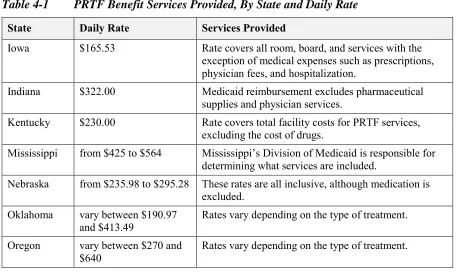
The language of the federal regulation clearly makes exceptions for services provided to individuals younger than 22 years who are receiving inpatient psychiatric services. This psych under 21benefit has been interpreted to allow individuals aged 21 years and younger to receive inpatient psychiatric hospital services in three settings: psychiatric hospitals, psychiatric units in general hospitals, and psychiatric residential treatment facilities (PRTFs). This exception is also discussed more thoroughly in Module 4.
Inpatient psychiatric services are provided to children and young adults who need intensive treatment for a longer period than acute hospitalization. Although inpatient psychiatric care is a coverage option for states, it is mandatory when: (1) a child’s condition is diagnosed through an EPSDT screen, and (2) it is determined that the child requires an institutional level of care.
Services For Individuals Aged 65 Years or Older in an Institution for Mental Diseases
As indicated above, the federal government is prohibited from reimbursing states under the Medicaid program for services rendered to an adult who is a patient in an institution for mental diseases (IMD). However, the IMD exclusion does not apply to individuals aged 65 years or older. Federal reimbursement is permitted for individuals in this age range who require inpatient behavioral health services and receive them in a facility that meets the definition of an IMD.
Inpatient Hospital Services
Individuals who experience a psychiatric crisis or require detoxification and stabilization may receive treatment in an inpatient hospital setting. Under the IMD exclusion, Medicaid will pay for inpatient psychiatric services for individuals younger than age 22 and older than age 64 without exception. However, Medicaid will only pay for inpatient psychiatric services rendered to individuals between the ages of 21 and 64 years under certain circumstances. The IMD exclusion does not apply to Medicaid reimbursement for inpatient treatment for mental illnesses in facilities that are part of larger medical entities that are not primarily engaged in the treatment of mental illnesses. Therefore, adults aged 22 through 64 years can access inpatient psychiatric services in psychiatric units of general hospitals. Likewise, the IMD exclusion does not apply when an organization has 16 or fewer beds, so Medicaid reimbursement is permitted for psychiatric services for adults aged 22 through 64 years in these smaller settings. Aside from these two instances, Medicaid reimbursement for inpatient psychiatric services for adults aged 22 through 64 years is not permitted.
Outpatient Hospital, Clinic, or Federally Qualified Health Center Services
Behavioral health treatment may be provided as an outpatient hospital or FQHC service or as a clinic service and may include diagnosis, assessment, treatment, opioid treatment (e.g.,
Outpatient hospital services are preventive, diagnostic, therapeutic, rehabilitative, or palliative services that are furnished to outpatients by or under the direction of a physician or dentist by a hospital.17 Alternatively, clinic services are “preventive, diagnostic, therapeutic, rehabilitative, or palliative services that are furnished by a facility that is not part of a hospital but is organized and operated to provide medical care to outpatients.” Services must be furnished by or under the direction of a physician.18 FQHC services are described in greater detail in Module 4.
Behavioral health services delivered under State Plan outpatient hospital, clinic, or FQHC services often include individual and group therapy as well as family counseling and medication management. In some states, more intensive outpatient care—such as day treatment—is provided under outpatient hospital services to individuals who require treatment on an extended basis.
Physician and Other Licensed Practitioner Services
Services provided by a psychiatrist, a physician specializing in addiction treatment, or other type of physician are covered under Medicaid as a physician service; services provided by
psychologists and/or clinical social workers may be covered as an optional state plan service under the other licensed practitioner services category. The types of treatment that may be delivered under these services vary, but may include individual, group, or family therapy. Other types of services—such as medical somatic services—might be provided under the physician service benefit. Under these services, states frequently limit the number of units or visits that may be provided to a Medicaid beneficiary in a given time period.
Section 1915(i) Services
The Deficit Reduction Act (DRA) of 2005 added section §1915(i) to the Social Security Act. This section authorizes states to include in their State Plans home and community-based services (HCBS) before an individual needs institutional care. It also provides a mechanism to provide State Plan HCBS to individuals with mental and/or substance use disorders. Although this State Plan service package includes many similarities to options and services available through §1915(c) HCBS waivers, a significant difference is that §1915(i) does not require individuals to meet an institutional level of care in order to qualify.
Although the DRA addition of §1915(i) to the Social Security Act was an important step, the provision originally posed some restrictions on states wishing to implement it. In order to
promote state utilization of §1915(i), the Affordable Care Act included changes that enable states to target HCBS to particular groups of people, make HCBS accessible to more individuals, and ensure the quality of the HCBS.
Section 1915(i) provides states with the ability to offer a variety of HCBS to individuals with disabilities and mental and/or substance use disorders, including—
• Case management
• Homemaker/home health aide • Personal care
• Adult day health • Habilitation • Respite care
3-9
– Day treatment or other partial hospitalization services
– Psychosocial rehabilitation services
– Clinic services19
• Other services
This tool allows states flexibility in designing their HCBS benefit package, and it is particularly attractive in addressing the needs of those with behavioral health needs. As of January 2013, nine states had received approval for §1915(i) proposals including Colorado, Connecticut, Idaho, Iowa, Louisiana, Montana, Nevada, Oregon and Wisconsin. Oregon’s §1915(i) benefit includes HCBS, including home and community-based psychosocial rehabilitation for those with SMI. Louisiana’s §1915(i) benefit includes psychosocial services and is targeted to adults with SMI. The state projected that it will serve 55,000 individuals in the first year of the program.20
In order to use a §1915(c) waiver to provide home and community-based mental health services to a Medicaid consumer, a state must select a hospital, nursing facility, or intermediate care facility for the developmentally disabled level of care. Because the §1915(i) option does not require a level of care, it is a more tenable option for providing HCBS to individuals with mental and/or substance use disorders.19 Section 1915(c) waivers are discussed more thoroughly in Module 9.
Supported employment is not a specifically identifiable Medicaid State Plan service like those
services mentioned above. Supported employment helps people with mental illnesses find and keep meaningful jobs in the community. Under supported employment principles, the jobs which exist are in the open labor market, pay at least minimum wage, and are in work settings that include people who are not disabled.21 Historically, under a state’s Medicaid State Plan, a state could not provide reimbursement for supported employment services. This situation is beginning to change, however, as more states provide supported employment services by adding §1915(i) services to a state’s Medicaid State Plan or by using §1915(c) waivers. Section 1915(c) waivers are discussed in greater detail in Module 9.
Behavioral Health Services Provided as Part of a Waiver or Voluntary
Managed Care Program
States also may provide behavioral health services as part of a waiver or through a voluntary managed care program under the authority of §1915(a) of the Social Security Act. The major difference between services described in this section and those described in the preceding sections is the Medicaid authority under which the state provides them. When deciding how to structure its behavioral health services benefit package, a state needs to consider its goals and the capabilities of the various tools at its disposal.
In general, states may use these waiver authorities to structure their Medicaid programs:
• Section 1915(b) waivers are used to implement mandatory managed care or PCCM
programs.
• Section 1915(c) waivers are used to provide HCBS to individuals meeting an
younger than age 21; nursing facility; and/or intermediate care facility for individuals with developmental disabilities).
• Combined §1915(b)/(c) waivers are used to provide HCBS using a managed care
framework.
• Section 1115 research and demonstration programs are used to improve state
Medicaid programs by letting them test innovative ways to deliver and pay for coverage.
A state may also use the authority afforded by §1915(a) of the Social Security Act to implement a voluntary managed care program simply by executing a contract with plans that the state has procured using a competitive bidding process and by obtaining CMS approval. This arrangement does not require a waiver or inclusion in the State Plan. Section 1915(a) voluntary managed care is described more thoroughly in Module 5.
Specialized packages of behavioral health services may be provided under all four types of waivers and under voluntary managed care. Basic waiver information is discussed more thoroughly in Module 9.
One benefit of offering behavioral health services under a waiver or voluntary managed care is that states are afforded more flexibility in defining the benefit package and are not limited to the types of services described in their State Plans. The following examples are illustrative of the creativity with which states are using waivers and voluntary managed care programs to craft their behavioral health benefit packages.
Wisconsin—Children Come First and Wraparound Milwaukee
• Section 1915(a) voluntary managed care
• Services: SUD treatment and case management; a variety of other services— including tutoring and afterschool programs, group care, and recreational, arts, and camp programs—are funded by state and county agencies22
• Objective: to keep children with serious emotional disturbances (SEDs) out of institutions and to reallocate resources previously used for institutionalization to community-based services
• Eligibility: a child or adolescent must be a Medicaid recipient, have SEDs, and be at imminent risk of institutional admission to a psychiatric hospital, child caring institution, or juvenile correction facility23
Florida—Statewide Inpatient Psychiatry Program
• Section 1915(b) waiver
• Services: provided in an intensive residential setting; they include crisis intervention, biosocial and or psychiatric evaluation, close monitoring by staff, medication
management, connection to community based services, and individual, family, and group therapy24
3-11
• Eligibility: children younger than age 18 who have a Diagnostic and Statistical Manual of Mental Disorders-IV (DSM-IV) diagnosis other than substance abuse, developmental disability, or autism25
Georgia—Community Based Alternatives for Youth
• Section 1915(c) waiver
• Services: care management, respite care, supported employment, community guidance, community transition, consultative clinical and therapeutic care, customized goods and services, family training or supports, financial support, transportation, and wraparound services
• Objective: provide alternatives to treatment in a PRTF
• Eligibility: children, youth, or young adults aged 21 years or younger with serious emotional and behavioral disturbances who have a primary diagnosis of mental illness as identified in the DSM-IV and who are placed, or at risk of placement, in a PRTF26
Iowa—Children’s Mental Health
• Section 1915(c) waiver
• Services: environmental modifications and adaptive devices, family and community supports, in-home family therapy, and respite care
• Objective: provide alternatives to institutional services; support children with SEDs in the family home
• Eligibility: children with SEDs aged 0–17 years who have needs that, except for the waiver, would be provided in a psychiatric hospital serving children younger than age 2127
Montana—Home and Community Based Waiver for Adults With Severe Disabling Mental Illness
• Section 1915(c) waiver
• Services: case management, adult residential care, supported living, adult day health, personal assistance and specially trained attendant care, habilitation, homemaking, respite care, outpatient occupational therapy, psychosocial consultation including extended mental health services, chemical dependency counseling, dietetic and nutrition services, nursing services, personal emergency response systems, specialized medical equipment and supplies, nonmedical transportation, illness management and recovery, and wellness recovery action plan
• Objective: allow an individual with a severe, disabling mental illness a choice of receiving long-term care services in a community setting as an alternative to a nursing home setting.
• Eligibility: individuals with mental illness aged 18 years and older; the consumer must meet nursing home level of care requirements and reside in an area of the state where the waiver is available28
North Carolina—Innovations Waiver and Mental Health, Developmental Disabilities, and Substance Abuse Services Health Plan
• Services: HCBS for individuals with mental illness, substance use disorders, and developmental disabilities within a managed care framework. Under its §1915(b)(3) waiver authority, the state uses savings it realizes by providing cost-effective care through a managed care program to offer behavioral health services including supported employment, personal care or individual support, one-time transitional costs, and psychosocial rehabilitation or peer supports. Section 1915(b)(3) services offered by a state under the authority of a §1915(b) waiver are discussed more fully in Module 5.
• Objective: to better tailor services to local consumers by adopting a
consumer-directed care model. The focus is on community-based rather than facility-based care and on enhancing consumer involvement in planning and providing services through the proliferation of mental health recovery model concepts.
• Eligibility: most Medicaid-eligible consumers living in select geographic areas29
Arizona—Arizona Health Care Cost Containment System
• Section 1115 demonstration
• Services: full continuum of behavioral health, acute care, and long-term care; the demonstration also integrates physical and behavioral services provided to adults residing in Maricopa County who are diagnosed with a SMI
• Objective: deliver services to Medicaid beneficiaries on a managed-care basis • Eligibility: any Medicaid-eligible consumer seeking behavioral health services.30 • Note: Arizona’s §1115 waiver is the basis for the state’s entire Medicaid program,
which is built on a managed care model for all physical health and behavioral health services. As such, it requires that all behavioral health services for Medicaid-eligible individuals be provided through Regional Behavioral Health Authorities (RBHAs).31
Case Management
Case management works in tandem with behavioral health services provided under a Medicaid State Plan or waiver. Together, they help individuals access medical, social, educational, and community support.32 Case management is integral in helping individuals understand: (1) their health situation, (2) how to access physical and behavioral health treatment options available to them, and (3) ways in which they can access other community supports. Case management should provide cohesion to an individual’s team of providers, regardless of whether those providers actually work together. It also helps to avoid duplication of treatments. Without case management, an individual who is seeking services might lack knowledge about the range of treatment options and the variety of providers that are available. Case management can be thought of as the “glue” that keeps an individual’s care coordinated.
Case management includes:
• Comprehensive assessment and periodic reassessment of individuals to determine the need for any medical, educational, social, or other services
3-13
• Referral and related activities (such as scheduling appointments) to help the
individual obtain needed services, including activities that help link him or her with medical, social, and educational providers
• Monitoring and follow-up, including activities that are necessary to ensure that the individual’s care plan is effectively implemented and adequately addresses his or her needs. This monitoring may include the individual, family members, service
providers, or others. It is conducted as frequently as necessary, including at least once annually.33
Separate Medicaid reimbursement is not available for case management when case management activities are an integral component of another covered Medicaid service or when the case
management activities constitute the direct delivery of underlying medical, educational, social, or other services to which an eligible individual has been referred.
Additionally, Medicaid reimbursement is not available for case management when the activities are integral to the administration of: (1) foster care programs, or (2) another nonmedical
program, such as guardianship, child welfare or child protective services, parole or probation, or special education program. There is an exception for case management that is included in an individualized education program or individualized family service plan that is consistent with §1903(c) of the Social Security Act.34
How Case Management Services May Be Delivered
In §1915(g)(2) of the Social Security Act, case management services are defined as including those that will assist individuals “in gaining access to needed medical, social, educational, and other services.”35 From a practical perspective, these services may be provided in a variety of
ways. States use an array of mechanisms to provide case management or similar coordination of services, not solely under the authority of §1915(g)(2). The range of case management
approaches includes the following:
1. “Embedded” in a rehabilitative service available under the Medicaid State Plan.
The rehab option is used to define a variety of treatment services available to
Medicaid consumers, including treatment for M/SUDs. Care coordination is inherent in some of the services offered under the rehab option.
2. As an administrative function of Medicaid. Some of the administrative
responsibilities associated with the Medicaid program include case management functions, such as assessment, referral, and follow-up. Depending on how the state organizes administrative functions, Medicaid administrative funding may finance the cost of some of these related case management functions, although at the lower federal financial participation (FFP) rate associated with administrative claiming. Module 2 provides more detailed information on Medicaid financing.
3. As a Medicaid State Plan service called targeted case management. Targeted case
geographic regions (e.g., a few counties within a state).36 TCM also may target
children receiving foster care or other groups identified by a state and approved by CMS. TCM is an optional service that states may elect to cover under their State Plans, but it must be approved by CMS through state plan amendments (SPAs). Congressional amendments initially made TCM services a payable class of medical assistance service when it was provided as part of state waiver programs under §1915. Congress subsequently amended Medicaid to permit states to furnish TCM services as a coverage option, regardless of whether coverage was offered in connection with a waiver program.37
4. As a component of managed care. An individual enrolled in a managed care plan
receives services to coordinate his or her health care. This coordination typically is provided as a component of administering the managed care benefit. Depending on the state’s program, a beneficiary may also receive TCM outside of the plan. Receipt of TCM outside of the managed care plan may require adjustment of the managed care rate if it affects the actuarial value of services provided by the managed care plan. Managed Care is discussed more thoroughly in Module 5.
5. In accordance with the administration of a waiver. As a state determines how it
wishes to administer a §1915 or §1115 waiver, it may choose to provide case management as either an administrative service or as a discretely identified waiver service.
6. Under §2703 of the Affordable Care Act, which defines Health Homes.
Comprehensive care management is one of six services specifically required by the legislation to be included in service delivery under the §2703 health home model of care delivery.
7. “Embedded” in EPSDT. Like other services coverable under EPSDT, children
younger than age 21 are entitled to case management services if deemed medically necessary.38 Although they are not discretely identified, there may be services
provided under EPSDT that include this coordination function.
8. Under §1915(i) of the Social Security Act. Under §1915(i)(1)(E)(ii) of the Act, the
state uses an independent assessment to identify the needs of an individual who is determined eligible for home- and community-based services. The purpose is to: determine a level of services and supports to be provided that is consistent with an individual’s physical and mental capacity; prevent the provision of unnecessary or inappropriate care; and establish an individualized care plan.39
Analysis of the Good and Modern Addictions and Mental Health
Service System Services
3-15
Figure 3-1 Good and Modern Addictions and Mental Health Service System Acute Intensive Services Mobile crisis
Medically monitored intensive inpatient Peer based crisis
Urgent care
23 hour crisis stabilization 24/7 crisis hotline
Out-of-Home Residential Services Crisis residential/stabilization Clinically managed 24-hour care Clinically managed medium intensity care Adult mental health residential
Children’s mental health residential services Youth substance abuse residential Therapeutic foster care
Intensive Support Services Substance abuse intensive outpatient, Substance abuse ambulatory detoxification Partial hospital
Assertive community treatment Intensive home based treatment Multi-systemic therapy Intensive case management
Outpatient Services Individual evidence based therapies Group therapy, family therapy Multi-family therapy Consultation to caregivers
Healthcare Home/Physical Health General and specialized outpatient medical services Acute primary care
General health screens, tests, and immunizations Comprehensive care management
Care coordination and health promotion Compressive transitional care Individual and family support Referral to community services
Medication Services Medication management Pharmacotherapy (including MAT) Laboratory services
Engagement Services Assessment
Specialized evaluations (psychological, neurological) Service planning (including crisis planning) Consumer/family education
Outreach
Prevention (including Promotion Screening, brief intervention, and referral to treatment Brief motivational interviews
Screening and brief intervention for tobacco cessation Parent training
Facilitated referrals Relapse prevention Wellness recovery support Warm line
Community Support (Rehabilitative) Parent/caregiver support
Skill building (social, daily living, cognitive) Case management
Behavioral management Comprehensive community support Supported employment Permanent supported housing Recovery housing Therapeutic mentoring Day habilitation
Other Supports (Habilitative) Personal care Homemaker Respite Supported education Transportation Assisted living Recreational services
Interactive communication technology devices
Recovery Supports Peer support
Recovery support coaching Recovery support center services Supports for self-directed care
Continuing care for substance use disorders
Based on a review of existing Medicaid State Plans and waivers, and as an example of the variability with which states use the authorities discussed above to offer services listed in the Good and Modern services chart above:
• Every first service in each row—including mobile crisis, crisis stabilization, substance abuse intensive outpatient services, individual outpatient evidence based therapies, and medication management—is currently provided as a State Plan service. Peer support is currently provided as a State Plan service, but it also may be provided under a §1915(b) or §1915(c) waiver.
• ACT may be provided as a State Plan service, but may also be provided under a §1915(c) waiver.
• Although the prevention services are not extensively reimbursed by Medicaid today, they may be important to reexamine in light of the Affordable Care Act requirements associated with preventive services.
• With the exception of the housing service component, the more “medical” types of services at the top of the chart above are very commonly available as State Plan services.
• Conversely, the services toward the bottom of the chart above are more commonly provided as §1915(c) waiver services or occasionally as a component of a §1915(b) waiver. It is uncommon to find many of those services in a state’s Medicaid State Plan.
Summary
Creation of a state’s Medicaid behavioral health benefit package is a multidimensional process. In determining how it wants to put together its behavior health benefit package, a state must consider the types of services it wants to provide and the populations to which it wants to provide them. Then, the state considers the authorities it can use to provide those selected services. Inherent in the State Plan and waiver structures are opportunities and limitations that are unique to each, so a thorough understanding of those authorities is necessary to determine the scope and breadth of its benefit package. This also serves to highlight the fact that Medicaid, although necessary, is not sufficient, as housing and other key services cannot be provided with Medicaid financing.
1Description of a Good and Modern Addictions and Mental Health Service System. (Draft – April 18,
2011.) [PDF version.] Retrieved July 9, 2013 from
http://www.samhsa.gov/Healthreform/docs/AddictionMHSystemBrief.pdf.
2 Medicaid.gov. Benefits. Retrieved July 9, 2013 from
http://www.medicaid.gov/Medicaid-CHIP-Program-Information/By-Topics/Benefits/Medicaid-Benefits.html.
3 See Medicaid State Plan, Attachment 3.1-A, Item 13.
4 Social Security Act §1905(a)(13). Retrieved July 9, 2013 from
http://www.ssa.gov/OP_Home/ssact/title19/1905.htm.
5 Centers for Medicare and Medicaid Services. (August 2007.) A Primer on How to Use Medicaid to Assist
Persons Who are Homeless to Access Medical, Behavioral Health, and Support Services. (January 2007.) Page 58.
3-17
6 The Henry J. Kaiser Family Foundation. Kaiser Commission on Medicaid and Uninsured. Medicaid’s
Rehabilitation Services Option: Overview and Current Policy Issues. Page 1. Retrieved July 9, 2013 from http://www.kff.org/medicaid/7682.cfm.
7 The Henry J. Kaiser Family Foundation. Medicaid Benefits: Online Database. (October 2010.) Benefits by
Service: Rehabilitation Services: Mental Health and Substance Abuse. Retrieved July 9, 2013 from http://medicaidbenefits.kff.org/service.jsp?yr=5&nt=off&so=0&gr=off&cat=12&sv=36&x=18&y=9.
8 O’Brien, J. Community Living Briefs. Vol. 3, Issue 2. The Medicaid Rehabilitative (“Rehab”) Option.
Page 1. [PDF version.] Retrieved July 9, 2013 from http://www.hcbs.org/files/71/3549/Vol_3_Iss_2.pdf.
9 Federal Register. Vol. 72, No. 155. (Monday, August 13, 2007.) Proposed Rules. 42 CFR Parts 440 and
441. [CMS 2261–P] RIN 0938–A081 Medicaid Program; Coverage for Rehabilitative Services. Retrieved July 9, 2013 from http://federal.eregulations.us/fr/noticehome/08/13/2007/07-3925.html.
10 Kaiser Commission on Medicaid and the Uninsured. Medicaid: Overview and Impact of New
Regulations. (January 2008.) [PDF version.] Retrieved July 9, 2013 from www.kff.org/medicaid/upload/7739.pdf.
11 Family Networks. Accessing Mental Health Services for Children in Maryland Through the Medical
Assistance/Medicaid EPSDT Benefit. Retrieved July 9, 2013 from http://www.pathfindersforautism.org/docs/EPSDT.pdf.
12Bright Futures Periodicity Schedule. Retrieved July 9, 2013 from
http://brightfutures.aap.org/3rd_Edition_Guidelines_and_Pocket_Guide.html.
13 Department of Health and Human Services Office of Inspector General. Most Medicaid Children in Nine
States Are Not Receiving All Required Preventive Screening Services. May 2010 OEI-05-08-00520 Retrieved July 9, 2013 from https://oig.hhs.gov/oei/reports/oei-05-08-00520.pdf.
14 State Efforts to Limit EPSDT Services Pursuant to Medicaid's Reasonable Standards Provision. Center
for Public Representation. April 1, 2005. Retrieved July 9, 2013 from
www.acmhai.org/pdf/factsheet_state_limits_on_EPSDT.pdf.
15 Medicaid.gov. Early and Periodic Screening, Diagnostic, and Treatment. National EPSDT Improvement
Workgroup. Retrieved July 9, 2013 from http://www.medicaid.gov/Medicaid-CHIP-Program-Information/By-Topics/Benefits/Early-Periodic-Screening-Diagnosis-and-Treatment.html.
16 42 CFR 435.1009. Retrieved July 9, 2013 from
http://www.gpo.gov/fdsys/browse/collectionCfr.action?collectionCode=CFR&searchPath=Title+42%2FChapter+IV %2FSubchapter+C&oldPath=Title+42%2FChapter+IV&isCollapsed=true&selectedYearFrom=2011&ycord=1459.
17 42 CFR 440.20. Retrieved July 9, 2013 from
http://www.gpo.gov/fdsys/browse/collectionCfr.action?collectionCode=CFR&searchPath=Title+42%2FChapter+IV %2FSubchapter+C&oldPath=Title+42%2FChapter+IV&isCollapsed=true&selectedYearFrom=2011&ycord=1459.
18 42 CFR 440.90. Retrieved July 9, 2013 from
http://www.gpo.gov/fdsys/browse/collectionCfr.action?collectionCode=CFR&searchPath=Title+42%2FChapter+IV %2FSubchapter+C&oldPath=Title+42%2FChapter+IV&isCollapsed=true&selectedYearFrom=2011&ycord=1459.
19 Medicaid.gov. Home- and Community-Based Services 1915(i). Retrieved on July 9, 2013 from
http://www.medicaid.gov/Medicaid-CHIP-Program-Information/By-Topics/Long-Term-Services-and-Support/Home-and-Community-Based-Services/Home-and-Community-Based-Services-1915-i.html.
20 Medicaid States’ Plans to Pursue New and Revised Options for Home- and Community-Based Services.
June 2012. GAO-12-649. Retrieved July 9, 2013 from http://www.gao.gov/assets/600/591560.pdf.
21 U. S. Department of Health and Human Services, Substance Abuse and Mental Health Services
Administration, Center for Mental Health Services. Supported Employment: An Evidence-Based Practice. Evidence Based Practices KIT. Washington, D.C.: U.S. Department of Health and Human Services; 2010.
22 Harvard Kennedy School. ASH Center for Democratic Governance and Innovation. Wraparound
Milwaukee. Retrieved July 9, 2013 from http://www.innovations.harvard.edu/awards.html?id=885650
23 Wraparound Milwaukee Family Handbook. Retrieved July 9, 2013 from
24 Disability Rights Florida. Rights in a Statewide Inpatient Psychiatric Program (SIPP) for Children
Under 18. Retrieved July 9, 2013 from
http://www.disabilityrightsflorida.org/resources/disability_topic_info/category/floridas_youth_inpatient_psychiatric _program/.
25 Florida Statewide Inpatient Psychiatric Program Fact Sheet. Retrieved July 9, 2013 from
https://www.cms.gov/medicaidStWaivProgDemoPGI/downloads/FloridaSIPP.zip.
26 Georgia Community Based Alternatives for Youth Waiver application. Retrieved July 9, 2013from
https://www.cms.gov/MedicaidStWaivProgDemoPGI/downloads/GA01R0100.zip.
27 Iowa Children’s Mental Health Waiver application. Retrieved July 9, 2013 from
https://www.cms.gov/MedicaidStWaivProgDemoPGI/downloads/IA0819R0000.zip.
28 Montana Home and Community Based Waiver for Adults with Severe Disabling Mental Illness
application. Retrieved July 9, 2013 from
https://www.cms.gov/MedicaidStWaivProgDemoPGI/downloads/MT0455R0100.zip.
29 North Carolina Innovations/Mental Health, Developmental Disabilities, and Substance Abuse Services
Health Plan Waiver.
30 Arizona Health Care Cost Containment System Waiver. Retrieved July 9, 2013 from
http://www.azahcccs.gov/reporting/federal/waiver.aspx.
31 Arizona 1115 Waiver. Retrieved July 9, 2013 from
http://www.azahcccs.gov/reporting/federal/waiver.aspx.
32 42 CFR 440.169(a). Retrieved July 9, 2013 from
http://www.gpo.gov/fdsys/browse/collectionCfr.action?collectionCode=CFR&searchPath=Title+42%2FChapter+IV %2FSubchapter+C%2FPart+440&oldPath=Title+42%2FChapter+IV%2FSubchapter+C&isCollapsed=true&selecte dYearFrom=2011&ycord=2120.
33 42 CFR 440.169(d). Retrieved July 9, 2013 from
http://www.gpo.gov/fdsys/browse/collectionCfr.action?collectionCode=CFR&searchPath=Title+42%2FChapter+IV %2FSubchapter+C%2FPart+440&oldPath=Title+42%2FChapter+IV%2FSubchapter+C&isCollapsed=true&selecte dYearFrom=2011&ycord=2120
34 Centers for Medicare and Medicaid Services. (2008.) Technical Assistance Tool: Optional State Plan
Case Management (CMS-2237-IFC). [PDF version.] Baltimore, MD: Centers for Medicare and Medicaid Services.
Retrieved July 9, 2013 from http://www.cms.hhs.gov/DeficitReductionAct/Downloads/CM_TA_Tool.pdf.
35 Social Security Act §1905(g)(2). Retrieved July 9, 2013 from
http://www.ssa.gov/OP_Home/ssact/title19/1915.htm.
36 42 CFR 440.169(b). Retrieved July 9, 2013 from
http://www.gpo.gov/fdsys/browse/collectionCfr.action?collectionCode=CFR&searchPath=Title+42%2FChapter+IV %2FSubchapter+C&oldPath=Title+42%2FChapter+IV&isCollapsed=true&selectedYearFrom=2011&ycord=1459.
37 Rosenbaum S. (April 2008). The CMS Medicaid Targeted Case Management Rule: Implications for
Special Needs Service Providers and Programs. Center for Health Care Strategies, Inc. Issue Brief. Page 1.
Retrieved July 9, 2013 from http://www.chcs.org/publications3960/publications_show.htm?doc_id=682815.
38 Social Security Act §1905(a)(19). Retrieved July 9, 2013 from
http://www.ssa.gov/OP_Home/ssact/title19/1905.htm.
39 Social Security Act §1915(i)(1)(E)(ii). Retrieved July 9, 2013 from
Behavioral Health is Essential To Health • Prevention Works • Treatment is Effective • People Recover
Medicaid Handbook:
Interface with
Behavioral Health Services
Module
4
4-1
Module 4: Providers of Behavioral Health Services
Medicaid Providers
Before addressing issues unique to providers of behavioral health services, it is useful to understand some principles relative to Medicaid providers, in general.
States have latitude within the bounds of federal statute and legislation in defining the types and qualifications of providers that may participate in their Medicaid programs. However, as
described in Module 2, having an understanding of several important foundational Medicaid principles will help inform how and why states approach the design of their provider networks and establish their provider requirements.
Reasonable Promptness and Statewideness. The ability to ensure that Medicaid consumers can
access needed services in a reasonably timely manner depends on having a sufficient number and type of providers in a given area. Although there may be sufficient numbers and types of
providers available in the community, network requirements imposed by the state and the level of reimbursement for services (among other considerations) will impact providers’ willingness to participate in the Medicaid program.
Freedom of Choice Among Qualified Providers. As described in Module 2, an individual who
is eligible for Medicaid may obtain Medicaid services from any provider that is qualified and willing to furnish the services. The ability to waive this requirement is one of the principal reasons that states employ waivers. Module 5 includes a discussion of the checks and balances that states and the Centers for Medicare & Medicaid Services (CMS) use when states limit freedom of choice in a managed care system.
Many Americans want to be able to choose their provider. Affording a Medicaid consumer the ability to choose among all providers determined by the state to be qualified is considered an important component of quality and safety—the ability to, proverbially, “vote with one’s feet.” Thus, although the state is given flexibility within the confines of federal statute and regulation to determine provider qualifications and reimbursement rates, and although the state can be restrictive in setting these parameters, once the state establishes the qualifications the consumer is empowered with the ability to choose from among all providers that meet the state’s
qualifications.
Single State Agency. The role of the single state agency in directing the state’s Medicaid policy
includes the responsibility to establish and apply consistent requirements for becoming an eligible Medicaid provider. These requirements typically are codified in state law or rule.
Although many states have dedicated departments of behavioral health that are separate from the Medicaid agency, the Medicaid agency is ultimately responsible for the policy structures of the Medicaid program and interactions with CMS. The behavioral health and Medicaid departments may jointly file rules—or the behavioral health department may maintain administrative rules with greater policy detail—while the Medicaid
the Medicaid and behavioral health authorities are in the same department, any concerns about the ultimate authority for Medicaid purposes is lessened significantly.
Efficiency, Economy, and Quality of Care While Assuring Access. Although access to needed
services is a primary consideration, it is not the only factor related to provider networks. States must maintain a balance between assuring access and providing quality services in an
economical and efficient manner. For example, Medicaid agencies are not required to pay significantly more than the market rate for services simply to assure access. In fact, they are prohibited from doing so. The provider requirements and reimbursement rates the states set must consider efficiency and economy as well as quality. Often, states will utilize managed care authorities and waive freedom of choice of providers in order to have a smaller, more manageable, and more cost-effective network.
Is It a Service or a Provider?
When states consider the design of their provider networks, it is helpful to understand at the outset whether the network is comprised of services or providers. The list of mandatory and optional services described in Module 2 is actually a combination of services and types of providers. Prescription drugs, dentures, family planning, and respiratory care, for example, are services. A federally qualified health center (FQHC), inpatient hospital, nurse midwife, rural health clinic, and nursing facility are specific types of providers of certain services. The difference between the two categories is illustrated by an example: although several types of providers may be qualified to provide family planning services, only a nursing facility can provide nursing facility services.
For those services that are not provided by a unique type of provider, the state has additional latitude to define the types of providers and requirements needed to provide the service. For example, a state may specify that physical therapy may only be provided through a clinic and not allow independently practicing physical therapists to become eligible providers of physical therapy services.
State-Specific Professional Practice Acts
Professional practice acts are state laws and regulations that define the scope of practice for a particular provider type. They identify what constitutes the independent practice of a certain professional and what activities the professional can or cannot undertake. These requirements apply to providers regardless of the payer source. In other words, state professional practice acts establish practice requirements for providers regardless of whether they receive reimbursement from Medicaid or private insurance.
In addition, the specific licensing requirements, professional standards, and prohibited acts, etc. of professional practice acts often specify the type of oversight or supervision required in order to practice in that state. State laws vary considerably; for example, although all states define who may practice as a nurse or physician, not all will define or allow lay or non-nurse midwives to practice.
4-3
requirements for supervision often address various levels within a professional group; a Master’s or Ph.D. degree may be required to supervise an entry-level professional holding a bachelor’s degree. Also, certain types of tasks may be delegated to another type of professional, with the primary responsibility for the patient’s care remaining with the licensed professional. For example, in many state mental health or developmental disability systems, a registered nurse may delegate certain tasks to a trained aide while retaining patient responsibility and liability. Medicaid regulations give considerable deference to state professional practice acts. In many areas of health care, it is clear what type of provider can perform certain services (e.g., surgery, prescribing medications). However, where a licensing category does not exist or does not fit for the purposes of providing a particular service within the Medicaid program, the state can define the requirements for background, training, level of education, etc. Through this process, the state can create its own type of paraprofessional provider solely for delivery of services within the Medicaid program. In reviewing state Medicaid State Plans, CMS pays particular attention to these unique types of providers and their associated requirements. This is particularly important in the behavioral health arena, as we consider rehabilitative services, peer support services, and other essential components of the behavioral health benefit package.
There is an additional distinction that is helpful in understanding how Medicaid approaches provider issues, especially related to non-institutional services. There are at least two layers of provider policy issues that should be considered, and there may be separate requirements addressing each.
The Medicaid provider is the provider agency or independent practitioner who has a direct
relationship with the state. It has a signed Medicaid agreement with and is reimbursed directly by the state. The state specifies the requirements to be a Medicaid-eligible provider. The principles discussed above relate to defining who is an eligible provider for Medicaid purposes, and the associated principles of freedom of choice of providers apply to these Medicaid providers. The Medicaid provider may, in turn, employ or subcontract with clinicians or staff members who provide hands on care to the Medicaid consumer. These may be known as rendering providers.
The rendering provider is a clinician, therapist, program staff, or paraprofessional who
provides hands-on care to the Medicaid consumer. The rendering provider may also be the Medicaid provider, as in the case of an independent therapist who is self-employed. Depending on the type of Medicaid service and whether a professional practice act applies, a state may have very specific Medicaid requirements associated with who is eligible to provide hands-on care. If this is the case, such requirements must be followed in order for the service to be properly provided and reimbursed.
Providers of Behavioral Health Services
and/or statutes typically specify the provider types—including required licensure or
certification—that are permitted to provide behavioral health services. A provider can determine if he or she can participate in its state Medicaid program as a provider of behavioral health services by assessing the services for which the state’s Medicaid program provides
reimbursement, to which populations, and by what types of providers.
Community Mental Health Centers
The Mental Retardation Facilities and Community Mental Health Centers Construction Act was signed into law in October of 1963 only nine months after President John F. Kennedy proposed in a major public address a national mental health program. The Act provided an alternative to institutionalization for those with serious mental illness (SMI). It “drastically altered the delivery of mental health services and inspired a new era of optimism in mental health care. This law led to the establishment of more than 750 comprehensive community mental health centers
(CMHCs) throughout the country.”1
Along with pharmacologic advances, growing evidence about the efficacy of community-based treatments, and changes in underlying beliefs and attitudes about mental illness, the CMHCs became an important vehicle for change. Rather than a singularly-focused medical approach to caring for those with mental illness, the CMHCs developed an array of medical, social,
educational and rehabilitative supports and services designed to address the practical needs of individuals who were being discharged from state psychiatric hospitals.
Although there is no standard definition of what constitutes a CMHC, what made them unique was the comprehensive scope of their services, their provision of services for individuals who were indigent and to individuals with SMIs or children with SEDs, and their distinctive
involvement in their community and neighborhood. These agencies have remained the backbone of community mental health services in the United States, providing a comprehensive array of community support services as well as embracing the need for coordinated care and addiction treatment services.
Over time, the CMHCs have adapted to the changing service and reimbursement environment by providing services to those with commercial insurance, Medicare, and, particularly, Medicaid. Unlike FQHCs—discussed more fully below—community mental health centers are subject to the varied requirements of state Medicaid programs and have no consistent federal requirements. Some state regulatory frameworks acknowledge comprehensive providers as a unique subset of providers, and some receive special funding. For example, Minnesota indicates that covered Medicaid services include “community mental health center services” and identifies a minimum set of services that must be available.2 Other states require service-specific regulations without
regard to the type of provider entity.
There have been efforts in Congress to create a statutory definition of federally qualified
4-5 Federally Qualified Health Centers
FQHCs are community-based and consumer-governed organizations that serve populations with limited access to health care. There are three types of FQHCs:
1. Health Center grantees are grant-supported FQHCs that are public and private non-profit health care organizations that meet certain criteria under the Medicare and Medicaid Program (respectively, Sections 1861(aa)(4) and 1905(1)(2)(B) of the Social Security Act) and receive funds under the Health Center Program (Section 330 of the Public Health Service Act). Some health center grantees receive specific funding to focus on certain special populations:
• Migrant and seasonal farmworkers
• Individuals and families experiencing homelessness • Residents of public housing.
2. FQHC Look-Alikes are non-grant supported health centers that have been identified by the Health Resources and Services Administration (HRSA) as meeting the definition of a health center under §330 of the Public Health Service (PHS) Act, but they do not receive grant funding under §330 of the Act.
3. Outpatient health programs or facilities operated by tribal organizations (under the Indian Self-Determination Act, P.L. 96-638) or urban Indian organizations (under the Indian Health Care Improvement Act, P.L. 94-437).
Most FQHCs are specifically described in §330 of the Federal PHS Act. Many health centers receive Section 330 grant funds and have a unique, direct relationship with the HRSA of HHS. But FQHC Look-Alikes, tribal groups, or Urban Indian Health Organizations are FQHCs that do not receive 330 grant funding. These Section 330 FQHCs:
• Are located in or serve a high-need community
• Are governed by a community board, a majority (51 percent or more) of whose members are health center patients who represent the population served
• Provide comprehensive primary, preventive, and enabling health care services as well as supportive services (e.g., education, language translation, transportation) that promote access to health care
• Provide services to all individuals, whether insured or not, with fees adjusted based on the person’s ability to pay
• Meet other performance and accountability requirements.3
States are required by §1905(a) of the Social Security Act to provide FQHC services in the Medicaid program, and FQHCs are eligible for a distinct payment system under both Medicare and Medicaid. In 2009, FQHCs served almost 7.8 million Medicaid patients.4 The Affordable Care Act included a significant increase in funding for new and expanded health centers in anticipation of an expanded need for services.
Health centers are required to provide primary health services with an identified team of health professionals.5Required primary health services include those related to family medicine,
services provided by physicians and physician extenders, health centers must provide in their package of required primary health services referrals to providers of “other health-related
services, including substance use disorder and mental health services.”7 The referral requirement
is a minimum and does not preclude a health center from directly providing behavioral health services. Therefore, although FQHCs may not target individuals with serious and persistent mental illness (SPMI) or serious addictions, anyone receiving services at the FQHC is eligible to have his or her behavioral health needs addressed—even if it is not onsite but provided on referral. Those with SPMI or serious addictions are disproportionately represented in the health centers targeting homeless individuals or targeting those in public housing.
Health centers, at their discretion, also may provide additional health services “appropriate to meet the health needs of the population served by the health center.”8 These may include
behavioral, mental health, and substance use disorder (SUD) services.9
A health center that receives grant funding to serve homeless populations is required by statute to provide—either with staff or under contract with outside specialty providers—SUD services (including detoxification, risk reduction, outpatient treatment, and rehabilitation for substance use provided in settings other than hospitals).10
FQHCs are important providers of behavioral health services because: (1) they serve as safety net providers to individuals who might not otherwise have access to care, and (2) they are largely committed to integrating behavioral and physical health care. According to a survey conducted by the National Association of Community Health Centers (NACHC)—
Mental health services are provided by over 70 percent of FQHCs, and SUD services are provided by 55 percent of the health centers that responded to the NACHC survey. Almost 65 percent of FQHCs that responded meet all of the components of integrated care. That is, services are co-located on site; they have good communication and
coordination among behavioral health and primary care providers; they share behavioral health treatment plans, problem lists, medication and laboratory results; and behavioral health and medical providers make joint decisions on patient treatment. Only 10 percent of the FQHCs that responded do not routinely screen for depression. FQHCs are utilizing evidence-based tools for screening for M/SUD.11
The Substance Abuse and Mental Health Services Administration (SAMHSA) has historically worked and continues to work with HRSA to increase and improve delivery of behavioral health services in FQHCs and to more fully integrate behavioral and physical health services.
Psychiatric Residential Treatment Facilities