HIGH SCHOOL REFORM:
A CASE STUDY USING THE BREAKING RANKS II FRAMEWORK
Julie D. Spencer
A Dissertation submitted to the School of Education faculty of the University of North Carolina at Chapel Hill in partial fulfillment of the requirements for the degree of
Doctorate in the Department of Educational Leadership.
Chapel Hill Spring, 2008
Approved by
Dr. Fenwick English, Chair
Dr. Stanley Schainker
ABSTRACT
Julie D. Spencer: High School Reform: A Case Study Using the Breaking Ranks II
Framework
(Under the direction of Dr. Fenwick English)
The purpose of this case study is to unpack the complex process of high school reform in six different high schools in the Seaboro School District. Seaboro School District, like others across the United States, is facing the many challenges that are surfacing in high schools.
In the study, the researcher examined how a school district implemented the thirty-one strategic recommendations for high school reform identified in Breaking Ranks II
(National Association of Secondary School Principals, 2004). Specifically, the case study was aimed at discerning if: (1) a recommendation perceived as being more important than others by stakeholders was related to the depth and breadth of the implementation of the recommendation; (2) those recommendations perceived as having a higher degree of importance resulted in a more successful longitudinal implementation after three years of implementing the district reform plan; and (3) those recommendations perceived as having a higher degree of implementation resulted in a more successful longitudinal implementation after three years.
implementation from 2004 to 2007. However, there was not a relationship between the degree of importance of the recommendations and the longitudinal implementation (as measured by the difference in current practice from 2004 to 2007). Moreover, there was a slight relationship between the degree of current practice of the recommendations in 2004 and the longitudinal implementation (as measured by the difference in current practice from 2004 to 2007). Those recommendations that had a lesser degree of implementation in 2004 saw the greatest gains after three years while the recommendations that had a greater degree of implementation in 2004 saw smaller gains in practice after three years.
TABLE OF CONTENTS
Page
LIST OF TABLES……….………...ix
LIST OF FIGURES………..……….x
Chapter I. INTRODUCTION……….1
Statement of Problem………...………..2
Purpose/Significance of Study………...…….………...6
Assumptions of the Study………..8
Limitations of the Study ………..……….……….……....9
Research Design……….………...…….…………..12
Research Questions……..………..………..13
Definition of Terms………..14
II. LITERATURE REVIEW……….………...21
History of High Schools………...……21
School Reform……….24
High School Reform………....29
Collaborative Leadership and Professional
Learning Communities……….…...….…38
Personalization and the School Environment……….……….40
Curriculum, Instruction, and Assessment………42
Seaboro High School Reform Plan………..44
III. METHODOLOGY………..49
Research Design……….…..50
Site and Participants……….…....53
Data Collection………54
Data Analysis………...57
Researcher Identity………..60
Summary………..61
IV. DATA ANALYSIS……….…….62
Survey Administration……….64
Research Question 1………65
2004 Data……….66
2007 Data……….73
Research Question 2………82
Comparison of 2004 and 2007 Importance Survey Data……….….…83
Importance and Longitudinal Implementation………….……86
Research Question 3………....91
Comparison of 2004 and 2007 Implementation Survey Data……...……….…..92
School District Descriptor Data...………98
Summary………..………..107
V. SUMMARY………..….109
Summary of the Findings………..….110
Research Question 1………..…111
Research Question 2………..…111
Research Question 3………..…112
Key Findings………..…113
Understanding the Findings………...116
Policy Issues………...117
District-wide Issues……….………...118
Personnel Issues………..…………...119
District-level Personnel Changes………...119
School Site Personnel Changes………..120
The High School Reform Committee………123
Other Notable Occurrences…..………..124
Implications of the Study………...127
Belief ≠ Action………...128
Benchmarks are Essential………..129
Framework + Commitment = Success………...129
Buy-in and Motivation are Essential……….….130
Recommendations for School Leaders………..131
Limitations of the Study………...134
Recommendations for Future Research……….138
APPENDICES ………..140
Appendix A……….…...141
Appendix B………143
Appendix C………...144
Appendix D……….…….………..181
LIST OF TABLES
Table Page
1. Breaking Ranks Survey Data, 2004………...66
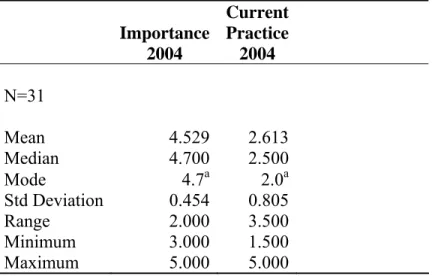
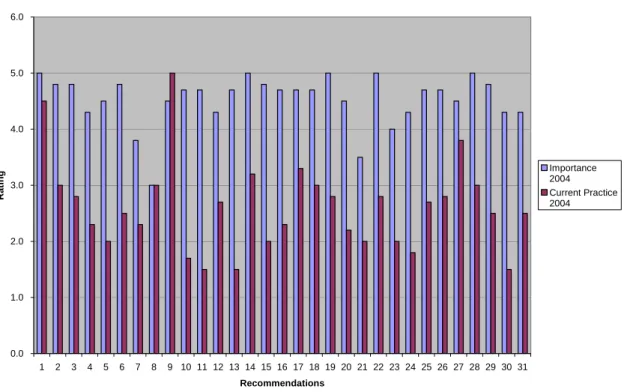
2. Importance and Current Practice, 2004………...69
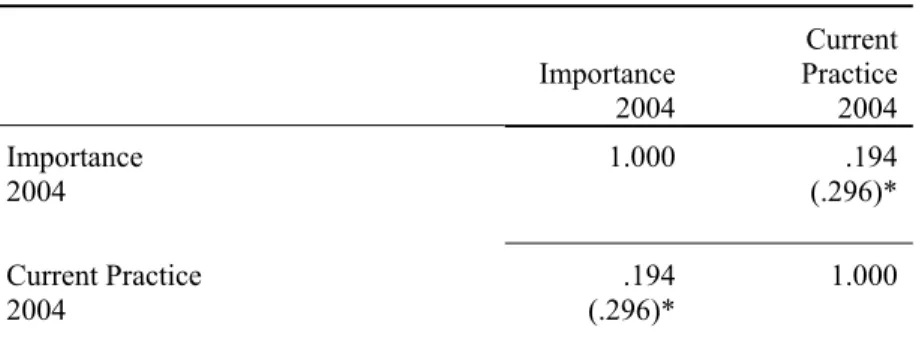
3. Correlations of Importance and Current Practice in Average Rankings for all Recommendations for 2004……….……...……….72
4. Paired Samples Test between Current Practice and Importance, 2004...73
5. Breaking Ranks Survey Data, 2007………...74
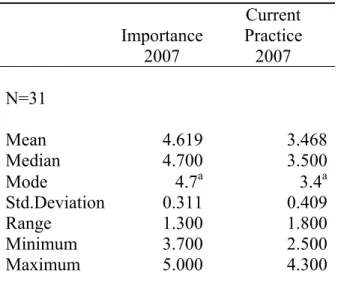
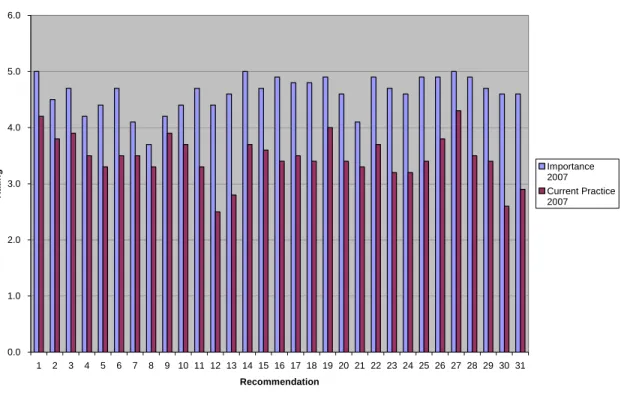
6. Importance and Current Practice, 2007………...77
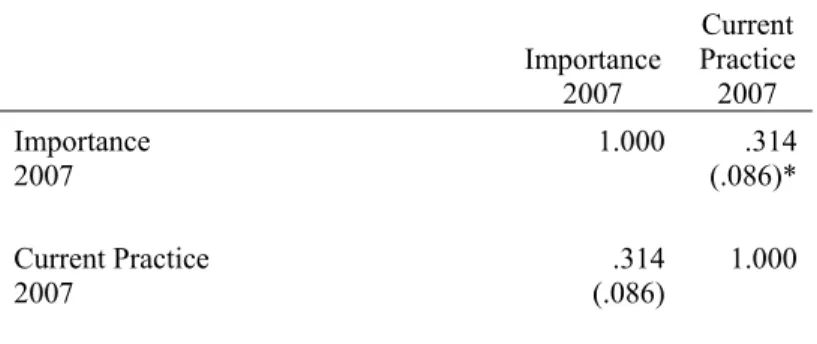
7. Correlations of Importance and Current Practice in Average Rankings for all Recommendations for 2007………...80
8. Paired Samples Test between Importance and Current Practice, 2007………...81
9. Correlations of Importance in 2004 and 2007 in Average Rankings for all Recommendations……...85
10. Paired Samples Test between Importance in 2004 and Importance in 2007...85
11. Correlations of Importance in 2004 and Difference in Current Practice 2004-2007………...90
12. Correlations of Current Practice in 2004 and 2007 in Average Rankings for all Recommendations………...93
13. Paired Samples Test between Current Practice in 2004 and Current Practice in 2007……….94
LIST OF FIGURES
Figure Page
1. Connecting Breaking Ranks II Recommendations
in High School Renewal……… 35 2. Relationship between Importance and Current Practice, 2004……….………….…..71 3. Relationship between Importance and Current Practice, 2007……….………....…..79 4. Relationship between Importance, 2004 and 2007………..………84 5. Relationship between Current Practice, 2004 and 2007……….……….…87 6. Importance (2004) and Longitudinal Implementation (Difference
in Current Practice between 2004 and 2007)………..……….88 7. Ranked Importance (2004) and Change in Current Practice (2004-2007)………...89 8. Current Practice (2004) and Longitudinal Implementation
(Difference in Current Practice between 2004 and 2007)………...….…...……95 .
9. Ranked Current Practice (2004) and Change in Current Practice
(2004-2007)……….………96 10. Attendance Rate for the High Schools in the Seaboro School
District, 2003-2007…..……….………...….…….100 11. Suspension Rate for the High Schools in the Seaboro School
District, 2003-2007………101 12. Retention Rate for the High Schools in the Seaboro School District,
2003-2007………..102 13. Dropout Rate for the High Schools in the Seaboro School District,
2003-2007………..103 14. Teacher Turnover Rate for the High Schools in the Seaboro School
District, 2003-2007………104 15. SAT Scores for the High Schools in the Seaboro School District,
2003-2007.………....………...105 16. Advanced Placement Tests for the High Schools in the Seaboro
CHAPTER 1
INTRODUCTION
The success or failure of the American high school will determine the quality of our democracy, the strength of our economy, the security of our defense, and the promise of our ideals. The time has come for America to stand behind its belief in public education. (Boyer, 1983, p. 297)
As we enter the 21st Century, education officials are quickly realizing that there is a need to better align schools to the needs of society. Secondary education is under scrutiny as politicians, business leaders, and society as a whole are finding gaps between high school and the workplace or post secondary education (Ashby, 2005; Bush, 2005; California Department of Education, 2007; Houston; 2006; Lichtenstein, 2003;). Statistics suggest that increasingly more occupations today require post secondary education than previously. Because only 69.6% of students graduated from high school in 2003 and many more students entered post secondary education than completed it, it is evident that high schools have great challenges to face (Barton, 2005; Barton 2006; Diplomas Count, 2006; Harvey & Housman, 2004;
Statement of Problem
The topic of high school reform has been gathering increasing national and state attention. Since the publication of A Nation at Risk (National Commission on Excellence in Education, 1983), there has been a great debate about how to improve America’s public education system. More recently, the debate has shifted to the American high school. The call for high school reform seems to be loud and clear and the reasons are not hard to discern: our global economy has drastically changed workplace needs; data suggest that the structure of high schools does not meet the needs of all students; statistics reflect that many students are not successful in high school; additional data indicate that most students do not complete their post-secondary education plans following high school (Diplomas Count, 2006; Smith, 2006; Tewel, 1995).
With high school reform being a “hot topic,” school officials all over the United States are searching for answers. School district leaders are looking at other districts that were in the initial wave of reform to see what strategies were implemented and to analyze the results of the reform efforts. It is timely to study the reform process, including educator perceptions about the importance and the implementation of recommended best practices. Additionally, studying how stakeholders in a school perceive the importance and the implementation of well-researched best practices will provide direction for future studies.
The findings of this study may be beneficial for school district leaders who are in the process of reforming their high schools. There is relatively little recent research on the topic of high school reform, especially in the era of post-No Child Left Behind. With schools being required to improve student achievement to meet the current accountability demands,
are looking to prevent the mistakes and problems of other reform efforts. With little research to assist in the decision-making, studies, such as this one, may provide guidance in how districts should proceed in reforming its high schools. Moreover, this study provides insight into the types of changes that were perceived as more important by stakeholders, the types of changes that were implemented to a higher degree, and the relationship between the
recommendations and the longitudinal implementation of the reform effort. As educators try to reform schools, it is essential to have a comprehensive understanding of change, including the potential problems. This study provides a glimpse of the intricacies of school reform as revealed through one school district’s reform initiative that began in 2004 and continued through 2007.
In looking at the call for reform, a major indicator of the need for reform is that many of America’s students are not finishing high school. Based on information from the
Education Research Center, the report included an estimate that 1.23 million students, or about thirty percent of the class of 2007, would fail to graduate from high school. Moreover, the report noted a higher percentage of Native American, Hispanic, and African-American students among the groups with the lowest graduation rates. Specifically, one in ten of the fifty major urban school districts graduate less than half of their students. For example, the Detroit School System graduates less than 25 percent of its students annually (Diplomas Count, 2006).
The high dropout rate contributes to personal and societal financial issues. In the
Education Week special edition, Diplomas Count(2006), two national databases were used to examine the distribution of jobs nationally and within each state, and the relationship
diplomas or more have greater salaries than the individuals who did not complete high school.
A recent study from the Parents for Educational Freedom in North Carolina (PEFNC) and the Friedman Foundation revealed that the state of North Carolina loses approximately $169 million each year from high school dropouts, ultimately costing $8.5 billion from just one cohort of students over a period of 50 years. The financial loss is reflected in the dropouts’ lower earning potential, reduced tax revenue, and heavier reliance on government assistance programs such as Medicaid. Ultimately, the loss includes additional expenses, such as the cost of incarceration and crime (Gottlob, 2007).
With growing pressure from the business community, politicians, students, and
parents, school district leaders are being forced to seek solutions to reform their high schools. The need to improve high schools has been highlighted in numerous publications including:
A Nation at Risk (National Commission on Excellence in Education, 1983), Breaking Ranks
(National Association of Secondary School Principals, 1996), and Breaking Ranks II
(National Association of Secondary School Principals, 2004), as well as key educational policies, such as: The Elementary and Secondary Education Act of 1965, and the
Reauthorization of The Elementary and Secondary Education Act of 2001 (also known as No Child Left Behind).
possible solutions and strategies that provide the answer to questions of how high school reform should happen (Harvey & Housman, 2004).
As a result of legislative changes and the heightened emphasis on student
achievement and success for all, the high school reform movement was officially launched in 2005. With a focus on high school reform in President George Bush’s 2005 State of the Union Address; a Governor’s Summit on High School Reform in 2005; the National Conference of State Legislatures in 2006; and various initiatives throughout the country, including North Carolina’s, that focused on high school redesign; state department of education leaders and school district leaders have been given a challenge by governmental leaders to find solutions and formulate plans for school reform in high schools (Subject to Changes, 2006).
More recently, business leaders have made statements about the need to better prepare students for the workplace. Organizations, such as the Bill and Melinda Gates Foundation, have increasingly become more involved in setting the agenda for educational reform. For example, in a speech to the National Governor’s Association, Microsoft CEO and foundation head Bill Gates (2005) stated, “America’s high schools are
There is a growing need to face the many challenges facing high schools. Low graduation rates, increased dropout rates, high teacher turnover, and ineffective curriculum and instruction are prevalent in school districts throughout the United States. With increased pressure from the business community and politicians, it is important for educators, policy makers, the business community, and parents to better understand school reform efforts that are in place in order to better institute change and improvement within high schools. With much money, time, and energy being poured into high school reform efforts throughout the United States, an examination of these efforts is beneficial in helping to reveal the thinking of educators in the field about the importance of potential solutions and the selection of
strategies to reform high schools. Additionally, it is helpful to know if schools implementing best practices are finding positive results.
With expectations of No Child Left Behind set to be met by 2013, school district leaders are quickly running out of time and are becoming more aggressive in their efforts to reform. According to the legislation, schools across the United States are in jeopardy of being taken over by state departments and teams of outside educators. From a moral perspective, our high school youth are depending on the experts to have a high school program that prepares them for the future. From an economic perspective, our country cannot continue to absorb the loss incurred by dropouts. Moreover, time is of the essence as our global economy has made it even more necessary to adequately prepare our young people for the workplace.
Purpose/Significance of the Study
(NASSP, 2004) was selected as the conceptual framework because it is the structure in which the school district that is the subject of the study employed as a framework to identify needs and to outline changes. The leaders of the district included in this study saw this document as one that provided accurate, well-researched recommendations that could be used as an outline to develop a plan of action. Thus, for the purpose of this study, Breaking Ranks II
(NASSP, 2004) provided the most appropriate lens through which to examine the reform effort.
Breaking Ranks II (NASSP, 2004) provides thirty-one well-researched, specific recommendations for high school reform. The purpose of this study was (1) to provide a description of the relationship between stakeholder perceptions about the importance of and implementation of high school best practices, revealed in the Breaking Ranks II (NASSP, 2004) recommendations (see Appendix A), and (2) to examine the relationship between the both the importance and the implementation of the recommendations as it relates to the longitudinal implementation of the recommendations.
This study used data collected from a survey given to a categorical representative group of stakeholders (i.e., administrators, teachers, counselors) prior to the implementation of the Breaking Ranks II (NASSP, 2004) recommendations, which were compared to the results of the same survey administered to the group three years later. Consequently, this study provided a description of how the stakeholders reported their perceptions of the importance of the various recommendations and their perceptions of the level of implementation of the recommendations.
School District. Facing the same challenges as other school districts, Seaboro School District leaders undertook a comprehensive reform initiative beginning in 2003 to improve its high schools.
The data yielded in this study were not the result of either a random selection of a site or of the treatments within the site. Rather the selection of the site represented a convenience sample and the researcher was limited to the information gathered by district officials. The data included stakeholder perceptions of recommended and researched strategies, as well as the stakeholder perceptions of the level of implementation of the reform effort. This
descriptive data could be beneficial for other school districts as they seek improvement in their high schools.
Assumptions of the Study
1. The participants in the reform plan effort (teachers, counselors, and administrators) had a generally clear set of expectations with specific goals in mind.
2. The participants in the reform plan effort (teachers, counselors, and administrators) targeted specific outcomes that could be linked to data and subsequently analyzed. 3. The reform plan would cause both intended and unintended consequences.
4. Teachers, counselors, and administrators were serious in the process and truthful when completing the Breaking Ranks II (NASSP, 2004) survey both in 2004 and 2007.
6. The Breaking Ranks II (NASSP, 2004) recommendations are well-researched and accepted as best practices providing strategies for fundamental changes.
7. The “successful longitudinal implementation” of the reform plan is described by the
Breaking Ranks II (NASSP, 2004) self-assessment survey data. The successful longitudinal implementation was defined by calculating the difference between the perception of current practice of a recommendation in 2004 and the perception of the same recommendation in 2007. This allowed the researcher to determine the increase or decrease in the perception of implementation of the recommendation over time.
Limitations of the Study
1. Characteristics of the school district and schools: The case study was limited to six high schools in one school district. The school district is one diverse urban
community. One of the six high schools is a magnet school. Two of the six high schools were deemed “low performing” by the state department due to lagging test scores. Additional information regarding personnel changes, as well as additional information about the schools and school district can be found in Chapters 3 and 4. 2. Absence of student achievement data: This study did not perform thorough
changes in the data collection, these scores were not included in drawing any conclusions from the study.
3. High School Reform Plan: There was a district-wide plan for reform in the high schools in the school district. Additionally, each of the high schools had a school-wide plan that included a diverse range of measures and interventions, causing a degree of variability among high schools.
4. Stakeholder perceptions: All aspects of this study are dependent on teacher, counselor, and administrator perceptions as revealed in a self assessment that was administered in 2004 and then again in 2007. The survey that was given to members of the High School Reform Committee relied on the perceptions of what is important and perceptions of the degree to which the reform initiative had been implemented. 5. Researcher relationship to Seaboro School District: The researcher has worked in
the school district over the past seven years in a middle school and a high school. However, the researcher has not played a role in the planning or implementation of the system’s High School Reform Plan. While school district officials were
supportive of the researcher’s efforts, the researcher was under no pressure to report the findings in any particular manner, nor were officials particularly sensitive about the outcome.
6. Conceptual framework: The case study used the Breaking Ranks II (NASSP, 2004) framework to examine this reform initiative. The conclusions drawn from the study were limited to the characteristics of effective high schools identified through
7. Reform Plan inconsistencies: The district-wide reform initiative was not
conceptually or operationally precise, with much flexibility in what each school could do within the effort. Thus, any report of the results must consider the variability of the implementation and the lack of uniformity among schools. However, the case study method allowed the researcher to probe the complexity of the effort over an extended time period.
8. Determining “successful longitudinal implementation”: The successful longitudinal implementation of the study was determined by calculating the difference between current practice in 2004 and current practice in 2007, as described by the High School Reform Committee members. The committee members described their perceptions on a self-assessment survey that included ranking the current level implementation of the 31 recommendations on a 1.0-5.0 scale. During the planning phase of the reform initiative, the Seaboro School District selected for examination additional data that typically describe effective schools. The areas of the data included were: attendance, suspension, retention, teacher turnover, dropout, graduation, cohort graduation, SAT scores, Performance Composites, percentage of AYP goals met, and Advanced Placement test data.
Research Design
The research of this study focused on the Seaboro School District, an urban school district in North Carolina that implemented a multi-pronged school reform plan for high schools from 2004-2007. The case study format was used to examine the reform effort in this school district.
This case study employed descriptive statistics to examine a survey that was given to the Seaboro High School Reform Committee before the reform initiative and repeated after three years of reform efforts. The survey focused on the perceptions by teachers, counselors, and administrators of the importance of various change recommendations, as well as the level of implementation of various change recommendations.
The research method chosen enabled the researcher to examine the depth of the reform. Yin (2003) states that a case study is “an empirical inquiry that investigates a contemporary phenomenon within its real-life context, especially when the boundaries between phenomenon and context are not clearly evident” (p. 13). He then presents a second part of the definition by stating that case study inquiry “copes with the technically distinctive situation in which there will be many more variables of interest than data points, and as one result relies on multiple sources of evidence, with data needing to converge in a triangulating fashion, and as another result benefits from the prior development of theoretical propositions to guide data collection and analysis” (pp. 13-14). He suggests that case studies are especially important in uncovering contextual conditions.
reveal the intricacies of the reform process. Schools and school districts are very complex and have many variables that can influence processes and outcomes. The use of the case study method allowed for the variables to be exposed and to be considered when enumerating the results.
Research Questions
In the study, the researcher examined how a school district had implemented the strategic recommendations identified in Breaking Ranks II (NASSP, 2004) from the
perceptual perspective of participants involved in the change effort and determined whether the perceived importance or implementation of the recommendations was connected to a more successful longitudinal implementation of the reform effort.
Specifically, the study was aimed at discerning if:
1) a recommendation perceived as being more important than others by participants (teachers, counselors, and administrators) was related to a more intense
implementation;
2) a recommendation perceived as being more important than others by participants (teachers, counselors, and administrators) resulted in a more successful longitudinal implementation after three years of implementing the district reform plan; and 3) a recommendation perceived as having a higher degree of implementation by
In order to examine all three research questions, the survey data was used. Although the initial plan was to compare the data to typical descriptors of effective high schools, the researcher determined that a more effective way to portray the data was to use the
perceptions of the implementation of the recommendations over time. This decision is discussed further in Chapter 5. The researcher examined the following data in order to better understand the longitudinal implementation: attendance rates, suspension rates, retention rates, teacher turnover rates, dropout rates, graduation rates, cohort graduation rates, SAT scores, Performance Composites, percentage of AYP goals met, and Advanced Placement test data. These data points were selected because they were included in the district’s planning process as specific areas to address with the reform effort. Most of the areas were calculated in similar methods from 2003-2007. The data were calculated in the same way for each school during this time period. Additionally, there was little variability in the way the district and/or state education departments reported the data. Thus, this study allowed a detailed view of the results of the implementation of the Breaking Ranks II (NASSP, 2004) recommendations. There are many different ways one could report the “successful
longitudinal implementation” of the effort. For the purpose of this study, the difference between how the current practice was perceived in 2004 and again in 2007 provided the description of the longitudinal implementation that is referred to in Research Questions 2 and 3.
Definition of Terms
Adequate Yearly Progress (AYP) Goals: According to the No Child Left Behind Act of 2001, “test scores must be disaggregated by major racial and ethnic groups, English language proficiency status, students with disabilities as compared to all other students, economically disadvantaged students as compared to students not economically disadvantaged, migrant status, and gender” (English, 2005, 408). Schools and school districts must report their AYP results annually to the state and federal governments both by school and by subgroup.
During the time period of the study, the standard increased for a school to reach the goal. However, the same standard applied to all schools. Thus, the percentages tended to decrease following the standard increase. However, all schools decreased at the same time.
Breaking Ranks II Recommendations: The National Association of Secondary School Principals published a handbook of research-based best practices, examples of reformed high schools, steps for school improvement, challenges, and possible resources for high schools and school districts to use as a tool to reform high schools. The framework offers 31 core recommendations for schools to implement to achieve high school renewal (NASSP, 2004).
Carnegie Unit: According to the Carnegie Unit, each high school course counted for one equal unit of credit. The Carnegie Unit is attained after a student completes a designated length of time in the course. For example, a school district may require a student to earn twenty-eight units of credit in order to graduate from high school.
reporting Adequate Yearly Progress (AYP). Schools must show that they are improving cohort graduation rates through No Child Left Behind.
Committee of Ten: In 1892, the National Educational Association appointed the Committee of Ten to evaluate the field of secondary education and to make recommendations for public high schools. Charles W. Elliot, president of Harvard University, was appointed as
chairman. The membership was composed of various representatives from colleges, universities, and schools. The findings of this committee are still very evident in high schools across the United States today (Villaverde, 2003).
Dropout Rate: The dropout rate is the percentage of dropout events recorded in grades 9-12 in a year’s time. Hence, a student may dropout multiple times in one year and it will be counted multiple times.
No Child Left Behind Act of 2001 (NCLB): NCLB is the most recent reauthorization of the
Elementary and Secondary Authorization Act of 1965. The reauthorized law added strict new accountability changes and mandated that every child be taught by a “highly qualified” teacher. The law emphasized new standards for teachers and new consequences for Title I schools that do not meet student achievement standards for two or more consecutive years. The law’s major goal is for every school to be one hundred percent proficient in
Performance Composites: The Performance Composite is configured on an annual basis for all high schools in the state in which Seaboro is located. The figure includes data regarding select test scores, graduation data, attendance data, and the number of students in a college track. There were modifications made to various tests for certain subjects. However, all schools had the same standard and all Performance Composites were reported in the same way for each year.
School Improvement Team/Site-Based Decision Making Committee: This committee is comprised of various stakeholders, including parents, teachers, administrators, and students within a school who are brought together to plan for the improvement of the school. North Carolina General Statute 115C-105.27 requires that schools develop a school improvement team that is made up of the principal, teachers, support staff, and parents of children enrolled in the school. Annually, the group is required to develop a plan for school improvement (School-Based Management, 2004).
Curriculum and Instruction, and the Executive Director of Middle School Curriculum and Instruction. (Although the titles of the participants included changed throughout the reform effort, there were a limited number of changes in the school district administration during this time period. Additional information on personnel changes is in Chapter 3 and 4.)
Seaboro School District High School Reform Initiative/Plan: In 2003, leaders of the Seaboro School District initiated a dialogue about creating a high school reform team. From 2004-2007, each school had a designated High School Reform Team/Committee who joined the High School Reform Team/Committees from the other schools to form a school-district Committee, and they were charged with the development and implementation of a High School Reform Initiative/Plan for the school district. The plan included strategies that were implemented throughout the district, as well as strategies developed for each school (See Appendix C).
Stakeholders: For the Seaboro School District High School Reform effort, the stakeholders
included: students; teachers, both in the high school, as well as the other grade levels;
school-level administrators; school district administrators; elected officials, including School Board
members; and community members.
related to the overall increase or decrease in the implementation of recommendations. Additionally, in preparing for the high school reform initiative in the Seaboro School District, the committee and staff reviewed the following data to establish goals and to describe the overall successful longitudinal implementation of the reform effort with data, such as: attendance, graduation, End-of-Course Test Results, ABCs Status over last four years (Performance Composites), teacher turnover data, SAT scores, suspension rate, dropout rate, No Child Left Behind outcomes, promotion and retention data, level of preparedness of rising ninth graders (8th grade EOG results), the NC Report Card (which includes teacher preparation and teacher turnover data) and the University of North Carolina Freshman Performance Report. All of the data were used to determine strategies for reform (Seaboro School District, 2005, pp. 5-6). For the purpose of this study, the data could not be portrayed in a way that would address the research questions for this study.
Teacher Turnover Rate: Teacher turnover rate is usually computed annually. The teacher turnover rate includes the percentage of teachers who leave a school or school district during or after a school year. Teacher turnover rates are reported to the state department of
education annually.
CHAPTER 2
LITERATURE REVIEW
To further understand the complexities of high school reform, including the Seaboro Public Schools High School Reform Initiative, there must be an understanding of the history of high schools, school reform, and even more specifically, high school reform, and the Seaboro Public Schools High School Reform Plan. In addition, information on Breaking Ranks II (NASSP, 2004), the conceptual framework chosen for this study, has been included in this section.
History of High Schools
The foregoing changes in society, in the character of the secondary-school population, and in educational theory, together with many other
considerations, call for extensive modifications of secondary education. (NEA, 1918, p.9)
schools, including debate surrounding the areas of purpose, curriculum, and resources (Villaverde, 2003).
Prior to the first public high schools, secondary schools varied greatly. The first type of secondary school was the Latin Grammar School, with the first one being established in Boston in 1635. Shortly after the creation of grammar schools, the academy then became the school that students attended – offering a stronger focus on training the mind and developing good character. Early secondary schools were supplemented by local taxes and generally required parents to pay additional tuition on an as-needed basis, thus creating the demand for public secondary schools (Villaverde, 2003).
The first public high school in the United States was founded in Boston,
Massachusetts, in 1821. However, the typical American public high school was created during the 1880s and 1890s (Schaller, 2000). The earliest public high schools mirrored the previously created privately financed college preparatory schools.
Following much debate about the purpose of school, the Report of the Committee of Ten that was presented in 1893 provided a series of standards for secondary schools. Within the report, the group distinguished four different courses of study:
• Classical – a college preparatory sequence; • Latin-Scientific – a less rigorous curriculum; • Modern Language – a focus on language; and
• Life Curriculum – a focus on well-roundedness for all subjects. It was after the Report of the Committee of Ten’s recommendations were
32,000 in 1883, 65,000 in 1894, and 129,000 in 1908. The numbers continued to increase in the early 1900s, and by the 1990s, the country was producing an average of 2.5 million graduates annually. Thus, it is suggested that this report is what focused our country on graduating students from high school (Schaller, 2000).
The secondary school curriculum was shaped by the Report of the Committee of Ten
(NEA, 1893) for the first part of the twentieth century with a focus on college preparation. Two decades after the Report of the Committee of Ten was written, the Cardinal Principles of Secondary Education (NEA, 1918) provided further direction to the American high school. The following objectives of education were established with this report: health, command of fundamental processes, worthy home-membership, vocation, citizenship, worthy use of leisure, and ethical character. It was in this document that the comprehensive high school was recognized as the standard type of secondary school. Many of the traits of today’s high schools evolved from this document, including vocational education, health education, guidance services, a Principal’s Council, civic education, and the split of secondary education into what is now known as middle and high school (NEA, 1918).
Following the Great Depression and World War II, the labor market helped reshape secondary schools. As fewer skill-related jobs became available, schools focused more on life education and the general curriculum. The Civil Rights movement and the women’s movement in the 1960s and 1970s provided even more controversy when developing curriculum and standards for schools (Villaverde, 2003).
dialogue, the comprehensive American high school is little changed from the early standards in place for many years.
School Reform
Schools do change; but they seem to change only when the gap between schools and society is extreme and at the same time the demand for formal education is growing. (Sizer, 1964, p. 17)
There are so many influences on the educational system that one could not possibly give a simple answer as to how or why school reform happens. From documents to
legislation to historical events, there are multiple explanations for what drives the decision to reform schools, as well as the actual process of school reform. What can firmly be said is that from the days of Horace Mann to No Child Left Behind, there has always been pressure to improve and reform America’s schools. Historically, much of the debate about school reform revolves around the question, “What are the goals of public education?” Some would explain that school reform was simply a cycle of complaints and solutions (Friedman, 2004).
on their age. In the early 1900s, the Gary Plan provided a work (industrial)-study-play plan that allowed students to rotate through the three areas of their schooling. In 1956, J. Lloyd Trump, in conjunction with the National Association of Secondary School Principals, helped to provide a framework of proposals for schools. This framework included many of the same principles and recommendations that are surfacing in other documents, such as Breaking Ranks II (NASSP, 2004). This plan provided a focus on the need for schools to be more student-centered with the principal as the “instructional leader.” The Trump Plan included requirements for student learning, flexible scheduling, additional teacher planning, additional classified staff, improved community relations, and an evaluation system to assess student learning. It was with the Trump Plan that the school day schedule was changed based on the needs of individual students.
In 1968, James Comer developed the Comer School Development Plan which would require schools to be more child-centered and data-driven to address the needs of individual students. There was a strong focus on the relationship between the home and the school, requiring a collaborative atmosphere in which to identify and provide for student needs.
With the publication of A Nation at Risk in the 1980s, Theodore Sizer began
examining and documenting the need for changes in high school education. With his work with the Coalition of Essential Schools, he would provide a framework of principles that would challenge the ideas of secondary schools. The framework addressed issues such as organizational structure, essential skills and areas of knowledge, personalization, the
focus on student achievement, graduation, and school-to-work. With documents such as
Breaking Ranks I and II, schools and school districts are currently examining possible solutions and implementing changes to address the requirements set forth by this legislation.
With controversy as to whether our educational system has ever truly reformed, in 2003, the Koret Task Force, a Hoover Institution education committee, identified factors causing the lack of impact of contemporary educational reform. The factors identified as barriers for school reform included: resistance from special interest groups that reside within the K-12 education system; colleges of educations’ independence and resistance in the training of teachers; a large silent majority who feel that schools are effective for their children; reform efforts focused on increasing resources and services that have not proven to increase educational performance; the fact that the availability of higher quality teachers does not always translate into higher quality classroom effectiveness; and higher standards without adequate resources and proper training (Koret Task Force, 2003).
Shields and Knapp (1997) completed a national study and identified six dimensions of successful school reform models. According to the results of the study on school reform, more effective reform models include the following: a realistic scope; a focus on curriculum and instruction; appropriate time frames with increased planning time; a combination of top-down and bottom-up authority allowing for the necessary funding and support, as well as the buy-in and ideas from primary stakeholders; collaboration in a meaningful way; and rich and viable professional development opportunities (as cited in Noblit & Patterson, 2001).
American Schools designs, Modern Red SchoolHouse, Accelerated Schools, Success for All, Coalition of Essential Schools, and the Comer School Development Program. With a
thorough review of the models considered effective by many educators, the authors and editors identified implications and themes that can be drawn about leadership within reform efforts. This publication identifies leadership as one of the most important parts of school reform. From teacher leadership to principal leadership to school district leadership, this work identifies numerous works that produce evidence of the importance of leadership on school reform, school improvement, overall school effectiveness, school climate, effective urban education, professional development, and the many different intricacies of schools (Murphy & Datnow, 2003).
In examining school district reform, Togneri and Anderson (as cited in Supovitz, 2006) found a set of school improvement strategies that were similar among five high-poverty districts. These districts shared these seven traits in their efforts to improve student achievement: an acknowledgement of poor performance and willingness to change, a vision focused on student learning and instructional improvement, system wide approach to
curriculum and instruction, data driven decision making, changes in professional development, redefined leadership roles, and commitment to reform sustainability.
For many theorists, leadership is the core of school reform and of the successful functioning of schools (Fullan 1993; 2001). Prominent theories of leadership include transformation leadership, total quality management, servant leadership, situational
Heifetz and Marty Linsky, and James Spillane have all contributed greatly to the work of school reform and school leadership.
Marzano, Waters, and McNulty (2005) completed a meta analysis of 69 studies using quantitative analysis to examine the correlation between the leadership behavior of the principal and the academic achievement of students. Overall, the study suggests that
principals can have a major effect on student achievement. This work provides an outline of responsibilities of effective school leaders that can be quantitatively supported through studies.
In creating reform within schools, educational leaders must be strategic in their efforts. Schlecty outlines three types of change for schools: procedural, technological, and structural and cultural (systemic) change. Procedural change refers to altering the methods of change often in regards to sequencing specific events. Technological change consists of changing the means by which a job is done. With rapid advances in technology, this type of change is not unusual for schools as more and more resources are available to them. The last type of change, structural and cultural (systemic) change, is perhaps best described as
renaming the purpose, in which both the structure of the organization and the culture are altered. According to Schlecty, schools are regularly faced with procedural and technological changes. However, systemic change can be more difficult as it brings more debate about the purpose, beliefs, and values of an organization (Schlecty, 1997).
High School Reform
America’s high schools are obsolete. By obsolete, I don’t just mean that our high schools are broken, flawed, and under-funded – though a case could be made for every one of those points. By obsolete, I mean that our high schools – even when they’re working exactly as designed – cannot teach our kids what they need to know today. Training the workforce of tomorrow with the high schools of today is like trying to teach kids about today’s computers on a 50-year old mainframe. It’s the wrong tool for the times. (Gates, 2005)
In thinking about high school reform, one must first realize that public high schools have remained very similar to the first ones built in the late 1800s. After surviving multiple reform efforts, including the focus on math and science with Sputnik in 1957 and the recommendations listed in the publication of A Nation at Risk (1983) and the Carnegie Report (1983), high schools have managed to remain much as they were. After the Carnegie Report in 1983, a series of goals to make America’s public high schools more effective were outlined and communicated to schools and school districts. The following goals were outlined as a part of this reform effort:
• A core of common learning including: literature, history, mathematics and science, foreign language, the arts, civics, non-Western studies, technology, the meaning of work, and the importance of health;
• A focus on helping students transition from school to work or to further their education by offering a common curriculum with a variety of electives with guidance services and career advisement being instrumental in this area; • A new Carnegie Unit that requires the completion of a service requirement; • Improved working conditions and schooling for teachers;
• Rich teacher instruction to facilitate student learning, including using a variety of teaching styles, high standards, increased primary source materials, and the use of appropriate materials;
• A focus on increasing technology use to learn about computers, with computers, and from computers;
• A focus on flexibility within the school, including the schedule, the location, the organization (smaller units), and the offerings for students with special needs (gifted and remedial);
• The principal as the leader with top authority and as the key educator; • The need for connections with first through eighth grade schools, as well as
with colleges and businesses;
The Carnegie Report on Education was instrumental in shaping the American high school as many of the focus areas remain intact in our schools today.
It was only after school violence and a growing need for improved achievement surfaced in data that change in high schools erupted in the late 1990s and in the early years of the 21st century when the call for reform increased with both the politicians and the business community calling for reform (Daniels, Zemelman, & Bizar, 2001). Reports from the National Association of Secondary Principals, such as Breaking Ranks: A Changing
Institution (NASSP, 1996)and Breaking Ranks II (NASSP, 2004) continued to highlight the problems associated with America’s high schools and to provide recommendations for improvement.
With the approval of the No Child Left Behind legislation in 2001, the federal government once again provided mandated guidelines for both elementary and secondary schools. The following components were included in the act: greater accountability for student performance, focus on research-based programs and practices, increased fiscal flexibility to states and school districts, and parent empowerment. The legislation included positive reinforcement for desired results and negative consequences for schools and school districts that did not achieve the desired results.
The conversations and focus on high school reform have drastically increased since 2003 as governors, state legislatures, the business community, non-profit foundations, and most significantly, school systems across the United States began to have summits,
In looking at high school reform efforts, there are several components that frequently surface as school leaders look for strategies to improve the results. Through the work of the National High School Alliance (Harvey & Housman, 2004), there were seven areas which were continually debated in dialogue among educators, researchers, policymakers, and other stakeholders as areas needing change in order to improve high schools: (1) commitment to K-16, (2) college preparation for all, (3) teacher competence, (4) literacy and language acquisition, (5) decreasing the dropout rate and increasing college readiness, (6) scale and size, and (7) the need to revisit the standards. Additionally, the report noted that it was evident that the work of high school reform must not be addressed only in the context of whole school reform, but rather needed direct attention.
Breaking Ranks II
There are many themes throughout this work, but if one theme could be extracted that is overarching and paramount, it is a message that the high school of the 21st century must be much more student-centered and above all much more personalized in programs, support services, and intellectual rigor. (NASSP, 1996, p. vi)
the recommendations from A Nation at Risk by the National Education Commission on Time and Learning(1983), Prisoners of Time by the National Education Commission on Time and Learning (1994), and Turning Points by the Carnegie Council on Adolescent Development (1989) are also woven into the framework.
Breaking Ranks II (NASSP, 2004) provides 31 specific recommendations for improving high schools. Recommendations may be clustered into one of three categories:
• Collaborative Leadership and Professional Learning Communities; • Personalization; and
• Curriculum, Instruction, and Assessment.
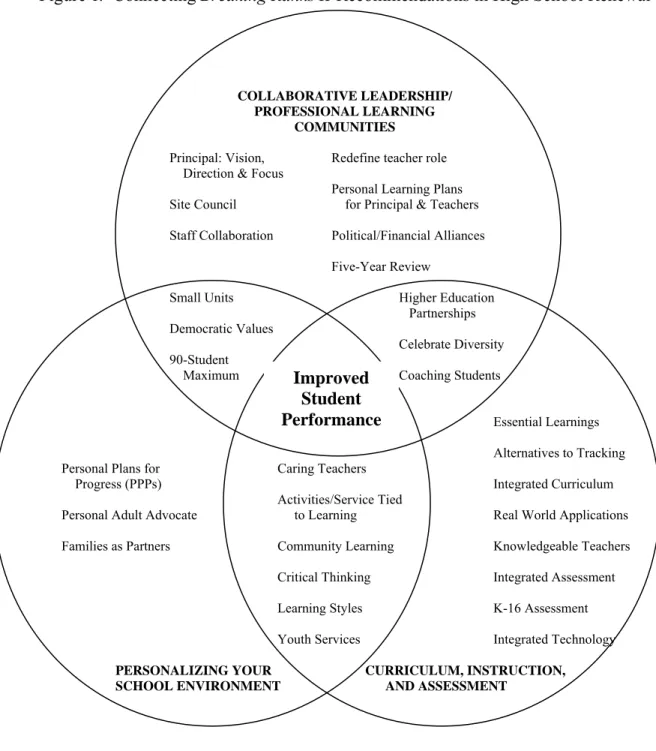
Figure 1 provides a visual of how the 31 recommendations relate to one another. These researched, core recommendations comprise the framework of Breaking Ranks II
(NASSP, 2004) which are described in this chapter. The recommendations range from developing business/financial partnerships to creating personalized education plans for all students.
According to the authors, there are seven cornerstone strategies provided to allow for the interdependence of changes within schools. The seven cornerstone strategies to improve student performance include:
• Implement a comprehensive advisory program that ensures that each student has frequent and meaningful opportunities to plan and assess his or her academic and social progress with a faculty member.
• Ensure that teachers use a variety of instructional strategies and assessments to accommodate individual learning styles.
• Implement schedules flexible enough to accommodate teaching strategies consistent with the ways students learn most effectively and that allow for effective teacher teaming and lesson planning.
• Institute structural leadership changes that allow for meaningful involvement in decision making by students, teachers, family members, and the community and that support effective communication with these groups.
Figure 1. Connecting Breaking Ranks II Recommendations in High School Renewal
COLLABORATIVE LEADERSHIP/ PROFESSIONAL LEARNING
COMMUNITIES
Principal: Vision, Redefine teacher role Direction & Focus
Personal Learning Plans Site Council for Principal & Teachers
Staff Collaboration Political/Financial Alliances
Five-Year Review
Small Units Higher Education
Partnerships
Democratic Values
Celebrate Diversity 90-Student
Maximum Coaching Students
Essential Learnings
Alternatives to Tracking
Personal Plans for Caring Teachers
Progress (PPPs) Integrated Curriculum
Activities/Service Tied
Personal Adult Advocate to Learning Real World Applications
Families as Partners Community Learning Knowledgeable Teachers
Critical Thinking Integrated Assessment
Learning Styles K-16 Assessment
Youth Services Integrated Technology
PERSONALIZING YOUR CURRICULUM, INSTRUCTION,
SCHOOL ENVIRONMENT AND ASSESSMENT
Improved Student Performance
The overarching goal of Breaking Ranks II (NASSP, 2004) is to provide a framework to help high schools improve learning and achievement results for all students. The
framework also provides a model for the process of school improvement (see Appendix B), including establishing an improvement team, including various stakeholders in the process, completing self-assessments, and then implementing the recommended strategies for improvement, as well as continually evaluating the results with current data.
The framework, strategies, and recommendations are supported by research and proven theory. When implemented, the Breaking Ranks II (NASSP, 2004) framework is designed to improve performance for each student. With accolades from educational experts such as Michael Fullan, Theodore Sizer, and James Comer, this framework is predicted to be, as Tom Sergiovanni claims “…the most important work on improving the high school this decade” (p. 220).
With the initial work and publication of Breaking Ranks: Changing an American Institution in 1996, school districts and schools throughout the United States resumed the discussion of reforming America’s high schools. The information presented in both editions of Breaking Ranks was uniquely created by a team of educators, mostly practitioners. Both publications include extensive bibliographies to provide the resources that outline the research involved in the selection of the recommendations. With the support of the National Association of Secondary School Principals (NASSP) and the Carnegie Foundation for the Advancement of Teaching, the principles and recommendations outlined in Breaking Ranks II (NASSP, 2004) were created by individuals who were fully aware of the research
Various publications and studies have documented the research that precedes the
Breaking Ranks II (NASSP, 2004) recommendations. NASSP (2006) published an article concerning the research supporting Breaking Ranks: Changing an American Institution
which provided the foundation of Breaking Ranks II (NASSP, 2004). The article by NASSP (the same publisher as Breaking Ranks I & II) states that there were “two documents that were particularly useful in the creation of this document because they synthesized research around themes similar to those of Breaking Ranks” (2006, p.1). The first document, edited by Robert Hendricks of the US Department of Education, concerned the research
authenticating the Blue Ribbon Schools. The descriptors of these award-winning schools are parallel to the recommendations within Breaking Ranks, thus, making the information
relevant and beneficial to the development of the framework (as cited in NASSP, 2006). The second document, Cawelti’s work (1999), was used in the development of the
recommendations, as this handbook of research provided additional relevant findings on improving student achievement.
Although not created as a “research document,” the recommendations evolved from the work of known practitioners and researchers. The emphasis on personalization, school and class size, instruction and assessment are closely aligned with the work of the Coalition of Essential Schools and Theodore Sizer’s writing on the study of high schools, including
Horace’s Compromise (1984). The focus on interdisciplinary curriculum is drawn from Ernest Boyer’s (1983) work, High School: A Report on Secondary Education in America. The overall need for reform and the specific areas that have been addressed in Breaking Ranks II (NASSP, 2004)have been extracted from documents such as A Nation at Risk
Education Commission on Time and Learning, 1994), and Turning Points (Carnegie Council, 1989). Additionally, the Education Alliance at Brown University conducts ongoing research about the core recommendations of Breaking Ranks II (NASSP, 2004), as well as provides assistance to high schools that are implementing the core recommendations.
For the purpose of this document, a summary of supportive research for the three overarching areas that organize the thirty-one recommendations has been included. Research by the individuals noted within the text of Breaking Ranks is included, as well as other relevant sources.
Collaborative Leadership and Professional Learning Communities
Recommendations in the area of collaborative leadership and professional learning communities include the following:
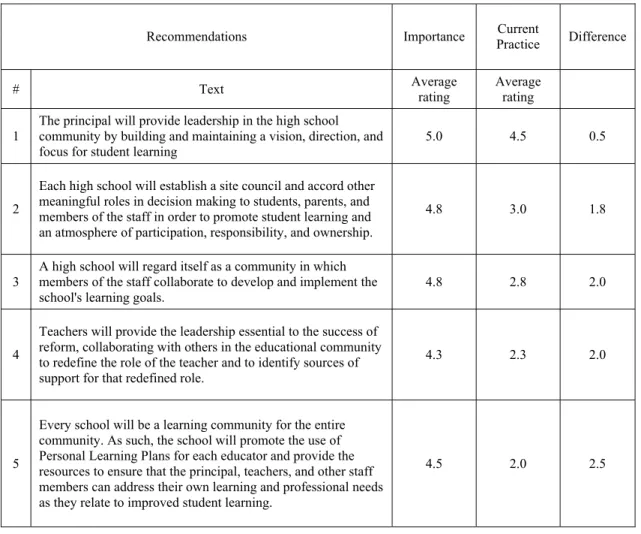
1. The principal will provide leadership in the high school community by building and maintaining a vision, direction, and focus for student learning. 2. Each high school will establish a site council and accord other meaningful
roles in decision making to students, parents, and members of the staff in order to promote student learning and an atmosphere of participation, responsibility, and ownership.
3. A high school will regard itself as a community in which members of the staff collaborate to develop and implement the school's learning goals.
4. Teachers will provide the leadership essential to the success of reform, collaborating with others in the educational community to redefine the role of the teacher and to identify sources of support for that redefined role.
6. The school community will promote policies and practices that recognize diversity in accord with the core values of a democratic and civil society and will offer substantive ongoing professional development to help educators appreciate issues of diversity and expose students to a rich array of
viewpoints, perspectives, and experiences.
7. High schools will build partnerships with institutions of higher education to provide teachers and administrators at both levels with ideas and
opportunities to enhance the education, performance, and evaluation of educators.
8. High schools will develop political and financial relationships with individuals, organizations, and businesses to support and supplement educational programs and policies.
9. At least once every five years, each high school will convene a broadly based external panel to offer a public description of the school, a requirement that could be met in conjunction with the evaluations by state, regional, and other accrediting groups.
(National Association of Secondary School Principals, 2004, p. 17-18)
All of the recommendations in the area of collaborative leadership and professional learning communities revolve around professional development, collaboration, partnerships, and redefining the roles of principal and teacher. Schools must be organized to provide for a collaborative environment and one that is a professional learning community. Several of the
Breaking Ranks II (NASSP, 2004)recommendations suggest that an environment that includes collaboration and continual career development is one that promotes improved student performance. Teacher networks provide ongoing dialogue about the role of the teacher, best practices, and personal development.
Restructuring Study, related to school reform have revealed a significant relationship between learning communities and improved student learning (Lieberman & Miller, 1992; McLaughlin & Talbert, 1993; Newmann & Wehlage, 1995).
As noted in the work of McLaughlin and Talbert (1993) and Newmann and Wehlage (1995), teachers in learning communities report open dialogue with other teachers, varied instructional methods that promote active learning, collegial relationships, more balanced relationships with sharing between novice and master teachers, and a technical culture that enhances student learning.
Personalization and the School Environment
Recommendations in the area of personalization and improving the school environment include:
10. High schools will create small units in which anonymity is banished.
11. Each high school teacher involved in the instructional program on a full-time basis will be responsible for contact time with no more than 90 students during a given term so that the teacher can give greater attention to the needs of every student.
12. Each student will have a Personal Plan for Progress that will be reviewed often to ensure that the high school takes individual needs into consideration and to allow students, within reasonable parameters, to design their own methods for learning in an effort to meet high standards.
13. Every high school student will have a Personal Adult Advocate to help him or her personalize the educational experience.
14. Teachers will convey a sense of caring to their students so that their students feel that their teachers share a stake in their learning.
15. High schools will develop flexible scheduling and student grouping patterns that allow better use of time in order to meet the individual needs of students to ensure academic success.
education.
17. The high school community, which cannot be value neutral, will advocate and model a set of core values essential in a democratic and civil society.
18. High schools, in conjunction with agencies in the community, will help coordinate the delivery of physical and mental health and social services for youth.
(National Association of Secondary School Principals, 2004, p. 17-18)
The recommendations in this area include items related to the teaching caseload, student advocates, family partnerships, small units, democratic values, student personal plans, caring teachers, and community agency partnerships which are all helpful in attaining a more personalized school environment. Sergiovanni (1994) claims that the need for community is essential and universal asserting that “a sense of belonging, of continuity, of being connected to others and to ideas and values that make our lives meaningful and significant— needs are shared by all of us. Their loss, for whatever reason requires us to search for substitutes which are not always functional” (p. xii).
In discussions about the personalization of the high school, inevitably size becomes an important topic to be addressed. The Breaking Ranks II (NASSP, 2004) recommendations include the creation of small units in which anonymity is banished, as well as the
recommendation that teachers have no more than 90 students. Much of the research
In reference to recommendations regarding personalization, high schools are initiating various small learning communities, such as career academies, ninth grade academies,
freshman seminar classes, teams, and consistent time with adult advocates within the schools. Although there is a limited amount of data, many of these small learning communities have seen improvements in the personalization aspect of high school. Quint (2006) provides data from studies that suggest that these types of interventions increased the students’ feelings of support from their teachers.
Curriculum, Instruction, and Assessment
Recommendations in the area of curriculum, instruction, and assessment include the following:
19. Each high school will identify a set of essential learnings--above all, in literature and language, writing, mathematics, social studies, science, and the arts--in which students must demonstrate achievement in order to graduate.
20. Each high school will present alternatives to tracking and to ability grouping. 21. The high school will reorganize the traditional department structure in order to
integrate the school's curriculum to the extent possible and emphasize depth over breadth of coverage.
22. The content of the curriculum, where practical, should connect to real-life applications of knowledge and skills to help students link their education to the future.
23. The high school will promote service programs and student activities as integral to an education, providing opportunities for all students that support and extend academic learning.
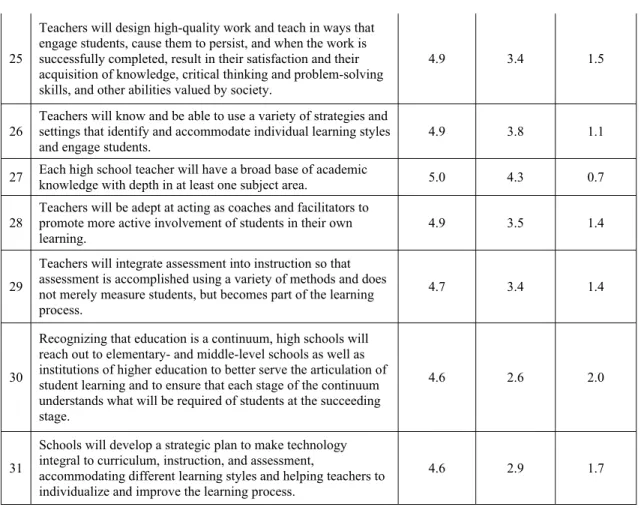
24. The academic program will extend beyond the high school campus to take advantage of learning opportunities outside the four walls of the building. 25. Teachers will design high-quality work and teach in ways that engage students,
problem-solving skills, and other abilities valued by society.
26. Teachers will know and be able to use a variety of strategies and settings that identify and accommodate individual learning styles and engage students. 27. Each high school teacher will have a broad base of academic knowledge with
depth in at least one subject area.
28. Teachers will be adept at acting as coaches and facilitators to promote more active involvement of students in their own learning.
29. Teachers will integrate assessment into instruction so that assessment is
accomplished using a variety of methods and does not merely measure students, but becomes part of the learning process.
30. Recognizing that education is a continuum, high schools will reach out to elementary- and middle-level schools as well as institutions of higher education to better serve the articulation of student learning and to ensure that each stage of the continuum understands what will be required of students at the succeeding stage.
31. Schools will develop a strategic plan to make technology integral to curriculum, instruction, and assessment, accommodating different learning styles and helping teachers to individualize and improve the learning process.
(National Association of Secondary School Principals, 2004, p. 17-18)
This area includes the provision of essential learnings; heterogeneous classes; technology; integrated and interdisciplinary curriculum; relevant applications; service programs and student activities; and instruction that provides opportunities for community learning, critical thinking, and varied learning styles. The impact that this set of
recommendations has on student learning is well documented in research.