PRESENT WITH YOU: DOES CULTIVATED MINDFULNESS LEAD TO GREATER SOCIAL CONNECTION THROUGH GAINS IN DECENTERING AND
REDUCTIONS IN NEGATIVE EMOTIONS?
Kathryn C. Adair
A dissertation submitted to the faculty at the University of North Carolina at Chapel Hill in partial fulfillment of the requirements for the degree of Doctor of Philosophy in the Department
of Psychology and Neuroscience (Social) in the School of Arts and Sciences.
Chapel Hill 2016
Approved by: Sara B. Algoe Laura Castro-Schilo Barbara L. Fredrickson B. Keith Payne
© 2016 Kathryn C. Adair ALL RIGHTS RESERVED
ABSTRACT
Kathryn C. Adair: Present with you: Does Cultivated Mindfulness Lead to Greater Social Connection Through Gains in Decentering and Reductions in Negative
Emotions?
(Under the direction of Barbara L. Fredrickson)
The current study investigates the efficacy of cultivating mindfulness for increasing feelings of social connection, and tests mechanisms of action (i.e., decentering and negative emotions) in these gains. I hypothesized that, relative to an active control condition, participants of a mindfulness meditation course would experience gains in the propensity for social
connection as well as reports of feeling socially connected. Further, I expected that these gains would be mediated by boosts in decentering and reductions in negative emotions, and that as a result of greater social connection, participants would report greater positive emotion. Ninety-four community member adults were randomly assigned to a 6-week Mindfulness Meditation course (n = 51) or a 6-week active control course (“Health Promotion”; n = 43). Participants were assessed for social connection, decentering and emotions at pre and post training. A higher-order latent change model found support for elements of the model that were unrelated to
condition. An exploratory latent change model revealed that gains in trait mindfulness supports the hypothesized model. Taken together these findings underscore the relevance of trait
mindfulness in investigating changes due to mindfulness training. Limitations, such as small sample size, as well as future directions of this work, are discussed.
ACKNOWLEDGEMENTS
I am tremendously grateful for the amazing people I have in my life. Completing a PhD is not a short or easy path. Luckily I've had mentors, friends, and family in my corner throughout this journey. I hope that this short section conveys the depth at which I appreciate these
important people, especially for their support throughout graduate school and this dissertation. To Barbara Fredrickson, my mentor, for constantly adding fuel to my love of discovery. For giving me the autonomy to examine the questions that motivate me, and of course, for providing stellar guidance and support at every juncture in my path. For her constant eye to precision in study design, measurement, and writing. For promoting transparency and best practices in the pursuit of discovering truth through science. And for embodying a "practice what you preach" approach to our lab and program, and thus helping to cultivate the incredibly
supportive community that makes our program so special. You're an amazing scientist and mentor, Barb, and I will always be grateful for the opportunity to work with you.
To Sara Algoe for her relentless and contagious passion for research. For her guidance, both scientific and professional, her unwavering support, her upbeat motivation and her incredible thoughtfulness. For modeling how to think through highly complex processes and designing studies to test them. For championing best practices and writing as much as possible.
To Holley Hodgins and Jennifer Block-Lerner for introducing me to psychological research and mindfulness. Your mentorship deeply shaped my life path. I am so grateful that you took a chance to work with a neophyte freshman and for continuing to work so closely with me up to and even after graduation. To Hugh Foley, Beth Gershuny, Denise Evert, Candice Monson
and Stephanie Fredman, for all the guidance, support, and opportunities you gave me to develop into a psychologist. Each of you played an important role in my life in various ways, but all of you helped me believe in my own potential, without which I would never have even applied to grad school. Thank you.
To Laura Castro-Schilo for her incredibly helpful guidance with the models in my dissertation. I greatly admire Laura's expertise in statistical modeling and her approach in mentoring students. I am so grateful for the time she spent with me working on this project. To Aaron Boulton for his guidance running statistical models both for this project as well as other projects. I appreciate the precision Aaron brings in approaching the particular analyses at hand, as well as the big-picture development of a project.
To Keith Payne, Paschal Sheeran, and the rest of my dissertation committee who are already listed above. Thank you for your insightful input on this project at both the proposal and defense stages. It is a much stronger project because of your feedback.
To the many amazing research assistants and honors students I've worked with at UNC. Thank you for your hard work and thoughtful contributions on our projects. It has been an absolute joy to collaborate with such highly intrinsically motivated students.
To my psychology graduate program friends (who also happen to be my colleagues and collaborators). I feel unbelievably lucky and grateful to have joined a program with such
friendly, funny, helpful, supportive, hard-working, and brilliant people. I couldn't have picked a better group if I tried. We celebrate each others' wins and support each other when the road is rough. Our friendships have been a central part of my graduate school experience. I will enjoy looking back on the memories we've made together over the past six years, and look forward to making more together in the years to come.
To my family, Mom, Don, Abby, Tom, Dad, Josh, Ma, Pa, Caroline, Leo, little Amelie, and my many extended family members, for always cheering me on in the wings. Your support has meant the world to me and I'm so proud to be a part of our amazing tribe. I'm particularly humbled by my mom, whose endless empathy has buoyed me throughout grad school.
To Albert. My partner, team-mate, and best friend. You have been my champion, believing in me even when I did not believe in myself. Words cannot express how much your love and support has meant to me throughout this process. I am deeply grateful to have you by my side and I look forward to all the opportunities we'll have to cheer each other on in the years to come.
TABLE OF CONTENTS
LIST OF TABLES...ix
LIST OF FIGURES...x
CHAPTER 1:OVERVIEW...1
CHAPTER 2: INTRODUCTION...3
Mindfulness Overview...3
Social Connection and Physical Health...8
Mindfulness and Romantic Relationships...9
Mindfulness and Interpersonal Interactions...11
Mindfulness and Other Social Outcomes...13
Possible Mechanisms of Action: Decentering and Negative Emotions...15
The Current Study...20
CHAPTER 3: METHODS...21
Participants...21
Materials...22
Measures...23
Procedure...31
Data Analytic Plan...31
CHAPTER 4: RESULTS...33
Preliminary Checks...33
Testing the Measurement Model...34
Factorial Invariance...37
Statistical Model 1...38
Exploratory Model 2...39
CHAPTER 5: DISCUSSION...41
TABLES...50
FIGURES...61
APPENDIX 1: SUPPLEMENTARY ANALYSES...68
Tables and Figures for Supplementary Analyses...71
REFERENCES...76
LIST OF TABLES
Table 1- Demographics for the total sample and both conditions...50
Table 2- Measures of each latent construct and time-point of assessment...51
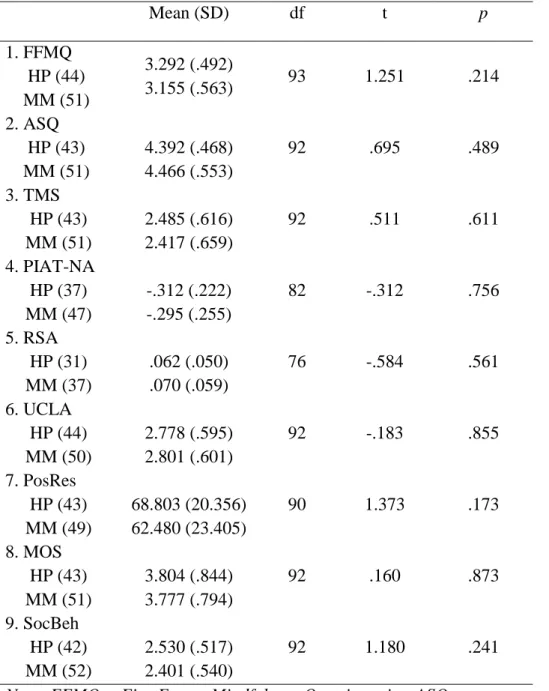
Table 3- Independent t-tests of randomization to condition on baseline variables...52
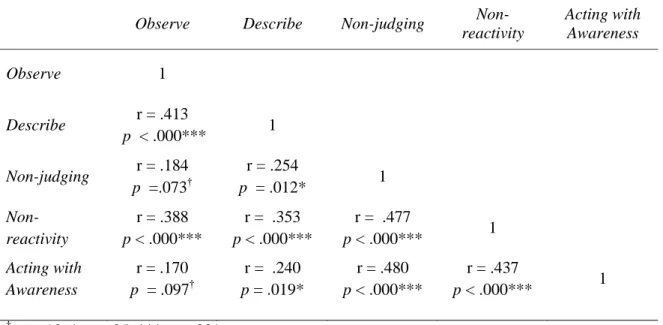
Table 4- Correlations among trait mindfulness facets at baseline...53
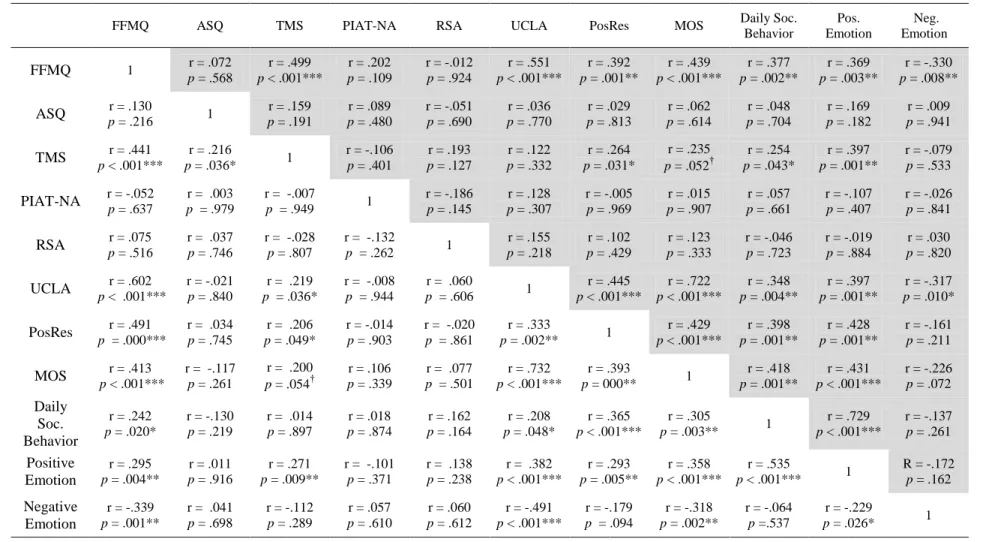
Table 5- Correlations among variables at time 1 (lower left corner of table) and at time 2 (upper right corner, shaded)...54
Table 6- Residualized change correlations...55
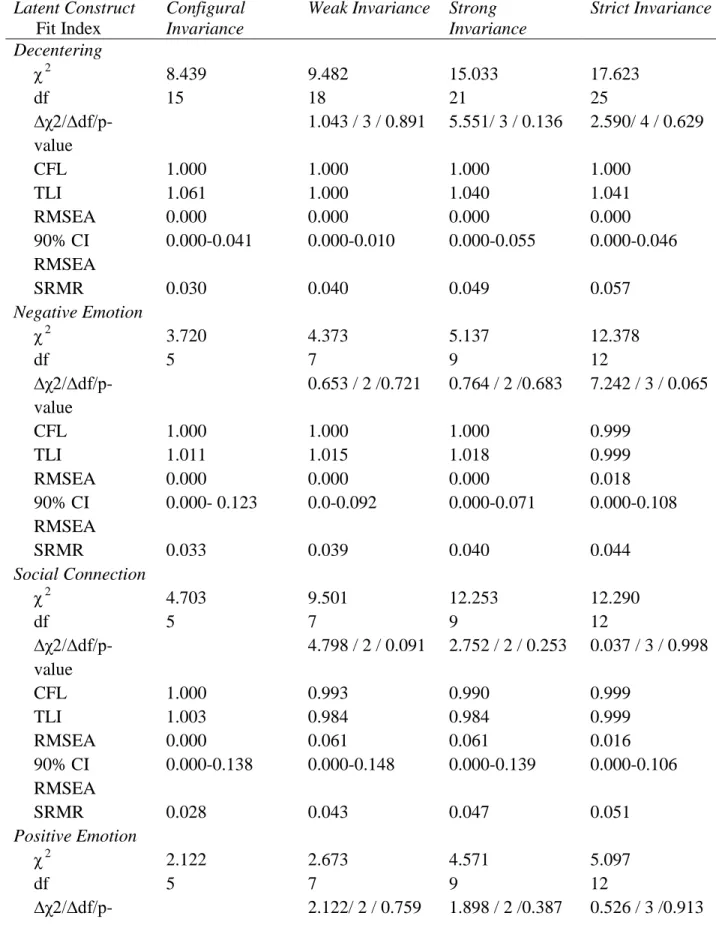
Table 7- Fit indices for models of longitudinal invariance...56
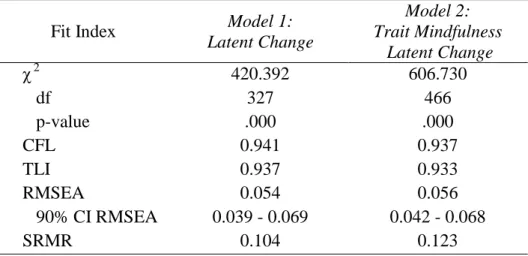
Table 8- Fit indices for hypothesized latent change model and exploratory trait mindfulness latent change model...58
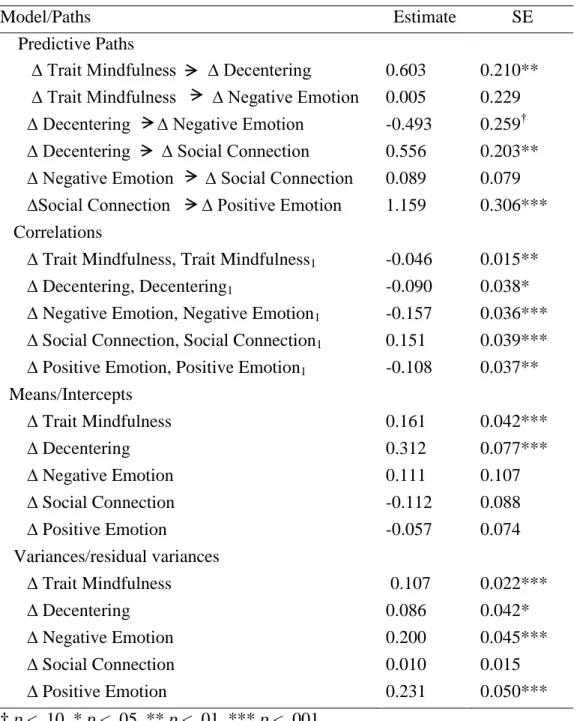
Table 9- Unstandardized parameter estimates from the two-wave LCS model 1...59
Table 10- Unstandardized parameter estimates from the two-wave LCS model 2...60
LIST OF FIGURES
Figure 1- Theoretical model of mindfulness, decentering, emotions,
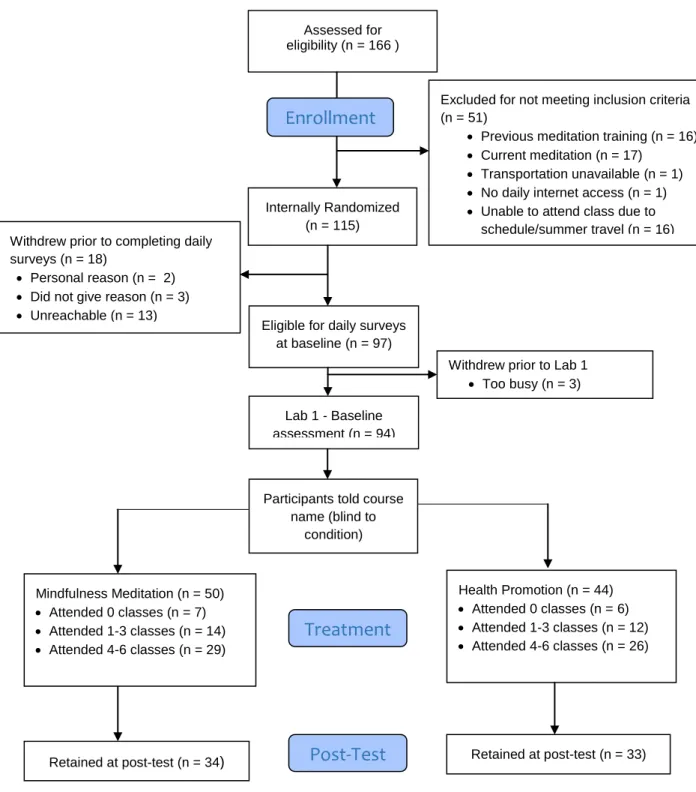
and social connection...61 Figure 2- Consort flowchart for the Wellness Workshop Study...62 Figure 3- Assessment and workshop schedule...63 Figure 4- Hypothesized statistical model 1: The influence of condition on
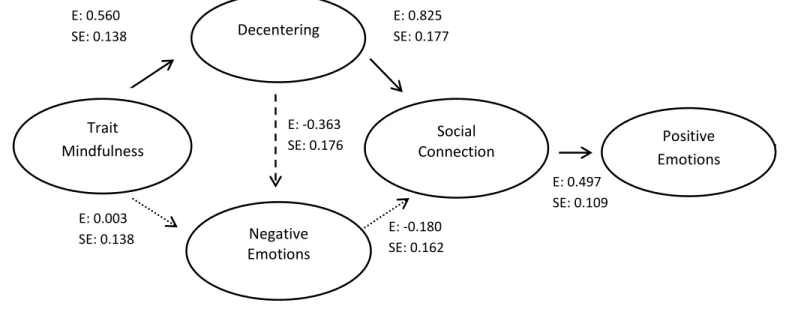
latent change variables...64 Figure 5- Trait mindfulness across training by condition...65 Figure 6- Standardized parameter estimates for model1: Latent change...66 Figure 7- Standardized parameter estimates for model 2: Trait mindfulness
latent change...67
1
CHAPTER 1: OVERVIEW
Mindfulness is a quality of consciousness characterized by greater non-judgmental attention and awareness of the present moment (Bishop et al., 2004; Baer, Smith, & Allen, 2004; Brown & Ryan, 2003). Although cultivating mindfulness through meditation is an ancient
Buddhist practice, interest in this construct has exploded in recent years in Western medicine and psychology due to its salutary effects. Mindfulness has consistently been linked to healthy
personal outcomes (for review, see, Brown, Ryan, & Creswell, 2007); however more recent investigations have begun to connect it to healthy interpersonal outcomes (e.g., Barnes, Brown, Krusemark, Campbell, & Rogge, 2007; Wachs & Cordova, 2007; Creswell et al., 2012). The current research intends to further this more recent area of investigation by examining whether cultivated mindfulness leads to gains in interpersonal connection. Due to the considerable
theoretical support as well as the correlational and nascent experimental research on mindfulness and social outcomes, I hypothesize that mindfulness training will enhance social connection.
The purpose of this dissertation is to test whether and how cultivating mindfulness leads to improved social connection. Below I describe the construct of mindfulness, the importance of investigating its link to social connection, as well as the theoretical and empirical work linking mindfulness to positive social outcomes. Next, I describe the randomized control trial (RCT) conducted to test my hypothesized theoretical model of mindfulness and social connection. A latent change score structural equation model (Henk & Castro-Schilo, 2016) is then fitted to test my hypothesized theoretical model. Latent factors in this model are comprised of various
2
3
CHAPTER 2: INTRODUCTION
Mindfulness Overview
Buddhist philosophy is grounded in the reality that human suffering is universal
(Say daw, 2008). We suffer from illness and pain, as well as witnessing our loved ones grow ill, experience pain, and die. We suffer when our desires go unfulfilled and from being separated from what we enjoy. Even the most comfortable life circumstances cannot prevent the
inevitability of sickness, aging, or death (Nyanaponika, 1972). The teachings of Buddha,
recorded in The Four Noble Truths and The Noble Eightfold Path, propose a philosophy of living for liberation from suffering. Mindfulness, defined as non-judgmental attention and awareness of the present moment (Bishop et al., 2004; Baer, Smith, & Allen, 2004), is an essential ingredient in liberation from suffering. Paying close attention to ongoing internal and external experience allows one to untangle the constant stream of thoughts and emotions that, left to their own devices, contribute to suffering (Seigel, Germer, & Oldendzki, 2008; Kabat-Zinn, 2015).
Mindfulness is an ancient construct. Over 2,500 years ago it emerged as a central component of Buddhist psychology, and since then it has been practiced by millions of
4
training, which is currently widely used in complementary medicine. In MBSR, and other western mindfulness training programs, the religious roots of mindfulness are downplayed to reduce any conflict in religion that non-Buddhist practitioners might feel. During the end of the 20th century applications of mindfulness gained considerable momentum and research began evidencing its benefits (e.g., reductions in pain, anxiety, depressive relapse, and overall distress; Kabat-Zinn, Lipworth, & Burney, 1985; Teasdale, Segal, Williams, Ridgeway, Soulsby, & Lau, 2000; Shapiro, Schwartz, & Bonner, 1998).
Empirical interest in mindfulness exploded in the 21st century. A PsycInfo search retrieved 93 publications with "mindfulness" in the title published in the 16 years between 1984 and 2000. The same search parameters retrieved 3,816 articles between 2000 and the time of this writing (February, 2016). Mindfulness has been applied to innumerable mental and physical maladies (for reviews see Crowe, Jordan, Burrell, Jones, Gillion, & Harris, 2016; Gu, Strauss, Bond, & Cavanagh, 2015), and new variants of mindfulness trainings are under constant development to best target different populations (e.g., adolescents (Tan & Martin, 2015), parenting (Coatsworth et al., 2015), adult ADHD (Mitchell, Zylowska, & Kollins, 2015)). Pop culture interest in mindfulness has also grown exponentially. The January 2014 cover of Time magazine read "The Mindful Revolution: The science of finding focus in a stressed-out, multitasking culture". Large corporations such as Google, Apple, Sony, and Ikea are including mindfulness in their benefits packages (Foster, 2016). Several organizations aimed at
5
entire peer-reviewed empirical journal, "Mindfulness," was devoted to the subject; it currently holds an impressive 3.692 impact factor.
Widespread interest in mindfulness is not surprising given the wealth of research that evidences its benefits for ill and healthy populations. An exhaustive review of this literature is outside the scope of this paper, however a sample of recent research finds that mindfulness training reduces pain intensity for those with chronic pain (Reiner, Tibi, & Lipsitz, 2013), and PTSD symptoms among veterans (Possemato et al., 2015); it improves problem-focused coping for medical students (Halland et al., 2015), and increases gray matter density in brain regions involved in learning, memory, emotion regulation, self-referential processing and perspective taking (Hölzel et al., 2011). Mindfulness reduces stress (Creswell, Pacilio, Lindsay, & Brown, 2014), and thus stress-related disease (Creswell & Lindsay, 2015), plausibly by altering the resting state functional connectivity of the amygdala (Taren et al., 2015). Trait levels of
mindfulness have been linked to copious salutary outcomes, such as reduced physiological stress reactivity (Kadziolka, Di Pierdomenico, & Miller, 2016), and greater resilience and life
satisfaction (Bajaj & Pande, 2015).
6
Creswell, 2007). A significant clinical step for patients is to bring these avoided aspects into awareness such that they can be processed and for patients to make behavioral choices that align with their needs, values and interests (Levin, Luoma, & Haeger, 2015; Blackledge & Hayes, 2001). The potential for mindfulness practitioners to experience initial distress underscores the importance of receiving training from a qualified meditation teacher.Mindfulness may have other unintended consequences. Recent research has found that participants who engaged in a brief mindfulness meditation were more susceptible to making errors on a memory test, perhaps due to the non-judgmental nature of mindfulness (Wilson, Mickes, Stolarz-Fantino, Evrard, & Fantino, 2015). Researchers and Clinicians generally believe mindfulness to be safe and
beneficial, however studying the potential downsides of mindfulness is an important pursuit that research is beginning to address.
Despite its popularity and the wealth of research on it, there are still several
misconceptions about mindfulness. For example, some perceive mindfulness to be a mystical state only achieved after extensive time in formal meditation. Indeed mindfulness can be increased with meditation, but mindfulness is also a trait along which individuals differ (Brown & Ryan, 2003; Coffey, Hartman, & Fredrickson, 2011). Boosting the frequency of state
7
meditated to still be high in trait levels of mindfulness, and to benefit from this trait. Research is still untangling the differences in trait and trained mindfulness.
Mindfulness is also erroneously thought to be a way to avoid or distract oneself from negative feelings, to numb out unpleasant experience, or to "think positively.” In fact,
mindfulness involves receptively attending to and fully experiencing all emotions and sensations, even when they are unpleasant (Brown, Ryan, & Creswell, 2007). Given that research shows that emotion suppression can backfire, directing attention to negative states can potentially reduce their intensity, perhaps through emotion labeling (Creswell, Way, Eisenberger, & Lieberman, 2007; Baer, 2003). Acceptance of the present moment, also described as non-judgment, is a core feature of mindfulness (Bishop et al., 2004; Coffey, Hartman, & Fredrickson, 2010) and it goes hand in hand with being fully in the present-moment; if one is not receptive to all experiences (even unpleasant ones) it is not possible to fully experience the present moment. Reducing
avoidance of negative states and gaining a greater understanding of emotions are the aims in both mindfulness philosophy and traditional mental health care. Indeed most people report that they practice mindfulness to alleviate emotional distress and to help regulate their emotions
(Peppering, Walters, Davis, & O'Donovan, 2016).
Compared to the number of studies on mindfulness in health and clinical psychology, research on the social ramifications of mindfulness is still in its infancy. Buddhist theory and existing research suggest intriguing consequences of mindfulness for social relationships. Generally mindfulness has been linked to relationship satisfaction and healthy emotional
8
questions may not appear it on the surface, they have powerful implications for health and longevity.
Social Connection and Physical Health
Research has consistently found that positive interpersonal relationships are vital for well-being and longevity. A meta-analysis found that social embeddedness was a stronger predictor of longevity than obesity and physical activity (Holt-Lunstad & Smith, 2012), and loneliness is as strong a predictor of early death as smoking (Cacioppo & Patrick, 2008). Indeed, extensive research on loneliness has found that it robustly predicts poorer mental and physical health (for review see Heinrich & Gullone, 2006). Recent work elucidating these associations has implicated the vagus nerve, which regulates the heart and is part of the parasympathetic nervous system. The functioning of the vagus nerve, indexed through cardiac vagal tone (CVT) has been linked to perceptions of social world, propensity for social engagement, and physical health more broadly (Kok & Fredrickson, 2010; Porges, 2007). Kok and Fredrickson (2010) found that CVT and feelings of social connection are reciprocally and prospectively linked; boosts in connection promote higher cardiac vagal tone, which in turn, predicts feelings of social connection. Positive emotions also play a role in this relationship. Participants randomly
assigned to positive-emotions training (i.e., loving kindness meditation) experienced an upward spiral dynamic among gains in positive emotions, social connection, and CVT, such that they reciprocally predicted each other over time (Kok et al., 2013).
9
participants who said they had no one with whom to discuss important matters with (i.e., confidants) tripled in size. The mean number of confidants that participants reported having shrank from 2.94 (1985) to 2.09 (2004) and the modal response in 1984 was 3 confidants, whereas in 2004 it was 0 confidants (McPherson, Brashears, & Smith-Lovin, 2006). These findings are perhaps surprising in light of the recent advancements in technology meant to connect us. As today’s frenetic society spends an increasing amount of time behind cell phones, i-pads, and laptops, how can we prevent what seems the inevitable corrosion of our interpersonal relationships? Since our health depends on it, we must answer the question, “How can we
strengthen feelings of social connection?” Mindfulness appears a particularly promising answer.
Mindfulness and Romantic Relationships
Buddhist and theoretical writings have long posited that by infusing day-to-day interactions with greater non-judgmental attention we may be better able to engage in meaningful interactions, which, over time accumulate to form and fortify our positive social relationships (Thera, 1973; Kabat-Zinn, 1993; Welwood, 1996). Much of the research to date on mindfulness and social outcomes has focused on romantic relationships; however, it is believed that the skills relevant to such outcomes would extend into a variety of relationship types. Researchers have found moderate correlations between self-reported dispositional mindfulness and romantic relationship satisfaction in both college (Barnes, Brown, Krusemark, Campbell & Rogge, 2007) and community samples (Wachs & Cordova, 2007). Clinicians have also
developed couples-based treatments that utilized mindfulness to boost relational well-being (for review, see Atkinson, 2013). The non-judgment component of mindfulness is thought
10
Behavioral Couple Therapy (IBCT; Jacobson & Christensen, 1996) emphasizes the role of acceptance and awareness in romantic relationship functioning without directly teaching
mindfulness meditation. A small randomized control trial found IBCT to outperform traditional behavioral couple’s therapy for gains in marital satisfaction. Carson, Carson, Gil, & Baucom (2004) adapted the well-known “Mindfulness-Based Stress Reduction” (MBSR) course for relationship enhancement (i.e., “Mindfulness-Based Relationship Enhancement”, MBRE) for non-distressed couples. Compared to a waitlist control, couples who took MBRE experienced gains in relationship satisfaction and partner acceptance, as well as lower relationship distress, both at the end of the course and at three month follow-up. Subsequent analyses indicated that these effects can largely be attributed to participants’ sense that they were engaging in a self-expanding activity together (Carson, Carson, Gil, & Baucom, 2007). It may not be surprising that reports of self-expansion explained boosts in relationship satisfaction. Meditators often report greater self-expansion (e.g., a greater sense of wisdom) during trainings, and mutual engagement in self-expanding activities has been found to strengthen relationships (Aron & Aron, 1997). Although shared engagement in a self-expanding activity emerged as an important explanatory factor of relationship gains in MBRE, it remains unknown whether there a unique contribution of mindfulness is at play above and beyond participating in a shared self-expanding activity. Future research will be well served by utilizing active control groups, when possible, to try to control for non-specific treatment modalities (e.g., engaging in any self-promoting, or self-expanding, intervention) and to measure and evaluate other factors that could be causally influencing outcomes (Kok, Waugh, & Fredrickson, 2013).
Mindfulness may also boost relationship outcomes through perceptions of
11
predicts relationship satisfaction and longevity (Reis & Gable, 2006) In a study of 160
heterosexual community couples, my collaborators and I found that trait mindfulness predicted relationship satisfaction, and that perceptions of greater partner responsiveness mediated this association (Adair, Boulton, & Algoe, in preparation). It appears that paying greater present-moment attention allows one to notice and appreciate the responsive behaviors of the partner, which in turn boosts relationship satisfaction. Considering that responsiveness is an important component of all relationships, even non-romantic ones, this research underscores the relevance of mindfulness in non-romantic relationships.
Mindfulness and Interpersonal Interactions
Everyday social interactions are the building blocks of social connection. To date there are several studies that suggest that greater non-judgmental present moment attention may be a vital ingredient for effective, positive interactions, and ultimately interpersonal closeness.
Present moment attention during interactions has been identified by communication scholars as a central factor for effective interpersonal communication (Hargie, 2010; Burgoon, Berger,
Waldron, 2000). Attention is necessary to be aware of the interaction partner’s verbal
communication, non-verbal actions, and vocal inflections, all which can greatly increase message comprehension (Hargie, 2010). Awareness of these factors enables greater attunement to the partner’s emotions and motivations. Indeed, mindfulness has been linked to empathy, and especially the perspective-taking and empathic concern facets of empathy (Wachs & Cordova, 2007). Mindfulness also involves awareness of one’s own emotions and motivations (Coffey, Hartman, & Fredrickson, 2010; Boden, Irons, Feldner, Bujarski, & Bonn-Miller, 2015; Brown & Ryan, 2007). Clarity on these states can considerably improve the quality of one’s own
12
regulating one’s emotions to communicate and respond in emotionally appropriate ways (Bloch, Haase, & Levenson, 2014; Boorstein, 1996; Vater & Schröder‐Abé, 2015).
There is strong evidence linking mindfulness to greater emotion regulation (for review, see Chambers, Gullone, & Allen, 2009), and a separate body of literature linking emotion regulation to healthy relationships (for review, see Levenson, Haase, Bloch, Holley, & Seider, 2015). Research is now connecting these two literatures. In a study of a community couples, skill with anger expression and identifying/communication of emotions fully mediated the
13
(Kabat-Zinn, 1993). In line with this notion, individuals higher in trait mindfulness exhibited a significantly lower cortisol response following the experience of a highly stressful social task, the Trier Social Stressor Task (Brown, Weinstein, & Creswell, 2012).
Mindfulness and Other Social Outcomes
The social abilities supported by mindfulness (e.g., emotion regulation, empathy) should positively influence interaction quality across a variety of interaction partners (e.g., spouse, co-worker, check-out worker at the grocery store). In turn, the positive development of these relationships is believed to enhance feelings of social connection. Social connection is a construct that is highly related to (but qualitatively different from) relationship satisfaction and other social outcomes. Researchers have described social connection as the subjective perception of belongingness and closeness to others (Baumeister & Leary, 1995). Although an individual who has many close friends and family may feel quite socially connected, the subjective nature of social connection indicates that one without family or friends could feel just as socially connected, and reap the benefits of this feeling to the same extent.
Interactions characterized by warmth, care, and attunement are thought to increase feelings of social connection across a variety of relationship types. “Positivity resonance” is a recently developed construct defined as experiencing shared positive emotions, mutual care and concern, and a feeling of being in sync and “in tune” to another person while interacting
14
in meaningful and respectful ways” and “attune to and connect with the other person’s
experiences” (Major, Lundberg, & Fredrickson, in preparation). The ability to “focus”, “attune” and “connect” are considered promoted by greater mindfulness; however trait or trained
mindfulness has not yet been empirically linked to this new construct.
Mindfulness has been empirically linked to other interpersonal variables relevant to social connection. Early work has associated trait mindfulness to lower levels of social anxiety and public self-consciousness (Brown & Ryan, 2003), and engaging in socially responsible behavior (i.e., leaving less of a carbon footprint; Brown & Kasser, 2005). One particularly compelling pilot study, conducted by Creswell et al., (2012) found mid-life adults randomized to an 8-week mindfulness course, compared to a waitlist control group, experienced less loneliness and exhibited a healthy pattern of down-regulated pro-inflammatory gene expression. These findings suggest that mindfulness can both reduce a negative psychological state related to social embeddedness and also improve physical health.
Mindfulness theory suggests that the non-judgmental aspect of mindfulness would lead to reductions in social biases that occur even at implicit levels of cognition (Brown, Ryan, &
15
Individuals higher in trait and state mindfulness exhibited reduced explicit preference for pictures of heterosexuals compared to homosexuals, as well as greater positive automatic facial reactivity towards a homosexual couples (Adair & Fredrickson, in preparation). These findings suggest that mindfulness may boost positive affective reactivity as well as social acceptance towards out-group members, which may be important for social connection.
Potential Mechanisms of Action: Decentering and Negative Emotions
Although extant research on mindfulness and social outcomes is promising, very little is known about the mechanisms through which mindfulness may exert beneficial social effects. I propose that mindfulness plays a key role in social well-being through two mechanisms: gains in decentering and reductions in negative emotions. Decentering refers to the greater mental
separation that mindfulness fosters between objective awareness of experience and the perceived self-relevance of that experience (Brown, Ryan, & Creswell, 2007; Feldman, Greeson, &
16
in depression, as it increases cognitive flexibility and reappraisal of thoughts (Segal et al., 2002; Sauer & Baer, 2010). Indeed, participants of a mindfulness meditation course evidenced greater ability to let go of automatic negative thoughts (Frewen, Evans, Maraj, Dozois, & Partridge, 2008). Garland, Gaylord, and Fredrickson (2011) found that across an 8-week mindfulness course, mindfulness and positive reappraisal, a cognitive tendency to reevaluate thoughts or events in a positive way that appears to require decentering, reciprocally enhanced each other. Gains in positive reappraisal also mediated the stress-reducing effect of the mindfulness course.
Previous research indicates the relevance of decentering as a mechanism that would foster greater interpersonal functioning. Hayes-Skelton and Graham (2013) utilized structural equation modeling in a large cross-sectional study to assess relationships between mindfulness, cognitive reappraisal and decentering as predictors of social anxiety. Higher levels of
long-17
term gains in relationship quality (Algoe, Fredrickson, & Gable, 2013). For example, when expressing gratitude, individuals high in decentering may be less likely to focus on the self-relevance of the benefit, and instead provide more other-focused or praising gratitude, which has been shown to boost perceptions of responsiveness (Algoe, Kurtz, & Hilaire, 2016). As an element of mindfulness, decentering may allow mindful individuals to pay greater attention to partner's responsive behavior, and in turn boost the more decentered individual's relationship satisfaction.
Decentering may also help decrease negative emotions, which, in turn, could also lead to greater social connection. The ability decenter, or metacognitively “take a step-back” in order to reappraise a situation (Garland, Gaylord, & Fredrickson, 2011) is thought to decrease negative emotion by allowing one to let go of negative automatic thoughts, decreasing their intensity and frequency (Frewen et al., 2008; Shapiro, Carlson, Astin, & Freeman, 2006). This process is at play in breaking the cycle of harmful rumination, which can lead to depression and anxiety (Bieling, et al., 2012; Teasdale, Segal, Williams, Ridgeway, Soulsby, & Lau, 2000).
Reductions in negative emotion, in turn, may set the stage for greater social connection. Emotions research has shown that negative emotions narrow attention (Fredrickson &
18
Gauvin, Jabalpurwala, Se´guin, & Stotland,1999). And the link between negative emotions and interpersonal problems been demonstrated in several other populations (e.g., Obese individuals (Salerno, Lo Coco, Gullo, Iacoponelli, Caltabiano, & Ricciardelli, 2015); Binge-eaters (Ivanova, Tasca, Hammond, Balfour, Ritchie, Koszycki, & Bissada, 2015)). Negative emotions likely impact a number of processes that inhibit social connection. For example, negative emotions increase vigilance to others' negative behaviors, leading to more negative interpersonal appraisals (Traupman, Smith, Florsheim, Berg, & Uchino, 2011). Negative emotions also decrease the likelihood of self-disclosure (Endo & Yukawa, 2013), a process known to enhance relationships (Collins & Miller, 1994). Conversely, improvements in anxiety and depression lead to reductions in interpersonal problems (Monsen, Monsen, Svartberg, & Havik, 2002). Negative emotions are not uniformly bad for relationships; for example, individuals high in guilt-proneness are more likely to engage in prosocial cooperative coping (Behrendt, & Ben-Ari, 2012). However, the existing research indicates that overall reductions in negative affect may lead to greater social connection.
19
control condition (Hutcherson, Seppala, & Gross, 2008). In research I discussed earlier, I found that mindfulness predicts greater positive reactions to a social out-group, assessed via facial electromyography, further supporting the link between social connection and positive emotions.
Although research to date highlights the relevance of mindfulness for relationships and other social outcomes, many important questions remain unanswered. Does mindfulness training cause greater social connection above and beyond engaging in any self-care activity? Does practicing mindfulness impact only subjective perceptions of interpersonal functioning, or does it also change physiological measures of the propensity for social engagement, as well implicit measures and prosocial behavior? What are the mechanisms through which mindfulness may exert an effect on markers of social connections?
The current study aims to address these questions by testing the following hypotheses: (1) I hypothesize that participants who cultivate mindfulness through mindfulness
training will experience increases in subjective measures of social connection as well as in physiological, implicit and behavioral measures of the propensity for social connection from pre to post training compared to those in an active control condition. (2) I hypothesize that participants in the mindfulness training condition will experience
gains in measures of decentering and that these changes will account for (mediate) boosts in social connection as a mechanism of action (see Figure 1for a theoretical model).
(3) I hypothesize that participants in the mindfulness training condition will also
experience reductions in negative emotions and that this will explain (mediate) gains in social connection.
20
(5) I hypothesize that (following from the work by MacCoon et al., 2013) participants in both conditions will experience gains in subjective well-being.
The Current Study
To test these hypotheses I conducted a randomized control trial comparing a 6-week Mindfulness Meditation (MM) training course to an active control course designed for this study called “Health Promotion” (HP). The use of the active control group allows me to evaluate mindfulness as an active ingredient in my outcomes by controlling for non-specific treatment effects that can result from participating in a wellness enhancing group. Active control conditions have been identified as important step in advancing the research on meditation’s benefits and its mechanisms of action (Kok, Waugh, & Fredrickson, 2013). The HP course, inspired by work conducted by MacCoon et al. (2012), was framed as a training to promote healthy habits that are linked to wellbeing (e.g., physical activity, nutrition). MacCoon et al. (2012) found that participants in their Health Enhancement Program exhibited improvements in both mental and physical wellbeing to the same extent as participants of a Mindfulness Based Stress Reduction (MBSR) course. Further, MacCoon and colleagues hypothesized that mindfulness would increase participants’ ability to tolerate pain, due to gains in the ability to tolerate negative affect and aversive physical states. Indeed, participants in the mindfulness course exhibited lower pain ratings in response to a thermal pain task following training,
compared to those in the HEP course. Interestingly these researchers did not report levels of trait measures of mindfulness to substantiate that the mindfulness training did indeed influence levels of mindfulness. In the current work I assess changes in trait mindfulness, to serve as a
21
CHAPTER 3: METHOD
Participants
Participants were recruited to participate in the current study, titled the “Wellness Workshop Study,” from the UNC and Chapel Hill community via listservs and flyers posted on and off campus. One hundred and fifteen participants consented to participate in the study and met the following inclusion criteria: willingness to participate in a wellness workshop course for 6 one-hour class sessions, willingness to participate in three lab sessions, one each at pre- and post-workshop, as well as at 3-month follow-up1, willingness to complete online daily surveys for one week at pre, post and 3-month follow-up time-points, and regular access to the internet to complete the bi-daily questionnaires. Prior to completing the daily surveys, 18 participants withdrew from the study, and after completing at least some of the daily surveys but prior to the first lab session, three more participants withdrew (see Figure 2 for participant retention, reasons for withdrawing, and class attendance). Prior to completing baseline assessments, participants were randomly assigned to either the MM or the HP course (N of MM course = 50; N of HP course = 44), however they were unaware that two courses were being offered2 and did not learn the name of their workshop (i.e., “mindfulness meditation” or “health promotion") until after the baseline lab session. Research assistants conducting lab sessions were blind to participant
condition. See Table 1 for sample demographic information. Participants were compensated $25 dollars for each one-hour lab session, and they were entered into a drawing for a $30 Visa gift
1
A three-month follow-up assessment was collected but will not be reported on in the current paper.
2
22
card with their classmates (odds of winning approximately 1 in 12) for completing each week of the online surveys. Gift card drawings occurred at the end of each week of online surveys. Drawing winners were awarded the cards in their class that week or in their subsequent lab session.
Materials
Mindfulness and Health Promotion Course Information. The two courses were developed to be equivalent in terms of their meeting schedule, course structure, class size, amount of instruction, active participation, and homework. Both courses met weekly, for one hour, for six weeks. Class content included didactic information from the instructor, class discussion, and an element of practice (e.g., a guided meditation in MM, completing a food diary in HP). The instructors of each course were both female and were relatively matched on age, experience in their given domain of instruction, and beliefs of intervention efficacy. Instructors were blind to the nature other condition. Approximately 12 participants were assigned to each class, and there were 8 total courses offered (4 MM, 4 HP). The MM course included instruction on how to meditate and be mindful by discussing mindfulness in the context of six topics, one topic per week: mindfulness of breath, body sensation, emotions, thoughts, attitude, and choiceless
23
structured activities and readings related to each week’s topics. A CD with two informational podcasts (5-10 minutes long) and two guided relaxation tracks was given to participants to support their homework. HP differed from the HEP course in several ways, most notably in length. HEP was designed to match MBSR, thus it met once a week for 2.5 hours (3 hours for the first and last classes) for 8 weeks, and included a one day (9am-4pm) class in week 6. The HP course was designed to match my mindfulness course, and met for one hour, once a week, for 6 weeks. The HP course did, however, match HEP on many of its topics and activities (e.g., physical activity, nutrition, relaxation). In the current study a post-training evaluation form revealed that participants in the MM course gave higher ratings to the evaluation question "What was your overall satisfaction in the class?" when compared to the HP participants (Scale range: 1(Poor) 2(Fair) 3(Good) 4(Very Good) 5(Excellent); MM (M = 4.50, SD = .66), HP (M = 2.91, SD = .73), t(64) = -9.265, p < .001. However the groups did not differ in class attendance ( Total sample: MM (M = 3.42, SD = 2.20), HP (M = 3.53, SD = 2.10), t(95) = .252, p = .802; excluding participants who attended zero classes: MM (M = 4.14, SD = 1.68), HP (M = 4.18, SD = 1.56), t(79) = .12, p = .902.
Measures
Decentering Measures. The current research targets the underlying concept of
decentering as reflected in measures of (1) ability to perceive one’s thoughts as mental events rather than necessarily a reflection of the self and of reality, (2) reduced self-focus (Bernstein et al., 2015).
24
myself as separate from my changing thoughts and feelings”) as well as the ability to notice thoughts and feelings without the need to analyze or alter them (e.g., “I was receptive to observing unpleasant thoughts and feelings without interfering with them”). Participants
responded to statements by the extent to which that they reflected their own experience the past month on a scale of 0 (not at all) to 4 (very much). Higher scores reflect greater decentering. The TMS has been successfully used in research on both mediators and non-mediators (e.g.,
Feldman, Greeson, & Senville, 2010). Previous research has found greater decentering using this scale with individuals who had taken an 8-week meditation course (Lau et al., 2006). In the current study the subscale exhibited moderate internal consistency (alpha T1 = .691, T2 = .792).
25
self-focus and greater decentering. Internal consistency for this measure was low across all items (T1 α = .245), positive scenario items (T1 α = .399 ), and negative scenario items (T1 α = .309).3
Modified Differential Emotions Scale (mDES; Fredrickson, Tugade, Waugh, & Larkin, 2003; Fredrickson, 2013b). The mDES asks participants to reflect on the previous 24 hours and to rate on a scale of 0 (not at all) to 4 (extremely) the extent to which they experienced 20
specific emotions, 10 which were positive, and 10 negative (i.e., positive: amusement, gratitude, hope, interest, joy, love, pride, serenity, awe, inspired; negative: anger, shame, disgust, contempt, embarrassment, guilt, hate, sadness, scared, stress). Participants reported on the extent of their emotions during the week of bi-daily measures, on Mondays, Wednesdays, Friday, and Sundays. Averages of emotion valance were computed across the four days, or if participants did not complete all surveys, across all available data. Averages of positive emotions and negative emotions were computed from the averages of each specific emotion. Reliability for both
positive and negative emotions was excellent (positive emotions T1 α = .94, T2 α = .94, negative emotions T1 α = .91, T2 α = .84).
Propensity for Social Connection Measures
Cardiac vagal tone is a psychophysiological marker of capacity for social engagement. It is indexed via high-frequency heart rate variability (HF-HRV; Kok et al., 2013) , a non-invasive measure based on heart rate during inspiration as compared to heart rate during exhalation. Measures of heart rate and respiration were collected during lab sessions, and recommended procedures were utilized to compute RSA (Grossman, 2007). To collect heart rate (i.e., echocardiogram) disposable snap electrodes were placed on participants in a bipolar
configuration on the lateral sides of the torso at the point of the lowermost ribs. To measure
3
26
participants’ respiration, pneumatic bellows were placed around participants at the point just below the sternum. Continuous recordings of these measures were taken sampling rate of 1000Hz. Heart rate and respiration were collected while participants sat alone quietly for 5 minutes.
Pictorial Attitude Implicit Associations Test for Need for Affiliation (Slabbinck, De Houwer, & Van Kenhove, 2012). Implicit desire for affiliation was assessed with a variant of the well-known Implicit Associations Test (IAT) paradigm. This version of the IAT measures response latencies in valanced responding to stimuli (photos and words) that are affiliative or not affiliative in nature. Specifically, participants are asked to categorize target photographic stimuli as “together” vs. “alone” while also categorizing non-target words as “attractive” vs. “not attractive”. Categorizations are made as quickly as possible by CFIcking the D or K key on a keyboard. Target stimuli are seven photos that are affiliative in nature (e.g., friends having a barbeque together) and seven photos that are non-affiliative in nature (e.g., a business man standing alone in a room). Non-target stimuli are words that are positively or negatively valanced. Participants were asked to engage in seven blocks of trials in which they categorize either words or pictures. Categorization words are located in the top left and right corners of the screen, while the stimuli of interest appear in the center of the screen. In the first block (24 trials) participants sorted words (e.g., “nice”, “friendly”, “lovely” vs. “unpleasant”, “nasty”,
27
found higher scores on this IAT for participants who were induced to value affiliation and were socially excluded in an online ball tossing game (Cyberball).
Capitalization Response Interaction. Sharing good news with another is called
capitalization. Responding to another's capitalization attempt actively and positively is known to promote trust and prosocial orientation (Reis, Smith, Carmichael, Caprariello, Tsai, Rodrigues, & Maniaci, 2010). The extent to which a listener reacts in an enthusiastic way serves as a signal of responsiveness in the relationship (i.e., expressing understanding, validation, and care). To assess participants’ skill at responding to a capitalization attempt I used a semi-scripted interaction developed by Algoe and colleagues. During the post-intervention lab session, a research assistant offered an opportunity for the participant to capitalize on some good news that she mentioned she just received. Specifically, while removing the psychophysiological sensors at the end of the lab session, the assistant mentioned that she just learned that she can pick up the keys to her new apartment a day earlier than she expected. Just after this interaction, the research assistant, who was blind to experimental condition, left the room to complete a 6-item
28 Social Connection
ULCA Loneliness Scale (Russell, 1996). The UCLA Loneliness Scale is a 20-item self-report scale of loneliness and social isolation. It asks participants about the frequency with which they feel connected (e.g., “How often do you feel that you lack companionship?”). The scale has 9 items that are reversed-scored and it was averaged such that higher numbers indicate greater social connection. The scale exhibited excellent reliability in the current sample (T1 α = .95, T1 α = .95).
Positivity Resonance (Major, Lundberg, & Fredrickson, in preparation). Positivity resonance is the extent to which one feels “in tune” with and connected to another person during a given interaction. The current scale asks participants to consider all the interactions they have had so far that day, across a variety of contexts (e.g., colleague, romantic partner, acquaintance, stranger), and to report on those interactions, on average. In each of the 7 items, participants report the proportion of the time during their interactions (from 0 to 100 percent) that they experienced feeling “in sync”, “mutual respect”, etc. Sample items include: “How much did your interactions reflect a smooth coordination of effort between you and the other(s)?”, “How much were you able to attune to and connect with the other(s)’ experiences?” The scale exhibited excellent reliability in the current sample (T1 α = .93, T1 α = .95).
Daily Social Behavior. A scale assessing the frequency of prosocial behavior was developed for the current study. This 7-item scale asked participants to report on the frequency of different behaviors over the past 24 hours (0 = not at all, 1 = one or two times, 2 = three to five times, 4 = six or more times). Specifically, participants were asked about the frequency with which they gave someone support or reassurance, listened to someone's concerns about a
29
laugh with someone, tried to make someone feel wanted or accepted, and were physically affectionate with someone. The scale was administered in the bi-daily survey and was scored by averaging all available items across the four assessments at each time-point. Reliability for this scale was high (T1 α = .89, T2 α =.92).
Medical Outcomes Study Social Support Scale (MOS; Sherebourne & Stewart, 2003) is a 19-item self report scale of social connection. The scale is introduced to participants with the following frame, “People sometimes look to others for companionship, assistance, or other types of support. How often is each of the following kinds of support available to you if you need it?” and then asks participants to respond to different social support scenarios, such as having “Someone to confide in or talk to about yourself or your problems” or “Someone to take you to the doctor if you needed it.” This scale has frequently been used in the literature on social support and has been connected to positive health outcomes (e.g., Holt-Lunstad, Smith, & Layton, 2010). In the current study the MOS exhibited excellent reliability (T1 α = .96, T2 α = .96).
Manipulation check
30
fit the data across samples of meditators nor the general public (Williams, Dalgleish, Karl, & Kuyken, 2014). However, a one factor hierarchical model of four of the five subscales (i.e., excluding observe) exhibits good fit in community, clinical, and meditating samples, signaling that observe items should not be included in total mindfulness scores. Therefore, I will compute a total trait mindfulness score by averaging across the items in the non-reactivity, non-judging, describe, and acting with awareness subscales. To confirm whether this approach is appropriate we will look at time one correlations of the subscales. In the current study the FFMQ, excluding observe items, exhibited high reliability (T1 α = .93, T2 α = .92).
Well-being
Mental and Physical Health. Participants reported on physical and mental health with the Short Form – Health (SF-8; Ware, 2004) during the week of bi-daily reporting. This 8-item questionnaire asks the frequency of experiencing mental/physical problems over the past 24 hours, on a 5-point scale, from “Not at all” to “Extremely”. Sample items include, “During the past 24 hours, how much difficulty did you have doing your daily work, both at home and away from home, because of your physical health?”, “ During the past 24 hours, how much have you been bothered by emotional problems (such as feeling anxious, depressed or irritable)?” The 8 items were empirically drawn from the eight domains in the original 36-item version of the questionnaire (i.e., overall health, physical functioning, physical limits, pain, vitality, social functioning, emotional functioning, and mental health). The Short Form Health Surveys are the most widely used patient-based measures of health in the world (Ware, 2004). The SF-8
31 Procedure
Participants completed baseline assessments during the two weeks prior to their assigned workshop (see Figure 3 for the assessment and workshop schedule). Baseline assessments included a week of bi-daily (i.e., every other day) online measures which took approximately 5 minutes to complete. They included measures of emotions, social behavior, and health symptoms (see Table 2). Following the week of bi-daily reporting, participants attended a 1-hour laboratory assessment which included psychophysiology measures, self-report measures, and implicit and explicit behavioral tasks. Participants next attended their randomly assigned 6-week training (MM or HP) in a community-based UNC Psychology research space. Upon completion of the training, participants again completed one week of online bi-daily reports, and the following week (i.e., 1.5-2.5 weeks after the last workshop session) participants completed the post-training one-hour lab session.
Data Analytic Plan
The first step towards testing the theoretical model is testing the measurement model. Testing the measurement model assesses whether the hypothesized indicators of the latent
constructs are indeed appropriate indicators. This involves first conducting separate confirmatory factor analyses on the decentering, propensity for social connection, and social connection latent constructs for T1 and T2 to assess whether a one factor solution fits the hypothesized indicators. Additionally, separate exploratory factor analyses are conducted on the emotions variables in order to establish the parcels for these constructs that will serve as indicators (described in greater detail below).
32
33
CHAPTER 4: RESULTS
Preliminary checks
Randomization. At baseline, conditions did not differ in trait mindfulness t(93) = 1.526, p = .130, health t(92) = -.129, p =.898, or any other variable (see Table 3).
Checking the trait mindfulness scale. As mentioned above, research has found that the observe facet items of the FFMQ do not load on to an overarching mindfulness factor (Williams, Dalgleish, Karl, & Kuyken, 2014). Therefore, trait mindfulness scores in the current study were computed by averaging across four of its five subscales, as indicated by Williams and colleagues (2014). I estimated zero-order correlations to confirm whether observe was less related to the other facets. See Table 4 for these correlations. Indeed the non-reactivity, non-judging, describe, and acting with awareness facets were significantly correlated with each other. The observe facet correlated with describe and non-reactivity, however it did not correlate with the non-judging and acting with awareness subscales. The inconsistent correlations between observe and the other facets support the exclusion of this facet in our total mindfulness score.
34
Overall health. A two-way repeated measures ANOVA tested for changes in overall health across the workshop and by condition. Neither course reported changes in overall health, averaged across the SF-8 items from pre to post workshop, F(1, 67) = 1.400 p = .241, nor did overall health differ as a function of condition, as the interaction of assessment-point and condition was non-significant F(1, 67) = .005, p = .844. This scale contains items assessing physical and mental health, thus subscales were computed by averaging items that purely assessed physical health (items 2-5) and mental health (7-8). Items 1 and 6 assessed both physical and mental health. A repeated measures ANOVA found no significant changes in physical health over time, F(1, 67) = 1.746, p = .191, or by condition F(1, 67) = .144, p = .705. However, significant improvements in mental health were reported by both groups from pre-to post training, F(1, 67) = 4.028, p = .049. The conditions did not significantly differ in the extent of these gains, F(1, 67) = .098, p = .755.
Correlations among variables and residualized change. Correlations were first separately computed for all variables at each time point (see Table 5). Next, to assess the relationships among our latent constructs, I conducted residualized change correlations. The residualized change variables used account for scores at time one. Residuals are correlated in expected directions, however the correlations between decentering and negative emotions and decentering and positive emotions are at the level of trends (see Table 6). Supplementary analyses can be found in the Appendix.
Testing the Measurement Model
Decentering. Since the decentering factor only has two indicators, the CFA for decentering was a just identified model (Kenny, 2015). Therefore there were not enough
35
the items for both of the decentering scales, the ASQ and TMS. All four EFAs revealed that the ASQ items were not loading with the TMS items, nor with themselves, likely because of the low reliability of the ASQ. Thus, the ASQ items were dropped from the model. A subsequent 1-factor EFA of the 7 TMS items indicated that two of its items were not loading with the other five items (loadings of .07 and .22), and thus these two were dropped from the model as well. A 1-factor CFA for the five remaining TMS items exhibited mediocre fit (RMSEA = .12, 95% CI for RMSEA = .02-.21, CFI = .93, TLI = .87, SRMR = .05) and one item was not contributing to model fit (its standardized factor loading was .36). That item was removed and the 1 factor CFA for the 4 items that loaded together exhibited excellent fit (RMSEA = .03, 95% CI for RMSEA = .00-.21, CFI = .99, TLI = .99, SRMR = .03). Thus, each of these four items (#s 2, 4, 6 and 7 of the TMS decentering subscale) will serve as indicators for the decentering factor.
Propensity for Social Connection. Since the CAP task was only administered at the post-training, the Time 1 CFA for the PIAT-NA and RSA required fixing the variance of the latent factor to one in order to identify the model. Unfortunately this model reported that the "standard errors of the model parameter estimates may not be trustworthy for some parameters due to a non-positive definite first order derivative product matrix. This may be due to the starting values but may also be an indication of model non-identification." Due to this error, rather than
comprise a latent variable, both PIAT-NA and RSA will be added as manifest variables to my hypothesized model.
36
resulting model for the social connection factor was comprised of the UCLA Loneliness Scale, the Positivity Resonance Scale and the MOS Social Connection Scale. The fit indices of the CFA for these indicators are unavailable because this model is just identified.
Positive and Negative Emotions. One scale, the mDES was used to measure positive and negative emotions, thus to capture these two latent constructs, I created three parcels as
indicators for both constructs (i.e., six parcels total). First, separate 1 factor EFAs were run for positive and negative emotion items. Both of these EFAs exhibited parsimonious factor loadings (i.e., .63 - .87 for positive emotions; .54-.84 for negative). Next, three parcels were computed for both positive and negative emotions, based on the size of the EFA factor loading. Specifically items were rotated through the parcels, such that parcel one was given the highest loading item, then parcel two the second highest, parcel three the third highest, then parcel one the fourth highest, and so on. Rotating through the parcels based on descending factor loadings increases the likelihood that parcels are equally representative of the different aspects of the domain in question (Kishton & Widaman, 1994). Items allocated to each parcel were then averaged to comprise the three indicators for each of the emotion factors. Although the practice of parceling has been widely debated in quantitative psychology (see Little, Cunningham, Shahar, &
Widaman, 2002), the current use is justified. Without parceling these items the models would be overparameterized with ten indicators for each latent construct. The alternative would be to simply average across items, which would result in greater error. Parceling in these models is the best middle ground approach (Little, Cunningham, Shahar, & Widaman, 2002; Kishton &
Widaman, 1994).
37
T2 containing all four latent factors, estimating all covariances. Both of these models fit well (T1: RMSEA = .078, 90% CI RMSEA = .046-0.107, CFI = .951, TLI = .936, SRMR = .066, Chi Square = 93.573, p = .003; T2: RMSEA = .039, 90% CI RMSEA = .000-.084, CFI = .987, TLI = .983, SRMR = .064, Chi Square = 65.563, p = .260).
Factorial Invariance
With the satisfactory fit of the measurement models, I next tested four levels of factorial invariance, for each construct, across data collection time-points (i.e., 16 tests total) . Broadly put, factorial invariance refers to the extent that my measures are exhibiting consistent reliability and validity over time (i.e., that they have the same meaning and metric over time; Reise,
Widaman, & Pugh, 1993). Finding that my measures and constructs are invariant overtime in my sample reduces the likelihood of making confounded interpretations of the treatment outcome (Pentz & Chou, 1994; Widaman & Reise, 1997). Longitudinal tests of Configural, Weak, Strong, and Strict invariance were run. Configural invariance tests that the same pattern of factor
loadings and the same number of factors are present over time. Weak invariance tests whether the factors are measured in the same metric over time. Strong invariance indicates that factors are measured in the same units and have the same intercepts. Strict invariance indicates that the factor loading matrices, intercept vectors, and residual variances are equal. It also means that the measurement models over time are equivalent. Invariance tests were built up from Configural to Strict, with non-significant change in chi square tests indicating that each higher level of
38 Statistical Model 1
Next I fit a two-wave residual latent change score (2W-LCS) model, according to the recommendations of Henk and Castro-Schilo (2016). The 2W-LCS model estimates the extent to which changes in each latent construct are predicted by hypothesized changes in other latent constructs, over time. The model was fit such that latent change scores were estimated (per Henk & Castro-Schilo, 2016), initial levels of latent constructs were allowed to correlate with change variables, however latent change variables were not allowed to correlate with the initial levels of other latent constructs. Latent constructs were allowed to correlate with each other at baseline, and the variances of latent constructs at baseline, and the residual variances of the latent change variables were estimated. The variance of time two latent variables was set to 0. Time one and time two indicators were allowed to correlate, and their unique factor variances were set to equality. The means of the latent variables were set to 0, however both the latent change variables and the indicators' means were estimated.
39
b = -0.107, SE = 0.090, p = .235), respectively). Finally, gains in social connection predicted gains in positive emotions (b = 1.318, SE = 0.347, p < .001).4
Exploratory Model 2
To explore the role of trait mindfulness in the model, the condition variable was removed, and in its place I estimated another latent change score variable for trait mindfulness. This was done so that I could use a within-person change in trait mindfulness as a predictor. To construct this new latent factor I followed the procedure used to compute the positive and
negative emotion latent constructs. First I ran an exploratory factor analysis of the 31 items in the FFMQ (observing items still excluded) to identify the factor loading for each item. Next, items were grouped into one of three parcels, by descending factor loading (i.e., highest factor loading item in parcel 1, second highest loading t in parcel 2, etc.) and items were averaged within each parcel. The three parcels then served as indicators to the new latent constructs of trait
mindfulness. Otherwise this model is identical in specification to statistical model one and it evaluates the extent to which changes in mean levels of trait mindfulness predict hypothesized changes in decentering, negative emotions, social connection and positive emotions.
This model fit the data relatively well (see Table 8 for fit indices). See Table 10 for the unstandardized parameter estimates and Figure 7 for the standardized parameter estimates and significance of the paths. Gains in trait mindfulness significantly predicted gains in decentering (b = 0.506, SE = 0.210, p = .004), but changes in trait mindfulness did not predict changes in negative emotions (b = 0.005, SE = 0.229, p = .983). Gains in decentering predicted reductions in negative emotions at a marginal level of significance (b = -0.493, SE = 0.259, p = .057).
4
Additional separate models added PIAT-NA and RSA as mediating the influence of
40
41
CHAPTER 5: DISCUSSION
Mindfulness meditation is fairly a solitary activity. Training the mind to focus non-judgmentally on the present moment, on its surface, may not appear relevant to social connection. Indeed, both ancient Buddhist and early western psychological texts have predominately focused on the individual benefits of mindfulness and early research on this construct naturally had an individualistic focus (i.e., pain reduction (Kabat-Zinn, Lipworth, & Burney, 1985) relief from anxiety (Miller, Fletcher, & Kabat-Zinn, 1995) and recurrent depression (Teasdale et al., 2000). Upon closer look, however, ancient Buddhist literature implies that the reach of mindfulness extends outside the individual:
Buddha (563 - 483 BC): Whatever words I utter should be chosen with care, for people will hear them and be influenced by them for good or ill.
Modern Buddhist teachers explicitly underscore interconnectedness:
Dalai Lama XIV: Every day, think as you wake up, today I am fortunate to be alive, I have a precious human life. I am not going to waste it. I am going to use all my energies to develop myself, to expand my heart out to others; to achieve enlightenment for the benefit of all beings. I am going to have kind thoughts towards others, I am not going to get angry or think badly about others. I am going to benefit others as much as I can.
Thich Nhat Hanh: We are here to awaken from our illusion of separateness.
42
gap in the literature. It is an important gap to address because perceptions of social connection powerfully predict health and longevity,(Holt-Lundstad & Smith, 2012; Cacioppo & Patrick, 2008), thus identifying whether mindfulness can influence social connection could have important implications for future interventions.
In the current study I tested a series of hypotheses centered on whether and how
mindfulness might lead to greater social connection. Specifically, I examined whether cultivated mindfulness would lead to greater social connection (hypothesis 1), through gains in decentering (hypothesis 2) and reductions in negative emotions (hypothesis 3), and whether, in turn, greater social connection would lead to gains in positive emotions (hypothesis 4). All four of these hypotheses were examined parsimoniously within one theoretical model, which was tested with community member participants in a randomized controlled trial of a 6-week mindfulness meditation course and an active control group (i.e., 6-week health promotion training). A latent change score model was fitted to the data to test the hypothesized theoretical model. I did not find that condition predicted changes in decentering or negative emotions; however I did find support for some of the remaining hypotheses in the model: gains in decentering predicted reductions in negative emotions at the level of a trend (p = .056) and gains in social connection predicted gains in positive emotions (p < .000).
43
There are a number of possible reasons why I did not find an effect of condition in model one. It is possible that mindfulness training simply does not have a unique effect on my
44
participants to my very general advertisement of a "Wellness Workshop." A surprising number of participants (MM = 7, HP = 6) attended the baseline lab session but did not attend any of the classes. Perhaps these participants were compensation seeking, since lab sessions attendance but not course attendance was compensated. Alternatively, perhaps once they learned the particular names of the courses after lab one, their already somewhat low interest in the course dropped even further and they opted to drop-out. However, drop-out rates and class attendance were equal across conditions, thus differential bias against one of the courses does not appear to have
occurred (i.e., total average number of classes attended = 3.47 (MM = 3.42, HP = 3.53), total average for those who attended at least one class = 4.16 (MM = 4.14, HP = 4.18).