Original citation:
Boyer, Cyrille, Atme, Amir, Waldron, Christopher, Anastasaki, Athina, Wilson, Paul, Zetterlund, Per B., Haddleton, David M. and Whittaker, Michael R.. (2013) Copper(0)-mediated radical polymerisation in a self-generating biphasic system. Polymer Chemistry, Vol.4 (No.1). pp. 106-112.
Permanent WRAP url:
http://wrap.warwick.ac.uk/52722 Copyright and reuse:
The Warwick Research Archive Portal (WRAP) makes the work of researchers of the University of Warwick available open access under the following conditions. Copyright © and all moral rights to the version of the paper presented here belong to the individual author(s) and/or other copyright owners. To the extent reasonable and practicable the material made available in WRAP has been checked for eligibility before being made available.
Copies of full items can be used for personal research or study, educational, or not-for-profit purposes without prior permission or charge. Provided that the authors, title and full bibliographic details are credited, a hyperlink and/or URL is given for the original metadata page and the content is not changed in any way.
Publisher’s statement:
http://dx.doi.org/10.1039/C2PY20560B A note on versions:
The version presented here may differ from the published version or, version of record, if you wish to cite this item you are advised to consult the publisher’s version. Please see the ‘permanent WRAP url’ above for details on accessing the published version and note that access may require a subscription.
Copper (0)-Mediated Radical Polymerisation in a Self-Generating Biphasic System
Journal: Polymer Chemistry
Manuscript ID: Draft Article Type: Paper Date Submitted by the Author: n/a
Complete List of Authors: Boyer, Cyrille; University of New South Wales, Centre Advances MAcromolecular Design
Haddleton, David; University of Warwick, Chemistry Department Zetterlund, Per; The University of New South Wales, School of Chemical Engineering
Waldron, Christopher; University of Warwick, Chemistry Department Whittaker, Michael; University of New South Wales, Centre Advances MAcromolecular Design
Wilson, Paul; University of Warwick, Chemistry Department Anastasaaki, Athina; University of Warwick, Chemistry Department Atme, Amir; The University of New South Wales, School of Chemical Engineering
Copper (0)-Mediated Radical Polymerisation in a
Self-Generating Biphasic System
Cyrille Boyer,a Amir Atme, a Christopher Waldron b, Athina Anastasaki b Paul Wilson b , Per B.
Zetterlund, a David Haddleton b* and Michael R. Whittaker a*
a- Centre for Advanced Macromolecular Design (CAMD), School of Chemical Engineering, The
University of New South Wales, Sydney, NSW 2052, Australia.
b- Department of Chemistry, University of Warwick, Coventry, United Kingdom.
E-mail: [email protected], [email protected]
RECEIVED DATE (to be automatically inserted after your manuscript is accepted if required
according to the journal that you are submitting your paper to)
ABSTRACT. Herein, we demonstrate the synthesis of well-defined poly(n-alkyl acrylate)s via copper (0)-mediated radical polymerisation in a self-generating biphasic system. During the polymerisation of
Introduction
A range of transition metal-mediated radical polymerisation (ATRP) techniques,1 including initiators for continuous activator regeneration (ICAR),2-6 activators regenerated by electron transfer (ARGET),7-9 and activators generated by electron transfer (AGET),10 have been developed which can control the polymerisation of a large range of monomers and allow routine access to complex polymer architectures such as multi-block copolymers, star polymers and variations thereof. Recently, it has been demonstrated that copper(0)-mediated radical polymerisation in polar solvents (also referred to as SET-LRP) results in extremely high end-group fidelity, an indication of excellent livingness, to very high monomer conversion in the case of acrylates.11-18 A main drawback of conventional transition metal-mediated polymerisation techniques in general (including Cu(0)/SET-LRP) is the presence of metal/copper complexes in the final polymer. Traces of metal salts could result in polymer degradation due to potential catalytic oxidation,19,20 contribute to the presence of residual colour and may even contribute to biological toxicity.21 A variety of different routes have been explored to decrease the amount of metallic residues.5,22,23 A range of methods has been reported which keeps the catalyst insoluble in the polymerisation phase including the use of fluorous biphase systems,24-27 supported catalysts28-31 and ionic liquids.32-35 A solid supported catalyst can be easily removed,36,37 but diffusion of reactants to the catalytic site can present a problem.38,39 One of us has also explored the use of [N -alkyl-(2-pyridyl)methanimine]copper(I) complexes which had tuneable solubility in certain organic solvents used in this type of polymerisation.40 Other homogeneous approaches have included the reduction of the amount of copper employed during the polymerisation (ARGET and ICAR),4,5,41 the use of a redox system (e.g. ascorbic acid or radical), which have made it possible to decrease the amount of copper to ppm levels.5
Experimental Part:
Materials:
Ethyl 2-bromoisobutyrate (EbiB, Aldrich, 98 %), copper (II) bromide (Cu2Br, Sigma-Aldrich, 99 %),
tetrahydrofuran (THF, Sigma, 99 %) and dimethyl sulphoxide (DMSO, UNIVAR, AR) were all used as received. Copper wire (diameter = 1.25 mm) was activated by washing in sulfuric acid for 10 min. Tris(2-(dimethylamino)ethyl)amine (Me6TREN) was synthesised according to literature procedure42 and
stored under nitrogen prior to use. Monomers, such as n-butyl acrylate (nBA, Aldrich, 99%), lauryl acrylate, iso-butyl acrylate, tert-butyl acrylate and 2-ethylhexyl acrylate were de-inhibited by percolating over a column of basic alumina (Ajax, AR).
Methods:
Synthesis of difunctional initiator: ethylene bis(2-bromoisobutyrate) (2F-BiB)
chromatography using 3:1 ethyl acetate:hexane to give white crystals (8.2 g, 70.3 %) 1H NMR (CDCl3): δ (ppm) 4.44 (t, 4H), 1.94 (s, 12H).
A typical Cu(0)-meditated polymerization using ethyl 2-bromoisobutyrate (mono-functional initiator):
n-Butyl acrylate (nBA, 2.4 mL, 16.9 mmol, 39 eq), DMSO (2.4 mL), EbiB (0.064 mL, 0.431 mmol, 1.00 eq), Me6TREN (0.018mL, 0.069 mmol, 0.16 eq), CuBr2 (4.8 mg, 0.022 mmol, 0.05 eq) and a
magnetic stir bar were charged to a polymerization flask fitted with a rubber septum and the mixture was degassed with nitrogen for 10 min. A slight positive pressure of nitrogen was then applied and the pre-activated copper wire (0.7 cm) was carefully added under a nitrogen blanket. The polymerization flask was then resealed and polymerised at ambient temperature for 24 h. Sample of the reaction mixture were carefully removed periodically for 1H NMR, GPC and mass spectroscopy analysis. The samples for 1H NMR were simply diluted with CDCl3, while samples for GPC and mass spectroscopy
analysis were first diluted with THF, then passed over an aluminium oxide column to remove metal salts.
For the chain extension, a further 2.4 mL of a degassed monomer in DMSO (50 vol-%), was then carefully added via gas tight syringe and again the solution was allowed to polymerize at ambient temperature for another 24 h with stirring.
A typical Cu(0)-meditated polymerization using ethylene bis(2-bromoisobutyrate) (difunctional initiator):
n-butyl acrylate (BA, 5 mL, 35 mmol, 20 eq), DMSO (5 mL), ethylene bis(2-bromoisobutyrate) (2F-BiB) (0.3g, 0.88 mmol, 1.00 eq C-Br), CuBr2 (9.8 mg, 0.044 mmol, 0.05 eq) and pre-activated copper
wire (5 cm) wrapped around magnetic stir bar were added to a Schlenk tube. A rubber septum was then fitted and the reaction mixture degassed via nitrogen bubbling for 10 minutes. Degassed Me6TREN
Samples of the reaction mixture and polymer were removed for 1H NMR, GPC and MALDI-TOF MS analysis. The samples for 1H NMR was simply diluted with CDCl3, while the samples for GPC were
Results and Discussion
Cu(0)-mediated radical polymerisation of BA has been carried out using ethyl bromoisobutyrate, CuBr2
and Me6TREN in DMSO at ambient temperature. The polymerisation proceeds rapidly with full
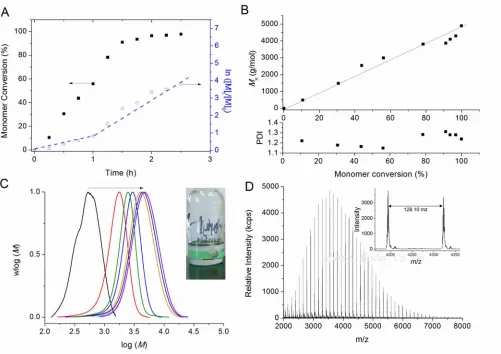
monomer conversion (>95%) achieved in less than 3 h, as determined by 1H NMR. The monomer conversion is calculated using the signals at 5.5-6.5 ppm and 4.0 ppm attributed to acrylic and CH2O
groups, respectively. The polymerisation fulfils all the criteria of a controlled/living radical polymerisation. Interestingly, ln[M]t/[M]0 increases linearly with time up until one hour (56%
conversion) consistent with a constant concentration of propagating radicals at the polymerisation loci. After one hour, the polymerisation rate increases significantly. Finally, over 90% monomer conversion is observed in less than 120 min (Figure 1A). When PBA reaches a molecular weight in the range 2,000-3,000 g/mol (~50% conversion), the system becomes biphasic due to the low solubility of PBA in DMSO (the phase separation is difficult to detect unless the magnetic stirring is stopped), resulting in an upper polymer-rich phase and a lower DMSO-rich phase which contains monomer and catalyst. From this point onwards in the reaction, further chain extension (i.e. polymerisation) is confined to the polymer-rich phase. After phase separation has occurred, the system comprises one phase consisting mainly of PBA with low amounts of DMSO (< 5 wt-%) and BA monomer (< 5 wt-%) at 80% monomer conversion as determined by 1H NMR, and another second phase comprising DMSO, BA, copper (copper wire) and copper complex(es) (ligand/Cu(II)) as seen by a green colouration. The formation of the second phase in the polymerisation mixture is accompanied by a distinct increase in the polymerisation rate (ln[M]t/[M]0 vs. time shows a step change in the gradient whilst remaining linear).
equation: Mn, theo. = α × ([M]0/[Init]0) × MWBA + MWInit. Throughout the polymerisation, GPC
[image:11.612.58.559.145.499.2]chromatograms indicate a mono-modal distribution shifting to higher molecular weights with increasing conversion (Figure 1C), with no apparent influence of the phase separation
Figure 1. Cu(0)-mediated radical polymerisation of n-butyl acrylate in DMSO at ambient temperature. (A) Monomer conversion and ln([M]0/[M]) vs. time (h); (B) theoretical (full line) and experimental
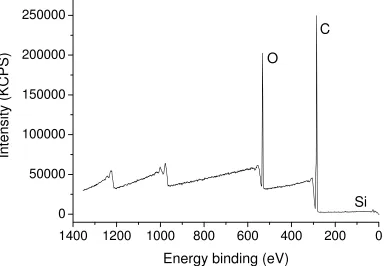
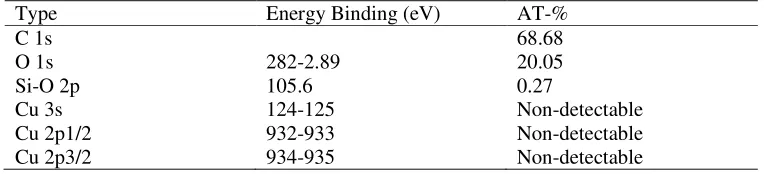
Following polymerisation, the polymer is present as a clearly distinguishable colourless top layer (inset in Figure 1C), while the bottom DMSO layer contains the vast majority of the copper/ligand complexes as indicated by the green colour from Cu(II) complexes (as well as the Cu wire). After separation of the top layer at >99% monomer conversion, the polymer was analyzed by a range of techniques, including NMR, MALDI-TOF and GPC. 1H NMR analysis of the top layer (polymer phase without any purification) reveals the absence of monomer and the presence of pure polymer with a small peak of DMSO. Interestingly, the presence of a low intensity peak of DMSO observed by 1H NMR suggests that the polymer is swelling. Another important observation is that the polymer phase remains colourless after prolonged exposure to air. This observation suggests the absence of copper(I) species in this phase as trace amounts of copper(I) should quickly oxidize to Cu(II) species with a typical green/blue colour characteristic of d9 complexes. To confirm this assumption, the polymer phase was analyzed by XPS (Figure S1 in the Electronic Supplementary Information) and by ICP-MS. XPS fails to detect the presence of copper in this phase, confirming that the catalyst (copper/ligand) is indeed confined to the bottom layer, or is present in the upper layer in a quantity of less than 0.05 atomic-% (XPS detection limit) (Table S1 in the Electronic Supplementary Information). ICP-MS confirms that the amount of copper is 0.016 wt-% in the polymer. This value is relatively low as conventional ATRP usually produces polymers with approximately 1 wt-% of copper.
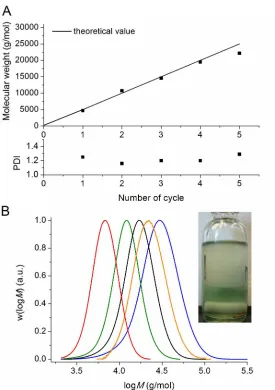
Figure 2. Chain extension of poly(n-butyl acrylate) (using poly(n-butyl acrylate) from >99% in Figure 1 as macroinitiator) (PBA) in DMSO using Cu(0)-mediated polymerisation using PBA as macroinitiator. (A) Monomer conversion and ln([M]0/[M]t) vs. time (h); (B) theoretical (full line) and experimental
(square) molecular weight and PDI values vs. monomer conversion; (C) w(logM) vs. logM at different monomer conversions.
GPC detector response vs. time traces, revealing in excess of 95 wt-% living polymer after four chain extensions. This result (as well as the fact that the first stage proceeds with control/livingness) is extremely surprising as the catalyst (copper wire and copper complex/ligand) is not located in the same phase as the polymer. It would appear that an interfacial mechanism is likely to be involved in the activation/deactivation process, although mechanistic details remain to be elucidated. The evolution of the PDI (Figure 3A) and molecular weight suggest that the activation and deactivation reactions are not adversely affected by the biphasic system during the successive chain extensions.
In addition, we have also applied this methodology using a difunctional initiator, ethylene bis(2-bromoisobutyrate) (2F-BiB). During these experiments the effects of steric requirements of the monomer and alkyl chain length of the monomer were also investigated.
[image:16.612.168.411.280.480.2]In an analogous way to the polymerisation of n-butyl acrylate above, polymerisation from 2F-BiB also resulted in the same phase separation. Complete monomer conversion, as determined by 1H NMR, is achieved in 3 hours to yield a polymer with a PDI = 1.08 (Figure 4), again showing that the phase separation does not negatively impact the control of the polymerisation.
Figure 4 Cu (0)-mediated radical polymerisation of n-butyl acrylate using a bifunctional initiator in DMSO at ambient temperature.
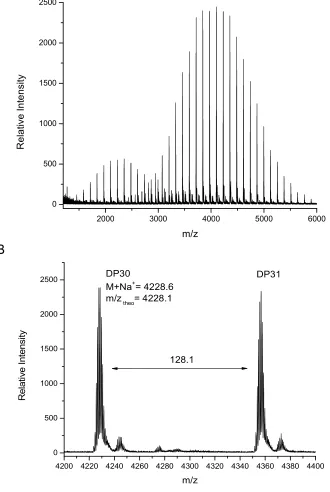
MALDI-TOF MS analysis of this polymer shows two major distributions, unlike the monomodal distribution seen using GPC. The main distribution corresponds to the desired bifunctional polymer, the end group fidelity of which is confirmed by both the m/z values which are in close agreement with theoretical values and the isotopic pattern which indicate the presence of two bromide terminal groups (Figure 5). The second, lower molecular weight distribution is that of polymer which has been
1000 10000 0.0 0.5 1.0 1.5 2.0 2.5 3.0 3.5 4.0 w (l o g M ) (a .u .)
Figure 5 (a) MALDI-TOF MS spectra obtained at 99% monomer conversion (b) expansion from 4200-4400 m/z.
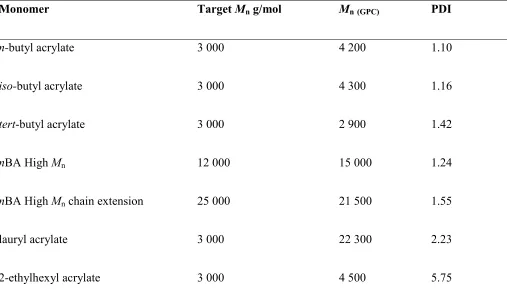
The polymerisation was repeated but with isomers of n-butyl acrylate (iso- and tert-) (Table 1). Phase separation is also observed and the polymerisations proceed with good control, however, a small
4200 4220 4240 4260 4280 4300 4320 4340 4360 4380 4400 0 500 1000 1500 2000 2500 R e la ti v e I n te n s it y m/z DP30
M+Na+= 4228.6
m/z theo= 4228.1
128.1
DP31
2000 3000 4000 5000 6000
increase in the PDI can be observed. We have attributed this effect simply due to the increase in steric bulk from n- to iso- to tert-.
We were interested in achieving higher molecular weight poly(acrylates), and thus poly(n-butyl acrylate) of higher molecular weight (12 000 g/mol) was targeted and subsequently chain extended via addition of extra monomer in DMSO upon reaching complete monomer conversion. We were able to obtain a polymer with an Mn = 15 000 g/mol and PDI = 1.24, demonstrating that the good control is not
[image:19.612.146.423.322.550.2]just limited to polymers with a low target molecular weight. The subsequent chain extension to 21,500 g/mol was successful, although an increase in the PDI was observed (Figure 6). The large PDI is attributed to the presence of dead poly(n-butyl acrylate) obtained during the initial polymerization.
Figure 6 Molecular weight distributions for poly(n-butyl acrylate) Mn = 15 000 g/mol and with
subsequent chain extension using a diphasic process.
Finally, we examined the effect of some more hydrophobic acrylates (lauryl and 2-ethyl hexyl acrylate)
10000 100000 0.0 0.2 0.4 0.6 0.8 1.0 w (l o g M ) (a .u .)
monomer conversion (>90%), however, the large molecular weights and high PDI achieved indicate that control of the reaction has been lost. Thus, it is important for the monomers to be soluble in the polar solvent whilst the polymer becomes insoluble.
Table 1 Summary table showing monomers, target molecular weights, number-average molecular weights and PDI obtained using CHCl3 GPC.
Conclusion:
In summary, we have developed a self-generating biphasic polymerisation system that is compatible with Cu (0)-mediated radical polymerisation at ambient temperature. This approach provides a facile method to remove residual copper from the polymer without complex purification procedures, as the polymer phase does not contain detectable levels of copper species by XPS analysis. The method has been exploited to conduct the first ever Cu (0)-mediated radical polymerisation of n-butyl acrylate with a very good control of the molecular weight. We explored this biphasic approach for the synthesis of a
Monomer Target Mn g/mol Mn(GPC) PDI
n-butyl acrylate 3 000 4 200 1.10
iso-butyl acrylate 3 000 4 300 1.16
tert-butyl acrylate 3 000 2 900 1.42
nBA High Mn 12 000 15 000 1.24 nBA High Mn chain extension 25 000 21 500 1.55
range of poly(acrylates) with longer aliphatic chains. However, for these more hydrophobic acrylates, we observed that the polymerization is not well controlled.
Acknowledgement:
CB is thankful for an APD Fellowship from the ARC (Discovery Grant DP1092640). Equipment used in this research was parted funded through Advantage West Midlands (AWM) Science City Initiative and part funded by the ERDF. DMH is a Royal Society/Wolfson Fellow. The authors thank Mark Wainwright Analytical Centre for NMR analysis and ICP-MS measurement.
Electronic Supplementary Information Available. Experimental details, Figures S1 to S2 and
References:
(1) Noda, T.; Grice, A. J.; Levere, M. E.; Haddleton, D. M. Eur. Polym. J.2007, 43, 2321. (2) D'Hooge, D. R.; Konkolewicz, D.; Reyniers, M.-F.; Marin, G. B.; Matyjaszewski, K.
Macromol. Theory Simul.2012, 21, 52.
(3) Mueller, L.; Jakubowski, W.; Tang, W.; Matyjaszewski, K. Macromolecules 2007, 40, 6464.
(4) Mueller, L.; Matyjaszewski, K. Macromol. React. Eng.2010, 4, 180. (5) Pintauer, T.; Matyjaszewski, K. Chem. Soc. Rev.2008, 37, 1087.
(6) Tsarevsky, N. V.; Jakubowski, W. J. Polym. Sci., Part A: Polym. Chem.2011, 49, 918. (7) Kamigaito, M. Organomet. News2009, 66.
(8) Popescu, D.-L.; Tsarevsky, N. V. Macromol. Rapid Commun.2012, 33, 869. (9) Jakubowski, W.; Matyjaszewski, K. Angew. Chem. Inter. Ed.2006, 45, 4482. (10) Matyjaszewski, K. Macromolecules 2012, 45, 4015.
(11) Percec, V.; Guliashvili, T.; Ladislaw, J. S.; Wistrand, A.; Stjerndahl, A.; Sienkowska, M. J.; Monteiro, M. J.; Sahoo, S. J. Am. Chem. Soc.2006, 128, 14156.
(12) Nguyen, N. H.; Percec, V. J. Polym. Sci., Part A: Polym. Chem.2011, 49, 4241. (13) Nguyen, N. H.; Percec, V. J. Polym. Sci., Part A: Polym. Chem.2011, 49, 4227.
(14) Nguyen, N. H.; Levere, M. E.; Kulis, J.; Monteiro, M. J.; Percec, V. Macromolecules
2012, 45, 4606.
(15) Nguyen, N. H.; Levere, M. E.; Percec, V. J. Polym. Sci., Part A: Polym. Chem.2012, 50, 860.
(16) Nguyen, N. H.; Levere, M. E.; Percec, V. J. Polym. Sci., Part A: Polym. Chem.2012, 50, 35.
(18) Wright, P. M.; Mantovani, G.; Haddleton, D. M. J. Polym. Sci., Part A: Polym. Chem.
2008, 46, 7376.
(19) Silverstein, M. S.; Najary, Y.; Grader, G. S.; Shter, G. E. J. Polym. Sci., Part B: Polym. Phys.2004, 42, 1023.
(20) Grimes, S. M.; Lateef, H.; Jafari, A. J.; Mehta, L. Polym. Degrad. Stab.2006, 91, 3274. (21) Perreault, F.; Oukarroum, A.; Melegari, S. P.; Matias, W. G.; Popovic, R. Chemosphere
2012, 87, 1388.
(22) Matyjaszewski, K. Isr. J. Chem.2012, 52, 206.
(23) Lou, Q.; Shipp, D. A. ChemPhysChem, Ahead of Print.
(24) Contel, M.; Izuel, C.; Laguna, M.; Villuendas, P. R.; Alonso, P. J.; Fish, R. H. Chem. – A Eur. J.2003, 9, 4168.
(25) Ragagnin, G.; Betzemeier, B.; Quici, S.; Knochel, P. Tetrahedron2002, 58, 3985. (26) Pintauer, T.; Matyjaszewski, K. Chem. Soc. Rev.2008, 37, 1087.
(27) Haddleton, D. M.; Jackson, S. G.; Bon, S. A. F. J. Am. Chem. Soc.2000, 122, 1542. (28) Haddleton, D. M.; Duncalf, D. J.; Kukulj, D.; Radigue, A. P. Macromolecules 1999, 32, 4769.
(29) Kickelbick, G.; Paik, H.-j.; Matyjaszewski, K. Macromolecules1999, 32, 2941. (30) Haddleton, D.; Kukulj, D.; Radigue, A. Chem. Comm. 1999, 99.
(31) Faucher, S.; Zhu, S. J. Polym. Sci., Part A: Polym. Chem.2007, 45, 553. (32) Sarbu, T.; Matyjaszewski, K. Macromol. Chem. Phys.2001, 202, 3379. (33) Biedroń, T.; Kubisa, P. J. Polym. Sci., Part A: Polym. Chem.2002, 40, 2799.
(34) Carmichael, A. J.; Haddleton, D. M.; Bon, S. A. F.; Seddon, K. R. Chem. Comm.2000, 1237.
(37) Ding, S.; Xing, Y.; Radosz, M.; Shen, Y. Macromolecules2006, 39, 6399. (38) Hong, S. C.; Matyjaszewski, K. Macromolecules2002, 35, 7592.
(39) Otazaghine, B.; Boyer, C.; Robin, J.-J.; Boutevin, B. J. Polym. Sci., Part A: Polym. Chem.2005, 43, 2377.
(40) Haddleton, D. M.; Duncalf, D. J.; Kukulj, D.; Crossman, M. C.; Jackson, S. G.; Bon, S. A. F.; Clark, A. J.; Shooter, A. J. Europ. J. Inorg. Chem.1998, 1998, 1799.
(41) Konkolewicz, D.; Magenau, A. J. D.; Averick, S. E.; Simakova, A.; He, H.; Matyjaszewski, K. Macromolecules2012, 45, 4461.
(42) Ciampolini, M.; Nardi, N. Inorganic Chemistry1966, 5, 41.
(43) Boyer, C.; Derveaux, A.; Zetterlund, P. B.; Whittaker, M. R. Polym. Chem.2012, 3, 117. (44) Soeriyadi, A. H.; Boyer, C.; Nystrom, F.; Zetterlund, P. B.; Whittaker, M. R. J. Am. Chem. Soc.2011, 133, 11128.
(45) Nystroem, F.; Soeriyadi, A. H.; Boyer, C.; Zetterlund, P. B.; Whittaker, M. R. J. Polym. Sci., Part A: Polym. Chem.2011, 49, 5313.
(46) Boyer, C.; Soeriyadi, A. H.; Zetterlund, P. B.; Whittaker, M. R. Macromolecules 2011,
Electronic Supplementary Information
Copper (0)-Mediated Radical Polymerisation in a
Self-Generating Biphasic System
Cyrille Boyer,a Amir Atme, a Christopher Waldron b, Athina Anastasaki b Paul Wilson b , Per B. Zetterlund, a
David Haddleton b* and Michael R. Whittaker a*
a- Centre for Advanced Macromolecular Design (CAMD), School of Chemical Engineering, The
University of New South Wales, Sydney, NSW 2052, Australia.
b- Department of Chemistry, University of Warwick, Coventry, United Kingdom.
ESI2
Characterization
NMR Spectroscopy
1
H NMR spectra were recorded using a Bruker ACF300 (300 MHz) spectrometer employing CDCl3 as solvent.
Monomer conversions were determined via 1H NMR spectroscopy, comparing the signal areas from the vinyl protons
(δ ~ 6.50-6.00 ppm) 3H/mol to the signal area of OCH2 signal (at 4.0 ppm) attributed to -CH2O (n-BuA).
Gel Permeation Chromatography (GPC)
Gel permeation chromatography (GPC) was conducted using THF as the mobile phase. GPC analyses were
performed at 40 oC (flow rate = 1 mL/min) using a Shimadzu modular system comprising an LC-20AT
pump, SIL-10AD auto-injector, CTO-16AC column oven and RID-10A RI detector. Molecular weight
separation was achieved via a column set comprising a PL 5.0-mm bead-size guard column (50 × 7.8 mm)
followed by four Phenomenex PHENOLGEL GPC columns (300 × 7.8mm; 5µm; 10-2, 10-3, 10-4 and 10-6A).
A calibration curve was generated with commercial linear polystyrene standards ranging from 500 to 106
g/mol. SEC was conducted on Varian 390-LC system in CHCl3 at ambient temperature, equipped with
refractive index and viscometry detectors, 2 × PLgel 5 µm mixed-D columns (300 × 7.5 mm), 1 × PLgel 5
µm guard column (50 × 7.5 mm) and autosampler.
X-ray Photoelectron spectrometer (XPS)
A Kratos Axis ULTRA XPS incorporating a 165 mm hemispherical electron energy was used. The incident
radiation was monochromatic A1 X-rays (1486.6 eV) at 225 W (15 kV, 15 ma). Survey (wide) scans were
taken at an analyzer pass energy of 160 eV and multiplex (narrow) higher resolution scans at 20 eV. Survey
scans were carried out over 1200 eV binding energy with 1.0 eV steps and a dwell time of 100 ms.
Poly(n-butyl acrylate) sample was placed on silica plate and analysed by XPS.
MALDI-TOF Mass Spectrometry
MALDI-TOF MS experiments were carried out on a Bruker UltraFLEX II TOF/TOF-MS instrument
equipped with a 337 nm nitrogen laser, ion acceleration voltage of 25 kv and pulse extraction delay time of
90 ns. The instrument was operated in reflectron mode unless otherwise stated and with each spectra being
Sample preparation: Each polymer (0.5 mg/mL) was prepared in THF with sodium iodide (1 mg/mL) and
saturated 2,5 dihydroxybenzoic acid (DCTB) matrix in a 1:0.1:1 ratio (sample : salt:matrix). 0.5µ of the
mixture was then spotted onto the target plate and analysed.
Inductively coupled plasma mass spectrometry (ICP-MS)
ICP-MS has been carried out PerkinElmer quadrapole Nexion ICPMS. The instrument has been previously
calibrated using copper solution in water. Sample preparation: un-purified poly(n-butyl acrylate) (10 mg)
obtained by copper (0) mediated radical polymerization in DMSO has been dissolved in THF (0.200 mL),
and then, the solution was drop wise added to water (9.8 mL, 0.1 M of HCl). The solution was mixed for 14
hours before analysis by ICP-MS to determine copper concentration. Each sample was analysed four times,
ESI4
1400 1200 1000 800 600 400 200 0
0 50000 100000 150000 200000 250000
In
te
n
s
it
y
(
K
C
P
S
)
Energy binding (eV)
O
C
Si
[image:28.612.67.451.75.341.2]8000 10000 12000 14000 0
2000 4000
In
te
n
s
it
y
(
k
c
p
s
)
[image:29.612.57.558.46.336.2]m/z
ESI6
Table S1. Amount of different elements determined by XPS for non-purified poly(n-butyl acrylate) obtained by copper (0) mediated radical polymerization in biphasic system.
Type Energy Binding (eV) AT-%
C 1s 68.68
O 1s 282-2.89 20.05
Si-O 2p 105.6 0.27
Cu 3s 124-125 Non-detectable
Cu 2p1/2 932-933 Non-detectable
Table S2. Possible populations obtained during the copper(0) mediated radical polymerization.
Species Theoretical m/z Experimental m/z
O
O
Br
O
O
n
Na+
3422.48 (n= 24) 3422.3
O
O
Br
O
O
n
K+
3438.54 (n= 24) 3438.7
Na+
3342.32 (n= 24) Not observed
ESI8
Na+
K+
3358.48 (n= 24) Not observed
, K+
3356.48 (n =23) Not observed
Na+
3327.20 (n+m=
23)
K+
3343.38 (n+m=
23)