RUNNING HEAD: Understanding person acquisition
Understanding Person Acquisition using
an Interactive Activation and Competition Network.
Sarah V Stevenage and Hugh G Lewis
University of Southampton
AFFILIATIONS: Dr Sarah Stevenage is a member of the Department of Psychology,
University of Southampton. Dr Hugh Lewis is a member of the Department of
Aeronautics and Astronautics, School of Engineering, University of Southampton.
ACKNOWLEDGEMENTS: The authors would like to thank Professor Mike Burton,
and Professor Vicki Bruce for their help in the preparation of this manuscript.
CORRESPONDENCE may be sent to: Dr Sarah Stevenage, Department of
Psychology, University of Southampton, Highfield, Southampton, SO17 1BJ, UK.
Understanding Person Acquisition using
an Interactive Activation and Competition Network.
Abstract
Face perception is one of the most developed visual skills that humans display, and
recent work has attempted to examine the mechanisms involved in face perception
through noting how neural networks achieve the same performance. The purpose of
the present paper is to extend this approach to look not just at human face recognition,
but also at human face acquisition. Experiment 1 presents empirical data to describe
the acquisition over time of appropriate representations for newly encountered faces.
These results are compared with those of Simulation 1, in which a modified IAC
network capable of modelling the acquisition process is gene rated. Experiment 2 and
Simulation 2 explore the mechanisms of learning further, and it is demonstrated that
the acquisition of a set of associated new facts is easier than the acquisition of
individual facts in isolation of one another. This is explained in terms of the
advantage gained from additional inputs and mutual reinforcement of developing
Understanding Person Acquisition using
an Interactive Activation and Competition Network.
Introduction
Imagine a situation in which you see a person approaching you. From a distance, you
think you recognise their jacket and the manner of their walk. You think it may be a
friend of yours. As they get closer, you are able to gather more information: they do
not seem to be avoiding you, in fact, they are smiling at you. Closer still and you can
see that their face is familiar. You start to remember things about them - where you
know them from, and their name - and you can see that they are pleased to see you.
You have progressed from a situation of not knowing who was approaching you, to a
situation of confident identification. The face, while not the only source of
information, is an important part of that recognition process.
Research over the past decade has taken great strides forward in terms of our
understanding of the processes underlying face recognition. Importantly, recent
developments in connectionist modelling have led to the development of neural
network models capable of simulating a host of phe nomena associated with face
recognition (see Brédart, Valentine, Calder & Gassi, 1995; Burton & Bruce, 1992;
1993; Burton, Bruce & Johnston, 1990; Burton, Young, Bruce, Johnston & Ellis,
1991) and the possibility has been explored that the mechanisms involved in such
computer simulations might be instructive in terms of our understanding of the
processes involved in human face recognition. However, recognition of familiar faces
is far from being the limit of our human face processing capacity. Humans also have
the ability to learn the faces of new people. This acquisition of new faces presents a
challenge to any connectionist model of face processing, and the development of a
The Interactive Activation and Competition Model (IAC) of Face Processing
Our ability to learn new faces allows us to hold faces in our short term
memory for as long as a casual social situation requires. Furthermore, we can learn
these faces in the sense that they gradually become part of the corpus of faces that we
call familiar. A new connectionist architecture developed from the well established
IAC model of familiar face recognition is presented here with the aim of modelling
these learning processes. Before this can be described, a brief overview of IAC and
its major mechanisms is provided (see Burton, Bruce & Johnston, 1990 for a fuller
discussion).
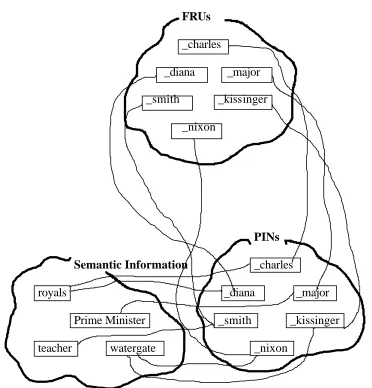
IAC is based on the ‘Jets and Sharks’ framework presented by McClelland and
Rumelhart (1988). It consists of pools of Face Recognition Units (FRUs), Person
Identity Nodes (PINs) and Name Output Units (NOUs), and a pattern of
interconnectivity exists in which units associated with the same person are connected
by excitatory links across pools, and units associated with different people are
connected by inhibitory links within pools. All links are bi-directional and in this
sense, the IAC system is truly interactive (see Figure 1).
(Please insert Figure 1 about here)
IAC is successful in modelling a range of empirical and neuropsychological
phenomena associated with face processing. For instance, the model can successfully
activate the correct set of units on presentation of a known face, and so simulate
human face recognition. In addition, it can account for the differential timescale in
making familiarity, occupation and name decisions (Young, McWeeny, Ellis & Hay,
1986), the difficulty associated with naming and tip-of-the-tongue states (Burton &
Bruce, 1992; Burton & Bruce, 1993 but see Brédart, Valentine, Calder & Gassi,
Johnston & Ellis, 1991). Perhaps most importantly for the present paper, IAC
provides a parsimonious account of the phenomena of associative (semantic) and
repetition (identity) priming, and the mechanisms underlying these phenomena are
outlined below.
Associative and Repetition Priming within IAC
Associative priming occurs when seeing one face (for example, Prince
Charles) primes, or speeds up, the recognition of a second associated face (for
example, Princess Diana). IAC can explain this with reference to the influence that
the shared semantic units have. From Figure 1, seeing the face of Prince Charles
causes activation of the FRU, and subsequently, the PIN for Prince Charles.
Activation of Charles’ PIN spreads to the semantic units, and so allows retrieval of
information specific to Prince Charles. This includes some facts that are shared
between Charles and Diana (i.e., ‘royals’), and because all units are connected by
bi-directional links, activation is passed back to Diana’s PIN, and subsequently to her
FRU. The units associated with Diana have thus been raised from their resting level.
On subsequent presentation of Diana’s face the relevant units will require less
activation to reach a critical threshold level. The result is that Diana is recognised
faster than she would have been had Charles not just been seen.
Repetition priming effects can also be explained by the IAC architecture,
though a slightly different mechanism is implicated. Repetition priming occurs when
the recognition of a face is primed, or speeded up, by prior exposure to that face.
These effects are long lasting and domain specific (a name will prime later
recognition of that name, and a face will prime later recognition of that face, but a
name will not prime later recognition of the face or vice versa (Bruce & Valentine,
the way that links in the network are created and updated. Each link has a strength
associated with it that dictates how readily activation can be passed along it. This
strength is increased when the units at either end of the link are simultaneously active.
In the case of repetition priming, the initial sight of a face (Prince Charles) will cause
activation of both the FRU and the PIN for Prince Charles. With both active at the
same time, the FRU-PIN link will become strengthened. On a second presentation,
activatio n will be able to flow down this link faster, and thus recognition will be
achieved more quickly.
Recent evidence has demonstrated that repetition priming may actually be
located at two levels of an IAC architecture: between the feature input units and the
FRUs, and between the FRUs and the associated PINs (Ellis, Burton, Young & Flude,
1997). Strengthening of links at both levels is responsible for entire face repetition
priming (as above) and for the fact that presentation of part of a face (i.e., internal
features only) can successfully prime subsequent recognition of the whole face.
However, presentation of one part of a recognisable face (i.e., internal features only)
can also prime the subsequent recognition of another non-overlapping part of the face
(i.e., external features). IAC is able to explain this by implicating the only links
common to the two situations - those between the FRU and the PIN.
The Importance of Hebbian Update as a Learning Mechanism
The notion of link update, using a traditional Hebbian Learning Mechanism
(Hebb, 1949) can be extended to account not only for link strengthening, but also for
link creation. In this sense, it is possible to develop an IAC system capable of
learning by utilising mechanisms already implicit and accepted within IAC. This was
the basis of a simple two-layer network (IAC-L) presented by Burton (1994), which
represents an extension of Burton’s work inasmuch as learning of the features, face
and name are involved rather than just the learning of the features themselves. As
with Burton’s work, the use of a Hebbian learning mechanism here has considerable
advantages over alternative learning algorithms within connectionist architectures.
The most common alternative for pattern recognition systems is the back propagation
of error (Rumelhart, Hinton & Williams, 1986), which involves the global
modification of all weights in the network so as to minimise recognition error. Back
propagation presents a very popular and well- understood mechanism for supervised
learning, but the notion of change to all weights throughout a network limits its
appropriateness when what is called for here is the adjustment of weights in a more
selective and unsupervised fashion.
Hebbian learning presents an alternative learning mechanism. It operates by
strengthening links connecting two simultaneously active units, whilst weakening
links connecting an active and an inactive unit (Hebb, 1949). Consequently, it
provides an elegant, parsimonious and biologically plausible way of modelling both
priming and learning. Given that the purpose of this paper is to explore these learning
mechanisms more fully, the aim of Experiment 1 is to determine the pattern of human
learning of new faces while the aim of Simulation 1 is to develop an IAC-like system
capable of modelling this pattern.
Experiment 1
Design
The purpose of the present study was to examine the speed and manner of new face
acquisition by human subjects. In order to slow the learning process down, and so
Participants
Fifteen undergraduate participants (8 male, 7 female, age range 19-48 years (mean
age = 23 years) acted as volunteers in the present study. All had normal or
corrected-to-normal vision, and were unfamiliar with the stimulus faces.
Materials
The stimuli consisted of 80 head and shoulders photographs of a pair of identical twin
girls (Lizzie and Rosie). Care was taken to ensure consistency in clothing and
grooming, and all photographs were manipulated within Corel PhotoPaint to be
matched on inter-ocular distance and to remove all background details. Photographs
that varied in pose and expression were used to ensure that any emergent effects were
in response to differences in the faces rather than differences in particular viewpoints.
All stimuli were scanned into a Power Macintosh 7200/90 computer and were
presented via a 17” colour monitor, at a viewing distance of 60-70 cm.
Procedure
Participants completed a training phase in which their task was to learn to identify the
two twin girls by name. This training phase consisted of consecutive blocks of trials,
with 10 trials (5 of each twin) in each block. Participants viewed one photograph at a
time, for a fixed period of 2 seconds, and their task was to say whether it was Lizzie
or Rosie. They indicated their response by pressing one of two keys labelled with the
twins’ names. Following each response, the computer provided appropriate verbal
corrective feedback (i.e., ‘Yes, Lizzie’ or ‘No, Rosie’). After a 500ms inter-stimulus
interval, the next face was presented, and training continued until the participant
reached a pre-set criterion of 100% accuracy over two successive blocks of 10 trials.
Identification accuracy was recorded on each trial, as was the number of trials taken
Results and Discussion
The results were examined in terms of the number of trials taken to reach the
preset learning criterion, and the shape of the learning curve, or the pattern of
acquisition shown. Examination of the data confirmed that all fifteen participants
were successful in learning the identities of the two twins. This was achieved in an
average of 21.1 presentations (sd = 9.45). Consequently, although faced with a
difficult perceptual task, human perceivers were able to learn the features that reliably
distinguished one face from another.
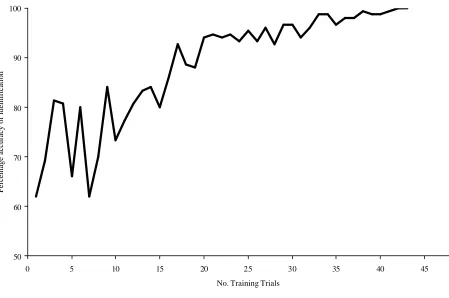
Examination of the learning curve across participants revealed that this
learning progressed rather slowly and erratically at first, but was followed by a burst
of acquisition and then a levelling off of performance before the steady state of
perfect performance was achieved (see Figure 2). This pattern of acquisition is
characteristic of complex human learning. Consequently, any simulation of human
learning should reflect both acquisition of the task, and a pattern of learning which
shows the characteristic sigmoidal, or ‘s’-shaped, learning curve.
(Please insert Figure 2 about here)
Simulation 1: Learning a new person.
Structure of the IACAPA Architecture
IACAPA (Interactive Activation and Competition Account of Person
Acquisition) is shown in Figure 3 (below). As with previous IAC models, IACAPA
consisted of a large number of units, arranged into pools. Forty feature units (FTUs)
provided the facial input and these were further arranged in pools according to the
features that they described (i.e., hair, eyes, nose, mouth, etc.). IACAPA thus had 4
types of each of 10 features to describe the face. Photofit-type terms are used here for
Burton noted, the face may be represented by more wholistic parameters such as
eigenfaces. These represent a statistical way of describing a set of faces, with each
eigenface representing a different principle component across the face set. Being
based on the variation in pixel intensities across the entire face, eigenfaces capture
global properties of the face such as hairstyle, face shape, and gender, although more
individuating qualities can be revealed through the higher order eigenfaces(see Bruce
& Humphreys, 1994 for a discussion). The nature of the representation at this feature
unit level does not, however, affect the functioning of the network as a whole.
The FTUs fed a pool of 51 face recognition units (FRUs) which, in turn, fed a
pool of 51 person identity nodes (PINs). Following from Brédart et al.’s (1995)
reformulation of IAC, the present architecture echoed the notion that names and
semantic information are likely to be stored in separate pools. The PINs thus fed two
pools of units corresponding to the semantic information that we have about known
people (SIUs - not included here) and their name output units (NOUs).
(Please insert Figure 3 about here)
IACAPA was initialised to have one known face. Units corresponding to this
known face were connected via maximal excitatory links, while units that did not
correspond to this face were connected to the ‘known unit’ via maximal inhibitory
links. In addition, within-pool inhibition operated on all units within a pool so that the
activation of one unit resulted in the inhibition of all other units within that pool. The
architecture thus possessed strong links for known people, and pilot work established
that the manual activation of the FTUs corresponding to the known face resulted in
the successful activation of the FRU, PIN, and finally the NOU for the known person.
The remaining 50 units in each of the FRU, PIN and NOU pools represented
‘free units’ which had not previously been recruited to represent an identity and were
thus available to a learning situation. As with all units, within-pool inhibition was
maximal between these free units. However, initially, all free units were connected to
units from previous and subsequent network layers by links carrying small and
random weights varying between –0.1 and +0.1. Activation of a novel set of feature
inputs would be propagated forward most readily to free FRUs possessing a relatively
large net random weight. Within-pool inhibition would then ensure that only one free
FRU remained active. This free FRU could then be said to represent the new face.
Similarly, recruitment of free units at the PIN and NOU layers of the network would
model person and name acquisition respectively.
Mechanisms within the IACAPA Architecture
1. Activation. To preserve biological plausibility, the activation of all units
was regulated by two parameters. First, activation was propagated forwards as a
proportion (alpha) of the net input from the previous layer rather than by means of a
perfect feed- forward mechanism. The activation received by units in the subsequent
layer was thus subject to propagation loss. Second, all units were subject to a ceiling
level of activation rather than responding in a boundless fashion. Unit activation was
kept within its maximum and minimum levels by the influence of a decay function.
This operated to reduce activity by an amount proportional to the current activation
state: a unit with low activation received a minimal modification by the decay
function while a highly active unit required a larger modification to prevent exceeding
its maximum activation level. Activation of units was thus a balance between a
proportion of the net input, and a decay term to prevent continuous escalation of
2. Learning. The process of recruiting a set of free units will not, on its own,
lead to lasting learning. For lasting learning to occur, the links between the novel
input units and the newly recruited units must be strengthened. As utilised by Burton
(1994) and endorsed by Medler (1998), the application of a Hebbian update
mechanism will modify the network links to simulate learning (Hebb, 1949). Hebbian
update serves to increase the weight between two units when, and only when, the
units at either end of the link are simultaneously active. This reinforces the
development of an association between units, and the link is strengthened by an
amount proportional to the activity of the units themselves. Thus, while activity of
the units at either end of the link is low, the link between the units is strengthened by
only a small amount, but as the activation of the units increases, so the strengthening
of the link accelerates until its weight reaches a maximum excitatory level (+1). The
result is the modelling of gradual learning.
The Hebbian update function also serves to create inhibitory links between
two non-associated units, when, and only when, the unit at one end of the link is
active. This serves to reinforce the development of a negative association so that one
unit will not mistakenly lead to activation of a unit with which it is not associated.
Again, the degree to which the inhibitory link is made more inhibitory is proportional
to the activation level of the units at either end of the link. When activation is low,
the inhibitory link is modified only a little, while when activation is higher, the
inhibitory link is modified to a greater extent, until its weight reaches a maximum
inhibitory level (-1).
The Simulation Environment
All simulations were implemented in C using the Rochester Connectionist
environment on a Sun Workstation. The network parameters for all simulations were
based on those used in previous research (see Burton et al., 1990). Unit activation
varied between +1 and -0.2, with a slightly negative resting level of -0.1. In addition,
established link strengths varied between a maximum excitatory weight of +1 and a
maximum inhibitory weight of -1. The constant parameters governing the
propagation of activation (alpha) and decay were selected on the basis of pilot work
to ensure that activation was propagated successfully throughout the three layers of
the IACAPA network. Details of all parameters and functions adopted in these
simulations are provided in the Appendix.
Procedure
The network was presented with a novel face described by a set of FTUs
which did not correspond to the known face. An alternate excitation and link- update
process was used to achieve learning as follows. First, the FTUs for the novel face
were maximally activated and the network was allowed to step through a series of
cycles. The activation of all FRUs was monitored until they had reached a stable
state. For the purposes of this and all subsequent simulations, stability was defined as
having a constant activation level across fifteen consecutive cycles. The number of
cycles taken to reach stability varied across the learning sequence (25 - 110 cycles),
with longer learning periods being required earlier in the learning sequence. Once
stability had been reached, the Hebbian update function was applied. The network
was then stepped through a further set of cycles until stability was reached, and the
Hebbian update function was again applied. This process was repeated until a free
FRU, PIN and NOU had been recruited and their activation showed no further
increase, at which time the network could be said to have created a representation for
Results of Simulation One
Figure 4 presents the results from this simulation, with activation levels being
allowed to rise continuously across the learning sequence rather than being reset to
resting level after each update phase. The figure thus represents the cumulative
activation of the winning FRU, PIN and NOU across the learning phase.
(Please insert Figure 4 about here)
From these results, the most important factor was the affirmation that
IACAPA was able to recruit a free FRU, PIN and NOU to represent the novel face.
This can be interpreted as the successful acquisition of the representations necessary
for complete person acquisition and represents a step on from Burton’s (1994) IAC-L
where names were not involved. As such, IACAPA represents the first neural
network capable of learning the features, face and name associated with an unfamiliar
person.
To be sure that these results were not limited in some way to the particular
novel face presented, these results were replicated across a further four novel face
presentations. These four new faces were created by the unique combinations of ten
feature units such that the new faces bore limited resemblance to one another and to
the ‘known’ face. Using an identical method of alternate excitation and link-update as
above, the results presented a consistent pattern. For all new faces, a different set of
free FRUs, PINs and NOUs were successfully recruited (see Table 1), and for all new
faces, the rate of increase of activation associated with recruited units conformed to
Figure 4 presented above. This confirmed that learning within IACAPA represented a
generalisable learning mechanism rather than being the result of a particular starting
set of links and a particular input.
Taking the results of all learning occasions together, several factors are worthy
of note. First, the pace of learning increased as the learning sequence proceeded.
This was shown by the decreasing number of cycles taken to reach stability after each
Hebbian update. The result is a gradual learning curve which concords with the
typical pattern of human learning from Experiment 1. Gradual learning was achieved
in IACAPA through the fact that links were updated by an amount proportional to
their level of activation. Low activation resulted in small increases in the strength of
the associated links, while greater activation resulted in an accelerated increase in the
strength of the links.
Second, it was notable that the final activation levels of the recruited units in
Figure 4 were very similar to those represented by the known FRU, PIN and NOU
during pilot work. Interrogation of the network also revealed that the strength of the
links connecting these newly recruited units approached the maximum level manually
coded for the known face. The implication is that, given sufficient time and/or
exposure to a face, the network, like the human, can acquire a new set of
representations and can come to recognise a once-unfamiliar person with the ease
associated with the recognition of a very well known person.
Finally, some comment must be given to the performance of the architecture at
the NOU level. If the face were familiar to us, activation of a NOU would indicate
that the familiar person’s name had successfully been retrieved. In a learning
situation, however, it is quite possible that one does not actually know the name of the
person whose face has been learned. In this case, how should successful activation of
a single NOU be interpreted? It is suggested here tha t activation of a single NOU
corresponds to the potential to retrieve a piece of information unique to a person - a
proper name is not known we can think of the NOU as representing a label or
nickname which may be assigned as a unique identifier in the absence of a proper
name. Activation of the NOU would thus correspond to the retrieval of this unique
identifier. In time, it may be that the proper name for this newly learned face is
provided and acquired. At that point, the information represented by the NOU could
be updated to represent the proper name provided.
Interim Discussion of Mechanisms of learning
In evaluating IACAPA, it is first important to note that the network has
acquired units to represent a novel face and can thus be considered to have learned the
new face. Excitatory links connecting the newly recruited units for a given face were
created through Hebbian weight update. Similarly, inhibitory links connecting a
recruited unit with other non-recruited units in previous and subsequent pools, were
created. Consequently, the pattern of connectivity ensured an economic learning
strategy such that only one unit at each layer of the network would come to represent
the new person, and the pattern of connectivity came to resemble that for already
familiar people. Perhaps more importantly, this learning was achieved using a
Hebbian learning strategy which has rigour and biological plausibility, both of which
were considered important in the attempt to model human capabilities.
The development of IACAPA has, however, revealed three important learning
factors that make IACAPA different from Burton’s (1994) IAC-L. First, while the
use of a Hebbian update rule was effective in modelling gradual learning, it was
necessary to apply it in a local fashion rather than in a global fashion. In this sense, a
stepped Hebbian update function was implemented here in which link strengths were
only updated when a change had occurred at that layer of the network. In other
FTUs and the recruited FRU were updated, but links between the FRU and all
possible PINs, and indeed between all possible PINs and NOUs, were left alone until
such a time as a unit became recruited at these levels. The application of this learning
mechanism provided an economical learning strategy. However, such a mechanism
was also essential to prevent the inadvertent creation of inhibitory links at deeper
layers of the network early on in the learning cycle when, for example, the
propagation of activation had created a winning FRU but had not as yet reached the
level of the PINs or NOUs. Burton’s earlier work did not need to address this issue
because IAC-L possessed only two network layers.
Second, the learning rule was applied throughout IACAPA in an exclusive
fashion such that link weights between units were only updated if the units at one or
other end of the link were involved. In other words, links between FRUs and PINs
were only updated when there was a winner at the PIN level (stepped update rule
above) and on links (a) from the recruited FRU to the recruited PIN (excitatory link
strengthened) (b) from the recruited FRU to all other PINs (inhibitory link
strengthened) and (c) from the recruited PIN to all other FRUs (inhibitory link
strengthened). This procedure prevented the inadvertent reinforcement of links
between non-recruited units. Instead, these non-recruited links were maintained at a
random level and were thus available for future learning. The application of this
learning mechanism provided a parsimonious learning strategy. Again, Burton’s
IAC-L did not need to apply its learning rule in such an exclusive fashion because
IAC-L was developed for the purpose of demonstrating learning per se, rather than for
the demonstration of repeated learning.
Finally, IACAPA modelled learning through the use of a flexible Hebbian
from FTUs to FRUs) were updated in a selective fashion. In other words, when a free
FRU became recruited to represent a new face, the links between the FTUs describing
this face, and the recruited FRU were strengthened to create excitatory links. In
addition, the links between the recruited FRU and the FTUs describing features not
held by the novel face were strengthened to create inhibitory links. However, the
links between active FTUs and non-active FRUs which, at any other layer would be
strengthened to create inhibitory links, remained untouched. This modification
allowed IACAPA the flexibility to learn future similar inputs. As such, the application
of this learning mechanism provided a realistic learning strategy. Again, IAC-L did
not need such a modification to be able to learn a single instance of a new face.
In combination, these learning rules allowed IACAPA to model learning in an
economical, parsimonious and realistic fashion and in a manner in sympathy with the
workings of neurones within the human brain. These results consequently add to the
developments outlined by Burton (1994) who demonstrated the recruitment of a new
FRU upon presentation of a new combination of features. However, the use here of a
network with more than two layers, and the aim here of modelling the learning of
several new instances, has highlighted the need to modify the application of the
Hebbian learning rule in the pursuit of a neural network capable of mimicking human
learning (see Appendix for summary of the three learning rules).
Nevertheless, humans do not just learn isolated facts; they learn complex
associations of new information. Within the present sphere, humans have the capacity
to learn not just the face but also the name of someone new, and then gradually
acquire person-specific information about their new acquaintance. In some sense, we
haven’t modelled the entirety of human learning unless we model its complexity. One
concurrently makes the overall learning task harder or easier. In other words, does the
possibility of associations between a set of new facts offset the escalated number of
facts and ultimately facilitate learning? Experiment 2 in conjunction with Simulation
2 will examine this issue by considering learning of faces and names, as compared to
faces alone.
Experiment 2
Design
A between-subjects design was used to assess the relative difficulty of a learning task
when either faces alone, or faces and names were provided. Three different
experimental conditions existed consisting of (i) a control condition (identical to
Experiment 1) in which participants viewed faces alone; (ii) an intermediate learning
condition in which participants learned faces but had access to standard photographs
which provided a visual cue, and (iii) a condition in which participants learned faces
but had access to named standard photographs which thus provided a visual and a
naming cue. All participants completed a sequence of training trials, with corrective
feedback, and the dependent variable was the number of trials taken to reach a preset
criterion of identification accuracy.
Participants
Forty-five undergraduate participants (22 male, 23 female; age range 18-49 years,
mean age = 23 years) acted as volunteers in the present experiment. All participants
had normal, or corrected-to-normal vision and were unfamiliar with the stimuli.
Participants were randomly assigned to one of three conditions, with age and gender
matched as far as possible across all conditions.
The 80 photographs of twin girls Lizzie and Rosie from Experiment 1 were used
again in Experiment 2. In addition, two further photographs (one of each twin) were
prepared and served the function of visual cues to assist learning.
All 80 training photographs were viewed via a 17” colour monitor at a viewing
distance of 60-70 cm. In contrast, the 2 ‘help’ photographs were reproduced as black
and white hard copy photographs and were available for visual inspection throughout
the experiment.
Procedure
Participants in all three experimental conditions completed a learning phase, identical
to that in Experiment 1. The faces of a pair of identical twin girls were presented one
at a time for 2 seconds, and the participants was required to respond by means of a
button press to indicate which girl (Lizzie or Rosie) they were looking at. Corrective
feedback was provided and was followed by an inter-stimulus interval of 500msecs
and then the next presentation. The learning phase continued until the participant
reached 100% accuracy over two successive blocks of 10 trials each.
The difference between the three groups was in the nature of assistance they
received prior to the learning phase. Group One represented a control condition and
received no prior information except that they were about to view the faces of
identical twin girls Lizzie and Rosie. Group Two received minimal assistance prior to
the learning phase. They received a single pre-exposure to each twin by being given
an unlabelled photograph that they could refer to throughout the learning phase. This
allowed them the possibility of making a visual comparison in order to assist them in
their visual differentiation of the two girls. This is analogous to the participants
receiving a set of feature inputs for each of the girls. Group Three received maximal
girl, but each was labelled with the appropriate name. Thus, these participants had
reference to a visual means of discriminating between the girls and the opportunity to
learn which name went with which arrangement of features. This is analogous to
being given a name and associated feature set for each individual.
Across all groups, the computer recorded the number of trials taken to reach
the criterion level of learning, as well as the identification accuracy on each of these
trials.
Results and Discussion
Examination of the data confirmed that all participants in all conditions were
able to learn the identities of each twin. Consequently, even given a more complex
and difficult learning task involving the acquisition of two highly similar faces and
their associated names, participants were able to succeed within a relatively short
period of training and feedback.
Formal examination of the task difficulty, as expressed by the number of trials
taken to complete this learning, suggested that performance was substantially affected
by the experimental condition. Table 2 summarises the number of trials required to
reach the criterion level of learning, from which it is evident that participants given no
help learned slowest and participants given face and name assistance learned quickest.
Interestingly, participants given visual help only, in the form of photographs to permit
visual discrimination of the two faces, did not show an intermediate rate of learning
but rather, showed a level of performance markedly similar to the control group who
had no help at all.
(Please insert Table 2 about here)
Analysis by means of a one way Analysis of Variance (ANOVA) across
confirmed a main effect of experimental condition (F(2, 42) = 3.004, p(1-tailed) < .05).
Further analysis of the a-priori pairwise contrasts confirmed that this was due to the
groups given no help (group 1) and visual information (group 2) showing an
equivalent rate of learning (t(28) < 1, p > .05), whilst being significantly slower than
those given visual and naming information (group 3 vs no help: t(28) = 2.54, p < .025;
group 3 vs visual information: t(28) = 2.07, p < .05).
Another way of expressing the facilitation effect that face and name
information had on person acquisition was by examination of the averaged learning
curves across each of the three conditions (see Figure 5). From this it was evident
that the learning curve displayed by those participants given face and name
information to assist them was substantially steeper, and reached its asymptote after
fewer trials, than the learning curve associated with the other conditions.
Consequently, for IACAPA to be able to simulate human learning of complex and
realistic associations, learning must be achieved, and must be achieved in fewer
network cycles when multiple inputs are provided compared to when unitary inputs
are provided. Simulation 2 addresses this issue.
(Please insert Figure 5 about here)
Simulation 2: The influence of a name when learning new faces
In the above learning situation, participants were presented with a face and a name
input belonging to the same person. The learning task therefore involved the
development of a set of associations so that the face and name excited the same
mental representations. In terms of the performance of a network, such a learning
task requires that the novel pattern of features recruits a set of units at the FRU, PIN
and NOU layers, and moreover, that the name excites the same units. In this sense,
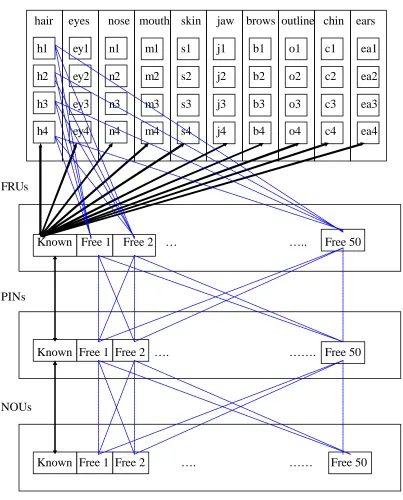
To investigate this issue, an IACAPA architecture similar to that used in
Simulation 1 was created. The only difference was that the present architecture could
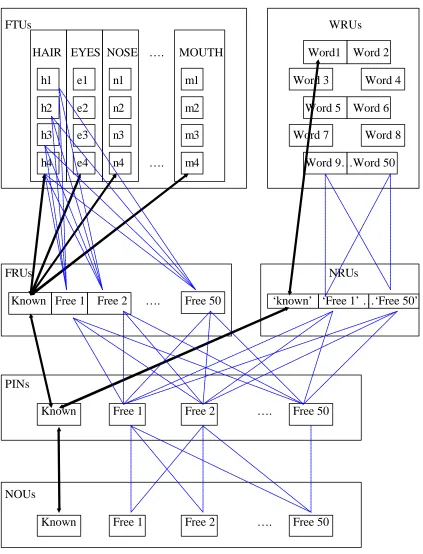
provide a name input, via word recognition units (WRUs) and then name recognition
units (NRUs) (see Burton & Bruce, 1993), as well as a face input via the feature units
(FTUs). As before, the network was initialised to have one known face and 50 free
units available for learning at each layer of the network. Units representing the face
and name of the known person were connected by links of maximal excitatory
strength. Consequently, activation of the first name (i.e., Stan) or the family name
(i.e., Laurel) of a familiar person would be propagated from the relevant WRUs down
maximal excitatory links to activate a NRU associated with that name (‘Stan Laurel’).
Activation at this NRU level is thus associated with the presentation of a name rather
than with its retrieval. Successful activation at the NRU level is then propagated
forward to the PIN to allow a sense of familiarity with the person and subsequent
retrieval of semantic information and name production.
As in Simulation 1, however, free units which had not previously been
recruited to represent a known individual were connected to units in previous and
subsequent network layers by links that carried small random weights. Consequently,
application of a Hebbian Weight Update rule was required to simulate the learning of
an association of a word with a name, and then of that name with the features and face
of that new person. All parameters and initial network settings were identical to those
used in Simulation 1, and the architecture is illustrated in Figure 6 below.
(Please insert Figure 6 about here)
Procedure
Simulation 2 consisted of the presentation of (i) a new face and (ii) a new face
units, and (ii) the feature units and word recognition units associated with the new
person. As in Simulation 1, alternate activation and weight update functions were
applied such that weights within the network were updated only when a stable state of
activation had been reached. Again, stability was defined as a constant level of
activation across fifteen consecutive network cycles. This process of activation and
weight update was repeated until a free FRU, (NRU), PIN and NOU had been
recruited, at which time the network could be said to have created a representation for
the face, person, and name of the newly acquired pattern. The number of network
cycles required to reach this point, and the final activation levels of the winning units
at each layer were recorded as indicators of the relative difficulty of the learning
tasks.
Results of Simulation 2
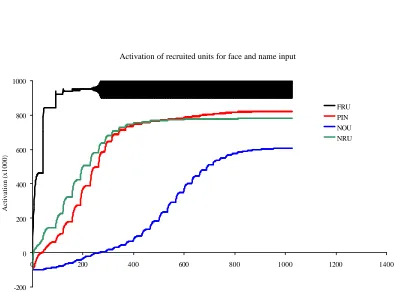
Figure 7 (below) summarises the resultant activation at the FRU, PIN and
NOU (and where relevant, NRU) levels when this extended architecture was
presented with (i) a face only and (ii) a face and name combination. As can be seen,
IACAPA has successfully recruited a free FRU, PIN, NOU (and NRU) to represent
the new face, person, and name.
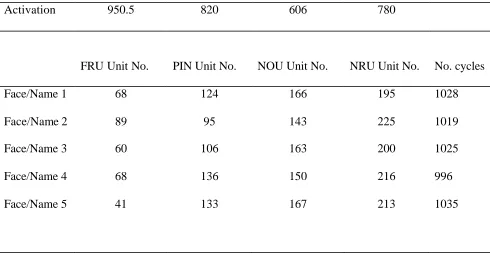
(Please insert Figure 7 about here)
Again, for each learning situation, this pattern of results was replicated across
four further new individuals to demonstrate that the learning was generalisable and
was not the product of the development of a certain set of connections to a certain
pattern of excitation (see Table 3). The results confirmed that, in each case, a new
FRU, PIN NOU (and NRU) was recruited and thus the complete cycle of learning was
achieved.
Examination of these results also allows determination of the influence of
presentation of the name alongside the new face compared to the situation where the
face alone was presented. In this respect, it was clear that both the speed and final
activation level of the recruited units were influenced by the concurrent presentation
of the name. The network reached a stable state of activation of a new FRU, (NRU),
PIN and NOU within fewer cycles, and the final activation levels of the PIN and NOU
were higher, when face and name information was provided than when the face alone
was provided. The activation of the newly recruited FRU remained unaffected and at
ceiling level, although this was achieved after slightly fewer network cycles when
both the face and name information were provided (281 cycles) than when the face
alone was provided (298 cycles). In addition, it was notable that, as a consequence of
the higher activation levels of the recruited units, links between units were acquired
faster, and required fewer (larger) weight updates to reach a maximum strength when
the face and name were presented compared to when the face was presented alone.
This confirms the picture provided by the activation data.
In summary, the results of this simulation mirrored those from the human
learning situation. In both Experiment 2 and Simulation 2, provision of the name as
well as the face resulted in greater ease of acquisition of a new person as
demonstrated by PIN and NOU level activation. Consequently, it was clear that the
network was able to simulate the fact that a concurrent learning task in which there
was potential for associations between related facts made the overall learning task
easier rather than more difficult.
Interim Discussion
The findings of both Experiment 2 and Simulation 2 are somewhat
required to learn two things rather than just one, the learning task is completed in less
time. The simulation results provide some way of explaining these findings through
appealing to the notion of back activation or bi-directiona lity within a highly
interconnected system.
Essentially, in the situation where a face and name input are provided, the PIN
receives activation from two sources – visual and linguistic. The net input to the
system as a whole is thus increased compared to the situation where the face alone is
presented. As a consequence, a newly recruited PIN has a greater direct input and can
attain a higher level of activation (or can reach an arbitrary threshold in fewer network
cycles) when face and name are presented than when the face alone is presented.
This facilitation at the PIN level is propagated forward to the NOU with the
result that the NOU also attains a higher resultant level of activation (or reaches a
threshold in fewer network cycles). This corresponds in human performance terms to
a faster successful name generation. In addition to this forward propagation of
activation, the facilitation at the PIN level is also propagated backwards, via the
bi-directional links, to the FRU level. Activation is maintained at a high (or ceiling)
level, but in addition, because the net activation at both ends of the PIN-FRU link is
now greater, the link has the capacity to become stronger. The result is that not only
is the level of activation facilitated throughout the network, but also the strength of
the newly created links is boosted when face and name are presented compared to
when the face alone is presented. Performance advantages result and are expressed
through the fact that conscious attainment of a sense of familiarity or the recall of a
name is achieved more quickly. What initially appeared as a counterintuitive result
can therefore be explained with reference to the association of the to-be-learned
Conclusions
The research presented here has explored the pattern of human learning of the
faces and names of new people, and has presented simulation data to model these
learning patterns. Through development of an IAC system tailored for familiar face
recognition, the current IACAPA network is capable of modelling both recognition of
familiar faces (and names) and the learning of new faces (and names). This
represents a novel contribution in itself. More than this, however, the development of
the present neural network has provided insight into the process that humans may use
to achieve complex learning tasks. In particular, the development of IACAPA has
highlighted the importance of an economic, parsimonious and flexible learning
system, and the use of a biologically plausible bi-directional network has allowed the
positive effects of interconnectivity during learning to become apparent.
The strength of using IAC as a basis for the present development is that the
resultant model retains the abilities and capabilities of IAC to simulate a range of
face-related phenomena. In addition, the biological plausibility and cognitive
economy of the IAC system has been preserved. IACAPA represents a system of
excitation between, and inhibition within, pools of related units connected by
bi-directional links and in this way it represents a truly interactive system that is
sympathetic to the neural connectivity and topographical organisation of the human
brain. Indeed, Medler (1998) has hailed the success of such a ne twork because of its
ability to display human- like qualities in its performance. It can, for example, retrieve
information via several routes. It can indicate identity from a facial input, a semantic
input (i.e., through the semantic category label ‘teacher’) and from a name input. In
this sense, IAC and IACAPA, like humans, have what is termed a
state of the system is readily interpretable at any stage. We can stop the flow of
activation and examine the activation states of the units in the network to determine
the system’s best guess, just as with humans. Third, the network operates by using a
process of iterative retrieval, which again is characteristic of human information
processors. It retrieves information by trying each unit in a pool until the appropriate
one is found (via its strong link). Finally, the network displays a gradual activation
decline in which the activation of the units within the network gently decreases when
the stimulus is removed. This, again, mirrors the performance of a human
information processor.
Incorporation of Semantic Information
The present implementation of IACAPA is, however, limited to the case in
which faces and names are represented in the absence of semantic information.
Clearly, to be able to capture the fuller picture of person representation, IACAPA
requires development to incorporate a semantic system in the form of semantic
information units (SIUs). Brédart, Valentine, Calder and Gassi (1995) suggest that
semantic information should be represented in the form of a series of SIU pools to
describe facts such as occupation, hobbies, nationality, etc. Inhibition within each of
these pools is appropriate to prevent the retrieval (or acquisition) of the wrong
occupation or the wrong hobby, but inhibition is not required between the separate
SIU pools. In this sense, retrieval (or acquisition) of the label ‘teacher’ does not
interfere with the retrieval (or acquisition) of the hobby ‘likes golf’. This
modification to Burton et al.’s (1990) IAC architecture was driven by demonstration
of the fact that retrieval of semantic information was assisted when many facts were
Incorporation of a system of SIUs would also allow IACAPA to address the
robust evidence regarding the relative ease of retrieving (and learning) names and
semantic information. A great deal of empirical work supports the intuition that
names are more difficult to retrieve than information such as occupations (see
Valentine , Brennen & Brédart, 1996, for a review), and several explanations have
been put forward to account for this. The traditional IAC explanation rests on the
assumption that full names (first name-surname combinations) are very unlikely to be
shared across two individuals and so are connected to the PIN layer by one-to-one
links. In contrast, occupation labels such as ‘teacher’ are likely to be associated with
several people (we are likely to know several teachers) and are thus connected to the
PIN layer by many-to-one links. This relative uniqueness of names compared to
occupations was considered to render the name- face link more fragile. Damage to
this link would lead to the irrevocable failure to retrieve the name through any other
route with the consequence that naming failures were more likely than occupation
retrieval failures. Evidence in support of this uniqueness hypothesis is, however,
mixed (see Stanhope & Cohen, 1993). In particular, the fact that some anomic
patients can retrieve unique semantic information about an individual whilst
remaining unable to name them is problematic for the uniqueness explanation (see
Semenza & Zettin, 1988; 1989; Hanley, 1995).
One1 alternative explanation for the difficulty when retrieving (or learning)
names is that names are meaningless (Cohen, 1990). Two consequences arise. First,
no synonyms exist for the name. Instead, the name has to be recalled precisely for it
to ‘work’ (Brédart, 1993; Cohen & Faulkner, 1986). Second, the proper noun
representing a name is not embedded within a semantic context in the same way that a
name seems to strip the word of its potential to be embedded into a semantic context
with the result that it is more difficult to remember the name ‘Mr Baker’ than to
remember the occupation ‘baker’ (McWeeny, Young, Hay & Ellis, 1987). This
explanation of naming difficulties can be incorporated into a network account of
person information by allowing SIUs associated with common nouns, such as
‘teacher’ to be associated with a host of propositions such as ‘works with children’,
‘works at a school’, ‘teaches mathematics’, etc., The activation level of the SIU
representing the semantic concept ‘teacher’ would thus rise, through these
associations, to a level above that of a name unit which lacks such associations.
Development of the network in this way would allow the modelling of naming
difficulties when both retrieving and learning names without appealing to the notion
of information uniqueness.
Information Salience
One situation that would, at present, provide a problem for IACAPA involves
the presentation of ambiguous inputs to the system. For example, consider the case of
learning two very similar faces where the proportion of shared feature units is great.
At present, once the first face has been learned, the successful acquisition of the
second face depends critically on the selection and recruitment of a second FRU. If,
however, the second face shared more than half its feature units with the first face,
IACAPA would always respond by activating the FRU for that first face to a greater
degree than any remaining free FRUs. As a consequence, the FRU for that first face
would successfully inhibit the selection and recruitment of any new FRUs. The
second face would, in network terms, be indistinguishable from the first face and the
network would have failed to learn. While visual similarity effects of this kind are
Ferrara, 1991; Humphreys, Lamote & Lloyd-Jones, 1995) it is notable here that
humans are capable of learning even the faces of identical twins when given enough
training (see also Stevenage, 1998). The introduction of the notion of information
salience as a way of modelling top-down processing may help the network to perform
in a more human fashion in such ambiguous situations.
Information salience means that some inputs carry greater importance than
others. In the extreme example provided by twin faces one might consider that the
two faces are described by a number of feature units - let us say 10 feature units - and
that the twins, while being genetically identical, and physically very similar, are in
fact distinguishable by a very small number of features. In network terms, the twins
might share 9 out of the 10 feature units, but might differ with respect to one
descriptor. One of the challenges when learning twin faces is to identify this
descriptor - the thing that reliably tells one twin apart from the other - the salient
information. This descriptor is unlikely to be one of the most common features, and
the difference in this descriptor across the twins is likely to be small. Hence, twin
learning takes time. In essence, the task of twin identification then becomes a task of
salient descriptor identification. With feedback, the importance attached to the nine
common features might reasonably be expected to reduce, while the importance of the
one discriminating or salient feature might reasonably increase.
We can model information salience by means of the strength of the links
connecting the input unit to the correspond ing unit in the next layer (here, between
FTU and FRU). It may well be that while the strength of all FTU-FRU weights might
start off equivalent, hence the twin confusion, increasing exposure and feedback may
mean that the strength of the weights between salient features and the FRUs for each
non-discriminatory features and the FRUs for each twin increases to a lesser degree, or
even gradually declines. This calls for the introduction of an ‘unlearning’ mechanism
along the lines of a ‘use it or lose it’ rule (see Nakisa & Plunkett, 1998). This could
be achieved by the introduction of a weight decay mechanism.
A weight decay mechanism would improve the capacity of IACAPA to
account for several aspects of person perception such as the modelling of information
salience and the forgetting of faces, whilst retaining a biologically plausible
explanation of the well-known effects of recognition and priming. Future research is
aimed at exploring this issue and thus improving the accountability of IACAPA even
References
Brédart, S. (1993). Retrieval failures in face naming. Memory, 1, 351-366.
Brédart, S., Valentine, T.R., Calder, A., & Gassi, L. (1995). An interactive activation
model of face naming. Quarterly Journal of Experimental Psychology - A, 48(2),
466-486.
Brennen, T. (1993). The difficulty with recalling people’s names The plausible
phonology hypothesis. Memory, 1, 409-431.
Bruce, V., & Humphreys, G.W. (1994). Recognising objects and faces. Visual
Cognition, 1(2/3),
Bruce, V., & Valentine, T.R. (1985). Identity priming in the recognition of familiar
faces. British Journal of Psychology, 76, 373-383.
Burke, D.M., MacKay, D.G., Worthley, J.S., & Wade, E. (1991). On the top of the
tongue: What causes word finding failures in young and older adults? Journal of
Memory and Language, 30, 542-579.
Burton, A.M. (1994). Learning new faces in an interactive activation and
competition model. Visual Cognition, 1(2/3), 313-348.
Burton, A.M., & Bruce, V. (1992). I recognise your face but I can’t remember your
name: A simple explanation? British Journal of Psychology, 83, 45-60.
Burton, A.M., & Bruce, V. (1993). Naming faces and naming names: Exploring an
interactive activation model of person recognition. Memory, 1(4), 457-480.
Burton, A.M., Bruce, V., & Johnston, R.A. (1990). Understanding face recognition
with an interactive activation model. British Journal of Psychology, 81, 361-380.
Burton, A.M., Young, A.W., Bruce, V., Johnston, R.A., & Ellis, A.W. (1991).
Cohen, G. (1990). Why is it difficult to put names to faces? British Journal of
Psychology, 81, 287-298.
Cohen, G., & Faulkner, D. (1986). Memory for proper names: Age differences in
retrieval. British Journal of Developmental Psychology, 4, 187-197.
Ellis, A.W., Burton, A.M., Young, A.W., Flude, B.M. (1997). Repetition priming
between parts and wholes: Tests of a computational model of familiar face
processing. British Journal of Psychology, 88, 579-608.
Goddard, N.H., Lynne, K.J., Mintz, T., & Bukys, L. (1989). Rochester connectionist
simulator. Technical report 233 (revised). Department of Computer Sciences,
University of Rochester, New York.
Hanley, J.R. (1995). Are names difficult to recall because they are unique? A case
study of a patient with anomia. Quarterly Journal of Experimental Psychology,
48A, 487-506.
Hebb, D.O. (1949). The Organisation of Behaviour. New York: John Wiley & Sons.
Humphreys, G.W., Lamote, C., & Lloyd-Jones, T.J. (1995). An interactive activation
approach to object processing: Effects of structural similarity, name frequency and
task in normality and pathology. Memory, 3-4, 535-586.
McClelland, J.L., & Rumelhart, D.L. (Eds.), (1988). Explorations in Parallel
Distributed Processing. Cambridge, MA: MIT Press.
McWeeny, K.H., Young, A.W., Hay, D.C., & Ellis, A. (1987). Putting names to
faces. British Journal of Psychology, 78, 143-149.
Medler, D.A. (1998). A brief history of connectionism. Neural computing surveys, 1,
61-606.
Nakisa, R.C., & Plunkett, K. (1998). Evolution of a rapidly learned representation
Rumelhart, D.E., Hinton, G.E., & Williams, R.J. (1986). Learning internal
representations by error propagation. In D.E. Rumelhart, J.L. McClelland & the
PDP Research Group (Eds.), Parallel Distributed Processing, Vol 1: Foundations,
Cambridge, MA: MIT Press.
Semenza, C., & Zettin, M. (1988). Generating proper names: A case of selective
inability. Cognitive Neuropsychology, 5, 711-721.
Semenza, C., & Zettin, M. (1989). Evidence from aphasia for the role of proper
names as pure referring expressions. Nature, 342, 678-679.
Stanhope, N., & Cohen, G. (1993). Retrieval of proper names: Testing the models.
British Journal of Psychology, 84, 51-65.
Stevenage, S.V. (1998). Which twin are you? A demonstration of induced
categorical perception of identical twin faces. British Journal of Psychology, 89,
39-57.
Valentine, T., Brennen, T., & Bredart, S. (1996). The Cognitive Psychology of
Perper Names: On the Importance of Being Ernest. Routledge: London, New
York.
Valentine, T., & Ferrara, A. (1991). Typicality in categorization, recognition and
identification: Evidence from face recognition. British Journal of Psychology, 82,
87-102.
Young, A.W., McWeeny, K.H., Ellis, A.W., & Hay, D.C. (1986). Naming and
categorising faces and written names. Quarterly Journal of Experimental Psychology
Appendix
Unit Functions:
The net input to a unit i at time t is calculated as a sum of the weighted output of the units connected to unit i:
∑
=
j j ij
i w a t
net α ( ), ∀aj(t)>0
where α is a global strength parameter, wij is the weight on the connection between
unit iand unit j, and aj(t) is the output activation of unit j at time t. Only units
with a positive output aj(t) are entered into this sum.
The change in the activation of unit i in response to the input is given by the equation:
(
)
(
)
(
)
(
)
≤ − − − > − − − = ∆ 0 , ) ( ) ( 0 , ) ( ) ( ) ( i i i i i i i i i net rest t a decay net min t a net rest t a decay net t a max t awhere max and min are the maximum and minimum activation values for all units, rest is the resting activation for all units, decay is the global decay on all unit
activations, and ai(t) is the current activation level of unit i. The new output
activation of unit i, at time t+1, is then calculated as the sum of the current activation, ai(t), and the cha nge in activation,∆ai(t):
) ( ) ( ) 1
(t a t a t
ai + = i +∆ i
Link Functions:
The Hebb-like weight update function adopted by Burton (1994) was also used here:
(
)
(
)
< + > − = ∆ 0 , 1 0 , 1 j i ij j i j i ij j iij a a w a a
where λ is the global learning rate, but this update function was applied according to
the following rules:
1. Stepped Update Rule:
Only weights on connections from a pool having a winning unit (ai(t)>0) and in all
pools above this one are modified.
2. Exclusive Update Rule:
Only weights on connections to, or from, a winning unit are modified.
3. Flexible Update Rule:
Only weights on connections to a winning FRU from FTU pools that have an active
unit are modified.
Global Parameters:
The global parameters were set as follows:
0 . 1 = max , 2 . 0 − = min , 1 . 0 − = rest , 2 . 0 = α , 09 . 0 =
decay , and
5 . 0 =
λ .
In all simulations, between-pool excitatory connections for known people had weight
1.0, between-pool inhibitory connections for known people had weight –1.0, and all
within-pool inhibitory connections had weight –1.0. Initial between-pool connections
Table 1: Asymptotic activation levels achieved by winning FRU, PIN and NOU for
each of five novel face presentations, together with the number of cycles taken to
reach complete learning. (Mean refers to the mean level of activation across the limits
between which the unit finally oscillated.)
FRU Activation PIN Activation NOU Activatio n
Activation 950.5 746 581
FRU Unit No. PIN Unit No. NOU Unit No. No. cycles
Face 1 42 107 149 1207
Face 2 62 130 147 1329
Face 3 57 116 173 1199
Face 4 76 134 178 1229
Table 2: Mean number of trials taken to reach the criterion level of learning (and
standard deviations) across different levels of input from Experiment Two.
No Help Face Input only Face and Name
Input
Mean no.
trials to criterion 21.07 20.73 13.53
Table 3:
FRU Activation PIN Activation NOU Activation NRU Activation
Activation 950.5 747 582
FRU Unit No. PIN Unit No. NOU Unit No. NRU Unit No. No. cycles
Face 1 75 123 188 1218
Face 2 82 92 153 1234
Face 3 87 94 164 1208
Face 4 80 123 153 1241
Face 5 46 99 165 1231
FRUActivation PIN Activation NOU Activation NRU Activation
Activation 950.5 820 606 780
FRU Unit No. PIN Unit No. NOU Unit No. NRU Unit No. No. cycles
Face/Name 1 68 124 166 195 1028
Face/Name 2 89 95 143 225 1019
Face/Name 3 60 106 163 200 1025
Face/Name 4 68 136 150 216 996
Figure Legends
Figure 1: Interactive Activation and Competition model presented by Burton, Bruce
and Johnston (1990). Reproduced with kind permission of the authors and the British
Psychological Society.
Figure 2: Pattern of learning of the faces of identical twin girls by human observers.
Figure 3: Diagrammatic representation of the structure and connectivity within
IACAPA. All links are bi-directional. For simplicity, only excitatory links to the
known face, and only a sample of the random links between free units at each layer
are shown.
Figure 4: Activation of the newly recruited FRU, PIN and NOU in response to the
presentation of a novel face.
Figure 5: Averaged learning curves shown by human observers when learning the
faces of identical twin girls under conditions of (i) no help, (ii) face help and (iii) face
and name help.
Figure 6: Diagrammatic representation of the structure and connectivity within
IACAPA when provided with a face and name input. All links are bi-directional. For
simplicity, only excitatory links to the known face, and only a sample of the random
Figure 7: Activation of the newly recruited FRU, NRU, PIN and NOU in response to
Figure 1:
FRUs
_charles
_diana _major
_smith _kissinger
_nixon
PINs
Semantic Information _charles
royals _diana _major
Prime Minister _smith _kissinger
Figure 2:
50 60 70 80 90 100
0 5 10 15 20 25 30 35 40 45 50
No. Training Trials
Figure 3:
FTUs
hair eyes nose mouth skin jaw brows outline chin ears
h1 ey1 n1 m1 s1 j1 b1 o1 c1 ea1
h2 ey2 n2 m2 s2 j2 b2 o2 c2 ea2
h3 ey3 n3 m3 s3 j3 b3 o3 c3 ea3
h4 ey4 n4 m4 s4 j4 b4 o4 c4 ea4
FRUs
Known Free 1 Free 2 … ….. Free 50
PINs
Known Free 1 Free 2 …. ……. Free 50
NOUs
Known Free 1 Free 2 …. …… Free 50
Figure 4:
-200 0 200 400 600 800 1000
0 200 400 600 800 1000 1200 1400
No. Network cycles
Activation (x1000)