R
C
C
h
a
k
r
a
b
o
r
t
y
,
w
w
w
.
m
y
r
e
a
d
e
r
s
.
i
n
f
o
RC Chakraborty, www.myreaders.info
Soft Computing - Introduction: Soft Computing CourseLecture 1 – 6, notes, slides www.myreaders.info/ , RC Chakraborty, e-mail [email protected] , Aug. 10, 2010 http://www.myreaders.info/html/soft_computing.html
Introduction
Basics of Soft Computing
Soft Computing
www.myreaders.info
Return to Website
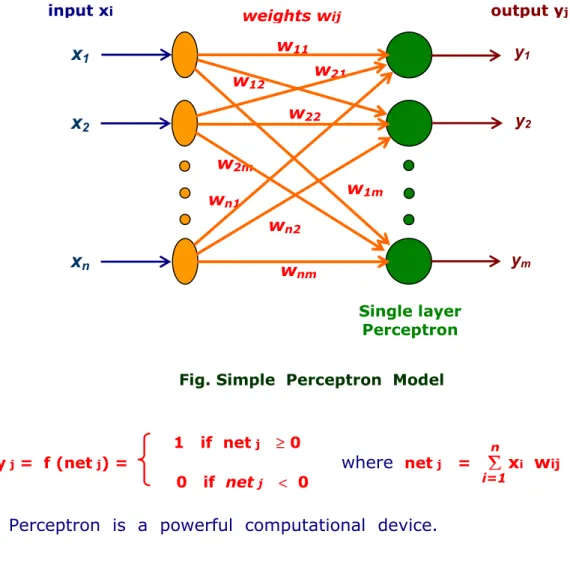
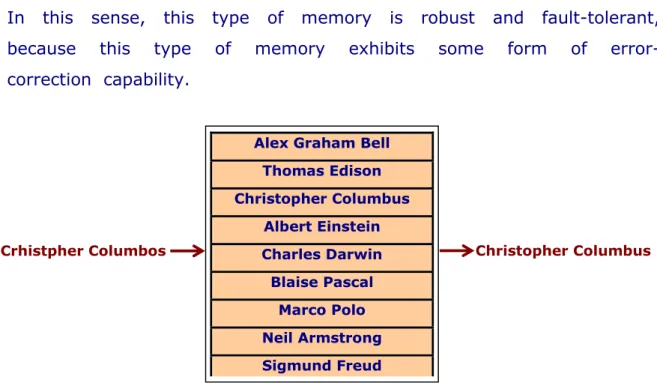
Introduction to Soft Computing, topics : Definitions, goals, and importance. Fuzzy computing : classical set theory, crisp & non-crisp set, capturing uncertainty, definition of fuzzy set, graphic interpretations of fuzzy set - small, prime numbers, universal space, empty. Fuzzy operations : inclusion, equality, comparability, complement, union, intersection. Neural computing : biological model, information flow in neural cell. Artificial neuron - functions, equation, elements, single and multi layer perceptrons. Genetic Algorithms : mechanics of biological evolution, taxonomy of artificial evolution &
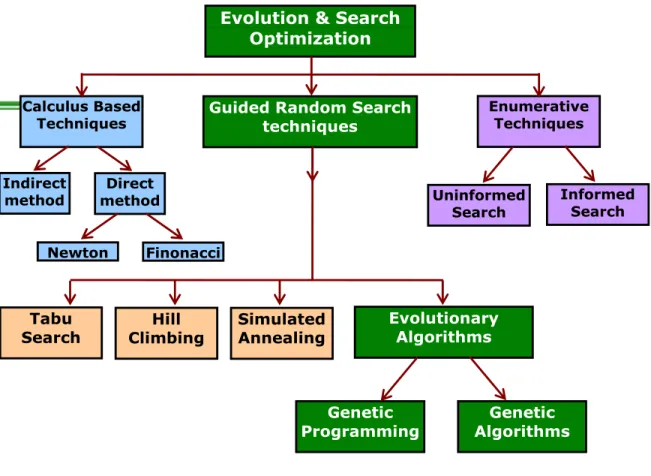
search optimization - enumerative, calculus-based and guided random search techniques, evolutionary algorithms (EAs). Associative memory : description of AM, examples of auto and hetero AM.
Adaptive Resonance Theory : definitions of ART and other types of learning, ART description, model functions, training, and systems.
R
C
C
h
a
k
r
a
b
o
r
t
y
,
w
w
w
.
m
y
r
e
a
d
e
r
s
.
i
n
f
o
RC Chakraborty, www.myreaders.info
Introduction
Basics of Soft Computing Soft Computing
Topics
(Lectures 01, 02, 03, 04, 05, 06 6 hours)
Slides 1. Introduction
What is Soft computing? Definitions, Goals, and Importance.
03-06
2. Fuzzy Computing
Fuzzy Set: Classical set theory, Crisp & Non-crisp set, Capturing uncertainty, Definition of fuzzy set; Graphic Interpretations : Fuzzy set - Small, Prime numbers, Universal space, Empty; Fuzzy operations : Inclusion, Equality, Comparability, Complement, Union, Intersection
.07-28
3. Neural Computing
Biological model, Information flow in neural cell; Artificial neuron:
Functions, Equation, Elements, Single and Multi layer Perceptrons.
29-39
4. Genetic Algorithms
What are GAs ? Why GAs ? Mechanics of Biological evolution; Artificial Evolution and Search Optimization: Taxonomy of Evolution & Search optimization - Enumerative, Calculus-based and Guided random search techniques, Evolutionary algorithms (EAs).
40-49
5. Associative Memory
Description of AM; Examples of Auto and Hetero AM.
50-53
6. Adaptive Resonance Theory
Definitions of ART and other types of learning; ART : Description, Model functions , Training, and Systems.
54-58
7. Applications of Soft Computing 59
8. References 60-61
02
R
C
C
h
a
k
r
a
b
o
r
t
y
,
w
w
w
.
m
y
r
e
a
d
e
r
s
.
i
n
f
o
RC Chakraborty, www.myreaders.info
Introduction
Basics of Soft Computing
What is Soft Computing ?
• The idea of soft computing was initiated in 1981 when Lotfi A. Zadeh published his first paper on soft data analysis “What is Soft Computing”, Soft Computing. Springer-Verlag Germany/USA 1997.].
• Zadeh, defined Soft Computing into one multidisciplinary system as the fusion of the fields of Fuzzy Logic, Neuro-Computing, Evolutionary and Genetic Computing, and Probabilistic Computing.
• Soft Computing is the fusion of methodologies designed to model and enable solutions to real world problems, which are not modeled or too difficult to model mathematically.
• The aim of Soft Computing is to exploit the tolerance for imprecision, uncertainty, approximate reasoning, and partial truth in order to achieve close resemblance with human like decision making.
• The Soft Computing – development history
SC = EC + NN + FL Soft
Computing Evolutionary
Computing Neural
Network Fuzzy
Logic Zadeh
1981 Rechenberg
1960 McCulloch
1943 Zadeh
1965
EC = GP + ES + EP + GA Evolutionary
Computing Genetic
Programming Evolution
Strategies Evolutionary
Programming Genetic Algorithms Rechenberg
1960 Koza
1992 Rechenberg
1965 Fogel
1962 Holland
1970
03
R
C
C
h
a
k
r
a
b
o
r
t
y
,
w
w
w
.
m
y
r
e
a
d
e
r
s
.
i
n
f
o
RC Chakraborty, www.myreaders.info 1. Introduction
To begin, first explained, the definitions, the goals, and the importance of the soft computing. Later, presented its different fields, that is, Fuzzy Computing, Neural Computing, Genetic Algorithms, and more.
Definitions of Soft Computing(SC)
Lotfi A. Zadeh, 1992 : “Soft Computing is an emerging approach to computing which parallel the remarkable ability of the human mind to reason and learn in a environment of uncertainty and imprecision”.
The Soft Computing consists of several computing paradigms mainly :
Fuzzy Systems, Neural Networks, and Genetic Algorithms.• Fuzzy set : for knowledge representation via fuzzy If – Then rules.
• Neural Networks : for learning and adaptation
• Genetic Algorithms : for evolutionary computation These methodologies form the core of SC.
Hybridization of these three creates a successful synergic effect;
that is, hybridization creates a situation where different entities cooperate advantageously for a final outcome.
Soft Computing is still growing and developing.
Hence, a clear definite agreement on what comprises Soft Computing has not yet been reached. More new sciences are still merging into Soft Computing.
04
R
C
C
h
a
k
r
a
b
o
r
t
y
,
w
w
w
.
m
y
r
e
a
d
e
r
s
.
i
n
f
o
RC Chakraborty, www.myreaders.info
Goals of Soft Computing
Soft Computing is a new multidisciplinary field, to construct new generation of Artificial Intelligence, known as
Computational Intelligence.
• The main goal of Soft Computing is to develop intelligent machines to provide solutions to real world problems, which are not modeled, or too difficult to model mathematically.
• Its aim is to exploit the tolerance for
Approximation,
Uncertainty,
Imprecision, and
Partial Truthin order to achieve close resemblance with human like decision making.
Approximation : here the model features are similar to the real ones, but not the same.
Uncertainty : here we are not sure that the features of the model are the same as that of the entity (belief).
Imprecision : here the model features (quantities) are not the same as that of the real ones, but close to them.
05
R
C
C
h
a
k
r
a
b
o
r
t
y
,
w
w
w
.
m
y
r
e
a
d
e
r
s
.
i
n
f
o
RC Chakraborty, www.myreaders.info
Importance of Soft Computing
Soft computing differs from hard (conventional) computing. Unlike hard computing, the soft computing is
tolerant of imprecision, uncertainty, partial truth, and approximation. The guiding principle of soft computing is to exploit these tolerance to achieve tractability, robustness and low solution cost. In effect, the role model for soft computing is the human mind.
The four fields that constitute Soft Computing (SC) are :
Fuzzy Computing(
FC),
Evolutionary Computing(
EC),
Neural computing(
NC), and
Probabilistic Computing(
PC), with the latter subsuming belief networks, chaos theory and parts of learning theory.
Soft computing is not a concoction, mixture, or combination, rather,
Soft computing is a partnershipin which each of the partners contributes a distinct methodology for addressing problems in its domain. In principal the constituent methodologies in Soft computing are complementary rather than competitive.
Soft computing may be viewed as a foundation component for the emerging field of Conceptual Intelligence.
06
R
C
C
h
a
k
r
a
b
o
r
t
y
,
w
w
w
.
m
y
r
e
a
d
e
r
s
.
i
n
f
o
RC Chakraborty, www.myreaders.info
2. Fuzzy Computing
In the real world there exists much fuzzy knowledge, that is, knowledge which is vague, imprecise, uncertain, ambiguous, inexact, or probabilistic in nature.
Human can use such information because the human thinking and reasoning frequently involve fuzzy information, possibly originating from inherently inexact human concepts and matching of similar rather then identical experiences.
The computing systems, based upon classical set theory and two-valued logic, can not answer to some questions, as human does, because they do not have completely true answers.
We want, the computing systems should not only give human like answers but also describe their reality levels. These levels need to be calculated using imprecision and the uncertainty of facts and rules that were applied.
07
R
C
C
h
a
k
r
a
b
o
r
t
y
,
w
w
w
.
m
y
r
e
a
d
e
r
s
.
i
n
f
o
RC Chakraborty, www.myreaders.info
2.1 Fuzzy Sets
Introduced by Lotfi Zadeh in 1965, the fuzzy set theory is an extension of classical set theory where elements have degrees of membership.
• Classical Set Theory
− Sets
are defined by a simple statement describing whether an element having a certain property belongs to a particular set.
−
When set A is contained in an universal space X,
then we can state explicitly whether each element x of space X
"is or is not" an element of A.
−
Set A is well described by a function called
characteristic functionA.
This function, defined on the universal space X, assumes : value 1 for those elements x that belong to set A, and value 0 for those elements x that do not belong to set A.
The notations used to express these mathematically are
Α : Χ → [0, 1]A(x) = 1 , x is a member of A Eq.(1) A(x) = 0 , x is not a member of A
Alternatively, the set A can be represented for all elements x ∈ X by its
characteristic function µA (x) defined as1 if x ∈ X
µA (x) = Eq.(2) 0 otherwise
−
Thus, in classical set theory µ
A (x) has only the values 0('false') and 1 ('true''). Such sets are called
crisp sets.
08
R
C
C
h
a
k
r
a
b
o
r
t
y
,
w
w
w
.
m
y
r
e
a
d
e
r
s
.
i
n
f
o
RC Chakraborty, www.myreaders.info
• Crisp and Non-crisp Set
−
As said before, in classical set theory, the
characteristic function µA(x) of Eq.(2) has only values 0 ('false') and 1 ('true'').Such sets are
crisp sets.−
For Non-crisp sets the characteristic function µ
A(x) can be defined.
The characteristic function µ
A(x)of Eq. (2) for the crisp set is generalized for the Non-crisp sets.
This generalized characteristic function µ
A(x)of Eq.(2) is called
membership function.
Such Non-crisp sets are called
Fuzzy Sets.
−
Crisp set theory is not capable of representing descriptions and classifications in many cases; In fact, Crisp set does not provide adequate representation for most cases.
−
The proposition of Fuzzy Sets are motivated by the need to capture and represent real world data with uncertainty due to imprecise measurement.
−
The uncertainties are also caused by vagueness in the language.
09
R
C
C
h
a
k
r
a
b
o
r
t
y
,
w
w
w
.
m
y
r
e
a
d
e
r
s
.
i
n
f
o
RC Chakraborty, www.myreaders.info
• Example 1 : Heap Paradox
This example represents a situation where vagueness and uncertainty are inevitable.
- If we remove one grain from a heap of grains, we will still have a heap.
- However, if we keep removing one-by-one grain from a heap of grains, there will be a time when we do not have a heap anymore.
- The question is, at what time does the heap turn into a countable collection of grains that do not form a heap? There is no one correct answer to this question.
10
R
C
C
h
a
k
r
a
b
o
r
t
y
,
w
w
w
.
m
y
r
e
a
d
e
r
s
.
i
n
f
o
RC Chakraborty, www.myreaders.info
• Example 2 : Classify Students for a basketball team This example explains the grade of truth value.
-
tall studentsqualify and
not tall studentsdo not qualify - if students 1.8 m tall are to be qualified, then
should we exclude a student who is
1/
10" less? or should we exclude a student who is 1" shorter?
■
Non-Crisp Representation to represent the notion of a tall person
.Crisp logic Non-crisp logic
Fig. 1 Set Representation – Degree or grade of truth
A student of height 1.79m would belong to both tall and not tall sets with a particular degree of membership.
As the height increases the membership grade within the tall set would increase whilst the membership grade within the not-tall set would decrease.
11
Degree or grade of truth
Not Tall Tall
1
0
1.8 m Height x
Degree or grade of truth
Not Tall Tall
1
0
1.8 m Height x
R
C
C
h
a
k
r
a
b
o
r
t
y
,
w
w
w
.
m
y
r
e
a
d
e
r
s
.
i
n
f
o
RC Chakraborty, www.myreaders.info
• Capturing Uncertainty
Instead of avoiding or ignoring uncertainty, Lotfi Zadeh introduced Fuzzy Set theory that captures uncertainty.
■
A fuzzy set is described by a
membership function µA (x) of A.This membership function associates to each element
xσ ∈ Xa number as µ
A (xσ) in the closed unit interval [0, 1].
The number
µA (xσ ) represents the degree of membershipof x
σin
A.
■
The notation used for membership function µ
A(x) of a fuzzy set A is
Α : Χ → [0, 1]■
Each membership function maps elements of a given universal base set
X, which is itself a crisp set, into real numbers in
[0, 1] .■
Example
Fig. 2 Membership function of a Crisp set C and Fuzzy set F
■
In the case of Crisp Sets the members of a set are :
either out of the set, with membership of degree " 0 ", or in the set, with membership of degree " 1 ",
Therefore,
Crisp Sets ⊆ Fuzzy SetsIn other words, Crisp Sets are Special cases of Fuzzy Sets.
[Continued in next slide]
12
µ
µ
c(x)
µ
F(x)
1
C F
0.5
0 x
R
C
C
h
a
k
r
a
b
o
r
t
y
,
w
w
w
.
m
y
r
e
a
d
e
r
s
.
i
n
f
o
RC Chakraborty, www.myreaders.info
[Continued from previous slide :]
Example 1: Set of prime numbers (
a crisp set
)If we consider space
Xconsisting of natural numbers
≤ 12 ie X = {1, 2, 3, 4, 5, 6, 7, 8, 9, 10, 11, 12}Then, the set of prime numbers could be described as follows.
PRIME = {x contained in X | x is a prime number} = {2, 3, 5, 6, 7, 11}
Example 2: Set of SMALL (
as non-crisp set
)A Set
Xthat consists of
SMALLcannot be described
;for example
1is a member of SMALL and
12is not a member of
SMALL.Set
A,as SMALL, has un-sharp boundaries, can be characterized by a function that assigns a real number from the closed interval from
0to
1to each element x in the set
X.
13
R
C
C
h
a
k
r
a
b
o
r
t
y
,
w
w
w
.
m
y
r
e
a
d
e
r
s
.
i
n
f
o
RC Chakraborty, www.myreaders.info
• Definition of Fuzzy Set
A
fuzzy set Adefined in the universal space
Xis a function defined in
Xwhich assumes values in the range
[0, 1].A fuzzy set
Ais written as a set of pairs
{x, A(x)}as
A = {{x , A(x)}} , x in the set Xwhere
xis an element of the universal space
X,and
A(x)is the value of the function
Afor this element.
The value
A(x)is the
membership gradeof the element
xin a fuzzy set
A.Example :
Set
SMALLin set X consisting of natural numbers
≤ to 12.Assume: SMALL(1) = 1, SMALL(2) = 1, SMALL(3) = 0.9, SMALL(4) = 0.6, SMALL(5) = 0.4, SMALL(6) = 0.3, SMALL(7) = 0.2, SMALL(8) = 0.1, SMALL(u) = 0 for u >= 9.
Then, following the notations described in the definition above :
Set SMALL = {{1, 1 }, {2, 1 }, {3, 0.9}, {4, 0.6}, {5, 0.4}, {6, 0.3}, {7, 0.2}, {8, 0.1}, {9, 0 }, {10, 0 }, {11, 0}, {12, 0}}
Note that a fuzzy set can be defined precisely by associating with each x , its grade of membership in
SMALL.• Definition of Universal Space
Originally the universal space for fuzzy sets in fuzzy logic was defined only on the integers. Now, the universal space for fuzzy sets and fuzzy relations is defined with three numbers. The first two numbers specify the start and end of the universal space, and the third argument specifies the increment between elements. This gives the user more flexibility in choosing the universal space.
Example :
The fuzzy set of numbers, defined in the universal space
X = { xi } = {1, 2, 3, 4, 5, 6, 7, 8, 9, 10, 11, 12}is presented as
SetOption [FuzzySet, UniversalSpace → {1, 12, 1}]
14
R
C
C
h
a
k
r
a
b
o
r
t
y
,
w
w
w
.
m
y
r
e
a
d
e
r
s
.
i
n
f
o
RC Chakraborty, www.myreaders.info
• Graphic Interpretation of Fuzzy Sets SMALL
The fuzzy set SMALL of small numbers, defined in the universal space
X = { xi } = {1, 2, 3, 4, 5, 6, 7, 8, 9, 10, 11, 12}is presented as
SetOption [FuzzySet, UniversalSpace → {1, 12, 1}]
The Set
SMALLin set X is :
SMALL = FuzzySet {{1, 1 }, {2, 1 }, {3, 0.9}, {4, 0.6}, {5, 0.4}, {6, 0.3}, {7, 0.2}, {8, 0.1}, {9, 0 }, {10, 0 }, {11, 0}, {12, 0}}
Therefore
SetSmall is represented asSetSmall
=
FuzzySet [{{1,1},{2,1}, {3,0.9}, {4,0.6}, {5,0.4},{6,0.3}, {7,0.2}, {8, 0.1}, {9, 0}, {10, 0}, {11, 0}, {12, 0}} , UniversalSpace → {1, 12, 1}]FuzzyPlot [ SMALL, AxesLable → {"X", "SMALL"}]
SMALL
0 1 2 3 4 5 6 7 8 9 10 11 12
X
Fig Graphic Interpretation of Fuzzy Sets SMALL
15
0 .8
.2 .6 .4 .8
R
C
C
h
a
k
r
a
b
o
r
t
y
,
w
w
w
.
m
y
r
e
a
d
e
r
s
.
i
n
f
o
RC Chakraborty, www.myreaders.info
• Graphic Interpretation of Fuzzy Sets
PRIMENumbers The fuzzy set PRIME numbers, defined in the universal space
X = { xi } = {1, 2, 3, 4, 5, 6, 7, 8, 9, 10, 11, 12}is presented as
SetOption [FuzzySet, UniversalSpace → {1, 12, 1}]The Set
PRIMEin set X is :
PRIME = FuzzySet {{1, 0}, {2, 1}, {3, 1}, {4, 0}, {5, 1}, {6, 0}, {7, 1}, {8, 0}, {9, 0}, {10, 0}, {11, 1}, {12, 0}}
Therefore
SetPrime is represented asSetPrime = FuzzySet [{{1,0},{2,1}, {3,1}, {4,0}, {5,1},{6,0}, {7,1},
{8, 0}, {9, 0}, {10, 0}, {11, 1}, {12, 0}} , UniversalSpace → {1, 12, 1}]
FuzzyPlot [ PRIME, AxesLable → {"X", "PRIME"}]
PRIME
0 1 2 3 4 5 6 7 8 9 10 11 12
X
Fig Graphic Interpretation of Fuzzy Sets PRIME
16
0 1
.2 .6 .4 .8
R
C
C
h
a
k
r
a
b
o
r
t
y
,
w
w
w
.
m
y
r
e
a
d
e
r
s
.
i
n
f
o
RC Chakraborty, www.myreaders.info
• Graphic Interpretation of Fuzzy Sets
UNIVERSALSPACEIn any application of sets or fuzzy sets theory, all sets are subsets of a fixed set called universal space or universe of discourse denoted by X.
Universal space X as a fuzzy set is a function equal to 1 for all elements.
The fuzzy set
UNIVERSALSPACEnumbers, defined in the universal space
X = { xi } = {1, 2, 3, 4, 5, 6, 7, 8, 9, 10, 11, 12}is presented as
SetOption [FuzzySet, UniversalSpace → {1, 12, 1}]
The Set
UNIVERSALSPACEin set X is :
UNIVERSALSPACE = FuzzySet {{1, 1}, {2, 1}, {3, 1}, {4, 1}, {5, 1}, {6, 1}, {7, 1}, {8, 1}, {9, 1}, {10, 1}, {11, 1}, {12, 1}}
Therefore
SetUniversal is represented asSetUniversal = FuzzySet [{{1,1},{2,1}, {3,1}, {4,1}, {5,1},{6,1}, {7,1}, {8, 1}, {9, 1}, {10, 1}, {11, 1}, {12, 1}} , UniversalSpace → {1, 12, 1}]
FuzzyPlot [ UNIVERSALSPACE, AxesLable → {"X", " UNIVERSAL SPACE "}]
UNIVERSAL SPACE
0 1 2 3 4 5 6 7 8 9 10 11 12
X
Fig Graphic Interpretation of Fuzzy Set UNIVERSALSPACE17
.6
0 1
.2 .4 .8
R
C
C
h
a
k
r
a
b
o
r
t
y
,
w
w
w
.
m
y
r
e
a
d
e
r
s
.
i
n
f
o
RC Chakraborty, www.myreaders.info
• Finite and Infinite Universal Space Universal sets can be finite or infinite.
Any universal set is finite if it consists of a specific number of different elements, that is, if in counting the different elements of the set, the counting can come to an end, else the set is infinite.
Examples:
1. Let N be the universal space of the days of the week.
N = {Mo, Tu, We, Th, Fr, Sa, Su}. N is finite.
2. Let M = {1, 3, 5, 7, 9, ...}. M is infinite.
3. Let L = {u | u is a lake in a city }. L is finite.
(Although it may be difficult to count the number of lakes in a city, but L is still a finite universal set.)
18
R
C
C
h
a
k
r
a
b
o
r
t
y
,
w
w
w
.
m
y
r
e
a
d
e
r
s
.
i
n
f
o
RC Chakraborty, www.myreaders.info
• Graphic Interpretation of Fuzzy Sets
EMPTYAn empty set is a set that contains only elements with a grade of membership equal to 0.
Example: Let EMPTY be a set of people, in Minnesota, older than 120.
The Empty set is also called the Null set.
The fuzzy set
EMPTY, defined in the universal space X = { x
i} =
{1, 2, 3, 4, 5, 6, 7, 8, 9, 10, 11, 12}is presented as
SetOption [FuzzySet, UniversalSpace → {1, 12, 1}]The Set
EMPTYin set X is :
EMPTY = FuzzySet {{1, 0}, {2, 0}, {3, 0}, {4, 0}, {5, 0}, {6, 0}, {7, 0}, {8, 0}, {9, 0}, {10, 0}, {11, 0}, {12, 0}}
Therefore
SetEmptyis represented as
SetEmpty = FuzzySet [{{1,0},{2,0}, {3,0}, {4,0}, {5,0},{6,0}, {7,0},
{8, 0}, {9, 0}, {10, 0}, {11, 0}, {12, 0}} , UniversalSpace → {1, 12, 1}]
FuzzyPlot [ EMPTY, AxesLable → {"X", " UNIVERSAL SPACE "}]
EMPTY
0 1 2 3 4 5 6 7 8 9 10 11 12
X
Fig Graphic Interpretation of Fuzzy Set EMPTY19
0 1
.2 .6 .4 .8
R
C
C
h
a
k
r
a
b
o
r
t
y
,
w
w
w
.
m
y
r
e
a
d
e
r
s
.
i
n
f
o
RC Chakraborty, www.myreaders.info
2.2 Fuzzy Operations
A fuzzy set operations are the operations on fuzzy sets. The fuzzy set operations are generalization of crisp set operations. Zadeh [1965]
formulated the fuzzy set theory in the terms of standard operations:
Complement, Union, Intersection, and Difference.
In this section, the graphical interpretation of the following standard fuzzy set terms and the Fuzzy Logic operations are illustrated:
Inclusion : FuzzyInclude [VERYSMALL, SMALL]
Equality : FuzzyEQUALITY [SMALL, STILLSMALL]
Complement : FuzzyNOTSMALL = FuzzyCompliment [Small]
Union : FuzzyUNION = [SMALL ∪ MEDIUM]
Intersection : FUZZYINTERSECTON = [SMALL ∩ MEDIUM]
20
R
C
C
h
a
k
r
a
b
o
r
t
y
,
w
w
w
.
m
y
r
e
a
d
e
r
s
.
i
n
f
o
RC Chakraborty, www.myreaders.info
• Inclusion
Let
Aand
Bbe fuzzy sets defined in the same universal space
X.
The fuzzy set
Ais included in the fuzzy set
Bif and only if for every x in the set
Xwe have
A(x) ≤ B(x)Example :
The fuzzy set
UNIVERSALSPACEnumbers, defined in the universal space X = { x
i} =
{1, 2, 3, 4, 5, 6, 7, 8, 9, 10, 11, 12}is presented as
SetOption [FuzzySet, UniversalSpace → {1, 12, 1}]The fuzzy set B SMALL
The Set
SMALLin set
Xis :
SMALL = FuzzySet {{1, 1 }, {2, 1 }, {3, 0.9}, {4, 0.6}, {5, 0.4}, {6, 0.3}, {7, 0.2}, {8, 0.1}, {9, 0 }, {10, 0 }, {11, 0}, {12, 0}}
Therefore
SetSmallis represented as
SetSmall = FuzzySet [{{1,1},{2,1}, {3,0.9}, {4,0.6}, {5,0.4},{6,0.3}, {7,0.2}, {8, 0.1}, {9, 0}, {10, 0}, {11, 0}, {12, 0}} , UniversalSpace → {1, 12, 1}]
The fuzzy set A VERYSMALL The Set VERYSMALL in set X is :
VERYSMALL = FuzzySet {{1, 1 }, {2, 0.8 }, {3, 0.7}, {4, 0.4}, {5, 0.2}, {6, 0.1}, {7, 0 }, {8, 0 }, {9, 0 }, {10, 0 }, {11, 0}, {12, 0}}
Therefore SetVerySmall is represented as
SetVerySmall = FuzzySet [{{1,1},{2,0.8}, {3,0.7}, {4,0.4}, {5,0.2},{6,0.1}, {7,0}, {8, 0}, {9, 0}, {10, 0}, {11, 0}, {12, 0}} , UniversalSpace → {1, 12, 1}]
The Fuzzy Operation : Inclusion Include
[VERYSMALL, SMALL]Membership Grade B A
0 1 2 3 4 5 6 7 8 9 10 11 12
X
Fig Graphic Interpretation of Fuzzy InclusionFuzzyPlot [SMALL, VERYSMALL]
21
0 1
.2 .6 .4 .8
R
C
C
h
a
k
r
a
b
o
r
t
y
,
w
w
w
.
m
y
r
e
a
d
e
r
s
.
i
n
f
o
RC Chakraborty, www.myreaders.info
• Comparability
Two fuzzy sets A and B are comparable if the condition A ⊂ B or B ⊂ A holds, ie,
if one of the fuzzy sets is a subset of the other set, they are comparable.
Two fuzzy sets A and B are incomparable if the condition A ⊄ B or B ⊄ A holds.
Example 1:
Let
A = {{a, 1}, {b, 1}, {c, 0}} and B = {{a, 1}, {b, 1}, {c, 1}}.Then
Ais comparable to
B,since
Ais a subset of
B.Example 2 :
Let
C = {{a, 1}, {b, 1}, {c, 0.5}} and D = {{a, 1}, {b, 0.9}, {c, 0.6}}.Then
Cand
Dare not comparable since
Cis not a subset of
Dand
D
is not a subset of
C.Property Related to Inclusion :
for all
xin the set
X,if
A(x) ⊂ B(x) ⊂ C(x), then accordingly A ⊂ C.22
R
C
C
h
a
k
r
a
b
o
r
t
y
,
w
w
w
.
m
y
r
e
a
d
e
r
s
.
i
n
f
o
RC Chakraborty, www.myreaders.info
• Equality
Let
Aand
Bbe fuzzy sets defined in the same space
X. Then
Aand
Bare equal, which is denoted
X = Yif and only if for all x in the set
X,
A(x) = B(x). Example.The fuzzy set B SMALL
SMALL = FuzzySet {{1, 1 }, {2, 1 }, {3, 0.9}, {4, 0.6}, {5, 0.4}, {6, 0.3}, {7, 0.2}, {8, 0.1}, {9, 0 }, {10, 0 }, {11, 0}, {12, 0}}
The fuzzy set A STILLSMALL
STILLSMALL = FuzzySet {{1, 1 }, {2, 1 }, {3, 0.9}, {4, 0.6}, {5, 0.4},
{6, 0.3}, {7, 0.2}, {8, 0.1}, {9, 0 }, {10, 0 }, {11, 0}, {12, 0}}
The Fuzzy Operation : Equality Equality
[SMALL, STILLSMALL]Membership Grade B A
0 1 2 3 4 5 6 7 8 9 10 11 12
X
Fig Graphic Interpretation of Fuzzy EqualityFuzzyPlot [SMALL, STILLSMALL]
Note : If equality
A(x) = B(x)is not satisfied even for one element
xin the set
X, then we say that
Ais not equal to
B.
23
0 1
.2 .6 .4 .8
R
C
C
h
a
k
r
a
b
o
r
t
y
,
w
w
w
.
m
y
r
e
a
d
e
r
s
.
i
n
f
o
RC Chakraborty, www.myreaders.info
• Complement
Let
Abe a fuzzy set defined in the space
X.
Then the fuzzy set
Bis a complement of the fuzzy set
A, if and only if, for all x in the set
X,
B(x) = 1 - A(x).The complement of the fuzzy set
Ais often denoted by
A'or
Acor
Fuzzy Complement : Ac(x) = 1 – A(x)Example 1.
The fuzzy set A SMALL
SMALL = FuzzySet {{1, 1 }, {2, 1 }, {3, 0.9}, {4, 0.6}, {5, 0.4}, {6, 0.3}, {7, 0.2}, {8, 0.1}, {9, 0 }, {10, 0 }, {11, 0}, {12, 0}}
The fuzzy set Ac NOTSMALL
NOTSMALL = FuzzySet {{1, 0 }, {2, 0 }, {3, 0.1}, {4, 0.4}, {5, 0.6}, {6, 0.7}, {7, 0.8}, {8, 0.9}, {9, 1 }, {10, 1 }, {11, 1}, {12, 1}}
The Fuzzy Operation : Compliment
NOTSMALL =Compliment
[SMALL]Membership Grade A Ac
0 1 2 3 4 5 6 7 8 9 10 11 12
X
Fig Graphic Interpretation of Fuzzy Compliment FuzzyPlot [SMALL, NOTSMALL]
24
0 1
.2 .6 .4 .8
A
R
C
C
h
a
k
r
a
b
o
r
t
y
,
w
w
w
.
m
y
r
e
a
d
e
r
s
.
i
n
f
o
RC Chakraborty, www.myreaders.info
Example 2.
The empty set
Φand the universal set
X, as fuzzy sets, arecomplements of one another.
Φ' = X , X' = Φ
The fuzzy set B EMPTY
Empty = FuzzySet {{1, 0 }, {2, 0 }, {3, 0}, {4, 0}, {5, 0}, {6, 0}, {7, 0}, {8, 0}, {9, 0 }, {10, 0 }, {11, 0}, {12, 0}}
The fuzzy set A UNIVERSAL
Universal = FuzzySet {{1, 1 }, {2, 1 }, {3, 1}, {4, 1}, {5, 1}, {6, 1}, {7, 1}, {8, 1}, {9, 1 }, {10, 1 }, {11, 1}, {12, 1}}
The fuzzy operation : Compliment
EMPTY= Compliment
[UNIVERSALSPACE]Membership Grade B A
0 1 2 3 4 5 6 7 8 9 10 11 12
X
Fig Graphic Interpretation of Fuzzy ComplimentFuzzyPlot [EMPTY, UNIVERSALSPACE]
25
0 1
.2 .6 .4 .8
R
C
C
h
a
k
r
a
b
o
r
t
y
,
w
w
w
.
m
y
r
e
a
d
e
r
s
.
i
n
f
o
RC Chakraborty, www.myreaders.info
• Union
Let A and B be fuzzy sets defined in the space X.
The union is defined as the smallest fuzzy set that contains both A and B.
The union of A and B is denoted by A ∪ B.
The following relation must be satisfied for the union operation :
for all x in the set X, (A ∪ B)(x) = Max (A(x), B(x)).Fuzzy Union : (A ∪ B)(x) = max [A(x), B(x)] for all x ∈ X Example 1 :
Union of Fuzzy
A and BA(x) = 0.6 and B(x) = 0.4 ∴ (A ∪ B)(x) = max [0.6, 0.4] = 0.6 Example 2 :
Union of
SMALLand
MEDIUMThe fuzzy set A SMALL
SMALL = FuzzySet {{1, 1 }, {2, 1 }, {3, 0.9}, {4, 0.6}, {5, 0.4}, {6, 0.3}, {7, 0.2}, {8, 0.1}, {9, 0 }, {10, 0 }, {11, 0}, {12, 0}}
The fuzzy set B MEDIUM
MEDIUM = FuzzySet {{1, 0 }, {2, 0 }, {3, 0}, {4, 0.2}, {5, 0.5}, {6, 0.8}, {7, 1}, {8, 1}, {9, 0.7 }, {10, 0.4 }, {11, 0.1}, {12, 0}}
The fuzzy operation : Union
FUZZYUNION = [SMALL ∪ MEDIUM]SetSmallUNIONMedium = FuzzySet [{{1,1},{2,1}, {3,0.9}, {4,0.6}, {5,0.5}, {6,0.8}, {7,1}, {8, 1}, {9, 0.7}, {10, 0.4}, {11, 0.1}, {12, 0}} , UniversalSpace → {1, 12, 1}]
Membership Grade FUZZYUNION = [SMALL ∪ MEDIUM]
0 1 2 3 4 5 6 7 8 9 10 11 12
X
Fig Graphic Interpretation of Fuzzy UnionFuzzyPlot [UNION]
The notion of the union is closely related to that of the connective "or".
Let A is a class of "Young" men, B is a class of "Bald" men.
If "David is Young" or "David is Bald," then David is associated with the union of
Aand
B.Implies David is a member of
A ∪ B.
26
0 1
.2 .6 .4 .8
R
C
C
h
a
k
r
a
b
o
r
t
y
,
w
w
w
.
m
y
r
e
a
d
e
r
s
.
i
n
f
o
RC Chakraborty, www.myreaders.info
• Properties Related to Union
The properties related to union are :
Identity, Idempotence, Commutativity and Associativity.
■ Identity:
A ∪ Φ = A
input = Equality
[SMALL ∪ EMPTY , SMALL]
output = True
A ∪ X = X
input = Equality
[SMALL ∪ UnivrsalSpace , UnivrsalSpace]
output = True
■ Idempotence :
A ∪ A = A
input = Equality
[SMALL ∪ SMALL , SMALL]
output = True
■ Commutativity :
A
∪ B= B
∪ A
input = Equality
[SMALL ∪ MEDIUM, MEDIUM ∪ SMALL]output = True
■ Associativity:
A ∪ (B∪ C) = (A∪ B) ∪ C
input = Equality
[SMALL ∪ (MEDIUM ∪ BIG) , (SMALL ∪ MEDIUM) ∪ BIG]output = True
SMALL = FuzzySet {{1, 1 }, {2, 1 }, {3, 0.9}, {4, 0.6}, {5, 0.4}, {6, 0.3}, {7, 0.2}, {8, 0.1}, {9, 0.7 }, {10, 0.4 }, {11, 0}, {12, 0}}
MEDIUM = FuzzySet {{1, 0 }, {2, 0 }, {3, 0}, {4, 0.2}, {5, 0.5}, {6, 0.8}, {7, 1}, {8, 1}, {9, 0 }, {10, 0 }, {11, 0.1}, {12, 0}}
BIG = FuzzySet [{{1,0}, {2,0}, {3,0}, {4,0}, {5,0}, {6,0.1},
{7,0.2}, {8,0.4}, {9,0.6}, {10,0.8}, {11,1}, {12,1}}]
Medium ∪ BIG = FuzzySet [{1,0},{2,0}, {3,0}, {4,0.2}, {5,0.5}, {6,0.8}, {7,1}, {8, 1}, {9, 0.6}, {10, 0.8}, {11, 1}, {12, 1}]
Small ∪ Medium = FuzzySet [{1,1},{2,1}, {3,0.9}, {4,0.6}, {5,0.5}, {6,0.8}, {7,1}, {8, 1}, {9, 0.7}, {10, 0.4}, {11, 0.1}, {12, 0}]
27
R
C
C
h
a
k
r
a
b
o
r
t
y
,
w
w
w
.
m
y
r
e
a
d
e
r
s
.
i
n
f
o
RC Chakraborty, www.myreaders.info
• Intersection
Let A and B be fuzzy sets defined in the space X.
The intersection is defined as the greatest fuzzy set included both A and B.
The intersection of A and B is denoted by A ∩ B.
The following relation must be satisfied for the union operation :
for all x in the set X, (A ∩ B)(x) = Min (A(x), B(x)).Fuzzy Intersection : (A ∩ B)(x) = min [A(x), B(x)] for all x ∈ X
Example 1 :
Intersection of Fuzzy A and B
A(x) = 0.6 and B(x) = 0.4 ∴ (A ∩ B)(x) = min [0.6, 0.4] = 0.4
Example 2 :
Union of
SMALLand
MEDIUM The fuzzy set A SMALLSMALL = FuzzySet {{1, 1 }, {2, 1 }, {3, 0.9}, {4, 0.6}, {5, 0.4}, {6, 0.3}, {7, 0.2}, {8, 0.1}, {9, 0 }, {10, 0 }, {11, 0}, {12, 0}}
The fuzzy set B MEDIUM
MEDIUM = FuzzySet {{1, 0 }, {2, 0 }, {3, 0}, {4, 0.2}, {5, 0.5}, {6, 0.8}, {7, 1}, {8, 1}, {9, 0.7 }, {10, 0.4 }, {11, 0.1}, {12, 0}}
The fuzzy operation :
Intersection
FUZZYINTERSECTION = min [SMALL ∩ MEDIUM]
SetSmallINTERSECTIONMedium = FuzzySet [{{1,0},{2,0}, {3,0}, {4,0.2}, {5,0.4}, {6,0.3}, {7,0.2}, {8, 0.1}, {9, 0}, {10, 0}, {11, 0}, {12, 0}} , UniversalSpace → {1, 12, 1}]
Membership Grade FUZZYINTERSECTON = [SMALL ∩ MEDIUM]
0 1 2 3 4 5 6 7 8 9 10 11 12
X
Fig Graphic Interpretation of Fuzzy IntersectionFuzzyPlot [INTERSECTION]
28
0 1
.2 .6 .4 .8
0 1
.2 .6 .4
R
C
C
h
a
k
r
a
b
o
r
t
y
,
w
w
w
.
m
y
r
e
a
d
e
r
s
.
i
n
f
o
RC Chakraborty, www.myreaders.info
3. Neural Computing
Neural Computers mimic certain processing capabilities of the human brain.
-
Neural Computing is an information processing paradigm, inspired by biological system, composed of a large number of highly interconnected processing elements (neurons) working in unison to solve specific problems.
-
A neural net is an artificial representation of the human brain that tries to simulate its learning process. The term "artificial" means that neural nets are implemented in computer programs that are able to handle the large number of necessary calculations during the learning process.
-
Artificial Neural Networks (ANNs), like people, learn by example.
-
An ANN is configured for a specific application, such as pattern recognition or data classification, through a learning process.
-
Learning in biological systems involves adjustments to the synaptic connections that exist between the neurons. This is true for ANNs as well.
29
R
C
C
h
a
k
r
a
b
o
r
t
y
,
w
w
w
.
m
y
r
e
a
d
e
r
s
.
i
n
f
o
RC Chakraborty, www.myreaders.info
3.1 Biological Model:
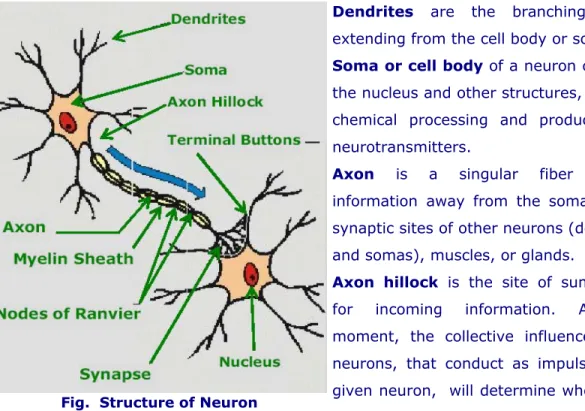
The human brain consists of a large number (more than a billion) of neural cells that process information. Each cell works like a simple processor. The massive interaction between all cells and their parallel processing, makes the brain's abilities possible. The structure of neuron is shown below.
Fig. Structure of Neuron
Dendrites are the branching fibers extending from the cell body or soma.
Soma or cell body of a neuron contains the nucleus and other structures, support chemical processing and production of neurotransmitters.
Axon is a singular fiber carries information away from the soma to the synaptic sites of other neurons (dendrites and somas), muscles, or glands.
Axon hillock is the site of summation for incoming information. At any moment, the collective influence of all neurons, that conduct as impulses to a given neuron, will determine whether or not an action potential will be initiated at the axon hillock and propagated along the axon.
Myelin Sheath consists of fat-containing cells that insulate the axon from electrical activity. This insulation acts to increase the rate of transmission of signals. A gap exists between each myelin sheath cell along the axon. Since fat inhibits the propagation of electricity, the signals jump from one gap to the next.
Nodes of Ranvier are the gaps (about 1 µm) between myelin sheath cells long axons.
Since fat serves as a good insulator, the myelin sheaths speed the rate of transmission of an electrical impulse along the axon.
Synapse is the point of connection between two neurons or a neuron and a muscle or a gland. Electrochemical communication between neurons takes place at these junctions.
Terminal Buttons of a neuron are the small knobs at the end of an axon that release chemicals called neurotransmitters.
30
R
C
C
h
a
k
r
a
b
o
r
t
y
,
w
w
w
.
m
y
r
e
a
d
e
r
s
.
i
n
f
o
RC Chakraborty, www.myreaders.info
• Information flow in a Neural Cell
The input /output and the propagation of information are shown below.
Fig. Structure of a neural cell in the human brain
■
Dendrites receive activation from other neurons.
■
Soma processes the incoming activations and converts them into output activations.
■
Axons act as transmission lines to send activation to other neurons.
■
Synapses the junctions allow signal transmission between the axons and dendrites.
■
The process of transmission is by diffusion of chemicals called neuro-transmitters.
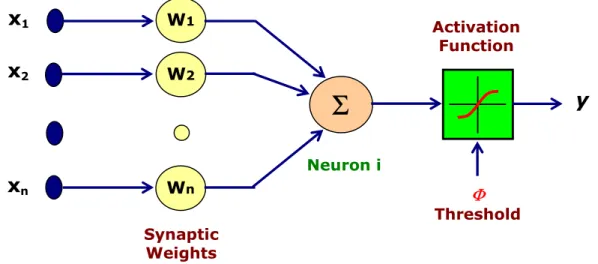
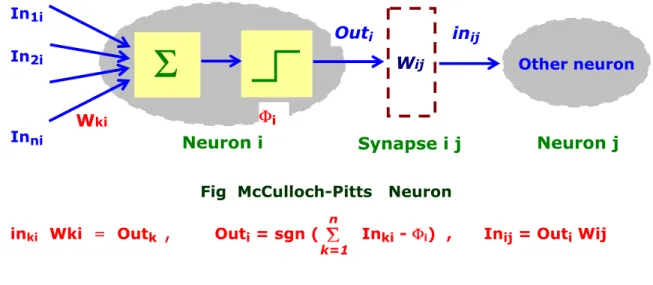
McCulloch-Pitts introduced a simplified model of this real neurons.
31
![Fig Graphic Interpretation of Fuzzy Compliment FuzzyPlot [SMALL, NOTSMALL]](https://thumb-us.123doks.com/thumbv2/123dok_us/8363125.315352/24.918.169.819.506.788/fig-graphic-interpretation-fuzzy-compliment-fuzzyplot-small-notsmall.webp)