ENTRANCE FOR START-UPS INTO ERP
SOLUTIONS
Master Thesis
M.Sc. Business Administration
Name: Sabine Rauleder
Contact E-Mail: [email protected]
Supervisors: 1. Prof. dr. ir. L.J.M. (Bart) Nieuwenhuis (University of Twente)
2. Dr. M.L. (Michel) Ehrenhard (University of Twente)
3. Karina Cagarman, M.Sc. (Technical University of Berlin)
Bibliography program used: Endnote
Management Summary
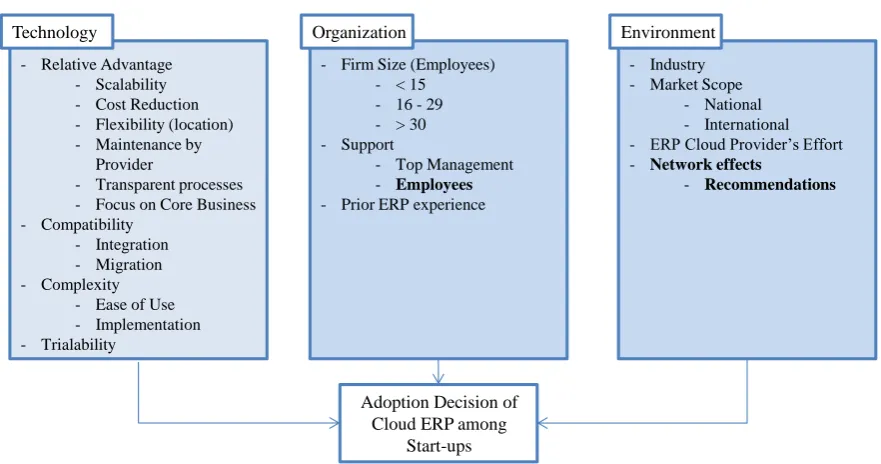
This master thesis focuses on factors impacting the decision to adopt Cloud ERP solutions among the organizational setting of start-ups. The literature argues that Cloud Computing and its service models fit the needs of smaller firms perfectly as they cannot afford high-cost structures for software implementation and need flexibility and better access to global markets (Ross & Blumenstein, 2015; Sultan, 2011). Even though start-ups are a viable business form, there is no specific research which targets start-ups and their willingness to adopt Cloud ERP solutions. This study identifies this gap and therefore contributes to the on-going academic literature by examining this sub-group. The findings regarding factors impacting the decision to adopt Cloud ERP or Cloud Computing are concentrating on SMEs. Thus, an extensive literature research was conducted to answer the central research question (Which factors influence the adoption of Cloud-based ERP-systems in the organizational setting of start-ups?). First, Cloud Computing and the resulting servitization of software solutions are explained, followed by a definition of (Cloud) Enterprise Resource Planning (ERP) with its benefits and drawbacks and a review of Cloud ERP adoption literature. Additionally, the context of start-ups used in this research is clarified. To determine the factors which impact the adoption decision the Technology-Organizational-Environmental (TOE) framework, which was employed by Alshamaila, Papagiannidis, and Li (2013) in their study about Cloud Computing adoption of SMEs, is most appropriate. By reviewing the literature regarding Cloud ERP and the TOE framework, propositions could be developed. This research follows a qualitative approach and data is gathered through 15 semi-structured interviews with start-ups and experts. The results show that certain factors are significant for start-ups and their Cloud ERP adoption. Therefore, it is important to understand the relative advantage (e.g. fewer costs, scalability, and location flexibility) as well as have little complexity in the ease of use and implementation along with an easy integration. The prior experience with ERP and testing the technology was also related to the decision to adopt Cloud ERP. Even though top management support was found to be important, the support of the employees is at least equally important in a start-up. Also, the industry and the market scope impacts the decision to adopt Cloud ERP. Moreover, the network effects and recommendations are significant factors influencing start-ups in their decision whereas uncertainty and competitive pressure were not found to be relevant in this organizational context. All in all, start-ups are an appropriate target group for Cloud ERP providers, and there is great potential to elaborate further on this research field.
Contents
Management Summary ... I
Index of Figures ... IV
Index of Tables ... V
List of Abbreviations ... VI
1.
Problem Statement ... 1
1.1.
Introduction ... 1
1.2.
Research Objectives and Questions ... 1
1.3.
Significance of the Research ... 3
1.4.
Thesis Structure ... 3
2.
Literature Review ... 4
2.1.
Planning of the Literature Review ... 4
2.2.
Servitization in the Context of Cloud Computing ... 5
2.2.1.
Definition of Servitization ... 5
2.2.2.
Definition of Cloud Computing ... 9
2.2.3.
Connection of Cloud Computing and Servitization ... 12
2.3.
What are Cloud ERP Solutions? ... 14
2.3.1.
Definition Cloud ERP ... 14
2.3.2.
Benefits of Cloud ERP Solutions ... 17
2.3.3.
Drawbacks of Cloud ERP Solutions ... 20
2.4.
Cloud ERP Adoption Literature ... 23
2.5.
Definition of Start-ups ... 25
3.
Theoretical Framework ... 27
3.1.
Theoretical Background ... 27
3.2.
Innovation Diffusion Theory ... 28
3.3.
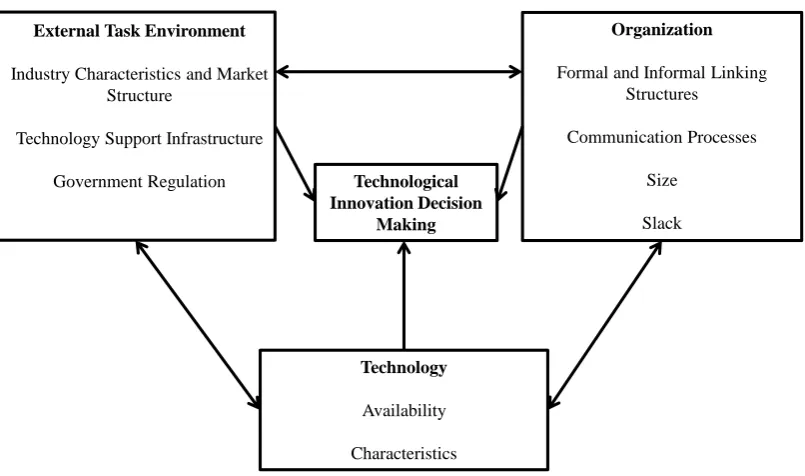
TOE Framework ... 30
3.4.
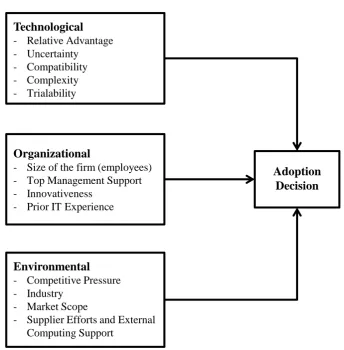
Adapted TOE Framework with Aspects of IDT ... 32
3.4.1.
Technological Factors ... 34
3.4.2.
Organizational Factors ... 35
3.4.3.
Environmental Factors ... 36
4.
Methodology ... 37
4.1.
Research Approach and Research Strategy ... 38
4.2.
Research Design ... 39
4.4.
Scientific Quality ... 43
4.4.1.
Validity ... 43
4.4.2.
Reliability ... 43
4.4.3.
Bias and other Pitfalls of Interviews ... 44
5.
Results ... 44
5.1.
Findings and Discussion of the Interviews ... 45
5.1.1.
Technology Factors ... 45
5.1.2.
Organizational Factors ... 47
5.1.3.
Environmental Factors ... 49
5.2.
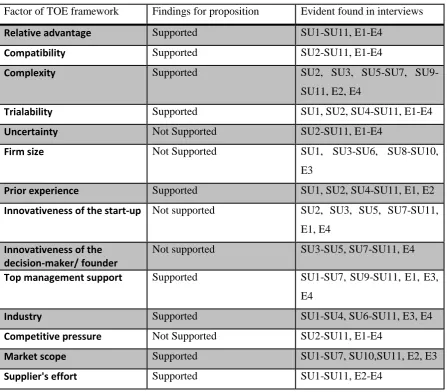
Evaluation of the TOE Framework in respect to Cloud ERP and Start-ups ... 52
6.
Conclusion and Discussion ... 55
6.1.
Conclusion ... 55
6.2.
Theoretical and Practical Implications ... 56
6.3.
Limitations ... 58
6.4.
Further Research ... 58
Appendix ... 60
A: Interview Guide (English) ... 60
B: Paper Outline ... 62
Index of Figures
Figure 1: Main Categories of Product Service Systems by Tukker (2004, p. 248) ... 7
Figure 2: Overview Cloud Computing Solution ... 12
Figure 3: Technology-Organization-Environment Framework ... 31
Figure 4: TOE Framework by Alshamaila et al. (2013, p. 255) ... 33
Index of Tables
Table 1: Main Areas and Tasks of ERP Solutions ... 15
Table 2: Benefits of Cloud ERP ... 18
Table 3: Drawbacks of Cloud ERP ... 20
Table 4: Overview of Start-up Participants ... 41
List of Abbreviations
CRM Customer Relationship Management
CPU Central Processing Unit
ERP Enterprise Resource Planning
GD logic Goods Dominant Logic
HaaS Hardware as a Service
IaaS Infrastructure as a Service
IDT Innovation diffusion theory
IS Information Systems
MM Motivational Model
MRP Material Requirement Planning
MRP II Manufacturing Resource Planning
NIST American National Institute of Standards and Technology
OECD Organization for Economic Cooperation and Development
PaaS Platform as a Service
SaaS Software as a Service
SD logic Service Dominant Logic
SLA Service Level Agreements
SME Small and Medium Sized Enterprise
TAM Technology Acceptance Model
TCO Total Cost of Ownership
TOE Framework Technology, Organization and Environment Framework
TPB Theory of Planned Behavior
TRA Theory of Reasoned Action
VAR Value Added Reseller
VPN Virtual Private Network
1.
Problem Statement
The first chapter introduces the topic and points out the research objective. It also poses the main research question with its four sub-questions and underlines the significance of this investigation. Also, an outline of the thesis is given to provide guidance for the reader.
1.1.
Introduction
Cloud Computing will affect the way services are “invented, developed, deployed, scaled, updated, maintained and paid for” (Marston, Li, Bandyopadhyay, Zhang, & Ghalsasi, 2011, p. 1). Due to this
fact, Cloud Computing appears to be a disruptive innovation which leads to a new form of servitization in the whole IT industry (Baines, Lightfoot, Benedettini, & Kay, 2009; Krikos, 2011; Marston et al., 2011; Ojala, 2016; Ripsas & Tröger, 2015; Sultan, 2014b). Vandermerwe and Rada (1988) described servitization as adding value to the firm’s products by additionally including services
to the offering. This leads to a bundle of services combined with products, support, and knowledge (Vandermerwe & Rada, 1989). The transformation Vandermerwe (1988) focused on, shows the shift of a “goods-dominant logic to a service dominant logic” (Leimeister, Winkler, & Xiao, 2015, p. 2)
mostly happening in the manufacturing sector. Nowadays, the IT industry switches from its fixed products such as on-site server landscape to Cloud Computing offerings on a consumption base. Moreover, the need for new software solutions demanded by customers combined with the knowledge of information systems (IS) and new features provided by Cloud Computing enables software producer (e.g. Microsoft) to create new services, introduce new business models, and offer service bundles (Ojala, 2016; Sultan, 2014b; Wen & Zhou, 2014). Additionally, new target groups such as small and medium-sized enterprises (SMEs) and sub-groups like start-ups can be addressed through Cloud Computing (Alshamaila et al., 2013; Sahandi, Alkhalil, & Opara-Martins, 2013).
1.2.
Research Objectives and Questions
There is literature providing sufficient insights into Cloud Computing adoption in general as well as particularly for SMEs. However, little research is done in the area of enterprise resource planning (ERP) systems (e.g. Al-Johani & Youssef, 2013; Grubisic, 2014; Johansson, Alajbegovic, Alexopoulo, & Desalermos, 2015; Peng & Gala, 2014; Saini, Khanna, & Peddoju, 2014; Salum & Rozan, 2015). ERP systems support organizations with central control for e.g. financial management, supply chain management, and human resource management (Al-Johani & Youssef, 2013). Small firms are interested in using ERP solutions to gain a competitive advantage but do not have time, staff or financial resources to afford huge upfront investments, which are necessary for an on-premise ERP implementation (Al-Johani & Youssef, 2013; Salum & Rozan, 2015). Due to the movement of traditional on-site ERP systems into the Cloud, ERP solutions are more flexible and affordable which is attractive for SMEs (Al-Johani & Youssef, 2013).
Other literature on Cloud-based ERP pays attention to the company size. Johansson and colleagues (2015) found that interviewees suggested splitting small and medium-sized enterprises for further research into sub-groups. Small and medium enterprises are reacting in another way to opportunities and drawbacks. “This is not surprising, as companies consisting of 10 employees and the ones consisting of 200+ employees are likely in different situations, having very different needs as well as resources”(Johansson et al., 2015, p. 4218). This suggestion is reasonable and points out the research gap which will be addressed in this paper. The past literature focused exclusively on the adoption of Cloud ERP among SMEs and did not investigate sup-groups such as start-ups. Moreover, start-ups have no fixed amount of employees but typically are known for their small headcount. Therefore, to contribute to the existing academic literature, this research aims to identify crucial factors to explain why start-ups adopt Cloud-based ERP systems.
Based on the problem and the research gap the following research question can be stated:
Which factors influence the adoption of Cloud-based ERP systems in the organizational setting of
start-ups?
In order to answer this central research question sufficiently sub-questions are defined and have to be explained beforehand:
(1) What is servitization in the context of Cloud Computing?
The first sub-question explains the basic concept of servitization, Cloud Computing and the connection of both.
(2) What is a Cloud ERP system?
(3) Which advantages and disadvantages have Cloud-based ERP solutions for small
enterprises?
Thirdly, the advantages Cloud-based ERP solutions offer to small firms will be described as well as concerns regarding this new technology.
(4) Which factors are essential for the adoption of new technologies by small organizations?
Literature provides several frameworks with factors influencing the adoption of innovations in general and in particular for SMEs. After summarizing the results from the research regarding those factors, they have to be examined in the context of start-ups.
1.3.
Significance of the Research
This research will be conducted in cooperation with the University of Twente and a company (in the following named VAR), which is based in the Netherlands. VAR is a medium-sized company with about 300 employees and is a value-added reseller (VAR) of Microsoft’s ERP solution Dynamics AX, which recently moved to the Cloud. Hence, VAR is interested in new perspectives, especially in new target groups such as start-ups, to engage customers with the new Cloud technology provided by Microsoft. With literature claiming that Cloud Computing fits the needs of smaller firms correctly (Ross & Blumenstein, 2015), VAR wants to test whether this is also reasonable for Cloud ERP in the context of start-ups. The results of this research aim to help VAR to find out which start-ups might offer new business opportunities for them. This approach is also in line with Sultan (2014b) who argued that disruptive innovations like Cloud Computing lead to new value propositions for firms as well as adjustments and creation of markets.
Also, the adoption of start-ups is not examined in the literature before and this research opens a new aspect of Cloud ERP literature. In order to reveal new insights and challenges for Cloud ERP adoption, it is necessary to validate the already conducted conclusions of Cloud Computing (Peng & Gala, 2014). In addition to that, the theoretical technology, organization, and environment (TOE) framework is tested in a new setting which demonstrates the robustness of the model and theory behind the framework. Therefore, this research contributes on the one hand to the literature and on the other hand to practice, which enhances its significance.
1.4.
Thesis Structure
2.3.1), the advantages (chapter 2.3.2), and disadvantages (chapter 2.3.3) of Cloud ERP systems are reviewed. With little research having been done in the field of start-ups regarding Cloud ERP, SMEs are the main focus of the literature review regarding the Cloud ERP adoption (chapter 2.4). Since start-ups are examined in this research, a definition is illustrated in chapter 2.5. The theoretical framework
is explained in the third chapter and consists of the background of the framework (chapter 3.1) and the core concept of the innovation diffusion theory (chapter 3.2). Additionally, all variables used within the TOE framework are reviewed, and propositions are developed (chapter 3.3 and chapter 3.4). The fourth chapter provides an overview of the methodology which includes the research strategy and design (chapter 4.1 and 4.2), followed by remarks on the scientific quality (4.4). The fifth chapter illustrates the results gained from the interviews. General findings and the propositions are discussed regarding their applicability to start-ups (chapter 5.1). Also, the framework is evaluated regarding its fit into the organizational setting of start-ups (chapter 5.2). The last chapter provides a conclusion
(chapter 6.1) as well as practical and theoretical implications (chapter 6.2) are given in order to bridge the findings to practice. Furthermore, limitations (chapter 6.3) respective to the work and further research (chapter 6.4) fields are discussed.
2.
Literature Review
The second chapter gives an overview of the literature review process as well as the planning of the literature review and insights provided by the research. The chapter additionally answers the sub-questions one to three, which are stated in the first chapter.
2.1.
Planning of the Literature Review
Regardless the area of research, a profound analysis and review of existing academic literature is needed in order to gain insights and guidance for the research conducted (Tranfield, Denyer, & Smart, 2003). Denyer and Tranfield (2009) as well as Wolfswinkel, Furtmueller, and Wilderom (2013) identified approaches how to do a systematic literature review. This study follows the approach of systematic literature review by Denyer and Tranfield (2009) as this concept is more and more applied in the IS literature (Wolfswinkel et al., 2013). The literature reviewing process consist of 1) defining, 2) searching, 3) selecting, 4) analyzing, and 5) report/ presenting the research (Denyer & Tranfield, 2009; Wolfswinkel et al., 2013). First, criteria for inclusion and exclusion have to be defined as well as the field of investigation and proper sources. This study is conducted in the IS and the adoption theory literature. In order to find adequate resources, several databases and predominately recent academic publications are utilized. Due to the accessibility, the databases Google Scholar and Google Books, as well as Scopus, was perused to find the needed literature. Furthermore, search terms like ‘SME adoption’, ‘start-up adoption’, ‘Cloud Computing’, ‘Cloud ERP’, ‘adoption in small businesses’, ‘Cloud in small businesses’, ‘adoption models’, ‘TOE’, and several other combinations
right papers while rejecting the unneeded once directly. During the analyzing stage, all necessary information was derived from the documents and categories built in order to find relations between individual groups. The categories defined and presented in this thesis are servitization in the context of Cloud Computing, Cloud ERP, Cloud ERP adoption, start-ups, and TEO framework (Wolfswinkel et al., 2013).
2.2.
Servitization in the Context of Cloud Computing
The first sub-question focuses on Cloud Computing as a new form of servitization. Therefore, this section first describes the original background of servitization and its definition as well as the definition of Cloud Computing. This knowledge enables the connection of both topics and to define its relation.
2.2.1.
Definition of Servitization
Literature about servitization claimed that manufacturing firms are often affected by the need of servitization as they offer physical products (Baines et al., 2009). Moreover, research stated that selling only products to the customer is not enough anymore (Grouve, 2014). Therefore, firms have to include services into their product portfolio to create a competitive advantage and understanding customer needs (Grönroos, 2015). In order to dive into the definition of servitization, it is crucial to explain what services are. Vargo and Lusch (2004) defined a service “as the application of specialized competences (skills and knowledge), through deeds, processes, and performances for the benefit of another entity or the entity itself” (Vargo & Lusch, 2004, p. 326). This is in line with Grönroos (2015)
who argued that the process of interaction between the service provider and the customer can be determined as a service in order to solve customer’s problems. Services can be easily distinguished from traditional products as they are intangible, heterogeneous (no standardization), not separable in production and usage, and there is no possibility to store services (Vargo & Lusch, 2004). Moreover, Vargo and Lusch (2008) declared the shift from a product driven (GD logic) to a more service driven society with services being introduced as the new leading logic in the economy. Therefore, they distinguish between operand resources such as raw materials and operant resources which refer to skills and knowledge. However, the service-driven logic (SD logic) does not exclude products. Goods can still be involved even though services are the key process (Vargo & Lusch, 2008).
This new paradigm of a more service-driven society was first introduced to literature by Vandermerwe and Rada (1989) as servitization. They argued that firms try to understand their customer’s needs and therefore are “moving from the old and outdated focus on goods or services to integrated ‘bundles’ or systems” (Vandermerwe & Rada, 1989, p. 314). This was the starting point for researchers to
years, several contributions to the definition of Vandermerwe and Rada (1989) appeared. According to Avlonitis, Frandsen, Hsuan, and Karlsson (2014), manufacturing firms have to change their organization to a more customer-centric one in order to stay competitive and keep customers. The integration of services to the traditional products enables companies to create unique offerings for their clients and develop a deep relationship with them. Further on, the bundling of services and products can lead to higher market shares as well as larger profit margins (Avlonitis et al., 2014). This is in line with the findings of Neely (2009) who argued that selling just products is outdated and there is a movement into selling product-service systems. In addition to that Ahamed, Inohara, and Kamoshida (2013) detected that products in a bundle with services lead to higher customer satisfaction. Hence, servitization adds value to the traditional product offering of manufacturing firms. Thus, to stay competitive and to differentiate from other businesses, servitization is a suitable strategy for those companies (Ahamed et al., 2013). The study of Alvizos and Angelis (2010) indicated that servitization is more than just the bundling of services and products but elements such as support, self-service and knowledge add value to service activities as well.
certain activities (Alvizos & Angelis, 2010). From the perspective of servitization, such activities include that firms need to create greater values and outcomes for their customers than the competition. By transforming from traditional manufacturing towards service-centric organizations, companies are enabled to gain a competitive advantage due to better product-service offerings and greater understanding of customer’s needs (Ahamed et al., 2013).
As scholars claimed that there is a need to do service infusion in the manufacturing sector, Baines et al. (2009) and Lay (2014) categorized drivers of servitization. There are three primary motivations for servitization: Growth, profit, and innovation. Adding value for the customer through service infusion leads to a diversification of the firm and thus fosters a competitive advantage. This, in turn, stimulates product sales as well as service sales which result in a company’s growth (Baines et al., 2009; Lay, 2014). The economic driver consists mainly of increasing margins and a steady income. Mathieu (2001) claimed that commercializing services around a product could result in revenue growth which leads to higher profits. Furthermore, Baines et al. (2009) reasoned that certain industries like aerospace or automotive could charge even more for their services than for new products. The sales process starts with the product sales whereas services are needed at a later point in the cycle. Due to this countercyclical behavior of product and service sales the introduction of services contributes to a more stable income stream even though the product demand drops (Lay, 2014). Frambach, Wels-Lips, and Guendlach (1997) stated that offering more services deepens the relationship with the customer. This, in turn, enables the firm to detect customer needs. Thus, Lay (2014) argued that the gathered insights from customer demand about services foster innovation and new technology development.
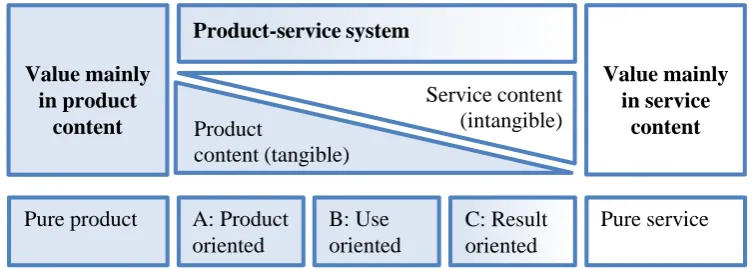
As described above, scholars introduced the shift from selling only products to delivering products with services. However, literature point out that the level of service proportion can vary and thus a mix of different product-service combinations can appear (Mathieu, 2001; Tukker, 2004). Tukker (2004) classified the product-service system into three main categories, which are product-oriented services,
[image:15.595.109.486.589.724.2]use-oriented services, and result-oriented services (see Figure 1).
Figure 1: Main Categories of Product Service Systems by Tukker (2004, p. 248)
The first category (A) simply adds additional services to the traditional product offering. The services supplied by the firm are used during the consumption of the good or advice is given how to use the
Value mainly in product
content
Value mainly in service
content Product-service system
Product
content (tangible)
Service content (intangible)
Pure product A: Product oriented
B: Use oriented
C: Result oriented
product most effectively. Hence, maintenance, consultancy, and selling spare parts are further offerings (Tukker, 2004). In general, adding such services to the product contributes to the relationship between the provider and the customer (Mathieu, 2001). Secondly, user-oriented services (B) still focus on the product, but the business model changes significantly. There is no selling of the product anymore which means that the producing firm still is the owner of the goods. The services, which are offered, are leasing, sharing and pay per usage. Finally, result-oriented services (C) do not focus on a fixed product (Tukker, 2004). In fact, the provider has to reach a particular result for the customer regardless whether products from the vendor are used or not. This leads finally from the product itself to the “service as a product” which provides integrated and problem-solving solutions to customers
(Mathieu, 2001). Besides, the research of Frambach et al. (1997) emphasized that the distinction of product service systems can be enlarged by clustering into service timing. Therefore, classifications like pre-sales product services, sale product services, and post-sale production services were introduced to literature (Frambach et al., 1997).
Scholars also investigated how firms applied the concept of servitization in practice and what kind of motives and challenges the manufacturing companies are facing. The most prominent case studies illustrated in literature are the cases of IBM Cooperation and Rolls Royce (Ahamed et al., 2013; Lightfoot et al., 2013). Both firms were founded as manufacturing companies and managed to transform to integrated solution providers. During the change process, they had to overcome challenges like restructuring and to split off parts of the organization. The mindsets of the employees had to be adjusted towards a service-oriented organization and additionally new capabilities and skills were needed. Besides, the cultural and organizational transformation the introduction of innovative business models like “pay-as-you-use” revolutionized the whole economy and showed that
servitization matters for manufacturing firms (Ahamed et al., 2013; Lightfoot et al., 2013; Smith, 2013).
2.2.2.
Definition of Cloud Computing
Due to the growing trend of Cloud Computing, many definitions evolved in the literature. The most prominent one is introduced by the American National Institute of Standards and Technology (NIST), which summarizes the main aspects of Cloud Computing (e.g. Gangwar et al., 2015; Marston et al., 2011; Misra & Mondal, 2011; Neves et al., 2011).
“Cloud computing is a model for enabling ubiquitous, convenient, on-demand network access to a shared pool of configurable computing resources (e.g., networks, servers, storage, applications, and services) that can be rapidly provisioned and released with minimal management effort or service provider interaction.” (Mell & Grance, 2010, p. 2)
In the study of Sultan (2010), the term Cloud Computing is compared with a cluster of distributed computers, which “provide on-demand resources and services over a networked medium” (Sultan,
2010, p. 110) to its customers. Cloud providers usually use the internet as the needed network medium. This is in line with Ercolani (2013) who argued that the Cloud Computing phenomena evolve from virtualization, grid computing, and web services.
Following the definition by Mell and Grance (2010) Cloud Computing consists of five essential characteristics which are broad network access, on-demand self-service, resource pooling, rapid elasticity and measured service. On-demand self-service means that the customer is able to order services such as software or hardware without interacting with another human and the services are delivered free from device and place (Marston et al., 2011). As described by Sultan (2010), the access to the network is mostly done via the internet. Therefore, any device can be used such as mobile phones, laptops or tablets which demonstrate the adaptability of Cloud Computing. The physical and virtual resources like storage, memory or processing power can be flexible allocated by customer demand (Mell & Grance, 2010). Cloud Computing also allows a rapid and dynamic scalability to the quantity requested by the user (Mladenow et al., 2012). Due to the transparency of the services provided by Cloud Computing the customer as well as the provider can easily control and monitor all resources. The Cloud system knows how much capacity is used by the client regarding active accounts, storage or CPU (Mell & Grance, 2010).
Furthermore, literature facilitated that the term Cloud Computing was traditionally used analogically for internet based services. Hence, Cloud Computing can be distinguished in three core service models (Sharma & Keswani, 2013). According to Sahandi et al. (2013), the services Cloud Computing supplies are Software as a Service (SaaS), Platform as a Service (PaaS) and Infrastructure as a Service (IaaS).
SaaS offers a high variety of applications like enterprise applications (e.g. ERP and CRM
seen as the most valuable movement due to the complexity of the ERP system (Peng & Gala, 2014). The customer can access the application as well as the uploaded data via the internet without installing the software on their server (Sahandi et al., 2013). The easy, centralized installation and maintenance is a well-known advantage of SaaS. As described above, the end user can access the software anytime and anywhere. Additionally, customers are enabled to share information and enhance the cross-functional communication in a safe data environment (Armbrust et al., 2010). Even though literature claims that this was already possible before the introduction of the Cloud, Salesforce.com invented the model in a new way by supplying software via the internet in the late 1990ies. Thus, Cloud Computing provides a new aspect, as it supports more applications which facilitate providers to offer their software in the Cloud (Alajbegovic, Vasileios, & Achillefs, 2013). The opportunity to scale up and down dependent on the customer’s demand is another advantage provided by SaaS (Armbrust et al., 2010).
PaaS enables the customer to develop and manage their applications, but the infrastructure and middleware such as the operating system and hardware are governed by the Cloud provider (Sahandi et al., 2013). Similarly to the SaaS model, customers using the PaaS model do not have any control over the underlying architecture. The main difference is that the client still has control over the software in use (Alajbegovic et al., 2013). The most famous examples of PaaS are the platforms made available by Microsoft (Microsoft Azure), Google (Google App Engine) and Amazon (Amazon Web Services) (Puthal, Sahoo, Mishra, & Swain, 2015).
IaaS supports Cloud customers with different kinds of IT equipment such as backup and
recovery as well as virtualized storage (e.g. Amazon EC2). The Cloud provider manages the Cloud infrastructure alone which means that the customer cannot control computing resources. However, the authority over the installed software and the operating system is still held by the client (Alajbegovic et al., 2013). Additionally, it offers a per-use pricing model instead of buying all resources which are in favor of SMEs (Mahara, 2013; Sahandi et al., 2013). Due to the centralized management of the infrastructure, the Cloud provider is able to give access to the latest technologies for all clients at the same time (Alajbegovic et al., 2013).
In addition to the three prominent service models, literature predicts the paradigm of “anything and everything as a service” in the IT industry which will develop more and more in the coming years.
Hardware as a Service (HaaS) is the newest service model introduced by literature (Salum & Rozan, 2015).
Furthermore, literature distinguishes Cloud Computing in different deployment models, which are Private Cloud, Community Cloud, Public Cloud, Hybrid Cloud, and Virtual Private Cloud.
similar to the traditional in-house server farms. However, the comparison with the traditional in-house server is the most mentioned issue. The advantage of lower up-front investments is eliminated by the reference to buying and hosting the server internally (Zhang, Cheng, & Boutaba, 2010).
(2) The Community Cloud is used by a particular group of firms which have the same concerns and interests such as mission, security, requirements, and policy. The responsibility of managing the Cloud can either be done by the community or an external provider (Mell & Grance, 2010).
(3) Another deployment model is the Public Cloud which enables an open usage for the general public. To serve the demands of the user the provider supplies resources as services. On the one hand, the service provider can shift the risk towards the infrastructure provider and has fewer investments on infrastructure. On the other hand, the control over data and security as well as network settings lack and therefore complicate the effectiveness of the Public Cloud model in business (Zhang et al., 2010).
(4) In addition to the above-mentioned deployment models, literature explains a mixed model, the so-called Hybrid Cloud. It is composed of at least two Cloud models (Private, Community, or Public Cloud) in order to complement the pitfalls of the other model (Botta et al., 2016). As parts of the services are hosted in a private and the other parts run in a public environment the flexibility is higher than using just one solution. Just like the other models, the Hybrid Cloud provides benefits and pitfalls. The control and security aspects improve compared to the application of the Public Cloud. However, elaborating the correct splitting of the Public and Private Cloud needs a careful investigation to create a useful Hybrid Cloud (Zhang et al., 2010).
Figure 2: Overview Cloud Computing Solution
As described above, Cloud Computing offers different services (e.g. software, platform, infrastructure, and hardware), which demonstrate their focus on the service-driven management. In order to address the services adequately, Service Level Agreements (SLA) are negotiated with the clients (Zhang et al., 2010). These agreements manifest the tasks the service provider has to perform (e.g. level of security, performance, availability) (Alajbegovic et al., 2013). Puthal et al. (2015) added that significant concerns of the SLA are delays between the provider and customers. Thus, it is necessary to define a SLA immediately when firms decide to source from the Cloud.
2.2.3.
Connection of Cloud Computing and Servitization
Due to the broad definition of Cloud Computing and servitization, the relationship between both subjects has to be elaborated further. The literature regarding service infusion emphasized the growing trend to shift towards more service offerings, which lead to closer customer relation (Wen & Zhou, 2014). According to Sultan (2014b), Cloud Computing appears as a new paradigm of servitization, because IT services are provisioned to a wider market by applying a new business model of morphing physical products into services. In line to that, Qing and Chun (2010) argued that Cloud Computing transformed software, hardware, and infrastructure into services which are supplied to customers over the internet. This demonstrates that due to the transition from goods into IT services, which were more expensive and complex in the past, more customers can be reached (large to small firms) (Sultan, 2014b). As introduced by Vargo and Lusch (2006) in their book about SD logic in marketing, this logic focuses on learning from and collaborating with the customer to be aware of their needs. Moreover, rather than putting the spotlight on the output as explained by Neely et al. (2011), the value is co-created with the customer (Vargo & Lusch, 2006). However, Cloud Computing is different from the regular service infusion described in the literature. The literature review of Cloud Computing demonstrates several Cloud Computing service models (see Figure 2) which show that physical products are transformed into services (Sultan, 2014b). Sultan (2014b) claims that the SD logic brought in by Vargo and Lusch (2006) is difficult to apply to Cloud Computing in general. Actually, the SD logic is co-creation-driven and defines services as a complement to products rather than eliminating the traditional product by sourcing the application into the Cloud (Sultan, 2014b). The software product is now available through the Cloud model and can be utilized flexible by the customers. This means that the service of using the software from the Cloud is in contrast to the traditional utilization of in-house solutions. The accessibility changes as well as the services provided
SaaS PaaS IaaS HaaS
Private Cloud
Public Cloud Community
Cloud
Hybrid Cloud
Virtual Private Cloud
On-demand self-service
Rapid elasticity Resource
pooling
Broad net-work access
Measured service
Cloud Services
Deployment models
around the traditional software. An example is the implementation service of traditional software solutions which will change due to the Cloud usage. Hence, applying the SD logic to other settings than the traditional manufacturing service infusion leads to complications. Therefore, Sultan (2014b) pointed out that the SD logic can be criticized for being too attracted to managerial tasks and understanding value creation only in the way of co-creation with the client rather than consider new business models such as Cloud Computing (Merz, He, & Vargo, 2009; Sultan, 2014b). Also, Grönroos (2011) reviewed the SD logic by Vargo and Lusch (2008) critically in his paper about value co-creation in service logic. He argued that the term service dominant logic is confusing due to the service centric nature of this logic. Therefore, service logic would be a more appropriate name because the service acts as support to the customer. In order to perform the service logic all kind of resources even goods can be used (Grönroos, 2011).
According to Vargo and Lusch (2008), the SD logic can be mainly found in the activities of marketing as they need collaboration and partnerships. They figured out that customers are rather interested in the service skills than only in the service output. Furthermore, Vargo (2011) reacted to the criticism by claiming that the SD logic is not a theory but a way of reflecting how the economic world works. He encourages researcher to build on the SD logic in order to create new theories. In addition to that, literature criticizes the distinction of services and service by Vargo and Lusch (2008) (Grönroos, 2011; Sultan, 2014a). Within the SD logic, a service is defined as competencies such as knowledge or skills which lead to customer’s benefits. According to that, a service appears to be the basic economic
exchange in society (Vargo & Lusch, 2008). Services are seen as the primary business function in regards to marketing activities (Sultan, 2014a; Vargo & Lusch, 2008). As business-to-business marketing detected the need of building a network and a relationship with customers, Vargo and Lusch (2008) put this department into focus. However, Grönroos (2011) and Campbell, O'Driscoll, and Saren (2013) argue that the distinction between products (operand resources) and service (operant resources) or services is not significant within a service logic. By applying a service perspective or service logic, all types of resources can be used as a service. The service provider acts as a facilitator for the customer by supplying any kind of resources required by the customer. Thus, a service can be knowledge, skills, products or other resources which are employed to support the customer in the value creation process (Grönroos, 2011).
However, in line with the five underlying trends classified by Neely et al. (2011), Cloud providers build service ecosystems such as the platform Microsoft Azure. This leads to a network of provider, customers and partners which are active in integrating and generating resources and outcomes (Leimeister et al., 2015). In line with the service infusion literature, this results in value creation and co-creation for the whole ecosystem (Leimeister et al., 2015; Vargo & Lusch, 2008). This shift from supplying exclusively goods to the SD logic in the IT industry establishes opportunities such as new target groups, strategic directions as well as business models and value propositions for Cloud providers. By uniting both, Cloud Computing and servitization, it can be seen that Cloud Computing represents the core idea of servitization by transforming from product to service orientation. Even though Grönroos (2011) does not discuss servitization directly, his different perspective on the service logic is an interesting contribution to the statements of Vargo and Lusch (2008). According to Vargo and Lusch (2008), a service mainly consists of skills and knowledge (operant resources) which create a benefit for the customer. It is difficult to apply this to the idea of Cloud Computing as a traditional product is provided as a service to the customer. Contrasting to that, Grönroos (2011) argues that the provider is able to support the customer with products as well as competencies. This service logic fits the transformation of a product provided as a service to the customer better than the approach of the SD logic by Vargo and Lusch (2008).
2.3.
What are Cloud ERP Solutions?
The second and third sub-question focuses on the definition, the advantages, and disadvantages of Cloud ERP systems. With little research having been done in the field of start-ups regarding Cloud ERP, SMEs are the main focus of the literature review. This is the logic conclusion since start-ups are a sub-group of SMEs.
2.3.1.
Definition Cloud ERP
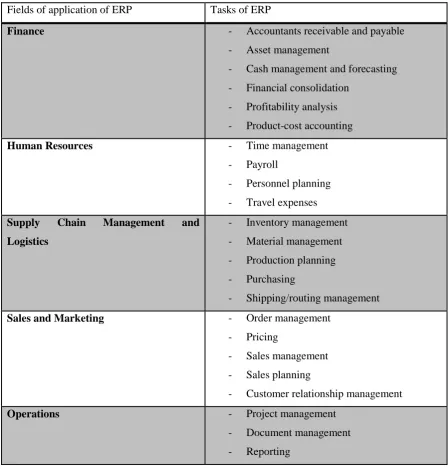
Salum and Rozan (2015) argued that ERP systems are nowadays a standard in business activities. Traditionally, ERP solutions have been implemented and used as on-premise software packages within the firm (Johansson et al., 2015). A traditional or on-premise ERP solution just means that the system is maintained and hosted in-house (Peng & Gala, 2014). Such a solution allows organizations to plan and control all actions from a central and cross-functional point of view backed up with all data available from one data repository (Peng & Nunes, 2013). In the late 1990s, Davenport (1998) published an ERP definition which claimed that the software packages are an “integration of all the information flowing through a company – financial and accounting information, human resource information, supply chain information, customer information” (Davenport, 1998, p. 1). This is in line
illustrates the main areas and tasks covered by ERP solutions (see Davenport, 1998; Jacobs & Weston, 2007; Raihana, 2012; Sharma & Keswani, 2013; Umble, Haft, & Umble, 2003).
Table 1: Main Areas and Tasks of ERP Solutions Fields of application of ERP Tasks of ERP
Finance - Accountants receivable and payable
- Asset management
- Cash management and forecasting - Financial consolidation
- Profitability analysis - Product-cost accounting
Human Resources - Time management
- Payroll
- Personnel planning - Travel expenses
Supply Chain Management and
Logistics
- Inventory management - Material management - Production planning - Purchasing
- Shipping/routing management
Sales and Marketing - Order management
- Pricing
- Sales management - Sales planning
- Customer relationship management
Operations - Project management
- Document management - Reporting
decision-makers to gain a holistic overview of the business activities which in turn enhances the ability to accomplish operations more efficiently (Raihana, 2012).
The history of traditional ERP started in the 1960s and 1970s mostly in the manufacturing industry as firms began to plan their inventory with the help of software, known as the Material Requirement Planning (MRP) (Al-Johani & Youssef, 2013; Jacobs & Weston, 2007). To work with the MRP mainframe computers were needed (Al-Johani & Youssef, 2013). The MRP and its improved version the MRP II (Manufacturing Resource Planning), which was developed in the 1980s, are the predecessors of the modern ERP systems. In the mid-1970s, SAP was founded which is one of the key players in the on-premise ERP industry nowadays (Jacobs & Weston, 2007). Due to the need for a more integrated solution which could handle more than inventory management, the enhancement of the MRP II was initiated. Functionalities to manage human resources, sales, as well as logistics, finance, and project management, were included into the MRP II (Alajbegovic et al., 2013). By then most manufacturing firms used ERP systems but with this improvement, any organization was able to improve the effectiveness of the enterprise by using all information available and thus creating a competitive advantage (Umble et al., 2003). Moreover, in the 1990s, the Gartner Group first introduced the term ERP (Jacobs & Weston, 2007). Today, still all kind of enterprises use ERP systems regardless of their industry or type of organization (Raihana, 2012). In the beginning of the 1990s, SAP brought in their first ERP system to the market, which was called R/3. This ERP system can easily be differentiated from others as the client-server architecture was new. SAP R/3 was the first ERP system running on different operating systems (Jacobs & Weston, 2007). Around the year 2000 many organizations implemented ERP solutions in order to prevent and solve the year 2000 problems (Y2K) (Umble et al., 2003). In the same time period, the ERP market was formed and consolidated. By 2005 more or less just two big player, namely Oracle and SAP, were left in the market due to mergers and acquisitions of competitors (Jacobs & Weston, 2007).
expertise and time loss are reduced with using the Cloud (Salum & Rozan, 2015; Sultan, 2011). Furthermore, studies showed that the implementation of a Cloud-based ERP solution was 15% lower than the implementation and hosting of an on-site system. This can be explained by lower costs in buying, installing and maintaining Cloud-based systems (Iyer & Henderson, 2012). Likewise, the realization time can be reduced up to 70% with a Cloud-based ERP solution as the introduction is not that long compared to an on-premise system (AlBar & Hoque, 2015). In addition, Raihana (2013) explained in the article about Cloud services that “ERP software that is deployed into a cloud environment becomes ‘Cloud ERP Software’” (Raihana, 2012, p. 78). Due to this demonstration, it is clear that Cloud ERP and traditional ERP software share the same goal as well as the same tasks. The traditional ERP solutions are used via PC or laptops while one central database runs on a server in the back-end of the firm (Hofmann, 2008). The Cloud-based ERP solution is accessible via the internet and being a SaaS application is administered by a third party. Thus, the two approaches differ in terms of accessibility and storage but not in functionality.
Previous research claims that the traditional revenue stream created through on-site ERP solutions is changing towards gaining revenue from licensing, professional services and maintenance. That is why providers who are offering SaaS applications such as Cloud ERP establish new business models in order to stay in the market (Hofmann, 2008). Nowadays, according to Raihana (2012) as well as Salum and Rozan (2015), SaaS is the most used Cloud Computing service and creates new markets in the ERP industry for smaller businesses with limited financial resources. In the case of small firms the pay-per-use model is preferred as the user pays just for the resources they need without the risk of huge investments. The flexible up and down scaling is part of the pay-per-use idea (Saini et al., 2014). As the future of the ERP is seen in the Cloud (Hofmann, 2008), it is necessary to refine its usability for smaller firms. Cloud ERP suits those firms perfectly who want to manage their system without maintaining and updating the hardware and software by themselves (Raihana, 2012). In most cases this fits SMEs.
2.3.2.
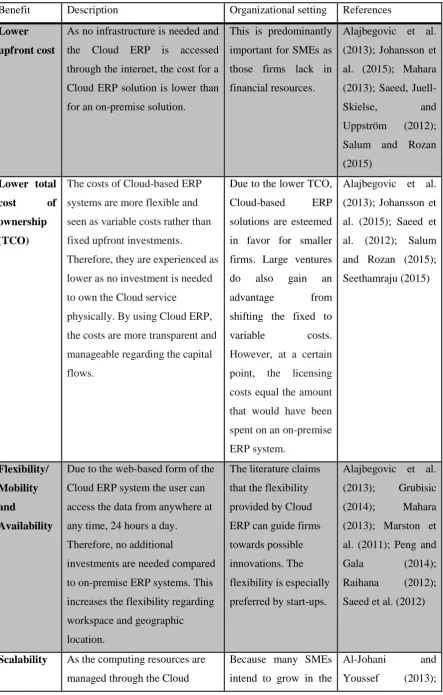
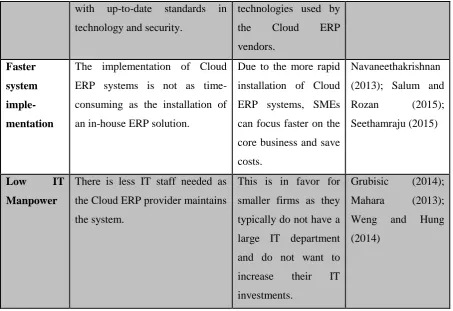
Benefits of Cloud ERP Solutions
Table 2: Benefits of Cloud ERP
Benefit Description Organizational setting References
Lower upfront cost
As no infrastructure is needed and the Cloud ERP is accessed through the internet, the cost for a Cloud ERP solution is lower than for an on-premise solution.
This is predominantly important for SMEs as those firms lack in financial resources.
Alajbegovic et al. (2013); Johansson et al. (2015); Mahara (2013); Saeed, Juell-Skielse, and Uppström (2012); Salum and Rozan (2015)
Lower total cost of
ownership (TCO)
The costs of Cloud-based ERP systems are more flexible and seen as variable costs rather than fixed upfront investments.
Therefore, they are experienced as lower as no investment is needed to own the Cloud service
physically. By using Cloud ERP, the costs are more transparent and manageable regarding the capital flows.
Due to the lower TCO, Cloud-based ERP solutions are esteemed in favor for smaller firms. Large ventures do also gain an advantage from shifting the fixed to variable costs.
However, at a certain point, the licensing costs equal the amount that would have been spent on an on-premise ERP system.
Alajbegovic et al. (2013); Johansson et al. (2015); Saeed et al. (2012); Salum and Rozan (2015); Seethamraju (2015)
Flexibility/
Mobility and
Availability
Due to the web-based form of the Cloud ERP system the user can access the data from anywhere at any time, 24 hours a day.
Therefore, no additional
investments are needed compared to on-premise ERP systems. This increases the flexibility regarding workspace and geographic location.
The literature claims that the flexibility provided by Cloud ERP can guide firms towards possible innovations. The flexibility is especially preferred by start-ups.
Alajbegovic et al. (2013); Grubisic (2014); Mahara (2013); Marston et al. (2011); Peng and Gala (2014); Raihana (2012); Saeed et al. (2012)
Scalability As the computing resources are managed through the Cloud
Because many SMEs intend to grow in the
provider; it is possible to scale the needed resources in terms of user licenses easily up and down as required by the organization utilizing the Cloud ERP service. This is feasible through shared resources of the Cloud service and that is why the Cloud services are often called on-demand. By using a traditional ERP solution the up and down scalability is associated with a long implementation time.
future, this factor is of particular importance for smaller firms.
Alajbegovic et al. (2013); Johansson et al. (2015); Marston et al. (2011); Saeed et al. (2012); Salum and Rozan (2015)
System
upgrades
The Cloud provider upgrades and updates the system automatically which means that the user is able to work with the latest version of the Cloud ERP systems. The updates are done without the notice of the user and without influencing the workflow of the service.
SMEs can afford the deployment of new technologies as it is done by the Cloud ERP provider. Usually, only larger firms have the financial means to update the systems regularly.
Johansson et al. (2015);
Navaneethakrishnan (2013); Peng and Gala (2014); Saeed et al. (2012)
Core
business focus
By using Cloud ERP firms can focus on their core activities as the Cloud provider manages all technical aspects of the solution.
Most SMEs do not have a huge IT department with the expertise to manage application like an ERP system. Hence, especially for SMEs, it is beneficial to source such activities out.
Navaneethakrishnan (2013); Saeed et al. (2012); Sharma and Keswani (2013)
New technology
access
Due to the new Cloud services it is possible to source state-of-the-art technologies via the internet and the pay-as-you-use model. Provider places their continuously improved products in the Cloud
with up-to-date standards in technology and security.
technologies used by the Cloud ERP vendors.
Faster
system imple-mentation
The implementation of Cloud ERP systems is not as time-consuming as the installation of an in-house ERP solution.
Due to the more rapid installation of Cloud ERP systems, SMEs can focus faster on the core business and save costs.
Navaneethakrishnan (2013); Salum and Rozan (2015); Seethamraju (2015)
Low IT
Manpower
There is less IT staff needed as the Cloud ERP provider maintains the system.
This is in favor for smaller firms as they typically do not have a large IT department and do not want to increase their IT investments.
Grubisic (2014); Mahara (2013); Weng and Hung (2014)
All in all, literature claims that smaller firms are able to explore the advantages provided by Cloud ERP in a better manner than larger organizations. The analysis by Johansson et al. (2015) showed that there are significant cost reductions especially for smaller firms but also for medium-sized companies. This cost advantage is not suitable for large organizations as they would need too many user licenses which are not profitable in the long run. Moreover, by means of Cloud ERP, SMEs can concentrate on the core business activities as well as take advantage of the state-of-the-art technology with a flexible pay model. This, in turn, pushes the SMEs in a better market position and enables them to be more competitive (Johansson et al., 2015).
2.3.3.
Drawbacks of Cloud ERP Solutions
[image:28.595.65.519.62.373.2]Still, there are drawbacks, especially for smaller firms, of Cloud-based solutions like data security and trust issues, a possible vendor reliability concern, problems to integrate the ERP Cloud into the organization and thus a potential cultural and organizational change (Peng & Gala, 2014). The main barriers debated in the literature are summarized in Table 3.
Table 3: Drawbacks of Cloud ERP
Drawbacks Description Organizational setting References
Security and trust Since all countries have their own standards cornering data storage and data privacy; this is
Even though ERP Cloud providers offer high standards of
a much-discussed issue. As long as firms are not acutely aware of the geographic location of their data they will be concerned. There are huge differences in regulations between the U.S. and the European Union. Due to this fact, users are worried as the management of the application is done by the ERP Cloud provider who might be working under a different jurisdiction than their own. It is more an issue of trust than actually a data security problem.
security that cannot be reached by SMEs, they are still little worried what happens with their data. For many SMEs, it is not easy to manage the risk of lacking in data control. However, SMEs also see the opportunity of the advanced security standards.
and Gala (2014); Saeed et al. (2012); Salum and Rozan (2015);
Seethamraju (2015)
Integration
difficulties and reliable provider
One drawback of Cloud ERP is the integration of in-house applications with the new ERP Cloud technology. In order to tackle this situation, a vendor with advanced skills and experience is needed to connect the systems.
The integration issue is mainly a concern of larger enterprises as most SMEs do not have such needs. However, the issue to find reliable providers is an issue all companies face.
Johansson et al. (2015); Mahara (2013);
Navaneethakrishnan (2013); Peng and Gala (2014); Salum and Rozan (2015); Weng and Hung (2014)
Hidden cost In the IT industry hidden costs is an issue. Thus, it is also a barrier for Cloud ERP adoption. Cloud providers always attract customers with cost savings. However; enterprises have to negotiate the contracts in a manner that they lead to those promised savings. This is done through SLAs.
All enterprises face this challenge. Hidden costs such as consultancy,
implementation or maintenance fees can be overcome by good SLA negotiations. SMEs should be aware of those costs as the can be three to seven times the licensing costs.
Loss of control Due to the outsourcing of responsibility to the ERP Cloud provider firms can focus on their core business. However, this leads to a dependency on the vendor. As the Cloud provider manages the updates the firm has to follow the development with little interference opportunities. All data stored in the Cloud ERP is governed by the vendor which in some cases leads to perceived loss of power by the user.
Due to the newness of Cloud ERP solutions, not all firms, including SMES, are willing to put sensitive data into the Cloud.
Alajbegovic et al. (2013); Garverick (2014); Mahara (2013); Marston et al. (2011); Salum and Rozan (2015)
Lack of experience Many decision-makers, as well as employees, do not have sufficient knowledge about Cloud Computing or Cloud ERP to use it properly.
For SMEs, the absence of skills and experience is one of the biggest hurdles to adopting the Cloud.
Alajbegovic et al. (2013); Salum and Rozan (2015); Yeboah-Boateng and Essandoh (2014)
Unstable
performance e.g. internet
Due to the access of Cloud ERP via the web, the reliability and speed of the internet is a crucial determination for system performance. Even though some user causes much traffic due to large data amounts produced, the system still needs to work robust and in real-time. Moreover, in case the system goes down SLAs have to be arranged.
Literature argues that larger organizations are more affected by this barrier than SMEs as larger firms process more
transactions.
However, SMEs see a poor internet
connection as a huge drawback of Cloud ERP, and they are concerned about the performance during the deployment.
As shown above, there are several drawbacks of Cloud ERP which have to be overcome in order to implement it successfully. Nowadays, most SMEs interested in Cloud ERP are aware of the disadvantages. However, literature considers the barriers less significant for SMEs in comparison with their bigger impact on larger enterprises (Johansson et al., 2015). Literature agrees that the data security and trust issue is a huge concern in the industry (Alajbegovic et al., 2013; Saeed et al., 2012; Salum & Rozan, 2015). Yet, this drawback can easily be turned into a benefit for smaller firms as those companies can use the security standards delivered by large Cloud providers such as Microsoft. This is in favor of SMEs as they would not be able to build up such a professional firewall. Moreover, Johansson et al. (2015) argued in their study on the role of the organizational size, that SMEs are most suitable for adopting a Cloud ERP solution which is in line with the findings of other researchers (e.g. Saini et al., 2014). Even though larger firms could also gain a benefit by moving to Cloud ERP, they are more sceptical towards this technology and more resistant to it than smaller companies. Bigger and established ventures are even more concerned about security and therefore less likely to adopt Cloud ERP (Johansson et al., 2015). Additionally, researchers claim that the concerns of small firms regarding Cloud ERP can mostly be mitigated by choosing a reliable, well-known Cloud provider (Johansson et al., 2015). Another barrier of Cloud ERP is the organizational change that needs to be initiated due to the new technology. However, Cloud technologies are not the only new technology that faces this barrier, but this is a general phenomenon for cultural changes of a firm (Al-Johani & Youssef, 2013).
2.4.
Cloud ERP Adoption Literature
Many scholars are claiming that the movement of in-house ERP towards the Cloud model is necessary and beneficial. According to Al-Johani and Youssef (2013), who analyzed how Cloud ERP solutions can be used in a beneficial way for SMEs, the development team cost can be reduced by 50% as well as the cost for technical support and testing efforts. However, there are no sufficient insights into the topic of Cloud ERP from academia. In addition to that, Cloud providers stress the advantages of Cloud Computing and the SaaS model with applications like ERP, whereas the drawbacks are not entirely discussed yet. This means that there is great potential to explore further drawbacks for Cloud ERP as well as testing the advertised benefits in the long-run (Peng & Gala, 2014). Therefore, Peng and Gala (2014) conducted interviews with professionals in order to find out which Cloud ERP barriers and advantages exist. The paper concluded that Cloud ERP adoption can be influenced negatively by the obstacles (e.g. data security and transparency, vendor-lock in effect, and integration problems) of this new technology and the organizational and managerial tasks which have to be handled (Peng & Gala, 2014).
the papers by AlBar and Hoque (2015) and Seethamraju (2015) were published in the year 2015, the newness and research intensity of this topic are demonstrated. Also, Seethamraju (2015) stated the “call for papers for SaaS related studies” (Seethamraju, 2015, p. 475) in the study about the adoption
of Cloud ERP among SMEs. He noticed a surge in this research area as more and more researchers publish papers regarding Cloud ERP adoption. However, the Cloud ERP adoption literature in the context of SMEs and the post-adoption behavior is rare. The cross-sectional field study provided the insight that Cloud ERP is best suited for SMEs as the advantages (see chapter 2.3.2) can enhance their business activities. Furthermore, the reputation of the Cloud ERP provider, as well as his willingness to support the Cloud user during and after the implementation, is important for SMEs and their adoption decision. Also, Grubisic (2014) encouraged practitioners as well as researchers to contribute to this young and dynamic topic in order to facilitate Cloud ERP research. He concluded with the statement that Cloud ERP is “the radical solution [the] SME market is looking for” (Grubisic, 2014, p.
73) which answers the scholars’ question whether SMEs are ready to adopt Cloud ERP. Additionally, literature claims that Cloud vendors have to adopt their business model towards the pay-per-use pattern in order to stay competitive. Traditional software vendors like SAP and Oracle have problems to reach the smaller enterprises as they are large business oriented in contrast to Microsoft, Lawson Infor, Sage Group, and Epicor. However, they have to react to the changing market as SaaS applications are the future for small and large firms (Grubisic, 2014). Nowadays more and more ERP vendors customize their solutions towards the needs of smaller ventures in order to gain parts of the fast growing market segment of SMEs (Snider, da Silveira, & Balakrishnan, 2009).
2.5.
Definition of Start-ups
This thesis focuses on a sub-group of SMEs as Johansson et al. (2015) argued that it is important to split up the large and broad defined group and investigate several sub-categories of SMEs. Moreover, the study confirmed that Cloud ERP is in favor for smaller firms, in particular for start-ups (Johansson et al., 2015). The European Commission claimed that 99% of all business within the EU is done by SMEs. Therefore, they specified what SMEs are: Medium-sized companies have over 250 employees and exceed the turnover of 50 million Euros. Small enterprises have more than 50 employees and gain more than 10 million Euros in turnover per year. The last group is micro enterprises with more than 10 employees and about two million Euros turnover (European Commission, 2016). This illustrates the large range SMEs offer and is in line with the findings of Ramdani and Kawalek (2007b). In contrast to that large firms have more than 250 employees but only represent 1% of the ventures across Europe (European Commission, 2016). However, the literature review showed, most academic papers simply use the term SMEs without explaining which definition they follow.
Yet, the European Commission does not offer a description what start-ups actually are. Moreover, they do not add the years of existence to their explanation of SMEs. This is confusing when comparing start-ups to the group of micro enterprises as both are operating typically with a low number of employees. However, the term start-up has various definitions as well as restrictions in literature and the internet. The Bundesverband Deutsche Start-ups e.V. which is an association for start-ups in cooperation with the company KPMG Germany publishes an annual report, namely the German start-up monitor. This report characterizes what a start-start-up is (Ripsas & Tröger, 2015):
1. Start-ups are younger than 10 years.
2. Start-ups are highly innovative due to the technology in use and/or have an innovative business model.
3. Start-ups strive for significant growth in turnover and/or employee numbers.