ROBUSTNESS AND PREDICTION ACCURACY OF MACHINE LEARNING FOR
OBJECTIVE VISUAL QUALITY ASSESSMENT
Andrew Hines
?,
Paul Kendrick
†,
Adriaan Barri
‡,
Manish Narwaria
§,
Judith A. Redi
$?
Trinity College Dublin, Ireland
†University of Salford, UK
§Universit´e de Nantes, France
‡Vrije Universiteit Brussel and iMinds, Belgium
$Delft University of Technology, the Netherlands
ABSTRACT
Machine Learning (ML) is a powerful tool to support the development of objective visual quality assessment metrics, serving as a substitute model for the perceptual mechanisms acting in visual quality appreciation. Nevertheless, the reli-ability of ML-based techniques within objective quality as-sessment metrics is often questioned. In this study, the ro-bustness of ML in supporting objective quality assessment is investigated, specifically when the feature set adopted for prediction is suboptimal. A Principal Component Regres-sion based algorithm and a Feed Forward Neural Network are compared when pooling the Structural Similarity Index (SSIM) features perturbed with noise. The neural network adapts better with noise and intrinsically favours features ac-cording to their salient content.
Index Terms— image quality assessment, SSIM, neural
networks, machine learning
1. INTRODUCTION
Objective Visual Quality Assessment (OVQA) is an important module in the maintenance of an acceptable Quality of Expe-rience level in multimedia delivery systems [1]. For instance, a video coding system requires the knowledge of video qual-ity for appropriate bit allocation; similarly, post-processing chains in displays need to estimate the quality of the incom-ing video to calibrate and apply image restoration algorithms. As natural signals, neighbouring samples of images and videos are correlated, and can be well approximated by a first order Markov process. Human visual perception mechanisms are well equipped to only retain the useful signal information, discarding the redundant information [2,3] for perceiving sig-nal quality. However, incorporating such mechanisms into a mathematical automated quality prediction algorithm (here-after referred to as metric) is challenging. This is primarily due to a limited understanding of the complex human percep-tual mechanisms, and to the computational complexity that their existing models typically entail. As a result, an efficient metric that accurately mimics visual quality perception is yet to be found, despite existing efforts [4, 5].
Recently, Machine Learning (ML) has been proposed as a suitable tool to support OVQA [6, 7]. ML has been exploited
as a promising data-driven image and video feature pooling strategy towards perceptual quality assessment, given that the exact pooling mechanisms of the human visual system are be-lieved to be complex [8]. Using ML, accurate OVQA models of complex non-linear mechanisms have been developed in a computationally tractable way and based on a limited set of training examples [6], yet achieving high agreement with subjective ground truth [6, 8, 9]. However, prediction accu-racy must be tempered against the risk of overspecialisation, caused by the high number of metric parameters set using the training examples [10]. As a result, the robustness of ML-based OVQA metrics is often questioned.
This paper does not assess either the accuracy or the ro-bustness of specific ML-based OVQA metrics. It investigates the valuable intrinsic feature selection ability of ML. Features extracted from images or videos often carry either redundant or non-relevant information, making the feature space noisy, and consequently suboptimal, for accurate quality prediction. This study shows how ML techniques can achieve high pre-diction accuracy for quality estimation by filtering irrelevant information from suboptimal spaces.
The robustness of both metrics, based on increasingly noisy feature spaces, is tested in predicting the quality of the images in the LIVE database [13].
The remainder of this paper is organised as follows. Sec-tion 2 details the setup of the metrics involved in the compar-ison. Section 3 describes the addition of noise and the exper-imental setup. Section 4 reports and discusses the test results and is followed by concluding remarks in section 5.
2. MACHINE LEARNING FOR OBJECTIVE QUALITY ASSESSMENT
Given an imagei*, the goal of an image quality metric is to predict the quality scoreq* perceived by the user observ-ingi*. Such prediction is typically accomplished by deter-mining a set ofF features meaningful for perceptual qual-ityf = {fj(i∗), j= 1, . . . , F} and then linking them toq* through some functionm. While in many cases the modelm is established a priori, (e.g., [14]) ML techniques allowmto be determined in a data-driven way, i.e., based on a set ofnp
observations{il, ql}, l= 1, . . . , np, such that:
m(f(il)) =ql+l, (1)
wherelis the estimation error [6].
The design of quality metrics builds on a selection and characterisation of perceptual features (e.g. spatial, frequency or temporal), which are used to compute a predicted quality score (see eq. 1). SSIM, for example, combines three per-ceptually relevant features, related to luminance (mean inten-sity), contrast (variance) and structure (covariance) informa-tion, into a quality score [11]. Quality prediction is achieved by a multiplication of the features according to a predeter-mined modelm.
There are drawbacks with such a pooling model. First, the functional form chosen (a parameterized multiplicative model) is a priori and may not be the optimal one. Second, there is no systematic way to determine the values of the 3 pooling parameters [11] (for the original SSIM implementa-tion, all are equally weighted through parametersα= β = γ = 1). These issues can be addressed using ML for fea-ture combination by selectingm (and its parameters) via a training process that adaptively updates the configuration of mto optimise its performance in predicting subjective quality scores [6].
A classic instance of ML methods is the Feed Forward Neural Network (FFNN). The standard FFNN with one hid-den layer predicts the quality of an imageilby
FFNN(f(il)) =gw(1)0 + K
X
k=1
w(1)k Nk(f(il)), (2)
wheregis the output transfer function andNk,k= 1,2, . . . , K,
are the outputs of the hidden neurons of the neural network, defined by
Nk(f(il)) =h
w(2)k,0+ F
X
j=1
w(2)k,jfj(f(il)). (3)
withf(il)defined as above and hbeing the hidden transfer
function, which is typically a sigmoid function. Note that in their configurations neural networks do not assume features to be combined through a pre-determined model (e.g. lin-ear combination). Neural networks are good at approximat-ing smooth, continuous mappapproximat-ings of the input features [15]. Their ability to learn from complex inputs has seen them ap-plied to a wide range of applications from automatic speaker recognition to traffic forecasting.
In this paper, the performance of a FFNN is compared to that of a more conventional metric, which assumes linear combination of the perceptually relevant featuresfj(il) (in
this sense, it is not considered as a learning method, as the model m is assumed a priori, and simply tuned on data). The Principal Component Regression (PCR) is a linear regression system that combines the principal components (PCs) of the input features [16]. The variances of the selected PCs approx-imate the variances of the input feature values. The PCR has been successfully adopted for video objective quality assess-ment in [17]. However, as the PCR is a linear regression technique, it may be limited in its ability to model non-linear mapping between feature space and perceptual quality score.
3. METHOD
This study evaluates the ability of FFNNs and PCR to pre-dict subjective image quality from SSIM features. A single feature vector for each image is extracted using the follow-ing concatenation of SSIM scalar (real-valued) features: (fL)
luminance, (fC) contrast and (fS) structure. In order to
in-vestigate the effect on prediction accuracy when the feature space is noisy or a sub-optimal representation, noise is added to the features, in different levels and configurations. This is expected to simulate poorly or partially informative feature spaces, for which a selection of the image information to be taken into account should be performed.
A systematic evaluation of the addition of noise to the three SSIM features was conducted. Scaled Gaussian noise was generated and added to each feature according to the fol-lowing,
ˆ
fj(il) =fj(il) +νj(il)10(Λ/20) (4)
where νj(il) is sampled from a Gaussian random variable with zero mean and the same variance as the jth feature: νj(il) ∼ N(0, σfj)andΛ is used to adjust the variance of
the noise relative to that of the feature in dB.
The experiments were set up to gradually add noise to dif-ferent (groups of) features. In the first experiment, noise was added to only one of the three features (e.g., only to lumi-nance -fL- leaving contrast and structure unaltered). Both
be-−040 −20 0 0.5
1
Mean with 95% CI
Noise level (dB)
−040 −20 0 0.5
1
Mean with 95% CI
Noise level (dB)
−040 −20 0 0.5
1
Mean with 95% CI
Noise level (dB)
−040 −20 0 10
20 30
Mean with 95% CI
Noise level (dB)
−040 −20 0 0.5
1
Noise level (dB)
−040 −20 0 0.5
1
Noise level (dB)
−040 −20 0 0.5
1
Noise level (dB)
−040 −20 0 10
20 30
Noise level (dB)
−040 −20 0 0.5
1
Noise level (dB)
−040 −20 0 0.5
1
Noise level (dB)
−040 −20 0 0.5
1
Noise level (dB)
−040 −20 0 10
20 30
Noise level (dB) ANN PCR A
B
C
D
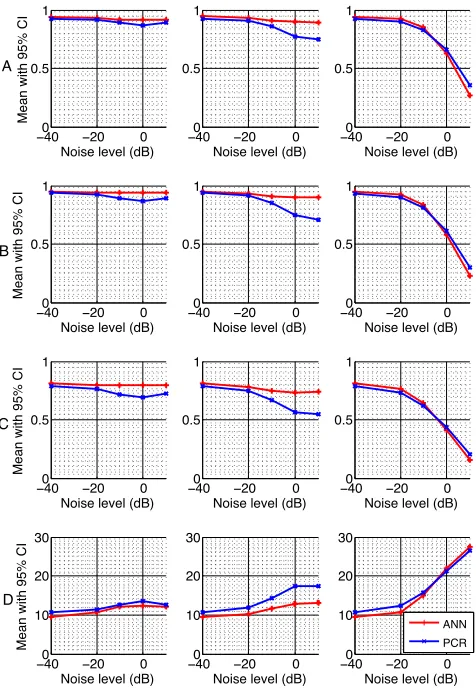
Fig. 1. Performance of FFNN and PCR, pooled according to
the number of features added with noise (one, two and three, left to right). Results are (A) Pearson correlation; (B) Spear-man correlation; (C) Kendall correlation and (D) RMS error.
low. The experiment was repeated three times so that every permutation, for one feature with added noise, was investi-gated. This was repeated for all possible numbers of noisy features (including noise-free), and for every corresponding permutation. This resulted into eight possible permutations (one experiment using noise-free features, three experiment using one noisy feature, three experiments using two noisy features and a last experiment using three noisy features). Ev-ery experiment (apart from noise-free) was repeated for five different noise levels,N L= -40, -20, -10, 0 and 10 dB. Each feature was normalised so that every input ranged between 0 and 1, consistently for training and test.
For the PCR implementation, the MATLAB functions princomp and regress were employed, and the output was normalised using a four-parameter logistic function. For the FFNN implementation, the MATLAB Neural Network Tool-box was used, configured to the Levenberg-Marquardt algo-rithm. It includes an early-stopping method to improve the neural network generalization performance. The hidden and output transfer functions areh(x) = tanh(x)andg(x) =x, respectively. The number of hidden neurons was empirically
set to 3, for a total of 12 weightswto be determined in the training phase.
Subjective quality assessment databases [18, 19] are nec-essary for the training and validation of ML-based objective quality measures. These databases consist of distorted signals (images or videos) that are annotated with (Differential) MOS (Mean Opinion Score) values [14].
The LIVE image quality database [13] was used for this study. It contains 29 reference images and 779 distorted im-ages, annotated with DMOS scores [20]. It includes images impaired by means of five distortion types: Gaussian blur, JPEG compression, JPEG2000 compression, white noise, and bit errors induced by a Rayleigh fading channel. It should be noticed that the LIVE database contains few refer-ence images/videos as compared to the number of distorted images/videos. This configuration leads to the risk of the ML method being over-specialised by focusing on the few refer-ences images included in the dataset. Cross-content training and testing [8, 21] are then essential to judge the performance of ML-based quality predictors.
This experiment investigates the robustness of ML pre-diction accuracy due to noisy features, not training-test set size. Fixed training and test sizes were used with proportions that allowed all 3654 possible training-test combinations and corresponds to approximately ten-fold cross validation. The LIVE database was partitioned into training and test sets that contained two disjoint sets of reference images (and their dis-torted versions), in the proportion of 26 for the training and 3 for the test. Both the FFNN and the PCR models were evalu-ated on each of these training-test cases.
For both methods, recommended [14] performance indi-cators (Pearson, Spearman, Kendall, RMSE) were calculated for each of the 3654 training-test cases. Averages and 95% confidence limits were computed from the standard error for each performance indicator. It should be noticed that these confidence limits do not reflect the projected variance of pre-dictive accuracy on unseen data due to pessimistic bias related to the limited dataset size [22]. However, they are still useful for the comparison of the performance of algorithms with a restricted dataset.
4. RESULTS AND DISCUSSION
Fig. 1 illustrates the difference in performance for the FFNN and PCR methods when input features are corrupted with noise. For each experiment the results are pooled according to the number of noisy features. For example; all three exper-iments where a single feature has noise added are treated as one (first column). Results are reported for Pearson, Spear-man and Kendall correlations as well as RMS error to evaluate whether the reported trends are consistent across performance measures.
[image:3.612.57.295.71.415.2]dif-L C S 0
0.2 0.4 0.6 0.8 1
Sensitivity
001
L C S 0
0.2 0.4 0.6 0.8 1
Sensitivity
010
L C S 0
0.2 0.4 0.6 0.8 1
Sensitivity
100 L C S 0
0.2 0.4 0.6 0.8 1
Sensitivity
000
L C S 0
0.2 0.4 0.6 0.8 1
Sensitivity
011
L C S 0
0.2 0.4 0.6 0.8 1
Sensitivity
101
L C S 0
0.2 0.4 0.6 0.8 1
Sensitivity
110
L C S 0
0.2 0.4 0.6 0.8 1
Sensitivity
111
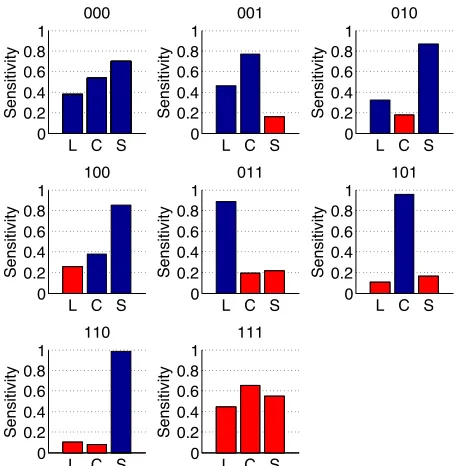
Fig. 2. Sensitivity analysis of FFNNs when noise is added
with noisy features indicated by red bars. The mean nor-malised weight is plotted for the feature inputs: Luminance (L), Contrast (C) and Structure (S). The title of each plot is a binary mask indicating which features have noise applied.
ference in accuracy between FFNN and PCR is small when only one feature is corrupted but the FFNN shows marginal improvement for all measures. The results for two noise com-ponents are the most striking as they highlight the strength of FFNN over PCR for disregarding the noisy information in the prediction. The FFNN results remain relatively consis-tent across all noise levels while PCR performance decreases as the noise increases. It can be seen that there is a slight mismatch between performance indicators for FFNN as the Pearson score remains high while the RMSE is rising in ex-treme cases. This is caused by a sparseness of training data at high quality ratings, highlighting the need to present a range of performance indicators. When all three features are added with noise, there is little to separate FFNN from PCR.
Pooling of results allows a useful comparison of the two algorithms, but it is interesting to compare how the accuracy of the quality prediction is affected according to whether the noise is added to luminance, contrast or structure features. For the FFNN, a sensitivity analysis [23] of the trained network can shed light on this. The network sensitivity to the input of a specific feature can be measured as the magnitude of the numerical change in the network output for a given increase at that feature value. The initial value and rate of change of the input feature, as well as the values of the other features, can affect the magnitude of the output change. Therefore, for each input a range of conditions are specified and the average change in the FFNN magnitude output over all conditions is taken as the network sensitivity to that specific feature. The sensitivity of the FFNN, for featurej = L (luminance), is
defined as
sfL =
1 D(D+ 1)2
D−1 X
a=0
D
X
b=0
D
X
c=0 FFNN
a+ 1
D ,
b D,
c D
−FFNNa
D, b D,
c D
(5)
where FFNN(f(il))= FFNN(fL, fC, fS)is the trained
neu-ral network andD = 10. Similar sensitivity functions are defined for contrast (sfC) and structure (sfS). The trained
networks are stored for each of the 3654 tests within each experiment. For each network a set of three sensitivities is produced, these are then normalized to the root mean square sensitivity for that network.
Fig. 2 shows the sensitivity of the FFNN to each fea-ture (network inputsfL,fCandfS) for the highest noise case
(10 dB). The title of each plot is a binary mask for the three features designating which of the features has noise applied. Thus, 001 indicates that noise has been added only to fea-ture fS. The higher the sensitivity, the higher the relative
importance of the feature in the prediction for that input con-figuration. In the noise-free case the structure is most impor-tant, with luminance being least important and contrast falling somewhere in the middle. When noise is added to some of the features the sensitivity of the network to the noisy features decreases significantly. The network learns that a particular feature is sub-optimal and reduces its sensitivity to it, relying on the other available features. In this sense, the FFNN seems to display intrinsic feature selection capabilities.
The sensitivity analysis allows a further observation: the network sensitivity for the SSIM components without noise (Fig. 2 with mask 000) does not match the uniform feature weighting used by SSIM as proposed by Wang et al. [11]. This confirms the assertion in Section 2 that parameter value selection in SSIM may be sub-optimal. The weights, when noise was added to all features (Fig. 2 with binary mask: 111), show that the network sensitivity has changed for contrast, but that luminance is consistent as the lowest weighted feature.
5. CONCLUSIONS
[image:4.612.62.292.70.303.2]the ability of FFNN to separate the wheat from the chaff in terms of input features is a key characteristic that supports the usage of ML-based tools for objective quality metrics. Future work will broaden the investigation to cover a range of datasets and other metrics besides SSIM.
6. ACKNOWLEDGEMENTS
This work was supported in part by the EC in the context of the QUALINET (COST IC 1003) project. This research was also supported by Google (AH), the Flemish Institute for the Promotion of Innovation by Science and Technology (IWT) (AB), the EPSRC (EP/J013013/1) (PK), the NWO Veni Grant 639.021.230 (JR).
REFERENCES
[1] European Network on Quality of Experience in Multi-media Systems and Services (COST Action IC 1003), “Qualinet White Paper on Definitions of Quality of Ex-perience,” June 3, (2012).
[2] FW Campbell and JJ Kulikowski, “Orientational se-lectivity of the human visual system,” The Journal of physiology, vol. 187, no. 2, pp. 437–445, 1966.
[3] JA Movshon and C Blakemore, “Orientation specificity and spatial selectivity in human vision,” Perception, vol. 2, no. 1, pp. 53–60, 1973.
[4] SS Hemami and AR Reibman, “No-reference image and video quality estimation: Applications and human-motivated design,”Signal processing: Image communi-cation, vol. 25, no. 7, pp. 469–481, 2010.
[5] W Lin and C-C Jay Kuo, “Perceptual visual quality metrics: A survey,” Journal of Visual Communication and Image Representation, vol. 22, no. 4, pp. 297–312, 2011.
[6] P Gastaldo, R Zunino, and JA Redi, “Supporting visual quality assessment with machine learning,” EURASIP Journal on Image and Video Processing, vol. 2013, no. 1, pp. 54, 2013.
[7] A Barri, A Dooms, B Jansen, and P Schelkens, “A lo-cally adaptive system for the fusion of objective quality measures,” Image Processing, IEEE Transactions on, vol. 23, no. 6, pp. 2446–2458, 2014.
[8] M Narwaria and W Lin, “Objective image quality as-sessment based on support vector regression,” Neural Networks, IEEE Transactions on, vol. 21, no. 3, pp. 515–519, 2010.
[9] AK Moorthy and AC Bovik, “Blind image quality as-sessment: From natural scene statistics to perceptual quality,”Image Processing, IEEE Transactions on, vol. 20, no. 12, pp. 3350–3364, 2011.
[10] CM Bishop, Neural networks for pattern recognition, Oxford university press, 1995.
[11] Z Wang, AC Bovik, HR Sheikh, and EP Simoncelli, “Image quality assessment: From error visibility to structural similarity,” Image Processing, IEEE Trans-actions on, vol. 13, no. 4, pp. 600–612, 2004.
[12] A Bouzerdoum, A Havstad, and A Beghdadi, “Image quality assessment using a neural network approach,” in Signal Processing and Information Technology, 2004. Proceedings of the Fourth IEEE International Sympo-sium on. IEEE, 2004, pp. 330–333.
[13] HR Sheikh, Z Wang, L Cormack, and AC Bovik, “Live image quality assessment database release 2,” 2005, http://live.ece.utexas.edu/research/quality.
[14] Video Quality Experts Group (VQEG), “Final report from the video quality experts group on the validation of objective models of video quality assessment, Phase II,” 2003.
[15] Ken-Ichi Funahashi, “On the approximate realization of continuous mappings by neural networks,” Neural networks, vol. 2, no. 3, pp. 183–192, 1989.
[16] H Martens and M Martens, Multivariate analysis of quality, New York: Wiley, 2001.
[17] C Keimel, M Rothbucher, H Shen, and K Diepold, “Video is a cube,” Signal Processing Magazine, IEEE, vol. 28, no. 6, pp. 41–49, 2011.
[18] S Winkler, “Analysis of public image and video databases for quality assessment,” IEEE Journal of Se-lected Topics in Signal Processing, vol. 6, no. 6, pp. 616–625, 2012.
[19] K Fliegel and C Timmerer (eds.), “WG4 databases white paper v1.5: QUALINET multimedia database enabling QoE evaluations and benchmarking,” Prague/Klagenfurt, Czech Republic/Austria, March 2013.
[20] HR Sheikh, MF Sabir, and AC Bovik, “A statistical evaluation of recent full reference image quality assess-ment algorithms,” Image Processing, IEEE Transac-tions on, vol. 15, no. 11, pp. 3440–3451, 2006.
[21] JA Redi, P Gastaldo, I Heynderickx, and R Zunino, “Color distribution information for the reduced-reference assessment of perceived image quality,” Cir-cuits and Systems for Video Technology, IEEE Transac-tions on, vol. 20, no. 12, pp. 1757–1769, 2010.
[22] G Vanwinckelen and H Blockeel, “On estimating model accuracy with repeated cross-validation,” inBeneLearn 2012: Proceedings of the 21st Belgian-Dutch Confer-ence on Machine Learning, 2012, pp. 39–44.