ORGANISATIONAL LEARNING IN CONSTRUCTION:
A FRAMEWORK FROM THE PROCESS IMPROVEMENT
PERSPECTIVE
Mohan Lasantha SIRIWARDENA
ORGANISATIONAL LEARNING IN CONSTRUCTION:
A FRAMEWORK FROM THE PROCESS IMPROVEMENT
PERSPECTIVE
Mohan Lasantha SIRIWARDENA
School of the Built Environment
College of Science and Technology
University of Salford, Salford, UK
Declaration
The thesis builds on research conducted as part of the EPSRC funded SPICE
project, a two year research programme that finished in 2005. The author was a
research student on the project and was responsible for developing and testing the
model through a series of case studies. The author was also involved in the
EPSRC funded KIM research project which also investigated organisational
Dedicated to my beloved family
Abstract
The construction industry, one of the significant sectors of most regional and national
economies, is being continuously urged to improve its performance at project and
organisational level. The urgent need to improve the processes of construction
projects and organisations has been highlighted in a number of industry reports. In
this regard, organisational learning has been considered as essential to facilitate
process improvement, innovation and sustaining the competitiveness of construction
organisations, and also of the sector as a whole.
Although there are a number of initiatives to facilitate organisational learning in
construction contexts, literature reveals that the organisations are still finding it
difficult to identify ways to effectively facilitate learning to improve their processes
and performance. Therefore, this research aims to bridge the gap by developing a
framework to facilitate organisational learning in construction contexts. In doing so,
the process improvement perspective has been taken into consideration. Given the
constructive nature of the research, design science was used as the overarching
methodology. Within this overall approach, case studies were used to inform,
develop and validate the research process and the outcomes. An extensive literature
review, document analysis, workshops, participant observations are the key
The main outcome of this research is the framework to facilitate organisational
learning within construction context. The research further highlighted the complex
adaptive nature of the construction contexts and processes, and it has been
incorporated into the Procurer, Provider and User (PPU) framework. In addition, the
integration of the role of process maturity and time dependent meta roles of
stakeholders in the context of complex construction projects, to facilitate learning and
improvement, is one the significant contributions to the body of knowledge. The
developed framework could be adopted by any organisations, which are contracting,
consultancy, client’s organisations and/or regulatory bodies when they seek to
improve their processes while facilitating organisational learning. It is recommended
that industry practitioners / strategic level decision makers take consider their time
and stake dependent meta-role and the resultant information flows as a basis for
evaluating and updating their current organisational processes.
Acknowledgements
I would like to express my very great appreciation to my supervisor Prof. Vian
Ahmed, you have been a revered mentor for me. Thank you very much for all the
encouragement, constructive suggestions, and insightful criticisms that guided this
research.
I offer my sincere thanks to Salford Centre for Research and Innovation (SCRI) and
the research team for their tremendous support, friendship and the learning
opportunities provided.
I am most grateful to Prof. Lauri Koskela, Prof. Marjan Sharsha, Prof. Michail
Kagioglou, Prof. Dilanthi Amaratunga, Prof. Richard Haigh, Dr. John Rooke and Prof.
Ghassan Aouad for their generosity and encouragement.
The advice offered by the academic staff and the friendship rendered by
non-academic staff of the School of the Built Environment, and Postgraduate research
office, University of Salford is also sincerely acknowledged.
Very special thanks go out to all who helped me in numerous ways by giving
permission to get access to confidential information of case studies that I used within
this study.
I would especially like to thank the Committee members of the Association of
I owe my deepest gratitude to my family, beloved father, mother, and wife for their
endless love, moral and emotional support.
A very big thank you to all my colleagues who have always being there to support
and encourage me.
Last, but not least, I regret my inability to mention the names of many others who
helped me to fulfil this effort.
Thank you.
Table of Contents
Abstract ... i
Acknowledgements ... iii
Table of Contents ... v
Table of Figures ... x
List of Tables ... xii
Abbreviations ... xiii
Chapter One ... 1
1. INTRODUCTION ... 1
1.1 Background and rationale ... 1
1.1.1 Need for industry improvement ... 2
1.1.2 Need for process improvement in construction ... 4
1.1.3 Importance of learning in construction organisations ... 4
1.1.4 Complex adaptive nature of construction context ... 9
1.2 Research Problem / gap in knowledge ... 11
1.3 Aim and Objectives ... 11
1.4 Methodological steps ... 12
1.5 Scope and delimitation ... 17
1.6 Contribution to knowledge... 17
1.7 Structure of the thesis ... 18
Chapter Two ... 20
2. ORGANISATIONAL LEARNING ... 20
2.1 Introduction to chapter two ... 20
2.3 Organisational learning ... 28
2.3.1 Technical perspective ... 32
2.3.2 Social perspective ... 33
2.3.3 Models of organisational learning ... 34
2.3.3.1 Theoretical models for organisational learning ... 35
2.3.3.2 Applied models for organisational learning ... 37
2.3.4 Influential factors for organisational learning ... 40
2.3.5 Importance and criticisms on organisational learning ... 40
2.4 Learning organisation ... 42
2.5 Knowledge management and organisational knowledge ... 44
2.5.1 Knowledge management in a complex dynamic settings ... 47
2.6 Conceptualising the notions ... 52
2.7 Organisational learning in the context of construction industry ... 58
2.8 Chapter summary ... 61
Chapter Three ... 62
3. PROCESS IMPROVEMENT PERSPECTIVE ... 62
3.1 Introduction to chapter three ... 62
3.2 Process philosophy ... 63
3.3 Capability maturity model for software ... 66
3.4 Approaches for construction processes improvement ... 71
3.5 SPICE approach to improve construction processes ... 74
3.5.1 Process capability and maturity ... 77
3.5.2 Immature vs mature organisations ... 78
3.5.3 Stepwise improvements in organisational maturity ... 80
3.5.3.1 Level 1 – Initial/Chaotic ... 82
3.5.3.2 Level 2 – Planned and Tracked ... 82
3.5.3.3 Level 3 – Good Practice Sharing ... 83
3.5.3.4 Level 4 – Quantitatively Controlled ... 84
3.5.3.5 Level 5 – Continuously Improving ... 85
3.5.4 Key Processes ... 86
3.5.5 Process Enablers ... 86
[image:10.595.97.537.105.585.2]3.6.1 Process improvement in organisational level ... 87
3.6.2 SPICE Level 3 key processes ... 90
3.6.2.1 Process definition ... 90
3.6.2.2 Process customisation ... 90
3.6.2.3 Process training ... 91
3.6.2.4 Process improvement resourcing... 91
3.6.3 SPICE process enablers ... 91
3.6.3.1 Commitment ... 92
3.6.3.2 Ability ... 92
3.6.3.3 Activity ... 92
3.6.3.4 Evaluation ... 92
3.6.3.5 Verification ... 93
3.7 Process improvement in construction procurement ... 96
3.7.1 Policy ... 98
3.7.2 Organisation and Structure ... 98
3.7.3 Process ... 99
3.7.4 Measurement ... 101
3.7.5 People ... 102
3.7.6 Towards the process improvement through SPICE ... 103
3.8 Product – service paradigm ... 105
3.8.1 Product development... 106
3.8.2 Information management ... 106
3.8.3 Procurement ... 107
3.8.4 Product-service in the built environment... 108
3.8.4.1 Stakeholders ... 111
3.8.4.2 Life cycle issues ... 113
3.8.4.3 Through-Life Management ... 115
3.9 Summary ... 116
Chapter Four ... 118
4. RESEARCH METHODOLOGY ... 118
4.1 Introduction to chapter four ... 118
4.3 Research Philosophy ... 120
4.3.1 Positivist and phenomenological paradigms ... 122
4.3.2 Adopted research philosophy and justification ... 125
4.3.3 The learning spiral ... 127
4.4 Research approach – Design Science ... 128
4.4.1 Design science research cycle ... 131
4.5 Research design and process ... 133
4.5.1 Case study design ... 134
4.5.2 Data collection methods ... 140
4.5.2.1 Literature review ... 141
4.5.2.2 Informal discussions ... 142
4.5.2.3 Documentary data ... 142
4.5.2.4 Participant observations ... 142
4.5.2.5 Desk study ... 143
4.5.2.6 Workshop/focus group ... 144
4.5.2.7 Questionnaire survey ... 145
4.5.3 Justification for adopted research methods ... 145
4.5.4 Data sampling strategies ... 152
4.5.4.1 Case study sampling ... 152
4.5.5 Data analysis methods ... 153
4.5.6 Validity and reliability ... 154
4.6 Summary ... 157
Chapter Five ... 159
5. DEVELOPMENT AND VALIDATION OF FRAMEWORK ... 159
5.1 Introduction to chapter five ... 159
5.2 Key steps of framework development process ... 159
5.2.1 Problem awareness ... 162
5.2.2 Conceptual framework... 163
5.3 Framework development ... 166
5.3.1 Adopted case studies ... 166
5.3.2 Data collection and analysis ... 168
5.3.2.2 Case study A ... 178
5.3.2.3 Case study B ... 180
5.3.2.4 Case study C ... 182
5.3.3 Overall reflections from the case studies ... 184
5.3.4 Procurers, Providers and Users (PPU) framework ... 186
5.3.4.1 Meta roles and information flow ... 187
5.3.4.2 Policy and reality ... 191
5.3.4.3 Improvement areas that require organisational attention ... 191
5.3.4.4 Lessons learnt... 192
5.4 Validation of PPU framework ... 192
5.5 Benefits and limitations of developed framework ... 196
5.6 Summary ... 197
Chapter Six... 198
6. CONCLUSIONS AND RECOMMENDATIONS ... 198
6.1 Introduction to chapter six ... 198
6.2 An overview of the research ... 198
6.3 Research findings ... 200
6.3.1 Completion of the first objective ... 201
6.3.2 Completion of the second objective ... 203
6.3.3 Completion of the third objective ... 203
6.3.4 Completion of the fourth and fifth objectives ... 205
6.4 Contribution to the body of knowledge ... 206
6.5 Research implications ... 207
6.6 Recommendations ... 208
6.6.1 Recommendations for research ... 208
6.6.2 Recommendations for industry ... 209
6.7 Considerations for future research ... 209
Bibliography and References ... 212
Appendices... 247
Appendix – A: Research publications ... 247
[image:13.595.106.539.79.344.2]Table of Figures
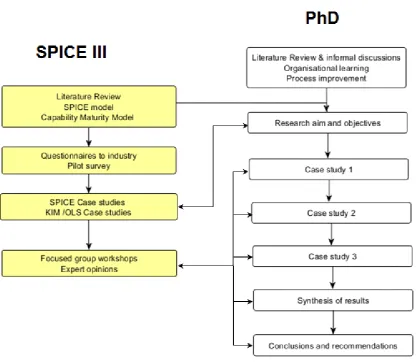
Figure 1-1: Data exchange between the PhD and SPICE III research project ... 14
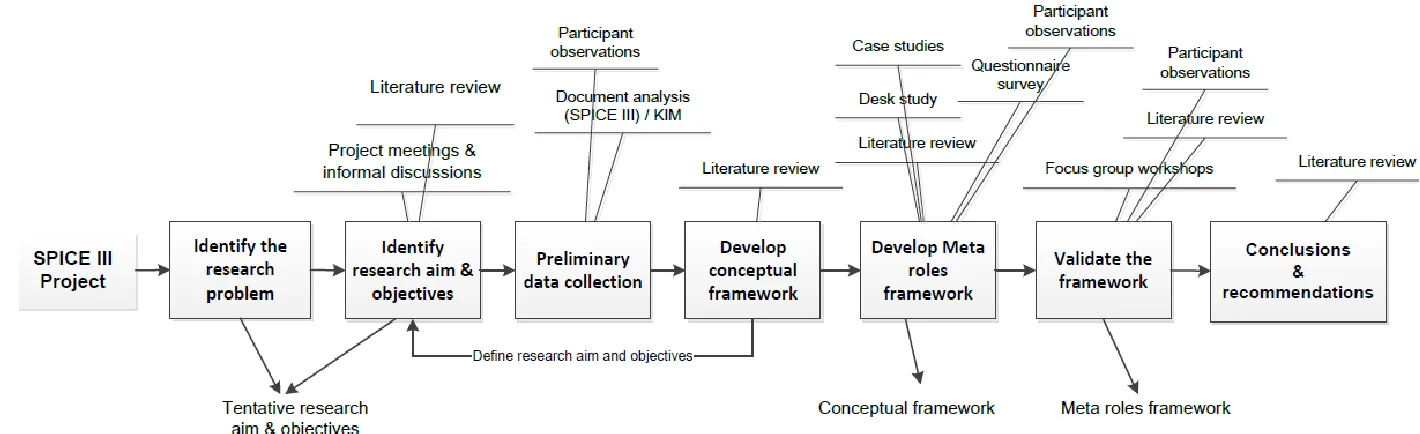
Figure 1-2: Adopted research process ... 15
Figure 2-1: Single and double loop learning ... 23
Figure 2-2: Working conceptualisation of market based organisational learning ... 24
Figure 2-3: OADI - SMM Model ... 35
Figure 2-4: Two dimensional model ... 37
Figure 2-5: Energy flow model ... 38
Figure 2-6: INVEST Model ... 39
Figure 2-7: A Conceptual positioning of major focus streams related to learning in organisations ... 53
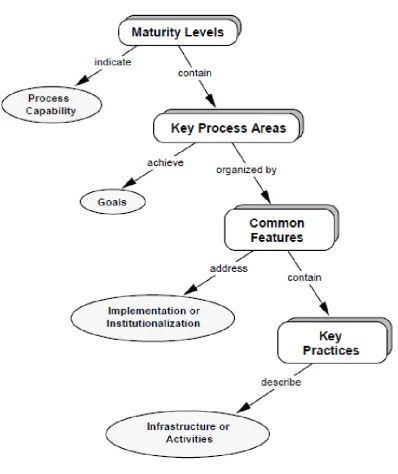
Figure 3-1: The CMM Structure ... 68
Figure 3-2: Characteristics of the maturity levels ... 69
Figure 3-3: Typical process in an organisation ... 72
Figure 3-4: Organisational processes and its entities ... 72
Figure 3-5: The SPICE process improvement framework ... 81
Figure 3-6: Transition from Level 1 and Level 2 to Level 3 ... 89
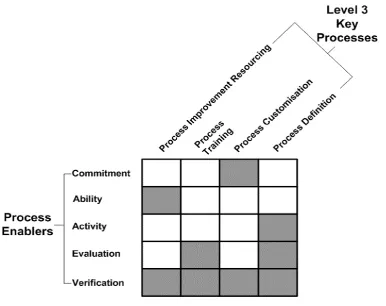
Figure 3-7: Positioning Level 3 Key Processes within SPICE Level 3 ... 93
Figure 3-8: SPICE Level 3 process maturity matrix ... 95
Figure 3-9: Ownership arrangement of LIFT companies ... 112
Figure 4-1: Alternative philosophical approaches to research ... 123
Figure 4-3: Design science research cycle ... 132
Figure 5-1: Key steps of framework development ... 161
Figure 5-2: Conceptual framework ... 164
Figure 5-3: A sequence of data collection from selected cases... 167
Figure 5-4: Respondents' experience ... 170
Figure 5-5: Respondents’ perspectives on management commitment towards organisational process improvement ... 171
Figure 5-6: Respondents’ beliefs on addressing specific requirements of learning in prior to training programmes ... 172
Figure 5-7: Respondents' beliefs on organisation policies towards learning and process improvement ... 173
Figure 5-8: Respondents' beliefs on providing adequate resources for organisational learning and process improvement ... 174
Figure 5-9: Respondents' beliefs on current organisational systems to capture required knowledge and skills requirements by the project and organisation ... 175
Figure 5-10: Respondents' beliefs on their participation in reviewing the process training ... 176
Figure 5-11: Respondents' beliefs on quality assured organisational process training ... 177
Figure 5-12: Proposed Procurer, Provider and User (PPU) framework ... 187
List of Tables
Table 1-1: Summary of the adopted research methods ... 16
Table 2-1: Focus areas of organisational learning ... 31
Table 3-1: Perspectives of process ... 65
Table 3-2: Multiple life cycles of the built environment ... 114
Table 4-1: Characteristics of Positivist and Phenomenological paradigms ... 124
Table 4-3: The outputs of design research ... 130
Table 4-4: Characteristics of case study research ... 137
Table 4-5: Types of case study design ... 138
Table 4-6: Justifications for selected methods... 146
Table 4-7: Key considerations of validity and reliability ... 155
Table 5-1: Key contextual issues in construction process improvements ... 165
Table 5-2: Associated contextual issues and their level of presence in selected cases ... 185
Table 5-3: Meta roles of the PPU framework... 190
Abbreviations
BPI Business Process Improvement
CIB Construction Industry Board
CMM Capability Maturity Model
CMMI Capability Maturity Model Integration
CRISP Construction Research and Innovation Strategy Panel
DETR Department of the Environment, Transport and Regions
DSR Design Science Research
EPSRC Engineering and Physical Science Research Council
GDP Gross Domestic Product
GNP Gross National Product
GVA Gross Value Addition
ICT Information Communication Technology
IES Institute for Employment studies
IPRA International Public Relation Association
KIM Knowledge Information Management
KM Knowledge Management
LIFT Local Improvement Finance Trust
OGC Office of Government Commerce
OL Organisational Learning
OLS Optimal Learning Spaces
PFI Project Finance Initiative
PIT Process Improvement Team
PMBOK Project Management Body of Knowledge
POE Post Occupancy Evaluation
PPP Public Private Partnership
PPU Procurers Providers and Users
RAE Royal Academy of Engineering
SECI Socialisation, Externalisation, Combination and Internationalisation
SEI Software Engineering Institute
SPICE Structured Process Improvement for Construction Enterprises
TPS Toyota Production System
TQM Total Quality Management
UK United Kingdom
Chapter One
1. INTRODUCTION
This introduction chapter provides an overview of the doctoral research aimed at
facilitating learning in construction organisations. Firstly, the background and the
rationale of the research are explained. In doing so, literature pertaining to
organisational learning, knowledge management and process improvement
aspects relating to the construction industry context is presented, thereby,
establishing the current state of knowledge, and the existing gaps in knowledge.
Subsequently, this chapter elucidates the research aim, objectives, overview of the
adopted research methods and the research process, scope of this research and
the delimitations. Finally, this chapter underlines the contribution of this research
to the body of knowledge and the value of undertaking this research study. A
guide to this thesis is also included at the end of this chapter.
1.1 Background and rationale
The construction industry is important due to a number of reasons. Amongst them
are, the significant contribution that the construction industry makes to the
economy, environment and to the overall sustainability agenda. Horta and
“Construction as a key sector of the national economy and of the global economy has also witnessed major structural changes, such as globalization, technological evolution and increased regulation, which contributed to a considerable increase in competition among construction companies” (Horta and Camanho, 2014, p.974).
Construction is a major contributor to UK Gross Domestic Product (directly 8.5% in
2008, rising to 10% overall when the entire value chain is considered) and a driver
of historical GDP growth (National Construction Statistics, 2013). Its’ contribution
to GNP (Gross National Product) globally is approximately 10% (Hillebranbdt,
2000) and the contribution to the GVA (Gross Value Addition) was approximately
6% in 2012 (Rhodes, 2013). The same GVA percentage was maintained during
the year 2014 (Department of Business, Innovation and Skills, 2014). Moreover,
Harvey and Ashworth (1997) highlighted that the industry also represents over half
of Britain’s fixed capital investment and contributes 6.6% to the employment in
2013 (Rhodes, 2013).
1.1.1 Need for industry improvement
Performance of the construction industry in terms of its ability to meet cost, time
and quality targets have been often called into question. Latham (1994) and Egan
(1998) reports have been at the forefront of these calls. Having quoted the findings
of the British Property Federations survey (1997) on major UK clients, Egan (1998)
pointed out
This statement strongly emphasised the urgent need for improving the
performance of construction products and services towards delivering better value
for clients’ investments.
On one hand, the construction industry is widely perceived as been slow to
innovate and has lagged behind many manufacturing industries in the
implementation of management and technology innovations (Veshosky, 1998;
Reichstein, Salter and Gann, 2005). On the other hand, there is growing pressure
for organisational, operational, structural, and cultural transformation within the
industry to survive in the competitive markets (McGeorge and Palmer, 1997). Kale
and Arditi (1999) noted that industry characteristics such as the fragmented nature
of the industry, structure and organisation of construction processes, easy entry to
the construction business, post-demand production, one-off nature of projects,
high uncertainty and risk, high capital intensiveness of the constructed facilities,
temporary nature and duration of exchange relationships, impose great challenges
on the companies operating in it. Moreover, Fernández-Solís (2008, p.2) identifies
construction industry as a
“human system but it is the complex nature of the industry that makes it behave as an adaptive system, thus its transformation in time is captured by the panarchy metaphor” Fernández-Solís (2008, p.2).
However, with the increase of uncertainty and turbulence in the construction
business environment (Lansley, 1987), construction contractors are being urged to
learn new ways of working in order to compete in present business environment
1.1.2 Need for process improvement in construction
Latham (1994) and Egan (1998) called for changes through the introduction of
effective business processes within construction in order to meet the challenges of
an evolving business environment. Supportively, the International Public Relation
Association (IPRA) and the University of Westminister’s report (1998) for the
Construction Industry Board also provided further impetus for the need for a
learning culture that should facilitate effective business process improvement
within the construction industry (Kululanga, 1999). Moreover, Working Futures
2004-2014 report (2006) highlighted that the construction’s share of total output is
expected to continue its slow decline over 2004-2014, as output growth is forecast
to be around 1.5% per annum (Wilson, Homenidue and Dickerson, 2006). Having
observed the pattern of construction industry during the period of 1965-1996,
Anheim (2003) identified that the industry was forming lower productivity (1.7% of
growth rate) when compared to the other sectors of the economy. Moreover,
Foster-Mcgregor et al. (2013) explain the productivity and efficiency gaps in
construction industry. Therefore, there is an essential need to improve the
construction industry performance in terms of customer satisfaction, productivity,
quality, and efficiency.
1.1.3 Importance of learning in construction
organisations
The complexities of the design and construction processes have been highlighted
as a major factor behind the industry’s failure to realise significant improvements
over the last 60 years. The fragmented nature of the industry and the separation of
increasing calls for construction to improve its processes and learn from the past
(Egan, 2002; Ofori, 2008) and also learn from the mistakes (Dainty, Cheng and
Moore, 2003) to improve production operations and customer satisfaction.
Researchers in the field of the built environment have highlighted the importance
of learning and process improvement in construction (Boyd and Robson, 1996)
and also recognised the positive effect of organisational learning towards Business
Process Improvement (BPI). Supportively, Chinowsky, Molenaar and Realph
(2007) highlighted the importance of construction and engineering organisations to
evolve into learning organisations with continuous knowledge and business
process improvements. Jashapara (1995) advocated researchers to explore the
antecedents of learning issues for the construction industry to facilitate business
process improvement, and the seminal studies of Buckler (1998), Vakola and
Rezgui (2000), and Vakola (2000) also expressed the same opinion. It is also
worth noting that construction research has also progressed on the role of
organisational learning in promoting innovation (Buckler, 1998; Winch, 1998;
Vakola, 2000; Vakola and Rezgui, 2000; Barlow, 2000). Attention has also been
paid to learning that takes place within partnering context (Barlow and Jashapara,
1998; Franco, Cushman and Rosenhead, 2004) and also within strategic alliances
(Holt, Love and Li, 2000). Chan et al (2004) explained organisational learning as a
key to the survival of construction organisations.
Kululanga (1999) stated that lack of antecedents associated with organisational
learning could result in a situation where construction contractors may not
environments. Having identified the gap, he developed a mechanism to evaluate
forms of organisational learning for construction contractors’ which will help
construction directors’ to manage and improve their businesses. However, a lack
of methodology for measuring the learning capability of a company has been one
of the problems for implementing organisational learning within companies and
those mechanisms need to go beyond the traditional financial performance
indicators. Behm and Schneller (2013) have indicated the importance of
organisational learning in order to improve the safety performance in construction,
by putting the lessons learnt into good use. Carrillo, Ruikar and Fuller (2013) also
support the idea that the lessons learnt practices in the construction contractor
organisations should be improved, while Tennant and Fernie (2013) state that
learning within supply chain management is strongly linked positively to enhancing
the competitive advantage.
However, the project based nature of the construction industry has been identified
as a barrier to foster learning in construction. Arguably, Chan et al. (2004)
explained that the project based nature of the industry is causing problems in
embracing organisational learning. Having explored the organisational learning
practices in the Indonesian construction industry, Tan and Tjandra (2002) argued
that due to the project based nature of the industry, project teams tend to focus on
short term results and move on to the next project without the opportunity for
reflection, thus resulting in discontinuities in the knowledge flows and learning.
This idea is supported by Eriksson (2013) too. Moreover, Tan and Tjandra (2002)
recognised in this project based industry. Supportively, Anheim (2003) noted the
project based nature as one of posing obstacles for the construction organisations
to learn from their operations, stating that the view that each new project as a
separate assignment reduces the insight into transferring the lessons learnt from
the previous projects.
It is worthy to note that there are positive aspects of the project based nature of
construction too (Anheim, 2003). Having studied the building contractors working
methods and how team work affects the potential for learning, Anheim (2003)
concluded that complex projects with relatively autonomous project teams promote
learning. This argument is in line with that of Nonaka and Takeuchi (1995) who
emphasised the need for sufficiently stimulating tasks as a pre-requisite for
learning. More importantly, Anheim (2003) stated that if construction projects are
viewed as complex scenarios containing large number of different problems, they
could also be considered as potential learning scenarios. The Post Occupancy
Evaluations (POEs) are seen as a way of learning and informing the future design
improvement (Zeisel, 1981; Zimmerman and Martin, 2001; Meir et al, 2009).
However, Way and Bordass, (2005) consider the POE stage and the process as
one of the most neglected stages in construction.
Although the concepts related to learning within organisational contexts have been
presented in literature over the last six decades, it became widely recognised in
the management contexts in the 1990s, especially within practitioner led
scenarios. Knowledge management has also developed into a popular phrase
models of organisational learning and knowledge management as forms of
representations of learning within organisations, while practitioners tend to use
them as tools to promote and make effective use of learning in companies. The
Institute for Employment Studies (IES) identified fostering organisational learning
as one of the challenges facing management in major UK employing organisations
(Harish and Carter, 2002).
Large amounts of literature identify organisational learning as essential for the
success and survival of organisations. De Geus (1997) stated that the only source
of competitive advantage is an organisation’s ability to learn. Baldwin, Danielson
and Wiggenhorn (1997) noted that what seems to distinguish surviving and
adopting organisations from the rest is their ability to learn. Also Nonaka (1991)
argued that competitive advantage, innovation and effectiveness are the primary
products of nurturing a culture of learning within a company. Barrow (1993) and
Hill (1996) highlighted that organisational learning and continuous improvement
principles are inextricably linked, such that organisational learning should be the
most compelling reason for undertaking any continuous improvement schemes.
Toyota Way, which advocates the use of Toyota Production System (TPS) based
on lean production, considers learning and continuous improvement amongst the
fourteen (14) Toyota Way principles (Liker, 2004). The Balance Scorecard (Kaplan
and Norton, 1996), a popular framework for strategic performance measurement,
considers the building of the necessary infrastructure in organisations to facilitate
learning and growth, as a core element of its framework. Sarshar et al, (2000)
good methods of increasing predictability and delivering increased customer value.
However, the industry has no standard mechanism to assess process
improvements and the need is highlighted.
Given the fact that construction is significantly a project based industry, the way in
which projects are viewed, is worth noting. In this regard, the deficiencies of the
popular understanding of project management such as that of PMBOK (Project
Management Body of Knowledge) has been highlighted (Koskela and Howell,
2002). As such, they have indicated that a theory of project management should
address three aspects namely, design and the making of systems employed in
designing and making; control of those systems in order to realise the production
intended; and the improvement of those systems. This provides further evidence
that learning and improvement is an integral and essential aspect of successful
project management.
1.1.4 Complex adaptive nature of construction context
The need to recognise the complex nature of the construction industry
relationships has been highlighted by Gibb et al (2014). Therefore, a shift in
thinking of how to visualise organisations and projects may result in challenging
some of the established thinking in organisational learning and knowledge
management. As such, the study of organisation learning has been subjected to
criticism by observant researchers. Dahlgaard (2004) recognises the need to
consider the different perspectives as interacting and interrelated in the dynamic
process of learning. From the perspective of metaphysics of change, it is ‘change’
artificially-imposed attempt to arrest and stabilise what is essentially a ceaselessly
fluxing reality indifferent to causes (Chia, 1999). Moreover, Tsoukas and Chia
(2002) noted that the traditional approaches to organisational change have been
dominated by the assumptions of prevailing stability, routine, and order. As a
result, organisational change has been reified and treated as exceptional rather
than natural.
The perspective of complex responsive processes of relating (Stacey, 2001;
Cooke-Davis et al, 2007), explain the dynamic and organic nature of the project
and organisational environments.
“Project arrangements and settings can be seen as a particular kind of a pattern of interactions between people” (Cooke-Davis et al, 2007, p 58).
Therefore, they highlighted that the project contexts which were traditionally seen
as systemic, with a dual relationship. “…on the one hand, formative unfolding of
the envisaged design towards some pre-given motivation such as a project goal,
and on the other hand, rationalist individual choice of action” (Cooke-Davis et al,
2007, p 58), will now be considered as “continually iterated, self-organising
process of relating, and if strategic direction and future goals are continually
1.2 Research Problem / gap in knowledge
Section 1.1 of this chapter explained the importance of ‘organisational learning’ for
construction organisations, and recognised the necessity for broadening the
understanding of ‘organisational learning’ within the construction context.
Literature reveals ‘learning’ in two viewpoints. Learning can be considered as a
natural process taking place in humans and other living beings. In such instances,
the purpose of learning may not necessarily be aimed at seeking improvements of
the contexts. On the other hand, learning is considered as an essential requisite
for improvement, as evidenced in Section 1.1. Therefore, within this research
study, ‘learning’ is considered from the process improvement perspective.
Although many research addressing organisational learning and knowledge
management exist, the absence of an in-depth consideration of organisational
learning for process improvement within the complex adaptive construction context
is lacking. Therefore, there is a need for a framework to facilitate “learning in
organisations” in construction, through the process improvement perspective.
1.3 Aim and Objectives
The aim of this research is ‘to develop a framework to facilitate organisational
learning in construction specifically to achieve process improvement’. In order to
achieve the broader aim, the following objectives have been formulated.
1. to study the principal concepts of organisational learning and practices;
2. to explain the role of process improvement perspective in facilitating
3. to explore the contextual issues associated with organisational learning and
process improvement within construction industry context;
4. to develop a framework to facilitate organisational learning in construction
organisations; and
5. to validate the framework and identify the implications for theory and
practice.
1.4 Methodological steps
Research methodology is a way of systematically solving the research problem. In
a way it is a science of studying how research is done scientifically (Kothari, 2004).
Moreover it refers to the overall approach to a problem which could be put into
practice in a research process, from the theoretical underpinning to the collection
and analysis of data (Remenyi et al., 1998; Collis and Hussey, 2003). The study
was guided by the ‘constructivist knowledge claim’ and categorised under the
constructive research category. The dominant purpose was in the tradition of
Design Science (van Aken, 2004) research. However, some aspects of descriptive
and explanatory research traditions were adopted in achieving the first three
objectives. The study requires an understanding of organisational learning,
process improvement and the complex adaptive nature of the construction
contexts. A multi-method approach was adopted to collect and analyse data
comprising literature review, document analysis, case study, participant
observations, and a questionnaire survey followed by focus group workshops (see
and integrate the key themes in to the framework. Finally the developed
framework was tested and improved through a focus group workshop.
As a response to the call for process improvement in construction, the Structured
Process Improvement for Construction Enterprise (SPICE) research project was
initiated in 1998. The project developed a stepwise process improvement
framework for the construction industry, utilising experience from the software
industry, and in particular the use of the Capability Maturity Model (CMM), which
has resulted in significant productivity improvements in the software industry. The
SPICE III was a two year EPSRC (Engineering and Physical Sciences Research
Council) funded research project in collaboration with a consortium of academics
and industry was initiated in 2002. SPICE III focused specifically on creating the
process capability to facilitate good practice sharing in construction organisations.
The author joined the project in 2002 as a researcher and was responsible for
SPICE III model development and testing through questionnaire survey, case
studies and focused group workshops. An overview of SPICE research project and
a detailed elaboration on SPICE III research project are provided in Chapter 3 and
Chapter 4. The data exchange between SPICE III and this doctoral research is
Figure 1-1: Data exchange between the PhD and SPICE III research project
Table 1-1 outlines the adopted research methods within this scientific enquiry.
Moreover, Chapter 4 (see Table 4-5) clearly elaborates the reasons for selecting
those research methods and rationale for rejecting other appropriate methods.
Table 1-1: Summary of the adopted research methods
Research objectives
Adopted Research Methods
Liter a tu re re v ie w Informa l dis c uss ion s Docume nt a nal y s is Cas e s tu dy Que s tionn a ir e s ur v e y Des k s tu dy P a rtic ip a nt obse rv a tion s Focus group work s hop
1. to study the principal concepts of
organisational learning and practices √ √ 2. to explain the role of process
improvement perspective in
facilitating organisational learning; √ √ √ √ 3. to explore the contextual issues
associated with organisational learning and process improvement
within construction industry context; √ √ √ √ √ 4. to develop a framework to facilitate
organisational learning in
construction organisations; √ √ √ √ √ √ √ √ 5. to validate the framework and identify
the implications for theory and
1.5 Scope and delimitation
The study was focused on organisational learning capabilities of construction
organisations in the UK. The study was delimited to process improvement aspects
in construction organisations. Three critical case studies were undertaken to
develop and validate the proposed framework. A further discussion on research
limitations is provided in the final chapter.
1.6 Contribution to knowledge
The contribution to the body of knowledge from this study is threefold.
Firstly, the research developed a Procurer, Provider and User (PPU) framework to
facilitate organisational learning in order to facilitate process improvement within
construction organisations. The developed framework identifies the meta-roles of
project stakeholders, and the information flows (in and out). Absence of such a
framework in current literature makes this research outcome an original
contribution to knowledge. Secondly, this framework further enhances the
applicability of the Capability Maturity Model and SPICE process maturity
framework by providing a basis for developing process improvement actions.
Thirdly, the overall research approach adopted was the Design Science approach,
which is quite a unique feature of this research investigation. Further information
about the contribution to knowledge is discussed in Chapter 6.
1.7 Structure of the thesis
This thesis comprises six chapters.
Chapter One: Introduction
This chapter presents the introduction to the thesis. It explains the background and
rationale, the gap in the current knowledge, research aim and objectives, scope
and delimitations, and an overview of adopted research methods.
Chapter Two: Organisational learning
This literature review chapter reveals the current principles, development and
practices of organisational learning. The first part of the chapter elaborates the key
concepts related to organisational learning. Then it explains the notions of learning
organisation, knowledge management and organisational knowledge and their
relationships to organisational learning. This chapter concludes by emphasising
the current state of learning in construction organisations.
Chapter Three: Process improvement perspective
This chapter elucidates the theoretical underpinning of process improvement
perspective and the complex adaptive nature of construction. It discusses the
current approaches to process improvement and its underpinning theories and
philosophies. Moreover, the chapter investigates the nature of the construction
within which the applications are practised, and recognises the key factors which
needs to be considered when facilitating learning in construction organisations.
Chapter summarises with a conceptual framework which was used as a
Chapter Four: Research Methodology
This chapter elaborates the adopted research methodology for this research
enquiry. First part of the chapter overviews the overall research approach (i.e.
Design Science approach) while providing pertinent justifications for selecting
particular approach for this study. Then the chapter explains the adopted research
methods and techniques, justifications for selecting those methods and rationale
for rejecting other alternative methods within this research investigation.
Chapter Five: Framework development and validation
The first part of Chapter 5 explains the data collection and analysis processes
used within this study in order to achieve the research objectives. The second
section explains the results of the work undertaken and develops a framework for
organisational learning in construction in specific to the process improvement
perspective. The priority was given to explain the development and validation of
proposed framework throughout its conceptual to developed stages.
Chapter Six: Conclusions and recommendations
This final chapter covers three sections. The first section explains the conclusions
of this research endeavour. The priority was given to explain how the research
objectives were achieved within the specified research boundaries and the
credibility of the results. In the second section, the contributions to the body of
knowledge are envisaged. This section is followed by the discussion on the
limitations of the research validity, reliability, rigour and bias. In the last section,
Chapter Two
2. ORGANISATIONAL LEARNING
2.1 Introduction to chapter two
The aim of this chapter is to provide a holistic overview of organisational learning
and it’s applicability for the construction organisations. The chapter details the
generic literature related to organisational learning and knowledge management in
order to understand the concepts, principles and their relevance to the area of
research. The chapter then reviews literature pertaining to organisational learning
and knowledge management with specific reference to the construction context.
The chapter concludes by highlighting the essential need for a renewed
understanding of learning in construction organisations in order to improve their
performance.
2.2 Historical overview of learning in organisations
Organisational learning is considered as one of core underlying concepts in the
field of management. It has been presented in the literature for decades however
only become widely recognised within management literature in the 1990s.
Easterby-Smith and Araujo (1999) quoting the survey of Crossan and Guatto’s
(1996) noted that as many academic contributions in this area were published in
exist long before. Easterby-Smith and Lyles (2003) acknowledged the
contributions made by Dewey (1916), Hayek (1945), Polanyi (1959), and Penrose
(1959) as some of the significant early philosophical works. In an attempt to trace
back the development of the term and the meaning of the “learning”, Dahlgaard
(2004) pointed out that ancient Chinese ideogram may be one of the oldest
conceptualisations of the term.
It refers to a two key elements, namely;
to study i.e. acquisition and accumulation of knowledge (cognitive and
intellectual learning); and
to practise repeatedly i.e. continuous / endless (physical) practice.
Dahlgaard (2004)
There are number of definitions available to describe the term ‘learning’. The
Oxford concise dictionary (2011) defines learning as knowledge obtained by study.
Buchanan and Huczynski (1997) considered learning as the process of acquiring
knowledge through experience which leads to an enduring change in behaviour.
Moreover, Rollinson, Broadfield and Edwards (1998) introduced learning as an
experimental process which results in an individual displaying relatively permanent
changes in underlying values of behaviour, so that the individual is able to adapt to
a changing environment. However the concept of learning is understood from
various perspectives and mainly developed in the psychological field over a long
evolutionary history and its application at organisational level was primarily
conditioned as the collectivity of individual training, training and development
The recent literature suggests that ‘learning’ occurs in a cognitive context of what
has been learnt before and in an environmental context it is defined by the
location, time and specific features of the tasks in hand (Balsam, 2014). Even
though learning starts with individuals, individual learning does not necessarily
lead to organisational learning. Supportively, Cyert and March (1963) were
instrumental in pioneering the notion that organisations are capable of learning in
ways which are independent of the individuals within it. Cangelosi and Dill (1965)
also strengthened Cyret and March’s argument. Therefore, it was recognised the
necessity for a more holistic view for the concept of organisational learning
(Ikehara, 1999).
The year 1991 saw the emergence of another wave of significant contributions to
the field of organisational learning through the studies of Huber (1991), March
(1991), and Simon (1991). By this time the theorists have made a significant
change in the way organisational learning was viewed at. Although they still
belonged to the neo-rationalist domain, emphasising that it is desirable to
maximise the efficient use of knowledge in organisations. Easterby-Smith and
Lyles (2003) pointed out that whilst March and Simon (1958) argued based on
neo-rationalist stance, Argyris and Schon (1978) challenged it with the view that
human behaviour within organisations frequently does not follow lines of economic
rationality. Having said that, they recognised the existence of substantial barriers
The idea of organisational learning emerged in the effort to developed
organisations that are more responsive and flexible to change (Tan and Tjandra,
2002). Kululanga, Edum-Fotwe and McCaffer (2001) argued that the concept of
organisational learning as the progress from a doing to a thinking workforce, from
a reactive to proactive readiness to change, from loss to gain of competitive
advantage and from status quo to continuous improvement. With reference to the
studies of Argyris and Schon (1998), learning occurs under two conditions. When
there is a match or a mismatch between intentions and outcomes of intended
actions in organisations. They further explained if there is a mismatch the actions
are corrected until there is a match between actions and intended outcomes. More
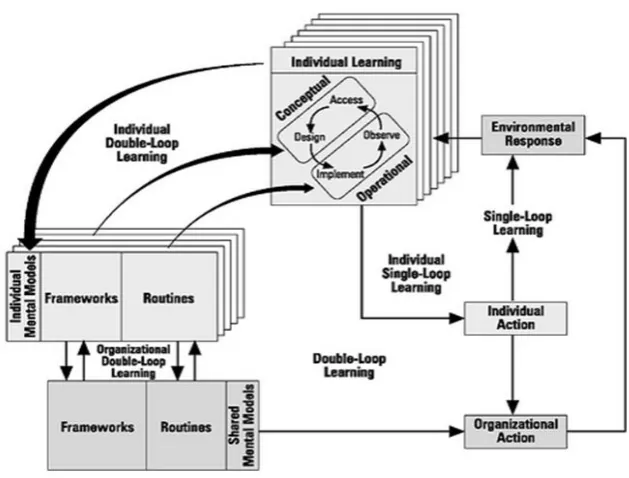
importantly, the notion of ‘single-loop’ and ‘double-loop’ learning (Argyris and
Schon, 1978, 1998) and ‘triple loop’ (Wang and Ahmed, 2003) identified as the
next significant development in the field. Having said that it was realised the
development of market based organisational learning cannot be far removed from
that of organisational learning.
Figure 2-1: Single and double loop learning
Apart from those considerations, Morgan (2004) developed a model to explain the
working conceptualisation of market based organisational learning, which is
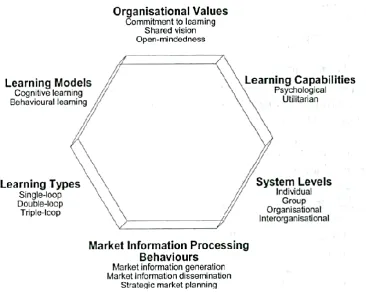
[image:42.595.125.492.212.504.2]characterised by six main elements (See Figure 2.2).
Figure 2-2: Working conceptualisation of market based organisational learning
Source: (Morgan 2004, p.81)
Morgan (2004) explained the meanings of those elements as follows.
Organisational value is the value that the organisation holds towards market
base learning and the propensity for a learning culture to exit;
Learning capabilities are the development of learning capabilities in
System levels are considered as the extent and capacity that individuals
have to learn;
Market information processing behaviour is merely the gathering
information and making intelligence from information is a first principle;
Learning types are to detection of errors in product market; and
Learning models are to learning for the sake of broadening the knowledge
base of the organisations and to store in the organisation memory.
The above model covers the key specific areas of organisational learning that
required to be considered when there is a business to be survived in a competitive
business environment. Easterby-Smith and Araujo (1999) identified two
developments that have been significant in the growth of the field of organisational
learning. First, it has attracted the attention of scholars from disparate disciplines.
Business strategists have realised that the ability of one organisation to learn
faster and better than its competitors may indeed carry the key to long-term
success (Collis, 1994; Grant, 1996). Economists also have taken a similar path,
arguing that firms learn by doing as well as the formal training processes (Stiglitz,
1997). Moreover, sociologists echoed the role that learning in organisational
learning can play in the internal dynamics and politics of organisational life
(Coopey, 1995). The second major development in the field is the fact that many
companies and consultants identifying and promoting its commercial significance
(Easterby-Smith and Araujo, 1999). In this regard the studies of Pedler, Boydell
and Burgoyne (1989), Senge (1990), and Field and Ford (1995) are significant due
help them become learning organisations. Much of the efforts of these theorists
have been identifying templates or ideal forms, which real organisations could
emulate.
Having revealed the key literature on organisational learning one of the main
observations was the frequent use of the terms organisational learning and
learning organisation, whilst some authors used the two terms interchangeably.
Burgoyne (1999) admitted that confusion still exist about the clarity of the concept.
In this regard the observations made by Easterby-Smith and Araujo (1999) are
noteworthy. They differentiated that the two concepts (i.e. organisational learning
and learning organisation) have developed in two divergent tracks. Simply, the
literature on organisational learning concentrated on the detached observation and
analysis of the process involved in individual and collective learning inside
organisations, whereas learning organisation literature has an action orientation,
and is geared towards using specific diagnostic tools which can help to identify,
promote and evaluate the quality of learning process inside organisations.
Dewey (1916) viewed organisational form the “individual learning” perspective,
and hence expressed reservations regarding the ability to transfer what is learnt
through social interaction, from one person to another. The distinction between
tacit and explicit knowledge by Polanyi (1959), paved the way for increased
attention on the concept of organisational knowledge. This concept leads to the
divergence of research themes namely explicit and tacit knowledge management.
whereas explicit knowledge is easy to codify (Drejer, Christensen and Ulhøi,
2004). Therefore different strategies for handling knowledge and for learning are
highly needed for tacit and explicit knowledge.
Knowledge management (KM) has also developed into a popular phrase within the
field of management. As such many researchers have used the current models of
organisational learning and knowledge management as forms of representations
of learning within organisations, while practitioners tend to use them as tools to
promote and make effective use of learning in organisations. However, a paradigm
shift in thinking of how visualise organisations may result in challenging some of
the established thinking on organisational learning and knowledge management.
The concepts: ‘knowledge management’ and ‘organisational knowledge’ also
given high priority within the management literature. Therefore the four key terms,
‘organisational learning’, ‘learning organisation’, ‘organisational knowledge’ and
‘knowledge management’, need more elaboration. They are closely knitted but yet
have established as distinct areas for both research and practice. Dahlgaard
(2004) stated a deep understanding of the terminology and history of the theory
and the philosophy is necessary to understand and advance practices for learning
organisations. The next sections of the chapter will explain the terminologies with
2.3 Organisational learning
Organisational learning is the capacity of a process within an organisation to
maintain or improve performance based on experience (Kale and Arditi, 1999).
March (1991) noted that organisational learning not only consist of gaining
competence in certain activities, routines, technologies or goals, but also involves
a process which is characterised by search for an exploration of alternative
routines, technologies and goals based on realisation that certain competencies
can no longer meet the previously set targets. In general, organisational learning
can be viewed as a social system whose members have learned conscious,
communal processes for continually.
The key characteristics are;
generating, retaining and leveraging individual and collective learning to improve the performance of the organisational system in ways important
to all stakeholders; and
monitoring and improving performance
(Drew and Smith, 1995)
The paradox of organisational learning is that it is not merely individual learning
though organisations learn through the experiences and actions of individuals
(Argris and Schon, 1978). Kim (1993) stated that organisational learning is more
than the learning of individual employees. Individuals build cognitive maps of their
work contexts and it is only when these maps are made explicit and shared that
interpreting the nature of a problem or work situation enables an individual to
develop a cognitive map of that domain.
Nonaka (1994) proposed that cognition arises from a spiral of knowledge creation
in which tacit knowledge is converted to explicit knowledge at an individual level
and subsequently at group and organisational levels. Having analysed the
commonalties of definitions on organisational learning, adaptive behaviour focuses
on improvement and achieving better state of knowledge. In most of the definitions
the subject of organisational learning is the entire organisation. But most of them
also pay considerable attention to the role of individual learning and its impact to
the learning of the organisation as a whole.
A significant development is the shift from changing organisations standard
operating procedures and rules (Cyert and March, 1963) to more emphasis on
creating a culture conducive to promote learning (Pedler, 1997). In terms of
incentives that trigger organisational learning, a shift from defining learning as a
reaction to slack resources (Cyert and March, 1963) to excellence in quality
(Weick and Roberts, 1993) could be observed.
Moreover, Lopez, Peon and Ordas (2005) identified organisational learning as a
dynamic process of creation, acquisition and integration of knowledge aimed at the
development of resources and capabilities that contribute to organisational
performance. Having reviewed more than hundreds of websites on knowledge
management, Quintas, Lefrere and Jones (1997) revealed the following
“economics, intellectual capital, engineering approaches (flexible manufacturing systems), aspects of computing and knowledge media, organisation studies (informed by anthropology, sociology etc.), epistemology (including learning, situated cognition and cognitive psychology), other aspects of classification and definition informed by artificial intelligence, human resource issues etc” (McAdam and McCreedy, 1999, p.91).
With reference to Bushe (2009, p.21) organisational learning happens “when two
or more people inquire into their patterns of organising (how they work together)
and produce knowledge that leads to a positive change in their patterns of
interaction”. Through an extensive literature review Wang and Ahmed (2003)
identified six focus areas, concepts and practices of organisational learning, which
illustrate in the Table 2.1. They highly emphasised that there is a significant impact
from individual learning, organisation systems and processes, organisation culture,
knowledge management practices adopted in particular organisation, continuous
Table 2-1: Focus areas of organisational learning
Focus Concepts of Organisational Learning (OL) Practices
Individual learning
OL occurs when individuals within an
organisation experience a challenging situation and inquire into it on the organisation’s behalf (Argyris and Schon, 1998).
Staff training and development
Process or system
OL is the process whereby organisations understand and manage their experiences (Glynn, Milliken and Lant, 1992).
Improvement of information processing and problem solving capability Culture or metaphor
A learning organisation should be viewed as a metaphor rather than a separate structure, whose employees learn conscious communal processes for continually generating, retaining and leveraging individual and collective
learning to improve performance of the
organisational system (Drew and Smith, 1995).
Creation and maintenance of learning culture: collaborative team working, employee empowerment and involvement, etc. Knowledge management
OL is the changes in the organisation’s state of knowledge (Lyles, 1998). It involves knowledge acquisition, dissemination, refinement, creation and implementation: the ability to acquire diverse information and to share common understanding so that this knowledge can be exploited (Fiol, 1994) and the ability to develop insights, knowledge and to associate among past and future activities (Fiol and Lyles, 1985). Facilitation of interaction and strengthening of knowledge base Continuous improvement
A learning organisation should consciously and intentionally devote to the facilitation of
individual learning in order to continuously transform the entire organisation and its
context (Pedler, Burgoyne and Boydell, 1991).
The adoption of TQM practices
Innovation and creativity
In a dynamic business context, OL is the process by which the organisation constantly reviews existing product, process and system, identify strategic position, apply various modes of learning, and achieve sustained competitive advantage.
Having considered the generic aspects of organisational learning it was
recognised the importance of identifying the nature, key characteristics and
existing models for organisational learning as this research tunnelled towards the
‘organisational learning’ in construction.
2.3.1 Technical perspective
Literature reveals that organisational learning can be categorised as taking either
a technical view or a social view, according to their perspective on it
(Easterby-Smith and Araujo, 1999). The technical view assumes that organisational learning
is about effective processing, interpretation of and response to information both
inside and outside the organisation. Huber (1991) is one of the key researchers
who supported this view. Having cited Huber’s work on the importance of
information for organisational learning Davenport (1993), identified a distinct but
related information management processes that support organisational learning
activities.
Among the other researchers on this view, the work of Argyris and Schon (1978) is
noteworthy. As noted before, the key distinction made between the single, double
and triple loop learning is a major contribution made by them. They introduced
single loop learning as the detection and correction of errors within a given set of
variables, while double loop learning involves changing the governing variables
themselves. Almost a two decade later, Argyris (1996) noted that this distinction
has become popular among both managers and theorists alike, largely because of
its ability to correspond to the forms of organisational change, i.e. single loop
representing radical change. The idea that learning as a process could go through
stages of improvement lead to the notion of triple loop learning (Argyris, 1996).
Triple-loop learning is accompanied by organisational ambition, wisdom and
courage, and involves knowledge creation. Moreover, the process incorporates a
higher degree of creative input and organisational unlearning, and it is an
interactive and iterative process (Wang and Ahmed, 2003). Accordingly an
organisation that continuously look for innovative and effective ways of promoting
learning are said to be in a stage of triple loop learning. Notions such as “learning
to learn” and “learning from others” are associated with this.
2.3.2 Social perspective
The social view of organisational learning is the way people make sense of their
experiences at work (Easterby-Smith and Araujo, 1999). These experiences may
derive from explicit sources such as financial information or they may be derived
from tacit sources such as the feel that a skilled worker has, or through intuition.
The ideas of organisational learning as social construction (Brown and Deguid,
1991; Orr, 1996), a political process (Senge, 1990; Schein, 1996; Coopey, 1994),
and as a cultural artefact (Lave and Wenger, 1991) are also worth taking note of.
In advocating the idea of organisational learning as a social construction, Brown
and Deguid (1991) stated that formal instructions about how to do jobs are always
inadequate, and therefore looks at the way new employees learn the unwritten
information about how to perform effectively. Informal exchanges between the
experienced and the less experienced people and the use of anecdotes and