5
III
March 2017
Technology (IJRASET)
Adaptive Image Equalization for Contrast
Enhancement
M M Raghavendra1, S Fareed Mirza2, P Harsha Vardhan3
1,2,3
ECE Department, JNTUA
Abstract: The image equalization is used in this paper which automatically enhanced the contrast in an input image. To model the gravy level distribution of an image the Gaussian mixture model is used. In this model to partition the dynamic range of an image into input gray level interval the Gaussian mixture modelling is used. By transforming the pixels gray level in each input interval the contrast image equalized is generated to appropriate output gray level interval. The small interval in Gaussian mixture components with larger variances, and in the mapping of input interval to the output interval gray level distribution is also used. This algorithm produces better or enhanced images then several states of an art algorithm through the experimental results. This proposed algorithm is free from parameter when compares to other form setting a dynamic range of enhanced image and for wide range also it can be applied for different types of images.
Keywords: Contrast, enhancement, GMM, (GHE), Histogram equalization, histogram, partitioning, normal distribution
I. INTRODUCTION
The main theme of the image enhancement technique is to bring the details of the hidden image and to have an inreament in the with low dynamic range in an input image that looks good or better than the original image by increasing the gray level differences for the objects, and also to the backgrounds. Number of enhancement techniques is introduced, and this can be divided into mainly three groups, they are: 1) Decomposed n image into low level and high level free signals2) Transformed based techniques 3) Histogram modification techniques. The first two methods are used for the multistate analysis to decompose an image into different band enhance desired frequencies. These methods are very complex but it can give but it can give global and contrast better enhancement by transforming the signals in the particular bands or scales. In addition we want appropriate parameters setting; otherwise it may get results as image degradation.
II. LITERATURE SURVEY
Retime Algorithm was fully formed in achieving lightness and colour constancy for visualization of machine applications. The constancy refers to the better outcome of the recognized colour and lightness to spatial and spectral illumination variations. The main advantage of this retina algorithm specifies a dynamic range compression and colour independence from the special distribution of the scene illumination. And also this Algorithm cans results attenuation of unwanted information, mainly in boundaries between large uniform regions. In the middle of the scene however ‘The graying out ‘can occur, which means in the middle of the scene may tends to change in the of the gray level. Among the three groups the third group gives better results in straight forward and implementation qualities.LCS (Linear Contrast Sretching) and GHE (Global Histogram Equalization) are teo widely used methods. For global image enhancement. It linearly adjust the dynamic range of the image and further uses an input to output mapping obtained from CDF, which is the integral of the image where the gray level large expanded, then it is represented as larger range of gray levels.When the gray level with smaller pixels are compressed, then it is represented as smaller range of ray levels.GHE Can effectively utilize the display intensities,it refers to over enhance image contrast if it is high peaks in the histogram. Some research works have also focused on improving histogram-equalization-based contrast enhancement such as mean preserving histogram equalization (BBHE) , equal-area dualistic sub image histogram equalization (DSIHE), and minimum mean-brightness (MB) error histogram equalization (MMBEBHE). BBHE first divides the image histogram into mainly two parts with the average gray level of the input-image pixels as the separation intensity.DSIHE uses entropy for histogram separation. MMBEBHE is the extension of BBHE, which provides maximum brightness preservation. Although these methods can achieve good contrast enhancement, they also generate annoying side effects depending on the variation in the gravy-level distribution. Recursive mean-separate histogram equalization is another improvement of BBHE. However, it is also not free from side effects. Dynamic his- to gram equalization (DHE) first smoothens the input histogram by using a 1-D smoothing filter
Technology (IJRASET)
enhancement. The target histogram of the method, i.e., brightness-preserving histogram equalization with maximum entropy (BPHEME), has the maximum differential entropy obtained by using a different approach under the MB constraint.
Convex optimization is used in the image to transform the image histogram into the flattest histogram, related to a MB constraint. An exact HS method is used to storing the image brightness. When the gray levels of the input image are equally distributed, FHSABP is very similar to GHE. Thereore, it is designed to store the average brightness, which may produce low contrast results when the average brightness is either too low or too high. In histogram modification framework (HMF), which is based on histogram equalization, contrast enhancement is refered as an optimization problem that reduces the cost.
III. PROPOSED METHOD
From the above mentioned techniques may creates a problem when enhancing to the sequence of an image. In this paper, we propose an adaptive image equalization algorithm that is effective for improving the visual quality of different types of input images. Images with low contrast are automatically improved in terms of an increase in the dynamic range for an image. Images with sufficiently high contrast are also improved but less when compare to other. This algorithm also enhances the color quality of the input images in terms of color consistency, higher contrast between foreground and background objects, larger dynamic range in an image, and gives more details in image contents. The proposed algorithm is free from parameter setting. Instead, the pixel values of an input image are modeled using the Gaussian mixture model (GMM). The intersection points of the Gaussian components are used in partitioning the dynamic range of the input image into input gray-level intervals. To obtain the contrast-equalized image. Input interval are transformed according to the dominant Gaussian component and CDF.
A. GMM Modelling
A GMM can display any data distribution in the mean of different Gaussian distributions with different parameters. In GMM, there are three gausssian components :1)standard deviation 2) mean 3)proportion
can be displayed as a density function to make it is of linear combination of functions using the GMM i.e., The gray-level
distribution , where , of the input imageBPHEME and FHSABP stores the input-image of average brightness , resulting
in output images with very low brightness, and , the contrast enhancement is not exactly recognised. This is verified by mapping functions, from the input to the output the low output brightness and non linear mapping are viewed are apparent. BPHEME mainly used for one-to-one mapping between the input and the output to obtain the maximum entropy. The result of HMF is visually pleasing, providing high contrast and high dynamic range (HDR) For the distribution parameters and the log-likelihood the EM algorithm is used and guaranteed to increase on each iteration until it converges. The convergence results to a local or global maximum, but it can also lead to singular estimates, which is true, particularly for Gaussian mixture distributions with arbitrary covariance matrices. The initialization is one of the disadvantage of the EM algorithm. The selection of initial guess (partly) determines where the algorithm converges or hits the boundary of the parameter space to produce singular meaningless results. Furthermore, the EM algorithm wants the user to set the number of components, and the number is fixed during the estimation process.
The Figueiredo–Jain (FJ) algorithm, is an advanced variant of the EM algorithm, overcomes major weaknesses of the basic EM algorithm. The FJ algorithm adjusts the number of components during worth by destroy components that are not supported by the data. It avoids the boundary when it annihilates components that are becoming singular. It is also allowed to start with an arbitrarily large number of components, which addresses the initialization of the EM algorithm. The initial guesses for component means can be dis-tributed into the whole space occupied by the undertaking samples, even to be kept one component for every single undertaking sample. Due to its advantages over EM algorithm, in this paper, we adopt the FJ algorithm for parameter estimation. A data set comprising of standard test images is used to evaluate and compare the proposed algorithm with our implementations of GHE, BPHEME , FHSABP , CEBGA, and the weighted histogram approximation of HMF . GHE, BPHEME, FHSABP, and CEBGA are free of parameter selection, but HMF requires parameter tuning, which is manually set according to the input test images. It is worth to note that exact HS is used in FHSABP to achieve a high degree of brightness preservation between input and output im-ages. The test images show wide variations in terms of average image intensity and contrast. Thus, they are suitable for mea-suring the strength of a contrast enhancement algorithm under different circumstances.
Technology (IJRASET)
both quantitative and subjective assessments. It is also necessary to establish measures for defining good enhancement.
IV. SIMULATION RESLUTS
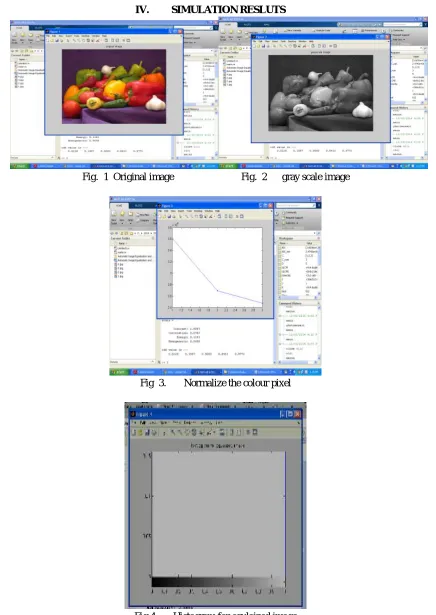
Fig. 1 Original image Fig. 2 gray scale image
[image:4.612.96.532.98.713.2]Fig 3. Normalize the colour pixel
Technology (IJRASET)
Fig. 5 Mapping from starting to origin position
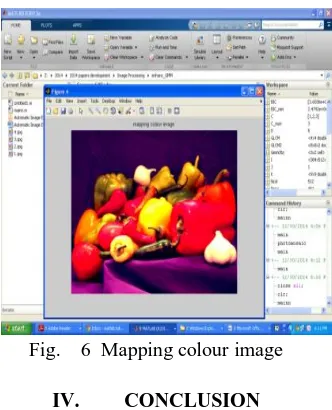
Fig. 6 Mapping colour image
IV. CONCLUSION
We have proposed an adaptive image equalization for image contrast enhancement of an input image to perform nonlinear data mapping for generating visually pleasing enhancement on different types of images. The proposed algorithm can achieve image equalization which is good enough even under diverse illumination conditions when compared the performance with state-of-the-art techniques. The proposed algorithm can be applied to both color image and gray-level without any parameter tuning. It can be also used to represent better HDR image. It does not distract the over all content of an input image with content that is high enough.It later improve the color content, brightness and contrast of an image automatically. Using the test of significance on the proposed method achieves brightness preservation ,DE preservation, and contrast improvement under the 99% confidence level.
REFERENCES
[1] R. C. Gonzalez and R. E. Woods, Digital Image Processing. Upper Saddle River, NJ: Prentice-Hall, 2006.
[2] D. Jobson, Z. Raman, and G. Woodall, “A multistate retina for bridging the gap between color images and the human observation of scenes,” IEEE Trans. Image Process., vol. 6, no. 7, pp. 965–976, Jul.1997.
[3] J. Mukherjee and S. Mitre, “Enhancement of colour images by scaling the DCT coefficients,” IEEE Trans. Image Process., vol. 17, no. 10, pp.1783–1794, Oct. 2008.
[4] S. Again, B. Silver, and K. Panetta, “Transform coefficient histogram- based image enhancement algorithms using contrast entropy,” IEEETrans. Image Process., vol. 16, no. 3, pp. 741–758, Mar. 2007.
[5] R. Dale-Jones and T. Tjahjadi, “A study and modification of the local histogram equalization algorithm,” Pattern Recognit., vol. 26, no. 9, pp.1373–1381, Sep. 1993.
[6] T. K. Kim, J. K. Paik, and B. S. Kang, “Contrast enhancement system using spatially adaptive histogram equalization with temporal filtering,” IEEE Trans. Consum. Electron., vol. 44, no. 1, pp. 82–87, Feb. 1998.
[7] C.-C. Sun, S.-J. Ruan, M.-C. Shie, and T.-W. Pai, “Dynamic contrast enhancement based on histogram specification,” IEEE Trans. Consum.Electron., vol. 51, no. 4, pp. 1300–1305, Nov. 2005.
[image:5.612.228.394.252.457.2]Technology (IJRASET)
vol. 45, no. 1, pp. 68–75, Feb. 1999.
[10] S.-D. Chen and A. Ramli, “Minimum mean brightness error bi-his- togram equalization in contrast enhancement,” IEEE Trans. Consum.Electron., vol. 49, no. 4, pp. 1310–1319, Nov. 2003.
[11] S.-D. Chen and A. Ramli, “Contrast enhancement using recursive mean-separate histogram equalization for scalable brightness preser-vation,” IEEE Trans. Consum. Electron., vol. 49, no. 4, pp. 1301–1309, Nov. 2003.
[12] M. Abdullah-Al-Wadud, M. Kabir, M. Dewan, and O. Chae, “A dy- namic histogram equalization for image contrast enhancement,” IEEE Trans. Consum. Electron., vol. 53, no. 2, pp. 593–600, May 2007.
[13] C. Wang and Z. Ye, “Brightness preserving histogram equalization with maximum entropy: A variational perspective,” IEEE Trans. Consum.Electron., vol. 51, no. 4, pp. 1326–1334, Nov. 2005.
[14] C. Wang, J. Peng, and Z. Ye, “Flattest histogram specification with accurate brightness preservation,” IET Image Process., vol. 2, no. 5,pp. 249–262, Oct. 2008.
BIOGRAPHIES
Mr. M M Raghavendrahas pursued B Tech in st. johnes engineering college ,yamiganur and M Tech from TKR engineering college,Hyderabad and pursuing (Ph.d) in SK University ,Ananatapur.He is working as assistant professor in BITS Kurnool.
Mr S Fareed mirza is pursuing B Tech from Brindavan institute of technology and science in the department of ECE.