ISSN:1992-8645 www.jatit.org E-ISSN:1817-3195
BIOMETRIC BASED INDUSTRIAL MACHINE ACCESS
CONTROL SYSTEM USING FPGA
1B.MURALI KRISHNA,2G.L.MADHUMATI,3M.SIVA RAMA GANESH,3Y.BHARGAV, 3
V.MOHAN VAMSEE KRISHNA3O.MANOJ KUMAR
1Asstt Prof., Department of Electronics and Communication Engineering, K L University
2Prof. and HOD, Department of Electronics and Communication Engineering, DIET
3Student, B.Tech, Department of Electronics and Communication Engineering, K L University
E-mail: [email protected],[email protected]
ABSTRACT
Biometrics has become the widely used technology for enhancing security in most of the areas like research centers, organizations, hospitals, industries, home security etc. Biometrics is related to rhythms of human characteristics like face recognition, fingerprints, retina scan, palm prints etc. Authentication of biometrics is used for access control and identification of human presence. In this we propose a new concept called Industrial Machine Access Control System using Finger Print Recognition. To avoid Unauthorized Access Fingerprint Module is interfaced with FPGA. FPGAs are the reprogrammable semiconductor silicon chips with high reliability, less expensive and low power consumption. Xilinx Platform Studio- Embedded Development Kit(EDK) is used for designing FPGA based Industrial Machine Access Control System, Xilinx- Software Development Kit(SDK) is used to develop application program to provide Authorized Machine Access Control and Impact is used to configure the FPGA. .
Keywords: Fingerprint Module, FPGA, Xilinx Platform Studio, EDK, SDK.
1. INTRODUCTION
Biometrics is the term usually associated with the use of unique physiological characteristics to identify an individual. Biometric identifiers are categorized into two types 1) physiological 2) behavioral. Physiological characteristics are associated with the parts of the body for ex fingerprint, palm veins, face recognition, DNA, iris recognition, retina. Behavioral characteristics are related to the pattern behavior of a person i.e. voice. Depends on the applications users can use different types of biometrics i.e. either physiological or behavioral. Fingerprints are one of many forms of biometrics. Fingerprint biometrics is a good technology that is being adopted into new markets at rapidly increasing pace especially for increasing security. A biometric process can be operated in two modes: 1) verification mode 2) identification mode. In this project we have focused on both modes of biometric i.e. verification mode and identification mode. Home authentication system is designed to improve security by using the automatic fingerprint verification technology.
1.1. Fingerprint-Overview
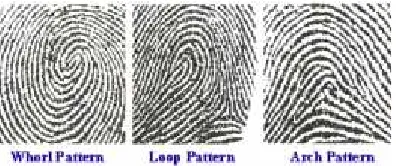
A Fingerprint is an individual characteristic that means no two persons have the same fingerprint. Fingerprint will remain unchanged during an individual’s life time. Because of that unique nature they have been used in criminal cases for a long time. Fingerprint is composed of many ridges and valleys. Based on these ridges and valleys, the pattern of our fingerprint is classified into three types: shown in Figure1.
[image:1.612.331.529.611.694.2]1. Whorl Pattern 2. Loop Pattern 3. Arch Pattern
ISSN:1992-8645 www.jatit.org E-ISSN:1817-3195
These are all the common types of patterns found on human fingerprints.
• Arch: The ridges enter from one side of the finger, rise in the center forming an arc, and then exit the other side of the finger.
• Loop: The ridges enter from one side of a finger, form a curve, and then exit on that same side.
• Arch: Ridges form circularly around a central point on the finger.
1.2 Fingerprint Recognition:
A biometric system can be either an ‘identification’ system or a ‘verification’ (authentication) system, which are defined below Identification-One to Many: Biometrics can be used to determine a person’s identity even without his knowledge or consent.
Verification-One to One: biometrics can also be used to verify the person’s identity.
2. XILINX EDK DESIGN FLOW
Xilinx Integrated Software Environment (ISE) developed by Xilinx to perform Synthesis and the analysis of the HDL designs which enable the developer to compile user designs, examine the RTL schematic diagrams, perform the timing analysis, simulate the developed design and configure the target device with the programmer [3] . Xilinx ISE is primarily used for circuit synthesis and design, other components that are shipped with Xilinx includes various tools, Embedded Development Kit (EDK) [5], [6] and Software Development Kit (SDK).
2.1 Embedded Development Kit (Edk):
It provides a list of design tools that are based on a common framework which enable you to design a complete system for the implementation in a Xilinx FPGA device [4]. It consists of: Xilinx Platform Studio (XPS).
• Embedded System Tools suite.
• SDK (Software Development Kit), can be used to develop your embedded software application.
It has large number of commonly used peripherals where various kinds of systems can be created by using these peripherals. To create
our own peripherals which are not present in EDK library and use it in our processor system, EDK uses Intellectual property interface (IPIF) library in order to perform common functionality among various processor peripherals [12]. It also gives us a set of simplified bus protocol called IP Interconnect which is much easier to use instead of operating on PLB bus protocol directly. By using this IPIF module with parameterization matches our needs which reduce our design and test effort by large amount [4].
XPS is used by Base System Builder (BSB) for generating a simple processor system which may use custom peripheral. HDL and Verilog templates can be generated by using create mode (Create and Import peripheral wizard). To open
the .npl file that we generated in create mode project navigator is used. We can add extra generics to the peripheral top template file to implement our custom functionality in user logic.vhd file [4].
IP CORE generator accelerates the design time by providing access to highly parameterized IP for FPGA and is included in ISE design suite. These user programmable IP functions range in complexity from commonly used memories and FIFOs [3]. This highly optimized IP allows FPGA designers to concentrate on building designs quicker. We will create HDL to configure FPGA system elements like MGTs, Ethernet and PCI express hard blocks by using the logiCORE GUI-based customizers. After the generation of IP core the top module is synthesized and then we implement the design
ISSN:1992-8645 www.jatit.org E-ISSN:1817-3195
that has to be done. This design consists the process of Translate, Map, Place and route. After implementing the design bit file is to be generated which will be downloaded to the FPGA board. The detailed design flow of EDK shown in the above Figure 2.
2.2 Xilinx Platform Studio (Xps):
It provides an environment for creating both software and hardware specification flows for embedded systems. To create and edit source code XPS provides an editor and a project management interface [12]. It provides customization of tool flow configuration options. XPS also provides a graphical system editor for connection of processors, peripherals, and buses [2]. It has the ability to add and edit core parameters. It has the ability to generate and modify the MSS file. It has an ability to generate and view a system block diagram. It supports multiple-user software applications and project management.
2.3 Software Development Kit (Sdk):
SDK is a complementary GUI to (Xilinx Platform Studio) and provides a development to software application projects. It is based on the Eclipse open-source standard. Platform Studio SDK provides rich C/C++ code and compilation environment and project management. It provides Application build configuration and automatic make file generation. Error navigation is its special feature [3].
3. PROPOSED SYSTEM:
[image:3.612.323.502.86.227.2]We propose a biometric based Industrial Machine Access Control System using FPGA which provides more security from unauthorized access [5]. It stores the fingerprints of all machine operators in the database. To switch on the machine, operator biometric has to be verified using Fingerprint Module through FPGA using Serial Communication [12]. The scanned fingerprints are matched with the registered biometrics on database, access will be granted to the operator.
Figure 3: Block Diagram Of Proposed System
Industrial Machine Access Control System provides access to four different machines by four operators and one person will have central access to all machines shown below Figure 3. Access to each machine is granted by biometric enrollment of particular machine operator[6]. If the scanned fingerprints are matched with database, access will be granted and Machine will on through relay. If the scanned fingerprints are not matched with database, access will be denied and activates Siren shown below Figure 4.
Figure 4: Flow Chart For Industrial Machine Access Control System
4
.
H
ARDWAREM
ODULES:
4.1 Fingerprint Sensor (R305):
[image:3.612.336.484.400.601.2]ISSN:1992-8645 www.jatit.org E-ISSN:1817-3195
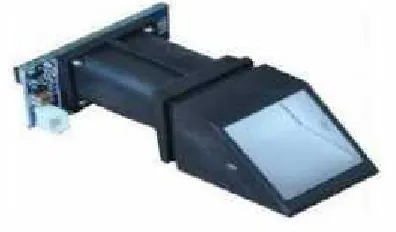
[image:4.612.92.290.134.250.2]Attendance, Safety Locker, and Car Door Locks shown in Figure 5.
Figure 5: R305 Finger Print Sensor
The user can store the finger print data in the module and can configure it in 1:1 or 1: N mode for identifying the person[7]. The fingerprint module can directly interface with FPGA. A level converter like RS232 is required for interfacing with pc serial port.
Features:
• Integrated image collecting and algorithm chip together, all in one
• Fingerprint Reader can conduct secondary development; can be embedded into variety of products.
• The main advantage of this is Low power Consumption, low cost, small size, excellent performance.
• Professional optical technology, precise module manufacturing techniques
• Good image processing capabilities can successfully capture image up to resolution 500 dpi.
• The verification speed of our Finger Print module is 0.3s and storage capacity is up to 250
• The voltage required sensor is 3.6 to 6.0 Vdc.
There are namely three functions you can call for the Fingerprint sensor.
1) ADD (Enroll) Function: It will add our fingerprint to the Fingerprint sensor and Return some ids. Return values are from 00 to FEH. In case if error occurs it will return FFH.
2) DELETE Function: It will delete the stored fingerprint from database .it returns CCH as ok if any error it will return FFH.
3) SEARCH Function: When a finger is put in for search function, it returns a matching id if it is found in existing memory. Return values are from 00 to FEH. In case if error occurs it will return FFH.
4.2 FPGA:
FPGA’S are perfectly suitable for applications in time-critical systems[9]. In contrast to software based solutions with Real Time Operating Systems[8]. FPGA’s provides real time deterministic behavior. FPGA’s are low cost devices and requires less power and less expensive. In this Paper Spartan3E FPGA is used Enroll, Search and Delete user Fingerprints [5]. To avoid Unauthorized Access Fingerprint Module is interfaced with FPGA shown in Figure 6.
ISSN:1992-8645 www.jatit.org E-ISSN:1817-3195
Figure 6: Finger Print Sensor Interface With Nexyxs2 FPGA Controlling Machines through Relays.
4.3 SERIAL COMMUNICATION:
Serial communication is basically the transmission or reception of data one bit at a time. Today's computers generally address data in bytes or some multiple thereof. A byte contains 8 bits. A bit is basically either a logical 1 or zero. Every character on this page is actually expressed internally as one byte [10]. The serial port is used to convert each byte to a stream of ones and zeroes as well as to convert a stream of ones and zeroes to bytes [11]. The serial port contains an electronic chip called a Universal Asynchronous Receiver / Transmitter (UART) that actually does the conversion [12]. If Operator Biometric matches it generates commands to serial port based on these commands machines will on through relays.
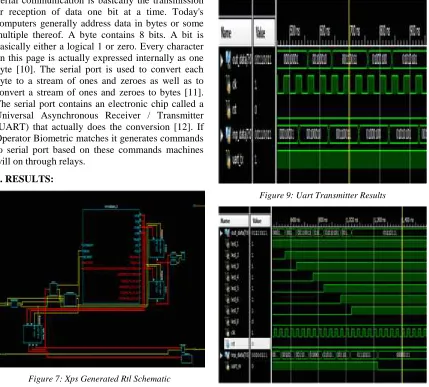
[image:5.612.95.524.309.696.2]5. RESULTS:
Figure 7: Xps Generated Rtl Schematic
Figure 8: Uart Receiver Results
Figure 9: Uart Transmitter Results
ISSN:1992-8645 www.jatit.org E-ISSN:1817-3195
Fig11: Uart Transmitter Results
Fig12: Device Utilization Summary
Fig13: Graphical Representation Of DUS
6. PHYSICAL IMPLEMENTATION ON FPGA:
Fig14: R305 Sensor Interface With FPGA
7. CONCLUSION:
In this paper we propose biometric based Industrial Machine Access Control System using FPGA which provides more security from unauthorized access to machines. This technique can be enhanced using Face Recognition with Webcam interface using FPGA
REFRENCES:
[1] Arief S, Trisno R. “Adaptable Fingerprint Minutiae Extraction algorithm based on crossing number method for hardware execution using FPGA”. International Journal of Computer Science, Engineering and Information Technology (IJCSEIT) 2012; [2] Bana S, Kaur D. Fingerprint identification using
image segmentation. International journal of advanced engg. sciences and technologies 2012; [3] Reconfigurable System on Chip Design Using
FPGA, ICDCS 2014 IEEE Conference.
[4] Input / Output Peripheral Devices Control Through Serial Communication Using FPGA ICDCS 2012 IEEE Conference.
ISSN:1992-8645 www.jatit.org E-ISSN:1817-3195
[6] Bana S, Kaur D. Fingerprint recognition using image segmentation. International journal of higher engg sciences and technologies 2011; [7] Maltoni D, Maio D, Jain AK, Prabhakar S.
Guide of Fingerprint identification, Springer, second copy, 2010.
[8] Jain AK, Patrick F, Arun A. Handbook of Biometrics, Springer science+Business Media, LLC, 1st edition, 2008; 1-42.
[9] MaitaneBarrenea, Jon Altuna, and Miguel San Miguel, “A Low Cost FPGA-Based Embedded Fingerprint Verification implanted Fingerprint Verification and the same System”, Fifth Workshop on Intelligent Solutions in Embedded Systems (WISES 07), 2007.
[10]Tsai-Yang J. Minutiae-Based Partial Fingerprint recognition, Ph.D. thesis, 2010, State University of New York at Buffalo.
[11] Prabhakar S. Fingerprint Classification and Matching Using a riddle bank, Ph.D. thesis, Department of Computer Science and Engg, Michigan State University, 2001.