ISSN: 1992-8645 www.jatit.org E-ISSN: 1817-3195
NONLINEAR BLACK BOX MODELING OF A LEAD ACID
BATTERY USING HAMMERSTEIN-WIENER MODEL
1 EL MEHDI LAADISSI, 2EL FILALI ANAS, 3MALIKA ZAZI
1, 2, 3
Laboratory LM2PI, ENSET, Mohamed V University Rabat, Morocco
E-mail: 1 [email protected], 2 [email protected], [email protected]
ABSTRACT
This paper studies nonlinear black box modeling of a lead acid battery using SISO Hammerstein-Wiener Model. System identification is a method of measuring the mathematical description of a system by processing the observed inputs and outputs of the system. The developed model is based on Hammerstein-Wiener model. In this paper, we estimate and validate nonlinear models from single-input/single-output (SISO) data to find the one that best represents our system dynamics. Two different output nonlinearity (wavelet network and sigmoid network) are presented to compare the developed models. A pulse discharge test is performed on a commercial automotive lead acid battery in order to collect data to evaluate those models, results are presented and compared.
Keywords: Lead Acid Battery, Hammerstein-Wiener, Black Box, Wavelet Network, Sigmoid Network
1. INTRODUCTION
The battery has revolutionized the way of storing electrical energy. Its use is widespread and growing, it helps to have a reserve of electrical energy autonomous and mobile (cell phones, photovoltaic systems, space equipment, laptops and other devices to public or industrial use). Especially since the battery is a power source that can partially replace the use of internal combustion systems used in the new generation of hybrid electric cars and this in order to reduce the emission of greenhouse gases is now the major concern of humanity.
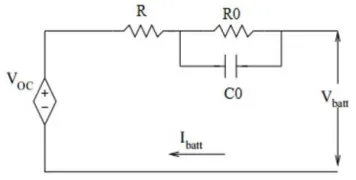
To use a battery effectively, it is necessary to understand the use of the battery, its dynamics and discover parameters which may affect its performance. The problem with these types of batteries is to successfully maintain their useful life as long as possible and to optimize the use of their energy. To understand the functioning of batteries, it is necessary to develop a model to simulate their behavior. In most systems involving an energy storage system, there is an energy management system associated with the storage battery and this to ensure the efficient use of the energy supplied by the battery. To predict the behavior of storage batteries, several models have been developed. These are not perfect because they do not account for all parameters such as temperature and age of the battery, as well as some physical and chemical phenomena that occur inside the accumulator while operation. In addition, some models [1] [2] [3] have
[image:1.612.322.511.389.572.2]been developed according to specific applications and in some cases for one type of battery.
[image:1.612.322.504.514.604.2]Fig. 1: Equivalent circuit of Thevenin model [1]
Fig. 2: Equivalent circuit of Copetti model [2]
ISSN: 1992-8645 www.jatit.org E-ISSN: 1817-3195 thermal model and have superior characteristics
[image:2.612.100.278.148.238.2]such as high robustness and accuracy. However, black box modeling methods require huge experimental data in order to determine the model.
Fig. 3: Equivalent circuit of Randle’s model [3]
The paper presents and compares common Hammerstein-Wiener SISO models for a lead acid battery including two different nonlinearity (wavelet network and sigmoid network). The organization of this paper is as follows: Section 2 present a brief overview of the system identification including two nonlinearity that we will compare in our model. Section 3 presents some experimental test results obtained from a commercial automotive lead acid battery. In Section 4, 2.1 Hammerstein-Wiener based models are presented and compared. Finally, conclusion is drawn in Section 5.
2. SYSTEM IDENTIFICATION
System identification is a method of identifying the mathematical model of a system from simulation or experimental measurements of the system inputs and outputs. The applications of system identification include any system where the inputs and outputs can be measured. A nonlinear system is defined as any system that is not linear, that is any system that does not satisfy the superposition principle.
Any identification approach is based on a model structure adapted to the particular system. This structure can be determined by means of an accurate modeling of the system. However, it is common for the modeling approach leads to a too complex model structure to be used as basis in the identification process. In some situations, the complexity of the system and its interaction with its environment is very difficult or even impossible, to achieve a model for this approach. In these cases, it is normal to choose the identification approach of determining a model which has a structure selected in advance among a variety of structures (Hammerstein-Wiener, NLARX…).
2.1 Hammerstein-Wiener Models
When the output of a system depends nonlinearly on its inputs, sometimes it is possible to decompose the input-output relationship into two or more interconnected elements. In this case, you can represent the dynamics by a linear transfer function and capture the nonlinearities using nonlinear functions of inputs and outputs of the linear system. The Hammerstein-Wiener model achieves this configuration as a series connection of static nonlinear blocks with a dynamic linear block fig.5.
Fig. 4: Hammerstein-Wiener model block diagram
• (2) is a NL function transforming input data u(t). w(t) has the same dimension as u(t). • (3) is a linear transfer function. (3) has the
same dimension as (4), where B and F are similar to polynomials in a linear Output-Error model. For ny outputs and nu inputs, the linear block is a transfer function (1), where j = 1,2,..., ny and i = 1,2,...,nu.
• (4) is a nonlinear function that maps the output of the linear block to the system output. The Hammerstein-Wiener model computes the output y in three stages:
1. Computes (2) from the input data. 2. Computes the output of the linear
block using (2) and initial conditions (3).
3. Compute the model output by transforming the output of the linear block (3) using the nonlinear function h described in (4).
(1)
(2)
(3)
[image:2.612.318.521.243.279.2]ISSN: 1992-8645 www.jatit.org E-ISSN: 1817-3195
2.2 Nonlinearity Estimators for H-W Models
To evaluate the performance of the Hammerstein-Wiener model, three common nonlinear architectures outputs were selected, the first is a wavelet network, and the second is sigmoid network. For both networks, Levenberg-Marquardt back-propagation algorithm was used in training. A saturation is chosen as input nonlinearity.
2.2.1 Wavelet network
Wavelet Networks attempt to combine the properties of the Wavelet decomposition [8], along with the characteristics of neural networks [6]. Their structure relies on the aforementioned principles [9] –underlying non-linear function approximation– and is given by the equation (5)
(
5)
[image:3.612.315.522.267.440.2]In which the weights represent the coefficients of the network Fig.6 . These are to be tuned as the network learns, in order to give preference to relevant components among the set of N wavelet functions Ψ = (ψn1,ψn2...ψnN), whereas non-relevant ones are to be penalized.
Fig. 5: Wavelet Network structure. Example with MIMO [9]
2.2.2 Sigmoid network
In general, a sigmoid function is real-valued and differentiable, having a negative or non-positive first derivative, one local minimum, and one local maximum. The logistic sigmoid function is related to the hyperbolic tangent (6). Sigmoid functions are often used in artificial neural networks to introduce nonlinearity in the model.
(6)
3. EXPERIMENTAL SETUP
Data gathering is considered as the first and essential part in identification terminology. In order to compare the presented methods, some battery data were gathered from a commercial automotive 62Ah, 12V, 540A (TUDOR TB620) lead acid battery. As input, a pulse-discharge test was performed. In this test, the battery was fully charged using constant current/constant voltage profile, then it was discharged using a 4A pulse current. A “Metrix mtx3283 Graphic TRMS DMM” was used as data acquisition system (DAQ) .The input and output are shown in Fig.4.
Fig. 6: Experimental data
4. PROPOSED H-W MODEL AND RESULTS
The number of units in the wavelet network and the sigmoid network was set to 20. The value of the delay parameter and the number of units in the networks were purposefully varied in order to find the best configuration for our nonlinear model.
The results in Fig.7 are obtained by processing experimental data obtained from the battery. “NL Model1” is the Hammerstein-Wiener model based on wavelet network as output nonlinearity. “NL Model2” is the Hammerstein-Wiener model based on wavelet network as output nonlinearity.
[image:3.612.94.291.437.565.2]ISSN: 1992-8645 www.jatit.org E-ISSN: 1817-3195 models must be able to adapt to changes in the
[image:4.612.308.529.74.262.2]ambient conditions or battery parameters.
Fig. 7: Measured and simulated models output
Fig. 8: Measured minus simulated models output
[image:4.612.92.292.337.491.2]Fig. 9: M1 wavelet network nonlinearity
Fig. 10:M2 sigmoid network nonlinearity
5. CONCLUSION
In this paper, two nonlinear black-box model based on Hammerstein-Wiener structure were estimated and compared. The results Fig.7 show that the two models can perform well if there output nonlinearity network is trained with an experimental data. To practically implement the presented models in hardware, for example in a battery management system (BMS) we need to have a lot of data, these data must be measured in working condition for the best result.
It is true that these models requires a lot of computation, lot of data as well as the training of networks, but they have a high accuracy and robustness. For the application does not request these two qualities, a linear model is the best choice.
REFRENCES:
[1] M. Valvo, F. Wicks, D. Robertson, and S. Rudin, “Development and application of an improved equivalent circuit model of a lead acid battery,” Proc. Energy Convers. Eng. Conf., vol. 2, pp. 1159–1163, August 1996. [2] Fancisco M. Gonzalez-Longatt. ”Circuit
Based Battery Models: A Review”.Congreso Iberoamericano de estudiantes De Ingenieria Electrica. Cibelec 2006.
[3] H. Chan, “A new battery model for use with battery energy storage systems and electric vehicles power systems,” in Power Engineering Society Winter Meeting,vol. 1, pp. 470–475, January 2000.
[image:4.612.91.300.527.681.2]ISSN: 1992-8645 www.jatit.org E-ISSN: 1817-3195 technical Report CTH-TE-47,Chalmers
University of
technology,Goteborg,Sweden,Sep. 1996. [5] Luigi Piroddi, , Marcello Farina , Marco
Lovera “Black box model identification of nonlinear inputoutput models: A Wiener– Hammerstein benchmark” Volume 20, Issue 11, November 2012, Pages1109–1118 Special Section: Wiener-Hammerstein System Identification Benchmark.
[6] Q. Zhang and A. Benveniste, "Wavelet networks," IEEE Trans. Neural Networks, vol. 3, pp. 889-898, Nov. 1992.
[7] M. Thuillard. A review of wavelet networks, wavenets, fuzzy wavenets and their applications. Advances in Computational Intelligence and Learning, pages 43–60, 2002. [8] Chui, Charles K. (1992). An Introduction to
Wavelets. San Diego: Academic Press. [9] H. Cheng, W. shan Chen, and T. Xie. Wavelet
![Fig. 1: Equivalent circuit of Thevenin model [1]](https://thumb-us.123doks.com/thumbv2/123dok_us/8908507.958031/1.612.322.511.389.572/fig-equivalent-circuit-thevenin-model.webp)
![Fig. 5: Wavelet Network structure. Example with MIMO [9]](https://thumb-us.123doks.com/thumbv2/123dok_us/8908507.958031/3.612.94.291.437.565/fig-wavelet-network-structure-example-mimo.webp)