ScholarWorks @ Georgia State University
ScholarWorks @ Georgia State University
Public Health Theses School of Public Health
Winter 12-14-2011
Steps to Evaluate the Emory Breast Center Cancer Education
Steps to Evaluate the Emory Breast Center Cancer Education
Class
Class
Jillian B. Ogden
Follow this and additional works at: https://scholarworks.gsu.edu/iph_theses
Part of the Public Health Commons
Recommended Citation Recommended Citation
Ogden, Jillian B., "Steps to Evaluate the Emory Breast Center Cancer Education Class." Thesis, Georgia State University, 2011.
https://scholarworks.gsu.edu/iph_theses/197
Steps to Evaluate the
Emory Breast Center
Cancer Education Class
11/29/2011
Table of Contents
Executive Summary………..4
Literature Review………..5
Breast Cancer in the United States………5
Breast Cancer Risk Factors……….……..6
Diagnosing and Detection……….8
Treatment Options………11
Cancer Diagnosis and Anxiety………13
Description of Program Goals and Objectives………16
Purpose of Capstone………..………..17
Methods………..18
Expressing the BCE program theory……….…..……….………..18
Assessing the BCE program theory……...……….………18
BCE impact evaluation……….………..19
Results……….……...19
Expressing BCE program theory………..….…19
Impact Model………19
Description of the BCE class curriculum..……….…21
Results of program theory and assessment……….……….…..22
Results of program theory assessment……….…..23
Logic and Plausibility……….23
Impact evaluation………..28
Discussion………...33
Appendix B……….36
Appendix C……….39
I. Executive Summary
Surveillance Epidemiology and End Results (SEER) data estimates that 207,090 women
will be diagnosed with and 39,840 women will die of cancer of the breast in 2011. Cancer can
be a very intimidating illness and cause a great deal of anxiety. This anxiety can sometimes
progress into a very serious medical problem. Interpersonal relationships, such as that between a
patient and provider can influence health behavior. Communication functions of
patient-provider communication such as, information exchange, uncertainty management, can improve
health outcomes both directly and indirectly. For example, cancer education can help ease
anxiety by familiarizing the patient with their particular condition. Additionally, cancer
education classes facilitate support networks for both the diagnosed and those close to them.
Increasing the patient’s knowledge and showing them they are not alone are both examples of
proximal outcomes that lead to immediate outcomes to improve patient satisfaction. The breast
health education class at Winship Cancer Institute came about in an effort to coordinate breast
cancer care for all patients. The class prides itself on not telling patients ‘what’ to do but rather
providing them with the basic facts regarding breast cancer care so that they can be more
educated on their treatment options. The goal and/or overall mission of The Breast Cancer
Education (BCE) Class for the Diagnosed Patient and her Significant Others is to reduce anxiety
by providing breast cancer education and promoting advocacy for breast cancer patients, while
providing a network of support and increasing enrollment in clinical trials. The purpose of this
capstone project is to provide the tools to perform an impact evaluation on the breast cancer
education class and its effectiveness in improving breast cancer patient health outcomes while
II. Literature Review
Breast Cancer in the United States
Breast cancer is defined by the National Cancer Institute (NCI) as cancer that forms in
tissues of the breast, usually the ducts (tubes that carry milk to the nipple) and lobules (glands
that make milk). It occurs in both men and women, although male breast cancer is rare (National
Cancer Institute, 2009).
The most common type of breast cancer is ductal carcinoma, which begins in the cells of the
ducts. Cancer that begins in the lobes or lobules is called lobular carcinoma and is more often
found in both breasts than are other types of breast cancer. Inflammatory breast cancer is an
uncommon type of breast cancer in which the breast is warm, red, and swollen (National Cancer
Institute, 2009).
The Surveillance, Epidemiology, and End Results (SEER) program of the National
Cancer Institute works to provide information on cancer statistics in an effort to reduce the
burden of cancer among the US Population. It is estimated that 207,090 women will be
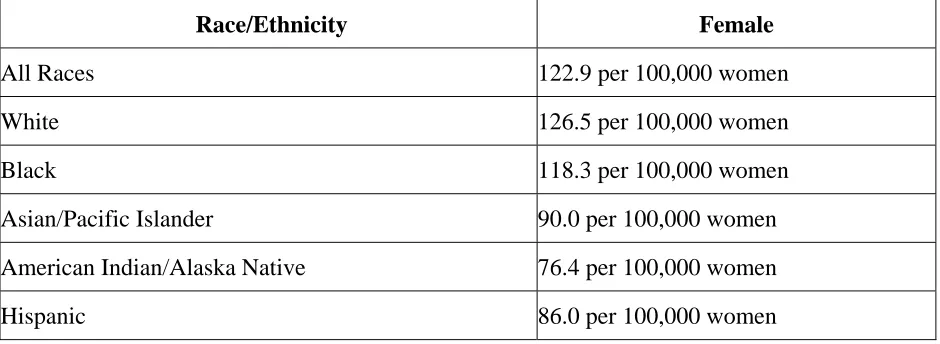
incidence rate was 122.9 per 100,000 women per year. These rates are based on cases diagnosed
[image:7.612.72.542.211.383.2]in 2003-2007 from 17 SEER geographic areas (see Table 1).
Table 1.Incidence Rates by Race (SEER Stat Fact Sheets: Breast, 2011)
Race/Ethnicity Female
All Races 122.9 per 100,000 women
White 126.5 per 100,000 women
Black 118.3 per 100,000 women
Asian/Pacific Islander 90.0 per 100,000 women
American Indian/Alaska Native 76.4 per 100,000 women
Hispanic 86.0 per 100,000 women
On January 1, 2007, in the United States there were approximately 2,591,855 women alive who
had a history of cancer of the breast. This includes any person alive on January 1, 2007 who had
been diagnosed with cancer of the breast at any point prior to January 1, 2007 and includes
persons with active disease and those who are cured of their disease (SEER 2007).
Breast Cancer Risk Factors
Some risk factors for breast cancer include the following: Increasing age, personal history
of breast cancer, family history of breast cancer, history of radiation therapy to the chest. Risk
factors associated with reproductive and menstrual history include: Having children at an older
age, never having children (National Cancer Institute, 2009). Women who began menstruating
before age 12 are at an increased risk as well as women who went through menopause after age
are overweight or obese (National Cancer Institute, 2009).
In the United States, breast cancer is diagnosed more often in white women than in
African American/black, Hispanic/Latina, Asian/Pacific Islander, or American Indian/Alaska
[image:8.612.114.500.243.484.2]Native women (See Figure 1).
Figure 1. Female breast cancer incidence rates by race and ethnicity 1997 - 2007
Source: www.cdc.gov/cancer/breast/statistics/race.htm
Additionally, breast density can also be a risk factor for breast cancer. Breasts appear
on a mammogram (breast x-ray) as having areas of dense and fatty (not dense) tissue. Women
whose mammograms show a larger area of dense tissue than the mammograms of women of the
same age are at increased risk of breast cancer. Women who are physically inactive throughout
life as well as those who drink alcohol may have an increased risk of breast as well (National
Cancer Institute, 2009).
There are several signs and symptoms that aid in the diagnosis of breast cancer. A lump
or thickening in or near the breast or in the underarm area may be a sign of breast cancer. Any
changes in the size or shape of the breast, such as dimpling or puckering of the skin, could also
be signs of breast cancer. A nipple turned inward into the breast or fluid, other than breast milk,
from the nipple, especially if it's bloody, are possible signs of breast cancer. Scaly, red, or
swollen skin on the breast, nipple, or areola (the dark area of skin that is around the nipple) also
may be symptoms of breast cancer (National Cancer Institute, 2009). Following the presence of
these signs and symptoms, the following are used to diagnose breast cancer: clinical breast exam,
mammography, breast MRI, and biopsy.
Clinical Breast Exam
A clinical breast exam consists of a health care provider checking a patient’s breast for
any irregularities. Those receiving a clinical breast exam may be asked to raise their arms over
their head, let them hang by their sides, or press their hands against their hips. The provider then
looks for irregularities such as: differences in size or shape between breasts, rashes or dimpling
on the skin of the breasts, or any discharge from the nipple (National Cancer Institute, 2009).
Using the pads of the fingers to feel for lumps, the provider checks the entire breast, underarm,
and collarbone area. A lump is generally the size of a pea before anyone can feel it. The exam is
done on one side and then the other. The provider also checks the lymph nodes near the breast to
see if they are enlarged. If a lump is found, the health care provider feels its size, shape, and
texture and checks to see if the lump moves easily. Benign lumps often feel different from
oddly shaped lump that feels firmly attached within the breast is more likely to be cancer, but
further tests are needed to diagnose the problem (National Cancer Institute, 2009).
Doctors recommend that women have regular clinical breast exams and mammograms to
find breast cancer early. Treatment is more likely to work well when breast cancer is detected
early (National Cancer Institute, 2009).
Diagnostic Testing
A mammogram is an x-ray picture of tissues inside the breast. Mammograms can often
show a breast lump before it can be felt. They can also show a cluster of tiny specks of calcium,
also called microcalcifications. Lumps or specks can be from cancer, precancerous cells, or other
conditions. Further tests are needed to find out if abnormal cells are present (National Cancer
Institute, 2009).
NCI recommends women get regular screening mammograms to detect breast cancer early,
before they have symptoms. Women in their 40s and older should have mammograms every 1 or
2 years. Women who are younger than 40 and have risk factors for breast cancer should ask their
health care provider whether they should have mammograms and how often to have them.
If an abnormal area is found during a clinical breast exam or with a mammogram, the doctor
may order other imaging tests such as ultrasound, MRI, and/or biopsy. A woman with a lump or
other breast change may have an ultrasound test. An ultrasound device sends out sound waves
that people can't hear. The sound waves bounce off breast tissues. A computer uses the echoes to
create a picture. The picture may show whether a lump is solid, filled with fluid (a cyst), or a
mixture of both. Cysts usually are not cancer; however a solid lump may be cancer (National
whether cancer may be present. MRI uses a powerful magnet linked to a computer. It makes
detailed pictures of breast tissue that can show the difference between normal and diseased tissue
(National Cancer Institute, 2009).
A biopsy is the removal of tissue to look for cancer cells. A biopsy is the only way to tell for
sure if cancer is present. If an abnormal area is found a biopsy may be required. An abnormal
area may be felt during a clinical breast exam but not seen on a mammogram. An abnormal area
could also be seen on a mammogram but not be felt during a clinical breast exam. In this case,
doctors can use imaging procedures (such as a mammogram, an ultrasound, or MRI) to help see
the area and remove tissue (National Cancer Institute, 2009). The provider may refer the patient
to a surgeon or breast disease specialist for a biopsy. The surgeon or doctor will remove fluid or
tissue from the breast in one of several ways:
Fine-needle aspiration biopsy: Provider uses a thin needle to remove cells or fluid from a
breast lump.
Core biopsy: Provider uses a wide needle to remove a sample of breast tissue.
Skin biopsy: If there are skin changes on the breast, the provider may take a small sample of
skin.
Surgical biopsy: The surgeon removes a sample of tissue. The two types of surgical biopsy
include incisional biopsy and excisional biopsy. An incisional biopsy takes a part of the
lump or abnormal area. Likewise, an excisional biopsy takes the entire lump or abnormal
Once the biopsy is performed, a pathologist will check the tissue or fluid removed from the
breast for cancer cells. If cancer cells are found, the pathologist can tell what kind of cancer it is.
Early detection has been shown to play a significant role in treating breast cancer. Screening
is important because it allows for early detection. Chu and colleagues examined trends in breast
cancer in the United States using the mortality data in SEER. Chu et al. reported that the
age-adjusted breast cancer mortality rate for U.S. white females dropped 6.8% from 1989 through
1993. Using piecewise regression Chu et al. observed a significant decrease (P<10^4) in the
slope of the mortality trend. They reported an approximate 2% decrease in slope per year in
every decade of age from 40 to 79 years of age. They attributed this decreasing trend to be a
result of increases in mammography and advancements in treatment options (Chu, et al., 1996).
Treatment Options
Different types of treatment are available for patients with breast cancer. Some treatments
are standard (the currently used treatment), and some are being tested in clinical trials. A
treatment clinical trial is a research study meant to help improve current treatments or obtain
information on new treatments for patients with cancer. When clinical trials show that a new
treatment is better than the standard treatment, the new treatment may become the standard
treatment. Some clinical trials are open only to patients who have not started treatment (National
Cancer Institute, 2009). The different treatment options available include surgery,
chemotherapy, and radiation.
Most patients with breast cancer have surgery to remove the cancer from the breast.
Breast-conserving surgery, for example, includes operations to remove cancer but not the breast
tissue. Patients who are treated with breast-conserving surgery may also have some of the
lymph nodes under the arm removed for biopsy. This procedure is called lymph node dissection.
It may be done at the same time as the breast-conserving surgery or after. Lymph node dissection
is done through a separate incision (National Cancer Institute, 2009).
There are more invasive surgeries to treat for breast cancer such as a total mastectomy,
modified radical mastectomy, or a radical mastectomy. A total mastectomy is defined as surgery
to remove the whole breast that has cancer and can sometimes include removal of some lymph
nodes under the arm for biopsy. A modified radical mastectomy is defined as removal of the
whole breast that has cancer, many of the lymph nodes under the arm, the lining over the chest
muscles, and sometimes part of the chest wall. A radical mastectomy is defined as surgery to
remove the breast that has cancer, chest wall muscles under the breast, and all of the lymph
nodes under the arm (National Cancer Institute, 2009).
Another treatment option that is available is chemotherapy. Chemotherapy is a cancer
treatment that uses drugs to stop the growth of cancer cells, either by killing the cells or by
stopping them from dividing. When chemotherapy is taken by mouth or injected into a vein or
muscle, the drugs enter the bloodstream and can reach cancer cells throughout the body
(systemic chemotherapy). When chemotherapy is placed directly into the cerebrospinal fluid, an
organ, or a body cavity such as the abdomen, the drugs mainly affect cancer cells in those areas
(regional chemotherapy). The way the chemotherapy is given depends on the type and stage of
the cancer being treated (National Cancer Institute, 2009).
Chemotherapy may be given before surgery to remove the tumor. When given before
removed during surgery. Treatment given before surgery is called neoadjuvant therapy. Even if
the doctor removes all the cancer that can be seen at the time of the surgery, some patients may
be given radiation therapy, chemotherapy, or hormone therapy after surgery to kill any cancer
cells that are left. Furthermore, treatment given after the surgery to lower the risk that the cancer
will come back is called adjuvant therapy (National Cancer Institute, 2009).
Hormone replacement therapy (HRT) is another treatment option available to those
diagnosed with hormone receptive cancer. There are different drugs available to women
dependent upon whether they have gone through menopause or not. For women who have not
gone through menopause the most common HRT is Tamoxifen. Tamoxifen is a pill that slows or
stops the growth of cancer cells that are in the body.This drug can prevent the original breast
cancer from returning and also helps prevent the development of new cancers in the other breast
(National Cancer Institute, 2009). Tamoxifen is taken every day for 5 years. For those women
who have gone through menopause an aromatase inhibitor, which prevents the body from
making a form of estrogen (estradiol), is taken. Examples of aromatase inhibitors
are anastrazole, exemestane, and letrozole. In some cases Tamoxifen is also given to women who
are on an aromatase inhibitor but for a shorter period of time.
Cancer can be a very intimidating illness and cause a great deal of anxiety. This anxiety
can sometimes progress into a very serious medical problem. The abundance of new terms,
specialists, and treatment options are often overwhelming and even decrease patient satisfaction
with care. Additionally, those who are diagnosed with cancer sometimes feel alone and unable to
relate to those closest to them. Depression and anxiety associated with early breast cancer was
breast clinic in London, 170 women provided complete interview data. The effects of potential
risk factors were assessed for three periods: around diagnosis (one month before diagnosis to
four months after diagnosis), medium term (four months to two years after diagnosis), and longer
term (two years to five years after diagnosis). The results indicated that nearly 50% of the
women with early breast cancer had depression, anxiety, or both in the year after diagnosis, 25%
in the second, third, and fourth years, and 15% in the fifth year. For the medium term risk
factors for depression and anxiety were previous psychological treatment, lack of intimate
confiding relationship, and experience of severe non-cancer difficulties. In the longer term,
depression and anxiety were associated with the lack of an intimate confiding relationship,
younger age, severe non-cancer difficulties, and an earlier episode of depression, anxiety, or both
after diagnosis (Burgess et al 2005).
Cancer education, including brochures, pamphlets, and classes can help ease anxiety by
familiarizing the patient with their particular condition. In addition to making the patient more
comfortable with their disease, cancer education classes facilitate support networks. A study
published by Porochin (1995) examined the effect of preparatory patient education (PPE) on the
anxiety and satisfaction among 50 subjects drawn from adult patients receiving radical or
palliative radiation therapy for cancer at a major metropolitan teaching hospital in Western
Australia. The levels of anxiety and satisfaction between patients receiving the PPE intervention
with those receiving standard hospital preparation was measured using a quasi-experimental time
series. Comparisons of the experimental and control groups were made on 3 occasions: once
prior to any radiation therapy followed by the first teaching session, secondly during the first
completion of the course of radiation therapy. The results of the multifactorial analysis of
variance (MANOVA) showed significant main effect of patient education on state anxiety
F(1,47) – 10.96, p =0.002. The results indicated that effects were maintained throughout the
treatment period of up to 7 weeks (Poroch, 1995). These findings show that the experimental
group was significantly less anxious than the control group following the first PPE intervention.
This further supports the importance of patient education on improved health outcomes in patient
care.
Today there is a growing awareness regarding the importance of patient education. The
heightened interest in this area may be the result of several influential factors
.
First, there has been a strong political influence in some countries. For example, the UK government stated thathospitals should offer patients “clear and sensitive explanations of what is happening, on
practical matters such as where to go and who to see, and on clinical matters, such as the nature
of an illness and its proposed treatment” (Mills and Sullivan, 2001). Secondly, there is a belief
that patients should be much more involved in their own care creating a partnership between
doctor and patient (especially when dealing with cancer). In a study done by Hinds et al., a
convenience sample of 83 patients with cancer were interviewed before and/or after a full course
of radiotherapy to determine their perceptions about the functions served by the information
received from general hospital staff. Patients indicated that they considered information to serve
three main functions: enabling them to actively participate in their treatment, reducing anxiety,
and enabling them to prepare and plan for the future (Hinds et al., 1995).
In another study in 2001, cancer patients (18 to 75 years old) with moderate pain over 2
Experimental patients received a 20-minute individualized education and coaching session to
increase knowledge of pain self-management, to redress personal misconceptions about pain
treatment, and to rehearse an individually scripted patient-physician dialog about pain control
(Oliver, Kravitz, Kaplan, & Meyers, 2001). The control group received standardized instruction
on controlling pain. Data on average pain, functional impairment as a result of pain, pain
frequency, and pain-related knowledge were collected at enrollment and 2-week follow-up. At
baseline, there were no significant differences between experimental and control groups in terms
of average pain, functional impairment as a result of pain, pain frequency, or pain-related
knowledge. At follow-up, average pain severity improved significantly more among
experimental group patients than among control patients (P = .014) (Oliver, Kravitz, Kaplan, &
Meyers, 2001). The intervention had no statistically significant impact on functional impairment
as a result of pain, pain frequency, or pain-related knowledge. In conclusion, compared with
provision of standard educational materials and counseling, a brief individualized education and
coaching intervention for outpatients with cancer-related pain was associated with improvement
in average pain levels. Larger studies are needed to validate these effects and clarify their
mechanisms (Oliver, Kravitz, Kaplan, & Meyers, 2001).
In summary, several studies have been done on cancer education and its positive effects
on patient health outcomes. Educating those that have been diagnosed with cancer on their
disease has been shown to significantly reduce anxiety and provide better health outcomes.
Similar to the interventions discussed in the literature review, the breast cancer education class
offered at Emory aims to provide the same benefits to its participants. In the next section of the
Description of the program
The breast cancer education (BCE) class meets every 2nd Friday of the month from 9am
to 1pm in the Family Resource Center at Emory Winship Cancer Institute. Chris McCarthy, NP
and Mary Brookhart are the primary instructors for the class. A detailed curriculum of the class
has been developed and can be found in Appendix B. The class begins with of an overview of
pathology and common vocabulary associated with breast cancer care. Subsequently, the class
participants are given basic information on dietary supplements, exercises, and imaging all
associated with breast cancer care. Following the overview, PowerPoint presentations are given
on treatment options including: chemotherapy, radiation, and surgery. Finally, patients are
presented with the opportunity to meet and greet with some of the health care professionals they
could be working with (i.e. lymphadema specialist, nutritionist, social worker, chaplain, breast
imaging RN, and others). Upon completion of the class participants are asked to submit a survey
(see Appendix A) of the course content highlighting their likes and dislikes about the course.
The BCE class at Winship Cancer Institute came about in an effort to coordinate breast
cancer care for all patients. Chris McCarthy, a Nurse Practitioner at Winship Cancer Institute,
started the class about 5 years ago because she believed education was the best way to get those
involved in the care of breast cancer patients on one accord. The class prides itself on not telling
patients ‘what’ to do but rather providing them with the basic facts regarding breast cancer care
so that they can be more educated on their treatment options. The specific treatment plans are
then left for the physician and the patient to determine as a team. Since the start of the class in
2005, a few content changes and visual aids have been added to the presentation. However, no
Purpose of the capstone
The purpose of this capstone project is to conduct an evaluation of the BCE class theory
and provide the steps for an impact evaluation of the class. An impact evaluation will not be
conducted; only the steps for future evaluation are presented.
III. Methods
Expressing BCE program theory
The program theory was initiated from the need to reduce anxiety of patients and their
family members in an effort to improve health outcomes. To gain understanding about the
program and to begin to assess the theory, the BCE class was attended and an interview with the
lead instructor, Chris McCarthy, NP, was conducted.
A review of the literature regarding breast cancer education and anxiety reduction was
conducted. After this review it became evident that a cancer diagnosis instills a great deal of
anxiety and fear in patients. As a result, patient education was a necessity as part of the program
model. This anxiety and fear can be reduced through educating the patient on their condition
and treatment options. The breast cancer education class was developed to broaden the patient’s
knowledge on breast cancer diagnoses and ultimately reduce the associated anxiety.
Assessing BCE program theory
To assess the BCE class program theory, the guidelines recommended by Rossi and
colleagues (2004) were followed and critical assumptions and expectations of the program were
goals and objectives well defined? Are the program goals and objectives feasible? Are the
procedures for identifying members of the target population, delivering service to them, and
sustaining that service through completion well defined and sufficient? Are the components,
activities, and functions of the program well defined and sufficient? Additionally, the BCE
theory was assessed by comparing it to the literature review on patient provider communication.
BCE outcome evaluation
Given the constraints of the study (e.g., time, IRB), an impact evaluation was not
conducted. However, the initial steps that one would consider when planning a study to conduct
an impact evaluation are outlined. These steps include: understanding the program’s stage of
development; developing impact evaluation questions and brief rationale for conducting an
impact evaluation; identifying the program’s goals and objectives; selecting an evaluation design
and rationale for that design (including one or more alternatives you considered and their pro’s
and con’s); selecting a potential target populations; recruitment and selection of study
participants; and designing measures of the evaluation.
IV. Results
Part 1: Expressing BCE Theory
Figure 2 demonstrates possible starting points for identifying theoretical mechanisms that
might account for ways in which patient – provider communication affects heath outcomes
(Street Jr. & Epstein, 2007). For example, the breast cancer education class can directly
Proximal Outcomes •Understanding •Satisfaction
•Clinician‐patient agreement •Trust
•Feeling 'known' •Patient feels involved •Rapport
Intermediate Outcomes •Access to care
•Quality medical descision •Commintment to treatment •Trust in system
•Social support •Self‐care skills
•Emotional management
Health outcomes •Survival
•Cure/remission •Less suffering •Emotional well‐being •Pain control •Fuctional ability •Vitality
Communication fuctions •Information exchange
•Responding to emotions •Managing uncertainty •Fostering relationships •Making decisions
•Enabling self‐management
diagnosis helping to reduce the patient’s anxiety. This basic framework outlines the breast
cancer education class and displays the initial steps of the program theory. A description of the
program theory and the applicable patient centered communication functions that support the
[image:21.612.68.537.218.716.2]breast cancer education class are described later in this capstone.
Figure 2. Direct and Indirect Pathways from Communication to Health Outcomes
Impact Model
Program Impact Model
Program Components
Factors that may cause the risky
behavior or environment
Behaviors or environments that cause physiologic sequelae that
lead to health/social problem
Physiologic Cause(s) as result of behavior, if any
Health/Social Problem
Indirect path
Breast Health Education Class for the
newly Diagnosed Breast Cancer Patient
and Their Families
• Lack of knowledge on breast cancer
• Perceptions of breast cancer patients and actions to take; treatment options avail
• Self informing with the internet
• Fear
• Family member fear
• Depression
• Stress from breast cancer diagnosis
• Anxiety
Description of Impact Model: A cancer diagnosis is a common cause of anxiety. Stress from
being diagnosed with cancer can be induced by a lack of education on the disease and what
treatment options are available. Additionally, family member’s anxiety and fear can also increase
stress levels in the newly diagnosed cancer patient. Those that are newly diagnosed are often
influenced by prior perceptions of cancer patients and what treatment options they think are
available without being properly informed. The breast health education class aims to reduce this
stress by educating the newly diagnosed patient and their family members on basic terminology,
Program
Components Factors that
may cause the
risky behavior
or
environment Behaviros and
Environemnts
that cause
physiogic sequelae Physiologic Causes Health/Social Promblem Anxiety
Stress from a
new cancer
diagnosis
Lack of
Knowledge
about disease Prior perceptions
of cancer
patients
perceptions of
treatment
options available
Breast Health
Education Class Fear
Family Member
Anxiety
Depression,
"Why me ?"
treatment options, and familiarizing them with the overall clinic. Generally, this reduction in
stress aims to reduce anxiety levels prior to them becoming a medical issue. This impact model
supports the breast cancer education class’s impact theory by highlighting anxiety reduction
through attendance of the BCE class. The class also correlates with several themes of
patient-provider communication. These themes include managing the patient’s uncertainty, information
exchange, responding to emotions, and making decisions. “Good communication is often
associated with improved physical health, more effective chronic disease management, and
better health-related quality of life long after the encounter” (Street Jr. & Epstein, 2007).
Description of the BCE Class Curriculum:
The breast cancer education class is held every second Friday of the month in the
Winship Cancer Institute Resource Center. The class is taught by Chris McCarthy, NP and Mary
Brookhart. The class is geared toward the newly diagnosed breast cancer patient and their family
members and is meant to help ease the anxiety associated with a breast cancer diagnosis. The
class follows the exact same curriculum each week. The curriculum was developed to provide
the class instructors with a more concrete description of the sections taught in the course. The
breast cancer education class curriculum includes the following: Educating the patients on
vocabulary associated with breast cancer; providing reading materials on pathology, dietary
supplements, exercises, and imaging associated with breast cancer; giving a PowerPoint
presentation on treatment options; providing an opportunity for patients to meet with some of the
health care professionals they may be working with. A detailed description of this curriculum
may be found in Appendix B.
After a brief interview with Christine McCarthy NP, who is one of the proctors of the
breast cancer education class, insight into the purpose of the class was provided. The class was
initially developed as a mechanism to streamline breast cancer patient care from the point of new
diagnosis through the final treatment and follow up. Every aspect of the breast cancer education
class aims to educate the patient on their new diagnosis and reduce any anxiety they may have
incurred upon receiving their diagnosis. The aspirations of the class are to familiarize newly
diagnosed breast cancer patients with oncology related terminology, different stages of breast
cancer and treatment options, to assist in building a support network of family and peers for the
patient, and to increase awareness of clinical trials. The program theory was developed to reflect
these aspects of the class and its overall objective of reducing patient anxiety.
Logic and plausibility of the BCE class
Are the program goals and objectives well defined?
The goals of the BCE class are clearly defined and are as follows: The program goal or
overall mission of The Breast Cancer Education Class for the Diagnosed Patient and her
Significant Others is to reduce anxiety by providing breast cancer education and promoting
advocacy for breast cancer patients while providing a network of support and increasing
enrollment in clinical trials.
Are the program goals and objectives feasible?
This education class aims to reduce anxiety among diagnosed cancer patients at Winship
Cancer Institute and their families. It aims to ameliorate breast cancer patient anxiety before it
cancer treatment options. In the long term the education class aims to promote more efficient
care of breast cancer patients and increase patient satisfaction. After a review of the literature
these goals are very feasible. Cancer education has been shown to reduce anxiety and improve
patient health outcomes.
Are the procedures for identifying members of the target population well defined and sufficient?
The target population is identified through the Nurse Navigators Program. The Nurse Navigator
is a patient educator and advocate, care coordinator, system navigator, and community
ambassador on a mission to improve the cancer experience for the individual affected with a
diagnosis of cancer by being a support system for the patient and his/her family at a critical time
– after diagnosis and through treatment – and serving as a gateway to the Winship Cancer
Institute. The goal of the Nurse Navigator Program is to optimize and improve patient, physician,
organizational, and community clinical quality, service quality and quality outcomes by
providing consistent and timely care coordination for the cancer program. The Nurse Navigators
educate patients on the importance attending the BCE class and the importance of maintaining
good patient-provider relationships. This is a great way to identify members of the target
population and recruit them to participate in the BCE program.
Are the components, activities, and functions of the program well defined and sufficient?
A detailed curriculum of the BCE program was developed using the guidelines outlined
by McKenzie and colleagues (2009) and can be found in Appendix B.
Interpersonal communication is one of the most important sources of social influence, a
process critical to change in health behavior. The relationship between physician and patient is
an example of interpersonal communication. Good communication is often associated with
improved physical health, more effective chronic disease management, and better health-related
quality of life long after the encounter (Street Jr. & Epstein, 2007). The different types of
patient-provider interaction can be further understood based on the degree of control between the
provider and the patient. The four degrees of interaction are paternalistic, mutuality, default, and
consumerism (Street Jr. & Epstein, 2007). Paternalistic relationships exist when the provider has
a great deal more control over the relationship than the patient whereas mutuality is more of an
even distribution of control. Default relationships exist when neither provider nor patient take a
dominant role and can often result in patient dissatisfaction. Consumerism, on the other hand, is
when the patient has far more control than the provider. Consumerism can result in the provider
being much more sensitive to the patient’s goals and needs (Street Jr. & Epstein, 2007).
Clinician-patient communication can affect health directly or can affect it indirectly through the
mediating effects of proximal outcomes and intermediate outcomes.
The patient provider communication states that “direct or indirect communication
may improve health through various causal mechanisms or pathways” (Street Jr. & Epstein,
2007). These might include improved patient knowledge and clinician-patient agreement on
diagnosis and treatment, improved therapeutic alliances for coordinating patient care and
involving the patient in care, helping the patient manage negative emotions more effectively,
building stronger family/social support, higher-quality medical decisions (for example, informed,
agency (self-efficacy, empowerment, and enablement) (Street Jr. & Epstein, 2007). These
aspects of the patient-provider communication are very parallel to the BCE class offered at
Emory. Patient knowledge is improved through an overview of the vocabulary often associated
with breast cancer. A handout of these terms and their definition is given to the class participants
for their records. Class participants are also provided with a support network through the other
participants in the class and those who instruct the class.
Patient-provider communication can affect health both directly and indirectly.
According to Epstein and Street these effects can be through mediating effects of proximal
outcomes (such as greater mutual understanding, trust, patient satisfaction, and patient
involvement in decision making) and intermediate outcomes (such as changes in patient health
behaviors, self-care skills, adherence to treatment, and better medical decisions). For example, a
patient that attends the breast cancer education class will be more knowledgeable and have
greater understanding about their disease leading them to adhere strongly to their treatment plan
and improvements in their behavior. Strong adherence to the recommended treatment plan and
behavior will allow for improved health outcomes.
There are several themes of patient-centered communication. Table 2 presents examples
of theoretical and conceptual models that are pertinent to specific functions of clinician-patient
[image:27.612.67.545.637.711.2]communication associated with the BCE class held at Emory.
Table 2. Representative Models of Patient-Centered Communication Functions
Communication Function Theoretical/Conceptual Models
Key Theme
Information exchange Cognitive model Hypothesizes (1) patient
memory, (2) memory and understanding increase patient satisfaction, and (3)
satisfaction increases compliance
Responding to emotions Model of relational topoi Indentifies four dimensions of relational communication that focus on emotional
communication: intimacy, affection-hostility, emotional arousal, and composure
Managing uncertainty Uncertainty management Posits that the management of
uncertainty involves multiple options ranging from efforts to reduce uncertainty (for
example, to alleviate anxiety) to efforts to maintain or create uncertainty (for example, to have hope)
Making decisions A linguistic model of patient
participating in care (Street, 2001)
Posits that patient
participation in consultations, including in decision making, is a function of predisposing factors (for example,
motivation, beliefs about patient involvement), enabling factors (for example
knowledge, communication skill), and provider behavior (for example, partnership building)
(Street Jr. & Epstein, 2007)
The key communication functions that the breast cancer education class focuses on are
responding to emotions, managing uncertainty, making decisions, and information exchange.
Each function has specific models and themes that help to explain the relevance of the education
class and patient-provider communication. “A strong patient-provider relationship can directly
understood” (Street Jr. & Epstein, 2007). Additionally, a strong patient-provider relationship can
improve patient health outcomes and satisfaction by encouraging adherence to treatment plans.
Health literacy is an aspect of information exchange that the breast cancer education class
aims to improve. Research has shown patients to be dissatisfied with the information they
receive from physicians due to their lack of health literacy (Street Jr. & Epstein, 2007). The
breast cancer education class curriculum includes a section focused on widely used vocabulary
associated with oncology and particularly dealing with a breast cancer diagnosis. The class helps
patients prepare for the obstacles that come along with a cancer diagnosis so that they may make
informed decisions about their treatment when meeting with their providers.
“Uncertainty in illness occurs when a person perceives aspects of the illness, treatment,
and recovery as inconsistent, random, complex, and unpredictable (Epstein and Street, 2077).
Managing uncertainty is another aspect of patient-provider communication that helps support the
BCE class. Managing uncertainty can be difficult because providing information and social
support do not always equate to feeling less uncertain. Uncertainty can lead to emotional
distress, a loss of sense of control, and lower quality of life for some patients. The breast
education class manages emotions through increasing participant’s knowledge of their disease
and developing support networks.
Part III: BCE Impact Evaluation
Understanding the program’s stage of development
Currently the breast cancer education class is in full development and slightly taken for
clinic. Presently, the clinic has implemented a Nurse Navigator Program where patient care is
navigated from their point of entry into the clinic until they are well established. The nurse
navigators are currently promoting the breast education class in hopes to increase the number of
participants.
Developing impact evaluation questions and rationale for conducting an impact evaluation
The specific impact evaluation questions are as follows:
1. Does the BCE program reduce anxiety?
2. Does the BCE program increase enrollment in clinical trials?
3. Does the BCE program help newly diagnosed patients form a support network?
As stated previously, the literature review provides a great deal of evidence with respect
to the amount of anxiety that goes along with a cancer diagnosis. Education and patient-provider
communication has been shown to reduce that level of anxiety. Also, making sure the patient
has a support network of family, friends, and health care providers and eases the levels of
anxiety. Measuring the amount of anxiety reduction the BCE class provides can increase its
validity. Additionally, enrollment in clinical trials is an important aspect of cancer care because
it allows additional treatment options to be explored.
Identifying the program’s goals and objectives
The program goal or overall mission of The Breast Cancer Education Class for the
Diagnosed Patient and her Significant Others is to reduce anxiety by providing breast cancer
education and promoting advocacy for breast cancer patients while providing a network of
This education class aims to reduce anxiety among diagnosed cancer patients at Winship
Cancer Institute and their families. It aims to ameliorate breast cancer patient anxiety before it
becomes a clinical concern during the treatment process by providing basic education on breast
cancer treatment options. In the long term the education class aims to promote more efficient
care of breast cancer patients and increase patient satisfaction.
The specific impact objectives are as follows:
1. Reduce anxiety by 80% by completion of the course as measured by the pre and post
test questionnaire.
2. Provide a support network to 100% of class participants by completion of the course.
3. Increase enrollment in clinical trials by 80% after completion of the course.
Selecting an evaluation design and rationale
The ideal evaluation design to measure the education class’s effectiveness at reducing
anxiety is a pre-test post-test design. A questionnaire will be distributed to the class participants
prior to them taking the class and then again once the class has been completed. This will take
place over a six month period (6 classes total). The evaluation questions that will be analyzed are
as follows:
1. On a scale of 1 – 10(1 being the least aware and 10 being fully aware) how aware of your
treatment options are you?
2. On a scale of 1-10 (1 being least anxious and 10 being most anxious) what would you say
your level of anxiety is associated with yourdiagnosis?
3. On a scale of 1-10 (1 being least likely and 10 being most likely) what is the likelihood that
These evaluation questions are very applicable to the education class because each of these
addresses the main objectives of the class. Assuring that these questions are answered will
provide insight into the relevance of the education class and its role in increasing patient
satisfaction. In order for a program to be successful it needs to accomplish its stated goals,
otherwise those goals need to be re-evaluated.
Selecting a potential target populations
For the breast health education class the population at risk are those with a family history
of breast cancer. Additionally, the population at risk could be those with a breast cancer
diagnosis who do not want any education on treatment options because they are not planning on
getting any treatment. The target populations in need are those who have been diagnosed with
breast cancer and are seeking a solution for their anxiety. The target populations in demand are
those with a breast cancer diagnosis who are seeking education on treatment options prior to
beginning treatment.
Recruitment and selection of study participants
Study participants will consist of those who sign up for the breast cancer education class
for the newly diagnosed patient and their family members. The pre-tests and consent forms (see
appendix A and C) will be administered prior to the breast health education class. The post-test
will be administered immediately following the class. There is an estimated 6-9 participants
expected in each session. Attrition should not be an issue when using this primary study design.
A nurse navigator program has been recently implemented in Winship to assist in
increasing patient satisfaction. As a result, the breast health education class will be better
Designing measures of the evaluation
After attending several of the classes, the questionnaire was developed to assess whether
anxiety is reduced as a result of the education class. The questions specifically assess whether
the class participants experienced any level of relief after the course.
Patients that participate in the EBC education class will be given a pre and post test to
determine the class’s effectiveness in reducing anxiety. Documentation of those individuals that
have taken the class could be recorded in their Emory Electronic Medical Record (EeMR). The
medical oncologist could then evaluate the level of anxiety and the general familiarity with
cancer terms and treatment options in those who have taken the class versus those who haven’t.
Once the questionnaire data is collected it will be analyzed using SPSS to perform a t-test for
dependent means to determine the statistical significance of the education class. This pre-post
test design will help to determine the initial state of the patient compared to after they have been
exposed to the health education class. Additionally, proving the class to be statistically
significant could lead to a shared breast health education curriculum across other cancer
treatment centers.
An alternative evaluation design would be pretest-post-test design where the pre-test is
given before the education class and the post-test is given 4 months after the treatment process
begins. This approach could allow further insight into the patients overall satisfaction with their
oncologic care at the Winship Cancer Institute. Giving the patient a chance to digest the material
they learned in the breast cancer education class and allowing them to utilize that information in
their care prior to giving them the post-test could give more accurate results on the effectiveness
opportunity for attrition. Patients may no longer be receiving care at Emory for many reasons
(i.e. transferred to another facility, passed away, or already gone into remission). For those that
may have transferred to another facility or gone into remission could be mailed a paper copy of
the post-test, however, there is still a window open for them not to fill out and return the
questionnaire.
V. Discussion
The research conducted for this capstone supports the patient-provider communication
functions and how they are applicable to the breast cancer education class given at Emory.
Higher levels of depression, anxiety, or both in the first year after a diagnosis of early breast
cancer highlight the need for dedicated service provision during this time. Improving
patient-provider relationships can have an incredibly beneficial impact on patient health outcomes. The
Emory breast center education class in particular focuses on improving four key communication
functions: responding to emotions, managing uncertainty, making decisions, and information
exchange. These key communication functions are improved by educating the class participants
on their disease and making them feel as those they can better communicate with their provider
on what treatment options are available. Research has shown that patient-provider
communication does affect patient health outcomes and when dealing with diseases such as
cancer that can be terminal, it is important to make the patient understand what can and cannot
Appendix A
Breast Cancer Education Class Feedback
Please take a moment to answer the following questions. We are always looking for ways to improve!
1. What is your age?
Please check one.
_______18 – 30, _______31 – 40, _______41 – 50, _______51 – 60, _______61 – 70, _______71 – 80, _______80+ 2. How would you describe yourself?
Please check all that apply.
______A person affected by breast cancer.
______A friend/family member of a person affected by breast cancer.
______A health care professional, please specify _______________________________________________________ ______Other, please specify ________________________________________________________________________ _______________________________________________________________________________________________ 3. The group setting supported an adequate learning environment.
Please check one. ______Strongly Disagree ______Disagree ______Neutral ______Agree ______Strongly Agree
Comments? _____________________________________________________________________________________ ________________________________________________________________________________________________
4. On a scale of 1 – 10 how aware of your treatment options are you? (1 being the least aware, and 10 being fully aware). Please circle one.
1 2 3 4 5 6 7 8 9 10
Comments? _________________________________________________________________________________________ ___________________________________________________________________________________________________
5. On a scale of 1-10 what would you say your level of anxiety is associated with your diagnosis? (1 being the least anxious, 10 being most anxious). Please circle one.
1 2 3 4 5 6 7 8 9 10
Comments? __________________________________________________________________________________________ ____________________________________________________________________________________________________
6. On a scale of 1-10 what is the likelihood that you would participate in a clinical trial? (1 being least likely, 10 being most likely). Please circle one.
1 2 3 4 5 6 7 8 9 10
Comments? __________________________________________________________________________________________ ____________________________________________________________________________________________________
7. What did you like about the class?
____________________________________________________________________________________________________ ____________________________________________________________________________________________________ ____________________________________________________________________________________________________ 8. What (if anything) would you like to have seen done differently?
_______________________________________________________________________________________________________
_____________________________________________________________________________________________________________________ _______________________________________________________________
9. Would you recommend this class to others, why or why not? Please check one.
Appendix B
Breast Cancer Education Class Lesson Plan
Title of Program: Breast Cancer Education Class for the Newly Diagnosed Length of Lesson: 3 hrs
Resources and References Content Teaching Method
Introduction:
The introduction will consist of a welcome to make everyone feel as though they are in a friendly environment. It will also include a general overview of what the class will include.
Body:
1. Overview of common
vocabulary associated with breast cancer.
• Familiarize the patient
with foreign vocabulary associated with oncology
• Help ease anxiety and
make terms associated with oncology less complex
2. Overview of pathology associated with breast cancer diagnosis.
• Help improve
patient-provider communication by familiarizing patients with pathologic
terminology.
• Patients may bring in
pathology reports if they desire to discuss one on one with the NP.
3. Overview of dietary
supplements, and exercise associated with breast cancer diagnosis.
4. Overview of
(1 -4 – 2hours)
radiology/imaging associated with breast cancer
5. Overview of treatment options: Chemotherapy, Radiation, and Surgery
6. Meet and Greet with health care professionals (ie.
Lymphadema specialists, nutritionist, social worker, chaplain, breast imaging RN, surgeons, etc…)
Conclusion:
1. Completion of class evaluation
(5 – 1hour)
PowerPoint presentations on Chemotherapy, Radiation, and Surgery are presented.
(6- 30 minutes )
Lunch may be provided
Class participants are asked to complete a survey of the course content highlighting their likes and dislikes about the curriculum
Application of Instructional Design Framework to Breast Cancer Education Class
Stage Content Covered Method of Presentation
Gain attention
Present stimulus material
Tailor message to knowledge and values
Demonstrate observable effectiveness
Make desired behaviors easy to understand
• Help ease patient’s
anxiety with introductions.
• Share the benefits of
coming to a cancer education class
• Help participants become
familiar with terms associated with breast cancer
• Overview of pathology
and breast cancer staging
• Overview on dietary
supplements, and exercise associated with breast cancer diagnosis.
• Overview of radiology
• Overview of treatment
options
• Discuss Clinical Trials
• Present common
vocabulary associated with breast cancer
• Allow class participants
to present their pathology report to the health care professionals for an opinion.
• Dietician will come and
speak with participants on ways to better their diet during
chemotherapy
• Present ppt presentation
Provide guidance
Elicit performance and Provide Feedback
Enhance Retention and Transfer
• Introduce class
participants to the health care providers they may be working with
• Allow participants to
meet and greet with the health care providers so that they may ask questions regarding their new diagnosis
• Encourage participants to
ask questions and remain in contact with other members in their class for support
• Highlight the different
locations and what participants can expect from the different radiology exams offered.
• Present class with PPT
on treatment options available. Discuss Surgery, Chemotherapy, and Radiation
• Clinical trials
representative discusses importance of clinical trials and its benefits
• Participants will
complete a survey on the class
Appendix C.
Consent Form:
Evaluation of the effect of health education on reducing anxiety in breast cancer patients and their family members.
You are being invited to participate in an evaluation of breast cancer education and anxiety reduction. This evaluation is being conducted by MPH candidate Jillian Ogden of Georgia State University. The objective of this evaluation is to determine what effect breast cancer education has on reducing patient and family member anxiety. It is being conducted over a six month period. The survey is being given to all breast cancer education class participants.
There are no known risks if you decide to participate in this evaluation, nor are there any costs for participating in the evaluation. The information you provide will help to understand how best to provide educational materials in an effort to reduce anxiety. The information collected may not benefit you directly, but what I learn from this evaluation should provide general benefits to breast cancer patients, their families, and class instructors.
This survey is anonymous. If you choose to participate, do not write your name on the questionnaire. No one will be able to identify you. No one will know whether you participated in this evaluation. Nothing
you say on the questionnaire will in any wayinfluence your present or future evolvement with Emory
Healthcare.
Your participation in this study is voluntary. If you choose to participate, please place your completed questionnaire in the bright orange locked box outside the patient and family resource center.
Questionnaires are collected each afternoon by the student. No one at Emory Healthcare has a key to this box. If you prefer, you may mail the survey to: Jillian Ogden, MPH Candidate, Department of Health and Human Sciences, Georgia State University, Atlanta, GA 30000.
If you have any questions or concerns about completing the questionnaire or about being in this study,
you may contact me at (404) 555‐5555 or at [email protected].
The Georgia State Institutional Review Board has reviewed my request to conduct this project. If you
have any concerns about your rights in this study, please contact Joanne Smith of the Georgia State‐IRB
at 404‐555‐2902 or email [email protected].
Works
Cited
Burgess, C., Cornelius, V., Love, S., Graham, J., Richards, M., & Ramairez, A. (2005). Depression and
anxiety in women with early breast cancer: five year observational cohort study. BMJ.com .
Chu, K. C., Tarone, R. E., Kessler, L. G., Ries, L. A., Hankey, B. F., Miller, B. A., et al. (1996). Recent Trends
in US Breast Cancer Incidence, Survival, and Mortality Rates. Journal of National Cancer Institute , 1571‐
1579.
McKenzie, J. N. (2009). Planning, Implementing, and Evaluating Health Promotion Programs. Pearson
Education Publishers.
National Cancer Institute. (2011). SEER Stat Fact Sheets: Breast. Retrieved March 2011, from
Surveillance Epidemiology and End Results: http://www.seer.cancer.gov/statfacts/html/breast.html
National Cancer Institute. (2009, October 15). What You Need to Know About Breast Cancer. Retrieved
March 20, 2011, from National Cancer Institute:
http://www.cancer.gov/cancertopics/wyntk/breast/page4
Oliver, J., Kravitz, R. L., Kaplan, S. H., & Meyers, F. J. (2001). Individualized Patient Education and
Coaching to Improve Pain Control Among Cancer Outpatients. Journal of Clinical Oncology , 2206‐2212.
Poroch, D. (1995). The effect of preparatory patient educaiton on the anxiety and satisfaction of cancer
paitnets receiving radiation therapy. Cancer Nursing , 206‐214.
Street Jr., R. L., & Epstein, R. M. (2007).