7464
CTQ FOR SERVICE QUALITY MANAGEMENT USING
WEB-BASED VOC: WITH FOCUS ON HOTEL BUSINESS
1DONGWON KIM
1Professor, Korea Maritime & Ocean Univesity, Liberal Eduction, Busan, S. Korea
E-mail: 1[email protected]
ABSTRACT
This study aims to derive CTQ(Critical-to-Quality) for service quality management strategy optimized to the hotel service. In order to derive CTQ, text mining analysis of 46,870 reviews written by foreign visitors covering 20 hotels in Seoul, Korea, is conducted from Jan. 2014 to Jun. 2017. In this study, KJ(Kawakita Jiro) method applied by text mining technique, LDA(Latent Dirichlet Allocation) for topic modeling, is examined and raw VOC data were translated to CTQ characteristics. In addition, the measurement of CTQ is practiced based on sentiment analysis related to keywords from topics in contrast to typical CTQ measurement. Finally, it examined what CTQ measured influences on the hotel business performance through the linear regression.
Keywords: CTQ, LDA, Sentiment Analysis, Service Quality Management, Text Mining, VOC.
1. INTRODUCTION
Recently, with the spread of smart devices and the introduction of various information channels, the amount of information generated, distributed, and stored is exponentially increasing. Thus, the interest and the research in the big data analysis
technology1 are growing. Big data is characterized
by the use of existing methods and tools, which means regular or unstructured data that are difficult
to collect, store, search, analyze, and visualize2.
The VOC(Voice of the Customer) analysis of social media in the midst of big data analysis has the advantages of being able to proactively cope with the changeable customers' needs in that they can grasp more objective opinions in more real time in comparison with traditional questionnaires and interviews. In addition, it can be said that the utility value is very high because it can collect key information at a lower cost. Therefore, it is natural that demand and interest are concentrated on text mining to analyze the opinions of users in a huge amount of data.
This study deals with the task of CTQ(Critical to Quality) which is applied to service process design which is an area of Six Sigma management. In order to overcome the practical difficulties arising from the process of deriving CTQ, which is essentially designed from CCR(Critical Customer Requirement), text mining techniques were utilized. The purpose of this study is to extract CTQ required
for solving the problems of service companies from VOC of social media and grasp how CTQ measured influences on the hotel business performance. In this study, in order to solve the service problems to the customer, KJ(Kawakita Jiro) method(affinity diagram) applied by text mining technique, LDA(Latent Dirichlet Allocation) for topic modeling, is examined. LDA is a topic extracting technique, which is used to translate raw VOC data into CTQ by analyzing the extracted topic words and compensate the defect of KJ method.
This research examined by applying the positive and negative sentiment intensity of the keywords related to CTQ without using traditional methods such as benchmarking or mystery customer technique in order to measure CTQ. This suggests that this aspect can be a basis for judging whether or not to implement CTQ, because if the implementation of CTQ is smooth, the amount of positive emotions will increase in the opinions of customers at that moment, or if not, negative emotions will increase.
This paper is organized as follows. In section 2, general CTQ and application to service industry are described. In section 3, methodologies for this research are introduced based on the research flow. The section 4 demonstrates the experimental results of applying the methodologies. Finally, the managerial implications and limitations of this
7465
2. GENERAL CTQ & APPLICATION TO SERVICE FIELD
The key to the quality management process is the transition from customer needs to technical quality characteristics. This is a viewpoint of what quality characteristics should be designed by the customer in terms of product and process design, and also whether the design quality characteristics are achieved at the time of design completion. In addition, when the project is completed and these quality characteristics reach the required level, the requirements of the customer must be clearly met. Therefore, if the CTQ is not explicitly derived from the CCR, the content of the future design will be meaningless, and even if CTQ is clearly derived, if CTQ is not able to be measured, it is difficult to confirm success after completion of the project.
In the process of development of service and product, in particular, it is more difficult to derive the CTQ from the CCR in the service area than manufacturing due to the characteristics of the service sector. The first is relatively easy to choose because there are a number of measurement items and methods for preselected quality attributes -such as tensile strength, tear strength, viscosity- that are pre-selected in the manufacturing sector. In the service sector, however, not only is there a lack of awareness on the importance of service measurement, but also new quality characteristics need to be derived frequently and deriving is difficult. The second is that the use of quantitative and statistical methods to evaluate and verify the degree of correlation between CCR and quality characteristics is lacking, even though the quality characteristics corresponding to CCR are derived. From this point of view, it is difficult to develop CTQ from the CCR, which is useful in the design sector of the service company like a hotel.
In spite of the importance of deriving CTQ in the service industry, the research on CTQ is still lacking. It was practiced to derive CTQ for DFSS (Design for Six Sigma) in service areas by using
factor analysis with interview data3. Interviews
were conducted to identify customer satisfaction
requirements, using CTQ tree4. In order to select
the main CTQ data which become the subject of quality management in the organization and manage them systematically, management method of integrated CTQ data was presented in detail, which establish the criteria of CTQ data in terms of performance and IT and quantify the CTQ data according to the criteria.
3. METHODOLOGIES
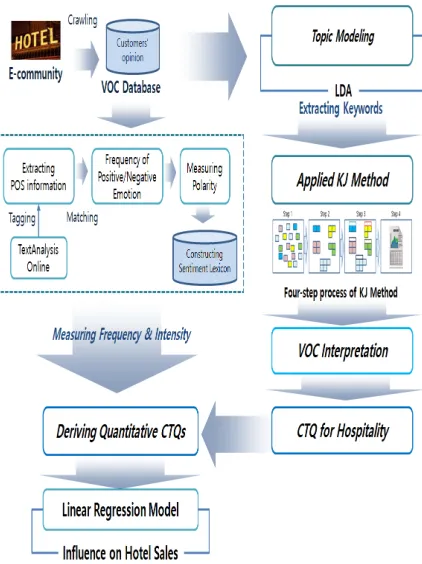
[image:2.612.315.526.158.440.2]This study is conducted following research flow as Figure 1. Schematic contents present as follows.
Figure 1: Research Flow
First of all, this research consists of two-track process. One process is LDA to make up for KJ Method so as to interpret VOC into CTQ, and the other is a sentiment analysis process, which constructs the sentiment lexicon from raw VOC crawled from social media, and measures the amount of sentiment intensity on the keywords related to CTQ. Finally, we examined how CTQ measured influences on the hotel business performance through the linear regression.
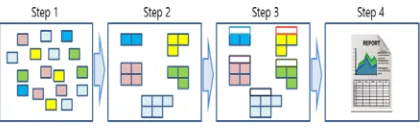
7466 understanding of the idea selection or problem. The following Figure 2 is the four-step process of KJ method5.
Figure 2: Four-step Process of KJ Method
Step 1 is a phase to collect data and prepare notes. In this step, a performer prepares some index cards or cohesive notes for use. After that, he or she writes down each idea for each card.
In Step 2, ideas are sorted into related groups. First of all, put all cards into one pile. Pick one card at a time from the pile. If the card contained an idea related to be already selected is picked up, lump it together into the group. Keep picking up the cards one at a time and examine that the card containing the idea is similar to an existing group. Keep doing this process until all cards are picked up and all of the ideas are classified into proper groups. After all cards are picked, if an idea is applicable equally to other groups, make a duplicate of the card and put one in each group. In addition, it is possible for one card to place alone and build a group. As a result of grouping, the ideas should be closely related and significant differences should exist between groups.
Step 3 is a phase of creating a header card for the group. A header is a title of a group which essentially links among the ideas included in a group of cards. The header should be the most appropriate word or phrase that depicts the meaning of each group. The meaning of the header should be clear to readers without reading the contents of the cards in the group. It is also possible that a high group has several small groups under different headers. It means that hierarchical or multilevel groups can be adopted.
In step 4, the performer writes reports and practices further analysis. Affinity diagram can help discover hidden groups and structures in huge amount of data composed of a variety of notes and words.
LDA for topic modeling is used to supplement the KJ method. The LDA algorithm automatically encapsulates large archives of
documents by discovering hidden topics or themes
found in a set of documents6. In the process of KJ
method, analysts for VOC analysis naturally exchange their ideas while classifying ideas. In particular, they write down the names of the groups and exchange ideas about commonalities and differences between ideas. When excluding the ideas that they think are irrelevant to the subject, the criteria of classification may conflict in classifying the ideas. In order to mitigate this aspect, it is usually the case that a small number of attendees first classify the VOC by using the KJ method, and then the rest of them review the classification results and raise objections. However, in this process, conflicts of individual opinion may cause mis-classification of the data. In this study, LDA technique was used to prevent such mis-classification and integrate the process of the KJ method. The five topics required in the service quality management, which can be headers in KJ
method, are selected by the precedented studies7.
They are composed of "Operations, Sales, Amenities, Facilities and Experiences," important
elements in assessing hotel service quality7.
In this study, the KJ method was conducted in reverse order of steps. This is able to be called the applied KJ Method. Five topics that become headers in KJ Method were pre-established as told above, key words were extracted using LDA, topic modeling technique, and sentences linked with the key words of five topics were also extracted in order to grasp the accurate intention of customers who posted the opinion VOC was converted to CTQ after the process of interpretation.
The LDA assumes the generative process
for a corpus as follows8: 1. Choose N ∼ Poisson(ξ).
2. Choose θ ∼ Dir(α). 3. For each of the N words
: (a) Choose a topic Multinomial(θ). (b)
Choose a word from p( | ,β), a multinomial
probability conditioned on the topic . By using some generative variables to control objects of interest (documents, words, and topics), the LDA can get over the limitations of local observation and
the linear increase in the number of parameters8.
The variable α controls the documents, β controls the words and θ controls the topics. Given the Dirichlet parameters α and β, with a topic mixture θ,
a set of K topics { } and a set of N words { },
we have a marginal distribution of { } of the
document8:
p pz pw z d
d
P n k
N
n ( k ) ( , )
) ( ) ,
7467 Each item in the collection is modeled as a finite mixture of an underlying set of topics. In turn, each topic is modeled as an infinite mixture of the underlying set of subject probabilities.
For sentiment analysis, the database is
constructed crawling customers' opinion
information from the hotel social media, and the part of speech(POS) information about vocabulary in the customers' reviews is identified by utilizing a
POS tagging function offered by
TextAnalysisOnline. The negative and positive emotional vocabulary group, sentimental lexicon, was built. Based on the data, the polarity and intensity of keywords from CTQ are measured and used to grasp what CTQ measured influences on the hotel business performance through the linear regression.
4. EXPERIMENT & ANALYSIS
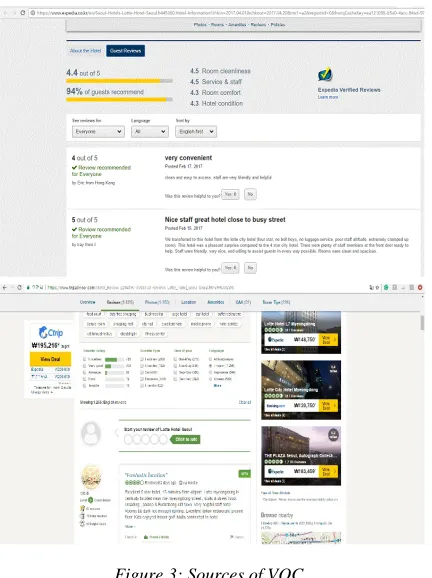
[image:4.612.290.522.338.643.2]The subjects for analysis are hotel review data. They were collected from "Expedia and Tripadvisor(www.expedia.com,www.tripadvisor.co m)." (Figure 3)
Figure 3: Sources of VOC
46,870 reviews written by foreign travelers covering 20 hotels in Seoul, Korea from Jan. 1. 2014 to Jun. 30. 2017 including titles and status information were used to conduct the topic
analysis. In the middle of 20 hotels, the five hotels are five-star and the others are business hotel. The reason why fifteen business hotels are chosen is 34% of foreign travelers have stayed at the business hotels9.
LDA topic modeling outputs posterior probabilities that capture the probability that a particular word belongs to a particular topic. Each topic presented probability of using more than 15 most likely keywords. Table 1 shows the probability that each word in the five topics (Operations, Sales, Amenities, Facilities and Experiences) through LDA belongs to the topic. "Topic Modeling Toolbox 0.4.0" for topic modeling was used and topic modeling guidelines on
parameter values by Gruen and Hornick10 and
[image:4.612.90.306.390.679.2]Gibbs sampling is applied to the main computation. The five topics are fixed for simplicity and interpretability improved.
Table 1: Extracted Keywords by Topic
Topic Extracted Words
Operations
reservation, front, check-in, check-out, information, service, time, long, housekeeping, delayed, billing, waiting, error, comfortable, quick, deposit, clean.
Sales
website, rate, paid, coupon, sale, worth, price, cost, extra, charge, day, fee, cash, cheap, tip, reward, discount, code, night,
credit, card, season.
Amenities
Microwave, tv, ice, room, refrigerator, machine, maker, iron, dryer, English,
floor, bar, night, buffet, tea, coffee, smoking, non-smoking.
Facilities
wifi, room, internet, business, store, free, access, speed, wireless, high, computer, available, pool, fitness, spa, kids, noise,
swimming, indoor, nice
Experience
service, good, food, street, enjoy, first, spacious, beautiful, perfect, play, outstanding, revisit, welcome, old,
culture.
Based on the results of LDA, in the next step, hotel "S" is selected in order to derive CTQs for a case study. It is a 5-star hotel in Seoul and selected for measuring CTQ and linear regression
analysis of the next step.CTQ must be met clear,
specific and quantitative requirements from the raw
7468 After LDA, the process of deriving CTQ is that there is an interpretation process in the middle of process to derive CTQ from raw VOC data. Table 2 shows an example of translating VOC to CTQ for hotel operations.
Table 2: Translating VOC to CTQ for Hotel Operation(Example)
VOC Interpretation CTQ
It took too long
time to check-in. Short Wait Waiting Time
Hotel didn’t respond quickly to
my asking to get slippers.
Quick Response from housekeeping in
the room.
Response Speed of Housekeeping
There were too many errors on my
bill.
Billing Accuracy
Percentage of Erroneous
Invoice
Since CTQ should have measurable characteristics, the qualitative characteristics of service-related CTQ should be converted to quantitative characteristics. In this study, sentiment analysis was conducted on key words related to CTQ to convert CTQ into quantitative and measurable characteristics. The relation between the change of emotion on the extracted words and the sales of hotel company is compared and analyzed.
A word has various meanings based on POS(Part-of-Speech) in the sentence. For example, as the word "good" is used, As we use it as an adjective or a noun, the polarity of the each positive or negative meaning is also different. Thus, it is necessary to extract the POS information in order to analyze the positive or negative polarity with respect to customers' reviews. In this study, POS tagging tool from "www.TextAnalysisOnline.com" was taken advantage of in order to extract the POS
information of each word. TextAnalysis
API(Application Programming Interface) provides customized Text Mining Services such as POS Tagging, Stemmer, Word Tokenize, Lemmatizer, Chunker, Parser, Key Phrase Extraction(Noun
Phrase Extraction), Sentence Segmentation
(Sentence Boundary Detection), Sentiment
Analysis, Text Summarizer, Grammar Checker, Text Classifier and other Text Analysis Tasks. It is
so helpful of NLP Tools, such as TextBlob, Pattern, NLTK, MBSP and so on. TextAnalysisOnline displays the extracted POS information. Figure 3 describes the analysis result of extracting POS information from the reviews posted by customers.
Figure 3: An Example of POS tagging
NN (Noun) / W (Word) / VG (Verb Group) presents an attribute of POS classification. There are 30 sorts of the POS classification like PRP(Personal Pronoun), JJ(Adjective), NNS(Noun Plural), VBN(Verb, Past, Participle). The POS information identified in this way from each customer's opinion was saved in the database. The POS tagging classifies POS of words, and extracts noun and adjective vocabulary presented NN and JJ in the middle of the words arranged.
7469
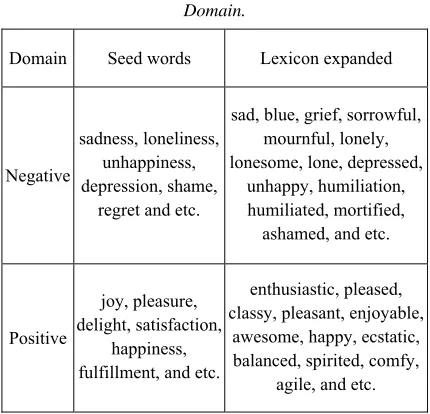
Table 3: A Part of Lexicon of Negative & Positive Domain.
Domain Seed words Lexicon expanded
Negative
sadness, loneliness, unhappiness, depression, shame,
regret and etc.
sad, blue, grief, sorrowful, mournful, lonely, lonesome, lone, depressed,
unhappy, humiliation, humiliated, mortified, ashamed, and etc.
Positive
joy, pleasure, delight, satisfaction,
happiness, fulfillment, and etc.
enthusiastic, pleased, classy, pleasant, enjoyable,
awesome, happy, ecstatic, balanced, spirited, comfy,
agile, and etc.
Based on the lexicon, even if they are classified into the same range of sentiment, the sentiment polarity of each word is different from one another. SentiWordNet 3.0 provides the polarity information indicating the sentimental intensity for each word according to POS and usage, and also offers an index information
[image:6.612.87.302.104.311.2]indicating the frequency of use12.
Table 4: Polarity Information of "sad."
Word POS Index Value Positivity Negativity
sad Adj.
1 0.125 0.75
2 0 0.25
[image:6.612.87.301.436.547.2]3 0 1
Figure 4: Polarity Information from SentiWord Net 3.0.
First of all, the difference between positivity and negativity of each meaning is calculated respectively, and then the index values given to its meaning are multiplied. The higher the index value is, the greater weight is assigned. The total sum of each word is normalized. That is, for instance, in the case of "sad", the value of the negativity was extracted using this example of the formula13.:
{(0.125-0.75)*1+(-0.25)*(1/2)+(-1)*(1/3)}/{(1+(1/2)+(1/3)} (2)
By conducting text matching both the extracted values of negativity and positivity and lexicon built by the process above, sentiment intensity of CTQ is measured. Based on this process, the sentiment lexicon was constructed selecting 2,815 negative and 1,021 positive sentiment words and built the sentiment domains. It is meaningful that the sentiment lexicon related to the hotel industry is constructed.
In the midst of hotels, "S" hotel was chosen for a case study. "S" hotel is located in Seoul, Korea as a five-star hotel and listed on the stock market, KOSPI. 1007 reviews were crawled and analyzed from "Expedia and Tripadvisor" from Jan. 1. 2014 to Jun. 30. 2017.
Table 5: Customers' Reviews of "S" Hotel.
Company 2014 2015 2016 2017 Total
"S" Hotel 224 355 303 125 1007
[image:6.612.310.524.632.693.2]7470 change during three years and six months. The
amount of one month sentiment change ( ) is
measured according to this following formula14.:
= ln( ) (3)
In this formula, is the frequency of this
month emotion and is the frequency of the last
month's emotion. The reason of using the amount of sentiment change as a variable is that the
distribution of sentiment shows a similar aspect15.
The similar distribution of sentiment responds the change varied such as sales. Furthermore, because the number of posting presents a large difference depending on the product or brand, the amount of sentiment change is proper for variable.
[image:7.612.89.302.372.454.2]The average of negativity of hotel review is having a positive value, while that of positivity has a negative value. It is able to be ascertained that the sentiment appropriately divided as the average of sentiment of other propensity has the opposite sign to each other (Table. 6).
Table 6: Basic Descriptive Statistics.
Variables Min. Max Aver. St. Dev
Negativity -1.7064 1.1536 0.001241 0.1632425
Positivity -0.8562 0.7188 -0.000759 0.1214652
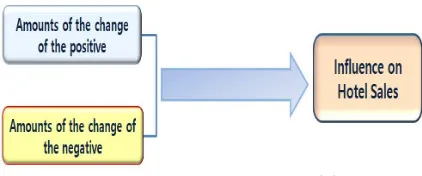
Based on the materials above, linear regression was conducted. In the research model, what VOC, which is consumer reviews on the hotel services, has an impact on the hotel sales was examined through the linear regression. The independent variables were converted to the quantified sentiment of texts of five areas from CTQ of "S" hotel by applying the opinion mining technique. The regression model is graphically represented to explain influence on the hotel sales on VOC digitizing sensibility(Figure 5).
Figure 5: Linear Regression Model.
In case of "S" hotel, it has been one of the top hotel organization according to the Korea Hotel
Association. The results from regression
investigating the impact on the hotel sales in accordance with the change of sentiment from the words related to CTQs are stated as follows.
means statistics, which presents how much the independent variables explain the
dependent variable. In table 7, since is 0.374,
two sentiment domains can explain the hotel sales
approximately 37.4%. As adjusted is 0.367, it
shows a similar level to . As
[image:7.612.90.301.603.691.2]Durbin-Watson(DW) value presents from 1 to 3, which is unproblematic to independency of residual. As the DW value is 1.423, the condition of the independency of residual is met. In ANOVA, investigating P-value(significant probability) on F-value, as P-value is 0.018, it is appropriate for the regression model.
Table 7: The Result of Linear Regression Model.
Adj. DW
ANOVA
Variables Stdzd. Coeffi
t sig.
F P-v. B
0.374 0.367 1.432 3.119 0.018
(constant) 12.819 0.000
Negativity -0.482 -2.425 0.016
Positivity 0.216 -2.430 0.043
As the result of significancy of each variable, P-value is shown to respectively 0.016 in Negativity, and 0.043 in positivity. The results represent that the aspects of two sentiment domains have a significant influence on "S" hotel's business performance. In addition, as seeing the standardized coefficient, The sentiment of negativity had negative (-) influence on hotel sales and that of positivity had a positive (+) impact on hotel performance, but it is a little meager level(0.216).
Finally, the comparison between
7471
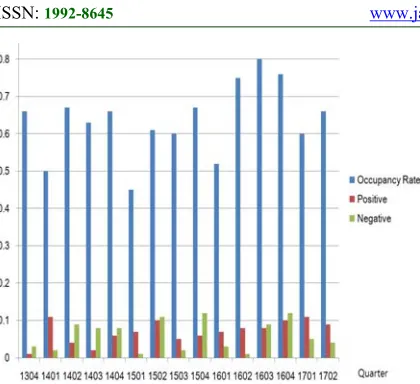
Figure 6: Comparison between Occuoancy Rate & Sentiment by Quarter
The results of the regression analysis present that negative sentiment is affecting the hotel's management performance more. However, as the results of the comparison analysis between occupancy rate the positive and negative sentiment change, it shows the aspect of that when positive feedbacks were growing(Q1 2014 and Q2 2014), the occupancy rate was increased by a larger margin. In addition, as both positive and negative emotions are increasing simultaneously(Q1 2015 and Q2 2015), the occupancy rate tends to decrease. Therefore, although positive opinions also have a strong influence on customers' choice of hotel, in case that positive and negative emotions interact with, negative emotions more strongly affect them.
5. CONCLUSIONS
The purpose of this study is to derive CTQs for service quality management strategy from the web-based VOC, transform into measurable CTQs by utilizing sentiment analysis, and finally conduct a case study to verify that it is possible sentiment values to be used as quantitative CTQs.
In order to derive CTQs for hotel service quality management and measure CTQ, the research was practiced with two-track flow. One is the process for deriving the CTQs, the other is for measuring them. In the process for deriving the CTQs, applied KJ Method was utilized. This method originates from KJ Method composed of four-step process; Step 1: Collecting data and note, Step 2: Sorting idea into groups, Step 3: Header card for discrete group, Step 4: Report and further analysis.
In this study, the KJ method was conducted in reverse order of steps. This is able to be called the applied KJ Method. Five topics("Operations, Sales, Amenities, Facilities and Experiences") as important elements in assessing hotel service quality became headers in the applied KJ Method and were pre-established. Key words were extracted using LDA, topic modeling technique, and sentences linked with the key words of five topics were also extracted in order to grasp the accurate intention of customers who posted opinions. The VOC was converted to CTQ after the process of interpretation.
Sentiment analysis was conducted on key words related to CTQ to convert CTQ into quantitative and measurable characteristics. The relation between the change of emotion on the extracted key words and the sales of hotel company was compared and analyzed. In the midst of the process, sentiment lexicon related to hotel service industry was constructed. Based on the lexicon, linear regression was conducted in order to identify how much sentiment associated with CTQ had an impact on "S" hotel's performance. As a result of the experiment, all of negative and positive emotion has an influence on the hotel performance and in particular in case that positive and negative emotions interact with, the negative emotion has a greater impact than positive on it through comparison between occupancy rate and sentiment change although positive opinions also have a strong influence on customers' choice of hotel.
7472 method to measure CTQ, and constructing sentiment lexicon for the hotel industry.
In spite of these managerial implications, there are limitations. It is necessary to study sentiment analysis on context, nuance and sentences in order to specify in detail and precisely measure the emotion and derive more meaningful experimental results by additionally applying various variables.
REFRENCES:
[1] O'Reilly Radar, "Team, Big data now: Current
perspectives from O'Reilly Radar", O'Reilly,
2011.
[2] McKinsey Global Institute, "Big data: The Next
Frontier for Innovation,Competition, and
Productivity", McKinsey and Company, 2011.
[3] K. Min, and S. Kang, "Driving CTQ's for DFSS
in the Service Area", DAEHAN Association of
Business Administration, 2005, pp. 67-76.
[4] M. Ross and A. Radcliffe, "Making Six Sigma Applicable to Manufacturing, Service and
Computing: The Southhampton Solent
University Experiences", Proceedings of the
12th International Conference on Manufacturing Research, 2014, pp. 245-253.
[5] J. Kawakita, "The Original KJ Method",
Kawakita Research Institute, 1991.
[6] D. Blei, and J. Lafferty, "Topic Models, inText
Mining: Classification, Clustering, and
Applications", Ed. A.N. Srivastava, & M.
Sahami, CRC Press, 2009, pp.71-94.
[7] D. Kim, S. J. Yu, "Hotel Review Mining for Targeting Stategy: Focussing on Chinese Free
Independent Traveler", Journal of Theoretical
and Applied Information Technology, VoI. 95,
No.18, 2017, pp. 4436-4445.
[8] T. Kakkonen, N. Myller, and E. Sutinen, "Applying Latent Dirichlet Allocation to
Automatic Essay Grading", FinTAL 2006, LNAI
4139, 2006, pp.110-120.
[9] www.hotelskorea.or.kr.
[10] B. Gruen, and K. Hornik, "Topic Models: An R
Package for Fitting Topic Models", Journal of
Statistical Software,Vol. 40, No. 13, 2011,
pp.1-30.
[11] S. Kim, and W. Kim. "Study on the Selection
Model CTQ data", Journal of The Korea
Society of Computer and Information, Vol. 18,
No. 4, 2013, pp 97-112.
[12] E. Diener, H. Smith, and F. Fujita, "The
Personality Structure of Affect", Journal of
Personality and Social Psychology, Vol. 69,
No. 1, 1995, pp. 130-141.
[13] Jung, "The Influence of Negative Emotions on Customer Contribution to Organizational Innovation in an Online Brand Community",
Journal of Korean Society for Internet
Information, Vol. 14, No. 4, 2013, pp. 91-100.
[14] D. E. O'Leary, "Blog Mining-review and Extensions: From Each According to His
Opinion", Decision Support Systems, Vol. 51,
No. 4, 2011, pp. 821-830.
[15] H. Jung, and K. Nah, "A Study on the Meaning of Sensibility and Vocabulary System for
Sensibility Evaluation", Journal of the
Ergonomics Society of Korea, Vol. 26, No. 3,