IJPSR (2011), Vol. 2, Issue 10 (Research Article)
Received on 16 June, 2011; received in revised form 22 July, 2011; accepted 18 September, 2011
AN APPROACH FOR ENHANCEMENT OF DISSOLUTION RATE OF PIOGLITAZONE HCL BY SOLID DISPERSION TECHNIQUE USING PEG 6000
Sruti Ranjan Mishra*1, P. Ellaiah 1, Prabhat Kumar Jena 1, Bhabani Shankar Nayak 1 and Gitanjali Mishra 2
Department of Pharmaceutics, Faculty in Pharmacy, Jeypore College of Pharmacy 1, Rondapalli, Jeypore- 764002, Koraput, Odisha, India
P. G. Department of Zoology, Berhampur University 2, Bhanja Bihar, Berhampur, Ganjam, Odisha, India
ABSTRACT
Pioglitazone hydrochloride is a novel antidiabetic drug in thiazolidinediones group and it improves insulin sensitivity in insulin resistant patients. One of the major problems with this drug is its low solubility in biological fluids, which results into poor bioavailability after oral administration. The present study is an approach to enhance the dissolution rate of pioglitazone HCl by preparing solid dispersion (solvent evaporation method) using PEG 6000 as carrier in the ratios of 1:1, 1:2, 1:3 and 1:5 respectively. The drug carrier interaction study was carried out by Fourier Transform Infrared Spectroscopy (FTIR). The prepared solid dispersions were characterized for percentage yield, bulk density, tapped density, Carr’s Index, Hausner’s ratio, angle of repose, drug content, in vitro drug dissolution and stability study. The FTIR study suggesting no interaction between physical mixture of drug and carrier. The solvent evaporation was found to be efficient method to obtained good yield solid dispersions with good flow properties. The drug content was found in the ranges of 72.87±0.31 to 85.23±0.22 %. The solid dispersion of pioglitazone is releasing maximum amount of drug within 60 min where as pure drug is releasing 21.80±0.85 % only. Among all the solid dispersion formulations, formulation F3 of drug carrier ratio 1:3 was found to be best for releasing maximum drug (98.50±1.09 %) with good drug content. All pioglitazone solid dispersions were found to be stable in various storage temperatures. All data are found to be significant by applying one way ANOVA at 5 % level of significant (p<0.05).
INTRODUCTION: Oral bioavailability of drugs depends on its dissolution rate, therefore major problems associated with these drugs was its very low aqueous solubility, which results into poor bioavailability after oral administration. Many methods are available to improve dissolution rate, solubility characteristics, including salt formation, micronization, and addition of solvent or surface active agents 1.
Solid dispersion prepared by solvent evaporation is one of these methods, which was most widely and successfully applied to improve the solubility, dissolution rates and consequently the bioavailability of poorly soluble drugs 2, 3. Several water soluble carriers such as mannitol, urea, lactose, citric acid, polyvinyl pyrrolidone, β-cyclodextrin and polyethylene glycols like PEG 6000 are used as carriers for enhancement of aqueous solubilty 4-6.
Keywords:
Pioglitazone HCl, Polyethylene glycol (PEG 6000),
Solvent evaporation, Antidiabetic, Bioavailability
Correspondence to Author:
Sruti Ranjan Mishra
Pioglitazone hydrochloride is a thiazolidinedione antidiabetic agent that decreases insulin resistance in the periphery and in the liver resulting in increased insulin-dependent glucose disposal and decreased hepatic glucose output 7. Pioglitazone is a potent and highly selective agonist for peroxisome proliferator-activated receptor-gamma 8. The solid dispersions of pioglitazone solve the problems like gastro-intestinal disturbances, headache, dizziness, fatigue and insomnia 9. Pioglitazone is practically insoluble in water; this prompted us to investigate the possibility of improving the dissolution rate of drug by preparing solid dispersion of pioglitazone, prepared by solvent evaporation with water-soluble carrier PEG 6000.
MATERIALS AND METHOD: Pioglitazone HCl was obtained as gift sample from Cipla Ltd., Baddi, Himachal Pradesh, India. PEG 6000was procured from Loba Chemie Pvt. Ltd., Banglore, India. All other chemicals and reagents used were of analytical grade and procured from authorized dealer.
Preparation of solid dispersion by solvent evaporation: The solid dispersions were prepared by solvent evaporation method using pioglitazone HCl as drug and PEG 6000 as carrier in the ratios of 1:1, 1:2, 1:3 and 1:5 (F1, F2, F3 and F4) respectively 3. The pure drug of pioglitazone HCl was considered as formulation F0. The required quantity of carrier (PEG 6000) was weighed in electronic digital balance (Sartorius Electronic balance, BT-2245, Calcutta, West Bangle, India), taken in a mortar and it was dissolved completely in methanol by using pestle. Accurately weighed quantity of drug was then added to polymer solution. The solvent was then allowed to be evaporated at 40°C over water bath. The solid dispersion thus obtained was dried properly using Hot air oven (Rolex Pvt. Ltd., Calcutta, West Bangle, India) at 45°C for 1 h. The dried solid dispersion was passed through sieve no 80 and stored in a desiccator for further study.
Characterization of pioglitazone HCl solid dispersions:
Fourier transforms Infrared radiation (FT-IR) studies:
The FT-IR (Shimadzu IR spectrophotometer, model 840, Japan) was used for these IR analyses in the frequency range between 4000 and 600 cm-1 and at 1 cm-1 resolution 10.
The samples of pure drug pioglitazone, β-cyclodextrin and solid dispersion were prepared separately by palletization technique in KBr using IR press. The IR peaks of pure pioglitazone were analyzed and were compared with the peaks obtained from FTIR spectra of solid dispersion.
Percentage yield: The yield was calculated as the weight of the solid dispersion obtained from each batch divided by total weight of drug and carrier incorporated multiplied by 100. The percentage yields of each formulation were replicated three times[11].
Flow properties: Flowability of solid dispersions was investigated by determining angle of repose, bulk density, tapped density, Carr’s index and Hausner ratio 12, 13. The angle of repose was determined by fixed
funnel method. The solid dispersions were tapped using bulk density apparatus (Excel Enterprises, Kolkata, West Bangle, India) for 100 taps in a cylinder and the change in volume were measured. Carr’s index and Hausner ratio were calculated by the formula: Carr’s index (%) = *(Df -D0) ⁄Df] ×100 and Hausner ratio = Df ⁄ D0, Where, Df is tapped density; D0 is poured density. All the experimental units were studied in triplicate (n=3).
Drug content: Solid dispersion equivalent to 25 mg of pioglitazone HCl was accurately weighed and it was dissolved in methanol. The solution was filtered through Whatmann filter paper no 1. The filtrate solution was suitably diluted with 0.1N HCl. Then the amount of drug present in solution was analyzed by using UV-Visible spectrophotometer (Shimadzu UV spectrophotometer, model 1700, Japan) at λmax 269 nm 14. All the experimental units were studied in triplicate (n=3).
In vitro drug release study: The release profile of an
entrapped drug predicts how a delivery system might function and gives valuable insight into its in vivo
An aliquot sample (5 ml) was withdrawn at an interval of 15 min with replacement of fresh medium and each drug solution was analyzed for pioglitazone content by UV-Visible spectrophotometer at 269 nm. The same method was adopted for each formulation of solid dispersion. All the experimental units were studied in triplicate (n=3).
Accelerated stability study: Stability studies were performed according to ICH guidelines 15. The formulations were stored in hot air oven at (37±2, 45±2 and 60±2)°C for a period of 12 weeks. The samples were analyzed for drug content every two weeks by UV-Visible spectrophotometer at 269 nm.
Statistical analysis: Each value is expressed as mean ± standard deviation (n = 6). For determining the statistical significance, standard error mean and one way analysis of variance (ANOVA) at 5 % level significance was employed. P values < 0.05 were considered significant 16.
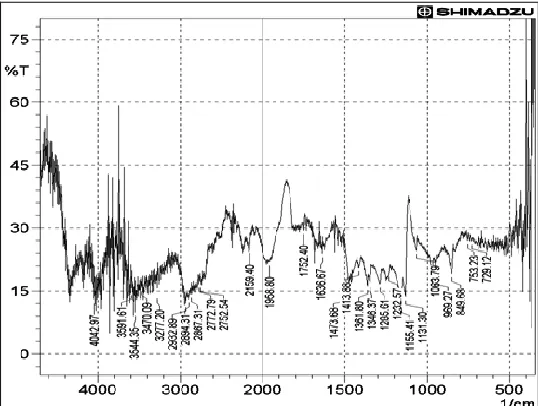
RESULTS AND DISCUSSION: The solvent evaporation was found to be efficient method to obtained good yield solid dispersions. The interaction between the drug and carrier often leads to identifiable changes in the FTIR profile of solid systems. FTIR spectra at 45 scans and a resolution of 1 cm-1 were recorded in KBr pellets for pure drug (Fig. 1A), polymer (PEG 6000) (Fig. 1B) and solid dispersion (Fig. 1C) as represented in
Fig. 1. The spectrum of solid dispersion formulation was equivalent to the addition spectrum of polymer and drug indicating no interaction occurring in the solid dispersion of drug and polymer.
[image:3.612.315.584.44.247.2]FIG 1A: FTIR SPECTRA OF PURE DRUG PIOGLITAZONE HCl IN THE FREQUENCY RANGE BETWEEN 4000 AND 600cm-1 AND AT 1cm-1 RESOLUTION
[image:3.612.315.586.281.495.2]FIG 1B: FTIR SPECTRA OF CARRIER PEG 6000 IN THE FREQUENCY RANGE BETWEEN 4000 AND 600cm-1 AND AT 1cm-1 RESOLUTION
FIG 1C: FTIR SPECTRA OF PIOGLITAZONE SOLID DISPERSIONS IN THE FREQUENCY RANGE BETWEEN 4000 AND 600cm-1 AND AT 1cm-1 RESOLUTION
The yields of all the formulations were good as shown in Table 1. The yields varied from 97.02±0.19 to 98.25±0.21 %, suggesting that the processing parameters did not affect the yield from the solid dispersion.
TABLE 1: FORMULATION DESIGN OF PIOGLITAZONE HCl SOLID DISPERSIONS WITH PEG 6000
Formulation
code Drug: carrier Drug (g) Carrier (g)
Yield (%) (X±S.D.)
F1 1:1 1.5 1.5 97.15±0.16
F2 1:2 1 2 97.02±0.19
F3 1:3 0.75 2.25 98.25±0.21
F4 1:5 0.5 2.5 97.56±0.23
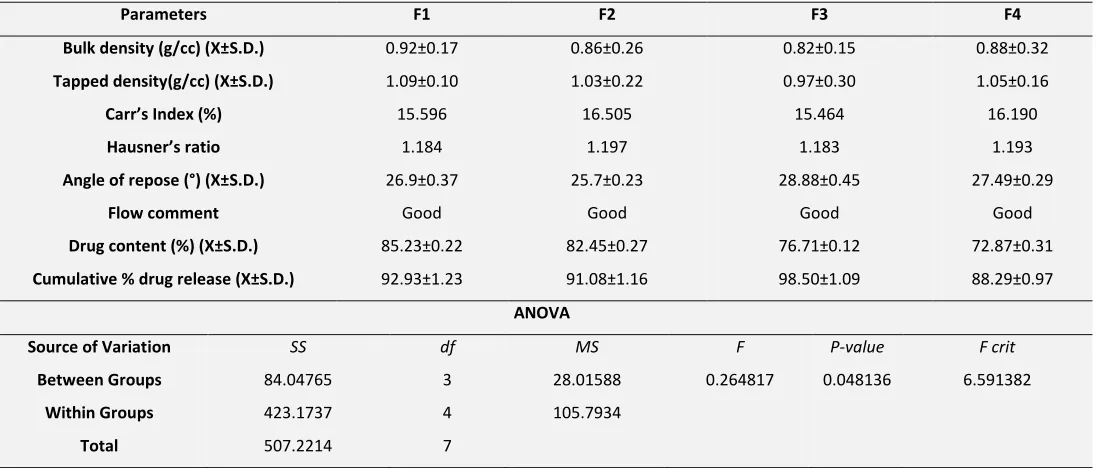
[image:3.612.27.298.538.715.2] [image:3.612.316.588.655.728.2]The bulk density, tapped density, angle of repose, Hausner’s ratio and Carr’s index values of the prepared solid dispersion are represented in Table 2. The bulk density was found in the range of 0.82±0.15to 0.92±0.17 g/cc. The solid dispersion of all formulations had Hausner’s ratio of 1.197 or less indicating good flowability. The Carr’s index was found between
15.464 to 16.505. The good flowability of the solid dispersion was also evidenced with angle of repose within range of 25.7±0.23to 28.88±0.45°, which is below 30° indicating good flowability. Relatively high drug content was observed for each formulation as presented in Table 2.
TABLE 2: FLOW PROPERTIES, DRUG CONTENT AND IN VITRO DRUG RELEASE STUDY OF VARIOUS PIOGLITAZONE HCl SOLID DISPERSIONS
Parameters F1 F2 F3 F4
Bulk density (g/cc) (X±S.D.) 0.92±0.17 0.86±0.26 0.82±0.15 0.88±0.32
Tapped density(g/cc) (X±S.D.) 1.09±0.10 1.03±0.22 0.97±0.30 1.05±0.16
Carr’s Index (%) 15.596 16.505 15.464 16.190
Hausner’s ratio 1.184 1.197 1.183 1.193
Angle of repose (°) (X±S.D.) 26.9±0.37 25.7±0.23 28.88±0.45 27.49±0.29
Flow comment Good Good Good Good
Drug content (%) (X±S.D.) 85.23±0.22 82.45±0.27 76.71±0.12 72.87±0.31
Cumulative % drug release (X±S.D.) 92.93±1.23 91.08±1.16 98.50±1.09 88.29±0.97
ANOVA
Source of Variation SS df MS F P-value F crit
Between Groups 84.04765 3 28.01588 0.264817 0.048136 6.591382
Within Groups 423.1737 4 105.7934
Total 507.2214 7
Each value is expressed as mean ± standard deviation (n = 3). Standard error of mean < 0.710. Data are found to be significant (F value < F crit) by testing through one way ANOVA at 5 % level of significance (p < 0.05 that is p = 0.048136)
The drug content was found in the ranges of 72.87±0.31 to 85.23±0.22 %. The maximum drug content was obtained with formulation F1. The drug content result showed with increase in polymer concentration, the drug content decreases. The in vitro
drug releases of acquired solid dispersions were shown in Table 2 and Fig 2. Cumulative percent drug released after 60 min was 92.93±1.23, 91.08±1.16, 98.50±1.09, 88.29±0.97 and 21.80±0.85 % for F1, F2, F3, F4 and pure drug pioglitazone.
In vitro release studies reveal that there is marked increase in the dissolution rate of pioglitazone from all the solid dispersions when compared to pure pioglitazone itself. From the in vitro drug release profile, it can be seen that formulation F3 (1:3 ratio of drug: PEG 6000) shows higher dissolution rate compared with other formulations. This may be attributed to the increase in drug wettability, conversion to amorphous form and solubilization of the drug due to hydrophilic carrier.
FIG. 2: IN VITRO DRUG RELEASE PROFILE OF PIOGLITAZONE SOLID DISPERSIONS IN 0.1N HCl. F0 – Pioglitazone HCl pure drug
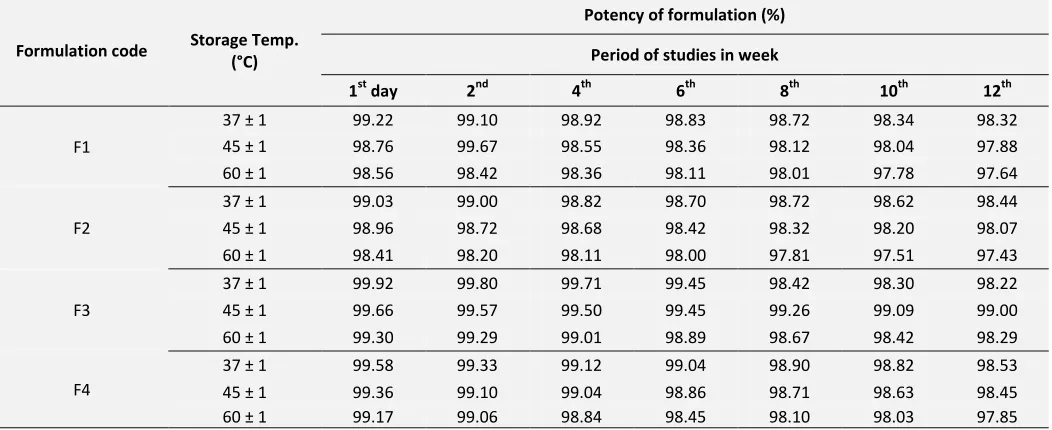
[image:4.612.35.583.171.405.2] [image:4.612.317.586.439.611.2]TABLE 3: STABILITY STUDY OF VARIOUS PIOGLITAZONE HCl SOLID DISPERSIONS AS PER ICH GUIDELINES
Formulation code Storage Temp. (°C)
Potency of formulation (%)
Period of studies in week
1st day 2nd 4th 6th 8th 10th 12th
F1
37 ± 1 99.22 99.10 98.92 98.83 98.72 98.34 98.32
45 ± 1 98.76 99.67 98.55 98.36 98.12 98.04 97.88
60 ± 1 98.56 98.42 98.36 98.11 98.01 97.78 97.64
F2
37 ± 1 99.03 99.00 98.82 98.70 98.72 98.62 98.44
45 ± 1 98.96 98.72 98.68 98.42 98.32 98.20 98.07
60 ± 1 98.41 98.20 98.11 98.00 97.81 97.51 97.43
F3
37 ± 1 99.92 99.80 99.71 99.45 98.42 98.30 98.22
45 ± 1 99.66 99.57 99.50 99.45 99.26 99.09 99.00
60 ± 1 99.30 99.29 99.01 98.89 98.67 98.42 98.29
F4
37 ± 1 99.58 99.33 99.12 99.04 98.90 98.82 98.53
45 ± 1 99.36 99.10 99.04 98.86 98.71 98.63 98.45
60 ± 1 99.17 99.06 98.84 98.45 98.10 98.03 97.85
Potency has been expressed in terms of percentage drug content for period of 12 weeks
CONCLUSION: The study concluded that the solid dispersion formulation F3 (1:3 ratio of drug: PEG 6000) shows higher dissolution rate compared with other formulations and pure drug. The study shows that the dissolution rate of pioglitazone can be enhanced to a great extent by solid dispersion technique (Solvent evaporation method). It is, however, suggested that further research on large scale be carried out by using other hydrophilic carrier.
ACKNOWLEDGEMENT: Authors wish to thank Cipla Ltd., Baddi, Himachal Pradesh, India, for providing pioglitazone as gift sample. Authors also wish to thanks Jeypore College of Pharmacy authority for providing facility to carry out this research work.
REFERENCES:
1. Sekiguchi K and Obi N: Studies on absorption of eutectic mixture I.A. comparison of the behavior of eutectic mixture of sulfathiazole and that of ordinary sulfathiazole in man. Chem Pharma Bull 1961; 9: 866-872.
2. Chiou WL and Riegelman S: Pharmaceutical applications of solid dispersion systems. Journal Pharmaceutical Sciences 1971; 60: 1281-1302.
3. Modi A and Tayade P: Enhancement of dissolution profile by solid dispersion (kneading) technique. AAPS Pharm Sci Tech 2006: 7(3): 68-73.
4. Baylan S: Encycolpedia of pharmaceutical technology, 2nd (Ed), Vol. 1, Marcel Dekker Inc., New York, 2002: 641-647.
5. Leunner C and Dressman J: Improving drug solubility for oral delivery using solid dispersions. Eur J Pharm Biopharm 2000; 50: 47-60.
6. Brahmankar DM and Jaiswal SB: Biopharmaceutics and Pharmacokinetics A Treatise, 1st (Ed), Vallabh Prakashan, New Delhi, 1995: 171-172.
7. Crum CP: Diabetes. In: Cotran RS, Kumar V and Collins T (Eds.): Robbins, Pathologic Basis of Disease, 6th (Ed), Published by Harcourt (India) Private Limited, New Delhi, 1999: 934-946. 8. Rang and Dales Pharmacology, Antidiabetic drugs. Churchill
Living Stone, Elsevier, Philadelphia, 2007, 48: 696-678.
9. Tripathi KD: Antidiabetic drugs. In: Essentials of Medical Pharmacology, 5th (Ed), Jaypee Brothers Ltd., New Delhi, 2003: 345-352.
10. Guruswami S, Kumar V and Mishra DN: Characterization and in vitro dissolution studies of solid systems of valdecoxib with chitosan. Chem Pharm Bull. 2006; 54: 1102-1106.
11. Babu PS, Ramu AS and Vidyadhara S: Enhancement of dissolution rate of glimepride using newer carriers. Indian Pharmacist 2008; 69: 65-68.
12. Lachman L, Liberman HA and Kanig JL: Tablets. In: The Theory and Practice of Industrial Pharmacy, 3rd (Ed), Varghese Publishing House, Bombay, 1987: 293-326.
13. Martin A, Bustamante P and Chun AHC: Powder Rheology. Martin Physical Pharmacy, 4th (Ed), B.I. Waverly Pvt. Ltd., New Delhi, 1994: 465-466.
14. Hirasawa N, Shise I, Miyata SH and Danjo K: Physiochemical characteristics and drug release studies of nilvadipine solid dispersions using water insoluble polymer as carrier. Drug Dev Ind Pharm 2003; 29(3): 339-344.
15. Carstensen JT: Drug Stability. Principles & Practices, Marcel Dekker, New York, 1989: 17-58.
16. Bolton S: Pharmaceutical Statistics - Practical and Clinical application, Marcel Dekker, New York, 1997: 128-139.