R E V I E W
Open Access
Equity effects of children
’
s physical activity
interventions: a systematic scoping review
Rebecca E. Love
*, Jean Adams and Esther M. F. van Sluijs
Abstract
Background:Differential effects of physical activity (PA) interventions across population sub-groups may contribute to inequalities in health. This systematic scoping review explored the state of the evidence on equity effects in response to interventions targeting children’s PA promotion. The aims were to assess and summarise the availability of evidence on differential intervention effects of children’s PA interventions across gender, body mass index, socioeconomic status, ethnicity, place of residence and religion.
Methods:Using a pre-piloted search strategy, six electronic databases were searched for controlled intervention trials, aiming to increase PA in children (6–18 years of age), that used objective forms of measurement. Screening and data extraction were conducted in duplicate. Reporting of analyses of differential effects were summarized for each equity characteristic and logistic regression analyses run to investigate intervention characteristics associated with the reporting of equity analyses.
Results:The literature search identified 13,052 publications and 7963 unique records. Following a duplicate screening process 125 publications representing 113 unique intervention trials were included. Although the majority of trials collected equity characteristics at baseline, few reported differential effects analyses across the equity factors of interest. All 113 included interventions reported gender at baseline with 46% of non-gender targeted interventions reporting differential effect analyses by gender. Respective figures were considerably smaller for body mass index, socioeconomic status, ethnicity, place of residence and religion. There was an increased likelihood of studying differential effects in school based interventions (OR: 2.9 [1.2–7.2]) in comparison to interventions in other settings, larger studies (per increase in 100 participants; 1.2 [1.0–1.4]); and where a main intervention effect on objectively measured PA was reported (3.0 [1.3–6.8]).
Conclusions:Despite regularly collecting relevant information at baseline, most controlled trials of PA interventions in children do not report analyses of differences in intervention effect across outlined equity characteristics. Consequently, there is a scarcity of evidence concerning the equity effects of these interventions, particularly beyond gender, and a lack of understanding of subgroups that may benefit from, or be disadvantaged by, current intervention efforts. Further evidence synthesis and primary research is needed to effectively understand the impact of PA interventions on existing behavioural inequalities within population subgroups of children.
Trial registration:PROSPERO (PROSPERO 2016: CRD42016034020).
Keywords:Physical activity, Children, Interventions, Inequalities, Intervention-generated inequalities
* Correspondence:[email protected]
Centre for Diet and Activity Research (CEDAR), MRC Epidemiology Unit, University of Cambridge School of Clinical Medicine, Box 285 Institute of Metabolic Science, Cambridge Biomedical Campus, Cambridge CB2 0QQ, UK
Background
Health is unequally distributed across society. Evidence reveals social class gradients in health outcomes at every stage of the life course, with disadvantaged populations faring worse with regards to non-communicable disease risk prevalence and correspondingly life expectancy [1]. Many health behaviours are socially and economically patterned, playing a central role in shaping inequalities in population health outcomes through affecting the de-velopment of disease and overall quality of life [2, 3]. In developed and many developing countries, differences in physical activity behaviour across subgroups contribute to existing health inequalities, including stark, socially graded, differences in obesity prevalent across popula-tions [4].
The benefits of engaging in regular physical activity during childhood and adolescence are well established, playing a critical role in promoting health and reducing future disease risk and mortality [5]. However, despite the breadth of well-documented health benefits [6–9], most children and adolescents do not meet global rec-ommendations for physical activity and are not active enough to benefit their health [10, 11]. Following signifi-cant declines during the transition from childhood into adolescence, physical activity further declines into adulthood [12], with levels tracking across the lifespan [13–15]. Thus, differences in physical activity behaviour between subgroups of the adult population may develop during childhood. Accordingly, childhood is a critical time to intervene and change behaviour before patterns become entrenched for life [16].
The development of effective and sustainable interven-tions to increase physical activity in children has been identified by many governments and public health agen-cies as a key research priority for improving health out-comes [17]. However, the equity impacts of these interventions are unclear, with concern being raised re-garding the possibility that even where interventions successfully improve overall behaviour across a popula-tion they also may inadvertently increase inequalities by not equally benefiting subgroups of individuals within the population [18, 19]. Differential effectiveness, frequently termed ‘intervention generated inequalities’, ensue when interventions provide greater benefit to one population group over another [20]. Such an effect is concerning when an intervention provides greater bene-fit to advantaged than disadvantaged groups. Evidence from evaluations of children’s physical activity interven-tions have revealed that inequalities are generated at multiple points throughout the intervention process in-cluding by differential provision of, and access to, inter-ventions and resources [21], variation in uptake [22], differential intervention efficacy [23, 24], differential long term compliance [25] and differential response in
evaluation [26]. While these evaluations of individual tri-als provide an indication of the potential for equity gen-erating effects within children’s physical activity interventions, across the wider literature there is not a coherent overall understanding of the direction and size of effect across equity factors.
Despite the frequent use of systematic reviews for de-cision making, very few analyse or report equity effects [27]. Multiple, recent reviews have investigated the ef-fectiveness of children’s physical activity interventions across varying settings [28–35], yet there is limited con-sideration for the differential effects of the included in-terventions. This has resulted in a lack of understanding of the characteristics and features of interventions that generate or reduce inequalities in children’s physical ac-tivity behaviour across population subgroups. In addition, it is possible our understanding of equity fects is biased due to underreporting of differential ef-fects when statistical significance is not achieved. It is currently unknown whether there is sufficient consider-ation of differential effects across individual interven-tions to enable a full systematic review, and furthermore whether trials report appropriate data to allow for retro-spective analysis of the question. Given this lack of clar-ity we conducted this review in a scoping manner to map out the existing state of the literature.
The purpose of this scoping review was to assess the availability of evidence for differential effects of chil-dren’s physical activity interventions and investigate the characteristics of interventions that study differential ef-fectiveness. The collation of evidence through this sys-tematic scoping review will be valuable in providing an overview of the literature, with an aim of identifying where evidence gaps exist to direct future research.
Methods
Inclusion criteria
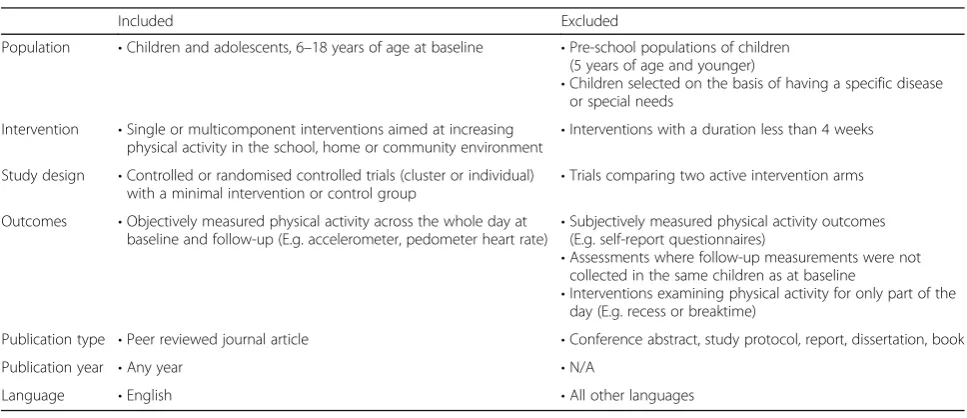
The search strategy was designed to retrieve controlled trials (Study design) of single or multicomponent inter-ventions in the school, home, health-care or community environment (Intervention), aimed at increasing school-aged children and adolescent’s levels of physical activity (Population), with a minimum intervention or normal control group (Control), and objectively assessed phys-ical activity at baseline and follow-up (Outcome). The full inclusion and exclusion criteria are outlined in Table 1. These inclusion criteria were based on existing knowledge of the literature base demonstrating the pres-ence of numerous controlled trials [33], using objective forms of physical activity measurement [32], within the population of interest. As self-reported activity is also likely to be differentially biased [36], we established re-strictive inclusion criteria, while conducting the review in a scoping manner to map out the availability of evidence contained within the trials.
Intervention screening and selection
Primary article titles identified following de-duplication of the initial search were manually screened and those clearly outside the review criteria discarded. The ab-stracts of the remaining citations that passed the initial title screening were independently reviewed and com-pared to the inclusion criteria to determine if retrieval of the full primary study was needed for further examin-ation. The initial literature searches and scanning stages (title, abstract) were conducted by one reviewer (RL). A 15% random sample was double checked at each stage (EvS). The full text screening was performed in duplicate by two authors (RL, EvS). At the full text phase, related and pre-identified reviews on the same topic were scanned
for missing trials [29, 31–33]. All discrepancies were resolved through discussion amongst the research team.
Supplementary searches for associated publications
For each trial that met the inclusion criteria, steps were taken to retrieve all associated publications to ensure that equity analyses reported separately to the main intervention effect paper were captured. To find associ-ated publications for each included trial, subsequent searches were performed using trial names and registra-tion numbers. Addiregistra-tionally, forward citaregistra-tion tracking on Google Scholar was used to screen and identify additional trial publications that referenced the main effect paper included in this review.
Data extraction
For each trial that met the inclusion criteria, interven-tion characteristics and covariates were extracted using a pre-established data extraction form and Microsoft Excel. At each stage of the review process, all data was managed using Mendeley Reference Manager. Data traction was performed in duplicate (RL, JA). The ex-tracted data included trial name, journal of main intervention effect paper and year of publication, study population and size, setting, baseline descriptive data, equity data collected at baseline, intervention type (phys-ical activity only or multi-behaviour intervention), inter-vention targeting (by gender, BMI (body mass index), ethnicity, socioeconomic status (at the individual, school or community level), place of residence and religion), intervention effects across all outcomes, differential ef-fect analyses and the methods utilized to investigate dif-ferential effects (by subgroup or interaction analysis).
‘Subgroup analyses’ were classified as the evaluation of treatment effects by subgroups of participants defined at
Table 1Intervention inclusion & exclusion criteria
Included Excluded
Population •Children and adolescents, 6–18 years of age at baseline •Pre-school populations of children (5 years of age and younger)
•Children selected on the basis of having a specific disease or special needs
Intervention •Single or multicomponent interventions aimed at increasing physical activity in the school, home or community environment
•Interventions with a duration less than 4 weeks
Study design •Controlled or randomised controlled trials (cluster or individual)
with a minimal intervention or control group •
Trials comparing two active intervention arms
Outcomes •Objectively measured physical activity across the whole day at baseline and follow-up (E.g. accelerometer, pedometer heart rate)
•Subjectively measured physical activity outcomes (E.g. self-report questionnaires)
•Assessments where follow-up measurements were not collected in the same children as at baseline
•Interventions examining physical activity for only part of the day (E.g. recess or breaktime)
Publication type •Peer reviewed journal article •Conference abstract, study protocol, report, dissertation, book
Publication year •Any year •N/A
baseline by an equity characteristic, while ‘interaction analyses’ were identified as the use of an overall statis-tical test to directly compare differences in intervention effects across subgroups [37].
Equity data and analyses were considered across PROGRESS-Plus, a framework created to ensure explicit consideration for the multiple intersecting factors that affect health equity within research and intervention de-sign [38]. Differential effects were considered across all factors outlined by the PROGRESS-Plus framework ap-plicable to a child population: gender, socioeconomic sta-tus (SES), ethnicity, place of residence, and religion [39]. SES data and analyses were further classified by whether SES had been measured at the family, school or commu-nity level to give an indication of how SES was conceptua-lised in this context. In addition, BMI was included as an additional equity factor of particular relevance in the con-text of physical activity interventions in consideration of substantial evidence indicating it is patterned by SES, geo-graphic area and ethnicity [40–42]. Other factors included in the PROGRESS-plus framework (occupation, social capital) were not considered relevant within a child popu-lation and excluded. All discrepancies in data extraction were resolved through discussion amongst the research team. As per standard practice for scoping reviews, meth-odological quality assessment of included interventions was not performed [43].
Analysis
Graphical and narrative methods were used to summarize the results. Subsequently, logistic regressions analyses were performed to determine if certain inter-vention or study characteristics influenced the likelihood of reporting of differential effects. Intervention and study characteristics of interest included as exposure variables in logistic regression models were journal impact factor, country of origin, intervention setting, participants’ages, sample size and whether or not positive main interven-tion effects were reported. Outcomes comprised of whether or not any equity effects were studied, and whether or not gender equity effects were studied. No other equity characteristics were considered frequently enough to allow for further analysis. Univariable models were run for each exposure-outcome pair.
Results
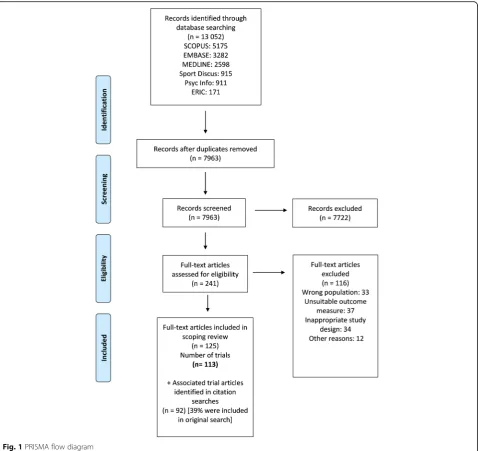
Figure 1 outlines the search and screening process. The database search resulted in the identification and re-trieval of 13,052 records, including 7963 unique records after removal of duplicates. Following title and abstract scanning, 241 potentially relevant articles were screened in full text. Ensuing assessment against the inclusion cri-teria led to inclusion of 125 publications representing 113 intervention trials (See Additional file 1: File S2).
Citation and trial registration number searches identified an additional 92 associated publications, of which 39% had appeared in the original database search. The refer-ence lists of included trials and associated publications are included as additional files (See Additional file 1: Files S3 and S4, respectively).
Characteristics of included interventions
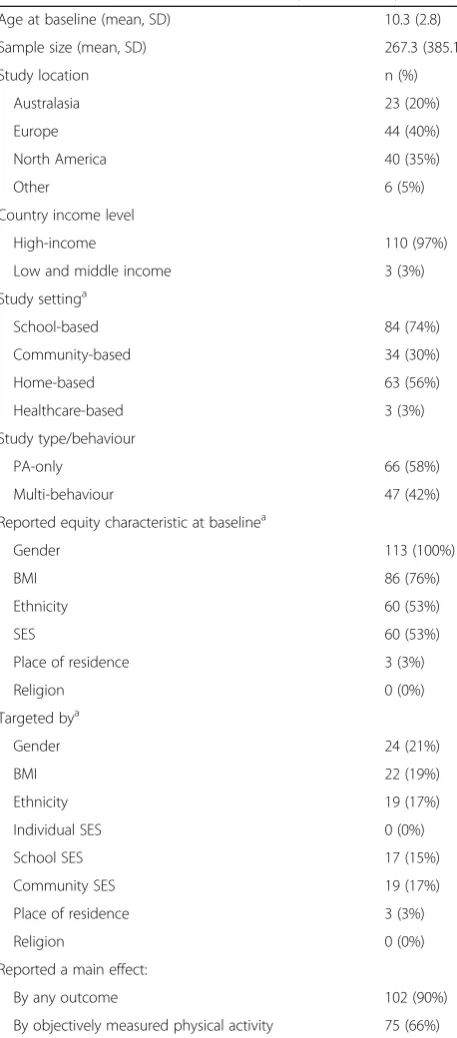
The characteristics of included trials are outlined in Table 2. The majority of the 113 included trials were conducted in Europe (40%), followed by North America (35%) and Australasia (20%). Of the remaining 5%, 4 were conducted in Asia and 2 in South America. Only 3 were conducted in Low and Middle Income Countries (Mexico [44]; Ecuador [45]; Turkey [46]). Forty-two per-cent of trials were targeted solely at physical activity be-haviour change, while 58% were targeted at multiple health behaviours: primarily a combination of diet and physical activity. Of the included trials, 74% had inter-vention components that took place in school-based set-tings, 56% in home-based setset-tings, 30% in community-based settings and 3% in healthcare-community-based settings.
The mean sample size of included trials was 267 (SD: 385.1), ranging from 18 to 3010 participants. The average age of participants at baseline ranged from 6 to 16.5 years of age, with a mean of 10.3 years (SD: 2.3). Of the 113 included interventions, 21% were tar-geted specifically by gender, while 19% were tartar-geted by BMI and 17% by ethnic groups. In addition, a num-ber of interventions were targeted by school (15%) and community level SES (17%). Of all included trials, 90% reported a main intervention effect on any out-come while 66% reported a main intervention effect on objectively measured physical activity.
Differential effect analyses
Factors predicting differential analyses
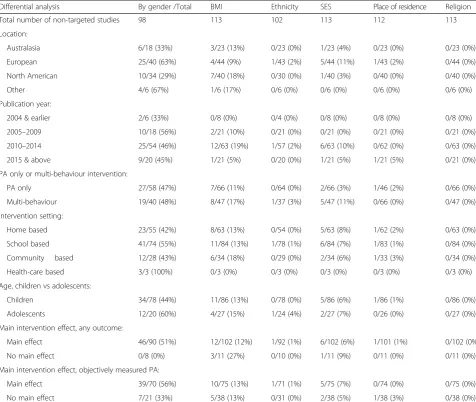
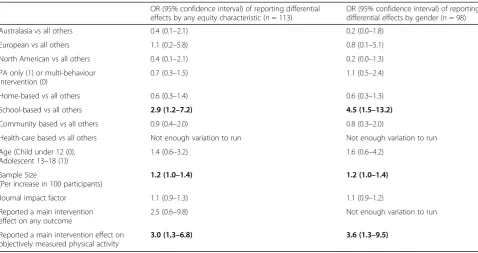
Table 3 highlights the characteristics of differential effect analyses by each equity characteristic. Logistic regression models indicated that significantly more is known about equity in the context of school-based interven-tions in comparison to other contexts (home, commu-nity and health-care based) (See Table 4). Studies investigating school-based interventions were 2.9 times (95% CI: 1.2–7.2) more likely to report differential ef-fects by any factor and 4.5 times (95% CI: 1.5–13.2) more likely to report differential effects by gender.
As expected, due to differences in statistical power, an increase in sample size was associated with an in-creased odds ratio of conducting differential effect analysis (OR: 1.2, 95% CI: 1.0–1.4, per additional 100
participants). Country of origin, intervention type, age and journal impact factor were not significantly associ-ated with reporting of differential effects.
Regression models indicated that a main intervention effect on objectively measured physical activity was as-sociated with subsequent exploration of differential ef-fects by equity subgroups (3.0 (95% CI: 1.3–6.8)). When restricted to exploration of differential effects by gender this likelihood increased to a odds ratio of 3.6 (95% CI: 1.3–9.5).
Discussion
To the best of our knowledge, this is the first review to provide a comprehensive overview of available evidence on consideration of equity effects in the children’s
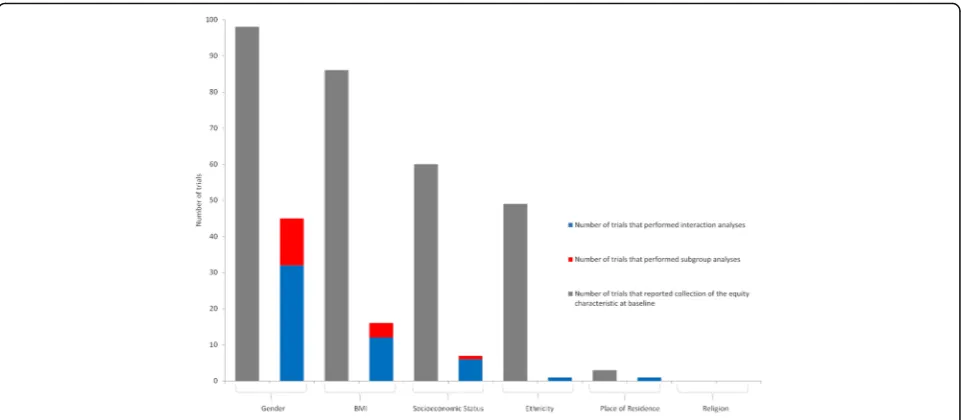
physical activity literature. We have revealed a scarcity of consideration for equity. Despite all included trials collecting at least one equity characteristic of interest at baseline, a limited number reported investigating ana-lyses of differential effectiveness. When reported, differ-ential effect analyses were primarily concentrated on gender, with substantially fewer focusing on BMI, SES, ethnicity, place of residence or religion. The failure of
authors to report equity analyses (despite having data available with which to do this) reinforces a lack of un-derstanding of, and importance given to, intervention generated inequalities.
The wider health literature supports these findings, with reviews of both smoking interventions and univer-sal school-based behavioural interventions indicating similar rates of equity analyses, with accompanying calls for more routine testing of differential effects [47, 48]. Similar to these results, analyses within the adult phys-ical activity intervention literature have found that des-pite researchers commonly measuring equity characteristics at baseline, differential effect analyses are infrequently reported in trial evaluations [49, 50]. Like-wise, when reported, analyses are mostly confined to gender, with considerably less attention given to other equity characteristics.
The lack of equity focus identified in this review is sur-prising considering the widespread public health policy focus on inequality [27, 51, 52]. Despite overarching pol-icy goals, in practice we have a very limited understand-ing of the potential for inequality generatunderstand-ing effects from current intervention efforts. As a research community we are not accumulating the evidence policy makers need to deliver on objectives and targets for the develop-ment and impledevelop-mentation of interventions that effect-ively reduce health inequalities. Considering the state of the evidence and paucity of data, we recommend and echo prior calls for the conduct and reporting of differ-ential effect analyses [50]. However, we acknowledge the financial and resource requirements of running suffi-ciently large trials powered to detect a main intervention effect, let alone differential effects between subgroups. To tackle these critical questions, we encourage a coor-dinated effort towards fewer, high-quality, large trials, adequately powered to address questions of differential effectiveness. Continuing to amass evidence solely to ad-dress the question of overall effectiveness will only propagate our current level of understanding and limit the evidence base from progressing.
We acknowledge the potential generation of false negative results as a consequence of subgroup and interaction analyses with inadequate statistical power [53–55]. While it is encouraging that included interven-tions with a larger sample size were more likely to per-form differential effect analyses, we do not specifically know what proportion of the 70 differential effect ana-lyses (74% by interaction and 26% by subgroup analysis) were adequately powered. Considering that many trials focus on recruiting sufficient participants to detect dif-ferences in effect between intervention arms [56], it is crucial that each analysis is interpreted sensibly, and the credibility of the analyses carefully scrutinized independ-ently against established criteria [37, 57–59]. Guidelines
Table 2Characteristics of included trials (Ntotal = 113)
Age at baseline (mean, SD) 10.3 (2.8)
Sample size (mean, SD) 267.3 (385.1)
Study location n (%)
Australasia 23 (20%)
Europe 44 (40%)
North America 40 (35%)
Other 6 (5%)
Country income level
High-income 110 (97%)
Low and middle income 3 (3%)
Study settinga
School-based 84 (74%)
Community-based 34 (30%)
Home-based 63 (56%)
Healthcare-based 3 (3%)
Study type/behaviour
PA-only 66 (58%)
Multi-behaviour 47 (42%)
Reported equity characteristic at baselinea
Gender 113 (100%)
BMI 86 (76%)
Ethnicity 60 (53%)
SES 60 (53%)
Place of residence 3 (3%)
Religion 0 (0%)
Targeted bya
Gender 24 (21%)
BMI 22 (19%)
Ethnicity 19 (17%)
Individual SES 0 (0%)
School SES 17 (15%)
Community SES 19 (17%)
Place of residence 3 (3%)
Religion 0 (0%)
Reported a main effect:
By any outcome 102 (90%)
By objectively measured physical activity 75 (66%)
generally advise conducting a small number of differen-tial effect analyses, that are pre-specified and based on strong theory, adjustment for multiple testing is consid-ered, and that reporting indicates if analyses were pre-planned or performed post-hoc. Unfortunately, previous evidence has indicated that differential effect investiga-tions by subgroup analyses are often not pre-specified in protocols, and even when they are 90% deviate from the described plan [60]. When possible, interaction analyses should be preferentially performed as these provide a more direct test of differences in effect [61]. Considering the possibility that reporting of differential effect ana-lyses is dependent on the achievement of statistical sig-nificance at ap≤0.05 level, we need to continue moving towards required pre-specification in protocols and ana-lyses plans, and the enforcement of reporting of any de-viations and accompanying rationales in trial publications by reviewers and journals. Alongside this evidence is the proposition that authors may be particu-larly likely to explore subgroup analyses if they did not find a main intervention effect. Encouragingly, this hy-pothesis was not supported within this review, with trials that found a main intervention effect being significantly more likely to conduct differential effect analyses in comparison to those that did not.
Girls are well known to be on average less active then boys [62, 63]. This observation is likely influencing the focus on assessment of differential intervention effects by gender. Moreover, compared to gender, SES and eth-nicity are challenging to accurately measure within pop-ulations of children and adolescents. Evidence has shown difficulties in the conceptualization of SES, and inconsistencies in the relevance of tangible measures of
education, occupation and income in relation to chil-dren’s perceived SES [64]. Additionally, when parental questionnaires are utilized to help overcome these differ-ences new challenges arise. Evaluations indicate that the completion of parental questionnaires and consent forms is socially patterned with factors including poor literacy levels among low income parents affecting the return of signed consent forms [65]. Furthermore, gen-der is generally equally distributed across participant samples and study groups. In comparison, ethnicity and SES often end up considerably skewed towards the ma-jority within that specific context, since intervention tri-als are frequently implemented within a restricted region of schools and neighbourhoods. These differences in dis-tributions may result in an increased likelihood of gen-der being adequately powered for differential effect analyses in comparison to the remaining equity charac-teristics. It is likely that these issues contribute to the differences and patterns identified in these analyses.
There is growing evidence that certain subgroups such as girls, children with disabilities, and those from minor-ity ethnic groups and low SES families or neighbour-hoods have lower levels of physical activity than their counterparts [63, 66–72], which contribute to associated and apparent health inequalities [73]. In response, a multitude of interventions tailored to the characteristics of high-risk subgroups have been developed [31], as evi-denced in this review with more than a third of included trials targeted by at least one equity factor and a subset of these targeted by multiple equity characteristics. The comparative effectiveness of targeted vs. non-targeted interventions is largely unknown as the inter-ventions evaluated differ substantially. Although
subgroups of high-risk children may benefit from an intervention targeted directly at them, public health benefits in terms of physical activity and health out-comes may be limited in the absence of a population approach. Rose’s theory of disease prevention suggests that it is more efficient to utilize a universal program approach that works to shift the entire population dis-tribution of a risk factor then focus exclusively on a high-risk subgroup through a targeted intervention [74]. Analyses of differential effects in response to one universal intervention revealed greater benefits to girls and inactive children, but also significant benefits to boys and those already active [75]. This suggests that a gender-targeted approach in this case may have disre-garded a subgroup also able to benefit. While it is likely that the optimum population preventative strat-egy incorporates a tiered combination of both targeted
and universal approaches, the optimal balance for the greatest impact on behaviours and disease risk at max-imal cost-effectiveness is unclear. Given this state of the evidence, we highlight the concurrent need for re-search of the comparative effectiveness of interven-tions targeted specifically at population subgroups and those that are universally targeted. It is critical these efforts work to understand the comparative effective-ness (i.e. behaviour change in girls within a female tar-geted vs a universal intervention) while considering the lack of effect within the non-targeted subgroup (i.e. loss of any effect in boys from the dissemination of a female targeted intervention).
This scoping review has multiple strengths, including the systematic searches, duplicate review methods, and the consideration of a wide range of evidence. As is in-herent within a review, this work is limited by reporting
Table 3Differential analyses across all equity characteristics
Differential analysis By gender /Total BMI Ethnicity SES Place of residence Religion
Total number of non-targeted studies 98 113 102 113 112 113
Location:
Australasia 6/18 (33%) 3/23 (13%) 0/23 (0%) 1/23 (4%) 0/23 (0%) 0/23 (0%)
European 25/40 (63%) 4/44 (9%) 1/43 (2%) 5/44 (11%) 1/43 (2%) 0/44 (0%)
North American 10/34 (29%) 7/40 (18%) 0/30 (0%) 1/40 (3%) 0/40 (0%) 0/40 (0%)
Other 4/6 (67%) 1/6 (17%) 0/6 (0%) 0/6 (0%) 0/6 (0%) 0/6 (0%)
Publication year:
2004 & earlier 2/6 (33%) 0/8 (0%) 0/4 (0%) 0/8 (0%) 0/8 (0%) 0/8 (0%)
2005–2009 10/18 (56%) 2/21 (10%) 0/21 (0%) 0/21 (0%) 0/21 (0%) 0/21 (0%)
2010–2014 25/54 (46%) 12/63 (19%) 1/57 (2%) 6/63 (10%) 0/62 (0%) 0/63 (0%)
2015 & above 9/20 (45%) 1/21 (5%) 0/20 (0%) 1/21 (5%) 1/21 (5%) 0/21 (0%)
PA only or multi-behaviour intervention:
PA only 27/58 (47%) 7/66 (11%) 0/64 (0%) 2/66 (3%) 1/46 (2%) 0/66 (0%)
Multi-behaviour 19/40 (48%) 8/47 (17%) 1/37 (3%) 5/47 (11%) 0/66 (0%) 0/47 (0%)
Intervention setting:
Home based 23/55 (42%) 8/63 (13%) 0/54 (0%) 5/63 (8%) 1/62 (2%) 0/63 (0%)
School based 41/74 (55%) 11/84 (13%) 1/78 (1%) 6/84 (7%) 1/83 (1%) 0/84 (0%)
Community based 12/28 (43%) 6/34 (18%) 0/29 (0%) 2/34 (6%) 1/33 (3%) 0/34 (0%)
Health-care based 3/3 (100%) 0/3 (0%) 0/3 (0%) 0/3 (0%) 0/3 (0%) 0/3 (0%)
Age, children vs adolescents:
Children 34/78 (44%) 11/86 (13%) 0/78 (0%) 5/86 (6%) 1/86 (1%) 0/86 (0%)
Adolescents 12/20 (60%) 4/27 (15%) 1/24 (4%) 2/27 (7%) 0/26 (0%) 0/27 (0%)
Main intervention effect, any outcome:
Main effect 46/90 (51%) 12/102 (12%) 1/92 (1%) 6/102 (6%) 1/101 (1%) 0/102 (0%)
No main effect 0/8 (0%) 3/11 (27%) 0/10 (0%) 1/11 (9%) 0/11 (0%) 0/11 (0%)
Main intervention effect, objectively measured PA:
Main effect 39/70 (56%) 10/75 (13%) 1/71 (1%) 5/75 (7%) 0/74 (0%) 0/75 (0%)
No main effect 7/21 (33%) 5/38 (13%) 0/31 (0%) 2/38 (5%) 1/38 (3%) 0/38 (0%)
and quality within the included primary studies. Due to the nature of the review as a scoping exercise to map out available evidence, we did not look at the reporting and analysis of interaction and subgroup effects in a de-tailed manner. We also recognize the limitations inher-ent in combining a heterogeneous set of intervinher-ention studies with varying aims and implemented across a var-iety of settings. We further acknowledge the intrinsic challenges in the use of SES, due to the fact it is mea-sured at multiple levels (individual, home, community SES), with each captured by numerous indicators (parental education/occupation, asset based indicators, free-school meals). As appropriate for a scoping review, we are unable to draw conclusions regarding the extent of differential effectiveness in children’s physical activity promotion efforts. However, the results indicate that there may be sufficient data available (published and un-published) for a more in-depth exploration of differential effectiveness, either through meta-analyses or pooling of primary data. This may need to be performed within a more homogeneous subset of studies, and take the oper-ationalization of varying indicators into consideration.
Conclusion
There is a widespread lack of knowledge of the equity ef-fects of children’s physical activity interventions. Despite often collecting relevant information at baseline, most controlled trials do not report analyses of differences in intervention effect. More evidence is needed to effect-ively understand how current intervention efforts are
affecting existing behavioural inequalities across popula-tion subgroups of children, while being mindful of the tension with statistical constraints. Understanding the characteristics of interventions that generate differential effects has important implications for directing future research and intervention development. As governments and international health organizations increasingly advo-cate the need for equity focused evidence to inform population interventions addressing health inequalities, there needs to be action to ensure that intervention eval-uations and systematic reviews consider and address these equity effects.
Additional file
Additional file 1: File S1.Medline Search Strategy.File S2.
Characteristics of included intervention trials.File S3.References of Included Trials.File S4.Associated publications. (DOCX 48 kb)
Abbreviations
BMI:Body mass index; PA: Physical activity; SES: Socioeconomic status
Acknowledgements
The authors would like to thank Isla Kuhn from the University of Cambridge Medical Library who provided advice on the literature searches.
Funding
Funding for this study and the work of all authors was supported, wholly or in part, by the Centre for Diet and Activity Research (CEDAR), a UKCRC Public Health Research Centre of Excellence (RES-590-28-0002). Funding from the British Heart Foundation, Department of Health, Economic and Social Research Council, Medical Research Council, and the Wellcome Trust, under the auspices of the UK Clinical Research Collaboration, is gratefully acknowledged. Rebecca Love is funded by a Gates Cambridge Scholarship. Table 4Logistic regression models exploring factors predicting analysis of differential effects
OR (95% confidence interval) of reporting differential effects by any equity characteristic (n= 113)
OR (95% confidence interval) of reporting differential effects by gender (n= 98)
Australasia vs all others 0.4 (0.1–2.1) 0.2 (0.0–1.8)
European vs all others 1.1 (0.2–5.8) 0.8 (0.1–5.1)
North American vs all others 0.4 (0.1–2.1) 0.2 (0.0–1.3)
PA only (1) or multi-behaviour intervention (0)
0.7 (0.3–1.5) 1.1 (0.5–2.4)
Home-based vs all others 0.6 (0.3–1.4) 0.6 (0.3–1.3)
School-based vs all others 2.9 (1.2–7.2) 4.5 (1.5–13.2)
Community based vs all others 0.9 (0.4–2.0) 0.8 (0.3–2.0)
Health-care based vs all others Not enough variation to run Not enough variation to run
Age (Child under 12 (0), Adolescent 13–18 (1))
1.4 (0.6–3.2) 1.6 (0.6–4.2)
Sample Size
(Per increase in 100 participants)
1.2 (1.0–1.4) 1.2 (1.0–1.4)
Journal impact factor 1.1 (0.9–1.3) 1.1 (0.9–1.2)
Reported a main intervention effect on any outcome
2.5 (0.6–9.8) Not enough variation to run
Reported a main intervention effect on objectively measured physical activity
3.0 (1.3–6.8) 3.6 (1.3–9.5)
The work of Esther M F van Sluijs was supported by the Medical Research Council (MC_UU_12015/7).
Availability of data and materials
The datasets generated for this analysis are available from the corresponding author on reasonable request.
Authors’contributions
RL, EvS and JA designed the study. RL performed the literature searches. RL and EvS conducted the title, abstract and full text screening, RL and JA conducted data extraction, RL drafted the manuscript. All authors contributed to the interpretation of the results and critically reviewed the manuscript. All authors read and approved the final manuscript.
Ethics approval and consent to participate
Not applicable.
Consent for publication
Not applicable.
Competing interests
All authors declare that they have no competing interests.
Publisher’s Note
Springer Nature remains neutral with regard to jurisdictional claims in published maps and institutional affiliations.
Received: 13 April 2017 Accepted: 13 September 2017
References
1. Marmot M, Allen J, Goldblatt P. Fair society, healthy lives: strategic review of health inequalities in England post 2010. 2012.
2. Adler NE, Rehkopf DH. U.S. disparities in health: descriptions, causes, and mechanisms. Annu Rev Public Health. 2008;29:235–52. 10.1146/annurev. publhealth.29.020907.090852.
3. Glymour M, Avendano M, Kawachi I. Socioeconomic Status and Health. In: Berkman L, Kawachi I, Glymour M, editors. Social Epidemiology. Oxford: Oxford University Press; 2014. p. 17–63.
4. Roberts K, Cavill N, Hancock C, Rutter H. Social and economic inequalities in diet and physical activity. 2013. http://www.noo.org.uk/uploads/doc/vid_ 19253_Social_and_economic_inequalities_in_diet_and_physical_activity_04. 11.13.pdf.
5. Janssen I, Leblanc AG. Systematic review of the health benefits of physical activity and fitness in school-aged children and youth. Int J Behav Nutr Phys Act. 2010;7:40.
6. Ekeland E, Heian F, Hagen K, Coren E. Can exercise improve self esteem in children and young people? A systematic review of randomised controlled trials. Br J Sports Med. 2005;39:792–8. 10.1136/bjsm.2004.017707. 7. Donnelly JE, Greene JL, Gibson CA, Smith BK, Washburn RA, Sullivan DK, et
al. Physical activity across the curriculum (PAAC): a randomized controlled trial to promote physical activity and diminish overweight and obesity in elementary school children. Prev Med (Baltim). 2009;49:336–41. 10.1016/j. ypmed.2009.07.022.
8. Ekelund U. Moderate to vigorous physical activity and sedentary time and Cardiometabolic risk factors in children and adolescents. JAMA. 2012;307: 704. 10.1001/jama.2012.156.
9. Hills AP, Andersen LB, Byrne NM. Physical activity and obesity in children. Br J Sports Med. 2011;45:866–70. 10.1136/bjsports-2011-090199.
10. Hallal PC, Andersen LB, Bull FC, Guthold R, Haskell W, Ekelund U, et al. Global physical activity levels: surveillance progress, pitfalls, and prospects. Lancet. 2012;380:247–57. 10.1016/S0140-6736(12)60646-1.
11. Collings PJ, Wijndaele K, Corder K, Westgate K, Ridgway CL, Dunn V, et al. Levels and patterns of objectively-measured physical activity volume and intensity distribution in UK adolescents: the ROOTS study. Int J Behav Nutr Phys Act. 2014;11:23. 10.1186/1479-5868-11-23.
12. Corder K, Winpenny EM, Love R, Brown HE, White M, van Sluijs EM. Change in physical activity from adolescence to early adulthood: a systematic review and meta-analysis of longitudinal cohort studies. Br J Sports Med. 2017. Online First: 24 July 2017. doi:10.1136/bjsports-2016-097330.
13. Telama R, Yang X, Viikari J, Välimäki I, Wanne O, Raitakari O, et al. Physical activity from childhood to adulthood: a 21-year tracking study. Am J Prev Med. 2005;28:267–73. 10.1016/j.amepre.2004.12.003.
14. Janz KF, Burns TL, Levy SM, Rowlands AV, Ingledew DK, Eston RG, et al. Tracking of activity and sedentary behaviors in childhood. Am J Prev Med. 2005;29:171–8. 10.1016/j.amepre.2005.06.001.
15. Kwon S, Janz KF. Tracking of accelerometry-measured physical activity during childhood: ICAD pooled analysis. Int J Behav Nutr Phys Act. 2012;9: 1–8. 10.1186/1479-5868-9-68.
16. CSDH. Closing the gap in a generation: health equity through action on the social determinants of health. Final report of the commission on the social determinants of health. 2008. http://apps.who.int/iris/bitstream/10665/ 43943/1/9789241563703_eng.pdf.
17. Department of Health. Start Active, Stay Active: A report on physical activity from the four home countries’Chief Medical Officers. 2011. https://www.gov.uk/ government/publications/start-active-stay-active-a-report-on-physical-activity-from-the-four-home-countries-chief-medical-officers. Accessed 3 Mar 2017. 18. Capewell S, Graham H. Will cardiovascular disease prevention widen health
inequalities? PLoS Med. 2010;7:e1000320. 10.1371/journal.pmed.1000320. 19. Ball K, Carver A, Downing K, Jackson M, O’Rourke K. Addressing the social
determinants of inequities in physical activity and sedentary behaviours. Health Promot Int. 2015;30:suppl 2:ii8–ii19. 10.1093/heapro/dav022. 20. White M, Jean A, Peter H. How and why do interventions that increase
health overall widen inequalities within populations? In: Babones SJ, editor. Social inequality and public health. Bristol: Policy Press; 2009. p. 65–83. 21. Fernandes M, Sturm R. Facility provision in elementary schools: correlates
with physical education, recess, and obesity. Prev Med (Baltim). 2010; 50(Suppl 1):S30–5.
22. Von Tigerstrom B, Larre T, Sauder J. Using the tax system to promote physical activity: critical analysis of canadian initiatives. Am J Public Health. 2011;101:10–6.
23. Rush E, Reed P, McLennan S, Coppinger T, Simmons D, Graham D. A school-based obesity control programme: project energize. Two-year outcomes. Br J Nutr. 2012;107:581–7. 10.1017/S0007114511003151. 24. Sallis JF, Conway TL, Prochaska JJ, McKenzie TL, Marshall SJ, Brown M. The
association of school environments with youth physical activity. Am J Public Health. 2001;91:618–20. 10.2105/AJPH.91.4.618.
25. Williams NA, Coday M, Somes G, Tylavsky FA, Richey PA, Hare M. Risk factors for poor attendance in a family-based pediatric obesity intervention program for young children. J Dev Behav Pediatr. 2010;31:705–12. 10.1097/ DBP.0b013e3181f17b1c.
26. Craig CL, Bauman A, Gauvin L, Robertson J, Murumets K. ParticipACTION: a mass media campaign targeting parents of inactive children; knowledge, saliency, and trialing behaviours. Int J Behav Nutr Phys Act. 2009;6:88. 10. 1186/1479-5868-6-88.
27. Petticrew M, Welch V, Tugwell P.“It is surely a great criticism of our profession...”the next 20 years of equity-focused systematic reviews. J Epidemiol Community Health. 2014;68:291–2. 10.1136/jech-2013-203400. 28. Lai SK, Costigan SA, Morgan PJ, Lubans DR, Stodden DF, Salmon J, et al. Do
School-based interventions focusing on physical activity, fitness, or fundamental movement skill competency produce a sustained impact in these outcomes in children and adolescents? A systematic review of follow-up studies. Sport Med. 2014;44:67–79. 10.1007/s40279-013-0099-9. 29. Dobbins M, Husson H, DeCorby K, LaRocca RL. School-based physical
activity programs for promoting physical activity and fitness in children and adolescents aged 6 to 18. Cochrane Database Syst Rev 2013;18. doi:10.1002/ 14651858.CD007651.pub2.
30. Kamath CC, Vickers KS, Ehrlich A, McGovern L, Johnson J, Singhal V, et al. Behavioral interventions to prevent childhood obesity: a systematic review and Metaanalyses of randomized trials. J Clin Endocrinol Metab. 2008;93: 4606–15. 10.1210/jc.2006-2411.
31. van Sluijs EMEMF, McMinn AMAM, Griffin SJSJ. Effectiveness of interventions to promote physical activity in children and adolescents: systematic review of controlled trials. BMJ. 2007;335:703. 10.1136/bmj.39320.843947.BE. 32. Metcalf B, Henley W, Wilkin T. Effectiveness of intervention on physical
activity of children: systematic review and meta-analysis of controlled trials with objectively measured outcomes (EarlyBird 54). BMJ. 2012;345:e5888. 10. 1136/bmj.e5888.
34. Pavey TG, Peeters G, Bauman AE, Brown WJ. Does vigorous physical activity provide additional benefits beyond those of moderate? Med Sci Sport Exerc. 2013;45:1948–55. 10.1249/MSS.0b013e3182940b91.
35. Waters E, de Silva-Sanigorski A, Burford BJ, Brown T, Campbell KJ, Gao Y, et al. Interventions for preventing obesity in children. Cochrane Database Syst Rev 2011. doi:10.1002/14651858.CD001871.pub3.
36. Prince SA, Adamo KB, Hamel M, Hardt J, Connor Gorber S, Tremblay M. A comparison of direct versus self-report measures for assessing physical activity in adults: a systematic review. Int J Behav Nutr Phys Act. 2008;5:56. 10.1186/1479-5868-5-56.
37. Sun X, Briel M, Walter SD, Guyatt GH. Is a subgroup effect believable? Updating criteria to evaluate the credibility of subgroup analyses. BMJ. 2010; 340:117. 10.1136/bmj.c117.
38. Evans T, Brown H. Road traffic crashes: operationalizing equity in the context of health sector reform. Inj Control Saf Promot. 2003;10:11–2. 10. 1076/icsp.10.1.11.14117.
39. O’Neill J, Tabish H, Welch V, Petticrew M, Pottie K, Clarke M, et al. Applying an equity lens to interventions: using PROGRESS ensures consideration of socially stratifying factors to illuminate inequities in health. J Clin Epidemiol. 2014;67:56–64. 10.1016/j.jclinepi.2013.08.005.
40. Shrewsbury V, Wardle J. Socioeconomic status and adiposity in childhood: a systematic review of cross-sectional studies 1990–2005. Obesity. 2008;16: 275–84. 10.1038/oby.2007.35.
41. Crawford DA, Ball K, Cleland VJ, Campbell KJ, Timperio AF, Abbott G, et al. Home and neighbourhood correlates of BMI among children living in socioeconomically disadvantaged neighbourhoods. Br J Nutr. 2012;107: 1028–36. 10.1017/S0007114511003801.
42. Zilanawala A, Davis-Kean P, Nazroo J, Sacker A, Simonton S, Kelly Y. Race/ethnic disparities in early childhood BMI, obesity and overweight in the United Kingdom and United States. Int J Obes. 2015;39:520–9. 10.1038/ijo.2014.171. 43. Arksey H, O’Malley L. Scoping studies: towards a methodological framework.
Int J Soc Res Methodol. 2005;8:19–32. 10.1080/1364557032000119616. 44. Aburto NJ, Fulton JE, Safdie M, Duque T, Bonvecchio A, Rivera JA. Effect of a
school-based intervention on physical activity: cluster-randomized trial. Med Sci Sports Exerc. 2011;43:1898–906. 10.1249/MSS.0b013e318217ebec. 45. Andrade S, Lachat C, Ochoa-Aviles A, Verstraeten R, Huybregts L, Roberfroid
D, et al. A school-based intervention improves physical fitness in Ecuadorian adolescents: a cluster-randomized controlled trial. Int J Behav Nutr Phys Act. 2014;11:153. 10.1186/s12966-014-0153-5.
46. Cengiz C, Ince ML. Impact of social-ecologic intervention on physical activity knowledge and behaviors of rural students. J Phys Act Health. 2014; 11:1565–72. 10.1123/jpah.2013-0080.
47. Moore GF, Littlecott HJ, Turley R, Waters E, Murphy S. Socioeconomic gradients in the effects of universal school-based health behaviour interventions: a systematic review of intervention studies. BMC Public Health. 2015;15:907. 10.1186/s12889-015-2244-x.
48. Ogilvie D. Reducing social inequalities in smoking: can evidence inform policy? A pilot study. Tob Control. 2004;13:129–31. 10.1136/tc.2003.003962. 49. Humphreys DK, Ogilvie D. Synthesising evidence for equity impacts of
population-based physical activity interventions: a pilot study. Int J Behav Nutr Phys Act. 2013;10:76. 10.1186/1479-5868-10-76.
50. Attwood S, van Sluijs E, Sutton S. Exploring equity in primary-care-based physical activity interventions using PROGRESS-plus: a systematic review and evidence synthesis. Int J Behav Nutr Phys Act. 2016;13:60. 10.1186/ s12966-016-0384-8.
51. Marmot M. Achieving health equity: from root causes to fair outcomes. Lancet. 2007;370:1153–63. 10.1016/S0140-6736(07)61385-3.
52. NICE. Physical activity for children and young people: public health guidance. 2009. 53. Rothwell PM. Subgroup analysis in randomised controlled trials: importance,
indications, and interpretation. Lancet. 2005;365:176–86. 10.1016/S0140-6736(05)17709-5.
54. Brookes ST, Whitely E, Egger M, Smith GD, Mulheran PA, Peters TJ. Subgroup analyses in randomized trials: risks of subgroup-specific analyses. J Clin Epidemiol. 2004;57:229–36. 10.1016/j.jclinepi.2003.08.009.
55. Pocock SJ, Hughes MD, Lee RJ. Statistical problems in the reporting of clinical trials. N Engl J Med. 1987;317:426–32. 10.1056/
NEJM198708133170706.
56. Brookes ST, Whitley E, Peters TJ, Mulheran PA, Egger M, Davey SG. Subgroup analyses in randomised controlled trials: quantifying the risks of false-positives and false-negatives. Health Technol Assess (Rockv). 2001;5(33):1–56. 10.3310/hta5330.
57. Dijkman B, Kooistra B, Bhandari M, Archibald S, Baillie F, Cadeddu M, et al. How to work with a subgroup analysis. Can J Surg. 2009;52:515–22. 58. Tanniou J, van der Tweel I, Teerenstra S, Roes KCB. Subgroup analyses in
confirmatory clinical trials: time to be specific about their purposes. BMC Med Res Methodol. 2016;16:20. 10.1186/s12874-016-0122-6.
59. Oxman AD. A Consumer’s guide to subgroup analyses. Ann Intern Med. 1992;116:78. 10.7326/0003-4819-116-1-78.
60. Kasenda B, Schandelmaier S, Sun X, von Elm E, You J, Blumle A, et al. Subgroup analyses in randomised controlled trials: cohort study on trial protocols and journal publications. BMJ. 2014;349(1):g4539. 10.1136/bmj.g4539. 61. Yusuf S, Wittes J, Probstfield J, Tyroler HA. Analysis and interpretation of
treatment effects in subgroups of patients in randomized clinical trials. JAMA J Am Med Assoc. 1991;266:93. 10.1001/jama.1991.03470010097038. 62. Pearce MS, Basterfield L, Mann KD, Parkinson KN, Adamson AJ. Early
predictors of objectively measured physical activity and sedentary behaviour in 8–10 year old children: the Gateshead millennium study. PLoS One. 2012;7:e37975. 10.1371/journal.pone.0037975.
63. Trost SG, Pate RR, Sallis JF, Freedson PS, Taylor WC, Dowda M, et al. Age and gender differences in objectively measured physical activity in youth. Med Sci Sports Exerc. 2002;34:350–5.
64. Svedberg P, Nygren JM, Staland-Nyman C, Nyholm M. The validity of socioeconomic status measures among adolescents based on self-reported information about parents occupations, FAS and perceived SES; implication for health related quality of life studies. BMC Med Res Methodol. 2016;16:48. 10.1186/s12874-016-0148-9.
65. Blom-Hoffman J, Leff SS, Franko DL, Weinstein E, Beakley K, Power TJ. Consent procedures and participation rates in school-based intervention and prevention research: using a multi-component, partnership-based approach to recruit participants. School Ment Health. 2009;1:3–15. 10.1007/ s12310-008-9000-7.
66. Crespo CJ, Smit E, Andersen RE, Carter-Pokras O, Ainsworth BE. Race/ ethnicity, social class and their relation to physical inactivity during leisure time: results from the third National Health and nutrition examination survey, 1988–1994. Am J Prev Med. 2000;18:46–53. 10.1016/S0749-3797(99)00105-1.
67. Currie C, Molcho M, Boyce W, Holstein B, Torsheim T, Richter M. Researching health inequalities in adolescents: the development of the health behaviour in school-aged children (HBSC) family affluence scale. Soc Sci Med. 2008;66: 1429–36. 10.1016/j.socscimed.2007.11.024.
68. Crespo CJ, Ainsworth BE, Keteyian SJ, Heath GW, Smit E. Prevalence of physical inactivity and its relation to social class in U.S. adults: results from the third National Health and nutrition examination survey, 1988-1994. Med Sci Sport Exerc. 1999;31:1821. 10.1097/00005768-199912000-00019. 69. Gordon-Larsen P, McMurray R, Popkin B. Adolescent physical activity and
inactivity vary by ethnicity: the National Longitudinal Study of adolescent health. J Pediatr. 1999;135:301–6. 10.1016/S0022-3476(99)70124-1. 70. Pratt M, Macera C, Blanton C. Levels of physical activity and inactivity in
children and adults in the United States: current evidence and research issues. Med Sci Sport Exerc. 1999;31:S526.
71. Seabra AF, Mendonça DM, Thomis MA, Anjos LA, Maia JA. Determinantes biológicos e sócio-culturais associados à prática de atividade física de adolescentes. Cad Saude Publica. 2008;24:721–36. 10.1590/S0102-311X2008000400002.
72. Van Der Horst K, Paw MJ, Twisk JWR, Van Mechelen W. A brief review on correlates of physical activity and Sedentariness in youth. Med Sci Sport Exerc. 2007;39:1241–50. 10.1249/mss.0b013e318059bf35.
73. Marmot M. Social determinants of health inequalities. Lancet. 2005;365: 1099–104. 10.1016/S0140-6736(05)71146-6.
74. Rose G. Sick individuals and sick populations. Int J Epidemiol. 1985;14:32–8. 75. Grydeland M, Bergh IH, Bjelland M, Lien N, Andersen LF, Ommundsen Y, et