Learning Needs and Training Interest in Health
Professionals, Teachers, and Students:
An Exploratory Study
Krista Baerg, BSN, MD; Deborah Lake, MA, PhD; & Teresa Paslawski, MA, PhD
Abstract
Background: Researchers and trainers from many professions and settings have emphasized the importance of explicit training in interprofessional collaboration (IPC), but interest in and best practice for training for IPC remains unknown. Methods and Findings: A 33-item Internet-based survey was completed by 486 practicing professionals and students from the sectors of health and education. The survey assessed experiences and knowledge of IPC as well as interest in and barriers to further training in IPC. Overall, there was agreement among respon-dents regarding the importance of IPC. Satisfaction with IPC was associated with higher self-ratings of knowledge and skills related to IPC. Interest in further IPC training was high, especially for one- or two-day workshops or web-based mod-ules. Qualitative analysis of responses to an open-ended question about IPC skills and knowledge revealed seven networks of common themes that can serve as a framework for training and theory development.
Conclusions: IPC training should provide knowledge about IPC models and research, leadership styles, team stages, and conflict management, while also ensur-ing that trainensur-ing applies to the workplace or practicum placement. Efforts should be made to promote awareness of the need for training in areas where trainees already feel competent.
Keywords: Continuing professional learning; Interprofessional collaboration; Interprofessional education; Online learning; Survey
Introduction
The task of improving collaboration among professionals in healthcare and other settings has received considerable attention in the last few decades. Despite this attention, factors affecting the interest and motivation of practicing professionals and trainees for learning collaboration skills remain unclear. Effective intersional collaboration (IPC) does not spontaneously emerge when trainees or profes-sionals from different disciplines are merely grouped together. Furthermore, practicing professionals or trainees may not engage in IPC training if they feel that they already possess the requisite skills [1].
Within healthcare, progress has been made toward identifying core competen-cies for effective interprofessional collaboration (IPC) [2]. Although evidence is accumulating that post-licensure interventions can improve IPC and lead to posi-tive changes in service delivery and patient care [3], essential components of effec-tive interprofessional education (IPE), as well as system requirements to promote
Journal of Research in
Interprofessional Practice and Education
Vol. 2.2 February, 2012
Journal of Research in Interprofessional Practice and Education (JRIPE)
Vol. 2.2 © 2012
and sustain IPC, remain elusive [4]. Variation in types of intervention, lack of rigor-ous study design, and small sample sizes have limited the generalizability of studies that demonstrate positive outcomes for post-licensure interventions [3]. Following interviews with 60 healthcare providers, Suter and colleagues [5] concluded that without a commonly accepted framework for IPC, professional development needs remain unclear.
Collaboration in healthcare is not restricted to healthcare professionals. There is a well-established movement of clinical-school-community collaboration from the early 1970s onward [6]. This clinical-school-community movement positions schools to be equal participants in providing health and human services to school-age populations [7]. With the development of clinical-school-community collabora-tions, there has been recognition of the need for explicit training for the stakeholders, including negotiating roles and responsibilities [8].
To discover the learning needs [9] of potential consumers of training for IPC, we designed a web-based survey to collect information regarding a) current knowledge and practice of IPC; b) interest in IPC training; c) potential barriers to participation in training; and d) preferred modes of course delivery. Our target group included pre-licensure trainees in health sciences as well as practicing professionals in health and education. We had several reasons for casting a wide net when recruiting sur-vey participants. First, we were aware that practicing professionals typically have not had much, if any, formal training in skills for IPC, yet they are expected to model these skills or be mentors for trainees [10]. Second, we wanted to know how the learning needs of practicing professionals differ from those of pre-licensure trainees. Finally, we expected that learning needs would differ among professional groups as a function of the training they received in their respective disciplines. Including practicing professionals from health and education provided a broad scope, mirroring increasing emphasis on collaboration across service sectors [11].
Method
Students, faculty, and practicing professionals in the province of Saskatchewan were invited to complete a 33-item web-based survey that was available online through PHPSurveyor (V0.98finalRC1) from March through June 2006. The survey was devel-oped collaboratively by the authors based on their knowledge of IPC and reading of relevant literature. Because the purpose of the survey was exploratory, survey reliabil-ity and validreliabil-ity were not examined and therefore inferences regarding the constructs measured may be incorrect. The survey was reviewed by experienced researchers from different disciplines and settings, and questions and response options were reworded for clarity. A multiple-choice format was used for 29 items: demographics (5 items), experience of IPC (8 items), self-assessment of personal skills (7 items), and training interest (9 items). The remaining 4 items were open-ended questions that addressed each of the following: IPC skills and knowledge, training opportunities, bar-riers to training, and additional comments (see Appendix A).
Following ethics approval by the University of Saskatchewan Research Ethics Board, we contacted a variety of institutions and agencies (professional
organiza-Journal of Research in
Interprofessional Practice and Education
Vol. 2.2 February, 2012 188
Interprofessional collaboration survey
tions, health regions, school districts, and university colleges or departments) to electronically distribute the invitation to participate, along with a link to the survey, with the goal of recruiting participants from diverse professional backgrounds, lev-els of training and experience, work environments, and geographical locations within the province. The invitation to participate and survey link were also posted to one professional association website. Our recruitment targeted practicing profes-sionals, students, and faculty in dentistry, education, medicine, nursing, nutrition, occupational therapy, pharmacy, physical therapy, psychology, speech-language pathology, and social work. Because there was no single source for e-mail commu-nication with our target group, the method of contact was designed to ensure ade-quate recruitment from each professional group. This method of recruitment was convenient, rapid, low cost, anonymous, and had the potential to reach a large and diverse target group. This method did not allow us to calculate an overall response rate or to send reminders.
Data were downloaded and results from the survey were tabulated approxi-mately four months after it was posted online. SPSS software (version 18.0) was used for all statistical calculations. An alpha level of .01 was chosen to minimize Type I error. Demographic information was summarized. Comparisons between pairs of survey items were made using the Wilcoxon signed-rank test. One-way ANOVA was used to compare the responses from students, teachers, and health pro-fessionals to questions about their experience of IPC, self-assessment of personal skills, and training interest. Post-hoc comparisons were made using Tamhane’s T2. Relationships among the variables were assessed by calculating Kendall’s tau-b coef-ficient. Responses to open-ended questions about training opportunities, barriers to training, and additional comments were grouped according to theme.
Written responses to question 9 (“Please list the skills and knowledge you believe are needed for good interprofessional collaboration”) were subjected to a qualitative analysis using ATLAS.ti software. A grounded-theory approach [12] was used because no commonly accepted framework or theory of IPC had been identified that would support other qualitative methods such as content analysis. The goal of this analysis was to discover the essential components of effective IPC, as identified by the survey participants, to support further development of a theory of IPC.
The initial analysis of the responses to question 9 was completed by a research assistant skilled in communications and textual analysis and naïve to the theory and practice of IPC. First, coding units were defined as separate ideas. Since most responses to this question were simple lists, separate ideas were readily identified, marked by punctuation and/or a new line. Each unit was then assigned one or more codes. During this process of open coding, codes were established by iden-tifying the most frequently used terms and then expanding the set of codes as more complex or less common ideas were examined. The codes were subse-quently refined and combined in consultation with the second author (DL). Coding units that were unclear or did not relate to the question were excluded. Finally, the authors grouped the codes into networks, based on relationships between the concepts.
Journal of Research in
Interprofessional Practice and Education
Vol. 2.2 February, 2012 189
Interprofessional collaboration survey
Results
Participants
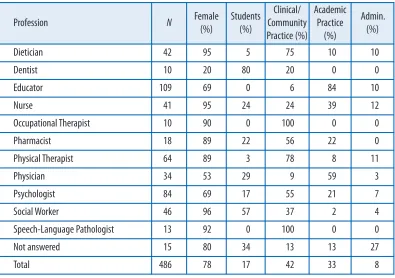
Responses were collected from 486 participants. The profession, gender and profes-sional/educational status of the participants are summarized in Table 1. Most par-ticipants were female and were professionals engaged in community/clinical practice or academic practice. Educators (elementary and high school teachers) pro-vided the most responses of any professional group. Students and/or professionals in academic practice accounted for a substantial proportion of dentists, nurses, physicians, and social workers. All of the speech-language pathologists and occupa-tional therapists were in clinical/community practice. Fifteen participants did not identify their profession.
Table 1
Participants’ profession, gender, and professional status
Most practicing professionals identified their work setting as health (50%) or edu-cation (40%). The remainder worked in forensic, social service, or research settings; residential treatment facilities; independent practice; or non-governmental organi-zations. Some participants worked in more than one setting. Most (78%) worked in cities with a population over 30,000. The remainder worked in smaller urban cen-ters (11%), rural settings (9%), or in northern Saskatchewan (2%).
Experience of IPC
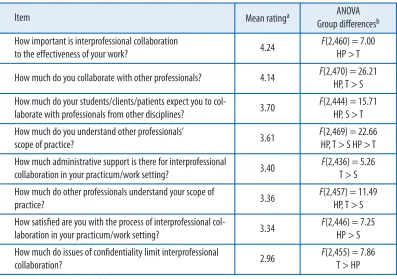
Table 2 summarizes, in rank order (i.e., from highest to lowest mean ratings), the eight items relating to participants’ experience of IPC. For simplicity, we report here
Journal of Research in
Interprofessional Practice and Education
Vol. 2.2 February, 2012 190
Interprofessional collaboration survey
Baerg, Lake, & Paslawski
Profession N Female
(%)
Students (%)
Clinical/ Community Practice (%)
Academic Practice
(%)
Admin. (%)
Dietician 42 95 5 75 10 10
Dentist 10 20 80 20 0 0
Educator 109 69 0 6 84 10
Nurse 41 95 24 24 39 12
Occupational Therapist 10 90 0 100 0 0
Pharmacist 18 89 22 56 22 0
Physical Therapist 64 89 3 78 8 11
Physician 34 53 29 9 59 3
Psychologist 84 69 17 55 21 7
Social Worker 46 96 57 37 2 4
Speech-Language Pathologist 13 92 0 100 0 0
Not answered 15 80 34 13 13 27
the percentage of participants who rated each item 4 (quite a lot) or 5 (consistently), excluding participants who chose 1 (not applicable). Most participants (84%) rated IPC as important to their work, but only 42% reported having administrative sup-port for IPC in their work/practicum setting, Z = -13.27, p < .01. Over half of respondents (56%) reported that their students/clients/patients expect them to col-laborate with professionals from other disciplines. While 75% reported that they collaborate with other professionals, only 40% were satisfied with the process of IPC, Z = -13.91, p < .01. The majority of respondents (55%) reported that they understand other professionals’ scope of practice, but fewer (36%) reported that their scope of practice is understood by other professionals, Z= -8.59, p< .01.
Table 2
Experience of interprofessional collaboration
Notes: a)These items had the following response options: 2 Not at all, 3 Somewhat, 4 Quite a Lot, 5 Consistently. Participants who chose 1 Not applicable were excluded from analyses. b) Groups were Health Professionals (HP), Teachers (T), and Students (S). All Fvalues and group differences were significant at p< .01.
Table 2 also shows the results of the one-way ANOVAs comparing 81 students, 109 teachers, and 286 health professionals on their experience of IPC. Compared with practicing professionals, students reported that they collaborate less, were less satis-fied with IPC, and had less administrative support for IPC. Students also gave lower ratings to items related to scope of practice (understanding others and being under-stood). Health professionals gave higher ratings than teachers to the importance of IPC and to understanding others’ scopes of practice. In contrast, teachers rated con-fidentiality as limiting IPC more than did health professionals. Finally, both
stu-Journal of Research in
Interprofessional Practice and Education
Vol. 2.2 February, 2012 191
Interprofessional collaboration survey
Baerg, Lake, & Paslawski
Item Mean ratinga ANOVA
Group differencesb
How important is interprofessional collaboration
to the effectiveness of your work? 4.24
F(2,460) = 7.00 HP > T
How much do you collaborate with other professionals? 4.14 F(2,470) = 26.21 HP, T > S
How much do your students/clients/patients expect you to
col-laborate with professionals from other disciplines? 3.70
F(2,444) = 15.71 HP, S > T
How much do you understand other professionals’
scope of practice? 3.61
F(2,469) = 22.66 HP, T > S HP > T
How much administrative support is there for interprofessional
collaboration in your practicum/work setting? 3.40
F(2,436) = 5.26 T > S
How much do other professionals understand your scope of
practice? 3.36
F(2,457) = 11.49 HP, T > S
How satisfied are you with the process of interprofessional
col-laboration in your practicum/work setting? 3.34
F(2,446) = 7.25 HP > S
How much do issues of confidentiality limit interprofessional
collaboration? 2.96
Journal of Research in
Interprofessional Practice and Education
Vol. 2.2 February, 2012 192
Interprofessional collaboration survey
Baerg, Lake, & Paslawski
dents and health professionals reported that students/clients/patients expect them to collaborate more than teachers.
Self-assessment of IPC knowledge and skills
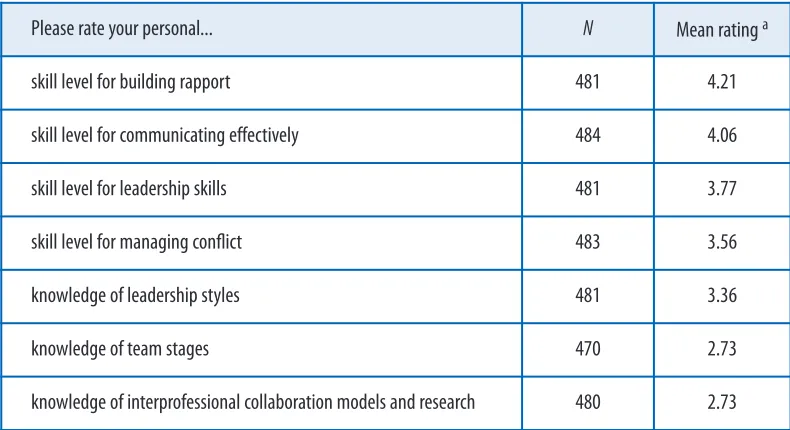
Table 3 shows, in rank order (i.e., from highest to lowest mean ratings), the seven items relating to participants’ self-assessment of their knowledge and skills. Participants generally rated their knowledge much lower than their skills. Half (50%) of the participants rated their knowledge for IPC models and research as poor, and 52% rated their knowledge of team stages as poor. Ratings of knowledge of leader-ship styles were higher than both knowledge of IPC models and research, Z= -12.83,
p< .01, and team stages, Z= -13.01, p< .01. The large majority of respondents rated their skills as good or excellent in terms of communicating effectively (83%) and building rapport (84%). Participants rated their skills for building rapport signifi-cantly higher than their communication skills, Z= -4.85, p< .01, which were rated significantly higher than leadership skills, Z= -9.45, p< .01. In turn, leadership skills were rated significantly higher than skills for managing conflict, Z= -6.08, p < .01.
Table 3
Self-assessment of collaboration knowledge and skills
Note: a) These items had the following response options: 2 Poor, 3 Satisfactory, 4 Good, 5 Excellent. Participants who chose 1 Not applicable were excluded from analyses.
Interestingly, students did not rate themselves differently from practicing profession-als on their knowledge or skills. One-way ANOVAs revealed only one significant dif-ference among these groups: teachers rated themselves higher on managing conflict compared with both health professionals and students, F(2, 470) = 8.36, p< .01.
Interest in IPC training
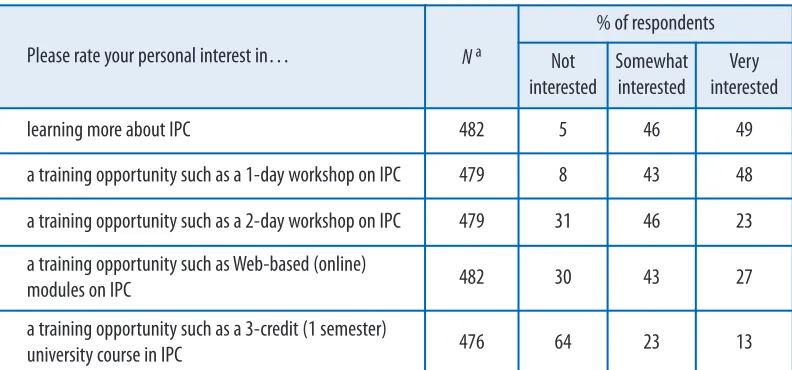
Table 4 shows the distribution of responses to five questions about interest in IPC
Please rate your personal... N Mean rating a
skill level for building rapport 481 4.21
skill level for communicating effectively 484 4.06
skill level for leadership skills 481 3.77
skill level for managing conflict 483 3.56
knowledge of leadership styles 481 3.36
knowledge of team stages 470 2.73
training. Almost all respondents were interested in learning more about IPC, and nearly half were very interested. Of the training opportunities listed, a one-day workshop was the most preferred option. The level of interest in a two-day work-shop or web-based learning modules was similar, with two-thirds of respondents showing significant interest in each of these options. Students had more interest than teachers in learning more about IPC, F(2, 469) = 5.55, p< .01, more interest than health professionals in a two-day workshop, F(2, 466) = 6.13, p < .01, and more interest in a 3-credit university course than both health professionals and teachers,
F(2, 463) = 25.64, p < .01.
Table 4
Interest in IPC training
Note: a) Participants who chose 1 Not applicable were excluded from analyses.
There were 77 responses to the open-ended question “If you are interested in other training opportunities, please identify and explain.” Many suggested specific train-ing topics (e.g., mediation and negotiation) and modes of delivery (e.g., booklets). A common theme that emerged was the need to be able to apply knowledge. For example, one participant proposed building a virtual community of practice online, and another suggested on-site training leading to application of techniques toward a specific goal, with a follow-up to determine the outcome of the process. Another commented that “while more training is nice, structural changes … [are] what is needed to move interdisciplinary collaboration forward.”
To explore how participants’ satisfaction, experience, and training interest in IPC were related to their self-assessed skills and knowledge, we calculated the Kendall’s tau-b coefficients of these variables, excluding those who chose the response 1 Not Applicable. Overall, participants’ satisfaction with IPC had small but significant pos-itive relationships with all of their self-rated knowledge and skills, ranging from 0.12 to 0.23, p< .01. In contrast, participants’ self-rated knowledge and skills were not significantly related to how much they collaborate with others or with their interest in further IPC training.
Journal of Research in
Interprofessional Practice and Education
Vol. 2.2 February, 2012 193
Interprofessional collaboration survey
Baerg, Lake, & Paslawski
Please rate your personal interest in… N a
% of respondents
Not interested
Somewhat interested
Very interested
learning more about IPC 482 5 46 49
a training opportunity such as a 1-day workshop on IPC 479 8 43 48
a training opportunity such as a 2-day workshop on IPC 479 31 46 23
a training opportunity such as Web-based (online)
modules on IPC 482 30 43 27
a training opportunity such as a 3-credit (1 semester)
Barriers to IPC training
Table 5 shows responses to four questions about barriers to participation in IPC training. Of the barriers to IPC training that were listed, time limitations ranked higher than financial limitations, Z= -4.97, p< .01, which ranked higher than travel limitations, Z = -7.16, p < .01. Teachers reported lack of administrative support as a barrier more than health professionals or students, F(2, 455) = 6.51, p < .01.
Table 5
Barriers to IPC training
Note:a) Participants who chose 1 Not applicable were excluded from analyses.
There were 110 responses to the question “What other factors would prevent you from learning more about interprofessional collaboration?” Many participants men-tioned scheduling conflicts, workload (e.g., waiting lists), and personal priorities (e.g., family obligations). Common themes were competition with other priorities for professional development, and the necessity for managers and co-workers to accept IPC concepts and be willing to apply what is learned in the workplace.
Skills and knowledge
Participants were asked to “Please list the skills and knowledge you believe are needed for good interprofessional collaboration.” There were 441 responses with a median length of 14 words and a range from 1 to 132 words, resulting in a total of 1758 coding units that were assigned to one or more codes. During this process of open coding, 27 separate codes were established. Other than 20 units that did not directly answer the question and were omitted from further analysis, all coding units were categorized in one of these 27 codes. All codes had frequencies of more than 17 units (>1% of the total), suggesting that saturation was achieved [13].
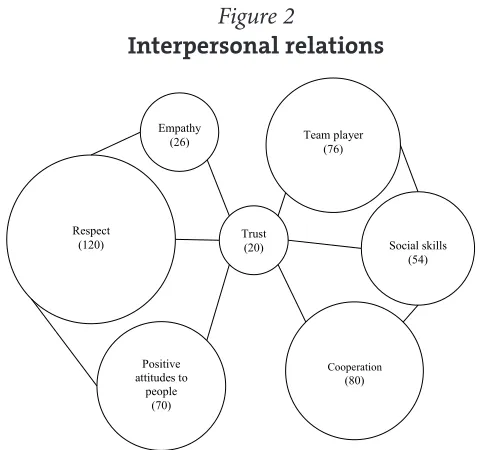
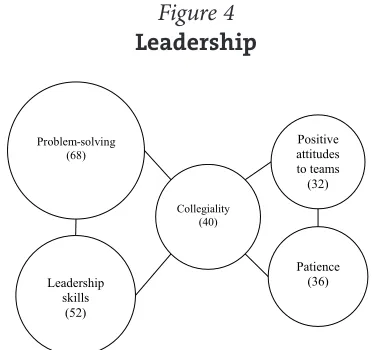
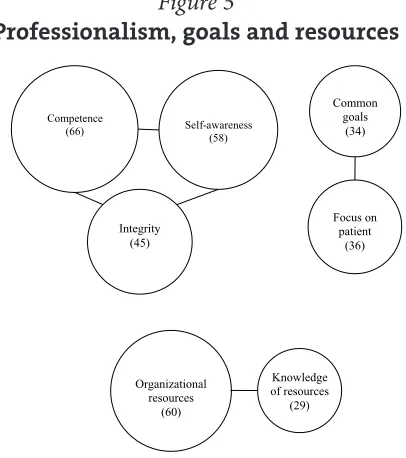
Visual representations of the seven networks of codes are shown in Figures 1 through 5. Each circle shows the number of coding units for that code, and its size is proportional to its frequency in the total sample. Connecting lines and positions of the circles in each network indicate our interpretation of the relationships between the concepts. Each network is presented below with explanations of the constituent codes (in italics).
Journal of Research in
Interprofessional Practice and Education
Vol. 2.2 February, 2012 194
Interprofessional collaboration survey
Baerg, Lake, & Paslawski
How much would… prevent you from learning more about IPC?
N a
% of respondents
Not
at all Somewhat
Quite
a lot Completely
a lack of administrative support 467 26 36 31 7
travel limitations 476 25 44 25 6
financial limitations 478 14 46 29 11
Figure 1
Communication skills
Network 1: Communication skills (Figure 1)
Communication was the single most frequent word in participants’ responses. Some participants noted that both oral and written communication skills are important. Listening is closely related to openness (being open to other viewpoints or different approaches, curiosity, willingness to learn). Sharing (being willing and able to com-municate one’s own ideas) is closely related to honesty (frankness). Within sharing, jargon was identified as something to be managed by developing common under-standings of technical terms.
Network 2: Interpersonal relations (Figure 2)
Respect was the most frequent word in this network. This concept is closely linked to empathy (compassion) and other positive attitudes to people (friendliness, gen-uine interest, appreciation, understanding, acceptance, encouragement). More active components of interpersonal relations, also related to respect, include being a team player (demonstrating a commitment, desire, willingness, and/or eagerness to collaborate), social skills (diplomacy, tact, developing rapport, being approach-able, humour, perceptiveness), and cooperation (working together, flexibility, adapt-ability). Trust can be seen as an outcome of the presence of these attitudes, skills, and behaviours in a group.
Journal of Research in
Interprofessional Practice and Education
Vol. 2.2 February, 2012 195
Interprofessional collaboration survey
Figure 2
Interpersonal relations
Network 3: Practice issues (Figure 3)
Participants frequently identified knowledge of other disciplines, their roles and practice, as important to IPC. Some expanded this concept to include awareness of the culture, training, and service delivery systems of other professionals. Understanding and communicating one’s own scope of practice is also part of this network. Participants noted the importance of establishing and respecting bound-aries, especially when professional roles overlap.
Figure 3
Practice Issues
Network 4: Leadership (Figure 4)
This network includes diverse problem-solving skills (conflict resolution, compro-mise, negotiation, creativity, critical thinking) and leadership skills (team building, goal setting, prioritizing, decision making, holding effective meetings, organiza-tional skills, time management). Leadership in IPC also requires positive attitudes to teams (positive attitudes toward collaborating with others, beliefs about the ben-efits and effectiveness of teams, understanding that no single profession has all the answers) and patience (understanding that collaboration is a process, that it takes time to work through difficulties). Bridging the skills and attitudes of leadership is
Journal of Research in
Interprofessional Practice and Education
Vol. 2.2 February, 2012 196
Interprofessional collaboration survey
Baerg, Lake, & Paslawski
# ! $
% !
& ' !
! ($ %
$
) *
+ ! ! &$
,
- . + /
+ !
&
. ! / !
$
the concept of collegiality (non-hierarchical relationships, participatory leadership, willingness to share control and accept help from others, awareness that all profes-sions are equally responsible for the outcome, awareness of group dynamics and power issues).
Figure 4
Leadership
Network 5: Professionalism (Figure 5)
Competence (a strong base of knowledge and skill in one’s own profession, includ-ing specialty knowledge, leadinclud-ing to credibility), self-awareness (understandinclud-ing one’s own skill set, strengths, and limitations), and integrity (professionalism, trustworthi-ness, dependability, emotional maturity, desire to serve, adherence to ethical princi-ples) emerged as codes grouped under professionalism. One participant succinctly expressed these features of professionalism as “confidence in one’s ability and knowl-edge balanced by humility and a willingness to admit to not knowing something.”
Network 6: Goals (Figure 5)
Participants identified the need for common goals (focus, vision, objectives). Within healthcare, the concept of focus on the patient includes patient-centered or holistic approaches, or a bio-psycho-socio-cultural perspective. Participants also noted that focusing on patient-centered care helps avoid turf protection and budget shuffling.
Network 7: Resources (Figure 5)
Organizational resources include opportunities to interact, allocating time, coordi-nating schedules, funding support, and efficient communication methods. Knowledge of resources includes knowledge of the community, paradigms of prac-tice, systems, and funding sources.
Because educators comprised over 20% of the sample and may have a different point of view than those working in traditional healthcare settings, we compared their responses with those of healthcare professionals. Specifically, we compared the frequency of each code as a percentage of the total coded units for each group. Educators had higher frequencies than healthcare professionals for the following codes: attitudes to people, cooperation, empathy, listening, sharing, and resources.
Journal of Research in
Interprofessional Practice and Education
Vol. 2.2 February, 2012 197
Interprofessional collaboration survey
Baerg, Lake, & Paslawski
) 1 2 * (
+ !
) *
+
Educators had lower frequencies than healthcare professionals for knowledge of other disciplines, respect, self-awareness, and own scope of practice. As might be expected, none of the educators mentioned focus on the patient, but they were more likely than healthcare professionals to identify common goals in more general terms.
Additional comments
Participants provided 77 additional comments, many of them lengthy, about IPC and/or the survey process itself. The most common theme was the importance of IPC in healthcare and other settings. A few participants noted that IPC takes more than “cheerleaders” or “credit courses”; it needs to be “nurtured and supported in the workplace at all levels of management.”
Discussion
This study has the typical limitations of survey research. To begin with, participants’ responses may not be valid indicators of their actual feelings, beliefs, and actions. In addition, our participants were self-selected and therefore more likely to be inter-ested in issues related to IPC than the general population. Furthermore, Saskatchewan has a distributed healthcare delivery system, with nurses providing primary care in remote communities and a strong history of clinical-school-com-munity collaboration [14]. As a result, Saskatchewan students and professionals may differ from those in other parts of the world. Finally, although our survey items have face validity, further research would be needed to establish content and con-current validity of our survey.
Although we were not able to report an overall response rate, the aim of the sur-vey was to reach individuals that could possibly participate in web-based IPC train-ing to determine their needs and interest. Recruitment techniques varied by profession, and the role of the current work setting or environment was not
Journal of Research in
Interprofessional Practice and Education
Vol. 2.2 February, 2012 198
Interprofessional collaboration survey
Baerg, Lake, & Paslawski
/2 . ( !
" ,
,
!
4
$
- . + /
Figure 5
explored. Replication of our study using systematic survey techniques may be ben-eficial. As well, further exploration of the core skills and knowledge for IPC using a grounded-theory approach may be warranted.
Bringing people together does not necessarily result in collaboration [15,16]. The participants in this survey reported that IPC is important, expected, and fre-quent but that the experience is not always satisfying or supported by administra-tion. Overall, health professionals and teachers reported similar experiences, skills, knowledge, and training interest. The few differences that emerged may be due to differences in professional training, workplace expectations and resources, as well as limits to confidentiality across organizational boundaries. Generally, participants lacked training in formal models governing IPC and research in the area. Lack of agreement regarding best practices for training and practicing IPC may be a factor.
Collectively, our participants identified the same key elements of IPC that have been reported in the literature [2,5,17]. Networks of communication skills, interper-sonal relations, practice issues, leadership, professionalism, goals, and resources emerged from qualitative analysis of our participants’ responses. The visual repre-sentations of these networks may be useful for developing theoretical models, research, training, and organizational intervention.
Our participants were clearly interested in more training in IPC. Using partici-pants’ self-assessments as a guide, training needs include knowledge of IPC models and research, team stages, leadership theory, and conflict management. Participants rated their skills higher than their knowledge, a phenomenon consistent with the observations reported by Pollard and colleagues [18]. Self-assessments of skills in communication and building rapport were very high for both students and practic-ing professionals. This suggests that students and professionals may not be open to training in these areas despite evidence that improving communication and inter-personal skills can have a significant positive effect on IPC [19,20].
Participants’ self-ratings of their knowledge (IPC models and research, team stages, leadership styles) and skills (communicating effectively, building rapport, and managing conflict) were positively correlated with their satisfaction with IPC. We argue that these are real relationships and not just a halo effect, since self-ratings of knowledge and skills were not related to how much participants collaborated with others or how interested they were in further training. Perhaps individuals with more knowledge and skill have a better appreciation of the complexity of IPC, resulting in more patience and/or different expectations. Alternatively, individuals with more knowledge and skill may influence the process of IPC to be more effec-tive and satisfying for all involved. Further research using more objeceffec-tive measures of skill and knowledge is needed to explore this relationship.
Interest in further training was high despite competing interests, lack of admin-istrative support, and time constraints. The importance of applicability of training and follow-through in the workplace was noted. Given the variable responses, we conclude that training formats (e.g., workshop, class for credit, or online training) and content must be adapted to the participants.
Journal of Research in
Interprofessional Practice and Education
Vol. 2.2 February, 2012 199
Interprofessional collaboration survey
Conclusions
Participants reported engaging in IPC often, but with a relatively low level of satis-faction. Both personal and organizational factors were implicated. Survey results indicated a high level of interest in training for IPC among Saskatchewan profes-sionals and students, especially for short-term experiences such as workshops and web-based modules.
Intra/interpersonal, organizational, and systemic factors impact the success of IPC. Continuing professional learning typically targets the intra/interpersonal level. Training should provide knowledge about IPC models and research, leadership styles, team stages, and conflict management while also ensuring that it applies to the workplace or practicum placement. Efforts should be made to promote aware-ness of the need for training in areas in which trainees already feel competent (e.g., communication) and to focus on specific strategies for the implementation of IPC. Areas of interest for future study include clarification of similarities and differences between health and education professionals regarding IPC training and workplace culture, clarification of motivational factors for training in IPC, and key organiza-tional factors that promote IPC. Elaboration and refinement of the networks of related concepts and factors identified in this study may also prove a useful tool for IPC theory development, as well as for understanding and training in IPC.
Acknowledgements
We thank Randy Duncan for his help with putting the survey online and Ellen Quigley for her work on qualitative data analysis. Carl von Baeyer kindly provided comments on earlier versions of the manuscript. We also acknowledge the funding support for this project provided by Saskatchewan’s Patient-Centred Interprofessional Team Experiences (P-CITE) Project through Health Canada.
Abbreviations
IPC: Interprofessional collaboration IPE: Interprofessional education
References
1. Benbassat, J., & Baumal, R. (2009). A proposal for overcoming problems in teaching interviewing skills to medical students. Advances in Health Sciences Education, 14(3), 441-450.
2. Verma, S., Broers, T., Paterson, M., Schroder, C., Medves, J.M., & Morrison, C. (2009). Core com-petencies: The next generation comparison of a common framework for multiple professions. Journal of Allied Health, 38(1), 47-53.
3. Zwarenstein, M., Goldman, J., & Reeves, S. (2009). Interprofessional collaboration: Effects of prac-tice-based interventions on professional practice and healthcare outcomes. Cochrane Database of Systematic Review, Jul 8(3), CD000072.
4. Reeves, S., Zwarenstein, M., Goldman, J., Barr, H., Freeth, D., Hammick, M., & Koppel, I. (2009). Interprofessional education: Effects on professional practice and health care outcomes. Cochrane Database of Systematic Reviews, Jan 23(1), CD002213.
5. Suter, E., Arndt, J., Arthur, N., Parboosingh, J., Taylor, E., & Deutschlander, S. (2009). Role under-standing and effective communication as core competencies for collaborative practice. Journal of Interprofessional Care, 23(1), 41-51.
Journal of Research in
Interprofessional Practice and Education
Vol. 2.2 February, 2012 200
Interprofessional collaboration survey
6. McMahon, T.J., Ward, N.L., Kline Pruett, M., Davidson, L., & Griffith, E.E.H. (2000). Building full-service schools: Lessons learned in the development of interagency collaboratives. Journal of Educational and Psychological Consultation, 11(1), 65-92.
7. Brown, M.B., & Bolen, L.M. (2003). Introduction to the special issue: School-based health centers. Psychology in the Schools, 40(3), 245-251.
8. Abrams, L.S., & Gibbs, J.T. (2007). Planning for school change: School-community collaboration in a full-service elementary school. Urban Education, 35(1), 79-103.
9. Merriam, S.B., Caffarella, R.S., & Baumgartner, L.M. (2007). Learning in adulthood: A comprehen-sive guide, 3rd edition. Hoboken, NJ: John Wiley & Sons Inc.
10. Clay, M.C., Hardee Lilley, S., Borre, K., & Harris, J.R. (1999). Applying adult education principles to the design of a preceptor development program. Journal of Interprofessional Care, 13(4), 405-415.
11. Kronick, R.F. (2000). Human services and the full service school: The need for collaboration. Springfield, IL: Charles C. Thomas.
12. Strauss, A.C., & Corbin, J. (1990). Basics of qualitative research: Grounded theory procedures and techniques, 2nd edition. Newbury Park, CA: Sage Publications.
13. Bowen, G.A. (2008). Naturalistic inquiry and the saturation concept: A research note. Qualitative Research, 8, 137-152.
14. Tymchak, M. (2001). SchoolPLUS: A vision for children and youth. Final report of the role of the School Task Force and public dialogue. Regina, SK: University of Regina, Faculty of Education, Saskatchewan Instructional Development & Research Unit. URL: http://www.education.gov .sk.ca/SchoolPLUS [September 11, 2010].
15. Katzenbach, J.R., & Smith, D.K. (1993). The discipline of teams. Harvard Business Review, 71(2), 111-120.
16. Newton, P.M. (2004). Planning for spontaneity: Jazz improvisation in leadership preparation. International Journal of Leadership in Education, 7(1), 83-99.
17. D’Amour, D., FerradaVidela, M., Rodriguez, L.S.M., & Beaulieu, M. (2005). The conceptual basis for interprofessional collaboration: Core concepts and theoretical frameworks. Journal of Interprofessional Care, 19(S1), 116-131.
18. Pollard, K., Miers, M.E., & Gilchrist, M. (2005). Second year scepticism: Pre-qualifying health and social care students’ midpoint self-assessment, attitudes and perceptions concerning interpro-fessional learning and working. Journal of Interprofessional Care, 19(3), 251-268.
19. Atkinson, M., Doherty, P., & Kinder, K. (2005). Multi-agency working. Models, challenges and key factors for success. Journal of Early Childhood Research, 3(1), 7-17.
20. Salmon, G. (2004). Multi-agency collaboration: The challenges for CAMHS. Child and Adolescent Mental Health, 9(4), 156-161.
Journal of Research in
Interprofessional Practice and Education
Vol. 2.2 February, 2012 201
Interprofessional collaboration survey
Appendix A
Interprofessional Collaboration Survey
1. Professional/Educational status:
Professional in community/clinical practice Professional in administration
Professional in academic practice/setting Student
2. Profession: Dietitian RN/RPN
Occupational Therapist Pharmacist
Physical Therapist Medical Doctor Psychologist Social Worker
Speech-Language Pathologist Teacher
Dentist 3. Gender:
Male Female 4. Work setting:
Education Forensic Health
Independent Practice Social Service
Other
4a. If you answered “other” to the previous question, please specify your work setting.
5. What best describes your work setting? Urban, > 30,000
Urban, <30,000 Rural
Northern
(Note: Participants who selected “student” for item 1 did not complete items 4 & 5)
6. How much do you collaborate with other professionals? Not at all
Somewhat Quite a lot Consistently
Journal of Research in
Interprofessional Practice and Education
Vol. 2.2 February, 2012 202
Interprofessional collaboration survey
For items 7 through 14 (except item 9) the options were: Not applicable
Not at all Somewhat Quite a lot Consistently
7. How much do other professionals understand the scope of your practice? 8. How much do you understand other professionals’ scope of practice?
9. Please list the skills and knowledge you believe are needed for good interpro-fessional collaboration.
10. How much do issues of confidentiality limit interprofessional collaboration? 11. How important is interprofessional collaboration to the effectiveness of your
work?
12. How much administrative support is there for interprofessional collabora-tion in your practicum/work setting?
13. How much do your students/clients/patients expect you to collaborate with professionals from other disciplines?
14. How satisfied are you with the process of interprofessional collaboration in your practicum/work setting?
For items 15 through 21 the options were: Not applicable
Poor Satisfactory Good Excellent
15. Please rate your personal knowledge of interprofessional collaboration mod-els and research.
16. Please rate your personal knowledge of team stages. 17. Please rate your personal knowledge of leadership styles.
18. Please rate your personal skill level for communicating effectively. 19. Please rate your personal skill level for building rapport.
20. Please rate your personal skill level for leadership skills. 21. Please rate your personal skill level for managing conflict.
For items 22 through 26 the options were: Not applicable
Not interested Somewhat interested Very interested
22. Please rate your personal interest for learning more about interprofessional collaboration.
23. My interest in a training opportunity such as a 1-day workshop on interpro-fessional collaboration would be:
Journal of Research in
Interprofessional Practice and Education
Vol. 2.2 February, 2012 203
Interprofessional collaboration survey
24. My interest in a training opportunity such as a two-day workshop on inter-professional collaboration would be:
25. My interest in a training opportunity such as Web-based (online) modules on interprofessional collaboration would be:
26. My interest in a training opportunity such as a 3-credit (one semester) uni-versity course on interprofessional collaboration would be:
27. If you are interested in other training opportunities, please identify and explain.
For items 28 through 31 the options were: Not applicable
Not at all Somewhat Quite a lot Completely
28. How much would a lack of administrative support prevent you from learn-ing more about interprofessional collaboration?
29. How much would travel limitations prevent you from learning more about interprofessional collaboration?
30. How much would financial limitations prevent you from learning more about interprofessional collaboration?
31. How much would time limitations prevent you from learning more about interprofessional collaboration?
32. What other factors would prevent you from learning more about interprofes-sional collaboration?
33. Please provide any additional comments about interprofessional collabora-tion and/or the survey process itself.
Journal of Research in
Interprofessional Practice and Education
Vol. 2.2 February, 2012 204
Interprofessional collaboration survey