R E S E A R C H
Open Access
Metabolic engineering of the fungal
D-galacturonate pathway for L-ascorbic
acid production
Joosu Kuivanen
*, Merja Penttilä and Peter Richard
Abstract
Background:Synthetic L-ascorbic acid (vitamin C) is widely used as a preservative and nutrient in food and pharmaceutical industries. In the current production method, D-glucose is converted to L-ascorbic acid via several biochemical and chemical steps. The main source of L-ascorbic acid in human nutrition is plants. Several alternative metabolic pathways for L-ascorbic acid biosynthesis are known in plants. In one of them, D-galacturonic acid is the precursor. D-Galacturonic acid is also the main monomer in pectin, a plant cell wall polysaccharide. Pectin is abundant in biomass and is readily available from several waste streams from fruit and sugar processing industries.
Results:In the present work, we engineered the filamentous fungusAspergillus nigerfor the conversion of
D-galacturonic acid to L-ascorbic acid. In the generated pathway, the native D-galacturonate reductase activity was utilized while the gene coding for the second enzyme in the fungal D-galacturonic acid pathway, an L-galactonate consuming dehydratase, was deleted. Two heterologous genes coding for enzymes from the plant L-ascorbic acid pathway–L-galactono-1,4-lactone lactonase fromEuglena gracilis(EgALase) and L-galactono-1,4-lactone dehydrogenase fromMalpighia glabra(MgGALDH)–were introduced into theA. nigerstrain. Alternatively, an
unspecific L-gulono-1,4-lactone lactonase (smp30) from the animal L-ascorbic acid pathway was introduced in
the fungal strain instead of the plant L-galactono-1,4-lactone lactonase. In addition, a strain with the production pathway inducible with D-galacturonic acid was generated by using a bidirectional and D-galacturonic acid inducible promoter from the fungus. Even though, the lactonase enzyme activity was not observed in the resulting strains, they were capable of producing L-ascorbic acid from pure D-galacturonic acid or pectin-rich biomass in a consolidated bioprocess. Product titers up to 170 mg/l were achieved.
Conclusions:In the current study, an L-ascorbic acid pathway using D-galacturonic acid as a precursor was introduced to a microorganism for the first time. This is also the first report on an engineered filamentous fungus for L-ascorbic acid production and a proof-of-concept of consolidated bioprocess for the production.
Keywords:L-ascorbic acid, D-galacturonic acid, L-galactonic acid, Citrus peel,Aspergillus niger, Metabolic engineering
Background
L-Ascorbic acid (L-AA), also known as vitamin C, is a six-carbon organic compound with reducing agent prop-erties. It occurs naturally in many animal and plant cells having biological functions, such as being an antioxidant and enzyme cofactor [1,2]. Synthetic L-AA is commer-cially used for several purposes in food, beverage, feed
and pharmaceutical industries. The annual production of synthetic L-AA is about 110 000 tonnes with the fluc-tuating market price of about 10 USD per kg [3].
Industrial L-AA production has been traditionally based on the Reichstein process which is an efficient multi-step and mostly chemical manufacturing method converting D-glucose to L-AA [4]. In the first step, D-glucose is hy-drogenated to sorbitol followed by the oxidation of D-sorbitol to L-sorbose that is commonly carried out using a bacterial fermentation [3]. The resulting L-sorbose is then chemically oxidized to 2-keto-L-gulonate and lactonized * Correspondence:[email protected]
VTT Technical Research Centre of Finland, PO Box 1000, 02044 VTT Espoo, Finland
to L-AA. Other proposed and reported biotechnological steps have focused on the microbial conversion of D-sorbitol, L-sorbose or D-glucose to 2-keto-L-gulonic acid that is the last intermediate in the Reichstein process [5]. Currently, the predominant industrial process for L-AA production is a so called two-step fermentation process [3]. In the first step, D-sorbitol is oxidized to L-sorbose usingGluconobacter oxydans. The second step is a mixed fermentation withKetogulonicigenium vulgare and Bacil-lus megaterium, converting L-sorbose to 2-keto-L-gulonic acid which is then chemically converted to L-AA.
In addition to the partially biotechnological processes, some approaches using wild type or engineered microbes for the direct L-AA production have been reported in the literature. A one-step process from biomass sugar to L-AA would be advantageous when compared to the cur-rently used two-step fermentation process. Yeast have a native biosynthetic pathway for D-erythroascorbic acid (D-EA), a 5-carbon analogue of L-AA, where D-arabinose is converted to D-EA via D-arabino-1,4-lactone [6]. The D-EA pathway seems to be relatively unspecific converting also L-galactose and L-galactono-1,4-lactone (L-galL) to AA [7,8]. The reactions are similar to the reactions of L-AA synthesis in plants via the Smirnoff-Wheeler (S-W) pathway. In addition to yeast, a strain ofK. vulgare, the bacterium that is used in the two-step fermentation process, is capable of converting D-sorbitol, sorbose, L-sorbosone and L-gulose directly to L-AA [9]. Also several strains of algae producing small concentrations of extra-cellular L-AA have been reported in the literature [10].
In the field of metabolic engineering, there are a few at-tempts to introduce the plant S-W pathway to yeast either by overexpressing the native substrate-unspecific D-EA pathway genes or expressing the S-W pathway genes from
Arabidopsis thaliana. The resulting strains were capable of converting L-galactose, D-glucose and D-galactose to L-AA [11-13]. The product titers were reported to be about 100 mg l−1from L-galactose [11], 0.1 mg l−1OD−1 from D-glucose [12] and 30 mg l−1from D-galactose [13].
In plants, L-AA is considered to be synthesized pre-dominantly through the S-W pathway where D-glucose is converted via GPD-D-mannose and galactose to L-galL which is oxidized to L-AA in the final step by the L-galL dehydrogenase (GALDH) [14]. In addition to S-W, a few alternative pathways for L-AA synthesis have been observed in plants. One of them originates from D-galacturonic acid (D-galUA) which is reduced to galactonic acid (galA) and further lactonized to L-galL, which is the last intermediate in the S-W pathway [1]. Even though the function of a D-galUA reductase for L-AA biosynthesis was shown in higher plants [15], the evidence of the pathway converting D-galUA to L-AA is still incomplete –the gene coding for an L-galL aldonolactonase (ALase) catalysing the lactonization of
L-galA to L-galL has been described only in the photo-synthetic organism Euglina gracilis [16]. This activity was however found in animals as part of the biosyn-thetic L-AA pathway. In the animal pathway, L-gulonic acid is lactonized to its corresponding 1,4-lactone by an ALase that is encoded by the smp30gene. The enzyme is unspecific and can also catalyse the lactonization of L-galA [17].
In the present study, instead of using the plant S-W pathway for L-AA synthesis, we have focused on the alter-native pathway converting D-galUA to L-AA. D-GalUA is the main monomer in pectin, a heteropolysaccharide found from plant cell walls, which is especially abundant in some non-woody biomass types, such as citrus fruit peels and sugar beet pulp. Both of these materials are abundantly available as agro-industrial side streams. The enzymes for degradation of pectin to D-galUA the cata-bolic pathways for its utilization are known in many mi-crobial organisms. In fungi, such as Aspergillus niger, the pathway for D-galUA catabolism is reductive having a similar reduction step from D-galUA to L-galA as in the L-AA synthesis pathway originating from D-galUA in plants (Figure 1) [18]. Previously, we reported engineered
A. niger strains capable of converting pure D-galUA and citrus processing waste (CPW) to L-galA that can be chemically converted to L-AA [19,20]. In the present study, we have engineeredA. nigerstrains that are capable of direct production of L-AA from D-galUA and CPW.
Results
Pathway assembly and transcription
The fungal catabolic D-galUA pathway and the proposed D-galUA originating biosynthetic L-AA pathway in plants share the same reduction step yielding L-galA in the first reaction (Figure 1). Thus, the A. nigerstrainΔgaaBwith the disrupted L-galA dehydratase gene, which is known to accumulate L-galA, was used as a platform strain. In addition, two heterologous genes from the plant or animal L-AA pathway, an ALase and a GALDH, were introduced to the strain. Several differentA. nigerΔgaaBbased strains with an ALase (EgALase or smp30) and a GALDH (MgGALDH) or only the GALDH were generated and tested (Table 1). TheMgGALDHgene that was used con-tained its native mitochondrial signal peptide region at the beginning of the ORF. In addition, a constitutive (PgpdA) and a D-galUA inducible (PgaaA/C) promoter were compared.
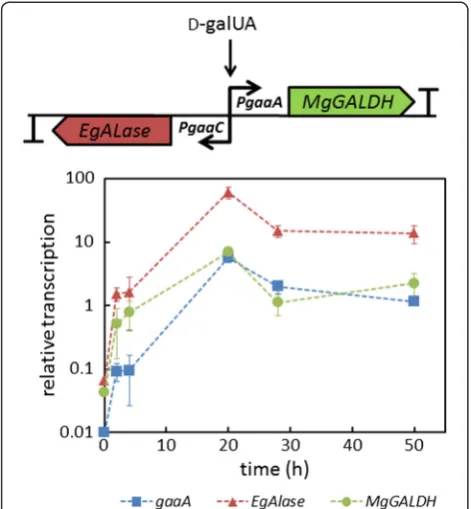
D-galUA inducible transcription ofEgALaseandMgGALDH
from the gaaA/C promoter was tested using RT-qPCR (Figure 2). The transcription of both of the heterologous genes was clearly induced at 20 hours after the shift to D-galUA containing medium. The pattern of MgGALDH
transcription was similar to the transcription of the native
gaaAgene, which was expected sinceMgGALDHwas ori-entated in the same way behind the bidirectionalgaaA/C
promoter as the gaaAgene is. The transcription of EgA-Lasewas higher when compared togaaAandMgGALDH
after the D-galUA induction. A similar observation was reported earlier in the case of nativegaaCgene (2-keto-3-deoxy-L-galactonate aldolase) which had a higher tran-scription when compared to gaaA growing in D-galUA medium [21].EgALase had the same orientation atgaaA/ Cpromoter asgaaCgene in the wild type strain.
Enzyme activities
Enzyme activities of the introduced L-AA pathway genes were measured from crude extracts. The GALDH activ-ity assay was based on the measurement of reduced cytochrome C as a result from oxidation of L-galL. The activity was tested from the parental strain ΔgaaB and from the further engineered strains that were cultured 20 h in the medium supplemented with 20 g l−1 D-galUA and 5 g l−1 D-xylose (Figure 3). All the strains with MgGALDH under the constitutive gpdApromoter showed the activity for L-galL while only residual activ-ity was found from the parental strain ΔgaaB. In the case ofΔgaaB-Eg-Mg(PgaaA/C) strain, the GALDH ac-tivity was lower; however, it was still significantly higher if compared to the values from ΔgaaB (P < 0.05, Stu-dent’st-test).
Figure 1Schematic figure of the disrupted fungal D-galUA pathway and the heterologous pathway introduced inA. nigerfor L-AA biosynthesis: native GaaA (D-galUA reductase), native GaaB (L-galA dehydratase), EgALase (L-galL aldonolactonase fromEuglena gracilis), Smp30 (aldonolactonase from rat functioning in the animal L-AA pathway) and MgGALDH (L-galL dehydrogenase from Malpighia glabra).
Table 1 Plasmids andA. nigerstrains used in this work
Plasmid Genes expressed Promoter
JKp1-EgALase The codon optimizedEuglina gracilisAlase (EgALase) [GenBank: AB306917]
gpdA
JKp1-Smp30 The codon optimized ratSmp30[GenBank: CAA48786] gpdA
JKp1-MgGALDH The codon optimizedMalpighia glabraGALDH (MgGALDH) [GenBank: ACG75919] ORF
gpdA
Bidir-EgALase-MgGALDH EgALaseandMgGALDH gaaA/C
Strain Genes expressed Description
ΔgaaB none ATCC 1015 with the deleted L-GalA dehydratase gene gaaB
ΔgaaB-Mg MgGALDH ΔgaaBwithMgGALDHexpressed undergpdApromoter
ΔgaaB-Eg-Mg(PgpdA) EgALaseandMgGALDH ΔgaaBwithEgALaseandMgGALDH, both expressed undergpdApromoter
ΔgaaB-Smp30-Mg Smp30andMgGALDH ΔgaaBwithSmp30andMgGALDH, both expressed undergpdApromoter
In the lactonization of L-galA to L-galL, which is cata-lysed by an ALase, protons are absorbed in an equimolar manner increasing the pH in the reaction. The relation between absorption at 405 nm and proton concentration was quantified being ΔA405= 0.003 per 10 μM of pro-tons which should provide high enough sensitivity for the ALase assay. We tested all the engineered strains for
ALase activity in the presence of L-galA; however, we could not detect this activity.
Production of L-AA
The parental strain ΔgaaB and the different engineered strains were tested for L-AA production even though the lactonase activities were not detectable. We used flask cultures on defined medium supplemented with D-galUA and D-xylose and with the initial pH adjusted to 3.0. With the strainΔgaaBonly L-AA concentrations of below 3.5 mg l−1were observed in the cultures (Figure 4). All the engineered strains having MgGALDH under
gpdAorgaaA/Cpromoter produced L-AA at concentra-tions of around 55–83 mg l−1. Also the strainΔgaaB-Mg
without an ALase produced similar L-AA concentrations as the strainΔgaaB-Eg-Mg(PgpdA) with the introduced
EgALasegene. In fact, the L-AA production corresponds to the GALDH activity in the strains havingMgGALDH
underPgpdA(Figure 3). The clearest difference between the engineered strains was the timing of the highest L-AA concentration in the medium –all the strains with
MgGALDH under gpdApromoter had the highest titer at 48 h whereasΔgaaB-Eg-Mg(PgaaA/C) had the high-est titer at 96 h. The decreasing L-AA concentrations during the time course may be due to the instability of the product causing by the exposure to air. In addition, the production turned out to be pH dependent since L-AA production was not observed when the initial pH was 5.0 (data not shown).
Even though, D-xylose was used as a co-substrate, one of the reasons for limited L-AA production may be the lack of NADPH for the D-galUA reductase gaaAin the first reaction in the pathway. In addition, energy and carbon sources are needed for the expression of heterol-ogous L-AA pathway genes. To overcome these possible
Figure 2The D-galUA inducible expression cassette and relative transcription ofgaaA(blue squares),EgALase(red triangles) and
MgGALDH(green circles) in the strainΔgaaB-Eg-Mg(PgaaA/C) after the shift from pre-cultures to medium supplemented with D-galUA and D-xylose.Values were normalized to the expression of actin. Error bars represent ± SEM (n = 3).
Figure 3GALDH activity for L-galL from the crude extracts of ΔgaaB,ΔgaaB-MgΔgaaB-Eg-Mg(PgpdA),ΔgaaB-Eg-Mg(PgaaA/C) andΔgaaB-Smp30-Mgcultured in minimal medium
supplemented with D-galUA and D-xylose for 20 h.All of the values from the strains with introducedMgGALDHdiffered significantly from the value fromΔgaaB(P < 0.05, Student’st-test). Error bars represent ± SEM (n = 3).
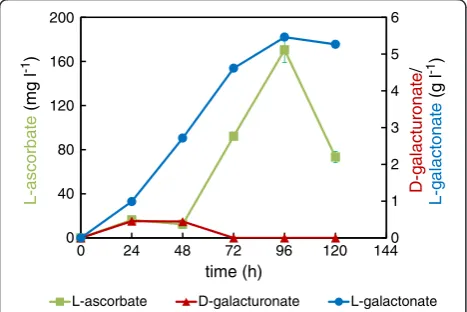
Figure 4L-Ascorbate production by engineeredA. nigerstrains in minimal medium supplemented with D-galUA and D-xylose.
limitations and to test L-AA production from a pectin-rich residue, we used CPW as substrate containing a complex mix of different sugars and sugar acids in the form of polysaccharides. We decided to use ΔgaaB-Eg
-Mg(PgaaA/C) strain in order to avoid unnecessary and energy wasting expression of the heterologous genes at the beginning of fermentation when free D-galUA is not yet available. In addition, we used higher fungal biomass in the inoculation in order to ensure CPW hydrolysis and speed up the process. L-AA production from CPW turned out to be more efficient than in defined media conditions with respect to the final concentrations (Figure 5). A lag phase of about 48 h was observed before the production started at a higher rate, which is probably due to rather slow pectin hydrolysis to D-galUA and utilization of the more preferred carbon sources, such as D-glucose present in CPW. The D-galUA content in CPW that was prepared as the CPW used in this study was reported to be 27% on a dry mass basis [20]. Other detected main components after pectinase hydrolysis were L-arabinose, D-galactose, D-glucose and L-rhamnose. Even though, L-AA produc-tion started later than when compared to the defined con-ditions with the ΔgaaB-Eg-Mg (PgaaA/C) strain the highest titer (around 170 mg l−1) was achieved at 96 h as was the case of the cultures in the defined conditions. As in the case of defined conditions, a decrease in L-AA con-centration was observed after 96 h probably due to the in-stability of the product. The CPW used as a substrate did not contain detectable amounts of L-AA. In the control fermentations with the parental strain ΔgaaB, the ob-served L-AA concentrations were below 15 mg l−1.
Discussion
Synthetic L-AA is a widely used compound in several in-dustries. Currently it is produced in a multistep process
including chemical and biochemical steps. This study is the first report on an engineered filamentous fungus for direct L-AA production. To the best of our knowledge, the L-AA titer of 170 mg l−1 that was achieved in this work is the highest among engineered fungal strains. In addition, the pathway for L-AA biosynthesis originating from D-galUA was for the first time introduced to a heter-ologous host. In the previous literature, L-AA production was reported to be achievable from D-glucuronic acid and D-galUA using wild type strains ofA. niger[22] or yeast [23]. However, the detection method for L-AA that was used in these studies (2,6-dichlorophenolindophenol method) could not distinguish between L-AA and other similar compounds, such as D-EA [24].
We decided to use the GALDH fromM. glabra (acer-ola), which is known for its vitamin C rich fruits, includ-ing the native N-terminal mitochondrial signal peptide. The kinetic parameters of MgGALDH are not known but the expression level of MgGALDH is known to be higher inM. glabratissue when compared to the corre-sponding GALDH gene (AtGALDH) expression in Ara-bidopsis thaliana [25]. AtGALDH gene codes for a protein having 75.25% homology with MgGALDH and kinetic parameters of Km 0.17 mM and kcat 134 s−1for L-galL [26]. We have also tested the expression of
AtGALDH gene in the A. niger ΔgaaB strain, however, L-AA was not observed in the resulting strains (data not shown). In plants, the GALDH locates on the inner membrane of mitochondria binding non-covalently FAD as a cofactor [26]. During the oxidation of galL to L-AA, electrons are shuttled to cytochrome c and further to the electron transport chain. The recombinant AtGALDH without mitochondrial targeting signal has been produced in E. coli as a cytoplasmic protein [26]. The resulting enzyme was active with L-galL when cyto-chrome c was added to the reaction mixture. However, in a living cell the functionality of a GALDH is probably dependent on its correct localization enabling interaction with mitochondrial cytochrome c. Thus it is crucial that the mitochondrial targeting signal in a plant GALDH is also functional inA. niger. Mitochondrial inner membrane proteins are most often targeted to their location by an N-terminal cleavable peptide [27]. The targeting peptide is typically positively charged among different organisms. However, in yeast, mitochondrial signal peptides are gen-erally shorter, less alpha-helix forming and less hydropho-bic when compared with the plant signal peptides [27]. The cleavage site for the signal peptides seem to be rela-tively conserved between yeast and plants consisting of tyrosine, leucine, phenylalanine and arginine residues [27]. In the case of AtGALDHand MgGALDH, the estimated signal peptides differ being 102 and 84 residues long, re-spectively [28]. The shorter signal peptide in MgGALDH
may be more suitable for mitochondrial targeting in A.
niger, however, the localization of MgGALDH in the engi-neeredA. nigerstrains was not investigated in this study.
Despite several attempts, the ALase activity for L-galL could not be detected from any ofEgALaseorsmp30 ex-pressing strains. In addition toA. niger strains, we have also tried to express both of the ALases in yeast or
E. coli strains, however, without detectable activity. The lactonase assay that was used in this work is based on a pH change and a pH indicator in the reaction mixture. The assay should provide high enough sensitivity for the activity and it has been routinely and successfully used in many studies. Consequently, the most likely explana-tions for the non-detectable ALase activity are inactivity of the protein in heterologous hosts or inactivation during cell disruption. In the literature, EgALase was produced at low temperature (15°C) in an E. coli strain co-expressing the Trigger Factor chaperone protein [16]. In the case of Smp30 from animal L-AA pathway, the recombinant pro-tein was produced inE. colico-expressing two chaperones GroEL and GroES [17]. In addition, it has been reported that production of human Smp30 protein inE. coli with-out chaperones led up to the insoluble and inactive pro-teins and formation of inclusion bodies [29,30]. Thus poor folding of the ALase proteins in a heterologous host is a possible explanation for the unsuccessful expression.
Regardless of the non-detectable ALase activity, sev-eralA. nigerstrains with a functional GALDH were cap-able of L-AA production. The lactonization reaction might be spontaneous and may take place extracellularly. In the lactonization reaction, protons are assimilated, which mean that a low pH shifts the equilibrium to-wards the lactone form. This would explain the fact that only low pH enabled L-AA production. Thus it is pos-sible that L-galA is first secreted out from the cells and spontaneously formed L-galL is then transported back to the cells and oxidized to L-AA. On the other hand, the parental strainΔgaaBis known for its higher capacity to produce L-galA at low pH [19,20] which may provide more substrate for the L-AA pathway also in the engi-neered strains when cultured at low pH. The production improved when CPW was used as substrate. In addition to the higher fungal biomass in the inoculation, the im-provement was possibly due to the additional carbon sources that were constantly released from the substrate during the fermentation providing energy such as redu-cing power for the strain. The product titer was still rela-tively low and possible limited by the poor lactonization reaction from L-galA to L-galL. In addition, L-AA concen-trations started to decrease during the fermentation. This is likely due to the oxidation that occurs by the exposure to air. Thus it would be beneficial for the process to optimize factors, such as, aeration and timing of the har-vesting. Nevertheless, this is the first demonstration of a consolidated bioprocess for L-AA production.
Conclusions
We have engineered A. niger strains to redirect the galUA pathway to L-AA synthesis. The native catabolic D-galUA pathway was disrupted and the biosynthetic L-AA pathway from plants originating from D-galUA was intro-duced. In addition, we built a strain having the L-AA path-way under D-galUA inducible expression. The resulting strains were capable of L-AA production from pure D-galUA but also from CPW that is a pectin-rich biomass residue. Final L-AA titers up to around 170 mg l−1were achieved with the engineered strains.
Methods Strains
The Aspergillus niger strain ATCC 1015 (CBS 113.46) was used as a wild type. The engineered strain of ATCC 1015 with the deleted L-galA dehydratase gaaB [19,20] was used as a host strain for the L-AA production strains that are listed in Table 1. All the plasmids were produced inE. coli TOP10 cells and the homologous re-combination for the plasmid construction was carried out in theS. cerevisiaestrain ATCC 90845.
Plasmid construction
For introducing the biosynthetic L-AA pathway inA. niger, the heterologous genes coding for a GALDH or an ALase, listed in Table 1, were custom synthetized as codon opti-mized ORFs (Genscript) and inserted to the JKp1-hph plas-mid [19] under the gpdA promoter. Alternatively, the GALDH from Malpighia glabra (MgGALDH) and the ALase fromEuglena gracilis(EgALase) were both expressed under the native bidirectional promoter (657 bp) of theA. nigerD-galUA reductase (gaaA) and the 2-keto-3-deoxy-L-galactonate aldolase (gaaC) genes that are clustered in the genome. In the expression cassette,MgGALDHwas orien-tated as gaaA and EgALaseas gaaC inA. niger genome. Terminators that were used in the bidirectional cassette for
MgGALDH and EgALasewere the native gaaA andgaaC
terminators, respectively, both 505 bp downstream from the stop codon. All of the expression cassettes contained hygromycin B phosphotransferase (hph) gene under the
gpdApromoter for the selection of transformants.
The codon optimized ORFs were released withSacIand
XmaI (both NEB) and ligated to the JKp1 plasmid. The resulting plasmids JKp1-EgALase/Smp30/MgGALDH were linearized with SpeI (NEB). For constructing the cassette with D-galUA inducible expression, the bidirectionalgaaA/
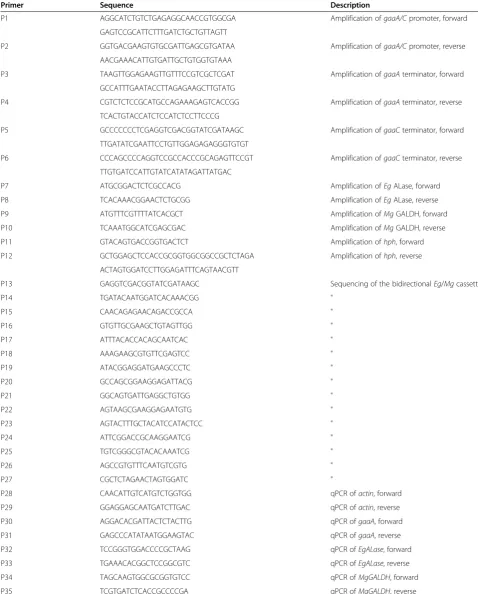
Cpromoter and terminators ofgaaAandgaaCgenes were amplified fromA. nigerATCC1015 genomic DNA with the primers P1-P6 as described in Table 2. The EgALase,
Table 2 Primers used in this work
Primer Sequence Description
P1 AGGCATCTGTCTGAGAGGCAACCGTGGCGA Amplification ofgaaA/Cpromoter, forward
GAGTCCGCATTCTTTGATCTGCTGTTAGTT
P2 GGTGACGAAGTGTGCGATTGAGCGTGATAA Amplification ofgaaA/Cpromoter, reverse
AACGAAACATTGTGATTGCTGTGGTGTAAA
P3 TAAGTTGGAGAAGTTGTTTCCGTCGCTCGAT Amplification ofgaaAterminator, forward
GCCATTTGAATACCTTAGAGAAGCTTGTATG
P4 CGTCTCTCCGCATGCCAGAAAGAGTCACCGG Amplification ofgaaAterminator, reverse
TCACTGTACCATCTCCATCTCCTTCCCG
P5 GCCCCCCCTCGAGGTCGACGGTATCGATAAGC Amplification ofgaaCterminator, forward
TTGATATCGAATTCCTGTTGGAGAGAGGGTGTGT
P6 CCCAGCCCCAGGTCCGCCACCCGCAGAGTTCCGT Amplification ofgaaCterminator, reverse
TTGTGATCCATTGTATCATATAGATTATGAC
P7 ATGCGGACTCTCGCCACG Amplification ofEgALase, forward
P8 TCACAAACGGAACTCTGCGG Amplification ofEgALase, reverse
P9 ATGTTTCGTTTTATCACGCT Amplification ofMgGALDH, forward
P10 TCAAATGGCATCGAGCGAC Amplification ofMgGALDH, reverse
P11 GTACAGTGACCGGTGACTCT Amplification ofhph, forward
P12 GCTGGAGCTCCACCGCGGTGGCGGCCGCTCTAGA Amplification ofhph, reverse
ACTAGTGGATCCTTGGAGATTTCAGTAACGTT
P13 GAGGTCGACGGTATCGATAAGC Sequencing of the bidirectionalEg/Mgcassette
P14 TGATACAATGGATCACAAACGG "
P15 CAACAGAGAACAGACCGCCA "
P16 GTGTTGCGAAGCTGTAGTTGG "
P17 ATTTACACCACAGCAATCAC "
P18 AAAGAAGCGTGTTCGAGTCC "
P19 ATACGGAGGATGAAGCCCTC "
P20 GCCAGCGGAAGGAGATTACG "
P21 GGCAGTGATTGAGGCTGTGG "
P22 AGTAAGCGAAGGAGAATGTG "
P23 AGTACTTTGCTACATCCATACTCC "
P24 ATTCGGACCGCAAGGAATCG "
P25 TGTCGGGCGTACACAAATCG "
P26 AGCCGTGTTTCAATGTCGTG "
P27 CGCTCTAGAACTAGTGGATC "
P28 CAACATTGTCATGTCTGGTGG qPCR ofactin, forward
P29 GGAGGAGCAATGATCTTGAC qPCR ofactin, reverse
P30 AGGACACGATTACTCTACTTG qPCR ofgaaA, forward
P31 GAGCCCATATAATGGAAGTAC qPCR ofgaaA, reverse
P32 TCCGGGTGGACCCCGCTAAG qPCR ofEgALase, forward
P33 TGAAACACGGCTCCGGCGTC qPCR ofEgALase, reverse
P34 TAGCAAGTGGCGCGGTGTCC qPCR ofMgGALDH, forward
plasmid pRS426 were transformed to yeast using the Gietz method [31] and the transformants were selected on SCD-URA plates. Several yeast colonies were collected and the resulting plasmid Bidir-EgALase-MgGALDH was rescued and sequenced with the primers P13-P25 (Table 2). The resulting expression cassette was linearized withEcoRIand
BamHI(both NEB) beforeA. nigerwas transformed. All the resulting expression cassettes were introduced into theA. nigerΔgaaBstrain by protoplast transformation method [32]. Transformants were screened for integration of the cassette by growth in the presence of 400μg ml−1 hygromycin B (Calbiochem). Strains having both genes (smp30orEgALase+MgGALDH) expressed in JKp1 under
gpdApromoter were generated by co-transformation. Inte-gration of the transformed cassettes into the genome was confirmed with colony PCR using Phire direct PCR kit (Thermo Scientific) and the primers P26 and P27 (Table 2).
Media and culture conditions
Luria Broth (LB) culture medium supplemented with 100
μg ml−1of ampicillin and cultural conditions of 37°C and 250 rpm were used for E. coli cultures. For yeast pre-cultures, YPD medium (10 g yeast extract l−1, 20 g pep-tone l−1 and 20 g D-glucose l−1) was used and after transformation SCD-URA plates (uracil deficient syn-thetic complete media supplemented with 20 g D-glucose l−1) were used for uracil auxotrophy selection. Yeast cultures were carried out at 30°C and all the li-quid cultures at 250 rpm. For the A. niger submerged fermentations, spores were generated on potato-dextrose plates and 0.9*108spores were inoculated into 50 ml of YP medium (10 g yeast extract l−1, 20 g peptone l−1) containing 30 g gelatin l−1. Mycelia were pre-grown in 250-ml Erlenmeyer flasks by incubating overnight at 28°C, 200 rpm and harvested by vacuum filtration, rinsed with sterile water and weighted. In the
A. nigertransformations and fermentations,A. nidulans
defined minimal medium [33], containing (in g l−1) 6 NaNO3, 0.52 KCl, 0.52 MgCl2 and 1.52 KH2PO4 was used. In the transformations the minimal medium was supplemented with 1.2 M D-sorbitol, 10 g l−1 of D-glucose and 20 g l−1of agar and the pH was adjusted to 6.5. The minimal medium used in the fermentations for L-AA production, enzymatic assays and transcriptional analysis was supplemented with 20 g l−1 of D-galUA and 5 g l−1of D-xylose or with 40 g l−1of dried citrus processing waste (CPW). The pH was adjusted to 3. The CPW contained peel and pulp from the processed or-anges and was received from the Federal University of Paraná in Curitiba, Brazil. The submerged cultures sup-plemented with pure D-galUA and D-xylose were inoc-ulated with 1 g l−1 (cdw) and the submerged cultures supplemented with CPW were inoculated with 3 g l−1 (cdw) of pre-grown mycelia.
Enzymatic assays
For enzymatic assays,A. nigermycelia were harvested by vacuum filtration. Crude extracts were prepared in 100 mM sodium phosphate buffer pH 7 with protease inhibi-tor (Complete, Roche). The cells were disrupted with 0.4 mm diameter glass beads using a bead beater (Precellys 24, Bertin Technologies) and solid residues were removed by centrifugation. The GALDH assay was based on the cytochrome c reduction at 550 nm as described by Leferink et al. [26]. Crude extracts from the each strain were supplemented with 500μM of FAD (flavin adenine dinucleotide), which is an essential cofactor for MgGALDH, and were tested for the activity by follow-ing the cytochrome c reduction after addition of 5 mM L-galL. The enzymatic assay for the lactonase activity (from EgALase and Smp30) was based on a pH change in the reaction from L-galA to L-galL that absorbs protons and was assayed as described by Ishikawa et al. [16]. The pH was followed at 405 nm using p-nitrophenol as a pH indicator and the correspondence betweenΔ405 nm and the absorption of protons were quantified using the titra-tion with HCl.
Transcriptional analysis
Samples of 2 ml were collected from the cultures and the mycelium was harvested by vacuum filtration. The fil-tered mycelium was frozen with liquid nitrogen and stored at−80°C. RNA was extracted using the RNeasy Plant Mini Kit (Qiagen) and ~1μg of total RNA was used for cDNA synthesis with the Transcriptor High Fidelity cDNA Synthe-sis Kit (Roche), following the manufacturer’s instructions. cDNA samples were diluted with RNase free water (Roche) and were used for RT-qPCR using a LightCycler II with the LightCycler SYBR green I Master mix (both Roche). The expression ofgaaA,EgALase,MgGALDHand actin (ATCC 1015 200483-mRNA) were quantified using the primers P28-P35 (Table 2). The signal from each of the target genes was normalized to actin using the accompanying software (Advance Relative Quantification tool).
Chemical analyses
Abbreviations
L-AA:L-ascorbic acid; D-EA: D-erythroascorbic acid; D-galUA: D-galacturonic acid; L-galA: L-galactonic acid; L-galL: L-galactono-1,4-lactone; GALDH: L-galactono-1,4-lactone dehydrogenase; ALase: Aldonolactonase; CPW: Citrus processing waste.
Competing interests
The authors declare that they have no competing interests.
Authors’contributions
JK and PR designed and JK carried out all the experimental work and analyzed the data. JK and PR drafted the manuscript. PR and MP designed the fundamental concept and participated in the coordination of the study. All the authors read and approved the final manuscript.
Acknowledgements
This work was supported by the Academy of Finland through the Sustainable Energy (SusEn) program (Grant 271025) and by the CNPq of Brazil in the form of a cooperation project.
Received: 19 November 2014 Accepted: 19 December 2014
References
1. Valpuesta V, Botella MA. Biosynthesis of L-ascorbic acid in plants: new pathways for an old antioxidant. Trends Plant Sci. 2004;9(12):573–7. 2. Linster CL, Van Schaftigen E. Vitamin C biosynthesis, recycling and
degredation in mammals. FEBS J. 2007;274:1–22.
3. Pappenberger G, Hohmann H. Industrial production of L-ascorbic acid (Vitamin C) and D-isoascorbic acid. Adv Biochem Eng Biotechnol. 2014;143:143–88.
4. Reichstein T, Grüssner A. Eine ergiebige synthese der l-ascorbinsäure (C-Vitamin). Helv Chim Acta. 1934;17(1):311–28.
5. Bremus C, Herrmann U, Bringer-Meyer S, Sahm H. The use of microorganisms in L-ascorbic acid production. J Biotechnol. 2006;124(1):196–205.
6. Kim S, Huh W, Lee B, Kang S. D-Arabinose dehydrogenase and its gene from Saccharomyces cerevisiae. Biochimica et Biophysica Acta. 1998;1429(1):29–39. 7. Onofri S, Poerio E, Serangeli P, Tosi S, Garuccio I, Arrigoni O. Influence of
L-galactonic acidγ-lactone on ascorbate production in some yeasts. Antonie Van Leeuwenhoek. 1997;71(3):277–80.
8. Hancock RD, Galpin JR, Viola R. Biosynthesis of L-ascorbic acid (vitamin C) by Saccharomyces cerevisiae. FEMS Microbiol Lett. 2000;186(2):245–50. 9. Sugisawa T, Miyazaki T, Hoshino T. Microbial production of L-ascorbic acid from
D-sorbitol, L-sorbose, L-gulose, and L-sorbosone by Ketogulonicigenium vulgare DSM 4025. Biosci Biotechnol Biochem. 2005;69(3):659–62. 10. Running J, Severson D, Schneider K. Extracellular production of L-ascorbic
acid by Chlorella protothecoides, Prototheca species, and mutants of P. moriformis during aerobic culturing at low pH. J Ind Microbiol Biotechnol. 2002;29(2):93–8.
11. Sauer M, Branduardi P, Valli M, Porro D. Production of L-ascorbic acid by metabolically engineered Saccharomyces cerevisiae and Zygosaccharomyces bailii. Appl Environ Microbiol. 2004;70(10):6086–91.
12. Branduardi P, Fossati T, Sauer M, Pagani R, Mattanovich D, Porro D. Biosynthesis of vitamin C by yeast leads to increased stress resistance. PLoS One. 2007;2(10):e1092.
13. Rosa JC, Colombo LT, Alvim MC, Avonce N, Van Dijck P, Passos FM. Metabolic engineering of Kluyveromyces lactis for L-ascorbic acid (vitamin C) biosynthesis. Microb Cell Fact. 2013;12(1):59.
14. Wheeler GL, Jones MA, Smirnoff N. The biosynthetic pathway of vitamin C in higher plants. Nature. 1998;393(6683):365–9.
15. Agius F, González-Lamothe R, Caballero JL, Muñoz-Blanco J, Botella MA, Valpuesta V. Engineering increased vitamin C levels in plants by overexpression of a D-galacturonic acid reductase. Nat Biotechnol. 2003;21(2):177–81.
16. Ishikawa T, Nishikawa H, Gao Y, Sawa Y, Shibata H, Yabuta Y, et al. The pathway via D-galacturonate/L-galactonate is significant for ascorbate biosynthesis in Euglena gracilis: identification and functional characterization of aldonolactonase. J Biol Chem. 2008;283(45):31133–41.
17. Kondo Y, Inai Y, Sato Y, Handa S, Kubo S, Shimokado K, et al. Senescence marker protein 30 functions as gluconolactonase in L-ascorbic acid
biosynthesis, and its knockout mice are prone to scurvy. Proc Natl Acad Sci U S A. 2006;103(15):5723–8.
18. Richard P, Hilditch S. D-galacturonic acid catabolism in microorganisms and its biotechnological relevance. Appl Microbiol Biotechnol. 2009;82(4):597–604. 19. Kuivanen J, Mojzita D, Wang Y, Hilditch S, Penttila M, Richard P, et al.
Engineering filamentous fungi for conversion of D-galacturonic acid to L-galactonic acid. Appl Environ Microbiol. 2012;78(24):8676–83. 20. Kuivanen J, Dantas H, Mojzita D, Mallmann E, Biz A, Krieger N, et al.
Conversion of orange peel to L-galactonic acid in a consolidated process using engineered strains of Aspergillus niger. AMB Express. 2014;4(1):1–8. 21. Mojzita D, Wiebe M, Hilditch S, Boer H, Penttilä M, Richard P. Metabolic
engineering of fungal strains for conversion of D-galacturonate to meso-galactarate. Appl Environ Microbiol. 2010;76(1):169–75. 22. Sastry KS, Sarma P. Glucuronic acid, a precursor of ascorbic acid in
Aspergillus niger. Nature. 1957;179:44–5.
23. Petrescu S, Hulea SA, Stan R, Avram D, Herlea V. A yeast strain that uses D-galacturonic acid as a substrate for L-ascorbic acid biosynthesis. Biotechnol Lett. 1992;14(1):1–6.
24. Smirnoff N, Running JA, Gatzek S. Introduction. In: Asard H, May JM, Smirnoff N, editors. Vitamin C: its Functions and Biochemistry in Animals and Plants. New York: Garland Science/BIOS Scientific Publishers; 2004. p. 19. 25. Badejo AA, Fujikawa Y, Esaka M. Gene expression of ascorbic acid
biosynthesis related enzymes of the Smirnoff-Wheeler pathway in acerola (Malpighia glabra). J Plant Physiol. 2009;166(6):652–60.
26. Leferink NG, van den Berg WA, van Berkel WJ. l-Galactono-γ-lactone dehydrogenase from Arabidopsis thaliana, a flavoprotein involved in vitamin C biosynthesis. FEBS J. 2008;275(4):713–26.
27. Mossmann D, Meisinger C, Vögtle F. Processing of mitochondrial presequences. Biochimica et Biophysica Acta. 2012;1819(9):1098–106. 28. Claros MG, Vincens P. Computational method to predict mitochondrially
imported proteins and their targeting sequences. Eur J Biochem. 1996;241(3):779–86.
29. Choi MS, Saxena A, Chilukuri N. A strategy for the production of soluble human senescence marker protein-30 in Escherichia coli. Biochem Biophys Res Commun. 2010;393(3):509–13.
30. He XX, Luo G, Zhou S. Soluble expression of recombinant human Smp30 for detecting serum Smp30 antibody levels in hepatocellular carcinoma patients. Asian Pac J Cancer Prev. 2013;14(4):2383–6.
31. Gietz D, St Jean A, Woods RA, Schiestl RH. Improved method for high efficiency transformation of intact yeast cells. Nucleic Acids Res. 1992;20(6):1425. 32. Yelton MM, Hamer JE, Timberlake WE. Transformation of Aspergillus nidulans
by using a trpC plasmid. Proc Natl Acad Sci U S A. 1984;81(5):1470–4. 33. Barratt RW, Johnson GB, Ogata WN. Wild-type and mutant stocks of
Aspergillus nidulans. Genetics. 1965;52(1):233.
Submit your next manuscript to BioMed Central and take full advantage of:
• Convenient online submission
• Thorough peer review
• No space constraints or color figure charges
• Immediate publication on acceptance
• Inclusion in PubMed, CAS, Scopus and Google Scholar
• Research which is freely available for redistribution