74
Original article
HPTLC
method development and quantification of curcumin content in
different extracts of rhizomes of Curcuma longa L.
N.M.A. Rasheed, G. Sowmya Srividya and K. Nagaiah
Organic and Biomolecular Chemistry, CSIR-Indian Institute of Chemical Technology, Tarnaka, Hyderabad-500007, Telangana State, India
Received October 13, 2017: Revised November 29, 2017: Accepted December 3, 2017: Published online December 30, 2017
Abstract
Turmeric is very long known for its potent medicinal values in Indian traditional systems of medicine. Curcuma longa L. commonly known as turmeric (Haldi) is a well known plant which is used as a drug in traditional medicine such as Ayurvedic and Unani system of medicine. Curcumin is main active component present in the rhizomes of C. longa. The contents of curcuminoids in turmeric rhizomes vary often with varieties, locations, sources, and cultivation conditions, while there are significant variations in composition of turmeric rhizomes with varieties and geographical locations. The present study reported a simple, sensitive and fast HPTLC method for quantification of curcumin in solvent extracts of rhizomes of C. longa L. The separation was performed on TLC aluminium plates precoated with silica gel G F254. Good separation was achieved in the mobile
phase of chloroform: methanol: formic acid (9.6:0.4:0.1, v/v) at Rf= 0.70 ± 0.05 for curcumin. The method was validated successfully having good resolution of peaks along with precision, accuracy and repeatability. Curcumin capsules (>95% curcumin) have not been emerged as a drug so far but had been taken in food or dietary supplement. In traditional medicine, it is well recommended to use 2 to 3 grams turmeric powder in our daily diet. Therefore, the objective of the study to extract turmeric and assess curcumin content and other constituents by HPTLC with a suggestion to use the whole extract derived from the equivalent 2 to 3 grams of the turmeric powder. Present study is to determine high content of curcumin 95-98% and recommended for many diseases. The HPTLC method can be used for quantification of Curcumin in extracts of rhizomes of C. longa L.
Key words: Curcuma longa L, turmeric, curcumin, solvent extracts, HPTLC, quantification
Copyright @ 2017 Ukaaz Publications. All rights reserved. Email: [email protected]; Website: www.ukaazpublications.com Author for correspondence: Dr. K. Nagaiah
Sr. Principal Scientist, Organic and Biomolecular Chemistry, CSIR-In dian CSIR-Ins titu te o f Ch emic al Techn olog y, Tarna ka, Hyde raba d-500007, Telangana State. India
E-mail: [email protected]
Tel.: +91-9440485366
1. Introduction
Turmeric is commonly known for its wide range of biological and medicinal values in Indian traditional system of medicine. Turmeric comprises about 70 species and highest diversity is concentrated India, i.e., 40 species. India had been the largest producer, consumer and exporter of C. longa L. in the world commonly known as Haldi, is a well- known plant used as a drug in Ayurvedic and Unani system of medicine (Chopra et al., 1956; Kapoor, 2001). It is a pan tropical crop cultivated widely in Southeast Asia, used in the food preparation for its flavour and colour. Turmeric contains a yellow coloured mixture of three phenolic compounds, the main active principle or constituent was curcumin, and other constituents including demethoxycurcumin, bisdemethoxycurcumin, essential oil (2-4%); fixed oil (2-3%) likes turmerone, atlantone, and zingiberone. It also contains sugars, proteins and resins (Antony, 2003). Curcumin 1, 7-bis-(4-hydroxy-3-methoxyphenyl)-1, 6- heptadiene-2, 5-dione (Figure 1) is a yellow colored phenolic pigment obtained from powdered rhizome of C. lo ng a L. belon gs to family Zingiberaceae. Curcumin possess antioxidant and several other
Annals of Phytomedicine 6(2): 74-81, 2017
DOI: 10.21276/ap.2017.6.2.6; Print ISSN : 2278-9839 and Online ISSN : 2393-9885 6(2): 74-81 (2017) Ann. Phytomed.,
biological activities. The agronomy factors and suitability need to be studied. Estimation of curcumin and its oleoresin need to be researched and propagated. And there is a growing tendency to adulterate turmeric in several ways. So, selection of high yielding varieties and detection of adulteration is extensively required research for turmeric. Studies support curcumin as well as the essential oils and turmerones have similar properties while some favour oleoresin extracts which contain both curcumin and essential oils and turmerones. Turmeric tuberous roots are also considered to be good for the medicinal properties and its derived products (Shameli et al., 2013). Selection of better strains of turmeric having high yields of curcumin oleoresin is desirable. For example, Alleppey (Kerala, India) variety of turmeric has high curcumin (approx 6%) while Telangana, India variety has only about 2% of curcumin. Turmerones also independently have activity against cancer. Several references shown anticancer activity of the whole extract. Further, the other constituents in the extract enhanced the activity. Infact,
ar-turmerone, exhibits medicinal properties equally effective also these upon biological studies reveal good activity on Alzheimer diseases as mentioned earlier.
was not assessed. Earlier studies from our group studied that the curcumin capsules and curry masala powder of turmeric assessed major bioactive curcuminoids in C. longa L. rhizomes and herbal products using non-aqueous capillary electrophoresis (Anubala et al., 2014).
Therefore, the purpose of the study is to extract high content of curcumin (95-98%) to be available and recommended for many diseases. However, up to phase II clinical studies were conducted only on 98% curcumin. Toxicity studies were not done on such high content of curcumin (98%) which will be equivalent to allopathy drug. Without toxicity studies and multi-centered clinical trials, it is not advisable to use as a drug. On the other hand, it is well recommended in traditional medicine to use 2 to 3 grams turmeric powder in our daily diet. Therefore, the objective of the studies to extract turmeric and assess curcumin content and other constituents by HPTLC with a suggestion to use the whole extract derived from the equivalent 2 to 3 grams of the turmeric powder. The literature surveys reviewed that whole extract of turmeric which contains curcumin exert better activity. It is also reported that other extractives of turmeric (volatiles and turmerones) will enhance the bioactivity of curcumin. Turmerones component of oleoresin of turmeric have been used to enhance the absorption of curcumin. These turmerones have strong anti-inflammatory and anticancer properties. In fact, recent studies shows turmerones are as potent as curcuminoids as mentioned below. Volatile oils and turmerones of turmeric are principle flavouring compounds, -turmerone, and
-turmerone, ar-turmerone are the primary components of oleoresin of turmeric rhizome and give characteristic pungent smell to turmeric. Aromatic (ar-) turmerone is a natural antimicrobial and antifungal compound and possess antivenom properties. Alpha and beta turmerones act as antibacterial agents against disease-causing bacterium that cause serious infections and prevent cavities. They also possess anticancer properties and work against liver cancer, leukemia, and breast cancer cells. For e.g., ar-turmerone h elp in preserving cogn ition. T hey suppress amyloid-beta considered responsible for the plaques and tangles in the brain that stop neural connections which ultimately lead to Alzheimer’s disease. ar-turmerone also inhibit inflammatory cytokines that begin the spiral of cognitive decline in the brain. Therefore, incorporating whole extract of turmeric which contains volatile oils, curcumins and turmerones into our daily regimen may be one of the best and simplest ways to keep as in good health for years to come. It is better to use curcumin with turmerones and essential oils that is the whole extract of turmeric rath er th an curcu min alon e (Anonymous, 2017a). ar-Turmerone impaired the A-induced inflammatory response of microglial cells by inhibiting the NF-B,
JNK, and p38 MAPK signaling pathways. Lastly, ar-turmerone protected hippocampal HT-22 cells from indirect neuronal toxicity induced by activated microglial cells. These novel findings provide new insights into the development of ar-turmerone as a therapeutic agent for the treatment of neurodegenerative disorders (Park et al., 2012) and (Anonymous, 1990).
In market, there are several formulations available in combination of curcuminoids and essential oils such as Finest nutrition-turmeric Curcumin capsules (1000 mg) as healthy nutrition; NutriFlair-Turmeric Curcumin with BioPerine® Black Pepper 1300mg (120 Capsules) as dietary supplement; Terry Naturally-CuraMed with
BCM-95 750 mg. (120 Soft gels) as Healthy inflammation response;
Nature’s Best-Turmeric Tablets 10,000 mg (as 500 mg of extract) standardized at 95% curcumins which act as 20 times more concentrated than culinary turmeric and used as food supplement ;
SBR Nutrition-liquid turmeric curcumin, pure turmeric extract-fulvic acid used as a antioxidant support liquid dietary supplement; Nature’s answer-Turmeric-3 supplying three active constituents 5,000 mg; Tinctures-concentrated herbal extracts offer 1000 mg dose. Tinctures are not to be confused with liquid extracts. The therapeutic value of a plant lies in its holistic balance of natural ingredient present in it and the quality of the herb (Anonymous, 2017b).
Stronger, more effective curcumin capsules, liquid extracts, used as dietary supplements, healthy nutrition, food supplement provides, healthy inflammation response through multiple pathways in the body, providing remarkable health benefits. Cellular health: studies showed curcumin’s ability to support cellular health protect DNA
and RNA from oxidative stress and support multiple cellular processes. Mood: curcumin supports healthy levels of serotonin and dopamine in the brain, key neurotransmitters for optimal mental health. Clinical studies show curcumin’s effectiveness for enhancing mood and well bein g. Kidney su pport: curcu min su pports functioning of healthy kidney. Joint health: curcumin maintains flexibility and comfort in joints while supporting cartilage structure. Brain health: curcumin helps maintain focus and concentration while protecting brain cells from oxidative stress. Turmeric: the intelligent choice for cognitive health. Intestinal health: curcumin supports healthy bile secretion, bowel motility, and fermentation processes while supporting the gut mucosal lining. Liver detoxification: curcumin promotes healthy levels of the body’s own detoxifiers, such as glutathione and superoxide dismutase. Cardiovascular health: Studies indicated that curcumin supports vascular integrity and h ealthy cholesterol balan ce and su pports h eart fu nction . Antioxidant: curcumin powerfully protects the body from damaging oxidative stress (Anonymous, 2017c) skin diseases, skin care agent: Raw turmeric is applied when there is a cut or wounds also, recommended internally and externally to cure or prevent the spread of skin diseases like eczema, ringworm, antibacterial activity. Many skin care lotions and ointments. Turmeric is a common ingredient due to antibiotic effect of turmeric principles are responsible.
1.1 Turmeric remedies
Curcumin or turmeric extract or turmeric powder is taken as: one teaspoon of turmeric powder in 1 cup of warm milk. Drink three cups a day to reduce arthritis pain and other ailments. (OR) add one teaspoon of turmeric in your food or curry daily (OR) 500 mg of turmeric extract as capsules or tablets two or three times a day
(OR) curcumin 400 mg in the form of capsules of tablets two or three times a day (Mukhodapadhyay et al., 1982; Chandra and Gupta, 1972; Mowreyl, 1990).
Curcumin is an antioxidant, and it appears to work as an anti-inflammatory in the body. Thus, it may benefit anti-inflammatory conditions such as osteoarthritis, rheumatoid arthritis and Alzheimer’s disease. It shows promise as a compound to prevent and treat cancer, and ongoing clinical trials continue to investigate curcumin is one of several curcuminoids, which are polyphenolic compounds, present in turmeric. In addition to curcumin, turmeric also contains smaller amounts of the curcuminoids, demethoxy curcumin and bisdemethoxycurcumin. Researchers believe curcumin to be the most biologically active curcuminoids in turmeric. Analogs of cu rcumin (Cu r), such as demeth oxycurcu min (D MC), bisdemethoxycurcumin (BDMC), tetrahydrocurcumin (THC) and turmerones, modulate inflammatory signaling and cell proliferation signaling. To some extent, bisdemethoxycurcumin is used as a pigment and nutraceutical with antimutagenic properties. Curcumin molecule has a broad range of activities includes anti-inflammatory, antioxidant, hypocholesterolemia, anticarcinogenic, wound healing, anticoagulant, antispasmodic, antitumor, hepatoprotective activities (Maiti et al., 2007; Anand et al., 2008; Goel et al., 20 08; Kunnumakkara et al., 2007) and antidiabetes (Merrell et al., 2009; Reddy et al., 2009; Sandur et al., 2007). The important antioxidant property of curcumin can prevent rancidity of foods and provide foodstuffs containing less oxidized fat or free radicals and plays an important role in keeping curry for a long time without it turning rancid.
The contents of curcuminoids in turmeric rhizomes vary often with varieties, locations, sources, and cultivation conditions, while there are significant variations in composition of essential oils of turmeric rhizomes with varieties and geographical locations. Hence, it is imperative to know the content of main active constituent curcumin in turmeric (Cooper et al., 1994). Authentication of turmeric products can be achieved by chromatographic and other analytical techniques (Li et al., 2011). The rhizomes undergo processing before using, such as boiling separately for about 40-60 min under slightly alkaline condition in earthen vessels which changes the main active content in the sample. Few reports are available in respect of curcumin content in the primary rhizome which increased from September to October in Japan (Kobayashi
et al., 2010). However, HPTLC method has been previously reported for quantification of curcumin but no reports have been found to determine curcumin content in different solvent extracts of rhizome of C. longa L and this information is critically important for the extraction of active component curcumin and other constituents for manufacturing of herbal products. Hence, it would be very significant to develop an efficient analytical method that can analyze curcumin quantitatively having good efficiency. The present HPTLC method was suitable for rapid screening of plant materials can be performed with ou t an y special sample pretreatment.
308.33 C19H16O4 Bisdemethoxycurcumin
338.359 C20H18O5
Demethoxycurcumin Curcuminoids
(phenolic compounds) 368.39
C21H20O6 Curcumin
Monocyclic sesquiterpene 204.357
C15H24 Zingiberene
216.324 C15H20O
ar-Turmerone
218.3346 C15H22O
β-Turmerone Turmerones
218.3346 C15H22O
α-Turmerone
Nature of compounds present
Molecular Weight Formula
Name
308.33 C19H16O4 Bisdemethoxycurcumin
338.359 C20H18O5
Demethoxycurcumin Curcuminoids
(phenolic compounds) 368.39
C21H20O6 Curcumin
Monocyclic sesquiterpene 204.357
C15H24 Zingiberene
216.324 C15H20O
ar-Turmerone
218.3346 C15H22O
β-Turmerone Turmerones
218.3346 C15H22O
α-Turmerone
Nature of compounds present
Molecular Weight Formula
Name
H3C CH3
O CH3
H3C
H3C CH3
O CH3
H2C
H3C CH3
O H3C
H CH3
H3C
H CH3
H CH3
CH3
O O
OCH3
OH HO
H3CO
O O
OH HO
H3CO
O O
OH HO
turmerone turmerone ar-turmerone Zingiberene
curcumin demethoxycurcumin
bisdemethoxycurcumin
Figure 1: Structures of turmeric, chemical constitu ents, turmeric capsule and rhizome
2. Materials and Methods
2.1 Reagents
All chemicals and reagents used were of HPLC grade (Fischer scientific). Curcumin was isolated from the rhizome in pure form and was characterized by spectroscopic methods.
2.2 Raw materials and samples
Rhizomes of C. longa L. were procured from the local market and were authenticated by Botanist, Central Research Institute of Unani Medicine, Hyderabad. Three C. longa L. samples were procured,
viz., CS, CLA and CLA.
Marketed spring valley Standardized extract, Turmeric curcumin capsule of 500mg containing (turmeric powder-400 mg, Turmeric extract Standardized to 95% curcuminoids -50 mg, Zingiber officinale root powder-50 mg) used as a dietary supplement for general wellness.
2.3 Preparation of standard stock solution
Isolated pure curcumin from turmeric as standard was accurately weighed and suitable dilution was made to give a solution containing
1mg/1ml and 50 µg/ml (50 ng/µl). These solutions of curcumin
were further used for analysis.
2.4 Extraction of plant material for HPLTC analysis
Turmeric branded marketed powder (TP), Turmeric secondary rhizome powder (TK), Turmeric big tuber (TBT) was extracted with hexane first followed by methanol; Secondly TP, TK and TBT
(TbtEtXy)Turmeric tuber-ethanol ext followed by xylene wash; 15: (CLA)-Turmeric methanolic extract sample 3; 16: (CLE) -Turmeric methanolic extract sample 4)
One hundred grams or amount taken as given in Table 1 was finely powdered separately, and extracted with boiling methanol for six hours using soxhlet extraction apparatus. Later, the extract was evaporated to dryness. The amount of residue obtained is calculated and percentage of extract found is represented in the Table 1. From this, each extract 10 mg was taken in a 10 ml volumetric flask and dissolved with the help of methanol under sonicator and then the solution is made up to 10 ml and, thus obtained solution was used for HPTLC analysis. Turmeric curcumin capsule was taken 500 mg and extracted with 500 ml methanol (ratio 5 g : 5 ml) filtered, dried to constant and finally dissolve with methanol to make up to 5 ml. Similar manner each sample extract was prepared and stock solutions of 1 mg/ml was made and used for further analysis.
2.5 TLC instrumentation and conditions
The samples are spotted in the form of bands of width 5 mm with an automatic TLC applicator of Desaga Sarstedt Gruppe (Germany)
having 10 µl syringe on precoated silica gel aluminium plate 60 F254
(20 cm × 10 cm with 0.2 mm thickness; E. Merck, Dermstad,
Germany). A constant application rate of 5 sec/µl was employed
and distance between two bands was 10 mm. The slit dimension was kept at height 0.2 mm and width 4.0 mm, resolution at 0.1mm measurement, 16 No. of measurements per position, smoothing value at 15. These instrumental parameters were kept constant throughout the samples analyses. The mobile phase consists of chloroform, methanol and formic acid (9.6:0.4:0.1, v/v) for the development of TLC plate. The plates were developed in ascending order in a twin through TLC chamber which was pre-saturated with the mobile phase for 30 min; the length of each run was 80 mm. The
TLC run s were performed under the laboratory con ditions (temperature: 25 ± 20C and %RH: 60 ± 5). The plates were dried in air before detection. Densitometric analysis was performed at wavelength 366 nm with a Desaga Sarstedt Gruppe by ProQuant 1.6 version software. The source of radiation utilized was deuterium and tungsten lamp. The mobile phase composition for TLC was optimized using different solvents of varying polarity and good resolution was achieved by above stated solvent system. The Rf value for curcumin was found to be 0.70 ± 0.05
2.6 Calibration
From the stock solution of curcumin (50 ng/µl) in methanol, an aliquots of 2 µl, 4 µl, 6 µl, 8 µl and 10 µl was applied four times (n
= 4) over the silica gel TLC plate separately to obtain final concentration range of 100-500 ng/spot for construction of calibration plots. TLC plate was developed and analyzed as described earlier. Further dilutions with the lowest concentration in the calibration curves were carried out to provide a series of standard solutions for evaluating the limits of detection (LOD) and the limits of quantification (LOQ) of the component.
3. Method validation
The developed method is validated as per the ICH guidelines. Method validation is carried out to confirm that the analytical method employed for this specific analysis is suitable for its intended use. Results from method validation can be used to check its quality,
reliability, and consistency. Th e meth od was validated by determining linearity, precision, accuracy, limits of detection (LOD), limits of quantification (LOQ) and repeatability.
3.1 Calibration curve
Calibration graph was found to be linear over the concentration range of 100-500 ng/spots. Linearity was evaluated by determining five standard working solutions for four times (n = 4). The peak area and concentration was subjected to linearity analysis to calculate the calibration equation.
3.2 Precision and accuracy
The intra-day precision and accuracy of the assays were evaluated by performing replicate analyses (n = 4) of samples (5, 100 and 500 ng/spot). The inter-day precision and accuracy of the assay was determin ed by repeating the in tra-day assay on th ree consecutive days. Precision was expressed as the percentage relative standard deviation (%RSD) of measured concentrations where as accuracy was expressed as percent recovery.
3.3 Limit of detection (LOD) and limit of quantification (LOD) In order to estimate LOD and LOQ for curcumin, we spotted blank methanol (n=4) following the same method as explained under the chromatographic conditions and the standard deviation () of the magnitude of analytical response was determined. The LOD was expressed as (LOD=3.3 /S), whereas LOQ was expressed as
(LOQ=10 /S) where S= Slope of curcumin calibration curve.
3.4 Specificity
The specificity of the method was ascertained by analyzing standard drug and sample extracts. The spot for curcumin in sample was confirmed by comparing Rf value and UV spectrum of spot with that of standard.
3.5 Quantification of curcumin in sample extracts
Quantification of curcumin content in rhizomes of C. longa L. and
its extracts were carried by application of 2 µl each of the sample
extract from the stock solutions on the same TLC plate using an automatic TLC applicator of Desaga Sarstedt Gruppe with 10 µl
syringe. The plates were developed and scanned as mentioned earlier. The peak areas were recorded and amount of curcumin was calculated corresponding to the peak area of curcumin standard (Rasheed et al., 2010; 2011a; 2012a; 2012b and Naikodi et al., 2011b).
4. Results
4.1 Selection and optimization of mobile phase conditions
Figure 2: Thin layer chromatography plate of standard and sample. (1: T urmeric br anded mark eted powder (TPh)- hexane ext; 2: Turmeric secondary rhizome (Tkh)- hexane ext; 3: Tu rmeric big tuber ( Tbth) - hexane ext; 4: (TPhm)Turmeric marketed powder- metha nol ext after hexane ext; 5: (T khm)Tu rmeric secondar y r hizome -methanol ext after hexane ext; 6: (Tbthm)Turmeric tuber - methanol ext after hexane ext; 7: (T Pm) Tur mer ic ma rketed powder- methanol ext; 8: (T km) Tur mer ic secondary r hizome - methanol ext; 9: (Tbtm)Turmeric tuber - methanol ext; 10: (Cur) Pure curcumin std; 11: (CS)Turmeric methanolic extract sample 1; 12: (Tcap)-Turmeric capsule extract sample 2; 13: (TbtEt) (Tcap)-Turmeric tuber - ethanol ext; 14: (TbtEtXy)Turmeric tuber - ethanol ext followed by xylene wash; 1 5: (CLA)-Tur mer ic metha nolic extract sample 3 ; 1 6: (CLE)-Tur mer ic methanolic extract sample 4).
4.2 Validation of method
4.2.1 LOD and LOQ
LOD and LOQ were calculated by the method as described in validation section. Detection limit of curcumin was determined by plotting a series of concentrations on the plate and scanning at 366 nm. The lowest amount of curcumin, which could be detected (LOD)
was 0.69 ng/spot. The lowest amount of curcumin which could be quantified was found to be 2.10 ng/spot which indicates the ample sensitivity of the method (Table 2).
Table 2: Linear regression data for the calibration plot (n=4)
Par am e t e r s Obser vat io n f or
c u r c um in
Retention factor (Rf) 0.70
Linearity range (ng/spot) 1 00 -50 0
Linearity (Correlation coefficient) R² = 0.997
Regression equation y = 427.7x - 111.6
SE of intercept 40 .2 46 8
SD of intercept 89 .9 91 84
LOD (ng/spot) 0.69
LOQ (ng/spot) 2.10
Precision (%RSD, n=4) 1.55
Repeatability (%RSD) n=4 1.38
4.2.2 Calibration curve
The calibration curve was plotted as amount of analyte versus average response (peak area) and was linear over the concentration
range of 100-500 ng/spot, as shown in Figure 3. The regression equation was obtained y= 427.7x - 111.6 with respect to the peak area with a regression coefficien t of R2=0.99 7 with h igh reproducibility and accuracy (Table 2). The set of calibration parameters are summarized in Table 2.
Figure 3: Calibration graph of curcumin
4.2.3 Precision and accuracy
The intra and inter day precision, as percentage relative standard deviation (% RSD) and accuracy of the assay were chosen to determine the precision of the developed assay at curcumin concentration of 5 ng, 100 ng and 500 ng/spot. Intra-day precision was validated with three concentrations: low, medium and high of standard solutions under the optimized conditions for four times within 1 day. Inter-day precision was validated with the standard solutions, used above once a day for 3 consecutive days. Inter- and Intra-day precisions for investigated component was expressed as percentage relative standard deviation (% RSD) and found less than 1.81% for curcumin as summarized in Table 3.
Table 3: Intra-day and inter-day precision
Intra day Inter day
Concentration Average %RSD Average %RSD
(n = 4) (n = 4)
5 0.45 1.94 0.45 1.81
100 294.60 1.19 294.85 1.02
500 1954.16 1.31 1966.16 0.80
4.2.4 Repeatability
The repeatability of the method was studied by assaying six samples of curcumin at same concentration under the optimized conditions. The values were within the acceptable range and so we concluded that the method was accurate, reliable and reproducible.
4.2.5 Specificity
The specificity of th e proposed method was determined by comparing the sample and standard peak for its Rf and UV spectrum. A densitogram of C. longa L. extracts and sample extracts and UV
Figure 4:(A) D ensitogram of Cu rcu ma sa mples extracts 1-1 6. (B) Overlapping UV spectrum of curcumin standard and Curcuma samples and different solvent extracts.
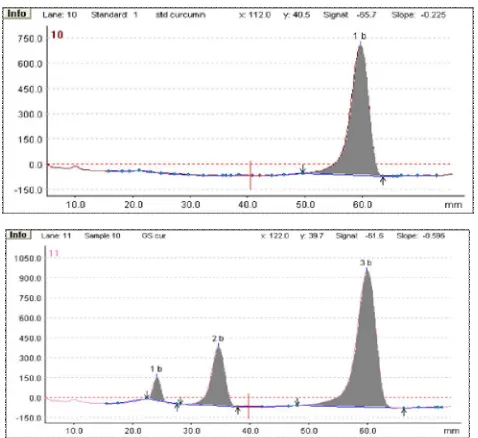
Figure 5: Densitogram of (A) Curcumin standard, (B) sample C. longa L. methanol extract.
4.2.6 Sample analysis
The established method was subsequently applied for determination of curcumin in C. longa L. different solvent extracts and samples methanolic extracts. All samples were analyzed under the optimized
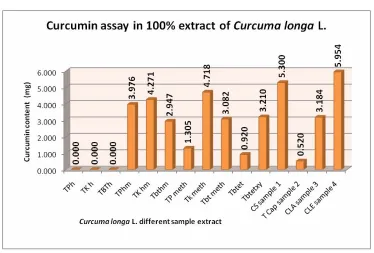
TLC conditions. Each sample was analyzed for amount of curcumin found in the samples and extracts as shown in Table 1 and Figure 6.
Table 1: Determination of curcumin in C. longa L. samples extracts
5.954 1.203 1712.22 9.90 9.90 100 CLE meth sample 4 3.184 0.796 1133.09 8.00 8.00 100 CLA meth sample 3 0.052 0.208 296.08 99.4 4.97 5.0 TCap meth sample 2 5.296 1.059 1507.7 10.00 10.00 100 CS meth sample 1 3.210 1.605 2284.39 4.00 4.00 100 Tbtetxy 0.919 0.460 654.26 4.00 4.00 100 Tbtet 3.082 0.560 797.64 11.00 11.00 100 Tbt meth 4.718 0.726 1033.15 13.00 13.00 100 Tk meth 1.305 0.261 371.62 10.00 10.00 100 Tp meth 2.947 0.491 699.12 12.00 12.00 100 Tbthm 4.271 1.068 1520.04 8.00 8.00 100 Tkhm 3.976 0.723 1028.96 11.00 11.00 100 Tphm 0 0 0 2.00 2.00 100 Tbth 0 0 0 4.00 4.00 100 Tkh 0 0 0 4.00 4.00 100 Tph -2.0 2847.10
-Pure curcumin std
Curcumin content in 100% extract (g%) Curcumin content in amount of extract applied
(in µg) Area Extract yield from powder (%w/w) Extract obtained (g) Amount of Powder sample taken (g) Sample name
Determination of curcumin in Curcuma longa L. sample and extracts
5.954 1.203 1712.22 9.90 9.90 100 CLE meth sample 4 3.184 0.796 1133.09 8.00 8.00 100 CLA meth sample 3 0.052 0.208 296.08 99.4 4.97 5.0 TCap meth sample 2 5.296 1.059 1507.7 10.00 10.00 100 CS meth sample 1 3.210 1.605 2284.39 4.00 4.00 100 Tbtetxy 0.919 0.460 654.26 4.00 4.00 100 Tbtet 3.082 0.560 797.64 11.00 11.00 100 Tbt meth 4.718 0.726 1033.15 13.00 13.00 100 Tk meth 1.305 0.261 371.62 10.00 10.00 100 Tp meth 2.947 0.491 699.12 12.00 12.00 100 Tbthm 4.271 1.068 1520.04 8.00 8.00 100 Tkhm 3.976 0.723 1028.96 11.00 11.00 100 Tphm 0 0 0 2.00 2.00 100 Tbth 0 0 0 4.00 4.00 100 Tkh 0 0 0 4.00 4.00 100 Tph -2.0 2847.10
-Pure curcumin std
Curcumin content in 100% extract (g%) Curcumin content in amount of extract applied
(in µg) Area Extract yield from powder (%w/w) Extract obtained (g) Amount of Powder sample taken (g) Sample name
Figure 6: Curcumin assay in C. longa L. different solvent extracts.
5. Discussion and Conclusion
A validated HPT LC meth od has been developed for th e determination of curcumin in C. longa L. different solvent extracts and samples extracts. The proposed method is simple, precise, specific, less time consuming and cost effective. The analysis proved that the method is evitable for the analysis of curcumin. The method was found suitable for rapid screening of plant materials, can be performed with ou t an y special sample pretreatment. HPTLC method will help the manufacturers in determining the quality and standardization of herbal formulations. Such method or fingerprinting is useful in extraction of curcumin from the turmeric and act as a biochemical marker for this medicinally important plant in the pharmaceutical industry. Thus, there is a lot of variation in the content of curcumin when it gets processed or extracted in different solvents, so a vital care is needed for any drug in the manufacturing process if curcumin content is required. Thus, successfu lly optimized method developed by HPTLC for identification and quantification of curcumin in C. longa different solvent extracts.
The present study revealed from turmeric different solvent extracts from C. longa L. showed high curcumin content by HPTLC assay in Turmeric secondary rhizome (Tkm) extracted with methanol (100 g of tkm powder yielded about 13 grams extract containing volatile essential oils, turmerones and curcuminoids). The percentage of curcumin in this extract was found to be 4.718 g% and the rest contains essential oil and turmerones. This indicates that the high amount of curcumin can be obtained through methanolic extract of tuber. Turmeric secondary rhizome (Tkhm) methanolic extract extracted after hexane extract (100 g powder yielded about 8 grams extract con taining volatile essen tial oils, tu rmerones an d curcuminoids) The percentage of curcumin in this extract was found to be 4.271 g% and the rest contains essential oil and turmerones.
This indicates that the second high amount of curcumin can be obtained by turmeric methanol extract which was carried out after hexane extract. Similarly, turmeric tuber - ethanol ext followed by xylene wash (100 g Tkm powder yielded about 4 grams extract). The percentage of curcumin in this extract was found to be 3.210 g% followed by turmeric tuber - methanol extract (Tbt meth) with 3.082 g%. Similarly in other solvent extracts as shown in Table 1.
Three C. longa L. samples 1, 3 and 4 were extracted with methanol and found the curcumin content as 5.296 g%, 3.184 g%, 5.5954 g%, respectively with highest amount in sample 4. C. longa L. sample-2 is (Turmeric capsule of 500 mg containing (turmeric powder-400 mg, turmeric extract standardized to 95% curcuminiods - 50 mg,
Zingiber officinale root powder-50 mg) found the curcumin content as 0.052 g% in 500 mg capsule, confirms the standardized extract containing with 95% Curcuminoids extract. Turmeric powder contains 5.5954 g% the best powder sample. It may be used for the usually recommended powder dose of 2 g per day.
Conflict of interest
We declare that we have no conflict of interest.
Acknowledgements
The authors would like to thank the Director, Indian Institute of Chemical Technology-CSIR, Tarnaka, Hyderabad, for providing the facilities and Director Incharge, Central Research Institute of Unani Medicine, Hyderabad and Director General, Central Council for Research in Unani Medicine, New Delhi, for support and for providing the facilities.
References
Anand, P.; Thomas, S.G.; Kunnumakkara, A.B.; Sundaram, C.; Harikumar, K.B.; and Sung, B. (2008). Biological activities of curcumin and its analogues (congeners) made by ma n and mother natur e. Biochem. Phar-macol., 76(11):1590-1611.
Anonymous, (1990).The Merck index, Twelth edition, published by Merck professional Handbooks, Vol. 12, Index no:9956.
Anonymous, (2017a). Good health life styles, Mukoy publishing, Las vegas, USA, issue 71, pp:68.
Anonymous, (2017b). Herb Quaterly, Fremont, California, Summer, pp:23.
Anonymous, (2017c). Good health life styles, Mukoy publishing, Las vegas, USA, 4:61.
Antony, M.B. (2003). Indigenous Medicinal Plants: Their extracts and isolates as a value added export product. Agrobios, 1(8):39-41.
Anubala, S.; Sekar, R. and Nagaiah, K. (2014). Development and validation of an analytical method for the separation and determination of major bioactive curcuminoids in Curcuma longa rhizomes and herba l products using non-a queous ca pillar y electrophor esis. Talanta, 123:10-7.
Chandra, D. and Gupta, S. (1972). Anti-inflammatory and antiarthritic activity of volatile oil of Curcuma longa (Haldi). Ind. J. Med. Res., 60:138-142.
Chevallier, A. (2016). Herbal Remedies. Published by Metro Books, New York, NY 10036. pp: 112-113.
Chopra, R.N.; Nayar, S.L. and Chopra, I.C. (1956). Glossary of Indian medicinal plants. New Delhi: CSIR, pp.7.
Cooper, T.H.; Clark, G. and Guzinski, J. (1994). In: CT Ho. (ed.) Food phytochemicals II, teas, spices and herbs. Washington DC: American Chemical Society, pp:231-236.
Goel, A.; Kunnumakkara, A.B. and Aggarwal, B.B. (2008). Curcumin as ‘‘ Cur ecu min’’: Fr om kitchen to clinic. Biochem. Pha rma col., 75(4):787-809.
Johnson, R.L.; Foster, S.; Dog, T.L. and Kiefer, D. (2017). National geographic guide to medicinal herbs. Chapter : Turmeric., published by The National geographic society, pp:183.
Kapoor, L.D (2001). Handbook of ayurvedic medicinal plants. Boca Raton: CRC Press, pp:216.
Kobayashi, T.; Miyazaki, A.; Matsuzawa, A.; Kuroki, Y.; Shimamura, T.; Yoshida, T. and Yamamoto, Y. (2010). Change in curcumin content of rhizome in turmeric and yellow zedoary. Nippon Sakumotsu Gakkai Kiji, 79(1):10-15.
Kunnumakkara, A.B.; Guha, S.; Krishnan, S.; Diagaradjane, P.; Gelovani, J. and Aggarwal, B.B. (2007). Curcumin potentiates antitumor activity of gemcitabine in an orthotopic model of pancreatic cancer through suppression of proliferation, angiogenesis, and inhibition of nuclear factor-kB-regulated gene products. Cancer Res., 67(8):3853-3861.
Maiti, K .; Mukherjee, K.; Gautait, A.; Saha, B.P. and Mukherjee, P.K. (2007).Curcumin -phospholipid complex: preparation, therapeutic evalua tion and pharmacokinetics study in rats. Int. J. Pharm., 330(1-2):155-163.
Merrell, J.G.; McLaughlin, S.W.; Tie, L.; Laurencin, C.T.; Chen, A.F. and Nair, L.S. (2009). Curcumin -loaded poly (e-caprolactone) nanofibres: Diabetic wound dressing with anti-oxidant and anti-inflammatory properties. Cli. Expe. Pharmacol. Physiol., 36(12):1149-1156.
Mowreyl, D.B. (1990). Guaranteed Potency Herbs - Next Generation Herbal Medicine., Second edition, Published by Keats Publishing, Inc. New Canaan, Connecticut. USA.
Mukhodapadhyay, A.; B asu, N.; Ghatak, N. and Gujral, P. (1982). Anti-inflammatory and irritant activities of curcumin analogues in rats. Agents Actions, 12:508-515.
Naikodi, M.A.R.; Waheed, M.A.; Shareef, M.A.; Ahmad, M. and Nagaiah, K. (2011b). Standardization of the Unani drug - Myristica fragrans Houtt. (Javetri) - with modern analytical techniques. Pharmaceu-tical Methods, 2(2):76-82.
Park, S.Y.; Jin, M.L.; Kim, Y.H.; Kim, Y. and Lee, S.J. (2012). Anti-inflammatory effects of aromatic-turmerone through blocking of NF-B, JNK, and p38 MAPK signaling pathwa ys in amyloid â -stimu lated microglia. Int Immunopharmacol., 14(1):13-20.
Prucksunand, C.; Indrasukhsri, B.; Leethochawalit, M. and Hungspreugs, K. (2001 ). Phase II clinical trial on effect of the long tur mer ic (Curcuma longa linn) on healing of peptic ulcer., Southeast Asian J Trop Med Public Health., 32(1):208.
Rasheed, N.M.A.; Ayesha, M.; Shareef, M.A.; Alam, M.D.; Gupta, V.C.; Khan, S.A.; Arfin, S. and Aminuddin. (2010). Role of Chromatography in the identification and Quality Control of Herbal Drugs 1. HPTLC Finger Prints of Qurs-e-Kundur a Unani Compound Formulation. Hippocratic Journal of Unani Medicine, 5(3):71-86.
Rasheed, N.M.A.; Nagaiah, K.; Goud, P.R. and Sharma, U.V.M. (2012b). Chemical marker compounds and their essential role in quality control of herbal medicines. Ann. Phytomed., 1(1):1-8.
Rasheed, N.M.A.; Nagaiah, K.; Mehveen, A.; Rehana, A.; Waheed, M.A. and Shareef, M.A. (2012a). Phytochemical evaluation and quantification of Beta-sitosterol in geographical variation of Withania coagulans Dunal by HPTLC ananlysis. Ann. Phytomed., 1(2):14-22.
Rasheed, N.M.A.; Rehana, A.; Gupta, V.C.; Ahmad, M. and Aminuddin. (2011a). Chemical Standardiza tion of a Unani H erbal dru g - Co rd ia Dichotoma Forst.f. (Sapista n). Hippocra tic Journal of Una ni Medicine, 6(1):43-54.
Reddy, B.V.; Sundari, J.S.; Balamurugan, E. and Menon, V.P. (2009). Prevention of nicotine and streptozotocin tr eatment induced cir culatory oxidative stress by bis-1,7 -(2-hydr oxyphenyl)-hepta-1,6-diene-3,5-dione in diabetic rats. Molecular and Cellular Biochemistry, 331(1-2):127-133.
Sandur, S.K.; Pandey, M.K.; Sung, B.; Ahn, K.S.; Murakami, A. and Sethi, G., (2007). Curcumin, demethoxycurcumin, bisdemethoxycurcumin, tetrahydrocurcumin and turmerones differentially regulate anti-infla mma tor y a nd anti-proliferative responses through a ROSindependent mechanism. Carcinogenesis, 28(8): 1765-1773.
Shameli, K.; Ahmad, M.B.; Shabanzadeh, P.; Jaffar Al-Mulla, E.A.; Zamanian, A. and Abdollahi, Y. (2013). Effect of Curcuma longa tuber powder extract on size of silver nanoparticles prepared by green method. Res Chem Intermed., DOI 10.1007/s11164-013-1040-4.