1
www.mjltm.jahanelm.ac.ir [email protected] This e-book is in copyright.
No reproduction may take place without the express written permission of the Modern Journal of Language Teaching Methods (MJLTM)
No Unauthorized Copying
All rights reserved. No part of this book may be reproduced, stored in a retrieval system or transmitted in any form or by any means Electronic, mechanical, photocopying or otherwise, without the prior written permission of the Modern Journal of Language Teaching Method.
Director:
Mohammad Shahbazi Rad
Editor – in – Chief:
Hamed Ghaemi
ISSN: 2251-6204
2
Director
Mohammad Shahbazi Rad, Dean of Jahan Elm Institute of Higher Education, Mashhad, Iran.
PhD candidate in English language and Literature, Yerevan State University, Armenia.
Editors-in-chief
Hamed Ghaemi, Islamic Azad University, Iran. PhD candidate in TEFL, University of Tehran, Iran.
Managing Editor
Aqil Izady Sadr, Jahan Elm Institute of Higher Education, Mashhad, Iran.
Editorial Board
Abednia Arman, PhD in TEFL, Allameh Tabataba‘i University, Tehran, Iran Eghtesadi Ahmad Reza, PhD in TEFL, Tarbiat Modares University, Tehran, Iran
Elahi Shirvan Majid, PhD Candidate in TEFL, Ferdowsi University of Mashhad, Iran
Grim Frédérique M. A., Associate Professor of French, Colorado State University, USA
Kargozari Hamid Reza, PhD Candidate in TEFL, Payame Noor University of Tehran, Iran
Kaviani Amir, Assistant Professor at Zayed University, UAE
Kirkpatrick Robert, Assistant Professor of Applied Linguistics, Shinawatra International University, Thailand
Rezaei Saeed, PhD Candidate in TEFL, Sharif University of Technology, Tehran, Iran
Shahbazirad Mohammad, PhD candidate in English language and Literature, Yerevan
State University, Armenia
Weir Goerge R. S., PhD in Philosophy of Psychology, University of Strathclyde, Glasgow, UK
Zegarac Vladimir, PhD, University of Bedfordshire, UK
3
Table of Contents Page
1. Extensive Reading In Relation To Lexical Knowledge & Reading Fluency: Evidence from Iranian EFL Learners……….5
Sima Modirkhamene and Feridon Gowrki
2. The Impact of Consciousness-Raising On Learning Grammar: Interval Between Teaching And Practice Or Not?...24
Taher Sarhady
3. Exploring the Manifestation of Comprehension Monitoring Among More Proficient Readers and Less Proficient Readers During A Reading Task……….…………...……...39
Fatemeh Khonamri and Elahe Mahmoudi Kojidi
4. ESP Books In Iran: Content Overlap in Samt- & Payam-E-Noor- Published ESP Books………..………..54
Fatemeh Behjat
5. Extroversion/Introversion and Breadth of Vocabulary
Knowledge………..…70
Nassim Golaghaei and Firooz Sadighi
6. Estimating Differential Item Functioning Through Logistic
Regression………..…………..87
Hamed Ghaemi
7. The Relationship between English Language Proficiency And Creating
Conversational Implicatures Among Iranian EFL
Students……….……101
Masoume Shakibafar
8. Broadening the Listening Materials in Second/ Foreign Language
Context………...110
Parviz Maftoon, Morvarid Lavasani, and Amin Shahini
9. Reading Rate and Comprehension………...……….122
Hojat Jodai
11. Using Different Presentations of Pictures and Video Cues and Iranian EFL Learners' Listening Comprehension………..……….……….……..…132
Fakhri Mesri
12. Beyond The Communicative Approach In Language Teaching……….……....143
4
Robert Kirkpatrik and Hamed Ghaemi
5
EXTENSIVE READING IN RELATION TO LEXICAL
KNOWLEDGE & READING FLUENCY: EVIDENCE
FROM IRANIAN EFL LEARNERS
Sima Modirkhamene,
Assistant professor, Urmia University [email protected]
Feridon Gowrki
TESOL Instructor, IDE Institute [email protected]
ABSTRACT
This study investigated the effect of reading graded readers extensively on Iranian EFL learner’s vocabulary knowledge and reading fluency. Sixty-one female and male EFL learners, aged 16-18, were divided randomly into two groups, namely, experimental and control. Forty-six students participated in an extensive reading program and 15 students attended the common intensive reading program. Following a quasi-experimental design, the authors measured the participant’s initial vocabulary knowledge and reading speed, having administered two pretests, that is, Vocabulary Levels Test and Reading Entire Text method, respectively. During the treatment, in addition to intensive reading instruction, students in the extensive reading group were provided with 180 graded readers with topics from diverse genres. The results of a set of two-way ANOVA revealed that: (a) extensive reading approach compared to the more focused intensive reading approach significantly improved reading fluency of the EFL learners, (b) vocabulary knowledge did not turn out to be significantly improved as a result of extensive reading instruction and (c) females did better than the males in tests of reading and vocabulary. The findings are discussed in relation to effective EFL instruction in the Iranian context.
KEYWORDS
Intensive reading, extensive reading, vocabulary knowledge, reading fluency
Background
No one denies the importance of strong reading skills, especially for English as a foreign language (EFL) learners whose objectives are having access to unique sources of information through reading different texts (e.g. magazines, textbooks, articles, etc. ) in the foreign language and getting better results in different Entrance exams. Reading skills become particularly important for college and graduate students who often have to complete extremely long readings each week. Thus, effective teaching of reading skills seems to be highly important.
6
Among the variety of techniques and skills of teaching reading, five of them are identified as essential by the National Reading Panel (2000). They include: (a) Phonemics awareness, (b) phonics, (c) comprehension, (d) fluency, and (e) vocabulary.It is proposed that these five skills are effectively promoted by reading extensively in second language (L2) (Krashen, 2000; Gardiner, 2005; Renandya, 2007; Schmitt, 2008; Nation, 2006). These researchers justify reading as a communicative process used not only to increase learners’ awareness of language features ( e.g. grammar, vocabulary) by providing them with more exposure to reading materials repeatedly, but also to teach them bottom up reading skills such as scanning, skimming, and finding the meaning through context. Extensive reading is an approach to language teaching in which learners read a lot of easy material in the new language. They choose their own reading material and read it independently of the teacher. They read for general, overall meaning, and for information and enjoyment. An understanding of the term ‘extensive reading’ ( ER) which the main focus of the present study seems necessary here.
In order to achieve outstanding outcomes of using reading activities for teaching the second language, Day and Bamford (1998) and Chastain (1988) divided reading into two types: Extensive and intensive reading. ER programs are different from skill-based courses such as intensive reading (IR) programs in which students learn reading skills like skimming, scanning, and guessing of the meaning of unknown words. The goal in the IR is detailed understanding texts. However, in ER programs, the goal is reading large amounts of reading to understand the overall meaning. Readers are encouraged to choose the books they enjoy reading. In contrast to IR programs, readers in ER programs are not obsessed with language features (e.g. vocabulary, grammar...) or reading skills such as scanning, skimming, making inference, so on, but readers pay more attention to meaning than form. It is maintained that ER programs are an excellent means of providing students with language experiences and this volume of experience with language is a key factor in learning language forms (e.g. vocabulary, grammar…) (Nagy & Anderson, 1984). In addition, extensive reading is proposed to be effective in teaching second language skills such as reading since it provides remarkable amounts of comprehensible input (Renadya, 2007; Krashen, 1993; Mangubhai, 2001). Renadya (2007), depending on one's personal experience, belief’s, and theoretical orientations, offered one of the following factors as the reason for the relative lack of success in second or foreign language learning: (a) inappropriate teaching methodology, (b) outdated course books, (c) crowded classrooms, (d) under qualified and underpaid teachers, (e) unmotivated learners, (f) inefficient learning strategies, (g) lack of opportunity to use the target language, (h) lack of input. Although Renadya maintained that these factors are all important, he believed that the lack of suitable input accounts for much of the variability in the outcome of foreign language learning.
7
One of the strongest proponents of input as a means of second language acquisition has been (Krashen, 1982, 1985, 1991). Krashen (1993) claimed that one source of comprehensible input is ER. According to Krashen, while students are reading for meaning, they pay a large portion of their attention to meaning rather than form which makes the process of reading more purposeful and enjoyable.
Theoretical frameworks supporting ER include: (a) Input Hypothesis (Krashen, 1985), (b) Pleasure Hypothesis (Krashen, 2004), and (c) Reading Hypothesis (Krashen, 1993), According to Krashen (1982, 1985, 1989) language learners acquire languages by understanding messages in a low anxiety context, that is, when they understand what people say to them and when they comprehend what they read. Krashen, provides further support thorough his pleasure hypothesis. This hypothesis suggests that pedagogical activities which help language acquisition are those that are enjoyable, although enjoyment does not guarantee language acquisition. Krashen also (1993) proposed the Reading Hypothesis postulating the facilitating effect of extensive reading on various abilities/skills such as reading comprehension, writing style, vocabulary, grammar, and spelling.
Therefore, providing the language learners in EFL contexts with ample amount of comprehensible input through reading graded readers seems to be beneficial to them. The discouraging results of participants in University Entrance English Exam and postgraduate’s proficiency tests (e.g. TOEFL) in which reading is considered as the most important part show that many participants have problems reading fluently. This lack of fluency, especially among undergraduates, has made reading authentic texts in English a very difficult and daunting task; thus, students are not willing to read books, articles and textbooks in English. Consequently, students’ access to the primary sources of new information through reading is reduced, whereas, this exposure to L2 through reading can be effective in improving students’ fluency by accelerating the automaticity of word recognition and decoding. In such circumstances, especially in EFL contexts where students do not have access to the necessary amount of comprehensible input, student’s reluctance to read in L2 can cause serious problems.
A combination of these factors points to the necessity of learners having opportunity to read extensively so that they can take advantages of an ER program as a complementary course to their traditional intensive reading courses to make the process of learning easier and enjoyable for them and to read in a higher speed to accelerate the process of word decoding and recognition. This interest to use ER as a complementary course to teach reading skills such as fluency has led to the necessity of empirical research on the issue. Hence, this study was an attempt to investigate benefits of incorporating an ER program in the reading program of a group of Iranian EFL learners and find out its possible effects on reading fluency and vocabulary knowledge.
8
Researchers have reported beneficial effects of extensive reading on various aspects of second language ability; for example, reading comprehension and reading speed, grammar, vocabulary and general second language proficiency (Yamashita, 2008); extensive reading and its positive effects on attitudes toward reading Macalister (2007); strong association between ER and reading motivation (Pilgreen, 2000), improvements in general reading comprehension ability (Lituanas, Jacobs & Renandya, 2001). A few studies are elaborated more in the following section.
Al-Homoud and Schmitt (2009) divided 70 main students into two groups, one receiving an intensive reading approach and the other an extensive reading approach. Two tests were used to measure the participant’s reading comprehension: Cambridge Preliminary English Test and the reading section of a Pre-TOEFL test. The result of these tests showed that the extensive reading approach was at least as effective in improving reading comprehension as the intensive approach. Since the results of these studies show meaningful effects of ER on participants’ reading comprehension, it is perceived that this improvement may lead to enhancement of these participants’ vocabulary knowledge and the other reading skill (e.g. reading fluency). In order to justify this claim, we look at some of the studies with reference to the impact of ER on vocabulary acquisition and reading fluency.
Lai (1993) conducted a study over 4 weeks on lower secondary students aged 11 to 15 in Hong Kong. There were 338 students in control group and 345 students who joined the extensive reading in experimental group. Lai compared the results of this study to the findings of two previous studies in 1988 and 1989. In this overview, there were three treatment groups, no control group, and the students’ English proficiency was heterogeneous. Participants took pretests and posttests, and the researcher used a t-test, though it was not an appropriate statistical test for such an investigation, to compare means within groups. The mean rate in the posttests in Treatment 1 improved from 165 to 226 wpm, in Treatment 2 from 85 to 181 wpm, and in Treatment 3 ( 1991) from 106 to 121 wpm. The differences between the pretests and posttests of the two treatment groups were statistically significant, but not in the third treatment group. The participants in the treatment groups read an average of 16.2 books every 4 weeks. To measure the rate, the participants first read a text, and when they finished reading they recorded the time they spent. Their rates were then calculated by wpm. In the rate test, the participants knew there were eight true or false questions after reading. Although there was no discussion of why the results were not as significant as the findings in previous studies, it was indicated to benefits of an ER to students’ reading fluency.
In another study, Bell (2001) decided to relate classroom extensive reading methodology to the variables of reading speed and comprehension. Twenty six elementary level students at the British Council English language center in Sana,
9
Yemen were exposed to different reading programs. Fourteen students as an experimental group received an ER program (reading graded readers) for six months and the other students took their traditional intensive reading lessons. Reading program covered one quarter of the total class time. Reading speed was defined as speeds measured in words per minutes on selected texts at a level appropriate to learners and reading comprehension was defined as scores on three tests of reading comprehension with three texts. Two texts of reading fluency were selected based on teacher preference, readability and length of texts and t-tests were used to compare the results before and after the treatment (ER). The results showed that the learners in ER group achieved significantly faster reading speeds and higher post - study scores on all three reading comprehension tests. In spite of a small sample size and lack of reliable and valid measures, the large and significant difference on gains of reading speed and comprehension suggested that an ER program based on graded readers is much more beneficial to the development of reading speed and comprehension than traditional reading lessons based on the close study of short texts.
Similarly, Sheu (2003) conducted a study on junior high school students in Taiwan. The participants’ English proficiency was at a beginning level. There were two treatment groups and one control group in this study. The participants in the first treatment group read graded readers, and the participants in the second treatment group read books for native English-speaking children. The participants in the treatment groups read books during classes, but not outside of school. Sheu used t tests to compare mean differences between the pretests and posttest within groups. The mean rate in the posttests improved from 59.7 to 95.8 wpm in the first treatment group, from 98.6 to 136.0 wpm in the second treatment group, and from 85.2 to 118.6 wpm in the control group. The mean differences of all three groups were statistically significant. For measuring rate, he adopted Nuttall (1982) assessment. In this assessment, calculating wpm was done by dividing the number of words in the text by the number of 10-second intervals the participants spent in reading the text. Following this, the number from the formula was multiplied by six.
Another study regarding the effect of ER on reading fluency was conducted by Iwahori (2007). Thirty three Japanese high school students were selected to participate in a seven-week ER program. The students were provided with graded readers as homework for seven weeks. The participants read 13 books, on average.
In order to measure students’ general language proficiency and reading rate, the researcher compared the results of both pretests and posttests. To compare means of each test within the group, a paired t-test was used. The comparison of the differences of each student in pre-and posttest reading rates indicated that most of the student's posttest reading rates were significantly increased. Descriptive
10
statistics for the reading rates showed that the mean reading rate from the pretest to the posttest improved from 84.18 to 112.82 wpm.
Al-Homoud &Schmitt (2009) divided 70 male EFL students in Riyadh, Saudi Arabia into two groups, one receiving an IR approach and the other an ER approach. The participants’ language proficiency was heterogeneous and they were novice learners. The participants in the ER group were exposed to 150 graded readers for 10 weeks. The participants’ reading speeds were measured before the ER course through a reading speed test that consisted of three reading passages taken from one book of graded readers. The research design was T1 – treatment – T2. The results of paired-samples t-tests showed that both the extensive and intensive groups improved significantly in their reading speed. However, an independent t-test showed that the extensive group had a significantly larger improvement than the intensive group. Thus, the results showed that both groups improved their reading speed between T1 and T2, but that the extensive group had the advantage in increasing reading speed which implied more automatic vocabulary recognition speeds. However, not every research study has ended in positive findings in favor of ER. One study that provides counterevidence to the findings reported above is briefly explained below.
One study that does not fit into literature and showed that ER did not improve the students’ reading speed was conducted by (Shang, Briody & Lin, 2006). Eleven subjects, within the age range of 20-23, were involved in this study. The participants were college students at I-Shou University. The procedure was a sampling strategy, that is, the participants who had experience of extensive reading were chosen then the data was collected through eleven interviews. Although this small sample size cannot safely make claims for statistical generalization, the results of interviews showed that 9 out of 11 (82%) participants disagreed with the idea that extensive reading would increase students’ reading speed, by developing their reading skills. Due to the invalid data collection method, the findings of his study may not be reliable enough to get an inclusive conclusion. For, example, there is no explanation of the characteristics of the extensive reading experienced by the participants in the study.
Although research in the area has looked at the possible effects of ER in language learning in general and reading components in particular, few have examined it through an ER+ program, as recommended by many scholars (e.g. Day & Bamford, 1998; Rosszell, 2006). In ER+ interactive programs language learners are at the center. To do so, EFL practitioners are suggested to promote follow interactive activates in (e.g. summarizing graded readers or giving an explanation of the writers’ point of viewed. ) as post reading stages to get the most of learning.
11
Participants
Initially 72 female and male EFL learners, aged 16-18 participated in this study. However, among these learners, some of them (N= 11) got low scores in the pre reading and vocabulary size tests and were excluded from the study. Accordingly, the whole number was reduced to 61 intermediate EFL learners including 24 females and 37males) who formed the final sample of the study They were English learners who had been studying English as a foreign language for two years at two English institutes (Ida and Sina), in Bane, Iran. English has been taught for more than 10 years in these institutes. At the time of this study, the learners were studying Interchange book 1 and passages from Select Reading and had normally passed more than 5 terms that consists of 18 sessions. These participants had been also studying English as a foreign language for 5 years in secondary and high school usually for a 75-minute class a week.. All the participants’ first language was Kurdish and they also were able to read, speak and write in their second language (Farsi).
Instruments
The participants were divided into two groups, one receiving instruction through the traditional intensive reading approach, and the other being instructed through the extensive reading method as an extracurricular reading approach in addition to the intensive reading materials.
The intensive group was taught by a colleague (full guidelines of teaching were provided by the researcher) of the author. The students were required to read texts from Select Reading (Lee & Gunderson, 2002), followed by comprehension questions. In addition to reading this book, the students had to study Interchange1 (Richards, 2005). Moreover, they practiced various reading skills (e.g. scanning, skimming, and making inferences).
For extensive group, in addition to the materials used in the intensive group, 180 graded readers chosen from Oxford University Press, Longman, and Cambridge University Press were used. In order to cater for the assorted nature of the participants’ interest, the titles of graded readers were chosen from diverse genres such as fact files topics, thrillers, adventures, detective stories, human interest. Since graded readers are published at seven levels from Easystarts (200 word families) to Advanced (3000 word families), they have traditionally been considered to be essential tools in literacy and vocabulary development particularly at beginning and intermediate levels (Nation, 1999; Nation & Waring, 2004).Therefore, graded readers at level 3 pre-intermediate (1100 word families) and level4 intermediate (1600 families) were used in this study, This was due to the fact that the participants’ vocabulary size test in the pretest phase showed that these two levels were within or slightly above the participants’ vocabulary knowledge. In the other words, since one of objectives of vocabulary size test was to identify the participant’s vocabulary proficiency or the numbers of word
12
families they know, results of this test in pretest phase was considered to choose appropriate level of graded readers for the participants. Moreover, graded readers are classified according to word families they contain. From an SLA point of view, students should read texts at an “i+1” or I, that is, within or slightly above their current ability level. Graded readers level 3 was chosen, because it was assumed that the participants as recommend by many scholars (e.g. Day & Bamford, 1989; Krashen, 1993; Macalister, 2007; Renandya, 2007), could begin with easier texts.
Vocabulary Size Test
In order to measure the vocabulary knowledge of the participants, the Vocabulary Size Test (VST) developed by Nation (2006) was used. The Vocabulary Size Test was developed to provide a reliable, accurate, and comprehensive measure of a learner’s vocabulary size from the 1st 1000 to the 14th 1000 word families of English. There are several reasons for administering a vocabulary size test: (a) to see how close the learner is to having enough vocabulary to be able to perform certain tasks such as reading a novel, reading newspapers, watching movies, etc., (b) to be able to chart the growth of learners’ vocabularies, and (c) to be able to compare nonnative speakers’ vocabulary learning process with that of native speakers (Nation & Beglar, 2007). The Vocabulary Size Test samples from the most frequent 14,000 word families of English. The test consists of 140 items (ten from each 1000 word level).In order to measure the participants’ vocabulary knowledge in this study, levels 1000, 2000, 3000, 4000 were used. Here is a sample item from the 2nd 1000 word level.
1. Maintain: Can they maintain it?
a. keep it as it is
b. make it larger
c. get a better one than it
d. get it
The fourteen levels of the test are arranged in logical order so that the test begins with the items more likely to be known. Therefore, in ordering the test items word family, range, and frequency figures from only the 10 million token spoken section of the British National Corpus (BNC) were used.
Reading Entire Method
According to Iwahori (2007), there are two methods to measure participant's reading rate: 1 minute reading method and entire text method. The entire text method is considered as an authentic reading measure because students read a whole text just as people do in the real world (Rasinski, 2003). This method,
13
therefore, was applied to measure the reading fluency of the participants in the pretest and posttest stages. For this end, the students were required to read a text (Appendix C) extracted from one of the graded reading books at level 3. The participants’ vocabulary proficiency resulted from VST (T1) revealed that the participants would be able to read the texts at level3 with ease, so they were assumed appropriate to be used to measure the students’ reading fluency.
They were asked to move at a normal pace, reading for general comprehension because they had been expected to answer some questions at the end of reading. Having recorded the entire text readings and the answers to the questions by the participants, the researcher counted the number of the words involved and scored each participant in terms of reading fluency.
Procedure
This study followed the principles of a quasi-experimental design, that is, pretest, treatment, posttest. Before the extensive reading course began, for homogeneity purposes, the participants were given two tests: The Vocabulary Size Test and the Reading Entire text test. Those participants whose scores were far from means were excluded from the sample.,Then, they were assigned to one of two groups (control and ER) randomly. They, then, attended in a 12-week course with one week break in the middle of course. The 15 participants in the control group, 7 female and 8 male, were given the usual reading instruction at the institutes, which consisted of two one-hour classes a week. In each reading session, the teacher explicitly taught new words, quizzed students on pervious met words, and drilled reading strategies and dictionary use strategies.
The 46 participants in the treatment groups (extensive reading) had the same amount of class time, but were encouraged to read, extensively, without examinations. This group also received intensive reading exercises in addition to extensive reading approach. The rationale behind this was as Nation (2001), Waring (2009), Chastain (1988), and Brown (2001) proposed to balance the ER program by keeping it intertwined with IR exercises. Students were provided with graded readers at Level 3 and 4. Inasmuch as the participants hadn’t been accustomed to reading extensively, it was decided to give the easier graded readers first, thus, graded readers in Level 3 were assumed to be appropriate for them.
The researcher attempted to meet the requirements of an integrative extensive reading (ER+). In order to help the participants develop their productive knowledge of vocabulary learning and vocabulary proficiency, the participants were required to do some follow-up interactive activities (e.g. writing the word formations of new words, discussing the meaning of words, discussing the writer’s point of view, etc.). As recommended by Day and Bamford (1998) to make the ER program successful ER program, learners were put at the center of program. Otherwise stated, to promote ER+ some follow up interactive activates (e.g.
14
summarizing graded readers or giving an explanation of the writers’ point of viewed) were also conducted.
At the end of the course, the participants were given the same tests (T2), that is, VST and Reading Entire text test. The results of these tests were, then compared to the results of the same tests administered before the three month course began. In order to figure out the possible effects of reading instruction types on vocabulary knowledge and reading fluency, with gender considered as a moderator variable, two sets of Two way ANOVA (analysis of variance) was used. The significance level was set at P< 0.05.
Findings
This study mainly addressed the following questions:
Q1: Does an ER program improve Iranian EFL learners’ reading fluency?
Q2: Does gender moderate the effect/s of ER on Iranian EFL learners’ reading fluency?
Q3: Does an ER program improve Iranian EFL learners’ vocabulary knowledge?
Q4: Does gender moderate the effect of ER on Iranian EFL learners’ vocabulary knowledge?
In this section, a detailed description of the findings of the study as regards the effectiveness of the treatment is provided.
As stated before, a vocabulary size test and reading entire text test were administered in the pretest stage in order to measure the participants’ vocabulary knowledge and their reading fluency, respectively. The main objective was to homogenize the participants in terms of their reading fluency and vocabulary knowledge prior to the treatment (ER).
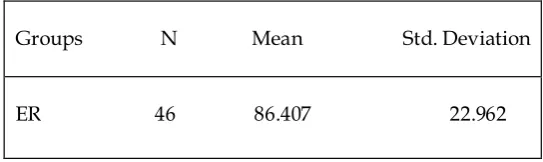
Table 1 indicates the descriptive statistics including the means and standard deviations for the groups as far as their reading fluency in the pretest is concerned.
Table 1 Descriptive Statistics: Reading fluency Scores (pretest)
Groups N Mean Std. Deviation
ER 46 86.407 22.962
15
IR 15 82.73 933.16
Table 2 summarizes further descriptive data (e.g. Means and standard deviations) for the groups as far as their vocabulary knowledge in the posttest is concerned.
Table 2 Descriptive Statistics: vocabulary knowledge Scores (pretest)
Groups N Mean Std. Deviation
ER 46 1547.83 312.509
IR 15 1520 709.207
The obtained results showed that the means of the ER (M= 86.407) and IR groups (M=82.73) were not different to begin with. Also the participants’ mean scores in vocabulary knowledge for both ER (M= 1547.83) and IR groups (M= 1520) did not turn out to be different. Since the two groups were almost similar in terms of their reading fluency, vocabulary knowledge, age range, and level of motivation at the beginning of the study, data from the posttest was compared to see the effect of treatment.
In order to satisfy the assumptions underlying parametric statistical tests, a Kolmogorov – Simirnov goodness- of – fit, was performed to find if the data was normal. The results of these tests showed that the significant levels for both variables: reading fluency (0.740) and vocabulary knowledge (0. 290) were more than 0.05. Therefore, the requirements of normal distribution were met and one could use parametric statistics to proceed testing the hypotheses.
Finding 1
Does an ER program improve Iranian EFL learners’ reading fluency?
Table 3 describes data (i.e. means and standard deviations) for the groups with regard to reading fluency in the posttest.
Table 3 Descriptive Statistics: Reading fluency Scores (posttest)
Instruction type N Mean Std. Deviation
16
ER 46 99.200 23.691
IR 15 53.376 336.18
As the comparison of the means across groups shows, the students in ER group
(M= 99. 200) performed better than the IR group (M=53.376). The comparison of
total means of the ER group shows that the total mean (M=86.407) of ER group has
increased in the posttest (M=99.200), however, the total mean of IR group (M=
82.73) does not show any outstanding increase compared to those in the posttest
(M=53.376); it is decreased dramatically.
The data was submitted to a two way ANOVA to measure statistical significance with treatments and gender as between group variables. Table 4 indicates the SPSS output reporting two – way ANOVA results for reading fluency.
Table 4 The Results of Two-way ANOVA for Reading fluency
Source Type III df Mean Square F Sig. Sum of Squres
Corrected Model 3731.163 2 1865.582 3.391 .072
Intercept 723100.296 1 723100.296 1314.249 .937
Instruction types 3717.280 1 3717.280 6.756 .041
Gender 8.050 1 8.050 0.015 .000
As it is indicated in lines 3 of Table 4 considering the first research question, since the amount of F (1.61) = 6.756 for instruction type does not exceed the critical value, it is obvious that there is a significant effect of instruction type (ER, IR) on students' reading fluency. In other words, since the F value (F = 6.756) is significant (Sig. =.041) and less than 0.05, instruction truly affects students' reading fluency. By comparing the means of both groups, one can infer that the ER group worked better than the IR group in which the participants were not exposed to a large amount of reading.
Also, regarding the second research question that aimed to find out the possible difference between genders in reading fluency as far as different types of instruction were involved, line 4 reveals that significant effect of gender (F = 0.015) was observed. In other words, since the F value (F = 0.015) is significant (Sig = 0.00) and less than 0.05, one can conclude that gender affects student’s reading fluency. Otherwise stated, through comparing the mean scores one could conclude that females had better achievements in reading fluency through the instruction type (ER).
17
Finding 2Does an ER program improve Iranian EFL learners’ vocabulary knowledge?
In order to find out the effect of independent variables (ER, IR, and gender) on vocabulary knowledge, another set of two - way ANOVA analysis was performed. Table 5 shows the means and standard deviations for the groups as far as vocabulary knowledge in the posttest is concerned.
Table 5 Descriptive Statistics: Vocabulary knowledge Scores (posttest)
Instruction type N Mean Std. Deviation
ER 46 1795.56 350.944
IR 15 1660 643.247
The comparison between means of vocabulary knowledge in pretest and posttest shows that the participants’ vocabulary knowledge is not increased through
treatment. Although the increase in participants’ vocabulary knowledge (M=
1795.56) in comparison to this amount in pretest (M= 1547.83) is not remarkable,
the effect of an ER treatment is observable. The comparison between the means of
IR group in the pretest (M= 1520) and the posttest (M=1660) indicates a slight
improvement in participants’ vocabulary knowledge.
As the comparison between the means of both IR and ER groups in the posttest with their corresponding amounts in the pretest indicates the effect of instruction type was not outstanding.
The data was also submitted to a two way ANOVA to measure statistical significance with treatments and gender as between group variables. Table 6 indicates the SPSS output reporting two – way ANOVA results for vocabulary knowledge.
Table 6 The Results of Two-way ANOVA for vocabulary knowledge
Source Type III df Mean Square F Sig. Sum of Squres
18
Corrected Model 1398779.8 2 699389.908 6.273 .125
Intercept 6.99 1 2.346 2104.373 .960
Instruction type 1393884.48 1 1393884.481 12.502 .124
Gender 2783.426 1 2783.426 0.025 .000
As it is indicated in line 3 of Table 6 the amounts of F and P values are 12.502 and
0.124, respectively. Considering the third research question, since the amount of F
value (F = 12.502 is not significant (Sig= 0.124) and more than 0.05, instruction
(ER/IR) does not significantly affect the students’ vocabulary knowledge. By comparing the means of both groups, one can infer that although the ER group performed slightly better than the IR group in vocabulary knowledge, this amount of improvement was not significant.
Therefore, we can safely accept the third null hypothesis which predicted that an extensive reading program versus an IR program does not have any significant effect on improving Iranian EFL learners’ vocabulary knowledge.
Moreover, regarding the fourth research question that aimed to explore the possible difference between genders in vocabulary knowledge as far as different types of instruction are involved, line 4 (Table 6) reveals that significant effect of gender ( F = 0.025), was observed. In other words, since the F value (F= 0.025) is significant (Sig = 0.00) and less than 0.05, gender affects students’ vocabulary knowledge. This provides support for the rejection of the fourth null hypothesis assuming no effect of gender on vocabulary knowledge as far as different instruction types are involved. In other words, an in-depth analysis indicates that females had better achievements in vocabulary knowledge through the instruction type (ER).
DISCUSSION AND CONCLUSION
This section presents an extended interpretation of the key findings from the present study. Overall, the findings reported, except for findings related to the third research question when the findings were marginal, added to the evidence contributed by many studies on ER and skills development in FL. The results of indicated that learners who were taught through the ER program performed remarkably better in reading fluency than did those who were trained through the traditional intensive reading method. However, further analysis indicated that the two groups treated through ER and IR did not differ in terms of their vocabulary knowledge at the end of treatment. Otherwise stated, the findings, confirmed the previous studies highlighting the positive relationship between reading extensively in second language and success in reading fluency (Robb & Susser, 1989; Lai, 1993; Bell, 2001; Sheu, 2003; Iwahori 2007 Al-Homoud &Schmitt, 2009). However, further investigation seems necessary as regards the influence of ER/IR on vocabulary development.
19
As mentioned earlier, students were provided with large amounts of reading through an ER method in an EFL context. The findings supported the important role of reading extensively in enabling students to deal with reading fluency difficulties. They confirmed the results of previous studies concerning the effect of automatic word recognition process gained through reading extensively on students’ reading fluency when engaged in reading tasks. The findings of this study are in line with Laberge and Samuels (1974), Mangubhai (2001), Renandya (2007), Al-Homoud and Schmitt (2008), Iwahori, (2008) who proposed incorporating an ER program in current traditional teaching reading approaches to empower students through helping them improve low – level reading skills (e.g. word decoding) which will enable them to recognize words automatically and comprehend reading texts faster and effortlessly. Furthermore, the findings confirmed Day & Bamfords’ claim indicating that ER is crucial in aiding the development of one of the most important components of fluent reading i.e. large sight vocabulary. It is thought possible that, at the end of the ER program the students were able to recognize more words. This is, in fact, to use Day & Bamfords’ terms, an implication of an increase in terms of sight vocabulary.
Therefore, it can be argued that reading extensively in the second language leads to successful readers who are able to read reading texts fluently, achieve better understanding and as Krashen (1993) pointed out experience the pleasure of reading.
With regard to vocabulary knowledge, the results indicated that although the amount of vocabulary learning was observable, it was not significant. Even though the results were not significant in terms of vocabulary gain, the difference between the results of the vocabulary size pretests and posttests was observable in terms of vocabulary growth. The results did not confirm the previous studies highlighting the positive relationship between ER and improvement in vocabulary knowledge.
One possible explanation for the findings is that, to use Huslstijn’s (2011) terms, incidental reading may have been slow and error – prone process with small vocabulary gains. Secondly, according to Schmitt (2008), the most part of learning occurred in ER is the result of guessing the meaning through the context, however, this learning strategy needs to be taught and it may be difficult for those readers are who not familiar with this strategy, especially for those readers who are supposed to read extensively at home without the help of a teacher in ER programs..
In addition, it can be argued that the nature of vocabulary learning in ER to use Warning and Nation’s (2004) terms is gradual and incremental. In other words, the students’ vocabulary gains may not have been increased dramatically but their vocabulary growth have been enhanced. This slight and gradual improvement can be considered a valuable movement toward the mastery of vocabulary knowledge.
20
Finally, the findings of this study may confirm Warring and Nations’ (2004) idea who believed inefficient pick up rates in ER studies may have been caused by invalid tests. Therefore this indicates designing more sensitive tests to measure small vocabulary gains as Warring and Nation recommend.
Several conclusions and interpretations, so far, were drawn from the explanations provided. If these interpretations and conclusions are correct, the findings, then, might have useful implications for teachers, educational policy makers, and EFL practitioners. However, one should bear in mind that these implications are hypothetical and need to be examined in real situations carefully, before they are implemented.
First of all, this study suggests that students should be provided with a lot of reading materials. Graded readers used in ER programs can be a good source of reading especially for language learners, with different levels of proficiency. These books are also a remarkable source of practicing word level reading skills such as word recognition. Since these books are simplified in terms of words and structures, students’ attention source is not drawn toward forms and students can focus on meaning and enjoy reading books.
Secondly, practicing word level reading skills like word recognition can lead to a fluent and effortless reading while the students are reading extensively. It can be very beneficial for those EFL learners who have problems reading texts fluently through being exposed to a lot of reading materials through ER. In other words, reading extensively in second language will enable them to practice word level skills and become more fluent readers.
ER programs must be designed so that interactions based activities are of upmost frequency. There should be continual interaction in ER program in order to gain better results. In other words, as Renandya (2007) and Rossule (2006) suggest an (ER+) which is an integrated type of ER should be implemented, to gain better results. As they maintain a successful extensive program (ER+) includes the views of integrationist. In such programs students should take part in post - reading activities. For example, students can role play the story, design a poster to advertise the book, or write a letter to the author, write a summary and discuss the texts. The last implication that emerges from the last one is for EFL practitioners who should attempt to increase awareness rising concerning the appropriate use of ER programs in their syllabuses.
This study opened new avenues of enquiry that warrants further investigation. Looking at possible differences between various groups of EFL learners, with an emphasis on the following perspectives, promises to be a rich area of research for those interested in issues related to effective EFL instruction.
21
As was mentioned earlier, only receptive knowledge of vocabulary learning was investigated. However, word – meaning relation is one aspect of vocabulary learning and the other aspect of vocabulary learning, that is, Depth of vocabulary learning ( e.g. learning infections, collocations, etc. ) need to be investigated. Moreover, productive knowledge (e.g. using different parts of speech of one word) of vocabulary learning can be scrutinized by designing tests which are able to elicit these productive aspects of vocabulary learning.
In the present study, the effect of ER on a lexical reading skill i.e. word recognition was explored. However, the benefits of ER for the improvement of post lexical reading skills can also be investigated. Moreover, the effect of ER on High-level skills like higher-level post-lexical reading processes, such as using basic cognitive and metacognitive strategies, and activating background schemas compared to its effect of low-level skills can be a promising area of research. Finally, It seems that advantages of ER extends to some other areas like, (a) spelling, vocabulary, grammar, and text structure, (b) knowledge of the world, (c) writing skills, and (d) higher possibility of developing a reading habit. Investigating such areas in relation to ER seems to be fruitful of enquiry for the future research.
References
Al-Homoud, F., & Schmitt, N. (2008). Extensive reading in a challenging Arabia. Environment: A comparison of extensive and intensive reading approaches in Saudi Language Teaching Research, 13, 383-402.
Bell, T. (2001). Extensive reading: Speed and comprehension. The Reading Matrix,
Retrieved October 28, 2010, from http://www.readingmatrix.
Com/archives/archives_ vo11_no 1.html.
Day, R. R., & Bamford, J. (1998). Extensive reading in the second language classroom.
Cambridge: Cambridge University Press.
Gorsuch, G. &Taguchi, E. (2007). Repeated reading for developing reading fluency
and reading comprehension: The case of EFL learners in Vietnam. System, 36, 253–
278. Retrieved November 21, 2010, Available online from
http://www.sciencedirect.com.
Gardiner, S. (2005). Building student literacy through sustained silent reading. Virginia:
Association for Supervision and Curriculum Development Alexandria.
Hudson, R. (2008). Reading fluency intervention strategies to build automaticity at multiple levels. Retrieved November 12, 2010, from University of Washington Web site:http://www.fldoe.org/workforce/pdf/product s_catalog.pdf
22
Iwahori, Y. (2007). Developing reading fluency: A study of extensive reading in
EFL [Electronic Version]. Reading in a Foreign language, 20, 70-91.
Kuhn, M. R., & Stahl, S. A. (2003). Fluency: A review of developmental and remedial
practices [Electronic Version]. Journal of Educational Psychology, 95, 3-21.
Krashen, S. (1993). The power of reading: Insights from the research. Englewood, CO:
Libraries Unlimited.
Lai, F.-K. (1993). The effect of a summer reading course on reading and writing skills
[Electronic Version].System, 21, 87–100.
LaBerge, D., & Samuels, S. J. (1974). Toward a theory of automatic information
processing in reading [Electronic Version]. Cognitive Psychology, 6, 293–323.
Lituanas, P. M., Jacobs, G. M., & Renandya, W. A. (2001). A study of extensive
reading with remedial reading students [Electronic Version]. International Journal of
Educational Research, 35, 217–225.
Mangubhai, F. (2001). Book floods and comprehensible input floods: providing
ideal conditions for second language acquisition. International Journal of Educational
Research, 35, 147–156.
Nation, I. S. P. (2006). How large a vocabulary is needed for reading and listening?
[Electronic Version] Canadian Modern Language Review, 63, 59–82.
Nuttall, C. (1982). Teaching reading skills in a foreign language. London: Heinemann
Educational Books.
Macalister, J. (2007). Implementing extensive reading in an EAP programme. ELT
Journal, 62, 248-257. Retrieved February 23, 2010, from http://www.eltj.oxfordjournals.org
Pilgreen, J. (2000). The SSR handbook: How to organize and manage a sustained silent
reading program. Portsmouth, NH: Heinemann
Perfetti, C. A. (1988). Verbal efficiency in reading ability. In M. Daneman, G. E.
Mackinnon, & T. G. Waller (Eds.), Reading research: Advances in theory and practice
(pp. 109-143). New York: Academic Press.
Perfetti, C. (1985). Reading ability. New York: Oxford University Press.
23
Rasinski, T. & Padak, N. D. (2005). Fluency beyond the Primary Grades: Helping
Adolescent Struggling Readers [Electronic Version]. ProQuest Education Journals,
13, 34-42.
Renandya, W. A. (2007). The Power of Extensive Reading [Electronic version].
RELC Journal, 38,133-151.
Rosszell, R. (2006). The role of Extensive Reading in second language vocabulary
acquisition. JALT, 12, 394-406. Retrieved November 25, 2010, Available online from
http://www.sciencedirect.com.
Schmitt, N. (2008). Review article: Instructed second language vocabulary learning.
Language Teaching Research, 12, 329-366. Retrieved November 21, 2010, Available
online from http://www.sagepublications.com
Sheu, S. P. H. (2003). Extensive reading with EFL learners at beginning level
[Electronic version]. TESL Reporter, 36, 8–26.
Shang, H., Briody, p., & Lin, Ch. (2006). The Effect of Extensive Reading Strategies on EFL Students. Retrieved February, 23, 2010, from I-Shou University, Department of Applied English Web site: http://www.isu.edu.tw/en1/index.htm
Taguchi, E., Gorsuch, G., & Sasamoto, E. (2006). Developing second and foreign
language reading fluency and its effect on comprehension: A missing link. The
Reading Matrix, 6, 43-64. Retrieved July 22, 2010, from http://www.readingmatrix.
24
THE IMPACT OF CONSCIOUSNESS-RAISING ON
LEARNING GRAMMAR: INTERVAL BETWEEN
TEACHING AND PRACTICE OR NOT?
Taher Sarhady
Sanandaj Technical University [email protected]
ABSTRACT
Despite the fact that teaching grammar is controversial in modern trends to methodology, grammar knowledge and its function is of great significance for all language skills. While most of the recent methods relegate explicit instruction of grammar, only a minority of them has adopted a compromising stance on the act through consciousness-raising (CR). Based on the fact that deductive teaching of grammar is inevitable in some educational situations, the present paper attempts to investigate the effect of CR on learning grammar in two different ways: immediate practice after teaching grammar and a time interval (at least two days) after it. Dividing the participants into two control and experimental groups and manipulating predetermined, distinctive techniques on each group, we have come to the conclusion that the former (immediate practice after teaching grammar consciously) is more effective than the latter. The outcome of the study can have valuable implications for teaching grammar to some foreign language learners in situations like Iran.
KEYWORD
Consciousness-raising, communicative capacity, critical period, usage, curriculum, saliency, noticing
1. Introduction
Despite the fact that modern trends to language pedagogy emphasize the significance of exposing learners to different components of language holistically, it seems that prioritizing one or some of them is inevitable according to some variables like learners needs, objectives of the course, time limitation and other circumstances. The relationship between some skills/sub-skills may also be so intimate and straight- forward that teaching and learning them in juxtaposition with one another are materialized. According to Allen (1983), if grammar is the skeleton of language, vocabulary is its flesh; therefore, students who do not learn grammar along with vocabulary will not be able to use the language for communication even in its narrower sense. Evidence shows that even material in which all the words look familiar may be impossible to understand unless the grammatical constructions have been learned. Accordingly, there is no conflict between developing a firm command of grammar and learning the most essential
25
words. In broader sense, teaching grammar deductively/inductively is closely linked to presenting vocabulary.
One of the issues surrounding grammar teaching is whether to teach it at all or not. Rutherford (1987) points out that teaching grammar has been central to and often synonymous with teaching foreign languages for the past 2500 years, but in the past several years many ESL/EFL professionals have come to assume that second language learning (SLL) is very much like first language acquisition. Their argument is that providing 'comprehensible input' is really all that a teacher can do to facilitate the process. Richards (1985) believes that the basic assumption of such an approach is that communicative classrooms provide a better environment for SLL and FLL than classrooms dominated by formal instruction. However approaches like these are intuitively appealing, there are no actual empirical studies proving that communicative classrooms foster better language learners than the more traditional teacher- dominated classrooms. Higgs and Clifford(1982) claim that there is equally appealing and convincing evidence that communicative approach can lead to the development of a 'broken, ungrammatical, pidginized form of the language' beyond which students can never really progress. Such students are said to have 'fossilized' in their acquisition of the language. In addition, Long (1986) advocates the view that prognosis in the long run is much better for those with overt formal instruction than for those without none. To strike a balance between these two extremes, Celce-Murcia and Hilles (1988) mention that there are no studies providing evidence that overt grammar instruction is essential and although comprehensible input may be necessary, it is by no means clear that it is sufficient for mastery of a second language.
Hatch (1985) elaborates on the point that people learning anything use at least two distinct strategies: analytical and holistic. Analytical learners by forming and testing hypotheses extract paradigms and rules from examples (rule learners), but holistic learners learn best by doing little or no analysis. Instead, they learn by exposure to large chunks of language in meaningful contexts (data-gatherers).To complicate matters further, learning strategies are affected by age variable as well. She (ibid) claims that children seem to prefer a holistic approach and even those adults who are more comfortable with an analytical style often approach a completely new learning situation holistically and later switch to an analytical one. Hyams (1986), Landau and Gleitman (1985), Aitchison (1985), Gleitman (1985) and Lightfoot(1983)advocate the concept of 'critical period' presented by Lenneberg (1967) and argue that during this period, the child learns whatever language s/he is exposed to automatically without instruction or correction provided that the environment is linguistically rich enough. Many researchers seem to agree that overt instruction in the L1 during this period is of no value to the child and may even tend to slow the process of acquisition. Aitchision (1985) thinks that this might also apply to children learning an L2 during the critical period. While Schumann(1987) believes that for many language learners a ‘pidginized communicative interlanguage’ is sufficient and a lexical approach or a
26
‘grammarless communicative syllabus’ may meet their needs, Higgs and Clifford(ibid) assert that such a course would work to the disadvantage of students who wish to develop higher levels of proficiency.
According to Richards and Renandya (2002), in the early parts of the twentieth century, grammar teaching formed an essential part of language instruction, so much so that other aspects of language learning were either ignored or downplayed due to the assumption that if somebody knew the grammatical rules of a language, s/he would be able to use it communicatively. This concept, however, was strongly challenged in the early 1970s and during this period, grammar teaching became less prominent. In recent years, grammar teaching has regained its rightful place in the language curriculum and there is now a general consensus that without a good knowledge of grammar, learners' language development will be severely constrained.
Thus, the issue now centres on questions like: which grammar items do learners need most and how are grammar items taught in the most efficient way? For example, Swan (2002) suggests that grammar teaching should be determined by the needs of the students and be based on the principles of comprehensibility and acceptability. Cook (ibid) supports the idea that since language patterns and regularities make up some aspect of grammar, knowledge of grammar is the central area of any language system; however important the other elements of language, they relate to each other through grammar. In some ways grammar is easy to study because it is highly systematic and its effects are obvious in learners' production. The most comprehensive recent conceptualization of grammar has been provided by Larsen-Freeman (1995). She sees grammar as a higher-order concept within linguistics having three interrelated dimensions: ‘form, meaning and use’. Her model thus attempts to integrate three aspects of linguistics that have traditionally been kept separate as syntax, semantics and pragmatics. It therefore shares a great deal in common with the model of systemic-functional grammar developed by Halliday (1985).
In view of the aforementioned controversial issues over the inclusion or exclusion of grammar and the degree of its centralization, the teachers' tasks in teaching grammar can be legitimately defended. In recent years, a lot of research studies have focused on the contribution of consciousness-raising (CR) to the learners in order to better establish L2 learning of grammatical forms. According to Schmidt (1990, 1993 and 2001), conscious attention to forms or what he calls 'noticing' or' saliency' has a great role in engaging the L2 learners' cognitive processes in instructional settings. Modern approaches to ELT quite rightly emphasize communication and communicative competence and more importantly what Widdowson (1990) calls a 'communicative capacity' (Preparing the learner to function in any possible real-life situation and be able to adopt appropriate communication strategies accordingly. But despite all this, attention to structures and 'focus on forms' has not been neglected. (cf. Long 1983 and 1991; Norris and
27
Ortega 2000, and Brown 2007). Moreover, second language researchers who advocate 'acquisition' rather than 'learning' conditions for L2 pedagogy do not deny the role of grammar and the need to raise the learners' consciousness about the forms. This they refer to 'monitor'(see Krashen and Terrel 1983) by which they mean the learner's use of conscious knowledge of grammar to monitor production (planning before and editing after production). Therefore, some conscious knowledge of grammar can function as a facilitating agent lubricating the learner's engagement in the act of communication and its acquisition thereof. Hawkins (1984) also looks at CR as a preliminary to L2 teaching and maintains that if the students know the kind of thing to expect, they are more receptive to it.
Ellis (2002) points out that CR offers an attractive alternative to traditional grammar practice; through carefully designed CR activities learners will develop an explicit knowledge of the grammar of the language which facilitates their ability to communicate. According to Ellis(ibid), CR does not involve the learner in repeated production due to the fact that the aim of this kind of grammar teaching is not to enable the learner to perform a structure correctly but simply to help him to know about it. Rutherford and Sharwood-Smith (1985) are in line with the above argument and claim that CR is considered as a ‘potential facilitator’ for the acquisition of linguistic competence and has nothing directly to do with the use of that competence for the achievement of specific communicative objectives. Nevertheless, they believe that no grammar teaching can take place without some CR occurring, i.e. even if the practice work is directed at the implicit learning of the structure and no formal explanation is provided, learners (particularly adults) are likely to try to construct some kind of explicit representation of the rule or what Ellis (ibid) calls ‘declarative’ rather than ‘procedural’ knowledge of language. While Ellis (2002) differentiates between CR and practice in nature, he explores some relationship in this respect. Accordingly, practice is directed at the acquisition of implicit knowledge of a grammatical structure to use language, but CR is directed at the formation of explicit knowledge about a language. Although CR does not contribute directly to the acquisition of implicit knowledge, it does so indirectly as follows. The acquisition of implicit knowledge involves three stages:
1. Noticing (the learner becomes conscious of the presence of a linguistic feature in the input, whereas previously s/he had ignored it.)
2. Comparing (the learner compares the linguistic feature noticed in the input with her own mental grammar and registers the gap.)
3. Integrating (the learner integrates a representation of the new linguistic feature into his/her mental grammar.)
Ellis (ibid) argues that the first two processes involve conscious attention to language, but the third one takes place at a very 'deep level' of which the learner is generally not aware.
28
In response to the question of how CR contributes to the acquisition of implicit knowledge, Ellis (ibid) presents two ways. Firstly, it contributes to the processes of 'noticing' and 'comparing' and, therefore, paves the grounds for the integration of new linguistic material although it will not bring about integration. This process is controlled by the learner and will happen only when the learner is 'developmentally ready'. Secondly, it results in explicit knowledge; thus, even if the learner is unable to integrate the new feature as implicit knowledge, s/he can construct an alternative explicit representation which can be stored separately and accessed when the learner is 'developmentally primed to handle it'. While Ellis (ibid) enumerates two major shortcomings of CR including its delayed effect and its inappropriacy for young learners and beginners, he concludes that CR constitutes an approach to grammar teaching which is compatible with current thinking about how learners acquire L2 grammar. It also constitutes an approach that accords with progressive views about education as a process of discovery through problem-solving tasks. By and large, Ellis (ibid) regards CR not as an alternative to communication activities but as a supplement.
Cook (1991) believes that mostly grammatical explanations have relied on the assumption that rules learnt consciously can be converted into processes that are known unconsciously, viz after a period of absorption, the conscious rules would become part of learners' unconscious ability to use the language. Rutherford (1987) has also been advocating CR in teaching grammar functioning as an aid to help the learners avoid some of the pitfalls rather than an end in itself. Perhaps we should remember that many graduates of universities who learnt English through traditional grammar classes have turned into fluent spontaneous speakers of English. This at least suggests that the conversion of conscious rules to non-conscious processes does indeed take place for some highly academic students.
Taking the literature into account, we intend to contrast the effects of two CR methods of teaching grammar on students' achievement. The assumption behind this proposition is that based on the experience gained in recent years students' progress through one of the methods(CR without interval between teaching and practice) must be more remarkable than that through the other(CR with interval between teaching and practice) because of circumstances specific to the context of our research which will be discussed later.
2. Method 2.1. Participants
Two hundred and twenty freshman students majoring in technical fields in Sanandaj Technical University in Iran were randomly selected. They were all male and their ages ranged from 17 to 20.These participants were in six classes (two groups were in the first term of their education and the other four freshman groups were in the second term).Besides, they were nearly homogeneous in terms of English background knowledge based on their scores on an entrance examination
29
previously administered by the state measurement and evaluation organization. It is necessary to say that the first two groups in our sample had passed eight credits and the other four groups had passed ten credits in English language in high schools and the technical institute. Therefore, the parallel groups were in the same boat in terms of the educational programmes exposed to.
2.2. Materials and Procedures
To assure the homogeneity of the parallel groups in terms of their present English grammar knowledge, students were given as pretest only the grammar section of the Nelson Test 100 A (Fowler and Coe, 1976). T-test analysis indicated no significant difference prior to treatment in English grammar knowledge for the first two parallel groups and for the other four parallel groups, respectively:[t(58)=.40,NS ]and [t(58)=.51,NS ].
To improve the students' grammar knowledge in accordance with the objective of the course, we assigned an English textbook containing gradable reading comprehension texts, vocabulary exercises and grammar section for any unit to be dealt with in a term. It is worth noting that the instructor of the six classes participating in the study was the present researcher to enhance the internal validity of the research. Techniques of teaching grammar run in all six classes were through CR, e.g. explanation, exemplification, cross-linguistic instruction and deduction. After receiving grammar instruction as mentioned above in any session the three control groups of students were asked to do the related grammatical exercises for their next class with an interval of at least two days and then the exercises were done in due course under the supervision of the researcher. However, the students in the three experimental groups were asked to do the grammatical exercises immediately after the teacher's presentation of grammar without an interval in the same session and the teacher supervised all processes of the task. In other words, the students of the experimental groups went through a treatment of teaching grammar by the same CR except for the variable of interval. With regard to the time dedicated to the courses by the authorities in the ministry of education, the first two parallel groups