R E S E A R C H A R T I C L E
Open Access
Selective and sensitive determination of
Cd(II) ions in various samples using a novel
modified carbon paste electrode
Refaat F. Aglan
1*, Mostafa M. Hamed
1and Hosam M. Saleh
2*Abstract
Based on the highly toxic effects of Cd(II) on the aquatic environment and the human health, identification and evaluation of such pollutants is required. Efficient and economic electrodes for sensitive and selective detection of this elementarevery important. In this study, carbon paste electrode (CPE) modified with lanthanum tungstate ion exchanger was assembled for potentiometric assay of Cd(II) ions. The prepared sensor exhibited a Nernstian response for Cd(II) within a wide working range of 8 × 10⁻⁸–1 × 10⁻¹mol L−1, with a slope of 29.4 ± 0.12 mV/decade. It has been specified by a low detection limit of 8 × 10⁻⁸mol L−1and a short response time of ~ 5 s and can be utilized efficiently up to 22 weeks without any significant errors in the potential determination. The standard electrode potentials,E°, and the isothermal temperature coefficient (dE°/dt) of the sensor were estimated at various temperatures. The obtained results indicated that the nominated electrodehasefficient performance to estimate Cd(II) in its pure solutions and other various real samples (river water, plant foodstuff, industrial wastewater, nickel cadmium battery, and fish tissue samples).
Keywords:Aquatic environment, Toxic metals, Carbon paste electrode, Lanthanum tungstate, Cadmium determination, Biological samples
Introduction
Due to its high toxicity, cadmium displays a trace element with high significance for efforts dedicated to ecological security (González Vázquez et al.2016). Cadmium’s quanti-tative determination in environmental samples is of in-creasing importance, since this heavy metal occurs as a contaminant, and enters diverse habitats via municipal and industrial waste streams. Exposure to cadmium and its compounds through inhalation, food, drinks, and smoking severely impacts the human cardiovascular (Larsson and Wolk 2015), renal (Osawa et al. 2001), gastrointestinal, neurological, reproductive, and respiratory systems (Friberg
2017) and even leads to several types of cancer in humans (Nawrot et al.2010). Cadmium is widely utilized in electro-plating, nuclear reactors, some industrial paints, and nickel-cadmium batteries. Reliable estimation of Cd(II) is
extremely important because of its poisonous nature. In addition, cadmium has many radioisotopes along with 109
Cd: its half-life of 462.9 days and decays by electron cap-ture to 109Ag with 88.03 keV emission gamma photons. This isotope is used as calibration source for X-ray and gamma spectrometry.109Cd is accelerated based on the nu-clear reaction 109Ag(p, n) → 109Cd (Sheha et al. 2013). Moreover, cadmium is used in reactors with other compo-nents as rods for controlling and shields for neutrons absorption. Various isotopes including113mCd can be pro-duced (Boffie et al.2012).
Inductively coupled plasma mass spectrometry (Dehairs et al. 1987), flame atomic absorption spectrometry (Afkhami et al.2006), electro thermal atomic absorption spectrometry (López-García et al. 2013), spectrophoto-metric (Ullah and Haque2010), atomic fluorescence spec-trometry (Wen et al.2009), differential pulse polarography (Taher 2003), and high-performance liquid chromatog-raphy (Yang et al.2005) are various instrumental methods used for estimation of cadmium ions. All these methods suffer from one or more major drawbacks like complexity,
* Correspondence:[email protected];[email protected];
1Analytical Chemistry Department, Hot Laboratories Center, Egyptian Atomic
Energy Authority, Cairo 13759, Egypt
2Radioisotope Department, Nuclear Research Center, Egyptian Atomic Energy
Authority, Dokki, Giza 12311, Egypt
high cost operation and requirement for well-controlled experimental conditions (Hamed et al.2015).
Application of ion-selective electrodes (ISEs) continues to be an interesting area of analytical research. The po-tentiometric method for quantitative estimation of cad-mium ions is the most appropriate technique for this manner. Potentiometric method includes some advantages such as high sensitivity, high selectivity, low cost, and rapid determination. Comparing with the conventional PVC polymeric membrane electrodes, potentiometric car-bon paste electrode (CPE) has unique characteristics such as convenient preparation, renewable surface, reaction sta-bility without internal solution, and low ohmic resistance (Zhang et al. 2012). Over the past years, various sensors designed for estimation of Cd(II) have been developed to suffice a request for Cd(II)-selective measuring devices, which reliably enable the potentiometric monitoring of cadmium ions in samples of various sources (Rezaei et al.
2008b). As a major drawback of reported developments, the powerful share of these electrodes show at least one of the subsequent frequently observed blemish: limited linear range of concentration, insufficient stability, lack of selectiv-ity, inadequate range of working pH value, and substantial influences of other metal ions. The principle motivation be-hind this work was to develop and describe a Cd(II)-CPE sensor based on lanthanum tungstate ion exchanger as an ionophore for efficient determination of Cd(II) ion in differ-ent real samples. The suggested electrode was utilized to detect Cd(II) in aqueous media through different operating factors, namely the kind of plasticizers, the amount of the sensing material, impact of diverse ions, and temperature.
Materials and experimental methods Materials
Analytical reagents and bi-distilled water were utilized in all tests. Cadmium chloride was provided from Merck. Lan-thanum nitrate, sodium tungstate, sodium tetraphenylborate (NaTPB), ando-Nitrophenyloctylether (o-NPOE) were pur-chased from the company Fluka. Hydrochloric acid (HCl), nitric acid (HNO3), sodium hydroxide (NaOH), dibu-tylphthalate (DBP), diocdibu-tylphthalate (DOP), and dioctylseba-cate (DOS) were supplied from BDH. Tricresylphosphate (TCP), synthetic graphite powder (1–2μm), and high mo-lecular weight polyvinyl chloride (PVC) powder were ob-tained from Sigma-Aldrich.
Equipment/apparatus
To accomplish the potential determination, a Jenway 3505 pH-meter was utilized. The pH meter was con-nected to a reference electrode (Ag-AgCl twofold inter-section, Metrohm 6.0726.100), which was associated with the suggested sensor. The Thermo-Orion 3 Stars, USA, was utilized to follow the pH. A techno circulator thermostat model C-100 (Cambridge-England) was used
to control the temperature of the test solution. An in-ductively coupled plasma optical emission spectrometry (ICP-OES) was used to investigate the metal ions con-centration in various solutions.
Preparation of ionophore lanthanum tungstate
To prepare the ionophore lanthanum tungstate, 0.05M so-dium tungstate solution (200 ml) was added to 0.05M lan-thanum nitrate solution (100 ml). To regulate the pH of the reaction solution, dilute solutions of HCl or NaOH were used. A gel was obtained during this process and set-tled to the reaction vessel’s bottom within a reaction time of 24 h. This gel was subsequently introduced to filtration, washing using bi-distillated water, and then to drying at 50 °C. Conversion of the produced material into the suit-able form was accomplished by changing the pH value of the solution (Husain et al.1982).
Selectivity (sorption) studies
To evaluate the selectivity of lanthanum tungstate material over various metal ions, into Erlenmeyer flasks, add 200 mg of lanthanum tungstate with 20 mL (0.001 M) of different metal nitrates and shake for 24 h at 25 °C. The metal ion concentration left in the supernatant was estimated utilizing inductively coupled plasma optical emission spectrometry (ICP-OES). Mathematically, the Kd values can be expressed by the subsequent equation:
kd¼I-F F
V mðml g
−1Þ
Here, I represent the initial cation quantity in the aqueous phase, F describes the final cation amount in the solution,Vis the solution’s volume (mL), whereas m
expresses the mass of cation-exchanger (g).
Preparation of the electrode
The produced ion-selective sensor was prepared by blending the appropriate quantities of highly pure graph-ite powder, lanthanum tungstate, and solvent mediator. This mixture was carefully blended in the mortar. The produced sensing carbon paste was introduced into the electrode body. The surface of the paste was swept by a piece of paper to obtain a perfect smooth surface. After the designing process, the sensors were put in a dry and cold place until utilization. Unmodified electrode was prepared in a comparable way without incorporation of lanthanum tungstate in graphite powder and immersed in the fresh prepared solution of 10−4mol/L Cd(II) (Aglan et al.2014; Aglan et al.2012).
Samples analysis
several actual samples including river water, industrial wastewater, plant foodstuff (carrot), rechargeable batter-ies waste (nickel-cadmium battery), and fish tissue.
Whatman filter paper no. 40 was used to filtrate the collected samples of wastewater before the analysis process. Diluted solutions of HNO3 or NaOH were added precisely to adjust the pH values of samples to achieve the desired value (Afkhami et al. 2012). After-wards, 10 mL of this solution was released and subjected to analysis process using the candidate CPE.
For examination of cadmium in fish tissue sample, the fish sample was bought from a local fish market. About 1 g of dried fish tissue was transferred into a digestion vessel before the addition of 6 mL of H2O2(30%) and 5 mL HNO3 (70%) for complete digestion. After immedi-ate assembling of the reaction vessel, it was slightly swirled and put into a preheated furnace at 180 °C for about 90 min. (Aglan et al.2018). At that point, 6 mL of 1 M K2S2O8was added, and the mixture was heated for 30 min. A while later, the processed fish sample was cured for cooling at room temperature. Finally, the pH value of the digestion cocktail was adjusted to the de-sired value and diluted to the proper volume by using bi-distilled water. A portion of the liquefied sample was subjected to subsequent analysis processes.
The examination of cadmium in plant foodstuff (rots) was accomplished by incineration of about 1 g car-rot in at 500 °C for 6 h. By descending the temperature to the room temperature, the remaining ash was care-fully liquefied by adding 5 mL of HNO3 diluted with water (1 + 1 v/v). This mixture was heated on a hotplate until almost complete desiccation was reached. The ob-tained residues were dissolved in 20 mL of bi-distilled water and filtrated by filter paper. The filtrate was di-luted by 50 mL of bi-distilled water (Khaloo et al.2012). Aliquots of the solution were introduced to the pro-posed methodology for Cd(II) investigation.
Moreover, Cd(II) was introduced to further determin-ation in rechargeable batteries by using spent Ni-Cd bat-tery. The spent batteries were collected and dismounted in the different parts of the cell including the steel case, cathodes, polymeric separators, and dynamic cell mater-ial. After digestion, treatment, and liquefaction, the pH values of the sample solutions were adjusted to the re-quired value as reported in literature (Reddy and Priya
2006). Then, the cadmium concentration was evaluated using the developed CPE sensor.
Results and discussion
A lanthanum tungstate cation-exchanger was prepared for using in preparation of selective CPE aims to qualify the se-lectivity of this innovative electrode towards separate cations. In this manner, distribution coefficient (Kd) of lanthanum
tungstate cation exchanger towards different metal ions was determined in different aqueous media as illustrated in Table1.
Based on the reported values of Kd it is clearly ob-served that Cd(II) is strongly adsorbed from all investi-gated aqueous media. On the other side, other twenty cations have showing low Kd values according to their weak adsorption. The superior isolation of Cd(II) from various examined media confirmed the efficiency and se-lectivity of exchanger material for this element and dem-onstrated characteristic adsorption and ion selectivity. Therefore, it can be concluded that lanthanum tungstate displayed high selectivity for cadmium and can be desig-nated as an appropriate sensing material in the prepar-ation of Cd(II)-CPE.
The ISE response is attributed to the electron-exchange mechanism at the membrane- contact inter-face and ion exchange at the membrane-solution interface (Bailey1980).
Impact of amount of the sensing electrode material
The quantity of the sensing electrode material (iono-phore) is one of most significant imperative parameters affect the performance of potentiometric sensors. The importance of quantity is due to the quite influences on
Table 1Kd(ml/g) of metal ions on lanthanum tungstate as a cation exchange material
No. Metal ions De-mineralized water 0.1 M HNO3 0.5 M HNO3
1 Cd(II) 1650.0 1100.5 920.0
2 Al(III) 149.2 130.5 56.5
3 Ag(I) 350.0 320.2 230.5
4 Na(I) 120.0 105.5 89.5
5 Sr(II) 200.5 185.5 79.5
6 Fe(III) 120.5 102.5 89.5
7 Mn(II) 130.5 90.6 60.5
8 Pb(II) 156.5 110.2 48.6
9 Co(II) 137.5 109.2 86.5
10 Gd(III) 210.3 189.5 120.5
11 Zn(II) 156.5 125.3 99.8
12 Cu(II) 158.6 118.5 89.5
13 Hg(II) 210.4 189.3 102.5
14 In(III) 102.2 89.5 75.8
15 La(III) 410.7 320.3 269.5
16 Ni(II) 284.5 210.5 185.5
17 Be(II) 215.9 160.5 120.5
18 Cs(I) 132.5 85.9 55.9
19 Bi(III) 215.5 160.2 120.2
20 Sm(III) 410.5 320.5 250.2
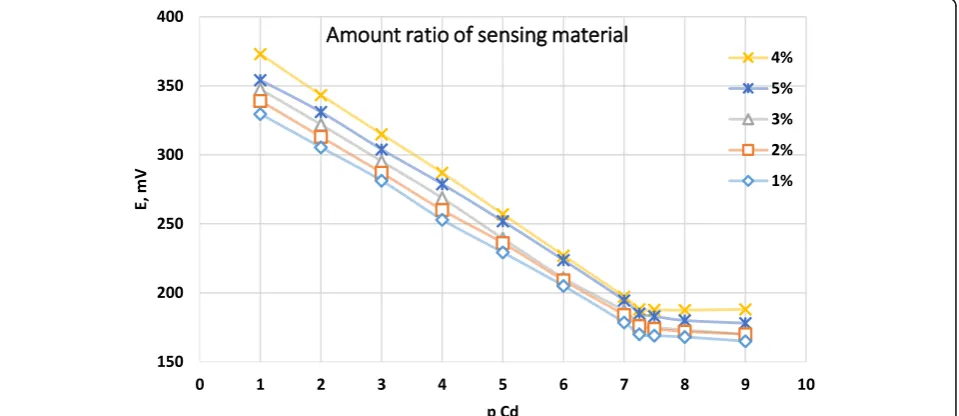
the efficiency of sensors despite their selectivity and de-tection limits. Therefore, the performance of developed CPE was investigated due to the impact of the quantity of the sensing material at different ratios (1%, 2%, 3%, 4%, and 5%) relative to o-NPOE as a solvent mediator. Figure1is showing the calibration diagrams and indicat-ing that the best performance was achieved in the case of using 4% of the sensing electrode material as it gives the closest slope to the Nernstian value (29.4 ± 0.12 mV/ decade) in a linear range (8 × 10⁻⁸–1 × 10⁻¹mol/L), and the lowest limit of detection (LOD) (8 × 10⁻⁸mol/L). Ac-cordingly, 4% lanthanum tungstate was the optimum ratio suitable for the preparation of the modified electrode used in the following experiments.
Influence of solvent mediators
Various solvent mediators (o-NPOE, DBP, DOP, TCP, and DOS) were introduced to potentiometric deter-mination, and the acquired results were presented in Fig. 2. The subsequent calibration diagram was ap-plied to assess the potentiometric performance of the CPE for various solvents by determining the Nerns-tian response, linear domains, and LODs. Moreover, the CPE’s life span can be expected for the most ap-propriate CPE. The results revealed that o-NPOE is the most suitable solvent mediator for potentiometric determination of Cd(II) ions in aqueous solutions. This outcome agrees with the normal pattern of affectability from the dielectric consistent estimations of these plasticizers (Ali et al. 2014). The most ele-vated affectability was acquired by using o-NPOE (dielectric consistent = 24) as solvent mediator. In
view of the above result, o-NPOE is recommended as solvent mediator in the case of using CPE sensors for determination of Cd(II) ions.
Effect of hydrogen ion concentration
In order to investigate the effect of hydrogen ion con-centration on the response behavior of the modified Cd(II)-CPE, the potentials were measured for 1.0 × 10⁻³ and 1.0 × 10⁻⁴mol L−1 of Cd(II) ions in different solu-tions of different pH values (1–10). As previously men-tioned in experimental section, dilute solutions of HCl or NaOH were used to adjust the pH value. The results conducted that the potential response remained constant within the range of 2.0–7.5 as shown in Fig.3. However, the modified Cd(II)-CPE performed significantly in the pH range of 2.0–7.5 as a result of noninterference be-tween H+or OH−within this range. The fluctuations oc-curred at pH values less than 2 or more than 7.5 as a result of decreasing the efficiency of Cd(II)-CPE, and this behavior could be explained as due to the competi-tion with hydrogen ion in high acidity and the formacompeti-tion of the soluble and insoluble Cd(II) ion hydroxyl com-plexes in high alkalinity (Aglan et al.2012).
Influence of test solution temperature
In this experiment, the modified Cd-ISE was evaluated in test solutions at different temperatures (10, 25, 30, 40, 50, and 60 °C). The electrode exhibited a good Nernstian behavior in the temperature range (10–60 °C). The standard cell potentials (E°cel) were estimated at various temperatures from the respective calibration plots as the intercepts of these plots at pCd (II) = 0 and were used to estimate the isothermal temperature coefficient (dE°/dt)
of the cell according to the following equation (Antropov1972):
Eocel¼Eocelð25
∘
CÞ ðdEo=dtÞcellðt−25Þ
Plot ofE°celversus (t−25) produced a beeline as dem-onstrated in Fig. 4. The slope of this beeline was taken as the isothermal temperature coefficient of the cell. It amounts to 0.00079 V/°C.
The standard potential of the reference electrode (Ag/ AgCl, 3KCl) was calculated at the different temperatures using the following equation:
EoAg=AgCl;3KCl¼0:22234-0:000669ðt-25Þ
The standard potential of the reference electrode at 25 °C amounts to 0.22234 V and its isothermal temperature coefficient amounts to 0.000669 V/°C. The values of the standard potentials of Cd(II)-selective elec-trode were evaluated at various temperatures corre-sponding to the following relation:
EoreferenceþEocell¼Eoelectrode ð5Þ
A plot ofEoelectrode versus (t−25) gave a beeline. The slope of this beeline was taken as isothermal temperature coefficient of the Cd(II) electrode. It amounts to 0.00064
Fig. 2Calibration of Cd(II)-CPE sensor corresponding to the type of solvent mediator
V/°C. The small values of (dE°/dt) cell and (dE°/dt) elec-trode reveal the high thermal stability of the elecelec-trode within the investigated temperature range.
Response time, reversibility, lifetime, and reproducibility of the modified Cd(II)-CPE
Response time, reversibility, and duration of an elec-trode’s life are essential factors for any potentiometric sensors in analytical performance (Bagheri et al. 2016). The average response time reflects the time needed by a sensor, until a stable potential ± 1 mV of the final value of equilibrium is reached; this value was determined by successively immersing the electrode in a set of solutions of the target ion, each differing in their concentration by
a factor of ten (Ganjali et al.2009). The response time of the optimal modified Cd(II)-CPE was recorded by varying the Cd(II) ion concentration from 10−5to 10−2 mol L−1 (Fig. 5). As a result, the electrode reached the equilibrium value very quickly after ~ 5 s.
In order to determine the electrode’s reversibility, a comparable technique was completed in the reverse order of concentrations, hence, starting with the highest concentration and ending with the lowest concentration. The reversibility of the electrode response was clearly demonstrated by this approach. However, the time re-quired until equilibrium value was reached (~ 15 s). It was longer when starting with higher concentration than observed for the low to high concentration order (~ 6 s).
Fig. 4Variation of the cell electromotive force with the temperature for Cd(II)-CPE sensor
This behavior can be explained by the fact that residual Cd(II) ions might still be attached to the CPE surface, which significantly occupies the free sites at the surface. Hence, the proposed Cd(II)-CPE is not able to rapidly detect those Cd(II) ions present in the majority of the solution and consequently reduced the response time.
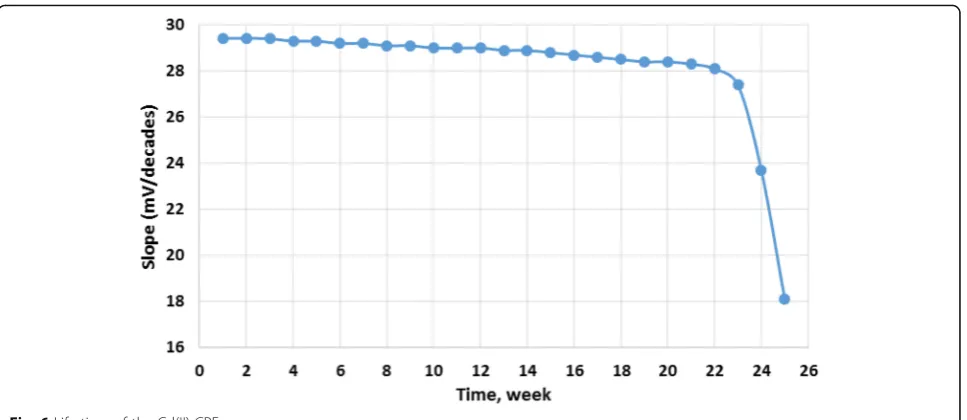
The lifetime of the modified CPE was estimated by devel-oping the calibration diagram under optimum conditions at extended time. The lifetime of proposed CPE reached 22 weeks without critical change in slopes of the calibration diagram as shown in Fig.6. After this period, the slope of the calibration diagram was fallen dramatically. Sets of six electrodes with best content of the sensing electrode mater-ial were prepared, and their performances were investigated in contact with Cd(II) ions to validate the reproducibility of the fabricated Cd(II)-CPE sensor. The results presented the
average of slopes, detection limits, and linear dynamic ranges as 29.40 ± 0.12 mV decade−1, 8 × 10⁻⁸mol L−1, and 8 × 10⁻⁸–1 × 10⁻¹mol L−1, respectively.
Evaluation of the selectivity
The most essential characteristic of sensors is their se-lectivity controlling its utilization scope and applicability in real sample determination. “Selectivity” is known as the response of ion-selective sensors towards the target ion when interfering ions exist as mixture in the solu-tion. Selectivity coefficients for Cd(II)-CPE towards vari-ous inorganic cations were assessed using the “matched potential method” (Gupta et al.2006). The log KCd(II), B values were measured by the MPM within the range of 10−3–10−4as presented in Fig.7.
Fig. 6Life time of the Cd(II)-CPE sensor
This illustration confirmed that all tested ions cause neglected disturbance for the working Cd(II)-CPE. Moreover, the performance of the suggested sensor was validated at different concentrations of various cations. Non-significant distinction can be defined for slopes presented in the calibra-tion graph of tested cacalibra-tions except the target cacalibra-tion, Cd(II), as shown in Fig. 8. Consequently, the modified sensor
achieved high efficiency and proper selectivity to determine Cd(II) ions dissolved with various interfering cations.
The modified CPE compared with other previously designed electrodes
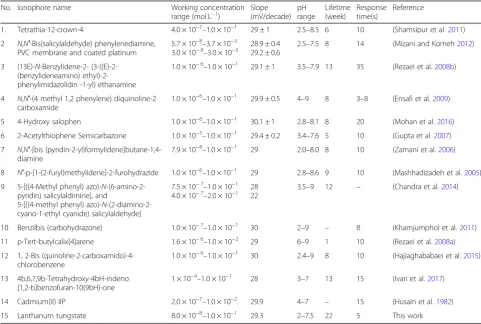
Table2illustrated the proposed Cd(II)-CPE and some of the previously reported sensor systems corresponding to
Fig. 8Calibration graphs of Cd(II)-CPE sensor for different ions
Table 2Potentiometric parameters of the modified Cd(II)-CPE and other electrodes
No. Ionophore name Working concentration
range (mol L−1) Slope(mV/decade) pHrange Lifetime(week) Responsetime(s) Reference
1. Tetrathia-12-crown-4 4.0 × 10⁻⁷–1.0 × 10⁻¹ 29 ± 1 2.5–8.5 6 10 (Shamsipur et al.2011)
2 N,N′-Bis(salicylaldehyde) phenylenediamine, PVC membrane and coated platinum
5.7 × 10⁻⁸–3.7 × 10⁻³
3.0 × 10⁻⁸–3.0 × 10⁻³ 28.9 ± 0.429.2 ± 0.6 2.5–7.5 8 14 (Mizani and Komeh2012)
3 (13E)-N-Benzylidene-2- (3-((E)-2-(benzylideneamino) ethyl)-2-phenylimidazolidin -1-yl) ethanamine
1.0 × 10⁻⁶–1.0 × 10⁻¹ 29.1 ± 1 3.5–7.9 13 35 (Rezaei et al.2008b)
4 N,N′-(4 methyl 1,2 phenylene) diquinoline-2 carboxamide
1.0 × 10⁻⁶–1.0 × 10⁻¹ 29.9 ± 0.5 4–9 8 3–8 (Ensafi et al.2009)
5 4-Hydroxy salophen 1.0 × 10⁻⁶–1.0 × 10⁻¹ 30.1 ± 1 2.8–8.1 8 20 (Mohan et al.2016)
6 2-Acetylthiophene Semicarbazone 1.0 × 10⁻⁵–1.0 × 10⁻¹ 29.4 ± 0.2 3.4–7.6 5 10 (Gupta et al.2007)
7 N,N′-[bis (pyridin-2-yl)formylidene]butane-1,4-diamine
7.9 × 10⁻⁸–1.0 × 10⁻¹ 29 2.0–8.0 8 10 (Zamani et al.2006)
8 N′-p-[1-(2-furyl)methylidene]-2-furohydrazide 1.0 × 10⁻⁶–1.0 × 10⁻¹ 29 2.8–8.6 9 10 (Mashhadizadeh et al.2005)
9 5-[((4-Methyl phenyl) azo)-N -(6-amino-2-pyridin) salicylaldimine], and
5-[((4-methyl phenyl) azo)-N -(2-diamino-2-cyano-1-ethyl cyanide) salicylaldehyde]
7.5 × 10⁻⁷–1.0 × 10⁻¹ 4.0 × 10⁻⁷–2.0 × 10⁻¹
28 22
3.5–9 12 – (Chandra et al.2014)
10 Benzilbis (carbohydrazone) 1.0 × 10⁻⁷–1.0 × 10⁻¹ 30 2–9 – 8 (Khamjumphol et al.2011)
11 p-Tert-butylcalix[4]arene 1.6 × 10⁻⁶–1.0 × 10⁻² 29 6–9 1 10 (Rezaei et al.2008a)
12 1, 2-Bis (quinoline-2-carboxamido)-4-chlorobenzene
1.0 × 10⁻⁶–1.0 × 10⁻¹ 30 2.4–9 8 10 (Hajiaghababaei et al.2015)
13 4b,6,7,9b-Tetrahydroxy-4bH-indeno [1,2-b]benzofuran-10(9bH)-one
1 × 10⁻⁴–1.0 × 10⁻¹ 28 3–7 13 15 (Ivari et al.2017)
14 Cadmium(II) IIP 2.0 × 10⁻⁷–1.0 × 10⁻² 29.9 4–7 – 15 (Husain et al.1982)
linearity range, the Nernstian slope, the range of working pH value, response time, and service time.
This comparison has clearly indicated that the modi-fied Cd(II)-CPE sensor is favorable and that the previ-ously reported sensors in terms of response service time and response time are the two most significant criteria characterizing ion selective electrodes (Rezaei et al.
2008b). Among the compared sensors, the modified Cd(II)-CPE sensor displayed the fastest response (5 s) and the longest durability (22 weeks). Moreover, it should be emphasized that the Cd(II)-CPE sensor per-formed suitably with stable performance within the ex-tend range of pH value (2.0–7.5). As regards to its Nernstian slope, the modified Cd(II)-CPE sensor was in agreement with the other previously reported electrodes.
Application of the modified CPE in determination of Cd(II) ions in authentic samples
The suggested CPE was examined to determine Cd(II) ions in broad variety of true samples,such as river water, indus-trial wastewater, plant foodstuff (carrot), rechargeable battery waste, and fish tissue. These samples were also analyzed by ICP-OES to evaluate the quality of the nominated electrode. The experimental data obtained by the suggested CPE were in perfect agreement with the results of ICP-OES.
Table3illustrated the recovery values of 97.5–98.9% for the proposed Cd(II)-CPE sensor. Furthermore, the relative standard deviation (RSD) values for four replicate estima-tions were not more than 1.2. These values confirmed the reproducibility and precision of the suggested sensor with certainly expedient recovery values. Thus, the proposed
Table 3Potentiometric determination of Cd(II) ion using the proposed modified electrode
Samples [Hg(II)] (μg L−1)
Taken Cd(II)-CPE ICP-OES
Found Recovery (%) RSD (%) Found Recovery (%) RSD (%)
River water 5.0 4.945 98.9 0.948 5.01 100.2 1.125
7.5 7.395 98.6 0.211 7.448 99.3 1.005
Industrial wastewater 5.0 4.915 98.3 0.708 4.970 99.4 0.104
7.5 3.358 98.1 0.512 7.432 99.1 1.006
Rechargeable battery waste 5.0 4.895 97.9 0.197 4.985 99.7 1.125
7.5 7.313 97.5 0.221 7.418 98.9 1.256
Plant foodstuff (carrot) 5.0 4.910 98.2 0.194 4.995 99.9 1.258
7.5 7.313 97.5 0.198 7.665 102.2 1.369
Fish tissue 5.0 4.915 98.3 1.004 4.96 99.2 1.024
7.5 7.380 98.4 1.215 7.59 101.2 1.257
Table 4Evaluation of intra- and inter-day precision and accuracy of the Cd(II)-CPE sensor
Samples [Cd(II)]
taken (mg mL−1)
Intra-day Inter-day
[Cd(II)] found (mg mL−1)
Recovery (%)
SD RSD* (%)
[Cd(II)] found (mg mL−1)
Recovery (%)
SD RSD** (%)
Pure solution 0.25 0.247 98.8 0.003 1.26 0.247 98.8 0.005 2.02
0.30 0.296 98.6 0.007 2.36 0.296 98.6 0.002 0.67
River water 0.25 0.249 99.6 0.007 2.81 0.247 98.8 0.003 1.21
0.30 0.294 98.0 0.005 1.70 0.299 99.6 0.004 1.34
Industrial wastewater 0.25 0.243 97.2 0.006 2.47 0.245 98.0 0.006 2.45
0.30 0.293 97.6 0.008 2.73 0.296 98.6 0.008 2.70
Rechargeable battery waste
0.25 0.248 99.2 0.006 2.42 0.247 98.8 0.006 2.43
0.30 0.291 97.0 0.005 1.70 0.294 98.0 0.001 0.34
Plant foodstuff (carrot) 0.25 0.243 97.2 0.003 1.23 0.245 98.0 0.009 3.67
0.30 0.292 97.3 0.004 1.37 0.293 97.6 0.006 2.05
Fish tissue 0.25 0.245 98.0 0.004 1.63 0.248 99.2 0.003 1.21
0.30 0.293 97.6 0.005 1.70 0.298 99.3 0.006 2.01
*
Mean of four experiments carried out on the same day
**
sensor can be nominated for accurate and precise evalu-ation of Cd(II) ions in aqueous solutions.
Method validation
Concentration range and linearity
Calibration graphs resulting from plotting the poten-tial values in dependence to the corresponding final concentration values turned out to be linear in a con-centration range as referred to in Fig. 1.
Detection and quantification limit
The quantification limit (LOQ) was evaluated due to the determination of minimum concentration, which can be estimated corresponding to ICH Q2(R1) recommenda-tions; below this concentration, the calibration graph is no more linear. For the proposed sensor, this value was determined as 8.0 × 10⁻⁸mol L−1. The detection limit (LOD) was established by estimating the lowest concen-tration of Cd(II) ions, which can be readily detected; this value amounted to 8.0 × 10⁻⁸mol L−1. The following equations were applied according to ICH 2005 to calcu-late LOQ and LOD, respectively (Gumustas and A. Ozkan2011):
LOQ = 10Sa/b LOD = 3.3Sa/b
Sa reflects the standard deviation of the regression line’s intercept,bquantifies the calibration curve’s slope.
Specificity
The specificity was studied by detecting any interference caused by frequently occurring metal ions. As illustrated in Fig.7, it turned out that these metal ions have not nega-tively impacted the results of the nominated method.
Precision and accuracy
To provide profound data on the proposed method’s ac-curacy, results of the assay for Cd(II) determination in various real samples were compared with results obtained
by ICP-OES measurements. By statistical analysis of the results in terms of calculating recovery and relative stand-ard deviations, no significant deviations in terms of accur-acy and precision were observed (see Table3).
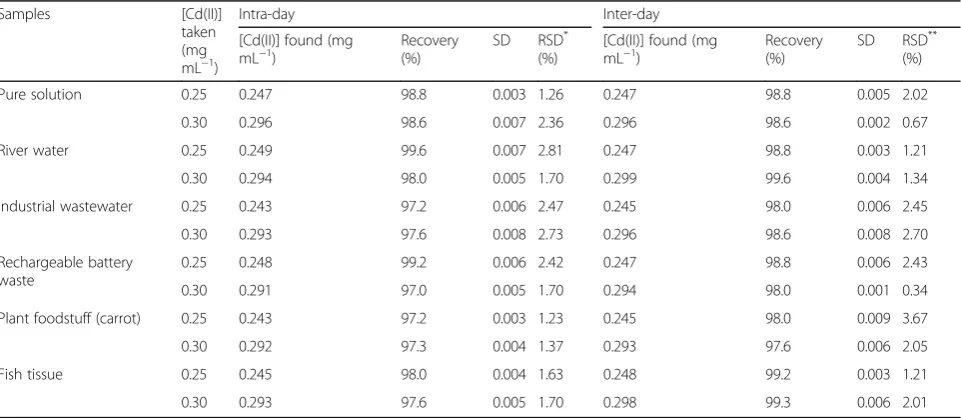
Precisions were identified using two concentrations of Cd(II) with four replicates; these tests were carried out at both inter-day and intra-day. The resulting relative standard deviations were outstandingly low (Table 4), as a clear indication of the considerable repeatability of intended method.
The response characteristics of the developed carbon paste electrode were investigated and collected in Table5.
Conclusion
The fabricated Cd(II)-CPE modified with lanthanum tungstate was prepared for the potentiometric measure-ment of Cd(II) ions in several aqueous real samples. With high performance and selectivity, the suggested sensor electrode has been efficiently determined Cd(II) ions present in various real samples. The proposed CPE has many beneficial characteristics in comparison to alternative techniques, such as high performance, select-ivity, and sensitivity in a vast variety of applications. Moreover, it is long-lived for more than 22 weeks and stable in wide range of pH values with high calibration graph slope. The suggested CPE was used efficiently for the estimation of Cd(II) ion in river water, industrial wastewater, vegetable food products, spent nickel cad-mium battery, and fish tissue samples.
Abbreviations
CPE:Carbon paste electrode; DBP: Dibutylphthalate; DOP: Dioctylphthalate; DOS: Dioctylsebacate; ICP-OES: Inductively coupled plasma optical emission spectrometry; ISE: Ion-selective electrode; LOD: Limit of detection; LOQ: Limit of Quantification; NaTPB: Sodium tetraphenylborate;o-NPOE:o
-Nitrophenyloctylether; PVC: Polyvinyl chloride; RSD: Relative standard deviation; TCP: Tricresylphosphate
Acknowledgements
The authors would like to acknowledge Dr. Martin Koller, University of Graz, Office of Research Management and Service, c/o Institute of Chemistry Graz, Austria for his excellent support in improving the language of the manuscript.
Funding
This work has not been financially supported.
Availability of data and materials
Research data have been provided in the manuscript.
Authors’contributions
RFA and MMH suggested the idea, designed the experiments, performed the data analysis, reviewed the literature, and drafted the manuscript. HMS provided useful insight into the work, provided guidance in designing, writing, and revising the manuscript and assisted with the data analysis and finally carried the publication duties. All authors read and approved the final manuscript.
Ethics approval and consent to participate
Not applicable. Table 5Response characteristics of Cd(II)-CPE sensor
Parameter
Plasticizer o-NPOE
Ionophore Lanthanum tungstate
Slope mV/decade 29.4 ± 0.12
Correlation coefficient 0.999
Linearity range (mol L−1) 8 × 10⁻⁸–1 × 10⁻¹
Lower detection limit (mol L−1) 8 × 10⁻⁸
Response time(s) 5
Working pH range 2.0–7.5
Temperature °C 25
Consent for publication
Not applicable.
Competing interests
The authors declare that they have no competing interests.
Publisher’s Note
Springer Nature remains neutral with regard to jurisdictional claims in published maps and institutional affiliations.
Received: 6 November 2018 Accepted: 14 January 2019
References
Afkhami A, Bagheri H, Khoshsafar H, Saber-Tehrani M, Tabatabaee M, Shirzadmehr A. Simultaneous trace-levels determination of Hg (II) and Pb (II) ions in various samples using a modified carbon paste electrode based on multi-walled carbon nanotubes and a new synthesized Schiff base. Anal. Chim. Acta. Elsevier. 2012;746:98–106.
Afkhami A, Madrakian T, Siampour H. Flame atomic absorption spectrometric determination of trace quantities of cadmium in water samples after cloud point extraction in Triton X-114 without added chelating agents. J Hazard Mater. 2006;138(2):269–72.
Aglan RF, Mohamed GG, Mohamed HA. Determination of aluminum (III) by using a modified carbon paste selective electrode. J Pharm Res. 2012;5(9):4748–54. Aglan RF, Rizk MS, Mohamed GG, El-Wahy AH, Mohamed HA. Preparation and
properties of a new carbon paste iron selective electrodes and their applications. Am J Anal Chem. 2014;5(02):140–8.
Aglan RF, Saleh HM, Mohamed GG. Potentiometric determination of mercury (II) ion in various real samples using novel modified screen-printed electrode. Appl Water Sci. 2018;8(5):141–52.
Ali TA, Aglan RF, Mohamed GG, Mourad MA. New chemically modified screen-printed electrode for Co (II) determination in different water samples. Int J Electrochem Sci. 2014;9:1812–26.
Antropov L. Theoretical electrochemistry. 3rd ed. Moscow: MIR Publishers; 1972. Bagheri H, Shirzadmehr A, Rezaei M. Determination of copper ions in foodstuff
products with a newly modified potentiometric carbon paste electrode based on a novel nano-sensing layer. Ionics (Kiel). Springer; 2016;22(7):1241–52. Bailey PL. Analysis with ion-selective electrodes: Heyden; 1980.
Boffie J, Odoi HC, Akaho EHK, Nyarko BJB, Tuffour-Achampong K. Design of an additional safety rod for Ghana Research Reactor-1 using MCNP5 code. Nucl Eng Des. 2012;245:13–8.
Chandra S, Singh D, Sarkar A. PVC membrane selective electrode for determination of cadmium (II) ion in chocolate samples. Chinese J Chem Eng. 2014;22(4):480–8.
Dehairs F, De Bondt M, Baeyens W, Van Den Winkel P, Hoenig M. Determination of barium in sea water by cation-exchange separation and electrothermal atomic absorption spectrometry. Anal. Chim. Acta. Elsevier. 1987;196:33–40. Ensafi AA, Meghdadi S, Sedighi S. Sensitive cadmium potentiometric sensor
based on 4-hydroxy salophen as a fast tool for water samples analysis. Desalination. 2009;242(1–3):336–45.
Friberg L. Cadmium in the environment: 0: CRC press; 2017.
Ganjali MR, Khoshsafar H, Faridbod F, Shirzadmehr A, Javanbakht M, Norouzi P. Room temperature ionic liquids (RTILs) and multiwalled carbon nanotubes (MWCNTs) as modifiers for improvement of carbon paste ion selective electrode response; a comparison study with PVC membrane. Electroanal An Int J Devoted to Fundam Pract Asp. Electroanal. 2009;21(19):2175–98. González Vázquez OF, del MR MV, Hernández Montoya V, Tovar Gómez R,
Alcántara Flores JL, Pérez Cruz MA, et al. Adsorption of heavy metals in the presence of a magnetic field on adsorbents with different magnetic properties. Ind Eng Chem Res. 2016;55(34):9323–31.
Gumustas M, Ozkan SA. The role of and the place of method validation in drug analysis using electroanalytical techniques. Open Anal Chem. 2011;5:1–21. Gupta VK, Agarwal S, Jakob A, Lang H. A zinc-selective electrode based on N, N
′-bis (acetylacetone) ethylenediimine. Sensors Actuators B Chem. 2006;114(2): 812–8.
Gupta VK, Singh AK, Gupta B. Schiff bases as cadmium (II) selective ionophores in polymeric membrane electrodes. Anal. Chim. Acta. Elsevier. 2007;583(2):340–8. Hajiaghababaei L, Shahvelayati AS, Aghili SA. Rapid determination of cadmium: a
potentiometric membrane sensor based on ninhydrin-pyrogallol monoadduct as a new ionophore. Anal Bioanal Electrochem. 2015;7:91–104.
Hamed M M, Aglan R F and El-Reefy S A, Normal and second derivative spectrophotometric determination of Niobium using solid phase extraction technique, J. of Analytical chemistry. 2015;70:1103–1110.
Husain SW, Rasheedzad SH, Manzoori JL, Jabbari Y. Synthesis and ion-exchange properties of lanthanum tungstate, a new inorganic ion exchanger. Sep Sci Technol. 1982;17(7):935–43.
Ivari SAR, Darroudi A, Zavar MHA, Zohuri G, Ashraf N. Ion imprinted polymer based potentiometric sensor for the trace determination of Cadmium (II) ions. Arab J Chem. 2017;10:S864–S869.
Khaloo SS, Matin AH, Sharifi S, Fadaeinia M, Kazempour N, Mirzadeh S. Equilibrium, kinetic and thermodynamic studies of mercury adsorption on almond shell. Water Sci Technol. 2012;65(8):1341–9.
Khamjumphol U, Watchasit S, Suksai C, Janrungroatsakul W, Boonchiangma S, Tuntulani T, et al. New polymeric membrane cadmium (II)-selective electrodes using tripodal amine based ionophores. Anal Chim Acta Elsevier. 2011;704(1–2):73–86.
Larsson SC, Wolk A. Urinary cadmium and mortality from all causes, cancer and cardiovascular disease in the general population: systematic review and meta-analysis of cohort studies. Int J Epidemiol. 2015;45(3):782–91. López-García I, Vicente-Martínez Y, Hernández-Córdoba M. Determination of lead
and cadmium using an ionic liquid and dispersive liquid–liquid
microextraction followed by electrothermal atomic absorption spectrometry. Talanta. Elsevier. 2013;110:46–52.
Mashhadizadeh MH, Sheikhshoaie I, Saeid-Nia S. Asymmetrical Schiff bases as carriers in PVC membrane electrodes for cadmium (II) ions. Electroanal An Int J Devoted to Fundam Pract Asp Electroanal. 2005;17(8):648–54.
Mizani F, Komeh M. Direct determination of ultra-trace amounts of cadmium with use of a high-sensitive and selective coated graphite electrode. Int J Electrochem Sci. 2012;7(10):9186–201.
Mohan C, Sharma K, Chandra S. Cd (II) ion-selective electrode based on 2– Acetylthiophene Semicarbazone in polymeric membrane. ECS Trans. 2016; 75(16):319–27.
Nawrot TS, Staessen JA, Roels HA, Munters E, Cuypers A, Richart T, et al. Cadmium exposure in the population: from health risks to strategies of prevention. Biometals. 2010;23(5):769–82.
Osawa T, Kobayashi E, Okubo Y, Suwazono Y, Kido T, Nogawa K. A retrospective study on the relation between renal dysfunction and cadmium
concentration in rice in individual hamlets in the Jinzu River basin, Toyama Prefecture, Japan. Environ Res. 2001;86(1):51–9.
Reddy BR, Priya DN. Chloride leaching and solvent extraction of cadmium, cobalt and nickel from spent nickel–cadmium, batteries using Cyanex 923 and 272. J Power Sources. 2006;161(2):1428–34.
Rezaei B, Meghdadi S, Bagherpour S. Cadmium selective PVC-membranes sensor based on 1, 2-Bis (Quinoline-2-Carboxamido)-4-Chlorobenzene as a neutral carrier. IEEE Sens J. 2008a;8(8):1469–77.
Rezaei B, Meghdadi S, Zarandi RF. A fast response cadmium-selective polymeric membrane electrode based on N, N′-(4-methyl-1, 2-phenylene) diquinoline-2-carboxamide as a new neutral carrier. J Hazard Mater. 2008b;153(1–2):179–86. Shamsipur M, Sahari S, Payehghadr M, Alizadeh K. Flow injection potentiometric
determination of Cd 2+ ions using a coated graphite plasticized pvc-membrane electrode based on 1, 3-Bis (2-cyanobenzene) triazene. Acta Chim Slov. 2011;58(3):555–62.
Sheha RR, Moussa SI, Tadros NA. Synthesis of core-shell structured microspheres and their application in separation of cadmium from aqueous solutions. AJ Nucl. Sci Appl. 2013;46(4):1–16.
Taher MA. Differential pulse polarographic determination of cadmium after solid liquid extraction and preconcentration using PAN. Turkish J Chem. 2003; 27(4):529–38.
Ullah MR, Haque ME. Spectrophotometric determination of toxic elements (cadmium) in aqueous media. J. Chem. Eng. 2010;25:1–12.
Wen X, Wu P, Xu K, Wang J, Hou X. On-line precipitation–dissolution in knotted reactor for thermospray flame furnace AAS for determination of ultratrace cadmium. Microchem J. 2009;91(2):193–6.
Yang G, Hu Q, Huang Z, Yin J. Study on the determination of lead, cadmium, mercury, nickel and zinc by a rapid column high-performance liquid chromatography. J Braz Chem Soc. 2005;16(6A):1154–9.
Zamani HA, Ganjali MR, Adib M. Cd (II) PVC-based membrane sensor based on N ′-[1-(2-furyl) methylidene]-2-furohydrazide. Sens Lett. 2006;4(4):345–50. Zhang T, Chai Y, Yuan R, Guo J. Nanostructured multi-walled carbon nanotubes