University of Pennsylvania
ScholarlyCommons
Publicly Accessible Penn Dissertations
1-1-2012
The Use of the Internet for Alternative Views on
Health
Angel Bourgoin
University of Pennsylvania, [email protected]
Follow this and additional works at:http://repository.upenn.edu/edissertations Part of theCommunication Commons
This paper is posted at ScholarlyCommons.http://repository.upenn.edu/edissertations/613
For more information, please [email protected]. Recommended Citation
Bourgoin, Angel, "The Use of the Internet for Alternative Views on Health" (2012).Publicly Accessible Penn Dissertations. 613.
The Use of the Internet for Alternative Views on Health
Abstract
Today, the majority of American adults uses the internet and looks for health information online. Of interest in this dissertation are people who do not subscribe to mainstream views of health, and may use the internet to discover, bolster, or share their alternative views. Although the Centers for Disease Control and Prevention (CDC) have named fluoridated drinking water and vaccination as two of the top ten public health
achievements of the 20th century, there is a significant minority of people who has concerns about the safety and effectiveness of these practices.
There are two essential purposes for this dissertation. First, it describes the nature of internet use among people who hold nonmainstream views of health issues. Second, it tests the hypotheses that the extent of people's internet use is a reflection of two classes of influence: 1) individual traits, such as demographic characteristics, feelings of estrangement, and need for cognition, and 2) their inability to find support from other sources, specifically mainstream media and their face-to-face social network. These analyses are informed by three sets of data: interviews with people who have varying views on fluoridation, a pair of nationally representative surveys (one on the MMR vaccine, and one on fluoridated water), and a corresponding pair of purposive surveys.
The interview results identified important themes and issues surrounding nonmainstream health beliefs, especially their connection to personal experience and perceived credibility of information sources. The representative surveys found that approximately 10% of Americans believe that the MMR vaccine and
fluoridated water are unsafe, with the rest of the population about evenly divided between being uncertain and believing that the health measures are safe. Notably, believing that these measures were unsafe was unrelated to any demographic characteristics, but internet use on those topics was strongly related. Internet use on those topics was associated with youth and college education, as well as perceiving the news media as having a different view from their own. The lack of social network support for one's views on these topics, however, was unrelated to internet use. The implications of these findings and future research directions are discussed.
Degree Type Dissertation
Degree Name
Doctor of Philosophy (PhD)
Graduate Group Communication
First Advisor Robert C. Hornik
Keywords
Fluoridation, Health beliefs, Health controversies, Internet use, Vaccination
Subject Categories Communication
THE USE OF THE INTERNET FOR ALTERNATIVE VIEWS ON HEALTH
Angel Bourgoin
A DISSERTATION
in
Commmunication
Presented to the Faculties of the University of Pennsylvania in Partial Fulfillment of the Requirements for the Degree of Doctor of Philosophy
2013
_____________________________
Robert C. Hornik, Ph.D.
Wilbur Schramm Professor of Communication Supervisor of Dissertation
_____________________________ Joseph Turow, Ph.D.
Robert Lewis Shayon Professor of Communication Graduate Group Chairperson
Dissertation Committee: Dr. Elihu Katz, Ph.D.
Distinguished Trustee Professor of Communication Dr. Paul Messaris, Ph.D.
THE USE OF THE INTERNET FOR ALTERNATIVE VIEWS ON HEALTH
COPYRIGHT
2013
iii
ACKNOWLEDGEMENTS
I have many people to thank for their contribution to this dissertation. Without
their guidance and support, I would not have the knowledge or skills to be a researcher,
let alone one who would complete a doctoral thesis. The amount of gratitude I feel
greatly outmatches the space in which I am communicating it, and I hope this disparity
can be forgiven.
First and foremost, I must thank my advisor and dissertation chair, Dr. Robert
Hornik. His teachings and research guidance formed much of my education at
Annenberg, and the lessons I have learned from him have stretched beyond academe. I
am grateful to have benefited from his wisdom, patience, and thoughtfulness for these
past six years. Thanks are also owed to my committee members: Dr. Messaris, for his
kind and steady support in all my endeavors, and Dr. Katz, for his captivating questions
and contagious curiosity. I am appreciative of the unique perspectives they have been
able to offer on my thesis, and even more, their influence on how I think about and
approach research as a whole.
I would also like to thank the Annenberg community for their encouragement,
assistance, and friendship. Thanks to Walter and Leonore Annenberg, for generously
endowing the Annenberg School for Communication, so that it can be a premier
institution of communication scholarship. Thanks to Dean Michael Delli Carpini for
always advocating for and enriching students’ academic development. Thanks to Beverly
Henry, Rose Halligan, and Joanne Murray, for shepherding me, among many other
iv
colleagues and friends I have met at Annenberg. I have learned and gained so much from
these bright and inspiring individuals. Thanks to my office mates, Brooke Duffy and
Mario Rodriguez, whom I am indebted to for their tireless compassion and sense of fun.
Thanks to my peer mentor, Rebekah Nagler, for her always helpful advice and example. I
would also like to thank Cabral Bigman, Peter Busse, Derek Freres, Shawnika Hull,
Rocio Nunez, Sarah Parvanta, Elizabeth Roodhouse, Ashley Sanders-Jackson, Adrienne
Shaw, Andy Tan, Jason Tocci, and Sarah Vaala for their friendship, collaboration, and
knowledge.
Last but not least, I owe thanks to my family. I am grateful to my parents, Julie
and Dr. Ho, for their sacrifices and their faith in me. I am thankful for the support of my
in-laws, who have welcomed me into their homes with the utmost warmth and kindness.
And I am thankful especially to my husband, Keith Bourgoin, who has been with me
through my best and worst moments. He has been my greatest champion through all of
graduate school and this dissertation. His patience, empathy, and encouragement have
v
ABSTRACT
THE USE OF THE INTERNET FOR ALTERNATIVE VIEWS ON HEALTH
Angel Bourgoin
Robert C. Hornik
Today, the majority of American adults uses the internet and looks for health
information online. Of interest in this dissertation are people who do not subscribe to
mainstream views of health, and may use the internet to discover, bolster, or share their
alternative views. Although the Centers for Disease Control and Prevention (CDC) have
named fluoridated drinking water and vaccination as two of the top ten public health
achievements of the 20th century, there is a significant minority of people who has
concerns about the safety and effectiveness of these practices.
There are two essential purposes for this dissertation. First, it describes the nature
of internet use among people who hold nonmainstream views of health issues. Second, it
tests the hypotheses that the extent of people’s internet use is a reflection of two classes
of influence: 1) individual traits, such as demographic characteristics, feelings of
estrangement, and need for cognition, and 2) their inability to find support from other
sources, specifically mainstream media and their face-to-face social network. These
analyses are informed by three sets of data: interviews with people who have varying
views on fluoridation, a pair of nationally representative surveys (one on the MMR
vaccine, and one on fluoridated water), and a corresponding pair of purposive surveys.
The interview results identified important themes and issues surrounding
vi
perceived credibility of information sources. The representative surveys found that
approximately 10% of Americans believe that the MMR vaccine and fluoridated water
are unsafe, with the rest of the population about evenly divided between being uncertain
and believing that the health measures are safe. Notably, believing that these measures
were unsafe was unrelated to any demographic characteristics, but internet use on those
topics was strongly related. Internet use on those topics was associated with youth and
college education, as well as perceiving the news media as having a different view from
their own. The lack of social network support for one’s views on these topics, however,
was unrelated to internet use. The implications of these findings and future research
vii
TABLE OF CONTENTS
LIST OF TABLES ... vii
LIST OF FIGURES ... ix
INTRODUCTION ...1
CHAPTER ONE ALTERNATIVE BELIEFS AND ALTERNATIVE MEDIA ... The notion of alternative beliefs ...4
Alternative belief #1: The MMR vaccination leads to autism ...8
Alternative belief #2: Water fluoridation is a dangerous practice ...12
Why do people choose to use the media that they do? ...17
Why do people look for alternative information? ...20
CHAPTER TWO GETTING TO KNOW PEOPLE WHO HOLD ALTERNATIVE BELIEFS... Beyond stereotypes ...24
Methods...25
Results ...26
Discussion ...31
CHAPTER THREE AMERICANS’ ALTERNATIVE BELIEFS AND BEHAVIORS ... Past research on beliefs about the MMR vaccine and fluoridated water ...33
Methods...36
Results ...40
Discussion ...50
CHAPTER FOUR VALIDATING INTERNET ENGAGEMENT ... Conceptualizing internet engagement ...54
Criteria for validating the internet engagement measure ...60
Methods...63
Results ...69
Discussion ...70
CHAPTER FIVE BASIC VARIABLES IN RELATION TO INTERNET ENGAGEMENT ... Demographics and their relation to health-related internet use ...74
Methods...79
Results ...82
viii
CHAPTER SIX
MEDIA DISSOCIATION AND INTERNET ENGAGEMENT ...
Personal position, perceived network position, and internet engagement ...91
Methods...97
Results ...102
Discussion ...111
CHAPTER SEVEN NETWORK DISSOCIATION AND INTERNET ENGAGEMENT ... The role of social networks in one’s beliefs ...114
Methods...117
Results ...120
Discussion ...126
CHAPTER EIGHT NEED FOR COGNITION AND INTERNET ENGAGEMENT ... Need for cognition ...127
Methods...129
Results ...131
Discussion ...134
CONCLUSION ...136
ix
LIST OF TABLES
Table 3.1. Weighted demographic characteristics of the MMR vaccine and
fluoridated water samples (representative samples). ...41
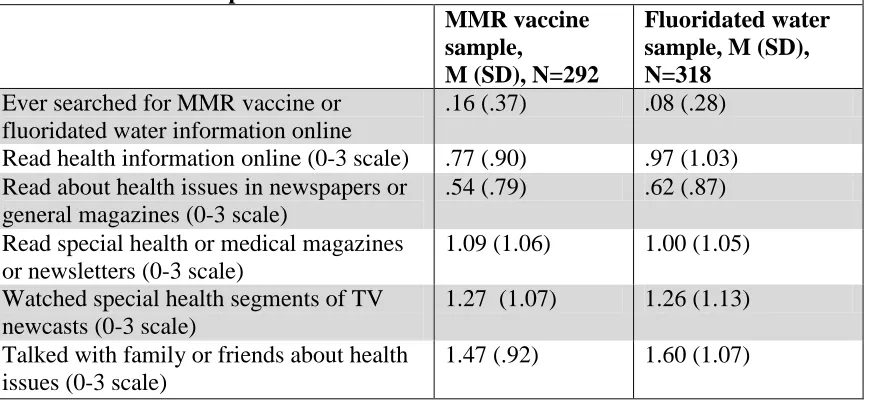
Table 3.2. Weighted health information source use in the MMR vaccine and
fluoridated water samples (representative samples). ...41
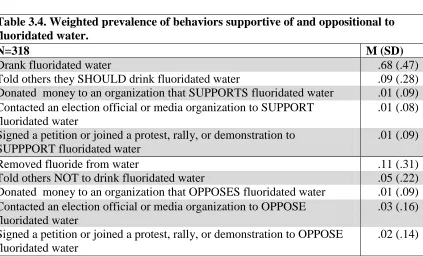
Table 3.3. Weighted prevalence of behaviors supportive of and in opposition to
the MMR vaccine. ...45
Table 3.4. Weighted prevalence of behaviors supportive of and in opposition to
the MMR vaccine. ...45
Table 3.5. Weighted prevalence of holding the alternative belief about the MMR
vaccine given various demographic characteristics. ...46
Table 3.6. Weighted prevalence of holding the alternative belief about fluoridated
water given various demographic characteristics. ...46
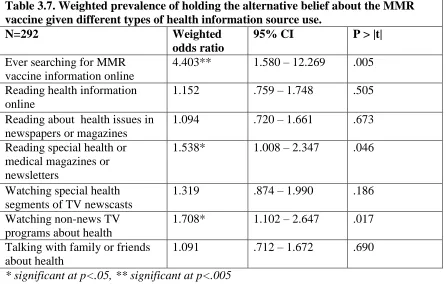
Table 3.7. Weighted prevalence of holding the alternative belief about the MMR
vaccine given different types of health information source use. ...48
Table 3.8. Weighted prevalence of holding the alternative belief about fluoridated
water given different types of health information source use. ...48
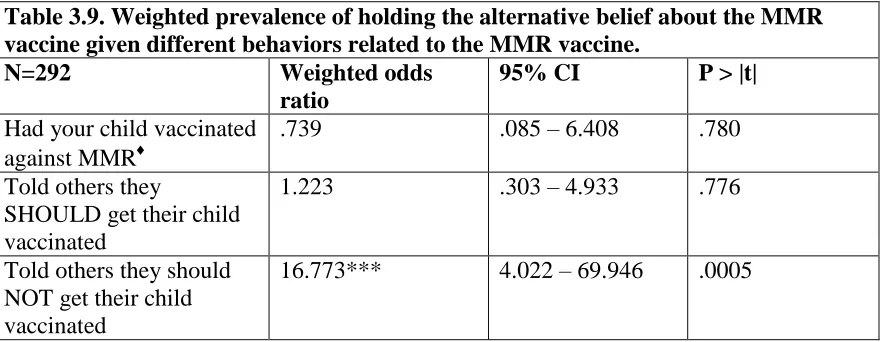
Table 3.9. Weighted prevalence of holding the alternative belief about the MMR
vaccine given different behaviors related to the MMR vaccine. .. ...50
Table 3.10. Weighted prevalence of holding the alternative belief about
fluoridated water given different behaviors related to fluoridated water. ...50
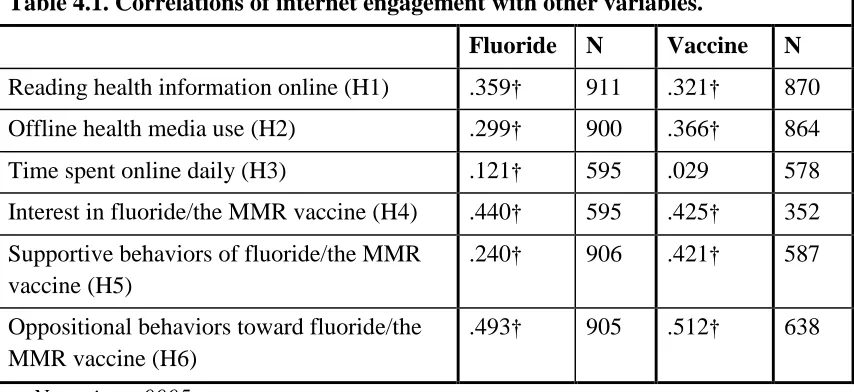
Table 4.1. Correlations of internet engagement with other variables. ...70
Table 5.1. Demographic characteristics of the MMR vaccine and fluoridated
water samples (purposive samples). ...84
Table 5.2. Correlations of demographic characteristics with internet engagement
on the MMR vaccine and fluoridated water. ...85
Table 5.3. Correlations of psychological characteristics with internet engagement
x
Table 5.4. Regression results predicting internet engagement by demographic
characteristics and alienation in the MMR vaccine sample. ...87
Table 5.5. Regression results predicting internet engagement by demographic
characteristics in the fluoridated water sample. ...88
Table 6.1. Distribution of personal and perceived news position regarding the
MMR vaccine...102
Table 6.2. Distribution of personal and perceived news position regarding
fluoridated water. ...103
Table 6.3. Summary of regression analyses for internet engagement, based on personal position, interest, health information source use, and perceived news
position in the MMR vaccine and autism survey...105
Table 6.4. Summary of regression analyses for internet engagement, based on personal position, interest, health information source use, and perceived news
position in the fluoridated water survey...108
Table 7.1. Distribution of personal and perceived social network position
regarding the MMR vaccine. ...120
Table 7.2. Distribution of personal and perceived social network position
regarding fluoridated water. ...120
Table 7.3. Summary of regression analyses for internet engagement, based on personal position, interest, health information source use, and perceived social
network position in the MMR vaccine and autism survey. ...122
Table 7.4. Summary of regression analyses for internet engagement, based on personal position, interest, health information source use, and perceived social
network position in the fluoridated water survey. ...124
Table 8.1. Summary of regression analyses for internet engagement, based on personal position, health information source use, and need for cognition in the
MMR vaccine and autism survey. ...132
Table 8.2. Summary of regression analyses for internet engagement, based on personal position, health information source use, and need for cognition in the
xi
LIST OF FIGURES
Figure 3.1. Distribution of beliefs about the MMR vaccine and fluoridated water. ...42
Figure 6.1. Predicted scores for internet engagement in the MMR vaccine sample
(media dissociation graph). ...106
Figure 6.2. Predicted scores for internet engagement in the fluoride sample (media
dissociation graph). ...109
Figure 7.1. Predicted scores for internet engagement in the MMR vaccine sample
(network dissociation graph). ...123
Figure 7.2. Predicted scores for internet engagement in the fluoridate sample
1
INTRODUCTION
At the end of the 20th century, the United States Centers for Disease Control and
Prevention reviewed the public health achievements of the past hundred years, noting that
the health and life expectancy of Americans had improved dramatically (Centers for
Disease Control and Prevention, 1999). Among their list of top ten greatest public health
achievements were two public health measures that still face some controversy today:
vaccination and fluoridated drinking water. Though the mainstream medical
establishment champions these measures as some of the greatest triumphs of medicine,
activist groups such as Generation Rescue (who fight against toxins in vaccines) and the
Fluoride Action Network (who aim to remove fluoride from public water systems)
oppose them, with some visibility and success. Public health is not as easy as making
recommendations that people will simply learn and follow, as we live in a society that
prizes individual rights and freedoms, and an age in which people have ample access to
purported experts of all kinds.
Today, the majority of American adults uses the internet and looks for health
information online (Fox, 2011). The internet will likely remain a major source of
information due to its convenience and sheer quantity of content, even though the quality
of some of it may be questionable (Eysenbach, Powell, Kuss, & Sa, 2002). Of interest in
this dissertation are people who do not subscribe to mainstream views of health, and may
use the internet to discover, bolster, or share their alternative views. Arguably, alternative
views held by these individuals are not especially harmful to society when it comes to
2 some health decisions that must be decided by and affect the entire community, as is the
case with vaccination and water fluoridation. These topics are of particular interest due to
the necessity of community-level decisions and behavior, and the controversy over their
safety and effectiveness, rather than simply the policy of implementation.
There are two essential purposes for this dissertation. First, it describes the nature
of internet use among people who hold views of health issues that veer from the
mainstream. Second, this dissertation tests the hypotheses that the extent of people’s
internet use is a reflection of two classes of influence: 1) individual traits, such as
demographic characteristics, feelings of estrangement, and need for cognition, and 2)
their inability to find support from other sources, specifically mainstream media and their
face-to-face social network. These analyses are informed by three sets of data: a set of
interviews with people who have varying views on fluoridation, a pair of nationally
representative surveys (one on the MMR vaccine and the other on fluoridated water), and
a pair of purposive surveys (again, one on the MMR vaccine and the other on fluoridated
water).
Chapter One defines the term “alternative belief,” which describes some belief
that is held by a perceived minority of the population. This term unites the two health
topics studied in this dissertation, and serves as the inspiration for the hypotheses studied.
Chapter Two presents the results of interviews with people who have varying
backgrounds and views on fluoridation, to offer some real world context for the issues
studied. Chapter Three examines the distribution of alternative beliefs and related
3 them. Chapter Four then shifts from the description of alternative belief holders to the
role of the internet for alternative beliefs. This chapter conceptualizes and validates a
different, multidimensional approach to measuring internet use, called internet
engagement. Chapter Five utilizes this measure to examine whether demographic and
psychological characteristics are associated with it; Chapter Six tests whether the lack of
support from mainstream media is linked with internet engagement; Chapter Seven tests
whether the lack of social network support is linked with it; Chapter Eight examines need
for cognition as a predictor of internet engagement. Together, these studies will offer a
clearer understanding of the relationship between beliefs and media use that have
implications for community policy and health.
4
CHAPTER ONE:
ALTERNATIVE BELIEFS AND ALTERNATIVE MEDIA
The notion of alternative beliefs
My interest in fluoridation and vaccination stem from an interest in varying views
about health. Depending on whom you ask, you may hear extremely different answers
about who is a health expert, what should be done to prevent or treat some malady, and
whether the medical field can be trusted at all. However, rather than investigating public
opinion, I am interested in public fact (or public belief about facts). The definitions of
fact and opinion are certainly distinct, with the former referring to a verifiable statement
about the world and the latter referring to a subjective point of view. While it is perfectly
acceptable for people to disagree on their opinions, to disagree on facts can impair
discussion and understanding, especially when a community decision must be made.
Although political news content may be biased and encourage different opinions, media
coverage of science, and about health in particular, cannot afford the same latitude.
Differences in political opinion are considered important and beneficial; disagreements
about scientific fact are considered problematic and negative. Though research produces
new findings every day, there are some well-established facts that, if contested by the
public, can lead to serious consequences on both the individual and policy level.
I consider alternative beliefs to be related to but distinct from existing literature
on concepts like misinformation, myth, and conspiracy theories. Two important
dimensions in classifying whether a belief is credible are its validity (defined as “true” to
5 believe it to be true. An accepted fact, for instance, is a belief that most people accept and
for which society’s experts have substantial evidence (e.g. the earth is round). On the
other hand, sometimes there are beliefs that many people accept for which there is not
much expert credence, such as myths and superstitions. Misinformation is a concept that
only maps onto the validity dimension, and refers to information that has no or inaccurate
evidence, regardless of how many people believe it. Current terms that describe beliefs
held by a minority, such as conspiracy theory and new discovery, imply little or plenty of
expert support, respectively.
For this dissertation, I am especially interested in a subset of beliefs held by a
perceived minority of the population. I am interested in those views that are believed in
spite of what the majority or experts think (not to spite them). Knowingly believing
something that is in conflict with convention is understandably puzzling to most people,
or people who hold the mainstream belief. Issues that are widely perceived as
controversial and ambiguous can lead to uncertainty and inertia (Viscusi, Magat, &
Huber, 1999; Han, Moser, & Klein, 2007), and these are considered very reasonable
reactions. On the other hand, it takes a certain motivation in order to go against the grain
and reject those beliefs that are (supposedly) widely accepted. I am not concerned with
beliefs that people hold for the sake of being oppositional, as in the case of reactance, but
rather unconventional ideas that people choose for some other reason. To be specific, I
am interested in those beliefs that 1) are explicitly and discretely discussed in media, 2)
are not supported by society’s authorities on the subject, 3) are generally perceived as a
6 “alternative beliefs,” because “alternative” suggests a different possibility without too
strong of a positive or negative connotation, especially with regard to legitimacy.
I should clarify what I mean by perceived minority status. Actual belief
distribution in the population is not my primary concern, but rather public perceptions
about which beliefs are held by the majority or minority. Public perception of who is in
the minority can be extrapolated from the discourse surrounding the belief in various
spheres, such as news media coverage, laws, and blogs, and from alternative belief
holders themselves. Perceived, not actual minority status, is the important criterion for
my definition of alternative beliefs. While I imagine in many cases actual belief
distribution is related to perceived distribution, they are not necessarily identical to one
another. In fact, many social science models and concepts assume that actual and
perceived belief distributions are distinct from one another, as in the case of the spiral of
silence theory (Noelle-Neumann, 1974, 1984), bandwagon effect (Nadeau, Cloutier, &
Guay, 1993), and false consensus effect (Ross, Green, & House, 1977). These models
posit that people are able to perceive what the prevailing public opinion is, even without
looking at poll results (e.g. Noelle-Neumann’s idea of a “quasi-statistical sense organ”;
Gunther’s persuasive press inference model, 1988). These models hypothesize that
perceiving oneself to be in the minority on some topic has an effect on one’s beliefs or
the likelihood that one will express them out loud.
I would also like to clarify here that I am not interested in scientific controversy,
but rather public controversy and discourse. Clearly, what experts research and publish
7 on perceived belief distribution rather than actual belief distribution, I am interested in
what is publicly perceived as factual and accurate, rather than what experts say. Public
health campaigns and news coverage about scientific discoveries sometimes aim to
reduce the discrepancy between what experts and the public believe. The larger public
only understands scientific knowledge insofar as they have learned it from some source,
such as their social networks or media use. Scientific controversy is only important to my
interest in alternative beliefs insofar as it may be a part of public discourse, which would
then affect a belief’s perceived “alternativeness” on both policy/scientific grounds and on
public belief grounds.
For this dissertation, I will focus on two public health measures that are
considered highly valuable by most, but highly controversial by a few. Vaccination and
water fluoridation have been listed among the top ten health achievements of the 20th
century by the CDC, but there exist a vocal minority who disagree about the factual
claims about the value of these behaviors, which leads some people to fight against
policy promoting these measures. I categorize the beliefs that vaccination and
fluoridation are dangerous to be “alternative beliefs” that go against conventional wisdom
or authority. I will focus on these beliefs about risk rather than policy views, because I
am interested in public fact, not opinion. Vaccination and water fluoridation danger are
topics that fit my definition of alternative beliefs, because they are possible to examine in
media content, are not supported by American authorities on the subject, are perceived to
be a belief held by a minority of the population, and are related to socially relevant
8 community-level decisions about implementation, but they have received different
amounts of recent mainstream media coverage. These two cases will be valuable to study
my research questions and hypotheses, which are concerned with a person’s views, what
they perceive to be the view of the news media and their social network, and internet
engagement. For the moment, however, let us turn to some background information about
vaccination and water fluoridation and why these topics have been so disputed by some.
Alternative belief #1: The MMR vaccination leads to autism
Anti-vaccination sentiment is nothing new (Streefland, 2001; Colgrove, 2005). It
was particularly vehement during the Progressive Era in the United States, when legally
mandated vaccination was much more controversial. Government and corporate
expansion into previously private spheres, such as school screening for vision defects and
life insurance companies requiring physical exams, triggered anxiety over whether
citizens would be able to maintain control over their own health. Then, as now, there
were also alternative health movements, like physical culture and chiropractic, which
opposed the practice of vaccination. Such tensions remain today, with individual choices
facing state control, and alternative medicine facing traditional medicine. The most recent
vaccination scare has been about the measles, mumps, and rubella (MMR) vaccination.
In February 1998, The Lancet published a controversial paper that suggested a
link between the MMR vaccine and autism (Wakefield et al., 1998). (In 2010, The Lancet
retracted this article and the lead author had his medical license revoked due to unethical
9 professionals continued to support giving MMR vaccinations (Miller & Reynolds, 2009;
Allan & Ivers, 2010; Madsen et al., 2002; Smeeth et al., 2004; Doja & Roberts, 2006),
public confidence was shaken. The Lancet article stimulated a slew of public concerns
over vaccine ingredients, too many vaccines overloading or weakening the immune
system, and so on (Chatterjee & O’Keefe, 2010). Studies have found that the majority of
American parents have concerns about vaccine safety and efficacy (Freed, Clark,
Butchart, Singer, & Davis, 2010; Kennedy, Basket, & Sheedy, 2011; Kennedy, LaVail,
Nowak, Basket, & Landry, 2011). Uptake of the MMR vaccine fell in both the US and
the UK (Smith, Ellenberg, Bell, & Rubin, 2008; Ramsay, Yarwood, Lewis, Campbell, &
White, 2002; Wright & Polack, 2005). Measles and mumps outbreaks, once thought to
have been eliminated from these countries, have reappeared in recent years (DeNoon,
2012; CDC 2011), resulting in some fatalities.
Researchers have frequently pointed to media as a major source of damaging
public confidence in the MMR vaccine, and have accused journalists of sensationalism
and poor investigation (Begg, Ramsay, White, & Bozoky, 1998; Poland & Jacobson,
2001; Elliman & Bedford, 2001; Bedford & Elliman, 2003). In both the US and UK,
grassroots organizations emerged to warn parents about the dangers of the MMR vaccine
and to litigate on behalf of families with children who were allegedly harmed by
vaccines. Celebrity spokespersons for the anti-vaccine movement, such as model and
actress Jenny McCarthy, have written books about the subject and appeared on television
shows like Oprah. Anti-vaccination activists and websites question the safety and
10 manufacturers, and the government (Leask & McIntyre, 2003; Zimmerman, 2005; Kata,
2010; Bean, 2011). Given the public discourse about this controversy, is there evidence
that media covering the MMR vaccine-autism link led to preventable illness and death?
A couple of studies have found that parents reported feeling confused by the
controversial media coverage, and parents who had already vaccinated their children
questioned whether they had made the right decision (Petts & Niemeyer, 2004; Casiday,
Cresswell, Wilson, & Panter-Brick, 2005). Indeed, US newspaper coverage of the link
between the MMR vaccine and autism has been considerably divided; 41% of the articles
from 1998 to 2006 said there was no link between the MMR vaccine and autism, 28%
cited evidence both for and against a causal link, 21% did not mention evidence for
either, and 10% said that there was a link between the two (Clarke, 2008). Dixon &
Clarke (2012) found that exposure to news articles about the autism-vaccine controversy
that gave support to both sides led to the belief that experts were divided on the issue, and
thereby less certainty about the link between the MMR vaccine and autism.
Interestingly, however, a study conducted by Smith, Ellenberg, Bell, & Rubin
(2008) suggests that mainstream media are not responsible for a decline in MMR
vaccination rates in the US. This study utilized a random-digit dialing national survey
(N=215,643) to obtain the vaccination records of children between the ages of 19 and 35
months and overlaid these data with media coverage of MMR and autism using
LexisNexis. Because vaccination uptake is associated with such factors as income and
access to medical care, the outcome variable was divided into selective MMR nonreceipt
11 MMR nonreceipt in the two years after the 1998 Lancet article, but a decrease after that
despite increased media coverage. In other words, some factor other than broadcast media
coverage was likely responsible for the increase in selective MMR nonreceipt. They
posited that some medical providers who had read the Lancet article may have become
hesitant about giving the vaccine, and this may have had an effect on MMR
immunization rates. This study also offers further evidence that mainstream media
coverage was not responsible; the majority of articles found were about reports rejecting
a causal relationship between MMR and autism.
However, information about MMR vaccination in mainstream media versus
online may be very different. People who already have alternative health orientations
may be more likely to utilize media to support anti-vaccination views (Cassell et al.,
2006; Jones et al., 2012). For this group, mainstream media may not be a major influence,
but narrowcast media like websites and niche magazines may be. A British survey found
that mothers who did and did not comply with immunization recommendations were
different in terms of their medical orientation, how much they trusted the government and
pharmaceutical companies, and in the extent that they were finding information for
themselves on the internet (Cassell et al., 2006). In 2001, 43% of the first 10 hits in
online searches for “vaccination” and “immunization” on seven different search engines
were antivaccination sites (Davies, Chapman, & Leask, 2002). The internet may also
heighten selective exposure, given that people can ask for advice from a variety of expert
sources, which may give different recommendations about the MMR vaccination
12 Although the internet may play some role in promoting anti-MMR vaccination
views, it is necessary to tease apart exactly what role that is. In particular, how does
internet use fit in with vaccination opponents’ overall media use patterns? What
characteristics lead to more internet use for MMR-related information, and can these
relationships be explained by non-belief-related factors, such as demographics or
personality traits? What circumstances might affect these relationships? Understanding
these matters will offer insight not only into whether alternative beliefs lead to more
intense internet use, but when and how.
Alternative belief #2: Water fluoridation is a dangerous practice
To some people, the notion that anyone would oppose fluoridating the water in
this day and age seems crazy. Most Americans have had personal experience with
fluoride as a safe and useful substance in their toothpaste, and may have received
supplements of fluoride in the form of pills or rinses, without experiencing any kind of
health consequence. Especially for people who have lived in communities with
fluoridated water all their lives, the battle over fluoridating public water systems can be
very puzzling. After all, the American Dental Association (ADA), National Institutes of
Health (NIH), Centers for Disease Prevention and Control (CDC), and the American
Cancer Society (ACS) all endorse water fluoridation as a safe and effective public health
measure to prevent tooth decay. Decades of research on fluoridated water uphold its
safety and effectiveness as well (Richmond, 1985; Ripa, 1993; Clarkson & McLoughlin,
13 water (American Dental Association, 2010)? Why, in particular, are some Americans
choosing to keep fluoride out of their municipal water systems or campaigning to take it
out?
Antifluoridationists have been portrayed as extremists at worst, and at best,
confused. Perhaps the most well-known representation of an antifluoridationist would be
General Jack D. Ripper, a patriotic and paranoid character from the movie Dr.
Strangelove or: How I Learned to Stop Worrying and Love the Bomb. In this movie,
General Ripper fears fluoride as a communist conspiracy with the aim of contaminating
his bodily “essence.” The American Dental Association, in its “Comments about
Opponents of Fluoridation,” lumped together scientists who opposed fluoridation with
extreme groups such as the John Birch Society and the Ku Klux Klan (1961). In 1978,
Consumer Reports published a two-part series on fluoridated water and commented that
the existing controversy over it was, “one of the major triumphs of quackery over science
in our generation.” Researchers have attempted to dissect and combat the “fear
mongering” tactics of antifluoridationists (Isman, 1981; Armfield, 2007) with very
limited success (Freeze & Lehr, 2009). Are people who oppose fluoride really crazy
and/or uninformed? Who are they and how did they come to oppose expert research and
recommendation?
The controversy over fluoride has been an interesting subject of study for social
scientists for decades. Authors of the early studies, trusting the medical establishments’
proclamation that fluoride is safe, effective, and beneficial for the public, often
14 These studies investigated as to whether there might be a relation between
antifluoridationist sentiment and demographics of age, education, and political
orientation (Mausner & Mausner, 1955; Metz, 1966; Gamson & Irons, 1961; Frankel &
Allukian, 1973). Alas, there was no consistent association to be found. Another major
approach to understanding why people may oppose fluoridation was the alienation
hypothesis. The idea was that people who opposed fluoridation were socially
marginalized individuals venting their frustration by taking it out on a public health
measure. Opposition to fluoride, according to this view, was a symbolic revolt against
society’s impositions on the powerless. Researchers gathered support for this hypothesis
by examining antifluoridation literature, interviewing antifluoridation leaders, and
conducting attitude surveys (Davis, 1959, Green, 1961, Gamson, 1961, & Simmel, 1961).
Even so, it seems implausible that the data gathered from specifically antifluoridation
literature and fluoridation opponents would generalize to the larger population.
Furthermore, given that the votes are nearly 50/50 each time water fluoridation comes up
in public referenda, it would be difficult to categorize about 50% of people in these
communities as alienated (Freeze & Lehr, 2009).
It seems that rather than some stable, inherent characteristic that predicts
opposition to fluoride, there is perhaps something in the environment that is much more
influential (Frazier, 1980). What is particularly striking about people’s voting patterns is
that previous to the issue coming up for referendum, people tend to support water
fluoridation. However, once the issue has been discussed in a public forum, the majority
15 inspired the confusion hypothesis (Crain et al., Sapolsky, 1968), which proposes that
potential voters, perplexed by conflicting claims of apparent experts, choose to err on the
side of caution. The confusion hypothesis is perhaps the best explanation we currently
have for why voters initially favorable towards fluoridation decide to change their minds.
It is also the most recent hypothesis social science researchers have proposed to
understand the opposition to fluoridation.
Despite much social science research about fluoridation in the 1950s and 1960s,
and some through the 70s and 80s, there has been little examination of it in recent
decades. Much has changed since fluoridation was first introduced into an American
municipal water system in the 1940s. No longer does opposition to fluoride necessarily
mean one must be a conspiracy theorist. Although some other countries (Australia,
Canada, Ireland, Malaysia, New Zealand, and Singapore) fluoridate their drinking water
for the majority of the population, most of the countries in the world do not fluoridate
their water at all. In fact, most countries in Western Europe (e.g. Austria, Finland,
Germany, and Switzerland), though perfectly capable of fluoridation, have rejected it,
often on both medical and ethical grounds. There have been an increasing number of
prominent scientists and health professionals who have spoken out against fluoridation,
including Dr. William Hirzy, a chemistry professor at American University and former
Environmental Protection Agency (EPA) scientist, and Dr. Arvid Carlsson, Nobel
laureate of medicine. Fluoridation opponents vocalize concerns ranging from health
consequences, to environmental damage, to sheer economics. Mainstream dental health
16 extreme variability of fluoride intake (Burt, 1992; Fomon, Ekstrand, & Ziegler, 2000;
Warren et al., 2009). It seems that some expert authorities may also be shifting their
stance on fluoride. As recently as January 2011, the U.S. Department of Health and
Human Services and the EPA proposed that the upper limit of fluoride per liter of
drinking water be lowered from 1.2 milligrams to 0.7 milligrams. The ADA has
recommended that parents use water with little or no fluoride when preparing infant
formula (2006). While American health institutions still support fluoridated drinking
water, it is possible these caveats suggest some moderation from previous endorsements.
Nonetheless, these changes in expert opinion are still very recent and likely have not
shifted public perception about fluoridated water, which is the relevant characteristic of
alternative beliefs.
In addition to the changing voices about fluoride research, the technological
revolution of the internet has also opened new opportunities for information exchange
and dissemination. Prior to the internet, people who wanted to find out more about the
dangers or ineffectiveness of fluoride would have to expend considerable effort by
researching in libraries or finding experts who had such concerns. However, today 74%
of American adults use the internet and about four in five adult internet users search for
health information online (Fox, 2011). The internet also allows users not only to find
information, but create and easily impart it to others. The medium’s capabilities have
transformed how scientific knowledge is delivered and shared, and perhaps understood.
Given the different landscape in fluoride research and media use, the time is ripe to try a
17
Why do people choose to use the media that they do?
What explains differences in people’s media use? It’s possible to imagine many
reasons—the desire for entertainment, a specific curiosity, mood management, one’s
education, habit, and so on. The dissertation at hand examines this question in reference
to seeking information online about controversial health issues. The three factors tested
are: 1) media dissociation, or the difference between one’s position on an issue and
perceived position of the news media, 2) network dissociation, or the difference between
one’s position on an issue and the perceived position of one’s face-to-face social network,
and 3) need for cognition, a personality trait that reflects how much a person enjoys
expending cognitive effort, in Chapters Six through Eight. The foundational literature for
these factors comes from different domains in communication research. First I will
address the broader question of why people choose to use different media, especially the
internet, and then why people may look for information that goes against the mainstream,
again with a focus on internet.
There are two primary notions in the communication literature that attempt to
answer this question: uses and gratifications and selective exposure. These ideas are
conceptually related, but distinct in perspective and resulting literature.
The first, the uses and gratifications approach, has a long history in
communication research, stretching back to listening to radio soap operas and quiz shows
(Herzog, 1941, 1944). The question of “what people do with media” emerged as a path of
inquiry for communication researchers when they discovered that mass media did not
18 approach to examine many media, including magazines (Payne, 1988), television (Rubin,
1983), and telephone use (Dimmick, Sikan, & Patterson, 1994). The uses and
gratifications perspective has a number of basic assumptions, the most important of
which is that the audience is active. Media consumption is conceptualized as a motivated,
dynamic activity that fulfills certain needs. People are motivated to consume media to
meet different wants and needs, whether actively or reactively (Atkin, 1985). Uses and
gratifications studies examine “1) the social and psychological origins of 2) needs which
generate 3) expectations 4) of mass media or other sources, which lead to 5) differential
patterns of media exposure (or engagement in other activities), resulting in 6) need
gratifications and 7) other consequences, perhaps mostly unintended ones” (Katz,
Blumler, & Gurevitch, 1974). Uses and gratifications may be obtained from media
content, exposure for itself, or the social context of its use.
The existing literature on internet uses and gratifications tends to examine general
needs and general internet use (Stafford, Stafford, & Schkade, 2004). A typical study
would use survey methods to ask the sample to rate how much they agreed or disagreed
with a list of gratifications sought from internet use, usually based on prior literature from
mass media or internet uses and gratifications studies (Parker & Plank, 2000;
Papacharissi & Rubin, 2000). Some studies would associate certain gratifications sought
with variation in time spent online (Korgaonkar & Wolin, 1999; Charney & Greenberg,
2001). These studies report that information seeking and socializing are common motives
19 Related to the uses and gratifications perspective is selective exposure, or the idea
that people will differentially seek, attend to, process, and remember media content based
on pre-existing goals and preferences (Taber & Lodge, 2006). Stemming from the
tradition of cognitive dissonance theory (Festinger, 1957), the assumption of selective
exposure is that people will prefer to consume media content that is agreeable to their
views while avoiding disagreeable, dissonant information. The literature on selective
exposure has been contentious (Mills, Aronson, & Robinson, 1959; Klapper, 1960;
McGuire, 1968; Chaffee & Miyo, 1983; Sears & Freedman, 1985). It may be that
selective exposure is more or less likely under certain circumstances, such as how
personal the topic is (Stroud, 2008), perceived information utility (Valentino, Banks,
Hutchings, & Davis, 2009), or whether accuracy or reinforcement is the desired outcome
(Kunda, 1990).
Researchers have been increasingly concerned with audience selectivity due to a
proliferation of media sources, especially the internet (Ruggiero, 2000; Nyhan, 2010).
Since the internet, it has never been easier for people to find specific knowledge about
almost any subject, to distribute a message to a few friends or thousands of others, and to
communicate richly, instantly, and constantly. Scholars have responded to this medium
with great enthusiasm and reservation. On the one hand, the internet amplifies the power
of democracy with a new marketplace of ideas; on the other, the promotion of antisocial
beliefs and behaviors can cause concern over real world outcomes.
If people are more able to intentionally select what they want to hear, will they
20 evidence suggests that online exposure to dissimilar political views is relatively unusual.
Some scholars suggest that the internet amplifies the phenomenon of people primarily
accessing content amenable to pre-existing views and interacting with like-minded people
(Sunstein, 2001). Iyengar & Hahn (2009) found evidence that people were more inclined
to read articles from sources that matched their political views, even though the content
was the same. People may choose to maintain their beliefs via media consumption
regardless of how valid or appropriate they are considered by society. In one study, Lin &
Pfau (2007) found that an inoculation message could enhance people’s resistance to
attitude change, confidence in attitude, and willingness to speak out about it in the
context of a perceived majority opposition. Reinforcement-oriented selective exposure
may take place because a person wants to legitimize his or her socially deviant beliefs or
feel positive affect by consuming media consistent with his or her values.
Although there is much selective exposure research in political communication, it
is still an open question as to whether selective exposure occurs in the context of health
issues. This echo chamber effect has important ramifications for democratic citizenship;
however, public opinion is not the emphasis of this dissertation. People may be entitled to
their own opinions, but not their own facts, and in the case of health information, there
could be serious consequences if people choose to maintain certain inaccurate beliefs.
Why do people look for alternative information?
I propose that there are two main motivations to seek media content counter to
21 by the desire to learn, study, or verify answers about a subject. An example of
information motivated behavior would be when someone hears that reflexology can cure
back pain and then goes online to check whether this is so. The normative motivation is
driven by the desire to justify one’s minority status as a believer of an unusual idea. If
someone holds a belief that runs counter to the mainstream, he or she may search for
positive affect through favorable coverage of the belief, other believers for a sense of
belonging, and further information to bolster the belief in the face of disagreement. An
instance of norm motivated behavior would be when someone believes that vaccines are
dangerous, and then joins a discussion group dedicated to promoting this idea. These
motivations most likely occur in tandem, but I believe this distinction is important in
terms of the communication literature surrounding them.
Information seeking is the term that best reflects the literature that surrounds
media use for the sake of education. Although information seeking research does not
revolve around any one theory, the commonality is the attempt to investigate “active
efforts to obtain specific information outside of the normal patterns of exposure to
mediated and interpersonal sources” (Niederdeppe et al., 2007). An important aspect of
the information seeking literature is understanding antecedents of such behavior, such as
how one generally copes with threat-related cues (monitoring/blunting; Miller, 1987) and
emotions like anger and enthusiasm (Valentino, Hutchings, Banks, & Davis, 2008). The
research suggests that people will be more likely to seek information about a topic when
22 of scenario seems likely when ardent supporters of nonmainstream beliefs voice their
concerns about health issues that could carry risk to one self and/or to one’s children.
Media consumption for the rationalization of minority status fits in with public
opinion models like spiral of silence, bandwagon effect, and false consensus effect.
Noelle-Neumann’s spiral of silence (1974, 1984) postulated that people fear the isolation
that comes with holding a minority opinion, and people who have minority beliefs will
stay silent about them in order to avoid sanctions. However, research by Asch (1951)
demonstrated that having just one other person in a group agreeing with an otherwise
lone believer dramatically increases the chances that he will speak up about his views.
For people who hold minority beliefs, the internet may be a convenient and effective
medium for finding others who are sympathetic to their ideas. Since the internet allows it
users to communicate anonymously, it is possible for people to discuss transgressive
topics such as political extremism or sexual deviance without the same repercussions they
may experience in a face-to-face context (Wojcieszak, 2010; Malesky & Ennis, 2004). A
person who holds a nonmainstream health belief may not feel as strong of a normative
motivation to use the internet, but it is still a possible motivation, especially if the health
issue is very important to the person. In the process of finding a more sympathetic health
professional or other nonmainstream belief holders who want to change health policy, the
connection with other like-minded people may lessen the feeling of isolation and
deviance.
In practice, this distinction between informational and normative motivation may
23 guides. Perhaps, media dissociation may be most closely associated with the
informational motivation while network dissociation may be most closely associated with
the normative motivation.
Do these factors actually make a difference with regard to internet use? This
dissertation examines this possibility in the context of the MMR vaccine and fluoridated
water. Before showing the results of these tests, however, I present some foundational
research: interviews with people who held varying views on these topics, a nationally
representative survey of Americans’ alternative beliefs and related behaviors, and some
basic analyses of how demographics and other characteristics are related to one’s beliefs
24
CHAPTER TWO:
GETTING TO KNOW PEOPLE WHO HOLD ALTERNATIVE BELIEFS
Beyond stereotypes
People who hold alternative beliefs are subject to scrutiny by others who hold the
mainstream belief. Because the alternative belief and evidence used to support it are
considered to be untrue rather than a matter of opinion, those who hold alternative beliefs
are characterized as misinformed, deficient, crazy, and even dangerous. After all, why
else would they reject the mainstream belief, which is clearly incontrovertible?
As mentioned previously, antifluoridationists have been portrayed as madcap in
American popular culture, such as in the 1964 movie Dr. Strangelove. In the present day,
people who oppose fluoride are derided as “the intellectual inheritor[s] of the John Birch
Society, the cockamamie right-wing conspiracy theorist group” who believe they are
“being purposely made stupid by fluoride in their water so they could be more easily
controlled by globalist overlords” (Maddow, 2011). In the case of antivaccinationists,
they are alternately characterized as overly paranoid mothers, backwards hippies, and
government or healthcare conspiracy theorists. Jenny McCarthy, celebrity founder of
Generation Rescue, an antivaccination group, encourages fellow “Mother Warriors” of
children with autism to “[follow] her intuition even when people tell her she is crazy”
(McCarthy, 2012). Medical professionals have declared antivaccinationists to be
irrational and prone to conspiratorial thinking (Jacobson, Targonski, & Poland, 2007).
25 higher rates of tooth decay, the success of antivaccinationists would lead to serious illness
and death, according to the mainstream medical establishment.
These are hardly flattering portrayals of people who believe themselves to be
fighting for the good of public health. Thus far I have discussed people who hold these
alternative beliefs – that the MMR vaccination and fluoridated water are unsafe – in
terms of their reputation. To better understand what alternative belief holders are actually
like, I decided that interviews would be a good start. Although hardly anyone wanted to
talk to me about the MMR vaccine, I found some who were willing to talk to me about
their views on fluoridated water. I was particularly interested in these questions:
RQ1: What are people’s beliefs about the safety of fluoridated water?
RQ2: What factors seem to distinguish people who hold the alternative belief
from the mainstream belief?
RQ3: How do their beliefs about fluoridated water relate to other alternative
beliefs?
Methods
From November to December 2010, study participants were recruited and
interviewed via an online classified advertisement site called Craigslist. Links about the
study were posted in the volunteer section of Craigslist in twelve American cities of
different sizes, located in different regions of the U.S. Through email and interviews with
26 on an antifluoridation email list, so there are many people against fluoride in this
interview sample. Interviewees were asked about their personal background, knowledge
of fluoridation, sources of information about fluoridation, and fluoridation-related
behaviors. Interviews took place over the phone or Skype for about an hour, and were
audio recorded. There were 14 interviewees.
Results
Fluoride supporters’ and opponents’ beliefs
I would describe 3 of the interviewees as supporters of fluoride and 12 of them as
opponents of fluoride. However, within each of these groups, there was considerable
variation in attitude strength and fluoride-related behavior. For instance, one interviewee,
Ken, who believed in the safety of fluoride, did not necessarily believe in it strongly. Ken
explained that he had not “really given it very much thought as to whether it’s something
harmful or that it’s helpful. I mostly assumed that um, that it’s okay to have.” In contrast,
Ellen was adamant about the safety and effectiveness of fluoride, and was incredulous of
how “they’re talking it’s a communist plot, fluoride is this horrible, horrible poison (…) it
maybe sounds possible if you’re kind of paranoid (…) I don’t know, they don’t use their
critical thinking skills, is what I think.” None of the supporters had avoided or removed
fluoride from their water, nor had they attempted to promote fluoridated drinking water.
Fluoride opponents ranged from somewhat weak beliefs to believing strongly
enough to devote significant time and energy to fight against fluoridation. Mona, for
27 about the dental health benefits of fluoride, she felt “like it’s still a chemical (…) and I
don’t feel as comfortable about that.” On the other hand, some interviewees like Eve
were “100% against it. ‘Cuz I think it is, it’s unfounded, based on my research, it does
not benefit anyone. In fact, it does the opposite—it’s harmful.” Some had science
backgrounds, like Carl, who “studied this issue, as a health scientist for over 20 years and
I’ve come to the conclusion that fluoridated water is not a good thing.” Most of the
interviewees who opposed fluoride spent years investigating it, joined activist groups,
and spread the word about the dangers of fluoride. That many of them had dedicated their
efforts to rid water systems of fluoride was unsurprising, given that many of them had
found out about the interview study through an antifluoridation email list.
Differentiating alternative from mainstream belief holders
The people I spoke to about fluoride varied widely in their demographics. They
ranged in age from 20 to 74, from high school to postgraduate level in education, and
from very liberal to very conservative in political orientation. Two of them were
Canadian, and the rest were from different regions of the U.S., with variation in rural
versus urban areas. Even though the interviewees came from diverse backgrounds, there
was no discernible pattern between demographics and fluoride-related beliefs. Such a
small sample size, however, would make finding these associations unlikely.
Nonetheless, supporters and opponents of fluoridated water clearly parted ways in
terms of how they acquired information about fluoride, as well as what information
28 than opponents had. Supporters trusted their personal experience with fluoride to judge
its safety and effectiveness. Tom explained, “I’ve never experienced any noticeable
health problems from having consumed it for most of my life." Two of the fluoride
supporters both grew up in military families, and because the military provides
fluoridated water, they learned during childhood that fluoride was a safe and important
compound. All three fluoride supporters said that they would seek the original research
about fluoride in peer-reviewed, academic journals, if they were to seek further
information about the subject.
Fluoride opponents also had personal experiences with fluoride, although these
experiences were plainly negative. They mentioned developing or witnessing others
develop fluorosis (discoloration of the teeth) and feeling very ill. Antifluoride activists
described the side effects of fluoride as much more common, noticeable and disturbing
than the fluoride supporters did. They also brought up research they had read, which
linked fluoride to lowered intelligence, cancers, and other long-term health consequences.
Although interviewees with weaker feelings of opposition had similar experiences as the
supporters, they still felt concerned about potential long-term health problems. The health
scientists interviewed did not mention personal experience as a source of information, but
rather, the research that they had read and conducted. The fluoride opponents who had
taken the time to research the subject devoted much time to do so, like Quentin, who said,
“Because when you take 5,000 hours out of your life, that’s a couple of years. (…) So
literally, it had consumed me for about three years intensely and less so for the last two
29 It is noteworthy that most of the antifluoridation activists interviewed were very
distrustful of government, mainstream media, and health professionals. For
fluoride-related information, they tended to rely on social networks and trusted internet sites, such
as the Fluoride Action Network (www.fluoridealert.org) and would avoid what would be
considered expert authorities by most Americans. For example, Eve gave “zero
credibility whatsoever to the CDC, the American Academy of Pediatrics, the American
Dental Association. I wouldn’t use their information for anything.” Some of them
avoided mainstream newspapers, television, and radio altogether, even for general news.
They were very concerned about financial incentives involved in the promotion of
fluoride. Natalie explained that, “I think behind it is the corporate benefit of being able to
sell this product instead of disposing of it properly, which would cost them a lot of
money. So what bothered me was, you know, the scam behind it.” More broadly, they
distrusted any group’s message if the group profited from a purported health product. Bea
explained that, “Chemicals cause cancer. The body (…) has to be clean in order to not
have cancer. (…) the pharmaceutical industry, which makes huge, huge amounts of
money on cancer, they don’t want to address it. They just want to keep poisoning
everybody.” Almost every fluoride opponent asked me about the source of my research
funds (while no supporters asked). I even exchanged a dozen emails with a potential
interviewee, only to be declined due to the belief that the University of Pennsylvania,
which has a dental school, is consequently likely to be pro-fluoride. Every information
source, including my own research which would become an information source related to
30 Association of fluoride-related beliefs with other health beliefs
Some of the antifluoridation activists also mentioned concerns about health issues
other than fluoride. Bea, for example, ate a raw, organic diet, and was careful about what
she brought into her home, because, “Everything out there has toxins in it so you have to
be very careful. (…) I buy soaps that are handmade. (…) I don’t put pesticides, herbicides
or poisons in my garden. I don’t buy processed food.” Kurt was also concerned about
toxins: he took pains to avoid fluoride in his water and beverages produced in fluoridated
areas, avoided mercury by avoiding seafood, and purchased organic foods and products.
However, not all fluoride opponents or activists had concerns beyond fluoride in their
environment. Supporters of fluoride did not mention concerns about chemicals or toxins
during their interviews.
Interestingly, opponents of fluoride did not necessarily oppose vaccinations.
Some were strongly against vaccination; one interviewee attributed the death of her
daughter to vaccines, and another interviewee was the director of an antivaccination
group. On the other hand, some fluoride opponents had no issue with vaccination, like
Isaac, who stated, “Oh, I’ve been vaccinated many times. I’d much rather be vaccinated
than get some nasty disease.” Furthermore, it was not simply a matter of strength of
opposition to fluoride, as one could be strongly opposed to fluoride while in support of
vaccination, like Eileen. While it is evident that there is sometimes an association
between opposition to fluoride and concerns about other potential toxins, it is not a
31 belief could increase the chances of holding others in the same domain (health), but it is
not a steadfast rule.
Discussion
The results from the interviews provided understanding of a small convenience
sample of people’s beliefs about fluoridated water. The sample included people who had
different stances on the safety of fluoridated water and also had diverse backgrounds. The
interviews with supporters and opponents of fluoridated water demonstrated that belief in
even a straightforward claim of safety is multifaceted. These beliefs are rooted –
sometimes lightly and sometimes deeply – in personal experiences, hearsay, judgments of
others, trust or lack thereof in powerful organizations, and other factors. In this sample,
demographic characteristics like gender, education, and political orientation seemed to
have no association with one’s position regarding fluoridated water. It is possible,
though, that this lack of relationship may have to do with the small sample size of
interviewees, and the particularly involved nature of the thinking of some of the fluoride
opponents; a survey of a larger group may yield different findings.
One main distinction between fluoride supporters and opponents was trust in
their information sources, such that supporters tended to trust mainstream government
and health officials and opponents did not. Moreover, because opponents tended to not
trust mainstream sources and were on an antifluoridation email list, it is probable that
alternative belief holders use the internet as an important source of information and for
32 opponents of fluoride, these interviews suggest they might face the obstacles of poor
credibility with their target audience, reaching them through media channels, and
inhibiting anti-fluoride communication among them.
Beliefs about fluoride may be associated with other health beliefs. Though the
three supporters of fluoride did not mention concerns about chemicals or toxins, some of
the fluoride opponents did. Some of the interviewees might even be considered extreme
in their lifestyle choices or devotion to health issues. The data illustrate the extent to
which a person’s beliefs about fluoride may be commingled with their views on health in
general.
This qualitative data, although limited, is unique; though there are published
media interviews from activists for and against fluoridation, to date there has been no
published research that specifically compares and contrasts people of different opinions.
The interviews were used to help uncover important themes and issues, to examine
possible relationships for further inquiry, and to help ground the quantitative analyses in
words that people have spoken for themselves. The next chapter examines alternative
beliefs in the context of the U.S. adult population, and uses quantitative methods to
investigate relationships between people’s demographic characteristics, beliefs, and