AMERICAN ACADEMY OF PEDIATRICS
Committee on Infectious Diseases and Committee on Practice and Ambulatory Medicine
Infection Control in Physicians’ Offices
ABSTRACT. Infection control is an integral part of pe-diatric practice in outpatient settings as well as in hospi-tals. All employees should be educated regarding the routes of transmission and techniques used to prevent transmission of infectious agents. Policies for infection control and prevention should be written, readily avail-able, updated annually, and enforced. The Centers for Disease Control and Prevention standard precautions for hospitalized patients with modifications from the American Academy of Pediatrics are appropriate for most patient encounters. As employers, pediatricians are re-quired by the Occupational Safety and Health Adminis-tration (OSHA) to take precautions to protect staff likely to be exposed to blood or other potentially infectious materials while on the job. Key principles of infection control include the following: hand-washing before and after every patient contact, separation of infected, conta-gious children from uninfected children, safe handling and disposal of needles and other sharp medical devices, appropriate use of personal protection equipment such as gloves, appropriate sterilization, disinfection and an-tisepsis, and judicious use of antibiotics.
ABBREVIATION. OSHA, Occupational Safety and Health Admin-istration.
I
nfection control practices have long been recog-nized as an important means of preventing trans-mission of infectious agents. Infection control is important in every patient encounter. Recommenda-tions for infection control practices in hospitals are well-documented and updated on a regular basis.1,2 Because most patient encounters occur in outpatient settings, the availability of established guidelines for control of transmission of infection in office settings is critical.3,4 There are no comprehensive, national guidelines, however, for the practice of infection con-trol in the outpatient setting.The risk of developing infection after an outpatient clinic or office visit has been evaluated.5 In all in-stances, children who visited physicians’ offices had better outcomes than children who did not receive regular care, but an office waiting area often presents opportunities for transmission of infectious agents among patients. Multiple outbreaks of measles,6,7 tu-berculosis,8 and other infectious diseases have been traced to physicians’ offices or clinics.3,9
Most of the outbreaks reported in the outpatient setting were associated with noncompliance with
in-fection control procedures.9To understand infection control issues, modes of transmission of infectious agents should be considered.10 –14 Transmission can result from contact with contaminated hands, ob-jects, and body material including blood, urine, stool, and respiratory tract secretions. Contaminated hands are the predominant mode of transmission, under-scoring the importance of appropriate hand-washing before and after contact with each patient. Fomites, such as toys and office equipment, have been impli-cated in the transmission of some pathogens. Blood-borne pathogens can be spread if proper precautions with needles and other sharps (sharp instruments) are not followed. Standard precautions, as recom-mended for hospitalized patients (Table 11), should be followed at all times.
As employers, pediatricians are required by the Occupational Safety and Health Administration (OSHA) to take precautions to protect staff likely to be exposed to blood or other potentially infectious materials while on the job. OSHA has published guidelines for the protection of all health care work-ers from blood-borne agents.15Each office is required to have a written plan to decrease the risk of trans-mission of blood-borne agents to employees. Fur-thermore, all employees who might be exposed to blood should be immunized against hepatitis B virus and regularly educated about risks of all blood-borne agents. The hepatitis B vaccine should be available, at no cost, to all employees who have occupational exposure to blood. Employees should sign a declina-tion form if they choose not be vaccinated, but vac-cine should be provided free of charge if the em-ployee later opts to receive it. Failure to comply with OSHA regulations can result in severe penalties and fines. Each office must be aware of current OSHA regulations and directives (see Table 2).
This review provides practical information regard-ing infection control in the office settregard-ing. The goal is to prevent transmission of infectious agents to pa-tients and visitors, health care workers, and other employees in the office setting. Additional infection control recommendations may be necessary for other outpatient settings including dialysis centers, chemo-therapy centers, procedure suites (eg, endoscopy), emergency centers, and outpatient surgery suites.3
GUIDELINES FOR HEALTH CARE DELIVERY Hand-Washing
Hand-washing is the single most important method to prevent transmission of infectious agents.1,2,16 –18 Hands should be washed before and after each contact with patients, body fluids, and
The recommendations in this statement do not indicate an exclusive course of treatment or serve as a standard of medical care. Variations, taking into account individual circumstances, may be appropriate.
contaminated or soiled materials; between dirty and clean procedures on the same patient, after removing gloves; before and after performing invasive proce-dures; after using the rest room; and whenever hands are visibly soiled. Liquid soap in pump dis-pensers is ideal; the dispenser should be disposable or should be rinsed and washed before refilling to avoid contamination. Antibacterial soaps are not necessary for routine use.16Soaps containing alcohol are drying and damaging to skin. Bar soaps are not recommended because bars frequently are wet and easily contaminated with potential pathogens. Use of sinks is preferred to waterless hand cleansers, especially if the hands are soiled. Paper towels are preferred for hand drying and always should be available and reached easily by the health care
professional. Hand lotions should be available in pump-type containers that are replaced or cleaned at regular intervals.16 Hand lotions should not be pe-troleum-based as this may cause deterioration of la-tex material and thus reduce the effectiveness of gloves.
The method of hand-washing depends on the task to be performed. Routine hand-washing should be done by thoroughly covering the hands with soap and vigorously rubbing the hands under running water for at least 10 seconds. Washing with antimi-crobial soaps, such as chlorhexidine or povidone-iodine, is recommended before performing invasive procedures. In these cases, nails are cleaned with disposable manicure sticks and hands and wrists are included in a 1-minute scrub.
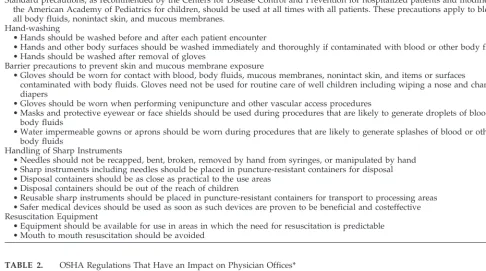
TABLE 1. Standard Precautions1
Standard precautions, as recommended by the Centers for Disease Control and Prevention for hospitalized patients and modified by the American Academy of Pediatrics for children, should be used at all times with all patients. These precautions apply to blood, all body fluids, nonintact skin, and mucous membranes.
Hand-washing
• Hands should be washed before and after each patient encounter
• Hands and other body surfaces should be washed immediately and thoroughly if contaminated with blood or other body fluids • Hands should be washed after removal of gloves
Barrier precautions to prevent skin and mucous membrane exposure
• Gloves should be worn for contact with blood, body fluids, mucous membranes, nonintact skin, and items or surfaces
contaminated with body fluids. Gloves need not be used for routine care of well children including wiping a nose and changing diapers
• Gloves should be worn when performing venipuncture and other vascular access procedures
• Masks and protective eyewear or face shields should be used during procedures that are likely to generate droplets of blood or body fluids
• Water impermeable gowns or aprons should be worn during procedures that are likely to generate splashes of blood or other body fluids
Handling of Sharp Instruments
• Needles should not be recapped, bent, broken, removed by hand from syringes, or manipulated by hand • Sharp instruments including needles should be placed in puncture-resistant containers for disposal • Disposal containers should be as close as practical to the use areas
• Disposal containers should be out of the reach of children
• Reusable sharp instruments should be placed in puncture-resistant containers for transport to processing areas • Safer medical devices should be used as soon as such devices are proven to be beneficial and costeffective Resuscitation Equipment
• Equipment should be available for use in areas in which the need for resuscitation is predictable • Mouth to mouth resuscitation should be avoided
TABLE 2. OSHA Regulations That Have an Impact on Physician Offices*
In 1994, the American Academy of Pediatrics (AAP) published an OSHA guide for pediatricians including a model exposure plan, documentation forms and other compliance tools.43This manual, though currently under revision pending anticipated final regulations, is available for sale via the AAP publications. Topics denoted with a dagger on the table below are not addressed in the current AAP OSHA guide. Update information is available from the Division of Health Care Finance and Practice and will be included in the revision of the AAP OSHA guide. Medical offices should have a customized comprehensive OSHA program. At minimum, it should address the following areas:
Blood-borne pathogen standard Universal precautions Risk determination
Personal protective equipment
Analysis of sharps injuries and safe sharps devices† Training
Exposure control plan Record keeping
Infectious/sharps waste disposal Tuberculosis exposure†
Risk assessment Employee screening Training
Exposure control plan Emergency preparedness† Hazard communication standard General safety†
Ergonomics†
Education
All employees at the time of orientation should receive and review information regarding infection control policies and procedures. Furthermore, regu-larly scheduled educational sessions for all staff are important to ensure that the level of hand-washing and infection control awareness remain high.19,20
Pol-icies for infection control should be written, readily available, and enforced. All staff members should be aware of and motivated to follow these policies.21
Communication With Local and State Health Authorities
State and local health authorities determine which diseases should be reported. Office physicians must be aware of the rules and regulations in their munic-ipality. Policies and procedures for communication with local and state health authorities regarding re-portable diseases and suspected outbreaks should be established.
Minimize the Likelihood of Liability to Third Parties A number of third-party liability cases involve infectious diseases (ie, cases alleging that the physi-cian is liable for injury to parties that came in contact with his/her patient). Although some courts have discussed these cases, holding that there can be no liability absent the physician-patient relationship, other courts have held that the physician owes a duty to third parties if contact with the infected patient is “reasonably foreseeable.” Therefore, physicians should be aware that the sphere of physician duty to third parties may be expanding and should take appropriate steps to minimize such risks (see Table 3).
STANDARD PRECAUTIONS
Standard precautions, as recommended for hospi-talized patients1(Table 1), should be used in the care of every child because it cannot be determined which child harbors an infectious agent. Gloves should be available for use by all health care professionals. Gloves should be worn when contact with blood, body fluids, secretions, excretions, and items con-taminated with these fluids is reasonably
antici-pated. Gloves do not need to be worn for routine well-child care, such as wiping a nose or changing a diaper. When gloves are used, hands should be washed after they are removed because contamina-tion can occur during removal or from a break in the glove.22 Masks, face shields, and protective eyewear should be worn if splashing of body fluids is antici-pated. When soiling of clothes with blood, body fluids, secretions, or excretions is highly likely, gowns can be worn. Water impermeable gowns are needed if splashes of blood or blood-containing body fluids might occur.
The OSHA and National Institute for Occupational Safety and Health (NIOSH) guidelines require use of special masks—NIOSH-certified N-95 respirators— when caring for patients with contagious tuberculo-sis23; use of these masks requires education to ensure proper fit. Rarely is there a need for use of such masks in pediatric offices because most children with tuberculosis are not contagious.24 Final OSHA rules on protecting health care workers from tuberculosis exposure are expected later this year. Adults sus-pected to be contagious for tuberculosis should not be permitted in the office because they pose a hazard to patients and staff.
Skin surfaces that are contaminated with blood or other body fluids should be washed immediately and thoroughly. Environmental surfaces should be cleaned with a detergent, then treated with freshly prepared bleach solution (diluted 1:64; 1⁄4 cup of bleach to 1 gallon of water, bleach contact time must be at least 30 seconds), with gloves worn during cleaning. Immunization with hepatitis B vaccine is mandated by OSHA for all persons whose job might involve exposure to blood or blood-containing body fluids.15
Impermeable and puncture-proof needle disposal containers, or sharps containers, should be available in areas where injections are given. The containers should not be overfilled and should be out of reach of young children. Policies consistent with state and local regulations for removal and incineration or sterilization should be in place. Policies for manage-ment of needlestick injuries should be readily avail-able and understood by employees (example, Tavail-able
TABLE 3. Minimizing Third-Party Liability*
Until the law is clarified by the courts, the state legislatures, or Congress, a physician’s efforts to minimize the risk of the physician’s liability to third parties who are injured as a result of exposure to the physician’s contagious patient will be fraught with
uncertainty. Although not guaranteed to protect the physician for liability, the following suggestions may help minimize the likelihood of a successful third-party liability suit against the physician.
The physicians should:
• inform the patient about the contagious nature of the disease, treat the patient, explain fully to the patient the potential risk of the patient’s illness to third parties, and give the patient proper advice about preventing the spread of the disease, including but not limited to advice about avoiding specific conduct that puts third parties at risk;
• make sure that he or she has the most current medical information available concerning the treatment of the disease and the possible risks of spread associated with the particular disease;
• learn about the relevant communicable disease reporting statutes and follow them accordingly;
• be sensitive to the potential for conflict between the physician’s duty to third parties and the duty of confidentiality to the physician’s patient;
• inform the patient of any action the physician intends to take to endeavor to protect third parties at risk of contact with the patient;
• keep accurate and complete medical records;
4). OSHA requires that employees receive education on the management of sharps injuries, that proce-dures not only be available and understood, but followed. As of November 5, 1999, OSHA requires that all percutaneous sharps injuries be recorded on the OSHA 200 log.
General Health Considerations of Office Staff
Individuals who work in health care are exposed frequently to persons with infectious diseases. Health care workers also pose a risk to patients and other personnel if they develop a communicable dis-ease. Written policies, therefore, should exist regard-ing exclusion of staff members with contagious ill-nesses (Table 5). Respiratory tract infections may not be a reason to exclude office personnel, but precau-tions should be taken with an emphasis on hand-washing before all patient contacts.
In adults, screening for tuberculosis using the Mantoux skin test should be done before employ-ment to ensure active tuberculosis is detected early and treated. When necessary, employees should be excluded from the office until they are no longer infectious.9A test is considered positive in a healthy health care professional if an area of induration of at least 10 mm is detected. For persons with underlying conditions or known household exposure to
tuber-culosis, 5 mm of induration is considered positive. If the Mantoux test is positive, the employee is referred for evaluation and appropriate management.25 The frequency of repeat skin testing for PPD-negative employees should be based on the risk of exposure to people with active tuberculosis. Risk factors will vary from employee to employee; yearly testing should be considered in practices where there has been a high rate of documented tuberculosis or skin test conversion among families and patients or among health care professionals. Consultation with local health departments is useful to determine the prevalence of tuberculosis in the local area.
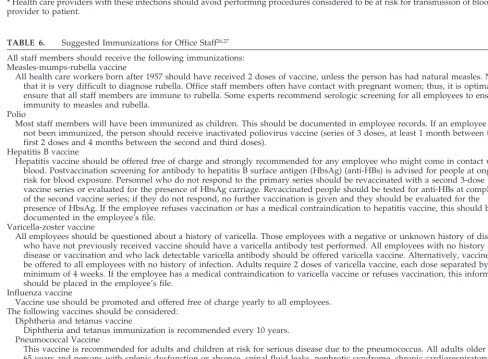
Policies should be established regarding immuni-zation of employees, volunteers, students, and resi-dents (Table 6).26,27Immunization records should be maintained for all employees.
OFFICE DESIGN
Sinks
Properly functioning sinks with adjacent soap dis-pensers and disposable towels should be conve-niently located in all patient care areas. Faucet aerators are discouraged because they are often con-taminated byPseudomonasspecies and other bacteria.
TABLE 4. Needlestick and Sharps Injury
Step 1: Document the type of injury. Complete OSHA 200 log. Was blood involved? Is the source of the blood known? How significant was the injury? For example, was it a deep injection or blood spill onto intact skin?
Step 2: Determine the status of the source patient. If this is not possible, base actions on the likelihood of exposure considering source of needle and type of exposure. If the source is known, obtain permission and determine the serologic status of the source to hepatitis B virus, hepatitis C virus, and the human immunodeficiency virus (HIV).
Step 3: Determine the immunity of the employee. Was hepatitis B virus vaccine (HBV) received? Was the employee tested for anti-hepatitis B surface antigen (HBsAg)? If response to vaccination is unknown, obtain blood for anti-HBsAg. Obtain permission and test for antibody to HIV.
Step 4: Following the steps outlined below for HBV prophylaxis after percutaneous or permucosal exposure: If exposed person is unvaccinated:
• Source HBsAg-positive: hepatitis B immunoglobulin (HBIG) (0.06 mL/kg; maximum dose: 5 mL) intramuscularly and begin HBV vaccine series
• Source HBsAg-negative: begin HBV vaccine series • Source not tested or unknown: begin HBV vaccine series If exposed person was vaccinated and responded:
• No treatment necessary
If exposed person was vaccinated and did not respond:
• Source HBsAg-positive: HBIG immediately and in 1 month or HBIG and initiate revaccination • Source HBsAg-negative: no treatment
• Source not tested or unknown: if high-risk source, consider HBIG or HBIG and HBV revaccination as for HBsAg-positive source
If exposed person was vaccinated and not tested for a response:
• Source HBsAg-positive: test exposed for anti-HBs, if positive, no treatment; if negative, 1 dose of HBIG and initiate revaccination
Step 5: Consider screening the employee for antibody to hepatitis C and HIV. Repeat serologic testing should be done at 1 and 6 months after exposure.
Step 6: Consider prophylaxis against HIV. See chart for suggested agents.42
Most offices will not be equipped to deal with follow-up care. However, initial prophylaxis should be initiated within an hour of exposure. Thus, offices should consider having a supply of the drugs used for prophylaxis or be able to arrange to have them within an hour. Follow-up care should be arranged with a specialist in the management of HIV infection.
Step 7: Use this opportunity to educate the exposed person regarding risks of exposure, safe handling of sharps, immunization, standard precautions, and safe work habits.
Chart: Postexposure HIV Prophylaxis Regimens (As of January 1999, See Internet site www.cdcnpin.org for Updated Information) Basic regimen: recommended when the degree of exposure is such that postexposure prophylaxis is appropriate but no increased risk
for HIV transmission has been observed; examples include mucous membrane exposure or solid needle percutaneous exposure Four weeks (28 days) of both zidovudine, 600 mg every day in divided doses (ie, 300 mg twice a day, 200 mg 3 times a day, or 100 mg every 4 hours), and lamivudine, 150 mg twice a day
Expanded regimen: recommended when the degree of exposure represents an increased HIV transmission risk; examples include percutaneous injury with large-bore hollow needle, deep puncture, less severe injury but with blood from a patient known to have high titers of HIV
Waiting Areas
Waiting rooms and reception areas offer the op-portunity for child-to-child interaction, and, unfortu-nately, child-to-child transmission of infectious agents. Waiting rooms can be compared with child care settings, where contamination of the environ-ment and transmission of infectious agents occur at an increased rate compared with the home setting.
Efforts should be made to limit transmission of in-fectious agents by avoidance of crowding, shorten-ing waitshorten-ing times, and minimizshorten-ing the sharshorten-ing of toys. Infected children who are symptomatic should be segregated from well children as quickly as pos-sible. There are no studies documenting the need for, or benefit of, separate waiting areas for well and ill children.5 Sick adults should be discouraged from TABLE 5. Work Restriction Policies for Employees44
Infection Restriction Length of Restriction
Conjunctivitis Restrict from direct patient care Until discharge resolved Gastroenteritis Restrict from direct patient care and food
preparation
Until symptoms resolve or person is deemed noncontagious
Hepatitis A Restrict from direct patient care Until 1 wk after onset of jaundice
Hepatitis B None*
Hepatitis C None*
Herpes simplex, orofacial Restrict from direct care of newborn infants Until lesions dry
HIV None*
Measles Exclude from office Until 7 d after onset of rash
Mumps Exclude from office Until 9 d after onset of parotitis
Pediculosis Restrict from direct patient contact Until treated
Pertussis Exclude from office Until treated for 5 d
Rubella Exclude from office Until 5 d after onset of rash
Staphylococcal skin infection Restrict from direct patient care Until treated for 24 h Streptococcal infection,
group A
Restrict from direct patient care Until treated for 24 h
Tuberculosis, active Exclude from office Until proven noninfectious
Varicella Exclude from office Until lesions crusted
Zoster If covered, restrict from care of immunocompromised patients
Until lesions crusted
If cannot be covered, restrict from patient care
* Health care providers with these infections should avoid performing procedures considered to be at risk for transmission of blood from provider to patient.
TABLE 6. Suggested Immunizations for Office Staff26,27 All staff members should receive the following immunizations: Measles-mumps-rubella vaccine
All health care workers born after 1957 should have received 2 doses of vaccine, unless the person has had natural measles. Note that it is very difficult to diagnose rubella. Office staff members often have contact with pregnant women; thus, it is optimal to ensure that all staff members are immune to rubella. Some experts recommend serologic screening for all employees to ensure immunity to measles and rubella.
Polio
Most staff members will have been immunized as children. This should be documented in employee records. If an employee has not been immunized, the person should receive inactivated poliovirus vaccine (series of 3 doses, at least 1 month between the first 2 doses and 4 months between the second and third doses).
Hepatitis B vaccine
Hepatitis vaccine should be offered free of charge and strongly recommended for any employee who might come in contact with blood. Postvaccination screening for antibody to hepatitis B surface antigen (HbsAg) (anti-HBs) is advised for people at ongoing risk for blood exposure. Personnel who do not respond to the primary series should be revaccinated with a second 3-dose vaccine series or evaluated for the presence of HbsAg carriage. Revaccinated people should be tested for anti-HBs at completion of the second vaccine series; if they do not respond, no further vaccination is given and they should be evaluated for the presence of HbsAg. If the employee refuses vaccination or has a medical contraindication to hepatitis vaccine, this should be documented in the employee’s file.
Varicella-zoster vaccine
All employees should be questioned about a history of varicella. Those employees with a negative or unknown history of disease who have not previously received vaccine should have a varicella antibody test performed. All employees with no history of disease or vaccination and who lack detectable varicella antibody should be offered varicella vaccine. Alternatively, vaccine can be offered to all employees with no history of infection. Adults require 2 doses of varicella vaccine, each dose separated by a minimum of 4 weeks. If the employee has a medical contraindication to varicella vaccine or refuses vaccination, this information should be placed in the employee’s file.
Influenza vaccine
Vaccine use should be promoted and offered free of charge yearly to all employees. The following vaccines should be considered:
Diphtheria and tetanus vaccine
Diphtheria and tetanus immunization is recommended every 10 years. Pneumococcal Vaccine
spending time in waiting areas. Triage should begin at the time the office visit is scheduled. Parents of a contagious child should register with the receptionist immediately; in some cases, the child may be asked to use a separate entrance to avoid the waiting area. Ideally, immunocompromised children should not wait in the general waiting area but be escorted immediately to an examining room.
Toys in the office should be disposable or wash-able and of appropriate sizes and shapes to avoid aspiration or other injuries. Ideally, toys should be cleaned between use to avoid transfer of infectious agents.28Toys contaminated with body fluids should be removed until cleaned. The value of antibacterial soaps for cleansing and antibacterial agents within the toys is unproven. These agents also add expense. Regular cleansing of toys in a dishwasher at the end of each day decreases microbial contamination and eliminates organic material on the toy.
Floors in the waiting area and office are often soiled with body secretions as well as dirt. These surfaces should be cleaned regularly. After spills involving blood or body fluids contaminated with blood, floors should be first cleaned with detergent, then disinfected promptly using a freshly prepared bleach solution (1⁄4cup of bleach in 1 gallon of water, bleach contact time at least 30 seconds). Linoleum or wood floors are optimal surfaces to keep clean.
Examination Rooms
Equipment should be cleaned after each use. Al-though furniture in the room generally is not a major concern for transfer of infectious agents, contamina-tion of the examining table can be a problem. Cov-ering the table with disposable paper or linen, which is changed between patients, decreases the risk for transmission of microbes. More thorough cleaning should be done if contamination is visible. Where diaper changing has occurred, more thorough clean-ing should be done to remove visible soil. This is followed by sanitizing the surface using a freshly prepared solution of 1:64 household bleach (1⁄4 cup diluted in 1 gallon of water) applied for 2 minutes, rinsed, and dried.
Rest Rooms
Rest rooms for staff and patient use should be provided and cleaned daily and whenever visibly soiled. A diaper changing area should be provided in at least 1 rest room with disposable paper and a receptacle for soiled diapers and paper.
Air Flow
Certain infections, including varicella, measles, and tuberculosis, are transmitted by the air-borne route. Unfortunately, the number of air exchanges in buildings that house outpatient facilities often is low, and the air is frequently recirculated.
Physicians should be aware of air flow patterns to limit transmission of air-borne pathogens. Special arrangements are recommended for patients consid-ered to be contagious including the following: 1) making efforts to see these patients at the end of the day; 2) quickly triaging these patients out of common
waiting areas; and 3) closing the door of the exam-ining room and limiting access to the patient by visitors and staff members who are not immune to the suspected disease. The duration of time that air-borne viruses remain in a room depends on air ex-change rates; for example, in hospitals where air exchange rates are 6 to 8 per hour, several air ex-changes occur within 30 minutes. Recommended air exchange rates depend on the stated use of a room. Recommendations and guidelines are made by the American Society of Heating, Refrigerating and Air Conditioning Engineers located in Atlanta, Georgia. The current recommended air exchange rate for a medical office examination room is 6 air changes per hour with 2 outside air exchanges per hour.
Personal and Diagnostic Equipment
The role of stethoscopes and other examining de-vices in transmitting infectious agents is unclear; however, stethoscopes can be contaminated with multi– drug-resistant bacteria. A reasonable means of decreasing contamination is to wipe the bell and diaphragm of the stethoscope as well as the handle and body of otoscopes or ophthalmoscopes regularly and whenever they become soiled; a paper towel with soap and water or an alcohol wipe is effective. Ear curettes should be cleaned after each use and, if contaminated by blood, should be disinfected with a bleach solution or alcohol.
Ballpoint pens, patient charts, computer key-boards, and the mouse can be contaminated with infectious agents that can be transmitted by hands to other environmental sources. Because these items rarely are cleaned, hand-washing before and after patient contact is necessary to minimize the potential transfer of bacteria and viruses from equipment to patients.
In most cases, blood pressure cuffs are placed on intact skin so the risk of transmission of infectious agents is minimal. These cuffs should not be placed in direct contact with damaged or nonintact skin.
Whenever economically and medically feasible, disposable supplies should be used. Plastic sleeves are available for use with glass thermometers. Any contaminated thermometer should be disinfected. Electronic thermometers have single-use shields, but care must be taken to avoid contaminating the hous-ing of the thermometer. The “box” should be wiped whenever soiled and after measuring the tempera-ture of an infected child; paper towels with soap and water or alcohol wipes can be used.
Care should be taken to avoid contamination of pulse oximetry and tympanometry equipment with any body secretions, and equipment should be cleaned carefully after each use. Pieces of other office equipment, such as electrocardiogram machines and Denver Developmental Testing kits (Denver Devel-opmental Materials Incorporated, Denver, CO), should be cleaned whenever contaminated by patient secretions.
does not eliminate, the microbial burden. The extent of disinfection depends on the type of disinfectant and its concentration, the resistance of the microbes, and the contact time. Cleaning removes foreign ma-terial from objects. Antisepsis refers to the process used to decontaminate the skin of the patient or health care professional.
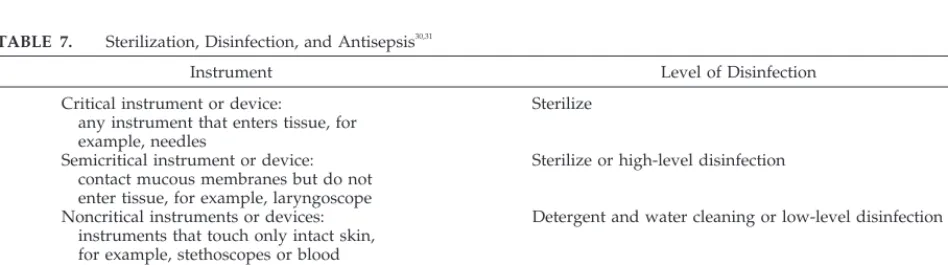
All equipment should be cleaned regularly and stored where it will not become contaminated. Equipment having contact with mucous membranes requires high-level disinfection, whereas instru-ments that penetrate skin or mucosal membranes must be sterile (Table 7).29,30
Sterilization is accomplished by autoclave, dry heat, or gas.30Items must be cleaned manually with soap and water to remove organic debris before au-toclaving. Steam autoclaving uses distilled water that must reach a temperature of 121° to 132°C. Recom-mended time for exposure of items is 20 minutes for unwrapped instruments and 30 minutes for small packs. Unwrapped instruments should be used im-mediately or aseptically transferred to a sterile con-tainer. Hot air oven sterilization is used only for items that cannot be sterilized by autoclaving. The oven temperature should be 170°C for an exposure time of 1 hour.
The sterilization equipment should be monitored by the use of various indicators to ensure that the process has been effective. Manual indicators ensure that a machine reaches the correct temperature and pressure. Chemical indicators are useful in showing that the wrapped package has been sterilized. Bio-logical indicators are necessary to ensure sterility. A variety of indicator systems are available. The pro-cedure recommended by the manufacturer to docu-ment sterility should be done at least weekly and results should be recorded.
Packs that have been sterilized should be dated and stored in clean, dry areas to minimize recontam-ination. Muslin wrapped materials cannot be stored for more than a few months, whereas plastic wrapped packs can be stored safely for 1 year.
For this statement, the terms for disinfection are taken from standards for sterilization, disinfection, and antisepsis in hospitals.29High-level disinfection is used for instruments having contact with mucous membranes. Two types of procedures may be used. 1)Boiling. Instruments are placed in boiling water for at least 20 minutes. The vessel used for boiling
should be cleaned daily. 2) Chemical disinfection. Chemical disinfection is accomplished with glutaral-dehyde, hydrogen peroxide, or sodium hypochlorite (bleach). Two percent glutaraldehyde solutions are most commonly used; however, these products have potential toxicity if proper ventilation is not ensured. The solution should be prepared according to man-ufacturer’s instructions. A 6% solution of hydrogen peroxide is safe and effective to use with most med-ical instruments. A 1:64 dilution of sodium hypo-chlorite is effective for disinfection. The only disin-fectant approved for use in hospitals is 2% glutaraldehyde. After disinfection, instruments are rinsed with sterile water, dried, and stored asepti-cally to avoid recontamination.
Intermediate-level disinfection is accomplished with ethanol and isopropanol, iodine and iodophors, phenols and phenolics, and 1:64 dilutions of sodium hypochlorite.
Low-level disinfection is appropriate for instru-ments that do not touch mucous membranes; exam-ples include bedpans, blood pressure cuffs, crutches, and table tops. Low-level disinfectants include phe-nols and phenolics, quaternary ammonium com-pounds, 1:500 dilutions of sodium hypochlorite, and iodine and iodophors.
Written policies for sterilization and disinfection in the office will ensure that these procedures are per-formed properly, and regular reviews should be con-ducted to be sure that policies are being followed.
Antiseptics are chemical agents intended for use on skin or tissue. Skin preparation agents include isopropyl alcohol, chlorhexidine gluconate, iodine, and iodophors. Alcohol is the preferred skin prepa-ration for immunizations and venipuncture for rou-tine blood collection. Most skin preparation agents must be allowed to dry before surface bacteria are killed. Tincture of iodine is active on contact and thus could be considered the preferred skin preparation agent for invasive procedures, such as insertion of indwelling intravenous catheters and when obtain-ing blood for culture. Povidone iodine is an accept-able alternative. Contamination of antiseptics has been associated with outbreaks of infections and pseudoepidemics attributable to false-positive blood cultures.31,32To prevent contamination, bottles of an-tiseptics should be dated, should not be refilled, and should be inspected and discarded if not used within 3 months. Alcohol pads and iodine products
pre-TABLE 7. Sterilization, Disinfection, and Antisepsis30,31
Instrument Level of Disinfection
Critical instrument or device:
any instrument that enters tissue, for example, needles
Sterilize
Semicritical instrument or device: contact mucous membranes but do not enter tissue, for example, laryngoscope
Sterilize or high-level disinfection
Noncritical instruments or devices: instruments that touch only intact skin, for example, stethoscopes or blood pressure cuffs
Detergent and water cleaning or low-level disinfection
Environmental surfaces:
knobs, handles, carts, or table tops
pared for single use are available and eliminate the need for bottles of antiseptics.
GENERAL HOUSEKEEPING
Offices and office equipment should be cleaned daily. Surfaces should be cleaned with a low-level disinfectant. Phenolics, iodophors, and quaternary ammonium compounds are appropriate for use in daily cleaning and disinfection of surfaces. Blood spills should be cleaned, using disposable gloves. The area should be disinfected with a freshly pre-pared solution of 1:10 household bleach applied for at least 30 seconds and wiped after the minimum contact time. Gloves should be worn during cleanup of any blood or body fluid.
DISPOSAL OF MEDICAL WASTES
The federal OSHA standard as well as local and state regulations dictate the proper disposal of med-ical wastes, including dressings, needles, sharps, and body fluid samples.33,34
All physicians should be aware of the policies in their municipality and ensure that regulated wastes are disposed of appropriately. Basic principles include defining which items consti-tute infectious waste and which do not; appropri-ately separating, labeling, storing, and transporting items in these 2 categories; instructing staff on how to handle infectious wastes; and developing plans for managing waste, spills, and inadvertent exposures.
JUDICIOUS USE OF ANTIMICROBIALS Another aspect of infection control is diagnosis of infection and institution of antibiotic therapy when indicated. Inappropriate use of antimicrobial agents in hospitals and in physician offices has contributed to the emergence of antibiotic-resistant organisms. The Centers for Disease Control and Prevention and the American Academy of Pediatrics have provided guidelines for the judicious use of antibiotics.35– 40
Guidelines have been published for isolation and precautions for hospitalized children and adults who acquire resistant flora.41 Patients may continue to harbor resistant bacteria as part of their respiratory or gastrointestinal tract flora. These organisms in-clude methicillin-resistant Staphylococcus aureus
(MRSA), vancomycin intermediate susceptible S au-reus (glycopeptide intermediate S aureus or GISA), vancomycin-resistant Enterococcus species (VRE), and extended-spectrum -lactamase-producing or multiply-resistant Gram-negative bacteria. Hand-washing before and after contact with these colo-nized children is appropriate; no guidelines for man-agement of these patients in office settings have been published.
SUMMARY OF INFECTION CONTROL POLICIES 1. All health care workers should wash their hands
before and after patient contact. Parents and chil-dren should be taught the importance of hand-washing.
2. Standard precautions should be used in dealing with all patients.
3. Contact between infected, contagious children and uninfected children should be minimized.
Policies to deal with children who present with infections, such as varicella or measles, should be implemented. Prompt triage of immunocompro-mised children should be performed routinely. 4. Alcohol is preferred for skin preparation before
immunization and routine venipuncture. Skin preparation for incision, suture, and collection of blood for culture, requires iodine; solutions of choice are 1% or 2% tincture of iodine or povo-dine iopovo-dine.
5. Needles and sharps should be handled with great care. Needle disposal units that are imper-meable and puncture-proof should be available next to the areas used for injection or venipunc-ture. The containers should not be overfilled and should be kept out of the reach of young chil-dren. Policies should be established for removal and incineration or sterilization of contents. 6. Policies for management of needlestick injuries
should also be in place.
7. Standard guidelines for sterilization, disinfec-tion, and antisepsis should be followed.
8. Judicious use of antimicrobial agents is essential to limit the emergence and spread of drug-resis-tant bacteria.
9. Outpatient offices and clinics should develop policies and procedures for communication with local and state health authorities regarding re-portable diseases and suspected outbreaks. 10. Ongoing educational programs that encompass
appropriate aspects of infection control should be implemented, reinforced, and evaluated on a regular basis.
Committee on Infectious Diseases, 1999 –2000
Jon S. Abramson, MD, Chairperson Carol J. Baker, MD
Margaret C. Fisher, MD Michael A. Gerber, MD H. Cody Meissner, MD Dennis L. Murray, MD Gary D. Overturf, MD Charles G. Prober, MD Margaret B. Rennels, MD Thomas N. Saari, MD Leonard B. Weiner, MD Richard J. Whitley, MD
Ex-Officio
Georges Peter, MD Larry K. Pickering, MD Noni E. MacDonald, MD
Liaisons
Anthony Hirsch, MD
Pediatric Practice Action Group Richard F. Jacobs, MD
American Thoracic Society Gilles Delage, MD
Canadian Paediatric Society Scott F. Dowell, MD, MPH
Centers for Disease Control and Prevention Walter A. Orenstein, MD
Centers for Disease Control and Prevention Peter A. Patriarca, MD
Food and Drug Administration N. Regina Rabinovich, MD
National Institutes of Health Martin G. Myers, MD
Consultant
Edgar O. Ledbetter, MD
Staff
Joann Kim, MD
Committee on Practice and Ambulatory Medicine, 1999 –2000
Jack T. Swanson, MD, Chairperson Edward O. Cox, MD
F. Lane France, MD
Katherine C. Teets Grimm, MD Norman “Chip” Harbaugh, Jr, MD James W. Herbert, MD
Allan S. Lieberthal, MD Kyle E. Yasuda, MD
Liaisons
Todd Davis, MD
Ambulatory Pediatric Association Adrienne A. Bendel
Medical Group Management Association Winston Price, MD
National Medical Association
Section Liaisons
Philip Itkin, MD
Section on Administration and Practice Management
Susan Rogers, MD Section on Residents
Staff
Junelle Fletcher, BA
REFERENCES
1. Garner JS. Guideline for isolation precautions in hospitals.Infect Control Hosp Epidemiol.1996;17:53– 80
2. Garner JS, Favero MS. CDC guideline for handwashing and hospital environmental control, 1985.Infect Control. 1986;7:231–243
3. Herwaldt LA, Smith SD, Carter CD. Infection control in the outpatient setting. In: Herwaldt LA, ed.The Society for Healthcare Epidemiology of America: A Practical Handbook for Hospital Epidemiologists.Thorofare, NJ: Slack, Inc; 1998:357– 402
4. Jackson MM. Ambulatory care facilities. In: Abrutyn E, ed.Saunders Infection Control Reference Service.Philadelphia, PA: WB Saunders Co; 1998:99 –108
5. Lobovits AM, Freeman J, Goldmann DA, McIntosh K. Risk of illness after exposure to a pediatric office.N Engl J Med.1985;313:425– 428 6. Block AB, Orenstein WA, Ewing WM, et al. Measles outbreak in a
pediatric practice: airborne transmission in an office setting.Pediatrics.
1985;75:676 – 683
7. Davis RM, Orenstein WA, Frank JA, et al. Transmission of measles in medical settings: 1980 through 1984.JAMA.1986;255:1295–1298 8. Askew GL, Finelli L, Hutton M, et al.Mycobacterium tuberculosis
trans-mission from a pediatrician to patients.Pediatrics.1997;100:19 –23 9. Goodman RA, Solomon SL. Transmission of infectious diseases in
out-patient health care settings.JAMA.1991;265:2377–2381
10. Bennett JV, Brachman PS, eds.Hospital Infections.3rd ed. Boston, MA: Little, Brown & Co; 1992
11. Mayhall CG, ed.Hospital Epidemiology and Infection Control.Baltimore, MD: Williams & Wilkins; 1996
12. Wenzel RP, ed.Prevention and Control of Nosocomial Infections. 3rd ed. Baltimore, MD: Williams & Wilkins; 1997
13. Abrutyn E, ed.Saunders Infection Control Reference Service.Philadelphia, PA: WB Saunders Co; 1998
14. Herwaldt LA, ed.The Society for Healthcare Epidemiology of America: A Practical Handbook for Hospital Epidemiologists.Thorofare, NJ: Slack, Inc; 1998
15. Department of Labor, Occupational Safety and Health Administration. (Codified at 29 CFR 1920.1030). Occupational exposure to bloodborne pathogens, final rule.Federal Register.December 6, 1991, Volume 56-64004264182
16. Larson EL. APIC guideline for handwashing and hand antisepsis in health care settings.Am J Infect Control. 1995;23:251–269
17. Sprunt K, Redman W, Leidy G. Antibacterial effectiveness of routine hand washing.Pediatrics.1973;52:264 –271
18. Lowbury EJ, Lilly HA, Bull JP. Disinfection of hands: removal of
tran-sient organisms.Br Med J.1964;2:230 –233
19. Lohr JA, Ingram DL, Dudley SM, Lawton EL, Donowitz LG. Hand washing in pediatric ambulatory settings: an inconsistent practice.Am J Dis Child.1991;145:1198 –1199
20. Goldmann D, Larson E. Hand-washing and nosocomial infections.
N Engl J Med.1992;327:120 –122
21. Campbell B. Power and motivation: important concepts for infection control practitioners.Infect Control Hosp Epidemiol.1991;12:122–124 22. Olsen RJ, Lynch P, Coyle MB, Bokete T, Stamm WA. Examination
gloves as barriers to hand contamination in clinical practice.JAMA.
1993;270:350 –353
23. Jarvis WR, Bolyard EA, Bozzi CJ, et al. Respirators, regulations: the controversy surrounding protection of health care workers from tuber-culosis.Ann Intern Med.1995;122:142–146
24. American Academy of Pediatrics. Tuberculosis. In: Peter G, ed.1997 Red Book: Report of the Committee on Infectious Diseases.24th ed. Elk Grove Village, IL: American Academy of Pediatrics; 1997:541–562
25. Centers for Disease Control and Prevention.Guidelines for Prevention of TB Transmission in Hospitals.Atlanta, GA: Department of Health, Edu-cation, and Welfare; 1979. Publication No. CEC 79-8371
26. Centers for Disease Control and Prevention. Immunization of health-care workers: recommendations of the Advisory Committee on Immu-nization Practices (ACIP) and the Hospital Infection Control Practices Advisory Committee (HICPAC).MMWR Morb Mortal Wkly Rep.1997; 46(RR-18):1– 42
27. Weber DJ, Rutala WA, Weigle K. Selection and use of vaccines for healthcare workers.Infect Control Hosp Epidemiol.1997;18:682– 687 28. Geyer SA. Guidelines for processing toys.J Healthcare Matern Manage.
1986;4:52–53
29. Favero MS, Bond WW. Sterilization, disinfection, and antisepsis in the hospital. In:Manual of Clinical Microbiology.5th ed. Washington, DC: American Society for Microbiology; 1991:183–200
30. Rutala WA. Disinfection and sterilization of patient-care items. Infect Control Hosp Epidemiol.1996;17:377–384
31. Anderson RL. Iodophor antiseptics: intrinsic microbial contamination with resistant bacteria.Infect Control Hosp Epidemiol.1989;10:443– 446 32. Panlilio AL, Beck-Sague CM, Siegel JD, et al. Infections and
pseudoin-fections due to povidone-iodine solution contaminated with Pseudomo-nas cepacia. Clin Infect Dis.1992;14:1078 –1083
33. Keene JH. Regulated medical waste. In: Abrutyn E, ed.Saunders Infec-tion Control Reference Service.Philadelphia, PA: WB Saunders Co; 1998: 727–750
34. Reinhardt PA, Gordon JG, Alvarado CJ. Medical waste management. In: Mayhall CG, ed.Hospital Epidemiology and Infection Control. Philadel-phia, PA: Williams &Wilkins; 1996:1099 –1108
35. Dowell SF, Marcy SM, Phillips WR, Gerber MA, Schwartz B. Principles of judicious use of antimicrobial agents for pediatric upper respiratory tract infections.Pediatrics.1998;101(suppl):163–165
36. Dowell SF, Marcy SM, Phillips WR, Gerber MA, Schwartz B. Otitis media—principles of judicious use of antimicrobial agents.Pediatrics.
1998;101(suppl):165–171
37. Schwartz B, Marcy SM, Phillips WR, Gerber MA, Dowell SF. Pharyn-gitis—principles of judicious use of antimicrobial agents. Pediatrics. 1998;101(suppl):171–174
38. O’Brien KL, Dowell SF, Schwartz B, Marcy SM, Phillips WR, Gerber MA. Acute sinusitis—principles of judicious use of antimicrobial agents.Pediatrics.1998;101(suppl):174 –177
39. O’Brien KL, Dowell SF, Schwartz B, Marcy SM, Phillips WR, Gerber MA. Cough illness/bronchitis—principles of judicious use of antimi-crobial agents.Pediatrics.1998;101(suppl):178 –181
40. Rosenstein N, Phillips WR, Gerber MA, Marcy SM, Schwartz B, Dowell SF. The common cold—principles of judicious use of antimicrobial agents.Pediatrics.1998;101(suppl):181–184
41. Hospital Infection Control Practices Advisory Committee (HICPAC). Recommendations for preventing the spread of vancomycin resistance.
Infect Control Hosp Epidemiol.1995;16:105–113
42. Centers for Disease Control and Prevention. Public Health Service guidelines for management of health-care worker exposures to HIV and recommendations for postexposure prophylaxis.MMWR Morb Mortal Wkly Rep.1998;47(RR-7):1–33
43. American Academy of Pediatrics.Materials to Assist the Pediatric Office in Implementing the Bloodborne Pathogen, Hazard Communication, and Other OSHA Standards.2nd ed. Elk Grove Village, IL: American Academy of Pediatrics; 1994
DOI: 10.1542/peds.105.6.1361
2000;105;1361
Pediatrics
Medicine
Committee on Infectious Diseases and Committee on Practice and Ambulatory
Infection Control in Physicians' Offices
Services
Updated Information &
http://pediatrics.aappublications.org/content/105/6/1361
including high resolution figures, can be found at:
References
http://pediatrics.aappublications.org/content/105/6/1361#BIBL
This article cites 28 articles, 4 of which you can access for free at:
Subspecialty Collections
b
http://www.aappublications.org/cgi/collection/infectious_diseases_su
Infectious Disease
http://www.aappublications.org/cgi/collection/risk_management_sub
Risk Management
_management_sub
http://www.aappublications.org/cgi/collection/administration:practice
Administration/Practice Management
following collection(s):
This article, along with others on similar topics, appears in the
Permissions & Licensing
http://www.aappublications.org/site/misc/Permissions.xhtml
in its entirety can be found online at:
Information about reproducing this article in parts (figures, tables) or
Reprints
http://www.aappublications.org/site/misc/reprints.xhtml
DOI: 10.1542/peds.105.6.1361
2000;105;1361
Pediatrics
Medicine
Committee on Infectious Diseases and Committee on Practice and Ambulatory
Infection Control in Physicians' Offices
http://pediatrics.aappublications.org/content/105/6/1361
located on the World Wide Web at:
The online version of this article, along with updated information and services, is
by the American Academy of Pediatrics. All rights reserved. Print ISSN: 1073-0397.